Florida State University Libraries
Electronic Theses, Treatises and Dissertations The Graduate School2005
The Impact of Strategic Skills on Supply
Management Performance: A
Resource-Based View
Reham A. Eltantawy
THE FLORIDA STATE UNIVERSITY
COLLEGE OF BUSINESS
THE IMPACT OF STRATEGIC SKILLS ON SUPPLY
MANAGEMENT PERFORMANCE:
A RESOURCE-BASED VIEW
BY
REHAM A. ELTANTAWY
A Dissertation submitted to the Department of Marketing in partial fulfillment of the requirements for the degree of
Doctor of Philosophy
Degree Awarded: Summer Semester, 2005
The members of the Committee approve the dissertation of Reham A. Eltantawy, defended on June 30, 2005.
________________ Larry C. Giunipero Professor Directing Dissertation
_______________ Gerald R. Ferris Outside Committee Member
_______________ Dennis Cradit Committee Member ________________ Daekwan Kim Committee Member Approved: _________________
E. Joe Nosari, Interim Dean, College of Business
The Office of Graduate Studies has verified and approved the above named committee members.
ii
This dissertation is dedicated to my family. For always being able to count on your never-ending love, compassion, and support.
To my grandmother, who is always with me in spirit. Thanks to you all,
I love you very much.
iii
TABLE OF CONTENTS
List of Tables ... vi
List of Figures ... viii
Abstract ... ix
Chapter One - Dissertation Overview... 1
1.1 Introduction... 1
1.2 Research Questions... 2
1.3 Research Model And Constructs ... 3
1.4 Research Contributions... 7
1.5 Dissertation Outline ... 9
Chapter Two - Theoretical Overview and Literature Review ... 11
2.1 Theoretical Overview On Resource-Based View Of The Firm... 11
2.2 Supply Management Skills In Literature ... 14
2.3 Strategic Supply Management Skills ... 19
Chapter Three - Dissertation Variables And Hypotheses Development ... 27
3.1 What Is The Impact Of Strategic Supply Management Skills On Supply Management Performance? ... 27
3.2 What Is The Impact Of Supplier Integration On Supply Management Performance? ... 30
3.3 What Is The Impact Of Strategic Supply Management Skills On The Degree Of Supplier Integration With The Buying Firm?... 32
3.4 What Is The Impact Of Supply Management Perceived Status On Supplier Integration? ... 33
3.5 What Is The Impact Of Strategic Supply Management Skills On Supply Management Perceived Status? ... 35
iv
Chapter Four - Research Design and Methodology... 37
4.1 Study Design And Research Strategy ... 37
4.2 Study Variables And Measures... 38
4.3 Study Methodology And Analysis Techniques ... 40
Chapter Five - Dissertation Study Results ... 46
5.1 Descriptive Statistics For The Study Data ... 46
5.2 Reliability Tests Of Study Measure... 54
5.3 Construct Validity Tests ... 56
5.4 Hypotheses And Path Analysis... 65
Chapter Six - Discussion And Conclusions ... 70
6.1 Dissertation Study Results Discussions And Conclusions ... 70
6.2 Dissertation Study Limitations ... 75
6.3 Future Research From The Dissertation ... 77
Appendix: Survey Questionnaire... 79
Bibliography ... 84
Biographical Sketch ... 94
v
LIST OF TABLES
Table 2.1 Literature and Key Supply Management Skills... 18
Table 2.2 The Evolution from Tactical To Strategic Supply Management... 21
Table 4.1 Nonresponse Bias Test Results... 42
Table 5.1 Titles of Individuals Responding to Questionnaire ... 48
Table 5.2 Responsibilities of Individuals Responding to Questionnaire... 49
Table 5.3 Supply Management Functions’ Primary Organizational Structure... 49
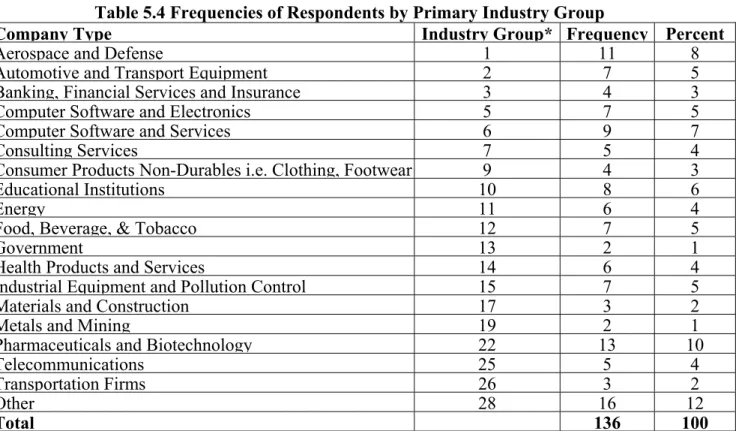
Table 5.4 Frequencies of Respondents by Primary Industry Group... 50
Table 5.5 Annual Sales by Category... 50
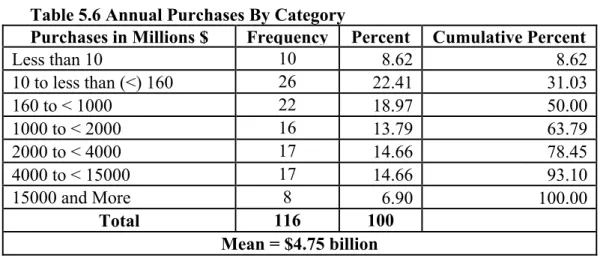
Table 5.6 Annual Purchases By Category ... 51
Table 5.7 Total Company Employees By Category ... 51
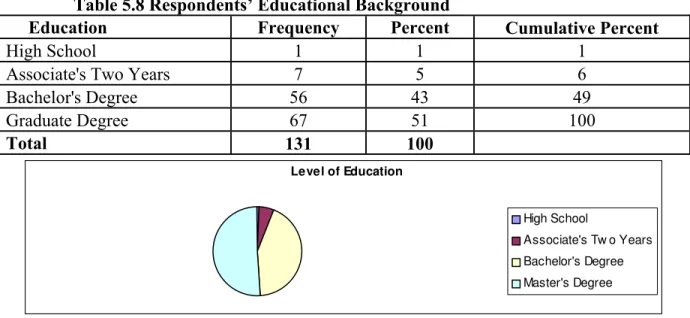
Table 5.8 Respondents’ Educational Background ... 52
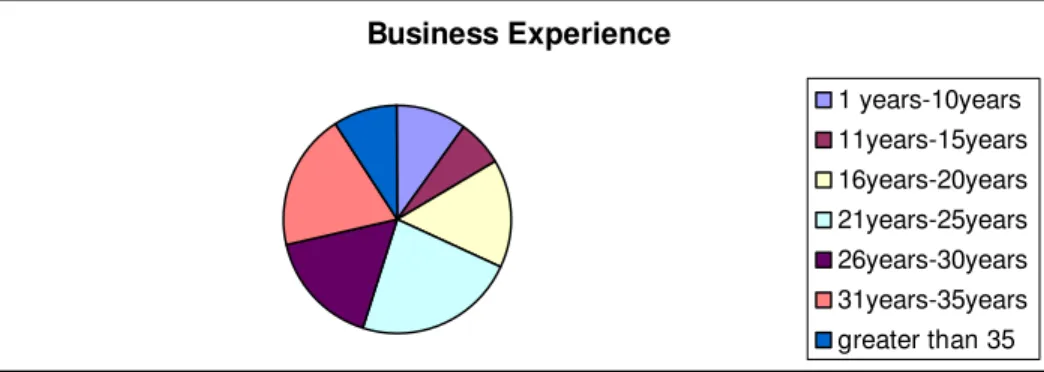
Table 5.9 Years of Business Experience... 52
Table 5.10 Years of Supply Management Experience... 53
Table 5.11 Reliability of Measures and Means and Standard Deviations of Survey Instrument Items... 55
Table 5.12 Convergent Validity Results... 61
Table 5.13 Discriminant Validity Results... 63
Table 5.14 Scale Statistics ... 64
Table 5.15 Correlations Among Constructs... 65
Table 5.16 Standardized Path Coefficients and t-Values... 67
Table 5.17 Standardized Causal Effects of the Model... 68 vi
Table 6.1 Strategic Supply Management Skills Item Averages ... 73 Table 6.2 Supplier Integration Item Averages... 74
vii
LIST OF FIGURES
Figure 1.1 Hypothesized Model of Supply Management Performance... 4 Figure 2.1 New Forms of Supply Management Skills... 23 Figure 5.1 Paths Analysis ... 66
viii
ABSTRACT
Although previous literature documented the strong link between supply management and firms’ performance, the study of supply management performance antecedents has been largely overlooked. Using the resource-based theory of the firm to establish a theoretical foundation, this study serves to fill a gap in the supply management literature with respect to supply management performance antecedents such as strategic supply management skills, supplier integration, and the supply management function’s perceived status. Such an understanding will help supply management professionals in rationalizing their investments in various inter- and intra-departmental decisions such as supplier relationships, recruiting the necessary skills in the supply management function, investing in a supply knowledge base, etc.
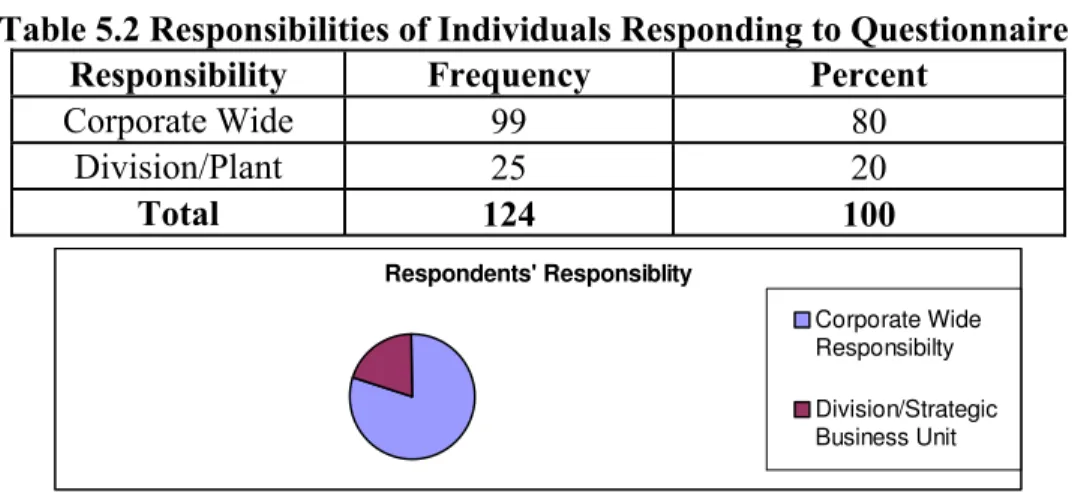
The sample used for this study consists of 152 supply management functions from 19 different industries, represented by supply management professionals with titles such as supply management manager, director of supply management, vice president of supply management, and vice president of materials management. About 80% of the 152 respondents had corporate-wide decision-making responsibilities. Confirmatory factor analyses provided evidence of adequate model fit and convergent and discriminant validity for the underlying variables and their respective factors in the model. The conceptual model and the hypothesized relationships are tested using Structural Equation Modeling (SEM).
Support was found for the causal relationships between the following variables in the model: 1) Supplier integration had a significant positive impact on supply management performance, which indicated that firms are looking to supply management to establish greater integration with suppliers that is expected to produce valuable supplier relationships that cannot be imitated by competition. 2) Strategic supply management skills had a
significant positive impact on supplier integration; these skills allow the supply management function to develop strategies and practices that could be used as a valuable inimitable input to the firm's supplier integration planning process. 3) Supply management perceived status had a significant positive impact on supplier integration. This implies that higher supply
ix
management perceived status entails greater access to critical information about firm-supplier relationship history and about supplier markets, which enables the supply management function to establish valuable supplier relationships. 4) Strategic supply management skills had a significant positive impact on supply management perceived status; if the supply management function possesses these skills, top management is more willing to elevate their organizational status.
Interestingly, strategic supply management skills had a significant indirect effect on supply management performance through supplier integration and supply management perceived status. The same effect did not hold in the direct relationships between strategic supply management skills and supply management performance. This indicates that strategic supply management skills’ impact on supply management performance is positive overall (i.e., positive total effect) but it is so because of the mediated path through supplier
integration and supply management function’s perceived status (i.e., positive indirect effect), not because of its direct effect on supply management performance. The significance of these results for theory, practice and future research are discussed. A future research agenda is also presented.
x
CHAPTER ONE
DISSERTATION OVERVIEW
1.1 Introduction
“A recent study conducted by Accenture, Stanford, and INSEAD found that 89% of senior executives at leading companies view supply management to be critical or very important to their company, and 89% also agreed that investments in supply chain capabilities have increased in the last three years. Further, 9% of the surveyed companies were identified as leaders in supply management and were found to demonstrate significantly higher financial performance than their competition. Some of the most important financial metrics impacted included cost reductions, enhancing revenue, and reducing working capital” (Giunipero and Handfield 2004).
The achievement of a sustainable competitive advantage has long been the goal of companies and organizations. This “goal” has attracted widespread attention over the last few decades within mainstream strategic thinking, usually with advantage only being sought inside the organization (Hines and Rich 1998; Porter 1985). As indicated by the quote above, companies such as General Motors, General Electric, and Black and Decker see the supply management function as a strategic resource for attaining competitive advantage in their supply chain domains. These companies realize that effective supply management decisions and practices provide value in the areas of cost management (Carr and Pearson 2002) high quality, short cycle time and fast delivery (Spekman 1988) and enables supply chains to establish closer links and relationships, where appropriate, between buyers and suppliers.
The increased importance placed on supply management decisions is expected to be the most influential trend in shaping the function in future (Carter and Narasimhan 1996). Supply management literature documented this trend and its implications on corporate performance (e.g., Carter and Narasimhan 1996; Ellram and Carr 1994; Giunipero and Pearcy 2000; Johnson, Leenders, and Fearon 1998). There is a stream of research that examines the impact of supply management decisions on firms’ financial performance
1
measured in terms of return on investment, profits as a percent of sales, firms’ market share, and net income over a given time period (e.g., Anderson and Katz 1998; Carr and Pearson 2002;Tan, Kannan, and Handfield 1998).
Although previous literature documented the strong link between supply management and firms’ performance, the study of supply management performance antecedents has been largely overlooked. It is essential for supply management professionals to understand the factors that contribute to improving their functions’ performance and enhancing its
contribution to their firms’ success. The purpose of this study is to explore some of the key antecedents of supply management performance and to understand their relative importance. Understanding these key antecedents should lead to improved supply management
performance, which, in turn, will elevate the bottom line performance of the firm. Further, this understanding will help supply management professionals in rationalizing their investments in various inter- and intra-departmental decisions such as developing the appropriate types supplier relationships, and recruiting, assessing, and selecting the right skills in the supply management function. Finally, determining how much to invest in developing the supply management knowledge base to further enhance performance is essential.
This study serves to fill a gap in the supply management literature with respect to supply management performance antecedents such as strategic supply management skills, level of supplier integration, and the supply management function’s perceived status. There has been much written about most of these factors, the majority of which is based on conceptual and case study research. This study is the first attempt to test the relationships among these factors in one model empirically and to examine their combined impact on supply management performance.
1.2 Research Questions
The primary purpose of this study is to address a gap in supply management literature by developing a model for supply management performance. The overall research question is: What is the relative and combined impact of the factors that contribute to the supply management function’s performance? Specifically, the research seeks to address the
2
following research questions:
1. What is the impact of strategic supply management skills on supply management performance?
2. What is the impact of supplier integration on supply management performance? 3. What is the impact of strategic supply management skills on the degree of
supplier integration with the buying firm?
4. What is the impact of supply management perceived status on supplier integration?
5. What is the impact of strategic supply management skills on supply management perceived status?
1.3 Research Model and Constructs
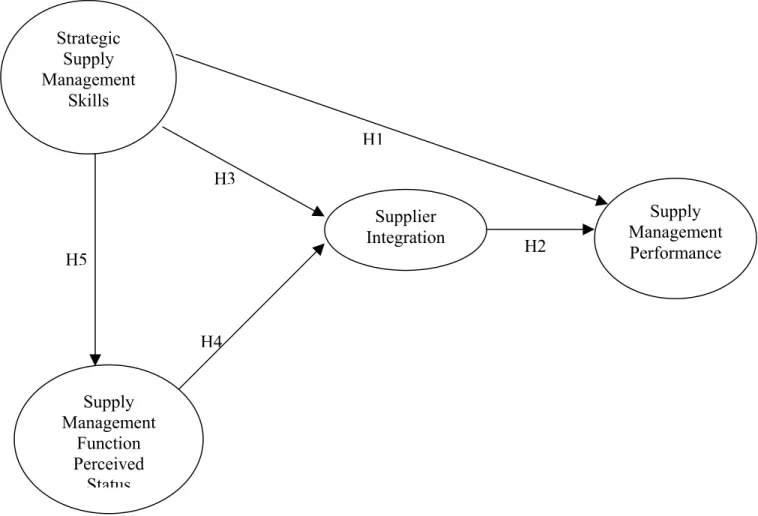
The theoretical model tested in this study is displayed above. The following
discussion provides a brief descriptions of the constructs examined in the conceptual model (see Figure 1.1) and the significance of their impact of each of these constructs on supply management performance as portrayed by previous literature.
Supply management performance; Supply management is an essential issue for today's industrial firms as a means for achieving sustainable competitive advantage. Supply chain management is the integration of business processes from end-users through original suppliers that provide products, services, and information that add value for customers (Antonette et al. 2002). Supply chain management involves coordinating and integrating these flows both within and among companies. Supply management represents the upstream portion of supply chain management. Supply management encompasses “organizing the optimal flow of high-quality, value-for-money materials or components to manufacturing companies from a suitable set of innovative suppliers” (Wagner 2003; Goffin, Szwejczewski, and New 1997). Examples of major responsibilities of a supply management function
include: management of the supplier base (e.g., the selection of suppliers and the reduction of the supplier base), supplier development (i.e., long-term efforts of a firm to upgrade its suppliers' capabilities or performance), and supplier integration (i.e., combining internal resources with those of key suppliers) (Antonette et al. 2002; Wagner 2003).
3
4 Strategic Supply Management Skills Supplier Integration H1 H3 Supply Management Function Perceived Status H4 Supply Management Performance H2 H5
Figure 1.1 Hypothesized Model of Supply Management Performance
Supply management performance is a powerful driver and a significant strategic tool for firms striving to achieve competitive success (Tan 2002). Supply management literature evolved along two separate paths in addressing supply performance, which eventually merged into a common body of literature. The traditional path emphasized the tactical objectives of supply management in assessing its performance, such as increasing
productivity and reducing inventory and cycle time (e.g., Hult, Ketchen and Nicholas 2000; Sharland, Eltantawy, and Giunipero 2003). The second research stream reflects on the evolution of the supply management from a tactical to a strategic function and emphasizes the strategic goals of supply management. Therefore, supply management function’s
performance is increasingly being viewed to be its ability to contribute to the attainment of the goals, effectiveness and efficiency, of the supply chain members (Harwick 1997; Tan 2002).
Strategic Supply Management Skills: Firms are realizing that strategic supply management skills are essential if they need to acquire the materials and services in a way that will enhance their supply chain’s competitive advantage (Tan 2002). The recognition of the supply management’s strategic role raised the concerns about developing and maintaining a world-class staff of supply managers who possess the necessary strategic skills for
competing in today’s environment. According to Giunipero (2000) “the world-class purchaser is an individual who visualizes and approaches his or her job from a strategic perspective in dealing with the supplier firm-purchaser firm-customer linkage. This individual continually embraces and leverages his or her skills and knowledge of critical supply management activities to provide value in meeting corporate and customer objectives.”
Therefore, supply management’s strategic skills are represented by the ability to perform strategic functions such as: supplier coordination, supplier development, supplier market research, cost analysis, sourcing strategy formulation, benchmarking, make or buy decision, and supplier capability analysis (Carr et al. 2000). Strategic supply management is defined as the process of planning, evaluating, implementing, and controlling highly
important and routine sourcing decisions (Carr and Smeltzer 1997; Carr and Pearson 2002). Strategic supply management skills enable directing all activities of the supply management function toward opportunities consistent with the firm's capabilities in order to achieve its long-term goals.
Supplier Integration: The separation of suppliers from the procurement process could lead to an expended sequential, and iterative process that, in turn, leads to longer time-to-market cycle (O’Neal 1993). When Teague, Bak, Puttre, and Fitzgerald (1997) asked if they expect suppliers to be more deeply involved in design in the next ten years, more than 80% of purchasers reported they would. Supplier integration is a pivotal supply management activity and can be defined as the combination of internal resources of the buying firm with the resources and capabilities of selected key suppliers through the meshing of intercompany
5
business processes to achieve a competitive advantage (Wagner 2003). It is the process of incorporating or bringing together different groups, functions, or organizations, physically or by information technology, to work jointly and often concurrently on a common business-related assignment or purpose (Monczka, Trent, and Handfield 2002).
Traditionally, previous research tended to focus on supplier integration activities in new product development, neglecting integration activities in other situations, such as process development and improvement (McGinnis and Vallopra 1999). Therefore, in this study supplier integration is addressed as a more comprehensive concept that seeks to
achieve competitive advantage through the meshing of intercompany business processes with these of selected key suppliers.
Although previous research investigated the impact of supplier integration on firm’s performance, the results were mixed. For example, more than 70% of the supply
management professionals surveyed by Teague et al. (1997) reported that they integrate their decisions with their suppliers’ operations and involve their suppliers earlier in the design process in order to improve their performance results. However, when examined by Carr and Pearson (2002), the influence of supplier integration accounted only for 9 % of the variance associated with performance. The small percent of the explained variance could be due to ignoring the individual and/or the combined impact of other antecedents, such as, strategic supply management skills and the supply management function’s perceived status. Therefore, this study aims at exploring these mixed results by developing and testing a model for supply management performance.
Supply Management Function Perceived Status: Another factor that is expected to contribute indirectly to supply management performance is the elevation of the function’s status. Supply management function perceived status refers to the esteem in which the department is held by others (Cavinato 1987b). Generally, the status of an organizational function refers to whether the individuals employed in that function perceive themselves to be making a strategic, value-adding contribution to the firm (Goebel et al. 2003). A
function’s status is defined by various spoken and unspoken indications from top management to others in the organization (Cavinato 1987b). Previous literature posited training as one of the important unspoken indicators of supply management status and that it
6
is the impetus necessary to move supply management to a high status level. For example, Giunipero and Flint (2001) referred to the importance of how top management views supply management’s training budget to supply management status and Cunningham and Hyman (1999) pointed that the perceptions of control over it by the supply management functions reflect their perceived organizational status.
Additionally, Monczka et al. (2002) posited that the design and structure of the new supply management organization is being altered substantially in a way that affects its perceived status. The characteristics of the new supply management organization include:
• Smaller professional staff
• Minimal involvement with day-to-day operations or transactions
• Greater responsibility for non-traditional purchasing
• Involvement with cross-enterprise negotiations
• Manage integrative activities with suppliers and the rest of the organization
• Supply management professionals act as internal consultants and problem solvers
• Supply management professionals responsible for managing alliances and other critical relationships
• Supply management professionals become process managers that oversee strategic and tactical responsibilities
These characteristics imply a change in the status of the supply management function. This change, in turn, implies that supply management is expected now to define firm's
competitive strategy. Given the escalation of supply management performance as a key priority for organizational competitiveness, it will be imperative for senior management to identify the supply management skills gap between current and future requirements.
1.4 Research Contributions
This study contributes to the body of knowledge and research in the supply management area in a number of ways:
• The primary purpose of this study is to address a gap in supply management literature by developing a model for supply management performance. This study serves to fill a gap in the supply management literature with respect to supply
7
management performance antecedents such as strategic supply management skills, level of supplier integration, and the supply management function’s perceived status. Although, there is much written about most of these factors independently that is based on conceptual and case study research, this study is unique. It is the first attempt to test the relationships among these factors in one model empirically and to examine their combined impact on supply management performance.
• Previous research addressed the nature of emerging supply management skills that and their importance in enhancing firm’s performance (e.g., Cavinato 1987a; Kolchin and Giunipero 1993; Carter and Narasimhan 1996; Giunipero 2000; Carr and Smeltzer 2000; Giunipero and Pearcy 2000; Giunipero and Flint 2001; Giunipero, Denslow and Eltantawy 2005). However, the study of the impact of specific supply management skills on supply management decisions and performance was largely overlooked. Like other organizational assets, supply management skills should be classified as core and peripheral skills. Supply managers need to be able to pinpoint and enhance the core skills that their departments need. This study explores one category of these skills; supply management strategic skills and examines its direct and the indirect impact on supply management performance. This is a first step towards creating structure to the study of supply management skills.
• The sample used for this study consists of firms represented by supply management professionals with titles such as supply management manager, director of supply management, vice president of supply management, and vice president of materials management. The intent was to obtain a sample of high-level managers from firms who are considered leaders in supply management. Each of these supply management professionals served as a key informant. These individuals were chosen as the respondent group because they are informed about the subject matter in the survey instrument. As decision makers in their firms, they will provide valuable input about their function’s performance and the success requirements as they visualize for their firms.
8
• The conceptual model presented earlier will be tested using Structural Equation Modeling (SEM). This type of analysis enhances the contribution of this study to literature because it allows testing the combined impact, i.e., the overall model, of the hypothesized antecedents rather than their coefficients individually. Due to the search for causality in the theoretical model portrayed by this study, SEM may be used as a more powerful alternative compared to multiple regression, factor analysis, and analysis of covariance. It makes it possible to simultaneously estimate a measurement model, specifying relations between measured variables and underlying latent variables, and to specify structural relations among the latent variables (Hair, Anderson, Tatham and Black 1998). Additionally, it takes into account the modeling of interactions, nonlinearities, measurement error, and multiple latent independents each measured by multiple indicators, and latent dependents also each with multiple indicators (Hu and Bentler 1999).
• This research will develop a knowledge base of data that will assist firms in their benchmarking efforts. By modeling the combined and relative; direct and indirect, impact of each of these antecedents on supply management performance, supply management professionals can identify whether, for example, hiring the supply management staff with the right skills is more important than assigning them higher status (reflected on higher budgets and more frequent training programs). The generalizabilty of this study, which will be conducted across a number of industries, will enable supply management professionals from different industries and firms to compare their decisions and outcomes to the results of this study. 1.5 Dissertation Outline
This dissertation consists of six chapters. Chapter One provides a general outline of the study, focusing on the research questions addressed and the intended theoretical and empirical contributions of the study. Chapter Two provides a theoretical overview of the study and a review of the theory employed in the development of the research model of the study. A literature review of relevant theoretical perspectives is also included in this chapter. Chapter Three consists of a literature review and discussion of the research variables
9
employed in this study, and develops the study hypotheses. Chapter Four focuses on the methodological issues pertinent to this research, specifically detailing the statistical methods used to explore the research questions and noting the measures employed to represent the research variables, and discusses the criteria selected to set sample parameters. Chapter Five reports the results of the statistical analyses and tests of the hypotheses. Finally, the
dissertation concludes with a discussion of the findings of the study in Chapter Six, along with several suggestions for future research.
10
CHAPTER TWO
THEORETICAL OVERVIEW AND LITERATURE REVIEW
This chapter describes the main theory employed to develop the dissertation research model. The resource-based theory of the firm is explored in greater detail in order to establish a theoretical foundation for the study. In addition, a brief history of model relationships not specifically examined in the study hypotheses is included. Section 2.1 provides a theoretical overview of the resource-based view of the firm by providing a selective literature review pertaining to the performance benefits of strategic supply management skills, supplier integration, and supply management function perceived status.
2.1 Theoretical Overview on Resource-Based View of the Firm
In the last two decades of the twentieth century the resource-based theory of the firm has received attention as a basis for explaining firms’ competitive advantage (e.g., Barney 1991; Lepak and Snell 1999; Hamel and Prahalad 1994; Wernerfelt 1984). Meanwhile, supply management literature used both resources-based and knowledge-based theories in drawing theoretical foundations for understanding the processes of knowledge and skills generation and transfer.
The knowledge-based view of the firm is based on the assumptions that knowledge comprises information, technology, know-how, and skills, it is acquired and stored by individuals, and it is the key productive resource of the firm in terms of contribution to value added and strategic significance (Grant and Fuller 1995). Previous research utilized the knowledge-based theory of the firm to address the strategic and managerial aspects of knowledge within firms, such as the transformation of personal knowledge into
organizational knowledge (Kogut and Zander 1992), knowledge generation and application (Spender 1992), and knowledge integration in firms (Demsetz 1991).
From the above discussion, a knowledge-based theory of the firm could be useful for understanding the process of supply management skills formulation and for differentiating supply management knowledge transfer from tangible goods knowledge transfers (Sveiby
11
2001). However, resource-based theory of the firm has greater relevance when it comes to understanding how some of supply management skills and practices can act as a source of competitive advantage. Therefore, in developing a theoretical foundation for this study, I will draw primarily from the resource-based view of the firm to discuss the impact of strategic supply management skills, supplier integration, and supply management function perceived status on supply management performance.
The resource-based view of the firm suggests that a firm's pool of human capital can be "leveraged" to provide a source of competitive advantage (Barney 1991; Wright et al. 1994). Barney (1991) identified four essential requirements for a resource to be a source of competitive advantage: First, the resource must be valuable in that it improves firm’s efficiency and/or effectiveness. Second, the resource must be rare so that by exercising control over it, the firm can exploit it to the disadvantage of its competitors. Third, the resource must be imperfectly mobile to discourage the ex-post competition for the resource that would offset the advantages of maintaining control of the resource. Fourth, the resource must not be substitutable; otherwise, competitors would be able to identify equivalent resources to be used for the same purpose. Competitive advantage is the value that a firm creates for its customers through cost leadership and/or meaningful differentiation (Porter 1985). The following discussion posits strategic supply management skills, supplier integration, and supply management function perceived status as resources that could potentially enhance supply management’s competitive advantage.
Strategic supply management is defined as the process of planning, evaluating, implementing, and controlling highly important and routine sourcing decisions (Carr and Smeltzer 1997; Carr and Pearson 2002). The main criterion of whether a skill is of a strategic nature is whether it has an integrative role in formulating and implementing the firm's supply management strategic plan (Ammer 1974; Carr and Pearson 2002; Reck and Long1988). Strategic supply management skills involve the mastery over preparing a formal business plan, reviewing and adjusting plans to match changes in company plans, consistently providing input to top management on future supply needs and constraints, and developing supply management strategies to support company strategies (Carr and Pearson 2002). Giunipero and Pearcy (2002) described the strategic dimensions of the skill set required for
12
the world-class supply management professionals as: (1) strategic thinking, (2) supply base research, (3) structuring supplier relationships, (4) technology planning, and (5) supplier cost targeting.
The resource-based perspective shifts the emphasis from the characteristics of employees to their skills and their relative contribution to value creation in their firm (Lepak and Snell 1999). Accordingly, the value of supply management skills is inherently dependent upon its potential to contribute to the competitive advantage or core performance of the firm.
How strategic supply management skills fit within a firm’s resource endowment or interact with a firm's other resources can deter their mobility (Rungtusanatham, Salvador, Forza, and Choi 2003). More specifically, the interaction of strategic supply management skills with the function’s other resources within a complex social network makes these skills
difficult to replicate; due to social complexity. The increased social complexity of strategic supply management skills is a direct result of the growing trend of team decision-making in the supply management function, especially in the case of more strategic decisions
(Giunipero, and Handfield 2004). The success of teams that interact within a firm with other departments and suppliers decreases the likelihood of such teams being successful in other contexts (Wernerfelt 1989).
Strategic supply management skills are difficult to substitute for because firms that do not possess these skills cannot obtain equivalent resources or skills; as a direct consequence of a capability gap (Barney 1991; Coyne 1985). This is caused by a variety of factors. For example, strategic supply management skills are usually used in exceptional circumstances or interdependent arrangements and they tend to require more tacit knowledge and capabilities that are more difficult to substitute for than any other asset (Lepak and Snell 1999).
According to the resource-based view of the firm, supplier integration can be viewed as a source of competitive advantage as well. When the supply management function
integrates its decisions and operations with suppliers, the resulting connections, to the extent that these links exclude competitors from forming the same connections with the same critical suppliers for the same purpose, should provide competitive benefits to the firm (Rungtusanatham et al. 2003). These connections facilitate the management of the flow and/or quality of materials into (i.e. raw materials) and out of (i.e. finished goods and
13
services) the firm; benefits should accrue directly to supply management function’s performance.
This notion is supported by previous research that provided evidence that the
separation of suppliers from the procurement process could lead to an expanded, sequential, and iterative process that, in turn, leads to longer time-to-market cycle, which results in competitive disadvantage. For example, O’Neal (1993) reported that the typical cost of a design change made during design, of $1000, grows to $10,000 during testing, $100,000 during process planning, $1,000,000 during test production, and $10,000,000 during final production. This traditional process used to be extremely time consuming because the supply management function and suppliers worked independently with the product. Each function tends to have a bias, based on the representatives' education, training, and experience. The risk of not involving suppliers in the procurement process typically is excessive waste generated in the form of poor quality, as perceived by the customer, by not having the right quality attributes not doing the right things (Carr and Pearson 2002; McGinnis and Vallopora 1999; O’Neal 1993).
The elevation of the supply management function’s status implies increasing the frequency and the intensity of the interactions between supply management function and the top management team. The increased intensity of that interaction enables directing all activities of the supply management function toward opportunities consistent with the top management vision and firm's capabilities in order to achieve its long-term goals (Carr and Pearson 2002). Additionally, the boundary spanning role that supply management staff plays between top management and suppliers and customers takes the social complexity of the interaction between supply management function and the organization’s top management to a higher level and makes the resulting knowledge base more difficult to replicate. The
heterogeneity among firms’ supply management function- top management interactions makes it unique and, hence, difficult to replicate.
2.2 Supply Management Skills in Literature
The performance of supply management duties, such as securing material availability, managing inventories, and supply management, is essentially based on human competence of
14
the supply management staff. A fundamental managerial problem is to develop human competence at work in a way that enables an organization to remain viable (Sandberg 2000). However, in order to manage training and development of the supply management staff efficiently, managers need to understand what skills constitute successful performance at the supply management function. Without such an understanding, performance improvement cannot be managed effectively and, therefore, effectiveness in organizations cannot be achieved. The following discussion provides an overview of supply management skills that were posited by literature to be prerequisites for the achievement of supply management goals.
A “skill” is the ability gained by practice or knowledge (Carr and Smeltzer 2000; Kolchin and Giunipero 1993). Generally, the employees skills’ impact on organizational performance has been the focus of numerous research studies and writings (Borman 1991). Specifically, supply management skills were found to influence the effectiveness of firms’ performance (e.g., Carter and Narasimhan 1996; Landeros and Monczka 1989). The following discussion provides an overview of the supply management skills addressed by previous research.
Kolchin and Giunipero (1993) used a sample of 131 supply management executives from large U.S. organizations to identify the skills that are essential for supply management professionals. They identified 18 skills; interpersonal communication, customer focus, ability to make decisions, negotiation, analytical, managing change, conflict resolution, problem solving, influence and persuasion, computer literacy, leadership, understanding general business, tactfulness in dealing with others, creativity, planning, managing internal relations, organizational skills/time management, and investigative nature. The authors divided their list into four categories of skills: 1) technical, 2) management, 3) interpersonal / group, and 4) individual.
Carr and Smeltzer (2000) reported a list of 35 supply management skills. These skills were subsequently divided into three categories: (1) technical skills such as drafting and computer skills, (2) behavior skills such as people skills and ability to follow up, and (3) skill techniques such as time management and organizational skills.
Murphy (1995) illustrated that there is a continuing search for the "ideal" skill set that 15
supply management professionals should possess. The author listed four general skills that were identified in a poll of purchasers as important to their job function. The skills identified were: (1) negotiation, (2) management, (3) computer literacy, and (4) mathematics.
A survey of corporate recruiters, conducted by Down and Liedtka (1994), revealed the seven most critical skills that recruiters looked for in supply management professionals. These skills were identified as: (1) communication skills, (2) interpersonal skills, (3) self-motivation and initiative, (4) professional presence, (5) leadership (potential or actual), (6) analytical/ problem-solving skills, and (7) academic achievement.
The results of the factor analysis by Giunipero and Pearcy (2000) suggested seven broad categories of skills. The skill set is as follows:
1. Strategic Skills that include the skill set required for the world-class purchaser such as (1) strategic thinking, (2) supply base research, (3) structuring supplier relationships, (4) technology planning, and (5) supplier cost targeting.
2. Process Management Skills that entail the effective accomplishment of: (1) organization/ time management, (2) tactfulness, (3) written communications, (4) problem solving, and (5) conflict resolution.
3. Team Skills. This dimension consists of teamwork, leadership, managing change, managing internal customers, and salesmanship.
4. Decision-making Skills. This dimension consists of only two skills - ability to make decisions and computer literacy.
5. Behavioral Skills. They describe the conduct of the supply management manager in the course of his or her duties. This dimension is composed of interpersonal
communication, risk taking/entrepreneurial, creativity, and inquisitiveness. 6. Negotiation Skills. They consist of four key skills: (1) negotiation, (2) customer
focus, (3) influencing and persuasion, and (4) understanding business conditions. Negotiation skills are necessary for purchasers in dealings with multiple
constituencies.
7. Quantitative Skills. The quantitative dimension is composed of four skills: (1)
computational, (2) technical, (3) blueprint reading, and (4) specification development. Given the move toward more service-related environments and the access to technical
16
help, these dimensions represent three of the four lowest-rated skill items.
In the same study, the sampled supply management professionals rated the five most important skills as: (1) interpersonal communications, (2) ability to make decisions, (3) ability to work in teams, (4) negotiations, and (5) customer focus. These skills are reflective of the dynamic, interactive nature of the supply management function and its role as a boundary spanner. Contemporary supply management organizations require interfaces both externally with suppliers and customers and internally with others in the organization (Giunipero and Pearcy 2000).
Killen and Kamauff (1995) described the necessary characteristics of a good buyer and supply management manager. The authors grouped the characteristics of a good buyer into four general areas: (1) product knowledge, (2) principles of supply management and management, (3) personal attributes, and (4) interpersonal skills. They felt that these
characteristics applied to all nonmanagerial buying positions. The authors also identified key characteristics required for a supply management manager. These included: (1) technical knowledge, (2) analytical ability, (3) interpersonal skills, and (4) managerial skills. The authors asserted that the supply management manager must possess all the qualities of a good buyer plus those of a good business manager.
Cavinato's (1987a) research revealed the seven technical skills top managers wanted to see improved in their organizations' supply management departments. The skills were: (1) knowledge of materials; (2) production systems and technologies; (3) materials management, inventory systems, and JIT; (4) quality systems and options; (5) contract manufacturing relationships; (6) computers, MIS, and automated supply management systems; and (7) costing.
Table 2.1 summarizes the results of literature review of the major supply management skills’ categories that were addressed by previous research. An informal categorization of this table revealed that by frequency of mention strategic skills are a necessary asset to compete in the 21st century.
17
Table 2.1 Literature and Key Supply Management Skills Article Anal y tic al/P roble m Chan g e Mana g emen t Communication Creativ e Thinkin g Com p ute rs Conflic t ma na g emen t Customer F o cus Decision Makin g Intern ational Bu y in g Inter p erson al Knowled g e/Su pp ly Leadersh ip Knowled g e and Materials M g t.Inv.JIT Ne g otiatio n Or g aniza tio n Production S y stems Professional p resence/ Bus Pro ject Man ag emen t Q ualit y
Research Risk Mana
g ement Sales In ter fa ce Strate g ic Su pp lie r Strate g ic Thinkin g Su pp lier Evaluation Su pp lier Re lations Su pp ly Chain Mana g ement Team Build in g Facilita tion
Technical Total Cost a
n
al
y
sis
(Cavinato 1987a) X X X X X X X
(Kolchin and Giunipero 1993) X X X X X X X X X X X X X X X
(Down and Liedtka 1994) X X X X X X
(Pooley and Dunn 1994) X X X X X X X X X
(Murphy 1995) X X X X X
(Carter and Narasimhan 1996) X X X X X X X X X
(Laseter 1997) X X X X X X X
(Carr and Smeltzer 2000) X X X X X X X X X X X X X X X X
(Carr et al. 2000) X X X X X
(Giunipero 2000) X X X X X X X X X X X X X X X X X
(Giunipero and Pearcy 2000) X X X X X X X X X X X X X X X X X X X X X
(Giunipero and Flint 2001) X X X X X X X X
(Muller 2001) X X X X X X X X X X
(Burt et al. 2003) X X X X X X X
The impact of automating processes and intensified competition today, can explain the high frequency of mention of computer, technical, communications, teams building, negotiation, supplier selection, and materials management skills. Supply management professionals today are under great pressure to use the available technological advances to create more efficient supply solutions.
Strategic skills such as strategic thinking, supply management skills analytical, supplier relations, and supplier selection skills were more frequently mentioned than other skills categories. This reflects that literature considers developing these skills to be vital to the success of firms in today’s environment. Additionally, there is a
transformation in the way literature views supply management. Supply management is moving from the earlier clerical role it played two decades ago (Ammer 1974) to play a more strategic one today. The high frequency of mention of strategic supply management skills in previous literature mirrors the increased reliance on supply management as a source of competitive advantage in today’s environment.
2.3 Strategic Supply Management Skills
Like other organizational assets, supply management skills can be classified as core or peripheral assets. Core assets, in particular, are vital to the competitive advantage of an organization and often require continual internal development (Porter 1985). Hence, it is essential to determine the core supply management skills among the wide variety that were addressed by previous literature. This section addresses supply management
strategic skills as a core assets, and provides an overview of how literature defined these skills.
The Need for Strategic Supply Management Skills: Strategic supply management is defined as the process of planning, evaluating, implementing, and controlling highly important and routine sourcing decisions (Carr and Smeltzer 1997; Carr and Pearson 2002). The main criteria of whether the supply management function is characterized as a strategic function is whether it has an integrative role in the firm's strategic planning process (Ammer 1974; Carr and Pearson 2002; Reck and Long1988). Supply
management strategic skills enable directing all activities of the supply management function toward opportunities consistent with the firm's capabilities in order to achieve its
long-term goals (Carr and Pearson 2002). Thus, a strategic supply management function can help to increase the firm's ability to be competitive. The discussion below illustrates how the shift in firm's capabilities and long-term goals today was mirrored by a shift in supply management practices to be of a more strategic nature.
Supply management professionals are shifting to using new more efficient
strategies than the traditional ones in handling today’s challenging business environment. The concept of "buyer" is under challenge by management. The focus of the supply management department is changing from tactical, with an emphasis on order placement and price savings, to strategic, with an emphasis on total cost savings and value-added activities (Ciancarelli 1998).
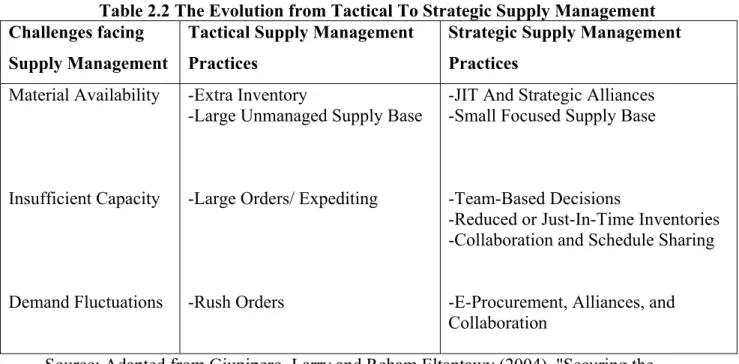
In order to secure material availability supply management professionals are shifting from using less efficient activities, such as carrying excessive inventories levels and ordering from multiple suppliers, to more efficient progressive approaches that involves closer linkages and strategic alliances with key suppliers; focusing on process improvement activities and Time (JIT) deliveries for production, and small supply bases (see Table 2.2). Hence, suppliers are becoming not only a source for low-cost material, but also a way to compliment and enhance buying firm's core competencies (Antonette, Giunipero, and Sawchuk 2002).
In dealing with capacity utilization challenges, supply management professionals are moving away from placing large orders and using order expediting procedures to relaying on team-based decisions, and reduced or Just-In-Time inventories (Antonette et al. 2002). Williams and Stemper (2002) reported that collaborative supply management efforts increase product reliability and reduces risks in product introduction.
There is a greater need to coordinate supplier relationships and to use e-procurement today to deal with demand fluctuations. Traditional business rules and relationships aren't easily transferable to the networked economy. Relying on rush orders to face demand fluctuations can lead to great inefficiencies throughout the supply chain. Supply management professionals today realize the benefits created by e-procurement in creating connections with their supply base. E-procurement facilitated coordinating supplier relationships and is expected to reduce demand fluctuations risks by providing real-time information and, therefore, reducing the likelihood of a detrimental event in the
supply chain. In order to reach the level of coordinated supplier relationships firms could increase the level of communication between purchasing organizations their suppliers. Also, increased information flows and joint efforts to achieve similar goals allow members of the supply chain to coordinate their business relations.
Table 2.2 provides a summary of how literature documented the shift in supply management practices from a tactical to a more strategic posture in handling various supply management challenges.
Table 2.2 The Evolution from Tactical To Strategic Supply Management Challenges facing
Supply Management
Tactical Supply Management Practices
Strategic Supply Management Practices
Material Availability
Insufficient Capacity
Demand Fluctuations
-Extra Inventory
-Large Unmanaged Supply Base
-Large Orders/ Expediting
-Rush Orders
-JIT And Strategic Alliances -Small Focused Supply Base
-Team-Based Decisions
-Reduced or Just-In-Time Inventories -Collaboration and Schedule Sharing
-E-Procurement, Alliances, and Collaboration
Source: Adapted from Giunipero, Larry and Reham Eltantawy (2004), "Securing the Upstream Supply Chain: A Risk Management Approach," International Journal of Physical Distribution & Logistics Management, 34(9), 698-713.
The above discussion highlights a shift in supply management practices necessitated by the nature of competition in today’s business environment. This shift implies the need for a new, more strategic, skill set that aids supply management
professionals in handling the new strategies. The following discussion highlights that the common denominator in the shift in supply management practices is the need for
strategic supply management skills to handle today’s challenges and identifies how they can aid supply management professionals in handling their job tasks in today’s business environment.
Strategic supply management skills include the ability to research the supply base, identifying which suppliers are the best, and the appropriate relationships that will be established with these suppliers. For example, strategic supply management skills, such as structuring supplier relationship skills, are necessary to identify when it may be best to establish an alliance with one supplier and maintain a traditional "bid and buy"
relationship with another. Technology will help the supply management organization to implement these strategies. The access to and availability of technology will determine the type of information exchange with particular suppliers. For example, if a firm has an Enterprise Resource Planning (ERP) system in place, this can be tied into a front-end electronic commerce system. Further, the alternatives and benefits should be greater than those for a firm that does not possess this technology.
Finally, purchasers should possess the ability to implement cost analysis models, which serve as the basis for continual improvement in supplier costs. Strategic thinking can lead to structuring mutually beneficial relationships with suppliers that will
significantly improve the supply management function’s contribution to the firm. Figure 2.1 summarizes the shift from tactical supply management that focused on buying
components on a daily basis to a strategic supply management that focuses on developing long-term supplier relationships and manages the firm’s strategic supplier relationships in an electronic environment.
Categories of Strategic Supply Management Skills: The following discussion illustrates how previous literature defined strategic supply management skills. Anderson and Katz (1998) identified four broad categories of strategic sourcing: 1) technical skills, 2) business development and management expertise, 3) marketing, and 4) sourcing specialist. Giunipero and Pearcy (2002) reported that the strategic dimensions of the skill set required for the world-class purchaser consist of: (1) strategic thinking, (2) supply base research, (3) structuring supplier relationships, (4) technology planning, and (5) supplier cost targeting.
A S e p a ra tio n o f S u p pl y M an a ge m e n t A cti vi tie s W ill O c cu r As O rg an iz a ti on s S t ru c tu re Th e m se l ve s to Pu rsu e S t ra te gi c S ou r cin g S t ra te gi c S ou r cin g A c t i vi tie s ... S t ra te gi c S ou r cin g A c t i vi tie s ... M a n a ge st r at e gic re lat io n sh ip s D e v e lo p c o m p a ny - wide e le c t ro n ic sy st em s D e v e lo p a n d m an a ge a llia n c e s a n d p a rt n er sh ip s D e v e lo p c o m p a ny - wide c o nt r a ct s M a n a ge c r it ic a l c om m o dit ie s
Tr a n s a c tion al A cti vi tie s ...
Tr a n s a c tion al A cti vi tie s ...
E x e c ut e tr a n sa ct ion s wit h st r at e gic sup p lie r s
U se e - sy st em s to o bt a in st an da r d o r in dir e c t it e m s t hr o ugh c at a lo gue s
So ur c e it e m s t h at ar e un ique t o t h e o p er at in g un it
Ge n e r a t e an d f o r wa r d m at e r ia l r e le a se s
M a n a ge a c c o unt s p ay a ble a n d m at er ia l c ont r o l
S o u rce: M o n czk a, T ren t, an d H an d fi eld , P u r ch a s in g a n d S u p ply C h a in M a n a g em en t, S o u th w estern C o lleg e P u b lishin g , 2 0 0 2 .
Figure 2.1 New Forms of Supply Management Skills
Carr and Smeltzer (2000) noted that some skills are especially important with respect to strategic supply management, including the ability to monitor and interpret supplier market trends, general management skills such as decisiveness and interpersonal skills, and technical skills to help suppliers improve their processes and products.
Finally, Burt, Dobler, and Starling (2003) emphasized that the current supply management body of knowledge should enable the world class supply management professionals to conduct 10 key strategic activities, which are:
1. Monitoring the firm’s supply environment
2. Developing and managing the firm’s supply strategy as an integrated whole.
3. Developing and managing sound commodity supply strategies.
4. Collaborating with the firm’s IT function to develop a data management system, which facilitates strategic supply planning.
5. Joining marketing and operations as the key players developing the corporation’s strategic plan.
6. Designing and managing the firm’s supply base in line with its strategic objectives.
7. Identifying the advantages of specific potential supply alliances and then developing and managing them.
8. Developing and managing the firm’s supply chains or supply networks. 9. Developing and implementing programs that protect the environment;
which facilitate the inclusion of diversity, women-owned, and small businesses in economy; and which promote values tin the workplace. 10. Studying and understanding the industries that provide key materials,
equipment, and services; their cost structures, technologies, competitive nature, and their culture.
Strategic Supply Management Skills And Performance: According to Carr and Pearson (2002), a strategic supply management function can help a firm to sustain its competitive advantage in a number of ways. First, it provides value in the area of cost management. Effective management of the cost of inputs to production saves the firm dollars that go straight to the firm's bottom line profits. Second, it provides the firm with valuable information concerning supply trends that will enable the firm to make better decisions and achieve its goals. Third, it establishes close relationships where appropriate with suppliers to improve the efficient quality and delivery of materials. Thus, a strategic supply management function is one that meets the needs of the firm and strives for consistency between its capabilities and the competitive advantage being sought by the firm.
The increased reliance on supply management as a source of competitive
advantage necessitates the active integration of the supply management function in major supply decisions. The trend towards adopting strategic alliances and strategic sourcing imply the elevation of the supply management functions’ status to be more involved in integrative relationships with supplier, wherein the needs of both parties are satisfied. This evolution impacts the ideal skill set required for excellence in the supply
management profession, the nature of the supply management job, skills requirements, training courses offered, and the performance measurement metrics.
Literature evidenced that supply management knowledge and skills has a positive correlation with, and a positive impact on, supply management risk taking (Carr et al. 2000). Supply management risk-taking activities may occur more often as supply
management increases its knowledge base and develops its strategic skill level.
Companies that possess the required supply management strategic skills are more willing to incur the risk of developing close inter-firm integration that is essential in strategic partnering, which can contribute to the competitiveness of the supply chain relationship.
Additionally, the increased competitiveness of today’s business environment raises expectations from the supply management function and its ability to leverage firms’ performance. During the last three decades, supply management practices have undergone unprecedented changes that are likely to shape the skill set required of the supply management/supply management professional. Most of these changes have increased the complexity of the external business environment. Businesses cope with environmental complexity by expanding the supply management body of knowledge upon which these skills are developed. Companies must upgrade the supply management skills of its professionals before they could have a strategic orientation (Pearson and Gritzmacher 1990).
As companies attempt to shift the direction of their supply management functions from a clerical to a more strategic organization, they must recognize the importance of updating the body of supply management knowledge. Supply management professionals are required to possess general management skills and technical skills (Stuart 1993). When the supply management function is part of the firm’s strategic planning, it becomes interested in accomplishing both current and future goals, partnering with suppliers, and creating relationships that are not easily imitated and, thus, enables their firm to obtain competitive advantage.
Supply management strategic skills allow the supply management function to develop its strategies and practices that could be used as a valuable inimitable input to the firm's planning process and, hence, are a source of competitive advantage. Continuously upgrading the level of supply management strategic skills is a prerequisite for supply management professionals to interpret changes in the supplier market and offer technical assistance in developing suppliers, which will produce valuable supplier relationships that cannot be imitated by competition (Lester 1999; Pearson and Gritzmacher 1990).
Furthermore, there are trends in the supply management function’s environment that act as facilitators of the transformation of supply management into a more strategic
function. In order to assist the supply management function move from its earlier clerical task orientation to a more planning, analytical, and strategic orientation, there is a greater reliance on the use of information and on information technology, such as EDI, to support supply management and supply management decision-making. Supply management professionals are no longer responsible for non-value- adding activities and paperwork processing (Burt et al. 2003). The internal end user of an item or service is now
empowered to place orders through the use of Internet directly to the suppliers. The release of this tactical responsibility allows supply professionals to focus on value- adding activities, including early involvement in the development of requirements and strategic sourcing or supply base managements (Burt et al. 2003).
The new capabilities require the supply management professionals to focus on enhancing strategic skills such as the ability to develop what is called "scope boundaries” (Laseter 1997). Laseter defined “scope” as the breadth of material content and associated responsibilities assigned to a supplier. The traditional arm’s length transactional
relationship, when supply management used to be more of a clerical nature, entailed that suppliers had a very narrow well-defined scope. However, with the increased strategic importance of the supply management function, long-term and loose scope boundary supplier relationships provide opportunities for value creation through the integration with the supplier, such as the cases of JIT and integrated quality assurance arrangements. In order to attain the increased supply chain value resultant from these processes, the supply management function needs to use technology that will closely align the firm’s operations with its suppliers.
CHAPTER THREE
DISSERTATION VARIABLES AND HYPOTHESES
DEVELOPMENT
Chapter 3 explores the theoretical perspectives and past research to develop study hypotheses between the model’s constructs. For each hypothesis theoretical explanations and empirical results developed in previous research are offered for support and
consideration.
3.1 What is The Impact of Strategic Supply Management Skills on Supply Management Performance?
Supply management literature evolved along two separate paths that eventually merged into a common body of literature. The traditional path emphasized the tactical objectives of supply management in assessing its performance, such as increasing
productivity and reducing inventory and cycle time (e.g., Hult et al. 2000; Sharland et al. 2003). However, the evolution of the supply management from a tactical to a strategic function was reflected by the emergence of a second path of research that extended best practices in supply management to include strategic suppliers management and the logistics functions (Tan 2002). Eventually, both streams of research merged due to the advent of information technology and intense global competition that motivated many world-class manufacturers and service providers into adopting an integrated strategic approach to defining the performance of supply management. The strategic goals of supply management are to increase customer satisfaction, market share, and profits for all members of the virtual organization (Tan 2002).
There is an increasing awareness that supply management performance is reflected by strategic indicators, such as suppliers’ quality control and customer
satisfaction, rather than tactical measures, such non-value-adding activities as receiving and inspection (Inman and Hubler 1992). Most of the recent supply management literature addresses the supply management process, emphasizing that it is a basic strategic business process, instead of a supporting role to overall business strategy (Tan
2002). The strategic role of supply management now involves managing the relationships with trading partners in order to attain effectiveness and efficiency for supply chain members (Harwick 1997). The emphasis now in measuring supplier is on strategic aspects, mainly supplier integration, customer satisfaction, and business results (Tan 2002).
Meanwhile, there are two main research streams that addressed the importance of strategic supply management skills. The first stream follows a descriptive approach of the current status of the supply management function. This research emphasized the
increased importance of strategic skills in shaping the supply management function in future (e.g., Carter and Narasimhan 1996; Ellram and Carr 1994; Giunipero and Pearcy 2000; Johnson et al. 1998). However, most studies that tackled supply management strategic skills from this perspective are case studies or conceptual pieces and did not empirically examine the impact of strategic supply management skills on firms’ performance.
The other research stream addressed firm-specific strategic supply management skills as nontransferable and unique assets (Carr and Pearson 2002; Lepak and Snell 1999). The theoretical basis of the second research stream relied on a similar argument to the one used in this study; because strategic supply management skills are both valuable and unique, they can be viewed as core assets that could serve as a source of competitive advantage (Barney 1991). This stream of research examined the role of supply
management in contributing to the firm's value growth, supplier responsiveness, and firms’ financial performance (Anderson and Katz 1998; Carr and Pearson 2002; Carter et al. 1998). Firms’ financial performance is measured usually in terms of return on
investment, profits as a percent of sales, firms’ market share, and net income before taxes over a given time period (e.g., Anderson and Katz 1998; Carr and Pearson 2002; Carter et al. 1998; Tan et al. 1998). However, the direct impact of supply management skills on the competence of the supply management function in contributing to the firm and its supply chain members’ objectives has been largely overlooked.
The resource-based view of the firm emphasizes the importance of "competing for the future" as a dimension of competitive advantage (Hamel and Prahalad 1994), which could be a neglected dimension when we focus on the impact of supply management
skills on firm's financial performance. According to the resource-based view of the firm, the firm must be concerned not only with profitability in the present and growth in the medium term, but also with its future position and source of competitive advantage (Carr and Pearson 2002). Therefore, firms need supply management skills that enable the function to develop the strategic plans that will determine how the firm will compete when its current strategy configuration is either copied or made obsolete. By definition strategic supply management skills enable the firm to address the current and future implications of the strategic decisions that the supply management function undertakes.
Both research streams asserted that supply management skills shape corporate revenue realization, competitive cost position, and impact profitability. However, the relationship between the level of strategic skills of purchasers and their performance has been largely overlooked by previous research. As mentioned earlier, supply management skills are like other organizational assets, can be classified as core or peripheral assets. Hence, it is essential to determine the core supply management skills, among the wide variety that were addressed by previous literature, that actually shape corporate revenue realization as well as competitive cost position.
Hart's (1995) framework posited that all human resources of the firm, including strategic supply management skills, fit within the resource-based view theory to explain the firm’s ability to compete. Previous research documented that the more strategic skills each supply management function possesses, the more valuable the function is as a resource to the firm (Carr and Pearson 2002). Strategic supply management skills enable the function to perform activities, which are strategically oriented toward the
accomplishment of firm's goals and help the firm to sustain its competitive advantage (Ramsey 2001). Strategic supply management skills can help improve supply
management performance in a number of ways. First, it provides value in the area of cost management. Effective management of the cost of materials and various inputs to
production saves the firm and its partners in the supply chain dollars that go straight to the firm's bottom line profits. Second, it provides the supply management function valuable information concerning supply trends that will enable the firm to make better decisions and achieve its goals. Third, it helps the supply management function to