Finch, Jeremy
(2018)
An exploration of the challenges facing critical care
ed-ucation.
Doctoral thesis (PhD), Manchester Metropolitan University.
Downloaded from:
http://e-space.mmu.ac.uk/621951/
Usage rights:
Creative Commons: Attribution-Noncommercial-No
Deriva-tive Works 4.0
Please cite the published version
AN EXPLORATION OF THE
CHALLENGES FACING CRITICAL
CARE EDUCATION
JEREMY FINCH
A thesis submitted in partial fulfilment
of the requirements of the
Manchester Metropolitan University for
the degree of
Doctor of Philosophy
Department of Nursing
Manchester Metropolitan University
i
Abstract
This thesis is the result of a two-year participatory action research study that led to a radical change in the way critical care nurse education is delivered in Greater Manchester. It was motivated by concerns that poor academic performance by degree and master’s students was reflective of a teaching ‘ecology’ (Kemmis et al., 2014) focused on sharing tacit specialist technical knowledge, rather than developing higher order thinking skills. The use of teaching strategies that support the development of these skills is important not only to academic improvement but also to clinical practice, where critical care nurses routinely critically analyse a large volume of data during decision making (Lyte, 2008).
Methodology: Action Research (using mixed methods)
• Focus groups and questionnaires explored the views of all students (n=250), Practice based educators (n=11), lead nurses (n=10), managers (2), university link lecturers (n=2).
• Classroom observations evaluated teaching methods and content over the two-year study, measuring how well they were aligned to programme learning outcomes (n=24).
Results
• Classroom observations identified lectures lacked pathophysiology, evidence-based theory and contained little consideration of patient-centred ‘nursing’ care.
• In contrast, students prioritised learning pathophysiology, the evidence-base underpinning clinical decisions and preferred teaching
ii methods that enabled them to work with peers to apply theory directly
to the context of clinical practice.
• PBEs and students discovered new ways of teaching and learning. • Critical care nurse education was separated from acute care nurse education.
Impact
The findings changed local education provision, leading to the introduction of a new local critical care programme which commenced in September 2016. Critical care nurse education was refocused away from a technical, medical model towards one that provides opportunities for students to spend time in the classroom thinking like nurses to develop evidence based patient centred humane care solutions. The findings highlighted the value of academia, identified the usefulness of formative assignments and informed the development of new and innovative assessment strategies. The interventions corresponded with significant improvements in student academic performance and clinical confidence, which had a positive impact on care delivery. The findings informed the development of the National Standards for Adult Critical Care Nurse Education, which were published in 2016 (CC3N, 2016).
Conclusion
Nurse education needs to evolve to meet the changing needs of students and practice. A tripartite approach involving academics, clinical practice and students working together, was highly effective in reshaping both local and national critical care nurse education.
iii
Acknowledgements
Firstly, I would like to thank my Director of Studies Dr Duncan Mitchell and Dr Christopher Wibberley for their wise guidance and encouragement during this learning journey.
I would also like to mention the many students who gave their time to participate, along with my colleagues within critical care education, as without their support and patience this study would not have been possible.
Finally, I would like to thank my wife, Anne, for her unwavering support, patience and encouragement in completing this thesis.
iv
Table of Contents
Abstract ... i
Acknowledgements ... iii
Chapter 1. Introduction: Why did I Decide to Undertake this Study? ... 1
The Research Problem ... 5
Researcher’s Background ... 14
Rationale for the Research ... 15
Aims and Objectives of the Study... 17
Thesis Structure ... 19
Chapter 2. Literature Review: Contextualising the Concerns... 23
Literature Search ... 23
Critical Care: a historical perspective ... 39
The Transition from Competency-based Training to Higher Education ... 52
The Issue of Poor Curriculum Alignment ... 68
How Should We Teach Critical Care Nursing? ... 73
Chapter 3. Methodology: Why use Action Research? ... 81
Ontological and Epistemological Perspective ... 82
What is Action Research? ... 84
Research Design ... 95
Data Collection Methods ... 103
v
Focus Groups ... 112
Questionnaires ... 121
Ethical Considerations ... 127
Chapter 4. Taking Action: Data Collection, Analysis and Local Dissemination . 130 What Counted as Data? ... 131
Data Collection... 133
Data Analysis methods ... 137
Data analysis ... 138
Accuracy and Authenticity of the Data ... 144
Conclusion ... 145
Chapter 5. The Findings: Combining Theory and Evidence to Improve Practice ... 146
Introduction ... 146
Presentation of the Results and Findings ... 147
Research Cycle 2 (January‒July, 2014): Results and Findings ... 169
Discussion and Learning: Midpoint in the Study ... 197
Research Cycle 3 (August‒December 2014): Results and Findings: ... 227
Discussion and Learning: End of Third Research Cycle ... 246
Research Cycle 4 (January‒September 2015): Results and Findings ... 259
Chapter 6. Examining the Impact of the Research ... 292
Contributing to the Education of our Students ... 292
vi
Chapter 7. Conclusion: Significance and Limitations of the Research ... 315
How have I Contributed to the Development of Critical Care Nurse Education? .... 317
Student Learning Gain ... 320
Faculty Learning Gain ... 325
Evaluation of the Research Methodology and Design ... 330
Limitations of the Study ... 337
Conclusion and Recommendations ... 339
Presentations and Publications ... 346
References ... 347
Appendices ... 382
Appendix 1. Participant Information Sheet ... 382
Appendix 2. Consent Form... 384
Appendix 3. Ethical Approval ... 385
Appendix 4. Classroom Observations: CCU Respiratory (Initial Observation) ... 386
Appendix 5. Classroom Observation: CCU Respiratory (Revisited) ... 387
Appendix 6. Summary of Evidence Table. Sample: page 1, question 1 ... 388
Appendix 7. Case History Guidance ... 389
Appendix 8: Focus Group Interview Guide ... 390
Appendix 10. Transcription: PBE Focus Group: Post Study ... 405
Appendix 11. Keynote Transition Slides ... 422
Appendix 12. Minutes: National Critical Care Nurse Education Forum meeting... 423
vii Appendix 14. AIR unit: Criterion Referenced Clinical Skills Assessment ... 426 Appendix 15. AIR Analytical Guide for Grading Applied Theoretical Knowledge ... 427 Appendix 16. Good Practice Exchange Invitation ... 428 Appendix 17: Research timetable summarising all data sources and duration of focus group interviews and Classroom observations ... 429
viii
List of Tables
Table 1. Critical care provision in Greater Manchester (NHS England, 2015) ... 44
Table 2. Focus group summary: participants, number performed and timing. ... 116
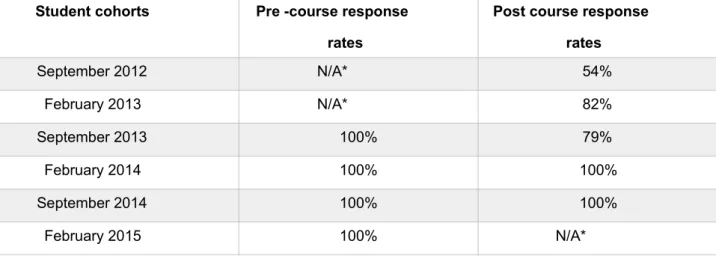
Table 3. Summary of questionnaire responses by student cohort ... 135
Table 4. Carper’s four ways of ‘knowing’ (1978) ... 214 Table 5. Learning objectives and data collection: third and fourth cycle of research . 226
ix
List of Figures
Figure 1. Student academic performance: focus on first attempt referral rates ... 5
Figure 2. Line of graduate continuum indicating shift ... 36
Figure 3. Level of patient acuity (ICS, 2015) ... 40
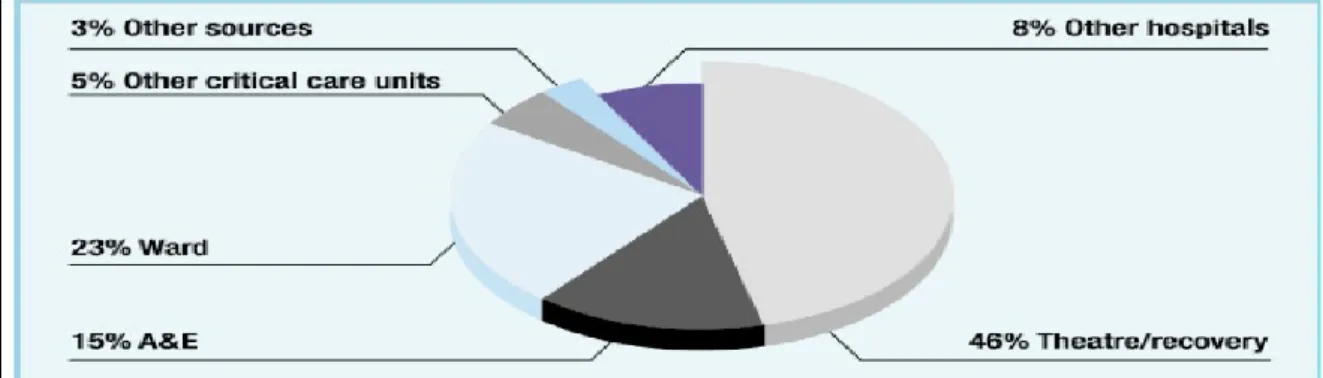
Figure 4. Sources of admission to critical care (Audit Commission, 1998) ... 40
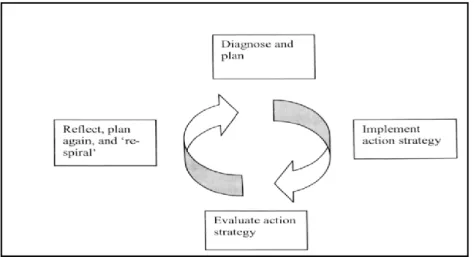
Figure 5. Action research spiral (adapted from Lewin, 1946) ... 87
Figure 6. Cyclic action research process by Kemmis and McTaggart (1988) ... 88
Figure 7. Action Research Model: Gray (2014) ... 89
Figure 8. The Nursing Process (adapted from Craven & Hirnle, 2003) ... 89
Figure 9. Convergence design adapted from Creswell (2015) ... 96
Figure 10. Classroom observation tool action plan ... 111
Figure 11. Student motivations ... 148
Figure 12. Are you aware of the National Standards for Critical Care Nurse Education? ... 153
Figure 13. Are you accessing the course at your preferred academic level? ... 156
Figure 14. S13 students: key themes ... 158
Figure 15. What did students see as the value of academic study in the course? ... 161
Figure 16. Specific learning support areas identified by students on induction ... 166
Figure 17. Curriculum alignment: first set of classroom observations ... 171
Figure 18. First observation of CCP study days (September 2013 – July 2014) ... 180
Figure 19. Thematic comparison between Action research cycle 1 & 2 ... 182
Figure 20. Percentage of students with less than 12 months’ ICU experience starting the CCP ... 183
Figure 21. What is the optimal period of pre-course critical care experience? ... 184
Figure 22. Student awareness of the National Education Standards ... 185
Figure 23. Did you access the CCP at your preferred academic level? ... 186
x
Figure 25. Did the students achieve the knowledge and skills they expected to? ... 189
Figure 26. Pre-course students’ views on the value of academic study within CCP .. 190
Figure 27. Areas of learning with which students feel they most require support ... 194
Figure 28. Student cohort results. Period February 2013 ‒ February 2014 ... 197
Figure 29. Kolb's (1984) learning cycle ... 27
Figure 30. Good decisions = safe care (NHS, Education for Scotland, 2013) ... 204
Figure 31. Clinical decision making, NHS Education for Scotland (2013) ... 208
Figure 32. Macnee and McCabe (2008) ‘four stranded braid’ model ... 217
Figure 33. Thematic comparison between action research cycles 1‒3 ... 227
Figure 34. Range of pre-course critical care experience ... 228
Figure 35. Change in student awareness of the National Education standards ... 230
Figure 36. Did the students find the writing assessment useful? (Sept 2014 cohort) . 231 Figure 37. Did the writing assessment help students access the right level of study?231 Figure 38. Did you access the CCP at your preferred academic level? ... 233
Figure 39. What knowledge and skills did nurses expect to develop? ... 234
Figure 40. Pre-course self-assessment ... 235
Figure 41. Did you achieve the knowledge and skills you expected to? ... 236
Figure 42. Pre-course students’ views ... 238
Figure 43. Student cohort results. Period February 2012‒September 2014 ... 245
Figure 44. Learning as being stirring theory into practice adapted ... 250
Figure 45. Acute and critical care study days observed and re-observed ... 259
Figure 46. Acute and critical care study days (1‒17). Observed and re-observed ... 260
Figure 47. Curriculum alignment to core themes: first and last six months of the study ... 263
Figure 48. Thematic comparison between action research cycles 1‒4 ... 269
Figure 49. What is the optimum level ICU experience before commencing the CCP? ... 271
xi
Figure 51. Was the course admission process fair and reasonable? ... 273
Figure 52. Did you access the CCP at your preferred academic level? ... 274
Figure 53. Number of master’s level students per cohort over the course of the study ... 274
Figure 54. What knowledge and skills did nurses expect to develop? ... 276
Figure 55. Did you achieve the knowledge and skills you expected to? ... 277
Figure 56. What do you see as the value of the academic study in this course? ... 279
Figure 57. Percentage of students who engaged with academic support ... 282
Figure 58. Percentage of students who engaged with the formative assignment ... 282
Figure 59. L.6 academic performance linked to the attendance of academic tutorials283 Figure 60. L.7 academic performance linked to the attendance of academic tutorials283 Figure 61. Summary of student academic performance: first attempt referral rates ... 284
Figure 62. Has the CCP influenced your clinical decision making? ... 287
Figure 63. Impact on the clinical confidence and competence of students ... 288
Figure 64. What is your level of confidence in the competency assessment process? ... 289
xii
Abbreviations
CCP Critical Care Programme Local critical care nurse
education programme.
CC3N Critical Care Network -
National Nurse Leads
National Steering group for Critical Care Nurse education. Members are critical care nurse practice leads and university programme leads.
MCCC Manchester Critical Care
College
Organisation responsible for administering and delivering local critical care nurse education.
PBE Practice-based educators Clinical-based educators
teaching the critical care programme.
PAR Participatory action
research
A research methodology that involves participants and encourages their contribution to the research.
EBT Evidence based theory The integration of best research
evidence within the context of nursing.
1
Chapter 1. Introduction: Why did I Decide to Undertake
this Study?
Chapter preview
This chapter outlines the reasons why I decided to undertake this study, which
resulted in a challenging and rewarding journey of learning. This section
introduces the study, outlining the educational setting, along with the professional
and personal drivers that persuaded me of the compelling and urgent need to
conduct this investigation. It concludes by presenting the aims and objectives of
the study.
This thesis is an attempt to better understand the delivery and assessment of contemporary critical care nurse education. It will share the originality of my contribution to new thinking in this area and explain how, through this action research process, I have influenced the learning of students, tutors (and myself), and the delivery of critical care education on a local and national level. This was both a personal and shared learning journey, developing as an academic, whilst working collaboratively with clinical practice based educators (PBEs) to critically explore our educational practice and learn from engaging with our students.
The initial drivers for the action research were a shared pressing concern that our educational practice was not as it should be, and that we were not adequately supporting our students’ academic development. This was the starting point, a collective desire to investigate our collaborative higher education programme,
2 leading us to gain new knowledge, understanding and insights. The process led us away from comfort zones to individually and collectively question the evidence base of what we think we know and what we teach our students. I had worked with the Manchester Critical Care College (MCCC) since 2003 and, like other members of the team, had some preconceptions as to the reasons underpinning poor student attainment. Some proved correct, some false, but the vast majority of key issues and insights were only discovered as a result of undertaking this study.
What we learned convinced us of the need to make major changes to the curriculum, including the way we teach, support and assess our critical care nursing students. The study includes descriptive statistics, combined with excerpts of dialogue with students and other stakeholders to truthfully reflect their views, and facilitate analysis of key issues, relationships, and the political tensions that arose during this period of change. The journey begins by introducing the local critical care programme upon which this study is based.
The action research explored the challenges facing critical care nurse education within Greater Manchester over a two-year period (September 2013–September 2015). The study evaluated the Greater Manchester Critical Care Programme (CCP), which leads to the award of the nationally recognised benchmark qualification for this specialised area of nursing practice. The course was and remains pivotal to workforce planning for these critical care units as national standards require that 50% of their registered nurses hold this nationally recognised qualification (CC3N, 2016). This course is available to registered
3 nurses working within critical care. The duration is 12 months, and is undertaken at degree or master’s level, with clinical competence assessed by mentors within the workplace, which is reflective of its strong links with clinical practice. The quality of this higher education provision, and its key role in delivering sufficient adult critical care nurses to meet workforce needs, signifies its importance to the delivery of critical care services within the region.
The Critical Care Programme (CCP)
This section outlines the original curriculum of the CCP that was delivered during the period of this study (September 2013–September 2015). This information provides the context required to understand why, as a result of learning emerging from this research, a new and innovative curriculum was introduced in September 2016.
The CCP is a collaborative programme, delivered by the Manchester Critical Care College (MCCC), funded by Health Education England, and validated by Manchester Metropolitan University (MMU). The CCP commenced in September 2011 and offers academic recognition for professional skill acquisition within a critical care environment, with half the credits awarded for the competency element, which are assessed by mentors within clinical practice. The curriculum consisted of two units: an acute care unit (ACU) (30 credits), which focused on developing knowledge and skills when caring for patients within an acute care setting; a second critical care unit (CCU) (30 credits) developed students’ knowledge and skills in caring for patients within intensive care.
4 Students attended the MCCC for seven study days per unit. The original content included normal anatomy and physiology, pathophysiology, assessment and management of critically ill patients, and was taught using a systems-based approach, such as respiratory, cardiovascular, renal, etc. The themes were repeated in both units, with the complexity escalating to reflect the increasing acuity of illness. Teaching was delivered by 11 PBEs who were employed and worked within Greater Manchester’s critical care units. There were two intakes per year commencing in February and September, each with 45–50 students. Most students were drawn from critical care areas and completed both the ACU and CCU modules, with a small percentage drawn from acute care areas, and therefore attending the ACU only.
The CCP was delivered at level 6 (degree) and 7 (master’s), as outlined by the Quality Assurance Agency (QAA) (2008) in the Framework for Higher Education qualifications in England, Wales and Northern Ireland. Students were required to successfully complete the entire programme to gain the award of a Certificate in Professional Studies in Critical Care (academic level 6) or Postgraduate Certificate in Critical Care (academic level 7). The original academic assessment strategy comprised a 3000-word case study for the ACU undertaken after six months and a 20-minute oral presentation based upon very similar criteria for the CCU after 12 months. The assignments involved students critically exploring the evidence base underpinning their nursing care, and was designed to develop underpinning knowledge, alongside a range of graduate level skills. The CCP represented a major change for the MCCC; a transition from delivering a
non-5 academic or diploma level CCP, to meeting the higher academic standards required when delivering degree and master’s education.
The Research Problem
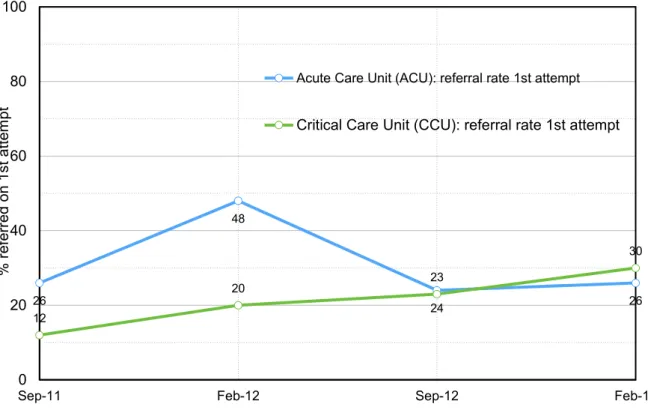
For research to be justified, it needs to offer the potential to resolve a genuine problem (Elliot, 1991). In this case, there was the need to explore the reasons why the educational processes at MCCC were producing sub-optimal student academic performance, indicated by consistently higher than average referral rates as illustrated in figure 1.
Figure 1. Student academic performance: focus on first attempt referral rates 26 48 24 26 12 20 23 30 0 20 40 60 80 100
Sep-11 Feb-12 Sep-12 Feb-13
% r ef err ed on 1s t a tte m pt
Acute Care Unit (ACU): referral rate 1st attempt
6 The relatively high referral rates continued despite offering the normal student academic support and supervision processes, such as named academic tutors and the opportunity to send drafts. Overall the quality of the students’ academic work did not improve, resulting in an average referral rate of 26% on first attempt for the period. The suspicion was that the educational pedagogy was not aligned to supporting students to develop graduate or master’s level skills. The teaching methods were one dimensional, focusing almost entirely on transferring clinical knowledge in a didactic manner, reflective of nursing’s vocational heritage, according to the European Tuning project report (2009). The classroom experience did not appear to have changed when the collaborative higher education programme commenced in 2011, with mainly non-referenced clinical information, and little linkage to students’ academic work. In view of this, it seemed unsurprising that less academically able students may have mirrored this descriptive teaching approach, based upon sharing tacit knowledge, when undertaking their assignments.
This analysis is supported by feedback from the external examiner in September 2012:
Timing of results: The results for ACU relate to the period 6 months after the cohort began. The results for the CCU relate to the period 12 months after the cohort began. Therefore, February 2012 cohort 48% ACU referral rate occurred in August 2012, and CCU 20% January 2013. The February 2013 ACU 26% referral rate occurred in August 2013, which is when this study commenced.
7 The referral percentage for the acute care unit is above the normal average
at 48%. This is currently being addressed by the internal course team and
MMU advisors. The students who received a referral grade failed to address
the assignment remit as the academic work was badly structured and lacked
both depth of knowledge and supporting evidence.
These high referral rates and educational differences existed despite the CCP passing all the normal quality assurance processes to become recognised as a higher education programme. The MCCC is not a university and its staff did not have the academic specialist knowledge and experience to support their students; their culture was very different. The PBEs have clinical and educational qualifications, but their focus has remained on delivering clinically able critical care nurses, with the 95% competency pass rate evidence of their success in this aspect. The transition from diploma to degree and master’s level highlighted the educational differences presented in meeting the needs and expectations of students studying at these higher educational levels and exposed weaknesses in the CCP.
The experience of working with the MCCC in the two years prior to the start of this study led me to conclude that university lecturers provide a key additional higher education component. These include a strong focus on supporting students to develop their higher order thinking skills, and translate these learned practices into producing better structured, critical and referenced academic assignments. It was clear that the MCCC students were not consistently being adequately supported to develop relevant higher order academic skills. These
8 are widely recognised as critical analysis and synthesis of best evidence, applied within the context of clinical practice (McCleod Clarke, 2007; Barak et al., 2007; Hardcastle, 2008; Jones, 2012). The consistent high referral rates indicated that 20–48% of students were not able to demonstrate these skills, presenting work that was typically descriptive and frequently failed to utilise referenced evidence in rationalising their clinical practice.
The aim of the CCP is described in the National Standards for Adult Critical Care Nurse Education, who have consistently described this in terms of developing critical care nurses who have the specialist knowledge and skill set to deliver safe high-quality bedside care (CC3N, 2012 and 2016). They expect this care to be based upon the highest standards of research and evidence. To meet this standard, nurses need to develop these higher order thinking skills to enable them to critically analyse the large volumes of information that guide the decisions in such a complex and dynamic area of practice. To achieve these skills the CC3N required critical care nurses to complete the CCP at degree or master’s level. The MCCC failed to comprehend the extent of the educational changes required of its curriculum to deliver education at these academic levels. This institutional inaction contrasted with the specialties’ clinical and educational nursing leaders, who in developing the National Standards for Adult Critical Care Education recognised the role of higher education in developing future critical care nurses.
Balancing this, there were many positives from the collaborative CCP, such as high quality, current and credible clinical teaching, and a 90% successful
9 completion rate. The problem was that for too many students this meant one or more re-submissions and a poor learning experience. This was highly frustrating for these students, the PBE and the Programme Committee responsible for the quality of provision. It was also a workforce concern, given the requirement for students to pass both the academic and competency elements to achieve the Critical Care Nurse qualification. Student academic progression was important because high referral rates, with delays in delivering qualified critical nurses to the workforce, had the potential to directly impact service provision.
It was apparent that there were important cultural differences between the MCCC and university faculties, and as a result the programme was not adequately supporting students’ academic development. In 2011 when we started the new collaborative CCP, the learning outcomes and assessments had changed, but the study content and teaching methods had remained unchanged. The PBEs had not embraced or appreciated the changes required to teaching when delivering higher education, which meant the students were receiving competency-based vocational education, rather than a graduate level programme. The students and academics were coming from a very different place than many of the PBEs, representing a microcosm of the differences that exist between contemporary graduate and master’s level nurse education and the preceding era of nurse training.
The time was right for a formal study, which would allow the key stakeholders to explore the issues and consider the evidence with a goal of gaining greater insight and improving educational practice. The PBEs seemed detached from the
10 academic learning needs of the students, with the outcome that many students were struggling with their academic studies. The five PBEs that formed the academic marking team rationalised the reasons for the high levels, feeling that poor student attainment lay in two areas:
1. Most students were newly qualified, and so had little practical clinical experience of critical care to reflect on. Some critical care units were sending staff on the CCP after only three months’ experience, effectively using it as an induction programme. This was undermining the credibility of the CCP, as these students were novices in their areas and therefore had very little knowledge or relevant clinical experience, which limited their ability to contribute to classroom discussions or reflect with any critical depth of understanding during their assignments.
2. Many of the students had a low level of personal motivation for undertaking study and had poor academic ability.
The PBEs were aware that attendance on the CCP was considered mandatory for new nurses commencing work within critical care. They deduced that many diploma level students were in effect being coerced into undertaking graduate study, even though many were academically weak and not naturally inclined to pursue degree level study. The driver for this pressure was the decision of the Nursing and Midwifery Council (NMC, 2010a) to make nursing an all graduate profession from 2011. All students, regardless of their academic interest, motivation or ability, accessed the programme at degree or master’s level to achieve the nationally recognised specialist Critical Care Nurse qualification.
11 Without this qualification, they would not achieve career progression within these areas, as this is the nationally recognised standard (CC3N, 2016). This drive towards academic attainment for all nurses with career ambitions is an educationally challenging issue for not only the teachers at the MCCC, but is also indicative of wider changes and growing pains that faced nursing in England as it rapidly transitioned from a widely diploma level profession to an all graduate and increasingly master’s level profession.
In September 2013, the extent of the change within continuing professional education was not appreciated, as by September 2014 all nurses entering the professional nurse register in the UK were graduates. This resulted in a rapid increase in the number of nurses who expected to undertake the programme at master’s level, which raised concerns within the MCCC as to whether this would further increase referral rates, impacting on workforce planning. This change in student demographics over the two year period of the study generated tensions between those in favour of encouraging master’s education and those who viewed it negatively. This development was a major driver of the widespread changes to the curriculum and culture of the learning environment. It raised educational questions regarding the profound differences between the current degree programme and master’s level education and had the effect of raising the educational bar.
These changes created tensions relating to what a master’s level critical care programme should look like, who should access it and how much clinical experience they required prior to commencing the course. Critics of the increase
12 in master’s level education such as Hardcastle (2006) in New Zealand and Aitken et al., (2006) in Australia have both questioned the value of a master’s level qualification if it is not matched by a mastery of clinical practice at the bedside. This argument has substance given that all graduate and master’s students are assessed to the same level of clinical competence. However, this does not invalidate the desire by students who already have a degree to study this speciality at a higher academic level. This issue became a contentious and recurrent theme, which is explored throughout this study.
Tensions and Politics
A tension existed in our university having validated the programme, because of the requirement that 100% of students should begin their course with the belief that they will successfully complete it. Such consistently high referral rates were unfair for students, as it raised the question of whether we were setting many students up to fail by allowing as many as a quarter to access a course which may not have been commensurate with their academic ability. This led me to question what are acceptable, good or poor pass rates? The consensus across my colleagues at MMU was that a referral rate of 20% on first attempt for written assignments was the norm, indicating we were consistently exceeding this. There is a dearth of information relating to this important quality indicator, and it is unsurprising that universities would be reluctant to share this information with their competitors. The outcome was that as lead tutor from MMU, and having written much of the programme, I felt a professional responsibility to these students to improve the quality of the course. These responsibilities are well defined by the Quality Assurance Agency.
13 The Quality Assurance Agency sets the standards for higher education institutions in the UK to safeguard the quality of academic practice, including the quality of education and the student experience. It was unambiguous that the University as the awarding institution has ‘ultimate responsibility’ for the academic standards and quality of the student learning experience on the CCP (QAA, 2012b:6). The students must begin the course with the reasonable expectation that as they were accepted onto it, they were capable and expected to achieve the learning outcomes. The selection criteria required urgent review.
This was a politically sensitive area, with MCCC management and the University requiring a graduate level programme, and Greater Manchester’s critical care units requiring their workforce needs be met, which meant their staff successfully completing the programme within 12 months. The MCCC was conflicted over how to manage these tensions, with pragmatic staff pondering the development of a diploma or a non-academic option. However, students already had a diploma or degree and would gain no further academic reward for their effort, and neither of these options met the standard required to gain the award of a nationally recognised critical care nurse qualification.
The tensions strongly motivated me to explore and understand the educational issues, to allow our collaborative team to deliver the educational changes required to make the CCP excellent. I felt compelled to better understand the underpinning educational issues, explore how we could work as a team to make improvements and then test these in practice. To understand my relationship with the CCP / MCCC and gain insight into why I decided to undertake such a major
14 commitment, we need to examine the factors that influenced this decision and helped shape my professional perspective.
Researcher’s Background
My relationship with the MCCC is longstanding, having been part of the team who developed the original Greater Manchester competency-based training programme in 2001. This formed part of my role as a senior critical care nurse and educational lead, having worked in this speciality for 15 years. In 2003, I managed the MCCC for 12 months and developed a personal attachment to the organisation and the CCP.
Since 2004 I have worked as a Senior Lecturer in Nursing and felt that I had developed expertise in the delivery of higher education. My passion to understand education and improve my teaching and academic practice is longstanding, completing my MA Education in 2007. I remained closely aligned to clinical practice, maintaining my role as an instructor for the Resuscitation Council (UK), which retained my focus on ensuring clinical education provides nurses with the skills to competently care for acutely and critically ill patients.
I continued to work with the MCCC and this provided the basis for the development of a collaborative programme, which moved the CCP from competency-based training to higher education. In hindsight, I was naive to think this transition would be as easy as simply writing a new curriculum. It had taken me many years to develop from a clinical educator, training and educating nurses in the practice of critical care, to gaining expertise in the specialised practice and
15 nuances required to deliver higher education. When consistently higher than expected academic referral rates became evident from September 2011 to 2013, I felt a range of emotions ranging from disappointment, responsibility and professional intrigue into the educational reasons underpinning this.
I am a nurse, educationalist and an academic, with a focus on objectivity and rationality, which combine to inform my perspective. I am also a pragmatist and so investing so much time and resources would need to deliver tangible results. These factors convinced me this was an opportunity to conduct a form of research that would allow us all to learn together, would be meaningful and have lasting impact. On reflection, when I began this study I lacked critical insight relating to the depth and extent of the issues involved, including the knowledge and cultural gap between higher education and clinical practice, or the challenges this would present to a relatively novice researcher.
Rationale for the Research
This research had the clear and well-defined purpose of evaluating the CCP curriculum and learning as a team how we could meet the increasing academic requirements of critical care nurse education. This investigation was undertaken as a team, including our students, to help us all to gain a shared insight into our actions, ranging from what we plan to teach, the way we teach, to the subtler behavioural signals that we subconsciously provide to students, and the impact all this had on the development of students’ graduate level skills. The primary purpose for the CCP was to develop nurses who were able to care for critically ill patients and it was paramount that during any changes, it retained a balance
16 between academia and practice, which would continue to deliver highly skilled critical care nurses. The challenge was to improve the academic aspect, without compromising the clinical dimension, as this would be contrary to the traditions of the MCCC and would be rightly resisted by the PBEs. The objective was that as educators, practice leads, academics and students we would learn together how to improve the CCP and develop it into the best CCP in the UK, learning lessons along the way that could be shared with other providers nationally. Richardson et al. (1990:75) capture the essence of the vision for this research and view of how its success may be measured when they state:
Research is about illumination. If we don’t succeed in that we have failed. If a person reads something and doesn’t feel any wiser, then why was it done? Research should fire curiosity and the imagination ... If people feel research illuminates their understanding and gets into their thinking, then it’s of use.
I have outlined our1 ideas of why so many of our students were struggling with the academic assessments. At the time this study began, these were assumptions, without any meaningful evidence to show us how or where we needed to make improvements. As a relative outsider, and academic, I needed compelling and credible evidence, obtained using rigorous established research methods, to provide the Programme Committee with the information required to make informed decisions. It would also be needed to persuade experienced educators, who had taught the course in the same way since it was established
1 ‘Our’ refers to the team of PBEs, managers and academics working together at the
17 in 2001, that there was a need to re-examine and potentially change their practice.
Given the ingrained nature of the current practices and culture, and the political sensitivities of an academic evaluating their practice, it was important that any research was performed in as democratic, inclusive and non-threatening a manner as possible. Action research met these characteristics by providing professionals with a way of systematically analysing and resolving issues in their practice (Morton-Cooper, 2000). Within the educational setting, action research is any systematic enquiry conducted by teacher researchers to gather information about ways that their course operates, how they teach and how well their students learn (Mills, 2003:1). Action research provided a recognised mechanism for the exploration of the values of the MCCC, the curriculum and self-reflection by the PBE. The aim was to improve the alignment of teaching to student learning needs and hopefully enhance PBE teaching satisfaction. The adoption of an action research methodology, with its socially democratic ethos would pose additional challenges of balancing my roles as principal researcher; lead university link lecturer, with responsibilities for the quality of the programme; and a critical care nurse. The suitability of this methodology to deliver these outcomes will be explored in depth in Chapter 4.
Aims and Objectives of the Study
The aim of this research was to explore how the uplift to graduate (and increasingly master’s) level education was shaping the delivery of critical care nurse education. The study investigated why students were consistently
18 performing to a sub-optimal academic level. It was suspected this was the result of weaknesses in the curriculum, and there was a compelling need to investigate and make improvements to ensure students could achieve their full potential. The intention was to work in partnership with practice colleagues to explore how to continue to help students develop clinical nursing knowledge and skills, alongside academic growth and attainment, represented by the quality of their assignments and clinical confidence. This was a moment of contemplation and reflection; a time where it felt right to take stock and follow Young’s advice (1998:2), by subjecting our practice to critical examination. The belief was that this would help us to learn, understand how to improve the curriculum and gain a better understanding of how actions in the classroom were affecting students’ performance (Baumfield et al., 2013). This reflective approach is supported by Biggs (2003:259) who advocated that 'effective teaching means becoming a reflective practitioner, and for that you will need a theory of teaching'. It was by continually drawing on educational theory, listening to participants and drawing on our collective experience that we implemented and evaluated changes to the programme.
The development of clear aims and objectives was given added significance because this was participatory action research, and retaining direction required a shared vision, a collective sense of purpose. This was an action research study whose primary intention was to achieve local change through mutual ‘learning’, with the generation of theory subordinate to the goal of improving local practice (see Elliot, 2009). The aim and objectives are set out below, although as McKernan (1996:32-33) notes, because action research is a formative process,
19 these were slightly modified during the process of joint reflection and evaluation, which are intrinsic features of action research. This resulted in the addition of ‘and master’s level’ to the aim, because the student demographic changed as the study progressed.
Aim:
To explore how the uplift to graduate (and master’s level) education is impacting the delivery of critical care nurse education.
Objectives:
a) To investigate current teaching practice, informing the implementation and evaluation of strategies designed to help students improve their academic development.
b) To improve the academic performance of students undertaking the Critical Care Programme.
c) To develop increased understanding and insight amongst the MCCC staff into the impact learning methodologies and practice have upon student learning experience.
Thesis Structure
The process of deciding how to structure this thesis required careful consideration. As McNiff (2013) explains, action research is different from traditional forms of research, so the format of sharing it is also different. The ‘traditional linear structure’ of a single literature search at the start of the study, and the presentation of findings in themes did not accurately represent the
20 research story. A more satisfying synergy was sought to reflect the unwinding experience in terms of the ongoing dialogue with the literature and the importance of the chronology of the action research cycles to building the layers, learning and intervention. Similar experiences have been reported when structuring action research theses (Winter, 1998; Dick, 2002; Fisher and Phelps, 2006; Davis, 2007; Reason, 2007), with the traditional structure described as a constraining template for positivism, that does not represent the lived experience (Stapleton and Taylor, 2004). This literature informed the development of the following structure, which reflects the action research process.
Further literature searches and interim discussions are included after each action research cycle. This break from the traditional thesis format is justified because it represents the ‘theory-practice conversation’ in action research practice (McAteer, 2013:6). Not all the issues are known at the start, such as the emergence of case histories, the questioning of our basis for ‘knowing’ and consideration of the learning environment as a living ecology. Therefore, pausing to critically reflect on our interventions and periodic referral to the literature to deepen our knowledge was required to inform further action, along with shaping the ongoing development of the study (Green, 1999; McNiff and Whitehead, 2009; McAteer, 2013; Anderson and Herr, 2014). These modifications are justified to provide an accurate representation of the lived action research process (see Winter, 1998; Richardson, 2000; Davis, 2007). They meet a key aim in the presentation of action research of explaining why we researched topics and how this informed the collective understanding that informed our actions and led to the generation of new knowledge (see McNiff and Whitehead, 2009).
21 The findings are presented chronologically, reflective of the four cycles of the action research used within this study. This structure reflects the compelling emergent story; the process of sharing the data with colleagues at each stage of the action research process, congruent with a belief that the traditional model of thesis writing is not appropriate for the cyclical process of action research (see Fisher and Phelps, 2006; Reason, 2007; Davis, 2007). The cyclical presentation of data authentically represents the process of critically questioning the meaning of data, seeking counter assumptions at each stage (Dick, 2002). It is designed to overcome a common limitation in the presentation of action research findings, the lack of reporting of the research cycles in a way that allows others to analyse the study systematically (Gibbs et al., 2017). It presents action research as it is, including the frustrations, dead ends and the search for new or better questions, which Winter (2002) argues is at the heart of good action research.
Conclusion
This chapter has outlined the complex issues that required investigation for us to learn how to improve the quality of critical care education. Central to this undertaking was the belief that the high academic referral rates were symptomatic of fundamental flaws in the current programme that were reflective of differences in our educational approaches. The education appeared solely focused on the provision of clinical education, at the expense of developing students’ academic skills. It seemed that in many respects we were speaking a different language. This study provided the opportunity to work together to challenge our assumptions, understand our differences and find solutions that
22 would improve the quality of the programme, while better supporting our students’ academic and clinical development.
This was a personal as well as professional journey. As the lead MMU academic, I had a professional responsibility to work with the MCCC to ensure students were fully supported to achieve educational success. This study provided me with the challenge of exploring and attempting to resolve these local issues, particularly the forces that are driving and resisting nursing’s transition towards an all graduate and master’s level profession.
23
Chapter 2. Literature Review: Contextualising the
Concerns
Chapter preview
This literature review critically examines the regional, national and international
forces that steer critical care nurse education towards graduate / master’s level
study. This includes consideration of the workforce needs of our critical care units,
balancing these alongside the contemporary learning needs of nurses as
professionals, individuals and contributors to our wider society. The value of
higher education to critical care nurses and nursing in general is questioned. Why
do nurses need to be graduates? Finally, there is an exploration of higher
education strategies that best support the development of graduate level
knowledge and skills that are relevant to, and enhance the quality of nursing
within critical care.
Literature Search
This chapter examines the educational, clinical and political environment in which the Greater Manchester CCP was delivered. It performs the first action research step of building a shared understanding of the ‘specific character of the situation at hand’ (Lewin, 1948:204), providing an assessment of the key issues. This was the start of an action research journey that continually raised many questions about the right way to address varied and complex educational challenges. A theme of the research was to investigate how to improve critical care education provision, and this required the ongoing review of the literature to explore the
24 evidence base supporting interventions to ensure these were well informed (given the importance of this curriculum to critical care services). This is an educational thesis, and the purpose of this literature search was to build a shared understanding of the educational environment and theories that shape the provision of critical care nurse education.
The approach provides a narrative review of current published knowledge to provide a comprehensive understanding of the key concepts, educational theories and evidence relating to local and national provision of critical care nurse education. The narrative assessment analyses, synthesises and evaluates this literature to provide the contextual understanding required to underpin this study. The initial literature review explored themes such as critical care provision, critical care nurse education; along with an evaluation of the purpose of higher education within critical nurse education. This process of contextualisation was followed by a review of the educational theories and research that underpin current teaching practice, with the intention of informing evaluation, and where required, re-design of the critical care nursing curriculum.
A narrative approach to reviewing the literature was used because my aim was to explore the broad concepts, terms, and theories, including the evidence relating to educational practice (see Saks and Allsop, 2007). A systematic review was not undertaken because I was not seeking to answer a specific question relating to a single focused area of educational best practice (see Green et al., 2006). A broader and more flexible approach was required, given the ongoing need to search and re-search the literature as new queries arose.
25 In order to ensure no relevant studies or information sources were missed, broad search terms were used including ‘critical care nursing’, ‘critical care nurse education’, ‘critical care beds’ AND ‘Greater Manchester’. As this is primarily an educational thesis the search focused on the role of ‘higher education AND nursing’, and ‘critical thinking’ AND ‘higher education’. Boolean logic was applied, including the use of truncation to search the data bases. The reference lists of articles were also examined to locate further relevant literature.
The data bases searched included the MMU library, CINAHL, Scopus, Pubmed, Proquest (ERIC), British Nursing Index, Science Direct, The Cochrane library, Google Scholar, government sites, as well as the websites of critical care and nursing professional organisations.
Results were narrowed down using the inclusion criteria of ‘scholarly and peer reviewed’, ‘full text’, in the discipline of nursing, ‘English language’, searching books, dissertation or thesis. Book reviews and newspapers were excluded. There was no restriction on the year material was published because the purpose was to find all relevant educational literature. Results were refined by using database filters to exclude results which lacked relevance.
Education Theory
The focus of this study is to learn how we can best educate critical care nurses, who are experienced healthcare professionals. In order to understand and improve critical care nurse education, we need to understand the educational theories that underpin our curriculum.
26 Theories of education provide different views on human nature and how
people best acquire new knowledge and skills. Behaviourism theories, based on the work of psychologists such as Skinner and Pavlov, position students as passive recipients of knowledge. Students commence learning with a clean slate, and no free will, and they are conditioned by the teacher to achieve the desired learning outcomes through positive and negative reinforcement (David, 2007). Whist there is some truth that our students are supported through positive reinforcement to achieve the learning outcomes, the nurses undertaking the CCP do not come with a clean slate. They possess varying degrees of critical care nursing experience, and as students undertaking higher educational programme, they are encouraged to question their educators, peers and mentors.
Social learning theories are more useful in this context, because they recognise the contribution to learning of students as individuals, recognising their previous clinical experience. The purpose of education is to recognise and build upon this existing knowledge and skills, using it as a starting point, to actively engage with students as partners in constructing and furthering their learning (Daniels et al, 2009); a position which reflects the MCCC learning environment. The social cognitive theory, developed by Bandura (1986) recognises the social nature of learning, and is useful in the context of the MCCC, because students work within critical care units across Greater Manchester, with peer to peer learning forming an important feature of education, as they learn from each other and share their practice experiences.
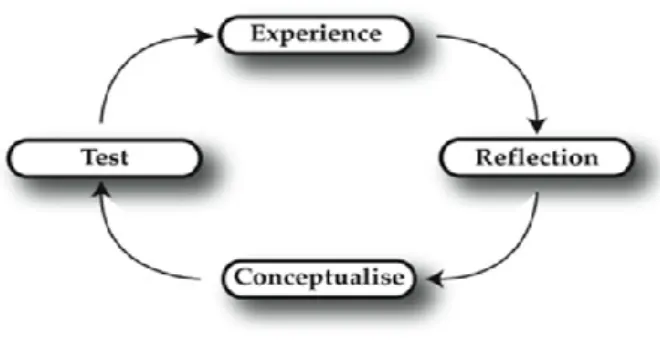
27 Experiential learning theory is important in this context, because it is based
upon the belief that we learn by doing, observing, and reflecting upon practice based experiences. Learning occurs primarily as a result of reflection upon these practice based learning experiences. The theory is based largely upon the work of Dewey (1938), Kolb (1984) and Schon (1983).
Figure 29. Kolb's (1984) learning cycle
Experiential learning theories such as Kolb’s learning cycle are very relevant in nursing because it is a practice-based profession. These theories resonate because they recognise that learning is frequently based upon reflections that are individual; and can occur inside and outside the classroom. Further, Dewey noted the necessity of using educational methods that help students integrate new theory directly to the context of their practiced base experience. This approach to learning may take many forms, such as discussions on professional issues, problem-based learning, simulation, case scenarios and learning within clinical practice. This cycle of learning through doing and reflecting on practice serves as a bridge in the theory-practice relationship, underpinning learning within the MCCC and clinical practice.
28 It is this emphasis on reflection and application of knowledge (theory) directly to the context clinical practice that are key concepts underpinning individual and shared professional learning (Philpott, 2014). This theory reinforces the importance of students having a significant period of experience of working within a critical care environment, as this knowledge and operational experience, provides the basis for individual and group reflection, which are key features of the curriculum.
These educational theories shine light upon the educational pedagogy and practises that underpin the critical care programme; providing a basis for considering our underlying views on the nature and purpose of nurse education. Importantly, social and experiential learning theory informs us that learning does not begin and end in the classroom (Alexander, 2009), rather it is a reflection of the social and cultural fabric of the MCCC, clinical practice, and the collaborative partnership with MMU as the higher education provider.
Higher Education
Higher education is changing in many ways. There has been a concerted policy widening of access to graduate level education from a choice for the select few, to becoming increasingly the norm for people wishing to either enter a profession or progress in their careers (Collins and Hewer, 2013). Tony Blair created the vision for this transition in 2001, setting a goal for 50% of young adults to progress to higher education by 2010 (Blair, 2001:20). Although the Labour government quietly abandoned that target in 2012, they came close to meeting it, as by 2009, university participation rates amongst 17 to 30 year olds had risen to 45%
29
(Mansoor, 2010). Over the last five decades, universities have become
increasingly global institutions, using technology to allow their business to expand across geographical and intellectual borders (Wildavsky, 2010) to influence society. These institutions develop and share knowledge, including evidence-based research that supports decision making at all levels, ranging from government strategic policy, to everyday healthcare practice. In this study, we learn how it is directly shaping the delivery of nurse education and making a positive impact upon clinical practice.
The increasing influence of universities was predictable, driven by the economic need of western societies to increase the competitiveness of their workforce, and fulfil the needs of a knowledge-based society (Handy, 1998). In this view of the world, universities are simply businesses meeting people’s ‘hungry spirit’ for education and self-actualisation (Handy, 1998). Nurse education has long been subject to these global changes. In the late 1980s, Project 2000 (United Kingdom Central Council for Nurses and Midwives, 1986) moved the training from hospital schools of nursing to higher education, in a move designed to establish nursing as a profession with the academic status of a diploma. This represented a move away from traditional vocational bedside training towards a strategy that embraced higher education to develop a more ‘knowledgeable doer’ (Hill and Jones, 2012). Further transition followed with the introduction of graduate only entry in to nursing in England since 2011, based on the theory that higher education will develop the ability of nurses to integrate the science of nursing practice within nursing care (Billings and Halstead, 2016).
30 There is strong evidence that this assumption is widely accepted. Higher education has been very successful in raising the entry level for nursing to a minimum of degree level in 60% of countries across Europe (Lahtinen et al., 2013), cementing academia’s position, whilst increasing the pressure for nurses with professional career aspirations to achieve higher levels of education. If degree level is now the entry level for nursing, the next step is for nurses to attain a master’s or PhD. This has ramifications for all of us, because of the competitive pressure it adds to our personal lives to achieve economic, social and career success.
The Department for Business Innovation and Skills (BIS) green paper Fulfilling our Potential (BIS, 2015:7) challenges universities to focus on improving teaching standards, delivering value for money and achieving high employability. This represents a transition from a traditional policy primarily rewarding universities for their research, to one that provides financial reward for achieving high educational standards (BIS, 2015). This rebalance is needed; in 2015 the Higher Education Academy reported that only 35% of students rated their learning experience as ‘good or very good value for money’ (BIS, 2015:19). This highlights the importance for nurses and their employers to have confidence in the educational standards of the CCP, and its ability to support them to succeed in gaining career qualifications and contribute to improving critical care nursing practice. This research provided students and employers with a significant voice, as partners in evaluating and shaping the region’s critical care nurse education.
31 Nursing is well positioned in terms of employability, given the shortage of nurses in the UK. It is the quality of nurse education that is the focus within this study, as it is central to developing the qualities, the type of knowledge and skills that shape the nurses who we depend on to provide so much of our healthcare. Higher education needs to balance the development of the graduate level skills required for personal growth, such as academic knowledge and skills, alongside the needs of the employer for a competent flexible workforce. Nursing, like many other professions is practice based, and to maintain its value and relevance, teaching must reflect this, with theory that is current and closely aligned to developing nurses’ clinical practice.
The recent ‘academicisation’ of nursing has been controversial, with the accusation that it has taken nursing away from patients, by focusing too much on broad theoretical issues and non-practice-based skills such as academic writing, whilst relegating the actual job of nursing to subsidiaries such as healthcare assistants (Hill and Jones, 2012). It is important, as an academic researching this topic, to recognise the validity of such concerns from fellow nurses both at the MCCC and in clinical practice, as they represent an underlying historical mistrust between higher education and nursing practice.Consistently high student referral rates since the introduction of graduate level for the CCP in 2011 have increased questions amongst some educators and students as to the value of an academic framework within critical care nurse education. In seeking answers, we need to explore the generic changes influencing adult nursing.
32
Adult nursing
Nursing is the largest professional group working in the NHS (National Health Service), with over 371,000 registered nurses (NHS Information Centre, 2014) and all require continuing professional development (NMC, 2015). To understand and plan critical care nurse education, we need to possess a clear vision of the end product, the nurses we are seeking to develop and the pathway nurses take on the way to becoming competent specialist critical care practitioners. Nurses undertaking the CCP may be seeking to become recognised specialist practitioners, but they remain, fundamentally, nurses. As with all practising nurses within the United Kingdom, they must possess a current registration with the Nursing and Midwifery Council. The NMC provides core professional standards, but the expectations of nurses are subject to wider forces and this is reflected in recent definition changes.
In 2007, the Royal College of Nursing (RCN) recognised that nursing is constantly evolving according to the needs and expectations of the healthcare environment in which it operates. It defined nursing as:
The use of clinical judgement in the provision of care to enable people to improve, maintain, or recover health, to cope with health problems, and to achieve the best possible quality of life, whatever their disease or disability, until death. (RCN, 2007:3)
This definition is reflective of the very broad nature of providing nursing care in a wide range of settings from the community to acute hospitals. Nurse education branches include adult, child, learning disabilities and mental health (NMC,
33 2015), though the focus of this thesis is adult nursing. Broad strands of knowledge and skills are taught during the pre-registration adult training, based on the Standards for Pre-registration Nursing Education, covering professional issues, care delivery, management and personal development (NMC, 2010a). To enter the professional register, student nurses must complete 2300 hours of theory in university and 2300 hours of clinical practice during a full-time three-year graduate programme (NMC, 2010a). This is indicative of the highly practical nature of nursing and the well-balanced partnership between higher education and the National Health Service in developing the nursing workforce; with the achievement of clinical and academic competence awarded equal credits. This is an established model, which the educational collaboration between MMU and the MCCC emulates.
Adult nurse training covers a wide range of topics, such as general anatomy and physiology, disordered physiology, combined with emotional aspects of providing holistic patient centred care. This involves communicating with patients, relatives and other members of the multidisciplinary team, often at times of stress, either within their homes or in hospital. There are a diverse range of areas to become familiar with during 61 weeks of clinical practice, including community, medicine, surgery, theatres and critical care areas. The diversity of general adult nursing education provides context, in that after three years of education, nurses who decide to specialise in critical care are entering a largely new and highly specialised environment caring for the critically ill. This transition requires substantial support, time and a planned programme of study to develop the required standard of specialised knowledge and clinical competence (BACCN,
34 2009); but this does not explain the function of academia in supporting this development. To understand this, requires investigation of wider social, political and economic influences that are shaping the development of nursing as a profession.
Nursing: the pursuit of increased professional standing
The primary characteristic of a profession is recognised as the presence of a unique specialist body of knowledge, a sense of power and authority that provides professionals with a sense of standing and autonomy (Koubel and Bungay, 2009). These characteristics are identified below (Haralambos and (Holborn, 1995; Keogh, 1997).
This section explores the influences upon nursing as it seeks to develop further as a profession. In 2000, Walsh recognised that nursing had fallen behind many of its professional peer groups, including physiotherapists (all graduate since 1992), pharmacists, dieticians, social workers and teachers, as these were already graduate professions and nursing was just entering university education.
1. A systematic and
organised knowledge base 2. Public service and altruism 3. Codes of ethics and
regulation of professional conduct
4. High levels of reward
Haralambos and Holborn (1995)
1. A body of specialised knowledge
2. Uses scientific methods to enlarge that body of knowledge
3. Education is university based
4. Has control over its professional policy and activity
5. Practised by nurses who have a lifetime commitment and dedication to nursing 6. Offers a service to the public
7. Has professional autonomy