PAVING THE ROAD TO REGULATION:
A CASE STUDY IN THE MOTIVATIONS BEHIND MUNICIPAL-LEVEL TOURISM REGULATION THROUGH ACCOMMODATION RESTRICTION
Sarah B. Jennings
A thesis submitted to the faculty of the University of North Carolina at Chapel Hill in partial fulfillment of the requirements for the degree of Master of Arts in the Department of Political
Science, Concentration European Governance.
Chapel Hill 2019
ABSTRACT
Sarah B. Jennings: Paving the Road to Regulation: A Case Study in the Motivations Behind Municipal-Level Tourism Regulation Through Accommodation Restriction
(Under the direction of Rahsaan Maxwell)
Recent technological advances have played a pivotal role in altering the tourism industry, augmenting the impact of the sector’s rapid expansion by facilitating individual-to-individual accommodation rentals not regulated under current law. This study seeks to understand the specific motivations which prompt local policymakers to regulate the burgeoning platform accommodation rental sphere, utilizing a case study framework to do so. Relying on qualitative interviews and text analysis, the study identifies factors
motivating policymakers to regulate Airbnb in the city of Barcelona, Spain. Results indicate that the public plays an unprecedented role in the regulatory process, while regulatory order and hotel interests play a reduced role. Ultimately, there is evidence that an underlying awareness of over-tourism conditions policymaker decisions.
ACKNOWLEDGMENTS
I am grateful for the guidance of my advisors, Rahsaan Maxwell and Andrea Noferini, who offered sound advice on the conception and realization of this thesis. I am equally indebted to each of the public officials, representatives, and community members in Barcelona with took the time to speak with me, and were a great help; without their
willingness to be interviewed, this project would have been derailed early on.
TABLE OF CONTENTS
Table of Figures ... vii
Table of Tables ... viii
Introduction ... 1
Literature Review ... 4
The Sharing Economy ... 8
The Case – Barcelona, Spain ... 9
Tourism and Over-tourism in Barcelona ... 9
Airbnb in Barcelona ... 10
Policy and Restrictive Action – The PEUAT ... 11
Data and Methods ... 13
Findings ... 18
Interviews ... 18
Innovation, Externalities, and Resolution. ... 19
A Focused Public. ... 20
Hotels as an Object of Regulation. ... 21
Document Analysis ... 24
Plenary Session, January 2017. ... 24
Official Legal Text – PEUAT. ... 28
“Tourism 2020” Full Text and Publicity Handout. ... 28
Discussion ... 29
Limitations and Notes for Further Research ... 32
Conclusion ... 34
Appendices ... 36
Appendix 1: Barcelona’s Municipal Government ... 36
Appendix 2: Members of the Municipal Council ... 37
Appendix 3: Interviewees ... 38
TABLE OF FIGURES
TABLE OF TABLES
INTRODUCTION
Tourism, as an international sector, represents 10.4% of the global gross domestic product, and is the second-quickest growing industry in the world (World Travel and Tourism Council, 2018). With 1.4 billion tourists, not including domestic travelers, crisscrossing the globe annually (UNWTO, 2019), the industry packs a larger punch than it has in the past. Technological advances—smart phones, social media, and even wireless internet—are altering tourism, along with sharing economy enterprises. Online platforms for home and apartment rentals are revolutionizing the provision of guest accommodations. Airbnb, the most well-known of these platforms, has been valued at thirteen billion dollars, higher than several global hotel chains. (Lee, 2016; Gutíerrez, et al, 2017).
Growth and innovation in tourism do more than alter the distribution of revenue sources in the accommodation sector. More tourists mean more crowded destinations. Packed attractions negatively impact visitor enjoyment, but beyond a certain point, increasing levels of tourism can also create negative economic and social consequences for the local
Airbnb effectively transposes tourists from hotels to residential housing. While travelers can rent the prototypical Airbnb unit—a spare bedroom in a local resident’s home— users often list and book whole residences, where the host is not present during the stay or does not reside there. Airbnb promotes the “local host” narrative, but a majority (57%) of their listings worldwide feature “entire apartments and homes” and many “hosts” control listings for several properties (Gutiérrez et al, 2017). Wegmann and Jiao (2017) show that even a small number of these professionalized operators can shape the local real estate market—in New York, the 6% of hosts with three or more listings rake in 37% of the area’s total revenue on the site.
Faced with rapid growth in an emerging industry with a profoundly localized impact, the task of regulation has fallen to the municipality, even as Airbnb establishes itself as a global company. Major cities such as New York have attempted regulation, while the matter remains the topic of contentious debate in other cities (Wegmann and Jiao, 2017; Lee, 2016). Airbnb faces limited regulation, shapes the tourism industry, affects resident quality of life, and hampers the existing accommodation industry. Given so many factors, which
motivations are foremost on policymakers’ minds as they take action? Motivation is distinct from purpose, and conditions legislative outcomes (Howell, 1961), and there are few
precedents in this policy area to emulate, leaving policymakers to pioneer untested strategies. Understanding policy motivations is a critical step in assessing emerging Airbnb regulations of this new entity in the tourism field.
date, there is very little focus on the government’s view or a political science perspective in this research. The sharing economy has mostly made its mark on technology publications (Hamari, Sjöklint, and Ukkonen, 2015), but has shown up in law reviews on the theoretical level (Scott and Brown, 2017). Airbnb itself has inspired a handful of exploratory works in niche policy journals (Gurran and Phibbs, 2017). Emerging work on Airbnb regulation can hazard guesses at efficiency, but has not explored the motivations which prompt
policymakers to undertake regulation (Wegmann and Jiao, 2017).
In this study, I aim to evaluate the policy motivations underlying regulatory action against Airbnb utilizing a case study. Because this issue operates at the municipal level, it is possible to assemble a full snapshot of policy motivations on the relevant scale. The
Catalonian city of Barcelona presents an ideal situation for study given its primacy in global tourism, high levels of annual visitors, active Airbnb market, and recent regulatory action against Airbnb. The city has pursued a series of fines against and agreements with the company, in addition to wide-sweeping touristic regulation which limits Airbnb activity. In order to evaluate policy motivations at the municipal level in the city of Barcelona, I conduct a series of qualitative interviews with both policymakers and close observers, as well as performing textual analysis on policy documents, public records, and transcripts of political debates on the policy.
The study will proceed as follows: Section I (Literature Review) summarizes current research and outlines three hypotheses for the motivations which could influence
LITERATURE REVIEW
Previous research reveals three probable sources of motivation for policymakers to pursue regulatory action against Airbnb. First, policymakers may be motivated to act to close policy loopholes. Second, policymakers may seek to regulate Airbnb based on public opinion cues. Thirdly, policymakers could act to regulate Airbnb on the prodding of established and politically active business interests, like the hotel industry.
The long-standing and recently revitalized economic theory of public interest in regulation stipulates that governments are benign entities which seek to prevent market failures and externalities (Shleifer, 2005). Innovation spurs entrepreneurs to seek new means and improvements in a sector, meaning that regulation that adequately protects the public may no longer do so when industry changes (Koopman, Mitchell, & Thierer, 2015). Airbnb and other apartment-rental platforms are “blurring the lines between private and
commercial…and undermining zoning strategies” (Scott & Brown, 2017, p. 581) which have historically protected residential neighborhoods from influxes of guest lodging
If a government applies restrictions to a sector for the preservation of the public good, as is posited under the public interest theory of regulation, then it should also seek to apply those to industry newcomers. A competing theory, the enforcement theory of regulation (Shleifer, 2005), nevertheless yields the same conclusion: Airbnb evades regulations applied to industry competitors; with this advantage, society cannot expect the market to curb undesirable behavior. Of the three alternatives—private litigation, state ownership, and public regulation—only regulation is a feasible solution to the Disorder caused by this loophole. Placing limitations on Airbnb rebalances the regulatory equilibrium in the sector, and ensures the application of previously-established norms.
H1: Policymakers’ decision to crack down on Airbnb listings was an attempt to
close a policy loophole.
Airbnb units bring residents and tourists into greater proximity, and can generate problems such as “noise, nuisance, traffic, parking, and waste management issues” for residents (Gurran and Phibbs, 2017). These issues are heightened in “higher-density metropolitan areas” where an increase in such activity can be attributed to elevated tourist presence via Airbnb (Gurran and Phibbs, 2017). Gurran and Phibbs (2017) also found that residents were made uncomfortable by tenant turnover.
cases, Airbnb can facilitate the sort of tourism gentrification previously ascribed to tourism and entertainment venues (Wegmann and Jiao, 2017, p. 495).
A connection between tourism-based political frustration and a lack of government responsiveness has been theorized by Duncan McCann of the New Economics Foundation (Coldwell 2017). The thermostatic model of responsiveness, which proposes public opinion as a determinant of policy outcomes, has held true in a number of national-level studies (Pacheco 2013). While current literature is pessimistic about government responsiveness at the local level (Devas and Grant 2013), Albalate del Sol’s (2013) research suggests that large cities may display the characteristics which facilitate responsive action.
H2: Public opinion and rising anti-touristic sentiments among local residents
influenced policymakers’ decision to pursue the crackdown.
Airbnb does not face the same restrictions and limitations that traditional hotels do. Hotels, for instance, generally require entire buildings for guest lodging, and they must be built or acquired in areas in compliance with zoning requirements. Airbnb, on the other hand, can make use of existing homes and apartments and often fall outside the regulatory
Studies confirm that Airbnb successfully competes with the established hotel industry (Zervas, Proserpio, and Byers, 2015; Gurran and Phibbs, 2017). In Texas markets, results indicate a causal 0.37% decrease in monthly hotel room revenue for each 10% increase in Airbnb supply, with revenue in some areas being impacted by upwards of 10% (Zervas, Proserpio, and Byers, 2015). Interest groups have previously been strong denouncers of Airbnb, and willing to engage in political activity to achieve regulation (Kaplan and Nadler, 2015). Well-established theory, relying on the basis of the economic approach to political behavior, describes how political pressure groups, including industries, can affect policy outcomes (Becker, 1983). Such action is often projected as opposition to the public interest theory of regulation proposed above—rather than benevolent motivations behind policy, the “capture” theory holds that industries are able to influence regulatory outcomes to their own benefit (Posner, 1974).
H3: Policymakers were driven to curtail illegal Airbnb listings by outside
The Sharing Economy
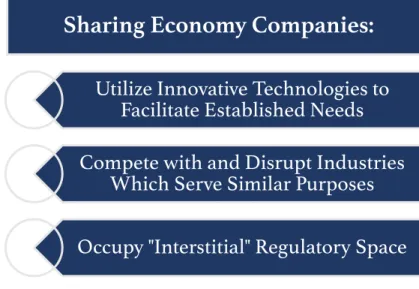
The ‘Sharing Economy’ refers to the growing trend of utilizing technology to revamp existing means of providing goods and services by using technology to facilitate a direct connection between providers and consumers (Cohen and Zenghebot, 2017). This is often accomplished by way of an application or a website that allows provider and consumer to conduct individualized transactions, rather than via formalized industry (Zervas, Prosperio, and Byers, 2015; Gutiérrez et al, 2017, p. 278).
The “alternative benefits” of these services can siphon market share from traditional providers (Guttentag, 2015). Yet, by facilitating transactions without participating in them, ‘sharing economy’, or ‘collaborative consumption’ companies fall into a regulatory gray area (Gutiérrez et al, 2017). Operating outside the existing system allows these companies to fill a new space by exploiting loopholes, and they often grow quickly.
Sharing Economy Companies:
Utilize Innovative Technologies to
Facilitate Established Needs
Compete with and Disrupt Industries
Which Serve Similar Purposes
Occupy "Interstitial" Regulatory Space
THE CASE – BARCELONA, SPAIN
Barcelona is a fitting case for examining touristic policy changes, as a major tourist destination experiencing a shift in tourism policy under municipal direction. An active citizenry, powerful industry interests, and a developed Airbnb presence interact in the city’s touristic neighborhoods. The resulting policy affords an opportunity to explore and
understand the impetus which drives local-level policymakers to act, under conditions of competition and strained coexistence. Notably, Barcelona’s policy has spurred recent copycat regulations in Palma, Mallorca, and Madrid, Spain.
Tourism and Over-tourism in Barcelona
Barcelona is among the top 20 most-visited destination cities in the world (Global Destination Cities Index), with over 10 million tourists spending a collective 30 million nights in the city’s accommodations (Observatori de Turisme a Barcelona, 2017). Despite a lengthy history as a compelling travel destination (Suhett & Forga, 2011), it is only since the 1992 Summer Olympics that the city has actively promoted itself to tourists and transitioned from a primarily industrial working city to a global hotspot (Suhett & Forga, 2011).
Nijkamp, 2012). The phenomenon is particularly common in historic cities where narrow streets and compact central districts exacerbate the problem (Gutiérrez et al, 2017). People laud the economic activity, the wealth, and the job opportunities tourism brings, but detest the “massification”, or loss of what makes Barcelona unique, and disruptive behavior of tourists (Ajuntament de Barcelona, 2017). Tourists use the city differently than residents— they frequent specific attractions, make “intensive use of facilities and services”, and concentrate their movements in the immediate vicinity of their lodging (Shoval & Raveh, 2004; Gutiérrez et al, 2017 p. 279). Consequently, tourists can disrupt normalcy in a city. As of 2017, more Barcelonans think the city has reached its touristic carrying capacity
(Ajuntament de Barcelona, 2017). Airbnb in Barcelona
The location of guest accommodation contributes to negative effects of tourism, because it conditions tourist presence in the surrounding area (Shoval, McKercher, Ng, & Birenboim, 2011), and Airbnb units cluster differently than hotels. In Barcelona, while hotels and Airbnb similarly preference locations in the city center, Airbnb units are distributed more concentrically and permeate traditionally residential neighborhoods (Gutiérrez, et al, 2017). Hotels, on the other hand, congregate along the coastline and at the “Ramblas-Paseo de Gracia axis” (Gutiérrez, et al, 2017 p. 284). When guest accommodation concentrates in the same areas as major tourist attractions, the increase in tourist activity can be a “decisive factor in the transformation of the surrounding urban area” (Gutiérrez et al, 2017). In Barcelona, it increases tourist pressures on the city center by providing additional
new pressures by increasing tourist numbers in residential neighborhoods near tourist attractions where there is minimal hotel presence.
There are currently over 18,000 listings in Barcelona on the Airbnb website (InsideAirbnb). Of these 18,000, roughly 49% are “entire apartment” listings, where the “host” does not reside on-site during the stay. (When Gutiérrez, et al, submitted their article for review in 2016, before the new municipal regulations went into effect, 54% of listings were for “entire homes”.) 42% of Barcelona listings are controlled by “hosts” with 4 or more listings posted on the site (InsideAirbnb).
Tourism is an area of exclusive competency for Spain’s autonomous communities (Spanish Const., Título VIII, Art. 148, § 1; Castillo, 2001), and the Catalonian government clarified municipal authority to regulate touristic housing when regional law was updated in 2011 (Diari Oficial 6268-5.12.2012). This legislation allows the city of Barcelona to require and issue permits as a prerequisite for inclusion in the regional listing of legal touristic housing. Legislation applying to shared apartment rentals is pending—until it is passed at the regional level, Barcelona cannot regulate, and renting a room on Airbnb remains an
extralegal, but not illegal, activity.
Policy and Restrictive Action – The PEUAT
During the plenary session on January 27, 2017 the city of Barcelona officially adopted the PEUAT1, its primary means of curtailing Airbnb activity. The PEUAT is the
Plan Especial Urbanístico de Alojamiento Turístico—in English, the Special Tourist
Accommodation Plan—not a law, but a “special plan”, which occupies a position in the
urban planning system between an initiative and a full piece of legislation. Wide-sweeping in its scope, the plan encompasses all of municipal Barcelona in three regulatory zones2 which
determine permissions, or lack there-of, for touristic housing development (PEUAT -
Ajuntament de Barcelona). The plan broadly defines touristic housing, aiming to limit hotels, hostels, guest houses, short-term rentals, and holiday apartments, in addition to Airbnb listings. While the PEUAT restricts new development of touristic housing, including hotels, there is no penalty to existing businesses, and there is continued development potential outside of the most restrictive zones.
The PEUAT is the main restriction on Airbnb activity because it restricts the commodity exchanged via the platform: touristic rental apartments. Under the PEUAT, the number of rental licenses issued to apartments is capped at 9,606, with limited licensure transfers permitted, thereby creating a legal maximum of Airbnb listings (PEUAT – Ajuntament de Barcelona). As a result, it is the primary policy examined in this study. However, it is not the only restrictive action which the city of Barcelona has taken against Airbnb. The city has levied multiple fines against the platform for allowing users to advertise unlicensed apartments, totaling more than €600,000. And, after lengthy negotiations, the platform signed an accord committing to the following requirements: granting the city access to data to track down illegal units, requiring users to publicly post their licensure number, and collaborating on the removal of illegal listings from the site (O’Sullivan, 2018).
Additionally, Barcelona’s illegal rental apartment detection team, boasting 100+ members, is said to be an unprecedented commitment among world cities (Sanz, Plenary Session 01/17, pp. 12).
DATA AND METHODS
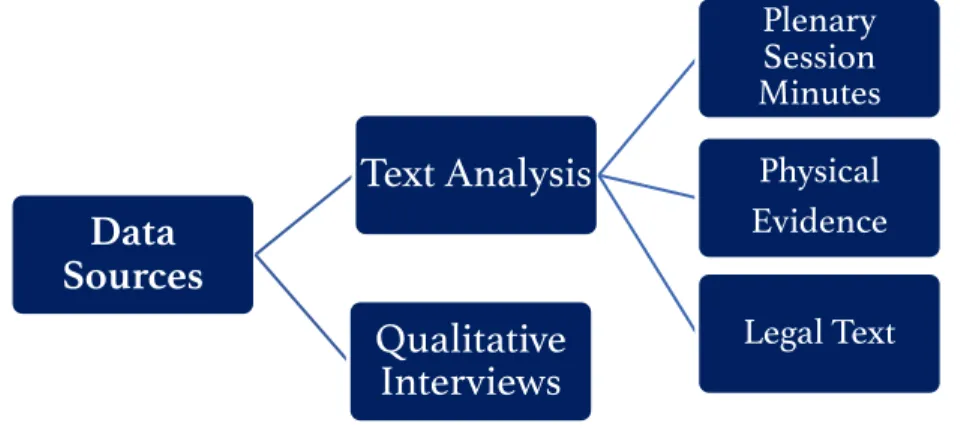
This study makes use of two main sources of data: interviews and text-based documentation. The interviews3 utilized in this study are qualitative, semi-structured
interviews of roughly 45-75 minutes. I utilized a flexible bank of pre-prepared questions, which was occasionally augmented with additional queries based on the conversation or an interviewee’s unique perspective—such was the case with the Director of Inspection Services, for example, whose role as a non-political public employee invalidated questions related to policy formation and justifies inquiry into policy implementation, instead. Some interviews took place before the 2019 elections, while others were conducted after, but all occurred before any change in office as a result of the elections. At the time this project was completed, the new government had yet to be finalized.
Municipal Political Parties – Barcelona
Party Symbol Party Name Seats in Council Ideology Coalition
Barcelona en
Comú
11
Left / Self-Determinist Yes Grup Municipal Demòcrata
(PDeCAT / CiU)
9
Center – Right /
Separatist
Ciutadans-C’s
5
Center /Unionist
Esquerra Republicana de
Catalunya (ERC)
4
Left /Separatist Some-times Partit dels Socialistes de Catalunya (PSC)
4
Center – Left /Unionist Yes
Partit Popular de
Catalunya
3
Center – Right /
Unionist
Candidatura d’ Unitat Popular –
Barcelona (CUP)
3
Left /Self-Determinist
Some-times
Members with No Party Affiliation
Gerard Ardanuy i Mata
2
- -Juanjo Puigcorbé
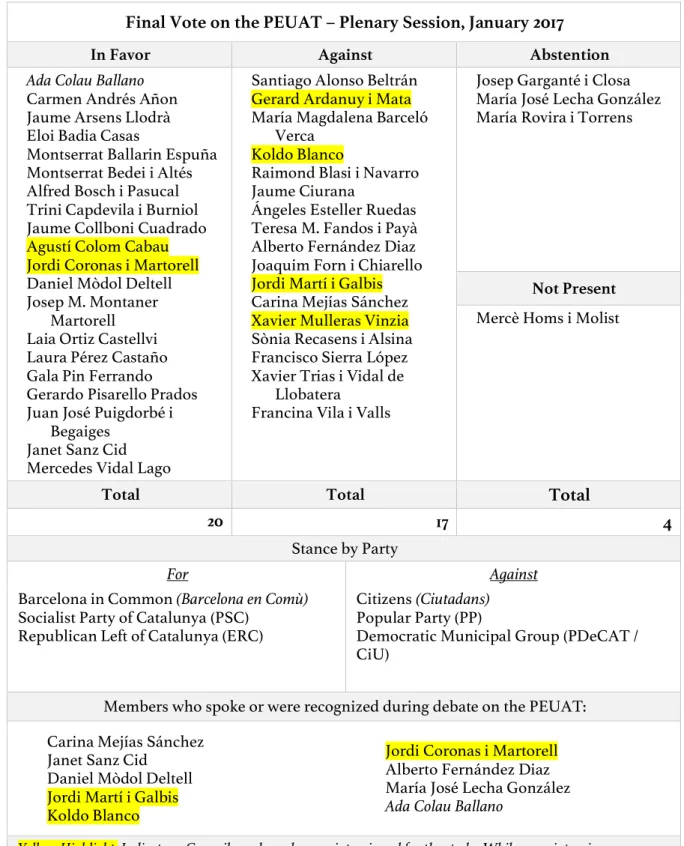
Table 2: Final Vote Results, PEUAT, Jan. 2017
Final Vote on the PEUAT – Plenary Session, January 2017
In Favor Against Abstention
Ada ColauBallano Carmen Andrés Añon Jaume Arsens Llodrà Eloi Badia Casas
Montserrat Ballarin Espuña Montserrat Bedei i Altés Alfred Bosch i Pasucal Trini Capdevila i Burniol Jaume Collboni Cuadrado Agustí Colom Cabau Jordi Coronas i Martorell Daniel Mòdol Deltell Josep M. Montaner
Martorell Laia Ortiz Castellvi Laura Pérez Castaño Gala Pin Ferrando Gerardo Pisarello Prados Juan José Puigdorbé i
Begaiges Janet Sanz Cid Mercedes Vidal Lago
Santiago Alonso Beltrán Gerard Ardanuy i Mata María Magdalena Barceló
Verca Koldo Blanco
Raimond Blasi i Navarro Jaume Ciurana
Ángeles Esteller Ruedas Teresa M. Fandos i Payà Alberto Fernández Diaz Joaquim Forn i Chiarello Jordi Martí i Galbis Carina Mejías Sánchez Xavier Mulleras Vinzia Sònia Recasens i Alsina Francisco Sierra López Xavier Trias i Vidal de
Llobatera
Francina Vila i Valls
Josep Garganté i Closa María José Lecha González María Rovira i Torrens
Not Present Mercè Homs i Molist
Total Total Total
20 17 4
Stance by Party
For Against
Barcelona in Common (Barcelona en Comù) Socialist Party of Catalunya (PSC)
Republican Left of Catalunya (ERC)
Citizens (Ciutadans) Popular Party (PP)
Democratic Municipal Group (PDeCAT / CiU)
Members who spoke or were recognized during debate on the PEUAT:
Carina Mejías Sánchez Janet Sanz Cid
Daniel Mòdol Deltell Jordi Martí i Galbis Koldo Blanco
Jordi Coronas i Martorell Alberto Fernández Diaz María José Lecha González Ada Colau Ballano
Plenary sessions are the primary events for public discussion and debate on policy issues for the City Council of Barcelona. These sessions take place roughly once per month, and often last upwards of six hours. Though the city archives three types of plenary session documentation: agendas (ordenes del dia), legislative summaries (acuerdos), and minutes (actas), this study focuses on the minutes, as near-exact transcriptions of council debate.
Plenary sessions, held in Catalán, from 2015 to present are recorded in a modernized procedure. They are filmed in entirety, and supplemented by Spanish-language documents. Though it is possible to access plenary session minutes from 1914 to present, this study focuses on the plenary session from January 2017, where the council debated and ultimately approved the PEUAT, in addition to debating tourist apartments and the housing market, specifically. I obtained this material from the municipal website, where it is publically accessible.
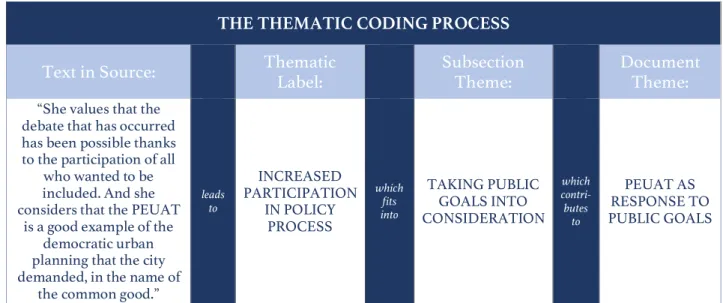
I utilized a thematic coding structure to analyze the selected texts. This process involves highlighting key or recurring ideas in sections of the text and grouping them by over-arching concepts. Because this strategy does not require approaching the text with a pre-established code, it allowed me to more fully consider potentially-relevant themes not
Figure 2: Graphic Representation of Project Data Sources
Data
Sources
Text Analysis
Plenary Session Minutes
Physical Evidence
Legal Text
Qualitative
FINDINGS
Interviews
I conducted interviews with a diverse collection of tourism stakeholders, including politicians, political appointees, public employees, experts and lawyers, and interest group representatives. Despite the varied nature of the interviewee list, a cohesive image emerged around the PEUAT, easily divisible into four main subgroups: “Innovation, Externalities, and Resolution”, “A Focused Public”, “Hotels as an Object of Regulation”, and “Concerns over Over-tourism”.
Figure 3: An Example of the Coding Process utilized in this study
THE THEMATIC CODING PROCESS
Text in Source: Thematic Label: Subsection Theme: Document Theme:
“She values that the debate that has occurred has been possible thanks to the participation of all
who wanted to be included. And she considers that the PEUAT
is a good example of the democratic urban planning that the city demanded, in the name of
the common good.”
leads to INCREASED PARTICIPATION IN POLICY PROCESS which fits into TAKING PUBLIC GOALS INTO CONSIDERATION which contri-butes to PEUAT AS RESPONSE TO PUBLIC GOALS
Innovation, Externalities, and Resolution.
Among interviewees, there was strong consensus that the emergence of Airbnb has altered the way that apartment rental functions within the city. Airbnb has facilitated these transactions to an unprecedented degree, leading to an explosion in vacation rental numbers and making it easier for unlicensed rentals to conduct business. The apartment rental
situation, as Eva Mur (05.22.2019) put it, has since “got out of hand”. Airbnb paves the way for unlicensed “free riders” (Coronas 05.29.2019), and complicates the city’s ability to guarantee “[touristic] residences of quality” (Colom 05.30.2019) as codified under the regulatory structure applicable to hotels. The necessity of regulation was clear to participants who spoke on the issue (Gómez and Pastor, Cobos, Colom, Mur, Ardanuy). Representatives of Apartur, Barcelona’s touristic apartment owners’ association, confirmed that the
association itself “has always sought regulation” of the touristic apartment sector, in order to “guarantee sustainability”, with “illegal competition” from unlicensed apartments being a major concern (Gómez and Pastor, 06.05.2019).
At the same time, multiple interviewees (Mur, Molina, Puig) attested to the regulatory difficulties presented by Airbnb’s newfangled sharing economy format, saying that, as a “scaffolding that [facilitates these transactions] and takes no responsibility” for unlicensed users (Cobos, 06.07.2019), it presented a regulatory challenge. That Airbnb had contributed to such rampant growth had less to do with the company than the city’s “lack of [regulatory] foresight” (Coronas 05.29.2019). Unfortunately, “the administration is not ready to deal with these new technologies”, because the regulatory mechanisms available to the city are,
06.06.2019). These criticisms are sustained by a perceived lack of reporting, and opposing parties continue to seek information as to the effectiveness of the PEUAT (Martí).
A Focused Public.
The role of the public featured in every interview conducted, though interviewees acknowledged varying levels of influence in the matter of touristic housing regulation. As Sonia Cobos pointed out, proposed accommodation regulation “was a part of [Barcelona en Comú’s] government program” leading up to the 2015 municipal elections, equating the party’s electoral success with a level of public investment in the policy. “Activists and [the administration’s] base” were major drivers of regulation (Gómez and Pastor, 06.05.2019). Interviewees referenced the Survey of Municipal Services, where tourism was “foremost” among residents’ concerns for the city and ranked “seventh” (Mur 05.22.2019) overall leading up to the election. Public focus on the issue continued to grow; by 2017, tourism was the highest-ranked answer to the question “What is the gravest problem faced by the city at the moment?”, outranking “working conditions”, “transportation”, “access to housing”, etc. (2017 Survey of Municipal Services).
“Manifestations” and “complaints” were heavily cited as cues from the public for regulation (Marí, Ardanuy, Molina, Coronas, Mur). Ardanuy (05.17.2019) mentioned that, at one point, the city was receiving “15,000 complaints per year” from residents about noise and other tourist-related “nuisances” (Molina 06.06.2019). These manifestations were spurred by “coexistence issues” between residents and tourist apartments (Coronas 05.29.2019) and encouraged the government to take action (Mur; Marí 05.20.2019).
According to Jordi Coronas (05.29.2019), Barcelona’s City Council
depending on public opinion for guidance, rather than a right-wing, nationalistic tendency. Councilman Koldo Blanco (5.10.2019) asserts that some members’ decision to abstain from the vote on the PEUAT, in particular, reflects parties’ aversion to opposing the public. The Colau executive made efforts to include the public’s views in debate on tourism by
establishing an advisory Council of Tourism and City where multiple citizens’ groups sit alongside industry interests (Colom 5.30.2019, Marí). FAVB (the Federation of Associations of Neighborhoods of Barcelona), which sits on this council, claims credit for the inclusion of the PEUAT amendment which bans additional touristic apartment licenses (Mariné,
05.22.2019).
Certain interviewees challenge the recognition of public opinion in the PEUAT, nevertheless. Jordi Martí (05.13.2019) asserts that the government took efforts to vilify Airbnb and channel support for regulation. This claim is echoed by Koldo Blanco, who suggested that “community entities” and activist groups had been “infiltrated” by actors promoting the interests of the governing coalition. I also interviewed a representative of one of the entities referenced by Blanco, the FAVB. Pere Mariné assured me that FAVB has no official partisan affiliation. Martí also posits that utilizing the “Special Plan” format to pass the PEUAT meant a reduction in requisite public involvement in policy passage compared to other regulatory structures, though I have been unable to corroborate this in available
literature.
Hotels as an Object of Regulation.
Discussing the PEUAT and its effect on the hotel industry proved to be an
seems, to some extent, that there is a casual tendency to associate the PEUAT with hotel regulation, despite the fact that it regulates all forms of touristic accommodation. This trend held true for the policy’s supporters and detractors. Interviewees, however, did not label hotel interests as persuasive actors in the PEUAT’s formation. Rather, they were cited, favorably or unfavorably, as an object of regulation, a category of accommodation on par with touristic apartments. The power of hoteliers in the local tourism field was acknowledged across interviews (Colom, Mur, Martí, Ardanuy, Mariné); but, Colom also pointed to a changing dynamic, saying that, “Formerly, [the hoteliers and business interests] monopolized” the tourism debate.
The city has made efforts to balance hotel and industry interests with community interests (Marí, Colom). Sonia Cobos allowed that the city “heeded [industry interests] to a certain level” during an input-seeking phase after the policy was drafted, but not during preliminary steps. Later, Colom specified that “we [,the government,] are not attentive to the particular interests” of the sector. The focus, according to Sergi Marí is on the public good, not competition with hotels—this point is furthered by the distaste felt by the hotel industry for the PEUAT overall, which increases the value of existing hotels, but sharply curtails new development (Molina).
hotel sector preferred to allow the market to regulate itself. Plus, as was mentioned by both Molina and Gómez and Pastor, many hoteliers utilize Airbnb to advertise hotel rooms and apartments—it can be “compatible” (Gómez and Pastor) with the hotel industry, and “it’s one thing to be against [Airbnb] philosophically, and another to make money” (Molina).
Concerns over Over-tourism.
Interviewees were quick to acknowledge new troubles arising from tourism.
Commentary ranged from the cautious—“…the public has noticed that tourism has costs and benefits.” (Marí)—to the overt—"There is a problem with tourism [in Barcelona]” (Cobos). Interviewees described complaints and fears of “massification” (Coronas, Mulleras) and “touristification” (Mariné), beyond the more tangible complaints described in previous sections. Representatives of Apartur (Gómez and Pastor) remark on Barcelona’s success in becoming a city “where the whole world wants to come”, but also describe there being “too many people in the street”.
“It’s our responsibility to ensure that Barcelona continues to be authentic.”
- Pablo Molina (06.06.2019)
felt that the PEUAT’s objectives are vague, but that “it makes sense to limit [all forms of tourist accommodation]” if limiting tourism is, in fact, the policy’s goal. Colom, the
administration’s appointed governing councilor on tourism, cited “maintaining the mixture” of uses and moderating housing cost increases as key aims of the policy. The real estate market motivation was also invoked by Pablo Molina, who said that “recover[ing] residential usage” of neighborhoods like the Ciutat Vella, Barcelona’s oldest district, was one goal of the PEUAT.
Document Analysis
Because the documents sourced for this portion of the study are varied and intended for distinct audiences, reporting their contents thematically is less logical than it is for the qualitative interviews conducted. Consequently, findings from the document analysis process are elaborated by source, and their contributions to hypothesis evaluation are considered in the Discussion.
Plenary Session, January 2017.
Three portions of the minutes from the City Council’s first session of 2017 are relevant to the current study: the debate and subsequent favorable vote on the PEUAT, the discussion of a plan of action regarding illegal touristic apartments, and the failed proposal for a governmental report on the PEUAT’s effectiveness. The passing of the PEUAT obviously bears direct importance to the scope of the study, while the latter excerpts offer supplementary insight into policymaker mindset on closely related issues.
PEUAT Debate and Passage.
respects, but other themes were consistent throughout the exchange. Nearly every speaker explicitly recognized a need for regulation in the touristic lodging sector—disagreements were instead centered around the form it should take. Consistent with interviewees who described differing economic worldviews as a primary division between the two sides, an ideological gap emerges in the text. There is a clear divide between left-leaning and right-leaning parties4, with the latter emphasizing business interests and an unhampered market
(pp. 30, pp. 32, pp. 33). Martí, in particular, highlights the anticipated damage to business interests, including hotels, that perturb his party (pp. 31-32). A last major theme from the debate and discussion of the PEUAT in the plenary session is the marked influence of the public in discourse. Multiple speakers from across parties remarked on the elevated role of the public in the development in the PEUAT, directly and indirectly.
Interestingly, one comment from Alberto Fernández Díaz hearkens to Councilmen Blanco’s and Martí’s suggestion that the administration has artificially fomented citizen support for tourism regulation: “He says that it should be asked why this substantial change [in public opinion] has occurred in just one year: if this [change] is a response to the
demonization on the part of the Government of this economic activity, or the mistaken
management of the touristic phenomenon, or both…”. Mr. Blanco and Mr. Fernández describe different occurrences—the former hints at partisan plants in non-partisan citizen groups, while Mr. Fernández posits a wider-scale defamation, more like Martí’s claim. There is no further evidence in regard to these claims, but it is notable, given that the three
Illegal Apartment Plan of Action.
The debate on an official government response to illegal rental apartments in the city precedes the debate on the PEUAT during the January 2017 plenary session. The executive determined that a plan of action against illegal apartment activity to be the natural pair to the PEUAT’s efforts to regulate legal touristic apartment activity. A plan of action would be an effort to “take on the other face” of touristic apartments. As such, it is a critical text source for evaluating policymaker motivations related to regulating Airbnb, and also provides insight on the overarching motivations that may be reflected in the PEUAT.
This measure is a particular pet project of the Republican Left of Catalunya (Plenary Session 01/2017, pp. 12). The president of the party, who later voted in support of the PEUAT, is credited with the substance of the following citation from the minutes:
“Mr. Bosch affirms that his group will not give the Government a break about confronting the problem of illegal tourist beds, given that this activity interferes with neighbors’ sleep through the generation of nuisance and noise—it’s an activity that doesn’t pay taxes, doesn’t have inspections for workers, finance, or cleanliness. For these reasons, Mr. Bosch and his party affirm that their obligation is to look out for the citizenry.”
[Excerpt from page fourteen of the City Council Plenary Session, January 2017; translation and italics are my own].
his closing, Bosch declares his motivation for regulation is to “look out for the citizenry”. A perspective of protecting the public good is emblematic of public interest theory—that, along with his note on the absence of regulatory procedures applicable to other forms of tourist accommodation, is strong evidence for the regulatory loophole hypothesis. Notably, Bosch’s statement does not reference public complaint or desire for regulation. One could infer that the government is aware of the “nuisance and noise” through complaints, but he does not discuss a recognition of public want. This distinction hits upon a critical point: here, though Bosch professes to act on behalf on the public, he is not acting on expressed demands from the public. The result is that the passage supports the regulatory loophole hypothesis, but not the public opinion hypothesis.
Other stand-out themes present in the debate on illegal apartments are a.) a
widespread and vehement agreement that illegal apartments are bad and need to be handled, and b.) recognition that issues of coexistence and cohabitation between units and residents are not restricted to illegal units. Of note is a comment from Councilwoman Mejías that the businesses of the tourism sector view the Administration as the “principle obstacle” to their activity (Plenary Session, 01/2017, pp. 13).
Housing Market Debate.
not be so heavily restricted. Complaints from interviewees over lack of data are mirrored in this section by speakers with similar views.
Official Legal Text – PEUAT.
This document is heavily legalistic, and the presumed audience has high technical literacy. There is very little justification of policy, reasoning, or emotive language utilized in this text, complicating its value for evaluating motives; however, as the complete text of the policy evaluated by this study, its inclusion is paramount. And, nevertheless, there is room for interpretation. From the contrast between this text and the subsequently described Tourism 2020 documents, there arises a distinct impression of the perceived value of public approval—the Tourism 2020 documents reveal concerted efforts in aesthetic appeal, and are carefully crafted. While this official text is equally cautious in wording, its goal is regulatory precision rather than creating a positive impression.
Article 2, Section 1.b prohibits the presence of future touristic rentals in buildings devoted to residential housing from 2015, and from the ground floor of all buildings. This indicates a dual focus: preserving the accessibility of the housing market to residents, and the accessibility of retail space to commercial establishments. Likewise, Article 23, Section 6 requires new tourist apartment rentals to seek the approval of other property owners in the building before proceeding, suggesting a prioritization of the public opinion in a literal sense.
“Tourism 2020” Full Text and Publicity Handout.
public-consumption handout. Each source represents a significant degree of cultivation and curation, reflecting the intended audience of the pieces. Touristic Accommodation is only one aspect of the Tourism 2020 plan, but the snippets highlighted offer insight into the Government’s official position on the matter.
In the heavily stylized handout, designed to resemble a set of postcards, there is a clear emphasis on the housing market as impetus for taking action to regulate touristic
accommodation. The handout also states a priority to create “a better relationship with its environment” for touristic accommodation, hinting at a desire to comply with public opinion, or at least decrease clashes over the issue. There is a clear appeal to the public, indicated by the focus on these two points amidst a section on touristic accommodation totaling fewer than 150 words.
As a longer text, the full strategic plan, while still bearing an awareness of the public eye, is not directed to the public so exclusively. Herein, the discussion of the touristic
accommodation sector includes specific mention of the PEUAT as the Government’s primary measure, and apartment rental platforms feature heavily. Businesses are referenced as an opportunity for greater responsibility, but there is no suggestion of serving their interests. Conflict management and coexistence are strong narratives.
DISCUSSION
suggests that, existence of regulation aside, fully closing this loophole may not be a primary motivational factor.
This conclusion is corroborated by interviewees. Industry representatives spoke in favor of regulation to curb illegal activity and level the playing field. Political actors were aware of a regulatory need, as well as the potential difficulties posed by Airbnb’s sharing economy structure. One interviewee mentioned the inability to hold Airbnb to the same quality standards as hotels (Colom 05.30.2019), a product of the regulatory inequity between the two sectors. There was recognition of the regulatory gap; however, at no point did the desire to level the playing field present itself as a primary motivator in the creation of the PEUAT.
Document analysis, though, reveals additional evidence in favor of the regulatory loophole hypothesis. There is again notable agreement on the need for regulation, both among supporters and detractors of the PEUAT (15PL16354)—indeed, “Tourism’s Negative Externalities and the Need for Regulation” emerges as a major theme of the pre-vote debate
There are favorable conditions for the public opinion hypothesis, with strong issue saliency and well-organized platforms for vocalizing concern. The administration’s concerted efforts to recognize the public voice, as portrayed by community groups, indicate an
openness to public opinion; additionally, the nature of the governing municipal political group as a multi-party political “platform” also conveys a willingness to incorporate popular suggestions. Among interviewees, the primacy of public concerns was clear. Interviewees were aware of public focus on tourism issues and complaints associated with Airbnb. Beyond this, nearly all interviewees cited displays of public discontent as initial triggers for the PEUAT. The curated handout for the Tourism 2020 suggests a primacy of public opinion and public approval in the Government’s stance, which is reflected in elements of the official legal text. The frequency with which public concerns, public outcries, or public displays from the citizenry were referenced indicate a strong level of influence in the policy process. It is reasonable to conclude that public opinion did motivate policymakers in their efforts to regulate Airbnb. Thus, this hypothesis is supported by the study’s findings.
The hotel interest hypothesis runs counter to the regulatory loophole hypothesis, despite depending on the same action. Rather than proposing that the PEUAT is a reflection of benevolence, it holds that industry has manipulated the policy process to yield regulation which benefits its own interests. The PEUAT regulates all forms of touristic accommodation, such that it also restricts hotels. At first glance, this would appear to weaken the hotel interest hypothesis, because it places limits on the industry. However, the PEUAT does not
achieve this end. Even if these efforts were made, Eva Mur and Agusti Colom are adamant that hotel interests did not factor into the policy’s impetus. The congruence between elected officials, the public employee who directed the legal drafting of the plan, and a representative of hotel interests makes it unlikely that hoteliers played any significant role in motivating policymakers to pursue regulation.
Document analysis does not reveal any contradictory evidence on the hotel interest hypothesis. Touristic Accommodation sections of the Tourism 2020 strategic plan make virtually no reference to business interests, and Councilwoman Mejías’s commentary during debate on the plan of action shows that there is little love lost between the Administration and tourism sector businesses. In the PEUAT portion of the plenary session, business
interests are again mentioned as damaged or ignored by the policy. Across data sources, there is little support for the hypothesis that business or hotel interests influenced the outcome of Airbnb regulation.
Limitations and Notes for Further Research
This study provides in-depth insight into an important case in the evolving landscape of tourism regulation, with special attention to the role of emerging technology. By focusing on policy motivations, a sub-area with very little existing research, I aimed to reveal the underlying cues which condition policy outcomes in a field. As always, the case study format presents challenges for extrapolation—to combat this, I developed arguments using theory and prior research which are not dependent on the selected case, and could not find that factors unique to the case conditioned the outcomes of the study. Further investigation of the topic in a comparative study or at a larger scale should be a goal for future research.
CONCLUSION
This study aimed to evaluate policy motivations in the regulation of Airbnb in Barcelona, as a reflection of how the sharing economy is shifting the tourism industry’s regulatory environment. Investigation into the topic through qualitative interviews and
document analysis revealed a sharp consensus across party lines on the need to act to regulate the touristic accommodation sector, and a prevailing view that the situation was out of
control. At the crux of the matter is Airbnb’s position as just one of many forms of tourist accommodation available. In a sector that also includes hostels and hotels, and despite the continued dominance of hotels, Airbnb nevertheless warranted specific mention by
interviewees. It is vocal and visible amongst these other options, which generates additional animosity and facilitates finger-pointing. However, in the terms of regulation, policymakers did not see fit to regulate its legal activity in standalone policy—illegal activity, on the other hand, was pursued in isolation. In the case of Barcelona, restricting not Airbnb itself, but the commodity on which it bases its business allowed the city to regulate Airbnb under the same legal structure as other forms of tourist accommodation. When combined with robust
As would be expected, policy motivations varied to some degree between individuals interviewed and commentary in the documents analyzed. Nevertheless, consistent trends emerged in recognizing and including public concerns, often in new ways. There was a strong indication that public support for touristic accommodation regulation, and particularly touristic rental apartments conditioned government response. The hypothesis that closing the regulatory loophole in which Airbnb previously resided motivated policymakers found support in policymaker references to acting in the public good and uneven regulatory requirements across the sector. These comments were not consistent enough to reflect a systematic relevance of this hypothesis, though there were notable indications that certain individuals gave credence to this motivation. Lastly, the hotel interest hypothesis was not supported by the findings of this study. Nowhere was there indication that hotel or other industry interests factored into the content of the PEUAT, though certain elements align with industry preferences. Overall, industry and its political supporters were disapproving of the PEUAT.
Woven around commentary relevant to the hypotheses were two other marked trends in policymaker motivation: the housing market and recognition of over-tourism. The two are inextricably related, and while they overlap with the hypothesis put forth in this study, they are also distinct. There is an indication that over-tourism is conditioning not only public opinion, but is also directly influencing policymakers. This idea, along with the more
APPENDICES
Appendix 1: Barcelona’s Municipal Government
Barcelona utilizes a system of proportional representation, with an executive cabinet appointed by the mayor and a democratically-elected legislative council (Spanish Const., Title VIII, Art. 140). The council consists of 41 seats and incorporates representatives from nine political parties at the time of study (Ajuntament de Barcelona), though two
councilmembers have no current partisan affiliation. In the 2015 – 2019 Council, none of the nine parties possesses a majority. During the time frame relevant to this project, the head executive’s party, Barcelona en Comú, held eleven of 41 seats, and governed in minority through an informal coalition with the Socialist Party of Catalonia (PSC). The combined seven members of the Popular Unity Candidacy (CUP) and the Republican Left of Catalonia (ERC) lent occasional support.
Through the executive, the municipality of Barcelona has a left-wing bent during the period evaluated during this study, though the council itself has only the slightest left-leaning majority split across four parties. With a strong right-wing minority, it is reasonable to expect considerable resistance to the governing party’s propositions in most debates. Notably,
Appendix 2: Members of the Municipal Council
Municipal Government at Time of Study
Parties and Members, 2015-2019
Barcelona in Common
(Barcelona en Comù)
Democratic Municipal Group
(Grup Municipal Demòrata / PDeCAT)
Citizens
(Ciutadans)
Republican Left of Catalunya
(Esquerra Republicana Catalana / ERC)
§ Ada Colau Ballano
§ Gerardo Pisarello
Prados
§ Laia Ortiz
Castellví
§ Jaume Asens
Llodrà
§ Janet Sanz Cid
§ Gala Pin Ferrando
§ Agustí Colom
Cabau
§ Laura Pérez
Castaño
§ Mercedes Vidal
Lago
§ Josep Maria
Montaner Martorell
§ Eloi Badia Casas
§ Xavier Trias Vidal
de Llobaera
§ Sònia Recasense
Alsina
§ Jaume Ciurana
Llevadot
§ Jordi Martí Galbis
§ Mercè Homs
Molist
§ Francina Vila
Valls
§ Teresa Maria
Fandos Payà
§ Raimond Blasi
Navarro
§ Irma Rognoni
Viader
§ Carina Mejías
Sánchez
§ Maria Magdalena
Barceló Verea
§ Francisco Sierra
López
§ Santiago Alonso
Beltrán
§ Koldo Blanco
Uzquiano
§ Alfred Bosch i
Pascual3
§ Montserrat Benedí
Altés
§ Trini Capdevila
Burniol
§ Jordi Coronas
Martorell
3Leader of the ERC at the time
of the PEAUT vote, Bosch I Pascual was tapped as Minister of Exterior for the Regional Government in 2018, and was then replaced in the council by Gemma Sendra Planas
Socialists’ Party of Catalunya
(Partit de Soacialistes de Catalunya / PSC)
Popular Party
(Partit Popular / PP)
Candidacy of Popular Unity
(Candidatura d’ Unitat Popular / CUP)
Unaffiliated Members
§ Jaume Collboni
Cuadrado
§ Carmen Andrés
Añón
§ Montserrat
Ballarín Espuña
§ Daniel Mòdol
Deltell
§Alberto
Fernández Díaz
§Xavier Mulleras
Vinzia
§Alberto Villagras
Gil
§Maria Rovira
Torrens
§Eulàlia Reguant
Cura
§Pere Casas
Zarzuela
§Gerard Ardanuy
Mata
§Juanjo Puigcorbé
Appendix 3: Interviewees
Individuals Interviewed
Name Position Status Date / Time
Sonia Cobos Planning Legal Team Director of Urban Non-Political Government Employee
June 7, 2019 09:00
Pablo Molina Planning Specialist Lawyer & Urban Private Sector June 06, 2019 13:00
Judith Gómez de la Lastra and Siliva
Pastor
Representatives,
Apartur Advocacy Group Private Sector - June 05, 2019 14:00
Xavier Puig Soler Catalan Competition Specialist,
Authority Public Employee
June 04, 2019 11:00
Jordi Coronas Councilmember Esquerra Republicana Elected Official – Catalana
May 29, 2019 10:00
Agusti Colom Governing Councilor Councilman and on Tourism
Elected Official –
Barcelona en Comù May 30, 2019 12:30
Xavier Mulleras Councilmember Elected Official – Partido Popular May 14, 2019 12:40
Eva Mur Director of Inspection Services Non-Political Public Official May 22, 2019 12:00
Pere Mariné Representative - Speaker / FAVB
Member Community
Association May 22, 2019 13:30
Sergi Marí Director of Tourism, Commerce, and Market
Appointed Public
Official May 20, 2019 12:30
Gerard Ardanuy Councilmember No Party Affiliation Elected Official – May 17, 2019 10:00
Koldo Blanco Councilmember – Ciutat Vella Elected Official – Ciutadans May 10, 2019 09:30
Jordi Martí Councilmember Elected Official – PDeCAT May 13, 2019 16:30
BIBLIOGRAPHY
Ajuntament de Barcelona. (2017). Percepció del Turisme a Barcelona (Rep.). Barcelona. https://ajuntament.barcelona.cat/turisme/sites/default/files/percepcio_del_turisme_20 17_informe_1.pdf
Ajuntament de Barcelona. (n.d.). Consejo Municipal. Retrieved from
https://ajuntament.barcelona.cat/es/accion-de-gobierno/el-consejo-municipal# Albalate del Sol, D. (2012). The institutional, economic and social determinants of local
government transparency. IREA–Working Papers, 2012, IR12/10.
Balaguer, J., & Cantavella-Jorda, M. (2002). Tourism as a long-run economic growth factor: the Spanish case. Applied economics, 34(7), 877-884.
Becker, G. S. (1983). A theory of competition among pressure groups for political influence. The quarterly journal of economics, 98(3), 371-400.
Castillo, M. J. G. (2001). La distribución constitucional de competencias en materia de turismo y su tratamiento en las leyes autonómicas: su promoción y
ordenación. Documentación administrativa, (259-260).
Cohen, M., & Zehngebot, C. (2014, April 01). What's Old Becomes New: Regulating the Sharing Economy. Retrieved from https://bostonbarjournal.com/2014/04/01/whats-old-becomes-new-regulating-the-sharing-economy/
Coldwell, W (2017) . First Venice and Barcelona: Now Anti-Tourism Marches Spread across Europe. The Guardian, Guardian News and Media.
www.theguardian.com/travel/2017/aug/10/anti-tourism-marches-spread-across-europe-venice- barcelona.
Crónica Global. (2018, December 23). El 'indepe' tipo de Barcelona vive en Gràcia, es catalán de ascendencia y de clase media/alta. Retrieved from
https://cronicaglobal.elespanol.com/politica/indepe-barcelona-gracia-catalan-clase-media-alta_208950_102.html
Devas, N., & Grant, U. (2003). Local government decision-making—citizen participation and local accountability: some evidence from Kenya and Uganda. Public
Administration and Development: The International Journal of Management Research and Practice, 23(4), 307-316.
Diari Oficial. Decreto de establecimientos de alojamiento turístico y de viviendas de uso turístico. (2012).
Feeney, M. (2015). Is ridesharing safe?. Cato Institute Policy Analysis, (767). Global Destination Cities Index. (2018, September 25). Retrieved from
https://newsroom.mastercard.com/press-releases/big-cities-big-business-bangkok-london-and-paris-lead-the-way-in-mastercards-2018-global-destination-cities-index/ Gurran, N., & Phibbs, P. (2017). When tourists move in: how should urban planners respond
to Airbnb?. Journal of the American planning association, 83(1), 80-92.
Gutiérrez, J., García-Palomares, J. C., Romanillos, G., & Salas-Olmedo, M. H. (2017). The eruption of Airbnb in tourist cities: Comparing spatial patterns of hotels and peer-to-peer accommodation in Barcelona. Tourism Management,62, 278-291.
doi:10.1016/j.tourman.2017.05.003
Guttentag, D. (2015). Airbnb: disruptive innovation and the rise of an informal tourism accommodation sector. Current issues in Tourism, 18(12), 1192-1217.
Jurowski, C., Gursoy, D. (2004). Distance Effects On Residents’ Attitudes Toward Tourism. Annals of Tourism Research,31-2, pp. 296–312.,
doi:10.1016/j.annals.2003.12.005.
Hamari, J., Sjöklint, M., & Ukkonen, A. (2016). The sharing economy: Why people
participate in collaborative consumption. Journal of the association for information science and technology, 67(9), 2047-2059.
Howell, R. F. (1961). Legislative Motive and Legislative Purpose in the Invalidation of a Civil Rights Statute. Virginia Law Review,47(3), 439. doi:10.2307/1071143 Inside Airbnb - Barcelona. (n.d.). Retrieved from
http://insideairbnb.com/barcelona/?neighbourhood=&filterEntireHomes=false&filter HighlyAvailable=false&filterRecentReviews=false&filterMultiListings=true
Kaplan, R. A., & Nadler, M. L. (2015). Airbnb: A case study in occupancy regulation and taxation. U. Chi. L. Rev. Dialogue, 82, 103.
Koopman, C., Mitchell, M., & Thierer, A. (2014). The sharing economy and consumer protection regulation: The case for policy change. J. Bus. Entrepreneurship & L., 8, 529.
Lee, D. (2016). How Airbnb Short-Term Rentals Exacerbate Los Angeles’s Affordable Housing Crisis: Analysis and Policy Recommendations. Harvard Law & Policy Review,10, 229-253.
Observatori del Turisme a Barcelona. (2017). Barcelona tourism activity report( Rep.). Barcelona.
https://ajuntament.barcelona.cat/turisme/sites/default/files/1_turisme_estadistiques_2 017_caps1_1.pdf
O'Reilly, A.M. (1986). Tourism Carrying Capacity. Tourism Management,7-4, 254–258., doi:10.1016/0261-5177(86)90035-x.
O'Sullivan, F. (2018, June 07). Barcelona Finds a Way to Control Airbnb Rentals. Retrieved from https://www.citylab.com/life/2018/06/barcelona-finds-a-way-to-control-its-airbnb-market/562187/
Pacheco, J. (2013). The Thermostatic Model of Responsiveness in the American States. State Politics & Policy Quarterly, 13(3), 306-332.
PEUAT - Ajuntament de Barcelona. (2017). Special Plan for Tourist Accommodation. Retrieved from http://ajuntament.barcelona.cat/pla-allotjaments-turistics/en/ Posen, H. A. (2015). Ridesharing in the sharing economy: should regulators impose Uber
regulations on Uber. Iowa L. Rev., 101, 405.
Posner, R. (1974). Theories of Economic Regulation. doi:10.3386/w0041 Rogers, B. (2015). The social costs of Uber. U. Chi. L. Rev. Dialogue, 82, 85. Scott, I., & Brown, E. (2016). Redefining and regulating the new sharing
economy. University of Pennsylvania Journal of Business Law, 19, 553.
Shleifer, A. (2005). Understanding regulation. European Financial Management, 11(4), 439-451.
Shoval, N., McKercher, B., Ng, E., & Birenboim, A. (2011). Hotel location and tourist activity in cities. Annals of Tourism Research, 38(4), 1594-1612.
Shoval, N., & Raveh, A. (2004). Categorization of tourist attractions and the modeling of tourist cities: based on the co-plot method of multivariate analysis. Tourism Management, 25(6), 741-750.
Spanish Consitution, Título VIII, Art. 148
Suhett de Morais, R., & Prat Forga, J. M. (2011). La imagen turística y la historia de la ciudad: Barcelona y su atractividad a lo largo de un siglo XX expandido.
UN World Tourism Organization. (2019, January 21). International Tourist Arrivals Reach 1.4 billion Two Years Ahead of Forecasts. Retrieved from
Wegmann, J., & Jiao, J. (2017). Taming Airbnb: Toward guiding principles for local regulation of urban vacation rentals based on empirical results from five US cities. Land Use Policy,69, 494-501. doi:10.1016/j.landusepol.2017.09.025
World Travel and Tourism Council. (2019, February 27). Travel Tourism continues strong growth above global GDP. Retrieved from https://www.wttc.org/about/media- centre/press-releases/press-releases/2019/travel-tourism-continues-strong-growth-above-global-gdp/
Zervas, G., Proserpio, D., & Byers, J. W. (2015, June). The impact of the sharing economy on the hotel industry: Evidence from Airbnb's entry into the Texas market.