A HUMAN CAPITAL APPROACH TO EXAMINING PRIMARY CARE NURSES’ CONTRIBUTIONS TO PRIMARY CARE AND THEIR ECONOMIC RETURNS
Yin Li
A dissertation submitted to the faculty at the University of North Carolina at Chapel Hill in partial fulfillment of the requirements for the degree of Doctor of Philosophy in the School of
Nursing.
Chapel Hill 2016
Approved by:
Cheryl B. Jones
Barbara A. Mark
Celeste Mayer
George M. Holmes
2016 Yin Li
ABSTRACT
Yin Li: A Human Capital Approach to Examining Primary Care Nurses’ Contributions to Primary Care and Their Economic Returns
(Under the direction of Cheryl B. Jones)
This dissertation addressed the contributions of primary care nurses (PCNs) to
primary care and the economic returns to their human capital. Human capital theory was used
to derive a conceptual framework that provided guidance for the three analyses conducted in
this dissertation. The first analysis was an integrative literature review of PCNs’
contributions to primary care, including the care they provide and the outcomes of their care.
The second analysis compared the care provided by PCNs and primary care physicians
(PCPs), including their functions, roles, and the diagnostic characteristics of their care
recipients. The third analysis compared the wages of primary care nurse practitioners
(PCNPs) working in primary care settings with those working in specialty care settings.
The findings of the first analysis indicate that PCNs perform a wide range of
functions, serve in substitute, supplemental, and other roles, and manage patients with a
variety of diagnoses. With respect to the outcomes of PCN care, the findings indicate that
PCNs have improved the effectiveness and patient-centeredness of primary care, but that
evidence is lacking with respect to the safety, timeliness, efficiency, and equity of primary
care. The findings of the second analysis indicate that PCNs were more likely to provide
therapeutic care but less likely to provide diagnostic care than PCPs. Moreover, when PCNs
served in a substitute role for PCPs, they managed patients with similar diagnoses as those
patients with different diagnoses. Finally, findings from the third analysis indicate that
PCNPs working in primary care settings earned, on average, $4.07/hour less than PCNPs
working in specialty care settings, and this wage disparity was largely due to unobserved or
unexplained factors.
The findings of this dissertation provide guidance for future research focusing on
PCNs’ contributions to primary care and the economic returns to their human capital.
Organizational leaders, educators, and policymakers can use these findings to develop
approaches and policies that address how PCNs’ human capital is best used in the changing
ACKNOWLEDGEMENTS
The past eight years were an adventure – leaving home at 22 and studying abroad,
dedicating myself to finishing my PhD, and trying to cover myself financially. This
dissertation is the product of the people that provided help and support during my adventure.
I would like first to thank my parents and grandparents. Their philosophy of life,
knowledge, and experience guided me building the characters of being curious about the
unknown, being persistent of what I pursue, being critical of what I learn, being respectful to
others, and being thankful for what I have and so on. This journey would not have been
finished without these important characters. Moreover, words cannot express my
appreciation to my parents for their financial support.
Then a BIG “thank you” is given to my fabulous advisor, Dr. Cheryl B. Jones, for her
support, patience, motivation, and immense knowledge. Dr. Jones is visionary, persistent,
positive, brilliant, and professional. She developed a detailed plan of my coursework, which
led me to the fields of health economics and workforce and prepared me with much “human
capital” in these fields. Dr. Jones also provided tremendous help, support, encouragement,
and patience when I wrote my dissertation. She always gave me a big smiley face when we
met, even during the most difficult time of developing my dissertation proposal. She always
had great ideas and solutions when I had questions. Her guidance helped me in all the time of
research and writing of this dissertation. I could not have imagined having a better advisor
Besides my advisor, I would like to give my genuine gratefulness and appreciation to
the rest of my committee for their insightful comments and encouragement and also for their
help to find myself as a researcher. Dr. Mark, I truly appreciate for all of your appraise,
criticism, support, and challenge, which incredibly improved my research. I will always
remember your example of how a piece of pottery is made. Dr. Mayer, thank you so very
much for always being supportive. I acquired so much confidence from you every time when
we talked or met. Dr. Holmes, you are the economic and statistical genius in my life. Thank
you SO MUCH for all of your great help and support on research design and data analysis!
Dr. Fraher, I am very grateful for all of your help on making the timeliness of my dissertation
“impeccable” under the health care reform. You always give me wonderful comments and
improve the practice and policy significance of my research. I am so grateful for having all of
you on my committee.
Another important person I would like to appreciate is Ms. Grace Chen, who is a
grant manager in the School of Nursing at UNC-Chapel Hill. Ms. Chen is the “spiritual
mentor” during my doctoral study and always gave guidance, consultation, support, and help.
Ms. Chen also introduced me to a few faculties who provided part-time research assistant
jobs. Under her help, I was able to be financially independent from my parents for a few
years, which was significant relief for my parents.
Also I would like to thank all of the supervisors and institutes of my part-time jobs –
Dr. Cheryl Jones, Dr. Mikyung Song, Dr. Mary Palmer, Dr. Jill Hamilton, Dr. Erin Fraher,
Dr. Cherie Smith-Miller, Dr. Cheryl Giscombe, Ms. Megan Williams, the office of Area
Higher Education Center, and the Nursing Quality and Research Department at the
During my doctoral study, I received great financial support from a few scholarship
funders – James M. Johnston Foundation Scholarship, Kellet Scholarship, Glaxo Fellowship,
Mary P. Speight Scholarship, and James and Patricia Leak Fund. Thank you to all of these
scholarship foundations for your generosity to the university and the School of Nursing to
support students!
Finally, I would like to give my great appreciation to all of my close Chinese and
American friends, Lin Huo, Qiu Zhu, Yunzhu Zhang, James Cronin, Qiuhong Liu and so on.
Thank you so much for all of your support, consultation, listening, and food!! An especial
“thank you” is given to Qiuhong Liu, who is a female speed skating champion of the world.
She came to UNC as a visiting scholar and became my roommate when I was having the
most stressful time of writing my dissertation proposal. She helped me rebuilding the positive
attitude toward life by doing exercise, such as running with me every morning and taking me
to fitness classes every day. Her personality of being persistent and optimistic influenced me
profoundly.
I cannot possibly name all the people, but I sincerely appreciate everyone that has
TABLE OF CONTENTS
LIST OF TABLES ... xii
LIST OF FIGURES ... xiii
LIST OF ABBREVIATIONS ... xiv
CHAPTER 1: INTRODUCTION: THE CONTRIBUTIONS OF PRIMARY CARE NURSES TO PRIMARY CARE AND THEIR WAGES ...1
Introduction ...1
Theoretical Foundation ...3
The Conceptual Framework of this Dissertation ...13
Knowledge Gaps and Research Questions ...14
An Outline of this Dissertation ...17
Chapter Summary ...22
CHAPTER 2: AN INTEGRATIVE LITERATURE REVIEW OF PRIMARY CARE NURSES’ CONTRIBUTIONS TO THE U.S. PRIMARY CARE SYSTEM ...24
Background ...24
Conceptual Framework ...27
Methods...28
Results ...36
Discussion ...55
Chapter Summary ...65
CHAPTER 3: A COMPARISON OF CARE BETWEEN PHYSICIANS AND NURSES IN U.S. PRIMARY CARE SETTINGS ...66
Background ...68
Conceptual Framework ...74
Methods...75
Results ...86
Discussion ...97
Chapter Summary ...106
CHAPTER 4: A COMPARISON OF WAGES FOR PCNPS WORKING IN PRIMARY CARE AND SPECIALTY CARE SETTINGS ...108
Introduction ...108
Background ...110
Conceptual Framework ...120
Methods...121
Results ...132
Discussion ...154
Chapter Summary ...162
CHAPTER 5: A REVIEW AND DISCUSSION: PRIMARY CARE NURSES’ CONTRIBUTIONS TO PRIMARY CARE AND THEIR ECONOMIC RETURNS ...163
Introduction ...163
Findings of the Dissertation ...163
Strengths of the Dissertation ...171
Limitations of the Dissertation...174
Recommendations for Future Research ...177
Implications for Organizational Leaders, Educators, and Policymakers ...180
APPENDIX 2.1: A LIST OF REVIEWED STUDIES IN CHAPTER 2 ...189
APPENDIX 2.2: THE QUALITY SCORING OF REVIEWED STUDIES IN CHAPTER 2 ...195
APPENDIX 2.3: DESCRIPTIONS OF THE REVIEWED STUDIES ...201
APPENDIX 2.4: THE FUNCTIONS AND ROLES OF PCNS IN THE REVIEWED STUDIES – PATIENT ASSESSMENT ...208
APPENDIX 2.5: THE FUNCTIONS AND ROLES OF PCNS IN THE
REVIEWED STUDIES – DIAGNOSIS AND TREATMENT ...210
APPENDIX 2.6: THE FUNCTIONS AND ROLES OF PCNS IN THE
REVIEWED STUDIES – CARE MANAGEMENT ...212
APPENDIX 2.7: THE FUNCTIONS AND ROLES OF PCNS IN THE REVIEWED STUDIES – HEALTH PROMOTION AND DISEASE
PREVENTION ...215
APPENDIX 2.8: A COMPARISON BETWEEN THE STUDIES THAT REPORTED PCNS’ FUNCTIONS WITH THE STUDIES THAT DID NOT REPORT PCNS’ FUNCTIONS ...217
APPENDIX 2.9: A COMPARISON BETWEEN THE STUDIES THAT REPORTED PCNS’ FUNCTIONS WITH THE STUDIES THAT DID NOT REPORT PCNS’ FUNCTIONS BY PCN’S ROLES ...218
APPENDIX 2.10: A COMPARISON BETWEEN THE STUDIES THAT
REPORTED PATIENTS’ DIAGNOSES WITH THE STUDIES THAT DID NOT REPORT PATIENTS’ DIAGNOSES BY PCN’S ROLES ...220
APPENDIX 2.11: THE OUTCOMES OF PCN CARE ORGANIZED BY THE SIX AIMS OF QUALITY OF CARE ...222
APPENDIX 3.1: SAMPLE IDENTIFICATION OF CHAPTER 3 ...238
APPENDIX 3.2: DATA MANAGEMENT IN EACH DATA FILE OF CHAPTER 3 ...242
APPENDIX 3.3: RESULTS OF MULTINOMIAL LOGISTIC REGRESSION OF THE DIAGNOSTIC CHARACTERISTICS OF CARE RECIPIENTS ...247
APPENDIX 4.1: SAMPLE SELECTION AND DATA MANAGEMENT OF CHAPTER 4 ...253
LIST OF TABLES
Table 1.1: A Summary of the Key Information in the Three Papers ...18
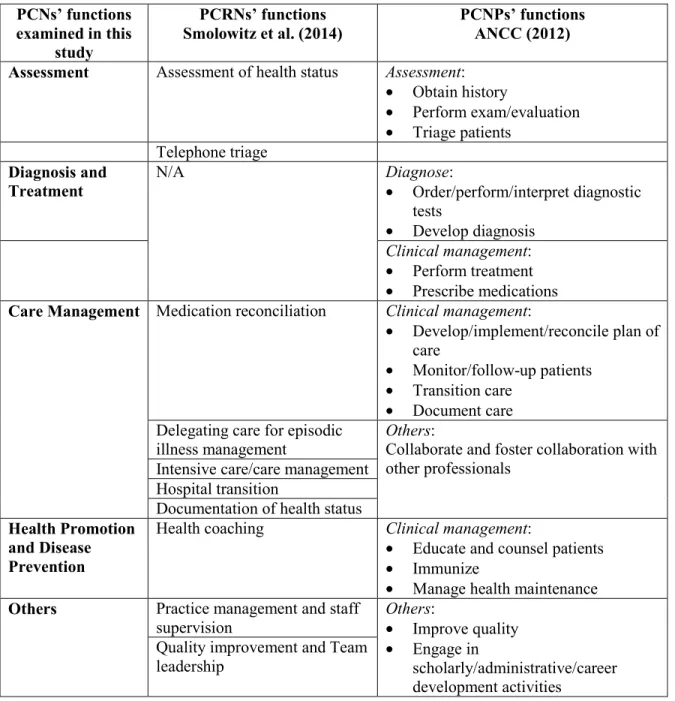
Table 2.1: The Integration of PCRNs’ Functions from the Study of Smolowitz (2014) and PCNPs’ Functions from the Study of ANCC (2012) ...34
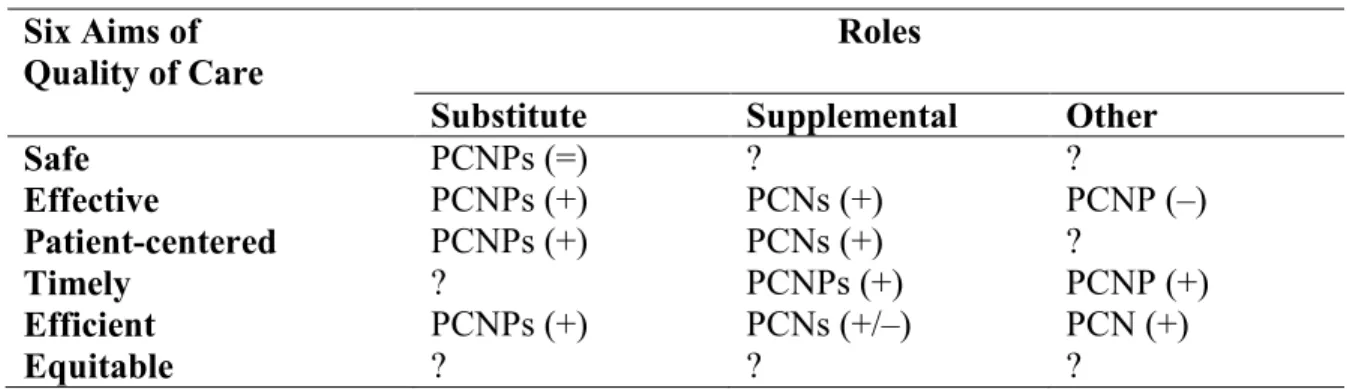
Table 2.2: A Summary of the Outcomes of PCN Care by Their Roles ...55
Table 3.1: The Roles of PCNs and PCPs and Four Patient Visit Scenarios ...82
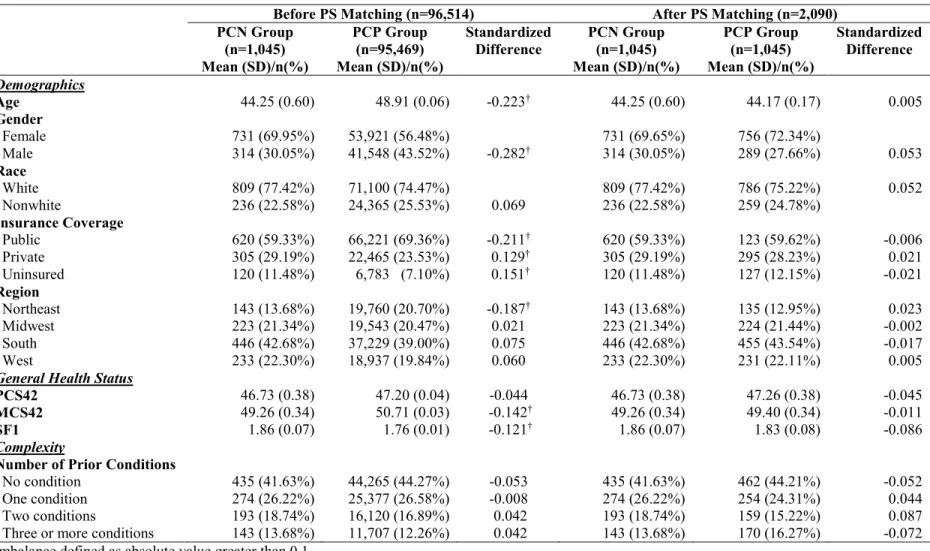
Table 3.2: Descriptive Statistics of Respondents Seeing a PCN or a PCP as Usual Source of Care (n=2,090) ...87
Table 3.3: Functions of PCNs and PCPs (n=5,263 visits) ...89
Table 3.4: Functions of PCNs and PCPs When They Serve a Usual Provider Role (n=4,025 visits) ...91
Table 3.5: Functions of PCNs and PCPs When They Serve a Supplemental Role (n=1,238 visits) ...92
Table 3.6: A Comparison Summary of PCNs and PCPs’ Functions and Roles ...94
Table 4.1: Predicted PCNP Wages and The Decomposition of Wage Disparities ...131
Table 4.2: Descriptive statistics of PCNP Sample ...135
Table 4.3: Feasible Generalized Least Squares Regression Analyses of the Log of Wages ...139
Table 4.4: The Decomposition of Wage Disparities ...149
LIST OF FIGURES
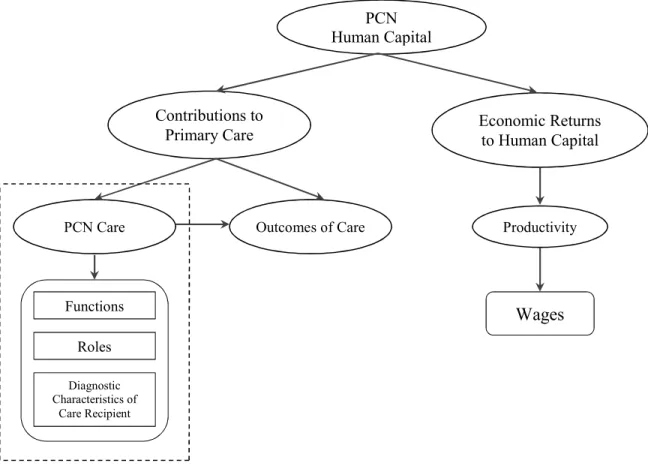
Figure 1.1: The Conceptual Framework of this Dissertation Study ...14
Figure 2.1: Areas of Focus in Chapter 2, from this Dissertation’s Overall Conceptual Framework ...27
Figure 2.2: Description of the Information Gathering Process ...30
Figure 3.1: Sections Examined in Chapter 3 From the Overall Conceptual Framework of This Dissertation ...74
Figure 3.2: The Predicted Probability of Being Diagnosed with a Certain Type of Disease (n=3,891 visits) ...96
Figure 4.1: Sections Examined in Chapter 4 From the Overall Conceptual Framework of This Dissertation Study ...120
Figure 4.2 Wage-experience Profiles for PCNPs Working in Primary Care Settings and those Working in Specialty Care Settings ...144
LIST OF ABBREVIATIONS
AHRQ Agency for Healthcare Research and Quality
AND Associate’s Degree in Nursing
ANP Adult Nurse Practitioners
BSN Bachelor’s of Science degree in Nursing
CCS Clinical Classification Software
CINAHL Cumulative Index to Nursing & Allied Health Literature
CPS Current Population Survey
CTS-PS Community Tracking Study – Physician Survey
FNP Family Nurse Practitioners
FYC Full-Year Consolidated
GNP Gerontology Nurse Practitioners
HCUP Healthcare Cost and Utilization Project
HCV Hepatitis C
HDL High Density Lipoprotein
HMO Health Maintenance Organization
HRSA Health Resources and Services Administration
ICD-9-CM International Classification of Diseases, 9th Revision, Clinical Modification
IOM Institute of Medicine
LDL Low Density Lipoprotein
MEPS Medical Expenditure Panel Survey
MeSH Medical Subject Headings
NAMCS National Ambulatory Medical Care Surveys
NHAMCS National Hospital Ambulatory Medical Care Surveys
NMHC Nurse-Managed Health Center
NNPSS National Nurse Practitioner Sample Survey
NP Nurse Practitioner
NSSNP National Sample Survey of Nurse Practitioner
NSSRN National Sample Survey of Registered Nurse
OB Office-based
OPD Outpatient Department
PA Physician Assistant
PCMH Patient-centered Medical Home
PCN Primary Care Nurse
PCP Primary Care Physician
PSM Propensity Score Matching
RCT Randomized Control Trial
RN Registered Nurse
USC Usual Source Care
VA Veteran Affairs
CHAPTER 1: INTRODUCTION: THE CONTRIBUTIONS OF PRIMARY CARE NURSES TO PRIMARY CARE AND THEIR WAGES
Introduction
Primary care nurses (PCNs) – registered nurses (RNs) and nurse practitioners (NPs)
who practice in primary care settings – are an important component of the U.S. primary care
workforce (Institute of Medicine, 2011). Of the 3.9 million of nurses working in the health
care system, however, only about 500,000 PCNs (approximately 463,200 RNs and 56,200
NPs) were practicing in various primary care settings in 2012, including community clinics,
nurse-managed health centers, physicians’ offices, retail clinics, outpatient settings, and
home health (Agency for Healthcare Research and Quality, 2011; Bureau of Labor Statistics,
2013). Primary care nurses are a key, but underutilized and underemployed, element of the
U.S. primary care system (Bodenheimer & Bauer, 2016).
PCNs contribute to the quality of primary care through their “human capital” – that is,
their knowledge, skills, ability, expertise, and experiences that prepare them to work in
primary care (Aleshire, Wheeler, & Prevost, 2012; Ehrenberg & Smith, 2010;
Hansen-Turton, Ware, & McClellan, 2009; Smolowitz et al., 2014). The literature suggests that PCNs
apply their knowledge and skills in primary care by engaging in patient care activities in
disease prevention, health promotion, and care coordination to improve the quality of
primary care (Bodenheimer, Bauer, Olayiwola, & Syer, 2015; Ladden et al., 2013). Also, the
value of PCNs’ human capital is reflected in the wages they earn in primary care settings,
more they should increase productivity in primary care settings, and, in turn, the higher the
wages PCNs would be expected to earn in primary care (Spetz & Bates, 2013). PCNs’ wages
can also affect their supply in the primary care labor market, because increases in wages in
the market would be expected to attract more nurses to that sector of the market, holding
nurses’ wages in other markets constant (Ehrenberg & Smith, 2010). Thus, understanding
PCNs’ wages can provide important information for addressing the supply of PCNs in
primary care settings.
Despite the number of studies published on the PCN workforce over the past several
decades, our knowledge regarding their contributions to primary care and wages remains
limited. Most previous studies have suggested that, to some extent, PCNs can achieve
outcomes similar to those of primary care physicians (PCPs) in terms of the effectiveness of
care they deliver and by improving patient satisfaction in traditional primary care settings
(e.g., physician offices, community clinics, and outpatient settings) (Martínez-González et
al., 2014; Stanik-Hutt et al., 2013). However, researchers have not clearly defined how PCN
care differs from that of other primary care professionals (e.g., PCPs, or physician assistants
[PAs]), or the outcomes that distinguish the care delivered by PCNs from that delivered by
other primary care professionals. Previous studies have also focused on the wages of nurses,
in general, and examined how wage-generating factors (i.e., human capital, employment, and
demographic characteristics) impact nursing wages, but few studies have examined PCNs’
wages specifically or how PCN wages are influenced by these factors (Coomer, 2013;
Muench, Sindelar, Busch, & Buerhaus, 2015; Spetz & Bates, 2013).
This dissertation addressed the knowledge gaps related to PCNs’ contributions to
this chapter describes the theoretical foundation and guiding conceptual framework of this
dissertation, outlines the knowledge gaps about PCNs’ contributions to primary care and
about their wages, and identifies specific research questions that arise from the identified
gaps. The chapter concludes with an outline of the three papers that comprised the products
of this dissertation, and an overview of the remaining chapters of the dissertation.
Theoretical Foundation
Human capital theory originated in the economics field during the mid-20th century (Becker, 1962; Kiker, 1966; Mincer, 1958, 1974; Schultz, 1961). Human capital refers to an
individual’s personal characteristics (e.g., innate abilities and intelligence, acquired
knowledge and education, job skills and abilities, work experiences, and health) and/or
behaviors (e.g., job mobility) that affect their productivity and performance (Becker, 1962,
2009; Currie & Madrian, 1999; Willis, 1985). Becker (1962) conceptualized human capital
as being both general and specific. General human capital refers to human capital that is
transferable across a range of employers, while specific human capital is applicable to a
particular firm, setting, or professional field (Becker, 2009). Individuals typically acquire
general human capital through investments made in general education and training, including
college coursework, and they acquire specific human capital through investments made in
on-the-job training, continuing education, and work experience (Becker, 2009).
Individuals make financial (e.g., tuition payments) and non-financial (e.g., time)
investments to acquire human capital1, with the expectation that they will receive a return on investment at some future point in time (Ehrenberg & Smith, 2010; Schultz, 1961). These
returns typically accrue to individuals by way of increased productivity after they enter the
labor market (Ehrenberg & Smith, 2010). Because individuals’ human capital provides
knowledge, skills, and abilities that allow them to do new and/or different work, an important
assumption of human capital theory is that greater human capital investments result in higher
productivity (Becker, 2009; Crook, Todd, Combs, Woehr, & Ketchen, 2011). Unfortunately,
productivity is difficult to measure and directly observe. For this reason, labor economists
typically consider individuals’ wages as a proxy for their productivity (Becker, 2009).
Human capital theory thus acknowledges that as human capital is acquired, wages also
increase, as a result of increased productivity (Mincer, 1958; Schultz, 1961).
Human capital theory has been used in nursing to recognize nursing as a
knowledge-based profession (Moody, 2004). Nursing human capital has been conceptualized as the
knowledge, skills, abilities, expertise, and experiences that nurses possess and bring to health
care (Hall, 2002; Jones & Gates, 2004). With this definition in mind, the following sections
describe PCNs’ human capital and its impact on PCNs’ contributions to primary care and its
economic returns.
PCNs’ Human Capital
Because the PCN workforce comprises both primary care RNs (PCRNs) and primary
care NPs (PCNPs), general and specific human capital for each group is addressed. Primary
care RNs acquire general human capital through their basic, entry-level nursing education
and training. With few exceptions, this training includes the education that PCRNs obtain
from educational programs providing a three-year diploma in nursing, a two-year associate’s
degree in nursing (ADN), and/or a four-year bachelor’s of science degree in nursing (BSN).
The training of PCRNs in each of these programs may or may not include a basic
promotion, disease prevention, and health assessment (Bodenheimer et al., 2015). Primary
care RNs prepared with a BSN degree have typically received more focused and intense
education and training relevant to primary care, including community-based care, compared
with RNs prepared with a diploma or ADN (American Association of Retired Persons, 2010;
Institute of Medicine, 2011). After graduation from one of these entry-level nursing
programs, PCRNs acquire specific human capital in primary care by practicing and gaining
additional experience in primary care settings and/or through additional education obtained
through on-the-job training and continuing education in primary care.
Primary care NPs are RNs who acquire graduate-level education and training as an
advanced practice nurse from programs preparing them to become adult NPs (ANP), family
NPs (FNP), gerontology NPs (GNP), pediatric NPs (PNP), or women’s health NPs (WHNP)
(Health Resources and Services Administration, 2002; National Council of State Boards of
Nursing, 2008). Primary care NPs acquire general human capital by first investing in their
basic RN training and then by investing in graduate-level education in nursing and primary
care. Because PCNPs must be RNs before they can become PCNPs, their general human
capital as PCNPs builds on their basic RN training. PCNPs also acquire general human
capital above and beyond that of their basic RN training through their graduate NP training
(generally an additional 1-3 years of training), which typically includes advanced study in
family and individual health in lifespan, adult/gerontology health, gender specific health, and
pediatric health (National Council of State Boards of Nursing, 2008). After they enter
practice, PCNPs acquire specific human capital by gaining experiences caring for and
managing patients in a primary care setting, and/or through on-the-job training, and
The human capital possessed by PCNs – both PCRNs and PCNPs – therefore serves
as the foundation of their contributions to primary care and influences the economic returns
they receive after entering the labor market that acknowledge these investments. The
following sections discuss the impact of PCNs’ human capital on their contributions to
primary care, and their wages.
PCNs’ Human Capital and Their Contributions to Primary Care
PCNs’ contributions to primary care are reflected in the care they deliver as well as
the outcomes of care they achieve (Covell, 2008; Royal, 2012). The following sections
describe PCN care, the outcomes of their care, and how PCNs’ human capital affects both.
PCNs’ human capital and the care they provide. In the context of health care, care
generally refers to “what health professionals do for others” (Orem, Taylor, & Renpenning,
2001). Specifically, care depends on: 1) what activities the professional performs to meet the
health needs of those to whom care is provided; 2) how the professional should perform the
activities, given the job filled in the health care system or the situation of practice, including
the services provided within the scope of license, and the collaboration with other health care
professionals who also provide care; and 3) why individuals or groups need help to achieve
or maintain their health (Orem et al., 2001. p.26-29). Thus, care is characterized from the
perspectives of both the care provider and the recipient of care (Orem et al., 2001). Moreover,
this conceptualization defines both the content and context of a provider’s care.
Similarly, researchers in the past several decades have characterized PCN care from
the perspectives of both PCNs and the recipients of their care. Specifically, they have focused
on the following three areas that are consistent with the above conceptualization of care. First,
needs of their care recipients (Aparasu & Hegge, 2001; Buerhaus, DesRoches, Dittus, &
Donelan, 2014; Everett et al., 2014; Hing & Hooker, 2011; Hughes, Jiang, & Duszak, 2014;
Lewis & Linn, 1977). Second, previous studies have explored how PCNs perform their
activities given the job they hold in primary care; and particularly, researchers have focused
on understanding PCNs’ roles when they collaborate with physicians (Everett et al., 2014;
Laurant et al., 2009; Laurant et al., 2005). Third, researchers have also examined the
diagnostic characteristics of PCNs’ carerecipients – that is, why individuals or groups need
care from PCNs, including their health problems (e.g., acute or chronic problems) (Hooker &
McCaig, 2001), the major reasons that they make visits to PCNs (Hing & Hooker, 2011), and
their specific diagnoses (Aparasu & Hegge, 2001; Deshefy-Longhi, Swartz, & Grey, 2008;
Lewis & Linn, 1977; McCaig, Hooker, Sekscenski, & Woodwell, 1998).
According to this conceptualization of care and following the convention of previous
studies of PCNs, this dissertation examined the above three aspects of PCN care – functions,
roles, and the diagnostic characteristics of care recipients. Because the care that
professionals deliver is also influenced by their human capital, health professionals must
possess relevant theoretical and practical knowledge, expertise, and experience to understand
the health problems of their care recipients and the care they may need (Orem et al., 2001).
Thus, the following sections will describe each of the three aspects of PCN care and will
explain how PCNs’ human capital influences them.
PCNs’ functions. PCNs’ functions include triaging patients, performing health
assessments, evaluating and administering immunizations, making diagnoses, ordering and
interpreting laboratory tests, prescribing medications, treating and managing disease,
Credentialing Center, 2012; Smolowitz et al., 2014). Previous studies have indicated that as
PCNs’ increased their human capital (e.g., higher education, or more experience), their
performance of certain functions also improved, including more frequent and accurate
monitoring of medication side effects (Jordan, Coleman, Hardy, & Hughes, 1999), applying
and transferring knowledge to practice (Wildman, Weale, Rodney, & Pritchard, 1999), and
adhering to practice guidelines (Umble, Cervero, Yang, & Atkinson, 2000).
PCNs’ roles. Katz and Kahn (1978) defined an individual’s role as the standard
patterns of functions that an individual performs in an organization or system as part of his or
her job. It is important to note that “role” is comprised of “functions”, yet a “role” is more
comprehensive and inclusive than discrete “functions” – “role” reflects the depth of
individuals’ knowledge about the functions performed, andhow those functions vary within
the jobs that individuals hold.
In keeping with the definition of Katz and Kahn (1978), this dissertation defined PCN
role as the pattern of functions that an individual performs in his or her primary care job.
Traditionally, researchers have categorized PCN roles as either “substitute” for or
“supplement” to PCPs, depending on the degree to which the functions performed by a PCN
in his or her job overlaps with or complements a PCP’s functions (Laurant et al., 2005).
According to Laurant and colleagues (2005), a substitute role is one in which a PCN
performs a set of functions that partially or completely overlaps those performed by a PCP,
and has the ability to provide certain types of care to patients instead of a PCP (Auerbach,
2000; Cawley, 2011; Cooper, Henderson, & Dietrich, 1998; Record, McCally, Schweitzer,
Blomquist, & Berger, 1980). A supplement role is one in which a PCN performs a different
provided along with the care provided by a PCP (Laurant et al., 2005). In practice, PCNs
often serve in both types of roles, sometimes simultaneously, with some PCN functions
overlapping those of PCPs even when they serve a supplement role. Besides these two roles,
PCNs may also serve other roles that are neither substitute nor supplement; for example,
PCNs may serve in different roles in retail clinics.
PCNs’ human capital may affect the roles that each type of PCN serves in primary
care. For instance, because PCNPs have more education, training, and practice skills than
PCRNs, they are more likely than PCRNs to substitute for PCPs, or serve as the individual’s
or group’s usual care provider (Agency for Healthcare Research and Quality, 2013).
Diagnostic characteristics of PCNs’ care recipients. PCNs manage individuals or
groups with a variety of diagnostic characteristics, including acute problems, chronic
problems (both routine check and disease follow-up), pre-/post-surgery care, and preventive
care (Hooker, Benitez, Coplan, & Dehn, 2013; McCaig et al., 1998). PCNs’ human capital
also prepares them to care for individuals or groups with certain diagnostic characteristics
(National Council of State Boards of Nursing, 2008). For instance, WHNPs are prepared to
manage the health problems related to women, while PNPs possess human capital to care for
the health problems specific to infants and children.
Generally, PCNs’ human capital includes the knowledge and skill foundation for the
care they deliver, specifically for the functions they perform, the roles they fill, and the
diagnoses of their care recipients. This also distinguishes PCN care from the care provided
by other primary care professionals, such as PCPs. PCN care is both similar to and different
from PCP care, since their human capital both overlaps and is distinct from that of PCPs.
and the diagnostic characteristics of their care recipients, the following sections will discuss
how PCN human capital overlaps and is distinct from that of PCPs, and how PCN care and
PCP care is similar and different.
Human capital and the care they provide – PCNs vs. PCPs. The human capital of
PCNs overlaps with or is similar to that of PCPs to some degree. It has been estimated that
PCNs may have up to seven years of education and training in primary care, while PCPs
have at least seven years of medical education and training; certain aspects of the training
received by both PCNs and PCPs overlap, including biology and pathophysiology, and
perhaps several years of clinical experience related to managing patients’ diseases and
physical health that they both bring (Djukic & Kovner, 2010; Noriega, 2014). PCNs’ training
prepares them to perform functions that are similar to those of PCPs, including managing
diseases and addressing patients’ physical health by performing physical examinations,
ordering and interpreting lab tests, making diagnoses, prescribing medications, and treating
diseases (Buerhaus et al., 2014; Djukic & Kovner, 2010; Hing, Hooker, & Ashman, 2011;
Hooker & McCaig, 2001; Ladd, 2005). PCNs’ education and training also prepares them to
serve similar roles as PCPs, including serving as a usual care provider for individuals or
groups (Everett et al., 2014). The human capital possessed by PCNs that overlaps that of
PCPs also enables them to manage individuals or groups with similar diagnostic
characteristics in much the same way that PCPs do, including providing care to healthy
patients, patients with minor diagnoses (e.g., headaches, or upper respiratory infections), and
patients with chronic diseases but without severe or complex situations (Djukic & Kovner,
The human capital possessed by PCNs and PCPs is derived from medical and nursing
models, respectively. For example, PCPs’ human capital arises from patients’ specific
symptoms or health problems, while PCNs’ human capital is more focused on patient
counseling, patient education, and disease prevention (Burman et al., 2009; Noriega, 2014).
This philosophical basis distinguishes PCNs’ human capital from PCPs’, making PCNs
attuned to performing such functions as providing immunizations, preventive care, health
education, and psychological counseling (Hing et al., 2011; Hooker & McCaig, 2001; Ladd,
2005). The human capital of PCNs also allows them to serve different roles than PCPs,
including supplement roles or those that extend PCP care and services. Because PCNs do not
possess the same level of knowledge as PCPs in terms of diagnosing and treating individuals
or groups with complex, acute, or severe problems, they typically do not manage or
independently care for patients with complex or severe health problems, particularly in acute
situations (Deshefy-Longhi et al., 2008; Dill, Pankow, Erikson, & Shipman, 2013; Noriega,
2014). Thus, PCNs’ human capital both determines the care they provide and distinguishes
their care from PCP care.
PCNs’ human capital and the outcomes of their care. Previous studies have
suggested that patients cared for by PCNs with higher levels of nursing education and
experience had better outcomes than those with less education, including improvements in
their general health status, health behaviors, and physical and social functioning (Castle,
Engberg, & Men, 2007; O'Brien-Pallas et al., 2001; O’Brien-Pallas et al., 2005). These
studies indicate that the more human capital PCNs possess, the better patient outcomes they
Summary. In general, PCNs’ human capital influences their contributions to primary
care as reflected by the care they provide, including their functions and roles, and the
diagnostic characteristics of their care recipients; PCNs’ human capital also is both similar to
and different from PCPs’ human capital; and PCNs’ human capital affects the outcomes they
achieve. Moreover, PCNs receive returns to their human capital investments based on the
care they provide and the positive primary care outcomes they achieve. PCNs thus benefit in
economic terms from their investments in human capital, which is the focus of the next
section.
Economic Returns to Investments in PCN Human Capital
Studies examining the economic returns to investments in nurses’ human capital have
typically examined nurses’ wages as a proxy for nursing productivity (Jones, 2004).
Researchers reported that for nurses, in general – both PCNs and nurses in acute/specialty
care settings – higher levels of nursing education (both the initial and highest nursing degree)
(Graf, 2006; Spetz, 2002; Spetz & Bates, 2013), bilingual skills (Coombs & Cebula, 2010;
Coomer, 2011, 2013; Kalist, 2005), increased work experience (Botelho, Jones, & Kiker,
1998; Jones & Gates, 2004), and a foreign nursing education (Schumacher, 2011; Walani,
2013) were associated with higher nursing wages. These studies suggest that when nurses,
and PCNs by extension, invest in their human capital, their wages are also likely to increase,
commensurate with their increased productivity.
Summary. Based on prior research, this dissertation postulated that PCNs’ human
capital influences their contributions to primary care and their economic returns in the form
of wages. The human capital framework and prior workforce research provide support for the
conceptual framework of this dissertation, discuss the knowledge gaps, and propose the
research questions that were addressed in this dissertation.
The Conceptual Framework of this Dissertation
Drawing on human capital theory and the research literature, the conceptual
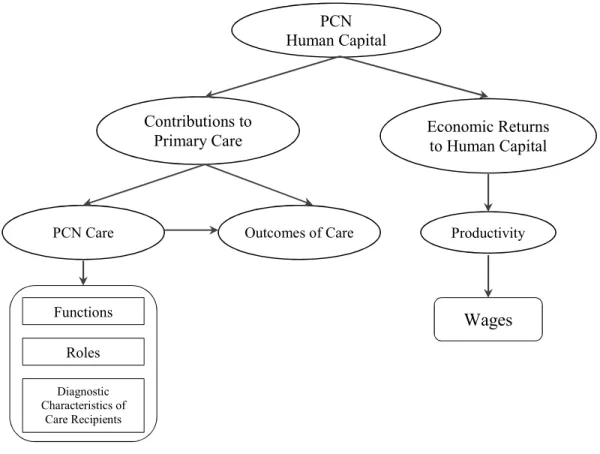
framework of this dissertation suggests that PCNs’ human capital impacts both their
contributions to primary care and their economic returns (Figure 1.1). The underlying
principle is that PCNs’ human capital provides the knowledge and skills that are foundational
to their contributions to primary care, including PCNcare – the functions they perform, the
roles they serve, and the diagnostic characteristicsof their care recipients they manage –
and the outcomes of care that PCNs achieve. This conceptual framework also indicates that
the economicreturns to PCNs’ investments in human capital are reflected in PCNs’
Figure 1.1: The Conceptual Framework of this Dissertation Study
Knowledge Gaps and Research Questions
The aforementioned conceptual framework represents PCNs’ contributions to primary
care based on their human capital, and the economic returns to PCNs’ human capital.
However, knowledge about some aspects of the conceptual framework, such as PCN care,
the outcomes of PCN care, and PCN wages, is lacking. This knowledge deficit potentially
limits the full utilization of PCNs in the primary care system. This section will discuss these
knowledge gaps and propose the research questions that were addressed in this dissertation.
First, we lack a systematic and comprehensive understanding of PCNs’ contributions
to primary care, including the care they provide and the outcomes of PCN care. This
knowledge is critical to inform their future utilization and the opportunities to fill new
PCN Human Capital
Contributions to Primary Care
PCN Care Outcomes of Care Productivity
Economic Returns to Human Capital
Roles Diagnostic Characteristics of
Care Recipients
positions in the transformed primary care system. Several literature reviews conducted since
1990 have studied PCNs’ contributions to primary care, and suggested that, compared with
PCPs, PCNs achieved similar outcomes in terms of patients’ perceptions of satisfaction with
and the effectiveness of primary care (Horrocks, Anderson, & Salisbury, 2002; Keleher,
Parker, Abdulwadud, & Francis, 2009; Laurant et al., 2005; Martínez-González et al., 2014;
Naylor & Kurtzman, 2010; Stanik-Hutt et al., 2013; Swan, Ferguson, Chang, Larson, &
Smaldone, 2015). However, our understanding of PCNs’ unique contributions to primary
care remains limited in terms of the distinct nature of the care they provide, the new roles
they fill, and their emerging contributions to new models of care delivery. These limitations
hinder our understanding of PCNs’ contributions to the evolving primary care system and
inhibit future efforts to optimally utilize PCNs’ contributions and achieve the aims of
primary care system transformation. Therefore, this knowledge gap led to the first research
question: What are PCNs’ contributions to primary care, including the care they provide
and the outcomes of their care?
Second, under the component of PCNs’ contributions to primary care, we know little
about PCN care. Specifically, little is known about how PCN care is similar to and different
from PCP care. Although a few studies over the past several decades characterized and
compared the care provided by PCNs and PCPs, our knowledge remains limited in terms of
how the care delivered by the collective PCN workforce (both PCRNs and PCNPs) is
compared with the care delivered by PCPs, how the roles of PCNs are similar to and different
from those of PCPs, and what the specific diagnoses that PCNs and PCPs manage. These
limitations hinder a comprehensive and informative understanding of PCN and PCP care and
Because PCNs are often called upon to collaborate with PCPs and coordinate the care
ordered by PCPs in primary care, determining the similarities and differences between PCN
care and PCP care is important to differentiate the activities of PCNs and PCPs, optimally
utilize their overlapping and unique human capital, and strengthen the collaboration and
coordination of these two professional groups (Institute of Medicine, 2011). Therefore, the
second research question that was addressed in this dissertation was: How is PCN care
similar to and different from PCP care, in terms of their functions, roles, and the
diagnostic characteristics of their care recipients?
Third, we lack information about PCN wages because most previous studies did not
focus exclusively on the PCN workforce. This knowledge gap is especially pronounced in the
PCNP workforce, as there is minimal research on the topic despite the significant
contributions that PCNPs make to primary care and the increased demand for PCNPs
(Auerbach et al., 2013). Moreover, previous descriptive studies indicate that general NPs
(both PCNPs and specialty care NPs) working in primary care settings may earn, on average,
less than those working in specialty care settings. This wage difference may be one of the
reasons that some NPs may choose not to practice in primary care settings. Lower wages may
also be associated with lower job satisfaction and an increased likelihood of turnover among
NPs working in primary care settings, when compared with NPs working in other settings
(De Milt, Fitzpatrick, & Sister Rita, 2011; Pasaron, 2013), and may thus deter NPs and NP
graduates from choosing to work in primary care settings (Budd, Wolf, & Haas, 2015;
Petterson, Phillips, Bazemore, Burke, & Koinis, 2013). However, few efforts have identified
whether or not this wage difference exists in PCNPs workforce. Understanding the
characteristics is important to understand how future PCNP supply may be affected.
Therefore, the final research question that was addressed in this dissertation was: Is there
wage disparity between PCNPs employed in primary care settings and those employed in
specialty care settings and if so, why?
To address these research questions, this dissertation includes three related papers that
reflect independent analyses. An outline of this dissertation and a brief summary of each
proposed paper are provided in the following section.
An Outline of this Dissertation
Chapter 1 has provided the background, theoretical foundation and conceptual
framework, as well as the knowledge gaps, research questions, and an overview of this
dissertation. Chapters 2, 3, and 4 were formatted as three papers that report the three different
analyses addressing the aforementioned research questions, respectively. Chapter 5 provides
a discussion and synthesis of the general findings of all papers, and addresses the limitations,
research implications, and policy implications of the dissertation.
The following sections provide a general description of each of the three studies,
including the study purpose, the proposed study methods, and the target journal. Because
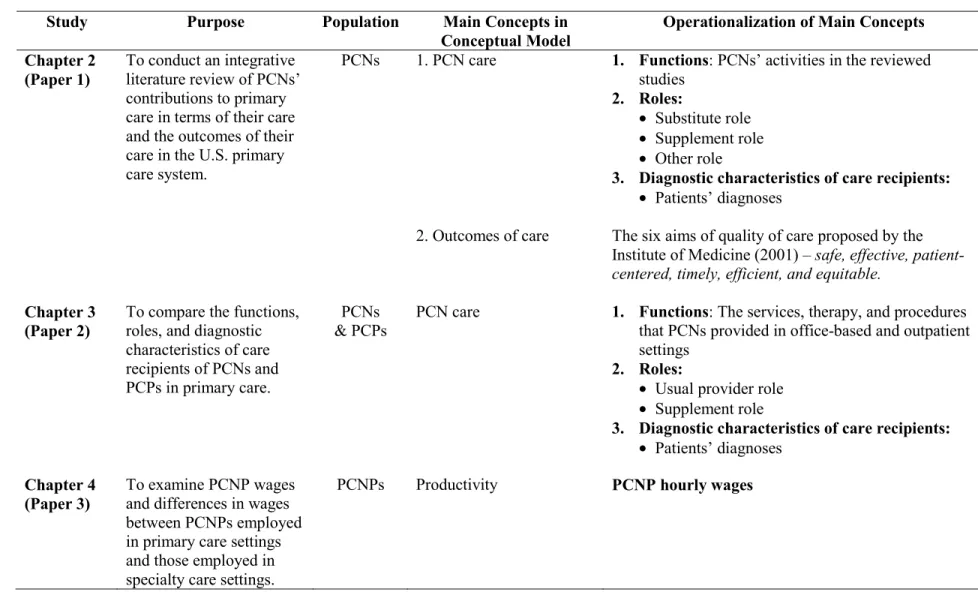
these three studies focused on different study populations and concepts, a summary table of
the study aims, study population, main concepts, and the operationalization of the main
1
8
Table 1.1: A Summary of the Key Information in the Three Papers
Study Purpose Population Main Concepts in
Conceptual Model
Operationalization of Main Concepts Chapter 2
(Paper 1)
To conduct an integrative literature review of PCNs’ contributions to primary care in terms of their care and the outcomes of their care in the U.S. primary care system.
PCNs 1. PCN care 1. Functions: PCNs’ activities in the reviewed
studies
2. Roles:
• Substitute role
• Supplement role
• Other role
3. Diagnostic characteristics of care recipients:
• Patients’ diagnoses
2. Outcomes of care The six aims of quality of care proposed by the Institute of Medicine (2001) – safe, effective, patient-centered, timely, efficient, and equitable.
Chapter 3 (Paper 2)
To compare the functions, roles, and diagnostic characteristics of care recipients of PCNs and PCPs in primary care.
PCNs & PCPs
PCN care 1. Functions: The services, therapy, and procedures
that PCNs provided in office-based and outpatient settings
2. Roles:
• Usual provider role
• Supplement role
3. Diagnostic characteristics of care recipients: • Patients’ diagnoses
Chapter 4 (Paper 3)
To examine PCNP wages and differences in wages between PCNPs employed in primary care settings and those employed in specialty care settings.
Chapter 2 (Paper 1): An integrative literature review of PCNs’ contributions to the U.S. primary care system.
Study aim and method. To address the first research question of this dissertation,
this paper reviewed existing literature regarding PCNs’ contributions to primary care in terms
of their care and the outcomes of their care in the U.S. primary care system. The study
population for this paper was PCNs – that is, both PCRNs and PCNPs. Using integrative
literature review methods of relevant studies published from 2011 until 2015, PCN care was
examined by identifying the reported functions they performed, the roles they served, and the
diagnoses of their care recipients. The outcomes of PCN care were examined within the
context of the six aims of a quality health care system proposed by the Institute of Medicine
(2001): that is, a quality health care system, and, by extension, the professionals in it, should
provide care that is safe, effective, patient-centered, timely, efficient, and equitable. This
framework was used to categorize the information from the reviewed studies.
Target journal. The target journal for this paper is Nursing Outlook. This journal
was selected because it focuses on the synthesis and dissemination of knowledge on current
challenges in nursing practice and education, with a particular emphasis on research
addressing policy-relevant issues in nursing health care, including the presentation of
solutions for care delivery problems, and the appropriate and effective utilization of the
nursing workforce. This paper is consistent with the journal’s focus because appropriately
utilizing the PCN workforce to meet the changing needs of the primary care system is among
one of the most challenging issues reported in the nursing literature (Buerhaus et al., 2014;
Iglehart, 2013; Smolowitz et al., 2014). Also, improving our knowledge and understanding of
PCN care and the outcomes of their care is important to inform efforts to improve PCN
primary care delivery. This paper is particularly important to this journal given that PCNs
may make even greater contributions to the primary care system in the future because of their
expertise in providing comprehensive, coordinated, and continuous primary care, which
feature prominently in the new models of care emerging from health care reform (e.g.,
patient-centered medical homes and accountable care organizations) (Auerbach et al., 2013;
Naylor, Aiken, Kurtzman, Olds, & Hirschman, 2011). Moreover, this journal is a highly
regarded journal in the nursing field, ranked 42nd among 228 U.S. nursing journals, with an impact factor of 1.59 in 2015 (SCIMago Journal and Country Rank, 2016). Also, this paper
provides a comprehensive and current understanding of PCNs’ contributions to primary care,
which therefore makes this journal an appropriate target for submission.
Chapter 3 (Paper 2): A comparison of care delivered by PCNs and PCPs in primary care settings.
Study aim and method. To address the second research question of this dissertation,
this paper compared PCN and PCP care in U.S. primary care settings, in terms of their
functions, roles, and the diagnostic characteristics of their care recipients. The study
population for this paper was PCNs – that is, both PCRNs and PCNPs – and PCPs. A
cross-sectional, secondary analysis was applied using data from annual Medical Expenditure Panel
Survey (MEPS) files from 2002-2013. Propensity score matching was used to match patients
who saw PCNs as a USC with patients who saw PCPs as a USC, to control for the impacts of
patient demographic characteristics and health status with respect to the provider they used
and the care they received. Descriptive analyses were used to: 1) compare PCN and PCP
functions by examining the services, therapy, and procedure they provided to care recipients;
the usual provider role2 and supplemental role, respectively. A multinomial logistic
regression was used to examine the diagnostic characteristics of patients who received care
from PCNs and PCPs.
Target journal: This paper will be submitted to the journal Health Affairs. This
journal was selected because it is an interdisciplinary journal that publishes studies
addressing current U.S. policy concerns and cross-disciplinary issues related to improving
health, health care, quality, and access. This journal is an appropriate target for this study
because: 1) the similarities and differences in the care between PCNs and PCPs are among
the most hotly debated policy issues related to the changing primary care system (Donelan,
DesRoches, Dittus, & Buerhaus, 2013); and 2) new insights on this issue are important for
informing the assignment of patients to PCNs and PCPs, strengthening their collaboration
and the coordination of care delivered by each, and advancing the quality of primary care.
This journal is also a top health care science journal, ranked 5th out of 85 health care science
and services journals, and 2nd out of 212 health policy and services journals; an impact factor
of 5.23 was reported for 2015 (SCIMago Journal and Country Rank, 2016). Because this
paper provides new evidence about the care delivered by both PCNs and PCPs, it is suitable
to submit this manuscript to this journal.
Chapter 4 (Paper 3): A comparison of wages for PCNPs working in primary care and specialty care settings.
Study aim and method. To address the third research question of this dissertation,
this paper examined PCNP wages and compared the wages of PCNPs employed in primary
care settings with those of PCNPs employed in specialty care settings. Unlike the study
populations of Paper 1 and Paper 2, this paper focused specifically on PCNPs. A
cross-sectional, secondary analysis design was used by analyzing data from the 2012 National
Sample Survey of Nurse Practitioners (NSSNP). To carry out such an analysis, a feasible
generalized linear regression was used to first model PCNP wages as a function of their
human capital, employment, and demographic characteristics. Then, the existence of a wage
disparity between PCNPs working in primary care and specialty care settings was explored
using a Chow-test. A common approach used to examine wage disparities, the
Oaxaca-Blinder decomposition technique, was then used to investigate the factors contributing to
these differences.
Target journal: This paper will be submitted to the journal, Nursing Economic$.
This journal was selected because it publishes studies focusing on management, finance,
economics, and policy making in health care and nursing. It is a suitable target journal for
this paper because this study focused on the economic returns to PCNPs’ human capital.
Nursing Economic$ is a highly regarded journal in nursing, ranking 82nd out of 228 U.S.
nursing journals, with an impact factor of 0.59 in 2015 (SCIMago Journal and Country Rank,
2016). Because this paper reported the analysis of PCNP wages and wage disparities, it is
suitable for submission to this journal.
Chapter Summary
This chapter provided a general overview of this dissertation’s purpose and the
background information supporting its focus. This dissertation aimed to improve our
understanding of PCNs’ contributions to primary care and the wages of PCNs employed in
primary care settings. This chapter presented the theoretical foundation of this dissertation,
This dissertation included three related studies that each pertain to different aspects of the
dissertation’s general conceptual framework. The next three chapters describe each of the
CHAPTER 2: AN INTEGRATIVE LITERATURE REVIEW OF PRIMARY CARE NURSES’ CONTRIBUTIONS TO THE U.S. PRIMARY CARE SYSTEM
Background
As the largest component of the primary care workforce, primary care nurses (PCNs)
play a vital role in the U.S. primary care system (Institute of Medicine, 2011). Several
literature reviews conducted over the past decade have examined PCNs’ contributions to
primary care (Horrocks et al., 2002; Keleher et al., 2009; Laurant et al., 2005;
Martínez-González et al., 2014; Naylor & Kurtzman, 2010; Shaw et al., 2014; Stanik-Hutt et al., 2013;
Swan et al., 2015). These reviews analyzed findings from studies published before 2012, and
examined the outcomes of PCN care in a variety of countries, including the United States,
Canada, United Kingdom, Netherlands, South Africa, Australia, and Russia.
Findings of these previous literature reviews identified several important
contributions of PCNs to primary care. These studies noted that when PCNs served in a
substitute role to PCPs: 1) PCNs delivered care that achieved patient outcomes similar to
those of PCPs, including patient health and functional status, mortality, and reductions in
blood pressure, total cholesterol, and HbA1c; 2) patients cared for by PCNs had similar
numbers of emergency room visits and hospitalizations as those cared for by PCPs; and
patients cared for by PCNs reported higher levels of satisfaction, and receiving longer
(Horrocks et al., 2002; Keleher et al., 2009; Laurant et al., 2005; Martínez-González et al.,
2014; Naylor & Kurtzman, 2010; Stanik-Hutt et al., 2013; Swan et al., 2015). Previous
literature reviews have also suggested that when PCNs served in a supplemental role to
PCPs, patients had better outcomes on blood pressure, total cholesterol, and HbA1c greater
knowledge (Shaw et al., 2014) and were more compliant with treatment than patients who
received care from PCPs alone (Keleher et al., 2009).
While prior literature reviews have advanced our understanding of PCN care, we lack
current knowledge about PCNs’ contributions to primary care in the context of recent
changes in the delivery of primary care. Previous reviews focused almost exclusively on the
outcomes of PCN care; very few examined the care that PCNs actually provide, including
their functions, roles, and the diagnostic characteristics of care recipients. It is reasonable to
expect that PCNs would achieve different outcomes when performing different functions,
serving in different roles and caring for patients with different diagnoses. Without examining
these aspects of PCN care, it is difficult to understand the full scope of PCNs’ impact on the
outcomes of care, or how PCNs contribute to primary care.
Most of the previous reviews focused only on PCNs’ contributions to primary care
when they served as a substitute role to PCPs; only two literature review examined the
outcomes of PCN care when they served as a supplemental role to PCPs (Keleher et al.,
2009; Shaw et al., 2014). This lack of knowledge about the outcomes of PCN care when they
serve a supplemental role makes it difficult to fully utilize PCNs’ expertise in extending
patient care and providing integrated and holistic primary care. Also, limiting reviews to
focus only on the traditional roles of PCNs as substitute and supplemental neglects the
contributions when they collaborate with PCPs (Everett et al., 2014). There are certain
independent functions that PCNs perform and roles they fill that may not necessarily require
collaboration with PCPs. For example, PCN-led clinics (e.g., NP-staffed clinics and retail
clinics) enable PCNs to contribute to primary care by offering patients expanded access to
care and more flexibility in the locations where they receive care. PCNs’ roles in these clinics
are designed to better meet patient care needs and do not fit in the traditional categorizations
of substitute or supplemental.
Finally, because many of the prior reviews were conducted outside of the U.S., the
findings are not directly applicable to PCN care in the U.S. primary care system. All of the
previous reviews merged studies from a variety of countries with differing PCN education
and practice models and differing health care systems and payment models, which makes it
difficult to discern their generalizability to PCNs’ contributions to the U.S. primary care
system.
To address these limitations, this chapter presents an integrative literature review of
PCNs’ contributions to the U.S. primary care system, conducted using U.S. studies published
between 2011 and 2015. This integrative review examined the first research question of this
dissertation: What are PCNs’ contributions to primary care, including the care they
Conceptual Framework
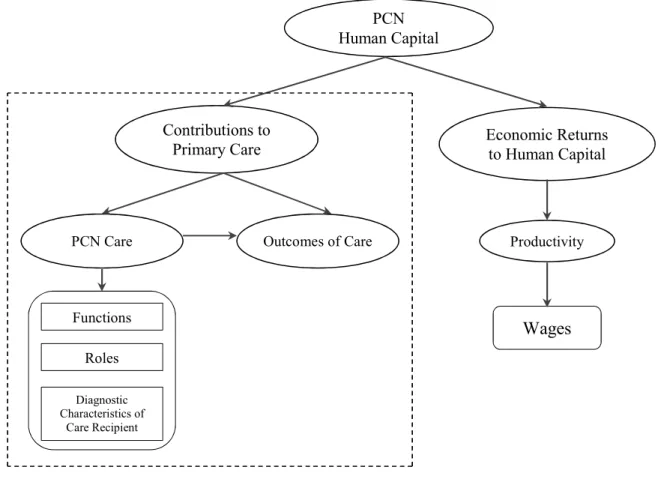
The research question addressed in this chapter focused on certain aspects of the
dissertation’s overall conceptual framework, as shown by the dotted line in Figure 2.1 below.
Figure 2.1: Areas of Focus in Chapter 2, from this Dissertation’s Overall Conceptual Framework
PCN Human Capital
Contributions to Primary Care
PCN Care Outcomes of Care Productivity
Economic Returns to Human Capital
Roles
Diagnostic Characteristics of
Care Recipient Functions
Methods
This integrative literature review used the seven-step approach of conducting a
research synthesis outlined by Cooper (2009). A discussion of each step follows.
Step 1: Formulating the Problem
This step was achieved through a preliminary examination of the literature, which
indicated that there was sufficient literature available to conduct this review. The preliminary
review also highlighted weaknesses of prior literature reviews and underscored the need for a
synthesis of current literature on PCN care and the outcomes of their care. This step was
augmented by reviewing related articles and discussing relevant issues with experts in the
field. Taken together, this information suggested that an integrative review was warranted to
better understand PCNs’ contributions to primary care and the PCN workforce.
Step 2: Searching the Literature
A thorough literature search was conducted by searching the following electronic
databases: PubMed, the Cumulative Index to Nursing & Allied Health Literature (CINAHL),
the Cochrane Library, Web of Science, and Google Scholar. The terms used in the searching
process, including the medical subject headings (MeSH) used in PubMed, were “nurse
practitioner,” “registered nurse,” “primary care,” “family medicine,” “ambulatory care,”
“general practice,” “community health center,” “patient-centered medical home,”
“transitional care,” “retail clinic,” “home health,” “accountable care organizations,” and
“nurse-managed health center or nurse-led clinic.” The reference lists of all articles were
Step 3: Gathering Information
The following inclusion criteria were used to select articles for this review. First, only
articles reporting empirical research conducted in U.S. primary care settings were included;
pilot studies were excluded because of the small sample sizes of studies. This approach was
used to gather evidence specific to PCNs in the U.S. primary care system, and to minimize
the variability introduced by differing education, regulatory and payment systems in other
countries. Second, only articles that were published in peer-reviewed journals between
January 1, 2011 and December 31, 2015 were selected for review. Limiting the dates of
articles allowed the researcher to build on and expand previous literature reviews and to
capture the contemporary and evolving contributions of PCNs to the transforming primary
care system. Finally, this review focused on articles that reported analyses of only PCN care
or the outcomes of PCN care. Articles with samples that combined PCNs and other providers
(e.g., PAs and social workers) were excluded to focus on the contributions of PCNs only.
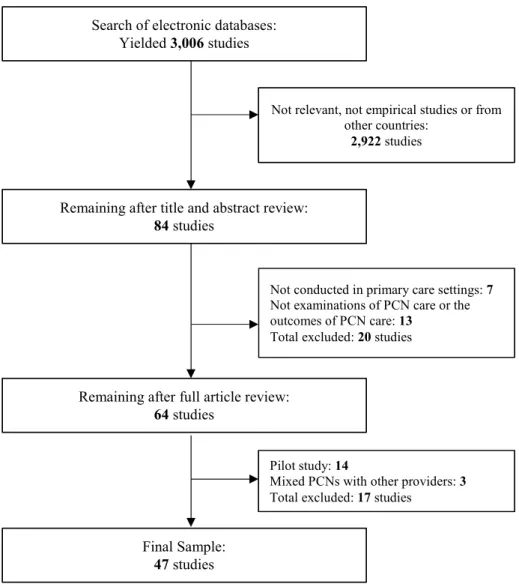
Figure 2.2 provides a flow chart of the literature-selection process based on the above
inclusion criteria. Initially, the search of key words in electronic databases yielded 3,006
articles. The titles and abstracts of each article were first examined to determine relevance to
the purpose of this review and to ensure that studies met the inclusion criteria. Of these
studies, 2,022 were excluded because they were not empirical studies, were not consistent
with the study’s purpose or were conducted in other countries; after this step, there were 84
articles remaining for further review. These 84 articles were then reviewed in their entirety;
20 were excluded because they were not specific to primary care or did not examine PCN
care or outcomes. Of the 64 remaining articles, 17 were excluded because they were pilot
in a final sample of 47 articles for review. Appendix 2.1 provides a list of the articles that
were reviewed in this study.
Figure 2.2: Description of the Information Gathering Process
Step 4: Evaluating the Quality of Studies
This step was accomplished by applying the quality scoring approach developed by
Kmet, Lee, and Cook (2004). Their approach includes two separate scoring systems: one for
evaluating quantitative studies and one for evaluating qualitative studies. Because no
qualitative studies met the inclusion criteria of this study, only the scoring system for Search of electronic databases:
Yielded 3,006 studies
Not relevant, not empirical studies or from other countries:
2,922 studies
Remaining after title and abstract review:
84 studies
Not conducted in primary care settings: 7
Not examinations of PCN care or the outcomes of PCN care: 13
Total excluded: 20 studies
Pilot study: 14
Mixed PCNs with other providers: 3
Total excluded: 17 studies
Final Sample:
47 studies
Remaining after full article review:
evaluating quantitative studies was applied. This scoring system includes items related to
study purpose, study design, study subjects, analysis methods, and study results. The items in
this scoring system and the calculation formulas are presented in Appendix 2.2. This
approach allows the quality of studies to be assessed based on a scale ranging from 0 to 1. A
study with a score equal to or greater than 0.75 is considered to be of good quality. Because
most of the reviewed studies were randomized control trials (RCT), quasi-experiments, or
model simulation and included more detailed analyses, the scores for the reviewed studies
ranged from 0.82 to 1, indicating that all of the studies reviewed were of good quality. No
study was excluded in this step.
Step 5: Analyzing and Integrating Studies’ Outcomes
This step was conducted using a matrix table to consistently gather key information
from each study. This matrix was used to organize the reviewed studies, outline their
limitations, and draw conclusions about the status of studies in this field. This matrix table
was separated into several sub-tables, as presented in Appendices 2.3 – 2.8.
Steps 6: Interpreting the Evidence
To examine the evidence of PCN care in each study, PCNs’ functions, roles, and the
diagnostic characteristics of their care recipients were identified. The functions of PCNs were
examined by using a proposed categorization derived from two studies that examined PCNs’
activities. First, Smolowitz et al. (2014) reported that PCRNs’ activities included assessment
and documentation of health status, telephone triage, medication reconciliation, delegating
care for episodic illness management, intensive care/case management with a focus on
chronic illness, hospital transition management, health coaching, practice management and
functions under three contexts: 1) episodic and preventive care; 2) chronic disease
management, and 3) practice operations3. The American Nurses Credentialing Center (2012)
reported that PCNPs’ activities could be summarized as: 1) patient assessment, including
obtaining health history, performing a comprehensive evaluation/assessment/physical exams,
and triaging patients; 2) diagnosis, including ordering/performing/interpreting diagnostic
tests and developing diagnoses; 3) clinical management, including developing plan of care,
prescribing medications, monitoring patients, educating/counseling patients, immunizing,
managing health maintenance, and transitioning care; and 4) others, including collaborating
and fostering collaboration with other professionals or stakeholders, providing social and
culture support, improving quality, and engaging in scholarly/administrative/career
development activities.
Because this literature review focused on PCNs – PCRNs and PCNPs combined –
neither of the categorizations described in the above two studies could be used. Yet, these
two studies provided a summary of PCRNs and PCNPs’ activities that could be combined
and integrated to derive a categorization of PCN functions that was relevant to both PCRNs
and PCNPs (Table 2.1). The following five categories were derived based on the integration
of PCRNs and PCNPs’ functions and used in this review to categorize PCN functions: 1)
patient assessment, including obtaining health history, performing a comprehensive
evaluation/assessment/physical exam, and triaging patients; 2) diagnosis and treatment,
including ordering/performing/interpreting diagnostic tests, developing diagnoses, and
performing treatment; 3) care management, including developing/implementing/reconciling
plan of care, communicating with other professionals, transitioning care across settings or
systems, following up with patients, and documenting care; 4) health promotion and disease
prevention, including educating/coaching patients, providing social and culture support, and
implementing health maintenance and disease prevention; and 5) others, including practice