FROM LAND TO TERRITORY: NEW GEOGRAPHIES OF AMAZONIAN STRUGGLE
Brenda C. Baletti
A dissertation submitted to the faculty of the University of North Carolina at Chapel Hill in partial fulfillment of the requirements for the degree of Doctor of Philosophy in the Department of Geography.
Chapel Hill
2012 Approved by: Wendy Wolford John Pickles Scott Kirsch Gaby Valdivia Jan French
ABSTRACT
BRENDA C BALETTI: From Land to Territory: New Geographies of Amazonian Struggle.
(Under the direction of Wendy Wolford)
This dissertation examines the relationship between new regimes of governance
and resistance in the Brazilian Amazon in the contemporary context, where the
“progressive” government that came to power with the support of anti-neoliberal social
movements, continues to pursue commodity-driven, extractive development as a primary
strategy of economic growth. Given that the Amazon region holds many of Brazil’s
natural resources, in this moment, Amazonia has once again been re-imagined as the key
to Brazil’s future. I sketch out the contours of contemporary strategies of and struggles
over this “neo-extractivism” through an analysis of the issues raised by one particular
project – the proposed (and ongoing) paving of the nearly 1000 kilometer stretch of the
Santarém-Cuiaba highway (BR-163) that passes through Western Pará State (Brazil’s
second largest state). Embedded in issues of soy, timber, and cattle expansion, land
zoning and property rights, indigenous, traditional, and migrant struggles, and the
re-making of all of these issues by the progressive state, the BR-163 traverses, both literally
and figuratively, the terrain of neo-extractivism.
I argue that this neo-extractivism is made possible by a territorial re-organization
that re-maps the entire region according to particular spatial, social, and development
logics. This re-mapping happens in response to and overlaps already existing forms of
even as it partially incorporates their demands, namely through the granting property
rights. Some Amazonian indigenous and traditional movements, however, increasingly
recognize that attaining land rights within the field of the state does not meet their desires
for justice or self-determination and in response are articulating new territorial strategies
of struggle. I draw on ethnographic research from the Movement in Defense of Life and
Culture on the Arapiuns River and the Movement in Defense of Renascer in the lower
Brazilian Amazon to argue that their shift – from the demand for property and the right to
economic productivity, to the demand for life and the production of subjects – is not
simply the expression of a new form of discourse, but of new forms of territoriality that
simultaneously invoke and transcend the categories of political economy and the state,
giving rise to new tensions with previous forms of politics and political mediators.
ACKNOWLEDGEMENTS
There are innumerable people and relationships that have made this dissertation
possible. First and foremost, I must thank the people of Renascer, Gleba Nova Olinda,
and Belterra whose patience, generosity, spirit, fearlessness, and humor made this
dissertation possible. I hope that I have been able to do some justice to their stories and
struggles here. The ideas and analysis in this dissertation have been formed through
collective processes and practices of studying, analyzing, “militando” (for which I know
of no adequate English equivalent), strategizing, which of course are all inseparable, in
two collectives that I am part of in Brazil and in Durham. The first, Frente em Defesa da Amazônia or FDA, in Santarém perhaps ironically led me to the second, El Kilombo, in my own town of Durham. Both have been absolutely foundational to the development of
this work. In Santarém I also owe a particular debt of gratitude to the Commissão
Pastoral da Terra and everyone at the Pastoral, where I spent much of my time while in the city, to Padre José Cortes for both institutional support and constant guidance, and
more to Judith Gama and Gilson Rego, and Judith Vieira, who were my colleagues,
constant companions, and closest friends. Rosa Maria Viegas and Dadá José Sousa Alves
have inspired me and taught me in ways that I could not begin to describe. In Santarém I
also owe a special thanks to Toby McGrath for years of conversation, feedback, and most
importantly for arguments. In Brazil, Tania da Souza, Rozilda Henrique, Nilza Maria
Vaz, José Benatti, Harald Weinart, Luciano Brunet, Steffi Auer, Isabel Cordeiro,
Bernardo Mançando Fernandes and countless others also played crucial roles in the
development of this work.
My dissertation committee, Wendy Wolford, Jan French, John Pickles, Scott
Kirsch, and Gaby Valdivia, has provided me with truly excellent mentorship and
challenging provocations throughout all aspects of this process. I could not begin to list
the ways that Wendy Wolford has mentored me – from the classroom in Chapel Hill to
the MST settlements in Joao Pessoa to conferences in England and workshops in NY
Wendy has been a constant advisor, interlocutor and supporter and I am deeply grateful. I
owe a special thanks to Jan French for serving as a second advisor, especially in some
particularly desperate or confused moments, and for providing constant positive support
and critical feedback. Thank you to Diana Davis, who introduced me to “political
ecology” and set me on the path to my current research, to Joe Bryan has been a key
intellectual ally ever since the days of the darkside and to Arturo Escobar, who has
always made time for conversation and debate over my many years at UNC.
I have been lucky to have a long list of friends, colleagues, and mentors who have
read grant proposals, articles and chapters and provided feedback and editing and
includes Ashley Carse, Sara Safransky, Chris Gaffney, Liz Hennessy, Gina Drew, Alice
Brooke Wilson, Dottie Holland, Katie Wells, Mara Kaufman, Elsie Bell, Vivian Wang,
Nitin Goyal, Katherine Goacher, Linda Quiquivix, and of course, Holly Worthen, who
has been a constant colleague and friend, and without whom these last few months would
have been unbearable. I am deeply grateful to Alvaro Reyes who I met at a key moment
comments, support in developing the ideas presented here, and patience through the
writing process have raised the intellectual rigor of this project and made it possible.
Also, and of course, I thank my family and dedicate this work to them for supporting me
through this long project.
The research and writing for this dissertation was supported by the American
Council of Learned Societies/Mellon Foundation, the Social Science Research
Foundation, the Fulbright Foundation, the National Science Foundation Doctoral
Dissertation Research Improvement Grant, and at the University of Chapel Hill by the
Royster Society of Fellows, the Institute for the Study of the Americas and the
department of Geography. In Brazil, I received institutional support from the Universidad
Federal do Pará in Belém, the Commissão Pastoral da Terra in Santarém, the Instituto de
Pesquisa Ambiental da Amazônia in Santarém and LBA, part of the Instituto Nacional de
Pesquisa da Amaônia in Santarém.
Preface
The late 1980s and 1990s in Latin America was an era of unprecedented
privatization, elimination of trade regulations, opening of markets to foreign investment,
cutting of social programs and an escalation in the presence of transnational corporations.
These neoliberal measures, justified as part of an effort to counteract economic crisis,
generated a massive increase of wealth concentration in a region already defined by
extreme inequality. Simultaneously, it was an era of massive social mobilization marked
by a series of uprisings across the region and the re-activation and formation of strong,
mass social movements seeking to break with the violence of neoliberalism and construct
“another world.” Across Latin America, these uprisings and movements forced out
neoliberal regimes, and brought to power new governments that were “progressive” to
varying degrees. Over the past decade or so, these governments constructed a new
regional geopolitical architecture, both literally through regional infrastructural planning
(Iniciativa para la Integracion de la Infrestructura Regional Suramericana, IIRSA) and institutionally through the formation of organizations such as the Banco del Sur, the Community of Latin American and Caribbean States (CELAC), the Union of South
American Nations (Unasur) and the Common Market of the South (Mercosur), and
holding their own alternative summits (ALBA), establishing a degree of unprecedented
independence for Latin America (especially South America) with regard to world politics
and economy.
As an economic and political actor in the region, Brazil has arguably emerged as
one of the most powerful and most politically tepid across the heterogeneous field of
terms of economic and political power is based in its “neo-deveopmentalist” program. 1
That is, both the Luis Inácio “Lula” da Silva and Dilma Rousseff administrations, have
pursued “change with stability,”2 by linking neoliberal macroeconomic policies and the
expansion and consolidation of an export-oriented, industrial, extractive development
model with a progressive social agenda based in poverty reduction and the inclusion of
social movements in institutional politics. During this time, the Brazilian economy has
grown to be the sixth largest in the world, Brazil has become a major international
investor (especially within Latin America), its multi-national corporations have become
some of the largest and most powerful, and simultaneously, social policies lifted millions
of Brazilians out of poverty and into the middle class, all of which shored up
administration approval ratings, which were near 90% by the end of Lula’s presidency.
The political strength of a government that has continued an uncompromisingly
capitalist model of development based in natural resource exploitation and exportation, or
neo-extractivism, led by the Workers’ Party, which historically represented a more
radical left – the left of the “new unionism” and the very mass, anti-systemic movement
organizations that forced a rupture with neoliberalism - has complicated the relationships
among social movements and government and led to something of a crisis for social
movements (Zibechi 2008), or what others have called, an “impasse” (Collectivo
Situaciones 2009; Reyes 2012). In Brazil specifically, this debate has focused on the
1 Neo-developmentalism emerged across Latin America with the crisis of neoliberalism as a heterodox policy response that incorporated monetary and fiscal policies of neoliberalism along with state policies to nurture the growth of national firms and social programs based in economically distributive programs. Despite substantial modifications to the neoliberal program, neo-developmentalism does not depart from a programmatic focus on expanding productive capacity and increasing accumulation (Katz and Haine 2006; Acosta 2008; Escobar 2010; Ricci 2010; Morais and Saad-Filho 2011a; Morais and Saad-Filho 2011b).
2The words of Guido Mantega, The minister of Planning under Lula, quoted in Bate, P. “ ‘Mudança com
phenomenon called “lulismo” or “petismo” (Filgueiras and Gonçalves 2007; Ricci 2010a; Ricci 2010b; Andres Singer 2010), which in the simplest terms is inclusion – of the poor
into the consumer class, of marginalized actors into governance and of political
opponents into a coalition government – as the basis for an economic program that
includes expanding neo-extractivism. This inclusion, which was not simply implemented
from the top-down, but rather has been crafted in response to movement demands, has
had the effect of creating political legitimacy for progressive government at all levels
(federal, state, municipal) while, critics argue, glossing over some of the more substantive
asymmetries in relations of power (de Oliveira 2006; Zibechi in Hardt and Reyes 2012)
and has had some demobilizing effects on movements.3 Scholars that favor Lula, and
now Dilma, call the linking of anti-poverty measures and extractive intensification a
“new social contract” (Guimarães 2004), while critics argue that it has made poverty
“functional” to a continued neoliberal program (de Oliveira 2006). Regardless, it is clear
that the arrival of progressive government in Brazil and the country’s rapid economic
growth raises complex questions about the relationships among movements, civil society,
economy and state and, in fact, the very nature of politics in this new moment.
In this context, an examination struggles over neo-extractivism itself is
paramount, both because it is such a key element of contemporary state and market
strategies and because this exploitation of raw materials has increasingly brought the
(western) developmentalist project into direct conflict with largely indigenous and
3
traditional people who inhabit the territories that hold these resources, making
neo-extractivism a primary site of struggle within this moment of apparent “impasse.” In
Brazil, such an examination leads us to the Amazon, which, because of its wealth of
natural resources has, once again, been reimagined from the symbol of Brazil’s backward
hinterlands into the conditions of possibility for its future. Today, development enters the
region much differently than in the colonial and recent neo-colonial past, within a
paradigm that emphasizes sustainability, renewability, participation, broad-based
economic growth, and corporate responsibility. Geographically, neo-extractivism reaches
well beyond the old frontier – the “arc of deforestation” – that skirts the edge of the
biome and has for decades marked the slow advance of modernity and devastation into
the region (Fearnside 2008). Today, sites that were formerly far from the circuits of
capital have become strategically central because of their biological capacity, their
potential to generate energy, or their location along key transport lines. That means that
the ongoing intensification of mining, dam building, agro-industrial expansion, road and
water-highway construction, and carbon storage, along with the re-working of property
rights and the escalating presence loggers that precedes almost all of these processes, is
once again re-mapping Amazonia, drawing places and people from the margins of
development into its center.
This developmentalist intensification has been met with a series of uprisings and
protests both within and outside of Brazil in response to Brazilian development projects.
The most visible of these have been the protests against the Belo Monte Dam, the
into the Amazon, and the changes to the forest code, as well as a proliferation of smaller
conflicts and struggles across the region as a whole.
This dissertation attempts to sketch out the contours of contemporary political
struggles in Amazonia around neo-extractivism through a detailed investigation of the
wide-ranging issues – soy and logging expansion, land titling and regional zoning,
protected areas, rights of indigenous and traditional people, and environmental
governance – that were raised by the proposed (and currently ongoing) paving of the
nearly 1000 kilometer stretch of the Santarém-Cuiaba highway that passes through
Western Pará State (Brazil’s second largest state). I place a detailed knowledge of
struggles over this development project, gained through two years of ethnographic
research, into conversation with theories of governance, environment, and political
change across the region in order to contextualize the specific issues encountered in the
two primary struggles – in Gleba Nova Olinda and the Renascer Extractive Reserve –
taken up here. My analytic is territorial. That is, I argue that in order to understand the
stakes of these conflicts and the potentiality within these struggles we must first,
following the work of many contemporary Brazilian and Latin American scholars,4
recuperate the concept of territory and unhinge it from the nation-state.
A substantive literature on the concept of territory in Anglophone human
geography has done much work to de-naturalize the assumed “container”–like (Giddens
1985) relationship between nation-states and territory (Agnew 1994; Agnew 2009;
4 (See, for example, Porto Gonçalves 2001; Haesbaert and Porto Gonçalves 2006; Porto
Crampton and Elden 2006; Elden 2005; Elden 2007). It has worked to theorize the
state’s “territory effect,” that is, its tendency to represent state space as given, masking its
own transformative effects on social relationships, and its function of normalizing and
maintaining a particular “spatial order of things” (Elden 2010b, 760). This approach has
produced a substantial body of empirical and theoretical work geared toward analysis of
historically and geographically specific processes of state “territorialization”
(Vandergeest and Peluso 1995; Ribot and Peluso 2003; Li 2007; Sikor and Lund 2009;
Corson 2011) (a body of work to which this dissertation contributes).
The major limitation of this work, I will argue, is that it proposes hegemonic
conceptions of territory as the only conception of territory. For example through his historical analysis of the etymological and genealogical history of the term “territory”
itself and the co-evolution of conceptions of both territory and the nation-state, Stuart
Elden has done much work to build a theory of territory that frees it from its “politically
fixed and conceptually static” condition (Elden 2010b, 760). Yet, within this conceptual
framework, “territory,” however contingent, dynamic, and produced, remains a form of
state space, constituted through mechanisms such as law, measurement techniques, and
property. Territory is political space, but only according to a narrow conception of the
“political” as co-extensive with the “state,” which is itself a liberal, western concept, and
thus a rather colonial notion of the political. Even work in this vein that explicitly
de-links state and territory, such as Saskia Sassen’s (2006) Territory, Authority, Rights, which provides a genealogy of the relations among these three elements pre, and arguably
post (e.g. globalization) nation-state, maintains the concept of territory as an expression
something other than the state, but always from the position of “authority,” or what other
authors have called “from above” (Porto Gonçalves 2006).
This conception of territory belies a particular understanding of politics as located
in, and only in, the realm of the state. That is, these arguments re-produce the very
“territorial trap” that they are trying to escape. Although they may shed light on the
“processes through which territorially configured political-economic formations have
been produced and transformed historically” (Brenner and Elden 2009, 354), the final
point of arrival is always already decided. It is always pre-determined as state space.
Following from this, territorial struggle can only be understood as a struggle over the
terms of incorporation into the state. In other words it can only be either a struggle “from
above” to tame and integrate the “frontier,” or “from below” to access property (a
subdivision of the state), to control the state itself (take the position of power), or, in its
most radical form, to destroy the state.
An alternative conception of territory begins from the premise that that
territorialization is not only a process of producing space, but it is also one of producing
subjects (e.g. one does not precede the other). That is, following Reyes and Kaufman’s
(2011, page 519) elaboration of Porto Gonçalves’ “triadic notion,” we can understand
territory is as physical location, territorialization as the way of taking hold of that space,
and territorialities as the subjectivities created in the process of that taking hold.
Following from this, “state” territorialization takes on the significance not only of making
resources calculable and controllable (Scott 1998; Elden 2007), but also of creating
subjects through its process of creating and maintaining a given order (Foucault 1982;
subject-making through everyday, grounded practices of creating and maintaining a spatial and
social order is not (or not only) defined by the structures of the state. The making of
territory, and of territoriality, through both everyday practices of living and social
relations and struggles for territorial control also happens from below. Following from
this, territorial struggles are not only struggles over land and resources, or over meanings,
but struggles over subjectivities (territorialities) (Guattari and Rolnik 2008) (of which
“state,” “civil society” and “citizen” are only one of many possible configurations).
Once we recognize that we cannot separate territory from the society that creates
it, and thus, cannot reduce it to the state, we have a concept that nonetheless is also more
useful for helping us to understand the state. That is, the state is arguably the hegemonic
construction of territory, but there are moments when the link between state and territory
become tenuous, (e.g. moments of territorial crisis of the state, see Port Gonçalves 2009).
This dissertation will explore the ways that what Brazilian geographer Bernardo
Mançano Fernandes (2005) calls socio-territorial movements both force these moments,
become visible within them, and are made through them.
The overarching argument of this dissertation is that an analysis of conflict over
neo-extractivism in Amazonia today must understand it as fundamentally territorial. I
explore the multi-faceted contours of neo-extractivism as an expression of tensions
between what we might call a territoriality of “above” (Porto Gonçalves 2001; Becker
2005) that is re-constituting itself to maintain the given order and a territoriality (or
territorialities) of “below” or resistance that is also strategically re-constituting itself to
break with that order at a historical moment when relationships among, and in fact the
The introduction foregrounds the moments of confrontation, using an
ethnographic description of two moments of rebellion to move through a history of
Amazonian development and to frame the more specific arguments that will be made in
each chapter that follows. The rest of the dissertation is divided into two sections that
delve more deeply into the content of two different forms of territoriality. Part Two
begins by outlining the key elements of neo-extractivism, and then chapters two and three
each explore in more depth the practices and mechanisms through which it manifests.
Part Three explores each of the struggles presented in the introduction in more detail.
Chapter Four focuses explicitly on the shift, in movement strategies, from what I call a
struggle for land to a struggle for territory, through a discussion of this history of struggle
in an area in the Arapiuns River Basin called Gleba Nova Olinda. Chapter Five recounts
the struggle for the Renascer Extractive Reserve in order to look more closely at tensions
among movements, historic movement organizations, and government. Together, these
chapters work together to sketch out the processes that constitute the territories and
territorialites of below.
TABLE OF CONTENTS
List of Figures………..…. ... xx List of Abbreviations……… ... xxii Chapters
I. Introduction. Born in Fire ... 1
INTRODUCTION ... 1
From Land Conflict (through place) to Territorial Struggle ... 4
On Method ... 12
TERRITORIAL STRUGGLE IN BAIXO AMAZONAS ... 16
The Myth of Development ... 18
Territorial Struggle Goes “Green” ... 25
Challenging the Multicultural Territorial State ... 34
The Contradictions of Neo-‐extractivism ... 40
BORN IN FIRE ... 49
CHAPTER OUTLINE ... 55 Part One. Neo-‐extractivism: Capital, Nature, Difference, Territory ... 61 II. Saving the Amazon? Responsible Soy as Green Governance ... 66
INTRODUCTION ... 66
THE EMERGENCE OF AMAZONIAN ENVIRONMENTAL GOVERNANCE ... 73
From Developmentalism to Environmentalism ... 74
Neo-‐extractivism under the Workers Party ... 82
SOY IN THE AMAZON: SUSTAINABLE DEVELOPMENT
or GREEN CAPITALISM? ... 84
Voluntary licensing: Responsible Soy and the Soy Moratorium ... 87
The Effects of Soy Governance ... 93
CONCLUSION. ... 102 III. Territories of Extractivism, Technologies of Ordering ... 104
INTRODUCTION. AMAZONIA: THE FUTURE ARRIVES AGAIN ... 104
Territorializing Development 1964-‐Present ... 104
Legibility ... 113
THE LAND PROBLEM, THE LAND SOLUTION ... 116
The Land/Agrarian Issue (A Questão Fundiaria) ... 116
Ordenamento Territorial: Territorial Ordering as the solution ... 120
ORDENAMENTO TERRITORIAL IN CONTEMPORARY AMAZONIA ... 125
The Sustainable Amazon Plan ... 127
ZEE for Western Pará ... 134
Territorial Programs and Policies ... 137
TRADITIONAL TERRITORIES ... 145
Gleba Nova Olinda ... 145
Renascer ... 151
CONCLUSION ... 156 Part Two. Territories of Resistance ... 158 IV. From Land to Territory: the Movement for the Defense of Life
and Culture on the Arapiuns River ... 161
INTRODUCTION ... 161
TRADITIONAL POPULATIONS ... 166
Traditional populations of the Arapiuns ... 168
The Traditional Peasant/Caboclo as an object of study ... 175
Becoming Environmental Subjects ... 187
Traditional Territories ... 191
The Struggle for Gleba Nova Olinda ... 195
The Movement in Defense of Life and Culture on the Arapiuns River (Movimento em Defesa da Vida e Cultura do Rio Arapiuns ) ... 205
V. Toward the Worker State? or Working for the State? Reflections on the Rural Workers’ Union and the National Rubber Tappers’ Council in the Renascer
Extractive Reserve ... 214
INTRODUCTION. LOCATING THE TENSIONS OF THE
CONTEMPORARY STATE ... 214
THE CASE OF RENASCER ... 215
CONCLUSION ... 240 VI. Conclusion. Rethinking Amazonian Studies ... 243 Works Cited……. ... 250
List of Figures
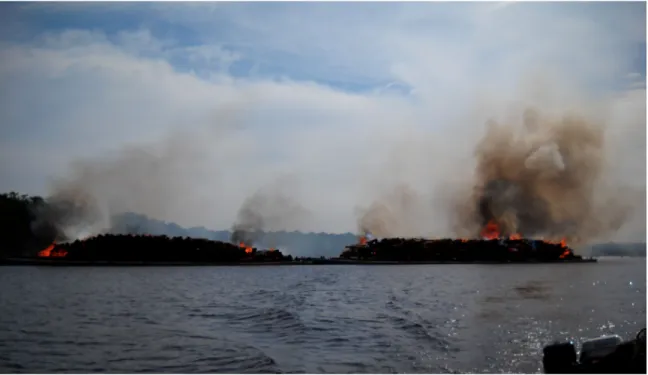
FIGURE 1: BURNING BARGES OF WOOD, ARAPIUNS RIVER, DECEMBER 2010………. 2
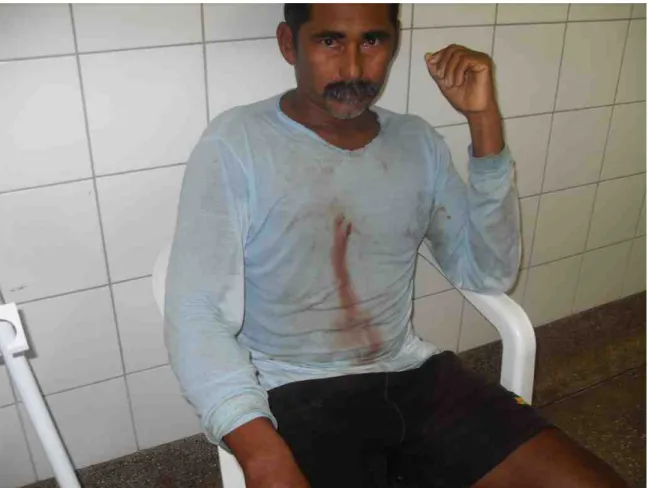
FIGURE 2: SHOOTING VICTIM, RENASCER JANUARY 2010………. 3
FIGURE 3: LOCATION MAP……… 14
FIGURE 4: MAPPING LOGGING IN GLEBA NOVA OLINDA……….. 27
FIGURE 5: MAPPING LOGGING IN GLEBA NOVA OLINDA……….. 28
FIGURE 6: MAPPING LOGGING IN RENASCER………...30
FIGURE 7: MOVEMENT IN DEFENSE OF LIFE AND CULTURE OF THE ARAPIUNS RIVER……… 41
FIGURE 8: MEETING AT THE ENCAMPMENT AT RENASCER……….. 44
FIGURE 9: CARGILL PORT IN SANTARÉM, PHOTO BY GREENPEACE……… 85
FIGURE 10: SOY FIELDS IN BELTERRA, PARÁ……….. 94
FIGURE 11: MAP OF PIN WITH BR-‐163 AND TRANSAMAZON HIGHLIGHTED.
SOURCE: INCRA 1972……….. 106
FIGURE 12: FORWARD BRAZIL PLANS. SOURCE: FEARNSIDE 2002………... 108
FIGURE 13: EXAMPLE OF A RECEIPT OF PURCHASE. THE MOST COMMON LAND DOCUMENT FOR LAND I ENCOUNTERED………...………..123
FIGURE 14: ECOLOGICAL ECONOMIC ZONING PLAN FOR WESTERN PARÁ……….. 135
FIGURE 15: SIGN ENCOUNTERD DURING MAPPING INDICATING THE AREA
CLAIMED BY A LOGGER WITH HIS ITERPA LICENSE NUMBER..……… 149
FIGURE 16: PROPOSAL FOR GLEBA NOVA OLINDA LAND DISTRIBUTION. INDIGENOUS LAND IS IN YELLOW, TRADITIONAL LAND IN PINK,
PRIVATE PROPERTY IN RED, AND CONSERVATION AREA IN GREN...150
FIGURE 18: BACK FROM HUNTING………... 170
FIGURE 19: HOME LIFE……….170
FIGURE 20: MAKING AN OAR……… 171
FIGURE 21: SLAUGHTERING A COW FOR UPCOMING ASSEMBLY……… 171
FIGURE 22: MAKING FARINHA……… 172
List of Abbreviations
ABOIVE: “Associação Brasileira das Indústrias de Óleos Vegetais,” Brazilian Association of Industrial Vegetable Oils.
ADIP: “Autorização de Detenção de Imóvel Público,” Authorization for Possession of Public Property.
AUTEF: “Autorização para Exploração Florestal,” Authorization for Forest Exploitation.
ANEC: “Associação Nacional de Exportadores de Cereiais,” National Association of Cereal Exporters.
CI: Conservation International
CONAMA: “Conselho Nacional do Meio Ambiente,” (the National Council on the Environment)
CNS: “Conselho Nacional de Seringueiros,” National Rubber Tappers Council
CPT: “Commissão Pastoral da Terra,” Pastoral Land Commission
CUT: “Central Única dos Trabalhadores,” Workers’ Central Union
ENGOs: Environmental Non-Governmental Oranizations
FAO: Food and Agriculture Organization
FETAGRI: “Federação dos Trabalhadores na Agricultura,” the Federation of Agricultural Workers
FDA: “Frente em Defesa da Amazônia,” Amazon Defense Front
FNO: “Fundo Constitucional de Financiamento do Norte,” the Constitutional Fund for the North
FUNAI: “Fundação Nacional do Índio,” National Indian Foundation
IBAMA: “Instituto Brasileiro do Meio Ambiente e dos Recursos Naturais,” the Brazilian Institute of the Environment and Natural Resources
ICMBio: “Instituto Chico Mendes de Conservação da Biodiversidade,” the Chico Mendes Institute for Biodiversity Conservation
INPA: “Instituto Nacional de Pesquisas da Amazônia,” National Institute for Environmental Research
IPAM: “Instituto de Pesquisa Ambiental da Amazônia,” the Amazon Environmental Research Institute
ISA: “Instituto Socio-Ambiental,” Socio-environmental Institute
ITERPA: “Instituto de Terras do Pará,” the Land Institute of Pará
IUCN (International Union for the Conservation of Nature)
MAPA “Ministerio da Agricultura, Pecuária e Abastecimento,”
MPEG: “Museu Paraense Emilio Goeldi,” The Emilio Goeldi Paraense Museum
MDA “Ministério de Desenvolvimento Agrário,” the Ministry for Agrarian Development
MDR: “Movimento em Defesa da Renascer,” the Movement in Defense of Renascer
MST: “Movimento dos Trabalhadores Rurais Sem Terra,” the Landless Workers’ Movement
NGO: Non-Governmental Organization
PAC: “Programa de Aceleração do Crescimento,” Accelerated Growth Program
PPG7: Pilot Program for the Conservation of Brazilian Rainforests (1995-2009)
PMDB: “Partido do Movimento Democrático Brasileiro,” Brazilian Democratic Movement Party
PRONAF: “Programa Nacional de Fortalecimento da Agricultura Familiar,” National Program to Promote Family Agriculture
PSA: “Projeto Saude e Alegria,” the Health and Happiness project. A Santarém-based
PSDB: “Partido da Social Democracia Brasileira,” Brazilian Social Democracy Party
PMDB: “Partido do Movimento Democrático Brasileiro,” Brazilian Democratic Movement Party
PT: “Partido dos Trabalhadores,” Workers’ Party
SECTAM: “Secretaria Executiva de Ciência, Tecnologia e Meio Ambiente – PA,” The Executive Secretary of Science Technology, and Environment.
SEMA: “Secretaria de Estado de Meio Ambiente,” the State Environmental Secretary
STR: Sindicato dos Trabalhadores Rurais
TNC: The Nature Conservancy
UFPA: “Universidad Federal do Pará,” Federal University of Pará
UNEP: United Nations Environment Program
UNDP: United Nations Development Program
WWF: WorldWide Fund for Nature
ZEE: “Zoneamento Económico Ecológico,” Ecological Economic Zoning
Chapter One. Introduction. Born in Fire
INTRODUCTION
On October 12, 2009, the Santarém Rural Worker’s Union (STTR) sponsored a coordinated symbolic action, mobilizing union members to block rivers, roads, and air – the flow of commerce – to draw attention to the struggles of rural people and to urge the state to speed the process of land regularization. At the end of the day, at the Praia de Pedrão (Big Rock Beach), in the community of São Pedro on the Arapiuns River west of the city of Santarém, the indigenous and traditional communities that had participated in the action ignored the union’s directive to re-open the river and instead embarked in their rabetas (canoes with outboard motors) and took hostage two barges hauling millions of dollars worth of illegal timber from their territory.5 They held these barges, with the river closed to commercial traffic, for 45 days. During that time, a revolving group of between 80 and 1200 people remained camped at the riverside, fishing, cooking, creating nightly entertainment, and guarding the wood and the river. They demanded an end to industrial extractivism on their lands, vast indigenous and traditional territorial rights in Gleba Nova Olinda to the west, self-determination, and above all, the protection of their life and culture. Despite a series of requests by the movement for audiences with state and federal officials at the riverside encampment, the government agencies refused to negotiate. The movement set fire to the barges. They burned for four days.
Figure 1: Burning Barges of Wood, Arapiuns River, December 2010
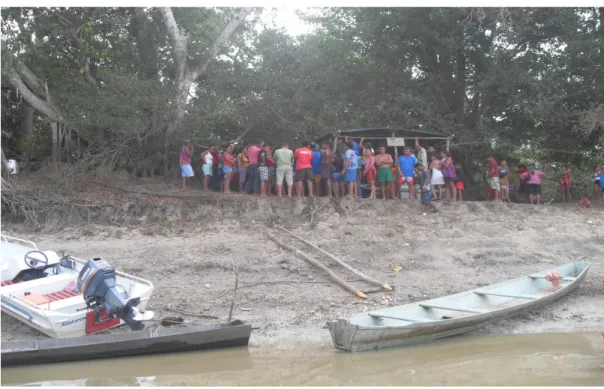
A month later, and two hundred kilometers to the east, in the early morning
hours of November 27th, two groups of ten people each set out by rabeta from opposite
ends of the recently created Renascer Extractive Reserve (Reserva Extractivista in
Portuguese or, more commonly, Resex).6 Silent and tense the small group met at the
entrance to the reserve, cleared a small area on the river bank to sit, and waited,
planning to block the descent of two barges of illegal wood leaving the reserve. As
dawn approached, word arrived that the barge pilot had feared confrontation and
returned to port. Elated, the small group set up camp. More people began to arrive and
over the next few months the small group on the muddy bank grew into a village
6 A Resex, or Extractive Reserve, is a conservation area dedicated for use by traditional, populations whose
encampment. They demanded only what they had already been granted in law – control
over their territory, expulsion of armed loggers from their lands, the closure of the
illegal lumber mill inside of the Resex, and the establishment of the community
association that would govern the area. For almost three months, although the loggers
unleashed violence and intimidation on the leaders and on the encampment, no
loggers’ barges passed the mouth of the Tamuataí River where they were camped.
Then, just before dawn on January 11, six barges descended from the upriver mill. As
they approached the encampment, they opened fire. Two people were wounded, and the
rest fled into the forest. The next day, the community assembly met in the camp for the
last time. They decided it was time to disband.
From Land Conflict (through place) to Territorial Struggle
For the past several decades, Amazonian scholars have proposed a series of
explanations for the seemingly endemic and enduring violent “land conflict” between
rich and poor, landed and landless, latifundia and camponês or developers and “people of the forest” in the Brazilian Amazon, particularly, the state of Pará (Amazonia’s most
violent state). Such violence, rooted in colonialism, is not limited to the Amazon. The
1850 federal land law -- which linked property ownership to the financial ability to
develop it and created a sizeable landless peasantry who initiated a national “struggle for
land” (Scott 1976; M. Watts 1984; Mallon 1995; Sayer 2004) – intensified the already
endemic conflict and violence over land nationally. Scholars generally theorize the
particularly Amazonian land conflict as a product of the “frontier,” and thus as part of the
violence of incorporation into capitalism (Foweraker 1981; Cleary 1993; Maryanne
Schmink and Wood 1992; Fearnside 2001a; Perz, Walker, and Caldas 2006; Simmons et
al. 2007).
Although representations of Amazonia as a place with infinite land are
exaggerated in the national imaginary of the region, it is also true that Amazonia does
have an abundance of land as compared to the south or northeast of Brazil. The problem
of land in Amazonia is better understood in terms of constraints on access rather than
land concentration per se (Simmons 2004). As a result, Amazônia has always fit
somewhat awkwardly into a national narrative of resistance that defines land
concentration and the corresponding landlessness as the material expression of relations of exploitation and inequality endemic to Brazilian society. Simultaneously, the vast and
socio-political category of “peasant” that was so central to the articulation of a national struggle
of marginalized rural people. That is not to say that there has not been a “struggle for
land” – in fact struggles over land access, control, and use are the primary form of
conflict in the region - but that in Amazonia, they tend to take on a different form, which
will be explored in this dissertation.
Some Amazonian scholars have thus traced a somewhat different but not
unrelated genealogy of particularly Amazonian “land conflict” that finds its roots in the
Cabanagem revolt of 1835-41, where thousands of gente de cor (people of color that included ex-African and African descendent slaves, indigenous people, mestiços and others) rose up against their oppressors in the longest, largest, bloodiest, and most
successful rebellion (the rebels held the regional cities of Belém and Santarém for several
months), followed by the most violent suppression – in Brazilian history (Di Paolo 1986;
Cleary 1998; Simmons et al. 2007; Harris 2010). This history continues most visibly, and
in popular memory, in the slaughter of the Maoist rebels of Araguaia (1972), the empates
of the rubber tappers in Acre (1980s), the murder of Chico Mendes (1989), the massacres
at Corumbiara in Rondonia (1996) and of the Movimento dos Trabalhadores Rurais Sem Terra (Landless Workers’ Movement, MST) demonstrators at Eldorado de Carajás (1997), the murder of Sister Dorothy Stang (2006), and more importantly, although perhaps less visibly, in the everyday conflicts and violence pervasive in the region (see
for example the Commissão Pastoral da Terra’s annual publication, Conflitos no Campo, Brasil, now it its 27th edition).7
7
This “perennial” (Little 2001; Simmons et al. 2007) violence became the subject
of intense research beginning in the late 1970s/early 1980s when it became a focus of
government intervention (Almeida 1992; Sauer 2005). At that time, the environmental
devastation wrought by the military government’s modernization programs was also
becoming a national and international preoccupation and consequently, much of the land
conflict literature is concerned in one way or another with the intersection of violent
conflict and environmental issues. Analyses of Amazonian land conflict variously
attribute its causes to the absence of the state, the effect of economic actors competing to
capture rents (Alston, Libecap, and Mueller 1999), or the intersection of a series of
mechanisms in particular places (Simmons et al. 2007). Most Earlier work in this vein
points to antagonistic relations between large landholders and (landless) peasant farmers
(Foweraker 1981; Schmink 1982; Wood 1983). For these authors, land conflict is an
expression of class struggle, but it is a class struggle that results explicitly from
contradictory state policies – policies that on the one hand stimulate capital accumulation
by incentivizing peasant migration, and that on the other hand, seek to maintain the
dominant class structure by incentivizing large-scale capitalist investment – that have
made the same land desirable for two opposed classes, a proposition further explored in
Chapter Four (Schmink 1982; Schmink and Wood 1992).
More explicitly institutionalist accounts of land conflict within the “frontier”
literature point to failures or inconsistencies within land tenure institutions themselves
This dissertation examines conflict in Western Pará, a newer horizon of conflict. It would be a very
(e.g., property rights) as the cause of violent conflict over land. This argument suggests
that the failure of land tenure assignment to keep pace with “frontier” development
creates conflict as people compete for access to valuable land (Alston, Libecap, and
Schneider 1996; Alston, Libecap, and Mueller 1999; Alston, Libecap, and Mueller 2000).
It also suggests that these conflicts lead to deforestation because people deforest land in
order to claim it. Competing tenure policies (namely agrarian reform and the right of
posse) incentivize both “squatting” and forced eviction. Violence thus emerges as a result of independent actors, through their own “cost-benefit analyses,” deciding that violent
action would work to their advantage (assumedly because the non-violent, legal options
are nearly non-existent). Following from this logic, rapid and expansive assignment of
private property rights would ameliorate conflict by reducing incentive to deforest along
with enforcement costs, providing collateral for long-term investment in land, and
promoting the development of land markets, thereby producing wealth (Alston, Libecap,
and Mueller 2000). This philosophy undergirds most contemporary titling initiatives
discussed in more detail in Chapter Three.
The most recent analysis of Amazonian land conflict by geographers is one of the
few to demonstrate the limitations of the frontier concept as an explanatory framework,
which they do by developing quantitative measures for identifying the actual location of
the “frontier” and demonstrating even as the frontier passes through places such as the
South of Pará, violent land conflict continues (Simmons 2004; Simmons 2005; Simmons
et al. 2007). They propose, instead, a “place-based” theorization of Amazonian land
conflict, based in a Masseyian conception of place as “the site where economic, social,
meanings and values crystallize, creating community identities and resistance
performativity” (577) - to generate an explanatory framework of the different
mechanisms that condition and constrain “contentious” (e.g. extra-legal) social
movement action.
This work draws on a comprehensive literature review of Amazonian land
conflict to map out various processes that intersect in the “place” known as the South of
Pará, schematizing them into categories based in the “contentious politics” literature
(Tilly, McAdam, and Tarrow 2001). The authors argue that cognitive (e.g. individual
identity-based) relational (individuals connect to larger groups of individuals) and
environmental (natural and institutional context) mechanisms intersect in place (the south
of Pará) to create enduring conflict. In other words and more specifically, they argue that
in an ambiguous and violent context creates, frustrated, scared and even violent
individuals, who make the decision to link up to larger forces – either social movements
or latifundia networks – in order to better their individual situation. Place, they argue, is
a “product” of the interaction of these processes and a “medium” for their interaction
(582).
This analysis provides an excellent overview of the many processes that intersect
within land conflict, however, their superimposition of a contentious politics framework
onto the concept of place merges two philosophically opposed frameworks and results in
a very structural analysis that theorizes conflict as the outcome of rational, individual
actors making decisions, based in a logic of comparative advantage, to link up to more
powerful forces. In this analysis where, in their words “populations of landless
mechanisms” is quite literal – individuals join, thereby relating to, a group, or, the MST
“possesses” a network that allows it to link up to interested parties in the developed
world.
This is substantively different from Massey’s (2004; 2005) conception of
relational, which is foundational to her theorization of place, as mutually constitutive
(e.g. places, processes, and subjects are constituted in and through each other). It is what
makes place, for her, a site of “becoming” and for the formation of subjects, rather than
for the linking of objects (Massey 2005). Ultimately, and likely as a result of this, their
overall argument, while significantly more nuanced and complex, does not depart
significantly from the previous causal accounts, with their overall assessment being that
at the conjuncture of these mechanisms is a “tragic” and perennially violent place.
This raises a second and more substantive issue for the geographic analysis of
struggle around the usefulness of the concept of place and specifically, what many
authors a “politics of place” (Escobar 2001; Escobar 2008; Moore 1998; Moore 2005;
Gibson-Graham 2002), as a theoretical framework for analyzing what I am calling,
following the movements’ conceptualization, “territorial struggle.” An expansive and
careful literature on the relation between space and place and on place more generally has
undone what was a rather pervasive place-space dichotomy (place as grounded, local,
lived, and particular and space as abstract, global. and universal). This literature (most
centrally Massey 1994, 2004, 2005) poses these two concepts as different, but not
opposed, nor as expressions of scale. Place here tends to be represented as a
“sedimented” site for the “articulation” or “assemblage” of disparate trajectories,
combination of these two concepts), or as a node in a network (Raffles 1999; Latour
2005). These are processes and relations that must be “negotiated”, and it is within this
often conflictual negotiation where we encounter a “politics of place” (Massey 2004, 6).
These authors understand the politics of place as a struggle over the identity of a given
place, that is, over its “hegemonic identity” (Massey 2004) or what Escobar (2002, 2009)
and Gibson-Graham (2002) call the defense of a particular construction of or “imaginary”
of a given place. Thus, we have a place as constituted through myriad, intersecting,
sedimented, processes and politics as the struggle to imbue it with meaning.
Territorial struggle, on the other hand, as was briefly outlined in the introduction
and I will argue in this dissertation, is not (or not only) a struggle over meaning but over
the construction of a new reality – that is, over the creation of new forms of organization,
subjects, and spaces. This is a substantive difference. The conception of place-based
struggle as a struggle over meaning is based in a philosophy of politics that assumes that
discourse shapes our perception, which affects our ways of being (e.g. following Laclau
and Mouffe 2001). In other words political struggle in this vein proposes that change in
the modes of classification, or signification has the effect of changing relations of force.
The territorial approach locates the power of such meanings in the fact that they are
expressions of particular forms of social organization, practices of exclusion, relations of
power, et cetera, of which meaning-making is but one. Thus it is the content of a space
that manifests its expression, and not vice versa. In that sense, territory is the space of the
Finally, returning to the existing body of work on Amazonian land conflict, there
are two further limitations in terms of the applicability of existing frameworks to
contemporary Amazonian struggles for two primary reasons. First, with a few exceptions
(Little 2001; Hecht and Cockburn, 2011) this theorization is derived from analyses of
relationships between recent migrants to Amazonia (both landless farmers and capitalized
developers, usually from struggles in southeastern Pará), and extrapolated as an
explanatory framework for smallholder/capital conflict across Amazonia. This is not, I
will argue in this dissertation, an analytic failing per se. Rather the peasant/latifundia
opposition was an analytic and strategic framing of struggle adequate to a particular time
and place (largely from peasant struggles elsewhere in Brazil), but over the past few
decades (particularly the last decade) there has seen a substantive shift in both the
mechanisms of exploitation and the relations and subjects of struggle. In other words,
there is a conjunctural shift that requires an analytic shift.
Second, the environmental turn in Amazonian studies in the late 1980s and 1990s
was pervasive (Nugent, Harris, et al. 2004) and as a result, the environmental effects of
conflict have constituted central questions of recent studies. As a result, much of the more
recent research on conflict remain bound in a largely technocratic analysis of conflict and
violence that locates their source in bad policy and the issue as largely an environmental
one.8 As such, they tell us a lot about environmental change and its relation to social
process, but little about the encounter of differences, strategies of struggle, or the
potential for social-political change expressed in those conflicts. They are descriptions of
8
social relations as seen from above, and as a result they make visible only solutions that
emerge from and within that perspective (e.g., policy solutions).
On Method
My broad aim in this dissertation is to examine recent Amazonian conflicts
through a wider lens that draws into view not simply the institutional, economic, and
environmental drivers of conflict (the usual explanations), but also the political – and, I
will argue, territorial – practices and strategies of the social movements involved. This
requires a methodological shift away from much of the recent literature on land conflict
and social movements in the Amazon, which, because of its technocratic and
conservationist focus, tends to mandate a particular set of questions and methods to
describe, explain, and predict the relationship between conflict, social movements, and
conservation. This literature largely evaluates social movements in term of their ability
achieve conservation and to affect the state, to ask whether or not they effectively move
“to conservation from chaos” (Schwartzman et al. 2010), from incoherent to articulated,
from uncivil to civil (Kolk 1998; Perz 2002; Scholz 2005; Campos and Nepstad 2006;
Simmons 2005; Alencar 2005; Cronkleton et al. 2008; Shanley, Da Silva, and
MacDonald 2011; Machado 2009; Kröger and Nylund 2011).9
Rather than evaluating movements in terms of their capacity to engage with the
dominant political logic, I draw on work generated on and from Brazilian and other Latin
American movements and movement scholars that engage in a debate on how to think
and understand political struggle (de Souza 2006; Porto Gonçalves 2009; Almeida 2011;
9 There are also, of course, exceptions to this generalization and there has been excellent recent work on
Fernandes 2005; Cecena 2005; Reyes 2012; Zibechi 2010; Ornelas 2012; Cusicanqui
2012; Alcoreza 2012; Ceceña 2012; Gutiérrez 2012; de Paula and da Silva 2008).
Broadly, these scholars shift the study of social movements from an objective and
temporal description and assessment of social movements (e.g., as in the above cited
literature) to a study of “movement” from a particular location within relations of
domination (See especially Porto Gonçalves 2009; Zibechi 2010; and Reyes 2012 on
"societies in movement"). Following this line of thinking, this dissertation is an attempt
to forge what Raquel Gutierrez calls a “theoretical strategy,” (2012, 53) that makes the
acts of insubordination described above (and below) intelligible and theorizes the
possibilities that they open up, offering not an objective account of events but a “practical
comprehension” (53)of them. This means generating an analysis of the situation that
movements are responding to, presenting a detailed description of the events and forms of
struggle enacted, and providing concepts that help us to critically reflect on their
meanings and potentials.
That is not to imply that this research does not engage “traditional” research
methodologies. This research is based on nearly two years of primarily ethnographic
fieldwork in the city of Santarém and three sites near the city (Belterra, Gleba Nova
Olinda, Prainha, see Figure 1). I also travelled up and down the BR-163, visiting roadside
communities and agrarian reform settlements as well as the cities of Itaituba and Novo
Progresso, and I made several trips to the state capital of Belém. In the settlements, which
were largely colono communities (migrant or descendents of migrant subsistence farmers from the south and northeast), I spoke with people regarding the paving of the BR-163,
church, Rural Workers’ Union representatives, and government representatives on the
same topics.
Figure 3: Location Map
Overall, I conducted 164 semi-structured or open-ended interviews,
approximately half of which were recorded, and approximately one-third of which were
transcribed. Early on, my position as a white foreigner provided relative ease of access to
government officials and even to soy farmers and loggers, an access that became less
possible as I began working more closely with the Pastoral Land Commission
Church that documents violents surrounding land conflicts and facilitates the struggles of
social movements for land rights across the country. In Santarém, they function as a key
site and key people in social movement organizing. I developed my research plan in
partnership with the CPT and accompanied much of their work for my entire time in
Santarém. During hundreds of hours of boat rides, I engaged in innumerable informal
conversations on the topics discussed here. I conducted focus groups in three
communities who had the majority of their residents displaced by soy farming to
determine the process of displacement, where people had gone, and did follow-up
interviews with 21 displaced families. I spent several months, usually in one or two week
visits, living in indigenous aldeais (indigenous communitiy) and traditional communities, in order to gain a better understanding of everyday life. I traveled frequently with agents
from the CPT and accompanied and participated in meetings with them in different
communities. I read and analyzed dozens of government planning documents regarding
soy development, road development, territorial planning, as well as assessments and
surveys of traditional and indigenous communities. At the request of the two movements
that I was working with, I mapped illegal logging in two locations and produced reports
on the findings that were submitted to the relevant government organization.10 I generated maps and wrote a pamphlet on industrial extraction and its relationship to
community-based struggles, conducted community meetings to discuss research
questions, took photos, video, wrote press releases, engaged in strategy sessions, and
gave public presentations at CPT and University-based workshos. I was part of and often
acted as a delegate for the Frente em Defesa da Amazonia (Amazon Defense Front,
10
FDA), a movement network organization based in Santarém (not an NGO). I sat in on
confidential meetings and closed judicial appearances between movements, government
agencies, and loggers. I reviewed and summarized the logging the management plans
approved for Gleba Nova Olinda at the request of the Movement in Defense of Life and
Culture on the Arapiuns River (Movimento em Defesa da Vida e Cultura do Rio Arapiuns, MDVCA), and I witnessed and documented human rights abuses, acts of insubordination and rebellion, and protest rallies for MDVCA and in the Renascer
Extractive Reserve, in Santarém and Iatituba.11
TERRITORIAL STRUGGLE IN BAIXO AMAZONAS
The remainder of this chapter is dedicated to examining Amazonia’s “land
conflict” in the contemporary moment by contextualizing the two moments of rebellion
in the encampments described above. I begin from the premise that insurrectional
moments are particularly revealing of the intention and capacity of movements to break
with the given order, that they are based in existing practices and that they, following
Ana Ester Ceceña (2012), “add new features and possibilities to the struggle,” as they are
literally “moments of movement” (Reyes 2012) that shift the order of relations of power.
I examine these moments to draw out several key concepts articulated in and through
these rebellions regarding the contours of the current, neo-extractivist, political moment
in Amazonia, contemporary technologies of governance and ordering, the relationship
between territory, ecology, and political subjectivities, and the overlaps and disjuncture
between and among social movements, political organizations, and government. Each of
11Note that this dissertation is treating two different and opposed forms of “extraction.” Industrial
subsistence-these topics will be broadly outlined through this discussion and taken up more
substantively in the rest of this dissertation. I argue that the existing frameworks
discussed above that theorize these acts of rebellion as desperate cries for help from the
state, strategies of accumulation, or as the conjunctural effects of “tragic” situations
provide us with only a partial understanding of these conflicts. Rather, the argument of
this chapter is that such moments of rupture indicate the need to reframe an analysis of
Amazonian politics from the given notion of “land conflict” to a processual analysis of
antagonisms and “territorial struggle.” Far from being tragic effects of frontier or
place-based processes, these conflicts are protaganized by actors who through struggle are
cultivating both a different social and territorial order, as well as themselves as
(collective) subjects.
In what follows, to make this argument, I first trace some of the key events that I
witnessed at each of these encampments over the course of their several months in
existence.12 While the genealogy of territorial struggle in Amazonia extends historically
for centuries, this chapter provides an overview of the regional, national, and
international contexts of the past four decades, when such conflict has been most intense.
I begin with the military government’s modernization projects, because these projects
intentionally, drastically re-territorialized the region, re-composing political realities in
ways that are central to understanding these contemporary struggles. I interweave the
micro-level events in the encampments with a broader discussion of the shifting regional
and national relations among resistance, development, and governance in order to
12
highlight, on the one hand, how both past histories of struggle and the experiences in these spaces of resistance constitute contemporary political strategies, and on the other
hand, to locate within these micro-level experiences some of the themes that are being
expressed on a larger level across the region and explored in this dissertation.
After offering up a detailed account of the facts events of these rebellions, and
discussions of the broader issues that they raise, I will draw on the work of several
movement scholars to elaborate concepts expressed in these spaces of resistance that help
us to better understand them. This will entail an analysis that explores, on the one hand
how these rebellions express and intensify ongoing processes and dynamics – both in that
they force pre-existing tensions to a greater level of intensity, and that they are based in
and sharpen and strengthen pre-existing forms of collectivity. On the other hand, I will
argue that events that occur in these spaces and moments open new horizons of struggle
(e.g., they create new forms of politics and political subjects). In the final section, I will
provide a brief outline of the remaining dissertation chapters.
The Myth of Development
(Renascer) Alcilene’s13 daughter called on November 26th instructing me to get
on the next boat to Santa Maria and to bring recording equipment. “What’s
happening?” I asked. “Just come” she responded. After nearly a year of accompanying
the struggle for Renascer Extractive Reserve, I had become the movement’s default
documentarian – taking pictures and doing audio and video recording of rights
violations, violence, and resistance. I called Judith, my friend and colleague from the
CPT, and we ran home to collect our things and rushed to the boat. It was well into the