EXAMINING THE ASSOCIATIONS BETWEEN PARENTAL SOCIALIZATION AND SCIENCE MOTIVATION IN RURAL AFRICAN AMERICAN ADOLESCENTS: A STUDY
OF EXPECTANCY-VALUE THEORY
Daphne Christine Mills
A dissertation submitted to the faculty at the University of North Carolina at Chapel Hill in partial fulfillment of the requirements for the degree of Doctor of Philosophy in the School of
Education (Educational Psychology, Measurement, and Evaluation)
Chapel Hill 2018
ii ©2018
iii ABSTRACT
Daphne Christine Mills: Examining the Associations Between Parental Socialization and Science Motivation in Rural African American Adolescents: A Study of Expectancy-Value
Theory
(Under the direction of Dana C. Griffin and Judith L. Meece)
Science and engineering careers have grown at an exponential rate during the past half century and are expected to constitute one-third of all new jobs by 2024 (National Science Board [NSB], 2018). Yet, African Americans are largely underrepresented in science and engineering careers, comprising less than 5% of the science and engineering labor force (NSB, 2018;
National Science Foundation, 2017). Many of these occupations require a bachelor’s degree in science and engineering; however, a large number of African American students tend to leave the science pipeline during high school (NSB, 2018; Parsons, 2008).
This dissertation used data from the High School Longitudinal Study of 2009 to examine science motivation in rural African American students. The first study tested Eccles et al. (1983) model of expectancy-value theory using a rural African American sample to examine if the predicted relations between student expectancies, values, and achievement behaviors were present. The second study applied the socialization model of expectancy-value theory (Eccles et al., 1983) and investigated the role of parental socialization on science expectancies in rural African American students. The role of gender was also explored to examine the extent to which science motivation and parental influence varied across male and female students.
iv
v
This dissertation is dedicated to my biggest cheerleader, Mrs. Christine Bennett Mills, and to my guardian angel, Mrs. Louise G. Bennett. I could not have done it without your love, support, and
vi
ACKNOWLEDGEMENTS
I would like to first acknowledge and thank God, for without Him, there would be no me. He has answered many prayers and given me strength to endure this journey and I am beyond thankful. God has placed wonderful people in my life and provided me with many wonderful opportunities that have molded me into who I am today.
vii
McDiarmid, Laurie Norman, and Anne Bryan in the Office of Student Affairs, I appreciate all that you have done and still do for me and all of the students here in the School of Ed. I would like to recognize Dr. Eileen Parsons for challenging me to think critically about race and science education. I would like to express my gratitude to Dr. Beth Kurtz-Costes in the Psychology Department for serving on my program of studies committee and to Dr. Bryan C. Hutchins for your assistance with my dissertation proposal and for your advice during my first year.
I want to express my gratitude to Aurthy Daniel Jr. for sticking with me throughout my entire doctoral journey and for listening to me talk through my papers, comps, and dissertation even when you did not have a clue about what I was talking about. You are greatly appreciated! To my best friend of the past 21 years, Anarthesia Harris. Thank you for always being there for me. To Fa’tima Carmichael, I appreciate your prayers, counseling, and words of wisdom. I am extremely grateful to my guy bestie, Brice Howard, for the pep talks, for repairing my computer when it crashed during my comps, and for the tech help and advice. Thanks to Candice Jones (and Kemiyah!), Dr. Vicky Mooring, and Herleesha Anderson. I would like to express my gratitude to my friends in the School of Ed, especially Dr. Charlotte Agger, Dr. Domonique Bulls, Dr. Jessie Cain, Dr. Terrell Morton, and Dr. Mariah Smith-Murrell. I appreciate you for being there to lean on and talk to during both the good and the bad.
viii
huge debt of gratitude to Mr. Howard E. McLean at AMS. Your leadership and guidance are greatly appreciated. Thanks to my former colleagues at Anson Middle School and to my former students for being the inspiration behind my dissertation topic.
I would like to express my gratitude to my family at my assistantship at the most
wonderful child development center in the world, the Frank Porter Graham Child Development Institute. To my supervisors, Karen Taylor, Gisele Crawford, and Diane Webster, and my office partners, Carolina Linda Soto and Vicki Boggs – thanks for your care and concern. To Dr. Noreen Yazejian and Dr. Donna Bryant, it has been my pleasure to work on the Educare project. Thanks to Dr. Richard Clifford and Dr. Debby Cryer for your guidance and providing me with the opportunity to serve as coordinator for the FCCERS-3 field test.
Finally, I am blessed with the most awesome mama in the universe, Christine. I am thankful for everything that you do for our family and I love you more than you will ever know. To my daddy, Charles, I appreciate you for always being there for me, even as you suffered through various health struggles. I love you and will always do my best to help take care of you. I am eternally beholden to my awesome siblings, Leticia and Charles, for being such great
examples and for starting me on my path to Carolina when I was just a toddler. You have always supported my educational endeavors and for that I am thankful. Thanks to my brother in law, Murray, and the best nephews on Earth, Langston and Desmond. I would like to acknowledge my aunts and uncles: Martha Jefferson, Louida McNeil, Theodore Mills, Bernice and Bill Anderson, John W. Little, and Graylen Bennett. Thanks to my extended family for your prayers and support.
ix
TABLE OF CONTENTS
LIST OF TABLES ... XII
LIST OF FIGURES ... XIII
LIST OF ABBREVIATIONS AND SYMBOLS ... XIV
CHAPTER 1: INTRODUCTION ... 1
STATEMENT OF THE PROBLEM ... 5
THEORETICAL FRAMEWORK ... 6
PURPOSE OF THE STUDY ... 8
SUMMARY ... 10
CHAPTER 2: LITERATURE REVIEW ... 13
AFRICAN AMERICAN SCIENCE ACHIEVEMENT ... 13
AFRICAN AMERICAN SCIENCE ACHIEVEMENT DIFFERENCES BY GENDER ... 15
DIFFERENCES BY RURALITY ... 18
AFRICAN AMERICAN SCIENCE MOTIVATION ... 20
ATTRIBUTION THEORY ... 21
SOCIAL COGNITIVE CAREER THEORY ... 222
EXPECTANCY-VALUE THEORY ... 23
x
DISADVANTAGES OF RURAL RESIDENCE ... 30
ADVANTAGES OF RURAL RESIDENCE ... 32
PARENTAL SOCIALIZATION ... 36
RESEARCH QUESTIONS AND HYPOTHESES ... 39
CHAPTER 3: METHODOLOGY... 46
SOURCE OF DATA ... 46
HSLS:09SAMPLE DESIGN ... 46
HSLS: INSTRUMENTATION ... 47
STUDY VARIABLES AND ANALYTIC PLANS ... 51
SAMPLE SELECTION:STUDIES 1 AND 2 ... 51
STUDY 1–REPLICATION STUDY ... 54
STUDY 2-PARENT SOCIALIZATION MODEL ... 66
CHAPTER 4: RESULTS ... 81
STUDY 1 RESULTS ... 81
SAMPLE ... 81
DESCRIPTIVE STATISTICS ... 81
EXPECTANCY-VALUE THEORY PATH ANALYSIS ... 88
SUMMARY OF STUDY 1 FINDINGS... 93
STUDY 2 RESULTS ... 96
xi
DESCRIPTIVE STATISTICS ... 96
PARENTAL SOCIALIZATION PATH ANALYSIS ... 100
SUMMARY OF STUDY 2 FINDINGS... 110
CHAPTER 5: DISCUSSION ... 112
SUMMARY OF MAJOR FINDINGS FOR STUDY 1 ... 112
MEAN DIFFERENCES IN SCIENCE MOTIVATION ... 113
EXPECTANCY-VALUE PATH ANALYSIS FINDINGS ... 117
SUMMARY OF MAJOR FINDINGS FOR STUDY 2 ... 125
MEAN DIFFERENCES IN PARENTAL SOCIALIZATION VARIABLES ... 126
PARENTAL SOCIALIZATION MEDIATION MODEL RESULTS ... 128
CONTRIBUTIONS... 135
FUTURE DIRECTIONS ... 137
LIMITATIONS ... 140
CONCLUSIONS ... 143
APPENDIX A – STUDY 1 DATA ... 145
APPENDIX B – STUDY 1 NON-IMPUTED DATA ... 147
APPENDIX C. ... 156
xii
LIST OF TABLES
Table 1. NAEP Achievement Level Definitions ………...19
Table 2. HSLS:09 Subject Demographics: By Race………...………50
Table 3. Science Self-Efficacy Item Descriptors………...……...………....56
Table 4. Science Subjective Task Value Item Descriptors...57
Table 5. Achievement Behaviors Item Descriptors………...………...59
Table 6. Missing data analyses for Study 1.……….…63
Table 7. Parental Socialization Item Descriptors……….68
Table 8. Missing data analyses for Study 2.……….…...72
Table 9. Descriptive Statistics: Skewness, and Kurtosis (By Gender).………...83
Table 10. Bivariate Correlations between Study Variables………...…...………...…84
Table 11. Descriptive Statistics for Study 1 Variables……….………87
Table 12. Unstandardized and Standardized Parameter Estimates for Study 1 Variables……....91
Table 13. Unstandardized and Standardized Parameter Estimates for Study 1 Variables: By Gender………...……….92
Table 14. Descriptive Statistics: Skewness, and Kurtosis for Study 2 Continuous Variables…..97
Table 15. Bivariate Correlations between Study Variables……….…97
Table 16. MANOVA Results for Study 2 Variables………...………....….…...….99
Table 17. Descriptive Statistics for Study 2 Variables………...………100
Table 18. Unstandardized and Standardized Parameter Estimates for Study 2 Variables…...105
Table 19. Standardized Direct, Indirect, Total Effects for Science Efficacy………..106
xiii
LIST OF FIGURES
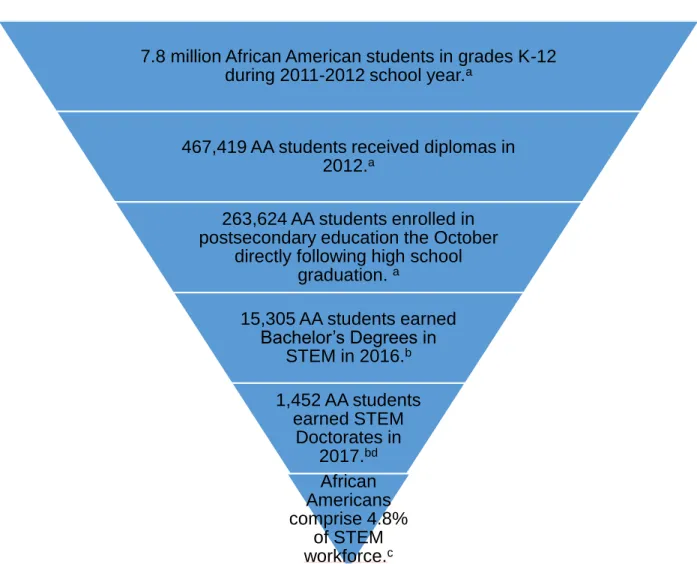
Figure 1. African Americans and the STEM pipeline....………...………….3
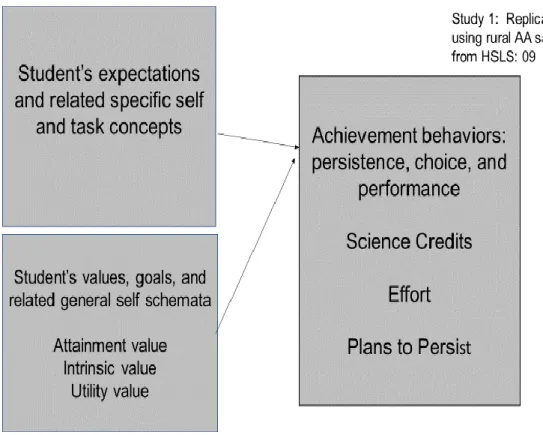
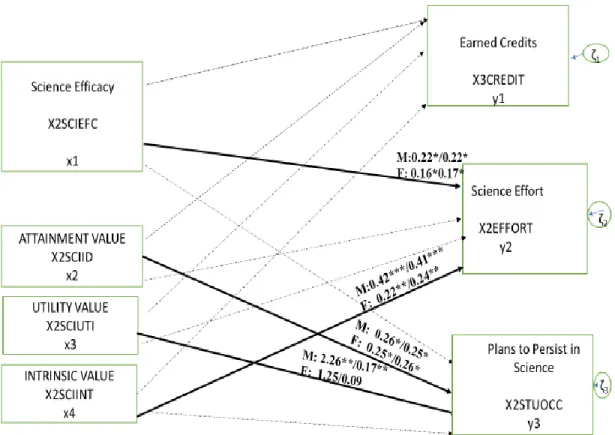
Figure 2. Conceptual model of Eccles et al. (1983) expectancy-value theory, as applied in Study 1………...…...……….11
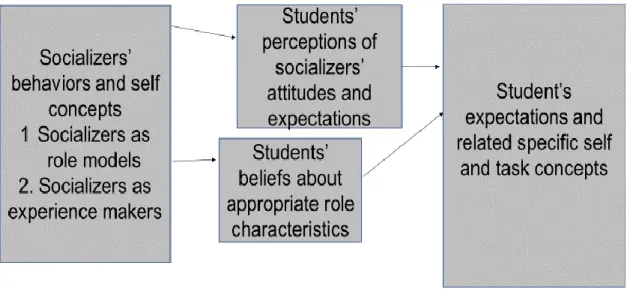
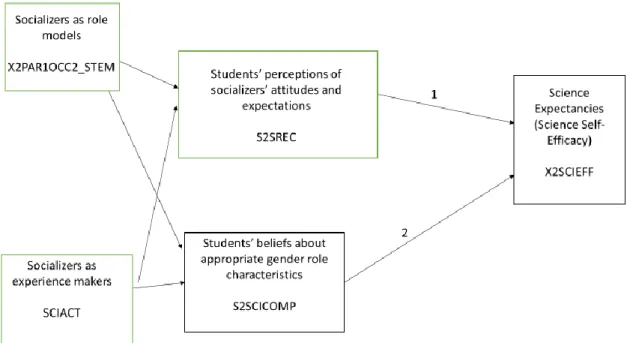
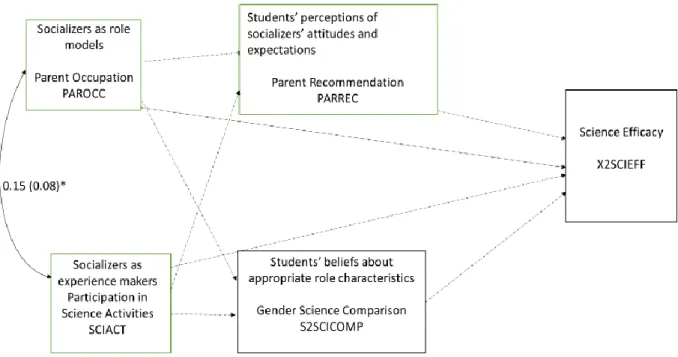
Figure 3. Conceptual model of parental socialization……….….……12
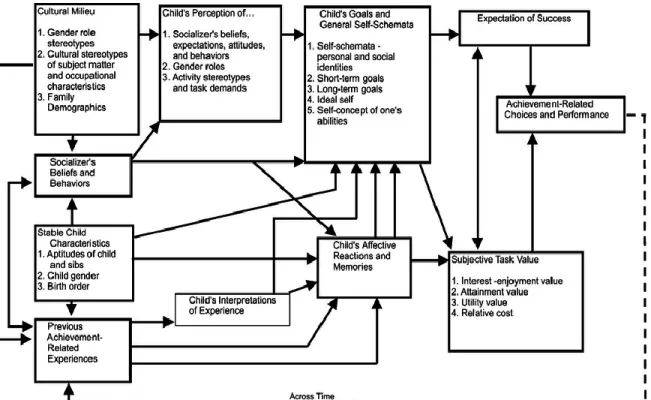
Figure 4. The Eccles et al. (1983) model of expectancy-value theory……….29
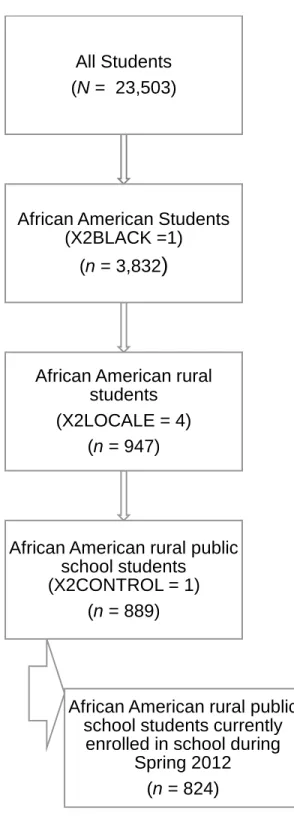
Figure 5. Sample selection process………...53
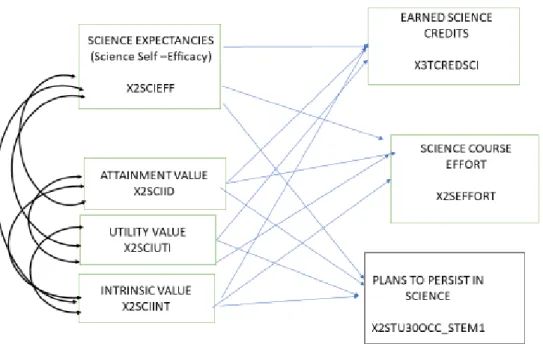
Figure 6. Expectancy-value theory of science motivation………65
Figure 7. Parental socialization model of expectancy-value theory………..………...75
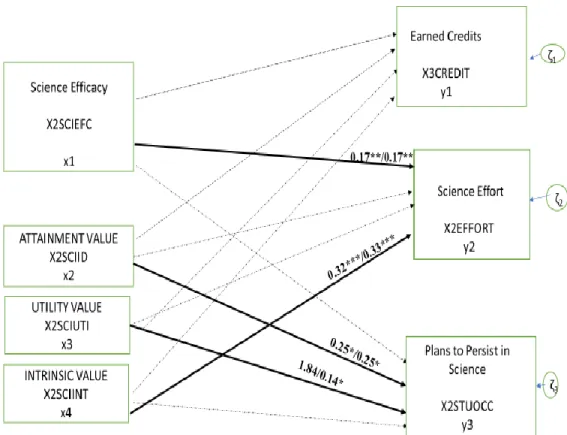
Figure 8. Unstandardized and Standardized Parameters for the full group Expectancy-Value Theory Model for Science Motivation in rural African American high school students….…….94
Figure 9. Unstandardized and Standardized Parameters for the multigroup Expectancy-Value Theory Model for Science Motivation in rural African American high school students….….…95 Figure 10. Unstandardized and Standardized Parameters for the full group parent socialization model of Expectancy-Value Theory for Science Motivation in rural African American high school students……….108
xiv
LIST OF ABBREVIATIONS AND SYMBOLS
± Plus or minus
AA African American ANOVA Analysis of variance AP Advanced Placement CFI Comparative fit index CI Confidence interval
d Cohen’s measure of sample effect size for comparing two sample means df Degrees of freedom
FIML Full information maximum likelihood HSLS:09 High School Longitudinal Study of 2009 IB International Baccalaureate
M Mean
MANOVA Multivariate analysis of variance MAR Missing at random
MCAR Missing completely at random MNAR Missing not completely at random N/n Number of cases (total/in a subsample) NAEP National Assessment of Educational Progress NCES National Center for Education Statistics ns Not statistically significant
xv
p P-value
r Pearson product-moment correlation coefficient R2 Variance explained
RMSEA Root Mean Square Error of Approximation S&E Science & Engineering
SD Standard deviation SE Standard error
SEM Structural equation modeling SES Socioeconomic status
STEM Science, Technology, Engineering, and Mathematics TLI Tucker-Lewis Index
WLSMV Weighted least squares multivariate estimation λ Lambda, factor loading
1
CHAPTER 1: INTRODUCTION
Nearly seven million Americans are members of the science and engineering labor force. Individuals employed in science and engineering (S&E) occupations tend to have higher
earnings and lower rates of unemployment than other occupations (National Science Board [NSB], 2018). In the past three decades, programs such as pre-college summer bridge and academic enrichment programs, undergraduate research opportunities and intervention programs that provide research opportunities have been implemented to increase the numbers of
underrepresented groups entering S&E occupations (Maton, Sto Domingo, Stolle-McAllister, Zimmerman, & Hrabowski, 2009; Rodriguez et al., 2012; Young & Young, 2018). Despite these efforts, African Americans comprise just 4.8% of the S&E labor force and are largely
underrepresented within these professions (NSB, 2018; National Science Foundation [NSF], 2017; Parsons, 2008; Perry, Link, Boelter, & Leukefeld, 2012; Pringle, Brkich, Adams, West-Olatunji, & Archer-Banks, 2012). Further, a majority of individuals working in S&E
occupations hold at least a bachelor’s degree in an S&E major (e.g., agricultural science, earth science, physical science, biological science, engineering, computer science). Given the importance of a Bachelor’s degree in an S&E major, African Americans are likely to remain underrepresented in the S&E labor force especially as in 2014, African Americans earned just 8.7% of the S&E bachelor’s degrees conferred (NSF, 2017).
2
opportunity during high school (Andersen & Ward, 2014; Aschbacher, Ing, & Tsai, 2014; NSB, 2018; Parsons, 2008; Pringle et al., 2012; Riegle-Crumb, Moore, & Ramos-Wada, 2011;
Weinberg, Basile, & Albright, 2011). By Grade 11, African American students are the least likely to be enrolled in advanced science courses and are the most likely to no longer enroll in science courses when compared to students from other racial/ethnic groups (NSB, 2018; Parsons, 2008). A model displaying the estimated attrition of a cohort of African American high school students out of the STEM pipeline is shown in Figure 1. While school factors influencing these enrollment patterns have been examined (Bhattacharyya, Nathaniel, & Mead, 2011; Hernandez, Schultz, Estrada, Woodcock, & Chance, 2013; Maton et al., 2009; Wang, 2013), fewer studies have examined the familial context.
3
Figure 1. An estimate of African American students’ attrition out of the STEM pipeline. Note: Number of STEM doctorate earners is based on most recent available data and is not reflective of the cohort of students who graduate high school in 2012.
Sources: a U.S. Department of Education, National Center for Education Statistics,
Common Core of Data (CCD) (2013); b U.S. Department of Education, National Center
for Education Statistics, Integrated Postsecondary Education Data System (IPEDS) (2018); c National Science Board [NSB] (2018); National Science Foundation [NSF]
(2017)
7.8 million African American students in grades K-12 during 2011-2012 school year.a
467,419 AA students received diplomas in 2012.a
263,624 AA students enrolled in postsecondary education the October
directly following high school graduation. a
15,305 AA students earned Bachelor’s Degrees in
STEM in 2016.b
1,452 AA students earned STEM
Doctorates in 2017.bd
African Americans comprise 4.8%
4
The focus of this dissertation is on familial factors and their impact on African American students’ motivation to persist in high school science courses. Further, it will explore an often-overlooked segment of the African American student population: rural students. Over 850,000 African American students attend public school in rural America (National Center for Education Statistics [NCES], 2015). Yet, studies of African American students tend to focus on urban settings and often present African American students as a monolithic population (Long, Monoi, Harper, Knoblauch, & Murphy, 2007; Witherspoon & Ennett, 2011). While rural schools have many assets, such as small size, positive school climate, and strong school-community relations, rural students are often faced with a multitude of barriers that can impede their chances of academic success, especially within S&E related courses (Byun, Meece, Irvin, & Hutchins, 2012; Demi, Coleman-Jensen & Snyder, 2010; Irvin, Meece, Byun, Farmer, & Hutchins, 2011). Rural schools may experience difficulties hiring and retaining highly qualified1 teachers in S&E subjects, due to lower salaries and geographic isolation (Anderson & Chang, 2011; Avery, 2013; Goodpaster, Adedokun, & Weaver, 2012; Irvin et al., 2011; Peterson, Bornemann, Lydon, & West, 2015; Witherspoon & Ennett, 2011). Insufficient staff and low student enrollments may also limit the ability of rural schools to offer the wide range of specialized S&E related courses often found in larger schools. Access to college preparatory courses (e.g., honors level,
5
Advanced Placement (AP) and International Baccalaureate (IB) courses) may be limited for rural students (Griffin, Hutchins, & Meece, 2011; Irvin, Byun, Meece, & Farmer, 2012; Johnson, Showalter, Klein, & Lester, 2014; Means, Clayton, Conzelmann, Baynes, & Umbach, 2016; Roscigno, Tomaskovic-Devey, & Crowley, 2006). Despite these challenges, rural students complete high school at rates above the national average (NCES, 2015) and African American males from rural areas, especially remote rural areas, are more likely to complete high school than those from non-rural areas (Jordan, Kostandini, & Mykerezi, 2012).
Statement of the Problem
Science and engineering careers have grown at a faster rate than the total workforce over the last 50 years. These career fields are expected to constitute one-third of all new jobs by 2024 (NSB, 2018). Yet, studies suggest that African American youth choose to opt out of enrolling in advanced level science courses in high school. This decision places these youth at a
disadvantage as they often lack the preparation needed to pursue S&E majors at the postsecondary level and to ultimately gain employment within science related occupations (Wang, 2013). Prior studies have highlighted that motivational differences exist between
African Americans and students from other racial groups in science (Asian, Hispanic, and White) (Andersen & Ward, 2014; Wang, 2013), but there is a dearth of existing research on the
6
possess values and ideals different from nonrural families that may impact student motivation and achievement (Crockett, Shanahan, & Jackson-Newsom, 2000; Demi et al., 2010; Israel, Beaulieu, & Hartless, 2001; Roscigno et al., 2006). For example, Strayhorn (2009) reported that rural African American male high school students displayed lower levels of educational
aspirations than their urban and suburban counterparts, with rural setting being a significant predictor of aspiration level. Other researchers explain how rural parents may devalue interest in science and engineering (S&E) careers because students need to leave the community to attend college and find employment (Avery, 2013; Tieken, 2016). The availability of low-skilled jobs in rural communities, along with the social context of rural families and communities, have historically combined to impact educational aspirations of rural youth (Demi et al., 2010; Petrin, Schafft, & Meece, 2014; Tieken, 2016). While many rural youth would like to remain in rural areas and retain their connections to their families and community, they often possess
educational and occupational aspirations for opportunities that are only available for them if they leave (Byun, Meece, Irvin, & Hutchins, 2012; Means et al., 2016; Petrin et al., 2014). Rural students face conflict between their attachment to family and their desire to attain social mobility through the pursuit of higher education and professional careers attainment. As a result, this dissertation seeks to examine the influence of parents on science achievement motivation in rural African American students.
Theoretical Framework
7
on the actual achievement. Motivational approaches seek to determine the malleable factors (e.g., attitudes, beliefs, behaviors) that contribute to the achievement outcomes often attained by African American students despite the barriers that many of these students face (Graham, 2004; Hudley, 2009; Wood & Graham, 2010).
Expectancy-value theory explains motivation as a function of expectancy for success and task value (Eccles et al., 1983; Taylor & Graham, 2007). According to this model, individuals decide whether to persevere in a domain based upon personal appraisals of how likely they are to succeed at a given task. Along with these appraisals of success, individuals assign value to the task to be performed, based upon the characteristics of the task and their personal goals. This model assumes that expectations for success in a domain and subjective task value directly influence achievement-related choices, such as persistence, effort, and performance within a domain (Andersen & Ward, 2014; Aschbacher et al., 2014; Eccles et al., 1983; Irving, 2008; Weinberg et al., 2011; Wigfield & Eccles, 2000; Wood, Kurtz-Costes, & Copping, 2011). Expectations (or expectancies) for success are a form of domain-specific self-efficacy. Expectancies encompass academic self-concept and are predictive of persistence within S&E (Andersen & Ward, 2014). Expectancies influence a myriad of behaviors and are predictive of grades, course-taking decisions, and occupational aspirations. A student who possesses
expectations for success on a task is predicted to have deeper levels of cognitive engagement, which results in higher levels of performance on that task (Andersen & Ward, 2014; Irving, 2008; Taylor & Graham, 2007).
8
value (STV) is composed of four elements: utility value, attainment value, intrinsic value, and cost. Utility value represents the usefulness of a task as it relates to a student’s plans for the future. Attainment value is the importance of doing well on a task as it relates to student identity.
Intrinsic value is the enjoyment that the student derives from the task (Andersen & Ward, 2014; Eccles et al., 1983; Graham, 2004). Cost is two-fold; it describes what an individual has to give up in order to perform a task, as well as the possibility that negative reactions from peers may be incurred due to the decision to perform that task (Andersen & Ward, 2014; Graham, 2004). Adolescents are more likely to participate in tasks that are relevant to the conceptions that they have formed of themselves and align with the ideals of others similar to themselves. As students form identities during adolescence, subjective task value may be affected by environmental factors, such as culture and experiences (Andersen & Ward, 2014; Graham, 2004; Thomas & Strunk, 2017).
The socialization model of expectancy-value theory, as presented by Eccles et al. (1983), highlights the role of socializers (parents, teachers, other influential adults) in influencing the expectations and values possessed by students. Parents serve as role models, reinforcers, and experience providers. Parents can offer both encouragement and opportunities to engage in a variety of experiences that affect the perceptions and beliefs that their children hold about
performing tasks within a domain (Eccles et al., 1983). In this dissertation, I examine the role of parents as socializers and the impact that they have on African American students’ science achievement behaviors.
Purpose of the Study
The purpose of the current study is to examine science motivation, guided by the
9
school students. This study used data from the first follow-up and high school transcript study of
The High School Longitudinal Study of 2009 (HSLS:2009; Ingels et al., 2013), a nationally representative, longitudinal study of over 21,000 students from nearly 950 schools across the United States. HSLS:09 was designed to explore the relationship between high school
educational experiences and experiences in adulthood, including postsecondary enrollment and career opportunities, with a specific focus on student experiences and motivation in science, technology, engineering, and mathematics (STEM) courses. Data were collected on students’ choices, access, and persistence in both science and mathematics courses to examine how these factors influence student entry into the STEM pipelines in postsecondary education and into STEM careers. Students were first surveyed during the fall of their 9th grade year (base year)
and two-and-a-half years later during the spring of most students’11th grade year (first follow-up). Researchers collected high school transcripts beginning in late 2013, after the majority of students had graduated high school. The sample includes approximately 825 rural African American public high school students.
10
perceptions and beliefs of their parents’ attitudes towards science. In turn, these beliefs are predictive of science expectancies (See Figure 3). In addition, I employed a multigroup data analytic procedure to determine the role of gender in rural African American students. Past research has determined that gender may moderate relations among the variables proposed in the Eccles et al. (1983) model of achievement, particularly within science and engineering domains which are typically male dominated (Chen, 2012; Meece, Glienke, & Burg, 2006; Thomas, 2017).
Summary
11
Figure 2. Conceptual model of Eccles et al. (1983) expectancy-value theory, as applied in Study 1
12
13
CHAPTER 2: LITERATURE REVIEW
This study examined science motivation in rural African American high school students and the influence of parental socialization on science motivation. Chapter 2 reviews the
literature that serves as a basis for this study. It begins with the current state of rural African American high school students in science. Next, I provide a review of three achievement motivation frameworks frequently found in the literature on African American students’ science motivation, including the expectancy-value model of achievement motivation which is used as the theoretical foundation of this dissertation (Eccles et al., 1983). A specific focus of this dissertation is the impact of parents on student achievement. The socialization model of expectancy-value theory (Eccles et al, 1983) is used to explore parental influences. The next section describes this model and its components. The context of rurality plays a significant role in this study. As a result, this chapter includes a literature review on the impact of parents on the rural student achievement to emphasize the importance of studying this particular segment of the population. Last, I explore the relationship between gender and science motivation, specifically the role that gender has on attitudes towards S&E. The chapter concludes with a discussion of gender differences in science achievement and the role of parents in promoting gender
stereotypes in science to justify the use of a multigroup model.
African American Science Achievement
14
documented that more than half of all students, regardless of ethnicity or gender, reported a strong enjoyment of science in the fourth grade (Riegle-Crumb et al., 2011). African American students’ interest in science begins to wane during adolescence (Bhattacharyya et al., 2011; Parsons, 2008). However, it is during adolescence that students begin to consider their future careers and these considerations influence the choices they make as they progress through school (Alliman-Brissett & Turner, 2010; Riegle-Crumb et al., 2010). As noted in Chapter 1, by 11th grade, African American students are the least likely to be enrolled in advanced science courses and are the most likely to no longer enroll in science courses when compared to students from other racial/ethnic groups (NSB, 2018; Parsons, 2008). This decreased interest in science is accompanied by decreases in both course taking and proficiency levels. While 96% of African American high school graduates earn credit in Biology and 65% of African American graduate completed a high school chemistry course, only 27% earn credit in a physics course. More troubling, only 22% of African American high school graduates earned at least one high school credit in all three areas (biology, chemistry, and physics) (Kena et al., 2015; Wang, 2013).
15
scores on the NAEP appear negatively affected by the lack of continued exposure to science coursework. Higher percentages of African American students score at or above proficient in science in 4th and 8th grades compared to 12th grade when many students longer enroll in science courses (NCES, 2016). As educators, researchers, and policymakers search for a solution to this longstanding issue, the study of achievement motivation and its relation to academic achievement in African American adolescents is of great importance.
African American Science Achievement Differences by Gender
While women make up approximately 50% of the United States population, they comprise a significantly smaller portion of the science and engineering labor force. Less than 30% of scientists and engineers are women, with only 3% of these women identifying as African American (Curran & Kellogg, 2016; Eccles & Wang, 2016; NSF, 2017; Zhang & Barnett, 2015). Science, especially the physical sciences, is viewed as a male domain by individuals across a range of ethnicities, ages, and backgrounds. Even in individuals who overtly reject the science-is-male stereotype, research has found that inherent beliefs about science as a male field are still present (O’Brien, Blodorn, Adams, Hammer, & Garcia, 2015; Perry et al., 2012; Rouland, Rowley, & Kurtz-Costes, 2013; Thomas, 2017). Research by O’Brien et al. (2015) documented that although African American female college students held weaker implicit gender stereotypes in science than their European American counterparts, they still perceived S&E fields as
16
serving as onlookers and lacking confidence in their ability to perform lab activities
(Bhattacharyya et al., 2011; Buck, Cook, Quigley, Prince, & Lucas, 2014). It is during this time period that many female students begin to abandon the idea of entering science-related
occupations (Grossman & Porche, 2014). Although African American female students tend to earn higher grades than their male counterparts, they still tend to score lower than male students on national science assessments (Eccles & Wang, 2016; NCES, 2016; Rouland et al., 2013).
In fourth grade, 15% of African American girls score at proficient compared to 14% of boys on the NAEP science assessments. African American girls also had higher scale scores than boys on both the life science (136 vs. 132) and physical science (136 vs. 133) portions of the fourth grade NAEP. However, by eighth grade, these trends have reversed. A higher percentage of African American eighth grade boys score at proficient (12 % vs. 11%) and boys outscore girls on the physical science portion (132 vs. 130) (NCES, 2016). While these
differences are not statistically significant for African American 4th and 8th graders, by 12th grade, significant gender gaps have developed in both test scores and proficiency levels. African American 12th grade females score significantly lower in both earth (122 vs. 130) and life science (122 vs. 127) than African American male students. Moreover, a significantly smaller percentage of African American females score at proficient when compared to their male counterparts (3% vs. 7%). This percentage is identical to the percentage of African American women employed in science and engineering careers (Curran & Kellogg, 2016; Eccles & Wang, 2016; NCES, 2016; Pringle et al., 2012; Zhang & Barnett, 2015).
17
18
S&E careers (Curran & Kellogg, 2016; Eccles & Wang, 2016; NSF, 2017; Zhang & Barnett, 2015).
Differences by Rurality
Mathematics and science achievement of rural students on national assessments has not significantly differed from that of nonrural students for nearly 20 years (Anderson & Chang, 2011; Hopkins, 2005; Showalter, Klein, Johnson, & Hartman, 2017). Studies using data from the National Education Longitudinal Survey (NELS) determined that the performance of rural students was on par with, and sometimes exceeded, the performance of nonrural students in mathematics (Anderson & Chang, 2011; Jordan et al., 2012). In a study aptly titled, If You Are Poor, it is Better to be Rural: A Study of Mathematics Achievement in Tennessee,Hopkins (2005) found that low-income youth in rural areas received significantly higher mathematics achievement scores than comparable youth from nonrural areas. Showalter et al. (2017) noted that over the last decade, rural students scored higher on the NAEP science assessment in fourth and eighth grade than students from nonrural (city, suburbs, and towns) areas. However, there is minimal literature available that specifically examines the science achievement of rural African American students.
19 Table 1.
NAEP Achievement Level Definitions
Achievement Level Policy Definitions
Basic This level denotes partial mastery of
prerequisite knowledge and skills that are fundamental for proficient work at each grade.
Proficient This level represents solid academic
performance for each grade assessed. Students reaching this level have
demonstrated competency over challenging subject matter, including subject-matter knowledge, application of such knowledge to real world situations, and analytical skills appropriate to the subject matter.
Advanced This level signifies superior performance.
20
African American Science Motivation
This section reviews the extant literature on the science achievement motivation of African American adolescents. During the past two decades, great strides have been made in examining the achievement motivation of African American students (Graham, 2004; Graham & Bryant, 2010; Wood & Graham, 2010). In the psychological literature, motivation is defined as the manner in which the pursuit of goal-directed behaviors is initiated and continued (Hernandez et al., 2013; Schunk, Meece, & Pintrich, 2014) and is often considered “the study of why people think, feel, and behave as they do” (Graham & Bryant, 2010; Long et al., 2007; Wood &
Graham, 2010). The use of a motivational approach to the examination of the achievement and schooling experiences of African Americans adolescents places the focus on “why” achievement patterns occur rather than on the actual achievement. Hudley and Daoud (2008) succinctly capture the importance of motivation to achieve, noting that “the most rigorous, enriched school curriculum delivered by academically expert professionals will result in high levels of student achievement only to the extent that students are motivated to engage and persist in learning activities” (pg. 2). Still, there is a dearth of literature on the motivation of African American students in science and engineering.
21
science achievement motivation in African American students, including attribution theory, expectancy-value theory, and social cognitive career theory.
Attribution Theory
Attribution theory has been widely used in studying the achievement motivation of African American youth. Modern attribution theory (Weiner, 1985) explains the sequence of events that occur after an individual experiences a success or failures, as individuals make attributions in an attempt to ascertain the cause of that particular outcome. As noted by Hudley (2009), attributions provide an answer to the “why” question associated with failure or success (i.e., “Why did I make a good grade on this assignment?”). The causes of success and failure can be attributed to a multitude of factors, including ability, effort, difficulty level of the task, and luck (Eccles et al., 1983; Graham, 1994; Swinton, Kurtz-Costes, Rowley, & Okeke-Adeyanju, 2011; Weiner, 1985). These attributions are classified along three dimensions: locus of
22
Social Cognitive Career Theory
Social cognitive career theory [SCCT] (Lent, Brown, & Hackett, 1994) explores triadic reciprocality, the interaction between personal factors, environmental factors, and behaviors (Bandura, 1986) and its impact on the development and pursuit of academic and career interests (Alliman-Brissett & Turner, 2010; Austin, 2010; Lent et al., 1994; Quimby, Wolfson, & Seyala, 2007). Within this theory, self-efficacy is used to explain why individuals continue in their pursuit of achieving specific goals and is defined as “people’s judgments of their capabilities to organize and execute courses of action required to attain designated types of performances” (Bandura, 1986, p. 391; Lent et al., 1994; Long et al., 2007). Students’ beliefs about whether they possess the ability to reach an outcome affects whether they are motivated to perform behaviors to propel them towards that outcome. Levels of self-efficacy positively relate to cognitive engagement, persistence, achievement outcomes, and aspirations; student with high-self efficacy will persist because they feel that is a high probability of reaching their goal (Bandura, 1986; Hernandez et al., 2013; Kerpelman et al., 2008; Long et al., 2007).
23
family relations, and socioeconomic status were all predictive of engineering career decision self-efficacy and math/science expectations (a proxy for engineering) for African American adolescents enrolled in a pre-engineering curriculum.
Expectancy-Value Theory
Expectancy-value theory posits that expectations for success and subjective task value influence achievement choices, performance, effort, and persistence. Student science
expectancies for future success are influenced by ability beliefs (current competency level), perceived task difficulty, and student goals. These factors are also influenced by a student’s environment, including their past experiences with science, their perceptions of parent and teacher beliefs about science, and both cultural and gender stereotypes towards science
(Andersen & Ward, 2014; Eccles et al., 1983; Irving, 2008; Wigfield & Eccles, 2000; Wood et al., 2011; Zhang & Barnett, 2015).
Expectancies are strongly influenced by current ability beliefs, or self-efficacy (Eccles et al., 1983; Thomas, 2017). Self-efficacy predicts whether an individual is motivated to perform a behavior; it is positively related to cognitive engagement, persistence, achievement outcomes, and aspirations. Students with high self-efficacy will persist because they feel that is a high probability of reaching their goal (Bandura, 1986; Hernandez et al., 2013; Kerpelman et al., 2008; Long et al., 2007; Young & Young, 2018). There is evidence that levels of mathematics self-efficacy are predictive of science and engineering careers as early as middle school
(Andersen & Ward, 2014). Students with higher levels of self-efficacy or interest in science and mathematics were more apt to persist in those disciplines, even after controlling for
24
Subjective task value (STV) has four components: utility value, attainment value, intrinsic value, and cost. In terms of science, utility value represents the usefulness of science as it relates to a student’s plans for the future. For a student who has not considered a science career, high achievement in science courses or enrollment in non-required science courses, such as advanced or honors courses, may not appear useful. Attainment value is the importance of doing well in science as it relates to student identity. Students who do not view themselves as scientists or do not see science as being for people like them (African American, female) would also find little value in continuing to enroll in science courses (Andersen & Ward, 2014; Eccles et al., 1983; Graham, 2004). Intrinsic value is the enjoyment that the student derives from the task. Last, cost describes what an individual has to give up in order to perform a task, as well as the possibility that negative reactions from peers may be incurred due to the decision to perform that task (Andersen & Ward, 2014; Eccles et al., 1983; Graham, 2004).
25
employs an expectancy-value framework as conceptualized by Eccles et al. (1983) (See Figure 4).
Expectancy-value theory in African American students. Science self-efficacy is a significant predictor of science achievement for African American middle school students (Hudley, 2009). Although Andersen and Ward (2014) did not find a relationship between self-efficacy in science and plans to persist in S&E in their study of high-achieving African American high school students, other investigations of African American high school students found self-efficacy to be predictive of interest in pursuing careers in environmental science (Quimby et al., 2007) and engineering (Austin, 2010). In addition, Austin (2010) found that math/science interest, ethnic identity, family relations, school relations, and socioeconomic status were all predictive of engineering career decision self-efficacy and math/science expectations (a proxy for engineering) for African American adolescents enrolled in a pre-engineering curriculum. In a longitudinal study of African American high school students, Swinton et al. (2011) found that the students endorsed effort more than ability in science courses. Ability is considered to be a stable characteristic and strongly influences student expectancies for success. As a result, students who attribute failure on a task to low ability may then feel unable to complete later tasks and
ultimately, may not afford any effort to these activities (Eccles et al., 1983; Graham, 1994; Swinton et al., 2011; Weiner, 1985; Wigfield & Eccles, 2000).
26
persistence indicated that students who identified as scientists planned to continue enrolling in science courses, the low levels of intrinsic value in students and the lack of significance for utility value suggests that many African Americans do not find the material taught in their science classes as being enjoyable and relevant. Ultimately, this influences the decisions that students make as they consider future courses and careers (Andersen & Ward, 2014). Cost has not been widely discussed in the literature on African American science motivation.
Differences by gender. Though African American males may not occupy jobs in S&E in large numbers, there is research that indicates that they find science more relevant to daily life than their female counterparts (Bhattacharyya et al., 2011; Buck, Cook, Quigley, Eastwood, & Lucas, 2009; Buck et al., 2014). Research on the influence of gender on AA student perceptions of ability has documented mixed results. Rouland et al. (2013) found that gender influenced African American middle school students’ ability beliefs in S&E domains. The seventh and eighth grade girls in the samples reported lower science self-concept and were less likely to attribute success in science to ability. However, Perry et al. (2012) found no significant
differences between male and female students’ confidence in ability to complete science courses or science self-concept in a sample of African American sixth-graders. Further, differences have not been documented in African American high school students. Swinton et al. (2011) reported no significant differences in science ability attributions between African American male and female high school students. Similarly, Bhattacharyya et al. (2011) found gender to be non-significant to student perception of science ability during their summer intervention program with at-risk African American high school students in Louisiana. The results are conspicuous when juxtaposed with evidence that African American female students typically possess
27
al., 2008). The results suggest that African American female students are less confident in their science abilities than their abilities to achieve in other domains.
Summary. Achievement motivation theories explain why individuals choose to perform achievement-related behaviors. Expectancy-value theory conceptualizes motivation as the product of student expectations of success within a domain and the subjective task value that a student places on tasks within a domain. Studies of African American high school students have found that students who view themselves as efficacious in science and those who personally identify with science are more likely to persist within S&E; however, many students display low levels of intrinsic value and do not find their science courses enjoyable. However, there has been a limited amount of research done using African American samples with science domains.
The existing literature on S&E motivation in African American students has several limitations. First, there is a scarcity of motivation literature with a specific focus on S&E domains. Within studies employing adolescent samples, issues such as small sample sizes (Denson & Hill, 2010) or the use of sample selection biases, e.g. students enrolled in schools specializing in STEM preparation (Austin, 2010; Quimby et al., 2007) or students identified as high-ability (Andersen & Ward, 2014) may skew the results towards specific outcomes. Further, studies on S&E motivation in African American students often utilize postsecondary samples. These samples typically include students who have decided to persist in science and engineering majors and careers (Hernandez et al., 2013). As a result, it is imperative to examine the science motivation of current African American high school student as they make choices that affect their matriculation into science and engineering majors and careers.
Despite an increased focus on the educational outcomes of both rural and African
28
as both rural and African American. These students are uniquely positioned as a part of two populations that are often examined comparatively. Kerpelman et al. (2008) noted that in examining academic performance of minority groups, using comparative studies often perpetuates a deficit perspective and it may be best to look within a particular group to learn more about its qualities. This deficit view is also used with rural students. Comparative data often positions African American students as deficient compared to their White counterparts (Hudley, 2009; Swinton et al., 2011) and positions rural students as deficient to students who attend schools in locales that are in proximity to a larger variety of resources (Roscigno et al., 2006)
Furthermore, there is a dearth of research on rural African American students and their families. Recent studies of rural African American students have primarily used samples drawn from schools located in the southern United States (Deep South) and those samples are not representative of African American students living in other rural parts of the United States (Estell, Farmer, Irvin, Thompson, Hutchins, & McDonough, 2007; Farmer, Irvin, Thompson, Hutchins, & Leung, 2006; Irvin, Farmer, Leung, Thompson, & Hutchins, 2010; Kerpelman et al., 2008; Strayhorn, 2009). As a result, it is important to explore science motivation, including its relationship with parental socialization, in a national sample of rural African American
29
Figure 4. The Eccles et al. (1983) model of expectancy-value theory. This figure illustrates the relationship between child characteristics, environmental influences, prior experiences, the role of socializers and an individual’s expectancies, values, and
achievement-related behaviors.
30
Rurality and African American Students
Over 850,000 African American students attend public school in rural America (NCES, 2015). However, studies of African American students tend to focus on urban settings (Long et al., 2007, Witherspoon & Ennett, 2011). Like their urban counterparts, rural students are also often faced with a multitude of barriers that can impede their chances of academic success (Crockett et al., 2000; Farmer et al., 2006; Irvin et al., 2011; Tieken, 2016). However, rural communities often possess resources that are beneficial to youth and counterbalance these obstacles (Irvin et al., 2011). The following sections discuss the disadvantages and advantages associated with being raised in rural areas.
Disadvantages of Rural Residence
Geographic isolation is related to many of the issues encountered by rural residents. Residents are often confronted with limited employment opportunities, inadequate schools, and public infrastructure, such as insufficient access to public transportation, medical care, and modern water and sewer services (Avery, 2013; Lichter & Johnson, 2007; Peterson et al., 2015; Witherspoon & Ennett, 2011). Many of these issues are further exacerbated by poverty.
Childhood poverty in rural America looms large, with rates in rural areas often exceeding that of urban areas. In parts of the rural Deep South where large populations of African American students reside, childhood poverty rates are twice the national average (Byun, Meece, Irvin, & Hutchins, 2012; Crockett et al., 2000; Estell et al., 2007; Irvin et al., 2010; Irvin et al., 2011; Irvin et al., 2012; Witherspoon & Ennett, 2011). Exposure to such levels of extreme poverty has been linked to a number of negative outcomes including low school preparedness, poor academic functioning, high levels of truancy, school failure, school dropout, and low educational
31
Johnson et al., 2014; Lichter & Johnson, 2007; Nichols, Kotchick, Barry, & Haskins, 2010; Schmitt-Wilson, 2013; Showalter et al., 2017; Witherspoon & Ennett, 2011).
Rural students also face disadvantages due to schooling conditions. Often poorly funded, rural schools may have inadequate facilities and employ teachers who are not highly qualified in certain disciplines, including S&E. Lower salaries and geographic isolation often dissuade highly qualified teachers in science and engineering disciplines from seeking and continuing employment at rural schools (Anderson & Chang, 2011; Avery, 2013; Goodpaster et al., 2012; Irvin et al., 2011; Witherspoon & Ennett, 2011). As a result, rural schools may be limited in their curricular offerings (e.g., honors level, Advanced Placement (AP) and International
Baccalaureate (IB) courses) (Anderson & Chang, 2011; Means et al., 2016; Peterson et al., 2015; Roscigno et al., 2006; Witherspoon & Ennett, 2011). Lower SES is linked to lower mean
science achievement scores (Bhattacharyya et al., 2011) and students from the lowest SES backgrounds are less likely to be enrolled in science courses in ninth grade (NSB, 2018). Students who attend schools in rural, low income areas are four times less likely to meet
adequate yearly progress than other rural students and have the highest dropout rates in America, dropping out at twice the national average (Farmer et al., 2006; Irvin et al., 2011; Irvin et al., 2012). This lack of educational attainment influences student opportunities for future employment.
32
industry and manufacturing jobs have become virtually obsolete due to outsourcing (Byun, Meece, Irvin, & Hutchins, 2012; Demi et al., 2010; Griffin et al., 2011; Meece, Askew, Agger, Hutchins, & Byun, 2014). Over the past two decades, the rural sector has transformed from goods production into a service industry populated with jobs that are part-time, temporary, and lack benefits. As a result, rural students are faced with the need for increased educational attainment to find gainful employment (Petrin et al., 2014; Tieken, 2016). Further, lower educational attainment in rural areas is often coupled with a lack of availability of career counseling, career academies, and school-to-work programs to result in high rates of
unemployment (Crockett et al.; Demi et al., 2010; Griffin et al., 2011; Johnson et al., 2014).
Advantages of Rural Residence
33
of struggles, current rural adolescents perform and achieve at high levels in the classroom. It is important to examine the processes that occur within rural locales that make this achievement possible.
Although some rural schools lack key resources, these schools often serve as the focal point for community activities, providing a venue for numerous events, including athletics, cultural programs, and other social activities. As such, rural schools maintain close relationships with the surrounding community and often partner with families, churches, and other local organizations in promoting community values (Demi et al., 2010; Goodpaster et al., 2012; Irvin et al., 2011; Schafft, 2016; Wilcox et al., 2014). In addition, rural high schools often have small student populations (NCES, 2015) and there is evidence that small school size is predictive of higher academic achievement, student engagement, and graduation rates (Irvin et al., 2011). Small school and class size may especially benefit rural students from impoverished
backgrounds, as well as for racial/ethnic minorities and students who have had lower levels of prior achievement (Irvin et al., 2011).
Rural students also benefit from a positive school climate (Demi et al., 2010; Wilcox et al., 2014). Students’ perception of teachers as caring and supportive are positively related to multiple positive academic outcomes, including higher levels of school belonging, which relates to higher grades and increased achievement, as well as lower report of intent to drop out (Demi et al., 2010). Teacher expectations also influence the educational aspirations of students. Byun, Meece, Irvin, and Hutchins (2012) reported a positive relationship between the educational aspirations of rural adolescents and the educational expectations held by their teachers.
Like schools, churches and religious organizations are an integral part of the rural
34
educational attainment (Irvin et al., 2010). Religious organizations may celebrate academic success through recognition of high school and college graduates, and may serve as a source of encouragement for rural students (Alleman & Holly, 2013). Rural students report more frequent involvement in church activities than students from suburban areas. This involvement is related to a variety of positive academic outcomes (Byun, Meece, & Irvin, 2012; Milot & Ludden, 2009; Singh & Dika, 2003). Participating in church activities and church attendance is predictive of greater involvement in school activities, lower rates of dropping out of high school, lower rates of school misbehavior and higher rates of college attendance amongst rural youth (Byun, Meece, & Irvin, 2012; Milot & Ludden, 2009; Singh & Dika, 2003). Further, students who displayed high levels of religious importance had higher educational aspirations, increased school bonding, and higher self-efficacy.
35
importance of the local church and other religious organizations in rural communities cannot be glossed over when examining the contexts that impact achievement in rural adolescents.
Although some rural communities face economic challenges, these communities are known to be rich in social capital, resources available due to the relationships between individuals which may explain how differences in behaviors and outcomes arise for the
individuals within this system (Coleman, 1988; Crockett et al., 2000; Israel et al., 2001; Yosso, 2005). Rural student networks consist, on average, of eight members – at least two of whom were not related (Singh & Dika, 2003). Relationships between adolescents and adults in the community may form through church and other community-based groups (Israel et al., 2001). Mentors from the local community can influence adolescent educational aspirations and
emphasize the importance of academic achievement, especially for students whose parents may not have attended college (Alleman & Holly, 2013; King, 2012). These members provided both emotional support and academic support for rural adolescents. Both academic and emotional support are positively related to positive academic outcomes, including student educational aspirations, academic effort, academic orientation, and self-concept. Rural African American students reported using coaches and community religious leaders as sources of information about future plans and indicated high levels of confidence in an extended network consisting of
community members, including friends, church members, and religious leaders (Griffin et al., 2011; Means et al., 2016).
Last, the family is another key source of social capital. Studies suggest that rural families may possess values and ideals different from nonrural families that may impact student
36
youth envision the opportunities ahead (Kerpelman et al., 2008). Family support is the most significant influence on a students’ decision to enroll in postsecondary education. Not only do parents impact whether their child decides to go to college, but also impact where they choose to enroll. This was found to be true across racial and ethnic lines and across socioeconomic
backgrounds (King, 2012).
Strayhorn (2009) noted that family relationship among African American rural families provided crucial encouragement. Parental academic involvement can serve as a buffer from many of the barriers (e.g., poverty, low quality schools) that impede achievement in rural African American students. Parental involvement displayed a significant positive association with
mathematics achievement (Byun, Meece, Irvin, & Hutchins, 2012) and high school completion in rural students (Henry et al., 2011). Perceived parental involvement also mediated a significant portion of the direct negative effects associated with low socioeconomic status (Henry et al., 2011). With the prevalence of poverty in rural areas, parental involvement may be
indispensable to the academic success of many rural students. Kerpelman et al. (2008) found that effective parental communication and parental involvement predicted academic
achievement, goal oriented future orientation, and other positive outcomes. Parental
involvement strongly influences educational aspirations in African American students and is associated with number of high school credits earned (Al-Fadhli & Kersen, 2010; Day &
Dotterer, 2018; Nichols et al., 2010; Young & Young, 2018). This dissertation further examines the critical role that parents may hold in predicting student motivation.
Parental Socialization
37
task values, and subsequent achievement behaviors. Additionally, the model conceptualizes the role of socializers (e.g., parents, teachers) in the development of student expectancies and values. Parents serve as role models and reinforcers who hold domain specific beliefs, attitudes, and expectations that influence student perceptions and beliefs. In turn, these perceptions and beliefs influence student expectancies and values (Bhattacharyya et al., 2011; Curran & Kellogg, 2016; Eccles et al., 1983; Sharkawy, 2015; Thomas, 2017; Thomas & Strunk, 2017). (See Figure 5). This review describes each of the roles that parents perform as socializers for their children.
Socializers as role models. Parents make domain-related assessments based on their prior experiences, including their self-efficacy and the perceived difficulty and usefulness of the domain. Based on these assessments, parents provide their children with different types of opportunities and feedback (Curran & Kellogg, 2016; Eccles et al., 1983; Sharkawy, 2015; Thomas, 2017). Parents can serve as role models by providing insight about their own
educational and occupational experiences and can endorse achievement by aiding their children based on their knowledge of the domain (Henry et al., 2011; Wang & Degol, 2013). Parents who work in science-related occupations or who have had positive prior science experiences may recognize the benefits of engaging with science and encourage their children to participate. Further, cultural norms, such as gender stereotypes about domains, may also be transmitted through parental role models (Eccles et al., 1983; Sharkawy, 2015; Thomas, 2017; Thomas & Strunk, 2017).
38
Strunk, 2017). Beyond parental involvement in school-related science activities, such as assisting with homework, parents may also display positive attitudes towards science by providing their children with opportunities to engage in science content outside of the school setting. Past research has found that for African American students, home-based parental involvement is particularly beneficial in promoting academic outcomes (Day & Dotterer, 2018). Having parents who participate in and encourage student participation in science activities may increase science motivation, as participation is predictive of self-efficacy and subjective task value. Parental involvement in science has been linked to children’s science expectancies beginning as early as kindergarten and continuing through entry into high school (Thomas & Strunk, 2017).
39
10th through 12th graders from the western United States and the Day-Dotterer (2018) study did not explore rurality, therefore it is important to explore if parental educational expectations affect student aspirations in the same manner in African American adolescents who reside in rural locales. Still, the associations between parental educational expectations and student educational aspirations highlight the importance of parents in the development of expectancies. While not domain specific, educational aspirations may influence student’s expectancies to do well in order to reach their long-term goals
Summary. The parental socialization model of Eccles et al. (1983) expectancy-value theory highlights the various functions of parents in influencing the science expectancies of their children. Parent may act as role models and reinforcers who display views, opinions, and expectations about science that impact how their children perceive science. The actions, support, and expectations of parents influence a variety of student educational outcomes, including student expectations and aspirations.
Research Questions and Hypotheses
40
schools located in the southern United States (Deep South) and were not representative of African American students living in other rural parts of the United States (Estell et al., 2007; Farmer et al., 2006; Irvin et al., 2010; Kerpelman et al., 2008; Strayhorn, 2009). Significant regional differences may exist in family dynamics and community structures and affect the social capital available for students. The first portion of my dissertation is a replication study of the expectancy-value theory of motivation as conceptualized by Eccles et al. (1983) using a nationwide sample of rural African American high school students and science as the domain. Using path analysis, I examined how science expectancies and subjective task value (attainment value, intrinsic value, and utility value) predict science achievement related behaviors (choice, persistence, and effort in science courses) for rural African American students (See Figure 5). Second, I used Eccles et al. (1983) socialization model of expectancy-value theory to examine the impact of parents on the science expectancies of rural African American students. This relationship is conceptualized as being indirect, with family social capital being predictive of students’ perceptions and beliefs of their parents’ attitudes towards science (See Figure 5). Further, I employed a multigroup model to explore whether any gender differences existed that influenced the fit of the science motivation and parental socialization models in rural African American students. This dissertation is divided into two studies and addresses six research questions:
1) Are there significant differences in the mean level of variables across gender? 2) Does the Eccles et al. (1983) expectancy-value theory of motivation predict
41
3) Does Eccles et al. (1983) expectancy-value theory of motivation predict science achievement related behaviors in the same manner for both rural African
American male and female students?
4) Do the behaviors of parents as socializers indirectly predict science expectancies in rural African American youth through student perceptions and beliefs about their parents’ attitudes and expectations towards science?
5) Does the hypothesized structural model of parental socialization produce satisfactory goodness-of-fit indices for both rural African American male and female students?
6) Does the conceptualized model of Eccles et al. (1983) parental socialization model of expectancy-value theory predict science expectancies in the same manner for both rural African American male and female students?
Nine sets of hypotheses will be tested:
H1: There will be mean level differences in the variables according to gender.
1a. Male AA students, when compared to female AA students, will display significantly higher mean levels across variables, due to the traditional gender stereotypes associated with science and engineering domains. (Research Question 1)
H2: Student science expectancies will be positively associated with science achievement related behaviors in rural AA youth (Andersen & Ward, 2014; Austin, 2010; Eccles et al., 1983; Hudley, 2009; Quimby et al., 2007). (Research Question 2)
42
2b. Science expectancies will be positively associated with student effort in current science course.
2c. Science expectancies will be positively associated with student plans to persist in science beyond high school.
H3: Subjective task value will be positively related to science achievement related behaviors in rural AA youth (Andersen & Ward, 2014; Eccles et al., 1983; Graham, 2004). (Research Question 2)
3a. Attainment value, utility value, and intrinsic value will each be positively associated with the number of credits earned in science courses.
3b. Attainment value, utility value, and intrinsic value will be positively associated with student effort in current science course.
3c. Attainment value, utility value, and intrinsic value will each be positively associated with student plans to persist in science beyond high school.
H4: Student gender will influence the relationship between science expectancies and
achievement related behaviors (Bhattacharyya et al, 2011; Eccles et al., 1983; Kerpelman et al., 2008; Swinton et al., 2011). (Research Question 3)
When compared to female AA students:
4a. Male AA students will display a stronger positive relationship between science expectancies and number of credits earned in science courses.
4b. Male AA students will display a stronger positive relationship between science expectancies and effort in a science-related course.
43
H5: Student gender will influence the relationship between each element of subjective task value and achievement related behaviors (Bhattacharyya et al, 2011; Eccles et al., 1983; Kerpelman et al., 2008; Swinton et al., 2011). (Research Question 3)
When compared to female AA students:
5a. Attainment value, utility value, and intrinsic value will display a stronger positive relationship with number of credits earned in science courses for male AA students. 5b. Attainment value, utility value, and intrinsic value will display a stronger positive relationship with effort in a science-related course for male AA students.
5c. Attainment value, utility value, and intrinsic value will display a stronger positive relationship with plans to persist in science for male AA students.
H6: Parental socialization behaviors (parent occupation and participation in science activities) will be positively related with student perceptions of parental attitudes and expectations, student beliefs about science role appropriate characteristics, and student science expectancies (Coleman, 1988; Demi et al., 2010; Eccles et al., 1983; Kerpelman et al., 2008; King; 2012;
Schmitt-Wilson, 2013; Yosso, 2005). (Research Question 4)
6a. Parental socialization behaviors (parent occupation and participation in science activities) will have a positive direct association with student perceptions of parent attitudes and expectations.
6b. Parental socialization behaviors (parent occupation and participation in science activities) will have a positive direct association with student beliefs about science role appropriate characteristics.