Determinants of exposure to household air pollution in rural Malawi
By
Sangeetha Kumar
Senior Honors Thesis
Curriculum for Environment and Ecology University of North Carolina at Chapel Hill
Abstract
The very high exposure of people to airborne combustion products in developing
nations who use solid fuels (mainly wood) as the only source of fuel for cooking, often in
inefficient stoves and with poor ventilation is an important public health and
environmental issue. A research study done by UNC’s FUEL (Forest Use, Energy, and
Livelihoods) Lab collected data on determinants of exposure to household air pollution in
rural Malawi. The field study collected carbon monoxide (CO) and particulate matter
(PM2.5) for a period of 24 hours in each of the 108 households in the study. Additionally,
they collected both personal (the primary cooks of the household wore the monitors) and
area (placed in the primary cooking area) concentration measurements along with
completing an in-depth questionnaire with the household owners.
The goal of the study was to do a multivariate regression analysis of household
pollutant levels to see how different factors – the type of fuel, fuel quality, stove design,
ventilation conditions, etc. – influence indoor air pollutant exposures. The study found
that the interaction of ventilation, moisture content, stove type, income quintile, and household size in a multivariate regression model best explains the variance of household air pollutant concentrations. The identification of these determinants allows for further studies on targeted interventions that reduce pollutant concentrations and adverse health
Acknowledgements
Table of Contents
ABSTRACT 2
ACKNOWLEDGEMENTS 3
LIST OF TABLES 5
LIST OF FIGURES 6
INTRODUCTION 7
METHODOLOGY 12
RESULTS 19
DISCUSSION 32
REFERENCES 34
List of Tables
Table 1: Descriptive statistics for dependent variables
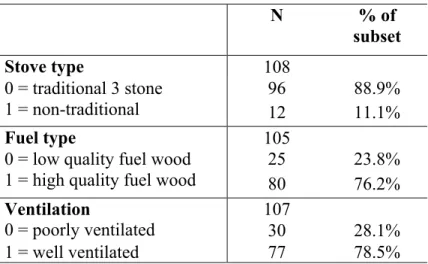
Table 2: Descriptive statistics for categorical independent variables
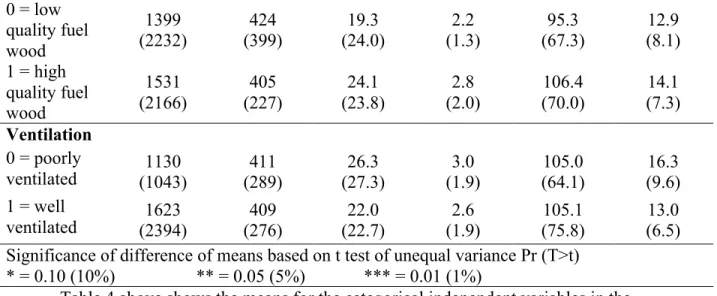
Table 3: Comparison of means test for categorical independent variables
Table 4: Descriptive statistics for continuous independent variables
Table 5: Multivariate regression analysis using stove type, fuel type, fuel quantity, ventilation, and moisture content as inputs.
Table 6: Multivariate regression analysis using stove type, fuel type, fuel quantity, household size, ventilation, and moisture content as inputs
Table 7: Multivariate regression analysis using stove type, fuel type, fuel quantity, household size, ventilation, income quintiles, and moisture content as inputs
List of Figures
Figure 1: Graphical representation of the variability of PM2.5 concentrations
Figure 2: Graphical representation of the variability of CO concentrations
Figure 3: Graphical representation of the variability of BC concentrations
Figure 4: Descriptive statistics for dependent variables (histogram distributions)
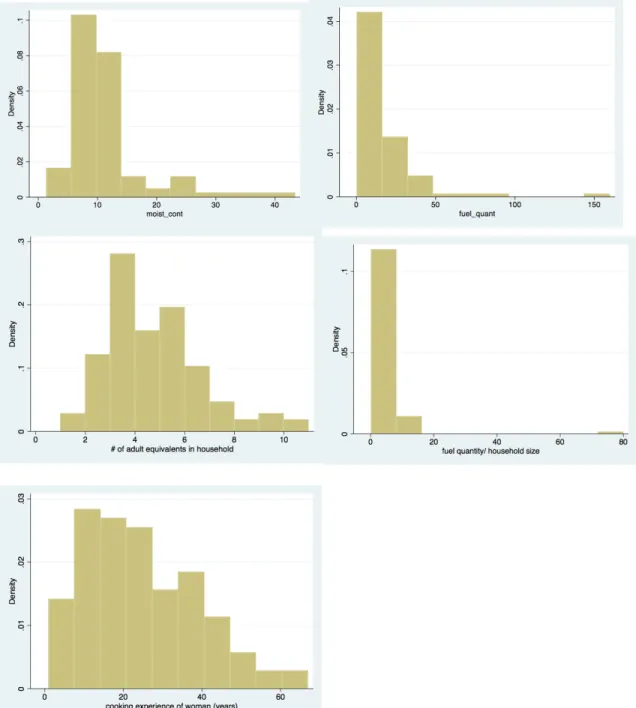
Figure 5: Histogram distributions for continuous independent variables
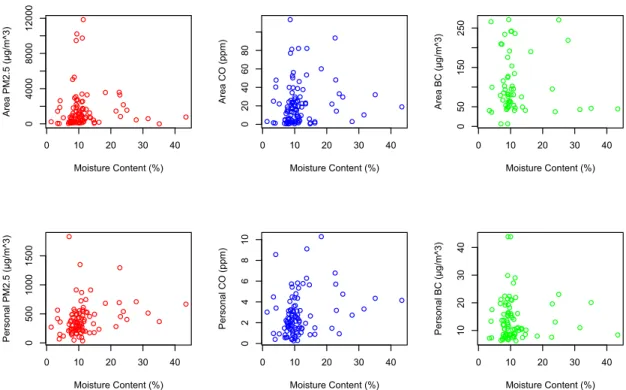
Figure 6. Dependence of particle concentrations on moisture content
Figure 7: Dependence of particle concentrations on fuel quantity
Figure 8: Dependence of particle concentrations on household size
Introduction
About half the world’s population relies on biomass fuels as a means to meet their
domestic energy requirements particularly for cooking (Barnes, 2014). The dependence
on biomass fuel is the greatest in rural areas; specifically in African countries, it
constitutes 70% of energy needs (Rumchev et. al, 2007). It is difficult to burn solid fuels in simple combustion devices without a sizable emission of pollutants. This leads to a
substantial fraction of the fuel carbon being converted to products of incomplete
combustion rather than compounds such as carbon dioxide that result from complete
combustion (Zhang et al., 2000).
Products of incomplete combustion include, but are not limited to carbon
monoxide (CO) and particulate matter (PM). The PM typically generated from fuel
combustion is fine or ultrafine in size, but larger particles may result from ash and solid
fuel fragments (Zhang et al., 2000). The size of the particulate matter is a determinant for
assessing health impacts. Typically, a fine or ultrafine particle can easily travel within the
respiratory tract leading to detrimental health effects. It is estimated that 4 million deaths
occur annually due to indoor air pollution, or 2.7% of the global burden of disease
(especially due to respiratory illness) (Lim et al., 2010). Global burden of disease refers
to the lost healthy life years due to premature death and illness (Zhang et al., 2003). The Global Burden of Disease Project estimates that household air pollution (HAP) is
who spend the predominant amount of time near the kitchen area.
The goal of the study is quantitatively assess the determinant exposure response
relationship. To do this, certain determinants of exposure—including biophysical and
behavioral causes—are reviewed for their effects on particle concentrations in up to date
literature. It is particularly important to identify determinants of household air pollution
in order to find effective mitigation and intervention strategies to reduced indoor air
pollution. Not only is indoor air quality with regards to cookstove emissions an important
health outcome, but it has implications on climate as well. Cookstove emissions
contribute to the ever-increasing greenhouse gases and black carbon in the atmosphere
(Rosa et. al, 2014). Additionally, using biofuels as a primary energy source may lead to deforestation, another contributor to greenhouse gas emissions.
Fuel type
Fuel type was found to be most important determinant of pollution in both Mehta
et al. (2002) and Balakrishnan et al. (2002). In a 1996 study, it was shown that biomass
With respect to just biomass fuels—wood crop residue, and dung—approximately two fifths of the world’s households rely on biomass as their principal fuel type (Smith,
1994). Studies show that approximately 80% of the world’s population exposure to
particulate matter indoors is due to the emissions from biomass fuels—wood, crop
residue, and dung (Chaudhuri et. al 2003). The use of biomass as the primary fuel source
results in using a lower efficiency stove. In particular, wood burning stoves were found
on average contribute 50 times more pollution during cooking in comparison to a gas
stove (Smith, 1994).
Moisture content
Moisture content refers to the measure of the amount of water in a fuel, and is expressed as percent of the dry weight of the fuel. For a fire to burn more intensely, the moisture content of the fuel must be lower than the moisture content of the extinction of fire (Hoffa et al., 1999). The drier fuels burn more intensely than the wet because of less latent heat transfer; subsequently, the lower intensity fires of wet fuels produce more products of incomplete combustion including CO and PM2.5 (Hoffa et al., 1999).
Moisture content is also considered to be undesirable because it results in lower thermal emissions and has also been linked to higher emissions of aerosols or VOCs (McDonald et al. 2000). When using improved stoves that are capable of producing less CO and PM, the moisture content of the fuel used can lead to lower performance (Adler, 2010).
Stove Design
introductions into communities. In order for each stove type to be evaluated equally across the board on the same parameters, the Global Alliance for Clean Cookstoves developed an International Working Agreement (IWA) in 2012 on guidance for rating cookstoves. Cookstoves are rated based on four performance indicators: fuel use, total emissions, indoor emissions, and safety. To highlight progress in furthering improvement in cookstove design, each performance standard has multiple tiers of performance (valued from 0 to 4). Each stove type has up to four ratings for Tiers of Performance (one for performance indicator).
Many areas of the developing world are reliant on simple open-fire cookstoves
that not only increase pollutant concentrations but cause adverse health outcomes for
women and children. Burning biomass fuels in low efficiency stoves such as traditional,
open-fire three stone stoves can emit smoke containing significant quantities of pollutants
(Balakrishnan et al., 2004). Open fires and old-fashioned cookstoves emit 90% CO, the other 10% being a mix of VOCs, PAHs (polyaromatic hydrocarbons), metals, and
variously sized particular matter (Adler, 2010). There’s a strong need to improve stove
efficiency as a method to increase combustion efficiency. The transition to more clean and efficient energy systems for cooking are also based on per capita incomes—the higher the more likely the switch (Balakrishnan et al., 2004). On the other hand, appliances that burn fossil fuels have higher combustion efficiencies and therefore generate insignificant amounts of CO (Zhang et al., 2003). Stoves that are not vented— have a flue or hood—do not take pollutants out of the living area (Smith et al. 2002). A
Randomized Exposure Study of Pollution Indoors and Respiratory Effects (RESPIRE) in
90% (Smith). Intervention studies for improved cook stoves found reductions in
concentrations of CO and PM for kitchen level and personal concentrations (Bruce et al.,
2004, Albalak et al.,2001, Cynthia et al.,2008, Rosa et. al, 2014).
Ventilation
Kitchen ventilation (based on air exchange rates) and cooking location have
profound impact on the level of household air pollutant concentrations (Rosa et al., 2014)
(Ruth et al.,2013). A test kitchen study with biomass stoves found that increasing air
exchange rates by opening windows and doors reduced PM2.5 1-hour concentrations by
93-98% compared to the closed kitchen and CO concentrations by 83-95% less (Grabow
et al., 2013). Additionally, studies characterize ventilation as a function of the number of
doors and windows open as in an indication of the air exchange rate. A study done by
Rumchev et al. found a significant relationship between window area and concentration
of CO and PM2.5. The increase in window area was associated with reduction in the
concentration of PM2.5 and CO. Additionally, for PM2.5, the increase in number of
windows saw a reduction in PM2.5 concentrations as well. It can be concluded from this
study that using biofuels indoors in a poorly ventilated environment can cause an increase
in air pollutants.
A study (Albaklak et al., 1999) done in Bolivia measured PM10 concentrations in
two different villages in Bolivia—one characterized by indoor cooking the other with
outdoor cooking. The analysis of their pollutant concentrations of PM10 found that there
were significant effects of indoor vs. outdoor cooking on the pollutant levels.
µg/m3 in comparison to outdoor kitchen environments 280 µg/m3. On the other hand,
when smoke is released outdoors indoor levels can become high where a large population
of households use solid fuels (Zhang et al.,2000). This is due to the re-entry of pollution
back into households and is typically associated with cold winter weather with poor
atmospheric dispersion (Zhang et al.,2000). Outdoor cooking “in the intervention was associated with a median reduction of 73% when compared to control households (p<0.001), 57% reduction when compared to indoor-cooking intervention homes (p=0.02). (Rosa et. al, 2014)
Methodology
Study Setting
The Forest Use, Energy and Livelihoods Lab (FUEL) collected data on determinants of exposure to household air pollution in Malawi as a part of the Malawi Forest and Livelihoods Survey (MFLS) from October to November of 2013. The sample of population was drawn
Malawi with high forest reliance and active forest co-management agreements. The districts are marked in red on the map entitled MFLS Survey Sites.
The villages of interest within the Machinga District are located adjacent to the
Liwonde Forest Reserve, which is a significant source of fuelwood and charcoal. This
area has good market access due to its proximity to three of Malawi’s 15 largest urban
centers (Balaka, Liwonde, and Zomba). The main agricultural crops of the region are
maize and paddy rice. Households keep chickens and other small animals, but overall
there is limited investment in livestock.
In comparison to the Machinga District, Kasungu has a lower population density. It is located approximately 300 kilometers north of Malawi’s capital—Lilongwe;
additionally, the villages of interest within the district are adjacent to the Chimaliro Forest Reserve, which has a significant source of fuelwood. Access to markets is limited in the region, but there are major markets due to international trade with Zambia. The main agricultural crops of the region are maize and tobacco; additionally, in the wetland areas (dambos) a variety of vegetables are grown. Unlike Machinga, Kasungu households invest in livestock including cattle and goats.
partake in the study by being given a chitenge (a form of cloth). Each house chosen in the study responded to questions to describe their household demographics, assets,
agricultural production, expenditures, access to forest resources, etc. The primary cooks also answered questions about household food consumption, kitchen design and
ventilation, fuel use, cooking technology choices, indicators of health status, etc. The results from the questionnaires, in particular of relation to cooking, were used for this analysis.
Indoor air pollution measurements
The protocol of the study required collection of carbon monoxide (CO) and
particulate matter (PM2.5) for a period of 24 hours. The data collection was done in two
parts —area exposure and personal exposure monitoring. The instruments for both the
CO and PM2.5 monitoring were mounted at a height of 1.5 meters on a tripod positioned 1
meter away from the stove. For the personal exposure monitoring, the CO monitor and
the PM2.5 monitor (including the pump and the filter) were placed in a side messenger
bag or backpack for the women to hold.
Carbon monoxide was measured using a Lascar CO Data Logger (model
EL-USB-CO) (Lascar Electronics, Salisbury, UK) at a sample rate of once a minute for a
total of 24 hours. These monitors are accurate to ±6 ppm, with a range of 0 to 1000 ppm.
To ensure accuracy, certain households were chosen to detect variance in measurements
Particulate matter (PM2.5) was collected on a 2µm polytetrafluoroethylene (PTFE)
filter over the course of a 24-hour period. Each personal and area PM2.5 filter was
attached to a SKC AirChek XR5000 pump connected to a SKC Personal Environmental
Monitor for PM2.5 sampling (SKC, Inc., Eighty Four, PA, USA) that was calibrated to a
flow rate of 2 (±0.5%) (L/min). The area pump was turned on once ever 6 minutes (i.e. 1
minute on, 5 minutes off, 240 cycles); whereas, the personal pump was continuously run.
These filters were weighed prior to use, and weighed subsequently after the 24-hour
study period in the household using a MX5 Microbalance (Mettler-Toledo, Inc.,
Columbus, Ohio) after being equilibrated for at least 24 hours in a Secador 1.0 Dessicator
Cabinet (Bel-Art Products, Inc., Wayne, New Jersey) at 33% relative humidity.
Data Analysis
Processing emissions
The carbon monoxide (CO) measurements were averaged across the collected data points over the 24 hr. period to get the 24 hr.-period CO personal and area average concentrations measured in ppm (parts per million). Each of the carbon monoxide monitors used were corrected for their experimental correction factor—these calibration correction factors were found experimentally in the lab setting prior to using the
monitors. See Appendix B for Carbon Monoxide correction factors.
Particulate Matter (PM2.5) measurements were calculated using the net mass
masses. To convert the net mass to a particulate matter concentration (µg /m3
), the following equation was used:
!"## !" !"#$%& × !"""
!"#$ !"#$%&'( × !"#$ !"#$
!"""
(1)
The pump duration (min) is the length of time that the pump was turned on, typically 240 minutes for the area pumps and 1440 min for the personal pumps. The pump rate (L/min) is the rate at which is air flowed into the filter, typically around 2 L/min for both the area and personal pumps. The PM2.5 data proved to be problematic
because there were negative concentrations and negative net gain in mass. Negative concentrations follow from negative masses as evident from equation (1). The second
issue may be attributed to an error in weighing the filters. Additionally, personal PM2.5 concentrations were larger than respective area PM2.5 concentrations for certain
households. To attempt to understand these varying values, the amount of black carbon (BC) in each filter was estimated using a Nexleaf algorithm, which takes a photo of the filter as an input and outputs the amount of black carbon that was in the air. The
concentrations of BC (µg /m3), were calculated the same ways at the PM2.5.
Baseline characteristics
Initial data analysis was done to understand the variability of the particle
concentrations of interest—area and personal PM2.5 concentrations, area and personal CO
concentrations, and area and personal BC concentrations. A t-test was done to identify
the significance of the difference of means between area and personal concentrations.
Additionally, initial plotting was completed to show the relationship between area and
Using the cook and household survey data as well as relevant literature, certain
parameters were chosen as a test to explain household air pollution exposures. These
parameters include moisture content, fuel quantity, fuel type, stove type, income
quintiles, household size, ventilation, and cooking experience. Moisture content (%) was
obtained using an Ohaus MB23 Moisture Analyzer (Parsippany, NJ). The fuel quantity
was calculated as the the sum of difference in the amount of fuel at the beginning and end
of the 24 hr study period and the amount of fuel added in the study period. Fuel type is a
categorical variable taking the value of 0 for low quality fuel wood, and 1 for high quality
fuel wood. Stove type is a categorical variable taking the value of 0 for a 3 stone
(traditional stove) and 1 for a non-traditional stove. Income quintile is a categorical
variable taking the value of 0 for the lowest income bracket and 5 for the highest income
bracket of the subset of households. Household size refers to the number of adult
equivalents in each household—coded as 1 for each adult and 0.5 for each child.
Ventilation is a categorical variable that takes the value of 0 for poorly ventilated
kitchens and 1 for well ventilated kitchens—typically those with more windows and
doors or those outdoors. Cooking experience is a continuous variable that refers to the
number of years of cooking experience the primary cook has had in any household.
T-tests and regressions were performed to see the significance of the relationship between
each pollutant concentration and parameter.
Multivariable Regression Analysis
dependent variables of interest include the personal and area particulate matter
concentrations, the personal and area carbon monoxide concentrations, and the personal and area black carbon concentrations. The independent variables – the determinants for household exposure—are the aforementioned parameters found from the household and cooking data.
𝑌
!=
𝛽
!𝑋
!!+
𝛽
!𝑋
!!+
⋯
+
𝛽
!𝑋
!"+
𝜀
!A multivariable regression model of this form is as shown above where
𝑌
! is thedependent variable of interest, and
𝑋
!" are the independent variables with coefficientsResults
Table 1: Descriptive statistics for dependent variables
Mean Std. Dev CV Min Max Median N Area
PM2.5
(µg/m3)
1502 2162 144% 2 11839 747 99
Personal PM2.5
(µg/m3)
407 277 68% 36 1830 361 96
Area CO (ppm)
22.8 23.6 103% 0.5 113.4 16.8 105
Personal CO (ppm)
2.7 1.9 73% 0.3 10.3 2.2 103
Area BC (µg/m3)
104.8 72.1 69% 6.6 271.5 81.0 60
Personal BC (µg/m3)
13.8 7.4 53% 6.3 43.9 11.0 85
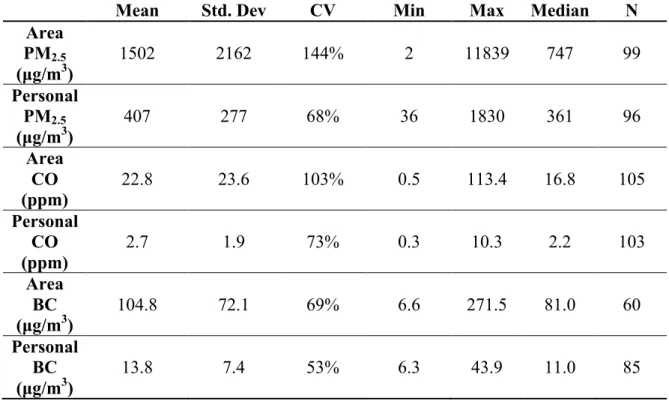
Table 1 shows the mean, standard deviation, the coefficient of variance,
minimum, maximum, medium and sample size of the set of air pollutant concentrations.
The sample size (N) of Table 1, is lower than the number of households in the subset
(108) due to the removal of outliers. Large outliers within the subsets of personal and
area concentrations PM2.5 were removed. Low-concentration filters of BC have biased
estimates of BC mass because the study used Teflon filters instead of Quartz (which is
the type of filter the Nexleaf algorithm is based on). Additionally, these filters drove the
average ratio of BC to PM2.5 ratios up. Subsequently, data was omitted when the BC mass
was less than 0.0176 mg—or 150% of the blank filters average mass (0.0117 mg).
area and personal exposures. To view descriptive statistics for the original full data set,
see Appendix D.
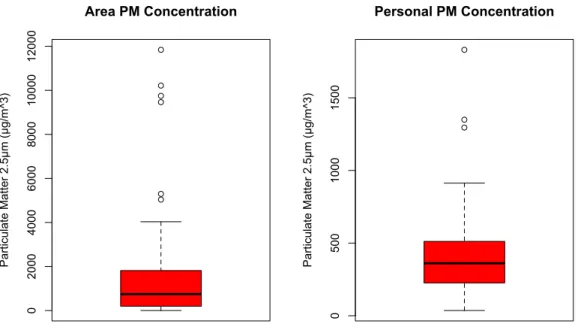
Figure 1: Graphical representation of the variability of PM2.5 concentrations
0
2000
4000
6000
8000
10000
12000
Area PM Concentration
Pa
rt
icu
la
te
Ma
tte
r
2.
5µ
m
(µ
g/
m^
3)
0
500
1000
1500
Personal PM Concentration
Pa
rt
icu
la
te
Ma
tte
r
2.
5µ
m
(µ
g/
m^
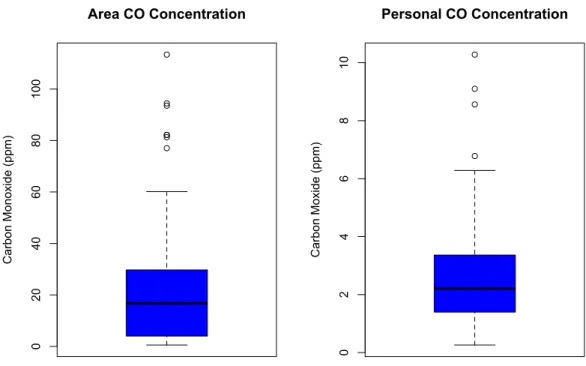
Figure 2: Graphical representation of the variability of CO concentrations
Figure 3: Graphical representation of the variability of BC concentrations
0
20
40
60
80
100
Area CO Concentration
C
arb
on
Mo
no
xi
de
(p
pm)
0
2
4
6
8
10
Personal CO Concentration
C
arb
on
Mo
xi
de
(p
pm)
0
50
100
150
200
250
Area BC Concentration
Bl
ack
C
arb
on
(µ
g/
m^
3)
10
20
30
40
Personal BC Concentration
Bl
ack
C
arb
on
(µ
g/
m^
Figures 2, 3, and 4 above show boxplots of the area PM2.5 concentration, area CO
concentration, area BC concentration, personal PM2.5 concentration, personal CO
concentration, and personal BC concentration. These plots depict the spread of the distribution of each concentration subset by dividing each data point into its respective quartiles. The “whiskers” of each plot represent the 95% CI and the thick dark line represents the mean of the concentrations. Comparing the difference in means of the area and personal concentrations of PM2.5, CO, BC shows that the difference is very
statistically significant—the 95% confidence intervals do not overlap. Relative to the WHO standards for PM2.5 exposure guidelines—mean
concentration of 24-hour period should not exceed 25 µg/m3—the 95% CI of both the personal and area concentrations lie above this threshold. Similarly, the EPA National
Ambient Air Quality Standards for PM2.5 exposure guidelines—mean concentration of
24-hour period should not exceed 35 µg/m3—our data lies above this as well. Relative to the WHO standards for CO exposure guidelines—mean concentration of 24 hour period
should not exceed 7 mg/m3 or 6.11 ppm—the 95% CI of personal and area concentrations of CO contains this threshold. However, the personal concentrations are closer in value to
the mean WHO threshold.
- Personal PM and area PM relationship is statistically significant at the p(<0.05) level. R2
value was 0.060.
- Area CO and personal Co are statistically significant at the (p<0.001) level R2
value was 0.109.
- Area BC and personal BC are statistically significant at the (p<0.05) level R2
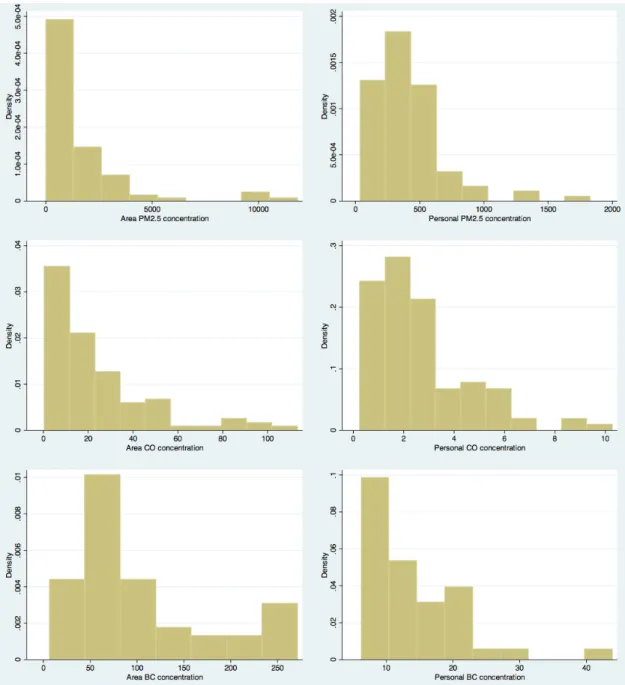
Figure 4: Descriptive statistics for dependent variables (histogram distributions)
Figure 3 above shows the distributions of area PM2.5 concentration, personal PM2.5
are used for the multivariate regression analysis. A table of descriptive statistics for the log-transformed values can be seen in the Appendix.
Profile of study populations
Table 2: Descriptive statistics for categorical independent variables
N % of
subset
Stove type 108
0 = traditional 3 stone 96 88.9%
1 = non-traditional 12 11.1%
Fuel type 105
0 = low quality fuel wood 25 23.8%
1 = high quality fuel wood 80 76.2%
Ventilation 107
0 = poorly ventilated 30 28.1%
1 = well ventilated 77 78.5%
Table 2 describes the sample size N and percentage of subset for the categorical
independent variables for the multivariate regression model including stove type, fuel
type, and ventilation. The subset of households in the study, had 88.9% traditional
3-stone stoves, 76.2% use of high quality fuel, and 78.5% had well ventilated kitchen.
Table 3: Comparison of means test for categorical independent variables
Area
PM2.5
Conc. (µg/m3)
Personal PM2.5
Conc. (µg/m3)
Area CO Conc. (ppm)
Personal CO Conc. (ppm)
Area BC Conc. (µg/m3)
Personal BC Conc. (µg/m3)
Stove type 0 = 3 stone
traditional (2272) 1544 (276) 396 (22.7) 21.3 (1.8) 2.6 (70.8) 100.4 (7.5) 13.7 1 =
0 = low quality fuel wood
1399
(2232) (399) 424 (24.0) 19.3 (1.3) 2.2 (67.3) 95.3 (8.1) 12.9 1 = high
quality fuel wood
1531 (2166)
405 (227)
24.1 (23.8)
2.8 (2.0)
106.4 (70.0)
14.1 (7.3) Ventilation
0 = poorly
ventilated (1043) 1130 (289) 411 (27.3) 26.3 (1.9) 3.0 (64.1) 105.0 (9.6) 16.3 1 = well
ventilated (2394) 1623 (276) 409 (22.7) 22.0 (1.9) 2.6 (75.8) 105.1 (6.5) 13.0 Significance of difference of means based on t test of unequal variance Pr (T>t)
* = 0.10 (10%) ** = 0.05 (5%) *** = 0.01 (1%)
Table 4 above shows the means for the categorical independent variables in the
multivariate regression model including stove type, fuel type, and ventilation. In addition,
the significance for the difference of means (assuming unequal variances) of each subset
is noted in the categorical variable heading. There was no significant difference between
the mean values of the categorical variable, meaning that the 95% CI of each coded value
of the categorical variable (i.e. 0 or 1) significantly overlapped.
Table 4: Descriptive statistics for continuous independent variables
Mean Std. Dev CV Min Max Median N Moisture
content (%) 11.4 6.4 56% 1.4 43.4 9.9 106 Fuel
quantity
(kgs) 17.5 19.8 113% 0.5 159.9 12.6 106 Household
Size (# adult equivalents)
4.5 2.0 44% 1 11 4 107
Fuel quantity by
household size (kgs/ adult equiv)
4.5 7.9 176% 0.2 80.0 3.1 105
Cooking experience
Table 4 above shows the mean, standard deviation, the coefficient of variance,
minimum, maximum, medium and sample size of each continuous independent variable
of interest—moisture content, fuel quantity, household size, fuel quantity by household
size, and cooking experience.
The figures above show thedistributions of the continuous independent
variables (from left to right, top to bottom) moisture content (%), fuel quantity (kgs), household size (# adult equivalents), fuel quantity by household size, and cooking experience (years). Looking at these plots, each particle concentration subset follows a log normal distribution. A log transformation of each independent variable will closely follow a normal distribution. Therefore, when completing the multi-regression analysis, the log-transformed values will be used.
Figure 6. Dependence of particle concentrations on moisture content
The figures above show plots of the area PM2.5 concentration, area CO
concentration, area BC concentration, personal PM2.5 concentration, personal CO
concentration, and personal BC concentration as a function of moisture content. Basic
0 10 20 30 40
0
4000
8000
12000
Moisture Content (%)
Are a PM2 .5 (µ g/ m^ 3)
0 10 20 30 40
0
20
40
60
80
Moisture Content (%)
Are a C O (p pm)
0 10 20 30 40
0
50
150
250
Moisture Content (%)
Are a BC (µ g/ m^ 3)
0 10 20 30 40
0
500
1000
1500
Moisture Content (%)
Pe rso na l PM2 .5 (µ g/ m^ 3)
0 10 20 30 40
0 2 4 6 8 10
Moisture Content (%)
Pe rso na l C O (p pm)
0 10 20 30 40
10
20
30
40
Moisture Content (%)
correlation testing found a statistically significant relationship between moisture content and personal PM3.5 concentrations as well as with personal CO concentrations at the
p(<0.05) level.
Figure 7: Dependence of particle concentrations on fuel quantity
The figures above show plots of the area PM2.5 concentration, area CO
concentration, area BC concentration, personal PM2.5 concentration, personal CO
concentration, and personal BC concentration as a function of fuel quantity. Basic correlation testing between exposures and fuel quantity found no significant relationship for any of the six measured exposures.
0 50 100 150
0
4000
8000
12000
Fuel Quantity (kgs)
Are a PM2 .5 (µ g/ m^ 3)
0 50 100 150
0
20
40
60
80
Fuel Quantity (kgs)
Are a C O (p pm)
0 50 100 150
0
50
150
250
Fuel Quantity (kgs)
Are a BC (µ g/ m^ 3)
0 50 100 150
0
500
1000
1500
Fuel Quantity (kgs)
Pe rso na l PM2 .5 (µ g/ m^ 3)
0 50 100 150
0 2 4 6 8 10
Fuel Quantity (kgs)
Pe rso na l C O (p pm)
0 50 100 150
10
20
30
40
Fuel Quantity (kgs)
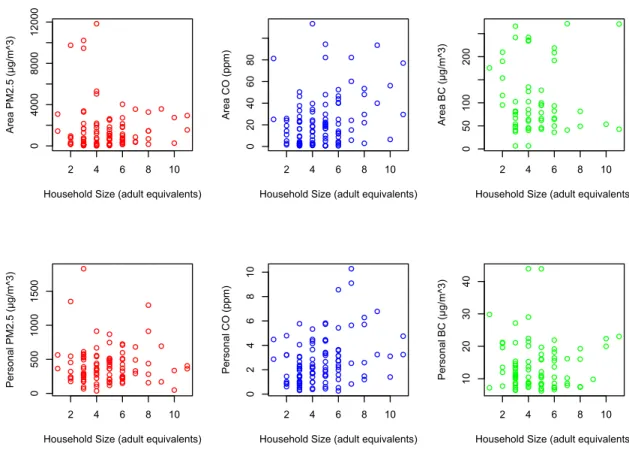
Figure 8: Dependence of particle concentrations on household size
The figures above show plots of the area PM2.5 concentration, area CO
concentration, area BC concentration, personal PM2.5 concentration, personal CO
concentration, and personal BC concentration as a function of household size. Basic correlation testing found a statistically significant relationship between household size and area and personal CO concentrations at the p(<0.01) level.
2 4 6 8 10
0
4000
8000
12000
Household Size (adult equivalents)
Are a PM2 .5 (µ g/ m^ 3)
2 4 6 8 10
0
20
40
60
80
Household Size (adult equivalents)
Are a C O (p pm)
2 4 6 8 10
0
50
100
200
Household Size (adult equivalents)
Are a BC (µ g/ m^ 3)
2 4 6 8 10
0
500
1000
1500
Household Size (adult equivalents)
Pe rso na l PM2 .5 (µ g/ m^ 3)
2 4 6 8 10
0 2 4 6 8 10
Household Size (adult equivalents)
Pe rso na l C O (p pm)
2 4 6 8 10
10
20
30
40
Household Size (adult equivalents)
Figure 9 Dependence of particle concentrations on moisture cooking experience
The figures above show plots of the area PM2.5 concentration, area CO
concentration, area BC concentration, personal PM2.5 concentration, personal CO
concentration, and personal BC concentration as a function of cooking experience. Basic correlation testing found a statistically significant relationship between cooking
experience size and personal PM2.5 concentrations at the p(<0.05) level.
Regression Analysis
Table 5: Multivariate regression analysis using stove type, fuel type, fuel quantity, ventilation, and moisture content as inputs. The table below shows the coefficient, standard error, and the level of significance for each species’ multivariate regression models.
Area
PM2.5
Conc. (µg/m3)
Personal PM2.5
Conc. (µg/m3)
Area CO Conc. (ppm) Personal CO Conc. (ppm) Area BC Conc. (µg/m3)
Personal BC Conc. (µg/m3)
0 10 20 30 40 50 60
0
2000
6000
10000
Cooking Experience (years)
Are a PM2 .5 (µ g/ m^ 3)
0 10 20 30 40 50 60
0 20 40 60 80 100
Cooking Experience (years)
Are a C O (p pm)
0 10 20 30 40 50 60
0 50 100 150 200 250
Cooking Experience (years)
Are a BC (µ g/ m^ 3)
0 10 20 30 40 50 60
0
500
1000
1500
Cooking Experience (years)
Pe rso na l PM2 .5 (µ g/ m^ 3)
0 10 20 30 40 50 60
0 2 4 6 8 10
Cooking Experience (years)
Pe rso na l C O (p pm)
0 10 20 30 40 50 60
10
20
30
40
Cooking Experience (years)
Stove type (1= non-traditional)
0.372
(0.48) (0.21) 0.229 0.823 (0.42) * (0.24) 0.220 (0.34) 0.442 (0.19) 0.008 Moisture
content (%) (0.32) 0.132 0.301 (0.14) ** (0.29) 0.374 (0.16) 0.218 (0.20) 0.031 (0.13) 0.070 Fuel type
(1 = high quality fuel wood) 0.117 (0.37) 0.026 (0.17) 0.236 (0.34) 0.222 (0.19) 0.189 (0.24) 0.089 (0.12) Fuel quantity (kg) -0.025 (0.22) -0.041 (0.10) -0.057 (0.20) -0.002 (0.11) 0.035 (0.13) 0.087 (0.08) Ventilation (1= well ventilated) -0.136 (0.37) -0.015 (0.16) -0.213 (0.34) -0.223 (0.19) -0.071 (0.23)
-0.251 * (0.13) Error
Constant (0.96) 6.189 (0.43) 5.193 (0.88) 1.572 (0.49) 0.222 (0.62) 4.154 (0.38) 2.252 R2 value 0.0134 0.0708 0.0749 0.0647 0.0573 0.0766 Notation for significance based on p-values of the regression
* = 0.10 (10%) ** = 0.05 (5%) *** = 0.01 (1%)
Looking at the first regression in Table 5, using stove type, fuel most used, fuel quantity, ventilation, and moisture content as inputs, the model demonstrates that use of a non-traditional stove has a positive and weakly significant effect on area CO exposures.
Moisture content has a positive and significant effect on personal PM2.5 exposures;
therefore, as moisture content increases so does the exposure concentration. Improved
ventilation has a negative and weakly significant effect on personal BC exposures.
Table 6: Multivariate regression analysis using stove type, fuel type, fuel quantity, household size, ventilation, and moisture content as inputs. The table below shows the coefficient, standard error, and the level of significance for each species’ multivariate regression models.
Area
PM2.5
Conc. (µg/m3)
Personal PM2.5
Conc. (µg/m3)
Area CO Conc. (ppm) Personal CO Conc. (ppm) Area BC Conc. (µg/m3)
Personal BC Conc. (µg/m3)
Stove type
Moisture
content (%) (0.32) 0.119 0.319** (0.15) (0.29) 0.323 (0.16) 0.165 (0.20) 0.033 (0.13) 0.086 Fuel type
(1 = high quality fuel wood) 0.099 (0.38) 0.051 (0.17) 0.167 (0.35) 0.152 (0.19) 0.229 (0.24) 0.103 (0.13) Fuel quantity (kg) -0.037 (0.22) -0.023 (0.10) -0.107 (0.20) -0.054 (0.11) 0.057 (0.13) 0.092 (0.079) Ventilation (1= well ventilated) -0.136 (0.37) -0.015 (0.16) -0.209 (0.34) -0.218 (0.19) -0.021 (0.23) -0.246* (0.13) Household
size (# adult equivalents) 0.083 (0.36) -0.117 (0.16) 0.353 (0.33) 0.368** (0.18) -0.289 (0.23) -0.062 (0.13) Error
Constant (0.98) 6.147 (0.44) 5.251 (0.89) 1.380 (0.49) 0.019 (0.65) 4.411 (0.39) 2.283 R2 value 0.0140 0.0768 0.0870 0.1088 0.0883 0.0797 Notation for significance based on p-values of the regression
* = 0.10 (10%) ** = 0.05 (5%) *** = 0.01 (1%)
Table 6’s model looked at the influence adding household size to the original list
of determinants. This model finds that household size has a positive and significant effect
and personal CO exposures, meaning that the increase in the number of adult equivalents
in a household corresponds to an increase in personal CO exposures. A similar model
was run considering fuel quantity as a function of household size, but found no
statistically significant effect (See Appendix).
Table 7: Multivariate regression analysis using stove type, fuel type, fuel quantity, household size, ventilation, income quintiles, and moisture content as inputs. The table below shows the coefficient, standard error, and the level of significance for each species’ multivariate regression models. The coefficients and significance for the income quintiles are relative to the base 1 quintile.
Area
PM2.5
Conc. (µg/m3)
Personal PM2.5
Conc. (µg/m3)
Area CO Conc. (ppm) Personal CO Conc. (ppm) Area BC Conc. (µg/m3)
Stove type (1= non-traditional)
0.230
(0.48) (0.22) 0.293 0.779* (0.43) (0.24) 0.150 (0.38) 0.594 (0.20) 0.049 Moisture
content (%) (0.32) 0.066 0.312* (0.15) (0.30) 0.259 (0.16) 0.149 (0.21) 0.052 (0.14) 0.087 Fuel type
(1 = high quality fuel wood) 0.028 (0.39) 0.021 (0.17) 0.003 (0.36) 0.098 (0.20) 0.247 (0.24) 0.101 (0.14) Fuel quantity (kg) 0.001 (0.22) -0.0342 (0.11) -0.078 (0.21) -0.009 (0.12) 0.033 (0.14) 0.083 (0.08) Ventilation (1= well ventilated) -0.005 (0.37) -0.053 (0.17) -0.233 (0.34) -0.232 (0.19) 0.013 (0.25) -0.252* (0.14) Household
size (# adult equivalents)
0.236
(0.36) -0.114 (0.17) (0.34) 0.467 0.406** (0.19) -0.265 (0.25) -0.063 (0.13) Income
quintiles
2 -1.013*
(0.52) 0.202 (0.25) -0.292 (0.46) -0.353 (0.25) -0.0284 (0.33) 0.064 (0.19)
3 -0.743
(0.48) 0.113 (0.22) -0.500 (0.44) -0.187 (0.24) 0.092 (0.31) 0.16 (0.16) 4 -1.257***
(0.48) 0.251 (0.23) -0.091 (0.45) 0.0202 (0.24) -0.286 (0.31) 0.072 (0.16)
5 -1.059**
(0.49) (0.24) 0.061 -0.687 (0.46) -0.322 (0.26) -0.041 (0.33) (0.18) 0.039 Error
Constant (0.99) 6.746 (0.46) 5.211 (0.94) 1.751 (0.51) 0.102 (0.71) 4.406 (0.40) 2.242 R2 value 0.1045 0.0945 0.1190 0.1491 0.1201 0.0934 Notation for significance based on p-values of the regression
* = 0.10 (10%) ** = 0.05 (5%) *** = 0.01 (1%)
The regression in Table 7 adds income quintile to the list of determinants. The
multivariate regression was calculated based on the income quintile 1 (the lowest income
bracket). With respect to quintile 1, quintile 5 (the highest income bracket) has a negative
and significant effect on area PM2.5 concentrations; quintile 2 has a negative and weakly
significant effect on area PM2.5 concentrations.
Table 8: Multivariate regression analysis using stove type, moisture content, ventilation, household size, and income quintiles. The table below shows the coefficient, standard error, and the level of significance for each species’ multivariate regression models. The coefficients and significance for the income quintiles are relative to the base 1 quintile.
Area
PM2.5
Conc. (µg/m3)
Personal PM2.5
Conc. (µg/m3)
Area CO Conc. (ppm) Personal CO Conc. (ppm) Area BC Conc. (µg/m3)
Personal BC Conc. (µg/m3)
Stove type (1= non-traditional)
0.242
(0.48) (0.22) 0.301 0.763* (0.42) (0.25) 0.152 (0.38) 0.623 (0.19) 0.060 Moisture
content (%) (0.31) 0.180 0.360** (0.14) (0.29) 0.326 (0.16) 0.206 (0.21) 0.012 (0.13) 0.043 Ventilation (1= well ventilated) -0.008 (0.36) -0.079 (0.17) -0.249 (0.33) -0.251 (0.19) 0.033 (0.25) -0.222* (0.13) Household
size (# adult equivalents) 0.242 (0.33) -0.101 (0.15) 0.421 (0.31) 0.421** (0.17) -0.257 (0.25) -0.017 (0.12) Income quintiles
2 -0.937*
(0.49) 0.211 (0.23) -0.232 (0.46) -0.278 (0.24) 0.008 (0.33) 0.078 (0.18)
3 -0.790*
(0.47) (0.22) 0.111 -0.465 (0.44) -0.272 (0.24) -0.109 (0.31) (0.16) 0.19 4 -1.301***
(0.47) 0.260 (0.22) -0.073 (0.45) 0.023 (0.24) -0.244 (0.31) 0.057 (0.16)
5 -1.222**
(0.47) -0.005 (0.22) -0.718 (0.43) -0.401 (0.25) 0.066 (0.35) 0.006 (0.17) Error
Constant (0.88) 6.542 (0.41) 5.027 (0.81) 1.470 (0.46) 0.020 (0.67) 4.767 (0.34) 2.549 R2 value 0.1180 0.1197 0.1273 0.1552 0.0744 0.0647 Notation for significance based on p-values of the regression
* = 0.10 (10%) ** = 0.05 (5%) *** = 0.01 (1%)
The regression in Table 7 considers only the independent variables those
moisture content has a positive and statistically significant effect on personal PM2.5
concentrations. The use of a non-traditional stove has a positive and weakly significant
effect on area CO concentrations. With respect to income quintile 1, quintile 5 (the
highest income bracket) has a negative and significant effect on area PM2.5
concentrations; quintile 2 has a negative and weakly significant effect on area PM2.5
concentrations; quintile 3 has a negative and weakly significant effect on area PM2.5
concentrations; and quintile 4 has a negative and very significant effect on area PM2.5
concentrations. Household size has a positive and significant effect on personal CO
concentrations. A well-ventilated kitchen has a negative and weakly significant effect on
personal BC exposures.
Discussion
This study attempts to identify determinants of exposure for household air
pollution by quantitatively associating survey—household and cook—data with area and personal concentrations of CO, PM2.5, and BC. Determinants of interest in the study
include fuel quantity, fuel type, stove type, ventilation, moisture content, income quintile, cooking experience, and household size. Using different combinations of the
aforementioned determinants, multivariate regression analysis is done to best explain the variance of household air pollutant concentrations the best.
households on reducing moisture content and improving ventilation within the cooking environment—there could be potential reductions in particle concentrations. The subsequent decrease in concentrations could reduce adverse health effects such as respiratory illness in the main cooks/women of the households. In addition, the overall positive (but only relatively significant effect on personal PM2.5 concentrations) of using
a non-traditional stove demonstrates that the existing infrastructure for “improved” or stoves that are not 3 stone, may not have the intended effect of reducing pollutant concentrations.
The regression models run did not find a statistically significant effect of fuel type on particle concentrations. Balakrishnan et al. 2002 and Hu et. al, 2004 both found that fuel type was one of the main determinants of exposure. Perhaps the reason for lack of statistically significance, is the subset of households used in the data analysis were not
References
Adler, Tina. “Better Burning, Better Breathing: Improving Health with Cleaner Cook Stoves.” Environmental Health Perspectives 118.3 (2010): A124–A129. Print.
Albalak, R.; Keeler, G.J.; Frishncho, A.R.; Haber, M. Assessment of PM10
concentrations from domestic biomass fuel combustion in two rural Bolivian highland villages. Environ. Sci. Technol. 1999, 33, 2505–2509.
Albalak R, Bruce N, McCracken JP, Smith KR, De Gallardo T. Indoor respirable particulate matter concentrations from an open fire, improved cookstove, and LPG/open fire combination in a rural Guatemalan community. Environ Sci Technol. 2001 Jul 1;35(13):2650–2655.
Balakrishnan, Kalpana et al. “Daily Average Exposures to Respirable Particulate Matter from Combustion of Biomass Fuels in Rural Households of Southern India.”
Environmental Health Perspectives 110.11 (2002): 1069–1075. Print.
Bruce N, McCracken J, Albalak R, Schei MA, Smith KR, et al. (2004) Impact of improved stoves, house construction and child location on levels of indoor air pollution exposure in young Guatemalan children. Journal of exposure analysis and environmental epidemiology 14Suppl 1: S26–33. doi: 10.1038/sj.jea.7500355
Cynthia, A. A., Edwards, R. D., Johnson, M., Zuk, M., Rojas, L., Jiménez, R. D., Riojas-Rodriguez, H. and Masera, O. (2008), Reduction in personal exposures to particulate matter and carbon monoxide as a result of the installation of a Patsari improved cook stove in Michoacan Mexico. Indoor Air, 18: 93–105. doi:
10.1111/j.1600-0668.2007.00509.x
Grabow, K; Still, D.; Benson, S. Test kitchen studies of indoor air pollution from biomass stoves. Energy Sustain. Dev. 2013, 17, 458-462.
Hoffa, E. A.; Ward, D. E.; Hao, W. M.; Susott, R. A.; Wakimoto, R. H. Seasonality of Carbon Emissions from Biomass Burning in a Zambian Savannah. J. Geophys. Res.: Atmos. 1999, 104:D11, 13841-13853.
International Organization for Standardization. (2012). IWA 11:2012: Guidelines for evaluating cookstove performance. Geneva, Switzerland: Author. Retrieved from
http://www.iso.org/iso/catalogue_detail?csnumber=61975
McDonald, J.; Zielinska, B.; Fujita, E. M.; Sagebiel, J. C.; Chow, J. C., Watson, J. G. Fine Particle and Gaseous Emission Rates from Residential Wood Combustion. Env. Sci. Technol. 2000, 34, 2080-91.
Rosa, G.; Majorin, F.; Boisson, S.; Barstow, C.; Johnson, M.; Kirby, M.; Ngabo, F.; Thomas, E.; Clasen, T. Assessing the Impact of Water Filters and Improved Cook Stoves on Drinking Water Quality and Household Air Pollution: A Randomized Control Trial in Rwanda. PLoS ONE. 2014, 9:3, e91011.
Ruth, M., Maggio, J., Whelan, K., DeYoung, M., May, J., Peterson, A. & Paterson, K. (2013). Kitchen 2.0: Design guidance for healthier cooking environments. International Journal for Service Learning in Engineering, Humanitarian Engineering and Social Entrepreneurship, Special Edition, 151–169.
WHO guidelines for indoor air quality: selected pollutants. Bonn: World Health Organization; 2010
(http://www.euro.who.int/__data/assets/pdf_file/0009/128169/e94535.pdf, accessed 9 April 2015).
WHO Air quality guidelines global update 2005: particulate matter, ozone, nitrogen dioxide. and sulfur dioxide Copenhagen: World Health Organization Regional Office for Europe; 2006. EUR/05/5046029
(http://www.euro.who.int/__data/assets/pdf_file/0005/78638/E90038.pdf, accessed 9 April 2015).
Zhang, J.; Smith, K. R.; Ma, Y.; Ye, S.; Jiang, F.; Qi, W.; Liu, P.; Khalil, M. A. K.; Rasmussen, R. A.; Thorneloe, S. A. Greenhouse Gases and Other Airborne Pollutants from Household Stoves in China: A Database for Emissions Factors. Atmos. Env. 2000, 34:26, 4537-4549.
Appendix
A. List of all carbon monoxide monitor triplicates Household
ID
Area Avg
Area Max
Area Min
Pers Avg
Pers Max
Pers Min
141 2.0 53.6 0.0 0.3 75.3 0.0
141 3.3 63.1 0.0 0.3 75.3 0.0
141 1.8 53.9 0.0 0.3 75.3 0.0
440 7.5 130.0 0.0 2.4 75.2 0.0
440 8.9 117.0 0.0 2.4 75.2 0.0
440 10.1 146.4 0.0 2.4 75.2 0.0
Average 8.8 131.1 0.0 2.4 75.2 0.0
335 9.6 74.5 1.0 3.1 153.6 0.0
335 8.4 81.6 0.0 3.1 153.6 0.0
335 8.1 62.7 0.0 3.1 153.6 0.0
Average 8.7 72.9 0.0 3.1 153.6 0.0
161 22.2 167.2 0.0 1.9 127.1 0.0
161 21.7 178.5 0.0 1.9 127.1 0.0
161 25.3 174.1 0.0 1.9 127.1 0.0
Average 23.1 173.3 0.0 1.9 127.1 0.0
303 96.9 400.5 0.0 6.8 329.6 0.0
303 92.2 395.0 0.0 6.8 329.6 0.0
303 91.5 443.1 0.0 6.8 329.6 0.0
Average 93.6 412.9 0.0 6.8 329.6 0.0
277 46.1 230.0 0.0 0.5 107.8 0.0
277 48.7 242.9 0.0 0.5 107.8 0.0
277 45.0 217.8 0.0 0.5 107.8 0.0
Average 46.6 230.2 0.0 0.5 107.8 0.0
205 3.3 56.6 0.0 2.7 62.6 0.0
205 2.6 55.7 0.0 2.7 62.6 0.0
Average 2.9 56.1 0.0 2.7 62.6 0.0
222 1.4 70.7 0.0 2.7 195.3 0.0
222 1.4 49.1 0.0 2.7 195.3 0.0
222 1.8 63.7 0.0 2.7 195.3 0.0
Average 1.6 61.1 0.0 2.7 195.3 0.0
B. Calibration factors of carbon monoxide (CO) Monitors Monitor Serial
Number
Correction factor
12248 1.028370288
12306 1.060630508
12354 1.006566742
12451 0.981310826
12483 1.045800826
12488 1.020449593
12514 1.009032944
12529 1.019597315
12534 1.002669326
12554 1.020845777
12557 1.011870578
12558 1.041816519
C. Filter Blank values
Date Deployed Filter Mass (ug)
N/A 0.003
10/24/13 0.005
11/8/13 0.026
11/15/13 0.002
11/19/13 0.007
11/24/13 -0.001
D. Descriptive statistics for dependent variables: The table below shows the mean, standard deviation, the coefficient of variance, minimum, maximum, medium and sample size of the set of air pollutant concentrations without outliers removed.
Mean Std. Dev CV Min Max Median N Area
PM2.5
(µg/m3)
1771 3308 187% 2 26879 754 102
Personal PM2.5
(µg/m3)
438 477 109% 4 4250 360 99
Area 22.8 23.6 103% 0.5 113.4 16.8 105
12575 1.003876652
12591 1.032626427
12592 0.971935511
12714 1.07106599
12757 1.081332448
CO (ppm) Personal
CO (ppm)
2.7 1.9 73% 0.3 10.3 2.2 103
Area BC (µg/m3)
80.5 75.9 94% 0.0 406.0 49.1 99
Personal BC
(µg/m3) 12.8 7.6 59% 0.0 43.9 10.5 96
E. Descriptive statistics for dependent variables based on logarithmic
transformation distribution The table below shows the mean, standard deviation, the coefficient of variance, minimum, maximum, medium and sample size of the set of air pollutant concentrations.
Mean Std. Dev Min Max Median N Area
PM2.5
(µg/m3)
6.46 1.47 0.88 9.4 6.62 99
Personal PM2.5
(µg/m3)
5.81 0.66 3.58 7.51 5.89 96
Area CO (ppm)
2.45 1.36 -0.66 4.63 2.81 105
Personal CO
(ppm) 0.72 0.78 -1.33 2.33 0.79 103 Area
BC
(µg/m3) 4.41 0.76 1.89 5.60 4.40 60
Personal BC
(µg/m3) 2.51 0.46 1.83 3.78 2.40 85
F: Multivariate regression analysis using stove type, fuel type, fuel quantity by household size, ventilation, and moisture content as inputs. The table below shows the coefficient, standard error, and the level of significance for each species’ multivariate regression models.
Area
PM2.5
Conc. (µg/m3)
Personal PM2.5
Conc. (µg/m3)
Area CO Conc. (ppm)
Personal CO Conc. (ppm)
Area BC Conc. (µg/m3)
Stove type (1= non-traditional)
0.367
(0.47) (0.21) 0.217 0.822* (0.42) (0.24) 0.234 (0.34) 0.465 (0.19) 0.043 Moisture
content (%) (0.32) 0.123 0.308** (0.14) (0.29) 0.340 (0.16) 0.186 (0.20) 0.044 (0.13) 0.088 Fuel quantity by household size (kgs/ adult equiv) -0.047 (0.21) 0.008 (0.09) -0.163 (0.19) -0.125 (0.10) 0.107 (0.12) 0.084 (0.07) Fuel_type (1 = high quality fuel wood) 0.114 (0.36) 0.007 (0.16) 0.244 (0.33) 0.249 (0.18) 0.182 (0.23) 0.111 (0.12) Ventilation (1= well ventilated) -0.134 (0.37) -0.021 (0.16) -0.198 (0.33) -0.206 (0.19) -0.059 (0.23) -0.243* (0.13) Error
Constant (0.87) 6.201 (0.39) 5.085 (0.79) 1.674 (0.44) 0.400 (0.55) 4.084 (0.35) 2.318 R2 value 0.0138 0.0689 0.0817 0.0799 0.0714 0.0791 Notation for significance based on p-values of the regression
* = 0.10 (10%) ** = 0.05 (5%) *** = 0.01 (1%)
G. Multivariate regression analysis using stove type, fuel type, fuel quantity, household size, ventilation, cooking experience, income quintiles, and moisture content as inputs. The table below shows the coefficient, standard error, and the level of significance for each species’ multivariate regression models. The coefficients and significance for the income quintiles are relative to the base 1 quintile.
Area
PM2.5
Conc. (µg/m3)
Personal PM2.5
Conc. (µg/m3)
Area CO Conc. (ppm) Personal CO Conc. (ppm) Area BC Conc. (µg/m3)
Personal BC Conc. (µg/m3)
Stove type (1= non-traditional) 0.299 (0.48) 0.258 (0.21) 0.771* (0.43) 0.160 (0.25) 0.522 (0.38) 0.041 (0.21) Moisture
content (%) (0.33) 0.021 0.300** (0.15) (0.30) 0.223 (0.17) 0.125 (0.22) 0.097 (0.14) 0.062 Fuel type
(1 = high quality fuel wood) 0.015 (0.38) -0.025 (0.17) 0.124 (0.35) 0.114 (0.20) 0.272 (0.25) 0.084 (0.14) Fuel quantity (kg) -0.012
Ventilation (1= well ventilated)
-0.205
(0.36) (0.16) 0.007 -0.298 (0.33) -0.214 (0.19) -0.022 (0.25) -0.235* (0.14) Household
size (# adult equivalents) 0.374 (0.39) -0.078 (0.17) 0.535 (0.35) 0.399** (0.20) -0.249 (0.25) -0.035 (0.141) Cooking experience (years) 0.023 (0.19) 0.136 (0.09) -0.103 (0.17) -0.082 (0.10) -0.014 (0.15) -0.047 (0.07) Income quintiles
2 -0.681
(0.53) 0.271 (0.24) -0.511 (0.48) -0.027 (0.27) -0.400 (0.37) -0.004 (0.19)
3 -0.362
(0.567) -0.243 (0.24) -0.030 (0.50) -0.180 (0.28) -0.051 (0.38) -0.048 (0.20)
4 -0.842
(0.52) (0.24) 0.116 -0.219 (0.47) (0.27) 0.069 -0.459 (0.38) -0.070 (0.18) 5 -1.430***
(0.54) -0.049 (0.24) -1.109** (0.49) -0.109 (0.28) -0.249 (0.38) -0.061 (0.21) Error
Constant (1.17) 6.694 (0.53) 4.833 (1.07) 2.124 (0.61) 0.334 (0.88) 4.354 (0.49) 2.485 R2 value 0.1121 0.1586 0.1768 0.1292 0.1424 0.0896 Notation for significance based on p-values of the regression