ISSN: 2147-611X
www.ijemst.com
Modeling and Scaffolding the Technology
Integration Planning Cycle for
Pre-service Teachers: A Case Study
Kristi Bergeson1, Beth Beschorner2
1
St. Cloud State University, United States
2Minnesota State University, Mankato, United States
To cite this article:
Bergeson, K. & Beschorner, B. (2020). Modeling and scaffolding the technology integration
planning cycle for pre-service teachers: A case study.
International Journal of Education in
Mathematics, Science and Technology (IJEMST), 8
(4), 330-341.
This article may be used for research, teaching, and private study purposes.
Any substantial or systematic reproduction, redistribution, reselling, loan, sub-licensing,
systematic supply, or distribution in any form to anyone is expressly forbidden.
Authors alone are responsible for the contents of their articles. The journal owns the
copyright of the articles.
Volume 8, Number 4, 2020
Modeling and Scaffolding the Technology Integration Planning Cycle for
Pre-service Teachers: A Case Study
Kristi Bergeson, Beth Beschorner
Article Info
Abstract
Article HistoryReceived: 15 March 2020
This case study explored pre-service teachers‟ (PSTs) efforts to consider the integration of digital technology as they learned to use their developing TPACK to plan literacy instruction. PSTs were introduced to the Technology Integration Planning Cycle (TIPC; Hutchison & Woodward, 2014) to support their learning. They observed modeling of the TIPC in practice, participated in group work, and discussed meaningful technology integration. The findings suggest that PSTs: (a) used new knowledge of digital tools to plan instruction, (b) could align their pedagogy to their use of a digital tool, and (c) believed that integrating technology was important. Further, four of the PSTs were observed during their field experience. Each used digital tools to support literacy goals. However, based on reflections from the overall group of PSTs in their literacy methods course, PSTs also felt overwhelmed by the selection of a digital tool that would support a literacy goal, struggled to know how to overcome obstacles, and had a difficult time using technology in a way that enhanced their literacy goal. The current findings add to the existing literature on using the TIPC with PSTs by describing a process of providing PSTs with modeling, scaffolding, and opportunities for guided practice.
Accepted: 08 September 2020
Keywords
Modeling Scaffolding
Technology integration Planning cycle Pre-service teachers Case study
Introduction
Students need to be able to produce and consume a wide range of multimodal, digital text (International Literacy Association, 2018). The International Society for Technology in Education Standards for Students (2016) require that students be able to communicate clearly and express themselves creatively for a variety of purposes using the platforms, tools, styles, formats and digital media appropriate to their goals. Further, they state that students should be able to apply digital tools to gather, evaluate, and use information. Similarly, the Common Core State Standards (2010) suggest that students should be able to use technology, including the Internet, to produce and publish writing and to interact and collaborate with others. These abilities are essential for effective communication in the 21st century. Therefore, it is critical for teachers to be able to plan instruction that simultaneously supports the development of reading and writing of both traditional and digital literacies (Hutchison, Beschorner, & Crawford-Schmidt, 2012).
However, many educators feel underprepared to integrate technology into their curriculum in meaningful ways (Hutchison & Reinking, 2011) that are student-centered and require higher-order thinking (Ertmer, 2005; Ertmer & Ottenbreit-Leftwich, 2013). Educators often cite barriers to integrating digital technology into their instruction, such as lack of time (Kopcha, 2012; Pittman & Gaines, 2015) and lack of professional development (Hutchison & Reinking, 2011; Matherson, Wilson, & Wright, 2014). These barriers represent both internal concerns, such as questions about the value of integrating technology into instruction (Tallvid, 2016), and external obstacles, such as utilizing resources (Ertmer, 2005).
The cycle was initially developed as a tool for teachers. However, it has been demonstrated to be useful for supporting PSTs‟ ability to plan instruction that integrates technology in meaningful ways, particularly in the development of technological knowledge, technological pedagogical knowledge, and technological content knowledge (Hutchison & Colwell, 2015) as well as the ability to make conscious instructional decisions about the use of digital technology (Beschorner & Kruse, 2016). However, these studies have also suggested that further research should be conducted in settings that provide more explicit guidance and support for PSTs‟ learning to use the TIPC for lesson planning, such as modeling and providing scaffolding. This is necessary, because when using the TIPC PSTs often: (a) let technology drive the instruction, (b) have a misalignment between lesson goals and content (Hutchison & Colwell, 2015), and (c) have limited knowledge of digital tools used that can be used in educational settings (Beschorner & Kruse, 2016; Kumar & Vigil, 2011).
Therefore, the purpose of the present study was to explore PSTs‟ use of the TIPC throughout a literacy methods course that included modeling, scaffolding, and opportunities for guided practice with the TIPC. Specifically, the research question that guided the study was: How does a teacher educator‟s use of the TIPC within a literacy methods course influence PSTs as they plan literacy instruction that integrates technology?
We believe that this approach to using the TIPC in a literacy methods course adds to the existing literature about PSTs‟ use of the TIPC (e.g. Beschorner & Kruse, 2016), because the PSTs in this study received explicit modeling of the use of the TIPC and were given instructional support over time. Therefore, this study also provides teacher educators with an example of how PSTs can be supported within a course to integrate technology into their literacy instruction.
Conceptual Framework
The present study was informed by two related frameworks. First, the Technological Pedagogical and Content Knowledge framework (Mishra & Koehler, 2006) contends that teachers use their overlapping knowledge of content, pedagogy, and technology to make instructional decisions (Mishra & Koehler, 2006), which requires identifying the affordances and constraints of a given digital tool (Koehler & Mishra, 2008; Koehler & Mishra, 2009). More recently, Mishra (2019) clarified that contextual knowledge should also be explicitly considered as a form of knowledge that influences the success of efforts of integrate technology, because teachers must understand and respond to contextual elements that shape the situation that a teacher works within (e.g. policies).
A considerable amount of research has investigated PSTs‟ development of TPACK throughout teacher preparation (e.g. Schmidt, Baran, Thompson, Mishra, Koehler, & Shin, 2009; Ozgun-Koca, Meagher, & Edwards, 2010) and the TPACK framework has been used to redesign teacher preparation programs (Chai, Koh, & Tsai, 2010; Baran, Bilici, Sari, & Tondeur, 2019). These efforts should go beyond simply learning how to use technology and should support PSTs‟ ability to use technology for teaching and learning (Tondeur, Roblin, vanBraak, Fisser, & Voogt, 2013). Teacher educators have supported PSTs‟ development of TPACK through a range of approaches including stand-alone courses, integrating TPACK into methods coursework, case studies, intentional field experiences, etc. (Mouza, 2016). Within these approaches, “preservice teachers need ongoing feedback and evaluation…to help them further develop their knowledge, skills and attitudes related to the use of ICTs [information and communication technologies] in classrooms. Providing them with opportunities to design lessons with ICTs…would help them develop their practical knowledge about effective use of technology in their classrooms” (Baran, Bilici, Sari, & Tondeur, 2019, p. 367-368).
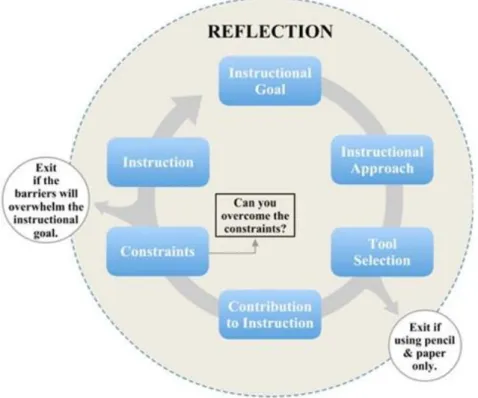
tool; and (7) reflect on the resulting instruction and make changes/learn more about the instructional tools as needed (p. 459).
Figure 1. The Technology Integration Planning Cycle (Hutchison & Woodward, 2014)
The PSTs in the present study used the TIPC as they learned to plan literacy instruction in their methods course. Yet, the TIPC was originally designed for use by practicing teachers. However, previous research suggests that PSTs can use the TIPC to plan instruction, but need considerable support to do so (Beschorner & Kruse, 2016; Bergeson & Beschorner, 2019), because they are often technocentric, have difficulty aligning content with the goals of their lesson, and typically rely on digital tools presented in coursework when planning instruction (Hutchison & Colwell, 2015). Therefore, the present study explores a teacher educator‟s use of the TIPC within a literacy methods course as a tool for PSTs to employ their TPACK as they plan literacy instruction.
Methods
The present study employs case study methodology (Yin, 2014), which can be defined as “an intensive, holistic description and analysis of a bounded phenomenon such as a program, an institution, a person, a process, or a social unit” (Merriam, 1998, p. xiii). The case was bound by the instruction of the use of the TIPC within one literacy methods course at a University in the Midwest with an enrollment of approximately 15,000 students. There were 27 PSTs enrolled in the course and data were collected over the course of one semester. The students were assigned pseudonyms that were used throughout the study.
Participants
The PSTs in our study (n= 27) were undergraduate students beginning the second semester of their junior year in college, were between nineteen and twenty-eight years old. These PSTs were all students in a literacy methods course taught by one of the researchers. This researcher had taught literacy methods coursework several times, but this was the first time that the TIPC has been used as a part of her course. The other researcher has extensive experience with the TIPC and, more specifically, using the TIPC with PSTs.
development and teaching methods for intermediate-age students. All PSTs in this study were pursuing their Elementary Education teaching license, and the literacy methods course was a required course. Prior to this study, PSTs had experience working with elementary age students in primary grades for a one-month field experience during their first semester of methods coursework.
Procedures
During three class sessions of the course, PSTs learned about planning literacy lessons that considered the use of digital technology to support a literacy goal. The goal of the sessions was that PSTs would build their TPACK and then use that knowledge to follow the steps in the TIPC to enact literacy instruction that integrated digital technology. The researchers met regularly to debrief between sessions to collaborate about the sessions and identify potential flaws in the approach (Shenton, 2004). In the first session, the PSTs reflected in writing on their prior knowledge and beliefs about technology integration through a pre-assessment. The pre-assessment included the following questions:
1- What do you believe about using technology for literacy instruction?
2- Name technology tools that could be valuable for literacy development in elementary educational. For each tool listed, provide a reason you believe this tool could be valuable.
3- What are some considerations for instructional planning related to technology use and literacy goals? 4- What, if any, experiences have you had using technology for literacy education?
5- What questions do you have about the integration of technology and literacy education?
Then as homework, all PSTs read A Planning Cycle for Integrating Digital Technology into Literacy Instruction
(Hutchinson & Woodward, 2014) and selected a second current article to read related to the use of technology for literacy as homework.
In the second session, PSTs engaged in a jigsaw discussion about the articles they read and taught one another the content of their choice article. After reading about the integration of technology and literacy, and listening to classmates share their thinking, PSTs individually wrote their own guiding principles for making decisions related to technology use in literacy education. Next, the PSTs explored a variety of digital tools in small groups. These tools were selected by the faculty prior to the class session. Then, PSTs discussed the affordances and constraints of these tools related to a specific instructional goal and created a shared Google document that recorded their findings. This exploration of tools served as guided practice for the PSTs to build technological knowledge, provided practice in utilizing TPACK, and allowed PSTs to work together to evaluate the digital tool related to a literacy goal.
Next, faculty modeled the use of the TIPC to make decisions and plan two different lessons. For the first lesson, PSTs observed a 14-minute video of a faculty member sharing her thinking as she planned a literacy lesson focused on the goal of determining the main idea and key details of a text. This literacy goal was situated within the broader goal of writing multimodal texts that would be shared on a classroom blog. In the video, the faculty member reflected on her planning for each step of the TIPC. For example, she explained her thinking about whether the affordances of using the planned digital tool outweighed the constraints and whether the literacy goal was being enhanced with the digital tool.
For the second demonstration, a different faculty member shared the planning process with PSTs for a lesson she taught in a fourth-grade classroom where students engaged in online research of endangered animals and used Adobe Spark videos to communicate their learning. In addition, students created a classroom website about endangered animals. The literacy professor used the TIPC to model the thinking that she did as she planned the lesson. More specifically, the faculty member began by describing her thinking about the literacy goal of determining important information in non-fiction texts and then considered pedagogical beliefs of planning a lesson that provided personal choice, reading informational texts for authentic purposes, and immersed students in twenty-first-century literacy skills of online research and sharing learning with a broader audience.
options for writing text on the slides, and collaboration with the school technology specialist about where students may go in the school if they needed a stronger internet connection. All of these activities within the course, including the guided practice, faculty modeling, and exploration of a variety of digital tools were intended to support the development of PSTs‟ TPACK and answer the call within previous research for providing further support when using the TIPC with PSTs (Hutchison & Colwell, 2015; Beschorner & Kruse, 2016). After observing the TIPC being modeled, PSTs began planning their literacy lesson during a workshop structured class using a lesson plan template adapted from TIPC (see Table 1).
Table 1. TIPC Lesson Planning Template adapted from TIPC (Hutchinson & Woodward, 2014) Text: Inside out and Back Again by Thanhha Lai
Instructional Goal: Choose one of the following literacy standards:
5.1.2.2 Determine a theme of a story, drama, or poem from details in the text, including how characters in a story or drama respond to challenges or how the speaker in a poem reflects upon a topic; summarize the text.
5.1.3.3 Compare and contrast two or more characters, settings, or events in a story or drama, drawing on specific details in the text.
5.1.6.6 Describe how a narrator or speaker‟s point of view influences how events are described. Objective: Assessment:
Instructional Approach (What do you know about how students learn related to this goal?): My digital tool is:
How does this tool contribute to the instructional goal? What are potential constraints of using the tool? How will you overcome these constraints? Instructional Plan-Provide a script for your lesson. Launch:
Instruction: Closure:
Reflection after teaching my lesson:
The template prompted PSTs to consider each step of the TIPC as they planned their lesson. Further, PSTs were instructed to plan a lesson for their choice of one of three literacy standards. This decision was made to limit the amount of new material given to PSTs and based on the idea that PSTs were familiar with the standards that were selected and had previously learned pedagogical approaches that would be appropriate for the standard. When the PSTs returned to class for their third class-session, they rehearsed their instruction with a small group and engaged in collegial conversations to provide collaboration and feedback to one another. Finally, all PSTs reflected in writing on their learning related to teaching this lesson to peers in class and also on their process, implementation, and thoughts related to technology integration with literacy throughout their work with the TIPC. Additionally, at the end of the semester, the PSTs completed a field experience, during which some PSTs planned and implemented a literacy lesson that utilized digital technology.
Data Sources
There were several data sources that were collected throughout the literacy methods course. The range in types of data that were collected, which can be seen in Table 3, contributed to the triangulation of the data as well as the number of PSTs that participated in the project (Shenton, 2004). The first data source was a pre and post assessment created by the literacy methods professor related to technology integration, that included open-ended questions about beliefs for using digital tools to support a literacy goal, knowledge of digital tools used in elementary classrooms, considerations for planning lessons that integrate digital tools, and questions about the use of digital tools to support a literacy goal. Students wrote answers to the questions before and after instruction with the TIPC. Additionally, the lesson plans that PSTs developed and taught in small groups during the course and their written reflections across the study were sources of data. Finally, data were collected at the conclusion of the course from four PSTs who taught a lesson that integrated technology during their field experience. These students were selected as a convenience sample because they volunteered to share their lesson plans. Three of these lessons were observed by the first author and field notes were written based on observations. In addition, the first author interviewed these three students after observing these lessons and used a transcription of these interviews as data. The following questions guided the interview:
4- What challenges did students face?
5-Did anything surprise you while you were teaching your lesson?
6-Would you make changes to your lesson plan? If so, what changes would you make? Lesson plans and written reflections were collected from all four of the PSTs as data for this study.
Data Analysis
Data were analyzed using an inductive approach (Miles, Huberman, & Saldana, 2014). The researchers engaged in multiple rounds of coding and met regularly to discuss the notes and memos. The reflective conversations that occurred during these regular meetings contributed to the credibility of the study (Shenton, 2004), particularly because of the varying levels of experience between the researchers with using the TIPC with PSTs.
First, both researchers read through the data in its entirety, including the short answers on the pre and post-assessments. Both researchers took notes on artifacts as they read the data and wrote memos that reflected initial thoughts (Saldana, 2014). Then, relevant data were organized into tables to create visual displays of key concepts and verify descriptive conclusions (Miles, Huberman, & Saldana, 2014). Tentative themes were identified and discussed based on the key concepts from the initial analysis (Miles, Huberman, & Saldana, 2014). Similarities were identified between tentative themes and differences in perspectives were discussed until consensus was achieved. Next, both researchers read all of the data again and noted evidence of tentative theme. After this reading of the data, the researchers met again to discuss their notes and connections between themes, and also to ensure consistency in findings.
Findings
PSTs‟ use of TIPC contributed to learning in several ways. We found that the PSTs in this Literacy Methods course: (a) gained new knowledge of digital tools used in elementary classrooms; (b) carefully considered the affordances and constraints of digital tools to support literacy goals; (c) reflected a deliberate awareness of aligning their pedagogy to their technology tool; (d) recognized ways to improve their lesson plan after teaching their lesson, and (e) believed learning about integrating technology into their instructional planning was important. However, it was clear that PSTs: (a) felt overwhelmed by the selection of a digital tool that would support a literacy goal; (b) struggled to know how to overcome obstacles; and (c) had a difficult time using technology in a way that enhanced their literacy goal.
Contribution of the TIPC to PSTs’ Learning
In the following section, we describe how the PSTs reported that using the TIPC within the course influenced them as they considered the use of digital tools for literacy instruction.
Knowledge of digital tools used in elementary classrooms. PSTs indicated that they lacked knowledge about technology tools used for educational purposes in elementary classrooms. On pre-assessments PSTs could list technology tools they used as adults, but they listed almost no knowledge of technology tools that could be used within the curriculum in elementary classrooms. Thus, they were given time in class to explore digital tools in small groups. This exploration of digital tools strengthened their technological knowledge in a collaborative and interactive way. As PSTs selected and explored digital tools, they directed questions to one another, discussed unique features of tools, and cultivated enthusiasm for new tools. At times the PSTs were frustrated by this exploration, describing some tools as annoying and difficult, and at other times they were enthusiastic because the exploration of digital tools stimulated their imaginations about possibilities of using digital tools for a variety of purposes in elementary classrooms. PSTs viewed technology and these digital tools as an “exploding amount of information”, but they invested in this exploration because they wanted a strong understanding of the various features of digital tools in an effort to use them effectively in their own teaching. Cynthia (all names are pseudonyms) wrote about the importance she found in this exploration of digital tools,
“The exploration of these technology tools influenced my thinking exponentially. I was able to explore and see
which aspects of the tools would or would not work for my future classroom.” PSTs continued their exploration
of digital tools on their own as homework and reflected that this was a time-consuming but important endeavor.
all PSTs were able to list several digital tools that they could use to integrate technology with literacy instruction in the elementary classroom. In addition, in written reflections at the end of this coursework, six PSTs wrote that the in-class exploration of digital tools was their most important support for planning literacy instruction with technology integration.
Critical thinking about the use of digital tools. While exploring a wide variety of programs, websites and online resources used in elementary classrooms to build technological knowledge (e.g. AdobeSpark, Wevideo.com, Seesaw, Popplet, Razkids, Glogster, Thinglink, Tumblebooks, ABCya, Starfall, Storyboard That, Storybird...), PSTs were asked to consider the affordances and constraints of these tools and record their findings on a shared Google Doc. On this Google Doc, PSTs accurately identified and wrote about tools that were tough to navigate, had a time-consuming login, included many options that may overwhelm students, were costly for access, and included only lower-level questions. After thinking critically about the constraints of these digital tools, PSTs considered whether these constraints could be overcome or whether they would overwhelm the literacy goal.
In addition to recognizing constraints in digital tools, PSTs could also recognize affordances of tools. PSTs accurately recognized tools that could be used to “help students organize thoughts, increase creativity and motivation, provide opportunities to collaborate and give each other feedback, create multimodal texts, share learning with the world, and support visual and auditory learners” PSTs held high standards for learning with digital tools and considered carefully whether the use of a digital tool enhanced learning. Lauren noted, “I
believe that technology should only be used if the pros and cons have been reviewed and intensively thought out prior to the lesson. If technology is used merely as a cute activity or fun thing to keep students occupied, I don‟t think the instructional goals are being addressed or expanded upon.”
Conscious alignment of pedagogy and digital tool. PSTs used their knowledge of pedagogy and their beliefs about how students learn to select a useful digital tool for their literacy lesson plan. For example, Avya believed it was important for teachers to help students connect prior knowledge to new information because of Schema theory. Therefore, in her lesson plan, she planned a pre-reading activity where students created a digital, interactive poster with images and text of key historical settings in the story to stimulate prior knowledge. As students read, they were to add on or change images and text in the poster based on new information they learned from their text. Avya‟s selection of this interactive poster demonstrated a thoughtful alignment between pedagogy and her selection of a digital tool. In another example, Danika wrote about the importance of personal choice and the importance of connecting experiences outside of school to meaningful learning opportunities within school. When Danika selected PowToons for her digital tool, she explained that this tool allowed ample opportunity for students‟ personal choice, and the digital comic strips provided relevance to her fifth-grade students.
Importance of Intentional Preparation for Teaching Technology Integration
PSTs reported viewing technology integration as relevant to students‟ lives and essential to elementary education and, therefore, asserted that learning about digital tools and the TIPC was an important topic in class. One reason technology integration was viewed as important was because PSTs recognized the misuse of technology in their own education experiences. Ariana wrote, “I have been in many classrooms where the
lesson and the tool do not fit. This always left me frustrated and I never fully learned the actual content of the
lesson. I am excited to bring this tool [ the TIPC] to my future class to ensure that the technology supports what
I am teaching.” Several students reported similar experiences and, therefore, felt the TIPC was an important
resource. PSTs reported appreciating learning about the TIPC because it provided both a framework and steps for their decision-making process and design of a literacy lesson in the age of digital tools. With the „exploding‟ amount of new information that PSTs were learning, the TIPC guided thinking and planning in a way that was viewed as supportive.
Another reason PSTs valued the intentional preparation for teaching with digital tools was because they believed digital tools were an important part of learning in the twenty-first century. Carter wrote, “I think it‟s
important to integrate technology into the classroom to prepare students for their future since technology plays
an important role in everyone‟s life nowadays.” PSTs could recognize how digital tools might enhance learning
in classrooms. Andrea reflected on this when she wrote, “I feel that technology allows students to participate in
authentic and engaging ways previously not allowed, ... technology expands students reach both in terms of their audience and their experiences through virtual field trips,... and technology allows students to show what
some students were skeptical about the importance of using digital tools in elementary classrooms. After the three University sessions, these students wrote on their post-assessment reflections that they now value the integration of digital tools in elementary classrooms and intentional preparation within teacher education.
A third reason that PSTs valued intentional preparation to integrate digital tools with literacy learning was because PSTs recognized that teaching with digital tools wasn‟t easy. After rehearsing their lesson plan with peers in class, PSTs wrote reflections of their lesson plan and teaching. In almost all of their reflections (89%), PSTs wrote about specific changes they would make in their lessons. The changes they suggested often involved providing more modeling, increasing time for a challenging portion of the lesson, and narrowing the focus of their lesson to go more in depth with the literacy goal. Utilizing digital tools for literacy instruction created additional considerations for PST instruction, and the opportunity to practice teaching a lesson that integrated digital tools allowed PSTs to better understand how technology knowledge, content knowledge, and pedagogy overlap in the design of a lesson. For example, May wrote, “I would definitely want to make changes in how
much modeling I do for the students before letting them do their own work independently. I felt that unless they had a lot of experience with the technology tool it may be difficult for them to reach the objective without being
confused by the app.” The time given in class to practice teaching their lesson and collaborate in a small group
of their peers about the successes and challenges of the lesson was highly valued as an important preparation for teaching.
Further Scaffolding and Practice
Although the modeling and use of the TIPC, and in-class work with technology, led to valuable contributions to learning, more scaffolding and practice is needed for several reasons.
Difficulty of planning instruction. PSTs felt that it was difficult to plan a lesson that integrated a digital tool to support a literacy goal. In 75% of PSTs‟ written reflections, the selection of a digital tool while planning their lesson was listed as their biggest challenge. Victoria reflected, “I think the integration of technology and
literacy is hard! It seems that I need a lot more practice and time with using various digital tools to feel
comfortable enough integrating them with my future students.” Abdullah wrote, “This lesson was hard for me…
I had a hard time coming to a conclusion of what technology I was going to do. There were so many options.”
In another example, Ramon explained, “I found it extremely challenging, this lesson. I found it difficult to create
a lesson that integrated technology in a way that enhanced the learning. Then it was difficult to make sure I gave enough guidance to the students on how to use the technology. I had to take time investigating the app/website and see what worked and what didn‟t. I took a lot of time trying to find a digital tool that would work. There are many that I found that I discovered did not work or did nothing to help the students. It was
really difficult to find a successful digital tool that helped with the standards.” PSTs, still developing
technological, pedagogical, and content knowledge, found it difficult to plan a lesson that took into consideration each of these types of knowledge.
PSTs also felt overwhelmed by the choice of a digital tool because they wanted the inclusion of technology to enhance student learning. Alex wrote, “The biggest challenge for me was finding a tool and way to use it that
enhanced the learning rather than simply replacing a pen and paper.” Keitha noted, “When I was creating my
lesson, it was hard to think a way to use tech beyond substitution. Many of my ideas, I could do in paper and
pencil.” Phillip wrote, “The most difficult part of planning this lesson was deciding on a digital tool. Once I
identified my instructional goal and approach, it was time consuming to find a digital tool that authentically
enhanced that, and not just provided a substitute.” Olivia reflected, “The thing I keep thinking about too, that
intensifies the value of integrating technology and literacy is the SAMR model. I find it hard, being not as „tech
savvy‟ to really think about how to use a digital tool at a modification or redefinition level.”
These written reflections revealed that PSTs had adopted high standards for their use of digital tools, but this challenged them to think about teaching and learning in new ways. Though PSTs worked diligently to integrate digital tools in a way that enhanced student learning of the literacy goal, the use of digital tools in a majority of the lesson plans replaced a paper/pencil activity. Some PSTs decided, after teaching their lesson, that if they were to teach the lesson again, they wouldn‟t use technology for that particular lesson. Santiago wrote, “Overall, I think that this lesson would be a better lesson to do without technology. I think that the technology just adds one more thing to do.”
exploration of digital tools in class, PSTs were asked to first consider the affordances and constraints of digital tools, but also to determine if they would use that particular digital tool with the specific literacy goal; Describe in depth a character, setting, or event in a story or drama; drawing on specific details in the text. Some PSTs decided to not use the digital tool because of their pedagogical beliefs, but this revealed a limited view of how digital tools could be used in elementary classrooms. As an example, the PSTs in one of the small groups listed social collaboration as part of their pedagogy and they rejected technological tools in their selection process because they didn‟t see a way for students to collaborate with that tool, not recognizing that students can talk while using digital tools. In these cases, PSTs evaluated digital tools in narrow ways based on limited experience, exposure, and expertise.
Enhancing the instructional goal. Though PSTs demonstrated critical thinking about technology, and a belief that it was important to integrate technology in a way that supported an instructional goal, this integration proved to be difficult for many of them. Almost half of the lesson plans did not show evidence of utilizing the digital tool to support their literacy goal (Table 4). Even when PSTs were specifically asked to write about whether they believed their selected tool contributed to their instructional goal, many PSTs wrote about how their tool aligned with their pedagogy instead of their instructional goal.
For example, Carl selected Google Slides as a digital tool for a book club discussion related to the literacy goal of determining the theme of the story. When writing about how the tool contributed to the literacy goal, he wrote that the tool allowed for social collaboration, rather than considering learning related to the literacy goal of determining theme in a story. Similarly, Tracy explained that she had difficulty supporting both technology integration and literacy goals. She wrote that the most difficult part of planning and teaching her technology integration lesson was, “Remembering to also model the comprehension strategy. I have no idea why I just
blanked on that aspect of the lesson. I feel like I was more focused on trying to perfect the technological integration part of the lesson than I was the comprehension strategy which is really what should have been the
main focus of the lesson.” PSTs, intending to focus on their instructional goal, more often than not, lost sight of
this goal in either designing or teaching their technology integration lesson. Though PSTs increased their understanding of technological, pedagogical, and content knowledge, and the TIPC supported their instructional planning for a lesson that integrated a digital tool, more than half of the PSTs felt they were still working on using this increased knowledge to effectively plan a lesson with digital tools that enhanced the literacy goal.
Discussion
Previous research has suggested that although the TIPC was originally created for practicing teachers, it can be a useful tool for PSTs as they are developing TPACK and learning to plan literacy instruction (Beschorner & Kruse, 2016, Hutchison & Colwell, 2015). However, this research has also suggested that PSTs need significant guidance and support to use the TIPC to plan instruction. Therefore, the purpose of the present study was to add to the literature base by answering the call for further research on PSTs‟ use of the TIPC when more support is present (e.g. Beschorner & Kruse, 2016) and provides a rich description of PSTs‟ use of the TIPC when modeling, scaffolding, and group work is included in a course. The research question that guided the study was: How does a teacher educator‟s use of the TIPC within a literacy methods course influence PSTs as they plan literacy instruction that integrates technology? Specifically, the present study explains how PSTs responded to: (a) instruction that included faculty modeling of the TIPC, (b) exploration of digital tools, (c) opportunities for guided practice through in-class rehearsals of instruction that was developed using the TIPC, and (d) discussion and reflection related to technology integration.
Recommendations
Exploring digital tools is one way that might support the acquisition of this type of new knowledge. PSTs reported learning valuable technological knowledge that could be used in elementary classrooms during the exploration of tools. Further, it was evident that PSTs could evaluate the affordances and constraints for instructional use of the digital tools that they were exploring, as the TIPC suggests is necessary. This is important, because PSTs are in the initial development of TPACK and considering the affordances and constraints of tools for educational purposes seems to be an important aspect of using digital tools effectively for instruction. These results confirm existing research suggesting that providing time for discussion and reflection among classmates on the affordances and constraints of using these particular digital tools for the particular learning goals is important (e.g. Rokenes & Krumsvik, 2014) because the importance of peer collaboration is well-documented (e.g. Tondeur, et al., 2012). Therefore, teacher educators might consider integrating well-supported opportunities to explore digital tools that are frequently used in classrooms and provide support for the consideration of their pedagogical affordances and constraints.
The results of the study also suggested that PSTs could use their knowledge of pedagogy and their beliefs about how students learn to select a useful digital tool for their literacy lesson plan. However, they also felt that it was difficult to plan a lesson that integrated a digital tool to support a literacy goal, because they often found it to be challenging to select a digital tool that truly enhanced the instruction, as the TIPC suggests. That is, the complexity of technology integration is often difficult for PSTs who are still learning content, pedagogy, and technological tools and it might be necessary to provide multiple opportunities for PSTs to practice using the TIPC to plan lessons over several semesters in several courses throughout the teacher preparation program as they continue to develop all aspects of TPACK.
Thus, teacher educators should consider providing opportunities to explore and evaluate digital tools for instructional purposes while also introducing the TIPC as a tool for instructional planning that integrates technology, because the TIPC can help PSTs began to enact their developing TPACK into the instructional planning process. Though this will likely be challenging, it is critical that PSTs are able to provide students in elementary classrooms opportunities to learn with twenty-first century tools and processes (International Literacy Association, 2018). This is partially because students with access to technology tools at home are privileged in this age of new literacies (Leu, et al., 2015) and teacher education provides an important opportunity for pre-service teachers to apply an equity lens to their instruction broadly and efforts to integrate technology more specifically (Reich, 2019).
Limitations and Future Directions
It is important to consider the limitations of the present study. The PSTs that participated in the present study were in the second semester of their methods coursework and, therefore, did have some knowledge of pedagogy and had completed one semester of field experience within an elementary classroom. It is possible that both of these experiences contributed to the PSTs‟ use of the TIPC and that PSTs with more or less experience would have different outcomes. Yet, most of the planning that they did in the present study was not in a K-12 classroom context and, thus, there was little context for the lesson plan. Further, it is also important to note that the PSTs in the present study had few experiences with technology integration in other methods courses in this preparation program, which might have also contributed to their experiences using the TIPC. In addition, the PSTs did not have access to a consistent digital device and, instead, used the digital device that they had access to. It is possible that if PSTs used one consistent device, like an iPad or Chromebook, they may have used the TIPC in different ways. Finally, the small number of PSTs observed in their field experience and the limitation of 3 sessions of coursework for the 27 PSTs influenced the findings in this study.
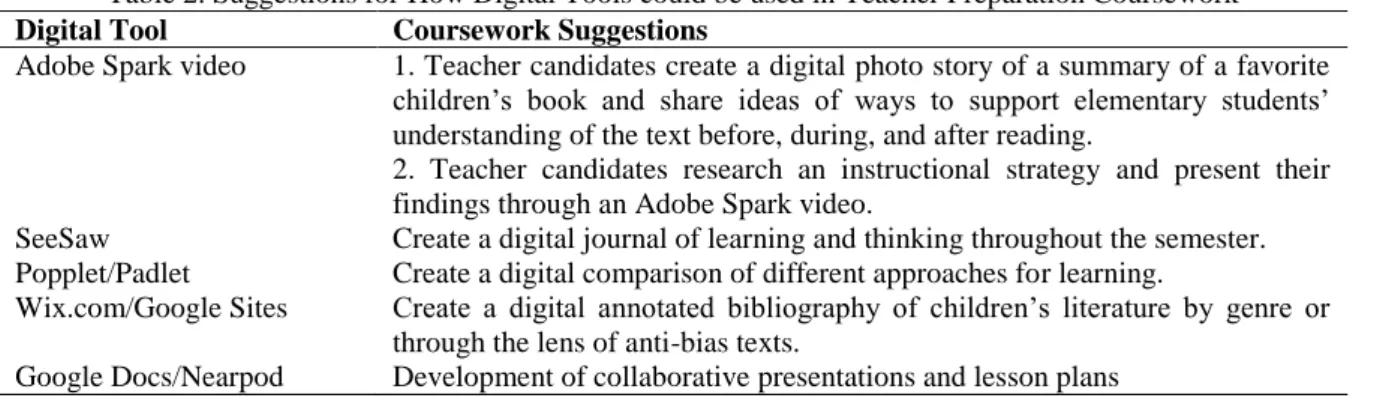
Table 2. Suggestions for How Digital Tools could be used in Teacher Preparation Coursework
Digital Tool Coursework Suggestions
Adobe Spark video 1. Teacher candidates create a digital photo story of a summary of a favorite children‟s book and share ideas of ways to support elementary students‟ understanding of the text before, during, and after reading.
2. Teacher candidates research an instructional strategy and present their findings through an Adobe Spark video.
SeeSaw Create a digital journal of learning and thinking throughout the semester. Popplet/Padlet Create a digital comparison of different approaches for learning.
Wix.com/Google Sites Create a digital annotated bibliography of children‟s literature by genre or through the lens of anti-bias texts.
Google Docs/Nearpod Development of collaborative presentations and lesson plans
Intentional support is necessary for PSTs as they learn to teach 21st century literacies. This study demonstrates how faculty in university classrooms can support PSTs for a technological future that is continuously changing.
References
Baran, E., Bilici, S., Sari, A., Tondeur, J. (2019). Investigating the impact of teacher education strategies on preservice teachers‟ TPACK. British Journal of Educational Technology, 50(1), 357-370.
Bergeson, K. & Beschorner, B. (2019). Pre-service teachers‟ use of the Technology Integration Planning Cycle:
Lessons learned [Paper presentation]. Literacy Research Association (LRA) Conference 2019, Tampa,
Florida.
Beschorner, B. & Kruse, J. (2016). Pre-service teachers‟ use of a Technology Integration Planning Cycle: A case study. International Journal of Education in Mathematics, Science, and Technology, 4(4), 258-271. Chai, C.S., Koh, J.H.L., & Tsai, C.C. (2010). Facilitating preservice teachers‟ development of technological,
pedagogical, and content knowledge (TPACK), Educational Technology & Society, 13(4), 63-73. Dincer, S. (2018). Are preservice teachers really literate enough to integrate technology in the classroom
practice? Determining the technology literacy level of preservice teachers. Education and Information
Technology, 23, 2699-2718.
Ertmer, P. (2005). Teacher pedagogical beliefs: The final frontier in our quest for technology integration?
Educational Technology Research and Development, 53(4), 25-39.
Ertmer, P. & Ottenbriet-Leftwich, A. (2013). Removing obstacles to pedagogical changes required by Jonassen‟s vision of authentic technology-enabled learning. Computers and Education, 64, 175-182. Farjan, D., Smits, A., & Voogt, J. (2019). Technology integration of pre-service teachers explained by attitudes
and beliefs, competency, access, and experience. Computers and Education, 130, 81-93.
Hutchison, A., Beschorner, B., & Crawford-Schmidt, D. (2012). Exploring the use of the iPad for literacy learning. The Reading Teacher, 66(1), 15-23.
Hutchison, A. & Colwell, J. (2015). Pre-service teachers‟ use of the technology integration
planning cycle to integrate iPads into literacy instruction. Journal of Research on Technology in Education, 48(1), 1-15.
Hutchison, A. & Reinking, D. (2011). Teachers‟ perceptions of integrating information and communication technologies into literacy instruction: A national survey in the United States. Reading Research
Quarterly, 46(4), 312-333.
Hutchison, A. & Woodward, L. (2014). A planning cycle for integrating digital technology into literacy instruction. The Reading Teacher, 67(6), 455-464.
International Literacy Association. (2018). Improving practices for literacy, learning, and justice: More than
just tools [Literacy leadership brief.] Newark, DE: Author.
International Society for Technology in Education. (2016). ISTE standards for students: A practical guide for
learning with technology. International Society for Technology in Education.
Koehler, M. & Mishra, P. (2008). Introducing TPCK. AACTE Committee on Innovation and Technology (Ed.),
The handbook of technological pedagogical content knowledge (TPCK) for educators (pp. 3-29).
Mahwah, NJ: Lawrence Erlbaum Associates.
Koehler, M. & Mishra, P. (2009). What is technological pedagogical content knowledge? Contemporary Issues
in Technology and Teacher Education, 9(1), 60-70.
Kopcha, T. (2012). Teachers‟ perceptions of the barriers to technology integration and practices with technology integration and practices with technology in under situated professional development. Computers and
Kumar, S. & Vigil, K. (2011). The net generation as pre-service teachers: Transferring familiarity with new technologies to educational environments. Journal of Digital Learning in Teacher Education, 27(4), 144-153.
Lei, J. (2009). Digital natives as pre-service teachers: What technology preparation is necessary? Journal of
Computing in Teacher Education, 25(3), 87-97.
Leu, D.J., Forzani, E., Rhoads, C., Maykel, C., Kennedy, C., & Timbrell, N. (2015). The new literacies of online research and comprehension: Rethinking the achievement gap. Reading Research Quarterly, 50(1), 1-23. Matherson, L., Wilson, E., & Wright, V. (2014). Need TPACK? Embrace sustained professional development.
The Phi Gamma Bulletin, 81(1),;45-52.
Merriam, S.B. (1998). Qualitative research and case study applications in education. San Francisco, CA: Jossey-Bass.
Miles, M. Huberman, M., & Saldana, J. (2014). Qualitative data analysis: A methods sourcebook (3rd ed.). Thousand Oaks, CA: Sage.
Mishra, P. (2019). Considering contextual knowledge: The TPACK diagram gets an upgrade. Journal of Digital
Learning in Teacher Education, 35(2), 76-78.
Mishra, P. & Koehler, M. (2006). Technological pedagogical content knowledge: A framework for integrating technology in teacher knowledge. Teachers College Record, 108(6), 1017-1054.
Mouza, C. (2016). Developing and assessing TPACK among pre-service teachers: A synthesis of research. In M. Herring, M. Koehler, & P. Mishra (Eds.), Handbook of Technological Pedagogical Content
Knowledge for Educators (169-190). New York: Routledge.
National Governors Association Center for Best Practices, Council of Chief State School Officers. (2010).
Common core state standards. Washington, DC: National Governors Association Center for Best
Practices, Council of Chief State School Officers.
Ozgun-Koca, S., Meagher, M., & Edwards, M. (2010). Preservice teachers‟ emerging TPACK in a technology-rich methods class. The Mathematics Educator, 19(2), 10-20.
Pittman, T. & Gaines, T. (2015). Technology integration in third, fourth and fifth grade classrooms in a Florida school district. Education Tech Research Development, 63, 539-554.
Reich, J. (2019). Teaching our way to digital equity: How can educators ensure that technology-rich learning experiences aren‟t restricted to the most privileged students. Educational Leadership, 76(5), 30-35. Rokenes, F.M. & Krumsvik, R.J. (2014). Development of student teachers‟ digital competence in education: A
literature review. Nordic Journal of Digital Literacy, 9.
Saldana, J. (2014). Coding and analysis strategies. In P. Leavy (Ed.), The Oxford Handbook of Qualitative
Research (p. 581-604). New York: Oxford University Press.
Schmidt, D., Baran, E., Thompson, A., Mishra, P., Koehler, M., & Shin, T. (2009). Technological pedagogical content knowledge (TPACK): The development and validation of an assessment instrument for preservice teachers. Journal of Research on Technology in Education, 42(2), 123-149.
Shenton, A. (2004). Strategies for ensuring trustworthiness in qualitative research projects. Education for
Informaiton, 22, 63-75.
Tallvid, M. (2016). Understanding teachers‟ reluctance to the pedagogical use of ICT in the 1:1 classroom.
Education and Information Technologies, 21, 503-519.
Tondeur, J., Roblin, N., van Braak, J., Fisser, P., & Voogt, J. (2013). Technological pedagogical content knowledge in teacher education: In search of a new curriculum. Educational Studies, 39(2), 239-243. Tondeur, J., Roblin, N., vanBraak, J., Voogt, J., & Prestridge, S. (2016). Preparing beginning teachers for
technology integration in education: Ready for takeoff? Technology, Pedagogy, and Education, 26(2), 157-177.
Tondeur, J., vanBraak, J., Sang, G., Voogt, J., Fisser, P., & Ottenbreit-Leftwich, A. (2012). Preparing pre-service teachers to integrate technology in education: A synthesis of qualitative evidence. Computers and
Education, 59(1), 134-144.
Yin, R. (2014). Case study research design and methods. Thousand Oaks, CA: Sage.
Author Information
Kristi Bergeson, PhD
Assistant Professor St. Cloud State University United States
Beth Beschorner, PhD
Associate Professor
Minnesota State University, Mankato United States