N N
N H S
O O
NH2
Cl
Chloroquinoxaline Sulphonamide (CQS)
N N
O O
O O
ASSURER
Cl
N N
O
O OH O
Cl
XK 469
MAGNETICALLY SEPARABLE CuFe
2O
4NANOPARTICLES: AN
EFFICIENT CATALYST FOR THE SYNTHESIS OF
QUINOXALINE DERIVATIVES IN TAP-WATER UNDER
SONICATION
Anshu Dandia,
[a]* Ruby Singh,
[a]Jyoti Joshi
[b]and Shuchi Maheshwari
[b]Keywords: Magnetically separable nanoparticles, quinoxaline derivatives, one-pot synthesis, ultrasound irradiation.
A simple and rapid synthetic methodology has been explored exhibiting the use of a magnetically separable copper ferrite (CuFe2O4)
nanocatalyst in water for the construction of medicinally privileged quinoxalines under sonication. High catalytic activity and ease of recovery using an external magnetic field are additional eco-friendly attributes of this catalytic system.
Corresponding Authors
Tel: +91-941407346; (0141) 2520301 Fax: 0091-141-2523637
E-Mail: [email protected]
[a] Department of Chemistry, University of Rajasthan, Jaipur, India
[b] Department of Chemistry, Malaviya National Institute of Technology, Jaipur, India
INTRODUCTION
During the last decade, there is a growing emphasis in synthetic chemistry towards the development1 of sustainable
and ecofriendly methodologies. The critical emphasis is towards the growth of green chemistry. The important aspect of green chemistry is the utility of environmentally friendly catalysts with easy recovery of the catalyst after the completion of the reaction.
Considering the above concept, nano catalysts have several benefits over the conventional catalytic systems used.2 Although, a significant improvement of catalytic
activity can be achieved by utilizing a catalyst in nanometer dimensions due to the increment of its surface area upto many folds. But the recovery of these tiny nanocatalysts from the reaction mixture is not easy. Most of the heterogeneous catalytic systems require a filtration or centrifugation step or a troublesome work-up of the reaction mixture to recover the nanocatalyst. Conventional techniques (such as filtration) are not efficient for the separation of nanocatalyst on account of the nano size of the catalytic particles. This drawback hampers the economics and sustainability of these protocols. To overcome the separation problem of the nano catalysts, magnetically active nano particles have recently emerged as viable alternatives to conventional nanomaterials for catalyst supports.3
Further, the application of sonochemical energy delivery4
has become an exciting field of research during the last few years. Ultrasonic irradiation arises from acoustic cavitation, which involves sequential formation, growth and explosive collapse of millions of vaporized bubbles in an irradiated liquid.5 Cavitation stimulates very high local temperature to
a very large amount of molecules fulfilling their requirement
to attain sufficient active energy for a reaction.6 Clearly,
reduction in reaction times, improved yields and suppression of side products, less severe reaction conditions,7 are some
added benefits of this emerging technology making synthetic protocols greener.
Nitrogen-containing heterocyclic molecules are the fundamental structural units studied both by the chemists and biologists. Quinoxalines are one of the important nitrogen-containing heterocyclic compounds which are the core constituents of many pharmacologically active agents.8
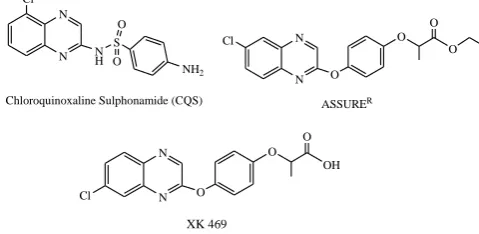
Quinoxaline drugs CQS (chloroquinoxaline sulfonamide) and XK469 were observed to have anticancer activity against solid tumors. (2-Quinoxalinyloxy)phenoxy propanoic acid derivatives, such as Assure are well known to act as herbicide (Fig. 1).9Quinoxaline structural motif is
found in several natural products and antibiotics such as echinomycin, leromycin, and actinomycin,10 which are
known to inhibit the growth of gram-positive bacteria. Compounds with quinoxaline core are used as allosteric dual Akt1 and Akt2 inhibitors,11a human cytomegalovirus
polymerase inhibitors,11b Src-Family Kinase p56Lck
inhibitors,11c SRPK-1 inhibitors,11d monoamine oxidase A
inhibitors.11e Some pyrrolo[1,2-a]quinoxaline derivatives are
found to be potent and selective 5-HT3 ligands.12 Therefore,
these compounds have distinguished themselves as heterocycles with chemical and biological significance. As a result of these significant properties, a variety of synthetic approaches have been reported for the synthesis of quinoxalines.
N N O
O H2N
H2N
10 mol % CuFe2O4, water
)))
1 2 3
The literature survey reveals several reports on the synthesis of quinoxalines using different catalysts such as amidosulfonic acid,13a p-TSA,13b Mn octahedral molecular
sieves,13c ionic liquid (Hbim)BF
4,13d Ga(OTf)3,13e SnCl2,13f
montmorillonite K-10,13g DMSO-PdI
2,13h oxalic acid,13i
Bi(III),13j Zr(DS)
4,13k ZrO2 mixed metal oxide,13l silica
bonded S-sulfonic acid,13m ZnI
2,13n silica supported SbCl3,13o
NbCl5,13p amberlyte-15,13q I2,13r Ru/C,13s.
Recently, several workers have also improved the synthesis of quinoxalines using some modified catalyst and reagent like clayzic,14a silicagel,14b Zr(IV) modified silica
gel,14c alumina,14d DABCO,14e Sm(OTf)
2,14f PEG-400 in
MW,14g PEG-water,14h glycerol,14i silica sulfuric acid in
PEG,14j CeCl
3.7H2O in glycerine,14k FeCl3 with
morpholine,14l triethylamine/O
2,14m Ga(ClO4)3 14n and
graphite14o.
Though the reported methods provide good yields, these methods suffer from several disadvantages such as tedious work-up, harsh and longer reaction times, critical product isolation procedures that limit their use under the aspect of environmentally benign processes. In view of this, there is still need to design a simple and recyclable catalytic system that promotes efficient one-pot synthesis of the functionalized quinoxaline derivatives.
During the course of our studies towards the synthesis of biologically active heterocycles and nanocatalysis,15 we
demonstrated the high catalytic activity of nano crystalline copper ferrite (CuFe2O4) for the synthesis of quinoxalines by
the reaction of phenanthrenequinone with o -phenylenediamine (Scheme-1) in aqueous media for the first time. The method has advantages of ambient reaction condition, environmentally acceptable solvent, high yields, simple work-up and easy catalyst recovery and reusability.
RESULTS AND DISCUSSION
The detailed characterization viz., Transmission Electron Microscopy (TEM), Scanning Electron Microscopy (SEM) and X-ray diffraction (XRD) analyses and synthetic experimental procedure of copper ferrite (CuFe2O4) has
been published in our previous paper.16 The quick recovery
of the catalyst prompted us to explore its potential use for the synthesis of quinoxalines.
To achieve suitable conditions, the reaction of phenanthrenequinone 1 and o-phenylenediamine 2 was chosen as the model reaction to find best conditions for synthesizing 3a in the presence of catalytic amount of copper ferrite (10 mol %) NPs. In our initial study for the optimization of the reaction conditions, a screening was performed with a variety of different solvents like ethanol, methanol, toluene, acetonitrile and water (Table 1). We noticed that the polar protic solvents afforded better yield than other solvents and the best catalytic activity of nano copper ferrite (10 mol %) was observed in aqueous medium (Table 1). As cavitation in water is most effective as compared to other solvents, the ultrasonic intensity in aqueous solutions is higher because of the low sound absorption coefficient,17 hence, the effect of nature of
solvent on the reactivity is predominant in the present reaction.
The catalytic activity of various catalysts including acidic and nano catalysts such as p-TSA, L-proline, sulfamic acid, ZnS and magnetically separable copper ferrite nanoparticles were employed to test their efficacy for the synthesis of 3
using water as solvent under sonication and the results are summarized in Table 2. It was clear that copper ferrite nanoparticles successfully promoted this reaction with high isolated yields. In the absence of catalyst, lower yield of product was obtained under sonication. Therefore, this catalyst appears to be superior to any of the other catalysts tested. Further, to check the role of ultrasound, the reaction was also carried out in boiling water using conventional heating in absence of sonication. In this case, lower yield was obtained with prolonged reaction time. Hence, there is a combined effect of ultrasound and copper ferrite nanoparticles to promote the present reaction.
The quantity of the catalyst plays a vital role for the formation of the desired product. In evaluating the effects of catalyst concentration, the best yields were found in the presence of just 10 mol % copper ferrite NPs. A higher amount of catalyst did not improve the results to an appreciable extent.
Scheme 1: Copper ferrite catalysed synthesis of quinoxalines
Table 1. Effect of different solvents in presence of copper ferrite NPs (10 mol %) under sonication.
Entry Solvent Time, min Yield %*
1. Water 20 95
2. Ethanol 60 80
3. Methanol 60 79
4. Toluene 60 74
5. Acetonitrile 60 82
*Isolated Yield
Table 2. Effect of different catalysts in aqueous medium under sonication
Entry Catalyst Time, min Yield %*
1. - 120 55
2. p-TSA 60 78
3. Sulfamic acid 60 83
4. L-proline 60 61
5. CuFe2O4 NPs (5 mol %) 60 89
6. CuFe2O4 NPs (10 mol %) 20 95
7. CuFe2O4 NPs (20 mol %) 20 95
CuFe2O4
O
O Ph
Ph
Fe3+ Fe3+
NH2
NH2
N
N Ph
Ph
H
H OH
HO
Fe3+ Fe3+
N
N Ph
Ph - 2H2O
1 2
4
5
O 2-O
2-Table 3. Synthesis of compounds (3a-f) under sonication
Entry Carbonyl compound Amine Product Time (min.) Yield (%)*
1
O
O
NH2
NH2
N N
20 95
2 O O NH2
NH2 N
N 18 93
3
O
O
NH2
NH2
N N
25 91
4
O
O
NH2
NH2
N N
30 89
5
O
O
N NH2
NH2
N N
N
28 92
6
O
O
N NH2
NH2
N N
N
22 90
*Isolated Yield
To generalize the scope and versatility of this protocol, different diketones and diamines are used for the synthesis of substituted quinoxalines (Table 3).
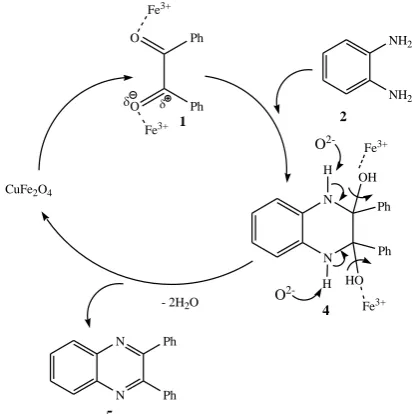
Scheme 2. Proposed mechanism for the synthesis of quinoxaline derivatives.
The proposed mechanism for the formation of quinoxaline derivatives is shown in scheme 2. Diketones stabilized with the interaction of Fe3+ by partial polarization of carbonyl
group reacts readily with o-phenylenediamine.
The resultant amino-1,2-diol undergoes base-induced dehydration on account of interaction of O2- to give
quinoxaline as the end product.
Here, oxide (O2-) of the copper ferrite nanoparticle acts as
a Lewis base and Fe3+ as a Lewis acid coordinates with the
carbonyl oxygen atom of diketones, thus increasing the electrophilicity of the carbonyl carbon.
EXPERIMENTAL SECTION
Melting points were determined on a Toshniwal apparatus. The purity of compounds was checked on thin layers of silica gel in various non-aqueous solvent systems, e.g.
benzene : ethylacetate (8 : 2), benzene : dichloromethane (9 : 1). 1H NMR and 13C NMR spectra were recorded on
Bruker 400 Avance III using DMSO-d6 at 400 and 100 MHz,
ultrasound-assisted reactions were carried out using ultrasonic processor probe system (Processor SONOPROS PR-1000MP, OSCAR ULTRASONICS made) operating at 20 KHz, 750 W with 6 mm/12 mm tip diameter probes and provided with an infrared sensor for temperature measurement.
Synthesis of quinoxaline and pyrido[2,3-b]pyrazine derivatives (3a-f).
A mixture of appropriate diketone 1 (1.0 mmol) and diamine 2 (1.0 mmol) in water (10 ml) were taken in a flask. The flask was attached to a 12 mm tip diameter probe and the reaction mixture was sonicated for the specified period at 50 % power of the processor at 4 s pulse mode. After the completion of the reaction, TLC was checked and the flask was detached from the probe and the content was transferred into a beaker. The formed product was filtered and washed well with water to afford the pure crystalline product.
Dibenzo[a,c]phenazine (3a)
Yield: 95 %; mp 229-231 °C (lit. 228-229 °C 13d); 1H
NMR (400 MHz, DMSO-d6) δ: 7.64 (d, 2H, J = 7.2 Hz), 7.89 (dd, 2H, J = 5.6, 2.4 Hz), 8.07-8.96 (m, 8H); 13C NMR
(100 MHz, DMSO-d6) δ: 121.3, 122.4, 122.8, 123.7, 124.6, 125.8, 126.9, 127.7, 128.5, 129.4, 130.6, 131.3, 133.4, 135.1, 141.8, 142.4, 143.2, 143.8; MS (ESI): m/z 281[M+H]+.
Acenaphtho[1,2-b]quinoxaline (3b)
Yield: 92 %; mp 228-230 °C (lit. 224 °C 14a); 1H NMR
(400 MHz, DMSO-d6) δ: 7.69-7.92 (m, 6H), 7.83 (dd, 2H, J = 6.0, 2.8 Hz), 8.05 (d, 2H, J = 7.6 Hz); 13C NMR (100
MHz, DMSO-d6) δ: 122.1, 122.7, 123.6, 124.8, 125.2, 125.9, 126.3, 126.8, 127.1, 128.3, 128.7, 130.4, 134.9, 140.2, 141.3, 141.9; MS (ESI): m/z 255[M+H]+.
2,3-Diphenylquinoxaline (3c)
Yield: 91 %; mp 125-127 °C (lit. 126-127 °C 14a); 1H NMR
(400 MHz, DMSO-d6) δ: 7.02-7.19 (m, 6H), 7.26-7.38 (m, 4H), 8.10 (d, 2H, J = 7.6 Hz), 8.17 (dd, 2H, J = 6.0, 3.2 Hz);
13C NMR (100 MHz, DMSO-d
6) δ: 124.1, 124.7, 125.2, 125.4, 126.3, 127.0, 128.1, 128.6, 129.7, 130.3, 132.6, 133.9, 134.5, 135.8, 141.7, 142.3, 152.3, 152.9; MS (ESI): m/z 283[M+H]+.
5,6-Diphenyl-2,3-dihydropyrazine (3d)
Yield: 93 %; mp 162-164 °C (lit. 160-162 °C 13i); 1H
NMR (400 MHz, DMSO-d6) δ: 3.56 (s, 4H), 7.08-7.19 (m, 6H), 7.38-7.67 (m, 4H); 13C NMR (100 MHz, DMSO-d
6) δ: 38.9, 39.4, 125.7, 126.2, 127.4, 127.9, 128.3, 128.8, 129.3, 130.1, 131.2, 158.7, 159.3; MS (ESI): m/z 235[M+H]+.
Dibenzo[f,h]-pyrido[2,3-b]quinoxaline (3e)
Yield: 89 %; mp 226-228 °C (lit. 228-229 °C13e); 1H NMR
(400 MHz, DMSO-d6), δ: 7.07 (d, 1H, J = 7.6 Hz), 7.18-7.26 (m, 4H), 7.39-7.47 (m, 4H), 7.86 (d, 1H, J = 7.0 Hz),
8.51 (d, 1H, J = 7.2 Hz); 13C NMR (100 MHz, DMSO-d
6), δ: 123.9, 124.2, 127.8, 129.1, 129.8, 130.4, 131.2, 132.5, 137.3, 138.6, 139.1, 141.2, 142.4, 145.0, 145.9, 157.5, 158.2; MS (ESI): m/z 282[M+H]+.
2,3-diphenylpyrido[2,3-b]pyrazine (3f)
Yield: 90 %; mp 136-138 °C (lit. 135-136 °C13q); 1H NMR
(400 MHz, DMSO-d6), δ: 7.18-7.23 (m, 4H), 7.40-7.48 (m, 4H), 7.71 (d, 1H, J = 7.6 Hz), 7.83 (t, 1H, J = 8.0 Hz), 8.65 (d, 1H, J = 7.2 Hz); 13C NMR (100 MHz, DMSO-d
6), δ: 121.3, 123.6, 124.5, 127.8, 131.6, 131.8, 132.4, 135.7, 136.6, 139.1, 139.4, 139.8, 141.0, 142.3, 153.8, 154.6, 155.7; MS (ESI): m/z 284[M+H]+.
CONCLUSION
In conclusion, we have developed a novel, efficient and eco-friendly synthetic strategy for the synthesis of quinoxaline derivatives from various diketones and 1,2-diamines using magnetically separable copper ferrite (CuFe2O4) nanocatalyst. Use of water as a reaction medium
rendered this procedure cost-effective and environmentally benign. In addition to its efficiency and simplicity, this method provided high yields of biologically potent quinoxalines in shorter reaction time with the use of ultrasonic irradiation.
ACKNOWLEDGEMENTS
Financial assistance from the C.S.I.R, [CSIR, F. No. 02 (0143)/13/EMR-II], New Delhi is gratefully acknowledged and two of authors also thankful for providing SRA and JRF. We are also thankful to Central Drug Research Institute (CDRI), Lucknow and SAIF, Cochi for spectral analyses.
REFERENCES
1Zonouz, A. M., Eskandari, I., Moghani, D., Chem Sci Trans.2012,
1, 91.
2Zhang, Z.-H., Lu, H.-Y., Yang, S.-H., Gao, J.-W., J. Comb. Chem.
2010, 12, 643 and references therein.
3Polshettiwar, V., Baruwati, B., Varma, R. S., Chem. Commun.
2009, 1837.
4Singh, B. S., Lobo, H. R., Pinjari, D. V., Jarag, K. J., Pandit, A.
B., Shankarling, G. S., Ultrasonics Sonochemistry2013, 20, 633.
5Gouvêa, D. P., Bareño, V. D. O., Bosenbecker, J., Drawanz, B. B.,
Neuenfeldt, P. D., Siqueira, G. M., Cunico, W., Ultrasonics Sonochemistry2012, 19, 1127.
6Zang, H., Zhang, Y., Zang, Y., Cheng, B.-W., Ultrasonics
Sonochemistry2010, 17, 495.
7Ocampo, R. A., Koll, L. C., Mandolesi, S. D., Ultrasonics
Sonochemistry2013, 20, 40.
8Kotharkar, S. A., Shinde, D. B., Bioorg. & Med. Chemistry. Lett.
2006, 16, 6181 and references therein.
9Kumbhar, A.; Kamble, S.; Barge, M.; Rashinkar, G.; Salunkhe, R.
Tetrahedron Lett. 2012, 53, 2756.
10Meshram, H. M., Kumar, G. S., Ramesh, P., Reddy, B. C.,
11(a) Zhao, Z., Robinson, R. G., Barnett, S. F., -Jones, D. D., Jones,
R. E., Hartman, G. D., Huber, H. E., Duggana, M. E., Lindsley, C. W., Bioorg. & Med. Chemistry. Lett.2008, 18, 49; (b) Tanis, S. P., Strohbach, J. W., Parker, T. T., Moon, M. W., Thaisrivongs, S., Perrault, W. R., Hopkins, T. A., Knechtel, M. L., Oien, N. L., Wieber, J. L., Stephanski, K. J., Wathen, M. W., Bioorg. & Med. Chemistry. Lett.2010, 20, 1994; (c) Chen, P., Norris, D., Iwanowicz, E. J., Spergel, S. H., Lin, J., Gu, H. H., Shen, Z., Wityak, J., Lin, T. -A., Pang, S., Fex, H. F. D., Pitt, S., Shen, D. R., Doweyko, A. M., Bassolino, D. A., Roberge, J. Y., Poss, M. A., Chen, B. -C., Schievend, G. L., Barrisha, J. C., Bioorg. & Med. Chemistry. Lett. 2002, 12, 1361; (d) Szekelyhidi, Z., Pato, J., Waczek, F., Banhegyi, P., -Barakonyi, B. H., Eros, D., Meszaros, G., Hollosy, F., Hafenbradl, D., Obert, S., Klebl, B., Keri, G., Orfi, L., Bioorg. & Med. Chemistry. Lett.2005, 15, 3241; (e) Hassan, S. Y., Khattab, S. N., Bekhit, A. A., Amer, A.,
Bioorg. & Med. Chemistry. Lett.2006, 16, 1753.
12(a) Campiani, G., Cappelli, A., Nacci, V., Anzini, M., Vomero,
S., Hamon, M., Cagnotto, A., Fracasso, C., Uboldi, C., Caccia, S., Consolo, S., Mennini, T., J. Med.Chem.1997, 40, 3670; (b) Campiani, G., Morelli, E., Gemma, S., Nacci, V., Butini, S., Hamon, M., Novellino, E., Greco, G., Cagnotto, A., Goegan, M., Cervo, L., Valle, D. F., Fracasso, C., Caccia, S., Mennini, T., J. Med. Chem.1999, 42, 4362.
13(a) Li, Z., Li, W., Sun, Y., Huang, H., Ouyang, P., J.
Heterocyclic. Chem. 2008, 45, 285; (b) Shi, D., Dou, G.,
Synth. Commun. 2008, 38, 3329; (c) Sithambaram, S., Ding, Y., Li, W., Shen, X., Gaenzler, F., Suib, S. L., Green Chem.
2008, 10, 1029; (d) Potewar, T. M., Ingale, S. A., Srinivasan, K. V., Synth. Commun. 2008, 38, 3601; (e) Cai, J., Zou, J., Pan, X., Zhang, W., Tetrahedron Lett. 2008, 49, 7386; (f) Shi, D., Dou, G., Ni, S., Shi, J., Li, X., J. Heterocyclic. Chem. 2008, 45, 1797; (g) Huang, T., Wang, R., Shi, L., Lu, X., Catal. Commun. 2008, 9, 1143; (h) Mousset, C., Provot, O., Hamze, A., Bignon, J., Brion, J., Alami, M., Tetrahedron 2008, 64, 4287; (i) Hasaninejad, A., Zare, A., Mohammadizadeh, M. R., Shekouhy, M.,
ARKIVOC 2008, xiii, 28; (j) Yadav, J. S., Reddy, B. V. S., Premalatha, K., Shankar, K. S., Synthesis 2008, 23, 3787; (k) Hasaninejad, A., Zare, A., Zolfigol, M. A., Shekouhy, M.,
Synth. Commun. 2009, 39, 569; (l) Ajaikumar, S., Pandurangan, A., Applied Catal., A: General 2009, 357, 184; (m) Niknam, K., Saberi, D., Mohagheghnejad, M., Molecules 2009, 14, 1915; (n) Sangshetti, J. N., Kokare, N. D., Shinde, D. B., Russ. J. Org. Chem. 2009, 45, 1116; (o) Darabi, H. R., Aghapoor, K., Mohsenzadeh, F., Taala, F., Asadollahnejad, N., Badiei, A., Catal. Lett. 2009, 133, 84; (p) Hou, J., Liu, Y., Zhang, Z., J. Heterocyclic Chem. 2010, 47, 703; (q) Liu, J., Liu, J., Wang, J., Jiao, D., Liu, H., Synth. Commun. 2010,
40, 2047; (r) Bandyopadhyay, D., Mukherjee, S., Rodriguez, R. R., Banik, B. K., Molecules 2010, 15, 4207; (s) Akkilagunta, V. K., Reddy, V. P., Kakulapati, R. R., Synlett 2010, 2571.
14(a)Dhakshinamoorthy, A., Kanagaraj, K., Pitchumani, K.,
Tetrahedron Lett. 2011, 52, 69; (b)Nandi, G. C., Samai, S., Kumar, R., Singh, M. S., Synth. Commun. 2011, 41, 417; (c) Sharma, R. K., Sharma, C., Catal. Commun. 2011, 12, 327; (d) Jafarpour, M., Rezaeifard, A., Danehchin, M., Applied Catal., A: General 2011, 394, 48; (e) Qi, C., Jiang, H., Huang, L., Chen, Z., Chen, H., Synthesis 2011, 387; (f) Raghuveerachary, P., Devanna, N., Asian J. Chem. 2011, 23, 1628; (g) Zhang, X., Wang, J., Bai, L., Synth. Commun.
2011, 41, 2053; (h) Chavan, H. V., Adsul, L. K., Bandgar, B. P., J. Chemical Sciences2011, 123, 477; (i) Bachhav, H. M., Bhagat, S. B., Telvekar, V. N., Tetrahedron Lett. 2011, 52, 5697; (j) Huang, T., Jiang, D., Chen, J., Gao, W., Ding, J., Wu, H., Synth. Commun. 2011, 41, 3334; (k) Narsaiah, A. V., Kumar, J. K., Synth. Commun. 2012, 42, 883; (l) Song, W., Liu, P., Lei, M., You, H., Chen, X., Chen, H., Ma, L., Hu, L.,
Synth. Commun. 2012, 42, 236; (m) Zhang, C., Xu, Z., Zhang, L., Jiao, N., Tetrahedron 2012, 68, 5258; (n) Pan, F., Chen, T., Cao, J., Zou, J., Zhang, W., Tetrahedron Lett.
2012, 53, 2508; (o) Kadam, H. K., Khan, S., Kunkalkar, R. A., Tilve, S. G., Tetrahedron Lett.2013, 54, 1003.
15(a) Dandia, A., Jain, A. K., Laxkar, A. K., Bhati, D. S.,
Tetrahedron 2013, 69, 2062; (b) Dandia, A., Laxkar A. K., Singh, R., Tetrahedron Lett.2012, 53, 3012; (c) Dandia, A., Jain, A. K., Bhati, D. S., Tetrahedron Lett, 2011, 52, 5333; (d) Dandia, A., Singh, R., Bhaskaran, S., Samant, S. D.,
Green Chem. 2011, 13, 1852; (e) Dandia, A., Singh, R., Bhaskaran, S., Ultrason. Sonochem. 2011, 18, 1113; (f) Dandia, A., Singh R., Laxkar, A., J. Serb. Chem. Soc. 2011,
76, 1339; (g) Dandia, A., Singh, R., Bhaskaran, S., Ultrason. Sonochem. 2010, 17, 399; (h) Dandia, A., Parewa, V., Gupta, S. L., Rathore, K. S., Journal of Molecular Catalysis A: Chemical2013, 373, 61; (i) Dandia, A., Parewa, V., Rathore, K. S., Catal. Commun.2012, 28, 90.
16Dandia, A., Jain A. K., Sharma, S., RSC Adv.2013, 3, 2924.
17(a) Mason, T. J.; Lorimer, J. P. Sonochemistry: Theory,
Application and Uses of Ultrasound in Chemistry, John Wiley and Sons, New York 1988; (b) Mason,T. J. Ultrason. Sonochem. 2003, 10, 175; (c) Mason, T. J.; Paniwnyk, L.; Lorimer, J. P. Ultrason. Sonochem.1996, 3, 253.