International Journal of Advances in Management and Economics
Available online at:
www.managementjournal.info
RESEARCH ARTICLE
System of Information of Costs in the Brazilian State Executive:
Evaluation of the Reality of Implantation
Bianca dos Santos Costa
1,Fabiano Maury Raupp
1*,Julio da Silva Dias
11School of Administration and Management, of the State University of Santa Catarina (ESAG / UDESC).
Brazil.
This study received financial support from the Foundation for Research and Innovation Support of the State of Santa Catarina - FAPESC, Brazil.
*Corresponding Author: E-mail: [email protected]
Abstract:
The objective of this study was to evaluate the reality of the implementation of the cost information system by Brazilian state executives. A descriptive research was carried out, through a survey study, with a quantitative and qualitative approach. In the data collection, questionnaires were sent by e-mail in June 2017. Twenty-four respondents, representing 88.88% of the population, were returned. The results show that only six (25%) states have started the implantation process. Among the most cited difficulties, the emphasis was on the lack of technical team members and the need for financial resources. In terms of contributions, the possibility of obtaining more reliable information for decision-making, greater economy and control of public resources and efficiency in government results was highlighted.Keywords: Cost information system. Public sector. State executives.
Article Received: 01 Aug. 2018 Revised: 15 Aug. 2018 Accepted: 22 Aug. 2018
Introduction
With the advent of the International Public Sector Accounting Standard (IPSAS), government institutions had to converge their accounting practices to the new standards in force. To assist in this process, the Ministry of Finance published Portaria n. 184, dated August 25, 2008, establishing the guidelines to be observed by public entities regarding the procedures, practices, preparation and disclosure of the financial statements, in order to make them convergent with the international accounting standards applied to the public sector.
In this sense, the Federal Accounting Council -CFC published in 2008 the Brazilian Accounting Standards Applied to the Public Sector - NBCASP - which aims to regulate the standards that should be adopted by all accounting professionals in Brazil, prioritizing convergence of Brazilian Accounting Standards to international standards. NBC T 16.2 - Stockholders' Equity and Accounting Systems, approved by Resolution n. 1.129 / 2008, and subsequently amended by CFC Resolutions no. 1,268 / 2009 and n. 1.437 / 2013, referred to the use of a cost subsystem as a new modality of accounting information system for recording information.
A NBC T 16.11 ̶ Public Sector Cost Information System (SICSP), approved by Resolution n. 1,366 / 11 of the CFC, presented more effective proportions on the concept, object, objectives and basic rules for measuring and disclosing costs in the public sector.
This same rule establishes that the use of public sector cost information system assists in the registration, processing and disclosure of the costs of goods and services that are produced and offered to society by the public entity. In view of the above on cost
information systems and wanting to
investigate the adhesion of this tool by state organizations, the following question arises: What is the reality of the implementation of the cost information system in the executive branch of Brazilian states? In order to answer the research question, this study aims to evaluate the reality of the implementation of the cost information system by Brazilian state executives.
The justification for this research is to verify if the States have already established a line of
action with regard to the effective
will be a system that may assist in government control activities, since it may contribute to the planning of the actions, enabling greater transparency in the allocation of public resources, as well as greater efficiency and cost-effectiveness of the services rendered.
The obligation to implement a cost system by all entities of the federation has been established since 2011 by the rules of Administrative Rule STN n. 406/2011, in which it establishes that each entity establishes a schedule of actions that make it possible to inform the managers and potential stakeholders of the cost system, which is why this research seeks to present the experiences pointed out in each State, since everyone should have already started proceedings by
virtue of the prescribed period. From the
theoretical perspective, it is verified that studies are still incipient that evaluate the adoption of cost information systems for the state public administration in Brazil.
As Drehmer and Raupp [1] argue, there is a gap in the development of thesis and dissertation studies on public sector costs in areas of urban mobility, basic sanitation, and in federal, state and local government bodies. Municipal. In the research carried out by these authors, in which the objective was to identify the origin and content of knowledge
production in national theses and
dissertations on public sector costs, they concluded that no studies were found in direct administration bodies state, and one and two jobs were located respectively in the federal and municipal administration.
We can see the scarcity of theoretical-empirical studies in the national literature on the subject. To this end, this study will contribute to the state management units, as well as to other public entities that are in the process of implementing this cost system, showing the gaps that need to be improved, as well as alerting to the critical points and positive experiences observed.
Theoretical Framework
Public Accounting and Public Cost Information Systems
Accounting applied to the public sector is the branch of accounting that has as object of study the public patrimony. NBC T 16.1 establishes that accounting principles and accounting standards related to the equity control of public sector entities are applied in
the process of generating information on the results achieved and on the budgetary, economic, financial and physical aspects of equity of the public sector entity and its changes [2]. The main purpose of public accounting is to provide adequate information about public assets so that it can support the decision-making process, provide adequate accountability and provide the necessary support for the instrumentalization of social control [3].
In order to meet its objective of providing adequate and useful information to its users, accounting uses a single chart of accounts, composed of accounting accounts, organized in a systematic way to be used according to the records of the acts and facts administrative
procedures. With the convergence of
accounting practices in force with the standards set forth in international standards, the chart of accounts had to be improved, causing changes in accounting systems previously in force.
The resolution of CFC n. 1,129 / 2008, which approved NBC T 16.2 - Equity and accounting systems - referenced the changes in accounting systems, excluding the financial subsystem and incorporating the cost subsystem as a new modality of accounting
information system[4]. The issue of costs has
been discussed long before 2008, but through this resolution is that the mandatory status for all public sector entities has been retaken. According to Drehmer, Raupp and Tezza [5], the publication of NBC T 16.2 rectified the mandatory nature established by Federal Law n. 4.320 / 1964, by Decree Law no. 2,829 / 1998 and by Complementary Law n. 101/2000. The need to create a cost system has been in place since the creation of Federal Law n. 4,320, dated March 17, 1964. Articles 85 and 99 of the same law have the following
description: Art. 85. The accounting services
shall be organized in such a way as to allow
the monitoring of the budget execution, the of
the composition of assets, determination of costs of industrial services, collection of general balance sheets, analysis and interpretation of economic and financial
results. Art. 99.
Public industrial services, although not organized as a public or municipal company, will keep special accounting for determination of costs, income and results, without prejudice to the common financial and patrimonial
Thus, public administration has been in place since 1964, raising the question of special accounting for the determination of costs in industrial public services, but it did not
address the issue of mandatory
implementation or attribution to the managerial purpose. The publication of Decree Law no. 200, of February 25, 1967, aimed at an administrative reform of the Federal Administration, established in its art. 79 the creation of more managerial accounting for the public sector, showing that the costs of services should be determined by accounting to demonstrate management results.
This art.79 were regulated by Presidential Decree n. 93,872 of December 23, 1986, which in art. 137 detailed how accounting should assess the cost of projects and activities in order to evidence management results, pointing out punishments to those who did not
demonstrate the information. N Decree n.
2,829, dated October 29, 1998, in which it establishes the measures for the preparation and execution of the Pluriannual Plan and of the budgets of the Union, the mention of costs is made in art. 4, presenting the need to adopt a management model that includes the control of deadlines and costs in each program.
Already by means of the publication of the Law of Fiscal Responsibility of n. 101 of May 4, 2000, the legal obligation to produce and use cost information was reinforced. The art. 50, paragraph 3 of the RFL states that all Public Administration must maintain a cost system that allows the evaluation and monitoring of
budgetary, financial and equity management.
Aiming at a larger approach to costs in public administration is that the Federal Accounting Council has issued NBC T 16.11 - Public Sector Cost Information System, approved by CFC Resolution no. 1,366 / 2011, which in addition to establishing a series of concepts and rules for measurement and disclosure of costs in the public sector, also presented the objectives of a subsystem of cost information,
Which Are Represented in the Five Items Below?
Measure, record and evidence the costs of the
entity's products, services, programs, projects, activities, actions, organs and other objects;
Support the evaluation of results and
performances, allowing the comparison between the entity's costs and the costs of other public entities, stimulating the
improvement of the performance of these entities;
Support decision making in processes, such
as buying or renting, producing in-house or outsourcing certain goods or services;
Support planning and budgeting functions,
providing information that allows for more realistic projections based on incurred and projected costs; and
Support programs to control costs and
improve the quality of expenditure.
The National Treasury Secretariat for the mandatory implementation of the Public Sector Cost Information Subsystem (SICSP) by the Federal, State, Federal District and Municipalities, has issued Portaria STN n. 406/2011, first amended by Ordinance STN no. 828/2011 and later by the STN Ordinance n. 231 of March 29, 2012, establishing the deadlines for the implementation of the accounting procedures for equity and determined that a schedule of actions to be adopted by all entities of the federation by the end of 2014 should be made.
Managerial Analysis of the public Cost Information System
The quest for increasing the efficiency of the public sector has demanded continuous transformations in the way of administering public organizations. Public managers are aware that society is increasingly concerned with how public spending is performed,
requiring greater transparency in
government actions, as well as charging for improvements in the quality of services provided. Alonso [7] comments that the correct calculation of the costs of the services and the advertising of them are important instruments of social control that allow users and auditors an efficient evaluation of the services provided.
whether it is a public, private or social organization [8].
The cost information system was formulated not only to meet the needs of the legislation, but also to enable adequate use of the information and data generated. According to Alonso [7], knowledge of the cost of public services represents a fundamental issue in order to achieve an efficient allocation of resources and that the greatest indicator of inefficiency would be the lack of knowledge of these costs. In this way, knowledge of an organization's costs can prove to be an important performance indicator.
The structuring of the cost system by the public administration also represents a way for public managers to comply with the constitutional principle of efficiency. This principle was introduced in the Brazilian Constitution in 1998, through the advent of Constitutional Amendment n. 19/1998, in which he submitted a new wording to art. 37 of the Constitution: "The direct and indirect public administration of any of the Powers of the Union, States, Federal District and Municipalities shall obey the principles of legality, impersonality, morality, publicity and efficiency.
“From the introduction of the principle of
efficiency, the Brazilian public
administration started to present a more managerial model of administration, no longer dominating the bureaucratic model. Knowing the cost of public services represents an advance in the efficient management of resources, as well as contributing with the manager in the decision making and in a better use of public money.
Methodological Procedures
This research is classified as objective, as descriptive, since its purpose is to describe the perception of those involved in the projects of implementation of cost system in the governments of the States of Brazil, providing an overview about the use and use of this type of accounting system. According to Andrade [9] in this type of research, the facts are observed, recorded and analyzed so that the researcher does not interfere with the information generated.
In terms of procedures, a survey was developed. According to Gil [10], this type of
research brings as a characteristic the direct interrogation of the individuals whose behavior one wishes to be aware of. Regarding the approach to the problem, the research was characterized as qualitative and quantitative, since its main focus is to measure and present in which phase of operation the Brazilian States are in relation to the execution of the cost system implementation process, describing the main difficulties and contributions arising from this appropriation of costs in the public sector.
For Gonçalves and Meirelles [11] the data in the qualitative research are of an interpretive and semantic nature, whereas in the quantitative the data are displayed by
quantitative metrics, presenting the
mathematical language as support.
The target population is understood by those responsible for the process of implementation of cost system of the 27 States of Brazil. The list of persons responsible and their respective electronic addresses were found on the digital platforms of each State, as well as
requested by telephone when this
information was not available. For each state, a single questionnaire was sent as a data collection instrument.
The content of the questionnaire was elaborated based on the work of Drehmer, Raupp and Tezza [1] and the questions divided in 4 topics: survey of the profile of the interviewee; perception of the interviewees regarding difficulties in using / implementing the SICSP; perception of those responsible for the characteristics / contributions of the implementation of the SICSP; and phases of execution / operation of the cost systems in each State. The questionnaires were sent by email in June 2017, with a return of 24
representatives, obtaining a very
representative sample of 88.88% of the study population.
which they were delivered. Three types of closed questions were also used. The first type was multiple-choice closed questions, in which they had the option of answering the item "others", in case the interviewee did not agree with the answers presented.
In the second type, the closed question was presented on the basis of a five-level multiple choice scale, in which the interviewee had to position himself in relation to two extreme characteristics about the questioned item. And for the last type of closed question a list of characteristics was presented for the question and the interviewee should assign the level of importance that he considers for each one. The analysis of the collected data was done through descriptive statistics, using the Google Docs platform and spreadsheets as an aid. The results were presented according to the structure and sequence of the questions organized in the instrument of data collection.
Search Results
In order to identify which states would be represented in the research, a mandatory question was initially formulated, so that
each respondent could indicate the
alternative corresponding to his own State. Through this question it was also possible to find out which states did not return the questionnaires sent. Of the 27 States that make up the Federative Republic of Brazil, only the States of Maranhão, Piauí and Pará did not respond to the questionnaire.
Therefore, the remaining 24 States that represent the sample are: Acre, Alagoas, Amapá, Amazonas, Bahia, Ceará, Federal District, Espírito Santo, Goiás, Mato Grosso, Mato Grosso do Sul, Minas Gerais, Paraíba, Paraná, Pernambuco, Rio Rio Grande do Norte, Rio Grande do Sul, Rondônia, Roraima, Santa Catarina, São Paulo, Sergipe and Tocantins.
Profile of Respondents
In the first topic, the respondents should inform the time of action in the public administration. The results were evidenced by means of Figure 1.
.
Figure 1: Time of operation Source: Research data
It was observed that 54.17% of respondents worked more than 15 years in public
administration, representing a very
expressive percentage. If we consider the percentage of those who work more than 10 years, this representation reaches 83.40%. This evidences a certain experience on the part of these servers in the works carried out before the state public administration. From the results, it is possible to assume that the majority of respondents were already in
public administration during the period of changes in public accounting, mainly the requirements established by NBC T 16.11, making interviewees qualified to answer questions about difficulties and possible contributions related to implementation of a public cost information system. After identifying the time of action, the respondents should indicate the position occupied in the government of the State. Table 1 shows the results:
Table 1: Position held
Formation Absolute Frequency Relative Frequency %
Contador 16 66,67%
Accounting technician 0 0%
Administrator 0 0%
EconomistOutro 0 8 33,33% 0%
Total 24 100%
It was observed that the majority of respondents (66.67%) are accountants. Of the total 33.33% who registered the option "Other", 20.83% are fiscal auditors, 8.33% are Analysts and 4.17% representing only one respondent is Computer Technician. This analysis shows that not only the accountants are responsible for the implementation of this system in the States, since other servers also participate in this process. However, as
expected, responsibility for the process of cost system implementation in most states is being attributed to full-time employees in the position of Accountant, since the legislation and rules for implementation come from public accounting. Regarding the level of schooling, it was observed that most of the respondents present a level of schooling beyond the upper course, as shown in Table 2.
Table 2: Academic education
Formation Absolute Frequency Relative Frequency %
Postgraduate Diploma - Doctorate 0 0,00%
Postgraduate Diploma - Master 4 16,67%
Postgraduate - Specialization 16 66,67%
University Graduate 2 8,33%
Other 2 8,33%
Total 24 100%
Source: Research data
Most of the interviewees have specialization (66.67%), followed by 16.67% who have a Masters degree. It was observed that no interviewee has a PhD and 8.33% only have a degree. Two interviewees indicated the option "Other", informing the training as a Database Administrator and Accounting Technician. These results indicate that most of the interviewees invested in this area seek
to improve and update their knowledge, considering the minimum degree for investiture in public office. Figure 2 contemplates the results obtained in the last issue of this topic, whose purpose was to
identify the respondent's perception
regarding the state's perspective on the implementation of the Public Sector Cost Information System.
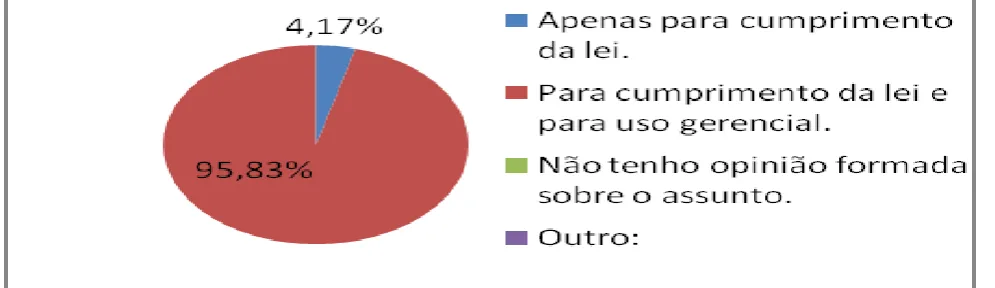
Figure 2: Perspective on SICS deployment Source: Research data
The answers were almost unanimous in the assertion, showing that in the interviewee's perception, the main reason for the implementation of the SICSP by the State tends to be used for compliance with the law and for management use (95.83%). Only one respondent considered to be relevant only for compliance with the law (4.17%). And no interviewee pointed out the option that says they have no opinion on the subject (0%). This assertion demonstrates that the servers involved in this process already realize that this new tool will not only serve to comply with current legislation, but will also be
useful for managerial use. However, the expressive percentage of this question does not correspond to the level of implementation of this system at the state level, since a large number of States have not even started studies for future implementation of the system, as will be verified later.
Difficulties of Use / Implementation of the SICSP
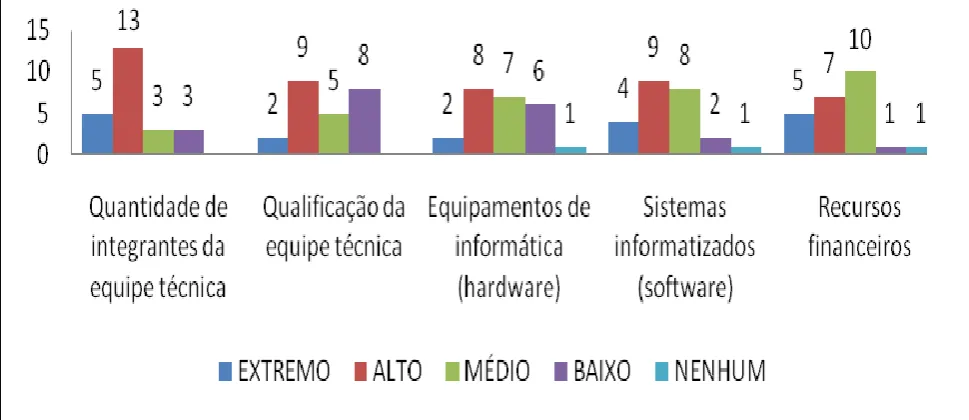
Figure 3: Degree of difficulty in the implementation / use of the SICSP Source: Research data
The number of members of the technical team represented, on average, the most difficult factor in the process of implementing a cost system in the States, followed by the difficulty related to financial resources. Through an open question, some respondents confirmed this assertion by attributing intense server turnover to public agencies and entities as one of the main reasons. On the other hand, the item that presented the least degree of difficulty among those presented were those related to computer equipment (hardware) and technical team qualification.
The results confirm those found in the research by Drehmer, Raupp and Tezza [1], which, when investigating the degree of difficulty in the implantation of the SICSP in municipalities of Santa Catarina, identified an even greater level of difficulty related to the quantitative of personnel and likewise the smaller degree of difficulty among those listed was related to computer equipment. However, the difficulties in computerized systems (software) presented a relative complexity, since in the open question the
following observations were presented: "The major difficulty faced in implementing a cost system is that the source systems of the integrations are structured differently from one another." (01/01/06/2017) "The existing system today does not have the performance capability to receive an implementation with this degree of complexity, so before we have to improve the current performance or get a new one."
(E12, 06/09/2017) "The need to integrate the corporate systems of assets, materials, HR, among others to the state accounting system." (E20, 06/27/2017) This result helps to explain the low percentage of SICSP adherence by the interviewed states, however, in addition to those included in this study; other obstacles may be hindering the implementation of the SICSP, once the deadline for mandatory implementation has expired. In Figure 4, some answers were given given the open question, which had as objective to identify other difficulties observed by the representatives of each State, besides those presented in the previous question.
"No effective mandatory adoption of the SICSP by the state secretariats." (E10, 06/09/2017) "There is a lack of cost culture in the public sector, which is happening all over the country." (E11, 06/09/2017)
"The main difficulty is defining an optimal cost methodology for the Brazilian Public Administration - It is necessary to deepen this study." (E18, 06/26/2017)
"Rotativity of the servers in the organs and entities, as well as in the costs team. This area is not much appreciated; people do not spend much time in this kind of work, perhaps because they do not see expressive results in the short term. "(E7, 06/06/2017)
"Lack of knowledge of managers about the real usefulness of the Cost System, which generates the lack of interest on the part of the managers." (E16, 20/07/2017)
the National Treasury Secretariat (STN), which may represent a change in the scope of the cost system in the future." (E4, 06/05/2017)
"Process of discontinuity in the development / implantation of the patrimonial control system of the state that will provide the data of consumption by Center of Costs, essential information for the calculation of costs." (05/05/06/2017)
"An intense rotation of the servers that work in the planning area." (E17, 06/26/2017)
"The institutional support could be more effective for the implementation of the Cost Information System." (E6, 06/05/2017)
"Conceptual issues that should be discussed at the national level for the implementation of cost systems." (E22, 06/30/2017)
Figure 4: Difficulties for the implementation of the SICSP Source: Research data
It can be seen, therefore, that the implementation of a cost system is quite complex and that each State has its specific
characteristics facing the difficulties
presented. The lack of standardization and knowledge of the servers on the real usefulness of the cost systems is highlighted in a general way, retaking the need to invest in the qualification of the personnel that form the technical team responsible for this process in the States, so that they can improve and develop methods and policies
that will contribute to the effective implementation of this cost information system.
Contributions from the Implementation of the SICSP
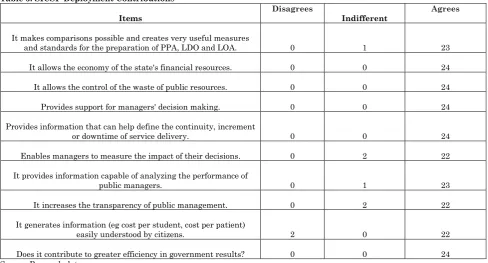
This topic refers to the question that sought to verify the aspects related to the possible contributions observed by the respondents in the process of cost system implementation, Table 3 shows the results obtained.
Table 3: SICSP Deployment Contributions
Items Disagrees Indifferent Agrees
It makes comparisons possible and creates very useful measures
and standards for the preparation of PPA, LDO and LOA. 0 1 23
It allows the economy of the state's financial resources. 0 0 24
It allows the control of the waste of public resources. 0 0 24
Provides support for managers' decision making. 0 0 24
Provides information that can help define the continuity, increment
or downtime of service delivery. 0 0 24
Enables managers to measure the impact of their decisions. 0 2 22
It provides information capable of analyzing the performance of
public managers. 0 1 23
It increases the transparency of public management. 0 2 22
It generates information (eg cost per student, cost per patient)
easily understood by citizens. 2 0 22
Does it contribute to greater efficiency in government results? 0 0 24
Source: Research data
Through the answers shown in Table 3, it was verified that there was a domain in the agreement of the statements, revealing that
the respondents involved in the
implementation of the SICSP believe in the potential benefits and contributions that can be derived from the effective use of this management tool and that were presented in the question. Of the characteristics shown as contributions, five items stand out that did
The only assertion that presented responses of disagreement with the set of contributions presented was the question in which it pointed out that the information generated by the SICSP could be easily understood by the citizens, providing knowledge of the cost per student or a patient, for example.
It is possible that this understanding is not yet fully defined in the general culture of the individuals, since this approach of costs for
the public sector represents a novelty attributed both to some public managers and to the population in general, being necessary to make new policies that bring the real utility of this system. An open question was put in this session to investigate other
possible contributions observed by
representatives of each State other than those identified in the previous question. Some of these responses are selected, as shown in Figure 5.
"The Cost System can create standardized measures that allow the comparison of costs (costs) between different management units." (E4, 06/05/2017)
"Public cost information should be used as a reference for responses to the recommendations and determinations of internal and external control bodies." (05/05/06/2017)
"Analysis of the social benefit of government programs." (E6, 06/05/2017)
"Appreciation of the service and the public servant, when shown that much is done, with very little." (E7, 06/06/2017)
"Generate information that goes beyond budget execution, considering equity costs such as depreciation and others, thus allowing a complete view of public spending." (E22, 06/30/2017) Most of the systems used as sources of cost information are maintained by the same company that is developing the SICSP, which facilitates access to information in part." (01/01/06/2017)
Figure 5: Contributions to the deployment of the SICSP Source: Research data
It appears that States identify varying contributions from those presented in the previous question, since they have varying stages of implementation. And while most respondents demonstrate that the use of the cost system will bring significant benefits to management, no State has effectively been able to continue the studies and finalize the system's implementation. These results are also the same as those identified by Drehmer, Raupp and Tezza [1], in which the majority of respondents had not yet completed the
implementation of the SICSP after defining the legal deadline, even though the SICSP would contribute considerably to municipal management.
Implementation/Operation of Cost
Systems in Each State
Information about the state of operation of each State was made available by the respondents themselves, who are considered responsible for this work in the State Government in which they operate, and are shown in Figure 6:
Execution Phase State
Did not initiate any study
Rondônia, Rio Grande do Norte, Sergipe, Acre, Alagoas, Roraima and Paraíba
System under study, not
implanted
Tocantins, Amapá, Mato Grosso, Espírito Santo, Paraná, Mato Grosso do Sul, Rio de Janeiro, Goiás, Minas Gerais, Amazonas and Ceará.
System implanted, but still under
study and improvement Santa Catarina, Pernambuco, São Paulo, Bahia, Federal District and Rio Grande do Sul.
Fully deployed system, already
generating managerial
information Nenhum estado
Figure 6: Operation phase of each State's Cost System Source: Research data
It is shown in Table 3 that, of the total number of States that participated in the survey, it was obtained information that no state surveyed has a fully functioning cost system. What characterizes that the state sphere was very late in relation to compliance with the legislation, since the
deadline established for the disclosure of a schedule of actions for the adequacy of accounting procedures was foreseen for the end of 2014, as announced by the STN Ordinance nº 231/2012.
advances have already been found in relation to the implementation of a cost system, as identified in the studies of Drehmer, Raupp and Tezza [1], Souza and Carvalho [12] and Araújo, Carneiro and Santana [13]. Analyzed, respectively, research on cost systems in the municipalities of Santa Catarina, Rio Grande do Sul and Rondônia. Only 25% of the States have until now part of the cost system implemented, that is, they are still under study and improvement, which does not allow them to consider that they have an effective use of the system. The percentage of States that have not yet implemented the system but which already have a team working on this project is 45.83%, which means that
these States will take a little longer to complete this deployment process.
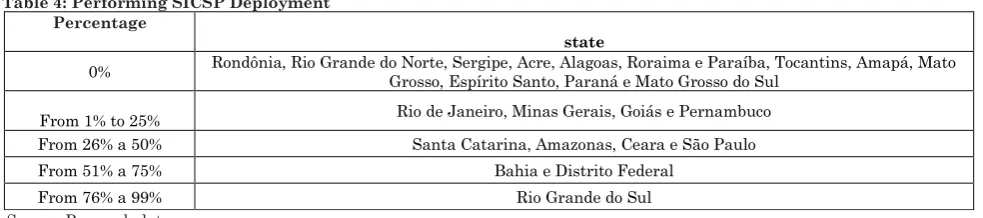
The remaining 29.17% are in stake zero and have not yet started any study, although they have demonstrated that they have knowledge about the possible contributions coming from the system for the management of their States. It is important to point out that it was not possible to identify the current phase of operation of the States of Maranhão, Piauí and Pará, since they did not return the sent questionnaires. Table 4 shows the percentage of execution of SICSP implementation in each State surveyed.
Table 4: Performing SICSP Deployment Percentage
state
0% Rondônia, Rio Grande do Norte, Sergipe, Acre, Alagoas, Roraima e Paraíba, Tocantins, Amapá, Mato Grosso, Espírito Santo, Paraná e Mato Grosso do Sul
From 1% to 25% Rio de Janeiro, Minas Gerais, Goiás e Pernambuco
From 26% a 50% Santa Catarina, Amazonas, Ceara e São Paulo
From 51% a 75% Bahia e Distrito Federal
From 76% a 99% Rio Grande do Sul
Source: Research data
It is possible to notice that in this question the percentage of 0% of execution was obtained a greater adhesion index, since 54,17% of the States considered the execution as being the creation of the system itself. Out of this total, only 6 States have started the studies to start the system and 7 States have not started any research.
The States with the implementation process between 1% and 25% represent 16.67% of respondents. Of the States presented in this category, only the State of Pernambuco already has the system in place, but it is being developed gradually from a Pilot Project distributed in six modules, which will include four secretariats that participate in
the governmental management of
Pernambuco.
In the other States of this group, this percentage of execution represents only the phase that is related to the studies and research for future implementation of this system. Among the 16.67% of the States that presented the execution percentage between 26% and 50%, only the States of São Paulo and Santa Catariana already have part of the system implanted, but still not generating managerial information.
The other states in this category have already made progress in their studies and are refining and developing new research to make the deployment happen as quickly as possible. The states of Bahia and the Federal District already have between 51% and 75% of the cost system implanted, which represents only 8.33% of the total number of States surveyed. These States are already quite advanced in relation to the execution process, since they are already generating some kind of information, but they are still in the study and improvement phase in order to be able to generate fully complete and reliable information.
The State of Rio Grande do Sul was considered the most advanced state in terms of percentage of cost system implementation, since it had already reached between 76% and 99% of execution, representing only 4.17% of the States interviewed. This state is still with its system under construction; however it is already able to generate some managerial information.
Final Considerations
of cost system at the state level, as to the factors that determine the main difficulties
and possible contributions from the
appropriation of costs the public.
The implementation of this cost information tool, in addition to presenting benefits of management use, such as assisting the public manager in the control, planning and decision making, also represents a legal requirement, since it had its mandatory period of implantation determined by the Administrative Rule STN n. 231/2012, creating for public organizations this need to adapt to the new legal provisions in force.
Through this research it was possible to demonstrate that all the states surveyed did not complete the implantation process within the period determined by the ordinance that was until the end of the year 2014, and that in the period of the research, none of them still had a fully implemented system.
The results demonstrate that the main difficulty in the cost system implementation process identified by the respondents was the number of members of the technical team. However, since practically all states have not completed the implementation of their systems, it is believed that there are other factors that may be impeding the progress of this project, since it is a new and complex management information tool that needs integration and sharing with other systems.
In terms of contributions in the
implementation, it can be concluded that, on average, the interviewees showed a positive perception regarding the use and use of the information generated by the cost system, in which emphasis was given to the benefits coming from the economy and control of resources decision-making and greater efficiency in government results.
The presentation of this research to the States could contribute to the development of this tool, since it will demonstrate positive experiences of the States that are in a more advanced stage of implementation, as well as to realize that the term required by the legislation is already valid and that how much before being implemented, may provide
improvements in the planning and
evaluation of public management. Finally, the relevance of this research is highlighted, since it sought to investigate the facts inherent to the implementation of cost systems in the Brazilian states.
This study is based on the analysis of the perception of the servers responsible for the information systems of costs of each State, and it is possible to conclude that although the answers obtained in the propositions about the utility, importance and benefits of a cost system are clear among the majority of respondents, the implementation process is still incipient in most states.
References
1. Drehmer AF, Raupp FM (2016) Origin and content of knowledge production from national theses and dissertations on costs in the public sector. Cadernos Public Management and Citizenship, 21 (69):121-138.
2. Resolution No. 1,128, of November 21, 2008 (2008) Approves NBC T 16.1 - concept, object and field of application, 2008a. Retrieved on
May 29, 2017, from
http://www.cfc.org.br/sisweb/sre/details_sre.asp x? Code = 2008/001128.
3. Carvalho D, Ceccato M (2011) complete manual of public accounting. Rio de Janeiro: Elsevier. 4. Resolution No. 1,129 of November 21, 2008
(2008) Approves NBC T 16.2 - equity and accounting systems, 2008b. Retrieved on May
29, 2017, from
http://www.cfc.org.br/sisweb/sre/detalhes_sre.as px?Codigo=2008/001129
5. Drehmer AF, Raupp FM, Tezza R (2016).Implementation of the cost information
system in prefectures of Santa Catarina: what do accountants say about difficulties and contributions? Proceedings of the Brazilian Congress of Costs.
6. Law No. 4,320, of March 17, 1964 (1964) it establishes general rules of financial law for the preparation and control of budgets and balance sheets of the Union, States, Municipalities and the Federal District. Retrieved on May 20, 2017, fromhttp://www.planalto.gov.br/ccivil_03/leis/L4 320.htm
7. Alonso M (1999) Costs in the public service. Journal of Public Service, 50 (1):37-63.
8. Carneiro A, de F et al (2012) Public administration costs: revision focused on the publication of scientific articles from the promulgation of the Fiscal Responsibility Law. Revista Contemporaneous de Contabilidade, 9:03-22.
of works in the graduation. São Paulo: Atlas. 10. Gil AC (2011) Methods and techniques of social
research. São Paulo: Atlas.
11. Gonçalves CA, Meirelles AM (2004) Projects and research reports in administration. São Paulo: Atlas.
12. Souza MA, Carvalho MP (2012) Implantation of cost systems in the public sector: a study in municipalities of Rio Grande does S ul in relation to STN and CFC determinations. Annals of the Congress National Association of Post-Graduate Programs in Accounting Sciences. 13. Araújo CA, Carneiro A F, Santana AFB (2015) Public cost systems: understanding and implementation in the municipalities of Rondônia. Journal of Accounting of the Master's Degree in Accounting Sciences, UERJ, 20(2):70-89.
14. Decree Law no. 200, of February 25, 1967 (1967) it provides for the organization of the federal administration, establishes guidelines for Administrative Reform and provides other measures. Retrieved on May 20, 2017, from http://www.planalto.gov.br/ccivil_03/decreto-lei/Del0200.htm.
15. Decree Law No. 2,829, of October 29, 1998 (1998) Establishes norms for the elaboration and execution of the Pluriannual Plan and of the Budgets of the Union, and other measures. Retrieved on May 20, 2017, from http://www.planalto.gov.br/ccivil_03/decreto/d28 29.htm
16. Presidential Decree No. 93.872, of December 23, 1986 (1986) it deals with the unification of the cash resources of the National Treasury, updates and consolidates the pertinent legislation and gives other measures. Retrieved
on May 20, 2017, from
http://www.planalto.gov.br/ccivil_03/decreto/d93 872.htm
17. Constitutional Amendment No. 19 of June 4, 1998 (1998) it modifies the regime and provides for principles and norms of the Public
Administration, servants and political agents, control of expenses and public finances and costing of activities by the Federal District, and makes other provisions. Retrieved on May 20, 2017, from
18. http://www.planalto.gov.br/ccivil_03/constituica o/emendas/emc/emc19.htm
19. Complementary Law No. 101, of May 4, 2000 (2000) it establishes public finance standards for fiscal responsibility and provides other measures. Retrieved on May 20, 2017, from http://www.planalto.gov.br/ccivil_03/leis/LCP/Lc p101.htm
20. Portaria MF nº 184, of August 25, (2008) Provides on the guidelines to be observed in the public sector (by public entities) regarding the procedures, practices, preparation and disclosure of the financial statements, so as to make them convergent with the Standards International Accounting Standards Applied to the Public Sector. Retrieved on May 20, 2017, from http://www.fazenda.gov.br/acessoa-a- informacao/institucional/legislacao/portarias-ministerial/2008/portaria184.
21. Portaria STN n. 406 of June 20, 2011 (2011) Approves the 4th Edition of the Accounting Manual Applied to the Public Sector (MCASP). Retrieved on May 13, 2017, from http://www.tesouro.fazenda.gov.br/contabilidade 22. Portaria STN n. 231 of March 29, 2012 (2012)
Changes the deadline for disclosure of the schedule of actions for compliance with the accounting procedures presented in Administrative Rule STN nº 828/2011 and other measures. Retrieved on May 28, 2017, from 23. Http: //sisweb.tesouro.gov.br/apex/f? p = 2501: 1:
15559171595615 :: NO :::
24. Resolution no. 1,366, of November 25, 2011 (2011) Approves NBC T 16.11 - Public Sector Cost Information System. 2011. Retrieved on
May 29, 2017, from