International Journal of Advances in Management and Economics
Available online at:
www.managementjournal.info
RESEARCH ARTICLE
Ying Xia Liu | Nov.-Dec. 2018 | Vol.7 | Issue 6 |38-50 38
An Experimental Study on the Effectiveness of the Short Sales
Mechanism to Restrain Bubbles in Chinese Stock Marketing
Yingxia Liu*, Changkun Ma, Rui Deng, Hanjiang Dong, Lubin Wu
International Business School, Jinan University, Guangdong, China.
*Corresponding Author: Email: [email protected]
Abstract: Since 2015, the implement of the Short Sales Mechanism in Chinese A-share market has experienced from administrative intervention bans to a restoration. The market’s attitude toward the current Short Sales Mechanism varies from person to person. Meanwhile, the role of the Short Sales Mechanism in the operation of Chinese stock market remains to be studied. Using the method of experimental economics, this paper established a stock transaction market and simulated stock transaction in the computerized experimental environment to analyzes the effectiveness of the Short Sales Mechanism to restrain bubble in Chinese stock market, and examines the effectiveness of curbing the stock market bubbles under different risks. The result showed that the Short Sales Mechanism can effectively restrain the formation of the stock assets price bubbles, and has a more pronounced effect on high-risk stock. Also, the Short Sales Mechanism can increase the liquidity of the market, which prevents the price deviates excessively.
Keywords: Bubble Index, Chinese stock market, Short sales mechanism, Experimental economics, Short sales mechanism, Stock market price bubble.
Article Received: 30 Sep. 2018 Revised: 10 Oct. 2018 Accepted: 22 Oct. 2018
Introduction
Judging from the practice results of China's securities market for more than 20 years, China's securities market is still in the rising channel of development, from the initial single stock and bond market to the opening of index futures and OTC options in recent years. The securities market has made tremendous contributions to improving the financing capacity of Chinese enterprises and realizing the asset allocation of investors.
However, compared with the mature securities market abroad, the fluctuation range of China's a-share market is still very large, and it is easy to produce stock market bubble, leading to the sharp rise and fall of the market, which poses certain harm to the normal operation of the stock market.China's stock market has been in the state of
unilateral market for quite a long time, and the power of buyers has been over sellers for a long time. When the stock has an irrational bubble, the lack of short-sale feedback has led to the accumulation of bubbles and normal stock market. Operation creates a hazard.
Ying Xia Liu | Nov.-Dec. 2018 | Vol.7 | Issue 6 |38-50 39
the securities lending business entered a stage of steady development. From the fifth expansion to February 2018, 966 securities were available on Shenzhen stock exchange and Shanghai stock exchange.
However, China's short selling mechanism still has several problems: the structure of margin financing and securities lending business is extremely unbalanced, the market size of securities lending trading is too small, the interest rate of securities lending is too high, and the proportion of investors is not coordinated. Based on the performance of the real market, the short-selling mechanism still has a long way to go in the complete liberalization of the Chinese stock market.
In fact, there are many problems behind the liberalization of short selling system that deserve to be considered: how can the restriction or prohibition of short selling mechanism affect the price discovery and information efficiency, how can the short selling mechanism affect the market operation performance, and can the short
selling mechanism control market
fluctuations and curb excessive speculation and bubble formation?
In view of this, this paper will adopt the experimental economics research method to set the initial endowment, income, transaction method and the fundamental value of stocks in the laboratory. By establishing the simulated securities trading market, simulating the securities trading, processing the trading data generated in the simulated trading, analyzing the behavior of investors in the market that introduced the short selling mechanism, applying behavioral finance theory to explain it, the influence of short selling mechanism on price discovery and inhibiting the stock market bubble is obtained.
This paper refers to the xiao-lan Yang [1] and othersby using the method of experimental economics asset market price research, fully considering the characteristics of China’s
stock market, establishing in the laboratory simulation of stock market, recruiting simulated experiment of the stock market participants. By analyzing the introduction of short selling mechanism and the risk factors of stocks, the relationship between short selling mechanism and stock market bubble was studied to provide reasonable policy for the short selling mechanism of China's securities market. The theoretical support provides policy advice to relevant government departments to promote the sound and sustainable development of China's securities market.
Literature Review
The financial theory community generally believes that short selling mechanism as a reasonable and important component of the free market is the necessary basis to ensure market liquidity and information fluency [2]. Research on existing short selling mechanisms at home and abroad has focused on short selling restrictions. Most of the existing foreign literatures analyze the impact of short selling system on the market through pricing efficiency, volatility, information transmission and liquidity.
In terms of pricing efficiency, Miller [2] proposed that in a market where short selling is restrained or prohibited, since negative news cannot be released, securities prices are more likely to tend to the expectations of optimistic investors, leading to asset prices being overestimated.
Ying Xia Liu | Nov.-Dec. 2018 | Vol.7 | Issue 6 |38-50 40
the introduction of short selling mechanism will enhance the company's earnings management, thus reducing stock prices volatility. Bris [5] studied data on short selling restrictions in 46 representative stock markets, and found that the market that relaxed the short selling restrictions did not cause the market to fall.
Instead, it could quickly absorb bad news and reduce the risk of stock market crash. There are also other scholars abroad who hold the opposite view of the above literature and believe that the introduction of short selling mechanism does not always stabilize the market, but may also bring about huge fluctuations in the market. Keim & Madhaven [6] believes that insider information and leverage in short selling mechanisms can easily lead to anomalies such as differences in investor beliefs and the rise and fall of the stock market. Bernardo & Welch et al [7] studied the relationship between panic psychology and market crash. The results showed that the underlying cause of stock cliff-like decline was investors' fear of being unable to sell their stocks in the future, instead of lack of liquidity.
The research topic related to whether short selling mechanism can stabilize the market is short selling cost. Duffie et al [8] made in-depth analysis of the dynamic asset pricing model under heterogeneous beliefs, indicating that the deviation of stock price after the introduction of short selling borrowing cost was greater.
Jonesa & Lamontb [9] studied the relationship between the cost of stock short selling and the return of earnings, and found that the higher the cost of short selling, the greater the price bubble, and then the return of its stock. As a kind of new type of credit securities trading method in China, the short selling mechanism opens a limited short selling mechanism for domestic stocks
short-selling. Chinese scholars mainly study the domestic market and have fruitful research results. Generally speaking. In general, it can be divided into :( 1) In terms of volatility. Liao Shiguang and Yang Zhaojun [10] collected time series data of the Hong Kong market, statistically analyzed the Pearson correlation coefficient before and after, and found that the short selling mechanism would not cause securities price fluctuations. (2) In terms of information transmission, Lin Jiayong [11]analyzed the impact of information asymmetry on short selling mechanism from the perspective of experimental economics.
(3) In terms of pricing efficiency, Li Ke and Xu Longbing [12] studied the impact of short selling constraints on mispricing. The results showed that short selling constraints lead to overvaluation of stocks but cannot be corrected, while short selling mechanisms such as margin financing and short selling can help correct overvaluation of stock prices and improve pricing efficiency. Some scholars have studied its impact on pricing. Li zhisheng and Chen Chen [13] found that margin financing and securities trading can effectively adjust the stock price too high, so that the stock price truly reflects the intrinsic value of the stock.
Ying Xia Liu | Nov.-Dec. 2018 | Vol.7 | Issue 6 |38-50 41
and Xia Le[14] studied the Hong Kong market and proposed that noise traders tend to reduce trading frequency after being affected by the factors of rising transaction costs, resulting in decreased market sentiment and liquidity, as well as increased information asymmetry.
Zhu Jian and Fang Junxiong [15] adopted the dual difference method system from the perspectives of capital effect, securities lending effect and securities lending, and found that the leading financing behavior actually aggravated the risk of stock market crash. In summary, the main divergence of the academic circles is whether the short selling system can stabilize the market or aggravate market volatility.
Most of them use empirical research and theoretical analysis to demonstrate. Although the research results are fruitful, the following limitations still exist: (1) There is little discussion about whether the short selling mechanism can significantly reduce the amount of bubbles in the market and the duration of the bubble; (2) The existing research on short selling mechanism mainly focuses on the western developed markets, while the Chinese stock market develops under the background of planned economy.
It should be prohibited from all short selling to gradually relax short selling. It has its own characteristics and is not fully applicable to the situation in China. (3) The scope of investigation is relatively limited. China's security lending business has not been launched for a long time, and the short-selling trading system is still in the stage of continuous development and improvement. The formation of the business structure is unreasonable, and the securities lending is far less than the financing. The application of experimental economics in this project is different from theoretical and empirical research, which requires a large
amount of historical data and is not repeatable. I It is suitable for the specific situation in which the development of China's stock market is immature, lacks relevant data and is not suitable for over-referencing foreign data.
In addition, the simulated real stock trading environment economics experiment has the following advantages: First, it can restore the market trading condition to a greater extent; second, the experimental sample can avoid the impact of accidental data. At present, the research on asset bubble using experimental economics method in China is still in the initial stage. Yang Xiaolan[16] et al. from Zhejiang University pioneered this research.
Experimental Design and Experimental Process
The Overview
This paper adopts the research method of economic experiment , assuming that the number of stock market circulation remains the same, no market outside capital inflows, not considering the influence of stock issuers and macro economy, such as establishing simulated reality run but relatively simplified the stock market, trading process in the market, the auction system, benefit mechanism and practical running in market, the behavior of traders are relatively close to the reality, based on the hypothesis that market participants are not perfectly rational and the corresponding control variables, help to analysis effectiveness in reality.
Ying Xia Liu | Nov.-Dec. 2018 | Vol.7 | Issue 6 |38-50 42 Subjects in the Experiment
The participants in this experiment are
mainly undergraduates majoring in
economics and management from Jinan University. A total of 128 participants are involved in each experiment with 16 people, and each participant is regarded as a trader in the stock market. In each trial, each trader can buy and sell stocks several times. In the laboratory where short selling is introduced, investors can also perform multiple short selling operations.
The Initial Endowment
At the beginning of the transaction, each trader's simulated trading account is given a certain amount of virtual cash and stock, and the trader can buy and sell the stock at any time. Each person can check the number of shares and cash balances in his or her account on time through a computer system.
Trading Process
In this experiment, some experimental transaction processes are computerized, and traders made use of the pre-programmed Z-tree computer trading system for trading. The experiment plans to design 8 experimental bureaus, each of which has 12 trading cycles with a total of 96 cycles.
Each cycle lasts 3 minutes, and the interval between the two trading cycles is 30 seconds, which is used to publicize the dividend situation of the previous cycle and to adjust traders' future transactions. Each trader can only obtain his own asset information, and the remaining assets from the previous round will continue to be tested as an initial endowment for the next round of trading.
Given that the short selling mechanism trades in ways that are unfamiliar to most people, the researchers will give traders eight minutes to familiarize themselves with the software before the formal experiment begins.
In keeping with the real market, the experiment used a computerized double auction. Combined with the experience of most mature securities market in foreign countries, we will adopt the general two-way auction mechanism (" T+0 "), in which the seller will bid from high price to low price and the buyer from low price to high price.
When the asking price equals the bid, the transaction will be concluded. According to the principle of price priority and time priority, the transaction will be automatically matched by z-tree software. At the end of each experiment, the bond will be repurchased at a uniform price and a percentage of the virtual cash held by the trader will be paid in cash.
Design of Experiment Basis Value
Defining the underlying value of the stock at each point in time helps to define the degree to which the bubble was created. In this experiment, the dividend policy is designed to convey to traders the real value of the stock, that is, the discounted value of future dividends. Without considering the discount rate, the true value of a stock equals the expected value of its future dividend income:
2
1
i i i
P
s
p d
(1)Ying Xia Liu | Nov.-Dec. 2018 | Vol.7 | Issue 6 |38-50 43
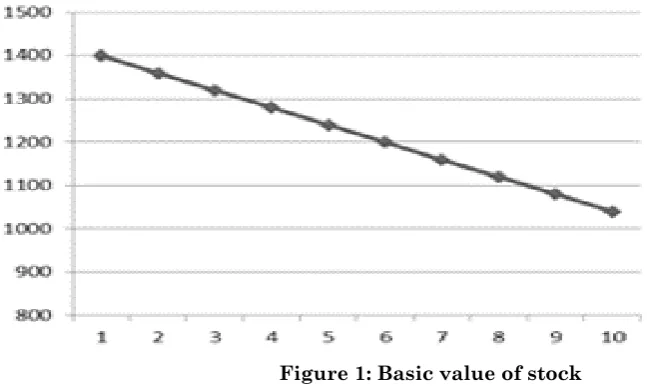
Figure 1: Basic value of stock
Fig.1 illustrates that the intrinsic value of a stock is diminishing. When the stock market price is higher than the intrinsic value of the trading period, it is believed that there is irrational bubble in the stock market, and the size of the bubble can be measured by the difference between the two.
Experimental Variable
This experiment sets two main experimental variables: short selling mechanism and market risk. Based on the reality of short selling market, we introduced the concept of short selling fee, that is, when a short seller borrows securities from an experimental trading individual for trading, it needs to pay a certain percentage of fee to the trader. Meanwhile, short sellers cannot get paid dividends on securities. Assuming that a short sale is made, the profits and losses of both parties can be expressed by the following formula:
Bearish (Securities Borrower)
* *
( ) | |
S
R Q P P Q P P r (2)
Bullish party (Securities Lender)
* *
( ) | |
L
R Q P P Q P P r QD (3)
Among them, the R represents the total revenue, P when short selling market price, P* on behalf of the current market price, | P- P* | represent the absolute value of price
difference, rate R short procedure, D said stock dividend per unit. When the stock price rises, have P* > P, RS < 0, bearish side losses; RL > 0, bullish earnings from one side, and the bulls with no short selling mechanism of profit amount prep above directly sell to traders’ profit amount, bulls of the extra income for Q| P- P* |r, namely fee income, therefore, the bulls have an incentive to lend their securities bearish.
When stock prices fall, have P * < P, RS > 0, bears a profit, and bears the profit amount is higher than that of no short selling mechanism under earnings, because there is no short selling mechanism under the bearish party not to enter the market to do business, income is zero.
RL < 0, the bullish side losses, but compared with no short selling, the bulls won the Q| P- P* |r extra income, relatively reduced the loss, therefore, the bulls and bears have motivation for short selling.
Ying Xia Liu | Nov.-Dec. 2018 | Vol.7 | Issue 6 |38-50 44
Table 1: Specific design of stock
Stock type Dividend structure Expectation Variance Risk
A 10% chance of getting a dividend of 400 yuan
per cycle, 90% chance of not getting dividends. 40 16000 high
B 50% chance to get 30-yuan dividend per cycle,
50% chance to get 50-yuan dividend 40 111.1 low
The Establishment of Experimental Bureau
Four groups of different types of experiments were conducted in this experiment. The setting of the experimental bureau is shown in Table 2. Among them, the experiment of group A/B and group C/D introduces the mutual comparison of short selling mechanism, group C/D simulates the current stock market in China, and group A/B simulates the stock market in China after introducing the perfect short selling
Mechanism. A/C group and B/D group are the comparison of stock risk factors. A/C group simulates the decision-making behavior of traders facing high-risk stocks, that is, technology stocks and start-up stocks in the real market. B/D simulates traders' decision behavior in the face of low-risk stocks, that is, the bank stocks and blue chips in the real market. In order to follow the principles of experimental economics and avoid the accidental bias caused by only one experiment, each group of experiments will be conducted twice.
Table 2 : Design of the experimental bureau
Experimental group Number of traders Whether to introduce short
selling mechanism Stock risk
A1/A2 16 YES High
B1/B2 16 YES Low
C1/C2 16 NO High
D1/D2 16 NO Low
Trading returns and Experimental Rewards
Participants' trading income mainly comes from the price difference and dividends on the stocks they own. The traders know the number of dividends per unit of stock before the trade begins, and at the end of each trading cycle the dividend is distributed and announced.
A small proportion of the proceeds from the "lending" of stock assets to short sellers from the bullish side of the market came from the experimental bureau, which introduced the short-selling mechanism. In order to urge the participants to trade carefully and actively,
each participant will be rewarded. At the end of the experiment, bonuses were paid at 5% of the final account balance, with an average of 35 yuan per trader. Meanwhile, at the end of each experiment, the trader enters a forecast for the next round of stock prices into the system, and the trader who predicts the price closest to the next round will receive a cash reward. The incentive system set up in the experiment helps to get results closer to the real market.
Statistical Indicators and Experimental Data
Ying Xia Liu | Nov.-Dec. 2018 | Vol.7 | Issue 6 |38-50 45
the data recorded by z-tree trading system, the following indicators were used to measure the difference of foam degree under different experimental conditions.
Price Amplitude
The price amplitude is the difference between the maximum and minimum relative amplitude of the average price deviation from the fundamental value. The calculation formula of price amplitude is:
* *
* *
1 1
t t t t
t t
P
P
P
P
PA
Max
Mi n
P
P
(4)Here, P1* value is the basis of the first cycle, Pt is the first t cycle the average transaction price of the market, Pt* is the basis of the first t cycle value. To some extent, the price amplitude index represents the range of price fluctuation.
Aggregate Price Bubble
The overall size of the market average price deviation from the fundamental value can be measured by the total price bubble. In the experiment lasting n trading cycles, the calculation formula of the total price bubble is as follows: * 1
|
|
n t t tB
P
P
(5)Pt is the first t cycle the average transaction price of the market, Pt* is the basis of the first t cycle value.
Index of the Bubble
The bubble index can measure the bubble degree of each cycle of trading. The bubble index is the deviation degree between the average price and the current benchmark price. Its calculation formula is as follows:
* *
100%
t t tP
P
I
P
(6)Among them, the I into a foam index, Pt is the first t cycle the average transaction price of the market, Pt* is the basis of the first t cycle value.
Mean Absolute Error(MAE)
The mean absolute deviation is the mean value of the mean absolute deviation between the average transaction price and the basic value. The calculation formula is as follows:
* 1
1
|
|
N t t tMAE
P
P
N
(7)Among them, N for trading period, the number of Pt is the first t cycle the average transaction price of the market, Pt * is the basis of the first t cycle value.
Mean Relative Error(MRE)
The average relative deviation is the mean of the average relative deviation between the average transaction price and the basic value. The calculation formula is as follows:
1
1
N t t t tP
P
MRE
N
P
(8)Among them, N for trading period, the number of Pt is the first t cycle the average transaction price of the market, Pt * is the basis of the first t cycle value.
The Stock rate of turnover(ST)
Stock turnover is the sum of the number of shares traded over a period of time divided by the number of shares in circulation, reflecting the degree of activity in stock trading.
Ying Xia Liu | Nov.-Dec. 2018 | Vol.7 | Issue 6 |38-50 46
Table 3: Stock market bubble level statistics
Experiment Bureau PA B MAE MRE
A1 1.192719 933.6155 93.36155 0.103043
A2 1.270689 959.5362 126.7362 0.129322
B1 0.15621 1061.948 106.1948 0.086056
B2 0.189858 1181.085 128.2187 0.090555
C1 1.463693 9548.878 954.8878 0.750914
C2 1.330045 8883.35 794.1863 0.658116
D1 0.873053 2922.726 292.2726 0.222463
D2 0.906701 3391.788 315.5161 0.347285
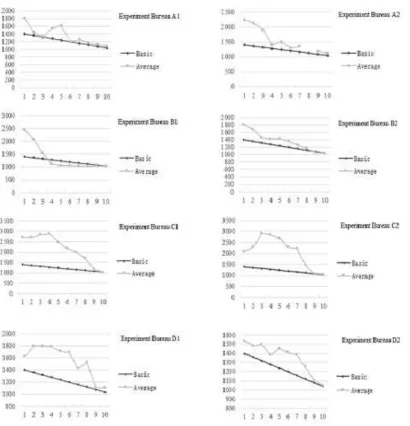
Figure 2: Average price trend of each experimental bureau
Experimental Results and Analysis
Establishment of Regression Model
We constructed a regression equation to illustrate the effect of short selling
mechanism on stock market bubble:
, 0 1
2
3I e p r i sk e shor t e ST (9)
Ying Xia Liu | Nov.-Dec. 2018 | Vol.7 | Issue 6 |38-50 47
I (e,p) represents the foam index of the period p of the experimental bureau e; Risk (e) represents the risk degree of experimental bureau e. Risk (e) is a dummy variable, with high risk value of 1 and low risk value of 0. Short (e) represents whether experimental bureau e introduced the short selling
mechanism, which allows the value of short selling to be 1 and does not allow the value of short selling to be 0. The processing results of the experimental data are as follows, in which Table 5 and Table 6 are regression results that control the risk variables.
Table 4: All experimental results of regression
Variable Coefficient Std. Error t-Statistic Prob.
C -0.06535 0.168267 -0.38834 0.7000
RISK(E) 0.287405 0.098614 2.914432 0.0060 SHORT(E) -0.37227 0.097699 -3.81037 0.0005
ST 1.546247 0.723053 2.138497 0.0393
Table 5: High risk laboratory bureau regression results
Variable Coefficient Std. Error t-Statistic Prob.
C 0.29578 0.201817 1.465581 0.1610
SHORT(E) -0.71662 0.122235 -5.86267 0.0000
ST 1.953559 0.790257 2.472055 0.0243
Table 6: Low risk laboratory bureau regression results
Variable Coefficient Std. Error t-Statistic Prob.
C -0.06247 0.203308 -0.30726 0.7623
SHORT(E) -0.01704 0.105606 -0.16139 0.8736
ST 0.698925 0.941198 0.742591 0.4678
Analysis of the Results
First, the introduction of short selling can significantly curb stock price bubbles. Whether high risk or low risk stocks, after the introduction of short selling mechanism, when the market is overheated and the stock price is too high, investors can carry out short selling operations, correct the overpriced stock price, restrain the accumulation of stock bubble and improve the efficiency of price discovery.
It can be seen from Fig.2 that in the four experimental bureaus where short selling is not allowed (namely C1, C2, D1 and D2), the average price of the stock is higher than the basic value of the stock in the first eight trading periods. According to traditional rational economic man theory, the trader
should sell the stock during this period. However, as the chart shows, traders continue to buy significant amounts of stock, driving up the market price, knowing that the price is significantly higher than the
Underlying value. After the introduction of the short selling mechanism, although some Traders bought a certain amount of stocks above the basic value, the stock price climbed in a short period of time, but the price bubble was soon digested by the short selling force.
Ying Xia Liu | Nov.-Dec. 2018 | Vol.7 | Issue 6 |38-50 48
compared with the corresponding group without short selling.
The results of OLS regression on experimental data also show that short selling mechanism can significantly reduce the bubble index. Secondly, short selling mechanism can suppress the price bubble of high-risk stocks more than that of low-risk stocks. The main reason for this difference is that high-risk stocks have a small probability of receiving a large dividend, which is enough to make participants have a gambling mentality and pay a price higher than the base value.
According to the disappointing model theory, the effectiveness level of $-bet stocks (C1 and C2) will be higher than the fundamental value determined by the dividend probability. The speculative behaviors generated will keep the price away from the fundamental value and accumulate speculative bubbles.
In low-risk stocks (D1, D2), as the experiment goes on, traders have a more rational understanding of the changes in stock value, so the price gradually converges to the fundamental value. After introducing the short selling mechanism, we separately compared the bubble index I of different risky stocks.
It can be seen from Table 3 that the difference of foam statistical indicators before and after short selling of high-risk stocks (bureau A1 and A2) is larger than that of low-risk stocks. We further control the regression analysis of risk variables. Table 5 and Table 6 respectively represent the regression results of high-risk stocks and low-risk stocks.
Table 5 shows that the absolute value of the coefficient of probability is higher than that of the coefficient of probability in Table 6, indicating that the short-selling mechanism has a greater degree of foam inhibition on
high-risk stocks. Third, the introduction of short selling mechanism to a certain extent to improve the frequency of stock trading. Compared with the experimental bureau that allows short selling, in the non-short selling experiment, when the stock price is at a high point, the price change is relatively smooth, and the frequency of trading changes tends to ease.
At this point, the short seller cannot take any means to speculate for profit. For the short selling experimental bureau, the turnover rate increased significantly in each trading period. This is similar to the findings of Woolridge and Dickinson [20] short-sellers in the rising market increasing short selling volumes to provide liquidity to the market, the reason is that by shorting shares, investors can continue to reap the benefits, and don't need to be higher than the basic value of the price to buy what to bid up the market to make up gap, in the case of short sellers fully participate in market transactions, introducing the short selling mechanism in experiment bureau compared with experiment bureau doesn't allow short-selling turnover rate.
Summary and Policy Recommendations
Ying Xia Liu | Nov.-Dec. 2018 | Vol.7 | Issue 6 |38-50 49
First, strengthen education for investors, promote information disclosure, and promote rational investment. Individual investors lack professionalism, risk awareness is weak, and they are susceptible to irrational investment behaviors due to external interference factors. Policy makers need to further improve the investor appropriateness system and promote the rationality of investors' investment behavior. Second, improve the short selling mechanism and reduce restrictions on short selling. Western mature securities market practice proves that the short selling mechanism is indispensable to a mature financial market trading system.
Looking at the development process of China's stock market, starting the trial of margin financing and securities lending business in 2010, and the financing and securities lending target in 2018 The number of securities reached 966. The short selling mechanism of China's stock market is constantly improving and developing. However, there are still outstanding problems such as low ratio of securities lending and high rate of securities lending.
To really play the role of short selling mechanism, there is still a long way to go. The regulatory authorities should focus on strengthening market supervision and gradually liberalize the restrictions on margin financing and securities lending business [23].
Third, we will implement a proactive policy of making choices on a discretionary basis. Under different market conditions, short selling mechanism has different
inhibiting effect on stock market bubble. When the market situation is in a downturn, corresponding policies can be issued to stimulate margin financing and short selling and stock index futures trading. When the market mood is high, the stock market appears irrational rise, and the stock price has deviated greatly from its intrinsic value, the corresponding measures should be taken to limit the financing buyouts and stock index futures trading, such as raising the margin ratio and increasing the transaction cost.
At the same time, based on the principle of risk control, we can effectively track the short selling behavior of the market, prevent the malicious short selling behavior from interfering with the normal operation of the market, and actively guide the short selling transactions that can restrain the formation of the stock market bubble, and play its active role. We use experimental methods to explore the effectiveness of short selling mechanism to suppress the price bubble in China's stock market and provide a research and innovation in ideas, enriching existing research theories and methods.
The conclusions of this paper can provide a reference for the further release of the short selling mechanism in the future. At the same time, our experiment still has some limitations. For example, there is no further research on such factors as short selling rate and tax, which needs to be further improved. It is hoped that the research methods of experimental economics can provide effective ideas for the benign development of China's stock market and provide Suggestions for the policy development of relevant departments.
References
1. Yang xiaolan (2010) The relationship between liquidity, expectations and asset price bubbles: a perspective on experimental and behavioral finance [J].World economic exchange ,(2):33-45.
2. Miller E(1977) Risk, uncertainty, and divergence of opinion[J]. The Journal of finance,32(4): 1151-1168.
Ying Xia Liu | Nov.-Dec. 2018 | Vol.7 | Issue 6 |38-50 50
(1987) "Constraints on shortselling and asset price adjustment to private information," Journal of Financial Economics June, 18,277-311.
4. Massa M, Zhang B, Zhang H (2012)The Invisible Hand of Short Selling: Does Short Selling Discipline Earnings Management [J]. Social Science Electronic Publishing,28:1701-1736.
5. Bris A, Goetzmann WN, Zhu N(2007) Efficiency and the bear: Short sales and markets around the world[J]. The Journal of Finance,62(3):1029-1079.
6. Keim DB, Madhavan A(1995) Anatomy of the trading process empirical evidence on the behavior of institutional traders[J]. Journal of Financial Economics,37(3):371-398.
7. Bernardo AE, Welch (2004) Liquidity and Financial Market Runs[J]. Quarterly Journal of Economics,119(1):135-158.
8. Duffie D, Garleanu N, Pedersen LH(2002) Securities lending, shorting, and pricing[J]. Journal of Financial Economics,66(2):307-339.
9. Jones CM, Lamont O(2002) Short-sale constraints and stock returns[J]. Journal of Financial Economics,66(2):207-239.
10.Liao Shiguang, Yang Zhaojun(2004) Research on the effect of short selling mechanism on stock price -- empirical study from Taiwan market [R]. Selected paper of the 4th annual conference of Chinese economics.
11.Lin jiayong(2006) Experimental study on short selling mechanism in securities market [J]. Statistics and decision-making, (18):101-104.
12.Li ke, Xu Longbing, Zhu Weihua(2014) Short selling restriction and stock mispricing -- evidence of margin and short selling system [J]. Economic research, 49(10:165-178.
13.Li Zhisheng, Chen Chen, Lin Bingxuan(2015) Does the short selling mechanism improve the pricing efficiency of China's stock market--
evidence based on natural experiments [J]. Economic research,50(4):165-177.
14.Cai Jinghan(2011) Research on the price discovery of margin trading -- based on the perspective of the determination and adjustment of underlying securities [J]. Journal of Shanghai lixin accounting institute,25(1):67-76.
15.Zhu Jian, Fang Junxiong(2016)Chinese margin and short selling system arrangement and deterioration of stock price crash risk [J]. Economic research,51(5):143-158.
16.Yang Xiaolan(2005) Experimental economics research on stock market bubble problem [D]. Zhejiang university.
17.Urs Fischbacher (2007) z-tree: Zurich Toolbox for ready-to-made Economic Experiments, Experimental Economics, 10(2):171-178.
18.King Williams AW RR Smith V, Boening MV (1993)The Robustness of Bubbles and Crashes in Experimental Stock Markets [J],183-200.
19.Theissen Erik (2000)"Market structure, informational efficiency and average:An experimental comparison of auction and dealer markets," Journal of Financial markets Elsevier,3(4):333-363.
20.Woolridge JR, A Dickinson (1994) "short-selling and Common Stock Price", Financial Analysts Journal January/February,20-28.
21.Hu Renjun (2017)Study on the impact of short selling mechanism on the volatility of a-share bank shares [D]. Nanjing university.
22.Zhong Zheng(2017) Study on the impact of short selling mechanism on Chinese stock pricing efficiency [D]. Guangdong university of finance and economics.