GLYCEROL MEDIATED ONE-POT SYNTHESIS OF PYRAZOLE
CONJUGATED TETRAHYDROQUINOLINE DERIVATIVES
AND EVALUATION OF THEIR ANTICANCER ACTIVITY
N. Amarnath Reddy,
[a]K. Kamala,
[b]Raveendra Dayam
[a]and K. V. Saritha
[c]*Keywords: 3-Methyl-1-phenyl-1H-pyrazol-5-amine; 5,5-dimethylcyclohexane-1,3-dione; one-pot reaction; glycerol; anticancer activity. Pyrazole scaffold is an important building block in many of the medicinally active new chemical entities. In the current work, synthesis of pyrazole conjugated tetrahydroquinoline derivatives has been achieved by treating 3-methyl-1-phenyl-1H-pyrazol-5-amine (1), 5,5-dimethylcyclohexane-1,3-dione (2), and benzaldehydes (3) at 80-85 oC for 60-90 min using glycerol as green reaction medium. The anti-cancer activity of the synthesized pyrazole-conjugates was carried out on breast anti-cancer (MCF-7) and liver anti-cancer (A549) cell lines. Two among the tested compounds showed potential inhibition on A549 cell lines. Further, molecular modeling studies have performed and the binding interactions with the target protein have been observed. Additionally, pharmacokinetic properties such as bioavailability, log P, total polar surface area and blood brain barrier (BBB) have been predicted using SwissADME tools to get insight into the further structural optimization.
* Corresponding Authors
E-Mail: kvsarithasvu@gmail
[a] Excelra Knowledge Solutions Private Limited, IDA Uppal, Hyderabad-500 039, India
[b] Department of Bio-Technology, Rayalaseema university, Kurnool, Andhra Pradesh, India
[c] Department of Bio-Technology, S.V. University, Tirupati, Andhra Pradesh, India
INTRODUCTION
Pyrazolo[3,4-b]quinoline derivatives were momentous for their pharmacological activities. In particular, they showed potential anticancer, malarial, antiviral, and anti-inflammatory properties.1-3 These are also known for
parasiticidic properties, antibacterial, antitumor, hypotensive, and vasodilation activities.1-3 In specific,
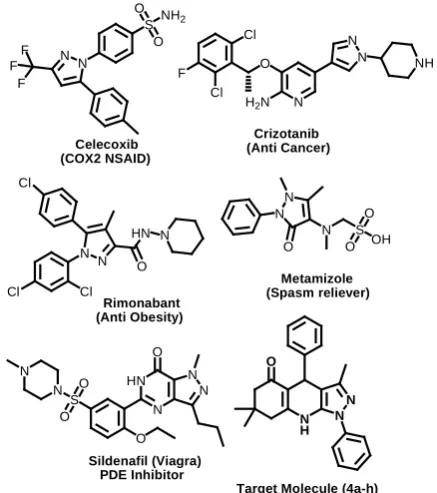
pyrazolo-annelated heterocyclic scaffold is being found in a diverse therapeutic drugs such as COX inhibitors, Phosphodiesterase 5 (PDE5) inhibitor (Sildenafil Citrate - Viagra), and mTOR signaling inhibitors (WYE-354) (Figure 1) etc.4 Due to their growing importance, various synthetic
protocols have been reported in the recent past for the preparation of pyrazolo[3,4-b]quinoline scaffolds using different homogeneous and heterogeneous materials such as FeNi3-ILs.5 PEGOSO3H,6 L-proline,7 and InCl38 as catalysts.
However, the aforementioned methods have limitations and suffer from drawbacks such as prolonged reaction times, harsh reaction conditions, catalyst separation challenges, tedious workup, waste generation, toxic solvents, high reaction temperatures and low product yields. Therefore, there is a pressing need for newer methods that could surmount the above challenges.
Research for finding other alternate reaction media, which can substitute the hazardous, toxic, and inflammable organic solvents, which pose a serious threat to the environment, is gaining progress. Many environmentally compatible reaction media like green solvents,9 ionic liquids,10
supercritical fluids,11 and fluorous phases,12 are being used
for several organic reactions. Each has its own advantages and is dependent on external factors like lipophilicity, pressure, and viscosity.
Figure 1. Some therapeutically active compounds containing pyrazole scaffold.
Glycerol was an environmental and biodegradable solvent produced as a by-product in the biodiesel industry13. Given
the high boiling point property of glycerol, reactions using this as a medium can be carried out at high temperature, thus allowing acceleration of the reaction or making possible reactions that do not proceed in low boiling point solvents.
O S O
N N F F
F
NH2
Celecoxib (COX2 NSAID)
N N
O
N S O
O OH
Metamizole (Spasm reliever)
N N
N HN
O
S O
O N N
O
Sildenafil (Viagra) PDE Inhibitor
O HN N
N N
Cl Cl
Cl
Rimonabant (Anti Obesity)
O
N N N
NH
H2N
Cl
F Cl
Crizotanib (Anti Cancer)
N H
N N O
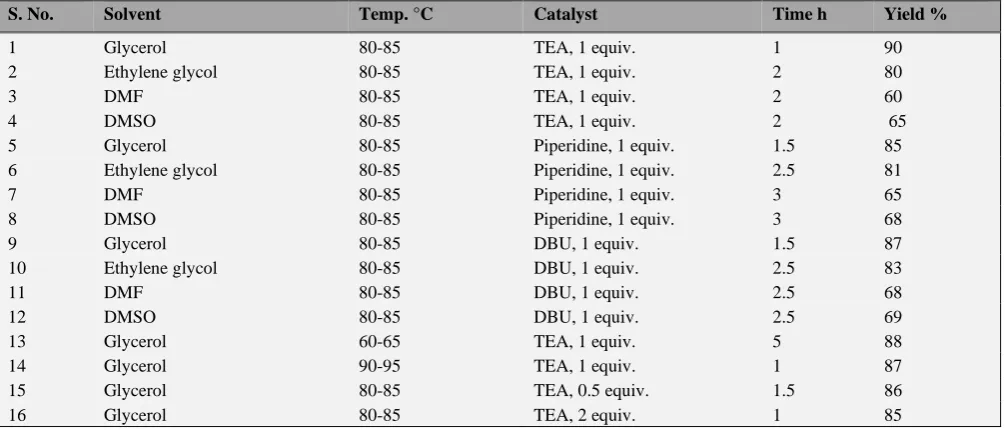
Table 1. Optimization of reaction conditions for the synthesis of 4a.
S. No. Solvent Temp. °C Catalyst Time h Yield %
1 Glycerol 80-85 TEA, 1 equiv. 1 90
2 Ethylene glycol 80-85 TEA, 1 equiv. 2 80
3 DMF 80-85 TEA, 1 equiv. 2 60
4 DMSO 80-85 TEA, 1 equiv. 2 65
5 Glycerol 80-85 Piperidine, 1 equiv. 1.5 85
6 Ethylene glycol 80-85 Piperidine, 1 equiv. 2.5 81
7 DMF 80-85 Piperidine, 1 equiv. 3 65
8 DMSO 80-85 Piperidine, 1 equiv. 3 68
9 Glycerol 80-85 DBU, 1 equiv. 1.5 87
10 Ethylene glycol 80-85 DBU, 1 equiv. 2.5 83
11 DMF 80-85 DBU, 1 equiv. 2.5 68
12 DMSO 80-85 DBU, 1 equiv. 2.5 69
13 Glycerol 60-65 TEA, 1 equiv. 5 88
14 Glycerol 90-95 TEA, 1 equiv. 1 87
15 Glycerol 80-85 TEA, 0.5 equiv. 1.5 86
16 Glycerol 80-85 TEA, 2 equiv. 1 85
In the bulk manufacturing of active pharmaceutical ingredients (API), the low toxicity of glycerol allows to be used as a solvent in the synthesis of in which the toxicity and residue of solvent have to be carefully controlled. Due to the unique physico-chemical properties, there are a large number of reports on the applications of glycerol as efficient and convenient solvents in organic transformations.13
In view of the importance of pyrazole scaffold, we report presently an efficient one-pot protocol for the synthesis of pyrazolo[3,4-b]quinolines using glycerol as green reaction medium. There have been no earlier reports for the preparation of pyrazolo[3,4-b]quinoline derivatives in glycerol as solvent.
RESULTS AND DISCUSSION
Initially, using the one-pot three-component reaction of 3-methyl-1-phenyl-1H-pyrazol-5-amine (1) (1 mmol) with 5,5-dimethylcyclohexane-1,3-dione (2) (1 mmol), and benzaldehyde (3a)(1 mmol) was carried out at 80-85 oC as a
model for synthesis of 3,7,7-trimethyl-1,4-diphenyl-6,7,8,9-tetrahydro-1H-pyrazolo[3,4-b]quinolin-5(4H)-one (4a). We examined the suitable solvents like glycerol, ethylene glycol, DMSO and DMF at different temperature in the presence of 1 equiv. TEA as catalyst at 80-85 oC. Results are
summarised in Table 1. It is observed that the formation of 4a by one-pot three component reactionin glycerol at 80-85
oC for 60 min gave excellent yield 90 % compare to other
conditions (Table 1 entry 1). The structure of 4a was confirmed by 1H, 13C-NMR, and Mass spectroscopy.
Further, optimization studies were carried out by altering different catalysts such as piperidine and DBU for formation of 4a by using 1, 2 and 3a. It is noticed that usage of piperidine and DBU as catalyst for this reaction resulted in low yields (Table 1, entry 5 and 12). Lower and higher temperature also gave low yield in formation of 4a (Table 1, entry no 13 and 14).
Scheme 1. Synthesis of 4a-4h by one-pot synthesis.
In the continuous efforts to optimize the one-pot three component reaction, different catalyst amounts were used like 0.5 equiv., 1 equiv. and 2 equiv. of TEAand consistent optimized results were obtained with 1 equiv. of TEA. Results were summarised in Table 1 (Entry no 1, 15 & 16). However, finally formation of 4a in glycerol as solvent at 80-85 oC in the presence of 1 equiv. of TEA gave excellent
yield for 60 min. Having optimised one-pot three component reaction conditions, we explored the scope and limitations with series of substituted anilines 3a-3h. It was found that the both electron-deficient and electron-rich anilines were applicable for this optimised conditions affording the corresponding benzothiazole derivatives yields 85-90 % (Figure 2). Encouraged by these results, the synthesis of 4a-4h were carried out in one-pot three component reaction by using 1, 2 and 3a-3h in glycerol at 80-85 oC in the presence
of 1 equiv. TEA for 60-90 min (Scheme 1) with excellent yields of 85-90 %. Structures were confirmed by 1H and 13C
NMR, and mass spectroscopy. N H
N N O
O N
N H2N
O
O R
R
H
Glycerol/ TEA 80-85 oC/ 60-90 min
1 2 3
Figure 2. Structures and yields of 4a-h synthesized by the one-pot reaction.
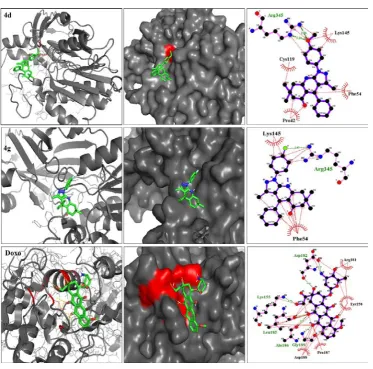
Figure 3. Molecular interactions of human Type I protein arginine methyltransferases (PRMTs) with different test compounds 4d, 4g and Doxorubicin. The interactions for the best docked pose for each ligand was showed in the image. The amino acids interacted with the docked ligands are illustrated using LigPlot.
4a Yield: 90%
4b Yield: 88%
4c Yield: 85%
4d Yield: 87%
4e Yield: 90%
4f Yield: 90%
4g Yield: 89%
4h Yield: 90% N
H N N O
N H
N N O
N H
N N O
N H
N N O
N H
N N O
N H
N N O
N H
N N O
N H
N N O
CH3
CH3
OCH3
OCH3
Cytotoxicity assay
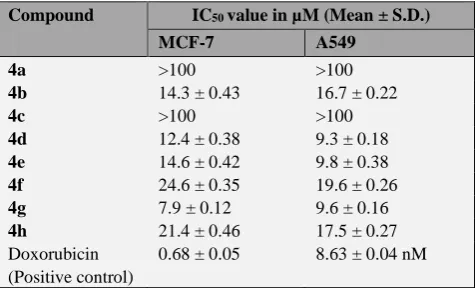
A series of 8 conjugates were synthesized and evaluated for their cytotoxicity against two different human cancer cell lines (A549 and MCF7) using MTT assay. IC50 values of the
compounds against different cancer cell lines were tabulated and shown in the table 2. Some of the compounds showed substantial reduction in the cell viability of cancer cells in a dose dependent manner. Compound 4d and 4g showed good activity against A549 cells with an IC50 value of 9.3 and 9.6
µM, respectively.
Table 2. Cytotoxicity of the synthesized compounds, screened against MCF-7 and A549 cell lines using MTT assay.
Compound IC50 value in µM (Mean ± S.D.)
MCF-7 A549
4a >100 >100
4b 14.3 ± 0.43 16.7 ± 0.22
4c >100 >100
4d 12.4 ± 0.38 9.3 ± 0.18
4e 14.6 ± 0.42 9.8 ± 0.38
4f 24.6 ± 0.35 19.6 ± 0.26
4g 7.9 ± 0.12 9.6 ± 0.16
4h 21.4 ± 0.46 17.5 ± 0.27
Doxorubicin (Positive control)
0.68 ± 0.05 8.63 ± 0.04 nM
Molecular docking
The selected compounds (4d and 4g) from the preliminary screening were evaluated for in silico docking analysis. Molecular docking for the compounds 4d and 4g was performed against the human Type I protein arginine methyltransferases (PRMTs) active site. A total of ten different conformations were examined for each docked ligand. The binding energies for the best-docked pose of 4d and 4g compounds in the receptor active site were 8.2 and -8.0 kcal mol-1, respectively. Whereas the positive control
Doxorubicin showed -8.4 kcal/mol.
Table 3. The binding energies, RMSD values and amino acids in the receptor protein interacted with ligands were determined using autodock and LigPlot.
Ligand Binding energy (kcal mol-1)
RMSD H-bond/s
Protein– Ligand interactions
4d -8.2 3.813 Arg345 Pro42,
Phe54, Cys119, Lys145
4g -8.0 4.853 Arg345 Phe54,
Lys145 Doxorubicin
(Positive control)
-8.4 2.544 Lys155,
Asp182, Leu185, Ala186, Gly189
Arg181, Asp188, Pro187, Tyr258
The interactions between protein and ligands were majorly influenced by hydrophobic and hydrogen bonding interactions. The best docking poses were represented in the Figure 2 and the resulting binding energies along with RMSD values were shown in Table 3. Further, the amino acids interacted with the ligands were shown in the Table 3.
Pharmacokinetic properties prediction
Pharmacokinetic properties are crucial to know how human body reacts to a drug molecule. The ADME parameters such as absorption, distribution, metabolism, and excretion are important features for a potential drug molecule.14 SwissADME tool gives the information about
different pharmacokinetic properties such as Human gastrointestinal absorption (HIA), blood-brain-barrier (BBB) permeability, total polar surface area (TPSA) and bioavailability score, etc. TPSA score helps to predict the oral bioavailability of the compounds. The compounds with less TPSA score ranging between 20 and 130 Å have high oral bioavailability.
In the present study all the synthesized molecules exhibited high oral bioavailability. BOILED-Egg model was used for the prediction of gastrointestinal absorption.15 All
the compounds in the series exhibited high gastrointestinal absorption (GIA) and blood-brain barrier permeation.14,16
Moreover, the results showed that all the compounds are the substrates for P-glycoprotein (Pgp). Thus the compounds are actively transported out of the body system. In addition, the compounds showed 0.55 bioavailability score. Collectively the results of the synthesized molecules exhibited good physiochemical as well as good pharmacokinetic properties.
EXPERIMENTAL
Melting points were determined in open capillary tubes in sulphuric acid bath. FT-IR spectra are recorded on a VERTEX 70 Brucker by using KBr. A Bruker DRX-400 spectrometer 400 and 100 MHz was employed for recording
1H NMR and 13C NMR spectra respectively and DMSO-d 6
was used as solvent and TMS as an internal standard. Mass spectra were recorded on Agilent-LCMS instrument.
General synthetic procedure
In a typical experiment, a mixture of 1 (1 mmol), 2 (1 mmol), and benzaldehydes 3a-3h (1 mmol) in 10 mL of glycerol were charged in a 50 mL round bottomed flask and the mixture was stirred at 80-85 oC. The reaction was
complete within 60-90 min as analyzed by TLC using petroleum ether/ethyl acetate (60:40) as eluent. The reaction mixture was allowed to cool to room temperature (25-30 oC)
Cytotoxicity assay
Cytotoxicity of the synthesized compounds was tested against two different human cancer cell lines A549 (Human lung carcinoma) and MCF 7 (Human breast carcinoma) using MTT assay.17
Molecular Docking
In silico molecular binding of the synthesized compounds 4d and 4g with human Type I protein arginine methyltransferases (PRMTs) protein was evaluated using AutoDockTools.18 Based on cytotoxicity results, the selected
ligand structures were generated using Chem3D Ultra 16.0 software. MOPAC (semi-empirical quantum mechanics) tool was used to minimize the energies of the ligand structures and the outcomes were saved in protein data bank (.pdb) format using Chem3D Ultra 16.0 software. The PDB structure of PRMTs protein (PDB ID: 6NT2) was downloaded and imported to the workspace. The Kollaman charges were incorporated to the protein and were processed for further in AutoDock. Further, the grid box with a size of 90 in all the axes (X, Y, Z) was generated for the processed protein. The visualization of the output file generated from docking was analysed using PyMol. Doxorubicin was used a positive control. One pose per run was taken based on RMSD clustering using energy penalty of 100 and the heavy
atom threshold set at 1.0 A˚. All the poses were examined
manually and the best pose was taken. The hydrogen and hydrophobic interactions of the ligand molecules with receptor protein was studied by using LIGPLOT.19
SwissADME
The physicochemical descriptors, pharmacokinetic properties and in silico drug likeliness of the synthesised compounds were predicted by using SWISSADME server. Lipophilicity and polarity of the compounds were predicted by BOILED-Egg (Brain Or Intestinal Estimated permeation) method.20,21 Doxorubicin was used as a positive control.
3,7,7-Trimethyl-1,4-diphenyl-6,7,8,9-tetrahydro-1H-pyrazolo[3,4-b]quinolin-5(4H)-one (4a)
Yield 90 %, m.p. 191-193 oC. 1H NMR (400 MHz,
DMSO-d6) δ = 1.0 (s, 3H, CH3), 1.05 (s, 3H, CH3), 2.0 (s,
3H, CH3), 2.2-2.4 (d, 4H, CH2), 5.1 (s, 1H, CH), 6.5 (s, 1H,
NH),7.0-8.0 (m, 10H, Ar-H). 13C NMR (100 MHz,
DMSO-d6) δ = 12.1, 27.4, 28.3, 29.6, 32.1, 36.1, 41.2, 48.7, 50.7,
104.7, 112.7, 121.5, 125.1, 126.4, 127.3, 127.6, 128.1, 129.2, 135.2, 145.9, 147.9, 195.0. MS: M+.1 = 384.
3,7,7-Trimethyl-4-phenyl-1-(p-tolyl)-6,7,8,9-tetrahydro-1H-pyrazolo[3,4-b]quinolin-5(4H)-one (4b)
Yield 88 %, m.p. >220 oC. 1HNMR(400 MHz,
DMSO-d6) δ = 0.9 (s, 3H, CH3), 1.0 (s, 3H, CH3), 1.7 (s, 3H, CH3),
1.9-2.1 (d, 4H, CH2), 5.1 (s, 1H, CH), 7.0-8.0 (m, 9H, Ar-H),
9.2 (s, 1H, NH). 13C NMR (100 MHz, DMSO-d
6) δ = 11.8,
19.2, 26.8, 28.9, 29.0, 29.5, 40.6, 50.8, 104.8, 110.6, 120.9, 123.8, 125.5, 125.8, 126.6, 128.8, 129.5, 129.2, 134.5, 136.2, 138.4, 148.0, 148.2, 151.6, 193.8. MS: M+.1 = 398.
3,7,7-Trimethyl-4-phenyl-1-(o-tolyl)-6,7,8,9-tetrahydro-1H-pyrazolo[3,4-b]quinolin-5(4H)-one (4c)
Yield 85 %, m.p. 200-202 oC. 1H NMR (400 MHz,
DMSO-d6) δ = 0.9 (s, 3H, CH3), 1.0 (s, 3H, CH3), 1.7 (s, 3H,
CH3), 1.9-2.2 (d, 4H, CH2), 5.1 (s, 1H, CH), 7.0-8.0 (m, 9H,
Ar-H), 9.3 (s, 1H, NH). 13C NMR (100 MHz, DMSO-d 6) δ =
11.9, 19.3, 26.9, 28.8, 31.2, 40.6, 50.8, 104.6, 110.0, 120.9, 123.5, 125.2, 125.9, 126.7, 128.9, 129.1, 129.3, 134.2, 136.3, 138.5, 145.3, 151.5, 194.2. MS: M+.1 = 398.
1-(4-Methoxyphenyl)-3,7,7-trimethyl-4-phenyl-6,7,8,9-tetra-hydro-1H-pyrazolo[3,4-b]quinolin-5(4H)-one (4d)
Yield 87 %, m.p. >220 oC. 1HNMR(400 MHz,
DMSO-d6) δ = 0.9 (s, 3H, CH3), 1.0 (s, 3H, CH3), 1.8 (s, 3H, CH3),
1.8-2.0 (d, 4H, CH2), 3.6 (s, 3H, OCH3), 5.0 (s, 1H, CH),
7.0-8.0 (m, 9H, Ar-H), 9.2 (s, 1H, NH). 13C NMR δ C (100
MHz, DMSO-d6) δ = 11.8, 26.8, 27.5, 28.7, 31.3, 34.2, 47.2,
50.1, 54.3, 104.5, 110.2, 113.1, 120.3, 123.2, 126.1, 126.8, 128.6, 129.5, 129.9, 130.2, 136.1, 138.2, 139.4, 145.2, 151.4, 156.6, 194.5. MS: M+.1 = 414.
1-(2-Methoxyphenyl)-3,7,7-trimethyl-4-phenyl-6,7,8,9-tetra-hydro-1H-pyrazolo[3,4-b]quinolin-5(4H)-one (4e)
Yield 90 %, m.p. >220 oC. 1HNMR(400 MHz,
DMSO-d6) δ = 0.9 (s, 3H, CH3), 1.0 (s, 3H, CH3), 1.7 (s, 3H, CH3),
1.8-2.0 (d, 4H, CH2), 3.6 (s, 3H, OCH3), 4.9 (s, 1H, CH),
7.0-8.0 (m, 9H, Ar-H), 9.3 (s, 1H, NH). 13C NMR (100 MHz,
DMSO-d6) δ = 11.9, 26.9, 27.7, 28.8, 31.8, 34.4, 47.6, 50.4,
54.8, 104.6, 110.0, 113.2, 120.5, 123.5, 126.2, 126.9, 128.7, 129.8, 129.9, 130.3, 136.2, 138.3, 139.5, 145.3, 151.5, 156.9, 194.2. MS: M+.1 = 414.
1-(4-Chlorophenyl)-3,7,7-trimethyl-4-phenyl-6,7,8,9-tetra-hydro-1H-pyrazolo[3,4-b]quinolin-5(4H)-one (4f)
Yield 90 %, m.p. 176-178 oC. 1H NMR (400 MHz,
DMSO-d6) δ = 0.9 (s, 3H, CH3), 1.0 (s, 3H, CH3), 1.9 (s, 3H,
CH3), 2.1-2.3 (d, 4H, CH2), 5.0 (s, 1H, CH), 6.5 (s, 1H,
NH),7.0-8.0 (m, 9H, Ar-H). 13C NMR (100 MHz,
DMSO-d6) δ = 12.1, 27.3, 28.9, 29.0, 32.5, 42.5, 50.8, 104.3, 111.9,
121.1, 124.5, 127.5, 129.3, 129.5, 129.9, 131.2, 135.6, 137.5, 144.1, 147.5, 148.9, 195.2. MS: M+. = 417, M+2. = 419.
1-(4-Fluorophenyl)-3,7,7-trimethyl-4-phenyl-6,7,8,9-tetra-hydro-1H-pyrazolo[3,4-b]quinolin-5(4H)-one (4g)
Yield 89 %, m.p. 221-222 oC. 1H NMR (400 MHz,
DMSO-d6) δ = 0.9 (s, 3H, CH3), 1.0 (s, 3H, CH3), 1.9 (s, 3H,
CH3), 2.1-2.3 (d, 4H, CH2), 5.1 (s, 1H, CH), 6.6 (s, 1H,
NH),7.0-8.0 (m, 9H, Ar-H). 13C NMR (100 MHz,
DMSO-d6) δ = 12.1, 27.3, 28.9, 29.6, 32.5, 35.5, 42.2, 50.8, 104.5,
112.0, 121.9, 125.1, 126.9, 129.3, 129.8, 129.9, 135.6, 137.9, 142.3, 142.5, 148.9, 162.39, 195.2. MS: M+.1 = 402.
1-(4-Ethylphenyl)-3,7,7-trimethyl-4-phenyl-6,7,8,9-tetrahydro-1H-pyrazolo[3,4-b]quinolin-5(4H)-one (4h)
Yield 90 %, m.p. >220 oC. 1HNMR(400 MHz,
1.9-2.2 (d, 4H, CH2), 2.6 (q, 2H, CH2), 5.0 (s, 1H, CH),
7.0-8.0 (m, 9H, Ar-H), 9.2 (s, 1H, NH). 13C NMR (100 MHz,
DMSO-d6) δ = 11.9, 15.0, 19.2, 26.8, 28.9, 31.1, 40.7, 50.9,
104.3, 110.1, 120.8, 123.4, 125.5, 125.8, 126.8, 128.8, 129.5, 129.9, 134.1, 136.2, 138.4, 145.2, 151.7, 194.1. MS: M+.1 =
412.
CONCLUSION
In summary, we have developed a simple and efficient green protocol for the synthesis of pyrazole-conjugated tetrahydroquinoline derivatives using 3-methyl-1-phenyl-1H-pyrazol-5-amine (1), 5,5-dimethylcyclohexane-1,3-dione (2) and benzaldehydes (3) as synthons by exploiting the eco-friendly characteristic of glycerol as green reaction medium. These pyrazole conjugates have exhibited potential cyto-toxic activity on breast cancer (MCF-7) and liver cancer (A549) cell lines. Further, molecular modelling studies gave an understanding about the target protein binding interactions with synthesized ligands. In addition, pharmacokinetic properties that were predicted using SwissADME tools gave details of the total polar surface area, BBB, ilogP and GI absorption. The information derived out of these would be helpful for the further structural optimization to get lead like molecules.
ACKNOWLEDGEMENT
The authors are very thankful to Excelra knowledge Solutions Private Limited, IDA Uppal, Hyderabad, Department of Bio-technology, Rayalaseema university, Kurnool, Andhra Pradesh and Department of Bio-Technology, S.V. University, Tirupati, Andhra Pradesh for permitting the research work and for constant encouragement.
REFERENCES
1Karthikeyan, C., Malla, R., Ashby, C. R., Amawi, H., Abbott, K.
L., Moore, J., Chen, J., Balch, C., Flannery, P. C., Trivedi, P., Lee, C., Faridi, J. S., Pondugula, S. R., Tiwari, A. K., Pyrimido[1″,2″:1,5]pyrazolo[3,4-b]quinolines: Novel com-pounds that reverse ABCG2-mediated resistance in cancer
cells, Cancer Lett., 2016, 376, 118–126.
DOI: 10.1016/j.canlet.2016.03.030
2Karnakar, K., Narayana, S. M., Ramesh, K., Satish, G., Jagadeesh,
B. N., Nageswar, Y. V. D., Polyethylene glycol (PEG-400): an efficient and recyclable reaction medium for the synthesis of pyrazolo[3,4-b]quinoline derivatives. Tetrahedron Lett., 2012, 53, 2897-2903.
http://dx.doi.org/10.1016/j.tetlet.2012.03.135
3Mohamed, L. W., Shaaban, M. A., Zaher, A. F., Elsahar, A. M.,
Synthesis of new pyrazoles and pyrozolo[3,4-b]pyridines as anti-inflammatory agents by inhibition of COX-2 enzyme, Bioorg. Chem., 2019, 83, 47–54. DOI:
10.1016/j.bioorg.2018.10.014
4Singh, S. K., Rebby, P. G., Rao, K. S., Lohray, B. B., Misra, P.,
Rajjak, S. A., Rao, Y. K., Venkateswarlu, A., Polyethylene glycol (PEG-400): an efficient and recyclable reaction medium for the synthesis of pyrazolo[3,4-b]quinoline derivatives, Bioorg. Med. Chem. Lett., 2004, 14, 499.
http://dx.doi.org/10.1016/j.tetlet.2012.03.135
5Safaei-Ghomi, J., Sadeghzadeh, R., Shahbazi-Alavi, H., A pseudo
six-component process for the synthesis of tetrahydrodipyrazolo pyridines using an ionic liquid immobilized on a FeNi3 nanocatalyst, RSC Adv., 2016, 6,
33676–33685. https://doi.org/10.1039/C6RA02906J
6Paul, S., Das, A. R., PEG-OSO3H in aqueous reaction medium:
synthesis of highly substituted structurally diversified coumarin and uracil fused spirooxindoles. Tetrahedron Lett., 2013, 54, 1149–1154.
https://doi.org/10.1016/j.tetlet.2012.12.079
7Bhattacharjee, D., Kshiar, B., Myrboh, B., L-Proline as an efficient
enantioinduction organo-catalyst in the solvent-free synthesis of pyrazolo[3,4-b]quinoline derivatives via one-pot multi-component reaction. RSC Adv., 2016, 6, 95944–95950.
https://doi.org/10.1039/C6RA22429F
8Khurana, J. M., Chaudhary, A., Nand, B., Lumb, A., Aqua
mediated indium(III) chloride catalyzed synthesis of fused pyrimidines and pyrazoles. Tetrahedron Lett., 2012, 53,
3018–3022. https://doi.org/10.1016/j.tetlet.2012.04.001
9Ramesh, V., Purna, P. C. R., Ramachandran, D., Kalyan, A. C.,
One-pot syntheses of 2-(1H-benzo[d ]oxazole-2-yl)-narylbenzamides by self-catalysis, Eur. Chem. Bull., 2019,8,
318-321. DOI: http://dx.doi.org/10.17628/ecb.2019.8.318-321
10Sheldon, R. A., Catalytic reactions in ionic liquids, Chem. Commun.,
2001, 2399-2407. https://doi.org/10.1039/B107270F
13Toda, F., Tanaka, K., Solvent-free organic synthesis, Chem. Rev.
2000, 100, 1025. https://doi.org/10.1021/cr940089p
14Luo, Z. Y., Zang, Q. S., Oderaotoshi, Y., Curran, D. P. Fluorous
mixture synthesis: a fluorous-tagging strategy for the synthesis and separation of mixtures of organic compounds,
Science, 2001, 291, 1766. DOI: 10.1126/science.1057567
15Temple, C., Rose, J. D., Comber, R. N., Rener, G. A. Synthesis of potential anticancer agents: imidazo[4,5-c]pyridines and imidazo[4,5-b]pyridines, J. Med. Chem., 1987, 30, 1746. https://doi.org/10.1021/jm00393a011.
16Kehinde, I., Ramharack, P., Nlooto, M. and Gordon, M., The
pharmacokinetic properties of HIV-1 protease inhibitors: A computational perspective on herbal phytochemicals,
Heliyon, 2019, 5, 02565. DOI:10.1016/j.heliyon.2019.e02565
17Daina, A., Michielin, O. Zoete, V., SwissADME: a free web tool
to evaluate pharmacokinetics, drug-likeness and medicinal chemistry friendliness of small molecules, Sci. rep., 2017, 7, 42717. DOI:10.1038/srep42717
18Ji, D., Xu, M., Udenigwe, C.C., Agyei, D., Physicochemical
characterisation, molecular docking, and drug-likeness evaluation of hypotensive peptides encrypted in flaxseed proteome, Curr. Res. Food Sci., 2020, 3, 41-50. https://doi.org/10.1016/j.crfs.2020.03.001
19Mosmann T., Rapid colorimetric assay for cellular growth and
survival: application to proliferation and cytotoxicity assays,
J. Immunol. Methods, 1983, 65, 55-63. DOI:10.1016/0022- 1759(83)90303-4.
20Ghanbari-Ardestani, S., Khojasteh-Band, S., Zaboli, M., Hassani,
Z., Mortezavi, M., Mahani, M., Torkzadeh-Mahani, M, The effect of different percentages of triethanolammonium butyrate ionic liquid on the structure and activity of urate oxidase: Molecular docking, molecular dynamics simulation, and experimental study. J. Mol. Liq.,2019, 292, 111318.
DOI: 10.1016/j.molliq.2019.111318
21Wallace, A. C., Laskowski, R. A., Thornton, J. M., LIGPLOT: a
program to generate schematic diagrams of protein-ligand interactions, Protein Eng. Des. Sel., 1995, 8, 127-134.
DOI:10.1093/protein/8.2.127