THE RELATIONS AMONG THE DEVELOPMENT OF WRITTEN LANGUAGE AND EXECUTIVE FUNCTIONS IN ELEMENTARY AGED STUDENTS
Lara-Jeane Croker Costa
A dissertation submitted to the faculty of the University of North Carolina at Chapel Hill in partial fulfillment of the requirements for the degree of Doctor of Philosophy in the School of
Education.
Chapel Hill 2014
Approved by: Jeffrey A. Greene Patrick Curran
Lynne Vernon-Feagans Stephen Hooper
© 2014
ABSTRACT
Lara-Jeane Croker Costa: The Relations among the Development of Written Language and Executive Functions in Elementary Aged Students
(Under the direction of Jeffrey A. Greene)
Most students in the U. S. are not proficient in writing according to the 2011 National Assessment of Educational Progress writing report. Researchers are making efforts to fill the gaps in written language, but writing development, instructional practices, and assessment procedures need to capture the focus of their efforts. Research to date has demonstrated various relationships between written language and cognitive processes, and a few researchers have found relationships between executive functions and written language. However, the relationship between writing and executive functions at different ages and how these relationships change over time, if at all, remain unknown. The purpose of the present study was to investigate the connection between the development of writing and executive functions in elementary aged children using data that were collected longitudinally. Participants in this study (n = 205) began participation in first grade and ended in fourth grade. The participants were assigned to one of two groups based on their written expression performance scores: 1) typically developing writers, and 2) struggling writers. The
ACKNOWLEDGEMENTS
This work would not have been possible without the direct support of the U. S. Department of Education Institute of Education Sciences who provided funding for the project (R305H06042) and the students, parents, teachers, and administration of Orange County Schools.
I would not have been able to produce this dissertation without the support of my colleagues, friends, and family. There are truly no words that I can use to adequately show appreciation to the people I am about to mention, but I hope that you all can see a piece of you in this dissertation, and in subsequent successes in my career, which is the greatest gift I can give you. I would like to acknowledge my confidants and colleagues in the School of Education and the Writing Project for their support, laughter, and expertise - Drs. Karla Martin, Sean Hanlon, Jane Robertson, Mary Bratsch-Hines, and Amy Swain, as well as Kathleen Anderson, Wendy Borman, Mike and Katie Caprino, Crystal Edwards, Matt Green, Sally Meehan, Donna Carlson Yerby, and Sarah Vanselous.
To my committee: You all are experts in your research fields, and as if this is not enough, each of you demonstrate passion for teaching and learning – I am truly honored that I have had the support of amazing scholars who embrace similar ideals as mine. Patrick Curran and Lynne Vernon-Feagans, I am a better researcher because of the specialties you brought to my committee. Dr. Ware, my graduate school journey began with you in a
that you have so graciously bestowed on me – thank you, Bill. Steve, you provided me with a supportive environment that has facilitated the development of my academic scholarship – I will never forget the risks you have taken by giving me such incomparable opportunities in quantity and quality. Jeff, the tireless support and professional, yet caring mentoring that you have given me deserves recognition far beyond these acknowledgements.
To my family and lifelong friends, I can only hope that I have given you as much love and support as you have given me. Thank you to my SILs, MIL and FIL, aka Katie, Jessie, Nancy and Manuel – not everyone loves to hang out with their in-laws as much as their own family! Thank you to my brother Byron, that infamous "older brother" who has supported me through thick and thin. To my dad, Dr. Byron P. Croker, for helping me remember that I am not alone in the mysterious world of academics, and that while it is a lot of hard work and dedication, that makes play time all the more fun. Also want to give a shout-out to my BFF's: Courtney, Melissa, Sarah, Steph, Susan and Yasmiin. You have been there for me throughout this process and I'm looking forward to getting back to our less stressful, carefree days. And finally I want to give a big hug to my wonderful son, Christopher, who appeared around the sixth year of this process. By reminding me every day that I do have a life other than academia, you have been the "rock in my pocket."
TABLE OF CONTENTS
CHAPTER I: Introduction ... 1
Summary ... 6
CHAPTER II: Literature Review ... 11
Models of Written Expression ... 11
Theoretical Frameworks of Executive Functions ... 19
Modeling Executive Functions and Writing ... 27
Research on Relations among Executive Functions and Writing ... 28
Summary ... 31
Current Study ... 31
Chapter III: Methods ... 35
Participants ... 35
Procedure ... 38
Measures ... 43
Data Analysis ... 48
CHAPTER IV: Results ... 58
Descriptive Statistics ... 58
Confirmatory Factor Analyses and Measurement Invariance ... 61
Latent Growth Models ... 66
Summary of Results ... 87
CHAPTER V: Discussion ... 89
Written Language Summary and Evidence Regarding Hypotheses ... 89
Diagnosis of Full LGM ... 92
Limitations ... 93
Implications and Future Directions ... 95
Conclusion ... 97
Appendix A: Internal Review Board Approval ... 98
Appendix B: Correlations Matrix of All Continuous Variables ... 100
Appendix C: CFA Configural Model Indicator Results ... 101
LIST OF FIGURES
Figure 1. The Hayes-Flower Model (1980) redrawn for clarification………13
Figure 2. Hayes’ New Model………..………14
Figure 3. Simple View of Writing………...16
Figure 4. Triangle for the Not-So-Simple View of Writing………19
Figure 5. Full Latent Growth Model……….…..………49
Figure 6. Written Language Means ………70
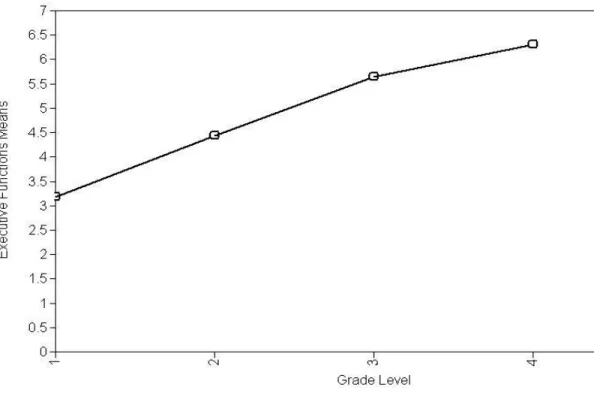
Figure 7. Executive Functions Means ………...……….76
LIST OF TABLES
Table 1. Participants’ Demographic Profile.………. 37
Table 2. Sample Statistics for Variables.……….. 59
Table 3. Shapiro-Wilk W Test Statistics………...……… 60
Table 4. Written Language CFA Model Results………...……… 63
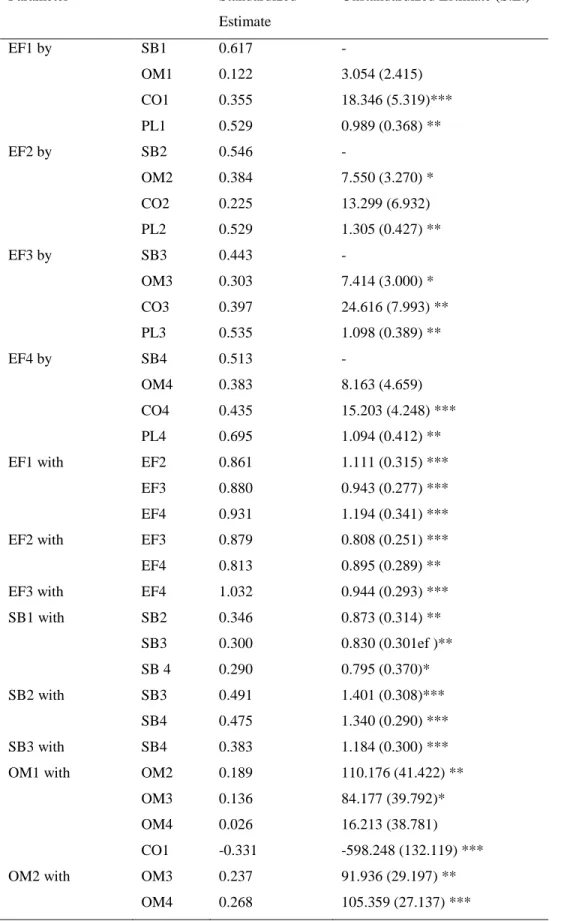
Table 5. Executive Functions CFA Model Results……….. 65
Table 6. Estimated LGMs………..67
Table 7. Written Language LGM Fit Results………... 69
Table 8. Written Language Latent Growth Model Estimates………... 71
Table 9. Executive Functions LGM Fit Results……… 75
Table 10. Executive Functions Latent Growth Model Estimates………... 77
Table 11. Full Latent Growth Models………..80
Table 12. Full Latent Growth Models Fit Results………..… 81
Table 13. Sample Statistics for Summed Variables……….82
LIST OF ABBREVIATIONS AIC Akaike Information Criterion
CFA Confirmatory Factor Analysis CFI Comparative Fit Index
EF Executive Functions
FIML Full-information maximum likelihood
GS Group Status
LGM Latent Growth Model LRT Likelihood Ratio Test MAR Missing at random
MCFI Modified Comparative Fit Index
NAEP National Assessment of Educational Progress PAL Process Assessment of the Learner
PCLOSE p-value of close fit
RMSEA Root Mean Squared Error of Approximation
SEM Structural Equation Modeling
SRMR Standard Root Mean Square Residual SSpB Spatial Span Backward
SSpF Spatial Span Forward SW Struggling writers
SWC Struggling writers control SWT Struggling writers treatment TDW Typically developing writer TIC Time-Invariant Covariate TVC Time-Variant Covariate
WJ III Woodcock Johnson-III Test of Cognitive Abilities WL Written Language
CHAPTER I: Introduction
According to the 2011 National Assessment of Educational Progress (NAEP) writing report, a mere 27% of eighth and twelfth grade students in the US scored at or above the proficient level (National Center for Education Statistics, 2012). Furthermore, this percentage has not changed significantly from previous reports in 2007 and 2002, which indicates that about two-thirds of students demonstrate limited mastery of prerequisite information and skills that are essential for proficient writing at their given grade level. If
these data are indicative of performance across grades, then the majority of students in the United States are struggling with written language.
Elementary school is a particularly important period to research because writing problems for children at this level in the United States are significant. In 2002, only 11 states had 30% of their fourth grade students at or above proficiency in writing (U.S. Department of Education, 2003). Furthermore, the skills that children develop during these early years provide the foundation for the quality of written output in later years.
Further, the writer needs to comprehend the structure (i.e., sentence, paragraph, and text), content (i.e., ideas and their relationships), and purpose (i.e., writer’s goals and audience) of the writing process (Collins & Gentner, 1980). Hayes and Flower (1986) described planning, translating, and reviewing as the three most important cognitive processes used in writing. Specifically the writer generates and organizes ideas, and sets goals during the planning process, followed by sentence generation (i.e., translating ideas into sentences), reviewing, and editing. While later in development students rely on self-regulation during writing, in early writing development students rely on support from others to engage executive functions (e.g., attention, planning, revising; Berninger & Amtmann, 2003). Luria (1973) suggested that at first the development of writing requires many external supports for performance, but it increasingly changes into an automatic skill. At the elementary age, educators have the optimal opportunity to provide interventions for students who need assistance in developing effective writing skills. It is more likely that in later grade levels students will have already developed inefficient skills, thus making learning effective writing skills more difficult to relearn.
Similarly, Graham and Harris (1996) suggested that knowledgeable writers use cognitive processes (i.e., planning, translating, reviewing, self-regulation) to manage the writing task. As well, when compared to less knowledgeable writers, knowledgeable writers are more likely to be concerned with the meaning of their text than with spelling and
content, genres, and audience to focus the writing task (McCutchen, 2006). Graham and Harris (1996) suggested that, unlike knowledgeable writers, students with writing difficulties do little planning and revising, and frequently just write down any information that may be relevant to the topic, paying little attention to the audience or text organization. In addition, poor writers tend to produce texts that lack clarity, are shorter in length, are more poorly organized, and are less interesting than the texts of good writers (Hooper et al., 2002).
Researchers across many fields are investigating written language. As such, psychologists, educational specialists, and neuroscientists are contributing to the scientific investigation of this multifaceted developmental process, which includes many skills (e.g., spelling, grammar, organization) that change over time. Research on written language has proliferated in the past several decades, but the quantity of writing research continues to lag behind reading research (Graham & Perin, 2007; National Commission on Writing, 2003), thus limiting the amount of empirically-based knowledge of writing. Therefore, efforts to fill in the gaps in writing research are needed. In significant demand are research agendas on writing development, instructional practices, and assessment procedures (Graham, Harris, & Hebert, 2011).
Research to date has demonstrated various relationships between written language and cognitive (Hooper et al., 2002; McCutchen, 2006; Swanson & Berninger, 1996),
perceptual-motor (Graham, Berninger, Abbott, Abbott, & Whitaker, 1997; Graham & Harris, 2005) and linguistic components (Abbott & Berninger, 1993; Berninger et al, 2006; Wakely, Hooper, de Kruif, & Swartz, 2006). However, few researchers have conducted studies to examine the relationship between written language and executive functions (Altemeier, Abbott, & Berninger, 2008; Hooper, Swartz, Wakely, de Kruif, & Montgomery, 2002; Hooper et al., 2011). As well, how the factors relate to written language at different ages and how these relationships change over time, if at all, remain unknown.
Altemeier, Abbott, and Berninger (2008) have begun to address the relationship between writing and executive functions. They examined how performance changed on three executive function tasks in elementary aged students across two cohorts (i.e., cohort 1 was in grades 1 to 4, cohort 2 was in grades 3 to 6). The three executive function tasks were: 1) the Delis–Kaplan Executive Function System (D-KEFS; Delis, Kaplan, & Kramer, 2001) Color–Word Interference Test third condition that measured inhibition, 2) the D-KEFS fourth condition that measured inhibition/switching, and 3) the Process Assessment of the Learner (PAL; Berninger, 2001) Rapid Automatic Naming of Words and Letters subtest that
associated with written expression and spelling than fine-motor function. Both of these studies found strong relationships between executive functions and written language, therefore it is necessary to conduct an in-depth investigation to gain a deeper understanding of the relationship.
Thus, I examined the relations among executive functions and written language in elementary aged children using a longitudinal research design. Longitudinal designs allow researchers to examine how relevant skills develop in relation to each other. This design is different from cross-sectional design, in that researchers who employ longitudinal designs collected data from the same participants across multiple time points, whereas researchers who employ cross-sectional designs collected data at the same time point with different participants at different times in development (e.g., four, five, and six year olds). Thus, longitudinal designs are particularly important for latent constructs that are hypothesized to change overtime, such as executive function scores and writing performance scores, since change can be more accurately measured when researchers use the same participants.
Even though an empirically-based intervention for improving executive functions and written language has yet to be published, several activities and interventions for enhancing executive functions in reading, mathematics, and social and emotional development have shown positive results. In their review, Diamond and Lee (2011) highlighted six approaches with supporting scientific evidence that improve executive functions: computerized training (i.e., CogMed working memory training), a combination of both computerized and non-computerized games (i.e., training for reasoning and speed), martial arts and mindfulness practices (e.g., yoga), two classroom curricula (i.e., Tools of the Mind and Montessori curriculum) and two add-ons to classroom curricula (i.e., Promoting Alternative Thinking Strategies and Chicago School Readiness Project). CogMed
computerized working memory training programs have not only enhanced working memory (Olesen, Westerberg, & Klingberg, 2004), the programs have also been shown to increase reading comprehension (Dahlin, 2011), mathematical reasoning (Homes, Gathercole, & Dunning, 2009), and end of year assessments for Language Arts and math (Holmes & Gathercole, 2013). Thus, it is plausible that a program designed to increase planning, sustained attention, inhibitory control, and working memory skills would also increase written language skills.
Summary
that executive functions are related to writing (e.g., Altemeier, Abbott, & Berninger, 2008; Hooper et al, 2011), but more research is needed on the longitudinal effects. Thus
researchers need to conduct studies that examine the complex relationships among writing skills and cognitive processes (e.g., executive functions) over time.
The purpose of the present study was to investigate connections among the
development of writing and executive functions in elementary aged children. Specifically, I wanted to examine how to best model executive functions and written language, and then determine the relationship between executive functions and written language in students from first grade to fourth grade. I used data that were collected for a longitudinal research project where the primary investigator examined the effects of many cognitive processes (e.g., memory, attention, language, fine motor) on writing development and the impact of a published writing intervention for struggling writers. Because the focus of this study was executive functions and writing, I did not include other variables that have been found to affect written language (e.g., teacher quality). The participants were assigned to one of two groups based on their performance scores on the Wechsler Individual Achievement Test – Second Edition form A (WIAT-II) (Wechsler, 2002) written expression subtest: 1) Typically developing writers group (TDW; i.e., standard score > 90), or 2) Struggling writers group (i.e., standard score ≤ 90). Additionally, the struggling writers group was randomly assigned to treatment (SWT) or control (SWC). I used latent growth curve analysis with structural equation models to answer the following research questions:
Hypothesis 1a: Scores on measures of timed alphabet writing, written word fluency, and spelling will indicate a single factor for written language.
Hypothesis 1b: The single factor model for written language will exhibit metric measurement invariance at each time point.
Hypothesis 1c: The growth trajectory of written language for students from first grade to fourth grade will be best represented by a positive linear model.
Hypothesis 1d: Participants in the typical group will have higher written language performance scores in first grade than participants in the struggling writers control group, and participants in the struggling writers treatment group, after controlling for school.
Hypothesis 1e: Participants in the typical group will have a steeper growth trajectory than participants in the struggling writers control group, and participants in the struggling writers treatment group, after controlling for school.
Hypothesis 1f: Participants in the struggling writers treatment group will have a steeper growth trajectory than participants in the struggling writers control group, after controlling for school.
2) What is the optimal functional form (i.e., linear or quadratic) of the growth trajectory of executive functions for students from first grade to fourth grade?
Hypothesis 2c: The growth trajectory of executive functions for students from first grade to fourth grade will be a positive linear model.
Hypothesis 2d: Participants in the typical group will have higher executive function scores in first grade than participants in the struggling writers control group, and participants in the struggling writers treatment group, after controlling for school.. Hypothesis 2e: Participants in the typical group will have a steeper growth trajectory than participants in the struggling writers control group, and participants in the struggling writers treatment group, after controlling for school.
Hypothesis 2f: Participants in the struggling writers treatment group will have a steeper growth trajectory than participants in the struggling writers control group, after controlling for school.
3) After controlling for school and group status, to what degree do executive functions measured at each time point predict written language at each time point?
Hypothesis 3a: The single factor for executive functions at Time n will positively predict written language at Time n + 1 after controlling for school and group status. Hypothesis 3b: Executive functions will have a within-person and between-person effect on written language at each time point after controlling for school and group status.
4) After controlling for school and group status, to what degree does written language measured at each time point predict executive functions at each time point?
Hypothesis 4b: Written language will have a within-person and between-person effect on executive functions at each time point after controlling for school and group status. Findings from this study could lead to empirically derived interventions aimed at
CHAPTER II: Literature Review
In this review, I describe various approaches to the study of written language
development and provide a comprehensive review of the theoretical and empirical literature as it relates to executive functions and writing. First, I provide a description of the cognitive models of written language. Next, I review the major theoretical frameworks of executive functions that align with those that I examined (i.e., planning, sustained attention, inhibitory control, and working memory) and finally, I conclude with the empirical evidence that supports the proposed relationships among the development of written language and executive functions.
Models of Written Expression
The traditional perspective on writing has been outcome focused (Hayes & Flower, 1986), where the written product is the primary concern (Berninger, Fuller, & Whitaker, 1996). This perspective has provided knowledge about the nature (e.g., predictable pattern) of writing development (e.g., from random scribbling to sentences). However, the majority of information on writing development has come from researchers who have focused their studies on the processes involved with writing (Berninger et al., 1996).
2003) simple view of writing, and Berninger and Winn’s (2006) Not-So-Simple-View of
Writing. These models, while unique, all focus on the cognitive processes involved with writing rather than the final written product.
Skilled writers’ model. Hayes and Flower (1980) proposed a cognitive model of the writing process that became one of the most influential models for understanding the processes involved in writing (Figure 1; Berninger et al., 1996; Wakely, Hooper, de Kruif, & Swartz, 2006; Wong & Berninger, 2004). Through their model, Hayes and Flower described a complex
interactive problem solving process that operates within the task environment and the writer’s long-term memory (Hayes, 1996; Hayes & Flower, 1980). The task environment includes the social (e.g., teacher’s writing assignment) and physical factors (e.g., text the writer produced) involved in writing where the writer uses long-term memory to incorporate knowledge about the topic, audience, and writing plans. Hayes and Flower (1987) also identified the cognitive
processes (i.e., planning, translating, and reviewing) involved in written composition.
Planning, the first cognitive process described, is a problem-solving process used by the writer to retrieve prior knowledge of topics and strategies and to organize ideas and generate goals (e.g., decision measures and procedures). During the second process, known as translating, the writer uses the writing plan to transform ideas into meaningful units of text (i.e., sentence generation). Finally, during the third cognitive process, reviewing, the writer reads and edits to improve the quality of text by evaluating it for correct writing conventions (e.g., spelling,
COGNITIVE WRITING PROCESSES
Planning -idea generation -organizing - goal setting
Translating
-text generation
THE WRITER’S
LONG-TERM MEMORY
Knowledge of the topic Knowledge of the Audience
Stored Writing Plans Writing
Assignment topic audience motivating cues
Text Production
Revision
Reading
Editing
TASK ENVIRONMENT
Figure 1. The Hayes-Flower Model (1980) redrawn for clarification (Hayes, 1996)
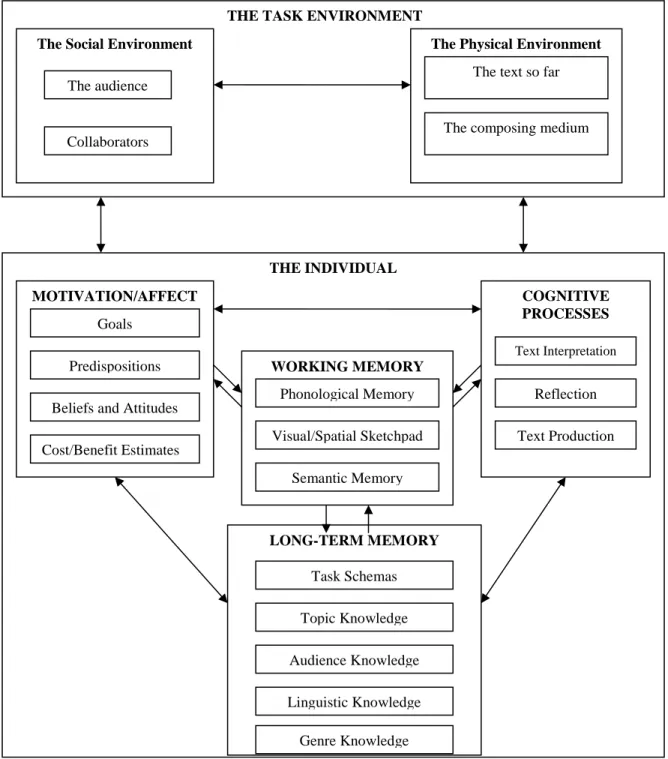
In 1996, Hayes published a revised framework of the original Hayes-Flowers (1980) model (Figure 2). In contrast to the original model with three components (i.e., task environment, cognitive writing processes, and long-term memory), the new model included only two
including text interpretation (i.e., reading, listening, and scanning), reflection (i.e., problem solving, decision making, and inferencing), and text production (i.e., producing written, spoken, or graphic output from internal representations; Hayes, 1996).
Figure 2. Hayes’ new model (Hayes, 1996).
THE TASK ENVIRONMENT
The Social Environment The Physical Environment
The audience
Collaborators
The text so far
The composing medium
THE INDIVIDUAL
MOTIVATION/AFFECT
Goals
Predispositions
Beliefs and Attitudes
Cost/Benefit Estimates
COGNITIVE PROCESSES
WORKING MEMORY
Text Interpretation
Reflection
Text Production Phonological Memory
Visual/Spatial Sketchpad
Semantic Memory
LONG-TERM MEMORY
Task Schemas
Topic Knowledge
Audience Knowledge
Linguistic Knowledge
Linguistic model of writing with young children. Without question the Hayes and Flower (1980) model has contributed significantly to the understanding of the writing process; however, it was created based on research with adults and college-age participants, many of whom were knowledgeable writers (Berninger et al., 1996; Wakely et al., 2006; Wong &
Berninger, 2004). In contrast, Juel et al. (1986) developed a model to explain how writing skills develop in elementary aged children. They aimed to explain writing development as
simplistically as possible, claiming that writing is composed of two key processes, spelling and ideation (i.e., generation and organization of ideas). While this model describes the linguistic mechanisms that relate to writing skills, it does not incorporate other cognitive components (e.g., planning) or the development of writing skills. Berninger and colleagues (Berninger, 2000; Berninger & Winn, 2006) have expanded upon the earlier models of Hayes and Flower (1980) as well as Juel et al. (1986), to create a model that describes writing skills development for primary school children.
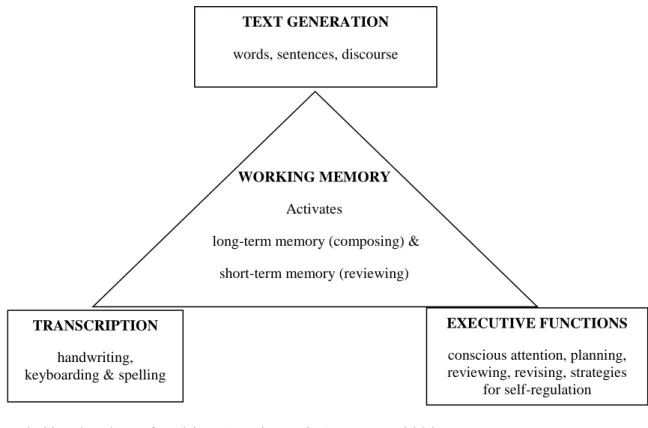
Activates long-term memory
(composing) & short-term memory
(reviewing)
Figure 3. Simple View of Writing (Berninger & Amtmann, 2003)
Transcription and executive functions are the two primary components of the model and together support text generation (i.e., composition; Wong & Berninger, 2004). These processes occur in an environment supported by different types of memory (Berninger, 2000). In this model, the cognitive processes involved in translating are divided into transcription and text generation. Transcription is the coordination of handwriting (i.e., producing letters) and spelling (i.e., producing words), and text generation (i.e., word, sentence, and text) is a dynamic process where ideas are produced and represented as language in memory (Berninger, 2000). These skills allow the writer to transform language into orthographic symbols (Berninger & Amtmann, 2003; Berninger et al., 1996).
In this model, information from short-term memory and long-term memory is stored briefly in working memory throughout the writing process (Berninger, 2000; Swanson & Berninger, 1996). Information can be actively held in short-term memory for a few seconds before being pulled back into working memory or moving indefinitely to long-term memory.
TEXT GENERATION
words, sentences, discourse
TRANSCRIPTION
handwriting, keyboarding & spelling
EXECUTIVE FUNCTIONS
conscious attention, planning, reviewing, revising, strategies
for self-regulation
WORKING MEMORY
Activates
long-term memory (composing) &
During reviewing and revising, short-term memory is activated and long-term memory is activated during text generation (i.e., composing). Executive functions used during text generation include attention, planning, reviewing, revising, and strategies for self-regulation. These functions can be used prior to and during composing or revising, and after a draft is finished. The writer self-regulates by using strategies to begin and maintain the writing process and can be focused upon a part of the text or the entire composition (Berninger, 2000; Berninger et al., 1996).
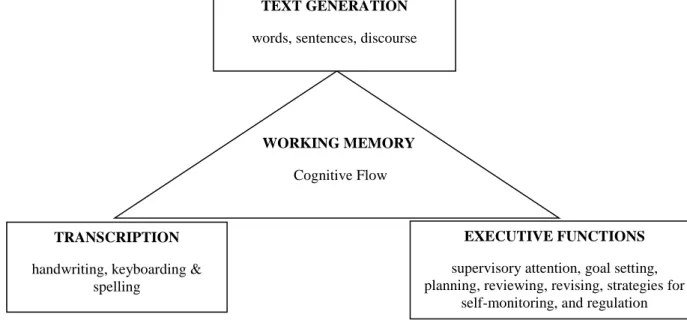
Berninger and Winn (2006) used research about technology and the brain to elaborate upon the simple view of writing model, and created a new model called the Not-So-Simple View of Writing. In their Not-So-Simple View of Writing model, Berninger and Winn (2006)
identified and described the multiple components of beginning and developing writing and suggested that all of the components (i.e., transcription, executive functions, working memory, and text generation) interact and develop. The basic components of transcription, executive functions, working memory, and text generation are the same as in the original model. However in this updated model, short-term memory is activated during reviewing and revising, and long-term memory is activated during planning, composing, reviewing, and revising. In addition, working memory, identified as “cognitive flow” (Berninger & Winn, 2006, p. 97), includes verbal information storage units (i.e., orthographic, phonological, and morphological), a
phonological loop, and executive supports (i.e., linking verbal working memory with executive functions and non-verbal working memory). Supervisory attention was added, which is a system that focuses attention on relevant information and prevents attention resources from being
(e.g., metalinguistic and metacognitive awareness), cognitive presence, and cognitive engagement (Berninger & Winn, 2006).
Berninger and Winn’s (2006) Not-So-Simple View of Writing model (Figure 4) is relevant for understanding the development of writing skills because it encompasses both the low-level (e.g., transcription) and high-level (e.g., linguistic) cognitive skills deemed important during writing (Abbott & Berninger, 1993; Berninger, 2000; Berninger & Amtmann, 2003; Berninger & Winn, 2006). Berninger and Amtmann (2003) explained how the writing
Activates long-term memory
(composing) & short-term memory
(reviewing)
Figure 4. Triangle for the Not-So-Simple View of Writing (Berninger and Winn 2006).
Summary. Each of the theorists who created the models reviewed previously embrace a slightly different perspective for explaining writing, although taken together a thorough
understanding of the mechanisms of writing and how they relate becomes clearer. As each theorist suggested, cognitive processing strongly contributes to writing ability, although the specific contribution of individual cognitive processes (e.g., executive functions, language) was not illuminated in any of the models. For instance, Berninger and Winn (2006) broadly explained the influence of executive functioning on writing in their Not-So-Simple View of Writing model, but the specifics regarding when and how executive functioning influences writing were not explicated. However, as previously described, researchers have begun to examine how executive functions relate to writing skills (e.g., Altemeier et al., 2008; Hooper et al, 2011).
Theoretical Frameworks of Executive Functions
Numerous definitions of executive functions have been proposed as well as several models, theories, and frameworks (e.g., Miyake et al, 2000; Pennington, Bennetto, McAleer, & Roberts, 1996; Zelazo, Carter, Reznick, & Frye, 1997). Many definitions of executive functions are
simply a list of the components that are thought to comprise executive functioning. Several
TEXT GENERATION
words, sentences, discourse
TRANSCRIPTION
handwriting, keyboarding & spelling
EXECUTIVE FUNCTIONS
supervisory attention, goal setting, planning, reviewing, revising, strategies for
self-monitoring, and regulation
WORKING MEMORY
models do not focus on the theoretical relations among executive function components, but are constructed based on the components of the measure being used to assess executive function processes (Barkley, 2001).Other definitions and models treat executive function as a single distinct human ability (Zelazo, Muller, Frye, & Marcovitch, 2003).
Whereas it would be beneficial for researchers and others who examine this construct to have a common understanding and terminology, current definitions and theories encompass a wide range of terms and mechanisms (Borkowski & Burke, 1996). For instance, Miyake and colleagues (Miyake et al., 2000; Miyake, Friedman, Rettinger, Shah, & Hegarty, 2001) suggested that executive functions are a set of control processes that operate toward goal-directed behavior. Their model includes three executive functions that are considered lower-level functions and can be precisely defined and assessed using simple measures: shifting, updating, and inhibition. Denckla (1996, 2007) asserted that executive functions are a set of central, domain-general
action control processes (i.e., inhibit, initiate, sustain, and shift). Thus, these theorists each
described executive functions as control processes that include inhibiting and shifting, but they
each also have unique aspects to their definitions (e.g., goal-directed behavior versus
domain-general) and components (e.g., updating versus initiating).
As well, researchers alternately describe executive functions as processes (i.e., planning, inhibition), dispositions (e.g., goal directness), and specific strategies (e.g., verbalized strategies). For example, Anderson (2002) described executive function domains that operate in an
I am interested in examining the relations among executive functions and the development of written language. In their psychological model of executive functions, Pennington and colleagues (Pennington, Bennetto, McAleer, & Roberts, 1996; Welsh &
Pennington, 1988; Welsh, Pennington, & Grosser, 1991) provided a succinct, yet comprehensive
description of working memory and inhibition. The problem solving framework put forth by
Zelazo, Carter, Reznick, and Frye (1997) aided in an understanding of the role of planning, and
their ideas aligned with the cognitive models of written language. Even though neither Zelazo et
al. nor Pennington et al. explicated sustained attention in their models, Pennington suggested that attentional control is an executive function behavior. These are two theories that provide the most helpful perspective upon the executive functions posited to relate to writing: working memory, sustained attention, inhibitory control, and planning. In this section, I will define executive functions according to the theorists, as well as explain their models and their corresponding mechanisms.
Psychological model. Pennington and colleagues (Pennington, Bennetto, McAleer, & Roberts, 1996; Welsh & Pennington, 1988; Welsh, Pennington, & Grosser, 1991) have theorized
and examined executive functions through three lenses: developmental psychology, cognitive
psychology, and neuropsychology. The definition Welsh and Pennington put forth in 1988 has
endured, even though Pennington and Ozonoff (1996) claimed that it was temporary and
under-specified. Welsh and Pennington (1988) defined executive function as:
the ability to maintain an appropriate problem solving set for attainment of a
future goal (Bianchi, 1922; Luria, 1966). This set can involve one or more of the
appropriate time, (b) a strategic plan of action sequences, and (c) a mental
representation of the task. (pp. 201-202)
Executive function behaviors and skills such as regulatory control, planning, set-shifting,
working memory, contextual memory, inhibition, fluency, maintaining goals, attentional control,
and self-monitoring all facilitate goal-directed behavior (Pennington & Ozonoff, 1996; Roberts
& Pennington, 1996), such as writing.
Pennington, Roberts and colleagues (Pennington, Bennetto et al., 1996; Roberts &
Pennington, 1996) concluded that because the term executive function was a broad construct that
included numerous components, creating a model was a nearly impossible task. Therefore, after
several years of investigating executive functions, Pennington, Roberts and colleagues
(Pennington, 1994; Pennington, Bennetto, et al., 1996; Roberts & Pennington, 1996) decided to
focus their efforts instead towards examining a subset of components common among most
theories of executive functions, specifically inhibition and working memory. Roberts and
Pennington (1996) described inhibition as “not performing the incorrect preponent response” (p.
110) where actions are restrained from occurring and therefore from interfering with subsequent
actions. Pennington (1994) defined working memory as “a computational arena, in which
information relevant to a current task is both maintained on line and subjected to further
processing. Because it is a limited-capacity system, inhibition or interference control is intrinsic
to its operation” (p. 246). Furthermore, working memory was described as temporary and of
limited capacity, and used to hold information online so that the information can be manipulated
along “with contextual specifics to generate upcoming action” (Roberts & Pennington, 1996, p.
109). The characteristics were presumed to include simultaneous storage and maintenance of
activity. Pennington et al. (1996) described seven factors that influence, relate, and maintain the
components of working memory: 1) capacity (i.e., number of bits of information that can be
active at one time), 2) connectivity (i.e., reciprocal connections in the brain), 3) interconnectivity
(i.e., connections among working memory components), 4) complexity (i.e., the load of the
connections), 5) maintenance (i.e., length of time information is kept online), 6) priming (i.e.,
initial arousal or reproduction of a working memory component), and 7) arousal (i.e., nonspecific
activation of working memory components). Their ideas on these two constructs stem from an
understanding of the link between the prefrontal cortex and cognitive processing, specifically
behaviors that require planning of future actions, sustaining the plan until enacted, and inhibiting
irrelevant actions.
In their framework, Pennington, Roberts and colleagues (Pennington, Bennetto, et al.,
1996; Roberts & Pennington, 1996) attempted to explain the dynamic interaction of working
memory and inhibition. Roberts and Pennington (1996) highlighted three key factors of the
framework: 1) resources of working memory, 2) intensity of the opposing proponent responses,
and 3) requirements of working memory to produce the correct response. Pennington, Roberts
and colleagues (Pennington, Bennetto et al., 1996; Roberts & Pennington, 1996) suggested that
working memory controls the degree to which inhibition is necessary. Their approach to the
interaction is that when working memory appropriately selects a response, inhibition is not
needed because other actions are inhibited by default. However when incorrect prepotencies are
strong, inhibition is necessary to deselect these responses and therefore working memory is
directed to select the correct response.
Welsh and Pennington asserted that when defining executive function it is necessary to
(e.g., sophisticated planning, verbalized strategies) to encompass the developmental aspects of
executive functions from infants to adults. They also suggested that these behaviors are brought
about by specific parts of the brain (i.e., prefrontal cortex) that have been linked to executive
functions. These researchers also claimed that, over the lifespan, executive functions develop on
a continuum from simple to more refined.Specifically, mental representations of young children
(i.e., 2 to 7 years) are one-dimensional and concrete, and therefore do not contain all the
pertinent task information, but as children develop, these representations begin to include
abstract sequences of actions and imagined goals and outcomes. In general, they suggested that
executive function components do not change in their basic nature, but they do increase in complexity; beginning simple and developing into complex components.
Problem-solving framework. Zelazo, Carter, Reznick, and Frye (1997) created a problem-solving framework for understanding executive functioning. They suggested a
problem-based lens with time ordered phases to aid in the systematization of the wide range of
executive function aspects. With the hope of creating a definition that was more than a list of
executive function abilities (e.g., expectation, goal creation, planning, and monitoring of
responses and feedback; Stuss & Benson, 1986), Zelazo et al. (1997) defined executive function
as the control of thought and action where the outcome is the solution to the problem. While
Pennington and colleagues sought to explore the interactions between two executive functions,
Zelazo et al. decided that in order to study executive functions a framework was needed that
could be used in various contexts that involved problem solving.
Zelazo et al. (1997) described their framework as four sequential processes for engaging in
the steps required to solve a problem, more commonly referred to as the phases of executive
advantage of their model is that it accounts for complex strategic and metacognitive executive
function processes (i.e., insight, intention, rule use, error detection, and error correction) that are
necessary for problem solving, but not included in other models that emphasize simple response
inhibition. During the first phase, problem representation, the student uses insight to recognize
that there is something unknown that requires a sequence of possible actions to solve. Following
phase one is the plan generation phase where the student has the intention to solve the problem
and selects a plan from among alternatives. The plan includes rules, or the strategies to be used
and the sequence that will be followed. In the third phase, execution, the plan is maintained as it
guides thought or action, and the prescribed behavior is carried out. Finally, in the last phase,
evaluation, actions are evaluated and a decision is madeas to whether a solution has or has not
been obtained. This final phase requires error detection as well as error correction (i.e., revising a
previous phase). Zelazo et al. asserted that one of the benefits of their framework is that it easily
allows detection of executive function difficulties by identifying the phase that needs to be
revised in order to solve the problem correctly.
In 2003, Zelazo, Muller, Frye, and Marcovitch revised their framework to include a
developmental component. In their Cognitive Complexity and Control (CCC) theory (Frye,
Zelazo, & Burack, 1998; Zelazo & Frye, 1998), they explained that executive function
development “can be understood in terms of age-related increases in the maximum complexity of
the rules children can formulate and use when solving problems” (p. vii). In other words,
changes in executive function performance scores are driven by maturation such that, as children
age the rules they can use to solve problems become more complex.
While Zelazo et al. (2003) advanced the understanding of the development of executive
theory a step further to include emotional and motivational components. They suggested that
these factors are important because they bring about meaningful, self-relevant (i.e., applicable to
the individual) rewards or punishers. They assert that a complete understanding of the
development of executive functions requires both hot (i.e., emotional and motivational) and cool
(i.e., cognitive) components. Zelazo et al. (2010) suggested that together these components
interact (e.g., emotional aspects can hinder or assist cognitive processing), are driven by
maturation, and influence the control of thought and goal-directed behavior (i.e., executive
functions).
Working memory as an executive function. The executive functions theories that I reviewed above subsume working memory under executive functions, in that working memory is
one of several executive functions. However, not all theorists model working memory in this
way. For instance, Cowan (2005) and Baddeley and Larsen (2007) proposed models that only
explain working memory. Neither included the term executive functions, although they did include constructs of attention, which Zelazo et al. and Pennington et al. consider an executive function. Furthermore, Berninger and Winn (2006) model working memory and executive
functions as separate constructs in their Not-So-Simple View of Writing. The differences in how theorists model the relationship between working memory and executive functions is not
insignificant; however, an ideal model has yet to be supported. However, even though the models vary in scope and emphasis, they all recognize the essential role working memory has in complex cognition (Shah & Miyake, 1999).
2010). Generally executive functions begin as simple and develop on a continuum to become
more refined across the lifespan (Welsh & Pennington, 1988). For example, when people are
young they can only handle tasks requiring little effort but then as they grow they can handle more demanding ones (Denckla, 1996). Specifically, executive functions begin to develop around 9 months of age and continue into theearly forties (Denckla, 2007). As well, the mental
representations of young children are one-dimensional and concrete, and therefore do not contain
all the pertinent task information, but as children develop these representations begin to include
abstract sequences of actions, and imagined goals and outcomes (Welsh & Pennington, 1988)
Summary. The theoretical and empirical evidence in the above review supports the view that planning, sustained attention, inhibitory control, and working memory regulate thought and
action. Through their frameworks, Pennington et al. (Pennington, Bennetto et al., 1996; Roberts
& Pennington, 1996) and Zelazo et al. (2003) defined the purpose of executive functioning as
enabling a process by which to solve a problem, and explained that success occurs through
creating an accurate mental representation of the task and then generating a plan to execute that
task. In addition, they both included two of the executive functions that I examined in my study,
working memory and inhibition. Pennington et al. also included sustained attention, and Zelazo
et al. included planning.
Modeling Executive Functions and Writing
The benefit of using the theories described above to inform this study is that they all look
at their constructs through a problem solving lens. The theories of writing that I outlined each
suggest a sequence of processes as the basis for creating a written product, emulating the
the sequence of processes is the problem-solving method). Therefore, the ideas from the writing
and executive functioning theories align, with few modifications.
In Berninger and Winn’s model (2006), they described the development of written
language for young children, including executive functions and working memory, but did not detail the relationship between these constructs. Thus, I employed the models by Pennington et al. (Pennington, Bennetto et al., 1996; Roberts & Pennington, 1996), and Zelazo et al. (2003) to understand executive functions in a writing context. One modification I made is that I not only
included the executive functions of working memory and inhibition (i.e., the executive function
components similar to Pennington et al. and Zelazo et al.), I also included the components of
attention and planning, from Pennington et al. and Zelazo et al. respectively. Based on
Berninger and Winn’s (2006) theory, attention and planning are fundamental to writing;
therefore I felt it was appropriate to include these components in the current study. Pennington et al. considered working memory a component of executive functioning, and theory (Pennington
et al. and Zelazo et al.) and empirical data (Hooper et al., 2011) support executive functions as
one construct that has several interacting components. Thus, in this study I will investigate how
executive functions operate to control thought and performance of complex tasks through
cognitive processes that include planning, sustained attention, inhibitory control, and working
memory. One such complex task is writing. Surprisingly, there is a lack of research on how executive functions relate to writing development and performance.
Research on Relations among Executive Functions and Writing
Based on the Not-So-Simple View of Writing model (Berninger & Winn, 2006)
orthographic-motor integration and processing speed and is associated with high-level
composing (Altemeier, Abbott, & Berninger, 2008). As well, executive function components of attention, inhibitory control, planning, and working memory have been linked to writing (Hooper et al., 2011), but empirical research has not been published on the relationship between executive functions, operationalized through both low level (e.g., inhibition) and high level (e.g.,
planning)components, and the development of writing skills.
Altemeier, Abbott, and Berninger, (2008) conducted an experiment in which they
investigated the relationship between three low level executive function measures (i.e., D- KEFS Inhibition, PAL RAS, and D-KEFS Inhibition/Switching) and the development of spelling and written expression. They found that as children matured from first grade to fifth grade their processing time decreased on executive function tasks that required inhibition and switching. Furthermore, their results suggested that inhibition and rapid automatic switching contribute to spelling and written expression. They suggested that executive functions may contribute differently to spelling and written expression, such that lower level executive functions (e.g., inhibition, set shifting) may support word-level skills, such as spelling, while higher level executive functions (e.g., planning) may support text-level writing.
Hooper et al. (2011) have begun to examine the relationships among written expression and spelling with fine-motor speed, language, short-term memory, long-term memory, working memory, and executive functions in their longitudinal study with first and second grade students. The preliminary results revealed a model that included three key latent traits: fine-motor,
regression coefficients were equal) from first to second grade. As well, language, and attention and executive function skills had a greater role in writing performance scores than fine-motor speed. These findings do not align with common theoretical understandings of writing
development, which suggest that fine-motor speed is the strongest predictor of writing in early elementary school (Berninger & Winn, 2006). Thus the contribution of fine-motor speed within first and second grade students is questionable, or perhaps fine-motor speed has a greater contribution even earlier than predicted.
The influence of written language on executive functions is another interesting relationship, but has even less support than the reverse relationship. Graham (1997) and
colleagues (de la Paz, Swanson, and Graham, 1998) investigated executive control and revising, where the researchers taught students a procedure for revising. The procedure provided the students with a systematic approach to revising that specifically aided in executive control (i.e., self-regulation). When the students used the revising procedures, they had fewer difficulties with revising, and their essays improved as compared to when they used their typical revising procedures. While there is no empirical research on the influence of writing on executive functions, it seems plausible that advances in written language skills could have an effect upon how students engage their executive functions.
Based on the results of these studies, researchers are able to gain insight into the
functions influence written language in school-aged children, which makes the lack of more focused research unexpected (Graham, Harris, & Hebert, 2011).
Summary
An understanding of the relationships between executive functions and writing
development still remains in its initial stages. As reviewed here, researchers have suggested that executive functions influence written language, although few researchers have empirically studied written language and executive functions longitudinally. In other words, researchers should aim to model the constructs of executive functions and writing skills from a
developmental perspective, where students are examined across time as in the Hooper et al. (2011) study. Longitudinal studies provide beneficial data for understanding how the mechanisms of a construct change over time and how they influence functioning. As well, researchers can gain insight regarding the interactions among the constructs. If researchers can obtain empirical evidence to support the posited relationships among executive functions, writing skills, and their development, these data can be used to inform teachers when planning language-related interventions.
Current Study
This longitudinal study was part of a project to further the understanding of the
development of writing and executive functions in elementary school children. I investigated the relations among the development of written language and executive functions first graders through their fourth grade year. I modeled these relations using a latent growth curve analysis with a structural equation model.
However, the written product is important because ultimately researchers must show that their work has a practical effect upon writing performance. Hayes (1996) argued that authors create written products that have been developed through a complex interactive process involving, but not limited to, the writing assignment, the author’s knowledge about the topic, planning,
sentence generation, and editing for correct spelling, grammar, and punctuation. Juel, Griffith, and Gough were clear that writing incorporates spelling, the generation of ideas, and
organization of ideas, and Berninger and colleagues asserted that spelling, producing letters, and executive functions together support the goal of writing, text generation. Taken together, I believe these theorists described the product of written language as a complex macroconstruct that captures the way in which the cognitive processes and the component skills of writing come together. Thus, the most appropriate outcome measure for written language is one that is
generated through cognitive processing as well as writing skills such as spelling, grammar, idea generation and organization, sentence construction, and ultimately a composition. In general, researchers must use an appropriate and equally complex outcome measure that is sensitive to the differences in the processes involved when writing in order to capture as many of these components as possible (e.g., Wechsler Individual Achievement Test – Second Edition (WIAT II) form A Written Language, Wechsler, 2002; Test of Written Language 4, Hammill & Larsen, 2009). For this study, I used data that were collected using the Written Language measure from the WAIT II (2002), which captures many components of writing.
This study was guided by the following research questions and hypotheses:
Hypothesis 1a: Scores on measures of timed alphabet writing, written word fluency, and spelling will indicate a single factor for written language.
Hypothesis 1b: The single factor model for written language will exhibit metric measurement invariance at each time point.
Hypothesis 1c: The growth trajectory of written language for students from first grade to fourth grade will be best represented by a positive linear model.
Hypothesis 1d: Participants in the typical group will have higher written language
performance scores in first grade than participants in the struggling writers control group, and participants in the struggling writers treatment group, after controlling for school. Hypothesis 1e: Participants in the typical group will have a steeper growth trajectory than participants in the struggling writers control group, and participants in the struggling writers treatment group, after controlling for school.
Hypothesis 1f: Participants in the struggling writers treatment group will have a steeper growth trajectory than participants in the struggling writers control group, after
controlling for school.
2) What is the optimal functional form (i.e., linear or quadratic) of the growth trajectory of executive functions for students from first grade to fourth grade?
Hypothesis 2a: Scores on measures of planning, sustained attention, inhibitory control, and working memory will indicate a single factor for executive functions.
Hypothesis 2b: The single factor model for executive functions will exhibit metric measurement invariance at each time point.
Hypothesis 2d: Participants in the typical group will have higher executive function scores in first grade than participants in the struggling writers control group, and participants in the struggling writers treatment group, after controlling for school..
Hypothesis 2e: Participants in the typical group will have a steeper growth trajectory than participants in the struggling writers control group, and participants in the struggling writers treatment group, after controlling for school.
Hypothesis 2f: Participants in the struggling writers treatment group will have a steeper growth trajectory than participants in the struggling writers control group, after
controlling for school.
3) After controlling for school and group status, to what degree do executive functions measured at each time point predict written language at each time point?
Hypothesis 3a: The single factor for executive functions at Time n will positively predict written language at Time n + 1 after controlling for school and group status.
Hypothesis 3b: Executive functions will have a within-person and between-person effect on written language at each time point after controlling for school and group status. 4) After controlling for school and group status, to what degree does written language measured at each time point predict executive functions at each time point?
Hypothesis 4a: The single factor for written language at Time n will positively predict executive functions at Time n + 1 after controlling for school and group status.
Chapter III: Methods
This study was a secondary analysis of data collected for a larger project. The primary study was designed so that the principal investigator could examine neuropsychological
contributors to early written language skills, as well as the effects of a published intervention for writing [i.e., Process Assessment of the Learner (PAL); Berninger & Abbott, 2003] on writing performance scores. The research team collected longitudinal data annually from two
consecutive cohorts of students during first, second, third, and fourth grade. With UNC IRB approval (Appendix A), I used a subset of the data collected for the primary study to answer my research questions.
Participants
Participants were selected by first recruiting students who received the lowest scores (i.e., ≤ 90 standard score) on the WIAT written expression score, as directed by the public school administration. A letter describing the study, two consent forms, and a flyer were sent with the students to 252 families whose children met the struggling writers screening criteria. Next, the same process was followed for the 293 families whose children met the typical criteria. Overall, 545 students were recruited to participate in the study, and 223 (41%) signed consent forms were received. Seventeen students were unable to participate due to scheduling conflicts, and one student was dropped because the student did not meet the inclusion criteria (i.e., did not attend kindergarten).
Two hundred five students from seven elementary schools in one suburban-rural school system in North Carolina participated in this study. Each of these students had a primary placement in the regular education setting, completed kindergarten, and spoke English as a primary language. Of these, 117 (57%) were male and 88 (43%) were female students, and their ages ranged from six years three months to seven years four months at the time of recruitment (i.e., 1st grade). Almost three-quarters (74%) of the students were of European American ethnicity, 40 were African-American (20%), 9 were multi-racial (4%), 2 were Native American (1%), and 2 were Asian American (1%). A demographic profile of all 205 participants is
Table 1
Participants’ Demographic Profile
Sample f (%) SWC f (%) SWT f (%) TDW f (%)
1st graders agesa 205 70 68 67
6 46 (22.4) 17 (24.3) 14 (20.6) 15 (22.4)
7 149 (72.7) 49 (70.0) 52 (76.5) 48 (71.6)
8 10 (4.9) 4 (5.7) 2 (2.9) 4 (6.0)
2nd graders agesa 200 68 67 65
7 44 (22) 15 (22.1) 14 (20.9) 15 (23.1)
8 145 (72.5) 49 (72.1) 50 (74.6) 46 (70.8)
9 11 (5.5) 4 (5.9) 3 (4.5) 4 (6.2)
3rd graders agesa 189 64 65 60
8 46 (24.3) 16 (25) 14 (21.5) 16 (26.7)
9 132 (69.9) 44 (68.8) 48 (73.9) 40 (66.7)
10 11 (5.8) 4 (6.3) 3 (4.6) 4 (6.7)
4th graders agesa 179 62 60 57
9 40 (7.1) 14 (22.6) 11 (18.3) 15 (26.3)
10 129 (72.1) 44 (70.1) 46 (76.7) 39 (68.4)
11 10 (5.6) 4 (6.5) 3 (5.0) 3 (5.3)
Female 88 (42.9) 27 (38.6) 27 (39.7) 34 (50.8)
Ethnicity 1
Asian 2 (1.0) 0 (0) 0 (0) 2 (3.0)
Black 40 (19.5) 14 (20.0 17 (25) 9 (13.4)
2 or more races 9 (4.4) 3 (4.3) 4 (5.9) 2 (3)
Native American 2 (1.0) 1 (1.4) 1 (1.5) 0 (0)
White 152 (74.1) 52 (74.3) 46 (67.7) 54 (80.6)
Ethnicity 2
Hispanic or Latino 36 (17.6) 7 (1.0) 12 (1.8) 7 (1.0)
School
School 1 37 (18.1) 15 (21.4) 9 (13.2) 13 (19.4)
School 2 17 (8.3) 6 (8.6) 7 (10.3) 4 (6.0)
School 3 48 (23.4) 19 (27.1) 16 (23.5) 13 (19.4)
School 4 24 (11.7) 9 (12.9) 10 (14.7) 5 (7.5)
School 5 29 (14.2) 10 (14.3) 10 (14.7) 9 (13.4)
School 6 24 (11.7) 8 (11.4) 8 (11.8) 8 (11.9)
Retained 15 6 7 2
retained 2nd grade 5 5 0 0
retained 3rd grade 7 1 4 2
retained 4th grade 3 0 3 0
Mother's education
no HS diploma 18 (10.1) 6 (10.7) 9 (14.5) 3 (5.0)
HS diploma 77 (43.3) 18 (32.1) 36 (58.1) 23 (38.3)
associates or college degree 83 (46.6) 32 (57.1) 17 (27.4) 34 (56.7)
Note: SWC = struggling writers control group; SWT = struggling writers treatment group; TDW = typically developing writers group.
a ages rounded to the closest year.
Of the 205 participants in the sample 172 (84%) had complete data. Of those with data missing, 26 participants had missing data due to attrition, 1 had missing data due to refusal to participate in the given tasks, and 6 were assumed to be missing data either due to a
misadministration of the task or because the task was not administered due to absences. Since the missing data mechanisms were known, it seems likely that the missingness was not
dependent upon an unobserved variable; therefore the data were treated as missing at random (MAR). Based on this conclusion, I used the full-information maximum likelihood (FIML) missing data estimation technique. FIML methods simultaneously estimate the model (i.e., parameter and standard error estimates) and handle missing data, by using all available data (Graham, 2009).
Procedure
neuropsychological and cognitive assessments. Each measure was administered, scored, and standardized according to the instructions in the published test manuals. All responses were scored by trained researchers and graduate students and double-checked by a graduate student in the School Psychology doctoral program at the University of North Carolina at Chapel Hill. The Frank Porter Graham Child Development Institute (FPG) Data Management and Analysis Center completed data entry.
As mentioned previously, only a subset of the data collected from the assessment battery were used in the current study, although the full battery is listed next. While in practice
standardized scores for each measure are often used, in these analyses I used raw scores, because derived standard scores equate the means and variances and thus remove the variability due to change over time. The assessment measures were divided into two administration blocks to minimize order effects (e.g., fatigue, learning). Specifically, the order was randomized for the first grade assessment and alternated for the following assessments. Thus, if a participant was administered Block A followed by Block B in first grade, the participant would receive Block B first in second grade, Block A first in third grade, and Block B first in fourth grade. The entire assessment battery took between two and two and a half hours and was administered over two sessions in a quiet location at the participant’s school. The measures in Block A were
Integrated (WISC-IV I; Wechsler , 2004) Spatial Span subtest. Block B measures were
administered in a fixed order because the memory tasks required a specific duration between the immediate and recognition subtests. Block B included the Wide Range Assessment of Memory and Learning-Second Edition (WRAML-2; Adams & Sheslow, 2003) Picture Memory
immediate subtest, Comprehensive Test of Phonological Processing (CTOPP; Wagner,
Torgesen, & Rashotle, 1999) Elision subtest, Woodcock Johnson-III Test of Cognitive Abilities (WJ-III; Woodcock, McGrew, & Mather, 2001) Planning and Retrieval Fluency subtests, WRAML-2 Picture Memory recognition subtest, WRAML-2 Story Memory immediate subtest, Vigil Continuous Performance Test (Vigil CPT; Psychological Corporation, 1998), CTOPP nonword repetition subtest, and WRAML-2 story memory recognition subtest. After the first year of the project, three assessments were changed per school system request because their school psychologists were using the measures. During the second, third, fourth, and fifth years of the study, the WISC-IV I Digit Span subtest replaced the use of CTOPP Nonword Repetition, the PAL (Berninger, 2001) Syllables and Phonemes subtests replaced the CTOPP Elision, and the Comprehensive Receptive and Expressive Vocabulary Test - Second Edition (CREVT-2; Wallace & Hammill, 2002) Receptive Vocabulary subtest replaced the PPVT-IV. At the conclusion of the annual assessment, participants were given the opportunity to choose a small gift (e.g., slinky, puzzle) for their participation.
background form. The research team also collected data (e.g., attendance, special education services) from the participants’ school records.
Annually, the participants’ guardians received a written report that provided the results of the assessment. In the report, participants’ performance on each measure was described using the terms above average, average, and below average; specific scores were not included in the report. A summary was also provided and, if appropriate (e.g., when a participant received a below average score), a brief statement was included that suggested that follow-up might be needed if the participant continued to have difficulty.
In addition to the annual assessment, the participants in the study who were identified as struggling writers were randomly assigned to either an intervention using the PAL Lesson Plans (SWT; n = 68) or the control condition (SWC; n = 70). The PAL lesson plans were selected for use because of their age-appropriate nature and their focus on writing development. The lessons comprised of three sections: subword level (i.e., sounds symbol association development), word level (i.e., spelling), and text level (i.e., handwriting and composition). In the subword level, the teacher uses the PAL Talking Letters activity to teach the encoding of phonemes to spell words. The activity engages students through the use of a card that includes a picture cue and the associated phoneme, and involves asking the students to name the picture, sound out the