INVESTIGATING RACIAL DISPARITIES IN QUALITY OF CHEMOTHERAPY-INDUCED SIDE EFFECT MANAGEMENT AMONG MEDICARE BENEFICIARIES WITH EARLY-STAGE BREAST
CANCER
Devon Karnes Check
A dissertation submitted to the faculty at the University of North Carolina at Chapel Hill in partial fulfillment of the requirements for the degree of Doctor of Philosophy in the Department of Health
Policy and Management in the Gillings School of Global Public Health.
Chapel Hill 2016
Approved by: Stacie Dusetzina Morris Weinberger Katie Reeder-Hayes Ethan Basch
ABSTRACT
Devon Karnes Check: Investigating Racial Disparities in Quality of Chemotherapy-Induced Side Effect Management Among Medicare Beneficiaries with Early-Stage Breast Cancer
(Under the direction of Stacie Dusetzina)
If not controlled, chemotherapy-induced nausea and vomiting (CINV) can compromise quality of life (QOL) for patients with cancer and may lead to decreased chemotherapy adherence.
Guidelines therefore recommend that patients receiving highly emetogenic chemotherapy regimens prophylactically use potent antiemetics (neurokinin-1 receptor antagonists, or NK1s) to prevent the side effect. Racial disparities in NK1 use may contribute to well-documented disparities in breast cancer patients’ chemotherapy experience. We had three objectives: (1) Assess racial disparities in NK1 use; (2) Assess the role of NK1 use disparities in explaining racial variation in women’s treatment experiences (namely, post-chemotherapy healthcare utilization); (3) Assess the impact of NK1 formulation changes on disparities over time.
Using 2006–2012 SEER-Medicare data, we identified a cohort of 1,130 early-stage breast cancer patients beginning highly emetogenic chemotherapy. We used Modified Poisson regression to assess relationships between 1) patient race and NK1 use, 2) patient race, NK1 use, and CINV-related healthcare utilization, and 3) chemotherapy initiation year and NK1 use. We examined any NK1 use and use of specific NK1 formulations (oral aprepitant and IV fosaprepitant). We present adjusted risk ratios (aRR) and 95% confidence intervals (CI).
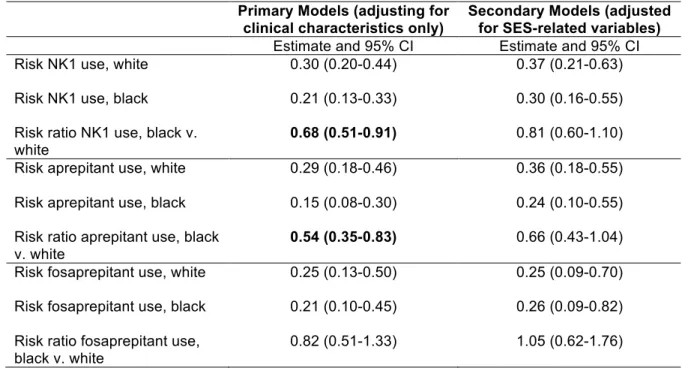
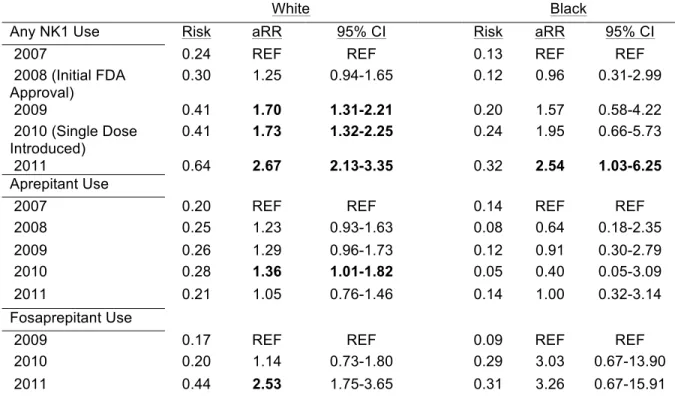
aRR black: 2.54, 95% CI: 1.03-6.25). However, racial gaps have persisted. In 2011, the likelihood of NK1 use was 0.64 for white patients, compared to 0.32 for black patients.
ACKNOWLEDGEMENTS
This dissertation reflects not only my own work, but also the support of many others. First and foremost, I want to thank my primary mentor and dissertation chair, Stacie Dusetzina. I was admitted to the Health Policy PhD program with a different advisor who left the department during my second year. At this point, I was balancing a demanding research assistantship, studying for comprehensive exams, and putting together applications for pre-doctoral fellowships to fund my dissertation work. Stacie agreed to take over as my advisor, and her immediate engagement, approachability, and constructive guidance made what could have been a very overwhelming time completely
manageable. I would describe working with her during the dissertation process in the exact same terms. Stacie is a natural mentor, and when it comes to us, her students and trainees, she is beyond generous with her time and insight. Stacie is also a natural teacher, and I’ve learned an
immeasurable amount from working with her over the past two years, not only in terms of analytic, research, and writing skills but I’ve also watched her navigate an increasingly demanding academic career with efficiency, professionalism, and poise. I am so grateful to have Stacie’s example to follow and for her support of and confidence in me, which, in turn, has made me a better and more confident researcher. I look forward to calling Stacie a mentor and collaborator for years to come.
more supportive training experience. I know that wherever I go Morris will continue to provide a voice of reason and reassurance and to play an important role in my development as a researcher. For this I am most grateful.
Thank you, also, to the rest of my dissertation committee. Katie Reeder-Hayes has generously shared her time and exchanged ideas with me, particularly during the dissertation
development phase. In general, Katie’s clinical expertise has been invaluable in providing a real-world context for my dissertation research. In addition to her role as an oncologist, Katie is a skilled health services researcher, and I have appreciated her thoughtful advice on methodological as well as clinical questions. Throughout the dissertation process, Ethan Basch has continuously encouraged me to think outside of the box in terms of considering alternative explanations for my findings, and the quality of my work is better for it. A big-picture thinker, Ethan has also been extremely helpful in identifying and articulating the potential clinical and policy implications of my dissertation work. I am grateful for Ethan’s continuously helpful input on this project and for his support and encouragement in general. Finally, Leah Zullig has been a peer mentor to me since my first year of PhD training, when she was in her fourth year of the program. Leah’s advice on coursework, comprehensive exams, fellowship applications, and, most recently, the job search has been so valuable to me, and I was excited for the opportunity to work with her as a dissertation committee member. I’ve greatly appreciated Leah’s openness and approachability over the years and her careful, thoughtful review of my dissertation work.
I am also grateful for the support of several other incredible faculty members at UNC. First, I must thank Bill Carpenter, who admitted me to the PhD program and whose innumerable
contributions to cancer care quality research at UNC and beyond I greatly admire. During the first two years of the PhD program, I also had the opportunity to learn from several other health policy
instruction of Mark, Jeremy, and Marisa, I developed greater confidence and a strong foundation in statistical and econometric methods on which I will continue to build.
I must also thank professors Carolyn Engelhard and Don Detmer who introduced me to health services research during my last year as an undergraduate at the University of Virginia and my mentors at the Duke Clinical Research Institute, who, over the next two years, helped confirm my enthusiasm for the field. In particular, thank you to Laura Beskow, Kevin Weinfurt, Damon Seils, and Kathryn Flynn, for providing opportunities for me to collect and analyze data, lead presentations and papers, and in general for having confidence in me and encouraging me to grow as a researcher. Thanks, also, to Kevin Schulman and Lesley Curtis who have continued to be generous with their time and advice in supporting my professional development. I could not have asked for a more ideal environment in which to begin my career.
I am also grateful to Bryan Weiner, Bryce Reeve, and Ethan Basch for the opportunity to have been a Cancer Care Quality Training Program (CCQTP) pre-doctoral fellow. The program’s support during the dissertation process has been invaluable. In addition, I must acknowledge my cohort members and fellow HPM PhD students. Especially, thanks to Rachel Machta and Lara Lorenzetti, whom I have been fortunate to call my study partners and great friends for the past four years. Thanks, also, to Megan Roberts for her humor, advice, and reassurance throughout the dissertation process.
TABLE OF CONTENTS
LIST OF TABLES ... xiii
LIST OF FIGURES ... xiv
CHAPTER 1. OVERVIEW ... 1
Specific Aims ... 1
Executive Summary ... 3
REFERENCES ... 8
CHAPTER 2. STUDY RATIONALE ... 10
Background ... 10
Racial Disparities in Breast Cancer Treatment and Outcomes ... 10
Racial Disparities in Supportive Cancer Care ... 10
Racial Disparities in CINV Prevention (Aim 1) ... 11
Racial Differences in Women’s Treatment Experiences (Aim 2) ... 12
Changes in Drug Formulation and the Impact on Disparities in CINV Prevention (Aim 3) ... 12
Study Rationale ... 13
Significance ... 13
Innovation ... 15
REFERENCES ... 17
CHAPTER 3. METHODS ... 21
Conceptual Model ... 21
Predisposing Characteristics ... 21
Enabling Resources ... 21
Need ... 22
Data ... 22
Sample ... 23
Key Variables ... 23
Analytic Approach ... 24
Aim 1: Assess the Relationship Between Patient Race and Prophylactic NK1Use ... 25
Aim 2: Assess the Relationship Between Patient Race and CINV-Related Healthcare Utilization ... 26
Aim 3: Assess Longitudinal Trends in Use of NK1s and the Impact of Fosaprepitant Availability on Racial Disparities in Prophylactic NK1Use ... 26
Expected Outcomes ... 26
REFERENCES ... 30
CHAPTER 4. INVESTIGATING RACIAL DISPARITIES IN BREAST CANCER PATIENTS’ USE OF NK1 RECEPTOR ANTAGONISTS FOR THE PREVENTION OF CHEMOTHERAPY-INDUCED NAUSEA AND VOMITING ... 32
Introduction ... 32
Methods ... 33
Data ... 33
Sample ... 34
Variables ... 34
Statistical Analysis ... 35
Sensitivity Analyses ... 36
Results ... 36
Discussion ... 37
REFERENCES ... 47
CHAPTER 5. EXAMINING RACIAL VARIATION IN ANTIEMETIC USE AND POST-CHEMOTHERAPY HEALTHCARE UTILIZATION FOR NAUSEA AND VOMITING AMONG BREAST CANCER PATIENTS ... 50
Introduction ... 50
Methods ... 51
Sample ... 52
Variables ... 52
Statistical Analysis ... 53
Sensitivity Analyses ... 54
Results ... 54
CINV-Related Utilization ... 55
Other Post-Chemotherapy Utilization ... 55
Discussion ... 56
REFERENCES ... 63
CHAPTER 6. IMPACT OF DRUG FORMULATION CHANGES ON POTENT ANTIEMETIC USE AND DISPARITIES AMONG MEDICARE BENFICIARIES WITH BREAST CANCER ... 67
Introduction ... 67
Methods ... 69
Data ... 69
Sample ... 69
Variables ... 70
Statistical Analysis ... 70
Sensitivity Analysis ... 71
Results ... 71
Discussion ... 72
REFERENCES ... 79
CHAPTER 7. DISCUSSION ... 82
Conclusions ... 82
Race and NK1 Use ... 82
Racial Variation in Post-Chemotherapy Healthcare Utilization for CINV ... 82
Changes in NK1 Use and Disparities over Time ... 84
LIST OF TABLES
Table 1. Study Variables for Aims 1, 2, and 3 ... 29 Table 2. Aim 1 Sample Characteristics, by Race ... 41 Table 3. Unadjusted Associations of Race and Covariates with NK1 Use ... 43 Table 4. Adjusted Risks and Risk Ratios of Any NK1 Use, Aprepitant Use,
and Fosaprepitant Use ... 45 Table 5. Full Results of Primary Modified Poisson Regression Models, Adjusted
Risk Ratios and 95% Confidence Intervals for NK1 Use ... 45 Table 6. Sample Characteristics, by Race ... 60 Table 7. Unadjusted and Adjusted Associations of Race with Post-Chemotherapy
Healthcare Utilization ... 62 Table 8. Aim 3 Sample Characteristics, by Race ... 75 Table 9. Adjusted NK1 Use Over Time, Overall and by Formulation, Among
LIST OF FIGURES
CHAPTER 1. OVERVIEW Specific Aims
Patients beginning cancer treatment have consistently cited chemotherapy-induced nausea and vomiting (CINV) as a major and fearful concern.[1]Poorly controlled CINV can have severe physiological consequences, including dehydration, nutritional derangements, metabolic imbalances, and anorexia.[2] Inadequate CINV control can lead to deterioration of a patient’s functional condition and quality of life (QOL).Further, hospital admissions, emergency department (ED) visits, and outpatient hospital visits after the first cycle of chemotherapy are both common and costly, with one study estimating the cost of treating CINV during the first cycle of chemotherapy at $5,299 among patients with a CINV-related visit, and $731 across all patients receiving moderately or highly
emetogenic chemotherapy.[6] In addition to its implications for QOL and cost, uncontrolled CINV can lead to decreased chemotherapy adherence or even withdrawal from beneficial chemotherapy.[2, 7] CINV control is therefore a critical aspect of high-quality cancer care and has profound implications for patients’ cancer care experience.
negatively associated with use of antiemetic drugs.[14, 15]Whether this finding extends to NK1s and to other cancers is unknown. In addition, although research has demonstrated that black cancer patients may be more likely than white patients to have gaps in or to discontinue chemotherapy because of hospitalizations and acute illness,[16]possibly due to adverse effects of treatment, no study has assessed the role of CINV prophylaxis in explaining these disparities. Finally, analyses of recent data are needed to evaluate the impact of the availability of an intravenous NK1 (fosaprepitant) on disparities in NK1use. Because fosaprepitant is administered in the clinic and reimbursed under different insurance provisions than oral prescription drugs (i.e., under medical rather than pharmacy benefits), its availability may help to obviate access and cost barriers related to use of oral therapy. The long-term goal of this line of research is to narrow disparities in the quality of supportive cancer care. The objective of this study was to assess the existence and impact of racial disparities in prophylactic NK1use among breast cancer patients, a population who frequently receives highly emetogenic chemotherapy. It was my central hypothesis that black women are less likely than white women to receive an NK1. Documenting black/white disparities in guideline-recommended CINV prophylaxis and whether and how disparities have changed over time is essential for informing interventions to address disparities in supportive breast cancer care. To that end, I pursued three specific aims using data from the SEER-Medicare linked database.
Aim 1: Assess the relationship between patient race and prophylactic NK1use. Hypothesis:Black women are less likely than white women to use an NK1.
Aim 2: Assess the relationship between patient race and CINV-related healthcare utilization and, if disparities exist, assess the role of prophylactic NK1use in explaining them. Hypothesis 2a: Black women are more likely to have outpatient visits, emergency department visits,
and inpatient admissions related to CINV following chemotherapy. Hypothesis 2b: NK1 use
attenuates racial disparities in healthcare utilization.
Aim 3: Assess longitudinal trends in use of fosaprepitant and the impact of
NK1 use have narrowed due to the introduction of fosaprepitant, which may address cost and access
barriers disproportionately affecting black patients.
This study elucidates racial disparities in NK1 use among women with breast cancer (Aim 1) and evaluates whether these disparities may help explain disparities in patient outcomes (Aim 2). It also assessed whether disparities in NK1 use are changing over time (Aim 3). The results help transition current cancer disparities research from focusing primarily on curative treatment to also considering supportive care and its implications for patients’ cancer care experience. This work also has implications for policy, because it provides needed evidence about the effect of NK1 formulations and reimbursement sources on disparities in use.
Executive Summary
Patients beginning cancer treatment have consistently cited CINV as a major and fearful concern.[1]Poorly controlled CINV can have serious implications for patients’ QOL,[2] healthcare services use and costs,[6] and adherence to potentially beneficial chemotherapy.[2, 7] CINV
prophylaxis is therefore a critical aspect of high-quality cancer care and has profound implications for patients’ cancer care experience.
administered in the clinic and reimbursed under different insurance provisions than oral prescription drugs, its availability may help to obviate access and cost barriers related to use of oral therapy.
This study contributes to the cancer disparities literature by assessing the existence and impact of racial disparities in prophylactic NK1use among breast cancer patients, a population that frequently receives highly emetogenic chemotherapy. Specifically, this dissertation has three objectives, which correspond to three Specific Aims: 1) To assess the relationship between patient race and prophylactic NK1 use; 2) To assess the relationship between patient race and CINV-related healthcare utilization and, if disparities exist, assess the role of prophylactic NK1use in explaining them; and 3) To assess longitudinal trends in use of fosaprepitant and the impact of fosaprepitant availability on racial disparities in prophylactic NK1use.
To achieve these objectives, we used modified Poisson regression to assess the relationships between: 1) patient race and NK1 use, 2) patient race, NK1 use, and CINV-related healthcare utilization following chemotherapy, and 3) chemotherapy initiation year and NK1 use. We examined both any NK1 use and use of specific NK1 formulations (oral aprepitant and IV
fosaprepitant). We present risks and adjusted risk ratios (aRR) with 95% confidence intervals (CI) for all outcomes.
In Aim 1, we found substantial racial disparities in NK1 use. Specifically, we observed that black women had a 32% decreased likelihood of using any NK1 for the prevention of CINV (aRR: 0.68, 95% CI: 0.51-0.91). When examining oral and intravenous NK1 formulations separately, black women had a 46% decreased likelihood of receiving oral aprepitant (aRR: 0.54, 95% CI: 0.35-0.83). We did not observe a statistically significant racial difference in women’s receipt of IV fosaprepitant (aRR: 0.82, 95% CI: 0.51-1.33). The fact that we observed racial disparities in oral but not
intravenous drug use supports the hypothesis that intravenous fosaprepitant may be more affordable and accessible for patients.
likely to be treated in lower-performing settings.[15, 17] Both explanations seem plausible given our findings. Specifically, the fact that disparities in NK1 and aprepitant use were somewhat attenuated when factors related to socioeconomic status (SES) were added to the models suggests that the disparities are at least partly explained by SES differences between black and white women. These SES differences could translate into differential ability to pay for prescription drugs or differential access to high-quality care (including guideline-adherent antiemetic prescribing).[15, 17] Interestingly, geographic region also appeared to partly attenuate disparities, suggesting a potential role for
geographic variation in prescribing in explaining disparities in NK1 use.
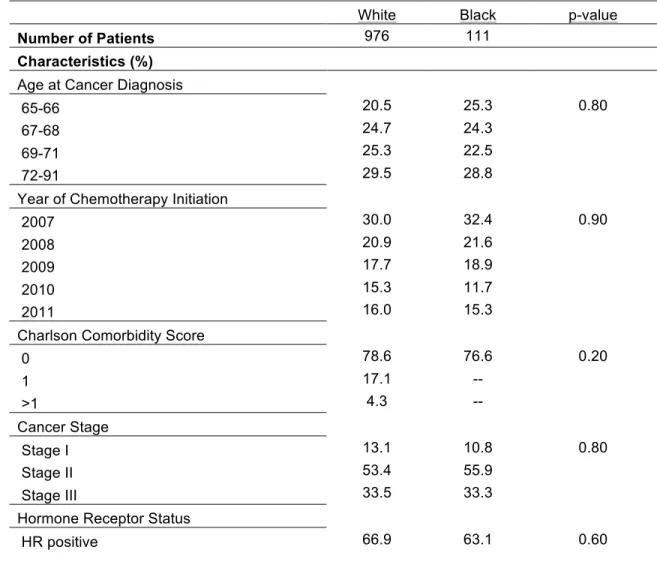
In Aim 2, we observed racial variation in CINV-related healthcare utilization in the 14 days following the first chemotherapy infusion. In unadjusted analysis, black women were 37% less likely than white women to have healthcare claims related to CINV. Estimates were consistent after adjustment for clinical variables but statistically non-significant (aRR: 0.66, 95% CI: 0.42-1.04). The racial difference in post-chemotherapy healthcare utilization did not extend to any use of healthcare services (aRR: 0.95, 95%CI: 0.89-1.03, p=0.21). NK1 use was positively associated with CINV-related utilization (aRR: 1.34, 95%CI: 1.07-1.68, p=0.01). This relationship persisted among white but not black women.
The direction of the racial difference in CINV-related utilization that we observed was unexpected. Whereas we hypothesized that, possibly due to underuse of NK1s, black women would experience more CINV-related utilization following chemotherapy than white women, in our sample, black women were actually less likely than white women to have healthcare claims related to CINV. It seems unlikely that racial differences in general care-seeking behavior explain this variation, given our lack of observation of racial differences in any services use in the 14 days after chemotherapy. Therefore, it may be that the variation we observed is specific to CINV or symptom management.
minorities may receive suboptimal care due to decreased self-efficacy, defined as patients’ perceived ability in obtaining needed information and attention regarding their medical concerns.[19] A second potential explanation is that the black women in our sample may differ from white women with respect to unmeasured factors (e.g., body mass index), which could affect the incidence of treatment-induced side effects like CINV. [18, 20, 21] The positive association between prophylactic NK1 use and CINV-related utilization that we observed in Aim 2 was also surprising. We suspect that confounding by indication may account for this relationship. For example, patients’ (or their providers’) level of concern about CINV might help explain why patients who receive NK1s are also more likely to subsequently receive care related to the side effect.
Finally, in Aim 3, we hypothesized that fosaprepitant availability would lead to increased NK1 use for both black and white patients and that, by providing a more accessible and affordable
REFERENCES
1. Hickok JT, Roscoe JA, Morrow GR, et al. Nausea and emesis remain significant problems of chemotherapy despite prophylaxis with 5-hydroxytryptamine-3 antiemetics: A University of Rochester James P. Wilmot Cancer Center Community Clinical Oncology Program Study of 360 cancer patients treated in the community. Cancer 2003;97(11):2880–6.
2. National Cancer Institute. Nausea and Vomiting, 2014.
http://www.cancer.gov/cancertopics/pdq/supportivecare/nausea/HealthProfessional. Accessed December 21, 2015.
3. Cohen L, de Moor CA, Eisenberg P, et al. Chemotherapy-induced nausea and vomiting: Incidence and impact on patient quality of life at community oncology settings. Support Care Cancer 2007;15(5):497–503.
4. Bloechl-Daum B, Deuson RR, Mavros P, et al. Delayed nausea and vomiting continue to reduce patients' quality of life after highly and moderately emetogenic chemotherapy despite antiemetic treatment. J Clin Oncol 2006;24(27):4472–8.
5. Glaus A, Knipping C, Morant R, et al. Chemotherapy-induced nausea and vomiting in routine practice: A European perspective. Support Care Cancer 2004;12(10):708–15.
6. Burke TA, Wisniewski T, Ernst FR. Resource utilization and costs associated with chemotherapy-induced nausea and vomiting (CINV) following highly or moderately
emetogenic chemotherapy administered in the US outpatient hospital setting. Support Care Cancer 2011;19(1):131–40.
7. Langford P, Chrisp P. Fosaprepitant and aprepitant: An update of the evidence for their place in the prevention of chemotherapy-induced nausea and vomiting. Core Evid 2010;5:77–90. 8. Basch E, Prestrud AA, Hesketh PJ, et al. Antiemetics: American Society of Clinical Oncology
clinical practice guideline update. J Clin Oncol 2011;29(31):4189–98.
9. Roila F, Herrstedt J, Aapro M, et al. Guideline update for MASCC and ESMO in the
prevention of chemotherapy- and radiotherapy-induced nausea and vomiting: results of the Perugia consensus conference. Ann Oncol 2010;21 Suppl 5:v232–43.
10. National Comprehensive Cancer Network (NCCN). Clinical Practice Guidelines in Oncology, Anti-emesis. Version 1.2012.
http://www.nccn.org/professionals/physician_gls/f_guidelines.asp. Accessed December 21, 2015.
11. Kaiser R. Antiemetic guidelines: Are they being used? Lancet Oncol 2005;6(8):622–5. 12. Grunberg SM. Obstacles to the implementation of antiemetic guidelines. J Natl Compr Canc
Netw 2009;7(5):601–5.
13. Burmeister H, Aebi S, Studer C, et al. Adherence to ESMO clinical recommendations for prophylaxis of chemotherapy-induced nausea and vomiting. Support Care Cancer 2012;20(1):141–7.
15. Samuel CA, Landrum MB, McNeil BJ, et al. Racial disparities in cancer care in the Veterans Affairs health care system and the role of site of care. Am J Public Health 2014;104 Suppl 4:S562–71.
16. Griggs JJ, Sorbero ME, Stark AT, et al. Racial disparity in the dose and dose intensity of breast cancer adjuvant chemotherapy. Breast Cancer Res Treat 2003;81(1):21–31. 17. Jha AK, Orav EJ, Epstein AM. Low-quality, high-cost hospitals, mainly in South, care for
sharply higher shares of elderly black, Hispanic, and medicaid patients. Health Aff (Millwood) 2011;30(10):1904–11.
18. Yoon J, Malin JL, Tisnado DM, et al. Symptom management after breast cancer treatment: Is it influenced by patient characteristics? Breast Cancer Res Treat 2008;108(1):69–77.
19. Maly RC, Umezawa Y, Leake B, et al. Determinants of participation in treatment decision-making by older breast cancer patients. Breast Cancer Res Treat 2004;85(3):201–9.
20. Avis NE, Stellato R, Crawford S, et al. Is there a menopausal syndrome? Menopausal status and symptoms across racial/ethnic groups. Soc Sci Med 2001;52(3):345–56.
21. Giedzinska AS, Meyerowitz BE, Ganz PA, et al. Health-related quality of life in a multiethnic sample of breast cancer survivors. Ann Behav Med 2004;28(1):39–51.
22. Cobaugh DJ, Angner E, Kiefe CI, et al. Effect of racial differences on ability to afford prescription medications. Am J Health Syst Pharm 2008;65(22):2137–43.
23. Probst JC, Laditka SB, Wang JY, et al. Effects of residence and race on burden of travel for care: cross sectional analysis of the 2001 US National Household Travel Survey. BMC Health Serv Res 2007;7:40.
CHAPTER 2. STUDY RATIONALE Background
Racial Disparities in Breast Cancer Treatment and Outcomes
Racial disparities in breast cancer–specific mortality are well documented.[1] Biological differences may partially explain these disparities. Specifically, black women are more likely than white women to present with aggressive tumors (e.g., triple negative disease).[2] However, differences in tumor biology only partially explain racial disparities in patient outcomes, suggesting that access to and quality of care may contribute to these disparities.[1, 3–6] For example, black women are less likely to receive guideline-concordant mammographic screening for breast cancer prevention, resulting in a disproportionate burden of late-stage or terminal disease in this
population.[7] Even when controlling for stage at diagnosis, however, black breast cancer patients fare worse than their white counterparts, possibly due to differential treatment.[8] Specifically, black women are less likely to receive radiation therapy[7] and adjuvant chemotherapy[3, 9] in accordance with clinical practice guidelines. Disparities also exist among women who do receive chemotherapy. Studies investigating racial and socioeconomic disparities in quality of systemic treatment have documented disparities in selection of chemotherapy regimens,[10] selection of chemotherapy doses in the initial course of chemotherapy,[11, 12] dose reductions in the course of chemotherapy,[13] prolonged time to chemotherapy completion,[14] and termination of chemotherapy before all planned cycles.[12]
Racial Disparities in Supportive Cancer Care
supportive care is becoming recognized as an integral aspect of high-quality cancer care because of its implications for patient and caregiver quality of life (QOL). [21, 22] In breast cancer in particular, where advances in treatment have improved overall survival,[23] patients’ QOL is an increasingly important endpoint of care.[24]
Racial Disparities in CINV Prevention (Aim 1)
Quality of CINV prophylaxis has received relatively little attention in the supportive breast cancer care literature, even though breast cancer patients routinely receive chemotherapy regimens that have a high risk of causing symptoms.[25] Although no studies have evaluated variation in quality of CINV prevention in the breast cancer setting, two have documented disparities in use of
antiemetics among patients with other cancers. Only one study, conducted by Samuel and
colleagues, specifically investigated racial disparities in the use of antiemetics for CINV prophylaxis as one of 20 cancer care quality indicators. [26] This study focused on patients with colorectal, prostate, and lung cancers. Although the study did document racial disparities in antiemetic use, the generalizability of the study’s results is limited by its focus on the Veterans Affairs system. As well, the study used data from the early 2000s, before NK1s were available and recommended by clinical guidelines for the prevention of CINV. Another study conducted by Gomez and colleagues explored patterns of guideline-concordant antiemetic use among lung cancer patients.[27] Although the analysis was not focused on disparities, the authors did note racial and income disparities in
antiemetic use. This study was also limited by its use of data from a single state’s cancer registry and its lack of prescription drug data. In addition, because NK1 use was quite low in this sample (possibly due to the recent availability of aprepitant during the study period), NK1s were excluded from the analysis.
Whether documented disparities in guideline-concordant antiemetic utilization extend to breast cancer and NK1s is currently unknown. Research that assesses disparities in guideline-concordant antiemetic use among breast cancer patients will serve as a first step toward
Racial Differences in Women’s Treatment Experiences (Aim 2)
Assessing disparities in CINV control in the breast cancer setting is further justified by the existence of known disparities in women’s treatment experiences. Previous research has
demonstrated that black women are less likely than white women to adhere to
guideline-recommended adjuvant chemotherapy regimens. Namely, they are more likely to experience dose reductions in the course of chemotherapy,[13] prolonged time to chemotherapy completion,[14] and termination of chemotherapy before all planned cycles.[12] As well, black women are more likely to experience delays during or termination of adjuvant chemotherapy due to acute illness,
hospitalizations, missed appointments, and patient decision.[12] Although others have suggested that differential experience with chemotherapy could be due to racial differences in women’s ability to afford the sometimes expensive medications needed to prevent and control side effects,[28] the role of side effect management in explaining disparities in women’s treatment experience has never been empirically evaluated.
A handful of studies have examined patterns in women’s healthcare utilization while undergoing adjuvant chemotherapy for early-stage breast cancer.[29–32] However, none included patient race as a covariate. A study by Enright and colleagues did include data on patients’ income and found evidence of potential variation by income in patients’ hospitalizations and use of the emergency department (ED) during chemotherapy, with lower income patients more likely than high-income patients to experience these outcomes.[33] Studies that assess racial disparities in side effect-related healthcare utilization and the link between quality of CINV prophylaxis and utilization will help clarify the potential role of side effect management in contributing to racial disparities in breast cancer patients’ treatment experiences.
Changes in Drug Formulation and the Impact on Disparities in CINV Prevention (Aim 3)
NK1 formulation has changed over time, but how changes have impacted overall NK1 use and disparities in use has yet to be evaluated. Prior to 2008, aprepitant, an oral drug with a
recommended three-day dosing regimen, was the only NK1approved for CINV prophylaxis. Access and cost barriers to aprepitant use exist. First, in many cases, patients are required to fill a
their chemotherapy infusion. Second, the drug is expensive and patients may be subject to high cost-sharing, particularly under Medicare Part D. In a discrete choice experiment assessing patients’ willingness to pay to prevent CINV, the authors concluded that cost contributed more to patients’ choices about avoiding CINV than any other single attribute, suggesting that the cost of medications to prevent CINV may affect patients’ likelihood of using of them.[34] In general, previous research supports a link between higher monthly medication costs and non-adherence [35, 36] and studies have suggested that cost-related barriers to use of and adherence to prescription medications for cancer and other conditions may disproportionately affect minority patients.[37–39]
In 2008, an intravenous, provider-administered formulation of aprepitant (fosaprepitant) was approved by the FDA, and in 2010, clinical trials demonstrated that a single-dose fosaprepitant infusion could serve as a full replacement for the three-day oral aprepitant regimen.[40, 41] Because fosaprepitant is administered once in the clinic, simplifying the dosing regimen and removing the requirement for patients to take an NK1 at home, it may decrease the number of patients receiving suboptimal CINV control.[42]As well, because it is covered under different insurance provisions, fosaprepitant may also be more affordable for patients. Research estimating the impact of fosaprepitant availability on overall use and disparities in use of NK1s could have implications for policies that drive providers’ prescribing practices.
Study Rationale Significance
This research advances our understanding of potential racial disparities in prophylactic NK1 use among Medicare beneficiaries receiving highly emetogenic adjuvant chemotherapy for breast cancer. It also assesses whether disparities in use are changing over time in response to the availability of alternative drug formulations and reimbursement. This contribution is significant because it provides actionable evidence to healthcare providers and policy makers attempting to reduce racial disparities in supportive breast cancer care.
visits, and outpatient hospital visits are also costly.[47] In addition to its implications for QOL and cost, uncontrolled CINV can lead to decreased chemotherapy adherence and even early termination of beneficial chemotherapy.
Guidelines recommend the use of potent antiemetics, called NK1s, for patients receiving highly emetogenic chemotherapy. Prior to 2008, aprepitant, an oral drug, was the only NK1available. Several factors may complicate its use. First, in most hospitals and private practices, providers cannot dispense aprepitant in clinic. Therefore, patients are usually required to obtain the drug from a pharmacy. Aprepitant is also very expensive and, particularly when reimbursed under Medicare Part D, patients may be responsible for a large portion of the cost. Evidence suggests that cost and access barriers to antiemetic use may disproportionately affect minority patients [26, 27].
Understanding the relationship between race and NK1 use among breast cancer patients is important because this population frequently receives highly emetogenic chemotherapy. As well, research has demonstrated that black breast cancer patients may be more likely than white patients to have gaps in or to discontinue chemotherapy because of hospitalizations and acute illness,[12] possibly due to adverse effects of treatment. No study has yet assessed the role of CINV control through use of antiemetics in explaining these disparities.
This study examines potential racial disparities in high-quality CINV control in ways that have important implications for clinical practice and policy. The results of this study will inform future research, clinical practice, and policy. Specifically, future research can be undertaken to elucidate the source(s) of disparities (cost, access, and under-prescribing) and, thus, potential interventions to address them. Identifying a link between NK1 use and CINV-related healthcare utilization is valuable in and of itself for informing interventions to improve the cancer care experience and outcomes for all patients in the setting of breast and possibly other cancers. Finally, understanding how formulation and reimbursement changes have affected NK1use may inform policies and interventions to facilitate prescription and use of IV antiemetics.
Innovation
Research on breast cancer disparities has focused predominantly on describing disparities in curative treatment, particularly adjuvant systemic treatment. Numerous studies have documented that African American women are more likely than white women to underuse adjuvant chemotherapy,[49] and that, among patients who do initiate adjuvant chemotherapy, disparities exist in the selection of chemotherapy doses in the initial course of chemotherapy,[11, 12]dose reductions in the course of chemotherapy,[13]prolonged time to chemotherapy completion,[14]and termination of chemotherapy before all planned cycles.[12] Potential disparities in the quality of cancer treatment–induced side effect management, however, remain largely unstudied.
Without a better understanding of patterns and potential disparities in side effect
management and how changes in the availability and reimbursement of supportive medications have impacted these patterns, the field cannot advance toward developing strategies to improve the cancer care experience and outcomes of breast and other cancer patients. This research is innovative mainly because it represents a substantive departure from the status quo by shifting the focus of breast cancer disparities research from describing the existence of disparities in curative treatment to investigating potential disparities in side effect management, which may impact patients’ QOL as well as the quality of their treatment and outcomes.
REFERENCES
1. Aizer AA, Wilhite TJ, Chen MH, et al. Lack of reduction in racial disparities in cancer-specific mortality over a 20-year period. Cancer 2014;120(10):1532–9.
2. Carey LA, Perou CM, Livasy CA, et al. Race, breast cancer subtypes, and survival in the Carolina Breast Cancer Study. JAMA 2006;295(21):2492–502.
3. Bickell NA, Wang JJ, Oluwole S, et al. Missed opportunities: racial disparities in adjuvant breast cancer treatment. J Clin Oncol 2006;24(9):1357–62.
4. Shavers VL, Brown ML. Racial and ethnic disparities in the receipt of cancer treatment. J Natl Cancer Inst 2002;94(5):334–57.
5. Bradley CJ, Given CW, Roberts C. Disparities in cancer diagnosis and survival. Cancer 2001;91(1):178–88.
6. Banerjee M, George J, Yee C, et al. Disentangling the effects of race on breast cancer treatment. Cancer 2007;110(10):2169–77.
7. Agency for Healthcare Research and Quality. National Healthcare Disparities Report, 2013. Available from: http://www.ahrq.gov/research/findings/nhqrdr/nhdr13/index.html. Accessed 10 March 2016.
8. Bickell NA. Race, ethnicity, and disparities in breast cancer: Victories and challenges. Womens Health Issues 2002;12(5):238–51.
9. Hershman D, McBride R, Jacobson JS, et al. Racial disparities in treatment and survival among women with early-stage breast cancer. J Clin Oncol 2005;23(27):6639–46.
10. Griggs JJ, Culakova E, Sorbero ME, et al. Social and racial differences in selection of breast cancer adjuvant chemotherapy regimens. J Clin Oncol 2007;25(18):2522–7.
11. Griggs JJ, Culakova E, Sorbero ME, et al. Effect of patient socioeconomic status and body mass index on the quality of breast cancer adjuvant chemotherapy. J Clin Oncol
2007;25(3):277–84.
12. Griggs JJ, Sorbero ME, Stark AT, et al. Racial disparity in the dose and dose intensity of breast cancer adjuvant chemotherapy. Breast Cancer Res Treat 2003;81(1):21–31.
13. Smith K, Wray L, Klein-Cabral M, et al. Ethnic disparities in adjuvant chemotherapy for breast cancer are not caused by excess toxicity in black patients. Clin Breast Cancer
2005;6(3):260–6; discussion 267–9.
14. Hershman D, Weinberg M, Rosner Z, et al. Ethnic neutropenia and treatment delay in African American women undergoing chemotherapy for early-stage breast cancer. J Natl Cancer Inst 2003;95(20):1545–8.
15. Reyes-Gibby CC, Anderson KO, Shete S, et al. Early referral to supportive care specialists for symptom burden in lung cancer patients: a comparison of non-Hispanic whites, Hispanics, and non-Hispanic blacks. Cancer 2012;118(3):856–63.
17. Fisch MJ, Lee JW, Weiss M, et al. Prospective, observational study of pain and analgesic prescribing in medical oncology outpatients with breast, colorectal, lung, or prostate cancer. J Clin Oncol 2012;30(16):1980–8.
18. McNeill JA, Reynolds J, Ney ML. Unequal quality of cancer pain management: disparity in perceived control and proposed solutions. Oncol Nurs Forum 2007;34(6):1121–8.
19. Stephenson N, Dalton JA, Carlson J, et al. Racial and ethnic disparities in cancer pain management. J Natl Black Nurses Assoc 2009;20(1):11–8.
20. John DA, Kawachi I, Lathan CS, et al. Disparities in perceived unmet need for supportive services among patients with lung cancer in the Cancer Care Outcomes Research and Surveillance Consortium. Cancer 2014;120(20):3178–91.
21. Institute of Medicine: Care for the Whole Patient: Meeting Psychosocial Health Needs. Washington, DC: National Accademy Press; 2008.
22. Smith TJ, Temin S, Alesi ER, et al. American Society of Clinical Oncology provisional clinical opinion: The integration of palliative care into standard oncology care. J Clin Oncol
2012;30(8):880-–7.
23. Peto R, Boreham J, Clarke M, et al. UK and USA breast cancer deaths down 25% in year 2000 at ages 20–69 years. Lancet 2000;355(9217):1822.
24. Maly RC, Liu Y, Leake B, et al. Treatment-related symptoms among underserved women with breast cancer: The impact of physician-patient communication. Breast Cancer Res Treat 2010;119(3):707–16.
25. Barcenas CH, Zhang N, Zhao H, et al. Anthracycline regimen adherence in older patients with early breast cancer. Oncologist 2012;17(3):303-11.
26. Samuel CA, Landrum MB, McNeil BJ, et al. Racial disparities in cancer care in the Veterans Affairs health care system and the role of site of care. Am J Public Health 2014;104 Suppl 4:S562–71.
27. Gomez DR, Liao KP, Giordano S, et al. Adherence to national guidelines for antiemesis prophylaxis in patients undergoing chemotherapy for lung cancer: A population-based study. Cancer 2013;119(7):1428–36.
28. Hassett MJ, Griggs JJ. Disparities in breast cancer adjuvant chemotherapy: Moving beyond yes or no. J Clin Oncol 2009;27(13):2120–1.
29. Enright K, Grunfeld E, Yun L, et al. Population-based assessment of emergency room visits and hospitalizations among women receiving adjuvant chemotherapy for early breast cancer. J Oncol Pract 2015;11(2):126–32.
30. Hassett MJ, O'Malley AJ, Pakes JR, et al. Frequency and cost of chemotherapy-related serious adverse effects in a population sample of women with breast cancer. J Natl Cancer Inst 2006;98(16):1108–17.
31. Hassett MJ, Rao SR, Brozovic S, et al. Chemotherapy-related hospitalization among community cancer center patients. Oncologist 2011;16(3):378–87.
33. Enright K, Grunfeld E, Yun L, et al. Population-based assessment of emergency room visits and hospitalizations among women receiving adjuvant chemotherapy for breast cancer. J Oncol Pract 2015; 11(2): 126–32.
34. Miller PJ, Balu S, Buchner D, et al. Willingness to pay to prevent chemotherapy induced nausea and vomiting among patients with breast, lung, or colorectal cancer. J Med Econ 2013;16(10):1179–89.
35. Ruddy K, Mayer E, Partridge A. Patient adherence and persistence with oral anticancer treatment. CA Cancer J Clin 2009;59(1):56–66.
36. Col N, Fanale JE, Kronholm P. The role of medication noncompliance and adverse drug reactions in hospitalizations of the elderly. Arch Intern Med 1990;150(4):841–5.
37. Hershman DL, Shao T, Kushi LH, et al. Early discontinuation and non-adherence to adjuvant hormonal therapy are associated with increased mortality in women with breast cancer. Breast Cancer Res Treat 2011;126(2):529–37.
38. Qato DM, Lindau ST, Conti RM, et al. Racial and ethnic disparities in cardiovascular medication use among older adults in the United States. Pharmacoepidemiol Drug Saf 2010;19(8):834–42.
39. Heisler M, Faul JD, Hayward RA, et al. Mechanisms for racial and ethnic disparities in glycemic control in middle-aged and older Americans in the health and retirement study. Arch Intern Med 2007;167(17):1853–60.
40. Grunberg SM. Obstacles to the implementation of antiemetic guidelines. J Natl Compr Canc Netw 2009;7(5):601–5.
41. Grunberg S, Chua D, Maru A, et al. Single-dose fosaprepitant for the prevention of
chemotherapy-induced nausea and vomiting associated with cisplatin therapy: Randomized, double-blind study protocol--EASE. J Clin Oncol 2011;29(11):1495–501.
42. Celio L, Ricchini F, De Braud F. Safety, efficacy, and patient acceptability of single-dose fosaprepitant regimen for the prevention of chemotherapy-induced nausea and vomiting. Patient Prefer Adherence 2013;7:391–400.
43. Hickok JT, Roscoe JA, Morrow GR, et al. Nausea and emesis remain significant problems of chemotherapy despite prophylaxis with 5-hydroxytryptamine-3 antiemetics: A University of Rochester James P. Wilmot Cancer Center Community Clinical Oncology Program Study of 360 cancer patients treated in the community. Cancer 2003;97(11):2880–6.
44. Cohen L, de Moor CA, Eisenberg P, et al. Chemotherapy-induced nausea and vomiting: incidence and impact on patient quality of life at community oncology settings. Support Care Cancer 2007;15(5):497–503.
45. Bloechl-Daum B, Deuson RR, Mavros P, et al. Delayed nausea and vomiting continue to reduce patients' quality of life after highly and moderately emetogenic chemotherapy despite antiemetic treatment. J Clin Oncol 2006;24(27):4472–8.
46. Glaus A, Knipping C, Morant R, et al. Chemotherapy-induced nausea and vomiting in routine practice: A European perspective. Support Care Cancer 2004;12(10):708–15.
emetogenic chemotherapy administered in the US outpatient hospital setting. Support Care Cancer 2011;19(1):131–40.
48. Kaiser Family Foundation. Medicare at a Glance, 2014. http://kff.org/medicare/fact-sheet/medicare-at-a-glance-fact-sheet. Accessed December 21, 2015.
CHAPTER 3. METHODS Conceptual Model
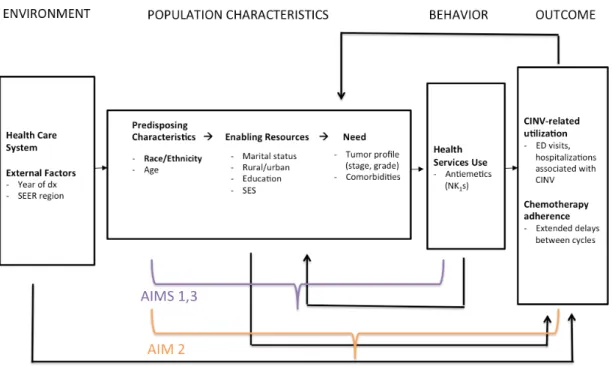
Analyses followed a conceptual model adapted from Andersen’s behavioral model of healthcare services use. As described in Figure 1, the model demonstrates how environmental factors and population characteristics (including predisposing characteristics, enabling resources, and need) influence healthcare utilization behaviors and, ultimately, health outcomes.[1]
Predisposing Characteristics
There are several indirect pathways through which patient race may impact utilization of NK1s. First, black patients may be less likely than white patients to have access to a home pharmacy due to, for example, lack of convenient transportation.[2, 3] Second, they may be less likely to be able to afford the copayment for an aprepitant prescription.[4] Third, black patients may have limited access to high-quality healthcare facilities, resulting in receipt of lower quality care, including suboptimal CINV prophylaxis. Fourth, providers may have biases, including prejudices, clinical uncertainty, and stereotypes that impact the quality of care they deliver to minority patients.[5] Race may also have an indirect effect on CINV-related healthcare utilization through its effect on antiemetic use. If black patients are less likely to use NK1s and therefore more likely to experience uncontrolled CINV, they may be at increased risk for CINV-related healthcare utilization.
Enabling Resources
Need
In this study, we controlled for women’s need for health services by controlling for their health characteristics, including tumor profile, comorbidities, and age. All women in the study sample have the same clinical need, according to guidelines, for prophylactic NK1 use during their first cycle of chemotherapy because of their receipt of highly emetogenic regimens. However, other health characteristics may influence women’s use of healthcare services in Aim 2.
Environment
Previous research suggests that racial disparities in quality of care may be partly explained by the healthcare setting because black patients have less access to high-quality provider groups.[11] In fact, the recent study by Samuel and colleagues found that racial disparities in use of antiemetics were attenuated when hospital fixed effects were included in the analytic model.[12] Because a large proportion of cancer patients receive chemotherapy outside of the hospital, the present analysis cannot account for hospital effects. However, in sensitivity analyses, we attempted to account for variation in prescribing by controlling for provider effects. In our sample, individual providers did not treat sufficient numbers of white and black women to successfully conduct such an analysis, thus the role of provider-level factors in contributing to disparities in NK1 use remains an important area for future research.
Data
physician services, physician-administered drugs, and other medical services for approximately 70% of Medicare beneficiaries.[9] Medicare Part D claims contain information about prescription drugs obtained from pharmacies.
Sample
We included women aged 65 years and older who were diagnosed with stage I, II, or III breast cancer between January 1, 2007, and December 31, 2011. Eligible women were: (1) not diagnosed at autopsy or death; (2) continuously enrolled in Medicare Parts A and B for 6 months before and 12 months after diagnosis; (3) continuously enrolled in Medicare Part D for 12 months after diagnosis; and (4) not enrolled in an HMO for 6 months before and 12 months after diagnosis. There were 27,160 women meeting these criteria. From this sample, we restricted our analysis to women who received surgery (mastectomy or breast-conserving surgery) and initiated chemotherapy within 6 months of diagnosis (n=4,651). The analysis was further restricted to women whose first cycle of adjuvant chemotherapy included an anthracycline and cyclophosphamide (n=1,569), because guidelines have consistently recommended use of an NK1 for these regimens throughout the study period.[10–14] Because of the small proportion of non-black minorities, the study was restricted to black and white women (n=1,451). Finally, because Part D claims are available starting on January 1, 2007, women in our sample initiated chemotherapy on or after February 1, 2007, so that we could observe Part D claims for antiemetics in the 30 days before chemotherapy initiation (n=1,130). In Aim 3, the sample was further restricted to women initiated chemotherapy before January 1, 2012 (n=1,087), to allow for a year of follow-up. A CONSORT diagram is displayed in Figure 2.
Key Variables
comorbidities were measured using data contained in the Medicare Parts A and B claims files and the comorbidity index developed by Klabunde and colleagues.[15]
The dependent variables for all three aims were measured using the Medicare Parts A, B, and D claims files. In Aims 1 and 3, among women beginning their first cycle of highly emetogenic chemotherapy, we assessed the likelihood of using an NK1 for CINV prophylaxis. NK1 users were defined as having a Medicare Part D claim for aprepitant (oral formulation), as identified by the drug name, in the 30 days before or on the day of chemotherapy initiation from the Prescription Drug Events file. Alternatively, they had a Part B claim for aprepitant in the 30 days before or on the day of chemotherapy initiation as identified using Health Care Common Procedure Coding System codes (J8501) and as recorded in the outpatient, physician services, or durable medical equipment claims files. Finally, NK1 users could have a claim for fosaprepitant (IV formulation) (C9242, J1453) on the day of chemotherapy initiation, as recorded in the outpatient or physician services files.
In Aim 2, the dependent variable was any CINV-related utilization, measured as any outpatient or inpatient claims with an associated diagnosis of nausea and vomiting (ICD-9 codes 787.0-787.02), volume depletion (ICD-9 code 276.5), dehydration (ICD-9 code 276.51), or
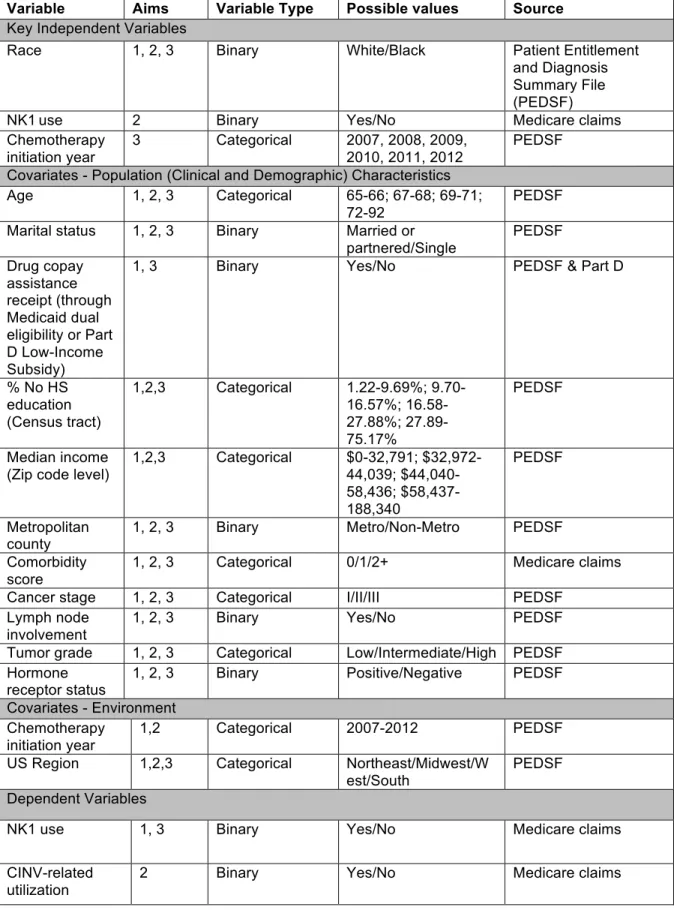
hypovolemia (ICD-9 code 276.52) in the 14 days following chemotherapy administration.[16] The key independent and dependent variables and covariates are summarized in Table 1.
Analytic Approach
The analytic approach for Aims 1, 2, and 3 are outlined below. Overall, we used two
race on care and give a false picture of the care experience of vulnerable patients. [7, 17, 18] Approaches to implement the IOM definition of disparities may also not adjust for other potential mediators of disparities, namely, marital status and geography.[18]
The second, more traditional approach to assessing disparities is to estimate the residual direct effect of race, controlling for all potential mediators of the relationship between race and the outcome, including measures of SES, marital status, and geography. Our secondary models for Aims 1 and 2 used this approach to provide a more conservative estimate of the effect of race on each outcome. In Aim 3, we used only the IOM approach to assessing disparities.
Aim 1: Assess the Relationship Between Patient Race and Prophylactic NK1Use
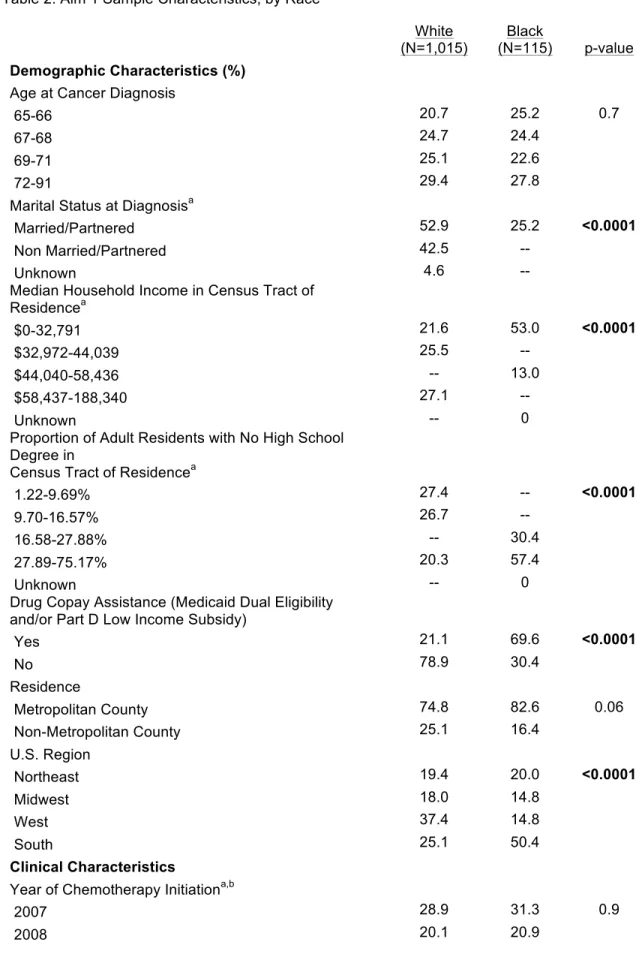
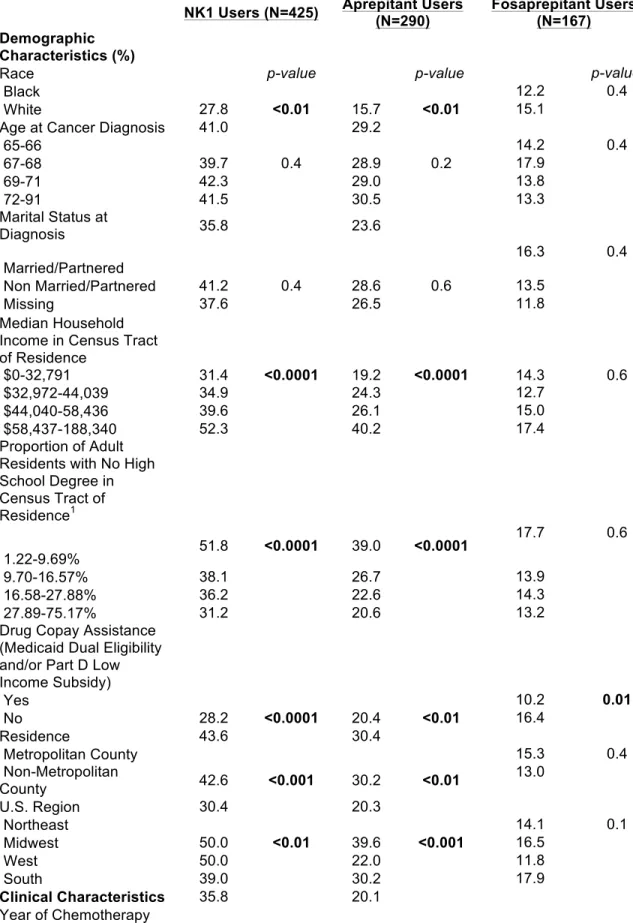
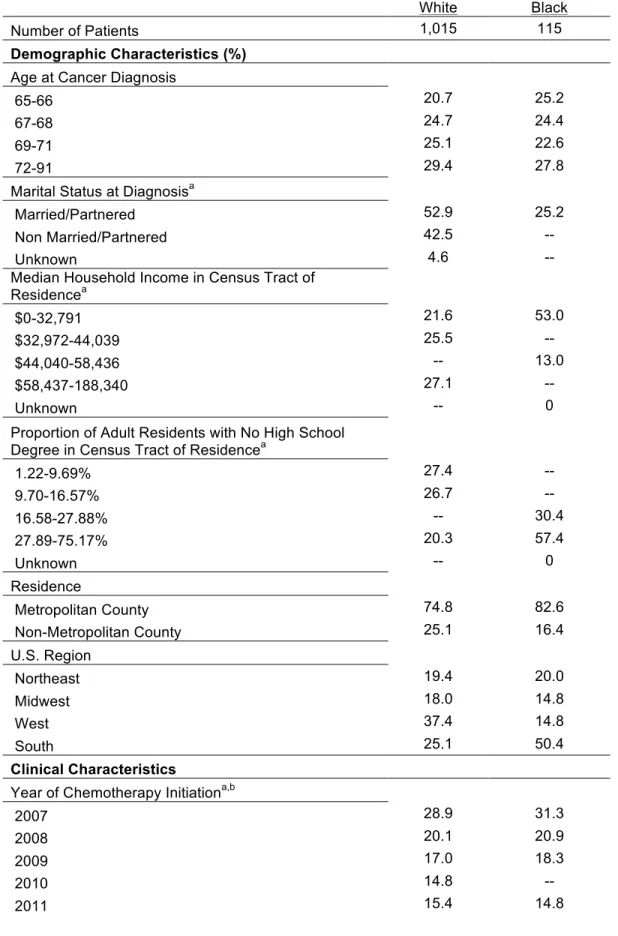
First, we examined the distribution of patient characteristics between racial groups using chi-squared tests. We then assessed the relationship between race and prophylactic use of 1) any NK1, 2) aprepitant (oral formulation), and 3) fosaprepitant (IV formulation). To directly estimate risk ratios with robust error variance, we used modified Poisson regression models,[19, 20]estimating
generalized linear models with a Poisson distribution and log link. Because black women are
disproportionately likely to receive drug copay assistance through Medicaid dual eligibility or a Part D low-income subsidy,[21, 22] we included a drug copay assistance indicator and an interaction of race and copay assistance in our primary NK1 and aprepitant models to determine whether the models should be stratified by drug copay assistance receipt. Because the interaction effect was not
statistically significant, we present the main effects models in this dissertation. The empirical models are shown below. Primary models controlled only for patients’ clinical characteristics while secondary models also controlled for SES measures and other potential mediators of disparities, including marital status and geography.
Primary model: NK1 use = β0 + β1Race + B2Clinical Covariates + u
Secondary model: NK1 use = β0 + β1Race + B2Clinical Covariates + B3SES + B4OtherMediatiors + u
are more common in black women,[23, 25] including these covariates might actually attenuate the effect of race on likelihood of receiving CINV prophylaxis.
Aim 2: Assess the Relationship Between Patient Race and CINV-Related Healthcare Utilization We used modified Poisson regression to assess the relationships between: 1) race and CINV-related healthcare utilization, and 2) NK1 use and CINV-related utilization overall, stratified by race.
Primary model for race and CINV-related utilization: CINV-Related Utilization = β0 + β1Race +
B2Clinical Covariates + u
Secondary model for race and CINV-related utilization: CINV-Related Utilization = β0 + β1Race +
B2Clinical Covariates +B3SES + B4OtherMediatiors + u (All)
Models for NK1 use and CINV-related utilization:
CINV-Related Utilization = β0 + β1NK1 + B2Clinical Covariates + u (All)
CINV-Related Utilization = β0 + β1NK1 + B2Clinical Covariates + u (Black)
CINV-Related Utilization = β0 + β1NK1 + B2Clinical Covariates + u (White)
Aim 3: Assess Longitudinal Trends in Use of NK1s and the Impact of Fosaprepitant Availability on Racial Disparities in Prophylactic NK1 Use
We used modified Poisson regression to estimate changes in NK1 use separately by chemotherapy initiation year. To determine how changes in NK1 use may differ between racial groups, we assessed changes in use of any NK1 and formulation-specific use among black and white patients separately between 2007 and 2011. We controlled for select covariates related to patients’ health status and tumor characteristics (patient age, comorbidity burden, and cancer stage). NK1 use = β0 + B1ChemoYear + β2Race + B3Clinical Covariates + u (Black)
NK1 use = β0 + B1ChemoYear + β2Race + B3Clinical Covariates + u (White)
Expected Outcomes
source of disparities in prophylactic NK1 use and the development of interventions to address these disparities. The expected outcome for Aim 2 was to understand the potential impact of disparities in NK1use in terms of patient outcomes. The results of this aim help establish the significance of potential disparities in antiemetic use in terms of healthcare utilization and potential cost. They may also help inform the design of interventions aimed at reducing avoidable utilization among breast cancer patients. The expected outcome of Aim 3 was to understand whether use of fosaprepitant, compared to oral aprepitant, has increased over time for both racial groups and to understand whether the availability and recommendation of fosaprepitant has helped narrow racial disparities in the use of NK1s. These results fulfill Aim 3’s objective of assessing the impact of changes in the formulation and reimbursement of NK1s on disparities in their use and may have implications for providers’ prescribing practices and for Medicare reimbursement policy.
Taken together, the results of this study elucidate potential disparities in a critical aspect of supportive breast cancer care. In doing so, they will help transition current cancer disparities research from focusing primarily on curative treatment to also considering supportive care and its implications for patients’ QOL and cancer care experience.
Table 1. Study Variables for Aims 1, 2, and 3
Variable Aims Variable Type Possible values Source
Key Independent Variables
Race 1, 2, 3 Binary White/Black Patient Entitlement
and Diagnosis Summary File (PEDSF)
NK1use 2 Binary Yes/No Medicare claims
Chemotherapy initiation year
3 Categorical 2007, 2008, 2009, 2010, 2011, 2012
PEDSF Covariates - Population (Clinical and Demographic) Characteristics
Age 1, 2, 3 Categorical 65-66; 67-68; 69-71; 72-92
PEDSF Marital status 1, 2, 3 Binary Married or
partnered/Single PEDSF Drug copay assistance receipt (through Medicaid dual eligibility or Part D Low-Income Subsidy)
1, 3 Binary Yes/No PEDSF & Part D
% No HS education (Census tract)
1,2,3 Categorical 1.22-9.69%; 9.70-16.57%; 16.58-27.88%; 27.89-75.17%
PEDSF
Median income (Zip code level)
1,2,3 Categorical $0-32,791; $32,972-44,039; $44,040-58,436; $58,437-188,340 PEDSF Metropolitan county
1, 2, 3 Binary Metro/Non-Metro PEDSF
Comorbidity score
1, 2, 3 Categorical 0/1/2+ Medicare claims
Cancer stage 1, 2, 3 Categorical I/II/III PEDSF
Lymph node involvement
1, 2, 3 Binary Yes/No PEDSF
Tumor grade 1, 2, 3 Categorical Low/Intermediate/High PEDSF Hormone
receptor status
1, 2, 3 Binary Positive/Negative PEDSF Covariates - Environment
Chemotherapy initiation year
1,2 Categorical 2007-2012 PEDSF
US Region 1,2,3 Categorical Northeast/Midwest/W est/South
PEDSF Dependent Variables
NK1 use 1, 3 Binary Yes/No Medicare claims
CINV-related utilization
REFERENCES
1. Andersen RM. Revisiting the behavioral model and access to medical care: Does it matter? J Health Soc Behav 1995;36(1):1–10.
2. Probst JC, Laditka SB, Wang JY, et al. Effects of residence and race on burden of travel for care: Cross sectional analysis of the 2001 US National Household Travel Survey. BMC Health Serv Res 2007;7:40.
3. Kullgren JT, McLaughlin CG, Mitra N, et al. Nonfinancial barriers and access to care for U.S. adults. Health Serv Res 2012;47(1 Pt 2):462–85.
4. Cobaugh DJ, Angner E, Kiefe CI, et al. Effect of racial differences on ability to afford prescription medications. Am J Health Syst Pharm 2008;65(22):2137–43.
5. Nelson, A., Unequal treatment: confronting racial and ethnic disparities in health care. J Natl Med Assoc 2002;94(8):666-8.
6. Talcott JA, Spain P, Clark JA, et al. Hidden barriers between knowledge and behavior: The North Carolina prostate cancer screening and treatment experience. Cancer
2007;109(8):1599–606.
7. Gerend MA, Pai M. Social determinants of Black-White disparities in breast cancer mortality: A review. Cancer Epidemiol Biomarkers Prev 2008;17(11):2913–23.
8. Schueler KM, Chu PW, Smith-Bindman R. Factors associated with mammography utilization: A systematic quantitative review of the literature. J Womens Health (Larchmt)
2008;17(9):1477–98.
9. Biggers A, Joan Neuner, Elizabeth Smith, Liliana Pezzin, Purushottam Laud, John A. Charlson, and Alicia Smallwood. Medicare Part D low-income subsidy and disparities in breast cancer treatment. J Clin Oncol 32, 2014 (suppl 30, abstract 2).
10. Neuner JM, Kamaraju S, Charlson JA, et al. The introduction of generic aromatase inhibitors and treatment adherence among Medicare D enrollees. J Natl Cancer Inst 2015;107(8). 11. Jha AK, Orav EJ, Epstein AM. Low-quality, high-cost hospitals, mainly in South, care for
sharply higher shares of elderly black, Hispanic, and medicaid patients. Health Aff (Millwood) 2011;30(10):1904–11.
12. Samuel CA, Landrum MB, McNeil BJ, et al. Racial disparities in cancer care in the Veterans Affairs health care system and the role of site of care. Am J Public Health 2014;104 Suppl 4:S562–71.
13. Warren JL, Klabunde CN, Schrag D, et al. Overview of the SEER-Medicare data: Content, research applications, and generalizability to the United States elderly population. Med Care 2002;40(8 Suppl):IV-3–18.
14. Kaiser Family Foundation. Medicare Advantage Enrollees as a Percent of Total Medicare Population. http://kff.org/other/state-indicator/hospital-supplementary-enrollees. Accessed March 10, 2016.
16. Roila F, Herrstedt J, Aapro M, et al. Guideline update for MASCC and ESMO in the
prevention of chemotherapy- and radiotherapy-induced nausea and vomiting: Results of the Perugia consensus conference. Ann Oncol 2010;21 Suppl 5:v232–43.
17. National Comprehensive Cancer Network (NCCN). Clinical Practice Guidelines in Oncology, Anti-emesis. Version 1.2012.
http://www.nccn.org/professionals/physician_gls/f_guidelines.asp. Accessed December 21, 2015.
18. Roila F, Hesketh PJ, Herrstedt J, et al. Prevention of chemotherapy- and radiotherapy-induced emesis: Results of the 2004 Perugia International Antiemetic Consensus Conference. Ann Oncol 2006;17(1):20–8.
19. Kris MG, Hesketh PJ, et al. American Society of Clinical Oncology guideline for antiemetics in oncology: Update 2006. J Clin Oncol 2006;24(18):2932–47.
20. Klabunde CN, Potosky AL, Legler JM, et al. Development of a comorbidity index using physician claims data. J Clin Epidemiol 2000;53(12):1258–67.
21. Burke TA, Wisniewski T, Ernst FR. Resource utilization and costs associated with chemotherapy-induced nausea and vomiting (CINV) following highly or moderately
emetogenic chemotherapy administered in the US outpatient hospital setting. Support Care Cancer 2011;19(1):131–40.
22. Le Cook B, McGuire TG, Lock K, et al. Comparing methods of racial and ethnic disparities measurement across different settings of mental health care. Health Serv Res
2010;45(3):825–47.
23. McGuire TG, Alegria M, Cook BL, et al. Implementing the Institute of Medicine definition of disparities: An application to mental health care. Health Serv Res 2006;41(5):1979–2005. 24. Zou G. A modified poisson regression approach to prospective studies with binary data. Am J
Epidemiol 2004;159(7):702–6.
25. Spiegelman D HE. Easy SAS Calculations for risk or prevalence ratios and differences. American Journal of Epidemiology 2005;163(3):199–200.
26. Neuman P, Strollo MK, Guterman S, et al. Medicare prescription drug benefit progress report: Findings from a 2006 national survey of seniors. Health Aff (Millwood) 2007;26(5):w630–43. 27. Joslyn SA, West MM. Racial differences in breast carcinoma survival. Cancer
2000;88(1):114–23.
28. Clegg LX, Li FP, Hankey BF, et al. Cancer survival among US whites and minorities: A SEER (Surveillance, Epidemiology, and End Results) Program population-based study. Arch Intern Med 2002;162(17):1985–93.
CHAPTER 4. INVESTIGATING RACIAL DISPARITIES IN BREAST CANCER PATIENTS’ USE OF NK1 RECEPTOR ANTAGONISTS FOR THE PREVENTION OF CHEMOTHERAPY-INDUCED
NAUSEA AND VOMITING
Introduction
Patients initiating cancer treatment have consistently cited chemotherapy-induced nausea and vomiting (CINV) as a major and fearful concern.[1]Poorly-controlled CINV can have severe physiological consequences, including dehydration, nutritional derangements, metabolic imbalances, and anorexia.[2] Thus, inadequate CINV control can lead to deterioration of a patient’s functional condition and quality of life (QOL).[3–5] Further, hospital admissions, emergency department (ED) visits, and outpatient hospital visits after the first cycle of chemotherapy are both common and costly, with one study estimating the cost of treating CINV between the first and second cycle at $5,299 among patients with a visit and $731 across all patients receiving moderately or highly emetogenic chemotherapy.[6] In addition, uncontrolled CINV can lead to decreased chemotherapy adherence or even withdrawal from potentially beneficial chemotherapy.[2, 7] CINV control is therefore a critical aspect of high-quality cancer care and has profound implications for patients’ cancer care experience.
depending on their phase of the Part D benefit (i.e., in the initial coverage phase or in the doughnut hole, respectively).[11]
Evidence suggests that cost and access barriers may disproportionately affect minority patients. Studies of patients with lung, prostate, and colorectal cancers have shown black race to be negatively associated with use of other antiemetic drugs.[12, 13] Whether this finding extends to NK1s and to other cancers is unknown. Assessing the relationship between race and NK1 use among breast cancer patients is particularly important because this population frequently receives highly emetogenic chemotherapy. In addition, research has demonstrated that black breast cancer patients may be more likely than white patients to have gaps in or discontinue use of chemotherapy because of hospitalizations and acute illness,[14] possibly due to adverse effects of treatment. In general, minority cancer patients are more likely than white patients to experience uncontrolled symptoms and to report inadequate supportive care for pain and psychosocial symptoms.[15–19] As a first step toward understanding how the quality of CINV prophylaxis may contribute to racial disparities in breast cancer care, we assessed potential racial disparities in prophylactic use of NK1s among early-stage breast cancer patients beginning a chemotherapy regimen for which use of an NK1 is
guideline-recommended. We were also interested to learn whether disparities were attenuated by intravenous (versus oral) NK1 use.
Methods Data
Sample
We included women aged 65 years and older who were diagnosed with stage I, II, or III breast cancer between January 1, 2007, and December 31, 2011 (Figure 1). Eligible women were: (1) not diagnosed at autopsy or death; (2) continuously enrolled in Medicare Parts and A and B for 6 months before and 12 months after diagnosis; (3) continuously enrolled in Medicare Part D for 12 months after diagnosis; and (4) not enrolled in an HMO for 6 months before and 12 months after diagnosis. There were 27,160 women meeting these criteria. From this sample, we restricted our study to women who received surgery (mastectomy or breast-conserving surgery) and initiated chemotherapy within 6 months of diagnosis (n=4,651). The analysis was further restricted to women whose first cycle of adjuvant chemotherapy included an anthracycline and cyclophosphamide (n=1,569), because guidelines have consistently recommended use of an NK1 for these regimens throughout the study period.[8–10, 21, 22] Our sample was limited to women initiating adjuvant chemotherapy following surgery (versus women receiving neoadjuvant chemotherapy) in an effort to make the sample as homogenous as possible with regard to treatment experiences and potential unmeasured confounders. Because of the small proportion of non-black minorities (n=118), the study was restricted to black and white women (n=1,451). Finally, we restricted our sample to women who initiated chemotherapy on or after February 1, 2007, so that we could observe Part D prescription drug claims for antiemetics in the 30 days before chemotherapy initiation (n=1,130).
Variables