THINKING ABOUT WHAT YOU DON’T THINK ABOUT: THE ROLE OF MENTAL SIMULATION IN PREFERENCE CONSISTENCY
AND NEW PRODUCT EVALUATION
Min Zhao
A dissertation submitted to the faculty of the University of North Carolina at Chapel Hill in partial fulfillment of the requirements for the degree of Doctor of Philosophy in the Kenan-Flagler Business School (Marketing).
Chapel Hill 2006
Approved by
Co-Advisor: Steve Hoeffler Co-Advisor: Gal Zauberman
Reader: Paul Bloom Reader: John Lynch Reader: Charlotte Mason
© 2006 Min Zhao
ABSTRACT
MIN ZHAO: Thinking About What You Don’t Think About: The Role of Mental Simulation in Preference Consistency and New Product Evaluation
(Under the direction of Steve Hoeffler and Gal Zauberman)
According to the accessibility-diagnosticity framework, momentarily more accessible aspects of a product can have a disproportionate influence over the evaluation of the product by blocking other aspects of the product that are less accessible, yet perhaps more diagnostic. In the three essays of my dissertation, I investigate how to use different types of mental simulation to enhance the accessibility of the naturally ignored information to overcome related negative consequences.
In essay 1, I combine research on choice over time and process vs. outcome-focused mental simulation. Choice over time research indicates that high-level desirability
considerations are more accessible for the distant future and low-level feasibility
conflicting findings in the mental simulation literature regarding the effectiveness of process vs. outcome simulation.
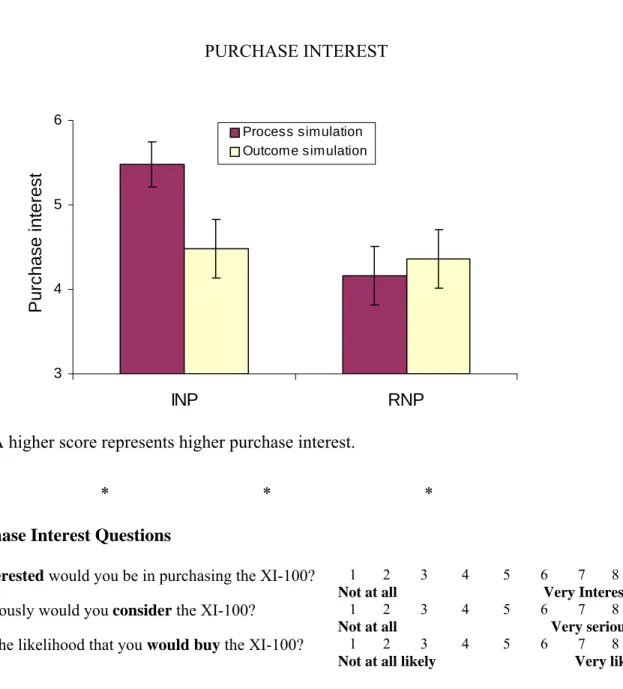
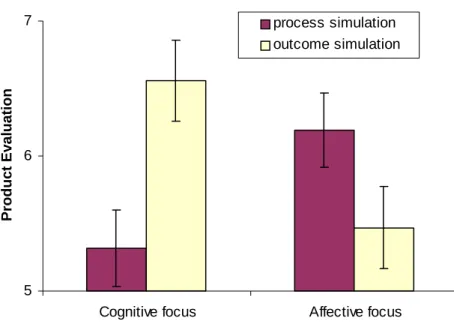
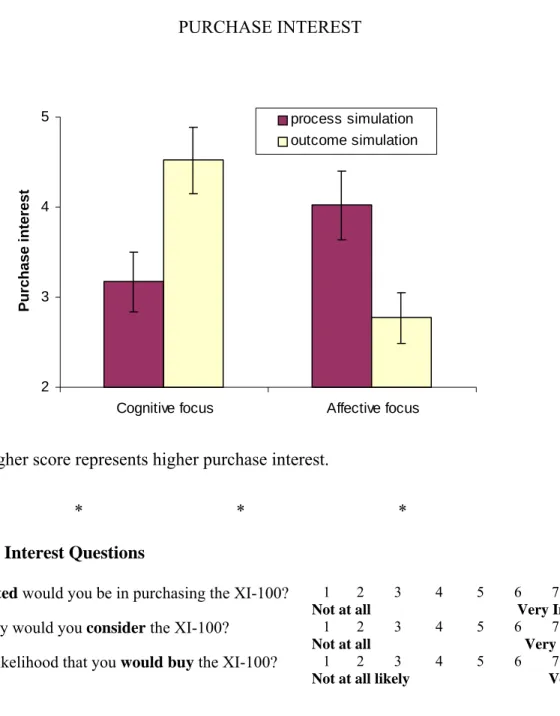
In essay 2, I investigate the domain of new products and find that while high-level desirability considerations appear more accessible than low-level feasibility considerations for incrementally new products (INPs), really new product (RNPs) are represented with both the desirability and feasibility considerations. As such, the traditional process and outcome simulation do not differ in terms of their impact on product evaluations for RNPs. However, when examining the specific information processing modes with a cognitive or affective focus, I find that outcome simulation is more effective at increasing the evaluation of RNPs than process simulation under a cognitive mode, whereas the reversal is true under an affective mode. Further, the degree of planning and level of uncertainty and are found to partially mediate this interactive effect.
In essay 3, I switch to a different dimension of consumers’ mental representations when evaluating new products: memory vs. imagination-focused representations. I
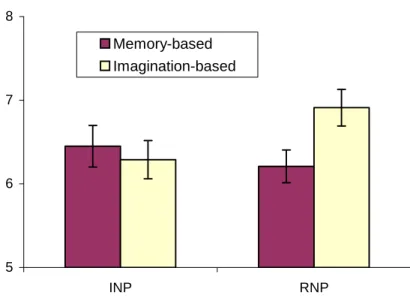
demonstrate that people naturally rely on the more readily accessible images from their past memories while neglecting imaginative new activities. I propose and test the effect of the imaginative-focused visualization strategy which enhances the naturally neglected imaginative new uses of the RNPs and leads to higher evaluation for RNPs. In addition, essay 3 indicates that ease of imagination directly impacts product evaluation for RNPs such that higher ease leads to higher evaluations. In all three studies of essay 3, focus of
visualization and ease of visualization have a limited role on the evaluation of INPs.
ACKNOWLEDGMENTS
My deepest gratitude goes to Steve Hoeffler, the most wonderful mentor I could ever imagine for myself who has made my dissertation process and the whole PhD experience so enjoyable. I cannot thank him enough for his invaluable advice, enthusiastic encouragement and continuous support, as well as his personal kindness and patience over the past four years that made all the difference in my academic career.
I also owe a huge debt of gratitude to my other exceptional advisor Gal Zauberman for all the great advice, stimulating discussions and instrumental guidance throughout the duration of my PhD. I have not only learned substantially from his deep knowledge and wisdom, but also from his uncompromising emphasis on the high standard and rigor of conducting research.
A special thank goes to Rebecca Ratner, who has generously provided great support and advice whenever I was in need of help. I also deeply appreciate her always being so positive about me which kept me feeling confident about myself during the past four year. Working with her, I have benefited enormously from her exquisite research skill.
I am extremely grateful to Paul Bloom, Charlotte Mason and John Lynch for generously sharing their time and wisdom on improving my dissertation with their critical and invaluable suggestions. I also thank the marketing faculty and fellow doctoral students for their help and support.
My final gratitude must go to my family. I am deeply indebted to my parents Yungao Zhao and Chengzhi Zhu, as well as my sister Ying and my brother Kai, who encouraged me to pursue this degree, shared my experiences from the far distance, and supported me every step along the way. My dear husband Zhen Su, a man of great patience and kindness, deserves my most heartfelt appreciation. The daily encouragement and support he provided makes this dissertation as much as his as it is mine. My most special thanks go to my precious daughter Emma, whose arrival during my dissertation stage made my Ph.D. experience so special and her sweet smiles made every day of dissertation work so much more enjoyable. This dissertation is dedicated to my whole family.
TABLE OF CONTENTS
LIST OF APPENDICES ……….…...x
LIST OF FIGURES ………...xi
CHAPTER 1 -- INTRODUCTION ...1
Level of Mental Representation...3
Focus of Mental Representation ...8
CHAPTER 2 -- ESSAY 1 MENTAL SIMULATION AND PREFERENCE CONSISTENCY OVER TIME: THE ROLE OF PROCESS- VERSUS OUTCOME-FOCUSED THOUGHTS ...12
Time and Mental Representation...14
Process- versus Outcome-Focused Mental Simulation...16
Empirical Approach...19
Experiment 1...21
Experiment 2...26
General Discussion ...33
CHAPTER 3 -- ESSAY 2 MENTAL SIMULATION AND THE EVALUATION OF REALLY NEW PRODUCTS: THE ROLE OF PROCESS VS. OUTCOME-FOCUSED THOUGHTS ...39
New Products and Mental Representations ... 41
Process- versus Outcome-Focused Mental Simulation...43
Cognitive verus Affective Processing Mode ...45
Experiment 1...55
Experiment 2...59
General Discussion ...65
CHAPTER 4 -- ESSAY 3 VISUALIZATION AND NEW PRODUCT EVALUATION: THE ROLE OF MEMORY AND IMAGINATION-FOCUSED VISUALIZATION...69
Visualization and Really New Product Evaluation...71
Experiment 1: Focus of Visualizing ...74
Ease of The Visualization Task ...79
Experiment 2: Making Imagination More Difficult...81
Experiment 3: Making Imagination Easier ...85
General Discussion ...89
CHAPTER 5 -- CONCLUSION ...94
APPENDIX………...98
FIGURES………...105
REFERENCES………..………...115
LIST OF APPENDICES
Appendix A -- Essay 1: Experiment 1……….98
Appendix B -- Essay 1: Experiment 2 (Stimuli)………..99
Appendix C -- Essay 1: Experiment 2 (Mental Simulation Manipulations)………..………100
Appendix D -- Essay 2 & 3: Product Info Sheet for the INP………...101
Appendix E -- Essay 2 & 3: Product Info Sheet for the RNP………..…..102
Appendix F -- Essay 2: Summary of Mental Simulation Manipulations………..….103
Appendix G -- Essay 3: Summary of Visualization Instructions………..….104
LIST OF FIGURES
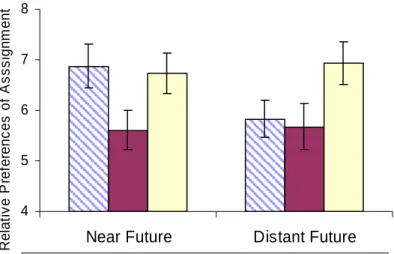
Figure 1 -- Essay 1: Expeeriment 1 Results (Preference) ...………105
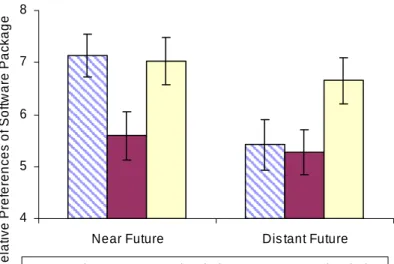
Figure 2 -- Essay 1: Expeeriment 2 Results (Preference) ...106
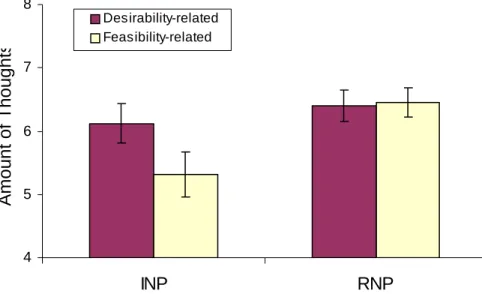
Figure 3 -- Essay 2: Pilot Study Results (Mental Representation) ...107
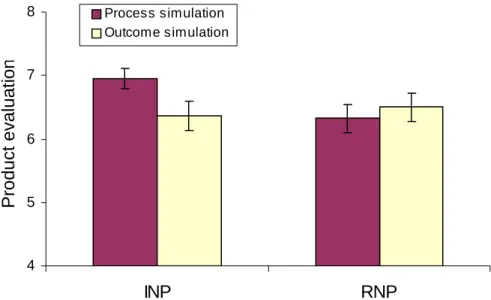
Figure 4A -- Essay 2: Experiment 1 Results (Product Evaluation) ...108
Figure 4B -- Essay 2: Experiment 1 Results (Purchase Interest)...109
Figure 5A -- Essay 2: Experiment 2 Results (Product Evaluation) ...110
Figure 5B -- Essay 2: Experiment 2 Results (Purchase Interest)...111
Figure 6 -- Essay 3: Experiment 1 Results (Product Evaluation) ...112
Figure 7 -- Essay 3: Experiment 2 Results (Product Evaluation) ...113
Figure 8 -- Essay 3: Experiment 3 Results (Product Evaluation) ...114
CHAPTER 1 -- INTRODUCTION
Human beings are thought to be “cognitive misers” who are reluctant to perform extensive thinking and take shortcuts whenever they can (Fiske and Taylor 1991). When making decisions, we rely on the pieces of information that are most easily accessible at the moment of the decision (Feldman and Lynch 1988; Schwarz et al. 1991; Tversky and
Kahneman 1974). This momentarily activated cognition often has disproportionate influence over the judgment and blocks representations which could be more diagnostic (Feldman and Lynch 1988), especially when people are not motivated to invest high effort into a decision task and simply perceive the mere accessibility as diagnosticity (Menon and Raghubir 2003). As a result, inaccurate judgment follows (Feldman and Lynch 1988).
Although the accessibility-diagnosticity framework (Feldman and Lynch 1988)
originated in measurement research, in the domain of consumer decision making, relying on one aspect of a product that is naturally more accessible to drive an evaluation while
consumer domain, consequences such as purchase of products with promising mail-in-rebates to be redeemed in the distant future but low redemption motivation in the near future (Soman 1998). Similarly, new products provide consumers with novel benefits which may ultimately improve a consumer’s life. However, lower evaluation for novel benefits leads to low adoption and hinders consumers from appreciating and utilizing these new benefits. From the marketer’s point of view, increasing new product adoption is important due to the costly product development, short life cycle and fierce competition (Herzenstein, Posavac and Brakus 2006).
To avoid those negative consequences by helping consumers achieve consistent preferences and enhance evaluation of new product, it is important to understand which aspects of the products are naturally more accessible, and to find mental strategies to help consumers augment these natural representations with less accessible, but perhaps more diagnostic, information. Such is the main objective of this dissertation. At the same time, while drawing on research on mental simulation to seek appropriate mental strategies for the scenarios described above, this dissertation suggests a potential explanation to the present contradictory findings in the mental simulation literature regarding the effectiveness of different types of simulation, as well as unconfounds the interference between simulation type and cognitive vs. affective information processing mode in the traditional mental simulation literature (Escalas and Luce 2003, 2004; Taylor et al. 1998; Taylor and Pham 1999).
According to Feldman and Lynch (1988), which cognitions receive momentary activation is a function of the environmental cues directing attention to some aspects of the object’ features. Thus, depending on the situation, people mentally focus on different aspects
of a product. There are many dimensions that could describe the different aspects of any product. “Using a photo book software” for example, could be identified in totally different ways such as “creating a photo book and preserving memories,” “downloading and installing the software package,” “something different from making a manual album like I used to do,” or “cool new technology I’ll try soon.” In any specific situation, one or several of these mental representations will become more accessible in one’s mind, be perceived as more diagnostic, block other aspects of consideration and influence the final decision of which software to choose. In the three essays of this dissertation, two important dimensions that influence consumers when they evaluate products will be discussed: level of mental representation (i.e. high level desirability representation vs. low level feasibility
representation) and focus of mental representation (i.e. memory-focused or imagination focused), respectively. I investigate factors that impact the natural accessibility of different levels of those two dimensions. More importantly, I propose mental simulation strategies to alter the accessibility of different levels on each dimension while addressing the
contradictory findings regarding the effectiveness of different types of simulation and the possible confounds in the traditional mental simulation literature.
LEVEL OF MENTAL REPRESENTATION
Level of Mental Representation
Cognitive and social-cognitive research has proposed level of mental representation as a systematic difference in the representation of items: concepts that are more closely related to the perceived essence of things and have greater explanatory power are categorized as abstract representations whereas concepts that are peripheral are defined as concrete
representations (Medin 1989). More relevant to the current work, previous research on action identification suggests that actions may be represented in terms of superordinate or
subordinate goals. Superordinate goals are related with the abstract “why” aspects of an action reflecting the end state, whereas the subordinate goals are related more with the specific “how” details of the action reflecting the means (Vallacher and Wegner 1987). Construal level theory incorporates this distinction between the end and means and
differentiates between high-level desirability related representations which corresponds to the end state in the goal literature, vs. low-level feasibility related representations that refers to the means to achieve the goal (Liberman and Trope 1998; Trope and Lieberman 2003). For example, a high-level desirability-related representation may represent “creating a photo book” as “preserving memories in a nice way” rather than as “downloading a software” or “editing the pictures” as examples of low-level feasibility-related representations.
Factors Impacting Desirability vs. Feasibility Related Level
Recent research has proposed that the natural mental representations of an event vary depending on the temporal distance (Liberman and Trope 1998). When people make a decision for the distant future, their decision is based more on the consideration of the high level desirability aspect of the product that emerges automatically and becomes more
accessible. However, they underweigh feasibility considerations that may be more diagnostic. On the contrary, when people make a product choice for the near future, they rely more on the low level feasibility aspect of the product (e.g. ease of using) that is naturally evoked and more accessible. However, they neglect the desirability aspects (e.g. product benefits) that could have been more diagnostic (Liberman and Trope 1998; Trope and Liberman 2000,
2003). As a result, people would prefer higher-quality options for the distant future but easier options for the near future, which results in inconsistent preference over time. As noted earlier, this inconsistent preference would lead to negative consequences such as regret or low customer satisfaction from ordering a high-quality, but hard-to-use product, and ending up not using it at all. Essay 1 of this dissertation will examine this specific context where temporal distance impacts the mental representation of a product.
In essay 2, I move to the context of new product learning and explore how
incrementally new products (INPs) and really new products (RNPs) differ in term of the natural mental representations when consumers evaluate them. Recent research has suggested that similar to temporal distance, there are three other dimensions of psychological distances – spatial distance, social distance and hypotheticality, following the general rule that the more distal entities (which are more remote from direct experience) have a mental construal that is naturally more accessible at a higher level (Liberman, Trope and Stephan, 2006). Intuitively, one would think that for INPs which are closer to people’s direct experiences, the feasibility considerations at a lower level will be more accessible, whereas for RNPs which are more remote from people’s experiences, the desirability related aspects at a higher level will be more accessible. However, a comparison between the INPs and RNPs indicates that these products differ on other important dimensions as well. For example, an essential difference is product complexity (the extent to which people can figure out how to use the product) and the related degree of uncertainty (Hoeffler 2003): For INPs, people understand the link between features and benefits and have low uncertainty, whereas for RNPs, people have difficulty in understanding how to use the product have higher uncertainty, which might prevent them from ignoring the low-level product usage related thoughts. Therefore, I believe
that the natural representations of INPs vs. RNPs are more impacted by these different learning mechanisms due to product complexity, rather than just the general psychological distance mechanism.
Past research in product learning demonstrated that higher prior knowledge leads to higher confidence and lowered motivation of information processing (Wood and Lynch 2001). In addition, studies showed that for products with lower complexity, people pay more attention to the product benefits and ignore the usage process, whereas for products with higher complexity, people would consider both the benefits and the usage process
(Mukherjee and Hoyer 2001). Thus, I argue that for INPs, desirability focused considerations about the salient benefits will be naturally more accessible than the feasibility focused
considerations about the usage process. However, for RNPs, consumers have a high
motivation to pay attention to different aspects of the products including the product benefits and specific usage situations. This is, RNPs are naturally represented with both desirability and feasibility considerations. This specific context where product complexity impacts to level of mental representation of a product will be examined in essay 2.
Augmenting the Naturally Neglected Mental Representation
Elaboration or rehearsal of an information item increases its accessibility and related diagnosticity (Feldman and Lynch 1988; Gollwitzer 1999; Sherman et al. 1978). Thus, I expect that in the contexts described above, with varying temporal distance and product complexity, encouraging people to engage in extensive thinking by activating the mental construal that is naturally neglected and less accessible, will lead to more accurate product appraisals, inducing preference consistency over time and higher evaluation of RNPs.
Research in mental simulation has identified two distinctive types of simulation: outcome simulation that is focused on the desirable outcome of achieving the goal (i.e. the desirability aspect) versus process simulation that is focused on the process of going through the steps of reaching a goal (i.e., the feasibility aspect) (Taylor et al. 1998). This is consistent with the differentiation in the goal striving literature between the pre-decisional deliberate mindset as of “why” to pursue a certain goal vs. the post-decisional implemental mindset as of “how” to implement the goal (Armor and Taylor 2003; Taylor and Gollwitzer 1995). The majority of the research has indicated that process simulation is more effective for goal attainment than outcome simulation (Taylor et al. 1998). Or in the language of goal striving literature, when people have implementation intentions and specify the when, where, and how responses which leads to goal attainment, these situations will become mentally activated and thus more easily accessible, which leads to more effective goal attainment (Gollwitzer 1999). However, other studies found that outcome simulation could also lead to higher performance than process simulation (Taylor and Pham 1999). Drawing on research in mental simulation in essay 1 and essay 2, I identify the unique effectiveness of process or outcome simulation in terms of achieving preference consistency over time and higher RNP evaluations by altering the accessibility of different aspects of a product.
At the same time, essay 1 and essay 2 seek to contribute to the mental simulation literature by solving two major problems in mental simulation research:
1) As illustrated above, there are contradictory findings in terms of whether process or outcome simulation is more effective (Taylor et al. 1998; Taylor and Pham 1999). So far, the proposed explanations for the opposite findings such as task complexity remain only conjectures, as Taylor and Pham (1999) conclude that it is unclear which factor is responsible
for the different findings. Essay 1 will take the temporal perspective and offer a time-based explanation for the contradictory findings.
2) A closer look at the traditional mental simulation manipulations reveals a confound in mental simulation research: Process simulation in the psychology literature puts more emphasis on the cognitive components by directing people to think about the step-by-step process of doing something, while outcome simulation focuses on the affective components by instructing people to imagine the feeling or the joy of achieving something (Pham and Taylor 1999; Taylor et al. 1998). Although research in marketing tries to incorporate both cognitive and affective components into the process and outcome simulation instructions (Escalas and Luce 2003, 2004), it is likely that both components will interfere with each other and cancel out the unique effect of each type of mental simulation. Essay 2 will tease apart the cognitive and affective processing mode and investigate the unique effect of process and outcome simulation on the evaluation of RNPs under each processing mode.
FOCUS OF MENTAL REPRESENTATION
Since new product learning is an important area in marketing, I discuss another dimension in the new product domain that is associated with different types of information that are naturally more accessible: memory vs. imagination focused mental representation (Dahl, Chattopadhyay and Gorn 1999; Childers and Houston 1983; Perky 1910). Memory images refer to events or occasions that have been personally experienced or observed whereas imagination images refer to a new, never-before-experienced event (Perky 1910). Past research has found that differentiating between memory and imagination focused images
is important in learning, mood and affect, problem-solving (Adeyemo 1990, 1994) and new product design (Dahl, Chattopadhyay and Gorn 1999).
I believe the distinction between memory and imagination-focused considerations is important for the evaluation of RNPs which offer novel features and benefits. By definition, memory images are more accessible since they are related with past experiences that are stored somewhere in the memory and are retrievable. Imagination images, on the other hand, can not be directly retrieved from the memory and need to be constructed (Bettman, Luce and Payne 1998). Cognitive miser theory and accessibility-diagnosticity framework would predict that consumers would rely on the more accessible and thus seemingly more
diagnostic images based on past activities when they evaluate a new product (Fiske and Taylor 1991; Feldman and Lynch 1988; Menon and Raghubir 2003). However, research has shown that it is the naturally less accessible imagination-focused thoughts that facilitated innovative problem solving or new product design (Adeyemo 1990; Dahl, Chattopadhyay and Gorn 1999). Accordingly, one would expect that when consumers focus on the
imaginative aspect of RNPs, product evaluation would be higher. On the other hand, memory images that are confined to previous experiences would limit the full appreciation of the novel benefits that RNPs provide.
Thus, in essay 3, I examine the impact of imaginative-focused imagery vs. memory-based imagery on the evaluation of really new products (RNPs). In previous research the critical finding for my purpose is that when evaluating a RNP, people naturally use the more accessible images which are biased towards product usage from their existing memories (while neglecting the imaginative usages). In a similar fashion to the prior two essays, I enhance imaginative-focused visualization and demonstrate that enhancing the naturally
neglected imaginative aspects of an RNP leads to higher evaluations. Further, the role of perceived ease/difficulty of the visualization is examined on the efficacy of the imaginative focused visualization, which is beyond the traditional focus on retrieval from past memories in the existing ease of accessibility literature (Schwarz et al. 1991; Schwarz 1998). The results demonstrate that making the imaginative visualization more difficult or easier directly impacted the evaluation of the RNP. Finally, the effects of type of visualization strategy and difficulty of the visualization task are shown to have a limited impact on a more incremental product.
In summary, in three essays I am going to investigate circumstances where consumers tend to use the most accessible mental representation of the product and neglect other possibly more diagnostic dimensions. I propose and show how mental simulation is used to activate the naturally less accessible and seemingly less diagnostic representations to optimize consumer decisions. Two important dimensions of consumers’ representations when they evaluate a product are examined: level of mental representations (high level desirability vs. low level feasibility) and the focus of mental representations (memory vs. imagination focus). Using process vs. outcome simulation to alter the accessibility of representation levels in near and distant future in order to achieve preference consistency over time is the objective of essay 1. Using process vs. outcome simulation to alter the
accessibility of levels of mental representation for RNPs vs. INPs in order to increase product evaluation is the focus of essay 2. Using imaginative-focused visualization to encourage the naturally ignored imagination-focused product usage consideration for RNPs in order to enhance product evaluation is studied in essay 3.
In addition, as a contribution to the simulation literature, essay 1 provides a temporal-based explanation to the conflicting findings in the mental simulation literature regarding the effectiveness of each type of simulation. Essay 2 investigates the confound between
simulation type (outcome vs. process) and information processing mode (cognitive vs. affective) by demonstrating the unique effect of each type of simulation under a specific processing mode. Essay 3 also extends research on ease of retrieval by showing that ease of visualization has a similar role when applied to constructing imaginative new uses.
CHAPTER 2 -- ESSAY 1
MENTAL SIMULATION AND PREFERENCE CONSISTENCY OVER TIME: THE ROLE OF PROCESS- VERSUS OUTCOME-FOCUSED THOUGHTS
Consider the following scenario: A person has just returned from a wonderful trip in which she took a lot of digital pictures. She is planning to create a digital photo album for this trip and decides to wait for the next three-day weekend to complete the album (which occurs next month). After reading a review of various software packages, she selects a
software package with a high-quality rating, numerous designed themes, and advanced layout tools that should take a moderate amount of time and effort to learn and complete the album. However, four weeks later, when the time to create the photo album arrives, she focuses on the effort associated with installing and learning this software and, ultimately, opts for a simpler software package that can be installed and learned more easily but has relatively limited functionality.
The question of whether choosing the simpler software package is a better or worse decision is not the focus of this research. Rather, my interest lies in understanding the mental processes that are associated with selecting an option (simpler software package) that is inconsistent with the original preference (advanced software package). Furthermore, I
As the preceding scenario illustrates and research on choice over time demonstrates (e.g., Soman 1998; Trope and Liberman 2003), temporal distance influences consumers’ preferences. Specifically, Trope and Liberman (2003) show that people tend to focus on concrete aspects of near-future events and abstract aspects of distant-future events. When making a decision that has immediate consequences, people think in more concrete terms, putting more weight on low-level components of an option (i.e., how feasible the option is). However, when people make a decision about something that is in the more distant future, they tend to think in more abstract terms, focusing on the high-level components of an option (i.e., how desirable a certain option is). This shift in consideration has been shown to lead to temporally inconsistent preferences (Trope and Liberman 2003).
What might moderate such temporally inconsistent preferences? Suppose that counter to the natural (default) consideration pattern, people are encouraged to think about the
concrete, step-by-step feasibility-related aspects of the software packages (e.g., imagining the steps involved to download, install, and learn the software packages) when they make their choice for the distant future. Would this change their preference such that their distant-future choice is consistent with what they would prefer when the choice is imminent? Conversely, what if people are encouraged to think about the more abstract desirability-related aspects of the software packages (e.g., imagining how they would feel after their digital photo album is created) when they make their choice for the immediate future? Could this lead to changes in their preference such that their current choice would be consistent with the choice they had indicated when the decision was in the distant future? These questions are important because consumers (firms) are interested in maximizing long-term happiness (customer satisfaction). Emerging research on the differences between process-focused and outcome-focused
simulation (e.g., Escalas and Luce 2003, 2004; Taylor, Pham, Rivkin and Armor 1998) may shed some light on ways to prevent inconsistent preferences.
In the current research, the main objective is to integrate theory from the mental simulation literature with the processes that lead to time inconsistent preferences and to propose systematic mental strategies to achieve preference consistency. I propose and demonstrate that outcome timing can help understand when each type of mental simulation, outcome or process, will be more effective in achieving preference consistency.
TIME AND MENTAL REPRESENTATION
Time Inconsistent Preferences and Mental Representation
Time-dependent changes in preferences have been investigated across different areas in the behavioral and social sciences, including behavioral decision-making (e.g., Thaler 1981), delay of gratification (e.g., Mischel, Shoda, and Rodriguez 1989) and self-control (e.g., Rachlin 1995). Although research on preference inconsistency has offered mostly affective mechanisms to explain temporal shifts (e.g., Ainslie and Haslam 1992; Loewenstein 1996), recent theories have focused more on cognitive processes (e.g., Malkoc and Zauberman, forthcoming; Trope and Liberman 2003; Zauberman and Lynch 2005). In particular,
construal level theory (Liberman and Trope 1998; Trope and Liberman 2000, 2003) proposes that temporal distance changes people’s responses to future events by changing the way people mentally represent those events. Events in the distant future are more likely to be represented in terms of abstract and central features (high-level construals). However, events in the near future are more likely to be represented in terms of concrete and peripheral features (low-level construals). This shift in mental representation can change attribute
weights over time (Liberman and Trope 1998; Soman 1998) as well as alter the decision process (Förster, Friedman, and Liberman 2004; Malkoc, Zauberman, and Ulu 2005).
The temporal shift in how people represent events and process information has important implications for the consistency of preferences over time. For the purpose of our current work, an important difference between high-level and low-level mental
representations is the resulting relative importance of desirability versus feasibility
considerations (Liberman and Trope 1998). Desirability refers to the value of an action’s end state, whereas feasibility refers to the ease or difficulty of the means to reach the end state. Construal level theory then predicts that temporal distance increases desirability-related mental representations and decreases feasibility-related mental representations (Liberman and Trope 1998; Trope and Liberman 2000, 2003). As a result of this shift between
desirability and feasibility, people may have temporally inconsistent preferences, preferring more desirable options for the distant future but more feasible options for the near future. For example, Liberman and Trope (1998) find that when asking students to choose a distant-future research assignment, the decision is dominated by the positive outcome of completing a project on an interesting topic and students are willing to sacrifice ease for the sake of interest. However, when the assignment is due in the near future, the mental representation of the assignment is dominated by the amount of time and effort required to finish the project and students choose an easy but uninteresting assignment.
Implications of Shifts in Mental Representations for Preference Consistency
Research on choice over time suggests that intertemporal patterns of evaluation and preference could be altered if temporal construal is controlled (Trope and Liberman 2003).
To prevent the negative consequences of neglecting the low-level aspects of an action in the distant future, one could focus on the concrete details of distant-future events by requiring individuals to rehearse, practice, or plan distant-future tasks in full detail (Gollwitzer 1999; Trope and Liberman 2003). Alternatively, the self-control literature has indicated that one could turn attention away from the concrete qualities of immediate temptation and focus on its abstract qualities (Baumeister and Heatherton 1996; Hoch and Lowenstein 1991; Mischel, Shoda and Rodriguez 1989).
To date, however, the idea of altering construal levels using mental control mechanisms has not received much attention in the literature on choice over time and self-regulation. Furthermore, theories of mental simulation focus mostly on goal attainment rather than preferences over time. I use the notion of differing levels of representation to systematically examine the effect of different types of mental simulation on preferences.
PROCESS- VERSUS OUTCOME-FOCUSED MENTAL SIMULATION
Mental simulation is the imitative mental representation of an event or series of events (Taylor and Schneider 1989). Prior research distinguishes between process simulation, which encourages people to imagine the step-by-step process of reaching a certain goal, and outcome simulation, which encourages people to think about the desirable outcome of fulfilling the goal (Taylor et al. 1998). Similar to the effect of implementation intentions which include the when, where and how aspects of goal attainment (Gollwitzer 1999), multiple studies have shown that when people engage in process-focused simulation, their performance is superior to those who engage in outcome-focused simulation (Oettingen and Mayer 2002; Pham and Taylor 1999; Rivkin and Taylor 1999; Taylor et al. 1998). For
example, Pham and Taylor (1999) find that participants who engage in process simulation (i.e., visualizing themselves studying for the exam in a way that would lead them to obtain an “A”) spend more time studying for the midterm and achieve a higher grade than participants who engage in outcome simulation (i.e., visualizing themselves receiving an “A” on the exam). In the consumer domain, Escalas and Luce (2003, 2004) show that process-focused advertisements facilitate behavioral intentions due to a spontaneous planning process, with argument strength playing a moderating role.
Thus, the classic mental simulation research focuses more directly on performance (with the notable recent work of Escalas and Luce 2003, 2004) and the dominant finding has demonstrated superior performance under process simulation. Yet I conjecture that when each type of mental simulation is implemented in research on choice over time, where people need to make trade-offs between high-level desirability and low-level feasibility
considerations, each type of mental simulation (process-focused and outcome-focused) might be more effective at a different point in time.
Simulation Type and Preference Consistency over Time
Combining ideas of process versus outcome simulation with ideas of levels of mental representation in the research on choice over time, I propose that process simulation
encourages a low-level mental representation, highlighting the concrete feasibility-related aspects of an event. In contrast, outcome simulation encourages a high-level mental representation, highlighting the abstract desirability-related aspects of an event. With this association between these two theories in mind, I argue that the pattern of preference
inconsistency over time could be attenuated by regulating the levels of mental representations
with either process simulation or outcome simulation, depending on the temporal distance. In formulating our hypotheses, I compared the two types of simulation with the natural
preference (i.e., no simulation) at different points in time (i.e., distant versus near future).
Near Future
For events in the immediate future, concrete feasibility-focused mental representations are naturally evoked, and abstract desirability-related representations are neglected. As a result, process simulation, which redundantly focuses on concrete thoughts, may not be effective in shifting preferences to be consistent with those naturally occurring in a distant-future setting. However, an outcome simulation that focuses on the favorability of the event could activate the high-level representations and increase desirability-related considerations. As a result, outcome simulation for near-future events may lead to a change in people’s preferences, making them more consistent with preferences that naturally arise when making decisions for the more distant-future.
H1a: Compared with the natural near-future preference, outcome simulation for
near-future events/options causes a greater change in preference than does process simulation.
H1b: Outcome simulation for the near future leads to greater preference consistency
over time (i.e., making near-future preferences after outcome simulation more consistent with natural distant-future preferences).
Distant Future
For events in the distant future, abstract desirability-focused mental representations naturally play a dominant role, and the concrete feasibility-focused representations are neglected. Thus, process simulation could activate concrete representations and increase the weight given to feasibility-related considerations of the event. As a result, process simulation
for distant-future events may bring consumers’ preferences closer to their preferences in the near future when the event is imminent. However, outcome simulation, which focuses on abstract desirability-related considerations, may not be effective in changing consumers’ preferences, because it redundantly focuses on the naturally evoked high-level desirability-related thoughts about the distant-future event.
H2a: Compared with the natural distant-future preference, process simulation for
distant-future events/options causes a greater change in preference than does outcome simulation.
H2b: Process simulation for the distant future leads to greater preference
consistency over time (i.e., making distant-future preferences after process simulation more consistent with natural near-future preferences).
EMPIRICAL APPROACH
The hypotheses were tested in two experiments that examine the ability of outcome and process simulation to overcome preference inconsistency over time. In Experiment 1, I adapted a basic assignment choice scenario used in prior research on temporal construal (Liberman and Trope 1998). This allows me to replicate the existing findings and then isolate the impact of simulation type. In Experiment 2, I use a multiattribute consumer product (photo album software package) to test the impact of mental simulation type in an
environment that requires consumers to trade off their effort against product performance. The general task in both experiments involves evaluating two options that are associated with different levels of feasibility and desirability. In addition, consistent with prior research (e.g., Liberman and Trope 1998; Trope and Liberman 2000), the timing manipulation had
participants making the evaluation either in the near future (today or in a couple of days, depending on the task) or in the distant future (two or three months later).
Importantly, in both experiments, before evaluating the options, participants in the simulation conditions performed mental simulation that focused on either the process or the outcome associated with each option. In the mental simulation literature, process simulation has focused on a series of steps, or tasks, that are aimed to aid the completion of the focal goal (Taylor et al. 1998). Conversely, participants in the outcome simulation condition focused on experiencing the feelings associated with achieving a positive outcome (Taylor et al. 1998).
In the consumer domain, Escalas and Luce (2004) adapted the traditional process and outcome simulation manipulations toward preference in an advertising context. In their process simulation conditions, participants were asked to “focus on how you would
incorporate this shampoo (vitamins) into your daily routine” (Escalas and Luce 2004, p. 282-3). Whereas, in the outcome simulation conditions participants were asked to “Imagine how you would feel if your looks improved (health improved) as a result of the shampoo
(vitamins),” (Escalas and Luce 2004, p. 283). Our manipulations of process and outcome simulation mirrored the language used in these prior manipulations.
The primary dependent variable in both experiments is the relative preference between the two options (choice was also included in Experiment 2). To test the hypotheses associated with change of preference, I first computed a series of planned contrasts. To examine the impact of timing and simulation type further, I performed an additional analysis that combined theoretically similar conditions (control and process simulation in the near future conditions or control and outcome simulation in the distant future conditions). These converging sets of analyses allow me to test the relative effects of simulation type at different
points in time. In Experiment 2, I supplement the preference data with choice, as well as analysis of the coding of participants’ written simulation protocols.
EXPERIMENT 1
Method
Participants and design. A total of 189 students at a major southeastern university completed the experiment to fulfill a research requirement for an introductory marketing course. The experiment was a 2 (time: near future, distant future) x 3 (simulation: control, outcome simulation, process simulation) between-subjects design.
Procedure. Participants were randomly assigned to one of six experimental conditions. In all conditions, participants were asked to imagine that they needed to turn in a class assignment that required reading a chapter and discussing several questions about it
(Liberman and Trope 1998). There were two topics from which they could choose: Topic A was very interesting but required a great deal of effort. Topic B was less interesting but did not require as much effort. Each topic was described in general terms and no specific information about the topics was given (See Appendix A). The order of the two topics was counterbalanced.
Participants in the simulation conditions were asked to perform process or outcome simulation. Consistent with prior research (Escalas and Luce 2003, 2004), process simulation instructions focused on the activities associated with completing the assignment, whereas outcome simulation instructions focused on the benefits associated with completing the assignment (see the Appendix A for the exact wording).
To ensure that participants performed the mental simulations, they were asked to write down a detailed list of their thoughts following the simulation exercise. After reading the
scenario and performing the mental simulation exercise or just reading the scenario (in the control conditions), all participants were asked to indicate their likelihood of choosing that topic on a ten-point scale, anchored at 1 (“extremely unlikely”) and 10 (“extremely likely”). Subsequently, participants were asked to indicate their relative preference between these two topics on a scale anchored at 1 (“definitely topic A”) and 10 (“definitely topic B”). In the near-future conditions, the assignment was due a week later, whereas in the distant-future conditions, the assignment was due at the beginning of next semester, which was about three months from the time participants were completing the questionnaires.
Results
The main dependent measure was the relative preference between the high-feasibility and high-desirability options. Note that higher scores represent greater preference for the higher-feasibility/lower-desirability option (the less interesting but easy topic). In addition, note that a key feature of the design is that (1) the control conditions are hypothesized to change over time in accordance with prior research and (2) mental simulations are
hypothesized to change preference at different points in time – outcome simulation in the near future and process simulation in the distant future. Thus, to test the theoretical predictions, I present two sets of analyses.
The first analysis consists of a series of planned contrasts that match the hypotheses. The second analysis is a modified omnibus test that looks directly at the moderating effect of timing on the effectiveness of process versus outcome simulation by simultaneously testing changes in preference by combining theoretically similar conditions. Complete details are provided below.
Replicating prior findings (control conditions). The pattern of results for the control conditions replicated prior findings (e.g., Liberman and Trope 1998) with a marginally significant difference between near- and distant-future preferences (F(1, 183) = 3.00, p = .08,
ω2 = .032).1 As expected, participants in the near-future condition preferred the easier but less interesting topic (M = 6.87) more than those in the distant-future condition (M = 5.83); see figure 1.
Near future. Planned contrasts demonstrate that for the near future, outcome simulation causes a change in preferences and leads to temporal preference consistency with the natural distant-future preference: Participants who engaged in outcome simulation indicated a
significantly greater preference toward the interesting but difficult topic (M= 5.60) compared with participants in the control condition (M= 6.87; F(1, 183) = 4.71, p < .05, ω2 = .055). However, there was no significant difference regarding the relative preference between the process simulation condition (M = 6.73) and the control condition (M = 6.87; F(1, 183) = .06, p = .81). These results support H1a. As a result of outcome simulation for the near future, the
natural intertemporal preference inconsistency is eliminated. Preferences associated with outcome simulation for the near future (M= 5.60) were not significantly different from the control preference for the distant future (M= 5.83; F(1, 183) = .14, p = .71), in support of H1b.
Distant future. For the distant future, process simulation causes a change in preferences and leads to preference consistency over time with the natural near-future preference: In the distant-future conditions, participants in the process simulation condition indicated a
marginally significant greater preference toward the less interesting but easier topic (M =
1 Throughout the analyses sections in all three essays, I used overall error terms and adjusted degrees of freedom for all statistical tests (Winer, Brown, and Michels 1991). In addition, all ω2 values cited in this article are partial ω2 (Keren and Lewis 1979), excluding variance due to analysis of variance terms unrelated to the tested effect. Partial ω2 = σ2
effect / (σ2effect + σ2error).
6.93) compared with those in the control condition (M = 5.83; F(1, 183) = 3.32, p < .07, ω2
= .038).2 However, the preferences associated with the outcome simulation condition (M = 5.73) were not significantly different from the control condition (M= 5.83; F(1, 183) = .07, p = .79). These results provide initial support for H2a. As a result of process simulation for the
distant future, the natural intertemporal preference inconsistency is eliminated. The preferences associated with process simulation for the distant future (M = 6.93) were not significantly different from the natural preference of the near future (M = 6.87; F(1, 183) = .01, p = .92), which provides support for H2b.
Because the hypotheses are about a series of planned contrasts with the control condition shifting with time (near vs. distant future), the 2-df omnibus interaction is not the appropriate test. However, since process simulation for near future and outcome simulation for distant future are hypothesized to match the respective default control conditions (match), whereas outcome simulation for near future and process simulation for distant future are hypnotized to cause preference deviation from the respective control conditions (mismatch), it is appropriate to test for a modified 1-df interaction by combining the control with the match conditions. Before testing for the modified interaction, two separate ANOVA tests for the match and mismatch conditions were conducted: First, I computed a 2 (near vs. distant future) x 2 (control vs. match) ANOVA. As expected, no main effects of simulation (F(1,183) = .13, p = .71) or interaction between time and simulation (F(1,183) = 0, p = .99) were found. Second, I conducted a 2 (near vs. distant future) x 2 (control vs. mismatch) ANOVA. As expected, there was a significant interaction between simulation and time (F(1,183) = 7.94, p = .005). Thus I combined our control with match conditions and performed a modified 2
2 Process simulation may have had a lesser effect in this case because the experiment was conducted at the end of the semester when students may have had a general preference toward easy topics.
(near future vs. distant future) x 2 (match vs. mismatch) ANOVA that tested for the unique (1 df) main effect at each point of time. A significant interaction between time and simulation, F(1,185) = 11.07, p < .001 was found.
--- Insert figure 1 about here --- Discussion
The results from the control conditions of Experiment 1 replicate prior findings (e.g., Liberman and Trope 1998) and demonstrate that people have a relatively stronger preference toward the higher-feasibility option for the near future than for the distant future. In support of the hypotheses, the results further show that for the near future, outcome simulation caused a greater change in preference toward the higher-desirability/lower-feasibility option (H1a), leading to preferences that were consistent with the control preference for the
distant-future option (H1b). Conversely, for the distant future, process simulation created a greater
preference change in favor of the higher-feasibility/lower-desirability option (H2a), leading to
preferences that were consistent with those in the control condition for the near-future option (H2b).
Why doesn’t process simulation in the near future and outcome simulation in the distant future cause any change in preference? My explanation focuses on the natural processing characteristics at each point in time. Thus, in the near-future scenario, process simulation enhances the dominant processing mode, in which the corresponding focus is on concrete feasibility-related thoughts. In contrast, outcome simulation enhances the dominant processing mode in the distant future by focusing on abstract desirability-related thoughts.
Experiment 1 provides direct evidence that process and outcome simulation can be used to change preferences and create preference consistency over time. In the next study, I
provide further evidence for these results by examining the phenomena in a more typical consumption context while increasing the external validity by including choice as a
dependent variable and increasing the internal validity by using a more subtle and consistent manipulation of process and outcome simulation.
EXPERIMENT 2
Experiment 1 provides support for my hypotheses that use of process simulation for the distant future and outcome simulation for the near future can help attenuate preference inconsistency over time. Yet the task of choosing an assignment may have idiosyncratic characteristics that limit our ability to generalize the findings to more typical consumer contexts. In Experiment 2, I switch to a different domain (i.e., the choice of a software package) to test whether the impact of process- and outcome-based thoughts generalizes to a consumption situation with a multiattribute product. In addition, choice was added as a dependent variable. Finally, the simulation instructions were modified so that they are more closely aligned with those used in the marketing literature (Escalas and Luce 2003, 2004).
Method
Participants and design. A total of 225 students were recruited at a major southeastern university and were paid $5 as compensation. The experiment followed a 2 (time: near future, distant future) x 3 (simulation: control, outcome simulation, process simulation) between-subjects design.
Stimuli. The basic scenario of the stimuli asked participants to imagine that they had an important project (to create a photo essay) for one of their classes that was due either in two
days or at the beginning of the next semester, which was a little over two months from the time participants completed the questionnaires. The project required the use of a photo album software package. There were two software packages from which participants could choose, both of which had free trial versions that could be downloaded from the Web and were valid for 48 hours. All projects were to be graded and then posted on the Web. Participants were asked to consider the following two options: One software package had a higher PC Magazine quality rating (rated as ) with complete image editing features (i.e.,
numerous predesigned themes, improved layout tools). However, this package had a large file size and a medium difficulty level, for which downloading, installation, and tutorial were estimated to take approximately 45 minutes. The other software package had a lower PC Magazine quality rating (rated as ) with some image editing features (i.e., limited
themes, basic layout tools). However, this package had a small file size and a low difficulty level, for which downloading, installation, and tutorial were estimated to take approximately 10 minutes. Descriptions of both software packages also included an excerpt from a review: “allows for the creation of fabulous photo essays, but difficult and time consuming to learn and use” for the software package with advanced features, and “some limitations of final layout and editing options, but simple to use, easy to learn, and gets the job done” for the more limited but easier to use software package (See Appendix B). The order of the software packages was counterbalanced.
Procedure: The process simulation instructions focused on the process of using the software package while the outcome simulation instructions focused on the final outcome of the project. In addition, instructions for process and outcome simulation contained the same number of words (65) and the same structure (for the exact wording, see the Appendix C). In
this experiment, I used a similar procedure and dependent measures as were used in
Experiment 1 but with some additional measures. First, in addition to the preference measure, participants’ binary choice between the two options was included. Second, as a manipulation check for time, after the main task, participants were asked to rate their perceptions of the time gap between now and the due date of the project. Third, participants were then asked to indicate how important the capabilities of the software and the difficulty of setting up and using the software were to them when they made their decision about which software package to choose. Finally, I asked participants to rate how much they thought about the process of using the software and the final quality of the project when they were making their decisions.
Results
As in Experiment 1, the main dependent measure was the relative preference between the high-feasibility and the high-desirability options. For the relative preference, higher scores represent greater preference for the higher-feasibility option (the software package that had a low-quality rating but was easier to use), and lower scores represent greater preference for the higher-desirability option (the software package that had a high-quality rating but was difficult to use). I report similar analyses as those in Experiment 1. In addition, I report the choice data, as well as coded responses of participants’ written responses to the simulation instructions. Three coders were asked to code participants’ thought protocols independently to identify whether each argument was a process- or outcome-related thought.
The intercoder reliability was .95 for outcome-related thoughts and .91 for process-related thoughts. The coding results of three coders were aggregated.3
Manipulation check. The coded open responses indicate that participants had more outcome-related thoughts in the outcome simulation conditions (M =4.73) compared with process simulation conditions (M =1.87; F(1,140) = 161.68, p < .001); and that participants had more process-related thoughts in the process simulation conditions (M =4.05) than in the outcome simulation conditions (M =1.62; F(1,140) = 122.74, p < .005). This indicated that the simulation conditions had the intended effect on the type of thoughts participates
generated, but participants performed overall similar levels of total elaboration for both types of simulation (F(1,140) = 1.89, p = .17).
The effectiveness of the manipulations was further tested using participants’ self-reports about the importance of process- and outcome-related features in their decisions. I calculated the difference between people’s self-reported amount of thinking about the process of using the software versus the final quality of the project and found a significant main effect of time (F(1, 215) = 4.02, p < .05) and a significant effect of simulation (F(2, 215) = 3.28, p < .05) but no significant interaction. I also found similar results for self-reported measures of the importance of the software’s capability and the difficulty of setting up and using the software; this result shows that outcome simulation increases the importance of
3 The coding revealed that four participants did more than twice the opposite simulation than they were instructed to do, and thus I dropped them from the analysis, which resulted in a sample size of 221. The results based on all 225 participants (including those who did not follow the instructions) fully replicated the results based on 221 participants, except that the simple effect of process simulation in the distant future was not significant compared with the distant-future control condition. All other pairwise contrasts and the differencing analysis yielded the same results. To test the robustness of the results further, I used analyses with different criteria: I conducted analyses based on participants who (1) did not do more of the opposite simulation than the simulation that they were supposed to do (N = 213) and (2) did not do more than 1.5 times the opposite simulation (N = 214). The results fully replicated the results based on 221 participants.
abstract desirability considerations, whereas process simulation increases the importance of concrete feasibility considerations.
In addition, the manipulation check measure of the temporal distance between now and the due date of the project confirmed that our time manipulation was successful: Participants perceived the time gap in the near-future conditions (M = 4.02) as significantly shorter than that in the distant-future conditions (M = 7.39), F(1,219) = 168.58, p < .001.
Control conditions. Consistent with the predictions of prior research and the results in Experiment 1, under no simulation, participants in the near-future condition preferred the higher-feasibility software package (M = 7.13) significantly more than participants in the distant-future condition (M = 5.42), F(1,215) = 7.60, p < .01, ω2 = .132; see Figure 2.
Near future: As in Experiment 1, I computed a set of planned contrasts to test the relative effectiveness of the different simulation types. Again, the results were fully consistent with the hypotheses: In the near-future conditions, there was no significant
difference in the relative preference between the process simulation condition (M = 7.03) and the control condition (M = 7.13), F(1,215) = .03, p = .86. However, participants who engaged in outcome simulation (M = 5.59) indicated a significantly greater preference toward the higher-desirability software package than participants in the control condition (M = 7.13), F(1,215) = 6.04, p < .05, ω2 = .166, in support of H1a. Furthermore, as expected, preferences
associated with outcome simulation for the near future (M = 5.59) were not significantly different from the control preference for the distant future (M = 5.42), F(1,215) = .08, p = .78, indicating that the natural preference inconsistency over time was eliminated after outcome simulation for the near future, in support of H1b.
Distant future: In the distant-future conditions, there was no difference in preferences between outcome simulation (M= 5.28) and the control condition (M = 5.42), F(1,215) = .05, p = .82. However, after the process simulation, participants indicated a significantly greater preference toward the higher-feasibility software package (M = 6.66) than participants in the control condition (M = 5.42), F(1,215) = 3.76, p < .05, ω2 = .266, in support of H2a.
Furthermore, as a result of process simulation for the distant future, the natural preference inconsistency over time was eliminated: There was no difference between the preferences after process simulation for the distant future (M = 6.66) and the control preference for the near future (M = 7.13), F(1,215) = .55, p = .46, in support of H2b.
As in Experiment 1, before combining the control and match conditions to test for the modified interaction, two separate ANOVAs were run: The 2 (near vs. distant future) x 2 (control vs. match) ANOVA showed no main effect of simulation (F(1, 215) = .07, p =. 79) or interactions between time and simulation (F(1, 215) = 0, p = .96). The 2 (near vs. distant future) x 2 (control vs. mismatch) ANOVA indicated a significant interaction between simulation and time (F(1, 215) = 9.64, p < .005). Finally, the modified 2 (near future vs. distant future) x 2 (match vs. mismatch) ANOVA showed a significant interaction between time and simulation, F(1,217) = 12.89, p < .001, supporting the hypotheses
--- Insert figure 2 about here ---
Choice. For the choice between software packages, an overall chi-square test showed a significant difference between participants’ choices across the six conditions (χ2(5) = 17.14, p < .005, ω2 = .078). Overall, the results replicated the preference results. As predicted, in the control conditions, the percentage of people who chose the higher-feasibility software
package for the near future (M= 72%) was significantly greater than the percentage of people who chose the same software package for the distant future (M=42%); χ2(1) = 6.93, p <.01,
ω2 = .09. In terms of the effect of mental simulation, when the choice was for the near future, the percentage of people who chose the higher-feasibility software package after process simulation (M= 78%) did not change compared with that in the control condition (M= 72%;
χ2(1) = .35, p = .55). However, after outcome simulation, the percentage of people who chose this software package (M= 49%) significantly decreased compared with that in the control condition (M= 72%); χ2(1) = 4.26, p < .05, ω2 = .056, which provides additional support for H1a. Furthermore, outcome simulation in the near future led to consistent choices over time
as there was no difference between the percentage of people who chose the higher-feasibility software package after outcome simulation for the near-future (M=49%) and the natural distant-future condition (M= 42%; χ2(1) = .32, p = .57), which provides further support for H1b.
Conversely, when participants made a choice for the distant future, there was no
significant difference between outcome simulation (M=44%) and the control condition (M= 42%); χ2(1) = .04, p = .84. However, the percentage of people who chose the
higher-feasibility software package after process simulation (M= 63%) increased (marginally) compared with that in the control condition (M= 42%); χ2(1) = 3.14, p < .08, ω2 = .043, which provides further support for H2a. In support of H2b, I again find that process
simulation for the distant future led to consistent choices over time, as I did not observe a difference between the percentage of people who chose the higher-feasibility software package after process simulation in the distant-future (M= 63%) and that in the natural near-future condition (M= 72%); χ2(1) = .67, p = .41.
Discussion
Experiment 2 replicated the findings of Experiment 1 and prior literature,
demonstrating that people have inconsistent preferences over time: a relatively stronger preference toward the higher-feasibility/lower-desirability option in the near future and a stronger preference toward the higher-desirability/lower-feasibility option in the distant future. In support of the hypotheses, I again demonstrated that outcome simulation for near-future options changed preferences in favor of the higher-desirability/lower-feasibility option. In addition, process simulation for distant-future options changed preferences toward the higher-feasibility/lower-desirability option. This general pattern of results held for both relative preference and choice. These results were obtained in a more typical consumption context with a multiple-attribute product set that forced participants to perform benefit–effort trade-offs, while using a more subtle and consistent manipulation of process and outcome simulation. The open-ended responses, as well as participants’ self-reports, further indicate that the simulation manipulation employed had the intended effects.
GENERAL DISCUSSION
In this research, a temporal-based mental mechanism from the mental simulation literature was employed toward the goal of achieving preference consistency over time. I hypothesize and demonstrate in two experiments that preference inconsistency over time can be attenuated by regulating levels of mental representations with either process simulation or outcome simulation, depending on the temporal distance.
Taken together, the findings of essay 1 suggest that for near-future options, where concrete feasibility-related thoughts are naturally focused upon and desirability is relatively
ignored, process simulation does not change the focus of people’s thoughts and thus does not change their preferences. However, outcome simulation enables preferences in the near-future to be consistent with preferences that are developed in distant-near-future scenarios, because outcome simulation focuses on abstract desirability-related thoughts, with relatively less emphasis on feasibility, similar to the natural tendency found when evaluating distant-future options. In terms of distant-distant-future options, where the focus is on abstract desirability, rather than concrete feasibility, outcome simulation does not change the focus of people’s thoughts and therefore does not change their preferences. In these cases, process simulation is better able to bring preferences into line with natural near-future preferences, by shifting the focus away from abstract desirability-related thoughts and toward concrete feasibility-related thoughts.
Consistent Yet Different Preferences
The studies show a preponderance of support for the notion that specific types of simulation can create preference consistency across time. Thinking about the process of setting up and using a software package (in three months) ultimately led consumers to think as if they were choosing the software today. Thinking about the long-term benefit of the project (when making an immediate decision) ultimately lead consumers to think more like they were making a future decision. For both time frames (near and distant future), our explanation is based on the idea that a previously ignored (or underweighted) aspect of the decision is incorporated into the decision after simulation. Yet at no point do these
preferences converge.