Norris et al. Physically active lessons Meta-Analysis PRE-PRINT Page 1
Physically active lessons in schools: A systematic review and meta-analysis of effects on
physical activity, educational, health and cognition outcomes
Emma Norris*1 1
Centre for Behaviour Change, University College London, WC1E 6HB, UK
Tommy van Steen2 2
Institute of Security and Global Affairs, Leiden University, The Netherlands
Artur Direito1,3 3
Yong Loo Lin School of Medicine, National University of Singapore, Singapore
Emmanuel Stamatakis4 4
University of Sydney, Charles Perkins Centre, Faculty of Medicine and Health, School of Public Health, Australia
Correspondence to: Emma Norris: [email protected] @EJ_Norris
Abstract
Objective: This review provides the first meta-analysis of the effects of physically active lessons on
lesson-time and overall physical activity (PA), as well as health, cognition and educational outcomes.
Design: Systematic review and meta-analysis. Six meta-analyses pooled effects on lesson-time PA,
overall PA, in-class educational and overall educational outcomes, cognition and health outcomes.
Meta-analyses were conducted using the metafor package in R. Risk of bias was assessed using the
Cochrane tool for risk of bias.
Data sources: PubMed, Embase, PsycINFO, ERIC and Web of Science, grey literature and reference
Norris et al. Physically active lessons Meta-Analysis PRE-PRINT Page 2 Studies eligibility criteria: Physically active lessons compared to a control group in a randomised or
non-randomised design, within single component interventions in general school populations.
Results: 42 studies (39 in preschool or elementary school settings, 27 randomised controlled trials)
were eligible for inclusion in the systematic review and 37 of them were included across the six
meta-analyses (n=12,663). Physically active lessons were found to produce large, significant
increases in lesson-time PA (d=2.33; 95%CI 1.42, 3.25: k=16) and small, significant effects on overall
PA (d= 0.32, 95%CI 0.18, 0.46: k=8). A large, significant effect was shown on lesson-time educational
outcomes (d=0.81; 95%CI 0.47, 1.14: k=7) and a small, significant effect on overall educational
outcomes (d=0.36, 95%CI [0.09, 0.63], k=25). No effects were seen on cognitive (k=3) or health
outcomes (k=3). 25/42 studies had high risk of bias in at least 2 domains.
Conclusion: In elementary and preschool settings, when physically active lessons were added into
the curriculum they had a positive impact on both physical activity and educational outcomes. These
findings support policy initiatives encouraging the incorporation of physically active lessons into
teaching in elementary and preschool settings.
Norris et al. Physically active lessons Meta-Analysis PRE-PRINT Page 3 Introduction
Globally around 50% of children1 and 80% of adolescents2 do not obtain the 60 minutes of moderate-to-vigorous physical activity (MVPA) per day recommended by the World Health
Organisation.3 Classroom time is consistently shown to be the greatest contributor of sedentary time in children,4 with obligatory teacher-led lessons contributing around 7-8 hours of sedentary time per day.5 Increasing awareness of the health,6 cognitive7 and mental health benefits8 9 of physical activity has led governments to recommend at least 30 minutes of moderate-to-vigorous physical activity
(MVPA) per school day.3 10 Schools provide an ideal environment to increase physical activity, as they allow prolonged access to the majority of children.11 12 However, time constraints and education priorities make it difficult for teachers and schools to integrate activity opportunities into the school
routine.13 14
Physically active lessons (also known as physically active learning15) combine physical activity with academic content and have been explored as a potential method of increasing activity in schools
without detriment to educational time.16 Examples of physically active lessons include doing star-jumps whilst reciting times tables 17 or using movements to show whether an answer is true or false18. Embedded physical activity can be specifically relevant to the learning task at-hand, or task non-relevant but still occurring simultaneously in the taught session19. Such activities also can take place inside or outdoors. Physically active lessons are distinct from ‘brain-‘ or ‘active breaks’ which
allow bouts of in-class activity but usually without educational content.20
Previous systematic reviews have collated research evidence for physically active lessons through
qualitative syntheses.15 20 21 These have identified mostly positive results on physical activity, health and educational outcomes across a wide range of study designs. However, it was not possible to
Norris et al. Physically active lessons Meta-Analysis PRE-PRINT Page 4 breaks and other approaches, with 13/39 studies comprising of physically active lesson
interventions22. This found classroom-based interventions to have a significant, positive effect on improving time-on-task and academic achievement, but no effects on cognitive functions or physical
activity22. However, that review did not include a meta-analysis of the effects of physically active lessons specifically. Other reviews have meta-analysed physically active lessons amongst other
school-based interventions, such as to explore effects on student engagement 23 and academic performance24.
This review extends previous attempts to synthesise research by meta-analysing the effects of
physically active lessons compared to typical teaching. This review aimed to assess the effects and
moderators of physically active lessons on physical activity, educational, health and cognition
outcomes.
Methods
The review protocol was registered with PROSPERO (CRD4201707693325) and PRISMA guidelines for systematic review reporting26 were followed.
Search strategy and information sources
In December 2017, a systematic search was conducted using PubMed, Embase, PsycINFO, ERIC and
Web of Science electronic databases. Searches were re-run in April 2019. Search terms included: 1)
physical activity, exercise or movement, 2) class, lesson or learning and 3) children, young or pupil,
all combined with ‘AND’ (Figure 1). Grey literature from related organisations was also searched,
such as the Education Endowment Foundation (UK), Play England (UK), Active Living Research (USA)
Norris et al. Physically active lessons Meta-Analysis PRE-PRINT Page 5 Figure 1. Search strategy used in PubMed
1. physical activity or exercis* or movement* (title and abstract)
2. class* or lesson* or learn* (title and abstract)
3. child* or young* or pupil* (title and abstract)
1 and 2 and 3
Inclusion and exclusion criteria
Physically active lessons were required to be carried out in schools, with studies requiring a control
group (e.g randomised or non-randomised controlled trials) to evaluate the effects of physically
active lessons. Authors of related conference proceeding titles or abstracts were contacted for full
text reports. Searches were restricted to English language studies published from January 1997.
Physically active lessons as part of multicomponent interventions were excluded as it would have
been difficult to isolate their independent effects. Studies conducted in labs, testing physical
education, physical activity breaks without educational content, after-school or recess interventions
were excluded. Studies with exclusively special populations (such as children with Special
Educational Needs or obesity) were excluded. Studies exclusively reporting protocol, qualitative or
process evaluation findings were excluded. Reviews were also excluded although reference lists
were searched. Studies meeting all criteria were included regardless of sample size, to reflect the
variation of study sizes conducted to-date.
Study selection and data extraction
Search results were imported into Covidence27 and duplicates removed. Titles, abstracts and full texts were screened by EN, AD & TvS, with disagreements discussed between these authors. All data
Norris et al. Physically active lessons Meta-Analysis PRE-PRINT Page 6 and April 2018 and in April 2019 after searches were re-run. Data extraction was informed by the
Template for Intervention Description and Replication (TiDieR)28 checklist. Behaviour Change Techniques (BCTs) or the ‘active ingredients’ intended to elicit change in teachers and pupils were
coded in identified studies by two independent coders (EN & AD) using the BCT Taxonomy v1
(BCTTv129), addressing the ‘What’ component of TiDieR. Data were extracted from study protocols where available.
Outcome measurement methods and instruments were extracted related to physical activity (e.g
questionnaires, observations, accelerometry), education (e.g time-on-task (often also referred to as
on-task behaviour), academic achievement), health (e.g Body Mass Index; BMI) and cognition (e.g
fluid intelligence and executive function, not time-on-task) with results extracted across all reported
time-points. Data was only extracted where reported for both active lesson and control groups e.g
not extracted where activity assessed during active lessons only. Data was independently extracted
by two reviewers (split between EN, AD and TvS) and discrepancies resolved through discussion.
Risk of Bias assessment
Two reviewers(split between EN, AD and TvS) independently assessed risk of bias using the
Cochrane Collaboration tool for assessing risk of bias.30 Assessment was performed for random sequence generation, allocation concealment, blinding of participants and personnel, blinding of
outcome assessment, incomplete outcome data and selective reporting. We assessed risk of bias for
each criterion as low, unclear or high risk.
Meta-Analysis
Meta-analyses were conducted where there were at least three studies reporting statistics
of interest for the same outcome (i.e group Means, SD and N) after contacting authors, e.g. cognitive
Norris et al. Physically active lessons Meta-Analysis PRE-PRINT Page 7 decision strategy was set to prevent the inclusion of multiple outcomes from a single study in any
one meta-analysis (e.g. two lesson-time physical activity measures such as observed and
accelerometer-assessed activity from the same study22.) For physical activity outcomes, MVPA was prioritised over steps, light activity and sedentary behaviour due to its focus in global physical
activity guidelines3. For education outcomes, standardised testing (such as national standardised tests or progress monitoring tools) was prioritised over unstandardized researcher-developed
testing.22 Mathematic outcomes were prioritised where studies reported multiple subject
assessments, as math was the most commonly reported outcome.22 Higher scores typically indicated better educational outcomes, so scores were reversed where lower scores reflected better
academic-related outcomes. For health outcomes, BMI was prioritised as it was the most commonly
reported health outcome in included studies, making it more viable to pool rather than more
heterogeneous health outcomes. Additionally, BMI was prioritised as children’s overweight and
obesity has greater focus in international child health profiles than children’s physical fitness3 31.
Analysis Strategy
We used the metafor-package for R32 to conduct the meta-analyses with the standardised mean difference Cohen’s d with Hedge’s g correction as the effect size measure. For the weighting of
studies, the inverse variance was computed. We calculated effect sizes and study weights using
post-intervention scores of control and post-intervention groups and where outcomes were measured at
multiple time points, we chose the first time point after the intervention had ended as effect size
input. For studies where only change scores were available, we directly requested the post-test
scores from authors via email.
Six random-effects models were fitted to the data, as there was an expectation of
heterogeneity between studies due to differences in study design, length and outcome measures.
Where applicable, Q-tests were conducted to test the assumption of heterogeneity that underlies
Norris et al. Physically active lessons Meta-Analysis PRE-PRINT Page 8 of small/medium/large effect size estimates of 0.3, 0.5, and 0.8 respectively33, with additional
sensitivity analysis performed using the leave-one-out method. We used the trim-and-fill method34 to investigate possible publication bias in the included comparisons.
Moderators
Moderator analyses assessed the robustness of the overall effect sizes. Seven dichotomous
moderators were coded for: 1) risk of bias (high vs low - studies with at least one domain assessed as
‘high risk of bias’ were considered at a high risk of bias; excluding the blinding domain due to all
studies assessed at high risk); 2) randomised controlled trial design (RCT vs not), 3) intervention
length (> eight weeks vs < eight weeks - the median intervention length), 4) number of intervention
sessions (one-off physically active lessons vs more than one), 5) school type (pre-school vs
elementary school or higher), 6) source of intervention delivery (existing classroom teachers vs
recruited personnel including teachers or research staff - to investigate the feasibility of physically
active lesson interventions) and 7) physical activity measurement (subjective vs objective -
self-report instruments or objectively captured PA via pedometer or accelerometer). The first six
moderators were tested in all six meta-analyses, while physical activity measurement was only
tested for in the overall physical activity and lesson-time physical activity meta-analyses. Differences
in outcome variables by gender was not included as a moderator, as gender-stratified outcome data
Norris et al. Physically active lessons Meta-Analysis PRE-PRINT Page 9 Results
Study selection
The final review included 42 studies (Figure 2), reporting the results of 38 trials, where four studies
Norris et al. Physically active lessons Meta-Analysis PRE-PRINT Page 10
Id
e
n
tifi
cat
ion
12039 records identified through PubMed, Embase, PsycINFO, ERIC
and Web of Science
4 additional records identified through other sources
Scr
e
e
n
in
g
2798 duplicates removed 9245 records screened9162 records not addressing research question excluded
El
ig
ib
ility
83 full-text studies assessed for eligibility
23 full-text studies with wrong intervention excluded
4 full-text studies of multicomponent interventions excluded
In
cl
u
si
o
n
1 full-text study of an ongoing study excluded
21 full-text studies with wrong study design excluded
December 2017 search April 2019 search
42 studies included for qualitative synthesis 34 studies included in meta-analyses 16 studies Lesson PA, 10 studies Overall PA, 7 studies Lesson Education, 25 studies Overall Education, 3 studies Health, 3 studies Cognition
904 records identified through PubMed, Embase, PsycINFO, ERIC
and Web of Science
106 duplicates removed
799 records screened
768 studies not addressing research question excluded
31 full-text articles assessed for eligibility
10 full-text studies with wrong intervention excluded
5 full-text studies with wrong study design excluded
6 full-text studies of multicomponent interventions excluded
1 full-text study with wrong population excluded
1 full-text study with wrong outcomes excluded
1 additional record identified through
other sources
Norris et al. Physically active lessons Meta-Analysis PRE-PRINT Page 11
Study and participant characteristics
Eighteen out of 42 studies delivered physically active lessons in the USA, seven in Australia, five in the UK,
four in the Netherlands (all the same trial), two in Denmark and one in China, Croatia, Ireland, Israel,
Portugal and Sweden respectively (Supplementary File 1). 27/42 studies were randomised controlled trials,
four were non-randomised and 11 were quasi-experimental studies. 29/42 studies delivered interventions
in an elementary school setting, nine in pre-schools, one in pre-school into elementary45, one in elementary and middle schools46 and two in high school35 47 (Supplementary File 1). Intervention length ranged from one-off sessions48-52 to three years39 44 53 54. Of studies providing physically active lessons on multiple occasions, total weekly intervention duration ranged from 10 minutes55 to 180 minutes a day56. Only two studies were explicitly based on theory, namely the COM-B model of behaviour change18 37. One study presented a logic model of how it’s physically active lesson intervention may impact student’s sedentary
behaviour and educational outcomes 47. 33/42 studies reported interventions as delivered by existing classroom teachers (Table 1), with the remainder delivered by recruited personnel of teachers or
researchers.
Sample sizes ranged from n=2149 to n=2,49353, with a total of n=12,663 across all included studies. Participant ages ranged from three45 57-59 to 14 years old35 47. Gender proportions of participants ranged from 31.5%57 to 59.4% boys56. 12 studies reported participants’ ethnicity, with ethnic minorities representing between 7.1%60 and 100%57 58 of these samples. Seven studies reported free or reduced school meals status as a measure of socioeconomic status, with up to 94%61 of participants receiving these.
Outcome assessments
Norris et al. Physically active lessons Meta-Analysis PRE-PRINT Page 12
outcomes were assessed in 36 studies17-19 35 38 39 42-52 54-58 60-64 66 69-75, with 28 assessing overall education such as academic achievement19 35 38 42-46 48 49 52 54-58 60-63 66 69-75 and eight assessing lesson-time educational
outcomes of observed time-on-task17 18 39 47 50 51 66 76. Cognitive outcomes such as fluid intelligence were assessed in four studies39 40 60 62 64 72. Health outcomes were assessed in seven studies36 40 41 44 54 63 75, with six assessing BMI36 41 44 54 63 75 and five assessing cardiovascular fitness40 41 44 63 75 (Supplementary File 1).
Behaviour Change Techniques (BCTs) used in interventions
Interventions contained an average of 3.9 BCTs, with a range between 0 and 12 (Supplementary File 2). The
most frequently coded BCTs were Instruction on how to perform the behaviour (BCT 4.1: n=31/42), Adding
objects to the environment (BCT 12.5: n=27/42), Self-monitoring of behaviour (BCT 2.3: n=16/42 and
Feedback on behaviour (BCT 2.2: n=10/42). Objects added to the classroom were low-cost, such as a USB
stick of pre-prepared physically active lessons18 or an audio CD and CD player65.
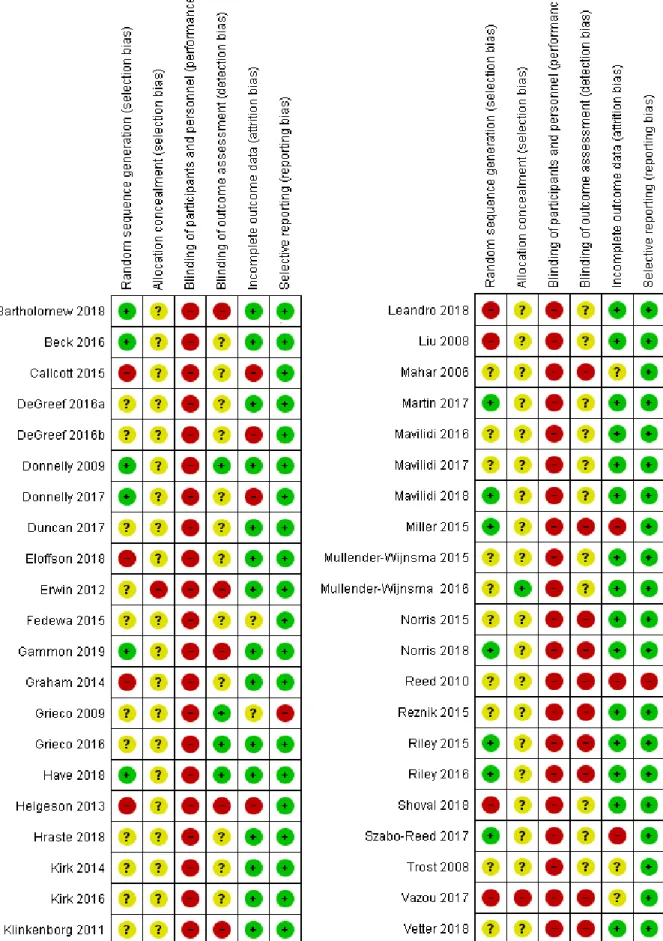
Risk of bias within studies
All 42 studies were assessed to be high risk on at least one domain, with 25/42 having additional high risk
of bias in at least one other domain (Figure 3). Eight studies had high risk of random sequence generation
selection bias, with the majority of studies reporting appropriate methods to their randomisation
procedure (low risk of bias; n=13/42) or not describing these processes (unclear risk of bias; n=21/42).
Allocation concealment selection bias was unclearly reported in 39/42 studies. All studies had high risk of
performance bias, as blinding was not attempted in either the people delivering the intervention or in
pupils receiving the intervention. 15 studies had high levels of detection bias, whereby outcome assessors
were not blinded. Seven studies had high attrition bias, losing high proportions of their sample during the
intervention, such as multiple schools dropping out for unclear reasons. 40/42 studies were judged at low
risk of selective reporting bias. Overall, the risk of bias rating across all domains was relatively even
Norris et al. Physically active lessons Meta-Analysis PRE-PRINT Page 13
Figure 3. Risk of Bias assessment of identified physically active lesson studies.
Norris et al. Physically active lessons Meta-Analysis PRE-PRINT Page 14
Intervention effects on outcomes
We conducted six meta-analyses: 1) lesson-time PA, 2) overall PA, 3) lesson-time educational outcomes, 4)
overall educational outcomes, 5) health and 6) cognitive outcomes. Reasons for exclusion from
meta-analyses were insufficient data from studies and authors not responding to requests for data (25
comparisons from 10 studies). See Figures 4-9 for forest plots of the six meta-analyses. See Table 1 for
overall effects and subgroup effects of all six meta-analyses. An overview of outcomes in included studies
Norris et al. Physically active lessons Meta-Analysis PRE-PRINT Page 15 Table 1. Overall effects and subgroup effects of all meta-analyses.
Meta-analysis Moderator Level k SMD -95%CI +95%CI SE Z-score p
Lesson-time physical activity
Overall effect - 16 2.33 1.42 3.25 0.47 5.00 <.0001
Risk of bias High risk of bias 7 1.66 0.32 3.00 0.68 2.43 0.015
Low risk of bias 9 2.87 1.67 4.08 0.62 4.66 <.0001
Study design RCT 14 2.46 1.46 3.46 0.51 4.84 <.0001
Non-RCT 2 1.45 -1.19 4.08 1.34 1.08 0.28
Intervention length Up to eight weeks 12 2.30 1.21 3.40 0.56 4.13 <.0001
More than eight weeks 4 2.43 0.54 4.33 0.97 2.51 0.012
Number of sessions One-off session 3 2.51 0.33 4.69 1.11 2.26 0.024
More than one session 13 2.29 1.24 3.35 0.54 4.27 <.0001
School type Pre-school 5 2.67 0.96 4.37 0.87 3.07 0.002
Elementary and over 11 2.19 1.06 3.32 0.58 3.79 0.0002
Physical activity measurement Objective measurement 14 2.46 1.46 3.46 0.51 4.84 <.0001
Subjective measurement 2 1.45 -1.19 4.08 1.34 1.08 0.28
Intervention delivery Existing classroom teacher 11 1.82 0.79 2.85 0.53 3.45 0.0006
Recruited personnel 5 3.46 1.91 5.02 0.79 4.38 <.0001
Overall physical activity Overall effect - 8 0.32 0.18 0.46 0.07 4.56 <.0001
Risk of bias High risk of bias 6 0.28 0.12 0.44 0.08 3.44 0.0006
Low risk of bias 2 0.46 0.16 0.77 0.16 2.97 0.003
Study design RCT 8 0.32 0.18 0.46 0.07 4.56 <.0001
Non-RCT 0 - - - -
Intervention length Up to eight weeks 7 0.30 0.15 0.44 0.08 3.89 0.0001
More than eight weeks 1 0.51 0.07 0.95 0.22 2.29 0.0218
Number of sessions One-off session 1 0.03 -0.49 0.55 0.27 0.11 0.9093
More than one session 7 0.34 0.20 0.48 0.07 4.79 <.0001
School type Pre-school 0 - - - -
Elementary and over 8 0.32 0.18 0.46 0.07 4.56 <.0001
Physical activity measurement Objective measurement 8 0.32 0.18 0.46 0.07 4.56 <.0001
Subjective measurement 0 - - - -
Intervention delivery Existing classroom teacher 7 0.32 0.17 0.48 0.08 4.05 <.0001
Recruited personnel 1 0.25 -0.17 0.67 0.21 1.18 0.2378
Lesson-time educational outcomes
Overall effect - 7 0.81 0.47 1.14 0.17 4.74 <.0001
Risk of bias High risk of bias 6 0.74 0.37 1.10 0.18 3.99 <.0001
Low risk of bias 1 1.21 0.34 2.08 0.44 2.72 0.0065
Study design RCT 6 0.78 0.39 1.17 0.20 3.92 <.0001
Non-RCT 1 0.93 0.01 1.85 0.47 1.98 0.0474
Intervention length Up to eight weeks 6 0.95 0.68 1.22 0.14 6.89 <.0001
More than eight weeks 1 0.20 -0.35 0.75 0.28 0.73 0.4661
Number of sessions One-off session 2 1.07 0.46 1.67 0.31 3.45 0.0006
More than one session 5 0.69 0.29 1.09 0.20 3.41 0.0007
Norris et al. Physically active lessons Meta-Analysis PRE-PRINT Page 16
Elementary and over 7 0.81 0.47 1.14 0.17 4.74 <.0001
Intervention delivery Existing classroom teacher 6 0.74 0.37 1.10 0.18 3.99 <.0001
Recruited personnel 1 1.21 0.34 2.08 0.44 2.72 0.0065
Overall educational outcomes
Overall effect - 25 0.36 0.09 0.63 0.14 2.58 0.0098
Risk of bias High risk of bias 15 0.34 -0.03 0.70 0.19 1.80 0.0725
Low risk of bias 10 0.40 -0.04 0.85 0.23 1.78 0.0755
Study design RCT 12 0.40 0.00 0.80 0.20 1.97 0.0492
Non-RCT 13 0.33 -0.07 0.72 0.20 1.60 0.11
Intervention length Up to eight weeks 14 0.46 0.09 0.82 0.19 2.44 0.0146
More than eight weeks 11 0.24 -0.16 0.64 0.20 1.18 0.24
Number of sessions One-off session 3 0.36 -0.48 1.21 0.43 0.84 0.40
More than one session 22 0.36 0.06 0.66 0.15 2.37 0.0179
School type Pre-school 7 0.70 0.22 1.18 0.24 2.85 0.0044
Elementary and over 18 0.22 -0.08 0.51 0.15 1.44 0.15
Intervention delivery Existing classroom teacher 19 0.24 -0.06 0.53 0.15 1.58 0.11
Recruited personnel 6 0.73 0.20 1.26 0.27 2.72 0.0065
Health outcomes Overall effect - 3 -0.03 -0.11 0.05 0.04 -0.75 0.4519
Risk of bias High risk of bias 1 -0.04 -0.22 0.13 0.09 -0.45 0.6497
Low risk of bias 2 -0.03 -0.12 0.06 0.05 -0.61 0.5406
Study design RCT 3 -0.03 -0.11 0.05 0.04 -0.75 0.4519
Non-RCT 0 - - - -
Intervention length Up to eight weeks 0 - - - -
More than eight weeks 3 -0.03 -0.11 0.05 0.04 -0.75 0.4519
Number of sessions One-off session 0 - - - -
More than one session 3 -0.03 -0.11 0.05 0.04 -0.75 0.4519
School type Pre-school 0 - - - -
Elementary and over 3 -0.03 -0.11 0.05 0.04 -0.75 0.4519
Intervention delivery Existing classroom teacher 2 -0.03 -0.12 0.06 0.04 -0.61 0.5409
Recruited personnel 1 -0.05 -0.25 0.15 0.10 -0.48 0.631
Cognitive outcomes Overall effect - 3 0.01 -0.23 0.25 0.12 0.09 0.9294
Risk of bias High risk of bias 2 0.11 -0.22 0.44 0.17 0.65 0.5126
Low risk of bias 1 -0.16 -0.60 0.29 0.23 -0.69 0.4901
Study design RCT 3 0.01 -0.23 0.25 0.12 0.09 0.9294
Non-RCT 0 - - - -
Intervention length Up to eight weeks 0 - - - -
More than eight weeks 3 0.01 -0.23 0.25 0.12 0.09 0.9294
Number of sessions One-off session 0 - - - -
More than one session 3 0.01 -0.23 0.25 0.12 0.09 0.9294
School type Pre-school 0 - - - -
Elementary and over 3 0.01 -0.23 0.25 0.12 0.09 0.9294
Intervention delivery Existing classroom teacher 3 0.01 -0.23 0.25 0.12 0.09 0.9294
Norris et al. Physically active lessons Meta-Analysis PRE-PRINT Page 17
Lesson-time physical activity
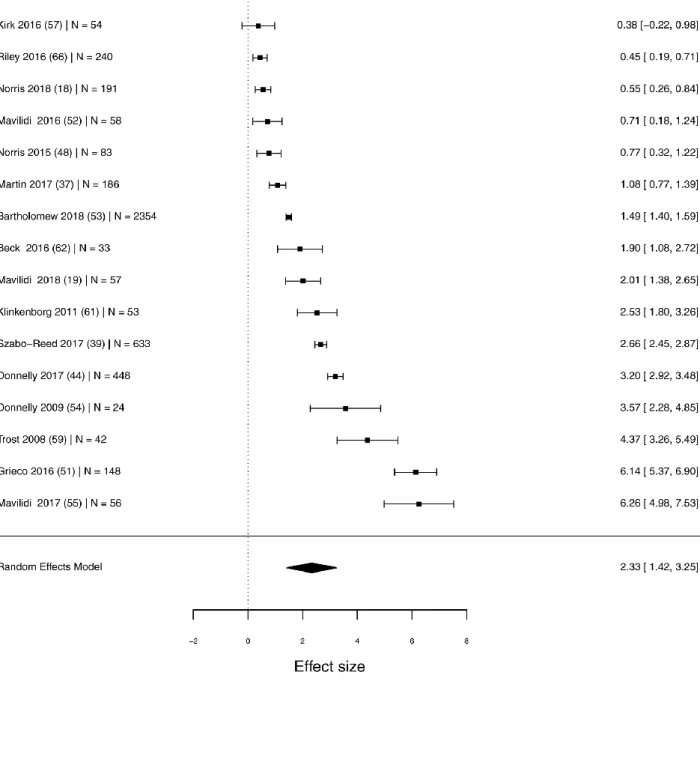
Data from 16 studies assessing lesson-time physical activity were included (Ntotal = 4660). A
random-effects model was applied to the data, as supported by the Q-test of heterogeneity (Q (15) = 626.79, p <
.0001). The meta-analysis showed a significant, large, positive effect of physically active lessons on
lesson-time physical activity compared to control lessons (SMD = 2.33, 95%CI [1.42, 3.25], p < .0001; Figure 4). The
trim-and-fill method used to investigate publication bias suggested there was no publication bias, meaning
the estimated number of missing studies is zero. The leave-one-out method used to test the robustness of
the findings showed no material change in significance levels or in overall effect size. All moderator tests all
Norris et al. Physically active lessons Meta-Analysis PRE-PRINT Page 18
Norris et al. Physically active lessons Meta-Analysis PRE-PRINT Page 19
Overall physical activity
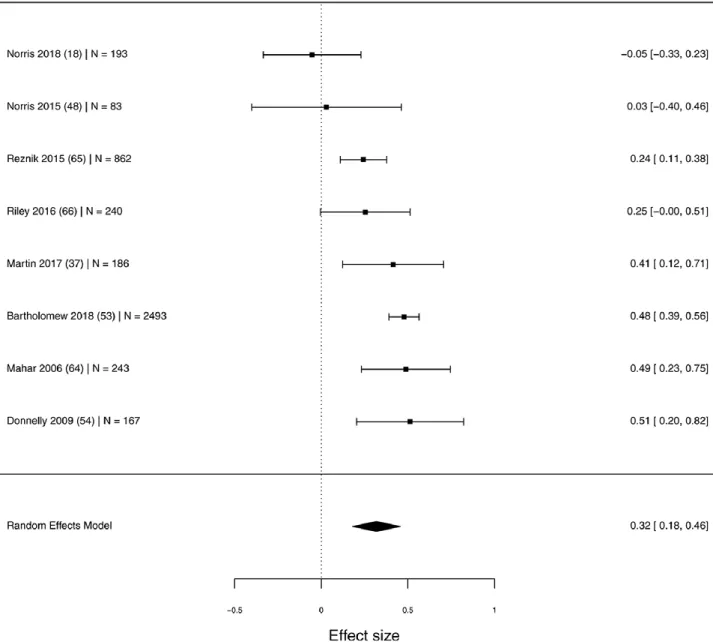
Data from 10 studies assessing overall physical activity were included (Ntotal = 4679). A
random-effects model was applied to the data, a decision that was supported by the Q-test of heterogeneity (Q (9)
= 98.67, p < .0001). There was a non-significant, medium effect of physical active lessons on overall physical
activity (SMD = 0.49, 95%CI [-0.11, 1.10], p = .11). No publication bias was detected.
However, the iterative process of the leave-one-out method revealed that this non-significant
effect was driven by two influential studies 5947. First, the Trost paper has a very large effect size
(SMD=3.71, 95%CI [2.72, 4.71] which, in addition to inflating the overall effect size, substantially widened
the 95% confidence interval of the overall effect. Second, the Gammon paper reported less vigorous
physical activity in the follow-up of the intervention group compared to control groups (3.0 minutes vs 4.7
minutes), which was extracted following the pre-planned strategy. However, mean difference scores from
baseline to post-intervention offered crucial insightful, as the control group decreased vigorous activity by
0.8 minutes compared to 0.1 minutes in the intervention group47. The results of our leave-one-out method analyses suggested the possibility for misleading results: for this reason we decided to remove the
Gammon paper from the subsequent overall physical activity meta-analysis. When both Trost and Gammon
papers were excluded from the sample (leaving Ntotal = 4467), the overall effect size changed from a
medium, non-significant effect to a small, yet significant effect (SMD = 0.32, 95%CI [0.18, 0.46], p < .0001;
Norris et al. Physically active lessons Meta-Analysis PRE-PRINT Page 20
Figure 5. Forest plot of the effect of physically active lessons on overall physical activity.
Norris et al. Physically active lessons Meta-Analysis PRE-PRINT Page 21
Lesson-time educational outcomes
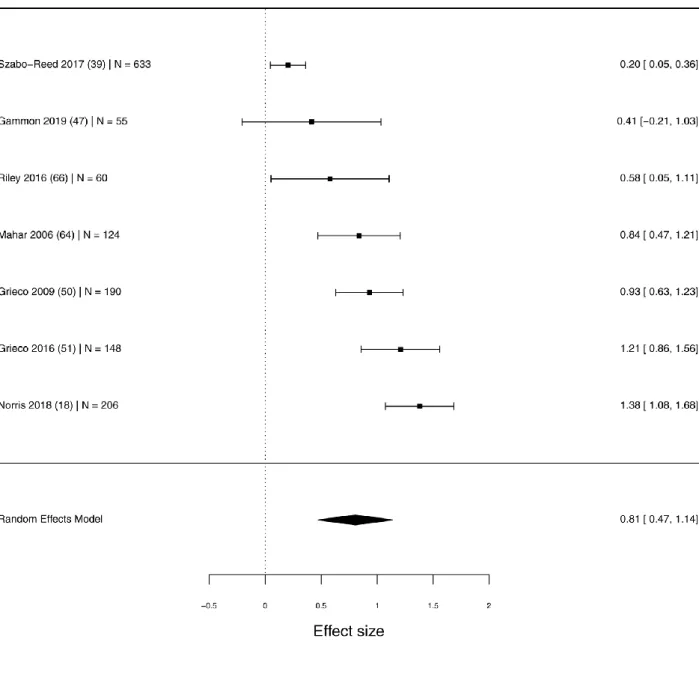
Data from seven studies assessing lesson-time educational outcomes of time-on-task were included
(Ntotal = 1416). A random-effects model was fitted to the data, with this decision supported by a Q-test (Q
(5) = 67.74, p < .0001). There was a large, significant effect of physically active lessons on lesson-time
educational outcomes (SMD = 0.81, 95%CI [0.47, 1.14], p < .0001; Figure 6). There was no sign of
publication bias and the leave-one-out sensitivity analysis did not reveal any studies to influence effects.
Intervention length was a significant moderator (Q(1) = 5.71, p = .017), with interventions shorter
than 8 weeks showing larger effects (SMD = 0.95, 95%CI [0.68, 1.21]) than interventions longer than 8
weeks (SMD = 0.20, 95%CI [-0.35, 0.75]). This difference needs to be interpreted with caution as the
subgroup of interventions longer than 8 weeks consists only of a single study. All other moderators were
Norris et al. Physically active lessons Meta-Analysis PRE-PRINT Page 22
Norris et al. Physically active lessons Meta-Analysis PRE-PRINT Page 23
Overall educational outcomes
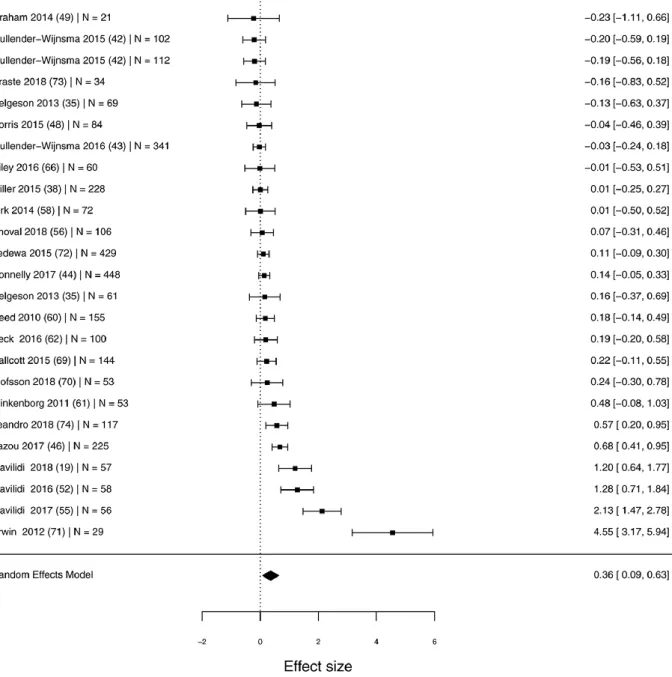
25 studies assessed educational outcomes (Ntotal = 3214). A random-effects model was applied to
the data, again supported by a significant Q-test of heterogeneity (Q (24) = 136.95, p < .0001). There was a
small, significant effect of physically active lessons on overall educational outcomes (SMD = 0.36, 95%CI
[0.09, 0.63], p < .01; Figure 7). There was no sign of publication bias and the leave-one-out sensitivity
analysis did not reveal any studies to influence effects. All moderator tests showed non-significant results
(all p’s > .09; See Table 1 for subgroup effects).
Norris et al. Physically active lessons Meta-Analysis PRE-PRINT Page 24
Health outcomes
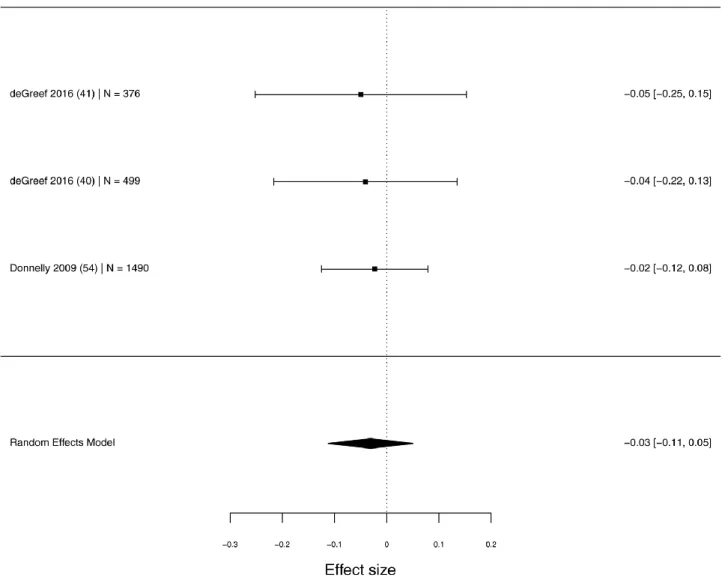
Data from three studies assessing health outcomes were included (Ntotal =2365), with data from two
studies assessing BMI41 54 and one assessing fitness 40. While the Q-test of heterogeneity was not significant (Q (2) = 0.07, p = .97), a random-effects models was applied to the data based on the differences in
outcome measures across the three studies. There was no effect of physically active lessons on health
outcomes (SMD = -0.03, 95%CI [-0.11, 0.05], p=0.45; Figure 8). There was no sign of publication bias and the
leave-one-out sensitivity analysis did not reveal any studies to influence effects. All moderator tests
showed non-significant results (all p’s > .84; See Table 1 for subgroup effects).
Norris et al. Physically active lessons Meta-Analysis PRE-PRINT Page 25
Cognitive outcomes
Data from three studies assessing cognitive outcomes were included (Ntotal =1100), with data from
two studies assessing fluid intelligence 60 72 and one assessing executive functions40 . While the Q-test of heterogeneity (Q (2) = 5.98, p=0.05) was marginally significant, a random-effects model was applied to the
data due to the differences in outcome variables in individual studies. There was no effect of physically
active lessons on cognitive outcomes (SMD = 0.01, 95%CI [-0.23, 0.25], p =.93; Figure 9). There was no sign
of publication bias and the leave-one-out sensitivity analysis did not reveal any studies to influence effects.
All moderator tests showed non-significant results (all p’s =.34; See Table 1 for subgroup effects).
Norris et al. Physically active lessons Meta-Analysis PRE-PRINT Page 26 Discussion
This systematic review and meta-analysis identified 42 studies comparing physically active lessons to typical
teaching control groups. Physically active lessons produced statistically significant increases in lesson-time
and overall physical activity and in lesson-time and overall educational outcomes. No effect was seen on
cognitive or health outcomes.
Physically active lessons were found to produce large, significant increases in lesson-time physical activity,
accompanied by small, significant effects on overall activity. The smaller observed effect of overall
compared to lesson-time activity may indicate a potential compensation effect, whereby children exert
lower levels of activity after active lessons to compensate for their earlier increased exertion77. An alternative explanation may be that physically active lessons as an ‘expansion’ of new physical activity
opportunities may be insufficient alone to lead to larger increases in overall activity.78 The combination of expansion activity opportunities with the ‘extension’ of new activity opportunities and ‘enhancement’ of
wider activity strategies may be needed in schools for larger activity benefits.78 Overall, these physical activity findings are consistent with previous systematic reviews that qualitatively synthesised results of
physically active lessons15 20 21. However, this review’s findings contrast with a meta-analysis of 11 classroom-based activity interventions of varying content such as active breaks and physically active
lessons, which found no effect on observed activity levels22. Conducting meta-analyses with strict inclusion criteria to specific intervention characteristics may decrease heterogeneity of interventions and reveal a
more accurate estimate of effects.
In contrast to the findings of the first systematic review of physically active lessons in 201520, physical activity measurement here was predominantly via objective accelerometers and pedometers, rather than
questionnaires or observations. However, the duration of assessment varied greatly, with some studies
assessing school-time activity only and others assessing full weekday and weekend day activity 18 54
Norris et al. Physically active lessons Meta-Analysis PRE-PRINT Page 27
habitual activity levels79, however the majority of included studies fell short of this. There was also a
consistent lack of physical activity reporting by key demographics, preventing assessment of whether active
lessons could improve activity in certain groups at risk of lower activity levels, such as girls and ethnic
minorities1.
Increases in physical activity were not shown to be accompanied by improved health outcomes, as assessed
by a small meta-analysis of three studies assessing BMI and cardiovascular fitness40 41 54. This lack of effect was seen despite the included studies featuring long intervention periods of between 22 weeks to 3 years,
relatively large active lesson doses compared to other studies of around 90 minutes a week and large
sample sizes. As such, the lack of effect in this small number of relatively robust studies may suggest that
physically active lessons are not sufficient to improve children’s BMI and fitness. BMI is arguably not a
sufficient measure of health risk in children, as opposed to skinfold thickness and waist circumference
assessment80, suggesting there is a need for more testing of physically active lessons for other valid health outcomes in robust studies.
Significant effects of physically active lessons on education were seen for lesson-time and overall
outcomes. This concurs with the meta-analysis of classroom-based physical activity interventions, which
found significant increases to both time-on-task and academic achievement22. Increased time-on task as a lesson educational outcome may have prompted pupils to pay greater attention to the educational content
delivered, translating to knock-on benefits to overall education in the forms of academic achievement51. The meta-analysis of available data from three studies in this review found no evidence of benefits to
cognitive outcomes of fluid intelligence and executive functions: important pre-cursors to academic
outcomes81. There was a lack of theoretical basis evident in included studies as to why active learning may facilitate educational improvements. Studies commonly cited previous experimental research indicating
Norris et al. Physically active lessons Meta-Analysis PRE-PRINT Page 28
but typically did not extend their rationale to less intense school-based activity nor addressing why
knock-on effects may be seen in educatiknock-onal settings.
Strengths & Limitations of identified studies
More robust study designs are evident in the field of physically active lessons since the first review of
physically active lessons in 201520, as shown by the 42 controlled studies identified here. Longer intervention periods are also apparent, with half of all identified studies having a duration of over 12
weeks, recommended for school-based health interventions12. However, few studies had a follow-up period beyond the intervention period. This led to our meta-analyses being restricted to the earliest follow-up
only, meaning we could not test whether physically active interventions have a lasting effect beyond their
initial implementation period. Although sample sizes have evidently increased 44 53 since the first review of physically active lessons in 201520, these samples remain relatively white83, with a limited number of studies targeting ethnic minority or deprived populations57 58 61.
High risk of bias was observed in the majority of identified studies. A lack of teachers and pupil blinding in
all studies, and a lack of blinding for outcome assessors in one third of studies show that key
methodological issues still persist in the area 20. Such notable bias concurs with other reviews, such as Watson’s review of classroom-based activity interventions which identified 36/39 studies to have moderate
or weak quality22 using the Effective Public Health Practice Project (EPHPP) tool84. Findings of this review should hence be interpreted with caution, as most studies had methodological weaknesses.
Instances of authors reporting study outcomes from one physically active lesson intervention across
multiple papers were apparent. Arguably this restricts teachers’, researchers’ and policy-makers’ access to
the full range of available findings for a given intervention, with these papers also often hidden behind
Norris et al. Physically active lessons Meta-Analysis PRE-PRINT Page 29
results of a given intervention, limiting the ability to build on the research and limiting the likelihood of full,
real-world implementation85.
The majority of studies did not integrate teachers and schools into the development of physically active
lessons, instead providing fairly rigid, pre-developed programmes. Lack of teacher involvement in
intervention development can lead to teachers’ concerns not been addressed, lower motivation for them
to deliver content and lower levels of delivery and fidelity as a consequence86-89. This may be evidenced in this review by moderator analyses identifying lower effects on overall educational outcomes for
interventions delivered by existing classroom teachers compared to recruited personnel. More inclusive
practice is seen in the study of Gammon47 which focused on the provision of in-depth skills training for physically active teaching, designed to empower teachers to deliver active teaching to high school pupils
across subjects. Effective teacher-led approaches are required to allow more sustainable interventions in
terms of cost and practicality, compared to recruiting external personnel. More in-depth approaches to
physically active lessons such as the provision of in-depth teacher training or co-creation techniques are
arguably required to facilitate longer-lasting provision of active lessons86 90.
A lack of theory behind the development of physically active lesson interventions also remains, with only
two studies evidencing a clear theoretical basis18 37. Studies also generally did not specify hypothesised pathways of how active lessons may benefit activity, health or educational outcomes. Similar to a related
logic model charting the relationship between children’s physical activity, cognitive and mental health
outcomes9; one identified study in our review provided a logic model outlining the relationship between physically active lessons and educational outcomes.47 This logic model firstly posits the provision of teacher training in active learning principles to increase teacher’s confidence and motivation to deliver. Subsequent
teacher implementation of active lessons is posited to reduce pupil sedentary behaviour and increase their
Norris et al. Physically active lessons Meta-Analysis PRE-PRINT Page 30
engagement and academic performance47. This lack of theory and pathway hypotheses inhibits our ability to assess the mechanisms90 of why identified positive effects exist for physically active lessons.
Strengths & limitations of this review
This review is the first to meta-analyse the effects of physically active lesson interventions. Strengths of this
review include its use of double-coding for all extracted data and its inclusion of controlled studies from
single-component interventions to isolate the effects of physically active lessons compared to typical
teaching. Limitations of this review include its lack of process evaluation reports of physically active lesson
interventions86 and its exclusive inclusion of English language studies. Studies assessing active breaks were excluded from this review, although it may be that breaks embedded educational content but were not
explicitly described to do so. Additionally, this review focused on general school populations only, meaning
that effects on children with Special Educational Needs or obesity were not assessed.
Areas for future research
Gaps in the evidence identified in this review suggest a need for research in high schools, longer
intervention periods with larger doses of physically active lessons and more comprehensive reporting of
health outcomes. A theoretical basis to physically active lesson intervention is also required, to allow
assessment of the mechanisms facilitating behaviour change90. Facilitation of physically active lessons in the real-world would also be aided by complete reporting of interventions and outcomes in singular studies
and co-creation of interventions with schools89.
Conclusions
This first meta-analysis of physically active lessons found them to significantly increase pupils’ physical
activity and educational outcomes. No effects were found on cognition or BMI and fitness outcomes. This
review shows that physically active lessons can be a useful addition into current curriculum with plausible
Norris et al. Physically active lessons Meta-Analysis PRE-PRINT Page 31
follow-up periods, greater doses of physically active lessons, secondary school pupils and assessment of a
more diverse range of health outcomes.
Funding and acknowledgements
No funding was received for this study.
Contributorship statement
All authors approved the review protocol. EN performed searches. EN, AD and TvS performed screening.
EN, AD & TvS performed data extraction and risk of bias assessment. EN & TvS wrote the first draft, with all
authors contributing to drafts and approving the final version of the manuscript.
Funding
There are no funders to report for this submission
Data sharing statement
Norris et al. Physically active lessons Meta-Analysis PRE-PRINT Page 32 References
1. Griffiths LJ, Cortina-Borja M, Sera F, Pouliou T, Geraci M, Rich C, et al. How active are our children? Findings from the Millennium Cohort Study. BMJ open 2013;3(8):e002893.
2. Hallal PC, Andersen LB, Bull FC, Guthold R, Haskell W, Ekelund U. Global physical activity levels: surveillance progress, pitfalls, and prospects. The Lancet 2012;380(9838):247-57.
3. World Health Organisation. Global recommendations on physical activity for health. Geneva, Switzerland: World Health Organisation, 2010.
4. Bailey DP, Fairclough SJ, Savory LA, Denton SJ, Pang D, Deane CS, et al. Accelerometry-assessed
sedentary behaviour and physical activity levels during the segmented school day in 10-14-year-old children: the HAPPY study. European journal of pediatrics 2012;171(12):1805-13.
5. Mantjes J, Jones A, Corder K, Jones N, Harrison F, Griffin S, et al. School related factors and 1yr change in physical activity amongst 9-11 year old English schoolchildren. International Journal of Behavioral Nutrition and Physical Activity 2012;9(1):153.
6. Cesa CC, Sbruzzi G, Ribeiro RA, Barbiero SM, de Oliveira Petkowicz R, Eibel B, et al. Physical activity and cardiovascular risk factors in children: meta-analysis of randomized clinical trials. Preventive medicine 2014;69(0):54-62.
7. Hillman CH, Erickson KI, Kramer AF. Be smart, exercise your heart: exercise effects on brain and cognition. Nature Reviews Neuroscience 2008;9(1):58-65.
8. Biddle S, Asare M. Physical activity and mental health in children and adolescents: a review of reviews.
British journal of sports medicine 2011;45:886-95.
9. Lubans D, Richards J, Hillman C, Faulkner G, Beauchamp M, Nilsson M, et al. Physical activity for cognitive and mental health in youth: a systematic review of mechanisms. Pediatrics 2016;138(3):e20161642. 10. HM Government. Childhood Obesity: A Plan for Action. London: HM Government, 2016.
11. Donnelly JE, Lambourne K. Classroom-based physical activity, cognition, and academic achievement.
Preventive medicine 2011;52 Suppl 1:S36-42.
12. Dobbins M, Husson H, DeCorby K, LaRocca RL. School-based physical activity programs for promoting physical activity and fitness in children and adolescents aged 6 to 18. The Cochrane database of systematic reviews 2013;2:CD007651.
13. Norris E, Shelton N, Dunsmuir S, Duke-Williams O, Stamatakis E. Teacher and pupil perspectives on the use of Virtual Field Trips as physically active lessons. BMC research notes 2015;8(1):719.
14. Quarmby T, Daly-Smith A, Kime N. ‘You get some very archaic ideas of what teaching is…’: primary school teachers’ perceptions of the barriers to physically active lessons. Education 3-13 2018:1-14. 15. Daly-Smith AJ, Zwolinsky S, McKenna J, Tomporowski PD, Defeyter MA, Manley A. Systematic review of
acute physically active learning and classroom movement breaks on children’s physical activity, cognition, academic performance and classroom behaviour: understanding critical design features.
BMJ open sport & exercise medicine 2018;4(1):e000341.
16. Bartholomew JB, Jowers EM. Physically active academic lessons in elementary children. Preventive medicine 2011;52 Suppl 1:S51-4.
17. Riley N, Lubans DR, Morgan PJ, Young M. Outcomes and process evaluation of a programme integrating physical activity into the primary school mathematics curriculum: The EASY Minds pilot randomised controlled trial. Journal of science and medicine in sport / Sports Medicine Australia 2015;18(6):656-61.
18. Norris E, Dunsmuir S, Duke-Williams O, Stamatakis E, Shelton N. Physically Active Lessons Improve Lesson Activity and On-Task Behavior: A Cluster-Randomized Controlled Trial of the “Virtual Traveller” Intervention. Health Education & Behavior 2018;45(6):945-56.
19. Mavilidi M-F, Okely A, Chandler P, Louise Domazet S, Paas F. Immediate and delayed effects of integrating physical activity into preschool children's learning of numeracy skills. Journal of experimental child psychology 2018;166:502-19.
Norris et al. Physically active lessons Meta-Analysis PRE-PRINT Page 33
21. Martin R, Murtagh EM. Effect of active lessons on physical activity, academic, and health outcomes: a systematic review. Research quarterly for exercise and sport 2017;88(2):149-68.
22. Watson A, Timperio A, Brown H, Best K, Hesketh KD. Effect of classroom-based physical activity interventions on academic and physical activity outcomes: a systematic review and meta-analysis.
International Journal of Behavioral Nutrition and Physical Activity 2017;14(1):114.
23. Owen KB, Parker PD, Van Zanden B, MacMillan F, Astell-Burt T, Lonsdale C. Physical Activity and School Engagement in Youth: A Systematic Review and Meta-Analysis. Educational Psychologist
2016;51(2):129-45.
24. Singh AS, Saliasi E, van den Berg V, Uijtdewilligen L, de Groot RHM, Jolles J, et al. Effects of physical activity interventions on cognitive and academic performance in children and adolescents: a novel combination of a systematic review and recommendations from an expert panel. British journal of sports medicine 2019;53(10):640-47.
25. Norris E, van Steen T, Direito A, Stamatakis E. Effects of physically active lessons on activity, health and education outcomes: an updated systematic review and meta-analysis. PROSPERO, 2017.
26. Moher D, Liberati A, Tetzlaff J, Altman DG. Preferred reporting items for systematic reviews and meta-analyses: the PRISMA statement. Annals of internal medicine 2009;151(4):264-69.
27. Cochrane Collaboration. Covidence, 2017.
28. Hoffmann TC, Glasziou PP, Boutron I, Milne R, Perera R, Moher D, et al. Better reporting of
interventions: template for intervention description and replication (TIDieR) checklist and guide.
Bmj 2014;348:g1687.
29. Michie S, Richardson M, Johnston M, Abraham C, Francis J, Hardeman W, et al. The Behavior Change Technique Taxonomy (v1) of 93 Hierarchically Clustered Techniques: Building an International Consensus for the Reporting of Behavior Change Interventions. Annals of Behavioral Medicine
2013;46(1):81-95.
30. Higgins JP, Altman DG, Gøtzsche PC, Jüni P, Moher D, Oxman AD, et al. The Cochrane Collaboration’s tool for assessing risk of bias in randomised trials. BMJ (Clinical research ed.) 2011;343:d5928. 31. World Health Organisation. Report on the Commission of Ending Childhood Obesity. Geneva: World
Health Organisation,, 2016.
32. Viechtbauer W. Conducting meta-analyses in R with the metafor package. Journal of statistical software
2010;36(3).
33. Cohen J. A power primer. Psychological bulletin 1992;112(1):155.
34. Duval S, Tweedie R. Trim and fill: a simple funnel‐plot–based method of testing and adjusting for publication bias in meta‐analysis. Biometrics 2000;56(2):455-63.
35. Helgeson JL, Jr. The impact of physical activity on academics in English classes at the junior high school level. Dissertation Abstracts International Section A: Humanities and Social Sciences 2013;74(12-A(E)).
36. Liu A, Hu X, Ma G, Cui Z, Pan Y, Chang S, et al. Evaluation of a classroom‐based physical activity promoting programme. Obesity Reviews 2008;9(s1):130-34.
37. Martin R, Murtagh E. Active Classrooms: A Cluster Randomized Controlled Trial Evaluating the Effects of a Movement Integration Intervention on the Physical Activity Levels of Primary School Children.
Journal of Physical Activity & Health 2017;14(4):290-300.
38. Miller S, Gildea A, Sloan S, Thurston A. Physically Active Lessons: Evaluation report and Executive Summary. London: Education Endowment Foundation,, 2015.
39. Szabo-Reed AN, Willis EA, Lee J, Hillman CH, Washburn RA, Donnelly JE. Impact of Three Years of Classroom Physical Activity Bouts on Time-on-Task Behavior. Medicine and science in sports and exercise 2017;49(11):2343-50.
40. de Greeff J, Hartman E, Mullender-Wijnsma M, Bosker R, Doolaard S, Visscher C. Long-term effects of physically active academic lessons on physical fitness and executive functions in primary school children. Health education research 2016:cyv102.
Norris et al. Physically active lessons Meta-Analysis PRE-PRINT Page 34
42. Mullender-Wijnsma MJ, Hartman E, de Greeff JW, Bosker RJ, Doolaard S, Visscher C. Improving Academic Performance of School-Age Children by Physical Activity in the Classroom: 1-Year Program Evaluation. Journal of School Health 2015;85(6):365-71.
43. Mullender-Wijnsma MJ, Hartman E, de Greeff JW, Doolaard S, Bosker RJ, Visscher C. Physically Active Math and Language Lessons Improve Academic Achievement: A Cluster Randomized Controlled Trial. Pediatrics 2016;137(3):1-9.
44. Donnelly JE, Hillman CH, Greene JL, Hansen DM, Gibson CA, Sullivan DK, et al. Physical activity and academic achievement across the curriculum: Results from a 3-year cluster-randomized trial.
Preventive medicine 2017;99:140-45.
45. Duncan M, Cunningham A, Eyre E. A combined movement and story-telling intervention enhances motor competence and language ability in pre-schoolers to a greater extent than movement or story-telling alone. European Physical Education Review 2017:1356336X17715772.
46. Vazou S, Skrade MA. Intervention integrating physical activity with math: math performance, perceived competence, and need satisfaction. International Journal of Sport and Exercise Psychology
2017;15(5):508-22.
47. Gammon C, Morton K, Atkin A, Corder K, Daly-Smith A, Quarmby T, et al. Introducing physically active lessons in UK secondary schools: feasibility study and pilot cluster-randomised controlled trial. BMJ open 2019;9(5):e025080.
48. Norris E, Shelton N, Dunsmuir S, Duke-Williams O, Stamatakis E. Virtual Field Trips as physically active lessons for primary-school children: A pilot study. BMC public health 2015;15:366.
49. Graham DJ, Lucas-Thompson RG, O’Donnell MB. Jump In! An investigation of school physical activity climate, and a pilot study assessing the acceptability and feasibility of a novel tool to increase activity during learning. Frontiers in Public Health 2014;2.
50. Grieco LA, Jowers EM, Bartholomew JB. Physically active academic lessons and time on task: the moderating effect of body mass index. Medicine and science in sports and exercise
2009;41(10):1921-6.
51. Grieco LA, Jowers EM, Errisuriz VL, Bartholomew JB. Physically active vs. sedentary academic lessons: A dose response study for elementary student time on task. Preventive medicine 2016;89:98-103. 52. Mavilidi MF, Okely AD, Chandler P, Paas F. Infusing Physical Activities Into the Classroom: Effects on
Preschool Children's Geography Learning. Mind Brain and Education 2016;10(4):256-63. 53. Bartholomew JB, Jowers EM, Roberts G, Fall AM, Errisuriz VL, Vaughn S. Active Learning Increases
Children's Physical Activity across Demographic Subgroups. Translational journal of the American College of Sports Medicine 2018;3(1):1-9.
54. Donnelly JE, Greene JL, Gibson CA, Smith BK, Washburn RA, Sullivan DK, et al. Physical Activity Across the Curriculum (PAAC): A randomized controlled trial to promote physical activity and diminish overweight and obesity in elementary school children. Preventive medicine 2009;49(4):336-41. 55. Mavilidi MF, Okely AD, Chandler P, Paas F. Effects of Integrating Physical Activities Into a Science Lesson
on Preschool Children's Learning and Enjoyment. Applied Cognitive Psychology 2017;31(3):281-90. 56. Shoval E, Sharir T, Arnon M, Tenenbaum G. The Effect of Integrating Movement into the Learning
Environment of Kindergarten Children on their Academic Achievements. Early Childhood Education Journal 2018;46(3):355-64.
57. Kirk SM, Kirk EP. Sixty Minutes of Physical Activity per Day Included Within Preschool Academic Lessons Improves Early Literacy. The Journal of school health 2016;86(3):155-63.
58. Kirk SM, Vizcarra CR, Looney EC, Kirk EP. Using physical activity to teach academic content: A study of the effects on literacy in Head Start preschoolers. Early Childhood Education Journal
2014;42(3):181-89.
59. Trost SG, Fees B, Dzewaltowski D. Feasibility and Efficacy of a "Move and Learn" Physical Activity Curriculum in Preschool Children. Journal of Physical Activity & Health 2008;5(1):88-103.
60. Reed JA, Einstein G, Hahn E, Hooker SP, Gross VP, Kravitz J. Examining the impact of integrating physical activity on fluid intelligence and academic performance in an elementary school setting: a
Norris et al. Physically active lessons Meta-Analysis PRE-PRINT Page 35
61. Klinkenborg A. The Effect of Physical Activity on Science Competence and Attitude towards Science Content, 2011.
62. Beck MM, Lind RR, Geertsen SS, Ritz C, Lundbye-Jensen J, Wienecke J. Motor-Enriched Learning Activities Can Improve Mathematical Performance in Preadolescent Children. Frontiers in human neuroscience 2016;10:645-45.
63. Have M, Nielsen JH, Ernst MT, Gejl AK, Fredens K, Grontved A, et al. Classroom-based physical activity improves children's math achievement - A randomized controlled trial. PLoS One 2018;13(12). 64. Mahar MT, Murphy SK, Rowe DA, Golden J, Shields T, Raedeke TD. Effects of a Classroom-Based Physical
Activity Program on Physical Activity and on On-Task Behavior in Elementary School Children.
Medicine and science in sports and exercise 2006;38(5):S80-S80.
65. Reznik M, Wylie-Rosett J, Kim M, Ozuah PO. A classroom-based physical activity intervention for urban kindergarten and first-grade students: A feasibility study. Childhood Obesity 2015;11(3):314-24. 66. Riley N, Lubans DR, Holmes K, Morgan PJ. Findings From the EASY Minds Cluster Randomized Controlled
Trial: Evaluation of a Physical Activity Integration Program for Mathematics in Primary Schools. J Phys Act Health 2016.
67. Mavilidi MF, Okely AD, Chandler P, Cliff DP, Paas F. Effects of Integrated Physical Exercises and Gestures on Preschool Children's Foreign Language Vocabulary Learning. Educational psychology review
2015;27(3):413-26.
68. McKenzie T. SOFIT (System of Observing Fitness Instruction Time): Generic Description and Procedures Manual: San Diego State University, 2006.
69. Callcott D, Hammond L, Hill S. The synergistic effect of teaching a combined explicit movement and phonological awareness program to preschool aged students. Early Childhood Education Journal
2015;43(3):201-11.
70. Elofsson J, Englund Bohm A, Jeppsson C, Samuelsson J. Physical Activity and Music to Support Pre-School Children's Mathematics Learning. Education 3-13 2018;46(5):483-93.
71. Erwin H, Fedewa A, Ahn S. Student academic performance outcomes of a classroom physical activity ıntervention: A pilot study. International Electronic Journal of Elementary Education 2012;4(3):473-87.
72. Fedewa AL, Ahn S, Erwin H, Davis MC. A randomized controlled design investigating the effects of classroom-based physical activity on children's fluid intelligence and achievement. School Psychology International 2015;36(2):135-53.
73. Hraste M, De Giorgio A, Jelaska PM, Padulo J, Granic I. When mathematics meets physical activity in the school-aged child: The effect of an integrated motor and cognitive approach to learning geometry.
PLoS One 2018;13(8).
74. Leandro CR, Monteiro E, Melo F. Interdisciplinary Working Practices: Can Creative Dance Improve Math? Research in Dance Education 2018;19(1):74-90.
75. Vetter M, O'Connor H, O'Dwyer N, Orr R. Learning "Math on the Move": Effectiveness of a Combined Numeracy and Physical Activity Program for Primary School Children. J Phys Act Health
2018;15(7):492-98.
76. Mahar MT. Impact of short bouts of physical activity on attention-to-task in elementary school children.
Preventive medicine 2011;52 Suppl 1:S60-4.
77. Ridgers ND, Timperio A, Cerin E, Salmon J. Compensation of physical activity and sedentary time in primary school children. Medicine and science in sports and exercise 2014;46(8):1564.
78. Beets MW, Okely A, Weaver RG, Webster C, Lubans D, Brusseau T, et al. The theory of expanded, extended, and enhanced opportunities for youth physical activity promotion. International Journal of Behavioral Nutrition and Physical Activity 2016;13(1):120.
79. Reilly JJ, Penpraze V, Hislop J, Davies G, Grant S, Paton JY. Objective measurement of physical activity and sedentary behaviour: review with new data. Archives of Disease in Childhood 2008;93(7):614-19.
80. Freedman DS, Sherry B. The validity of BMI as an indicator of body fatness and risk among children.
Norris et al. Physically active lessons Meta-Analysis PRE-PRINT Page 36
81. Donnelly JE, Hillman CH, Castelli D, Etnier JL, Lee S, Tomporowski P, et al. Physical Activity, Fitness, Cognitive Function, and Academic Achievement in Children: A Systematic Review. Medicine and science in sports and exercise 2016;48(6):1197-222.
82. Barr-Anderson DJ, AuYoung M, Whitt-Glover MC, Glenn BA, Yancey AK. Integration of short bouts of physical activity into organizational routine: A systematic review of the literature. American journal of preventive medicine 2011;40(1):76-93.
83. Neelon SEB, Hesketh KR, van Sluijs EM. Will Physically Active Lessons Improve Academic Achievement for All or Widen the Achievement Gap? Pediatrics 2016:peds. 2015-4137.
84. Effective Public Health Practice Project. Quality Assessment Tool for Quantitative Studies. McMaster University: Hamilton, ON, 2008.
85. Jackson D, Walter G, Daly J, Cleary M. Multiple outputs from single studies: Acceptable division of findings vs.‘salami’slicing. Journal of clinical nursing 2014;23(1-2):1-2.
86. Routen AC, Chalkley AE, Sherar LB. Getting a GRIP (getting research into practice) on movement integration in the school classroom. Physical Therapy Reviews 2017;22(3-4):139-46.
87. Webster CA, Russ L, Vazou S, Goh TL, Erwin H. Integrating movement in academic classrooms: understanding, applying and advancing the knowledge base. Obesity Reviews 2015:n/a-n/a. 88. Naylor PJ, Nettlefold L, Race D, Hoy C, Ashe MC, Wharf Higgins J, et al. Implementation of school based
physical activity interventions: A systematic review. Preventive medicine 2015;72C:95-115. 89. Greenhalgh T, Jackson C, Shaw S, Janamian T. Achieving research impact through co‐creation in
community‐based health services: literature review and case study. The Milbank Quarterly
2016;94(2):392-429.
Norris et al. Physically active lessons Meta-Analysis PRE-PRINT Page 37 Supplementary File 1. Summary of included studies.
Study ID Setting Study design
Sample Intervention groups (vs typical teaching)
Duration Physical activity outcomes assessed Health outcomes assessed Cognitive outcomes assessed Educational outcomes assessed Bartholomew et
al., 2018*53
USA Elementary
RCT n=2493 9-10 years 45.9% male 54.2% ethnic minorities
21.7% free or reduced school meals
1) Active Maths group 2) Active Language Arts group
1x 10-15 min/day
3 years Accelerometers: Actigraph GT3X+ 5 days
During lesson / During school week
N/A N/A N/A
Beck et al., 2016*62
Denmark Elementary
RCT n=165 7-8 years 53.3% male
1) Gross Motor Math 2) Fine Motor Math 3x 60min/week
6 weeks Accelerometers: MinimaxX S4 During lesson
N/A Visuo-spatial short term memory
Math achievement
Callcott et al., 2015*69 Australia Pre-school Quasi-Experim ental n=297 4-5 years N/A gender
1) Active literacy teaching 2) Phonological teaching 1x 15min/day
1 year N/A N/A N/A Math performance
Spelling achievement Phonological awareness de Greef et al.,
2016a*41
Netherlands Elementary
RCT n=376 7-9 years 43% male
1) Active Maths and Language
3x 20-30 min/week
22 weeks N/A BMI;
Cardiovascular fitness - Eurofit test battery
N/A N/A
de Greef et al., 2016b*40
Netherlands Elementary
RCT n=499 7-9 years 45.3% male
1) Active Maths and Language
3x 20-30 min/week
2 school years
N/A Cardiovascular
fitness - Eurofit test battery
Stroop task, Digital span backward, Visual span backward, Modified Wisconsin card sorting N/A
Donnelly et al., 2009*54
USA Elementary
RCT n=454 7-9 years 42.9% boys 15.3% ethnic minorities
43% free school meals
1) Active lessons across curriculum
10 min, 90min/week
3 years Accelerometers: Actigraph 7163 4 days
During lesson/ During school day During weekend Observations: System for Observing Fitness Instruction Time
BMI N/A Academic
Norris et al. Physically active lessons Meta-Analysis PRE-PRINT Page 38
(SOFIT)64 During lesson Donnelly et al.,
2017*44
USA Elementary
RCT n=584 7-9 years 48.4% boys 10.5% ethnic minorities
30.6% free or reduced school meals
1) Active lessons across curriculum
2 x 10 min/day
3 years Observations: SOFIT64 During lesson BMI; Fitness: Progressive Aerobic Cardiovascular Endurance Run (PACER)
N/A Academic
achievement: Wechsler Individual Achievement Test-2nd Edition (WIAT-II)65
Duncan et al., 201745
UK Pre-school into elementary
RCT n=74 3-4 years 52.7% boys
1) Storytelling and movement lessons 2x 20-30 min/week
6 weeks N/A N/A N/A Language ability:
British Ability Scales – 3 (BAS3)66
Elofsson et al., 2018*70 Sweden Pre-school Quasi-Experim ental n=53 5-6 years 52.8% boys
1) Active Maths 2x 30min/week
3 weeks N/A N/A N/A Maths ability: Rote
counting, number line estimation, verbal arithmetic Erwin et al,
2012*71 USA Elementary Quasi-Experim ental n=29 8-9 years
1) Active Maths and reading
20min/day
20 weeks N/A N/A N/A Maths achievement
& Reading fluency: Curriculum Based Measurements (CBM)69 Fedewa et al.,
2015*72
USA Elementary
RCT n=460 8-11 years
1) Active lessons across curriculum
20min/day
8 months N/A N/A Fluid intelligence: Standard
Progressive Matrices (SPM)71
Maths and Reading achievement: Measures of Academic Progress [MAP];
Gammon et al, 2019*47
UK High school
RCT n=205 11-14 years
1) Active lessons across curriculum
No set dose
3 weeks Accelerometers: AX3
During lesson During school day
N/A N/A Time-on-task:
Momentary time sampling observation
Graham et al., 2014*49 USA Elementary Non-randomi sed controlle d trial n=21 7-8 years 52% boys
1) Active Maths with ‘Jump-In’ mat One-off session, unspecified length
1 day N/A N/A N/A Content quiz: