PRECARITY AND POSSIBILITY AT THE MARGINS: HAZARDS, INFRASTRUCTURE, AND INDIGENOUS POLITICS IN SIKKIM, INDIA
Mabel Denzin Gergan
A dissertation submitted to the faculty at the University of North Carolina at Chapel Hill in partial fulfillment of the requirements for the degree of Doctor of Philosophy in the Department
of Geography.
Chapel Hill 2016
© 2016
ABSTRACT
Mabel Denzin Gergan: Precarity and Possibility at the Margins: Hazards, Infrastructure, and Indigenous Politics in Sikkim, India.
(Under the direction of: Dr. Sara Smith)
This research aims to understand the intimate linkages between hazards, infrastructure, and indigenous politics in the context of anti-dam activism and a 6.9 magnitude earthquake in the Eastern Himalayan state of Sikkim, India. The Indian Himalayan Region, a climate change hotspot, is witnessing a massive surge in large scale infrastructural development alongside an increase in the frequency and intensity of natural hazard events. Earthquakes and landslides near hydropower project sites, along with incidents of shamanic possession by angered mountain deities, raised serious doubts about the viability of hydropower projects for both local
communities and regional technocrats. I take a materialist and postcolonial approach to examine how state apathy combined with the visceral quality of ecological precarity, has prompted solidarity between disparate groups and demands for policies and projects sensitive to the
region’s cultural and geo-physical particularities. I also foreground the experiences of indigenous youth to demonstrate how environmental vulnerability has a direct bearing on young people’s lives, labor, and politics. Young people are at the center of this research as it interrogates how these myriad transformations are shaping their political subjectivities, which are ultimately tied to the political, cultural, and ecological future of this region. Employing qualitative and
ACKNOWLEDGEMENTS
When I packed my bags and left for America to start graduate school, I had absolutely no idea what I was getting into. I remember the first few days being a foggy haze of sights and sounds that seemed vaguely familiar from movies and television serials. But walking around my new neighborhood in Chapel Hill that was so different from the small, sleepy valley town of Dehradun where I grew up, a deep panic set in, “Did I make a big mistake?” Unbeknown to me, a rag-tag group of people (and I mean rag-tag in the finest sense) were also starting graduate school the same year as I was and were just as confused and scared, if not more. My time in Chapel Hill would not have been the same without this brilliant, sensitive, critical group of friends and comrades. Thank you to each one of you: Agnes Chew, Pavithra Vasudevan, Conor Harrison, Adam Beldsoe, Chris Courtheyn, Haruna Suzuki, Elissa Sampson, Brian Miles, Stevie Larson, Priscilla Ferreira Vaz, Yousuf-Al Bulushi, Mike Dimpfl, and Chris Neubert. At the University of North Carolina, I am grateful to the Geography Department and my brilliant committee members: Scott Kirsch’s curiosity for all things technology and Marcuse heavily shaped my research questions and direction. Gabriela Valdivia’s class on Political Ecology and insights on materiality and indigeneity have also been invaluable. Elizabeth Olson pushed me to think deeply through questions of methodology and theoretical frameworks relating to youth and religion. Arturo Escobar’s, Anthropology of Design course led me down unexpected but
dark world of academia. Her unwavering confidence in me despite the many missed deadlines and appalling first drafts of articles and chapters, have profoundly shaped my vision of
mentorship. This research was made possible with the generous grants and scholarships I received over the course of my graduate career: The National Science Foundation, Center for Global Initiatives, The Carolina Asia Center, The Graduate School at UNC, and the Department of Geography.
It is only while writing an acknowledgement for a doctoral dissertation that one realizes all the people and events that were at work behind the scenes, the invisible, beautiful labor performed by friends, families, and mentors. In so many ways this degree feels like a communal one, a “blessing” of the commons. The love and unceasing support of my family have been the foundation for this journey. My parents, who instilled in both my brother and I a deep love for God and showed with actions and not just words what this love looks like. My mother, with her humor and quick wit always had unexpected insights into both Sikkim and her tribe, the
without the help of Dibya Uncle, Joe Mama and Bobby Mama. I was also fortunate to meet many like-minded folks in Sikkim and made some wonderful friends during my fieldwork. These friendships nourished me with food for thought and laughter when I most needed it: the creative folks at Echostream, Sonam Tashi Gyaltsen, Karma Sonam, Ranveer Singh, Chewang, and Jenny Bentley; Chetan Raj Shrestha, Jwala Thapa, Yojna Lama and the Sikkim University folks, Teibor and Charisma. Also a special thanks to Raman Shrestha and his wonderful bookstore, Rachna Books, that became the unofficial hangout spot for so many of us during the nail-biting
Sikkimese election season. The amazing Dzongu crew, without whom this research would have been impossible, Gyatso, Dawa, Tenzing, Pintso, Kalzang, and Mayalmit, answered my
questions with patience, grace and good humor and pushed me to reconsider many of my assumptions about politics and resistance.
TABLE OF CONTENTS
LIST OF FIGURES ... xiii
CHAPTER 1: INTRODUCTION: NEGOTIATING SOVEREIGNTY AT THE MARGINS ... 1
1.1. Introduction ... 1
1.2 Becoming a borderland ... 6
1.3 Historical Background of Sikkim and Dzongu ... 10
1.4 Methodology ... 15
1.4 Explanation of the Dissertation Format ... 19
1.8 Contributions of this dissertation ... 23
References ... 25
CHAPTER 2: ANIMATING THE SACRED, SENTIENT AND SPIRITUAL IN POST-HUMANIST AND MATERIAL GEOGRAPHIES ... 32
2.1. Introduction ... 32
2.2 Materialist and Post-Humanist Approaches ... 36
i) Resource Geographies ... 36
ii) Urban Materialities ... 38
iii) The Anthropocene ... 39
i) Indigenous ontologies ... 41
ii) Imaginative Geographies ... 43
iii) Geographies of Religion and Western Spiritual epistemes ... 46
2.4. Conclusion ... 48
References ... 52
CHAPTER 3: PRECARITY AND POSSIBILITY: ON BEING YOUNG AND INDIGENOUS IN SIKKIM, INDIA ... 58
3.1 Introduction ... 58
3.2 Being Indigenous in India ... 61
3.3 The Lazy Native meets the Apathetic Youth ... 64
3.4 A Political Landscape of Precarity and Possibility ... 66
3.5 An Exceptional Landscape ... 68
3.6 Shifting Terrain of Indigeneity ... 72
3.7 Constructing respectability ... 77
3.8 Conclusion ... 79
References ... 83
CHAPTER 4: LIVING WITH EARTHQUAKES AND ANGRY DEITIES ... 89
4.1 Introduction ... 89
4.2 Living with Indeterminacy at the Peripheries ... 91
4.5 On Authenticity and Coping with Loss ... 99
4.6 The Limits of Politics or what counts as Politics ... 101
References ... 104
CHAPTER 5: GEOLOGICAL ANXIETIES AT THE UNRULY BORDERLANDS OF THE INDIAN STATE ... 106
5.1 Introduction ... 106
5.2 Living with Indeterminacy in the Anthropocene ... 110
5.3 Unruly Borderlands, Unruly Natives ... 114
5.4 Sikkimese Political Landscape ... 118
5.5 Encountering Animate Landscapes ... 120
5.6 ‘Geological Surprises’ in the Eastern Himalayas ... 127
5.7 Conclusion ... 132
References ... 138
CHAPTER 6: CONCRETE OR CLAY? ECO-TOURISM AND THE CONTENTIOUS POLITICS OF DESIGNING INDIGENEITY ... 142
6.1 Introduction ... 142
6.2 Built-Environment, Rural Spaces, and Development Schemes ... 146
6.3 Spatial Politics of Marginalized Groups ... 151
6.4 Background: Civil society and Tourism in Sikkim ... 155
6.5 The Benevolent State and Entitled Young People ... 158
6.7 Electoral Imaginaries and a Landscape of Dissent... 169 6.8 Conclusion ... 172 References ... 176 CHAPTER 7: CONCLUSION: PRECARITY AND POSSIBILITY AT THE MARGINS ... 181
LIST OF FIGURES
Figure 1: The Indian Himalayan Region ……...………...… 7
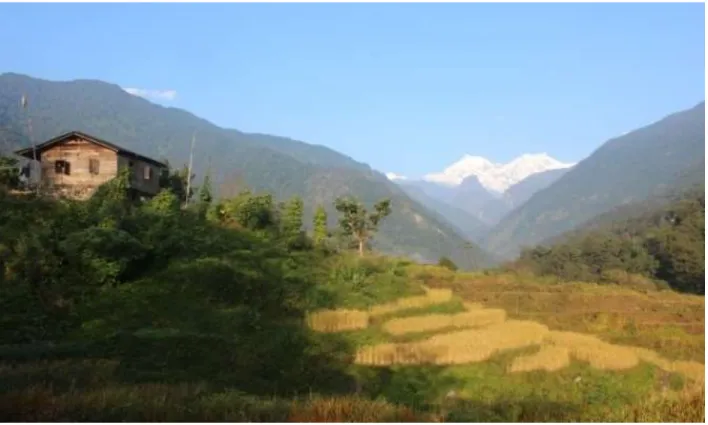
Figure 2: Just another day in paradise………..………69
Figure 3: A view of the landscape on the way to Lingdem, Upper Dzongu…...……….70
Figure 4: A bungthing offers chi (millet beer) during a ritual……….….98
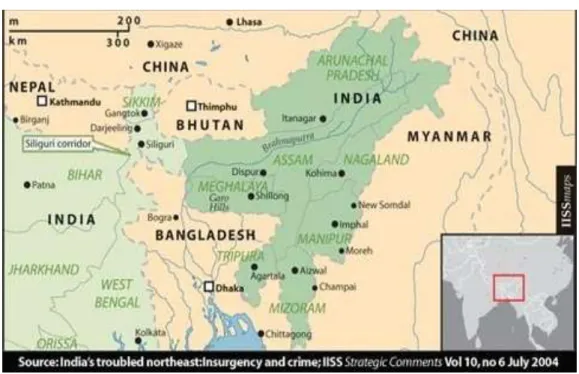
Figure 5: The Turbulent Eastern Frontier………...…....107
Figure 6: Geology and Politics in Sikkim………...122
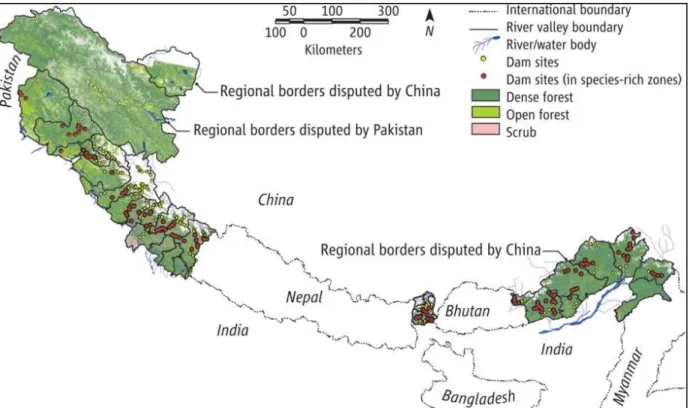
Figure 7: Himalayan Hydropower and ‘Sensitive’ Borderlands………....133
Figure 8: “Keepers of the Land”……….143
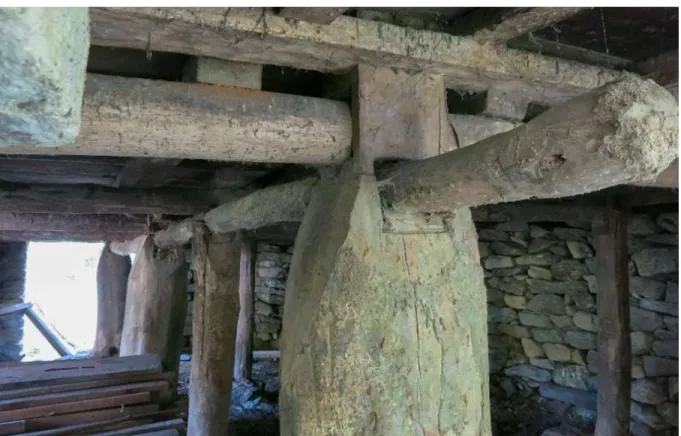
Figure 9: A traditional Lepcha house with its “no-nails” style of architecture………...……...163
Figure 10: Lingdem hotspring in Upper Dzongu………166
Figure 11: Concrete or Clay?...168
CHAPTER 1: INTRODUCTION: NEGOTIATING SOVEREIGNTY AT THE MARGINS 1.1. Introduction
But what will be saved for coming generations? What is Sikkim’s future? Certainly it is overshadowed by the Red China-India struggle; Mr. Nehru calls this “a drama of which only the beginnings have been seen and no one knows what the end will be.” Sikkim’s tranquility could be swept away overnight. (Doig, National Geographic 1963:429)
If we bring a small country like Sikkim within our fold by using force, it would be like killing a fly with a bullet. (Prime Minister Jawaharlal Nehru, The Statesman, 3 June 1960 in Datta-Ray 1984)
I have no words when [the] Indian army was sent today in a surprise attack on Sikkim Guards who are less than 300 strong and were trained, equipped and officered by [the] Indian army who looked upon each other as comrades…This is a most treacherous and black day in the history of democratic India in solving the survival of our little country by use of arms. (The 12th Chogyal [Monarch] to Prime Minister Indira Gandhi, 9 April 1975 in Datta-Ray 1984)
These three quotes, briefly and dramatically, encapsulate how the “little country” of Sikkim, an independent Buddhist monarchy bordering Nepal, China, and Bhutan, became the 22nd state of India in 1975. While this hostile breach of trust by the Indian State took the 12th monarch of Sikkim, Palden Thondup Namgyal by surprise, similar events had already been unfolding elsewhere in the world. The massive wave of decolonization spurred by World War II saw many newly independent Asian, African, and Latin American countries, frantically
attempting to consolidate their territorial integrity. As Krishna (1996) points out this
What then becomes of places like Sikkim that find their nascent aspirations for sovereignty crushed, replaced instead by a regional identity that must now exist as a margin to an imagined core? Moreover what becomes of the many people who inhabit these places, who already existed at the margins of these kingdoms and princely states, even before they were incorporated into larger nation-states?
This dissertation tells the story of one such margin and its people, from a snapshot in time, as they resist and desire continual attempts by both a physical and epistemic core, to secure these sites of “cartographic anxiety” (Krishna 1996). In present day Sikkim, remnants of the former kingdom and its symbols of sovereignty are still on display, the Sikkimese national flag on taxis being the most evident of these. This kingdom nostalgia, notwithstanding, since its merger with India almost forty years ago, Sikkim has proven to be a model, disciplined state. Unlike the tragic state-sponsored violence unfolding in border areas like Kashmir and Manipur through draconian laws like AFSPA (Armed Forces Special Powers Act), Sikkim is lauded for being one of the most peaceful states in India. But for the younger generation of voters, the resentment felt by their parent’s generation towards the Indian state is slowly giving way to resentment closer to home. Despite winning numerous accolades for tourism, public works, and agriculture, for many years now Sikkim has had one of the highest rates of unemployment in the country (Labor Bureau 2015). More recently, the state has also held the unfortunate distinction of having the highest rate of suicide in India (National Crime Records Bureau 2012). Growing economic precarity especially among young people threatens to destabilize, what on the surface appears to be a tranquil state.
occupy a huge place in the Sikkimese imaginary and its relationship to ‘mainland’ India. My mother belongs to Sikkim and every year we would travel there during our summer vacations. These summer trips unfortunately almost always coincided with the early onset of monsoon rains. My most vivid memories of these trips are of the hours stuck in traffic jams caused by heavy rains and landslides. Indian army trucks filled with nauseated jawans (soldiers), buses and shared taxis bustling with locals and large contingents of Bengali tourists, would form a snake-like procession on the narrow, circuitous NH-1 highway, the only road connecting Sikkim to the rest of India. In between complaints about the loud madisey (people from the plains) tourists, the incessant monsoon rains and the numerous landslides, my uncle would brush us up on Sikkimese history and his fear of a Chinese invasion. Just hours ago when we crossed into Sikkim through the Siliguri corridor [See Fig 5, page 107] in West Bengal, my uncle had remarked, “This is where India ends and Sikkim begins.” Despite this emotional disassociation from India most Sikkimese people like my uncle, believed that the Indian state had a responsibility to its margins, a responsibility that had not yet been fulfilled. On the other side of the border, China had
but at the massive hydropower infrastructure which promised roads and greater connectivity and instead, as investigations would later reveal, had rendered the region even more vulnerable.
Drawing on literature from political ecology, post-humanist and materialist geography, post-colonial and decolonial theory, indigenous politics, and geographies of young people, I demonstrate how environmental risk and vulnerability is reorienting the relationship between the state and marginalized groups like the Lepchas. I conducted ethnographic and participatory research over two predissertation surveys (2011, 2012) and ten months of fieldwork (2013-2014) in Gangtok, the capital town of Sikkim and Dzongu reserve in North Sikkim. My fieldwork in 2014, took place during India’s national and Sikkim’s state elections. Since 2011, earthquakes and landslides near hydropower project sites, along with incidents of shamanic possession by angered mountain deities had raised serious doubts about the viability of hydropower projects for both locals and state technocrats. Along with interviews with indigenous activists, panchayat
(village governance officials) members, civil society members, geologists and disaster
management officials, I was able to witness how questions of economic and ecological precarity, e.g. youth unemployment and earthquakes, were often conflated and took central place in
electoral debates and political rhetoric. My research highlights how indigenous knowledge systems and young people’s political subjectivities are being shaped by the contentious politics of hydropower development in the Himalayas. I also draw on interviews with regional
1.2 Becoming a borderland
The Indian Himalayan Region is projected to experience the most severe climate change outside the poles but despite its geo-political and ecological significance many scholars have noted that like many frontier spaces, this region has existed at the conceptual peripheries of knowledge production. Schendel (2002:652) critiques the Euro-centric impulse behind area studies which subsumes peripheries of regional heartlands, “under the scholarly rubric of an ‘area’ only to be ignored, othered, made illegible.” He argues that the institutional structure of Area Studies has been predicated on the marginalization of certain regions and types of knowledges. Schendel (2013) has noted elsewhere that in the case of South Asia, borderlands studies have been slow to develop because of a “methodological nationalism” prevalent among social scientists as well as state restrictions that made ‘sensitive’ areas out of bounds for
research. This “methodological nationalism”, implies a reading of the margins through the lens of the Indian nation state, a process wherein the nation-state is assumed to be “the natural context and container for all social and political processes” (Gellner 2013:2). The Indian Himalayan region then exists at the physical margins of India and the cognitive margins of South Asian and South East Asian studies1.
However for the many scholars who have chosen to study the Himalayan region,
especially as it exists as marginal to state power, an influential framework has been the ‘Zomia’ concept originally conceptualized by historian Willem Van Schendel (2002) and later
popularized by James Scott (2009). Schendel (2002:653) demarcates Zomia as a contiguous area that covers parts of South Asia, Central Asia and East Asia and derives the name from zomi, “a
term for highlander in a number of Chin-Mizo-Kuki languages spoken in Burma, India and Bangladesh.” Despite having many of the required criterions, such as language affinities, spiritual traditions, ancient trade networks, this geographic area failed to qualify as a region within traditional area studies. One of the main reasons for this failure according to Schendel is that Zomia includes politically marginal areas that actively resisted projects of nation-building and state-making. Highlander communities were often excluded from “discourses of citizenship, and cast in the roles of non-nationals, alien elements, or poachers of the state’s forestry resources who could be redeemed only by assimilating to the lowland ‘mainstream” (Schendel 2002: 655). James Scott took up the Zomia concept with great enthusiasm in his 2009 book on peasant and subaltern forms of resistance in The Art of Not Being Governed: An Anarchist History of Upland Southeast Asia. Extending Schendel’s conceptualization, Scott argues that Zomia comprises of
state-evading societies and cultures that in their attempt to keep the state at bay create a “non-state space” or “zones of refuge”. While both Schendel and Scott do not extend the Zomia region to include the Central and Northern Himalayan region, scholars like Shneiderman (2010: 290) believe that the concept has great analytical value for those interested in the entire Himalayan massif and provides “a new framework within which the historically strong focus of Himalayan studies on highland peripheries may be productively united with a more contemporary concern for the political histories of national formations and their ‘state effects’.”
Scholars working in the Indian Himalayan region while acknowledging the importance of the Zomia conceptualization have also critiqued it in the light of both contemporary and
historical political realities. Karlsson (2014) writing in the context of North-East India notes that physiography specificities and inter-ethnic relations have had a stronger influence on highlander political and cultural life than “state-evading” impulses. He also argues that the Zomia
theorization cannot explain contemporary movements in this region that are demanding state recognition, wherein we observe people of this region, “straddle[ing] between a kind of longing for the state and the opposite, that is, a rejection of it.” (Karlsson 2014: 329). Wouters (2012) takes a more historical approach to Scott’s theorization that hills population are marked by a centrifugal movement away from the state while a more centripetal process characterizes life in the valley state. However Wotuers (2012) argues that studying the history of pre-modern states that existed in the Brahamaputra valley, an opposite flow, i.e., people deliberately moving from hills into the ‘state-ridden’ plains, can also be observed. Arguing against Scott, Wouters
(including North East India) interested in studying contemporary political and economic realities of the region are also tasked with developing the theoretical scaffolding that will anchor future debates and interventions.
The Zomia debate illustrates how the processes that shaped and are shaping this region are inherently geographical questions that closely intersect with recent debates within the discipline including but not limited to questions of citizenship, sovereignty, state-making practices, trans-boundary relations, climate change, and the Anthropocene. Within geography, while there has been a long tradition of borderland studies, the focus has primarily been on North America and Europe, partly due to disciplinary Euro-centricism and partly due to the relatively newer borders of post-colonial regions (Gellner 2013). A recent corrective to this disciplinary oversight can be found in Cons and Sanyal’s (2013:2) special issue in Political Geography, which engages South Asian borders as “margins of the state and nation, places at once removed from and central to debates about identity, security, risk, and survival.” Identifying South Asian borderlands as a productive site of inquiry, they argue for a conceptual linking of geographies of borders and margins since, “Theoretical debates over borders and margins, [thus,] appear at opposite ends….the former arguably overspecified and empirical, the latter, again arguably, under-specified and vague.” (Cons and Sanyal 2013:5). I contribute to these recent discussions within the discipline by drawing attention to the Eastern Himalayan borderlands, its multiple margins and the myriad ways in which these margins are contested and enrolled in political and cultural projects. I do this by linking hazards, large infrastructural projects, and indigenous politics to examine their interactions at the local, regional and national level. Sikkim is an
of the ways in which ethnic minorities from marginal spaces negotiate claims over resources, space, and political power.
1.3 Historical Background of Sikkim and Dzongu
In the postcolonial context, the case of Sikkim elucidates how kingdoms and princely states each with their own dynamic histories were incorporated into a larger hegemonic state and suddenly found themselves at the peripheries of political and economic affairs. Sikkim’s early history was shaped by its relations with Tibet, Nepal, and Bhutan, with Tibet emerging as an ally that heavily influenced its military, political, and religious life. The Sikkimese state is said to have been formed in 1642, with the coronation of the first Chogyal Phuntsog Namgyal, a prince of the Minyak house in Kham, Tibet. According to Sikkimese religious mythology, this
coronation had been foretold by Guru Padmasambhava in the 8th century, who is said to have first introduced Buddhism to Sikkim (Balicki 2008). It is also believed that in the 13th century a blood brotherhood treaty was agreed upon by three2 groups, the Tibetan king, Khe-Bhumsa, the Lepcha ruler, Thinkung Tek and the Limbu community, at Kabi village in North Sikkim that assured native populations of the noble and upright intentions of the new Tibetan rulers (Subba 2010). Even today, the altar where this treaty was made by placing stones as witnesses, known as Kabi Longchok, is still well preserved. Several years later in 1642, Phuntsog Namgyal, a
descendant of Khe-Bhumsa, was crowned by three revered monks at Yuksam, West Sikkim, which then became the first capital of the newly established Sikkimese kingdom.
Sikkim was a historical crossroads with a geographic location that from early on had been highly desirable (Balicki 2008). While much of this historical cum religious narrative assumes a smooth transition and acceptance of Tibetan monarchy, Mullard (2011) has argued that the first Chogyal did not as much found the Sikkimese state as he convinced several proto-states
inhabited by different people groups ( including the Lepchas), to consolidate their territory in exchange for protection. Similar historical processes were also at work in neighboring
Himalayan valleys like Nepal for example, where small settlements existed at the outer fringes of state control with significant degree of local autonomy until the intensification of state
consolidation (Lim 2004). Sikkim’s strategic location led to continual warfare with both Nepal and Bhutan, resulting in significant loss of territory and provided the initial impetus for this territorial consolidation. Foning (1987) in Lepcha, My Vanishing Tribe details the historical and contemporary processes of cultural erasure and argues that Lepchas never resisted the Tibetan invasion, pointing instead at systematic efforts of cultural suppression of native groups. However Mullard (2010) believes the reality of these proto-states was far more complex than one of assimilation and subjugation. While the Lepchas and Limbus formed a subject population that did indeed lose much of their cultural heritage in the wake of religious conversions, their acceptance of the monarchy was far from uniform. There is at least one recorded instance of a joint Lepcha and Limbu rebellion against Phuntsog Namgyal in the 1650s however beyond this there is little evidence that can prove whether later on, these groups allied willingly or by force (Mullard 2010: 56).
While the early history of Sikkim was heavily shaped by its Tibetan rulers who
allowed them to exert significant control over the Chogyal. It was these ethnic and political fractures that the British discovered centuries later when they entered the scene around 1814. In the early 19th century Sikkim was a politically fragmented state with a weakened monarch and the British exploited the competing interests of the feudal aristocracy to their advantage (Mullard 2011). However it was the growing antagonism with the British that laid the foundation for a Sikkimese nationalist narrative to develop that drew on the spiritual and religious legitimacy of the monarch (Hiltz 2008). This narrative was further entrenched in the context of decolonization when Sikkim became a protectorate of the Indian state.
If Sikkim’s early history is obscured by both political history and religion, Dzongu’s history is far more elusive. Dzongu was accorded special protection under the Chogyal and the British, wherein non-reserve residents were not allowed to permanently settle (the exception being marriage) or purchase reserve land. This special status continues even till today under article 371 (f) of the Indian constitution that upholds the old laws and traditions of Sikkim. According to Gorer (1937) a British anthropologist who conducted ethnographic work in the Lingthem village of Dzongu, the reserve was part of the Chogyal’s private estate and was administered by one of the hereditary landlords or kazis. Foning (1987: 260) however believes that the reserve was set up by the British who were sympathetic to the Lepchas and after
behind the importance of this landscape to Lepchas. All the important mythologies and origin stories of the Lepchas can be traced back to Dzongu (Tamsang 1983; Foning 1987). The Sangha of Dzongu, a group comprising of monks in Dzongu, have highlighted that many of the important sacred places in Dzongu such as the Tholung monastery and Kishung lake have been explicitly mentioned in the Nesol a Buddhist ritual text (Arora 2007). The idea of Dzongu as a sacred landscape of the ‘vanishing’ Lepchas gained further traction during the anti-dam protests where spiritual and cultural narratives were woven into concerns around environmental protection.
This brief historical context of Sikkim and Dzongu provides three important insights into the political and ethnic politics of present day Sikkim that speak directly to this dissertation research. First, Sikkim’s dynamic political history now exists as fragmented knowledge diluted with popular mythology. To date there is a dearth of research on Sikkim’s history that does not merely revert to its Buddhist origin story (an important exception being Mullard 2011).
The anti-dam struggle of the Lepcha youth therefore is not just a reaction to contemporary political and ecological transformations but must be understood as ancient histories that are being driven to the surface by earthquakes and angry deities, among other things. Examining the political and cultural demands arising from social movements such as the Lepchas anti-dam movement can provide insights, however fractured and incomplete, into some of these questions and concerns. However these histories cannot be examined in isolation and must be brought into conversation with the histories of the dominant nation-states like India in this case and other ethnic-groups. Shneiderman (2013) writing in the context of the border-crossing Thangmi community of Nepal, argues that processes of migration and mixture in the region remain severely under-theorized. Most scholarship that attempts to understand the process of state-formation in this region focuses either on “the Indic” or “the Tibetan”, placing them in opposition to each other when what is required is “an astute examination of the contingencies of political history and nationally-specific trajectories in the Himalayan region, as well as the recognition of the cultural, linguistic and religious fluidity that defines the lived experience of many border citizens.” (29) Young people are at the center of this study because of their unique position as interlocutors who traverse myriad worlds (virtual and physical; the village and the city; state and community; international and local and so on) sometimes with ease, sometimes with unease. This dissertation foregrounds the experiences of indigenous youth to demonstrate how environmental vulnerability has a direct bearing on marginalized young people’s lives, labor, and politics. I began this research with the following three research questions and the chapters that follow seek to answer these questions:
2. How are technocratic and indigenous worldviews being co-constituted as they encounter each other? And what specific technologies are mediating this co-constitution?
3. In what ways are young Lepcha activists asserting new political subjectivities in the face of racialized and exclusionary state development practices?
1.4 Methodology
A central argument of my research is that, indigenous articulations shift our
understanding of social movements from simply a politics of identity to a politics of knowledge. This entails questioning pre-given epistemological and ontological underpinnings. Critical feminist and performance theory have pushed for a deeper engagement with questions of methodology. If we acknowledge that the production of knowledge is a deeply political process then how is this understanding reflected in our own research methodologies? The researcher’s positionality is an important starting point. My mother belongs to the Lepcha tribe and Sikkim is like a second home to me. Doing ethnographic research in such a setting comes with an
additional sense of expectation and responsibility. The Lepcha activists welcomed me into their homes and their lives as a comrade and a confidant. However, I was never considered a complete insider. Two or three generations ago, my mother’s family converted to Christianity which has given them significant upward social mobility. Several of my relatives hold important
government positions and have voiced concerns about my research and how it might affect their standing with the ruling party. I am not fluent in Lepcha and have lived and studied outside Sikkim. Questions of authenticity and allegiance are important in any indigenous social
My research questions and methods were developed in close collaboration with
community members over two years of pre-dissertation fieldwork while my association with the community has been since my M.A research (2007). I conducted 11 months of multi-sited fieldwork, dividing my time between Sikkim’s capital Gangtok and Dzongu in North Sikkim. Dzongu is divided into seven Gram Panchayat Units (GPU’s are village-level governance units) where I interviewed young people and panchayat members. In total, I conducted 13 interviews with panchayat members, 54 interviews with young people, 25 of whom had either supported or been involved in anti-dam protests. I conducted semi-structured interviews and questions were directed at understanding what it meant to be young in Dzongu. Since many young people had returned to the reserve after living in more urban parts of Sikkim, my questions were aimed at understanding what challenges they faced in adjusting to life in the reserve and what
opportunities were available to them. I also asked questions related to the social, cultural and political life of the reserve and their level of involvement in each of these spheres. Since this was also the lead up the state elections, I attended campaign rallies of the two main political parties and attended cultural functions within the village. Following is the break-down of my research methodology for each research question:
1. What socio-material spaces of public engagement have opened/closed at the intersection of
hydropower technology and indigenous youth activism?
supporting/opposing hydropower, involvement in village and state level politics before and after entry of hydropower, nature and level of political involvement and desire to join official politics. During interviews, eco-tourism was mentioned so often and due to tensions around eco-tourism projects within the reserve, I adapted my questionnaire to include specific questions related to the design, infrastructure, and aesthetics of eco-tourism. This was an unanticipated “socio-material” realm of engagement, which provided rich ethnographic insights into the formation of indigenous political subjectivities. Then, to understand how official political processes might be influenced by young people’s activism, I used unstructured interviews and participant
observation to observe events leading up to the state and national elections. I attended village level meetings; participated in informal household discussions, and observed election canvassing within the village.
2. How are technocratic and indigenous worldviews being co-constituted in the process? And
what specific technologies are mediating this co-constitution?
speeches which made mention of similar themes. In addition to this I attended two workshops one on Disaster Management and the other a youth consultation on Sikkim’s Human
Development Report. I also had the opportunity to attend a regional level conference, the Sustainable Mountain Development Summit, organized by the Integrated Mountain Initiative (former Indian Mountain Initiative). This conference brought together stakeholders from various states of the Indian Himalayan Region to discuss selected themes around sustainable
development in mountainous regions with the focus that year being on natural hazards. This conference provided important insights into both grassroots and policy level conversations that were taking shape in relation to growing ecological precarity and infrastructural development in the regional Himalayan context.
3. In what ways are young Lepcha activists asserting new political subjectivities in the face of
racialized and exclusionary state development practices?
1.4 Explanation of the Dissertation Format
This dissertation draws on two published articles, one under-review article, and two unpublished articles, the last chapter is the conclusion that summarizes the findings of these chapters and presents my future research directions. Below, I include the abstract of each article/chapter and their publication status.
Chapter 2: Animating the Sacred, Sentient and Supernatural
Materialist and post-humanist scholarship within the discipline has opened up exciting philosophical and theoretical possibilities with which to understand both human and nonhuman worlds. Yet, recent scholarship has been critical of the modern secular tendencies within this approach especially in its lack of engagement with sacred, sentient, and spiritual accounts and experiences. The aim of this review is twofold. First it provides an overview of the concerns that drive the most recent work in materialist and post-humanist approaches in geography. Second, it presents perspectives from the subfields of indigenous and religious geographies and disciplines like anthropology, religious studies, literary fiction, and post-colonial studies that speak directly to these concerns. The review is divided into three sections. The first section provides a cursory overview of recent materialist and post-humanist work in geography. Surveying recent reviews from prominent geography journals, three categories relevant for the present discussion have been identified: resource geographies, urban materialities, and the Anthropocene. The second section examines three approaches which grapple with similar concerns but offer quite a
Chapter 3: Precarity and Possibility: On Being Young and Indigenous in Sikkim, India
In the last decade the Indian Power Ministry began an aggressive campaign for hydropower development in its ten Himalayan states. Twenty-nine of these dams were commissioned for construction in the small Eastern Himalayan state of Sikkim. In June 2007 Dzongu a protected reserve of the indigenous Lepchas in North Sikkim became the center of controversy when reserve youth went on a hunger strike against seven dams planned within the reserve. Their protests garnered enough national and international attention to cancel four of the seven dams. However within the reserve there was very little support for the activists who were seen as educated, upper class youth, most of whom had studied and lived outside the reserve. In this article I narrow the focus on the Dzongu youth and demonstrate how contestations between State and indigenous groups often pry open profound contestations within these groups. In tracing the trajectory of the Dzongu activists after the protests I examine how they are redefining indigeneity, beyond and sometimes in conflict with former connotations. I argue that the anti-dam protests became a way for Dzongu youth to question state-led development agendas as well as elders and urban elite who spoke on behalf of the community. Building on literature in
indigeneity and geographies of young people, this research draws on the authors M.A. research (2007-10), two pre-dissertation surveys (2011, 2012) and ongoing fieldwork. The Indian Himalayan region is home to several indigenous groups and is the site of intense geo-political anxiety given its proximity to China and Pakistan. I argue that an attention to young people’s political articulations can provide a valuable lens in analyzing the politics of nation building, the politics of difference and the shifting political subjectivities of marginalized groups.
The Indian Himalayan Region, a climate change hotspot, is witnessing a massive surge in hydropower development alongside an increase in natural hazard events. The focus of this paper is on indigenous people’s response to ecological precarity, beyond more legible instances of social movements or resistance. Through an ethnographic case study of a 6.9 magnitude earthquake in the eastern Himalayan state of Sikkim, the site of controversial hydropower
projects and an indigenous anti-dam protest, I show how marginalized people’s relationship with a sacred, animate landscape exceed both scholarly and activist notions of politics. Many in Sikkim believe the earthquake was caused by mountain deities, angered by the desecration of its sacred physiography. While activists point to these events as a sign of the moral and political failure of the state, for non-activist tribe members they raise deeper cosmological concerns. While not easily translatable into political action, these concerns signal tensions between the minority indigenous religion and the more pervasive Tibetan Buddhism, a history that precedes and undergirds contemporary political and ecological transformations. I suggest these spiritual narratives are grounded in a longer history of the contested relationship between marginalized peoples and hegemonic state and non-state powers. In this, I offer a critique of recent post-humanist and materialist scholarship and its lack of engagement with indigenous and subaltern ontologies. I highlight the relationship between natural hazards, sacred landscapes, and
indigenous groups, to argue for a more holistic approach to the uneven impacts of climate change on mountainous environments and their inhabitants.
Chapter 5: Geological Anxieties in the Anthropocene at the Unruly Borders of the Indian State:
Himalayan borderlands. The Nesol, a sacred Buddhist ritual text, warns devotees that desecrating the scared landscape of Beyul Demajong, the Tibetan name for Sikkim, can result in natural disasters and socio-political unrest. In official reports, Sikkim’s ‘adverse geological conditions’ have been described as ‘unpredictable’ and ‘volatile’ (in Kohli 2011:21). As project developers soon discover, these projects don’t flow uninterrupted into inert, empty spaces (Tsing 2005). Instead, they encounter ‘geological surprises’ (Indian Power Ministry 2008: 27), which delay projects or worse, result in the loss of human life, laying bare the ecological and cosmological limits of capitalism. In this article, I put recent materialist and post-humanist scholarship on the Anthropocene in conversation with indigenous and decolonial theorizing to understand how geo-physical indeterminacy is deployed by both regional technocrats and indigenous groups, to critique the hegemony of ‘national interest’. I explore indigenous and technocratic narratives, to interrogate how heightened indeterminacy is mediating and productive of a borderland
subjectivity grounded in the geo-physical and spiritual particularity of the region. In this my attempt is to demonstrate the importance of indeterminacy and a ‘critical geographic
mobilization of place’ (Jazeel 2011) for environmental politics and marginalized subjectivities in the Anthropocene.
Chapter 6: Concrete or Clay? Eco-Tourism and the Contentious Politics of Designing Lepcha
Indigeneity
of concrete structures through state housing initiatives is seen as a threat by young entrepreneurs to the ‘rustic’ authenticity of the reserve. Most successful eco-tourism homestays are run by anti-dam activists who are eager to retain traditional architectural styles and the associated skill and knowledge but lack political clout and therefore have little control over what plans and projects enter the village. This article examines how decisions related to Dzongu’s built environment are incendiary issues closely linked to ongoing political and cultural negotiations. Contestations over the design, aesthetics, and architecture of eco-tourism infrastructure are intimately tied to ideas of indigeneity and authenticity, inter-generational gaps, and electoral politics. Building on
literature in indigeneity, spatial politics, critical design studies, and geographies of young people, this paper explores the material and spatial production and contestation of state practices to understand how young people from marginalized groups navigate unemployment, exclusionary state practices, and inter-generational expectations.
1.8 Contributions of this dissertation
This dissertation research is an intervention into debates about environmental justice in an era of rapid industrialization and urbanization especially in the Global South and the
REFERENCES
Agrawal, A. 2005. Environmentality: technologies of government and the making of subjects (p. 325). Durham, NC: Duke University Press.
Aitken S. 2001. Geographies of young people: the morally contested spaces of identity Routledge, New York
Alexander C, 2009. Assembling fear, practicing hope: Geographies of gender and generation in Newcastle upon Tyne. Doctoral thesis. Durham University.
Alley, K. 1998. “Idioms of Degeneracy: Assessing Ganga’s Purity and Pollution.” in Purifying the Earthly Body of God: Religion and Ecology in Hindu India. Lance E. Nelson, ed. Albany: State University of New York.
Alatas, S. H (1977). The Myth of the Lazy Native: A Study of the Image of the Malays, Filipinos and Javanese from the 16th to the 20th Century and Its Function in the Ideology of Colonial Capitalism. Routledge.
Amin, A. (2002). Spatialities of globalisation. Environment and planning A, 34(3), 385-400. Amin, A. (2004). Regions unbound: towards a new politics of place. Geografiska Annaler: Series B, Human Geography, 86(1), 33-44.
Arora, V. 2007, Unheard Voices of Protest, Economic and Political Weekly, Vol. 42, No. 34, pp. 3451-3454
Bacchetta, P. (2000). Sacred space in conflict in India: The Babri Masjid affair. Growth and Change, 31(2), 255-284.
Baruah, S. 2011. Durable disorder: Understanding the politics in Northeast India. North East Hill University Press
Baviskar, A. 2000. Strong sense of self and place. The Hindu (folio), July 16.
Baviskar, A. 2001. Written on the body, written on the land: violence and environmental
struggles in central India in 2001. In N. L. Peluso, & M. Watts (Eds.), Violent environments (pp. 354–379). Ithaca: Cornell University Press.
Blaikie, P.M. and Brookfield, H., editors 1987: Land degradation and society. London and New York: Methuen.
Blaser, Mario. 2010. Storytelling Globalization from the Chaco and Beyond. Durham: Duke University Press, pp. xi-37.
Bunge, W. and R. Bordessa. 1975. The Canadian Alternative: Survival, Expeditions and Urban Change. Geographical Monographs, No. 2. Toronto: York University.
Braun, B. and Wainwright. 2001. Nature, Poststructuralism and Politics. in B.Braun and Castree.N, Social Nature: theory, practice and politics. Wiley-Blackwell
Braun, B. and Whatmore, S. 2010. Political Matter: Techoscience, Democracy and Public Life, U of Minnesota Press.
Cameron, J and Gibson. 2005. K. Participatory action research in a poststructuralist vein, Geoforum, Volume 36, Issue 3, Pages 315-331
Cons, J., & Sanyal, R. 2013. Geographies at the margins: borders in South Asia–an introduction. Political Geography, 35, 5-13.
Gibson-Graham J.K. 2006. A Postcapitalist Politics. Minneapolis: University of Minnesota Press.
Castree, N. 2004. Differential geographies: Place, indigenous rights and ‘local’ resources. Political Geography 23 pp. 133–167
Coole, D. and Frost, S. 2010, New Materialisms: Ontolgoy, Agency and Politics, Duke University Press
Conquergood, Dwight, 1991. Rethinking ethnography: Towards a critical cultural politics, Communication Monographs, Vol. 58, Iss. 2
Conquergood, Dwight, 2002 ‘Performance Studies: Interventions and Radical Research’, The Drama Review 46(2): 145—56
Corbridge, S. 2005. Seeing the state: Governance and governmentality in India (Vol. 10) . Cambridge University Press.
Datta-Ray, 1984, Smash and Grab: Annexation of Sikkim, Vikas, New Delhi. De La Cadena, M., & Starn, O. (Eds.). (2007). Indigenous experience today. Berg.
Deleuze, G., & Guattari, P. F. (1987). Thousand plateaus: capitalism and schizophrenia (Vol. 2). U of Minnesota Press.
Dyson, J.2008. Harvesting identities: Youth, work, and gender in the Indian Himalayas. Annals of the Association of American Geographers, 98(1), 160-179.
Escobar, A, 2008, Territories of Difference: place, movements, life, redes, Durham: Duke University
Evans, Terry. 2008. “Twins are Birds and a Whale is a Fish, a Mammal, a Submarine: Revisiting ‘Primitive Mentality’ as a Question of Ontology.” Presented at the EASA annual meeting, Vienna.
Fletcher, R. 2010 When Environmental Issues Collide: Climate Change and the Shifting Political
Ecology of Hydroelectric Power, Peace and Conflict Review, Volume 5, Issue 1 Gandy, M. 1999. The Paris sewers and the rationalization of urban space. Transactions of the
Institute of British Geographers, 24 (1), 23-44.
Gibson-Graham, J.K. 2008. Diverse Economies: performative practices for ‘other worlds’. Progress Human Geography.
Gorer, G.1937. Himalayan Village-an account of the Lepchas of Sikkim. Cultural Publishing House. Michigan.
Greene, S. 2009. Customizing Indigeneity: Paths to a Visionary Politics in Peru. Palo Alto: Stanford University Press.
Haberman, David L. 2006. River of Love in an Age of Pollution: The Yamuna River of Northern India. Berkeley: University of California Press.
Holloway, S. L., & Valentine, G. (2005). Children’s geographies and the new social studies of childhood. Childhood: critical concepts in sociology. London: Routledge, 163-188.
International Rivers, 2008, Dharmadhikary, S. (Ed.) Mountains of Concrete: Dam Building in the Himalayas, International Rivers, Berkley, California.
Jeffrey, C., Jeffery, P., & Jeffery, R. (2004). “A Useless Thing!” or “Nectar of the Gods?” The Cultural Production of Education and Young Men's Struggles for Respect in Liberalizing North India. Annals of the Association of American geographers, 94(4), 961-981.
Jeffrey, C. 2010. Timepass: youth, class, and the politics of waiting in India. Stanford, CA: Stanford University Press.
-- 2012. Geographies of children and youth III: Alchemists of the revolution? Progress in Human Geography.
Johnson-Hanks D, 2002. On the limits of life stages in ethnography: Towards a theory of vital conjunctures. American Anthropologist 104(3): 865–880.
Juris, J. S. (2005). The new digital media and activist networking within anti–corporate
globalization movements. The Annals of the American Academy of Political and Social Science, 597(1), 189-208
Juris J and Pleyers GH, 2009. Alter-activism: Emerging cultures of participation among young global justice activists. Journal of Youth Studies 12(1): 57–70.
Kaika, M. 2006. Dams as symbols of modernization: the urbanization of nature between
geographical imagination and materiality. Annals of the Association of American Geographers, 96(2), 276-301.
-- 2005. City of flows: modernity, nature, and the city. Routledge.
Kaïka, M. and Swyngedouw, E. 2000. Fetishising the modern city: the phantasmagoria of urban technological networks. International Journal of Urban and Regional Research 24, 120–138. Karlsson, B. T., & Subba, T. B. 2013. Indigeneity in India. Routledge.
Katz C. 2004. Growing up global: economic restructuring and children's everday lives. University of Minnesota Press, Minneapolis, MN
Kirsch, S. and Mitchell, D. (2004), The Nature of Things: Dead Labor, Nonhuman Actors, and the Persistence of Marxism. Antipode, 36: 687–705.
Kitchin, R. M. (1998). Towards geographies of cyberspace. Progress in human geography, 22(3), 385-406.
Kull, C.A. 2002. Madagascar aflame: Landscape burning as peasant protest, resistance, or a resources management tool? Political Geography. Vol. 21. 927-953.
Labour Bureau. Report on Fourth Annual Employment & Unemployment Survey 2013-14.
Ministry of Labor and Employment, Government of India. Retrieved April 5, 2016.
http://labourbureau.nic.in/reports.htm
Limb, M. H, & Taylor, M. (1999). Young people’s participation and representation in society. Geoforum, 30(2), 135-144.
Little, K. 2008 Lepcha Narrative of their Threatened Sacred Landscapes, Transforming Cultures eJournal, Retrieved 14 January 2012, www.mountainforum.org
Loftus, A. 2012. Everyday Environmentalism: Creating an Urban Political Ecology. U of Minnesota Press.
Maaker, Erik de, and Vibha Joshi. 2007. “Introduction: The Northeast and Beyond: Region and Culture.” South Asia: Journal of South Asian Studies, n.s., 30 (3): 381–90.
Madison, D. Soyini. 2010a Critical Ethnography: Methods, Ethics, and Performance. 2nd Ed. Thousand Oaks: Sage Publications,
Madison, D. Soyini. 2010b. Acts of Activism: Human Rights as Radical Performance. New York: Cambridge University Press.
Massey, D. (1998). The spatial construction of youth cultures. Cool places: Geographies of youth cultures, 121-129.
Massey, D. (2004). Geographies of responsibility. Geografiska Annaler: Series B, Human Geography, 86(1), 5-18.
Menon, N., 2007. Power and Contestation: India since 1989, Zed Books, London
Menon and Kohli, 2005. Large dams for hydropower in Northeast India: a dossier. South Asia Network on Dams, Rivers and People (SANDRP)
McDuie, Duncan -RA. 2008. Between National Security and Ethno-nationalism: The Regional Politics of development in Northeast India, Journal of South Asian Development 2008, 3: 185 Mitchell, T. 2009. Carbon democracy. Economy and Society. 38:3, 399-432
Mullard, S. 2011. Opening the Hidden Land: State Formation and the Construction of Sikkimese History (Vol. 26). Brill.
-- 2002 Rule of experts: Egypt, techno-politics, modernity. University of California Press. Nandy, Ashis. 1988. “Introduction: Science as a Reason of State” in Science, Hegemony and Violence: A Requiem for Modernity. New Delhi, Oxford University Press, pp 1-13
National Crime Records Bureau. 2012. Suicidal Deaths in India, 2012. Ministry of Home Affairs, Government of India. Retrieved April 5, 2016. http://ncrb.nic.in/CD-ADSI-2012/suicides-11.pdf
Pathy, J. 2000. “Tribe, region, and nation in the context of the Indian state” in National and National Identity in South Asia
Peet, R., & Watts, M. 1996. Liberation ecologies: Environment, development, social movements. Psychology Press.
Perrault, T, 2008. Custom and Contradiction: Rural Water Governance and the Politics of “Usos y Costumbres” in Bolivia’s Irrigators Movement. Annals of the Association of American
Geographers
Pollock, Della, (ed). 2005. Remembering: Oral History Performance. New York: Palgrave Macmillan.
Povinelli, E. A. (2001). Radical worlds: the anthropology of incommensurability and inconceivability. Annual Review of Anthropology, 319-334
Rana P.B. 2014. China’s Proposals for Trans-Himalayan Connectivity: Consider Four Economic Corridors. RSIS Commentary. No. 154. Published 1st August 2014.
Robbins, P, 1988, Authority and Environment: Institutional Landscapes in Rajasthan, India, Annals of the Association of American Geographers , Vol. 88, No. 3
Robbins, P., & Marks, B. (2009). Assemblage geographies. Smith, SJ, Smith, S., Pain, R.,, Jones, JP, III, Marston, SA (Eds.), The SAGE Handbook of Social Geographies. SAGE Publications, Los Angeles, London, 176-194.
Routledge, P., 2003, Convergence Space: Process Geographies of Grassroots Globalization Networks, Transactions of the Institute of British Geographers , New Series, Vol. 28, No. 3, pp. 333-349
-- 2003. Voices of the Damned: discursive resistance amidst erasure in the Narmada Valley, India, Political Geography, Vol. 22, 243-270
Routledge, P., and Cumbers, A. 2009. Global Justice Networks: Geographies of Transnational Solidarity. Series: Perspectives on democratic practice . Manchester University Press,
Manchester, UK
Roy, Arundhati. 1999. The greater common good. Bombay: India Book Distributors. -- 2010. Walking with the Comrades. Outlook, 29.
Scott, J. C. 2009. The art of not being governed: An anarchist history of upland Southeast Asia. Yale University Press.
Guha, R., & Spivak, G. C. (Eds.). (1989). Selected subaltern studies. OUP USA.
Stoler, A. L.1995. Race and the education of desire: Foucault’s history of sexuality and the colonial order of things. Duke University Press Books.
Stoler, A. L. (2002). Carnal knowledge and imperial power: Race and the intimate in colonial rule. University of California Press.
Swyngedouw, E . 1999, Modernity and Hybridity: Nature, Regeneracionismo, and the Production of the Spanish Waterscape, 1890–1930, Annals of the Association of American Geographers.
Tsing, Anna. 2005. Friction: An Ethnography of Global Connection. New Jersey: Princeton University Press,
Valdivia, G. 2008. Governing relations between people and things: Citizenship, territory, and the political economy of petroleum in Ecuador. Political Geography 27, 456-477
Marres, N and Lezaun, J. 2011. Materials and Devices of the Public: An Introduction. Economy and Society. 40(4)
Watts, M. 1983. Silent violence: food, famine and peasantry in northern Nigeria. Berkeley, CA: University of California Press.
Watts, M, 1998. ‘Nature as artifice and artifact’ in B. Braun and N.Castree (eds) Remaking Reality: Nature at the Millennium, London, Routledge.
Whatmore, S. 1997. Dissecting the autonomous self: hybrid cartographies for a relational ethics. Environment and Planning D: Society and Space 15: 37-53
-- 2006. Materialist returns: Practising cultural geography in and for a more-than-human world. Cultural Geographies 13, 600-609
World Bank. 2005. India’s Water Economy: Bracing for a Turbulent Future (June 2005 Draft). Retrieved 28 January 2012, http://go.worldbank.org/
Van Schendel, W. 2002. Geographies of knowing, geographies of ignorance: jumping scale in Southeast Asia. Environment and planning D: society and space, 20(6), 647-668.
Xaxa, V. 2008. State, society, and tribes: issues in post-colonial India. Dorling Kindersely Press. Yeh, E. T. 2007. Tropes of indolence and the cultural politics of development in Lhasa, Tibet. Annals of the Association of American Geographers, 97(3), 593-612.
CHAPTER 2: ANIMATING THE SACRED, SENTIENT AND SPIRITUAL IN POST-HUMANIST AND MATERIAL GEOGRAPHIES3
2.1. Introduction
Geographers should avoid considering the earth as the scene on which the activity of man (sic) unfolds itself, without reflecting that this scene is itself living.
(Carl Sauer, 1925: 321The Morphology of landscape)
Surveying geographical scholarship from the past two decades one can no longer say that the discipline has been indifferent to the “livingness” of the earth. The discipline has witnessed a shift from the post-structuralist view of politics as an effect of discursive and linguistic practices, to the post-humanist expulsion of the human from the ontological center. Consequently, there has been an increasing acknowledgement of non-human actors and their agency and role in determining political means and ends (Castree and Nash 2004). In these explorations, the human subject is just another actor in a dense relational network with other animate and inanimate actors. Post-humanist and materialist approaches in geography have drawn on a plethora of theoretical and philosophical approaches, most prominently, Deleuze and Guttari (1987), Harraway (1990) and Latour (1993), to challenge the belief in human exceptionalism,
destabilizing the dualisms of nature/culture, human/non-human, theory/method, subject/object and structure/agency (Hinchliffe 2007).
3 This chapter previously appeared as an article in the Geography Compass. The original citation is as follows, Gergan, M. D. 2015. Animating the Sacred, Sentient and Spiritual in Post‐Humanist and Material
These enquiries have drawn our attention to the entangled nature of human-environment relations and their political and ethical consequences (Castree 2003; Whatmore 2002; Loftus 2012).
However despite venturing into the fantastical realms of hybrids and cyborgs, most post-humanist and materialist work has neglected a very obvious site of enquiry into
non-human/more-than-human agency. Accounts and experiences which take seriously, the agency of gods, spirits or otherworldly phenomena (a different variety of non-humans) are largely absent from post-humanist and materialist work in the discipline. While not all who identify as religious or spiritual subscribe to these beliefs and there is significant variation even among those who do, there is overwhelming scholarly work in allied disciplines that an inquiry into these belief systems, provide crucial insights into both extraordinary and everyday politics (Holloway and Valins 2002). However incorporating these perspectives, as this review goes on to examine, requires questioning a set of dualisms that reveal the latent power-knowledge hierarchies in post-humanist and materialist approaches.
Before I proceed, a brief note on terminology. I use the term ‘religion’ to convey a wide spectrum of beliefs, from organized institutional faith, involving a communal experience to more personal expressions and practices4. I use the term ‘sacred’, as the characteristic of a specific space, place, object, human or non-human, to elicit awe and reverence5. I use the term ‘spiritual’
4 Geographers writing on religion argue that since it is historically produced and context-specific it is impossible to have a single all-encompassing definition of the category. It would be impossible to do justice to the numerous debates within the sub-field but for more details see Kong (2001) and Ivakhiv (2006).
5
and ‘spirituality’ to denote a specific orientation towards sacred space-time, which is open to the manifestation of a known “divine or ultimate being” (Holloway 2003:1962) or the “intangible, unknowable world of the spirit” (MacKian 2011:69). I use the term ‘sentience’ or ‘sentient’ to specifically reference the indigenous belief in the quality of all life6 to think, feel and act. In specific relation to indigenous ontologies, Hunt (2014) rightly notes that much of the discipline’s engagement with indigenous peoples has been fixated on their relations with land and natural resources while ignoring other pertinent concerns. Needless to say, the categories this review concerns itself with represent merely a facet of indigenous knowledge and experience.
While geographers have explored how emotions, desires and, affect influence people’s relationship with nature, non-humans and the built environment ((Thrift 2004; Pile 2005; Pile 2010; Sultana 2011) the analytical value of sacred, sentient and spiritual categories in
understanding political action and knowledge, has not been fully considered or in some cases, been purposely dismissed. An example of such a dismissal can be seen in Whatmore’s (2013) work on the “onto-politics of ‘natural’ hazards” where she makes the following assumption about natural phenomena, such as earthquakes, hurricanes, and the focus of her paper – floods:
Where such powers may once have been attributed to and treated as ‘acts of god’
or ‘forces of nature’, today they signal an ontological alliance between interests in the propensities, affordances and affectivities of more-than-human phenomena, and amplifications of the producedness and contingency of human embodiment. (Whatmore 2013, pg. emphasis mine)
review, I have intentionally chosen the former definition, acknowledging that I and many other authors I draw on in this review do harbor these assumptions.
Whatmore effectively dismisses belief in ‘acts of god’ or ‘forces of nature’ relegating them to an archaic past. There is good reason to be uncomfortable with viewing natural phenomena as “acts of god” since it might “obscure[s] the forces that compel people to live in risky environments” (Steinberg 2000: pg xxi). However, in this specific context, religious and spiritual beliefs can influence how people make sense and cope with ‘natural’ hazards and disasters (Blong 1982). Writing in the context of Andean indigenous politics, Blaser (2014) drawing on Stenger, argues that the absence of certain entities (gods, djinns and spirits) within new approaches in geography alongside the proliferation of specific types of more-than-human entities (objects, animals, diseases) exposes the “homogeneity of assumptions that help to sort out legitimate from illegitimate matters of concern” (51). The disciplinary reluctance to engage with claims of a religious or spiritual nature is particularly evident, in the lack of a rigorous theoretical engagement with indigenous social movements. Many geographers, especially those on the left, have been uncomfortable with indigenous claims to territory and natural resources and the possibility of disenfranchising non-indigenous groups in the process (Watts 1996; Castree 2004). These concerns are valid and must be addressed; however the discomfort around the ‘militant particularism’ (Harvey in Castree 2004) of indigenous projects has meant that not much attention has been directed to the epistemological and ontological nature of these claims.
Building on this, the aim of this review is two-fold. First it provides an overview of the concerns that drive the most recent work in materialist and post-humanist approaches in geography. Second, it presents perspectives from the sub-fields of indigenous and religious geographies and disciplines like anthropology, religious studies, literary fiction and post-colonial studies that speak directly to these concerns. The review is divided into three sections. The first section provides a cursory overview of recent materialist and post-humanist work in geography. Surveying recent reviews from prominent geography journals three categories relevant for the present discussion have been identified: Resource Geographies, Urban Materialities, and The Anthropocene. These categories are not meant to represent the range of post-humanist and materialist approaches within the discipline. However they do represent a sizeable body of literature and several influential geographers with a decided orientation towards addressing marginalized identities and concerns. The second section examines three approaches which grapple with similar concerns but offer quite a different approach: Indigenous ontologies, Imaginative Geographies, and Geographies of Religion and Western Spiritual epistemes. The conclusion draws linkages between the first and the second section to argue for a more robust theoretical engagement with the sacred, sentient and spiritual in materialist and post-humanist scholarship within geography.
2.2 Materialist and Post-Humanist Approaches
i) Resource Geographies
practices through which resource regulation is achieved’ (Bakker and Bridge 2006:21). While geographers have focused on a range of natural resources, most empirical and theoretical
attention has been directed towards water and carbon derivatives, given their multiple scales and spheres of influence. Within this scholarship the analysis of resource politics can be broadly categorized into two approaches. The first approach occurs at the scale of the state and seeks to decipher, how the neo-liberal project of modernity and democracy is sustained through the control and commodification of these natural resources (Swyengdouw 1999; Bakker 2005; Mitchell 2009). The second approach looks at how the material properties of natural resources and allied infrastructure and expertise, influence conditions for democratic politics and the formation of political subjectivities (Mitchell 2009; Perrault and Valdivia 2010; Sultana and Loftus 2013).
objects”. An attention to the practices and work of scholars detailed in this review can constitute an initial move in enacting this ‘anti-colonial project’.
ii) Urban Materialities
Within geography, political ecology has a long tradition of exploring the nature-society complex however sites of enquiry have predominantly been located in the Global South or non-urban areas, what Heynen (2013) calls a function of the ‘rural Third World trap’. Cronon’s (1996) influential piece drew our attention to how notions of pristine uninhabited wilderness deeply influenced western notions of conservation and environmentalism. This understanding of nature as ‘out there’ waiting to be discovered also worked to locate nature outside of the city. Urban political ecology (UPE) draws attention to the production of nature in the city, building on Harvey (1996) and Smith’s (2008) Marxist engagements with questions of social justice and uneven development in urban spaces. UPE pays special attention to a technologically mediated and networked understanding of infrastructure and the built environment, bringing to life the metabolic flows and hybridity of socio-natural urban landscapes (Swyengdouw and Kaika 2000; Gandy 1999, 2002; Loftus 2012).
critiques of the first wave: first an overemphasis on Marxist approaches, sometimes at the cost of others like ANT and post-humanism, and second making the city the “privileged analytical lens for studying contemporary processes of urban social transformation that are not necessarily limited to the city” (Wacsmuth in Heynen 2013). These internal debates within UPE signal there is still room for more theoretical maneuvering especially a deeper consideration of methodology and the multiplicity of political subjectivities that inhabit urban spaces (Heynen 2013). Perhaps it is time for UPE to revisit and extend Pile’s (2005) line of enquiry in Real Cities which takes seriously, “the imaginative, fantastic, emotional – the phantasmagoric – aspects of city life” such as “dreams, magic, vampires and ghosts” (7). Can an attention to the sacred, sentient and
spiritual, offer UPE a meaningful engagement with the multiplicity of worlds and entities that inhabit cityscapes?
iii) The Anthropocene
A materialist attention to relationality and interconnectedness has made it impossible to ignore how we are deeply implicated in the global environmental crisis and in birthing an
entirely new geological epoch, the Anthropocene (Gibson and Graham 2011). Scientific practice and discourse have played an important role in determining the conditions of life in the