© Copyright 2017
California Polytechnic State University University Graphic Systems San Luis Obispo, California
Executive Editors
Parisa Mokhtari, Editor-in-ChiefJenna Vacca Managing Editor Tyler Scott Managing Editor Raadhika Arun Shah, Associate Editor
Amanda Jenkins, Copy Editor Malamatenia Bwely Wilson, Copy Editor Naba Maryam Ahmed, Recuitment Editor
Table of contents
A Note from the Editor-in-Chief . . . i
Research Articles
Growth impacts of marine microplastics on the California mussel Mytilus californianus
by Andrea M. Fieber . . . 1-13
Proteomic Response of Elephant Seal Pups, Mirounga angustriorstris, to Prolonged Fasting
by Melissa Voisinet, Maria Christina Vasuez, Cory Elowe, Dan Crocker, and Lars Tomanek. . . 15-23
Effects of Branch Chain Amino Acid Supplementation on Energy Intake in Normal Weight and Overweight/Obese Individual
by Jonathan Salcido, Tess Engel, Koa Cano, Pedro Angulo, Rebecca Brookes, Haley Kepler,
Jason Lytle, Todd Hagobian. . . 24-32
a note from
the editor-in-chief
Dear Readers of Symposium:As Editor-in-chief, I have learned a lot from planning the third issue of Symposium. Many of the students that do research in the College of Science and Mathematics have been working on their projects for a long time and are dedicated to their projects. Being able to showcase these projects is truly an honor.
For the second year in a row, we were fortunate enough to receive funding from the Cal Poly Instructionally Related Activities (IRA) program in addition to funding from the Baker & Koob Endowment. We are grateful to be funded by these two great programs as they have provided the journal with freedom and resources to form an excellent edition and have enabled us to further expand Symposium. Receiving grant money from such prestigious programs reaffirms how important it is to have a student-run journal that presents student research.
Our executive team is comprised of students from both the College of Liberal Arts and the College of Science and Math. From this issue specifically, we worked with students from English, Physics, Kinesiology, and Biology. Their talents ensure that the papers featured in the journal meet the standards of a professional publication, are easy to read, and are engaging to the reader. It has been a pleasure leading such a diverse group of students.
Parisa Mokhtari
Editor-in-Chief, 2015-201
Growth impacts of marine microplastics on the
California mussel M
ytiluscalifornianusA Research Proposal
by Andrea M. Fieber
Introduction
Background
As the global economy has expanded and intensified, the use of plastic materials in virtually every facet of life has become commonplace. Around the world, petroleum products take the form of water bottles, fishing lines, Styrofoam packaging and countless other single-use items, which are discarded and may easily find their way into the ocean through vectors such as storm water channels, urban wastewater discharge or direct dumping (Barnes et al., 2009; Carson et al., 2013). Plastic comprises ten percent of municipal solid wastes (Barnes et al., 2009), and approximately 12.7 million metric tons (mmt) of plastic are estimated to be added to the world’s oceans annually as this refuse is intentionally or accidentally released into the environment (Jambeck et al., 2015). Plastics have been detected in all seas and oceans around the world, with the highest measurement recorded at 7,290 items per hectare (Barnes et al., 2009). Pollution monitoring and prevention methods are currently sparse and unreliable, allowing the problem to worsen until improved and enforceable mitigation is developed (Kershaw et al., 2011). With insufficient pollution controls in place, plastic debris continue to enter the oceans at the expense of marine ecological health.
Biological impacts of plastic pollution are widespread and appear to affect
B
2 - Symposium · Volume 3 Issue 1
organisms of all trophic levels and habitat types (Andrady, 2011). Seabirds (Mallory, 2008), sea turtles (Mascarehnas, 2004) and large marine mammals (Walker and Coe, 1989) are susceptible to entanglement or “ghost fishing” by discarded fishing nets and frequently ingest floating plastic debris. Twenty-six species of toothed whales, manatees and seals are known to consume plastic pieces (NOAA, 2014), and necropsies on beached sperm whales in Germany in January 2016 revealed plastic debris in 13 of the 29 animals’ stomachs (Hoare, 2016). Thirty-five percent of seabirds are affected by plastic ingestion (Allsop et al., 2006) and albatrosses on Midway Atoll, a small wildlife refuge more than 2000 miles offshore in the center of the Northern Pacific Gyre, are often found deceased with guts full of plastic bottle caps and cigarette lighters (Jordan, 2011). The effects of marine plastics have been documented in over 660 species worldwide and can cause inflammation, blockages and lacerations within the gastrointestinal tract, frequently resulting in extreme distress or death of the animal (Oros et al., 2005). Plastic pollution has become a chronic source of physiological stress for numerous phyla, and no corner of the oceans has been untouched by its presence.
Marine plastics inhabit every oceanic stratum, often beginning as large floating items and drifting downward as they break into smaller pieces. After drifting on the surface of the water under direct sunlight, plastic polymers become photodegraded by ultraviolet radiation and begin to lose structural integrity, causing them to fragment (Singh, 2008). Compounds such as polyethylene and polypropylene, two common plastic constituents, cannot biodegrade and instead retain their inorganic properties while being mechanically divided and dispersed by wind and ocean currents (Reisser et al., 2013). Degradation progresses until plastics reach microscopic size; any piece measuring less than 5mm in diameter is considered a microplastic by the National Oceanic and Atmospheric Administration (NOAA, 2016). Adherence of microorganisms (biofilms) cause microplastics to lose buoyancy and settle on or within sediments (Graham and Thompson, 2009), where they may easily be ingested by benthic organisms.
gastrointestinal tracts (Murray & Cowie, 2011), and four species of deposit-feeding sea cucumbers have been shown to ingest more plastic particles than expected from sediments collected from the United States’ east coast (Graham & Thompson, 2009). Deposit- and filter-feeders are susceptible to microplastic ingestion due to the analogousness of plastic particles to planktonic prey (Brillant & MacDonald, 2000). Organisms with ciliated feeding structures select their prey according to size rather than chemical makeup (Christaki et al., 1998), allowing microplastics within the allowable size range to be consumed as readily as food. As microplastics are undiscerningly ingested, harmful materials may be delivered to its consumer.
Microplastics are dangerous to the organisms that ingest them due to their transfer of toxic substances, resulting in bioaccumulation or direct poisoning. Drifting plastic particles, which are nonpolar, provide a medium for persistent organic pollutants (POPs) such as PCBs and DDTs (Wright et al., 2013), concentrating these substances onto ingestible vectors (Rios et al., 2007). As an animal attempts to digest a microplastic, these POPs are released in potentially fatal doses (Andrady, 2011). Additives such as brominated flame retardants, anti-microbial agents and colorings are found in many plastic items and may pose an additional threat to microplastics consumers (Thompson et al., 2009). Phthalate plasticizers and Bisphenol A (BPA) are common in mass-produced plastics, including PCV, and can easily leach from these materials (Thompson et al., 2009). These synthetic compounds have been shown to affect the reproduction and development of annelids, mollusks, crustaceans and fish (Oehlmann et al., 2009). Toxins that do not directly harm primary consumers may bioaccumulate along the food chain (Wright et al., 2013), and many of these substances have been shown to disrupt thyroid hormone regulation and induce cancer-causing imbalances in mammals (Talsness et al., 2009). Such impacts are compounded by the ability of microplastics to reduce the feeding efficiencies of many marine invertebrates.
4 - Symposium · Volume 3 Issue 1
tract can create blockages (Murray & Cowie, 2011), reducing the intake and digestion of necessary nutrients. Microplastics consumed by bivalves have even been shown to translocate into the animals’ circulatory systems (Cauwenberghe & Janssen, 2014) where obstructions may also occur. Additionally, buildup of microplastics in the gut creates a false sense of satiation for the consumer as the stomach is filled with indigestible material, causing organisms to feed less frequently and on smaller meals (Pierce et al., 2004). Such behavior results in weight loss, a compromised immune system and eventual starvation (NOAA, 2014). However, it is unclear how these effects may have implications throughout the food web.
Marine bivalves such as mussels, oysters and clams are an important food source for many tertiary consumers, including humans. These filter-feeding organisms are commonly farmed in coastal waters around Europe, North America and China (Smaal, 1991) and are becoming an increasingly popular food source for developing nations (Naylor et al., 2000). Although mussel fisheries are expanding, it is unclear whether increased plastic pollution will have an effect on the yield of such operations. As outlined above, physiological stresses presented by microplastics may inhibit growth or kill mussels that are cultivated for consumption, and accumulated materials or toxins may render the organisms an unsafe food source. Microplastics may soon have far-reaching effects on worldwide fishing economies, but the magnitude and exact nature of the impact remains unknown.
Research Question
This study aims to determine the relationship between ambient microplastic concentration and growth rate of M. californianus, an economically important species that may experience increasingly direct interaction with microplastics throughout its Pacific range. M. californianus is commonly found on the Central Coast and easily sustained in a captive environment, making it a useful model organism. Rapid, observable growth and frequent use of congenerics M. edulis and M. trossulus as indicator species for pollutants (Hellou & Law, 2003) make Mytilus ideal for the study of microplastics’ effects on ecological health.
Hypothesis
1. When subjected to microplastic ingestion, a threshold of tolerance exists for M. californianus for both a) the ability to maintain adequate body weight for normal systemic function and b) the ability to survive despite reduced fitness.
2. Individuals will experience progressively worsening health as microplastic concentrations increase, which may be due to insufficient nutrition, poisoning from microplastic POPs, compromised circulatory or immune systems or long-term stress from any combination of these factors. Such impacts may result in death for some individuals.
Research Design and Methods
Setup
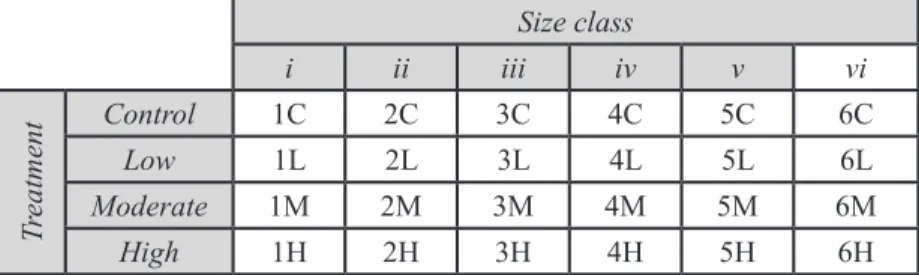
Mytilus californianus, a commonly observed and commercially valuable marine bivalve native to the California coast, is used in this study. This organism takes up little space, is not highly sensitive to the conditions of a captive environment and is easily found and collected from nearby intertidal areas. Small (<30mm) mussels have been obtained, as they will grow more rapidly than larger individuals, producing more robust results in the 3-month data collection period. Upon collection, individuals have been sorted into six size classes to ensure consistency across treatments (see Table 1 below).
6 - Symposium · Volume 3 Issue 1
and aerated by a small 2-watt aquarium pump (Tetra, Blacksburg, VA). Beakers are placed in a large incubator which maintains an interior temperature of 18.5°C and provides continuous light to the organisms. Mussels have been given two weeks to acclimate to the lab environment; they receive water changes every two to three days and a single daily feeding of 15 µL of commercial phytoplankton concentrate (Kent Marine PhytoPlex, Franklin, WI).
Treatments
Three experimental treatments are utilized for the study: low, moderate and high concentrations of microplastics. The “low” treatment receives 0.33 mg/L of microplastics to mimic concentrations observed in the Northern Pacific Gyre (Goldstein et al., 2012). The “moderate” treatment receives 675 mg/L to mimic conditions near a plastics production plant off the coast of Sweden (Noren & Naustvoll, 2010), which are among the highest recorded measurements in the world. The “high” treatment receives 1350 mg/L, or twice the amount of microplastic found near the Swedish coast, in a “worst-case-scenario” manipulation.
Fieber - 7
Table 1. 24 mussels have been distributed among six size classes, determined at the beginning of the study, and four treatments. A mussel identification code has been assigned to each organism to simplify data collection and analysis.
Size class
i ii iii iv v vi
Tr
eatment
Control 1C 2C 3C 4C 5C 6C
Low 1L 2L 3L 4L 5L 6L
Moderate 1M 2M 3M 4M 5M 6M
High 1H 2H 3H 4H 5H 6H
Measurements
Mussels are measured frequently for change in size from the previous data point. Data on both weight and length is gathered to assess growth and observe increases in both soft tissue mass and valve size, respectively. Measuring weight offers a more precise indication of the mussel’s change in overall biomass, and observations of length are not subject to error from excess moisture on the organism; when considered together, these two parameters ensure an accurate dataset.
Growth data is collected on Day 1 and Day 5 of each week during the study, thus capturing changes that occurred during both the experimental and recovery periods. Organisms are removed from their beakers and measured, from anterior tip to posterior tip of the valves, to the nearest millimeter with a small metal ruler. After mussels are air-dried and thoroughly wiped of any excess moisture, each individual is placed on a scale and weighed to the nearest milligram.
Results
8 - Symposium · Volume 3 Issue 1
the “high” treatment, despite the expectation of reduced growth. Such a result may be partly explained by Figure 2, which separates average change in weight by experimental (microplastic-laden seawater) periods and recovery (uncontaminated seawater) periods. Here, the “high” treatment experiences extreme weight loss followed by extreme growth, possibly indicating the presence of a growth-inducing stress response in these individuals
Figure 1. Overall changes in growth rate represent the predicted differences among treatments and are expected to develop a more consistent trend as the study continues. The error bars represent the standard error of the mean.
Fieber - 9
Continued data collection and analysis is expected to yield a more consistent trend throughout treatments, particularly within the “moderate” treatment, which currently has somewhat varied data. Existing anomalies may be explained by the small size of the dataset and may disappear as average changes in weight become distributed over a longer period of time. General data trends indicate support for the hypotheses of the study and are likely to remain consistent with these initial predictions.
Schedule
Experimental procedures are expected to begin in early February and continue until mid-May, allowing for 10-12 weeks of growth data collection. An estimated timeline is outlined below:
• Late January: Refine experimental design, conduct trial runs of logistical setup, acquire funding and necessary equipment
• Early February: Collect study organisms and begin treatments and data collection
• February, March, April, early May: Gather approximately 12 weeks of data, discarding deceased organisms as necessary
• May: Compile and analyze data, begin drafting final paper, develop discussion and poster for Cal Poly CSM Research Conference
• June: Finalize data analysis, complete paper for submission and potential publication
Budget
No funding is requested for equipment, as the use of an incubator and other lab materials is provided by the Cal Poly Center for Coastal Marine Sciences. Supplies include aquaculture materials such as aquarium hardware and food for the study organisms. Final results and analysis will be presented in poster form at the Western Society of Naturalists (WSN) conference in Monterey, CA in November 2016, and the project budget includes associated costs.
10 - Symposium · Volume 3 Issue 1
Significance
Plastic has become an unavoidable ingredient of the world’s oceans, though its effects on broader ecosystems are yet to be fully understood. Microplastic particles have been detected in ocean waters and sediments throughout the world (Wright et al., 2013), and their increased prevalence may deteriorate the health of marine ecosystems. Human societies, which are closely linked to marine resources, may face impacts as invertebrate stocks (an important source of nutrition and livelihood for many coastal communities) suffer as a result of plastic pollution. Hindered growth and development from accumulation of plastic particles and their associated toxins may drastically decrease yields of commercially farmed mollusks and crustaceans (Murray & Cowie, 2011), affecting supplies in a time of increasing global demand for ocean food products. The need for research-based understanding of this system is increasing, as effects of microplastics on growth rates remain unpredictable. This study aims to contribute to the growing body of knowledge on the impacts and need for prevention of marine microplastic pollution.
Category Estimated Cost
Personnel
Undergraduate student ($10/hr, 3 hrs/wk) $360.00
Equipment $ 0.00
Supplies $200.00
Travel
WSN 2016 Registration
Transportation (San Luis Obispo to/from Monterey, CA)
Lodging
Per diem costs ($40/day, 3 days)
$145.00
$ 50.00
$125.00
$120.00
Fieber- 11
References
Allsopp, Michelle, Adam Walters, David Santillo, and Paul Johnston. (2006). Plastic Debris in the World’s Oceans. Publication. Greenpeace. Retrieved from http://www.greenpeace.org international/en/publications/reports/plastic_ocean_report/
Andrady, Anthony L. (2011). “Microplastics in the marine environment.” Marine Pollution Bulletin, 62(8), 1596-605. DOI: 10.1016/j.marpolbul.2011.05.030
Barnes DKA, Galgani F, Thompson RC. (2009). Accumulation and fragmentation of plastic debris in global environments.” Philosophical Transactions of the Royal Society B, Biological Sciences, 364, 1985-1998. DOI: 10.1098/rstb.2008.0205
Bayne BL, Bayne CJ, Carefoot TC, Thompson RJ. (1976). “The physiological ecology of Mytilus californianus Conrad.” Oecologia, 22(3), 229-250. DOI: 10.1007/BF00344794 Brillant M.G.S. & MacDonald B.A. (2000). “Postingestive selection in the sea scallop, Placopecten
magellanicus (Gmelin): the role of particle size and density.” Journal of Experimental Marine Biology and Ecology, 253(2000), 211–227.
Bussell, James A., Eleanor A. Gidman, David R. Causton, Dylan Gwynn-Jones, Shelagh K. Malham, Laurence M. Jones, Brian Reynolds, and Ray Seed. (2008). “Changes in the immune response and metabolic fingerprint of the mussel, Mytilus edulis (Linnaeus) in response to lowered salinity and physical stress.” Journal of Experimental Marine Biology and Ecology, 358(1), 78-85. DOI: 10.1016/j.jembe.2008.01.018
Carson HS, Lamson MR, Nakashima D, Toloumu D, Hafner J, Maximenko N, McDermid KJ. (2013). “Tracking the sources and sinks of local marine debris in Hawai’i.” Marine Environmental Research, 84, 76-83. DOI: 10.1016/j.marenvres.2012.12.002
Cauwenberghe, Lisbeth Van, and Colin R. Janssen. (2014). “Microplastics in bivalves cultured for human consumption.” Environmental Pollution, 193, 65-70. DOI: 10.1016/j
envpol.2014.06.010
Christaki U, Dolan JR, Pelegri S, Rassoulzadegan F. (1998). “Consumption of picoplankton-size particles by marine ciliates: Effects of physiological state of the ciliate and particle quality.” Limnology and Oceanography, 43(3), 458-464. DOI: 10.4319/lo.1998.43.3.0458
Coe WR and Fox DL. (1944). “The biology of the California sea-mussel (Mytilus californianus). III. Environmental conditions and rate of growth.” Biological Bulletin, 87(1), 59-72. DOI: 10.2307/1538129
Cole, M., Lindeque, P., Fileman, E., Halsband, C., Goodhead, R., Moger, J., & Galloway, T. S. (2013). Microplastic Ingestion by Zooplankton. Environmental Science & Technology, 47(12), 6646–6655. DOI: 10.1021/es400663f
Goldstein MC, Rosenberg M, Cheng L. (2012). “Increased oceanic microplastic debris enhances oviposition in an endemic pelagic insect.” Biology Letters, 8(5), 817-820.
Graham, Erin R., and Joseph T. Thompson. (2009). “Deposit- and suspension-feeding sea cucumbers (Echinodermata) ingest plastic fragments.” Journal of Experimental Marine Biology and Ecology, 368(1), 22-29. DOI: 10.1016/j.jembe.2008.09.007
12 - Symposium · Volume 3 Issue 1
Hoare, Philip. (2016). “Whales are starving—their stomachs full of our plastic waste.” The Guardian. Retrieved from http://www.theguardian.com/commentisfree/2016/mar/30/ plastic-debris-killing-sperm-whales
Jambeck JR, Geyer R, Wilcox C, Siegler TR, Perryman M, Andrady A, Narayan R, Law KL. (2015). “Plastic waste inputs from land into the ocean.” Science, 347(6223), 768-771. DOI: 10.1126/ science.1260352
Jordan, Chris (Director) and Levy, Stephanie (Producer). (2011). Midway: A Message from the Gyre [Film].
Kershaw, P., Katsuhiko, S., Lee, S., Leemseth, J. & Woodring, D. (2011). “Plastic debris in the ocean.” In UNEP year book: emerging issues in our environment. Nairobi: UNEP
Mallory ML. (2008). “Marine plastic debris in northern fulmars from the Canadian high Arctic.” Marine Pollution Bulletin, 56(8), 1501-1504. DOI: 10.1016/j.marpolbul.2008.04.017 Mascarenhas R, Santos R, Zeppelini D. (2004). “Plastic debris ingestion by sea turtles in Paraiba,
Brazil.” Marine Pollution Bulletin, 49(4), 354-355. DOI: 10.1016/j.marpolbul.2004.05.006 Murray, Fiona, and Phillip Rhys Cowie. (2011). “Plastic contamination in the decapod crustacean
Nephrops norvegicus (Linnaeus, 1758).” Marine Pollution Bulletin, 62(6), 1207-217. DOI: 10.1016/j.marpolbul.2011.03.032
National Oceanic and Atmospheric Administration Marine Debris Program. (2014). “2014 Report on the Occurrence and Health Effects of Anthropogenic Debris Ingested by Marine Organisms.” Silver Spring, MD.
Naylor RL, Goldburg RJ, Primavera JH, Kautsky N, Beveridge MC, Clay J, Folke C, Lubchenco J, Mooney H, Troell M. (2000). “Effect of aquaculture on world fish supplies.” Nature, 405(6790), 1017-1024. DOI: 10.1038/35016500
NOAA Marine Debris Program. (2016). “Types and Sources: Plastics.” Office of Response and Restoration. Retrieved from https://marinedebris.noaa.gov/types/plastics
Noren F and Naustvoll F. (2010). “Survey of microscopic anthropogenic particles in Skagerrak.” Report commissioned by Klima-og Forurensningsdirektoratet.
Oehlmann J, Schulte-Oehlmann U, Kloas W, Jagnytsch O, Lutz I, Kusk KO, Wollenberger L, Santos EM, Paull GC, Van Look KJ, Tyler CR. (2009). “A critical analysis of the biological impacts of plasticizers on wildlife.” Philosophical Transactions of the Royal Society B, Biological Sciences, 364(1526), 2047-2062. DOI: 10.1098/rstb.2008.0242
Oros, J., Torrent, A., Calabuig, P., & Deniz, S. (2005). Diseases and causes of mortality among sea turtles stranded in the Canary Islands, Spain (1998–2001). Diseases of Aquatic Organisms, 63, 13–24. Pierce, K. E., Harris, R. J., Larned, L. S., & Pokras, M. A. (2004). “Obstruction and starvation associated with plastic ingestion in a northern gannet Morus bassanus and a greater shearwater Puffinus gravis.” Marine Ornithology, 32, 187–189.
Rios LM, Moore C, Jones PR. (2007). “Persistent organic pollutants carried by synthetic polymers in the ocean environment.” Marine Pollution Bulletin, 54(8), 1230-1237. DOI: 10.1016/j. marpolbul.2007.03.022
Singh B, Sharma N. (2008). “Mechanistic implications of plastic degradation.” Polymer Degradation and Stability, 93(3), 561-584. DOI: 10.1016/j.polymdegradstab.2007.11.008
Fieber - 13
DOI: 10.1016/0044-8486(91)90121-M
Talsness CE, Andrade AJ, Kuriyama SN, Taylor JA, vom Saal FS. (2009). “Components of plastic: experimental studies in animals and relevance for human health.” Philosophical Transactions of the Royal Society B, Biological Sciences, 364(1526), 2079-2096. DOI: 10.1098/rstb.2008.0281 Thompson RC, Moore CJ, vom Saal FS, Swan SH. (2009). “Plastics, the environment and human health: current consensus and future trends.” Philosophical Transactions of the Royal Society B, Biological Sciences, 364, 2153-2166. DOI: 10.1098/rstb.2009.0053
Walker, W. A., & Coe, J. M. (1989). Survey of Marine Debris Ingestion by Odontocete Cetaceans. Paper presented at the Second International Conference on Marine Debris, Honolulu, Hawaii, US. Wright, Stephanie L., Richard C. Thompson, and Tamara S. Galloway. (2013). “The physical impacts
Proteomic Response of Elephant Seal Pups,
Mirounga angustriorstris, to Prolonged
Fasting
by Melissa Voisinet, Maria Christina Vasuez, Cory Elowe, Dan
Crocker, and Lars Tomanek
Introduction
Prolonged fasting is a stress commonly found in many genera of mammals. It is accompanied by shifts in metabolic pathways and likely affects the proteome of all tissues. An organism’s ability to cope with periods of prolonged fasting is crucial for survival and is largely dictated by its life history. Many marine mammals have periods of fasting throughout their life; however, Northern Elephant Seals (Mirounga Angustirostris) (NES) in particular are subjected to periods of fasting up to 4 months depending on age and gender (Figure 1). Juvenile NES undergo an eight-week fast during the post-weaning period (Somo et al., 2015). During this period they transition from a terrestrial to mostly aquatic lifestyle (Reiter et al., 1978). This transition requires physiological developments adapted towards a greater capacity for diving and thermal regulation, which in turn require changes in energy metabolism and possibly anti-oxidant capacity (Le Boeuf & Richard, 1994).
In this study, we focused on the muscle tissue of NES pups to track the development of the proteome pre- and post-weaning over an eight-week period. The purpose of this study was to evaluate the proteomic changes in NES pups’
16 - Symposium · Volume 3 Issue 1
muscle throughout their post-weaning fast, a natural period in the pup’s life, which is accompanied by a transition from a life on land to one in the ocean. Due to the increasing number of genome sequences and well-annotated expressed sequence tag (EST) libraries, proteomic analyses of non-model organisms have recently become possible. Although some work has been done on Phocid’s survival during fasting (Vazquez-Medina et al., 2010; Tavoni et al., 2013; etc.), this is the first time that the proteome of a marine mammal has ever been analyzed. This will provide new insight on the adaptive capacity of marine mammals during this critical developmental stage.
Materials and Methods
Tissue Collection and Experimental Design
Tissue samples were taken from NES pups at a rookery in Año Nuevo, CA, USA (37°07’14.7”N 122°20’17.2”W) on February 14th and March 27th, 2015. Tissue samples were taken from skeletal muscle using a tissue punch and were flash-frozen in liquid nitrogen. After collection, the samples were transported to the Cal Poly Environmental Proteomics Lab on dry ice and kept at -80°C until homogenization. The animal care and use permits are held by Dr. Dan Crocker and approved by Sonoma State University and the University of California, Santa Cruz. Protein Extraction
Voisinet et al. - 17
Two-Dimensional Gel Electrophoresis
Immediately after resuspension, samples were combined with running buffer based on protein concentration, and then added to IPG strips (11 cm, pH range 3–10 non-linear; Bio-Rad, Hercules, CA, USA) (Tomanek & Zuzow, 2010). Isoelectric focusing began with 5h of passive rehydration, followed by 12h of active rehydration at 50V. Proteins were subsequently separated at 500V for 1h, 1000V for 1h and 8000 V for 2.5h. IPG strips were then frozen at −80°C until further use. To separate proteins according to the molecular mass, we first incubated IPG strips equilibration buffer with dithiothreitol (DTT) and then with iodoacetamide to reduce any disulfide bonds and quench the DTT (Tomanek & Zuzow, 2010). Strips were placed on top of 11.8% polyacrylamide gels and proteins were separated at 200V for 55min at 10°C (Criteron Dodeca; BioRad). Gels were immediately stained with colloidal Coomassie Blue (G-250) for 24h and then de-stained by washing repeatedly with Milli-Q water for 48h. Images of the gels were transferred to the computer using an Epson 1680 transparency scanner.
Spot Identification and Stastical Analysis
Delta 2D gel analysis software (version 3.6, Decodon, Greifswald, Germany) was used for image analysis and spot identification. Protein spots on all 2D gels were detected and warped to a reference gel from each time point. Subsequently, the reference gel from the post-weaned time point was warped to the reference gel from the pre-weaned time point. A master fused-image gel was then created by fusing all the gel images (Figure 2). This image contains all spots detected in any gel and at its maximal intensity. Using a spot detection tool, spots on the master gel were detected and possible artifacts were removed after visual inspection. We then generated a proteome map, which represents mean volumes for each spot. Spot boundaries from the master gel were then exported to all individual gels, thereby eliminating variability in spot detection and ensuring close spot matching. After background subtraction, protein spot volumes were normalized against the total spot volume of all proteins in a gel image. Normalized spot volumes for each time point were analyzed in Delta2D using a t-test with permutations (p<0.05).
Mass Spectrometry
18 - Symposium · Volume 3 Issue 1
the mass spectrometer was conducted as described by Tomanek and Zuzow (2010). Protein spots were briefly excised and de-stained twice. Proteins were subsequently digested with trypsin (Promega, Madison, WI, USA) overnight at 37°C. Trifluoroacetic acid (TFA) and acetonitrile were then used to extract digested proteins from the gel. Individual digested protein samples were mixed with matrix solution and spotted on a target plate (Bruker Daltonics Inc., Billerica, MA, USA). The spotted proteins were washed with 0.1% TFA and recrystallized using a mixture of acetone, ethanol and 0.1% TFA. A matrix-assisted laser desorption ionization tandem time-of-flight (MALDI-TOF-TOF) mass spectrometer (Ultraflex II; Bruker Daltonics Inc.) was used to obtain peptide mass fingerprints. A combination of peptide mass fingerprint (PMF or MS) and tandem mass spectra (MS/MS) data were searched against a metazoan database (NCBInr 20150404) using Mascot (version 3.1; Matrix Science Inc., Boston, MA, USA) to identify proteins. The molecular weight search (MOWSE) score that indicated a significant hit was set for >56 and the threshold p-value was set for <0.05 to confirm that the probability of a match was not a random event.
Results and Discussion
Protein gel image analysis showed 272 distinct protein spots found across both time points. Of these 272 protein spots, 44 (16%) significantly changed abundance between the two time points (permutation t-test, P<0.05) (Figure 3). Of the 44 significant proteins, 32 were identified using mass spectrometry. Of the 32 identified proteins, 7 proteins were identified as different isoforms that significantly changed between time points. Different isoforms of the same proteins may be present because of post-translational modifications that may change the molecular weight and isoelectric point of a protein. This will lead to the identification of the same protein as two or more different spots. Proteins were then grouped together based on general function.
Energy Metabolism
Voisinet et al. - 19
two time points. All identified metabolic proteins were upregulated in pre-weaning pups and downregulated in post-weaning pups.
While fasting, NES pups continue to obtain energy through carbohydrates, lipids and, as a last resort, proteins. Carbohydrates are the preferred energy source because they are stored as glycogen in the liver and muscle; however, during fasting there are minimal carbohydrates available, so carbohydrate metabolism is downregulated during the post-weaning fast. All metabolic proteins found are enzymes that catalyze reactions of glycolysis. This supports that either glycolysis has decreased overall or that some of the metabolites of glycolysis from the earlier reactions are diverted to another pathway.
When carbohydrates are not available, one alternative pathway to glycolysis is gluconeogenesis. In this pathway, triglycerides are converted to glycerol and amino acids, while lactate is transformed to glucose. The majority of gluconeogenesis that occurs during a fast is from lipids, which are stored as a blubber layer in marine mammals. We saw no significant upregulation in lipolysis proteins, but we did find some lipolysis proteins that did not significantly change abundance, and were therefore potentially upregulated in both pre- and post- weaning pups. These lipolysis proteins were most likely upregulated in the pre-weaning time point due to the high fat content of the mother’s milk. Another potential alternative to glycolysis is the shunting of glucose-6-P towards the pentose phosphate pathway (PPP), which produces nucleotides that are needed during growth. The PPP may produce NADPH – used for producing fatty acids for adipose tissue. If the PPP synthesizes NADPH, it supports the hypothesis that the animal increases its fat deposits or invests into growth by producing RNA and DNA.
Cytoskeletal Structure
20 - Symposium · Volume 3 Issue 1
of spire, and the implication for filament nucleation showed low abundances in the pre-weaning pups and upregulation in post-weaning pups.
The up regulation and down regulation of cytoskeletal proteins show that there was a restructuring of skeletal muscle occurring during the post-weaning fast. The restructuring of muscle proteins are most likely a result of the pup’s transition from a terrestrial to aquatic lifestyle, which requires them to use a new set of muscles. This is important because not only were the pups able to maintain muscle mass during their fast, but they were able to use energy to build new skeletal muscle as well.
Oxidative Stress and Proteostasis Proteins
Four different proteins were identified that are involved in oxidative stress. Two isoforms of glutathione S-transferase P-like, peroxiredoxin-6, alpha-crystallin B chain, heat shock cognate 71 kDa and three isoforms of heat shock proteins. One isoform of glutathione-S-transferase P-like, peroxiredoxin-6, alpha-crystallin B chain, heat shock cognate 71 kDa and all three isoforms of heat sock proteins were all upregulated in pre-weaning pups, and downregulated in post-weaning pups. The second isoform of glutathione-S-transferase P-like was downregulated in pre-weaning pups, and upregulated in post-weaning pups.
Our results suggest a restructuring of antioxidant proteins. This restructuring is most likely due to post-translational modifications. Studies have shown that carbonylation, a common type of post-translational modification, is often caused by oxidative stress (Dalle-Donne et al., 2006). We originally predicted that although both periods are associated with different types of physiological stress, the pre-weaning period would ultimately be associated with less physiological stress than the post-weaning period. The pre-weaning period is associated with the stress of growing and avoiding adult males, and the post-weaning period is associated with transitioning to an independent and aquatic lifestyle. The downregulation of many proteins associated with protein protection during oxidative stress suggests that the post-weaning period, although the sources of stress are different, may actually inflict more physiological stress on the animal as the pre-weaning period, which contradicts our original prediction regarding physiological stress caused by weaning.
Blood Proteins
Voisinet et al. - 21
between the two time points. Two isoforms of myoglobin, hemoglobin subunit A, serotransferrin and serum albumin all significantly changed abundance between time points. Both isoforms of myoglobin, serotransferrin and serum albumin all increased in abundance in post-weaning pups, while hemoglobin subunit A decreased in abundance in post-weaning pups. Both myoglobin and hemoglobin are used by the animal as a means to store oxygen in the body. The increase in myoglobin is important because myoglobin has a higher affinity for oxygen than hemoglobin and is therefore a last resort for muscles after the oxy-gen that is stored in the hemoglobin has been used. This shows that NES pups are developing a tolerance to hypoxic situations, such as those experienced during foraging dives.
Importance and Future Research
Although there has been some research conducted on NES ability to survive fasting (Vazquez-Medina et al., 2010; Tavoni et al. 2013), this is the first time stress responses in NES due to prolonged fasting have been analyzed using proteomics. We suggest that future work include a comparative analysis of proteomic responses in NES between pups, adult females and adult males. Furthermore, comparing NES proteomic responses to closely related species might help give insight to the adaptive capacity of marine mammals during a critical developmental stage.
22 - Symposium · Volume 3 Issue 1
Figure 2: A fused gel image showing the 273 (44 sig.) individual protein spots detected. The proteome map represents the average normalized pixel volumes for each protein spot across all 12 gels. The number of spots that changed significantly between the two time points (pre- and post-weaning) was determined using a permutation t-test (p < 0.05). Isoelectric point ranges from pH 3-10 and molecular mass ranges from 14.4-97.4 kDa.
Voisinet et al. - 23
References
Dalle-Donne I, Aldini G, Carini M, Colombo R, Rossi R, Milzani A. (2006).
“Protein carbonylation, cellular dysfunction, and disease progression”. Journal of Cellular and Molecular Medicine 10 (2): 389-406.
doi: 10.1111/j.1582-4934.2006tb00407.
Le Boeuf BJ, and Richard ML, editors Elephant seals: population ecology, behavior, and physiology. Berkeley: University of California Press, c1994 (1994). 271 -289. Reiter J., Stinson NL, Le Boeuf BJ. (1978). Northern elephant seal development – transition from
weaning to nutritional independence. Behavioral Ecology and Sociobiology 3: 337 367. doi: 10.1007/BF00303199.
Somo DA, Ensminger DC, Sharick JT, Kanatous DE, Crocker DE. (2015). Development of dive capacity in northern elephant seals (Mirounga angustirostris): Reduced body reserves at weaning are associated with elevated body oxygen stores during the postweaning fast. Physiological and Biochemical Zoology: Ecological and Evolutionary Approaches 88 (5): 471-482. doi: 10.1086/682386.
Tavoni SK, Champagne CD, Houser DS, Crocker DE. (2013). Lactate flux and gluconeogenesis in fasting, weaned northern elephant seals (Mirounga angustirostris). Journal of Comparative Physiology B-Biochemical Systemic and Environmental Physiology 183 (4): 537-546. doi: 10.1007/s00360-012-0720-5.
Tomanek L and Zuzow MJ. (2010). The proteomic response of the mussel congeners Mytilus galloprovincialis and M. trossulus to acute heat stress: implications for thermal
toleance limits and metabolic costs of thermal stress. Journal of Experimental Biology 213, 3559-3574. doi: 10.1242/jeb.041228.
Effects of Branch Chain Amino Acid
Supplementation on Energy Intake in Normal
Weight and Overweight/Obese Individuals
by Jonathan Salcido, Tess Engel, Koa Cano, Pedro Angulo, Rebecca
Brookes, Haley Kepler, Jason Lytle, Todd Hagobian
Abstract
Animal data suggests that branch chain amino acid (BCAA) supplementation, in particular leucine supplementation, suppresses energy intake. However, no study to date has evaluated the effects of these supplements on human energy intake. Thus, the purpose of this study was to determine the effects of BCAA and leucine supplementation on energy intake at a buffet meal and whether this differs by weight status. After an overnight fast, ten healthy, normal-weight adults (5M, 5F; BMI 21.5 ± 1.1 kg/m2; age 20.9 ± 0.60 yr) and nine overweight and obese adults (OW/OB; 6M, 3F males, BMI 27.7 ± 2.7 kg/m2; age 23.3 ± 2.6 yr) consumed one of three supplements on separate days in a block randomized, double-blinded design: 1) Placebo (calcium carbonate), 2) BCAA complex (5g leucine, 2.5g isoleucine, 2.5g valine) and 3) Leucine (10 g). Twenty minutes after total energy intake (kcal) at an open buffet meal was assessed using a repeated measures ANOVA. There was no significant (P>0.05) group by condition effect in normal-weight (617 ± 273, 570 ± 256, 683 ± 247 kcal, respectively) and OW/OB (823 ± 336, 766 ± 409, 831 ± 437, respectively) in energy intake at the buffet meal. In exploratory analyses in the normal-weight group alone, energy intake was significantly (P<0.05) reduced by 10% with the BCAA supplementation compared to the leucine and placebo supplementation. There was no significant difference (P>0.05) in OW/OB group alone between conditions. These data showed no overall effect of BCAA and leucine supplementation on energy intake. However, normal-weight participants appear to be more sensitive to the effects of BCAA supplementation on energy intake.
K
36.181 kinesiology
26 - Symposium · Volume 3 Issue 1
Introduction
Obesity is a growing trend in the United States, with reports that more than one-third of Americans are obese (Ogden et al., 2012). With the rise of obesity, there has been an increase in the incidence of Type-2 diabetes and cardiovascular disease as well. Many of these individuals attempt to lose weight via energy restriction or exercise, but the majority regain the lost weight. Dietary supplements are an alternative approach to induce weight loss and anecdotally show promise, but experimental data is lacking. In the past two decades, the supplement industry has grown with consumers, especially within the overweight/obese population attempting to make lifestyle changes. In recent animal studies, branch chain amino acid (BCAA) supplementation has been studied for the likelihood of decreasing appetite and altering metabolism favorably. These studies have shown promising results within mice models (Han & Lean, 2016). Previous studies have shown that leucine and isoleucine supplementation stimulates satiety hormones and impacts metabolism favorably (Lastya et al., 2014; Chen and Reimer, 2009). These studies indicate that branch chain amino acids can potentially affect essential hormones that help regulate hunger and satiety. Additionally, in another recent animal study, it was shown that leucine was important in reducing food intake when administering the supplement via intracerebroventricular infusion but not with oral intake (Zampieri et al., 2013).
The effects BCAA supplementation has on energy intake has not been studied in depth in humans, and thus, empirical data is lacking. The beneficial effects are yet unknown for either normal or OW/OB humans. Therefore, in this study the purpose was to determine the effects BCAA had on human adults and to measure whether oral intake of these supplements would inhibit energy intake at a buffet meal. We hypothesized that branch chain amino acids, particularly leucine, would have an affect on total energy intake at a buffet meal and thus alter the appetite of individuals.
Methods
Salcido et al. - 27
used in response to three conditions: 1) Placebo, 2) 10 grams of BCAA (5g leu-cine, 2.5g isoleuleu-cine, 2.5g valine) and 3) 10 grams of leucine. Energy intake at a buffet meal was assessed 20 minutes after each condition.
Subjects: Nineteen (12M, 7F) adults were recruited from California Polytech-nic State University in San Luis Obispo, California by flyers and advertise-ments (Table 1). All participants were in good health with no known cardio-vascular or metabolic diseases, as determined by a health-history questionnaire. Exclusion criteria included: psychological disorders (e.g. depression), cardio-vascular disease, diabetes or any other metabolic diseases, significant weight loss in the previous 6 months (>5 kg), consumption of BCAA supplements or other supplements that could suppress appetite at the time of the study, illicit drug use, extreme dieting practices (e.g. Atkins, Paleo, etc.), history of bariat-ric surgery and if pregnant or expecting to become pregnant. This study was approved by the Human Subject Committee at California Polytechnic State University, and subjects provided verbal and written consent.
Table 1:Subject Characteristics
Preliminary tests: Subjects completed a preliminary phone-screening ques-tionnaire and, if qualified, they were asked to come to the testing center and a health-history and dietary questionnaire was administered. All subjects had their height in meters and weight in kilograms measured to determine prelimi-nary body mass index.
Experimental Protocol: Subjects were asked to abstain from consuming alco-hol, caffeine or performing physical activities (i.e. exercise, sports) twenty-four hours prior to each study visit to control for variables that may affect appetite or food intake. After an overnight fast (8-12 hours), subjects reported to the Human Performance Laboratory in the Kinesiology Department. Subject’s
Variable Normal Weight Overweight/Obese Subject
Number of Subjects N=10 N=9 Age 20.9 ± 0.6 23.3 ± 2.6
Body Weight (kg) 63.3 ± 7.9 85.1 ± 10.2 BMI (kg/m2) 21.5 ± 1.1 27.7 ± 2.7
28 - Symposium · Volume 3 Issue 1
height and weight were measured, and an appetite and gastrointestinal distress questionnaire was assessed. In a block-randomized, cross-over and dou-ble-blinded fashion, subjects completed one of three supplement conditions: 1) Placebo (calcium supplement), 2) BCAA (5g leucine, 2.5g isoleucine, 2.5g valine) and 3) leucine alone (10 grams). After twenty minutes from the time of supplement consumption, the subjects were given another appetite and gastrointestinal distress questionnaire. Subjects were then given access to an open buffet meal for up to 30 minutes. Subjects were able to consume as much or as little of the food as they desired, and additional food was provided if asked. The subjects consumed food in isolation to prevent any distractions and minimize any influence on social or environmental factors. The buffet meal used in the current study mimicked previous studies and has been shown to be reproducible (Neary et al., 2004; Tepper et al., 2010; Hagobian et al., 2013). After the buffet meal, subjects completed another appetite and gastro-intestinal distress questionnaire, and weight was assessed. Subjects returned for the following trial no more than one week later.
Buffet Meal: The buffet included a variety of carbohydrates, fat and protein and all items were present equally across all conditions. All items were either pre-weighed or served in their original container (e.g. drinks, cereals). Such items that were provided in the buffet included: cereals, milk (1% and whole), cereal bars, bagels, cream cheese, butter, bread (white and wheat), cheese, meat (ham, turkey, pastrami), fruit, vegetables, cookies, candy bars and juices. The food was prearranged in a designated room where a subject could eat in isolation. At the end of each meal, the food was measured by tallying the empty packages and reweighing any uneaten food. The weight of uneaten food was subtracted from the initial weight to determine the amount eaten by the subject. The main outcome was the total energy intake (kcal) consumed at the buffet meal.
Salcido et al. - 29
Tukey’s Post hoc was used.
Results
There was no significant (P>0.05) group x condition interaction in energy intake at the buffet meal (Figures 1 and 2). In other words, normal-weight and OW/OB groups did not differ in the amount of kcals consumed at the buffet meal. In exploratory analyses, however, the normal-weight group BCAA supplementation reduced energy intake at a buffet meal by 10% compared to placebo and leucine alone (P<0.05). In OW/OB group, there was no signifi-cant difference (P>0.05) between conditions.
Figure 1: Energy Intake at a Buffet Meal in response to each condition in normal-weight group. Values are mean ± standard error of mean. *BCAA supplementation significantly reduced energy intake by 10% compared to placebo and leucine supplementation. BCAA, branched chain amino acids.
Figure 2: Energy Intake at a Buffet Meal in response to each condition in overweight/ obese group. Values are mean ± standard error of mean. There was no significant difference between conditions. BCAA, branched chain amino acids.
0 200 400 600 800
Placebo Leucine BCAA
En
erg
y i
nta
ke
( k
ca
l)
0 200 400 600 800 1000 1200Placebo Leucine
BCAA
En
er
gy
in
ta
ke
( k
ca
30 - Symposium · Volume 3 Issue 1
Discussion
The goal of this study was to determine whether BCAA or leucine-on-ly supplementation reduced energy intake at a buffet meal in normal-weight and overweight/obese adults. The main finding in this study was that there was no significant difference between groups in energy intake at the buffet meal in response to the three conditions. However, in exploratory analyses BCAA supplementation reduced energy intake in normal-weight but not overweight/ obese. These data suggest normal-weight participants, compared to over-weight/obese participants, appear to be more sensitive to the effects of BCAA supplementation on reducing energy intake.
In this current study, we did not observe any group x condition in-teraction on energy intake. These data are in contrast to previous animal data showing that BCAA or leucine supplementation reduces energy intake (Cota et al., 2006). In a recent study, leucine infused into rats’ brains had an affect on the mTOR pathway located in the hypothalamus, which decreased food intake and weight in mice within 24 hours (Cota et al., 2006). Also, Zampieri et al. (2013) found that leucine was important in reducing food intake when administering the supplement via intracerebroventricular infusion but not with oral intake. In humans, empirical data evaluating the effects of BCAA and leucine supplementation on energy intake is lacking. Administering oral doses of BCAA to cancer patients with anorexia (not weight losing patients) may actually help safely increase appetite and bodyweight (Cangiano et al., 1996; Laviano et al., 2006). Nevertheless, there is debate as to whether that is always the instance, due to these studies being conducted in patients whose clinical symptoms cause muscular atrophy, and branch chain amino acids are shown to help with the production of neurotransmitters and protein synthesis. Thus, any increase in these supplements may ultimately have some neurochemical effects (Fernstrom, 2005).
In exploratory analyses, we found that BCAA supplementation reduced energy intake at a buffet meal in normal-weight but not overweight obese participants. In support of this difference, one epidemiological study showed that a higher BCAA diet in middle-aged subjects was associated with lower frequency of obesity in those countries (Qin et al., 2010). Experimental data is needed to confirm these results. Nonetheless, our data suggest that normal-weight, compared to overweight/obese, individuals appear to be more sensitive to the effects of BCAA supplementation on reducing energy intake.
Salcido et al. - 31 be generalizable to the general population. Additionally, we assessed the acute effects of these supplements on energy intake, and no study to date has assessed longer-term supplementation. Finally, we did not assess the effects of these supplements on appetite hormones (e.g. ghrelin, leptin, etc.) and thus, further studies are needed to evaluate any potential differences.
In summary, we noted no significant difference between nor-mal-weight and overweight/obese groups in energy intake at a buffet meal in response to the three conditions. However, normal-weight, compared to over-weight/obese, individuals appear to be more sensitive to the effects of BCAA supplementation on reducing energy intake. Future experimental studies are needed to confirm these findings.
32 - Symposium · Volume 3 Issue 1
References
Cangiano C, Laviano A, Meguid MM, Mulieri M, Conversano L, Preziosa I, Rossi-Fanelli F. Effects of administration of oral branched-chain amino acids on anorexia and caloric intake in cancer patients. Journal of the National Cancer Institute. 1996; 88:550-551.
Chen Q, Reimer RA. Dairy protein and leucine alter GLP-1 release and mRNA of genes involved in intestinal lipid metabolism in vitro. Nutrition. 2009; 25:340–349.
Cota D, Proulx K, Smith KA, Kozma SC, Thomas G, Woods SC, Seeley RJ. Hypothalamic mTOR signaling regulates food intake. Science. 2006; 312:927–930.
Fernstrom JD. Branched-chain amino acids and brain function. The Journal of Nutrition. 2005; 135:1539S-1546S.
Hagobian TA, Yamashiro M, Hinkel-Lipsker J, Streder K, Evero N, Hackney T. Effects of acute exercise on appetite hormones and ad libitum energy intake in men and women. Applied Physiology, Nutrition, and Metabolism. 2013; 38:66-72.
Han TS, Lean ME. A clinical perspective of obesity, metabolic syndrome and cardiovascular disease. JRSM Cardiovascular Disease. 2016 Jan 1; 5:2048004016633371.
Lastya A, Saraswati MR, Suastika K. The low level of glucagon-like peptide-1 (glp-1) is a risk factor of type 2 diabetes mellitus. BMC Research Notes. 2014; 7:849
Laviano A, Muscaritoli M, Cascino A, Preziosa I, Inui A, Mantovani G, Rossi-Fanelli F. Branched chain amino acids: the best compromise to achieve anabolism?. Current Opinion in Clinical Nutrition & Metabolic Care. 2005; 8:408-414.
Neary NM, Small CJ, Wren AM, Lee JL, Druce MR, Palmieri C, Frost GS, Ghatei MA, Coombes RC, Bloom SR. Ghrelin increases energy intake in cancer patients with impaired appetite: acute, randomized, placebo-controlled trial. The Journal of Clinical Endo crnology & Metabolism. 2004; 89:2832-6.
Ogden CL, Carroll MD, Kit BK, Flegal KM. Prevalence of childhood and adult obesity in the United States, 2011-2012. JAMA. 2014; 311(8):806-814.
Qin LQ, Xun P, Bujnowski D, Daviglus ML, Van Horn L, Stamler J, He K, INTERMAP Coo erative Research Group. Higher branched-chain amino acid intake is associated with a lower prevalence of being overweight or obese in middle-aged East Asian and Western adults. The Journal of nutrition. 2011; 141:249-254.
Tepper BJ, Neilland M, Ullrich NV, Koelliker Y, Belzer LM. Greater energy intake from a buffet meal in lean, young women is associated with the 6-n-propylthiouracil (PROP) non-taster phenotype. Appetite. 2011; 56: 104-110.
Zampieri TT, Pedroso JAB, Furigo IC, Tirapegui J, Donato J. Oral leucine supplementation is
sensed by the brain but neither reduces food intake nor induces an anorectic pattern of
Symposium · Volume 3 Issue 1 - 33
Thank you to all the individuals who have developed, contributed, supported, and been a part of Symposium.