What Are We Learning About Protecting
Children in the Community?
An inter-agency review of the evidence on community-based
child protection mechanisms in humanitarian
and development settings
Mike Wessells
Lead Consultant
November 2009
This report was prepared by Mike Wessells with guidance from members of the Inter-Agency Reference Group. The views and recommendations contained in this report are the sole
responsibility of the author and do not necessarily represent the views of each Reference Group member or their respective organisations.
An executive summary of this report is available to download at
www.savethechildren.org.uk/onlinelibrary
© The Save the Children Fund 2009 Registered charity number 1076822
This publication is copyright, but may be reproduced by any method without fee or prior permission for teaching purposes, but not for resale. For copying in any other circumstances, prior written permission must be obtained from the publisher, and a fee may be payable.
Acknowledgements
This review was made possible by generous support from UNICEF West Africa Regional Office, and from the Evaluation Division of UNICEF headquarters. It was also made possible by Save the Children, who generously allocated the time of Sarah Lilley, whose skilled oversight, facilitation and leadership were key in developing and conducting the review, as well as in preparing for the next stages of work. Thanks also go to the UNICEF Evaluation Division for conducting broad searches of the social science literature.
The author warmly acknowledges the support of the Reference Group members, whose shared vision, inter-agency teamwork, and commitment have been instrumental in guiding and enabling the review. These members are:
John Williamson, Displaced Children and Orphans Fund (USAID) Jane Warburton, Oak Foundation
Livia Iskandar, PULIH
Bill Bell, Sarah Lilley, Gabriella Olofsson, and Lisa Laumann, Save the Children Margie de Monchy and Nankali Maksud, UNICEF East and Southern Africa Regional Office
Brigette De Lay and Joachim Theis, UNICEF West and Central Africa Regional Office Shirin Nayernouri, Jennifer Keane, and Samuel Bickel, UNICEF Headquarters
Elli Oswald and Bill Forbes, World Vision International
We wish to thank various practitioners who participated in follow-up discussions on particular programmes by telephone, and who offered valuable insights. These include Lucy Batchelor, Mark Canavera, Adi Dananto, William Deng, Bhanu Pathak, Manabendra Nath Ray, and Jill Thompson.
The author wishes to thank Camilla Jones and Monica Martin, who reviewed various documents in French and Spanish, respectively. Special gratitude goes to Kathleen Kostelny, who worked closely with the lead consultant on all aspects of the review and whose unwavering support was invaluable.
Table of contents
Acronyms . . . 7
1. Background and rationale . . . 8
1.1 Child protection systems . . . . 8
1.2 The rationale for child-focused community groups . . . 10
1.3 The lack of a strong evidence base. . . 11
2. Overview of the review . . . 13
2.1 Terms of Reference . . . 13
2.2 Methodology . . . 15
2.3 Limitations of the review . . . 20
3. The document set . . . 23
3.1 Documents not reviewed . . . 23
3.2 Reviewed documents . . . 23
4. Key findings . . . 26
4.1 The state of the evidence base . . . 26
4.2 Functions, forms and activities . . . . 27
4.3 Effectiveness . . . 32
4.4 Scale . . . 48
4.5 Sustainability . . . . 49
4. 6 Gaps . . . 52
4.7 Do No Harm issues . . . 54
4.8 Lessons from the health sector. . . 57
5. Promising practices . . . 59
5.1 A human rights and social transformation approach to ending FGM . . 59
5.2 Combating child labour through education 62
5.3 A community-based Child Protection Network model . . . 65
6. Challenges . . . . 68
6.1 Strengthening the evidence base. . . 68
6.2 Roles and responsibilities . . . 71
6.3 Sustainability . . . 74
6.4 Taking a dialogical approach to child protection at community level. . . . 76
6.5 Effective child protection in emergency settings. . . 79
7. Recommendations . . . 82
7. 1 For practitioners . . . 82
7.2 For donors . . . 83
7.3 Recommendations for Phase 2 . . . 84
8. References . . . . 88
9. Annexes . . . . 90
A: Terms of Reference for the review. . . . . 90
B: Review matrix . . . . . 96
C: List of reviewed documents . . . 97
D: Countries included in the review . . . 105
E: Typology of approaches to engaging with communities . . . .. . . 109
Acronyms
CBO Community-based organisation
CPN Child Protection Network
CRC UN Convention on the Rights of the Child
CWG Community Watch Group
FGD Focus group discussion
FGM Female genital mutilation
GBV Gender-based violence
IDP Internally displaced people
ILI Inter-Agency Learning Initiative
INGO International non-governmental organisation
NGO Non-governmental organisation
OVC Orphans and vulnerable children
PD Positive Deviance
1. Background and rationale
In emergency, transition, and development settings, the burden of risk and vulnerability falls disproportionately on children.1 Widespread risks include family separation, displacement, attack, sexual exploitation and abuse, recruitment into or use by armed forces and armed groups, trafficking, disability, HIV and AIDS, and child labour, among many others. Children’s exposure to multiple, accumulating risks, often in a context in which supports and protective factors have been weakened or are absent, shatters children’s rights, impedes children’s healthy development and well-being, and causes enormous suffering.
Children’s exposure to danger and risk factors on a wide scale is often most pronounced in humanitarian emergencies such as those caused by armed conflicts or natural disasters. In low- and middle-income countries, where large numbers of emergencies occur, children are
vulnerable even before emergencies, due to chronic poverty and inability to meet basic needs. Even after the emergency has ended, however, the risks to children’s well-being persist. In transitional settings, the boundaries between conflict and post-conflict are often blurred, and risks frequently carry over from the emergency phase or change into more complex forms. Development settings, too, contain myriad risks to children. Many of these risks are rooted in chronic poverty and the structures of social exclusion that cause and inter-relate with poverty, weak social structures, and poor governance. Furthermore, in both high-income and low-income societies, there are urgent issues of family violence, gender-based violence, gang violence, and risks of child labour, trafficking, sexual exploitation, HIV and AIDS, and disability related issues such as stigma, among many others. Across contexts, children face systemic protection threats that arise at family, community, and societal levels, and that may be grounded in a social and political history of inequality and social injustice.
1.1 Child protection systems
How to respond to, mitigate, and prevent risks to children’s protection and well-being is a profound, if unanswered, question. Practitioners agree that it is necessary to develop or strengthen protective factors at multiple levels, such as the family, community, and national levels. This idea of building protective capacities at multiple levels fits with ecological models of child development that highlight the importance of the social environment in children’s
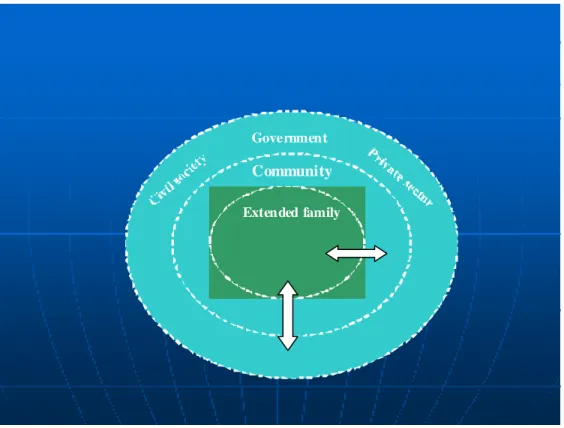
development, and that emphasise that actors at different levels affect children’s well-being2 (see Figure 13). According to this model, children’s protection and healthy development depend critically on the care and protection provided by caretakers – typically, family and extended family. However, families’ ability to provide care and protection for children depends on having a secure, protective environment, and access to child and family supports at the community level. The community is a crucial source of potential support, since it includes friends, neighbours, traditional leaders, elders, teachers, youth groups, religious leaders, and others who provide valuable care and protection. Also, communities are key points of intersection between the
1
Consistent with international law, children are defined as people under 18 years of age. 2
Bronfenbrenner (1979). 3
government and civil society. In the community, children typically have their first encounter with state institutions such as schools and clinics, visit places of worship and learn about religious values and institutions, interact with people from the private sector, and encounter police and other agents of legal and justice systems. To provide adequate protection for children and families, however, communities need wider support organised by the government, which bears the primary responsibility for children’s protection and well-being. Government actors and institutions are obliged to provide for security, maintain law and order, and develop
child-friendly services, regulations, and policies that promote children’s protection and well-being.
Community Community
Household Child Community
Extended family Government
Figure 1. Different levels of protection in a national system of child protection4
As this model suggests, it is important to develop effective child protection systems that include interconnected protective mechanisms at different social levels. Ideally, child protection systems bring together formal, statutory elements and non-statutory, or non-formal elements in a comprehensive, coordinated manner.
Community mechanisms are an essential component of wider child protection systems. Strategically, community level mechanisms, such as child protection committees, are useful in part because they interconnect different levels of national child protection systems. The strengthening of community-level mechanisms of child protection can be an important step in developing effective national child protection systems. At the same time, community-level
4
Note that the concentric circles represent different levels and do not imply that children have direct contact only with the family. The arrows indicate that children interact directly with community members, and there is also bidirectional interaction across different levels of the system.
mechanisms of child protection draw considerable support from societal structures and mechanisms, and from family and kinship structures and mechanisms. In fact, the impact of community mechanisms depends on how well they link with, support, and derive support from mechanisms at other levels, such as those of the family and the national government.
1.2 The rationale for community-based child protection groups
Among the most widely used community mechanisms for child protection are community-based child protection groups – often called ‘child protection committees’, ‘child welfare committees’, and ‘child protection networks’, among other terms. The groups vary considerably in regard to their formation, composition, roles and responsibilities, and mode of functioning. Not all of these groups focus solely on child protection issues, and some do not call their work ‘child protection’. Nevertheless, for the purposes of this review, they are referred to collectively as community-based child protection groups.
The main rationale for developing such community groups is that, in many contexts, local and national governments are unable or unwilling to fulfil their obligations to protect children and fulfil children’s rights. For example, following an armed conflict that had divided a country, the government may lack the presence or capacity in many areas that is needed to protect children. Also, community groups are a means of changing social norms and values, some of which may harm children. In collectivist societies in particular, this process requires collective dialogue, reflection, and decision making.
In addition, community-based child protection groups are seen as a low-cost way of reaching large numbers of children, though in less depth than, for example, a family-oriented or
individually oriented casework approach. The provision of support on a wide scale is made possible by building horizontal connections among community-based child protection groups, and vertical connections with district-level and national-level mechanisms, both formal and non-formal. A significant advantage of community groups is that communities are natural units for collective planning and action, which community groups can help to mobilise. Furthermore, community groups can draw on the community resources, helpers, and practices that potentially can support child protection. Proponents point out that by engaging communities’ sense of agency, their values, and their own human, physical and cultural resources, it is possible to mobilize communities for child protection and to create contextually appropriate, sustainable supports that outlive the life of externally funded projects. This view is embodied in the current movement in high-income countries toward community-based responses that complement statutory responses.5
It is important to note, however, that external agencies do not always follow a careful rationale in supporting the formation and mobilization of community-based child protection groups. The facilitation of community-based child protection groups has become a reflex in many settings, particularly in areas affected by armed conflict or displacement. This reflexive approach contradicts the principle that child protection cannot be achieved through a ‘one size fits all’ approach. The reflexive reliance on community-based child protection groups can cause
5
harm by undermining already existing child protection supports. In addition, the reflexive facilitation of large numbers of community-based child protection groups may create parallel systems that undermine the development of effective national child protection systems.
Effective child protection mechanisms should be contextually appropriate and adapted to the cultural, economic, social, historic, and political specificities of the situation. It is important to be deliberate and careful in supporting community-based child protection groups, which are
appropriate when assessment data have indicated that they are warranted, when communities have agreed to their usefulness, and when they can be implemented well and in ways that minimise harm.
1.3 The lack of a strong evidence base
A fundamental assumption underlying support for community-based child protection groups is that these groups are an effective mechanism for protecting children. The enshrinement of such groups in international guidelines such as the IASC Guidelines on Mental Health and Psychosocial Support in Emergency Settings6 and the Paris Principles7 illustrates this
assumption. Indeed, some evidence indicates that community-based child protection groups have generated positive outcomes for children. Among these are positive changes such as increased capacities of communities to fulfil children’s rights to protection, improved care and support for children affected by HIV and AIDS, improved access to education and birth registration, reduced incidence of trafficking and child labour, and removal of children from prostitution.
In general, though, there is a lack of a strong evidence base underlying the use of community-based child protection groups. The evidence regarding the efficacy of community-community-based child protection groups, and of most other interventions in the child protection sector, does not meet the higher standards of evidence that support interventions in other sectors such as health and water/sanitation, which have well-defined indicators, and in which outcomes for children are more tangible and easily measurable. Rigorous, systematic evaluations of the effectiveness of community-based child protection groups are rare, and many evaluations have struggled even to develop appropriate indicators and measures. This situation may be due in part to the high levels of complexity associated with child protection issues, the challenges of developing appropriate measures of child protection, and the difficulties in collecting hard numbers in situations such as war zones, and in regard to issues such as family violence, which are a source of shame and stigma.
Despite these challenges, the collection of rigorous evidence about the effectiveness, cost, scalability, and sustainability of interventions is essential if the field of child protection is to develop and attract the resources needed to address child protection issues. The lack of systematic evidence for the effectiveness of community-based child protection groups
demonstrates a low standard of humanitarian accountability, and makes it very difficult to define effective practices or to give appropriate guidance to practitioners. Community-based child protection groups have the potential to become essential components of a national child
6
IASC Guidelines (2007). 7
protection system. The fulfilment of this potential, however, requires having strong evidence that they are effective, scalable, cost-effective, and sustainable.
A stronger evidence base is needed also for purposes of building inter-agency standards of practice and harmonising supports at national and international levels. At present, there are no inter-agency, consensus standards regarding community-based child protection groups. Agencies take many different approaches in organising, developing, and supporting community-based child protection groups. This diversity is potentially valuable in enabling learning and contextual adaptation. However, the proliferation of diverse approaches without inter-agency guidance can lead to harmful practices, such as the activation of poorly trained anti-trafficking committees that deprive children of their legitimate freedom of movement. In addition, the proliferation of
diverse, sometimes conflicting approaches fits no strategic purpose, wastes precious resources, and creates conflict and confusion. For example, some agencies offer community members stipends or even salaries for their work with community-based child protection groups. Other agencies do not provide stipends or salaries, out of concern that such practices undermine the spirit of volunteerism. When people from a village where external support is not provided learn from neighbouring villages that people doing the same tasks are being paid, the stage is set for jealousies and the disruption of valuable child protection work. To mature, the child protection sector needs a stronger evidence base that enables inter-agency consensus on effective practice, and that serves as a foundation for good practice guidelines that harmonise diverse child
protection efforts.
Concerns about fund raising and policy also motivate the desire for a stronger evidence base regarding community-based child protection groups. An important question is whether the child protection sector has the systematic evidence that is needed to make the case to donors and policy makers for (a) assigning a high priority to child protection issues, and (b) supporting the child protection interventions that will have the greatest positive outcomes for children. Many practitioners believe that there is a need for increased funding to support children’s protection and well-being, and that child protection should be a higher priority on donors’ and policy makers’ agendas. It is difficult, however, to make the case to policy makers and donors for additional funding and higher prioritisation with the absence of compelling evidence that child protection interventions yield tangible, meaningful outcomes for children. In addition, the fact that the child protection sector receives a lower percentage of actual funding for Consolidated Appeal Proposals in emergencies than do other sectors8, suggests the urgent need to strengthen the entire sector by building an improved evidence base regarding its most widely used
interventions.
In light of these and other concerns, it is appropriate to step back and take stock of what we are learning about community-based child protection groups. This evaluation synthesis, which systematically reviews existing documentation on community-based child protection groups, is undertaken in a spirit of mutual learning and systematic evaluation of our efforts. Through this process we aim to raise the standard of evidence in the child protection sector, and to strengthen practice and policy in regard to at-risk children.
8
2. Overview of the review
The aim of this evaluation synthesis is to review, analyse, and summarise the available global evidence on community-based child protection groups. Intended as a first step in addressing the evidence gap discussed above, it seeks to identify the minimum preconditions that are required in order to make a community-based approach to child protection successful, sustainable, and scalable. It is conceptualised as part of a drive toward inter-agency learning that will lead to greater consensus on – and harmonisation of – effective approaches to community mobilisation and child protection.
The primary agencies that guided the review are the Displaced Children and Orphans Fund (DCOF) of USAID, Oak Foundation, PULIH, Save the Children, UNICEF, and World Vision. Representative(s) of each of these agencies comprise the Inter-Agency Reference Group that conceptualised and guided the review, working closely with Save the Children, the lead agency that oversaw the review. UNICEF’s West and Central Africa Regional Office (WCARO)
provided the main funding with an eye toward using what is learned to guide its regional strategy of developing national child protection systems, and offering guidance to country offices on how to support effective community-based child protection mechanisms.
The review is part of a two-phase process. As explained below, Phase 1 examines the evidence currently available from published and unpublished evaluations of the work of community-based child protection groups. The learning from Phase 1 will provide valuable inputs into Phase 2, which will include field-based research in numerous countries (see Section 7.3). Broadly, this research aims to develop more rigorous evaluations, learn about indigenous child protection mechanisms, learn about how to support formal and non-formal child protection systems, and promote inter-agency learning about how to strengthen practice.
2.1 Terms of Reference
This review focuses specifically on community-based child protection groups, since these are widely used as front-line child protection supports and are seen by many practitioners as useful in diverse contexts. These groups have diverse names, such as child protection committees, child welfare committees, child protection networks, local anti-trafficking groups, orphans and
vulnerable children committees, and community care groups, among others. For the purpose of this review, community-based child protection groups are defined as a collection of people, often volunteers, who aim to ensure the protection and well-being of children in a village, urban neighbourhood or other community – for example, an IDP camp or temporary settlement. By definition, these groups operate at the grassroots or district level, as opposed to a national level. It would be an impossible task to review in a relatively short time the evidence pertaining to all child protection interventions in international humanitarian and development settings. For purposes of manageability, the review focused on community-based child protection groups but did not address the full spectrum of important child protection interventions9 that are currently being implemented in communities, and at regional, national, and international levels.
9
Unless child-focused community groups were directly involved, the review did not cover agency-led child
As outlined in the Terms of Reference (Annex A), the objectives of this review are to: 1. Provide a broad mapping of the scale and coverage of community-based child protection
groups, including those supported by external agencies and governments, and those that are community-led;
2. Document common models and approaches used by agencies to establish, support or promote child protection mechanisms, including defining roles and responsibilities of group members and training support;
3. Document common roles, responsibilities and the key activities of community groups; 4. Assess the strength and quality of the evidence base for community-based child
protection groups, and to identify critical gaps in knowledge;
5. Synthesise the available global evidence on the impact, reach and effectiveness of
community-based child protection groups in different contexts, including emergency and non-emergency settings (crisis/emergency, early recovery and longer term development); 6. Provide a broad review of lessons on community mobilization that can be drawn from
other sectors, in particular health and HIV and AIDS; and
7. Inform the second phase field-based research, including the prioritisation of research questions, geographic scope and methodology.
As a secondary objective, the process of undertaking the evaluation synthesis will help to
identify national and international organisations that are engaged in supporting community-based child protection groups that may, in turn, become partners in Phase 2.
A multitude of questions with regard to community-based child protection groups merit
investigation. For purposes of manageability, the review focused on the following key questions, recognising that complete answers may not be possible with the information available:
1. What evidence is available on the impact of community-based child protection groups on protecting children from abuse, neglect, violence and exploitation?
2. What are the factors and prerequisite conditions associated with successful impact of these community groups? To what extent are these factors replicable in other
contexts and settings?
3. What are the different approaches/models that are taken to mobilizing communities for child protection, and how do these approaches affect the impact on children? 4. What are the gaps or weaknesses in current approaches/models of community-based
child protection groups? What can we learn from these weaknesses? How have these weaknesses been addressed and overcome in practice?
5. What are common mandates, roles and responsibilities of groups? What type of support do communities receive to carry out their duties? Are expectations realistic and appropriate?
non-formal education, the release and integration of formerly recruited children, birth registration, mitigation and prevention of gender-based violence, support for children living and/or working on the streets, ending
6. What are the factors associated with sustainability of community-based child protection groups, including transition for those established as part of an emergency response?
7. What are the costs associated with supporting and mobilizing community-based structures? What are the factors associated with scaling up community-based child protection groups to cover the whole (or large parts of the) country?
8. Are there any lessons that can be drawn for the child protection sector from
experiences of community-based mechanisms in other sectors, particularly health and HIV and AIDS? What are the lessons common across all sectors, and those specific to child protection?
The two main outputs for this review are a review report, and a description and analysis of each of the reviewed documents, as outlined below.
2.2 Methodology
The published literature on community-based child protection groups in humanitarian and development contexts is too small a base on which to conduct a global review. Because much of the documentation on community-based child protection groups consists of unpublished
programme evaluation reports conducted or contracted by implementing agencies, this review concentrated mainly on this grey literature. Although many child protection programmes go undocumented, the grey literature contains sufficient numerical, contextual, and geographic diversity to allow a broadly representative look at the work being done on community-based child protection groups.
Since this is the first global review of its kind, the review took a broad approach, and sought to learn across areas that are often regarded as different sectors. The boundaries of the term ‘child protection’ have not been defined precisely, yet ought to include different areas of work. Because of the systemic nature of child protection threats, many child protection practitioners have addressed an array of issues pertaining to abuse, exploitation, neglect, and violence. In related areas, practitioners address the risks that are associated with HIV and AIDS by facilitating community-based care and protection of orphans and other vulnerable children, although they may not refer to their work as ‘child protection’. To a large extent, the differences of language and approach reflect different agency mandates, and also the priorities of different donors. However, it is important to keep these agency-, sector-, and donor-defined distinctions in perspective. When a child’s life is viewed as a whole, such distinctions have little value.
Believing that it is best to take a holistic approach and to regard these diverse streams of work as complementary and worthy of consideration as a whole, this study included the work of all community-based child protection groups that address children’s protection and well-being. To enable learning across the various types of child-focused work, the review included numerous reviews from the health sector that examine community-based groups and community mobilization. To ensure that lessons learned from the published literature are included, the Reference Group decided to conduct a broad search of the social science literature, the main part of which UNICEF facilitated using the EBSCO database.
2.2.1 Document selection
The review proceeded in five stages, with the early stages ensuring an objective, criterion-based process designed to minimise biases such as preference for particular agencies, authors, regions, or approaches. At the first stage, the Inter-Agency Reference Group established broad inclusion criteria to aid the inter-agency group in deciding which documents to search for and submit for review. It was decided to include only:
• Documents that are evaluations, documentations or reviews. These could be broader reviews across several countries, as well as evaluations of particular projects within a single country. Excluded were manuals, tool kits, ‘how to’ guides, and general monitoring reports or programme descriptions with no evaluation.
• English, Spanish, and French language documents. • Documents written in the past 10 years.
Using these parameters, the Reference Group members collected documents from many different offices of their own agencies and other agencies, and forwarded selected documents to the lead consultant.
In Stage Two, the review team used specific inclusion/exclusion criteria to select which of the received documents would undergo full review. The purpose of this stage was to filter the
documents received to include only the most relevant, reliable and appropriate documents in the full review. To keep the focus on community-based child protection groups, the full review covered:
• Groups at the community and district levels, but excluded groups at the national level. • Groups that are focused on children’s (under 18 years) protection issues, excluding
groups focused on adult protection issues only.
• Groups whose role consists wholly – or in part – caring for and protecting children, and supporting broader well-being outcomes for children. This includes multi-purpose groups supporting birth registration, access to education, access and quality health care,
supporting child-headed households, and providing counselling and mediation, among others.
• Community-based child protection approaches that involve one or two community volunteers (e.g., focal points for GBV), as well as approaches that are based on larger community groups.
In applying these criteria, the review falls on the side of inclusivity. For example, the last criterion listed above was stretched to include projects in which there were neither focal points nor well-defined groups, but collections of community members who were influencing their communities on issues such as GBV. Similarly, although the review was designed to focus on humanitarian and development contexts in low- and middle-income countries, it seemed appropriate to include in the review selected published articles that surfaced in the EBSCO search and in related, published sources that were pertinent for conceptual and/or empirical reasons, even though most papers came from higher-income countries. Most of these studies came from the disciplines of social work, sociology, anthropology, and community psychology.
The date restrictions were relaxed when an important programme surfaced that was outside the time restrictions, although this happened rarely.
Overall, this review explored mostly externally supported community-based child protection groups. However, there is concern among child protection practitioners that externally driven groups may not build adequately on supports, resources and traditions that are already present within a community, and may even undermine these supports. Therefore, this review also explored indigenous mechanisms and groups where this information was available.
2.2.2 Document review
Stage Three consisted of a full review of each article selected for inclusion. To avoid any sense of hierarchy or preference, each document that had been selected for review was assigned on a random basis. To guide and standardise the review, a matrix (see Annex B) was completed for each document in the review set. The matrix included five categories of information: (1) Document description (e.g., title, source, language, publication status, project name, intervention context);
(2) Description and analysis of the community-based child protection group or groups (e.g., processes of group formation and participant selection, form, functions and role, resourcing (training, material, financial), activities, and linkages with formal and non-formal child protection systems);
(3) Evaluation methodology (e.g., design, qualitative and/or quantitative methods used, kind of outcomes measures used);
(4) Key findings/lessons (e.g., demonstrated outcomes (positive or negative) on children and communities, prerequisite factors and conditions for successful impact, effects of the mode of community engagement, sustainability); and
(5) Comments (e.g., on quality of methodology, cautions in interpreting data).
A key item in the matrix is the process through which groups are formed (termed the
formation process), which many practitioners believe is of fundamental importance in achieving contextually appropriate, effective, sustainable child protection. In analysing the formation process, the review used as a guide a four-category typology, developed as part of the
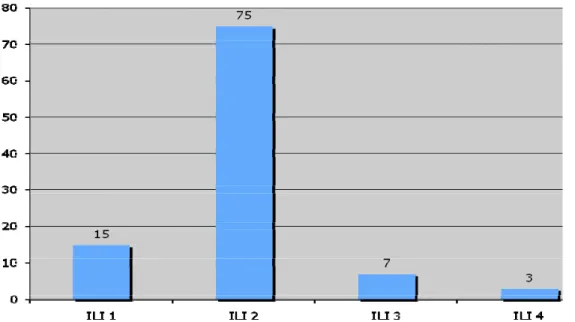
Interagency Learning Initiative (ILI)10. Summarised in the box below and shown in full in Annex C, the typology outlines four different approaches through which outside agencies engage with, and relate to, communities.
10
A typology of approaches for engaging with communities Category 1: Direct implementation by agency: the agency is a service provider, and community members are beneficiaries.
Category 2: Community involvement in agency initiative: the agency is a promoter of its own initiative, a planner and a trainer, and community members are volunteers and beneficiaries.
Category 3: Community-owned and managed activities mobilized by external agency: the agency is a catalyst, capacity builder, a facilitator of linkages, and a funder after community ownership has developed. The community members are analysts, planners, implementers, assessors, and beneficiaries.
Category 4: Community-owned and managed activities initiated from within the community: the agency is a capacity builder and funder, and community members are analysts, planners, implementers, assessors, and beneficiaries.
Preliminary findings based on the ILI typology11 indicated that these approaches have divergent implications for the effectiveness, cost and sustainability of humanitarian and development projects. Although the typology was not developed specifically in regard to work on child protection, it was included here since it seemed to be a potentially useful analytic tool that captures ideas about community mobilization, participation, human agency, and roles that resonate with the thinking of many child protection practitioners.
It is important to note, however, that these approaches are not ordered in a hierarchy
according to preference. The approach that is most appropriate varies according to the context. For example, in the refugee camps in Goma following the 1994 Rwandan genocide, the
Genocidaires’ control of the camps made it dangerous and inappropriate to use the highly
participatory approaches found in categories 3 and 4. In most contexts, particularly those that are relatively stable and where there are local groups and partners who already engage in
humanitarian support and development, it may be highly appropriate to use category 3 and category 4 approaches. In acute emergencies where saving lives is the top priority, it may be appropriate to use category 1 approaches to deliver services such as vaccinations.
A method of cross checking, reflection, dialogue, and revision was used whenever possible to ensure consistency across reviewers in regard to how they completed the matrices. For the English documents, two reviewers (Wessells & Kostelny) each prepared matrix entries independently for several documents in the review set. Early in the review process, they commented on each other’s matrices, asked questions, checked their categorisations for consistency, and discussed how to best capture the richness and complexity of documents that often exceeded 70 pages on a single matrix page. Although it was not possible to develop a more elaborate coding scheme and make quantitative estimates of inter-rater reliability, they felt that
11
Benham, N (2008). Agencies, Communities and Children. A Report of the Interagency Learning Initiative: Engaging Communities for Children’s Well-being. Interagency Learning Initiative.
they had achieved an appropriate standard of consistency. Next, working independently, they each reviewed approximately half the documents in the review set. Each reviewer read randomly selected items in order to avoid biases and inconsistencies that might arise had one read, for example, only papers from Asia or a particular agency. Subsequently, the lead consultant (Wessells) reviewed both the matrices and the papers that had been reviewed by Kostelny, making any necessary revisions. Significant effort was directed to keeping each matrix entry to one page in order to enhance readability. For the documents in Spanish and French, the initial reviewers were afforded greater flexibility in length of matrix entry and in what they included in the matrix, since it was assumed that the matrix entries in English would be the sole source of information on those documents for many English speakers.
2.2.3 Analysis and synthesis
Initially, it had been hoped that there would emerge a cohort of rigorous evaluation studies using sophisticated designs, robust outcome measures, and contextually appropriate
interventions. The plan had been to use the data from these to perform a meta-analysis of the impact on children’s protection and well-being of different factors, such as the level of community engagement and ownership of the process of protecting and caring for at-risk children. However, no such evidence base was found, despite the large number of documents reviewed. This necessitated a mode of analysis that is inherently more impressionistic and subject to possible biases (for further discussion, see Section 2.3). Nevertheless, clear patterns and common themes were visible.
In Stage Four, the lead consultant sifted through the matrices, working in an inductive
manner. He extracted recurrent themes; areas of convergence and divergence of ideas, practices, and findings; and significant gaps. The recurrent themes and areas of convergence were assigned names in accordance with widely used terms and ideas in the document set. These ideas
comprised ‘working hypotheses’ such as ‘Community-owned action to support vulnerable children is more likely to be sustainable than actions directed and conducted by outside
agencies’. The working hypotheses embodied a mixture of promising practices and potentially harmful practices. An example of the latter was the working hypothesis that ‘Excessive targeting of a particular category of vulnerable children leads to jealousies and social divisions’. Using the working hypotheses, the lead consultant then inquired further into the matrices and the document set, with an eye toward obtaining confirming or disconfirming evidence.
To avoid the well-known confirmation bias, the reviewers made deliberate efforts to test assumptions that are prominent in the field of child protection, and that they – themselves – hold. Examples are the assumptions that child participation promotes better outcomes for children, and that leaders’ support enables effective work by community-based child protection groups.
Throughout the process, a self-critical, reflective stance was taken to guard against the influence of personal biases and preconceptions. Testing of ideas with other members of the review team was also used as a means of identifying and reducing bias. Just past the mid-point in the review, preliminary ideas about numerous working hypotheses were shared in a teleconference with Reference Group members, whose feedback and questions led to refinements in the analysis process, and encouraged deeper probing into particular issues.
An important part of identifying recurrent themes and areas of convergence was attention to different areas of work, particularly the HIV and AIDS and health areas. Divergent approaches and practices were not regarded as problematic, but as sources of comparison and potential learning. For example, if some programmes used an ILI category 2 approach to community engagement, whereas others used a category 3 or 4 approach to community engagement, an effort was made to discern broad differences in outcomes for children and for sustainability. Where similar interventions yielded divergent results, an effort was made to identify possible causes of the divergence. If the causes could not be identified, a note was made that the reasons for the divergence could not be determined using the current information, and that additional research was warranted.
Throughout Stage Four, the review team scanned for programmes that might be good candidates to examine at field level in the next phase of the project. Possible candidates might include programmes or engaged communities that used promising practices12 that demonstrated positive outcomes for vulnerable children. Since much can be learned from one’s failures, candidate programmes might also include programmes that failed to support children, or that caused unforeseen harm. However, it was also recognised that Phase 2 of the project might explore programmes that had not been included in Phase 1.
2.2.4 Follow up
In Stage Five, the review team made follow-up telephone calls to a limited number of field practitioners in order to learn more about the candidate programmes that had been identified. The main purpose was to identify programmes or sites that are most ‘ripe’ for field work, and that could yield the greatest value in Phase 2 of the project. Also, the interviews, which were made possible by Reference Group members, served to fill in information gaps in the written
documentation. Inevitably, a review such as this raises more questions than it answers. The follow-up discussions with experienced practitioners provided a venue for probing into these questions and various working hypotheses that had emerged earlier, and hence offered another means of learning from different perspectives and identifying possible biases.
2.3 Limitations of the review
In humanitarian and development settings, it is notoriously difficult to draw firm conclusions about impact, since changes that appear to be due to a particular intervention may in fact have resulted from wider political and economic changes, or may be due to other interventions in a fluid environment. The best means of overcoming this challenge is to collect robust, replicable evidence from diverse sources and contexts that suggest that a particular intervention is effective, scalable, sustainable, and cost effective. Unfortunately, the child protection sector lacks such an evidence base.
A significant limitation of this review is the lack of rigorous evidence regarding community-based child protection groups. A major finding of this review, to be discussed further below (see
12
Promising practices are those for which evidence suggests that the intervention has positive, sustained outcomes for children. It contrasts with proven practices, which meet a higher standard of evidence that permits causal inferences about the efficacy of the intervention, and that reflects research in multiple contexts by different agencies.
Section 4.1), is the very low standard of evidence in this important area of practice. The absence of a strong evidence base restricts severely one’s ability to make conclusions with real
confidence about effectiveness, cost, scalability, sustainability or other aspects of child protection groups that might be examined. Of necessity, this review is largely impressionistic and based primarily on anecdotal evidence, and the analysis process may have reflected various biases, although as explained above, numerous steps were taken to minimise these. Hence, the findings, lessons learned, and recommendations from this review are best regarded as provisional and in need of additional research. As is true throughout the field of child protection, few things can be said with certainty.
A second significant limitation is the emphasis on externally initiated or supported
community-based child protection groups. Although this emphasis is justifiable in light of the widespread use of externally facilitated groups, and the limited availability of studies regarding the effectiveness of locally initiated activities to benefit children, it limited learning about indigenous mechanisms and systems of child protection at community level. As will become evident later in the report, this is a significant limitation, yet one that can possibly be addressed in Phase 2.
Third, it is inherently difficult to isolate the specific effects of a community-based child protection group, which is typically used in combination with various other intervention approaches such as children’s clubs, non-formal or formal education, and women’s groups. In addition, these groups usually link with other protection mechanisms or groups at different levels. Moreover, the agency that facilitates the community-based child protection group typically runs other programmes concurrently in other sectors, such as health and water and sanitation. Most evaluation reports included in this review made little or no effort to identify this web of other supports that may have influenced the results, making it very difficult to attribute, with confidence, positive or negative effects to community-based child protection groups. The review is also more limited in its geographic scope than had been hoped. Although concerted effort was made to identify useful reviews from all regions, the review succeeded in obtaining large numbers of reports from Asia and Africa, but not from Latin America or East and Central Europe. Despite efforts to be geographically inclusive, this geography gap makes the review less truly global than it had aspired to be.
The methodology and the limited time frame of the review also imposed significant limits. The primary language for the review was English, and although care was taken to invite review of documents in French and Spanish, there were only a small number of non-English documents received or reviewed. Working in dominant, colonial languages to begin with makes it difficult to include the valuable inputs and perspectives from Arabic-speaking countries, and from myriad countries in which most people do not speak English, French, or Spanish. Also, many of the evaluation reports selected for review contained relatively little information about the specifics of programme design and implementation, making it difficult to interpret the results. Most documents provided little information about the exact roles and responsibilities of the
community-based child protection groups. Because of donor imposed restrictions on the time frame and resourcing of the review, it was not possible to contact each programme reviewed to obtain more complete information. The short time frame for the study limited the review team’s
ability to do the more comprehensive review of the programmes that would have been ideal.
Hopefully, the latter limitations may be offset partially by the follow-up process on selected programmes in Phase 2.
The review also faced significant challenges of definition; even the term ‘child protection’ lacks a universally agreed definition and may, for different agencies, have divergent connections with
children’s rights. For example, some agencies view child protection as the response to – and
prevention of – violations of children’s protection rights; that is, to be free of abuse, exploitation, and violence. Other agencies, however, view the realisation of children’s wider rights as part of the work on child protection. The distinction between child protection and work to realise the wider rights of children is discussed further in Sections 4.2.1 and 6.4. In addition, some of the reviewed community mechanisms conceptualised their work not as child protection, but as meeting children’s needs or promoting children’s well-being. Terminology throughout this evolving field is fraught with complexities. For example, the term ‘formal systems’ of child protection often refers to statutory, government-mandated and/or run
systems, whereas ‘non-formal systems’ of child protection typically refers to traditional and other civil society structures, mechanisms, and processes of child protection. Yet chiefs in rural African villages are part of highly formalised, traditional systems of governance, even if they are not part of the state apparatus. To attempt to resolve these and other complexities of definition would be
premature here and is left, as part of the process of maturation, for the field.
The review had planned to consider costs alongside issues of effectiveness, scalability, and sustainability. However, only three reviewed reports contained detailed cost information.13 This constitutes a significant gap in the evidence base.
Complexities of ‘community’
The term ‘community’ obscures many complexities, not all of which could be analysed in this review.
To begin with, the term ‘community’ has been defined in many different ways. Geographical definitions emphasise that a community is a group of people living in proximity within defined borders such as a village or neighbourhood. Social psychological definitions emphasise that a
community is defined less by presence in a particular physical space than by real or imagined commonalities of identity, aspiration, and/or values. Sociological and anthropological definitions may emphasise commonalities of culture, kinship, religious affinity, social structure, and values, together with living in a particular place.
The complexity of communities is evident in urban settings, where people from different ethnic and other groups may live side by side, yet have little affinity or feeling of belonging to a single community. In such a context, there may be significant conflict between groups, making it more appropriate to form multiple child-focused groups for different ethnic groups.
Within communities, there are important differences in status, wealth, and power. In fact, the term ‘community’ often implies a level of homogeneity that does not exist. A community frequently consists of multiple sub-groups that differ according to religion, socio-economic status, and ethnicity, and some groups may wield much more power and influence than others do. In such contexts, communities may decide to establish child-focused groups that reproduce the inequities that already exist within the community. Even if the groups include members of different sub-groups, their participation may be tokenistic and their influence may be limited.
Ideally, this review would have analysed how community was defined in different projects, how the formation of child-focused groups aligned with the
characteristics of the communities, and how these processes influenced the effectiveness and sustainability of child-focused groups. A major limitation was that the reviewed documents did not provide the level of detail needed to perform such analyses.
13
3. The document set
A total of 265 documents were received as possible candidates for review. Of these received documents, 95% were in English, and the rest were in Spanish or French.
3.1 Documents not reviewed
Of the submitted documents, 105 did not meet the criteria for inclusion in the full review, for various reasons. Most were programme descriptions without any evaluation or training manuals, programme reviews that did not include community-based child protection groups, and
duplicates of documents already selected for review. Although these documents were not
included in the full review, they were consulted, since they offered valuable insights on the state of child protection practice and on the wider systems of child protection.
3.2 Reviewed documents
The set of 160 reviewed documents appears in Annex D. This set includes three sub-groups: (1) 130 evaluation reports or reviews of community-based child protection groups, which will be referred to collectively as the primary review set; (2) four reviews from the health sector; and (3) 26 published papers obtained from the EBSCO social sciences database or other social science literature.
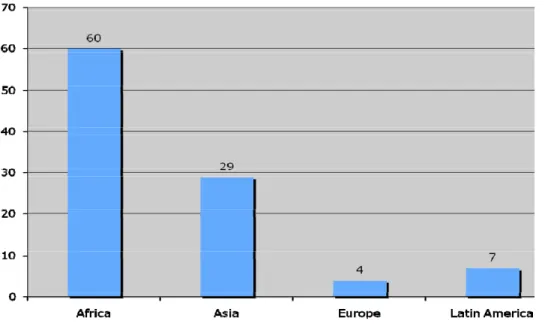
Since the primary review set is the main source of data and lessons learned for this review, it is instructive to consider its composition by geography, context, and technical area. Of the 130 documents, 117 were in English, eight were in Spanish, and five were in French. Although this set is undoubtedly much smaller than the number of programmes that organise or work with community-based child protection groups, its size and diversity provide a broad picture of the work in this area. Indeed, the reports span 60 countries (see Annex E), and embody the work of many different agencies.
Most reports came from Africa and Asia, with a much smaller number coming from Central and Eastern Europe and Latin America (Figure 2). It is unclear why the documents came primarily from Africa and Asia, particularly since global agencies such as UNICEF invited submissions worldwide, and the Reference Group members attempted to bring in different groups and regions. Perhaps the bulk of work on community-based child protection groups is being conducted in Africa and Asia, where government presence, capacity, or resources are more limited, making reliance on community groups an attractive option. More likely, barriers of language and access impeded the collection of documents from other regions.
Figure 2. The percentage of papers in the primary review set from different regions
The documents in the primary review set were sorted into emergency, transition, and
development categories, in order to illuminate the contextual diversity of community-based child protection groups, and to aid the analysis of whether those groups formed and functioned
differently in divergent contexts. This division was not intended to imply a linear continuum of emergency to development contexts, since situations on the ground often have elements of all three categories. Also, development occurs on an ongoing basis, even as countries cycle in and out of emergencies.
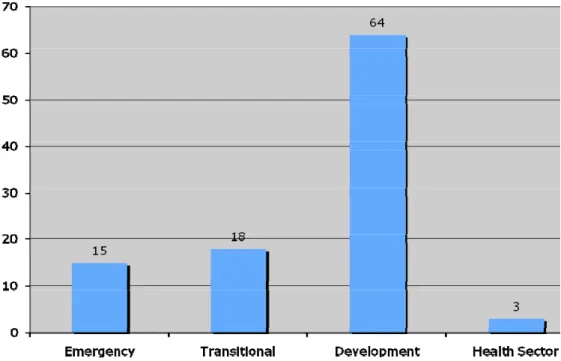
Interestingly, two-thirds of the reviewed evaluation documents pertained to programmes in long-term development contexts, such as Cambodia and South Africa, whereas only 15% pertained to emergency contexts, such as those in DRC, Sri Lanka, and Myanmar (Burma) (Figure 3). The remainder came from transitional contexts, such as those in contemporary Sierra Leone and Liberia. The small percentage of documents concerning emergency contexts is surprising because the organisation of community-based child protection groups is one of the frontline child protection interventions in emergencies worldwide. Conceivably, programmes conducted in development contexts may have been more likely to be documented and evaluated than were emergency programmes. Further, the evaluation reports of emergency programmes, many of which are multi-sectoral, may have included too little information on child protection aspects to have warranted submission for review. Alternatively, agencies may have been
reluctant to submit evaluation reports on emergency programmes, since emergency contexts are so complex and dynamic that even the best-designed efforts often come up short.
Figure 3. The percentage of papers in the primary review set by context
68% of the papers in the primary review set pertained specifically to issues in the wider child protection sector; 29% pertained to HIV and AIDS issues, with a small percentage pertaining to health issues (Figure 4). This extensive representation of work on different issues affords excellent opportunities to learn from different programmes approaches.
4. Key findings
This section presents the main findings based on the analysis and synthesis of the primary review set, and also on the health review papers and the social science literature.
4.1 The state of the evidence base
The state of evidence regarding community-based child protection groups is very weak overall. It can be described as largely anecdotal, impressionistic, unsystematic, and
underdeveloped. Some of the characteristics of the primary review set include: • The vast majority had no baseline measurements.
• 84% of the evaluations used ex-post methods only.
• Only 3% of the evaluations included comparison groups with pre- and post-intervention measures (Figure 5).
• Measures of actual outcomes for children were rare.
• Few measures of household and family well-being were used. • Quantitative data were typically for output or process indicators. • Qualitative data were typically collected on convenience samples. • Methods of analysing data were seldom described.
• Many of the interviews and focus group discussions that comprised the bulk of the evidence were subject to numerous biases, which evaluators seldom mentioned. Despite the weak evidence base, a group of useful findings emerged consistently from the
reviewed documents. In fact, many themes regarding effectiveness, scalability, and sustainability arose frequently and consistently across diverse regions, agencies, and evaluators. Viewed with a critical eye, the emergent themes and consistent findings presented below are potentially useful sources of learning about the current state of practice, and can help guide immediate efforts to improve practice.
The most widely used methods of data collection were qualitative, and consisted mostly of focus group discussions (FGDs) and interviews, yet few evaluation reports presented systematic analysis of these. In addition, the primary review set included very few systematic evaluations that would successfully withstand rigorous peer review. There were no randomised controlled trials of the kind that comprise the gold standard in related areas of work such as psychosocial support14 and in many other humanitarian sectors. In addition, some of the interventions reviewed were found to have significant problems.15
This weak evidence base is also reflected in the published literature. Although the search for published work on community-based child protection groups covered thousands of social science
14
Bolton et al. (2007). 15
journals, it turned up no systematic empirical studies of the effectiveness of community-based child protection groups in low- and middle-income countries.
Figure 5. Percentage of papers in the primary review set by type of evaluation methodology16
Having such a weak evidence base constitutes poor accountability, and impedes efforts to improve practice. It also makes it impossible to draw firm conclusions about which intervention approaches work, and why. Collectively, these concerns recommend caution in interpreting the evidence regarding community-based child protection groups. The findings and lessons reported in this review should be regarded as provisional.
4.2 Functions, forms and activities
Community-based child protection groups were noteworthy for their diversity and
adaptability to different contexts. Functional, reasonably effective groups have been established in many countries, and in fluid, emergency contexts, as well as in transitional and long-term development contexts. They take diverse forms and are called by different names according to factors such as the context, their functions, the aims of the implementers, and the donors’ priorities. Indeed, their diversity, adaptability, and apparent low cost have made these groups an attractive intervention option for many practitioners.
To capture the diverse functions, forms, and activities of community-based child protection groups, it would be useful to create different typologies that categorise groups according to dimensions such as emergency versus non-emergency contexts; the level of development of the affected country, and the resource base available to support the groups; the administrative level (e.g., village, commune or ward, district) of the group; and the extent and quality of linkages
16
This comparison included the 113 papers in the primary review set for which it was possible to make accurate categorisations.
with government and traditional structures. The reviewed documents, however, did not provide the detailed information that is needed to construct such typologies. This may have been because the documents were evaluations, rather than rich descriptions of the groups and their exact functions and activities. Important differences did emerge, however, in regard to (1) child rights committees versus child protection committees, and (2) broad spectrum groups versus focused groups.
4.2.1 Child rights committees versus child protection committees
The differences between these community groups reflected the conceptual distinction between child rights and child protection. Although no universally agreed distinction between child rights and child protection has been achieved, there is increasing consensus that child protection rights – to be free of abuse, exploitation, and violence – are a subset of the wider child rights guaranteed under the UN Convention on the Rights of the Child (CRC). Despite this interrelation of child rights and child protection, a key difference is that work on enabling the realisation of the full array of child rights (e.g., survival rights, development rights, participation rights) is much broader than work on child protection, which focuses on the fulfilment of
children’s specific rights to protection.
Work on child rights and work on child protection overlap partially and complement each other.17 First, because child protection work aims to realise particular rights of children, child protection is therefore part of a comprehensive approach to fulfilling children’s rights. Second, survival rights are a cornerstone of child rights, yet are highly relevant to child protection, since children who lack access to necessities such as food and clean water are at grave risk of harm and exploitation. Third, work on wider child rights helps to create a protective environment, including legislative, regulative, and policy elements, which enables child protection and well-being. For example, the fulfilment of children’s right to education (Article 28 of the CRC) can facilitate children’s protection.18 Also, most child rights groups and child protection groups worked within a rights-based framework that aimed to move beyond charity approaches, and to empower children as well as adults.
With these points of overlap in mind, the review included a small number of child-focused groups that addressed child rights. Predictably, this review identified significant differences of function and activity between community-based child protection groups that addressed child rights, and child-focused groups that addressed child protection. The former, which were typically called child rights committees,19 addressed the full array of child rights issues. Their main activities were to monitor and report violations of children’s rights, to raise public awareness of the full spectrum of children’s rights, and to advocate for the development and implementation of child-friendly laws, regulations, and policies. In general, they did not respond directly to rights abuses by, for example, providing psychosocial support for children whose parents had been killed, or by mediating domestic disputes that harmed children.
17
Matrix Document 158. 18
Kostelny & Wessells (2008); Nicolai and Triplehorn (2003). 19
A child protection committee: roles and responsibilities
In West Bengal, the source of nearly 7% of India’s millions of child labourers, Save the Children UK facilitated the formation of village-level child protection committees. Typically, the committees had 13-20 members, including influential people, parents, school teachers, employers, and representatives of children’s groups. The main roles and responsibilities of the committees were to:
- Raise awareness about child protection issues, particularly trafficking, abuse of children at work places, and use of corporal punishment;
- Take cases of abuse, exploitation or violence to appropriate authorities or facilitate a local solution;
- Provide information about where people should go if they have concerns about a child’s well-being;
- Disseminate information from the formal child protection system to children and others;
- Work as pressure groups for the appropriate implementation of laws and for improved service delivery by the government.
The committees collaborated with police, local government, the social welfare department, and parents, teachers, and children. At village level, they connected with children’s groups that gave children a forum in which to raise their concerns and that in turn sent back to the child protection committees information about trafficking ploys, child marriage, and child abuse.
In the last 3-4 years, the committees have helped over 1200 children to leave work and return to school, and they aided in the arrest of 100 traffickers. Source: Matrix Document 12.
In contrast, child protection committees (also called child welfare committees, child labour committees, or child protection networks, among other names) addressed child protection issues such as recruitment, sexual exploitation, loss of parents or other caretakers, child labour, lack of birth registration, and trafficking. They did not, however, address the full array of children’s rights. In addition, child protection committees typically functioned in a very different manner from that of child rights committees. Typically, child protection committees identified,
responded to, and prevented risks to children’s protection and well-being. To be sure, they monitored and reported violations of protection rights, and they educated people about child rights and conducted advocacy. Yet these were not the central elements of their work. Child protection committees expended greater time and effort in direct response to child protection risks. As outlined below, this work included activities such as aiding the reintegration of formerly recruited children, removing children from dangerous labour and improving working conditions, and providing psychosocial support for survivors of abuse, exploitation, and violence.