*Correspondence to Author:
Bilal Yilmaz
Department of Analytical Chemis-try, Faculty of Pharmacy, Ataturk University, 25240, Erzurum, Turkey
How to cite this article:
Bilal Yilmaz. Determination of pan-toprazole in pharmaceutical prepa-rations by linear sweep, square
wave and differential pulse voltam -metric methods. Journal of Phar-maceutical Research and Reviews, 2017; 1:3.
eSciPub LLC, Houston, TX USA. Website: http://escipub.com/
Bilal Yilmaz, JPRR, 2017; 1:3
Journal of Pharmaceutical Research and Reviews
(
I
SS
N
:2
5
7
6-84
17)
Research Article JPRR (2017) 1:3
Determination of pantoprazole in pharmaceutical preparations
by linear sweep, square wave and differential pulse voltammetric
methods
In this study, simple, fast and reliable cyclic voltammetry (CV), linear sweep voltammetry (LSV), square wave voltammetry
(SWV) and differential pulse voltammetry (DPV) methods were
developed and validated for determination of pantoprazole in pharmaceutical preparations. The proposed methods were based on electrochemical oxidation of pantoprazole at platinum electrode in acetonitrile solution containing 0.1 M LiCIO4. The well-defined oxidation peak was observed at 1.17 V. The calibration curves were linear for pantoprazole at the concentration range of 5-50 µg/mL for LSV, SWV and DPV methods, respectively. Intra- and inter-day precision values for pantoprazole were less than 4.78, and accuracy (relative error) was better than 2.00%. The mean recovery of pantoprazole was 99.9% for pharmaceutical preparations. No interference was found from three tablet excipients at the selected assay conditions. Developed methods in this study are accurate, precise and can be easily applied to Protonex, Pandev and Panref tablets as pharmaceutical preparation.
Keywords: pantoprazole, pharmaceutical preparations, linear
sweep, square wave, differential pulse voltammetric methods
Bilal Yilmaz
Department of Analytical Chemistry, Faculty of Pharmacy, Ataturk University, 25240, Erzurum, Turkey
Introduction
Pantoprazole (Fig. 1), 5-(difluoromethoxy)-2- [(3,4-dimethoxy-2-pyridyl)methylsulfinyl]1H-benzimidazole, is a selective and irreversible third proton pump inhibitor widely used in the treatment of duodenal and gastric ulcers by decreasing the amount of acid produced in the stomach [1,2]. It is highly useful for the relief of symptoms and healing of gastro esophageal reflux disease, peptic ulcer, Helicobacter pylori
infection, and other gastric-related disorders [3].
Figure 1. Chemical structure of pantoprazole
A thorough review of the literature has revealed that several methods have been reported for the determination of pantoprazole alone or in combination in dosage forms and/or plasma. These methods included UV-spectrophotometry [4-7], high-performance liquid chromatography with ultraviolet detection (HPLC-UV) [8-11], high-performance liquid chromatography with mass spectrometry detection (LC-MS) [12-14], capillary electrophoresis [15] and voltammetry [16].
The reported methods were influenced by interference of endogenous substances and potential loss of drugs in the re-extraction procedure and involving lengthy, tedious and time-consuming plasma sample preparation and extraction processes and requiring a sophisticated and expensive instrumentation.
The development of a new method capable of determining drug amount in pharmaceutical dosage forms is important. Electroanalytical techniques have been used for the determination of a wide range of drug compounds with the advantages that there are, in most, instances no need for derivatization
and that these techniques are less sensitive to matrix effects than other analytical techniques. Additionally, application of electrochemistry includes the determination of electrode mechanism. Redox properties of drugs can give insights into their metabolic fate or their in vivo redox processes or pharmacological activity [17]. Despite the analytical importance of the electrochemical behavior and oxidation mechanism of pantoprazole, no report has been published on the voltammetric study of the electrochemical oxidation of pantoprazole in nonaqueous media. It is well known that the experimental and instrumental parameters directly affect the electrochemical process and voltammetric response of drugs. Consequently, it would be interest to investigate the oxidation process of pantoprazole in aprotic media. Therefore, the goal of this work was the development of new LSV, SWV and DPV methods for the direct determination of pantoprazole in pharmaceutical preparations without any time-consuming extraction or evaporation steps prior to drug assay. This paper describes fully validated simple, rapid, selective and sensitive procedures for the determination of pantoprazole employing LSV, SWV and DPV methods the platinum disc electrode. Besides, the methods were successfully applied for the quality control of three commercial pantoprazole tablets form to quantify the drug and to check the formulation content uniformity.
Materials and Methods
Chemicals and reagents
Pantoprazole was obtained from Sigma (Germany). Acetonitrile (Fluka for HPLC analysis) was purified by drying with calcium hyride, followed by distillation from phosphorus pentoxide. After purification in order to eliminate its water content as much as possible, it was kept over molecular sieves. Lithium perchlorate (LiClO4) were purchased from Fluka and used
purchased from the local pharmacy (Erzurum, Turkey).
Electrochemical instrumentation
Electrochemical experiments were performed on a Gamry Potentiostat Interface 1000 controlled with software PHE 200 and PV 220. All measurements were carried out in a single-compartment electrochemical cell with a standard three-electrode arrangement. A platinum disk with an area of 0.72 cm2 and a
platinum wire were used as the working and the counter electrodes, respectively. The working electrode was successively polished with 1.0, 0.3 and 0.05 µm alumina slurries (Buehler) on microcloth pads (Buehler). After each polishing, the electrode was washed with water and sonicated for 10 min in acetonitrile. Then, it was immersed into a hot piranha solution (3:1, H2SO4, 30% H2O2) for 10 min, and rinsed
copiously with water. All potentials were reported versus Ag/AgCl/KCl (3.0 M) reference electrode (BAS Model MF-2078) at room temperature. The electrolyte solutions were degassed with purified nitrogen for 5 min before each experiment and bubbled with nitrogen during the experiment. Operating conditions for SWV were pulse amplitude 25mV, frequency 10 Hz, potential step 4mV; and for DPV were pulse amplitude 50 mV, pulse width 50 ms, scan rate 100 mV/ s.
Preparation of the standard and quality control solutions
The stock standard solution of pantoprazole was prepared in 0.1 M LiClO4/acetonitrile to a
concentration of 100 g/mL. Working standard solutions were prepared from the stock solution. Standard solutions were prepared as 5-50 µg/mL for LSV, SWV and DPV. The quality control (QC) solutions were prepared by adding aliquots of standard working solution of pantoprazole to final concentrations of 7.5, 25 and 45 μg/mL for LSV, SWV and DPV.
Procedure for pharmaceutical preparations
Ten 10 tablets of pantoprazole (Protonex, Pandev or Panref tablet) were accurately
weighed and powdered. An amount of this powder corresponding to one tablet pantoprazole content was weighed and accurately transferred into 100 mL calibrated flask and 50 mL of 0.1 M LiClO4/acetonitrile
was added and then the flask was sonicated to 10 min at room tempature. The flask was filled to volume with 0.1 M LiClO4/acetonitrile. The
resulting solutions in both the cases were filtered through Whatman filter paper no 42 and suitably diluted to get final concentration within the limits of linearity for the respective proposed methods. The drug content of pantoprazole tablets were calculated from the current potential curves.
Data analysis
All statistical calculations were performed with the Statistical Product and Service Solutions (SPSS) for Windows, version 10.0. Correlations were considered statistically significant if calculated P values were 0.05 or less.
Results and discussion
Voltammetric behavior of pantoprazole
The electrochemical behavior of pantoprazole was investigated at the Pt disc electrode in acetonitrile solution containing 0.1 M LiClO4 as the supporting electrolyte by using
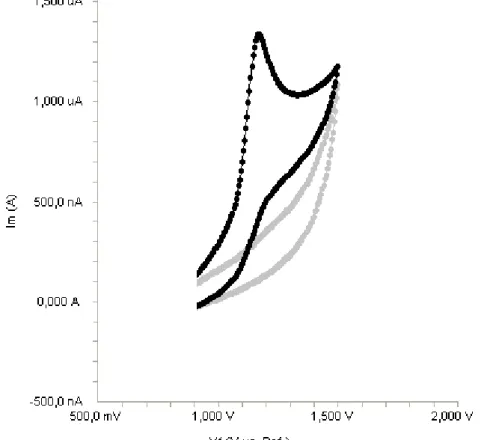
cyclic voltammetry (CV). Fig. 2 shows a typical cyclic voltammogram of 20 μg/mL pantoprazole recorded under these conditions for the scan rate of 0.1 V/s. In the anodic sweep, an oxidation peak is seen at about potential of 1.17 V. Upon reversing the potential scan, no reduction peak corresponding to this oxidation wave is observed, indicating the irreversible nature of the electrode reactions. In order to gain a deeper insight into the voltammetric waves, the effect of scan rate on the anodic peak currents (Im) and peak potentials (Ep) was
Figure 2. Cyclic voltammogram for the oxidation of 20 μg/mL pantoprazole in acetonitrile
containing 0.1 M LiClO4 at Pt disk electrode, scan rate: 0.1 V/s.
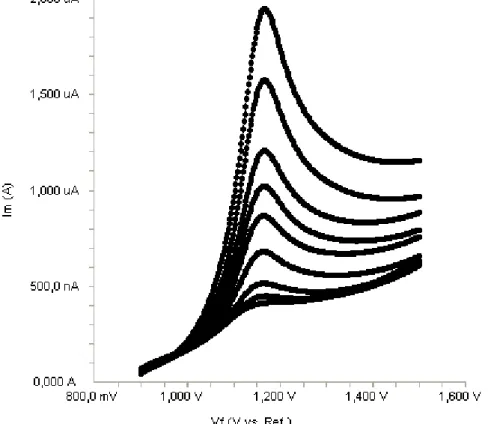
Figure 3. Linear sweep voltammograms for the oxidation of 20 μg/mL pantoprazole in acetonitrile
containing 0.1 M LiClO4 as a function of scan rate.
The representative linear sweep
voltammograms obtained at Pt electrode for 20
dependency experiments show that the peak currents for peak vary linearly with the scan rate (ν) (Figs. 4a,b), which points out the adsorption-controlled process. However, the plots of logarithm of peak currents versus logarithm of scan rates for 20 μg/mL concentration of pantoprazole display straight lines with 0.4229 slope (Fig. 4c), which are close to theoretical value of 0.5 expected for an ideal diffusion-controlled electrode process [18].
log Im-log ν curve is more eligible for this aim,
therefore, a diffusional process for peak should be considered. These results suggest that the redox species are diffusing freely from solution and not precipitating onto the electrode surface. The reason for this behavior may be due to the solubility of the intermediate species in acetonitrile or poor adherence of products on the electrode surface.
Figure 4(a-c). Dependence of peak current on the scan rate (20 μg/mL).
As shown in Fig 3, the oxidation peak potential (Epa) for peaks shift toward more positive
scan rate is described by the following equation [19],
Epa E0'RT /
1
naF
0.78ln
D1/2ks1
0.5lnRT /
1
naF
RT/
1
naF
/2lnand from the variation of peak potential with scan rate αna can be determined, where α is
the transfer coefficient and na is the number of
electrons transferred in the rate determining
step. According to this equation, the plots of the peak potentials versus ln ν for oxidation peak show linear relationship (Fig. 5).
Figure 5. Dependence of anodic peak potentials of voltammetric peak for the oxidation of 20 μg/mL pantoprazole on the scan rate.
The slope indicate the value of αna is 0.75 for
peak. Also, this value obtained indicate the total irreversibility of the electron transfer processes. This result show that the chemical step is a fast following reaction coupled to a charge transfer.
Validation of the method
The validation was carried out by establishing specificity, linearity, accuracy, precision, limit of detection (LOD), limit of quantification (LOQ), recovery, ruggedness and stability according to ICH Q2B recommendations [20].
Specificity
Excipients (magnesium carbonate, mannitol,
crospovidone, calcium stearate,
methylcellulose, polyvidone, titanium dioxide,
ferric oxide, propylene glycol, eudragit, sodium dodecyl sulfate, polysorbate 80 and triethyl citrate) were added to the drug for recovery studies, according to the manufacturer’s batch formulas for 40 mg pantoprazole per tablet. The mean percentage recovery of 25 μg/mL pantoprazole showed no significant excipient interference; thus the procedures were able to assay pantoprazole in the presence of excipients, and hence it can be considered specific.
Linearity
Figure 6. Linear sweep voltammograms for different concentrations of pantoprazole in acetonitrile solution containing 0.1 M LiCIO4 (5, 7.5, 10, 15, 20, 25, 30, 40 and 50 g/mL).
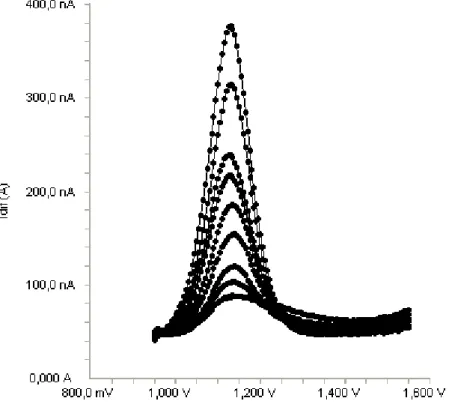
Figure 8. Differential pulse voltammograms for different concentrations of pantoprazole in acetonitrile solution containing 0.1 M LiCIO4 (5, 7.5, 10, 15, 20, 25, 30, 40 and 50 g/mL)
Calibration curves were constructed for pantoprazole standard by plotting the concentration of compound versus peak current responses. The calibration curves were evaluated by its correlation coefficients. The
correlation coefficients (r) of all the calibration curves were consistently greater than 0.99. The linear regression equations were calculated by the least squares method using Microsoft Excel® program and summarized in Table 1.
Table 1. Linearity of pantoprazole
Method Range
(µg/mL)
LR R LOD
(µg/mL)
LOQ
(µg/mL)
LSV 5-50 y=34.884x+173.67 0.9992 1.6 4.8
SWV 5-50 y=23.424x+139.74 0.9992 1.3 3.9
DPV 5-50 y=6.433x+56.25 0.9998 1.2 3.6
a Based on three calibration curves, LR: Linear regression, R: Coefficient of correlation, y: Peak
current, x: Pantoprazole concentration (µg/mL), LOD: Limit of detection, LOQ: Limit of quantification
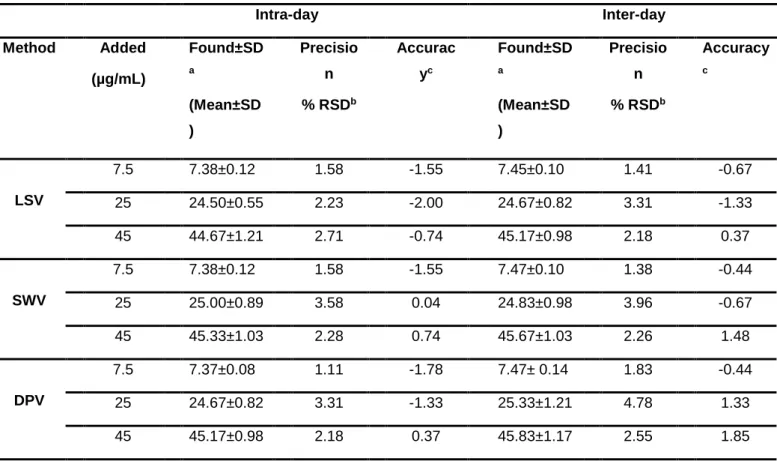
Accuracy and precision
Accuracy of the assay methods were determined for both intra-day and inter-day variations using the six times analysis of the
procedure within a laboratory over a short period of time that was evaluated by assaying the QC samples during the same day. Intermediate precision was assessed by
comparing the assays on different days (2 days). The intra-day accuracy ranged from 1.11% to 3.58% and precision from 1.38% to 4.78% (Table 2).
Table 2. Precision and accuracy of pantoprazole
a SD:Standard deviation of six replicate determinations, b RSD: Relative standard deviation,
Average of six replicate determinations c Accuracy: (%relative error)
(found-added)/addedx100
The results obtained from intermediate precision (inter-day) also indicated a good method precision. All the values were within the acceptance criteria of 4.78%.
Limits of detection (LOD) and quantification (LOQ)
The LOD and LOQ of pantoprazole by the proposed methods were determined using calibration standards. LOD and LOQ values were calculated as 3.3 σ/S and 10 σ/S, respectively, where S is the slope of the calibration curve and σ is the standard deviation of y-intercept of regression equation (n=6) [20]. The LOD and LOQ values of the methods were summarized in Table 1.
Recovery
To determine the accuracy of the LSV, SWV and DPV methods and to study the interference of formulation additives, the recovery was checked as three different concentration levels. Analytical recovery experiments were performed by adding known amount of pure drugs to pre-analyzed samples of commercial tablet forms. The recovery values were calculated by comparing concentration obtained from the spiked samples with actual added concentrations. These values are also listed in Table 3
Intra-day Inter-day
Method Added (µg/mL)
Found±SD a
(Mean±SD )
Precisio n % RSDb
Accurac yc
Found±SD a
(Mean±SD )
Precisio n % RSDb
Accuracy c
LSV
7.5 7.38±0.12 1.58 -1.55 7.45±0.10 1.41 -0.67
25 24.50±0.55 2.23 -2.00 24.67±0.82 3.31 -1.33
45 44.67±1.21 2.71 -0.74 45.17±0.98 2.18 0.37
SWV
7.5 7.38±0.12 1.58 -1.55 7.47±0.10 1.38 -0.44
25 25.00±0.89 3.58 0.04 24.83±0.98 3.96 -0.67
45 45.33±1.03 2.28 0.74 45.67±1.03 2.26 1.48
DPV
7.5 7.37±0.08 1.11 -1.78 7.47± 0.14 1.83 -0.44
25 24.67±0.82 3.31 -1.33 25.33±1.21 4.78 1.33
Table 3. Recovery of pantoprazole in pharmaceutical preparations
Pharmaceutic al preparation
LSV SWV DPV
Added (µg/mL
)
Found ± SD (Mean±SD)
Recovery (%)
RSDa
(%)
Found ± SD (Mean±SD)
Recover y(%)
RSDa
(%)
Found ± SD (Mean±SD)
Recover y (%)
RSDa
(%)
Protonex (25 μg/mL)
5 5.1 ±0.22 102.0 4.31 5.1 ± 0.18 102.0 3.53 5.2 ± 0.21 104.0 4.04
15 14.7 ± 0.34 98.0 2.31 14.8 ± 0.25 98.7 1.69 14.6 ± 0.28 97.3 1.92
35 35.9 ± 1.24 102.6 3.45 35.2 ± 1.67 100.6 4.74 35.4 ± 0.73 101.1 2.06
Pandev (25 μg/mL)
5 5.1 ± 0.18 102.0 3.53 5.2 ± 0.21 104.0 4.04 4.9 ± 0.11 98.0 2.24
15 14.8 ± 0.25 98.7 1.69 14.6 ± 0.28 97.3 1.92 14.9 ± 0.23 99.3 1.54
35 35.2 ± 1.67 100.6 4.74 35.4 ± 0.73 101.1 2.06 35.1 ± 0.93 100.3 2.65
Panref (25 μg/mL)
5 4.8 ± 0.20 96.0 4.17 4.9 ± 0.13 98.0 2.65 4.9 ± 0.13 98.0 2.65
15 14.5 ± 0.29 96.7 2.00 14.8 ± 0.27 98.7 1.82 14.8 ± 0.27 98.7 1.82
35 35.6 ± 1.12 101.7 3.14 35.6 ± 1.02 101.7 2.87 35.6 ± 1.02 101.7 2.87
SD:Standard deviation of six replicate determinations,RSD: Relative standard deviation, aAverage of six replicate determinations
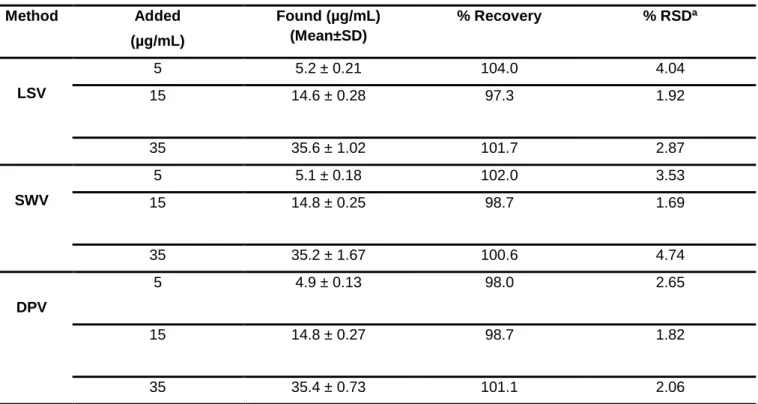
Ruggedness
In this study, the LSV, SWV and DPV determination of pantoprazole were carried out by a different analyst in same instrument with
the same standard (Table 4). The results showed no statistical differences between different operators suggesting that the developed method was rugged.
Table 4. The results of analyses of pantoprazole by a different analysta
Method Added
(µg/mL)
Found (µg/mL) (Mean±SD)
% Recovery % RSDa
LSV
5 5.2 ± 0.21 104.0 4.04
15 14.6 ± 0.28 97.3 1.92
35 35.6 ± 1.02 101.7 2.87
SWV
5 5.1 ± 0.18 102.0 3.53
15 14.8 ± 0.25 98.7 1.69
35 35.2 ± 1.67 100.6 4.74
DPV
5 4.9 ± 0.13 98.0 2.65
15 14.8 ± 0.27 98.7 1.82
35 35.4 ± 0.73 101.1 2.06
Stability
To evaluate the stability of pantoprazole, standard solutions were prepared separately at concentrations covering the low, medium and higher ranges of calibration curve for different temperature and times. These solutions were stored at room temperature, refrigeratory (4 C) and frozen (-20 C) temperature for 24h and 72h. Stability measurements were carried out with LSV, SWV and DPV method. The results
were evaluated comparing these
measurements with those of standards and expressed as percentage deviation and pantoprazole was found as stable at room temperature, 4 and -20 C for at least 72h.
Comparison of methods
Successive cyclic voltammogram of
pantoprazole obtained in acetonitrile solution containing 0.1 M LiClO4 at a scan rate of 100
mV/s are shown in Figure 2. The cyclic voltammogram of 20 μg/mL pantoprazole exhibits a single anodic peak, The anodic peak may be attributed to the irreversible oxidation of the amino group of the pantoprazole molecule being the most easily oxidizable, in accordance with the redox mechanism postulated by Moane et al. [21] and Arranz et al. [22]. Furthermore, a mechanism in which the redox process of pantoprazole occurs to yield dimer compounds, bonding the radical cations formed through the oxidation of the amine group can be proposed [23]. The study of the influence of scan rate shows that the peak current changes linearly with scan rate. The role of adsorption is further supported by the sharp form of the main anodic peak and by the dependence of the peak current on scan rate (v). For diffusion current the plot of log ip as a function of log v should
have a slope of 0.5 and for a purely adsorption current a slope of 1.0 [24]. The regression of log ip vs log v gave a slope value of 0.4229,
indicating that the oxidation current is of diffusional nature. On the other hand, as scan rate was increased from 10 to 1000 mV/s, the
peak potential shifted toward more positive potential as expected for an irreversible oxidation process [25]. The value of αn, product of transfer coefficient and number of electrons transferred in the rate-determining step, was determined from treatment (log i vs E) of the voltammetric curves. The value obtained (0.42) shows the total irreversibility of the electron transfer process. It was also demonstrated by the linear relationship obtained between the peak potential (Ep) and the logarithm of scan rate in the range 10-1000 mV/s. Based on the voltammetric behavior of pantoprazole, a quantitative method was developed. To select the best electrochemical method, the anodic peak obtained by LSV, SWV and DPV were compared with each other. In order to develop a voltammetric method for determination of the pantoprazole, we selected the LSV, SWV and DPV techniques, since the peaks were sharper and better defined at lower concentration of pantoprazole than those obtained by linear sweep voltammetry with a lower background current, resulting in improved resolution. SWV
and DPV are effective and rapid
electroanalytical techniques with well-established advantages, including good discrimination against background currents and low detection and determination limits [26-28].
Voltammetry has been recently proposed as a promising new analytical method for electrochemical detection of drugs. Owing to the high sensitivity, low cost, simplicity of instrumentation and short analysis time voltammetric techniques are important methods for pharmaceutical analysis [29,30].
SWV and DPV methods were applied for the determination of the commercial tablets (Table 3). The results show that high reliability and reproducibility of two methods. The best results were statistically compared using the t-test. At 95% confidence level, the calculated t-values do not exceed the theoretical values (Table 5).
Parameters LSV SWV DPV Reported Method [7]
Mean (recovery %) 100.2 99.8 100.1 100.6
SD 1.214 0.687 1.317 0.67
% RSD 1.212 0.688 1.316 0.66
Variance 1.473 0.472 1.734 -
t-test (2.228)a 0.921 -
F- test (5.1)a 4.05 -
SD: Standard deviation of six replicate determinations, RSD: Relative standard deviation, aTheoretical values, Theoretical values at p=0.05, Ho hypothesis: no statistically significant difference exists between three methods, Ft
>Fc: Ho hypothesis is accepted (P > 0.05)
Therefore, there is no significant difference between SWV and DPV voltammetry methods. At the same time, the results of the proposed SWV and DPV methods were evaluated
statistically as compared with a
spectrophotometric method (Table 5) [7]. According to the results of t - and F-tests, the variances between the methods were found to be insignificant at 95% probability level, indicating that no significant differences exist between the performances of the methods regarding their accuracy and precision.
Conclusion
In this study, the electrochemical behavior of pantoprazole has been studied in nonaqueous media by CV, LSV, SWV and DPV methods. It has concluded that there is a completely diffusion-controlled current process which isn't affected by adsorption phenomenon. Besides,
in the present report, simple, rapid, sensitive, reliable, specific, accurate and precise LSV, SWV and DPV methods for the determination of pantoprazole in pharmaceutical preparations were developed and validated. The method described has been effectively and efficiently used to analyze pantoprazole pharmaceutical tablets without any interference from the pharmaceutical excipients. The voltammetric run time of 1 min allows the analysis of a large number of samples in a short period of time. Therefore, the proposed methods could possibly be applied for the determination of pantoprazole in pharmaceutical samples as well as for quality control laboratories.
Acknowledgments
This study was supported by a Grant from Ataturk University Research Foundation (Project no:2014/35).
References
[1] S.M. Cheer, A. Prakash, D. Faulds, H.M. Lamb, Drugs, 63 (2003) 101
[2] G. Bianchi Porro, M. Lazzaroni, V. Imbesi, F. Montrone, T. Santagada, Digest. Liver Dis. 32 (2000) 201
[3] M. Noubarani, F. Keyhanfar, M. Motevalian, M. Mahmoudian, J. Pharm. Pharm. Sci. 13 (2010) 1
[4] K. Basavaiah, U.R.A. Kumar, Indian J. Chem. Techn. 14 (2007) 611
[5] R.B. Kakde, S.N. Gedam, N.K. Chaudhary, A.G. Barsagade, D. L. Kale, A.V. Kasture, Int. J. Pharm. Res. 1 (2009) 386.
[6] N. Rahman, M. Kashif, Pharmazie, 60 (2005) 197
[7] A.A.M. Moustafa, J. Pharm. Biomed. Anal. 22 (2000) 45.
[8] Q.B. Cass, A.L.G. Degani, N.M. Cassiano, J.J. Pedrazolli, Chromatogr B, 766 (2002) 153.
[10] B.H. Patel, B.N. Suhagia, M.M. Patel, J.R. Patel, Chromatographia, 65 (2007) 743.
[11] K.R. Gupta, R.B. Chawala, S.G. Wadodkar, Orbit. Elect. J. Chem. 2 (2010) 209.
[12] O. Peres, C.H. Oliveira, R.E. Barrientos-Astigarraga, V.M. Rezende, G.P. Mendes, G. De Nucci, Arznei-Forschung, 54 (2004) 314.
[13] B. L. Bhaskara, U.R.A. Kumar, K. Basavaiah, Arab. J. Chem. 4(2) (2011) 163.
[14] Y. Li, M.J. Ding, J. Ma, S. Wang, X.L. Wu, H.J. Xu, Z.Y. Lu, J.J. Zou, H.W. Fan, X.M. Zhou, Eur. J. Drug Metab. Pharm. 35 (3-4) (2011) 147.
[15] J. Guan, F. Yan, S. Shi, S. Wang, Electrophoresis, 33(11) (2012) 1631.
[16] A. Radi, Il Farmaco, 58 (2003) 535.
[17] B. Dogan, S.A. Ozkan, Electroanalysis, 17 (2005) 2074.
[18] E. Laviron, L. Roullier, C. Degrand, J. Electroanalyt. Chem. 112 (1980) 11.
[19] B. Yilmaz, D. Ekinci, Rev. Anal. Chem. 30 (2011) 187.
[20] The European Agency for the Evaluation of Medicinal Products. ICH Topic Q2B Note for Guideline on Validation of Analytical Procedures: Methodology GPMP/ICH/281/95 (1996)
[21] S. Moane, J.R. Barreira Rodriguez, A.J. Miranda Ordieres, P. Tunon Blanco, M.R. Smyth, J. Pharm. Biomed. Anal. 14 (1995) 57.
[22] A. Arranz, S. Fernandezde Betono, C. Echevarria, J. Maria Moreda, A. Cid, J.F. Valentin, J. Pharm. Biomed. Anal. 21 (1999) 797.
[23]. J. Grimshow, Electrochemical Reactions and Mechanisms in Organic Chemistry, Elsevier, Amsterdam, (2000).
[24] D.K. Gosser, Cyclic Voltammetry, VCH, New York, (1994).
[25] A. J. Bard, L.R. Faulkner, Electrochemical Methods: Fundamentals and Applications, second ed., Wiley, New York. (2001).
[26] J. Wang, (Ed.) Analytical Electrochemistry, 2nd ed., Wiley/VCH Publishers, New York, (2000).
[27] P.T. Kissenger, W.R. Heineman, (Eds.) Laboratory Techniques in Electroanalytical Chemistry, second ed., Marcel Dekker, New York, (1996).
[28] J. Wang, (Ed.) Electroanalytical Techniques in Clinical Chemistry and Laboratory Medicine, VCH Publishers, New York, (1996).
[29] G.B. El-Hefnawey, I.S. El-Hallag, E.M. Ghoneim, M.M. Ghoneim, J. Pharm. Biomed. Anal. 34 (2004) 75.