Reforming mesothelioma claims
:
The Government response to consultation
on proposals to speed up the settlement of
mesothelioma claims in England and Wales
Reforming mesothelioma claims:
The Government response to consultation on proposals to
speed up the settlement of mesothelioma claims in England
and Wales
Response to consultation carried out by the Ministry of Justice.
Contents
Introduction and contact details 3
Ministerial Foreword 4
1. Introduction 6
2. Summary of responses 7
3. Resolving mesothelioma claims quickly 2
4. Mesothelioma Pre-Action Protocol 3
5. Secure Mesothelioma Claims Gateway 6
6. A more efficient costs system 8
7. Review under section 48 of the Legal Aid, Sentencing and
Punishment of Offenders (LASPO) Act 2012. 11
Consultation principles 21
Annex A – List of respondents 22
Introduction and contact details
This document is the post-consultation report for the consultation paper, ‘Reforming mesothelioma claims’.
It covers:
the background to the report.
a summary of the responses to the report.
a detailed response to the specific questions raised in the report.
the next steps following this consultation.Further copies of this report and the consultation paper can be obtained by contacting Diane Wheeler at the address below:
Civil Justice Reform Team Ministry of Justice
102 Petty France London SW1H 9AJ
Telephone: 020 3334 6289
Email: [email protected]
This report is also available on the Ministry’s website at: https://consult.justice.gov.uk/
Alternative format versions of this publication can be requested from the above email address or on 020 334 6289.
Complaints or comments
If you have any complaints or comments about the consultation process you should contact the Ministry of Justice at the above address.
Ministerial Foreword
Diffuse mesothelioma is a tragically unique and terminal occupational disease. Symptomsoften develop 30-40 years after the exposure to asbestos, yet once diagnosed, sufferers have a median life expectancy of only 7 to 9 months. Given these devastating facts, this Government has sought to identify what can be done to improve the mesothelioma compensation claims process for sufferers and their dependants.
That is why between 24 July and 2 October 2013 the Ministry of Justice consulted on specific proposals intended to improve the efficiency and, where necessary, the speed of the process for claimants to recover compensation in cases where a liable employer or insurer is traced. The consultation, which received just over 100 responses, also covered the review by the Lord Chancellor required by section 48 of the Legal Aid, Sentencing and Punishment of Offenders (LASPO) Act 2012 regarding the likely effect of the application of conditional fee agreement reforms contained in Part 2 of that Act to mesothelioma claims.
In a Written Statement on 4 December 2013, my colleague Shailesh Vara MP set out the Government’s future intentions for the consultation proposals in the light of the responses.
Following the review, we have decided to apply sections 44 and 46 of the LASPO Act (the LASPO reforms) to diffuse mesothelioma cases, as for all other personal injury cases.
The Government proposes to synchronise the commencement of the LASPO reforms with the making of the first payments under the Diffuse Mesothelioma Payment Scheme. This is expected to be in July 2014.
The Diffuse Mesothelioma Payment Scheme was established by the Government through the Mesothelioma Act 2014, which received Royal Assent on 30 January 2014. Funded by Employers’ Liability insurers, the Scheme will enable victims of mesothelioma who are unable to trace a liable employer or liable Employer's Liability insurer to claim the damages they are rightfully due. This is an important milestone in ensuring that those who were previously unable to obtain compensation are now able to do so. We intend that the Scheme will start taking applications in April 2014. The Ministry of Justice has carefully considered responses to its other consultation proposals. In light of evidence from consultation, including the views of victims groups, we have declined to take forward a dedicated Mesothelioma Pre-Action Protocol supported by a fixed recoverable costs regime and electronic Secure Mesothelioma Claims Gateway as they currently stand. We concluded that there is not a strong enough case that they will meet the Government’s declared aim of ensuring that mesothelioma compensation claims are settled quickly, where necessary, and fairly for sufferers and their dependants. The Association of British Insurers proposed to host and fund this Secure Gateway, and may wish to consider its application further.
In the Statement on 4 December 2013, Shailesh Vara said that the Government would publish its response to consultation, and section 48 of the LASPO Act includes a requirement for the report to be published. In publishing the report as part of this response, we meet that commitment.
The Ministry of Justice will continue to work with interested parties to explore potential valuable reforms to mesothelioma claims suggested in the responses to the consultation as well as new ways to improve the compensation claims process.
Lord Faulks QC
1. Introduction
1. The consultation paper ‘Reforming mesothelioma claims’ was published by the Ministry of Justice on 24 July 2013.
2. The measures in the consultation sought to improve the efficiency and, where necessary, increase the pace of the claims process so sufferers of this sadly terminal disease and their dependants get the compensation they deserve.
3. The consultation covered:
The creation of a dedicated pre-action protocol (MPAP) for settling mesothelioma claims in which a liable employer or insurer can be traced.
Introducing Fixed Recoverable Costs (FRCs) for certain mesothelioma claims to constrain, provide transparency and certainty on the legal costs incurred on behalf of claimants;
The insurance industry’s plan to set up an electronic Secure Mesothelioma Claims Gateway (SMCG) to support information gathering and management in all
mesothelioma claims.
The review of the likely impact on mesothelioma claims of applying the conditional fee arrangement (CFA) reforms under sections 44 & 46 of the Legal Aid Sentencing and Punishment of Offenders (LASPO) Act 2012. The Government has implemented, from 1 April 2013 reforms to the ‘no win no fee’ system for personal injury cases, but
mesothelioma claims are exempt from these reforms until the issue was reviewed in accordance with section 48 of that Act.
4. The consultation period closed on 2 October 2013. This report summarises the responses and outlines the Government’s decisions on the way forward.
5. A Welsh language summary can be found at https://consult.justice.gov.uk/ 6. A list of respondents is at Annex A.
2. Summary
of responses
7. A total of 105 responses to the consultation paper were received. Of these, 62 responses (59%) were received from claimant lawyers. Insurers and defendant lawyers provided the next highest return with 9% each, closely followed by victims support groups and charities with 7%.
8. A full breakdown of stakeholder groups who responded is as follows:
Group Number Percentage1
Claimant Solicitors 62 59%
Defendant Solicitors 9 9%
Insurance Industry 9 9%
Judiciary 4 4%
Members of the Public 3 3%
Medical Profession 2 2%
Trade Union 4 4%
Victims support groups/Charities 7 7%
Other 5 5%
9. The Government is pleased that representatives from all sides of the debate – including Asbestos Victims Support Groups, Senior Master Whitaker, the Civil Justice Council, the Association of British Insurers, the Association of Personal Injury Lawyers, and the medical profession – responded to the consultation and provided expert advice on how to improve the claims process for mesothelioma.
10. Not all the responses chose to answer all the questions and some respondents opted to submit their response in the form of an extended letter or email without necessarily directly answering some or all of the questions. In those cases where the references are clearly relevant to particular questions in the consultation paper, those references have been treated for the purposes of analysis as answers to the questions.
3. Resolving mesothelioma claims quickly
Current Pre-litigation processQuestion 1: What in your view are the benefits and disadvantages of the current DPAP for resolving mesothelioma claims quickly and fairly?
11. A variety of respondents considered that the current pre litigation process for mesothelioma claims worked reasonably well but that there are still potential areas of improvement for resolving mesothelioma claims quickly and fairly. Many respondents communicated their assessment of a number of benefits and disadvantages of the current Disease and Other Illness Pre-action Protocol (DPAP).
12. The main benefits reported were that the DPAP:
Sets the expectation of urgency specifically for mesothelioma claims when compared to other disease cases.
Sets out good practice to the pre-litigation process for mesothelioma cases. Provides for early notification of claims.
Allows a degree of flexibility:
- Urgent cases (eg: living mesothelioma claims) can exit the DPAP and issue proceedings.
- Evidence can be disclosed by claimant lawyers to the defendants as it comes to hand ensuring a continuous flow of information between defendant and claimant lawyers. Operates effectively in tandem with the Royal Courts of Justice (RCJ) show-cause
procedure, which respondents generally saw as efficient in resolving litigated claims. 13. The main disadvantages of the DPAP were considered to be:
The process and information disclosure timetables are too lengthy.
There are no incentives for compliance or sanctions for bad behaviour – currently the only trigger available is the threat of court action.
There are insufficient drivers to encourage early admission of liability which is necessary to facilitate earlier settlement of the claim.
It does not help to secure speedy interim payments. This is considered extremely important to the claimant, who may have urgent financial needs or requires special care as his or her health deteriorates.
Does not support “pay and be paid” approach for Insurers, in which one compensator pays the claimant’s damages and then, in relevant cases, pursues other insurers to recoup a fair contribution.
4. Mesothelioma Pre-Action Protocol
Question 2: How far do you think that a new dedicated MPAP would address the problems and meet the objectives set out above?
Question 3: What are your detailed views on the ABI’s proposed MPAP? What further issues might it address? Do you think the criteria for entering the MPAP are the appropriate ones? If not, what criteria would you suggest and why? In what circumstances, if any, should a case fall out of the MPAP?
Question 4: To what extent do you think the proposed MPAP will result in reduced legal costs in mesothelioma claims?
14. Analysis of the consultation responses shows that 75% of respondents, mainly claimant lawyers and victims groups, did not support the Association of British Insurer’s (ABI) proposed dedicated Mesothelioma Pre-Action Protocol (MPAP) as currently drafted. Many said that it would actually cause further delays and prevent access to justice for mesothelioma sufferers and their dependants. All claimant solicitors, victim support groups and the medical profession considered the proposed MPAP to be too prescriptive. It was felt to place too great an
obligation on the claimant to provide information upfront, like a “trial bundle”, during which time the MPAP did not oblige the defendants to progress the claim. Some of the evidence to be provided upfront was considered by some as unnecessary to investigate liability, and they found it difficult to understand why it was being requested.
15. This burden was exacerbated, it was felt, by the process of obtaining evidence in connection with a mesothelioma claim, which can be complicated and difficult, for example owing to the significant lapse of time between exposure and diagnosis, and the problems in identifying exposure to asbestos dust which by the standards of the time amount to a breach of duty. 16. The majority of those who disagreed with this proposed MPAP considered that although the
existing DPAP was not perfect, it was more suited to deal with mesothelioma cases as it provided the flexibility required. (See Question One benefits)
17. Responses from claimant lawyers, in particular, strongly argued that the MPAP favoured insurers’ interests and did not provide incentive to encourage defendants to consider and admit liability early and negotiate seriously on quantum, which they considered essential for settling cases early without the need for litigation. For example, some argued that defendants could delay potential proceedings by rejecting letters of claims on the grounds of non
compliance, and the obligations of disclosure on claimants could provide a significant tactical advantage to defendants where liability is in dispute. Concerns were also raised that the proposed MPAP did not take into account the practical realities of litigating mesothelioma cases. The short life expectancy of the sufferer, and the unpredictable and rapid progression of the disease, makes it necessary to allow a claimant solicitor the flexibility to respond quickly in the pre-litigation stage. Leigh Day Solicitors stated in their response that “the mandatory steps in the MPAP would eat into the short time remaining for these claimants.” 18. Many respondents thought the MPAP timescales for disclosing information were unrealistic –
such as the request for all proof of exposure evidence to support the letter of claim within 2 months, as obtaining medical records and HMRC schedule of employment alone can sometimes take up this time. Both claimant and victims groups raised the point that the difficult and time-consuming process of drafting the witness statement was not factored into
the MPAP timescales effectively. Leigh Day added “sometimes the claimant will know of potential witnesses…but as often as not, they will not, and it becomes necessary to pursue other avenues such as local asbestos support groups or advertisements in the local press”. 19. The majority of those who agreed with the introduction of the MPAP considered it an
improvement on the current DPAP and stressed how it would meet the needs of
mesothelioma victims. Keoghs Solicitors saw the proposed reforms as promoting a swifter process, “encouraging all parties to match the best current practice”. Those in favour considered that it set achievable timescales for both sides and provided a mechanism for early disclosure of evidence. The ABI argued that the only exception for additional information required to notify a claim under the MPAP was for the witness statement. Those in favour of the MPAP also pointed out that it explicitly provided for early interim payments for victims, which was a benefit not specifically recognised by the current DPAP.
20. The ABI stated that a tailored and effective pre action protocol would mean fewer cases would go into litigation. Keoghs Solicitors argued that an effective pre-litigation process, where the necessary evidence is provided by both sides, could save time and reduce costs incurred for all parties; it was inappropriate, they felt, for litigation to be the default option for all mesothelioma claims. The ABI also emphasised that the MPAP provided a more precise fit with the Mesothelioma Practice Direction and that proceedings could still be issued at any stage of the MPAP for urgent cases, thus preserving the flexibility of the DPAP.
21. 75% of respondents said the criteria for entering the proposed MPAP were not appropriate. Some respondents suggested that the suggestion in the consultation that the MPAP would suit cases “where the question of liability is not at issue” 2was not helpful, as they said that it
is almost invariably not possible to determine liability prior to sending a letter of claim and disclosing evidence. The Asbestos Victims Support Group UK also stated that the nature of mesothelioma cases is changing: the mesothelioma sufferers they see now have often worked for a number of employers, often small companies, or their exposure was limited and secondary to their main occupation. The complexity of cases, and scope and opportunity to refute liability is increasing and so would be more difficult to resolve through a further prescriptive MPAP.
22. The Government recognises that not all claimants want to settle a claim quickly. It
acknowledges the point made by APIL and others in their responses that some claimants would prefer to delay settlement of their claims until after their death, because a final resolution during the victim’s life will often represent a significant under-settlement of the claim, and deprive dependants of a substantial portion of the damages they could otherwise expect to recover in a posthumous claim such as bereavement damages and funeral
expenses. The point was made that, very often, the key driver for effective legal action whilst the victim survives is the need to gather the evidence that the victim can provide, and to achieve a resolution on liability not necessarily quantum, which was considered to demonstrate that a more prescriptive pre-action protocol would not be suited for mesothelioma claims.
23. 65% of respondents did not think the proposed MPAP will result in reduced legal costs in mesothelioma cases. The majority of respondents in fact stated that the proposed MPAP, especially the need for additional information to be provided by claimants with the letter of claim (as noted above), would create additional layers of work and increase delays in the
2 Para 31- Reforming mesothelioma claims. A consultation on proposals to speed up the settlement of mesothelioma
claims process resulting in higher costs – working against the Government’s intentions in proposing this reform.
24. Of those who thought it would reduce legal costs, the reasons stated were that effective use of the MPAP would reduce the number of claims that go into litigation and this would increase efficiencies to help reduce legal costs on both claimants’ and defendants’ sides. Clearer instructions for both claimants and defendants included in the proposed MPAP should also reduce uncertainty and unnecessary work undertaken by both claimants and defendants. There was consensus amongst a wide range of respondents that there is a positive relationship between costs paid and time taken to settle a claim in mesothelioma cases. 25. 15% of respondents suggested there is scope for a reduction in litigation costs through some
form of specific mesothelioma pre-action protocol; however further discussion and details on the scope of the sanction, exit points and better links with the RCJ process would be required to make an informed decision on an alternative model.
26. There was some consensus that having a specific protocol for mesothelioma which in effect sets out best practice could potentially work if all the relevant parties were involved in its negotiation and it was developed around the existing DPAP procedures.
27. However, various respondents said that modifying the DPAP or introducing a specific pre-action protocol for mesothelioma cases alone would not resolve all the problems. Further work is needed to determine the wider causes of delays. All respondents, for example, agreed that faster access to employment and medical records/GP notes was vital to improve the speed with which claims are currently progressed and would assist in establishing liability. Government Response
28. The Government has carefully analysed the responses to its proposal for a dedicated MPAP and has decided not to take it forward as it currently stands. On the evidence provided, the Government is not persuaded that the proposed MPAP would meet its declared aim of ensuring that mesothelioma compensation claims are settled quickly, where necessary, and fairly.
29. The responses highlight that there are clearly features of mesothelioma claims which present particular difficulties in terms of identifying and collating relevant evidence and investigating the facts on both sides. This is particularly due to the lapse of time between exposure and diagnosis, and the fact that the claimant’s life expectancy presents a severely limited period of time in which to establish the relevant circumstances and proceed towards resolution of liability.
30. The Government has committed to working with experts on all sides of the debate to try to identify what could feasibly be done to ameliorate these issues. In the light of these difficulties, the MPAP does not appear to provide an adequate basis for a pre action protocol specifically for mesothelioma claims.
31. The evidence provided in response to questions 2 to 4 above, plus a number of other constructive ideas and suggestions raised during consultation, will be valuable to the Ministry of Justice as it works with interested parties to explore potential valuable reforms to the mesothelioma claims process following the publication of its consultation response.
5. Secure Mesothelioma Claims Gateway
Question 5: To what extent do you think a SMCG will help achieve the Government’s objective of ensuring that claims are settled quickly and fairly?
Question 6: How should the SMCG work (if at all) with the MPAP and procedure in traced mesothelioma cases generally, and what features should the SMCG have in order to complement those procedures effectively and efficiently?
Question 7: What do you see as the risks of a SMCG and what safeguards might be required?
32. Analysis of responses showed a clear divide on the consultation suggestion of an online Secure Mesothelioma Claims Gateway (SMCG), which the ABI was proposing to fund and host. Insurers and defendant lawyers welcomed the proposal, while victims’ support groups and claimant lawyers were not in favour of the idea as set out in the consultation paper. 33. Insurers and defendant lawyers were in favour of the SMCG acting as a central information
point for all mesothelioma claims (traced and untraced) and stated it would be used to support the MPAP to increase the efficiencies in the mesothelioma claims process. Lloyds Market Association, for example, said it would “help facilitate the timescales in the MPAP and help achieve the objective of claims settling more quickly and fairly”; whilst Keoghs Solicitors believed that a properly established and run SMCG would help to exchange vital information quickly and securely.
34. Victims support groups and claimant lawyers opposed the SMCG because on the face of it they considered it would be time consuming, costly and would involve duplication of work, thus working against one of the objectives of speeding up the pre-litigation process where necessary. They said the SMCG would provide an additional layer of administration and bureaucracy. Overall, they considered that the case for the SMCG, and its benefits for the claimant side, had yet to be made.
35. Insurers and defendant lawyers pointed out that the SMCG for mesothelioma claims would be consistent with similar innovations in other areas of personal injury claims, and could assist in monitoring trends and future projections. The judiciary and medical profession were
concerned that the uploading and management of sensitive personal data on the electronic portal raised issues of ethics and data protection which would need to be carefully resolved. 36. Confidentiality issues and the difficulty of uploading information, especially medical records
were key issues for the overwhelming majority of stakeholders, particularly the medical profession. Dr Robin Rudd (Barts Mesothelioma Research) stated that sorting medical records is extremely difficult electronically and accessing CT scans would be “at best a complex and time consuming exercise and at worst, impossible”.
37. Insurers and defendant lawyers both acknowledged these concerns and agreed that any SMCG must be Data Protection compliant and that access should only be for relevant parties to a claim. There must be secure data management/suppliers and a registration system for compensators and claimants. Some insurers provided suggestions as to how the SMCG could operate. Direct Line Group, for example, proposed a registration system for
compensators and claimants, similar to that utilised by Portal Co for low value Road Traffic Accidents and employers’ and public liability claims.
38. A number of respondents said that they were not entirely opposed to the SMCG but needed further information on how it would work and ownership. The SMCG, if implemented, would need to be transparent and must be a joint venture between claimants and
defendants/insurers. The Government response
39. The stated purpose of the Secure Mesothelioma Claims Gateway was to support the proposed Mesothelioma Pre-Action Protocol. As the Government has declined to take forward the MPAP supported by a fixed recoverable costs regime, the ABI will no doubt want to consider whether and how it would wish to take forward its proposal for
funding and hosting a SMCG and how claimants and defendants might voluntarily make use of it.
6. A more efficient costs system
Fixed costs regimeQuestion 8: Do you agree that a fixed recoverable costs regime should be introduced to support a dedicated MPAP? If so should this apply primarily to claimant costs? Should any measures also apply to defendant costs? If so what form might they take?
Question 9: Which proposed design of fixed recoverable costs structure do you support? Please explain your answer.
Question 10: What are the key drivers of legal costs, both fixed and variable costs, and how strong are these drivers?
Question 11: Do you have any views on what the level of fixed recoverable costs should be, in relation to your favoured design? Please explain your answer.
Question 12: Do you agree that the fixed recoverable costs regime should apply only to cases which fall under the MPAP?
40. 70% of responses, most notably claimant lawyers and victims support groups, were against the introduction of fixed recoverable costs (FRCs) for mesothelioma claims. 22% were in favour, with defendant lawyers and insurers predominantly supporting FRCs.
41. The main argument raised against FRCs for mesothelioma claims focused on the belief that such cases are very different in nature to those personal injury claims in which FRCs already exist, in particular lower value (£25,000) motor, employer liability and public liability cases. Unlike such other personal injury claims, mesothelioma claims were thought to be neither high volume nor straightforward. APIL, for example, stated that although mesothelioma cases are similar to the extent that they all contain the same ingredients of proof of liability and causation, “fixed fees are not suitable for complex disease cases, where there is a huge divergence of cost in the relevant category of claims.” Many respondents said that
mesothelioma cases were not straightforward and pointed towards the significant degree of variation in the amount of investigation and legal work required to settle mesothelioma cases to professional standards. In view of this, they felt that it would be very difficult to apply FRCs fairly and accurately to mesothelioma claims.
42. The June Hancock Foundation’s response said that “costs are assessed by cost judges whose job it is to ensure that no costs are awarded for any work over and above that
necessary in a case.” A number of respondents agreed with this statement and argued that in their experience they only came across a handful of cases where costs were unacceptably high on assessment. Senior Master Whitaker said that “there is not a general perception that claimant solicitors costs of bringing these claims to fruition are too high”.
43. Another concern, particularly raised by Victims Support Groups, was that the significant difference between FRCs and actual legal costs in many cases might lead to experienced solicitors declining to take on more complex cases, or cutting back on the amount of work needed to achieve a fair settlement in such cases. Conversely, less experienced solicitors might be encouraged to take on cases where actual legal costs might be lower than FRCs, as
they may see it as an opportunity to get a guaranteed payment for quick work “leading to poor decisions, early acceptance of offers, lack of and poor judgement about complexity of cases.”3
44. Some claimant lawyers suggested that costs are a key incentive to encourage or compel defendants to pay compensation on reasonable terms, and feared that a FRC regime would negate any incentive for a defendant to settle quickly.
45. Insurers and defendant solicitors endorsed a FRC regime on the grounds that it would ensure more predictability on costs for claimants as well as for claimant law firms, employers and insurers. It would provide reassurance that, whatever the outcome of the claim, the legal costs incurred would be proportionate for the claimant or the defendant. Defendant solicitors cited the Mesothelioma FRCs arrangement in Scotland as a good practice model and argued that there was no reason why a similar scheme could not be introduced in England and Wales.
46. A number of respondents indicated that introducing FRCs for mesothelioma cases being settled within the proposed MPAP could make sense, as the MPAP would reduce claimant solicitor costs, and any MPAP related costs structure should incentivise claimants’
representatives to comply with the protocol and help conclude claims quickly. Various respondents were open to the idea of fixing recoverable defendant costs. Keoghs’ solicitors suggested that their instructions for insurers are already subject to fixed fee.
47. 65% of respondents did not agree with any of the FRCs structures proposed in the
consultation for mesothelioma claims. 9% supported the option of a single flat fee, promoting its simplicity and arguing there was little correlation between legal costs and the value of a claim. 9% supported separate flat fees for different stages of the MPAP advocating its
flexibility which would take account of case specific circumstances. 3% supported multiple flat fees or variable fees, stating that the nature of mesothelioma cases justified adopting a more variable approach to FRCs.
48. Respondents stated that a dispute over liability (either between claimant and defendant solicitors or between defendants) was the key driver of legal costs in mesothelioma cases. This was followed as a driver by the complexity of the case and subsequently the time it takes to complete the investigatory work required. There was consensus regarding a positive
relationship between the time taken to settle a claim in mesothelioma cases and costs paid. 49. Very few respondents answered the question on what the level of FRCs should be and why.
Some felt they did not have the expertise or data to answer this question. Only 13 (12%) respondents answered this question, with suggested FRC levels ranging from £6,500 to £15,000.
50. The majority of respondents were generally in favour of any FRC regime applying only to MPAP cases; however 52% were only in favour of this so as to restrict the breadth of the FRC regime. 8% of respondents were supportive of the FRC regime and in favour of only applying it to MPAP cases. 14% of responses supported the FRC regimes being applied to all
mesothelioma cases.
3 Anthony Whitston, Chair of Asbestos Victims Support Groups Forum UK, Asbestos Victims Support Groups Forum UK
Question 13: To what extent do you think the reforms apply to small and micro businesses? Question 14: To what extent do you think the reforms might generate differential impacts
(both benefits and costs) for small and micro businesses? How might any differential costs be mitigated?
51. The Impact Assessment accompanying the consultation paper included an initial assessment of the possibly differential impact of the proposals on small businesses (up to 49 employees) and micro businesses (up to 10 employees).
52. Many respondents did not answer the above questions 13 and 14; those who did were mainly claimant and defendant solicitors and they agreed the reforms would apply to small and micro businesses dealing with mesothelioma cases.
53. Some claimant lawyers feared that the proposed MPAP and FRCs would encourage smaller, inexperienced legal providers to enter the field of mesothelioma claims. Inexperienced practitioners would have a financial incentive to keep a claim within the MPAP and permit claimants to accept low offers rather than challenge a defendant through the court process because they lack experience, and/or it will be less profitable, to do so. Conversely ABI and several defendant solicitors suggested that the faster and clearer process set out by the MPAP and Secure Gateway would benefit smaller businesses as they would be more easily able to navigate the claims process. In addition, lower legal costs presented by FRCs would feed into employer liability costs, lowering premiums for all businesses involved, but would have a proportionally larger benefit on smaller firms.
Government Response
54. The Government’s provisional view when consulting on this issue was that it would be reasonable and proportionate to introduce a structure of Fixed Recoverable Costs (FRCs) for mesothelioma claims entering the MPAP, based on the principles that FRCs should:
Support the aim to speed up the settlement of mesothelioma claims
Primarily be suitable for claims subject to the MPAP and should not discourage parties from using the MPAP
Be set at a level which accurately reflect the amount of legal work required to manage claims efficiently; and
Not compromise access to justice for sufferers and their dependants and would enable legal work to be conducted to professional standards.
55. The Government has carefully considered all consultation responses and believes, in light of the evidence, that the case has not been made for taking forward, at this stage, the FRCs as consulted on, especially without pursuing the MPAP.
56. The Government considers that the current procedures, such as costs budgeting and assessment, provide an effective constraint on legal costs.
7. Review under section 48 of the Legal Aid, Sentencing
and Punishment of Offenders (LASPO) Act 2012.
Question 15: Do you agree that sections 44 and 46 of the LASPO Act 2012 should be brought into force in relation to mesothelioma claims, in the light of the proposed reforms described in this consultation, the increase in general damages and costs protection, and the Mesothelioma Bill?
Introduction
57. Part 4 of the ‘Reforming Mesothelioma Claims’ consultation paper and the responses to it form part of the Lord Chancellor’s review of the likely effects of sections 44 and 46 of the Legal Aid, Sentencing and Punishment of Offenders (LASPO) Act 20124 on mesothelioma claims under section 48 of that Act.
58. This part of the response constitutes the report under section 48, and the publication of this response fulfils the requirement to publish under section 48(1)(b).
59. The Lord Chancellor’s review consists of: (i) pre-consultation consideration by the Lord Chancellor; (ii) the consultation; and (iii) the Lord Chancellor’s internal consideration of the consultation responses (see sections 2 and 3 of this Part). Having considered the review, the Lord Chancellor then had to decide, in light of the review, whether to commence the LASPO reforms. This is considered at section 5 of this Part. The Lord Chancellor was particularly mindful, in making the decision to commence, whether there was anything which
distinguished mesothelioma claims sufficiently from other claims such that the LASPO reforms should not apply to mesothelioma cases too.
60. The Government announced to Parliament the outcome of the review under section 48 on 4 December 20135. It announced that, having carefully considered the responses, the Lord Chancellor had concluded that the LASPO reforms should apply to mesothelioma cases, as for all other personal injury cases. The Government said that it did not believe ‘that the case has been made for mesothelioma cases to continue to be treated differently, in particular by comparison to other personal injuries, which can also have profound consequences for the sufferer’.
61. Independent data was published by the National Institute of Economic and Social Research (NIESR) in January 2014 in relation to mesothelioma cases6. Interim NIESR data was published in the Impact Assessment which was published alongside the consultation paper and was available to all consultees.
4 For ease of reference, sections 44 and 46 of the LASPO Act 2012 are referred to as ‘the LASPO reforms’. 5 Col 55-56WS
6 National Institute of Economic and Social Research (NIESR) report “Study into Average Civil Compensation in
Mesothelioma cases” (January 2014): https://www.gov.uk/government/publications/study-into-average-civil-compensation-in-mesothelioma-cases-rr858
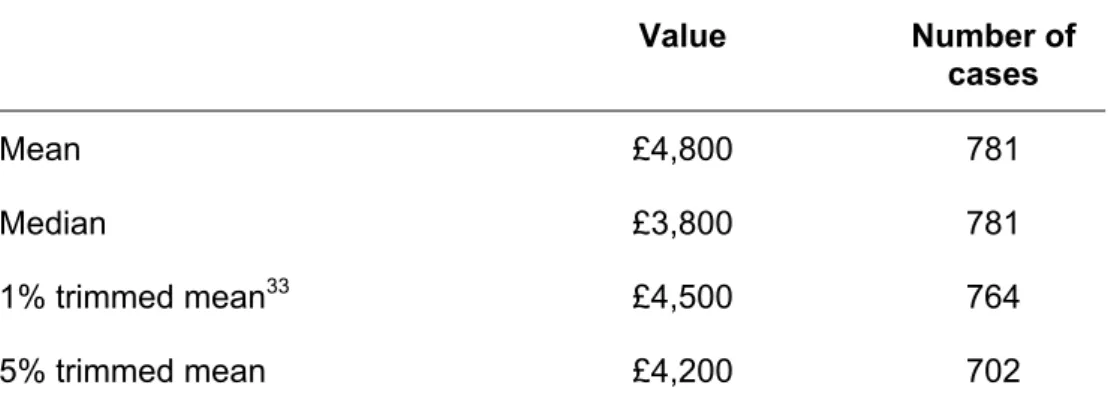
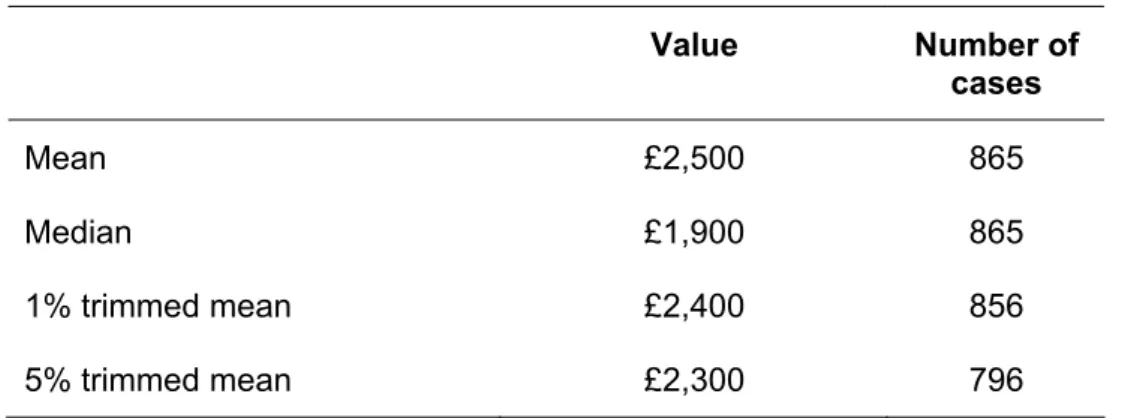
The study considered amongst other matters the legal costs of mesothelioma claims. A sample of around 3,500 cases was selected from the Compensation Recovery Unit (CRU) for inclusion in the survey. The cases covered settled employer liability claims in the private sector and claims recorded as having been settled between 2007 and 2012.
62. The Government believes that it is helpful to publish a cost benefit analysis of implementing the LASPO reforms, and that cost benefit analysis takes account of the data in the final NIESR report. The cost benefit analysis is at Annex B.
63. This Part summarises the responses from consultees and the arguments made on both sides. It considers the likely effect of the LASPO reforms on diffuse mesothelioma claims, and examines the principal changes introduced by these reforms so far as mesothelioma cases are concerned: (1) conditional fee agreement (CFA) success fees and (2) after the event (ATE) insurance premiums are no longer recoverable from losing defendants, (3) general damages are increased by 10% and (4) qualified one way costs shifting (QOCS) applies. It then considers the nature of the section 48 review, and the relevance of the Mesothelioma Bill, and explains the Government’s decision to commence the LASPO reforms.
64. Section 48 provides:
(1) Sections 44 and 46 may not be brought into force in relation to proceedings relating to a claim for damages in respect of diffuse mesothelioma until the Lord Chancellor has— (a) carried out a review of the likely effect of those sections in relation to such proceedings,
and
(b) published a report of the conclusions of the review.
(2) In this section “diffuse mesothelioma” has the same meaning as in the Pneumoconiosis etc (Workers Compensation) Act 1979.
65. As set out in the consultation paper, the LASPO reforms took forward Lord Justice Jackson’s recommendations to control the costs of civil litigation. They abolish the recoverability of, respectively, CFA success fees and ATE insurance premiums from losing defendants. These provisions have been in force for all other personal injury proceedings from 1 April 2013. 66. No win-no fee CFAs have become the principal form of funding for personal injury claims
since the last Government’s reforms to legal aid and CFAs in the Access to Justice Act 1999, and this Government’s reforms in Parts 1 and 2 of the LASPO Act 20127.
67. The LASPO scheme, as enacted by Parliament, does not permanently exclude mesothelioma claims from the LASPO reforms. Instead, those sections may not be brought into force until the Lord Chancellor has carried out the review and published a report. Provided that has been done, the Act provides for the reforms to be brought into force in the usual way – by
commencement order under section 151.
68. In summary, the Government is not persuaded that the LASPO provisions should not apply to mesothelioma cases. It does not believe that the case has been made that claimants would generally be worse off, or indeed that their lawyers would be. In any event, the requirement of section 48 is that the Lord Chancellor must carry out a review of the likely effect of sections 44 and 46. The Government is content that the review itself, as identified in paragraph 64 above, and subject to the report being published, is compliant with the requirements of section 48.
7 Part 1 of the LASPO Act includes provisions relating to legal aid, and Part 2 includes provisions relating to litigation
Responses from consultees
69. The majority of respondents (69%) were opposed to bringing the LASPO reforms into force in relation to mesothelioma claims for the reasons given below. However, some respondents were supportive (18%). There was a clear divide in views on this proposal between victims support groups and claimant lawyers on the one hand, and insurers and defendant lawyers on the other.
Arguments made against bringing sections 44 and 46 into force for mesothelioma claims
70. A number of arguments were put forward for not applying the LASPO reforms; these points were principally made by claimants and their representatives. The arguments can be broadly summarised under two headings: (i) claimants would be worse off if the LASPO reforms were implemented for mesothelioma cases; and (ii) that the Government’s approach to assessing the issues in this area was incorrect, notably by reference to the nature of the section 48 review, and the relevance of the Mesothelioma Bill8.
71. As to (i), respondents who disagreed with bringing these reforms into force were concerned that mesothelioma claimants would be worse off because they considered that the combined effect of CFA success fees and ATE insurance premiums no longer being recoverable from losing defendants would outweigh the benefits of a 10% increase in general damages and the application of QOCS - both of which will also apply to mesothelioma cases if the LASPO reforms are implemented in these cases.
72. Some argued that ATE insurance would still need to be purchased (not least in relation to Part 36 risk), and that the proposed uplift in damages was ‘illusory’. They raised concerns about the funding of disbursements, and that the LASPO reforms would act as a disincentive to litigate for this often elderly (and consequently risk averse) claimant group, as argued by Irwin Mitchell solicitors.
73. There was also an argument from some respondents that mesothelioma victims should not be required to concern themselves with getting the best costs deal or premium. Fentons
Solicitors stated that victims should be able to choose the best service ‘regardless of costs risks’.
74. Unite trade union suggested that the LASPO reforms should not be applied to mesothelioma claims until the Ministry of Justice reviewed the reforms generally three to five years after implementation. This would then provide a ‘test’ to compare the effects of LASPO on cases in which those reforms had been applied.
75. As to (ii), respondents who disagreed with implementing the LASPO reforms also raised concerns about whether the review met the requirements of section 48, and said that the Mesothelioma Bill – which addressed those who could not litigate – was not relevant to the section 48 review which was concerned with the likely effect on litigated cases.
Arguments made in favour of bringing sections 44 and 46 into force for mesothelioma claims 76. Respondents in favour of applying the LASPO reforms to mesothelioma cases argued that
there was no principled justification for not doing so; they were recommended by Lord Justice Jackson for all cases, and had been applied to all other forms of personal injury claim. It was suggested by FOIL and DWF LLP that there are no particular features of mesothelioma cases
which would cause the LASPO reforms to have a greater effect upon them than on other types of personal injury claim to which the reforms already applied.
77. DAC Beachcroft Solicitors argued that the risk of an adverse effect on access to justice for mesothelioma victims and their families from implementation of the LASPO reforms was minimal: the LASPO reforms already applied to most personal injury cases, including
complex, catastrophic and/or fatal injury claims, without seeming to affect access to justice in such cases. The point was made that continuing exclusion of mesothelioma claimants from the reforms was unfair to other claimants in an otherwise similar position.
78. Respondents also asserted that the loss of the ability to recover success fees and ATE insurance premiums from the defendant was sufficiently balanced by the changes to costs liability in qualified one way costs shifting (QOCS), and the 10% increase in general damages, whilst ensuring that defendants’ costs remained proportionate.
79. Some respondents such as Lloyds Market Association and the ABI argued that reforms in the Mesothelioma Bill, then before Parliament, would provide a fund of last resort where it was not possible to identify a solvent defendant employer or insurer. It was suggested that such a fund would remove a significant risk factor in making a mesothelioma claim such that success fees should be lower in future to reflect that reduced risk.
The likely effect of the LASPO reforms on diffuse mesothelioma claims
80. In addition to considering views expressed and evidence provided by those responding to the consultation paper, the Lord Chancellor has also taken account of the general experience of the LASPO reforms so far. As stated above (in the Introduction to this Part), the principal changes introduced by these reforms so far as mesothelioma cases are concerned would be that (1) CFA success fees and (2) ATE insurance premiums are no longer recoverable from losing defendants, (3) general damages are increased by 10% and (4) QOCS applies. These are considered in turn, followed by (5) conclusion.
(1) Conditional fee agreement (CFA) success fees
81. At present, any CFA success fee charged by lawyers acting for mesothelioma victims is paid for by unsuccessful defendants. This was the position for all CFA cases prior to the
implementation of the LASPO reforms.
82. The current position in mesothelioma cases remains that success fees are generally capped at 27.5% of the solicitors’ base costs in cases that settle. This is the effect of Part 45 of the Civil Procedure Rules9. If the matter proceeds to trial the success fee is capped at 100%. 83. The position once the LASPO reforms commence for mesothelioma cases is that the
provisions of the Courts and Legal Services Act 1990 (as amended) and the Conditional Fee Agreements Order 2013 will apply to mesothelioma cases as they apply to all other personal injury cases. Lawyers acting on behalf of a claimant will therefore be able to charge up to 100% of base costs as a success fee, but subject to an overall cap that the success fee may not in any personal injury case exceed 25% of the general damages recovered (excluding
9 Civil Procedure Rules, former rule 45.24.The rules formerly provided for employer liability disease claims (and
specifically exposure to asbestos claims) that if the matter settles before trial or before a claim is issued, the success fee is capped at 27.5% of base costs (or 30% if funded by a membership organisation). The rules have since changed, but their effect has been preserved for mesothelioma cases pending any commencement of the LASPO reforms for such cases.
those for future loss and future care). The overall cap reflects another recommendation in Lord Justice Jackson’s report10 to protect claimants’ damages in personal injury cases.
84. Clearly, once the LASPO reforms apply and the rules applicable to success fees change, the approach that claimant solicitors take to the size of success fees charged may change. It may be that the stronger emphasis on justifying the fees charged to claimants may result in a reduction – there is clearly less incentive to apply downwards pressure to the size of the success fee agreed with claimants if the defendant is paying it. It could be argued that solicitors are currently operating effectively, from a commercial perspective, on 27.5% success fees in most cases and therefore there is no reason to believe that they will
immediately and dramatically increase the size of the fee. The existence of the new scheme of compensation for untraced cases, which includes an element for the claimant’s legal costs, may relieve upwards pressure on the size of the success fee in litigated cases because there will be less risk that there will be no compensation as a result of the employer or insurer being untraced. Alternatively, it may be that claimant solicitors do see the release of the 27.5% cap as an opportunity to increase success fees and so these rise. It is unclear at this stage how the market will develop.
85. The Government has been given little indication at present that the reforms are resulting in difficulties in other cases to which they already apply. The position will be monitored as part of the intended post-implementation review of the LASPO Act within three to five years of
implementation.
86. The Government also bears in mind that solicitors’ base costs (to which the success fee is directly related) are in themselves carefully controlled in civil litigation, through a process of costs assessment. Additionally, from April 2013, the new costs management provisions of Part 3 of the Civil Procedure Rules seek to control prospectively the costs that may be incurred. 87. The impact on defendants would be to reduce the costs that they have to pay in cases which
they lose as the claimant lawyer’s success fee would no longer be recoverable. (2) After the event (ATE) insurance
88. Application of the LASPO reforms to mesothelioma cases will also mean that any premiums in respect of ATE insurance taken out by the claimant will cease to be recoverable from a losing defendant. ATE insurance protects the claimant from liability to pay a successful defendant’s costs in the event that the claimant loses; it can also cover the costs of disbursements.
89. Lord Justice Jackson considered a regime of recoverable ATE insurance premiums
‘indefensible’11. However, he recognised that claimants in personal injury claims still required
protection against adverse costs orders. He therefore recommended abolition of recovery of ATE premiums from the losing defendant, but the imposition of a new regime of qualified one way costs shifting (QOCS) – see below. He was also clear that such a regime for personal injury litigation must include incentives for claimants to accept reasonable offers12, which
relates to the regime under Part 36 of the Civil Procedure Rules (offers to settle), involving without prejudice negotiation between parties to make and accept reasonable offers for settlement.
10 Para 5.3, p.112 Final Report 11 Para 4.1, p.188 Final report 12 Para 4.5, p.189 Final Report
90. Claimants are not required to take out ATE insurance. While the Government recognises that many might still choose to do so to cover ‘Part 36 risk’13 or the cost of disbursements, the sums covered by insurance will inevitably be lower than previously. QOCS intentionally does not eliminate the Part 36 risk in order to encourage acceptance of reasonable offers.
However, defendants will be discouraged from making unreasonable offers by the operation of the Part 36 incentives, and a claimant is not at risk for refusing such an unreasonable offer. ATE insurance remains available, and products exist to cover these risks in personal injury litigation generally, including such that a claimant only pays the premium in successful cases (i.e. where damages are recovered from which the premium can be deducted).
91. Pursuit of a claim will require the payment of disbursements (such as for expert reports) at various points in the process. Where the claim succeeds, reasonable disbursements will continue to be recoverable against a losing defendant once the LASPO reforms have been introduced, and the situation will therefore remain the same as at present. Disbursements will need to be funded in the same way as in other personal injury cases to which the LASPO reforms already apply - this could be by the claimant, the legal representative, before the event (BTE) insurance or ATE insurance.14
92. The impact on defendants would be to reduce the costs that they have to pay in cases which they lose in respect of the ATE insurance premium. However, they would no longer generally recover their own costs from the claimant (or the claimant’s insurer) in cases which the defendant won.
(3) 10% uplift in general damages
93. If the LASPO reforms are applied to mesothelioma cases, this will trigger the application of an additional 10% uplift in the general damages for non-pecuniary loss such as pain, suffering and loss of amenity to which the claimant would be entitled under a Court of Appeal
judgment,Simmons v Castle15. This was recommended by Lord Justice Jackson16 specifically to assist personal injury claimants to meet the success fee costs out of damages. This was a general recommendation for personal injury cases, intended to leave claimants generally no worse off as a result of having to pay such fees. The uplift does not currently apply to
mesothelioma cases, since it applies only to situations in which the LASPO reforms have in fact been applied.
94. It was suggested by some respondents that this uplift is ‘illusory’. However, the uplift now applies as a matter of law, that recommendation having been effectively implemented by the Court of Appeal decisions in Simmons17. A claimant is entitled to this uplift as part of the
general damages award and the trial judge must apply it. Equally, where advising on settlement, it is the task of the claimant’s legal advisers to ensure that the 10% uplift is properly taken into consideration in the final settlement.
13 The risk of paying a defendant’s costs incurred after the date of offer, where the defendant has made a Part 36 offer to
settle which the claimant has refused and which is not subsequently beaten at trial. Where QOCS applies, such costs are paid by set-off against damages and are not enforceable (in the absence of fraud, etc.) to the extent that they exceed damages.
14 ATE insurance premiums remain, exceptionally, recoverable from losing defendants in respect of certain clinical
negligence expert reports only under s. 46 of the LASPO Act.
15 [2012] EWCA Civ 1288, following on from the earlier decision in that case reported at [2012] EWCA Civ 1039 16 Para 6.1(ii), p. 116 Final Report
17 And see the 12th Edition of the Judicial College Guidelines for the Assessment of General Damages in Personal Injury
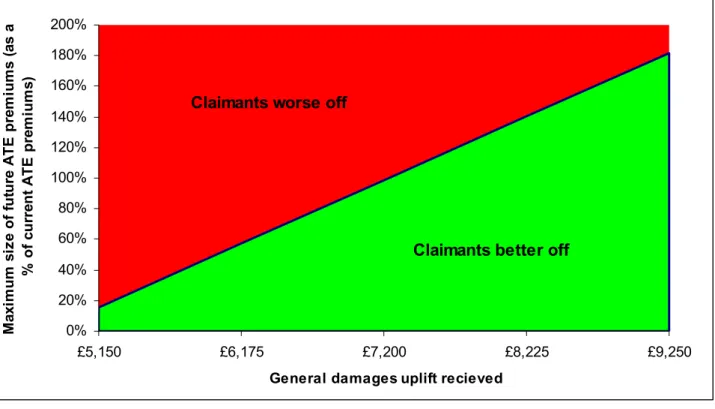
95. The Judicial College Guidelines, to which the courts and practitioners refer when assessing general damages, identify general damages for mesothelioma claims as being between £51,500 and £92,500. The 10% uplift will therefore provide the claimant with an additional sum of between £5,150 and £9,250 (depending on the particular circumstances) from which to fund that element of the costs of bringing their claim for which they will be liable under the LASPO regime, when they win (or settle) their case.
96. As damages are paid by losing defendants, the impact would be to increase the amount of compensation that they have to pay to claimants.
(4) Qualified one way costs shifting (QOCS)
97. Application of the LASPO reforms to mesothelioma cases will mean that the existing qualified one way costs shifting (QOCS) regime for personal injury cases is extended to mesothelioma cases too. A new costs protection regime was introduced in personal injury cases when the LASPO reforms took effect generally on 1 April 2013. This QOCS regime provides protection limiting the costs that a claimant might have to pay to the defendant. A losing defendant remains liable for the claimant's costs in the usual way. QOCS was devised as a more
proportionate method of protecting losing claimants from having to pay the costs incurred by a much better resourced defendant than the ATE insurance regime that had developed. The Government accepted Lord Justice Jackson’s recommendation that a QOCS regime be introduced in personal injury cases18, and the relevant rules came into force on 1 April 201319. QOCS does not currently apply in mesothelioma cases, but it applies in all other personal injury cases, including those relating to catastrophic injury.
98. There are restrictions on how QOCS applies, for example in relation to ‘Part 36 risk’. Further, QOCS protection can be lost, for example where a claim is fundamentally dishonest,
discloses no reasonable grounds, or is an abuse of the court’s process.
99. Claimants benefit from QOCS as it limits the costs that they might otherwise have to pay. Conversely, it limits the costs that defendants might recover from claimants in cases which defendants win.
(5) Conclusion
100. Paragraph 65 of the consultation paper indicated that responses would be used to assist the Government in assessing the likely impact of the LASPO reforms should they be applied to mesothelioma claims. Despite many respondents expressing general concern that application of the LASPO reforms would limit the ability of claimants to access justice, the Government is not persuaded that there are particular features of the litigation process for mesothelioma claims that require a special approach specifically on litigation funding and costs for these claims.
101. When the LASPO reforms are applied to mesothelioma cases, any success fee will no longer be payable by the defendant and would fall to be payable by the claimant, out of the damages recovered. The claimant may choose to take out ATE insurance, although QOCS – which will apply once the LASPO reforms are in place – will reduce a claimant’s exposure to adverse costs. A claimant would need to fund disbursements, as in any other personal
18 The Government did not accept the recommendation that QOCS be introduced beyond personal injury proceedings,
although it said that it would keep the position under review. It has since said that QOCS will be extended to defamation and privacy cases.
injury case. The 10% increase in general damages will generally result in an additional award of £5,150 to £9,250. Lord Justice Jackson argued that in the majority of cases his proposals ‘should leave successful claimants no worse off than they are under the current regime, whilst at the same time ensuring that unsuccessful defendants only pay normal and proportionate legal costs to successful claimants.20
102. The Government is not persuaded that evidence has been presented which provides a cogent reason why the LASPO reforms should not be extended to mesothelioma cases in terms of the likely costs that mesothelioma claimants would be likely to face once the LASPO reforms are implemented.
103. In preparing the cost benefit analysis of implementing the reforms for mesothelioma cases for publication alongside the consultation response, the Government considered such evidence as was available from the NIESR report published in January 2014. That evidence tends to support this conclusion. Further details are available in the accompanying cost benefit assessment (Annex B).
104. There are, of course, variables and uncertainties within different mesothelioma cases, and between the position before and after the application of the LASPO reforms. While it is impossible to say that every mesothelioma claimant would be better off under the LASPO reforms, the current evidence does not show that claimants would be generally worse off under the reforms.
4. The nature of the section 48 review, and the relevance of the Mesothelioma Bill
105. These points are addressed because they were raised by a number of respondents who criticised the proposals in the consultation paper.
106. Some respondents argued that neither did the consultation satisfy the requirements of section 48, nor was it clear from the consultation that they were being asked for information and evidence in relation to the review itself. Because of this, some respondents stated that the Government should issue a new consultation on the section 48 review.
107. The Government does not agree with either assertion. It is clear from paragraph 65 of the consultation document that respondents were made aware of the issues on which their views were being sought and the relevant decisions that their evidence would inform. Paragraph 65 asked for evidence on the ‘likely effect’ question in s.48 and made clear that conclusions would be reached both on the likely effect of commencement of s.44 and s.46, and on the decision whether to commence those provisions, in the light of what
respondents said on the point. Little detail was given by respondents as to how the review fell short of the statutory requirement, except the Law Society which argued that a
consultation question was not likely ‘to produce the detailed data and analysis required to make a satisfactory assessment’. In the Government’s view, respondents had a full opportunity to deal specifically with points they wished to make relevant to the section 48 review and on the separate but related question of commencement of the LASPO costs reforms for mesothelioma proceedings.
108. The Government believes that a full public consultation was the right way to conduct the review, and that the review was in accordance to commitments given to Parliament, for example that victims would be able to contribute to the review21. The consultation took place over ten weeks and was in accordance with the Government’s consultation principles. As stated above, 105 responses were received, including many from asbestos victims’ representatives and claimant lawyers.
109. A number of respondents indicated that they could not see how the Mesothelioma Bill, referred to in question 15, was relevant to consideration of the likely effect of the LASPO reforms on ‘traced’ mesothelioma cases – in other words, those where there is a solvent defendant against whom to claim. This issue has also been raised in Parliamentary questions22.
110. The Government acknowledges that the provisions of the Mesothelioma Bill relate
specifically to untraced cases and are therefore not directly relevant to the traced cases to which the section 48 review apply. In conducting the section 48 review, the Government focused its consideration on ‘proceedings relating to a claim for damages in respect of diffuse mesothelioma’. As indicated above, some respondents argued that the advent of the ‘untraced’ scheme would make a difference to the risks undertaken by lawyers taking on a mesothelioma claim, which in time should reflect in a downwards trend in the level of success fees charged. However, while the Government notes that as a possible impact, it has not been able to assess its impact at this stage.
111. However, the Mesothelioma Bill is relevant to the timing of the commencement of the LASPO reforms to diffuse mesothelioma claims, since the Government has always intended to implement any such decision in a synchronised manner with other reforms directed to improving the position of mesothelioma sufferers. This was made clear when Parliament agreed the relevant provisions in the Legal Aid, Sentencing and Punishment of Offenders Act 201223.
5. Decision to commence the LASPO reforms
112. Having carried out a review of the likely effect of the LASPO reforms on mesothelioma claims, Part 4 of the consultation paper raised the prospect of, and sought views on, the commencement of sections 44 and 46 of LASPO for these cases.
113. The Government believes that it is right to commence the LASPO reforms. It is not
persuaded that a case has been made out for the LASPO reforms not to be extended to all personal injury cases by covering mesothelioma cases too.
114. In making a decision on commencement, the Government has particularly taken into account whether there has been any evidence that the relevant features of mesothelioma cases are such that they require different treatment from other personal injury cases in respect of costs and funding arrangements.
21 See, for example, Lord McNally’s comments during the LASPO Bill proceedings, House of Lords Official Report, 25
Apr 2012 at col.1824
22 House of Lords Official Report, 25 November 2013, col. WA107
23 House of Commons Official Report, 24 April 2012 at col. 839; House of Lords Official Report, 25 April 2012 at col.
115. The Government acknowledges the tragic nature of the disease, which is inevitably fatal within a short period of time. Diagnosis is therefore a very painful and distressing matter for sufferers and their families, as the future suddenly becomes frightening and uncertain. 116. However, the LASPO reforms already apply to all other personal injury cases (and indeed
to all other civil cases)24. The reforms were introduced to control high costs while allowing access to justice for meritorious cases; they are intended to create a fairer and more proportionate system – balancing the interests of both claimants and defendants – which gives greater encouragement to the early resolution of cases. While it is of course true that many personal injury cases are much less serious than those for mesothelioma, the reforms already apply to other very serious and life-changing cases. Such cases include those involving catastrophic injury, requirements for lifelong care, reduced life expectancy and significant effect upon quality of life. Sometimes the cases involve very young people. These cases bring their own forms of tragedy, uncertainty and distress for sufferers and their families, in many different ways. They also bring their own litigation difficulties such as disagreements on evidence about diagnosis, prognosis or future care.
117. The Government has taken forward Lord Justice Jackson’s recommendations as the right way forward to address the high costs in civil litigation. The Government considers that there needs to be a specific and adequate justification for continued difference in treatment between mesothelioma cases and other personal injury cases, in particular those serious cases described above.
118. In responses to the consultation, there was little indication of what specific features of the mesothelioma claims process should lead to a requirement that these cases continue to be given special treatment as to costs and funding arrangements.
119. The Government has therefore concluded that it is right to commence sections 44 and 46 of the LASPO Act for mesothelioma cases. It proposes to synchronise the
commencement with the making of the first payments under the provisions now contained in the Mesothelioma Act 2014, which is expected to be in July 2014.
120. In reaching this conclusion, the Government believes that it is right to apply the costs reforms to these cases without doubting in any way the appalling personal tragedy that a diagnosis of mesothelioma represents for the victim and their family.
24 With the temporary exception of publication and privacy proceedings, and proceedings in respect of, and
Consultation principles
The principles that Government departments and other public bodies should adopt for engaging stakeholders when developing policy and legislation are set out in the consultation principles. http://www.cabinetoffice.gov.uk/sites/default/files/resources/Consultation-Principles.pdf
Annex A – List of respondents
The respondents who gave details included individual members of the judiciary, individual solicitors and barristers, members of the public and the following organisations:
12 King's Bench Walk
2 Crown Office Row Chambers 7 Harrington Chambers
Akzo Nobel Legal Group UK Ltd Allianz Insurance
Asbestos Support West Midlands Asbestos Victims Support Forum UK Association of British Insurers
Association of Her Majesty's District Judges Association of Personal Injury Lawyers Atherton Godfrey Solicitors
Attwaters James Hill Solicitors Aviva Insurance Ltd
AXA UK
Barts Mesothelioma Research Birchall Blackburn Law
Blackhurst Bud Solicitors Boris Cetnik Legal Boyers Turner Solicitors Brachers Solicitors British Lung Foundation Byrom St Chambers
Campaign Group-Right to Know Asbestos in Schools, Wales Catherine Higgins Law
Charles Lucas & Marshall Solicitors Civil Justice Council
Communication Workers Union - North West Safety Forum Compass Law
DAC Beachcroft Claims Ltd
Dagenham Heat & Frost Insulators Craft Branch (TU) Direct Line Group
DWF LLP
Fentons Solicitors LLP Field Fisher Waterhouse LLP Forum of Complex Injury Lawyers Hazards Magazine
Humphreys Solicitors
International Underwriting Association Irwin Mitchell Solicitors
John Pickering & Partners
June Hancock Meso Research Fund Kennedys Solicitors
Keoghs Solicitors Larcomes LLP Solicitors
Law Society of England & Wales Law Society of Northern Ireland Leeds Chest Clinic
Leigh Day Solicitors Lloyd's Market Association London Hazards Centre Lyons Davidson
Manchester Civil Justice Centre Merrymans Lace Mawer Solicitors Mesothelioma UK
Metcalfes Solicitors
Moore Blatch Resolve LLP National Federation of Builders National Hazards Campaign Novum Law
OH Parsons & Partners Solicitors Osbornes Solicitors
Outer Temple Chambers Pannone Solicitors
Personal Injuries Bar Association Poole Townsend Solicitors Raleys Solicitors
Robert Jackson Solicitors Simpson & Marwick LLP Slater & Gordon Solicitors Spencer Solicitors
Thompson Solicitors
Thomson Snell & Passmore Solicitors UK Legacy
Union of Construction, Allied Trades and Technicians UNISON Trade Union
UNITE Trade Union
University of Stirling, Scotland Withy King Solicitors
Wolferstans Solicitors Zurich Insurance