Can we rely on the multiplex ligation-dependent probe
amplification method (MLPA) for prenatal diagnosis?
Mir Davood Omrani1Ph.D., Faezeh Azizi1 M.Sc., Masoumeh Rajabibazl2 Ph.D., Niloufar Safavi Naini1 M.Sc., Sara Omrani3 M.D., Arezo Mona Abbasi4 M.D., Soraya Saleh Gargari5 M.D.
1.Department of Clinical Genetics, Faculty of Medicine, Shahid Beheshti University of Medical Sciences, Tehran, Iran. 2.Department of Clinical
Biochemistry, Faculty of Medicine, Shahid Beheshti University of Medical Sciences, Tehran, Iran.
3.Faculty of Medicine, Shahid Beheshti University of Medical Sciences, Tehran, Iran. 4.Edward Via College of
Osteopathic Medicine, Virginia, USA.
5.Feto-Maternal Unit, Mahdieh Hospital, Shahid Beheshti, University, Tehran, Iran.
Corresponding Author:
Soraya Saleh-Gargari, Feto-Maternal Unit, Mahdiyeh Hospital, No. 16, Fadaiean Eslam St., Shoush Ave., Tehran, Iran.
Email: [email protected]
Tel: (+98) 9128249971
Received: 1 October 2013 Revised: 17 December 2013 Accepted: 29 December 2013
Abstract
Background: The major aneuploidies that are diagnosed prenatally involve the autosomal chromosomes 13, 18, and 21, as well as sex chromosomes, X and Y. Because multiplex ligation-dependent probe amplification (MLPA) is rapid and non-invasive, it has replaced traditional culture methods for the screening and diagnosis of common aneuploidies in some countries.
Objective: To evaluate the sensitivity and specificity of MLPA in a cross-sectional descriptive study for the detection of chromosomal aneuploidies in comparison to other methods.
Materials and Methods: Genomic DNA was extracted from the peripheral blood samples of 10 normal controls and the amniotic fluid of 55 patients. Aneuploidies screening of chromosomes 13, 18, 21, X and Y were carried out using specific MLPA probe mixes (P095-A2). For comparison purposes, samples were also tested by Quantitative Fluorescent-PCR (QF-PCR) and routine chromosomal culture method.
Results: Using this specific MLPA technique and data-analyzing software (Genemarker v1.85), one case was diagnosed with 45, X (e.g. Monosomy X or Turner’s Syndrome), and the remaining 54 cases revealed normal karyotypes. These results were concordant with routine chromosomal culture and QF-PCR findings.
Conclusion: The experiment demonstrates that MLPA can provide a rapid and accurate clinical method for prenatal identification of common chromosomal aneuploidies with 100% sensitivity and 100% specificity.
Key words: MLPA, Prenatal screening, Common aneuploidies.
Introduction
hromosomal abnormalities are often
the origin of miscarriage and birth
defects. The most common are
autosomal aneuploidy (75%), polyploidy
(13%), sex chromosome abnormalities (8%)
and structural imbalance (4%) (1, 2). Trisomy
of chromosome 21, 13, or 18, in addition to
sex chromosome aneuploidy, account for
60-80% of aberrant fetal karyotypes identified in
cultured amniotic fluid cells (3). Prenatal
diagnosis is commonly suggested to all
pregnant women who have an increased risk
of carrying a child with a chromosomal
abnormality. In these cases, the diagnostic
process requires amniocentesis, which is
highly invasive and often risky (4). Although
traditional karyotyping is a powerful method
that reveals a range of numerical and
structural chromosomal abnormalities with
high precision (99.4-99.9%), it requires fetal
cell cultures, making this method
time-consuming, labor-intensive, and expensive
(5-7). The detection efficiency and precision of
karyotyping may also be considered a
disadvantage since it detects chromosomal
abnormalities that may only hold ambiguous
or mild clinical relevance. The latter can result
in patient anxiety and emotional dilemmas
regarding the continuation of pregnancy, even
C
though the results are unclear or the
suggested phenotype may prove to be
comparatively mild (8, 9).
In developed countries, new molecular
methods have become accessible for rapid
aneuploidy detection of the most common
chromosome abnormalities (aneuploidies of
chromosomes X, Y, 13, 18 and 21). For
example, in a number of prenatal centers,
Quantitative Fluorescent PCR (QF-PCR)
analysis is already being suggested to women
undergoing invasive testing. Other centers
carry out multiplex ligation-dependent probe
amplification (MLPA) for the rapid detection of
aneuploidies of chromosomes X, Y, 13, 18
and 21 in amniotic fluid cells (10, 11). MLPA is
a new PCR-based method that differentiates
the copy numbers of specific sequences of
DNA. This technique applies two-part probes
of unique length that, when hybridized to
adjacent target sequences on genomic DNA,
can be joined together by the enzyme DNA
ligase. This permits the amplification of all
target sites, using a single primer pair that is
complementary to the two free ends which are
common to all probes.
The products are run on a capillary
electrophoresis system and detached by size,
so that each peak is the amplification product
of a specific probe. Using a series of
normalization calculations, copy numbers can
be specified for each target sequence and
thus, for each chromosome. MLPA is a quick
high output method shown to be powerful in
pre-clinical settings. It permits for relative
quantification of up to 50 different target
sequences with just one reaction. MLPA
eschews the detection of abnormalities with
uncharted clinical relevance. It is less
labor-intensive and cheaper compared to
karyotyping and FISH (1, 5). This pilot study
was designed and carried out in effort to
convince the policy makers and stakeholders
of the Iranian healthcare system of the value
of this technique for screening and diagnosis
purposes at hospitals and pre-natal centers
throughout the country.
Materials and methods
In this cross-sectional study, participants
were 55 pregnant females who had chosen to
undergo amniocentesis, for either advanced
maternal age or increased risk following
pre-natal screening, as referred by Shahid
Beheshti's Mahdieh Women Hospital from
2012-2013.
The age range of this sample population
was between 22-39 years old. For each case,
15-20 ml amniotic fluid samples (without blood
contamination) were collected. Meanwhile, the
peripheral blood samples were collected from
10 unrelated, healthy female for use as the
control sample, and set up of the MLPA
reaction. Informed consent was explained and
acquired from each case. The study was
approved by the ethics committee of Shahid
Beheshti University of Medical Sciences.
Genomic DNA was extracted from peripheral
blood by use of the salting out purification method. Amniotic fluid cell’s DNA were collected (5 ml/sample) using the QIAamp
DNA Mini kit (Qiagen; Hilden, Germany). To
check the quality of the obtained DNA, both
samples were run on a 0.5% agarose gel and
optical density (OD) was measured at 260 nm
and 280 nm using a spectrophotometer
(Biophotometer plus; Eppendorf, Germany).
Moreover, the concentration of each DNA sample was standardized to 100ng/μL.
MLPA reagents (P095-A2 aneuploidy
probe mixes) were purchased from
Holland (Amsterdam, Kingdom of the
Netherlands). The MLPA reaction was carried
out using standard protocol. MLPA is not
expected to detect low-grade chromosomal
mosaicism. Peripheral blood cells or amniotic
fluid cells (10-15 ml/sample) were cultured in
accordance with the standard methods
(Figure 1) (13). In addition, all samples were
checked by QF-PCR method (11, 14-15). The
results collected from MLPA, QF-PCR, and
karyotyping were compared.
Statistical analysis
The data analyses of the MLPA tests were
performed without the knowledge of karyotype
results. The size and peak areas for each
probe are quantified and processed by
data-analysis software (Genemarker v1.85, Soft
Genetics, LLC; State College, PA, USA) (12).
Relative probe signals were assayed and
compared with samples of normal male and
female sex. In normal chromosome samples,
the relative probe signal for all probes was
expected as follows. A normal value is
identified as a relative probe signal between
0.7 and 1.3. A relative probe value of <0.7
signifies a chromosome monosomy, while a
relative probe value of >1.3 is indicative of
chromosome trisomy.
Results
In total, 55 amniotic fluid samples were
tested with MLPA, QF-PCR, and karyotyping
methods. In all samples, the results were in
concordance with one another. In this study,
one case with chromosome X monosomy [45,
XO] was identified successfully by all
methods. Figure 2 shows the abnormal copy
numbers on chromosome X for one fetus
sample. Diagnostic accuracy of MLPA was 1.0
(95% confidence interval (CI) 0.99-1.0) with a
sensitivity of 100% (95% CI 0.96-1.0) and a
specificity of 100% (95% CI 0.999-1.0).
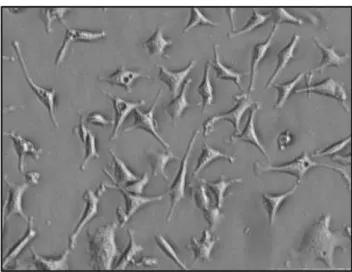
Figure 1.Image of amniotic fluid cells grownin Amniomax media after 15 days (Gibco, USA) ( Magnification 400X).To double check the results of MLPA obtained from the amniotic cells in the first day, they were grown and the experiment repeated with larger amount of cells and DNA.
Figure 2.This is a part of the MLPA analysis report (Genemarker v1.85) of a normal disomic female and monosomic X female’s DNA, respectively. Normal relative probe signals are between the grey lines (0.7-1.3), and are depicted in green. Aberrant relative probe signals are depicted in red. The arrows indicate the eight chromosomes X signals, which all show a relative decrease in sample monosomic as compared to normal.
Discussion
The availability of quick, clear, and inexpensive genetic screening method for high-risk pregnancies is the reason for utilization of MLPA (16, 17). As of yet, two studies show that pregnant women prefer rapid aneuploidy recognition to karyotyping (1, 18). A Swedish survey showed that 70% of women preferred rapid testing to karyotyping. In the Netherlands, a nationwide prospective cohort study confirmed the accuracy of MLPA to detect aneuploidies of chromosomes 21, 13, 18, X and Y (5).
More studies by Gerdes et al, Van Opstal
et al and Kooper et al added to the evidence for applicability of MLPA for detection of chromosomal aneuploidies in amniotic fluid
(11, 14, 18, 19). At the level of public health, these investigations offer that rapid testing is the preferred strategy (5, 20-21). Compared to other methods accessible for rapid aneuploidy
detection (RAD) [i.e. quantitative fluorescence
polymerase chain reaction (QF-PCR) and fluorescence in situ hybridization (FISH)], MLPA has the advantage of detecting up to 50 loci in a single assay. Compared to FISH, MLPA is appropriate for high-output testing and is less expensive. Compared to QF-PCR, MLPA can easily be spread out to other genomic regions of known clinical relevance and can also be used as a highly effective method for the detection of sub-telomeric imbalances (22-27).
The MLPA technology entails ligation of probes corresponding to a
specific sequence that is unique within the genome. In contrast to polymorphic loci used for QF-PCR, these chromosome-specific sequences represent little or no variation, which avoids non-informativeness of the targeted sequences. Therefore, the MLPA method may be appropriate for combining speed and targeted testing of specific chromosomal inter- and/or intragenic regions. QF-PCR has the same inherent limitations as MLPA, in that it will not detect structural
chromosome abnormalities; however, in
contrast to QF-PCR, MLPA will not show 69, XXX triploidy (1, 28).
QF-PCR and MLPA are considered to be valid alternatives to karyotyping for specific
referral reasons, albeit some clinically
significant aberrations will remain
unrecognized (1). Our study showed the successful use of MLPA for clinical molecular diagnosis with rapid and sensitive screening
for chromosomal aneuploidies. Because
processing and data analysis are completely automated, MLPA should be appropriate for
large scale testing for chromosome
aneuploidies in clinical diagnostic settings. The purpose of previous studies was the substitution of rapid molecular techniques, such as MLPA, in place of traditional karyotype. In developing countries, prenatal
diagnosis procedures were not well
established and frequent studies needed to be carried out until stakeholders would accept it. In this study, we attempted to portray the positive results of these new techniques, in pursuit of applying them in educational hospitals.
Acknowledgements
We are grateful to the medical staff of Mahdieh Women Hospital for collecting samples. This work was supported by an intra-institution grant provided by Shahid Beheshti University of Medical Science’s Dean of Research.
Conflict of interest
None declared.
References
1. Yan JB, Xu M, Xiong C, Zhou DW, Ren ZR, Huang Y, et al. Rapid screening for chromosomal aneuploidies using array-MLPA. BMC Med Genet
2011; 12: 68.
2. Yusuf RZ, Naeem R. Cytogenetic abnormalities in products of conception: a relationship revisited. Am J Reprod Immunol 2004; 52: 88-96.
3. Hochstenbach R, Meijer J, van de Brug J, Vossebeld-Hoff I, Jansen R, van der Luijt RB, et al. Rapid detection of chromosomal aneuploidies in uncultured amniocytes by multiplex ligation-dependent probe amplification (MLPA). Prenat Diagn
2005; 25: 1032-1039.
4. Nicolaides KH. Screening for chromosomal defects.
Ultrasound Obstet Gynecol 2003; 21: 313-321. 5. Boormans EM, Birnie E, Oepkes D, Galjaard RJ,
Schuring-Blom GH, van Lith JM, et al. Comparison of multiplex ligation-dependent probe amplification and karyotyping in prenatal diagnosis. Obstet Gynecol
2010; 115: 297-303.
6. Los FJ, van Den Berg C, Wildschut HI, Brandenburg H, den Hollander NS, Schoonderwaldt EM, et al. The diagnostic performance of cytogenetic investigation in amniotic fluid cells and chorionic villi. Prenat Diagn
2001; 21: 1150-1158.
7. Tabor A, Philip J, Madsen M, Bang J, Obel EB, Nørgaard-Pedersen B. Randomised controlled trial of genetic amniocentesis in 4606 low-risk women.
Lancet 1986; 1: 1287-1293.
8. Golbus MS, Loughman WD, Epstein CJ, Halbasch G, Stephens JD, Hall BD. Prenatal genetic diagnosis in 3000 amniocenteses. N Engl J Med 1979; 300: 157-163.
9. Van Zwieten MC, Willems DL, Litjens LL, Schuring-Blom HG, Leschot N. How unexpected are unexpected findings in prenatal cytogenetic diagnosis? A literature review. Eur J Obstet Gynecol Reprod Biol 2005; 120: 15-21.
10. Ogilvie CM, Donaghue C, Fox SP, Docherty Z, Mann K. Rapid prenatal diagnosis of aneuploidy using quantitative fluorescence-PCR (QF-PCR). J Histochem Cytochem 2005; 53: 285-288.
11. Gerdes T, Kirchhoff M, Lind AM, Larsen GV, Schwartz M, Lundsteen C. Computer-assisted prenatal aneuploidy screening for chromosome 13, 18, 21, X and Y based on multiplex ligation-dependent probe amplification (MLPA). Eur J Hum Genet 2005; 13: 171-175.
12. Slater HR, Bruno DL, Ren H, Pertile M, Schouten JP, Choo KH. Rapid, high throughput prenatal detection of aneuploidy using a novel quantitative method (MLPA). J Med Genet 2003; 40: 907-912.
13. Brothman AR, Persons DL, Shaffer LG. Nomenclature evolution: Changes in the ISCN from the 2005 to the 2009 edition. Cytogenet Genome Res 2009; 127: 1-4.
14. Van Opstal D, Boter M, de Jong D, van den Berg C, Brüggenwirth HT, Wildschut HI, et al. Rapid aneuploidy detection with multiplex ligation-dependent probe amplification: a prospective study of 4000 amniotic fluid samples. Eur J Hum Genet
2009; 17: 112-121.
15. Lionel Willatt, Sian M. Morgan. Shaffer LG, Slovak ML, Campbell LJ. An international system for human
cytogenetic nomenclature. Hum Genet 2012; 126: 603-604.
16. Sellner LN, Taylor GR. MLPA and MAPH: new techniques for detection of gene deletions. Hum Mutat 2004; 23: 413-419.
17. Kassirer JP. Incorporating patients' preferences into medical decisions. N Engl J Med 1994; 330: 1895-1896.
18. Ryan M, Diack J, Watson V, Smith N. Rapid prenatal diagnostic testing for Down syndrome only or longer wait for full karyotype: the views of pregnant women.
Prenat Diagn 2005; 25: 1206-1211.
19. Kooper AJ, Faas BH, Kater-Baats E, Feuth T, Janssen JC, van der Burgt I, et al. Multiplex ligation-dependent probe amplification (MLPA) as a stand-alone test for rapid aneuploidy detection in amniotic fluid cells. Prenat Diagn 2008; 28: 1004-1010. 20. Kooper AJ, Faas BH, Feuth T, Creemers JW,
Zondervan HH, Boekkooi PF, et al. Detection of chromosome aneuploidies in chorionic villus samples by multiplex ligation-dependent probe amplification. J Molec Diagn 2009; 11: 17-24.
21. Bui TH. Prenatal cytogenetic diagnosis: gone FISHing, BAC soon! Ultrasound Obstet Gynecol
2007; 30: 247-251.
22. Kuo WL, Tenjin H, Segraves R, Pinkel D, Golbus MS, Gray J. Detection of aneuploidy involving chromosomes 13, 18, or 21, by fluorescence in situ
hybridization (FISH) to interphase and metaphase amniocytes. Am J Hum Genet 1991; 49:112-119. 23. Philip J, Bryndorf T, Christensen B. Prenatal
aneuploidy detection in interphase cells by fluorescence in situ hybridization (FISH). Prenat Diagn 1994; 14: 1203-1215.
24. Mann K, Donaghue C, Fox SP, Docherty Z, Ogilvie CM. Strategies for the rapid prenatal diagnosis of chromosome aneuploidy. Eur J Hum Genet 2004; 12: 907-915.
25. Cirigliano V, Voglino G, Marongiu A, Cañadas P, Ordoñez E, Lloveras E, et al. Rapid prenatal diagnosis by QF-PCR: evaluation of 30,000 consecutive clinical samples and future applications.
Ann N Y Acad Sci 2006; 1075: 288-298.
26. Adinolfi M, Sherlock J, Pertl B. Rapid detection of selected aneuploidies by quantitative fluorescent PCR. Bioessays 1995; 17: 661-664.
27. Kozlowski P, Jasinska AJ, Kwiatkowski DJ. New applications and developments in the use of multiplex ligation-dependent probe amplification. Electrophoresis 2008; 29: 4627-4636.
28. Sparkes R, Johnson JA, Langlois S, Wilson RD, Allen V, Blight C, et al. New molecular techniques for the prenatal detection of chromosomal aneuploidy. J Obstet Gynaecol Can 2008; 30: 617-627.