Achieve full IFRS 15 / ASC 606 compliance while
delivering additional business value
Solution Brief:
Aptitude Revenue Recognition Engine
Revenue Recognition Engine
The high
performance
Aptitude Revenue
Recognition Engine
is empowering
leading
telecommunication
providers to
address the depth
of change, risks and
costs associated
with IFRS 15.
SUPPORTS THE IFRS 15 5-STEP PROCESS
RULES-DRIVEN DATA PREPARATION LAYER
MODEL CONTRACTS AND PERFORMANCE OBLIGATIONS
CALCULATE AND ALLOCATE FAIR VALUE PRICING
CONTRACT, PORTFOLIO & HYBRID METHODS SUPPORTED
GENERATES JOURNAL ENTRIES OR DELTA OUTPUTS
INTEGRATES WITH EXISTING FINANCE INFRASTRUCTURE
Request a demonstration from
[email protected]
For more information, visit:
www.aptitudesoftware.com
STEP 1
Solution Brief:
Aptitude Revenue Recognition Engine
Solution Brief:
Aptitude Revenue Recognition Engine
Aptitude addresses IFRS 15 five-step recognition process
The Aptitude Revenue Recognition Engine (ARRE) is designed to
empower telecoms providers to comply with IFRS 15 (FASB ASC 606).
The product offers a full range of out of the box functionality, from
data preparation to controlling accounting rules, connecting
accounting outputs and existing finance systems. This approach
enables customers to implement a fit for purpose IFRS 15 solution,
addressing the 5 step process while achieving value beyond
compliance and simplifying their finance systems architecture.
All of this is controlled and monitored with a transparent graphical
user interface designed to empower finance users.
Proven to support global
telecom scenarios
Aptitude Software has worked closely with the big four advisors and leading telecoms providers (across NA and EMEA) to incorporate the full range of revenue recognition scenarios into Aptitude RRE. SELECTED SCENARIOS INCLUDE:
•
Income suppression and bad debt write-offs•
Collectability risk and provisions•
Timing differences (income recognition vs. billing)•
Overlap with estimated billing accruals/deferrals•
Guarantee liabilities for financing•
Advance or arrears billing•
Bundles and unbundling•
Variable pricing and corporate discounting•
Delayed discounts (which represent material rights)•
Upgrade options (which represent material rights)•
B2B enterprise arrangementsFor detailed explanations of 100+ scenarios, contact us via the email below.
Figure 1: Managing contracts and related performance obligations
Figure 2: Reporting period revenue for individual contract parts
Identify the contracts with customers
Data preparation layer integrates and validates information from source systems. Rules-based environment for contract
identification, modification and management
IFRS 15 process
Aptitude RRE Highlight
FEATURES
• Integrate with all existing billing and operational systems
• Enrich, validate, standardize and transform data
• Rules-based integration layer enabling finance to control data collection and preparation
• Data model covering all revenue, cost and commissions data
DATA
PREPARATION
• Support for contract-by-contract or portfolio/aggregation approaches
• Link disparate performance obligations to assemble whole single contracts
• Calculate stand-alone selling prices and integrate fair value data
• Transaction prices can be absolute amounts or parameter based such as customer usage
CONTRACT
MANAGEMENT
• Define, apply and control revenue recognition rules with intuitive business user interfaces
• Full suite of telecommunication product lifecycles and IFRS 15 accounting events available ‘out-of-the-box’
• Ability to combine accounting events to support contract components as material rights, terminations or others
• Support for accruals, deferrals and write-offs
• Users can control the specific posting pattern to ensure the correct journals are generated
• Process millions of calculations per hour, giving users visibility into impact of recognition policy and revenue forecasts
REVENUE
RECOGNITION
ENGINE
• Easily connect with existing finance infrastructure, including SAP & Oracle ERPs, general ledgers or accounting middle ware
• Output delta figures or debit/credits
• Maintain detailed balances in a granular accounting subledger
• Traceability: full drill down from accounting outputs to underlying transactions
• Option to apply adjustments to existing cash accounting or implement broader accounting solution for improved management reporting
• Integrate transaction and reference data from all operational and billing systems
INTEGRATION
STEP 2
Connect contract components and product reference data to determine applicable performance obligations and associated recognition patternsIdentify the seperate performance obligations
STEP 3
Models contractual revenue coupled with direct and indirect costs for accurate allocations, as well as calculating & maintaining stand-alone selling prices and fair valuesDetermine the transaction price
STEP 4
Allocate the transaction price to the performance obligations Combine determined prices with variable contract events to allocate revenue to component level performance obligationsSTEP 5
An event-driven process model able to store and generate current and future recognition events, recognizing revenue when
performance obligations are satisfied, with lifecycle management for automation of the revenue recognition process
Recognize the allocated revenue when the performance obligation is satisfied
SOURCE
SYSTEMS
Billing CRM
& Contract
Fulfillment
Commission
Systems
Other data
for
‘Innovation’
Manually
Created
‘Event’ files
TARGET
SYSTEMS
GL
BI Platform
Statutory &
User
Reporting
Solution Brief:
Aptitude Revenue Recognition Engine
Solution Brief:
Aptitude Revenue Recognition Engine
DATA
PREPARATION
LAYER
ACCOUNTING
PROCESSES
FINANCE
DATA
WAREHOUSE
Revenue
Recognition
Engine
Enrich
Validate
Standardize
Transform
Sub-Ledger
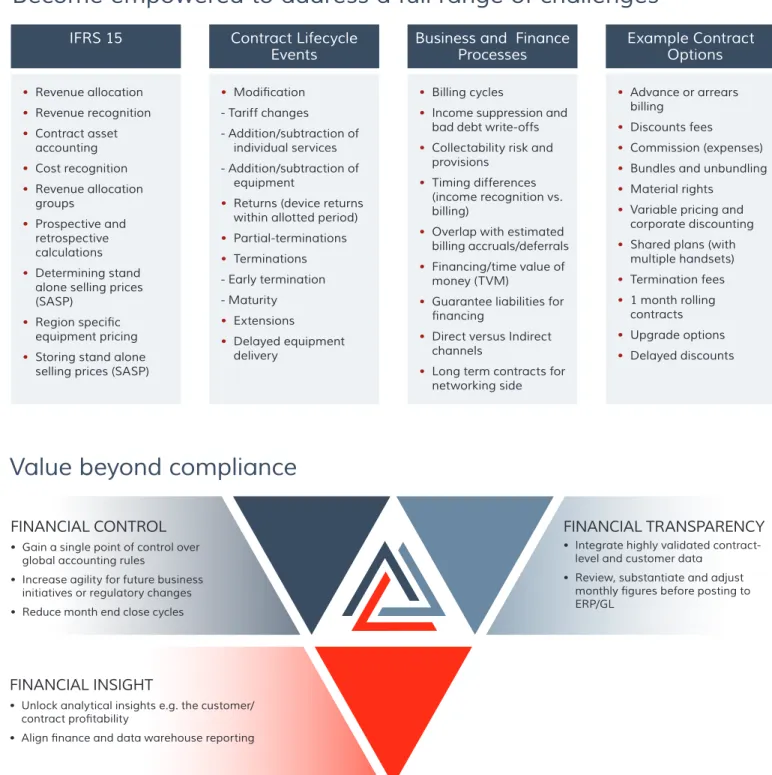
Figure 4: Revenue recognition project requirements extend beyond applying new policyIFRS 15
Contract Lifecycle
Events
Business and Finance
Processes
Example Contract
Options
• Revenue allocation
• Revenue recognition
• Contract asset accounting
• Cost recognition
• Revenue allocation groups
• Prospective and retrospective calculations
• Determining stand alone selling prices (SASP)
• Region specific equipment pricing
• Storing stand alone selling prices (SASP)
• Advance or arrears billing
• Discounts fees
• Commission (expenses)
• Bundles and unbundling
• Material rights
• Variable pricing and corporate discounting
• Shared plans (with multiple handsets)
• Termination fees
• 1 month rolling contracts
• Upgrade options
• Delayed discounts
• Billing cycles
• Income suppression and bad debt write-offs
• Collectability risk and provisions
• Timing differences (income recognition vs. billing)
• Overlap with estimated billing accruals/deferrals
• Financing/time value of money (TVM)
• Guarantee liabilities for financing
• Direct versus Indirect channels
• Long term contracts for networking side
Benefits of the Aptitude Software approach
•
Faster IFRS 15 compliance with a proven & packaged product
•
Streamline financial data management processes with a data preparation layer
•
Gain control over revenue recognition rules with intuitive business user interfaces
•
Agility to address future statutory reporting requirements and to address new business models
•
Rapidly process massive transaction volumes
•
Unlock business insights from transactional data with the repository of granular, finance-accurate data
Become empowered to address a full range of challenges
FINANCIAL INSIGHT
• Unlock analytical insights e.g. the customer/ contract profitability
• Align finance and data warehouse reporting
FINANCIAL CONTROL
• Gain a single point of control over global accounting rules
• Increase agility for future business initiatives or regulatory changes • Reduce month end close cycles
FINANCIAL TRANSPARENCY
• Integrate highly validated contract-level and customer data
• Review, substantiate and adjust monthly figures before posting to ERP/GL
• Modification - Tariff changes
- Addition/subtraction of individual services - Addition/subtraction of
equipment
• Returns (device returns within allotted period)
• Partial-terminations
• Terminations - Early termination - Maturity
• Extensions
• Delayed equipment delivery
THE BROADER CHALLENGE
Whichever way you choose to apply new revenue
recognition policies, there will be wider implications for
your finance operations.
Raw input data must be collected at a contract by contract level of granularity,
regardless of a contract or portfolio approach. Justifying new accounting outputs will
require detailed traceability throughout the finance environment and therefore absolute
data integrity from source to post. Processing the sheer number of calculations required
needs a fast engine and near instant access to underlying information.
These needs impact how you integrate an IFRS 15 solution within your finance
environment:
Aptitude Software offers a modular approach, letting customers choose to implement
just a revenue recognition engine to calculate adjustments or implement components
that automate data collection and finance operations/processes. Aptitude delivers
components that enable finance teams to collect & validate transaction-level data,
control accounting rules & processes and store granular finance-accurate data in
an accounting sub-ledger.
The challenge of IFRS 15 is not simply to define new rules to
report revenue correctly, but to ensure that your finance system is
robust enough to cope with an increasing amount of accounting
Project highlights
Installing ARRE to calculate revenue and performance obligations
• Run through clear web-based business user interfaces • Stores and executes revenue recognition business rules • Allocates revenue to performance obligations
• Calculates contract assets for a given month and amortization schedule
Includes a data preparation layer for all transactional data from a variety of source systems
• Service revenue from billing systems • Equipment revenue from customer’s ERP
• Pre- and post-paid service & equipment data from disparate financial data repositories • Commissions data for employees & dealers
Adding the Aptitude Accounting Hub to validate and process all accounting events
• Posts aggregated financial details to individual GL accounts
• Stores calculated variables in a repository for audit, financial, tax, and operational reporting purposes • Enables straightforward manipulation of new or existing accounting rules
Delivering outputs to existing General Ledger
• Post aggregated financial details to individual GL accounts
• Store calculated variables in a repository for audit, financial, tax, and operational reporting purposes