R E S E A R C H A R T I C L E
Open Access
Identification of novel candidate indicators
for assessing zinc status during pregnancy
in mice from microarray data
Wan Xu
1,2, Hongyan Wu
2and Lixin Shang
2*Abstract
Background:This study aimed to identify potential zinc status indicators and to clarify the mechanisms underlying zinc deficiency-induced organ damage and mortality in mice.
Methods:The dataset GSE97112, including placental tissues of mice fed diets containing normal and low concentrations of zinc, was downloaded and preprocessed. Differentially expressed genes (DEGs) were calculated and identified for zinc deficiency-related gene clusters by using the weighed gene co-expression network analysis (WGCNA) algorithm. The Gene Ontology (GO)-Biological Process (BP) and KEGG pathway of genes in the zinc deficiency-related WGCNA modules were analyzed, and the protein-protein interaction (PPI) network was constructed. In addition, modules of the PPI network were identified, and transcription factors (TFs) and miRNAs regulating DEGs were predicted. Finally, drug-gene interactions were selected.
Results:A total of 1055 DEGs containing 586 up- and 469 down-regulated genes were obtained. Three modules based on WGCNA had high correlation with degree of zinc deficiency. Annexin A1 (ANXA1), C-C motif chemokine receptor 3 (CCR3), C-X-C motif chemokine receptor 2 (CXCR2), and interleukin 2 (IL-2) were hub nodes in the PPI network. Three modules in the PPI network were identified, including module 1 associated with olfactory conduction and module 2 associated with inflammatory response.ANXA1,CCR3,andIL-2 were regulated by TFs. In addition,CXCR2,ANXA, and
IL-2 were drug targets.
Conclusion:CXCR2,ANXA1,andCCR3as well as olfactory receptor-related genes (proteins) may be used as biomarkers to assess zinc status in mice.
Keywords:Zinc deficiency, Differentially expressed genes, Protein-protein interaction, Module
Background
Zinc as an important metal is involved in numerous metabolic processes. Inadequate zinc intake is highly prevalent worldwide. Wessells and Brown have esti-mated that at least 17% of the world’s population suffers from inadequate zinc intake [1]. Zinc is also an indis-pensable trace element during pregnancy, and zinc defi-ciency because of maternal nutritional defidefi-ciency can result in severe fetal growth restriction [2]. Severe zinc deficiency in pregnancy can result in increased fetal loss and high rates of congenital malformations in several
organs of surviving fetuses [3, 4]. Furthermore, inad-equate zinc intake is thought to be a leading cause of in-fant mortality [5].
Plasma zinc is widely used as a biomarker of zinc status
[6, 7]. However, decrease of serum zinc concentration is
only detectable after long-term or severe depletion, mak-ing serum zinc an unreliable biomarker of zinc status [6]. Novel zinc biomarkers, such as the erythrocyte linoleic acid:dihomo-γ-linolenic acid ratio, negatively correlate with plasma Zn status [8–10]. However, there is no valid, sensitive, and reliable biomarker for zinc deficiency, par-ticularly for marginal zinc deficiency. Previous studies have shown that changes in expression of several zinc transporters (ZnTs) influence zinc homeostasis and me-tabolism and subsequently change zinc status [11–14].
* Correspondence:[email protected]
2Department of Obstetrics and Gynecology, PLA Army General Hospital, No.5 Nanmencang, Dongcheng District, Beijing 100700, China
Full list of author information is available at the end of the article
© The Author(s). 2019Open AccessThis article is distributed under the terms of the Creative Commons Attribution 4.0
International License (http://creativecommons.org/licenses/by/4.0/), which permits unrestricted use, distribution, and
Moreover, dysregulation of other molecules, such as cyto-kines [15], ProSAP/Shank family members [16], antioxi-dant enzymes, and heat shock proteins [17] are associated with zinc status. Therefore, abnormal expression of genes could be a potential biomarker for zinc deficiency during pregnancy in the placenta.
In this study, microarray technology and bioinformatics methods were used to identify genes whose expression was influenced by zinc deficiency using the microarray data GSE97112 [18], which has been used to illustrate the relationship between abnormal gene expression and mean arterial pressure changes during gestation in mice. A systematic bioinformatics analysis of GSE97112 was conducted in the study. The results may help to identify potential zinc status indicators and to clarify the mecha-nisms underlying zinc deficiency-induced organ damage and mortality.
Materials and methods
Data downloading and pre-processing
The original CEL file of the dataset GSE97112 [18] was downloaded from Gene Expression Omnibus (GEO,http:// www.ncbi.nlm.nih.gov/geo/). The samples were placental tissues of seven-week-old C57Bl/6J female mice fed a diet containing different concentrations of zinc from 6 weeks prior to gestation to the conclusion of experiments. The an-imals were divided into the following groups: control (40 mg/kg zinc, 20 cases) and zinc deficient (10 mg/kg zinc, 12 cases). The chip platform was Affymetrix Mouse Gene 2.1 ST Array, and the data were downloaded in June 2018.
The raw data were read using the R 3.4.0 extension pack-age oligo [19] (Version 1.44.0,
http://www.bioconductor.-org/packages/release/bioc/html/oligo.html), preprocessed
using the robust multi-array average (RMA) method [20, 21] for data normalization, and were annotated using R package mogene21sttranscriptcluster.db (version 8.7.0, http://bioconductor.org/packages/release/data/annotation
/html/mogene21sttranscriptcluster.db.html) to remove
probes that did not match the transcript (Gene symbol). For different probes mapped to the same gene, the mean value of the different probes was taken as the final expres-sion value of the gene.
Differential expression analysis of genes
Differentially expressed genes (DEGs) were calculated using the empirical Bayes linear model in the R package limma [22] (Version 3.32.5,
http://bioconductor.org/packages/re-lease/bioc/html/limma.html) for the P value of all genes.
The significance threshold for DEGs was aPvalue < 0.05.
Disease related modules and genes by weighed gene co-expression network analysis (WGCNA)
The WGCNA algorithm was used to discover gene clus-ters (or modules) in high-throughput data that were
highly correlated with the sample phenotype. Modular characteristic genes in these modules were summarized, and the modules that were significantly associated with the phenotype were further evaluated.
The R package WGCNA [23] (Version 1.61, https:// cran.r-project.org/web/packages/WGCNA/) was used to identify gene sets that were significantly associated with zinc deficiency from DEGs. By setting a series of soft-thresholding power values, the correlation coeffi-cient and the average connection degree of the connec-tion degrees k and p(k) under each power value were calculated. The threshold was a correlation coefficient > 0.85. Based on clustering and dynamic pruning, the highly correlated genes were aggregated into modules. Finally, the WGCNA modules associated with the disease (zinc deficiency) were identified.
Functional enrichment analysis
The commonly used enrichment analysis tool Database for Annotation Visualization and Integrated Discovery (DAVID) [24] (version 6.8, https://david-d.ncifcrf.gov/) that was based on hypergeometric distribution was used to analyze the Gene Ontology (GO)-Biological Process (BP) [25] and KEGG pathway [26] of genes in the zinc deficiency-related WGCNA modules. Results with a P
value < 0.05 were considered to be significantly enriched.
Protein-protein interaction (PPI) network construction
PPI network is available for identification of cellular functions of proteins in various organisms [27], facilitat-ing to identification of key proteins associated with zinc deficiency. The interactions between gene-encoded pro-teins in the disease-related WGCNA modules were pre-dicted based on the STRING [28] (version: 10.0, http:// www.string-db.org/) database. The input gene set was the genes in WGCNA modules which were significantly associated with zinc deficiency. The species was Mus musculus, and the parameter of PPI score was set to 0.7 (high confidence). Protein nodes were all included in the disease-related WGCNA modules.
After obtaining the PPI relationship, a network diagram was constructed using Cytoscape software [29]. Then the CytoNCA [30] plugin (version 2.1.6, http://apps.cytosca-pe.org/apps/cytonca) was used to analyze the topological properties of the network without weighting. The Degree Centrality (DC), Betweenness Centrality (BC), and Closeness Centrality (CC) were obtained and nodes were ranked based on topological properties of the network. The most import-ant node of the PPI network involved in protein interaction was identified and designated as the hub protein.
Modules of the PPI network
between network topology and network components was obtained using default parameters (Degree Cutoff = 2, Node Score Cutoff = 0.2, K-core = 2, Max.Depth = 100). DAVID was also used to perform GO-BP and KEGG pathway enrichment analysis for genes in mod-ules with threshold scores > 4.
Predicting transcription factors (TFs) and miRNAs regulating DEGs
TFs and miRNAs can play important regulatory roles in gene expression. To better understand the regulatory mechanism affected by zinc deficiency, TFs and miRNAs that could regulate key genes/proteins associated with zinc deficiency were predicted. In this study, the WebGestalt GAST [32] (http://www.webgestalt.org/option.php) tool was used for prediction of miRNA and TFs in the PPI network. The Overrepresentation Enrichment Analysis (ORA) enrichment method was used to predict miRNA-target and TF-miRNA-target with the minimum enriched gene number of 5.
Therapeutic drug prediction
The Drug-Gene Interaction database (DGIdb) database [33] (http://www.dgidb.org/) was used to predict genes targeted by the therapeutic drug, which will provide a new perspective for designing effective targeted drugs for pre-vention of zinc deficiency. Literature-supported drug-gene interactions were selected to construct network maps.
Results
Differential expression analysis
After data preprocessing, a gene expression matrix containing 32 samples and 23,992 genes was obtained. The distribution of gene expression levels before and after standardization showed that the gene expression levels between samples were nearly a straight line after normalization, which was suitable for further analysis.
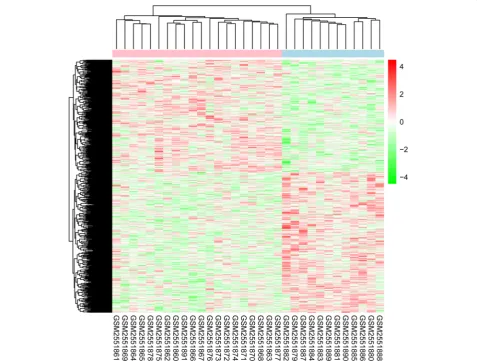
Based on the determined thresholds, 1055 DEGs con-taining 586 up- and 469 down-regulated genes were ob-tained. The bidirectional clustering heat map of DEGs was shown in Fig. 1. The results showed that DEGs could
clearly distinguish the samples according to the zinc concentration, indicating that these genes showed sig-nificant changes following treatment with different concentrations of zinc, which suggested that these were genes potentially associated with degree of zinc deficiency.
Modules and genes screened by WGCNA
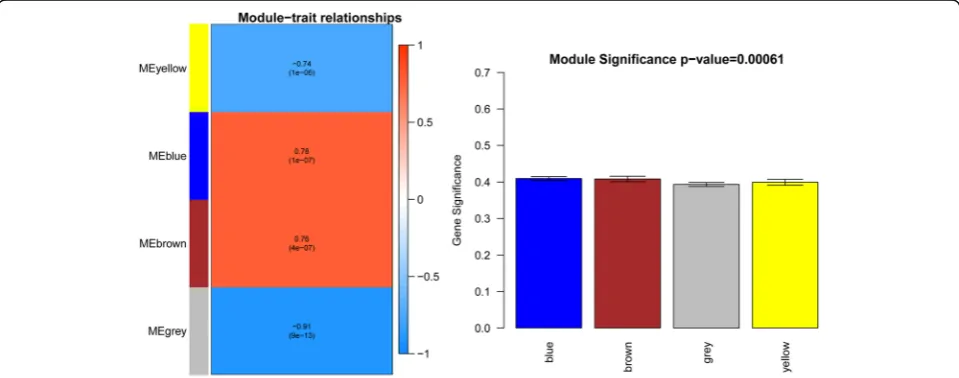
To further screen genes associated with zinc deficiency, we performed a WGCNA analysis of the differential gene expression matrices obtained in the previous step. According to the method, the power value when the cor-relation coefficient squared value of connection degree k and p(k) for the first time to reach 0.85 (green line) were selected, that was, power = 7; under this power param-eter, the average connectivity of the constructed co-expressing network nodes was 0.875, as shown in Fig. 2 (right). In addition, k was negatively correlated with p(k), indicating that the selected power value could be used for establishing a gene-scale network.
Based on clustering and dynamic pruning, 1055 highly correlated genes were clustered into 5 modules, where the grey module was a collection of genes that could not be aggregated to other modules. The 5 modules were clustered when the correlation coefficient was greater than 0.8, that was, the module with the dissimilarity coefficient less than 0.2 was merged. As a result, 4 WGCNA modules were constructed.
Two methods were used to mine modules related to degree of zinc deficiency: the correlation between each module’s feature vector gene and the degree of zinc defi-ciency was calculated; the correlation between the traits and the expression of each gene in each module as the significance of the trait in the module, with greater
significance signifying greater relevance between the module and the trait (Fig.2, left). As a result, three mod-ules (except for the gray) had high correlation with de-gree of zinc deficiency (Fig.2, right). The yellow module contained 160 genes including 81 up-regulated and 79 down-regulated genes. The blue module contained 469 differential genes, of which 292 were up-regulated and 177 were down-regulated. The brown module contained 185 genes, of which 104 were up-regulated and 81 were down-regulated.
Functional terms and pathways enriched by DEGs in WGCNA modules
GO-BP enrichment analysis and KEGG pathway enrich-ment analysis results showed that the genes in the blue module were mainly associated with chloroplast trans-membrane transport and cell meiosis. The genes in the brown module were mainly enriched in GO-BP terms of transcriptional regulation, and multicellular organism development, as well as pathways related to glyceropho-spholipid metabolism, and the transcription factor regulatory of the FOXO family. The yellow module gene in GO-BP terms was related to negative regulation of myoblast differentiation, multicellular organism develop-ment, and cell differentiation, as well as pathways of cytokines, and transport and catabolic of peroxidases.
PPI network constructed by DEGs in WGCNA modules
PPI analysis of DEGs in three WGCNA modules was performed. Two hundred forty-six PPI relationship pairs for 150 DEGs were obtained. Among these, 75 genes were up-regulated and 75 genes were down-regulated. The topological properties of the PPI network were analyzed, and the DC, BC, and CC scores of the top 30
nodes were shown in Table 1. DEGs of Annexin A1 (ANXA1), C-C motif chemokine receptor 3 (CCR3), C-X-C motif chemokine receptor 2 (CXCR2), dynein light chain, LC8-type 2 (DYNLL2), interleukin 2 (IL-2), SEC13 homolog, nuclear pore and COPII coat complex component (SEC13), and transforming growth factor beta 1 (TGFB1) were in three ranks, which might repre-sent hub nodes in the network.
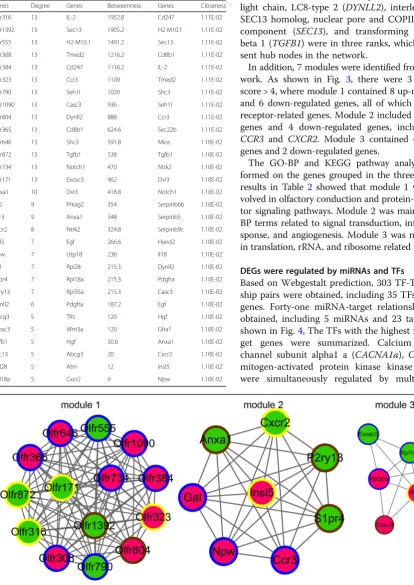
In addition, 7 modules were identified from the PPI net-work. As shown in Fig. 3, there were 3 modules with score > 4, where module 1 contained 8 up-regulated genes and 6 down-regulated genes, all of which were olfactory receptor-related genes. Module 2 included 4 up-regulated genes and 4 down-regulated genes, including ANXA1,
CCR3 and CXCR2. Module 3 contained 4 up-regulated genes and 2 down-regulated genes.
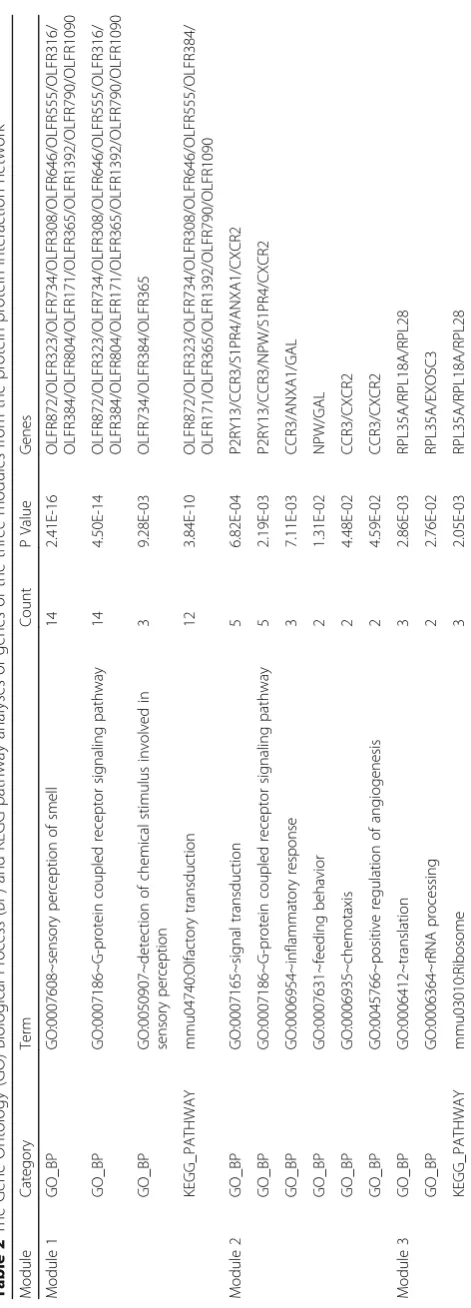
The GO-BP and KEGG pathway analyses were per-formed on the genes grouped in the three modules. The results in Table 2 showed that module 1 was mainly in-volved in olfactory conduction and protein-coupled recep-tor signaling pathways. Module 2 was mainly enriched in BP terms related to signal transduction, inflammatory re-sponse, and angiogenesis. Module 3 was mainly involved in translation, rRNA, and ribosome related pathways.
DEGs were regulated by miRNAs and TFs
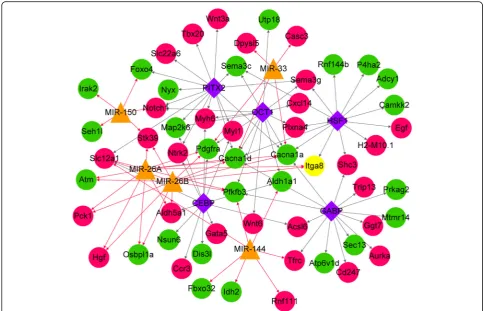
Based on Webgestalt prediction, 303 TF-Target relation-ship pairs were obtained, including 35 TFs and 85 target genes. Forty-one miRNA-target relationship pairs were obtained, including 5 miRNAs and 23 target genes. As shown in Fig.4, The TFs with the highest number of tar-get genes were summarized. Calcium voltage-gated channel subunit alpha1 a (CACNA1a), CACNA1d, and mitogen-activated protein kinase kinase 6 (MAP2K6) were simultaneously regulated by multiple TFs and Table 1Top 30 nodes ranked by Degree Centrality (DC),
Betweenness Centrality (BC), and Closeness Centrality (CC) in the protein-protein interaction network
Genes Degree Genes Betweenness Genes Closeness
Olfr316 13 IL-2 1952.8 Cd247 1.11E-02
Olfr1392 13 Sec13 1905.2 H2-M10.1 1.11E-02
Olfr555 13 H2-M10.1 1491.2 Sec13 1.11E-02
Olfr308 13 Tmed2 1216.2 Cd8b1 1.11E-02
Olfr384 13 Cd247 1116.2 IL-2 1.11E-02
Olfr323 13 Ccr3 1109 Tmed2 1.11E-02
Olfr790 13 Seh1l 1020 Shc3 1.11E-02
Olfr1090 13 Casc3 936 Seh1l 1.11E-02
Olfr804 13 Dynll2 888 Ccr3 1.11E-02
Olfr365 13 Cd8b1 624.6 Sec22b 1.11E-02
Olfr646 13 Shc3 591.8 Mios 1.10E-02
Olfr872 13 Tgfb1 538 Tgfb1 1.10E-02
Olfr734 13 Notch1 470 Ntrk2 1.10E-02
Olfr171 13 Exosc3 462 Dvl3 1.10E-02
Anxa1 10 Dvl3 418.8 Notch1 1.10E-02
IL-2 9 Prkag2 354 Serpinb6b 1.10E-02
Ccr3 9 Anxa1 348 Serpinb5 1.10E-02
Cxcr2 8 Ntrk2 324.8 Serpinb9c 1.10E-02
Insl5 7 Egf 266.6 Hand2 1.10E-02
Npw 7 Utp18 236 Il18 1.10E-02
Gal 7 Rpl28 215.3 Dynll2 1.10E-02
S1pr4 7 Rpl18a 215.3 Pdgfra 1.10E-02
P2ry13 7 Rpl35a 215.3 Casc3 1.10E-02
Dynll2 6 Pdgfra 187.2 Egf 1.10E-02
Abcg3 5 Tfrc 120 Hgf 1.10E-02
Exosc3 5 Wnt3a 120 Gfra1 1.10E-02
Tgfb1 5 Hgf 30.6 Anxa1 1.10E-02
Sec13 5 Abcg3 20 Cxcr2 1.10E-02
Rpl28 5 Atm 12 Insl5 1.10E-02
Rpl18a 5 Cxcr2 9 Npw 1.10E-02
miRNAs. According to the results of functional and pathway analysis, these genes were involved in solute transmembrane transport, positive regulation of apoptosis, multicellular organism development, and biological process of MAPK activity activation. The hub proteins
ANXA1,CCR3,DYNLL2,IL-2,SEC13, andTGFB1in the above PPI network were regulated by the TFs of P53/ TATA, CCAAT/enhancer binding protein (CEBP), Paired Box 3 (PAX3), Nuclear Factor Kappa B (NFKB)/E74 like ETS transcription factor 2 (ELF2)/heat-shock transcription factor 2 (HSF2), GA-binding protein (GABP), and ELF1/ myeloid zinc finger gene 1 (MZF1), respectively.
Therapeutic drug prediction
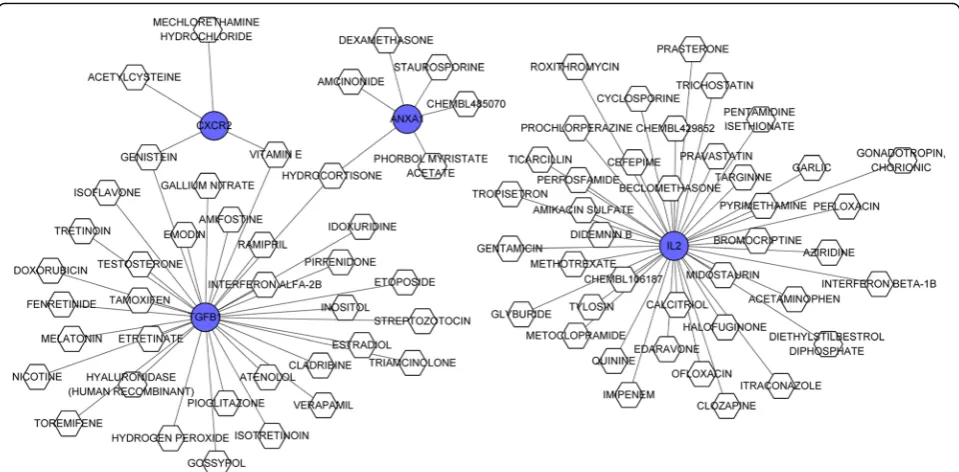
Based on the DGIdb database, the interaction network diagram of drug-gene interactions was constructed (Fig. 5). Eighty-three drug-target relationship pairs, in-cluding 4 DEGs and 80 interaction drugs were identified. The 4 DEGs wereCXCR2,ANXA,TGFB1,andIL-2.
Discussion
Zinc is reported to exert antioxidant activity through guarding sulfhydryl groups and stabilization of cell
membranes, and it may play a key role in modulating cell cycle and apoptosis [34, 35]. Two zinc transporter families, ZnTs and Zrt-, Irt-related proteins (ZIPs) are shown to function in zinc mobilization across biological membranes [14]. For instance, ZnT 1 is shown to play a key role in zinc homeostasis in adult mice via modulating the transport of maternal zinc into the embryonic environment, and deletion of the Zinc Transporter 1 gene in mice may result in embryonic lethal [36]. ZIP8 can function indispensable effects on both multiple-organ or-ganogenesis and hematopoiesis during early embryogen-esis in mice [37]. Moreover, Zinc deficiency during pregnancy is harmful for both the mother and the fetus [38], which is considered as a risk factor for adverse pregnancy outcomes and preterm delivery [39]. As such, effective monitoring for zinc deficiency is very important. In this study, some potential biomarkers for zinc defi-ciency during pregnancy in the placentas of mice were identified.
Zinc is essential for immunity, oxidative stress, and chronic inflammatory response [40]. Zinc deficiency is involved in immune dysfunction and systemic inflamma-tion [41] and was found to exert a significant influence
on the outcome of inflammatory diseases, such as in-flammatory bowel disease [42]. Moreover, maternal zinc supplementation is found to impact beneficial effects on neonatal immune status and infant morbidity from in-fectious diseases [43]. This study revealed that CXCR2,
CCR3,ANXA1, andIL-2 were hub nodes in the PPI net-work and were regulated by TFs. The chemokine recep-torCXCR2, involving in the innate immune system, is a receptor for interleukin 8 (IL-8). It mediates neutrophil migration to sites of inflammation and angiogenic effects [44].CCR3encodes a receptor for C-C type chemokines which contributes to accumulation and activation of eosinophils and inflammatory cells [45]. IL-2 regulates proliferation of T and B lymphocytes and plays an
essen-tial role in the immune response [46]. ANXA1 has
anti-inflammatory activity and is important for innate immune response [47]. The functional enrichment re-sults confirmed the relationship between three genes and immune response. Prasad et al. suggested thatIL-2 and IL-2 receptors were down-regulated during zinc deficiency [48]. However, there is no evidence of rela-tionship of abnormal expression of the three genes (CXCR2,CCR3and ANXA1) and zinc deficiency. There-fore,CXCR2, ANXA1,andCCR3would be potential bio-markers for zinc deficiency in mice. In addition, therapeutic drug prediction indicated that CXCR2 and
ANXA1 may be targets of drugs, suggesting these two genes may be implicated as therapeutic targets to reduce risk of zinc deficiency. Notably, there is no currently available information that supports the routine use of zinc supplementation on improving pregnancy outcome
[43]. Moreover, it is challenging to the implementation of targeted interventions for reducing the adverse effects of zinc deficiency through therapeutic and preventive supplementation, fortification, and biofortification [39]. Given the side effects of many drugs, especially to the fetus, the best option is to consume dietary zinc (abun-dant in meat and beans) for improving mild zinc defi-ciency, rather than using medicines.
In addition, it is noted that the PPI network module 1 was composed entirely olfactory receptor-related genes. Zinc is highly concentrated in the olfactory bulb of the brain and is important for embryonic neural develop-ment of the olfactory system [49, 50]. In recent years, zinc research has mainly focused on zinc metal nanopar-ticles, which could enhance odorant responses of olfac-tory receptor neurons [51]. These results suggested that zinc deficiency may affect development of the central ol-factory system. Therefore, these genes may be used as gene biomarkers for zinc deficiency in pregnant mice.
However, the nutrients in mouse diet were largely un-known because the microarray data were downloaded from a public database, and the presence of other metals such as cadmium in the diet that could compete with Zn absorption was unknown. Moreover, we did not per-form experiments or analyze another appropriate dataset to validate the differential expression of key genes asso-ciated with zinc deficiency. Furthermore, it is hard to ex-trapolate mouse data to human biochemistry, as the genetic origin of the placenta differs between mice and humans. Further experiments using human samples will provide stronger evidence for clinical guidance.
Conclusion
Embryonic olfactory system development, immune dys-function, and systemic inflammation may be disturbed by zinc deficiency. Expression levels ofCXCR2, ANXA1,
and CCR3, as well as olfactory receptor-related genes (proteins) may be used as biomarker to assess zinc status in mice.
Abbreviations
ANXA1:Annexin A1; BC: Betweenness Centrality; BP: Biological Process; CC: Closeness Centrality;CCR3: C-C motif chemokine receptor 3; CEBP: CCAA T/enhancer binding protein;CXCR2: C-X-C motif chemokine receptor 2; DC: Degree Centrality; DEGs: Differentially expressed genes;DYNLL2: Dynein light chain, LC8-type 2; ELF2: ETS transcription factor 2; GABP: GA-binding protein; GO: Gene Ontology; HSF2: Heat-shock transcription factor 2; IL-2: Interleukin 2; IL-8: Interleukin 8;MAP2K6: Mitogen-activated protein kinase kinase 6; MZF1: Myeloid zinc finger gene 1; NFKB: Nuclear Factor Kappa B; ORA: Overrepresentation Enrichment Analysis; PAX3: Paired Box 3; PPI: Protein-protein interaction; TF: Transcription factor;TGFB1: Transforming growth factor beta 1; WGCNA: Weighted gene co-expression network ana-lysis; ZIPs: Zrt-, Irt-related proteins; ZnTs: Zn transporters
Acknowledgements
None.
Author contributions
WX contributed to the study design, data collection, data analysis, data interpretation and writing of the manuscript. HYW contributed to the data collection. LXS contributed to the study design. All authors read and approved the final manuscript.
Funding
This work was supported by the Eleventh Five-Year programs for Science and Technology Development of Military (Program No. 06G019).
Availability of data and materials
The datasets used and analyzed during the current study are available from the corresponding author upon request.
Ethics approval and consent to participate
Not applicable.
Consent for publication
Not applicable.
Competing interests
The authors declare that they have no competing interests.
Publisher’s Note
Springer Nature remains neutral with regard to jurisdictional claims in published maps and institutional affiliations.
Author details 1
The Fourth Military Medical University, Xi’an, Shaanxi Province 710032, China.2Department of Obstetrics and Gynecology, PLA Army General Hospital, No.5 Nanmencang, Dongcheng District, Beijing 100700, China.
Received: 29 July 2018 Accepted: 29 January 2019
References
1. Wessells KR, Brown KH. Estimating the global prevalence of zinc deficiency: results based on zinc availability in national food supplies and the prevalence of stunting. PLoS One. 2012;7:e50568.
2. Wang H, Hu YF, Hao JH, Chen YH, Su PY, Wang Y, Yu Z, Fu L, Xu YY, Zhang C. Maternal zinc deficiency during pregnancy elevates the risks of fetal growth restriction: a population-based birth cohort study. Sci Rep. 2015;5:11262. 3. Hurley LS, Mutch PB. Prenatal and postnatal development after transitory
gestational zinc deficiency in rats. J Nutr. 1973;103:649–56.
4. Uriu-Adams JY, Keen CL. Zinc and reproduction: effects of zinc deficiency on prenatal and early postnatal development. Birth Defects Research Part B: Developmental and Reproductive Toxicology. 2010;89:313–25.
5. Wadhwa N, Basnet S, Natchu UCM, Shrestha LP, Bhatnagar S, Sommerfelt H, Strand TA, Ramji S, Aggarwal KC, Chellani H. Zinc as an adjunct treatment for reducing case fatality due to clinical severe infection in young infants: study protocol for a randomized controlled trial. Bmc Pharmacology & Toxicology. 2017;18:56.
6. Lowe NM, Fekete K, Decsi T, Fairweathertait SJ, Harvey LJ, Casgrain A, Hooper L. Methods of assessment of zinc status in humans: a systematic review. Am J Clin Nutr. 2009;89:2025S–39S.
7. Soltan MH, Jenkins DM. Maternal and fetal plasma zinc concentration and fetal abnormality. British Journal of Obstetrics & Gynaecology. 2010;89:56–8. 8. Reed S, Qin X, Ranressler R, Brenna JT, Glahn RP, Tako E. Dietary zinc
deficiency affects blood linoleic acid: Dihomo-γ-linolenic acid (LA:DGLA) ratio; a sensitive physiological marker of zinc status in vivo (Gallus gallus). Nutrients. 2014;6:1164–80.
9. Holen T, Norheim F, Gundersen TE, Mitry P, Linseisen J, Iversen PO, Drevon CA. Biomarkers for nutrient intake with focus on alternative sampling techniques. Genes Nutr. 2016;11:12.
10. Knez M, Stangoulis JCR, Zec M, Debeljak-Martacic J, Pavlovic Z, Gurinovic M, Glibetic M. An initial evaluation of newly proposed biomarker of zinc status in humans - linoleic acid: dihomo-γ-linolenic acid (LA:DGLA) ratio. Clinical Nutrition Espen. 2016;15:85–92.
11. Andree KB, Kim J, Kirschke CP, Gregg JP, Paik H, Joung H, Woodhouse L, King JC, Huang L. Investigation of lymphocyte gene expression for use as biomarkers for zinc status in humans. J Nutr. 2004;134:1716.
12. Dufner-Beattie J, Huang ZL, Geiser J, Xu W, Andrews GK. Mouse ZIP1 and ZIP3 genes together are essential for adaptation to dietary zinc deficiency during pregnancy. Genesis. 2010;44:239–51.
13. Alsufiani HMA. Zinc intake, zinc status and expression of zinc transporter genes in younger and older Saudi adults; 2016.
14. Kambe T, Tsuji T, Hashimoto A, Itsumura N. The physiological, biochemical, and molecular roles of zinc transporters in zinc homeostasis and metabolism. Physiol Rev. 2015;95:749–84.
15. Aydemir TB, Blanchard RK, Cousins RJ. Zinc supplementation of young men alters metallothionein, zinc transporter, and cytokine gene expression in leukocyte populations. Proc Natl Acad Sci U S A. 2006;103:1699–704. 16. Grabrucker S, Jannetti L, Eckert M, Gaub S, Chhabra R, Pfaender S, Mangus K,
Reddy PP, Rankovic V, Schmeisser MJ. Zinc deficiency dysregulates the synaptic ProSAP/shank scaffold and might contribute to autism spectrum disorders. Brain A Journal of Neurology. 2014;137:137–52.
17. Wu C, Zhang W, Mai K, Xu W, Zhong X. Effects of dietary zinc on gene expression of antioxidant enzymes and heat shock proteins in
hepatopancreas of abalone Haliotis discus hannai. Comp Biochem Physiol C Toxicol Pharmacol. 2011;154:1–6.
18. Wilson RL, Leemaqz SY, Goh Z, Mcaninch D, Jankovickarasoulos T, Leghi GE, Phillips JA, Colafella KM, Tran C, O’Leary S. Zinc is a critical regulator of placental morphogenesis and maternal hemodynamics during pregnancy in mice. Sci Rep. 2017;7:15137.
19. Gautier L, Cope L, Bolstad BM, Irizarry RA. Affy--analysis of Affymetrix GeneChip data at the probe level. Bioinformatics. 2004;20:307–15. 20. Bolstad BM, Irizarry RA, Astrand M, Speed TP. A comparison of normalization
methods for high density oligonucleotide array data based on variance and bias. Bioinformatics. 2003;19:185–93.
21. Irizarry RA, Hobbs B, Collin F, Beazer-Barclay YD, Antonellis KJ, Scherf U, Speed TP. Exploration, normalization, and summaries of high density oligonucleotide array probe level data. Biostatistics. 2003;4:249–64. 22. Smyth GK. Limma: linear models for microarray data, in bioinformatics and
computational biology solutions using R and Bioconductor. Springer. 2005: 397–420.
23. Langfelder P, Horvath S. WGCNA: an R package for weighted correlation network analysis. BMC bioinformatics. 2008;9:559.
24. Huang DW, Sherman BT, Lempicki RA. Systematic and integrative analysis of large gene lists using DAVID bioinformatics resources. Nat Protocols. 2008;4: 44–57.
25. Ashburner M, Ball CA, Blake JA, Botstein D, Butler H, Cherry JM, Davis AP, Dolinski K, Dwight SS, Eppig JT, et al. Gene ontology: tool for the unification of biology. Nat Genet. 2000;25:25–9.
27. Patil A, Nakamura H. Filtering high-throughput protein-protein interaction data using a combination of genomic features. BMC bioinformatics. 2005;6:100. 28. Szklarczyk D, Franceschini A, Wyder S, Forslund K, Heller D, Huerta-Cepas J,
Simonovic M, Roth A, Santos A, Tsafou KP. STRING v10: protein–protein interaction networks, integrated over the tree of life. Nucleic acids research. 2014; gku1003.
29. Shannon P, Markiel A, Ozier O, Baliga NS, Wang JT, Ramage D, Amin N, Schwikowski B, Ideker T. Cytoscape: a software environment for integrated models of biomolecular interaction networks. Genome Res. 2003;13:2498. 30. Yu Tang ML, Wang J, Pan Y, Wu f-X. CytoNCA: a cytoscape plugin for centrality
analysis and evaluation of biological networks. BioSystems. 2014;11:005. 31. Bader GDHC. An automated method for finding molecular complexes in
large protein interaction networks. BMC Bioinformatics. 2003;13. 32. Wang J, Duncan DT, Shi Z, Zhang B: WEB-based GEne SeT AnaLysis Toolkit
(WebGestalt): update 2013. In Design, Automation & Test in Europe Conference & Exhibition 2013: 1251–1254.
33. Cotto KC, Wagner AH, Feng YY, Kiwala S, Coffman AC, Spies G, Wollam A, Spies NC, Griffith OL, Griffith M. DGIdb 3.0: a redesign and expansion of the drug-gene interaction database. Nucleic Acids Research. 2017.
34. Bossy-Wetzel E, Talantova MV, Lee WD, Schölzke MN, Harrop A, Mathews E, Götz T, Han J, Ellisman MH, Perkins GA. Crosstalk between nitric oxide and zinc pathways to neuronal cell death involving mitochondrial dysfunction and p38-activated K+ channels. Neuron. 2004;41:351–65.
35. Rogers JM, Taubeneck MW, Daston GP, Sulik KK, Zucker RM, Elstein KH, Jankowski MA, Keen CL. Zinc deficiency causes apoptosis but not cell cycle alterations in organogenesis-stage rat embryos: effect of varying duration of deficiency. Teratology. 1995;52:149–59.
36. Andrews G, Wang H, Dey S, Palmiter RD. Mousezinc transporter 1 gene provides an essential function during early embryonic development. Genesis. 2004.
37. Gálvez-Peralta M, He L, Jorge-Nebert LF, Wang B, Miller ML, Eppert BL, Afton S, Nebert DW. ZIP8 zinc transporter: indispensable role for both multiple-organ multiple-organogenesis and hematopoiesis in utero. PLoS One. 2012;7:e36055. 38. Gianluca T, Roberto BC, Di CM, Andrea P, Vincenzo A, Francesca C, Mario
DC. Zinc in early life: a key element in the fetus and preterm neonate. Nutrients. 2015;7:10427–46.
39. Lamberti LM, Walker CLF, Black RE: Zinc deficiency in childhood and pregnancy: evidence for intervention effects and program responses. In Hidden Hunger. Volume 115: Karger Publishers; 2016: 125–133.
40. Prasad AS. Zinc: role in immunity, oxidative stress and chronic inflammation. Current Opinion in Clinical Nutrition & Metabolic Care. 2009;12:646–52. 41. Wong CP, Rinaldi NA, Ho E. Zinc deficiency enhanced inflammatory
response by increasing immune cell activation and inducing IL6 promoter demethylation. Mol Nutr Food Res. 2015;59:991–9.
42. Siva S, Rubin DT, Gulotta G, Wroblewski K, Pekow J. Zinc deficiency is associated with poor clinical outcomes in patients with inflammatory bowel disease. Inflamm Bowel Dis. 2017;23:152.
43. Shah D, Sachdev H. Zinc deficiency in pregnancy and fetal outcome. Nutr Rev. 2006;64:15–30.
44. Romagnani P, Lasagni L, Annunziato F, Serio M, Romagnani S. CXC chemokines: the regulatory link between inflammation and angiogenesis. Trends Immunol. 2004;25:201–9.
45. Xanthou G, Duchesnes CE, Williams TJ, Pease JE. CCR3 functional responses are regulated by both CXCR3 and its ligands CXCL9, CXCL10 and CXCL11. Eur J Immunol. 2010;33:2241–50.
46. Boyman O, Sprent J. The role of interleukin-2 during homeostasis and activation of the immune system. Nat Rev Immunol. 2012;12:180–90. 47. Gavins FN, Hickey MJ. Annexin A1 and the regulation of innate and
adaptive immunity. Front Immunol. 2012;3:354.
48. Prasad AS. Effects of zinc deficiency on Th1 and Th2 cytokine shifts. J Infect Dis. 2000;182:S62.
49. Mackay-Sim A, Dreosti IE: Olfactory function in zinc-deficient adult mice. 1989, 76:207.
50. Horning MS, Trombley PQ. Zinc and copper influence excitability of rat olfactory bulb neurons by multiple mechanisms. J Neurophysiol. 2001;86:1652–60. 51. Vodyanoy V. Zinc nanoparticles interact with olfactory receptor neurons.