189
Enhancement
of
dissolution
of
poorly
water
soluble
raloxifene
hydrochloride by preparing nanoparticles
Ashok Kumar Suthar*1, Shailendra Singh Solanki2, Rakesh Kumar Dhanwani3
1. Sandoz Pvt. Ltd., Belapur Road, Thane, Navi Mumbai, India.
2. Department of Pharmaceutics, College of Pharmacy, IPS Academy, Rajendra Nagar,
Indore, India.
3. Formulation Research and Development, Dr. Reddy’s Laboratories Ltd., Hyderabad.
India.
*Corresponding author: [email protected]
ABSTRACT:
Nanoparticle engineering offers promising methods for the formulation of poorly water
soluble drug compounds. The aim of the present work was to enhance dissolution and
oral bioavailability of poorly water-soluble Raloxifene Hydrochloride (RH) by preparing
stable nanoparticles. Mechanism of dissolution enhancement was also investigated.
nanoparticles were produced by combining the antisolvent precipitation and high
pressure homogenization (HPH) approaches in the presence of HPMC E5 and SDS (2:1,
w/w). Then the nanosuspensions were converted into dry powders by spray-drying. The
effect of process variables on particle size and physical state of drug were investigated.
The physicochemical properties of raw RH and nanoparticles were characterized by
Scanning Electron Microscopy (SEM). The images of SEM revealed spherical RH
nanoparticles. Nanoparticles showed good dissolution profile. The process by combining
the antisolvent precipitation under sonication and HPH was produce small, uniform
and stable nanoparticles which markedly enhanced dissolution rate.
Key words: Nanoparticles, Raloxifene Hydrochloride, Dissolution, Antisolvent.
INTRODUCTION:
The poor solubility and slow dissolution rate of many drugs are a major industrial
problem, especially for pharmaceutical scientists involved in drug discovery and drug
development. It has been reported that about 40% of the compounds being developed
by the pharmaceutical industry are poorly water soluble or “insoluble” in water [1-2].
190
soluble drugs in terms of their vivo performance due to their inadequate ability to be
wetted by and dissolved in the fluid. Hence, improving the solubility and dissolution
rate of poorly water soluble drugs is very important and significantly challenging to
pharmaceutical researchers seeking to achieve optimum absorption of new drug
candidates. According to the Noyes-Whitney equation, the saturation solubility and
dissolution rate of poorly water soluble drugs can be enhanced by reducing the particle
size to the nano- range, thus increasing the interfacial surface area [3-4].
In recent years, nanoparticle engineering processes have become promising approaches
for the enhancement of dissolution rates of poorly aqueous soluble drugs [5-7]. The
formation of nanoparticles is based on cavitation forces, collisions as well as shear
forces created in high pressure homogenizers such as the piston-gap homogenizer [8].
Raloxifene hydrochloride (RH) is a selective estrogen receptor modulator (SERM) shown
to be effective in the prevention of osteoporosis with potential utility as a substitute for
long-term female hormone replacement therapy [9]. RH is a poorly water soluble drug
known to demonstrate dissolution and solubility limited absorption [10]. Although the
RH being a low solubility drug with high permeability, is classified a Class II drug in
BCS adopted by USFDA. Hence, increasing the solubility of RH may enhance its
dissolution. Thus the aim of this study was to prepare and investigate the properties
and mechanism of dissolution enhancement of RH- nanoparticles.
MATERIALS AND METHODS:
Materials
Raloxifene HCl was purchased from Jubilant Organosys Manufactured by Glochem
Laboratory, Hyderabad, India. Hydroxypropyl Methylcellulose (HPMC E5) was obtained
from Signet Chemicals. Sodium Dodecyl Sulfate (SDS) and Tween 80 were obtained
from Tianjin Bodi Chemical. Methanol and Ethyl Acetate was of chromatographic grade
and all other chemicals, reagents and solutions used were of analytical grade.
Preparation of nanosuspensions:
Nanosuspensions were prepared in the following two steps. Firstly, the initial RH
suspensions were produced by antisolvent precipitation under sonication. Acetone and
water were used as solvent and antisolvent respectively and the ratio of solvent to
antisolvent was 1:20. Raw RH was completely dissolved in 10 mL acetone to prepare an
191
aqueous solution (containing HPMC E5 and SDS, 2:1, w/w) under sonication for 5 min.
Continuous sonication was applied via a probe sonicator. Thus, preliminary RH
suspensions were obtained and labeled as SO-RH. The suspensions were kept under
vacuum at room temperature for 2 h to remove the acetone. Then, the RH suspensions
were further homogenized by high pressure homogenization, using a homogenizer at
500 bars for 8 minutes to obtain the final product, RH nanosuspensions labeled as
SHSO-RH.
Spray-drying of RH nanosuspensions
Spray-drying was used for solidification of RH nanosuspensions. A spray dryer was
used to convert RH nanosuspensions into dry powders. The aspirator was operated at
0.6 m3/min and the pump was set at 5 mL/min. The dry powder with nanosized RH
exhibited good uniformity and the yield of dry powder was approximately 82%.
Characterization of RH nanoparticles
Scanning Electron Microscopy:
The morphologies of raw RH and nano-sized RH were examined using a Scanning
Electron Microscope (JEOL JSM-7001F, Japan) operated at an accelerating voltage of
15 kV and a secondary detector.
In vitro dissolution studies:
Drug release studies were performed on plain drug (60 mg), physical mixture and
spray-dried powder with nano-sized drug; RH (6 tablets in triplicate) on dissolution test
apparatus (Electrolab India Ltd) at 37 + 0.5 °C employing USP apparatus II at 50 rpm.
Water, Phosphate buffer (pH 6.8, 0.5% SDS) was employed as the dissolution medium.
Dissolution studies were performed on pure drug (60 mg) and spray-dried powder with
nano-sized drug (RH) containing equivalent amount of the drug. Aliquots of the
periodically withdrawn samples (10 ml) were analyzed spectrophotometrically at 287.0
nm and were replaced with an equal volume of plain dissolution medium.
RESULTS AND DISCUSSION:
Preparation of nanoparticles of Raloxifene Hydrochloride (RH):
In this work, Raloxifene Hydrochloride (RH) nanoparticles were successfully prepared by
the combination of antisolvent precipitation and HPH. When a combination of HPMC E5
192
obtained. When the stabilizer concentration was below 0.1%, the mean particle size was
about 800 nm and can be increased easily. As the stabilizer concentration increased to
0.15%, the mean particle size was dramatically reduced to 159 nm and particle growth
can be controlled well by stabilizers. Following a further increase in stabilizer
concentration, the particle size was not markedly reduced, which indicated that the
drug particle surface was already sufficiently enveloped by the stabilizer molecules.
The morphology of RH nanoparticles
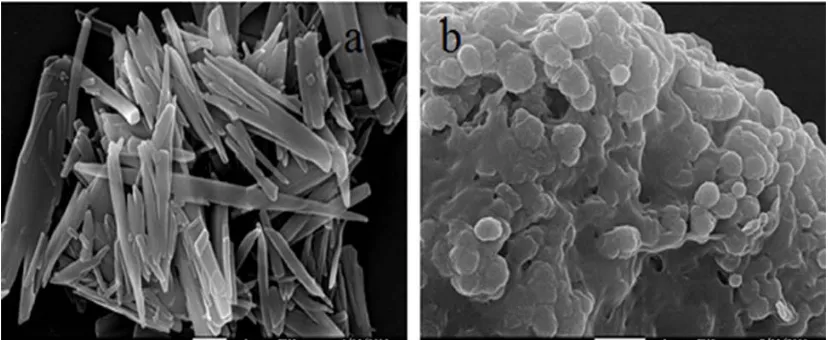
The SEM images are showed in Figure 1. RH nanoparticles obtained by the combination
of antisolvent precipitation and HPH were spherical in the presence of a combination of
HPMC and SDS (2:1, w/w) (Fig. 1). Moreover, the nano-sized particles were very thin
revealed by the presence of fragments. It was clearly seen that stabilizers were adsorbed
onto the drug particle surface inhibiting particle growth. The images also revealed that
these agglomerates or particle assemblies were composed of a large number of
individual nanoparticles.
Figure 1: SEM images of raw RH (a) and RH-nanoparticles (b)
In vitro dissolution study:
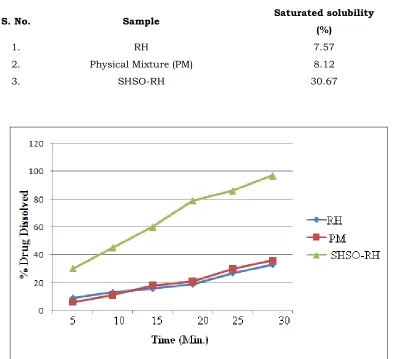
Table 1 showed the saturation solubility of raw RH and SHSO-RH. The results of the
solubility study indicated that pure RH possesses a very low solubility in water. The
saturation solubility of SHSO-RH was approximately four times that of raw RH. The
profiles shown in Figure 2 illustrated the dissolution rates of raw RH and SHSO-RH.
Nano-sized RH displayed a dramatic increase in the rate and extent of dissolution in
comparison with raw drug, especially SHSO-RH exhibited 79% drug dissolution within
20min whereas only 19% of raw RH dissolved during the same period. After 30 min,
193
crystalline nature and larger crystal size. The dissolution profiles of PM was similar to
that of raw drug, which showed that the mechanical physical mixing of raw RH and
stabilizers had little effect on the dissolution of raw Raloxifene Hydrochloride (RH).
Table 1. The saturated solubility: raw drug (RH); Physical-Mixture (PM) and SHSO-RH
Figure 2. The dissolution profiles: raw drug (RH); Physical-Mixture (PM) and SHSO-RH
CONCLUSION:
The stable amorphous RH nanoparticles were successfully prepared by antisolvent
precipitation under sonication followed by high pressure homogenization (HPH) and the
nanosuspensions were converted into dry powders by spray-drying. The amorphous RH
in nanoparticles formed in the procedure of antisolvent precipitation under sonication
S. No. Sample Saturated solubility
(%)
1. RH 7.57
2. Physical Mixture (PM) 8.12
194
and kept the state during HPH and spray-drying. The amorphous RH nanoparticles
exhibited different surface property and improved wettability compared with the pure
drug due to different molecular structural arrangements. The nanoparticles showed
dramatic improvement in rate as well as extent of in-vitro drug dissolution. The
improvement can be attributed to amorphization, better wettability, increased
saturation solubility and surface area, reduced particle size and decreased diffusion
layer thickness. Results of work suggested that nanonisation can be a good technique
for the formulation of poorly water soluble drugs.
REFERENCES:
1. Radtke M. Pure drug nanaoparticles for the formulation of pooly soluble drugs. New
Drugs. 2001; 3: 62-68.
2. Lipinski C. Poor aqueous solubility-an industry wide problem in drug discovery. Am.
Pharm. Rev. 2002; 5: 82-85.
3. Dressmann J.B., Reppas C. In vitro-in vivo correlations for lipophilic, poorly
water-soluble drugs. Eur. J. Pharm. Sci. 2000; 11: 73-80.
4. Kesisoglou F., Panmai S., Wu Y. Nanosizing-oral formulation development and
biopharmaceutical evaluation. Adv. Drug. Deliv. Rev. 2007; 5916: 31-44.
5. Patravale V.B., Date A.A., Kulkarni R.M. Nanosuspensions: a promising drug
delivery strategy. J. Pharm. Pharmacol. 2004; 56: 827-840.
6. Rabinow B.E. Nanosuspensions in drug delivery. Nature rev. Drug Disc. 2004; 3:
785-796.
7. Wong S.M., Kellaway I.W., Murdan S. Enhancement of the dissolution rate and oral
absorption of a poorly water soluble drug by formation of surfactant-containing
microparticles. Int. J. Pharm. 2006; 317: 61-68.
8. Muller R.H., Jacobs C., Kayser O. Nanosuspension as particulate drug formulations
in therapy rationale for development and what we can expect for the future. Adv.
Drug Deliv. Rev. 2001; 47: 3-19.
9. Mitlak B.H., Cohen F.J. In search of optimal long-term female hormone
replacement: the potential of selective estrogen receptor modulators. Horm. Res.
1997; 48:155-163.
10.Wempe M.F., Wacher V.J., Ruble K.M., Ramsey M.G., Edgar K.J., BuchananN.L.,
Buchanan C.M. Pharmacokinetics of raloxifene in male Wistar–Hannover rats:
Influence of complexation with hydroxybutenyl-beta-cyclodextrin, Int. J. Pharm.