The Hybrid Dynamic Prototype Construction and Parameter
Optimization with Genetic Algorithm for Support Vector Machine
Chun-Liang Lu
1,2,*, I-Fang Chung
1and Tsun-Chen Lin
31
Institute of Biomedical Informatics, National Yang-Ming University, Taipei, Taiwan.
2
Department of Applied Information and Multimedia, Ching Kuo Institute of Management and Health, Keelung County, Taiwan.
3
Department of Computer and Communication Engineering, Dahan Institute of Technology, Hualien County, Taiwan.
Received 06 July 2015; received in revised form 21 September 2015; accepted 28 September 2015
Abstract
The optimized hybrid artificial intelligence model is a potential tool to deal with construction engineering
and management problems. Support vector machine (SVM) has achieved excellent performance in a wide
variety of applications. Nevertheless, how to effectively reduce the training complexity for SVM is still a serious
challenge. In this paper, a novel order-independent approach for instance selection, called the dynamic
condensed nearest neighbor (DCNN) rule, is proposed to adaptively construct prototypes in the training dataset
and to reduce the redundant or noisy instances in a classification process for the SVM. Furthermore, a hybrid
model based on the genetic algorithm (GA) is proposed to simultaneously optimize the prototype construction
and the SVM kernel parameters setting to enhance the classification accuracy. Several UCI benchmark datasets
are considered to compare the proposed hybrid GA-DCNN-SVM approach with the previously published
GA-based method. The experimental results illustrate that the proposed hybrid model outperforms the existing
method and effectively improves the classification performance for the SVM.
Keywords: Genetic Algorithm (GA), Dynamic Condensed Nearest Neighbor (DCNN), Support Vector Machine
(SVM).
1. Introduction
The support vector machine (SVM) was first proposed by Vapnik [1] and has been successful as a high performance
classifier in several domains including data mining and the machine learning areas [2]. The decision boundary of SVM only
depends on a small part of training instances. Therefore, if only instances near the boundary are selected, the training of
SVM can be efficient and thus classification accuracy is kept. However, the performance of SVM is sensitive to how the
kernel parameters are set [3]. As a result, the appropriate instance selection and kernel parameters setting must perform
simultaneously to improve the SVM classifier.
In the literature, several data reduction algorithms have been proposed that extract a consistent subset of the overall
training set including Condensed Nearest Neighbor (CNN), Modified CNN (MCNN), Fast CNN (FCNN), and others [4-7].
These algorithms have been shown to achieve condensation ratios corresponding to a small percentage of the overall training
set and to obtain the comparable classification accuracy. However, these papers merely focused on data reduction without
dealing with features selection to reduce the irrelevant features for the classifier.
Feature selection algorithms may be widely categorized into two groups: the filter and the wrapper approaches [8-9].
The filter approaches select highly ranked features based on a statistical score as a preprocessing step. Wrapper approaches,
on the contrary, directly use the induction algorithm to evaluate the feature subsets. They generally outperform filter methods
in terms of classification accuracy, but are computationally more intensive. Huang and Wang [3] proposed a GA-based
feature selection method that optimized both the feature selection and parameters setting for the SVM classifier. Based on
the experimental results obtained, the authors claimed that the algorithm may work superior to the conventional grid search
algorithm. However, they did not take into account the treatment of these redundant or noisy instances in a classification
process. So far, to the best of our knowledge, there is no other research using an evolutionary algorithm to simultaneously
deal with these three type problems, including essential training instances extraction, input features selection, and SVM
parameters setting as mentioned above.
In this paper, a new data reduction algorithm named dynamic CNN (DCNN) algorithm, which differs from the original
CNN in its employments of the voting scheme, is proposed to adaptively construct prototypes with merged rate threshold.
Second, the proposed GA-DCNN-SVM model hybridized the prototype construction, feature selection and kernel parameters
optimization methods with genetic algorithm, exhibiting high efficiency in terms of classification accuracy for SVM. The
rest of this paper is organized as follows. Section 2 describes the related works including the basic SVM, the CNN rule, and
GA concepts. Section 3 details the research methodology, the prototype voting scheme, DCNN rule, and the proposed hybrid
model in this study. Section 4 contains the experimental results from several UCI benchmark datasets and comparison with
the GA-based previously published method. Finally, conclusions are given in section 5.
2. Related Works
2.1. Basic SVM Classifier
SVM starts from a linear classifier and searches the optimal hyperplane with maximal margin. The main motivating
criterion is to separate the various classes in the training set with a surface that maximizes the margin between them. It is an
approximate implementation of the structural risk minimization induction principle that aims to minimize a bound on the
generalization error of a model [2].
Given a training set of instance-label pairs (xi,yi),i1, 2,...,m where
n i
x R and yi { 1, 1}. The
generalized linear SVM finds an optimal separating hyperplane f x( ) w x b by solving the following optimization
problem:
, , 1
1 2
Minimize
m T
i
w b i
w w C
Subject to: ( ) 1 0
0
i i i
i
y w x b
(1)
where C is a penalty parameter on the training error, and
i is the non-negative slack variables. This optimization modelcan be solved using the Lagrangian method, which maximizes the same dual variables Lagrangian LD() as Eq. (2) as in
Copyright © TAETI
1 , 1
1
Maximize ( )
2
m m
D i i j i j i j
i i j
L y y x x
Subject to: 0i C, i1, 2,...,m and
1 0 m i i i y
(2)To solve the optimal hyperplane, a dual Lagrangian ( )
D
L
must be maximized with respect to non-negativei
under the constrains
1 0 m i i i y
and 0
iC. The penalty parameter C is a constant to be chosen by the user. Alarger value of C corresponds to assigning a higher penalty to the errors. After the optimal solution *
i
is obtained, theoptimal hyperplane parameters
w
* andb
* can be determined. The optimal decision hyperplane * *( , , )
f x
b can bewritten as:
* * * * * *
1
( ,
,
)
m
i i i i
f x
b
y
x x
b
w
x
b
(3)Linear SVM can be generalized to non-linear SVM via a mapping function
, which is also called the kernel function,and the training data can be linearly separated by applying the linear SVM formulation. The inner product
((xi)(xj)) is calculated by the kernel function k x x( i, j) for training data. By introducing the kernel function, the non-linear SVM (optimal hyperplane) has the following forms:
* * * * * *
1 1
( , , ) ( ) ( ) ( , )
m m
i i i i i i
i i
f x
b y
x x b y
k x x b
(4)Though new kernel functions are being proposed by researchers, there are four basic kernels as follows:
Linear: ( , ) T
i j i j
k x x x x (5)
Polynomial: k x x( ,i j)(
x xiT jr) ,d
0 (6)Radial Basis Function: 2
( ,i j) exp( || i j || ), 0
k x x
x x
(7)Sigmoid: ( , ) tanh( T )
i j i j
k x x x x r (8)
Radial basis function (RBF) is a common kernel function as Eq. (7). In order to improve SVM, the kernel parameter in
the kernel function should be set appropriately.
2.2. The Condensed Nearest Neighbor (CNN) Algorithm
The nearest neighbor (NN) rule [10-11] assigns an unclassified sample to the same class as the nearest of the N stored
labeled samples of the training set. The rule is simple, and with an unlimited number of instances, the risk in making an NN
decision is never worse than twice the Bayes risk [12]. But, as all the labeled samples of the training set must be searched to
classify a test sample, the NN method imposes large storage and computational requirements. In order to reduce the both
storage space and computational time requirements, the Condensed Nearest Neighbor (CNN) rule first introduced by Hart [4]
is that patterns in the training set may be very similar and some do not add extra information and thus may be discarded. In
the CNN rule, prototype-subset ones aim to select a subset of the training set that classifies the remaining data correctly through the NN rule. Using a prototype subset, instead of the entire training set, to implement the NN rule has the additional
advantage that it may guarantee better classification accuracy [6]. The concept of the CNN algorithm can be formalized as
The CNN algorithm uses two bins, called training set S with c-class and prototype subset P. Initially, randomly select one sample from S to P for each class c. Then, we pass one by one over the samples in S per epoch and classify each pattern
x
i
S
using P as the prototype set. During the scan, whenever a patternx
iis misclassified, it is transferred from S toP and the prototype subset is augmented; otherwise the pattern
x
iis called merged into P and still left in S. The algorithm terminates when no pattern is transferred during a complete pass of S and no new prototype is added to P. The procedure canbe formalized as follows.
Step 1: The first sample is randomly selected and copied from S to P for each class c.
Step 2: Check each pattern
x
i
S
using P as the prototype subset. If all patterns have been merged into P, terminate the process; otherwise, go to Step 3.Step 3: For each class c, if there are any unmerged samples, randomly select one and add the pattern to P; otherwise, no new
prototype is added to class c. Go to Step 2.
2.3. Genetic Algorithm
Genetic Algorithm (GA) is one of the most effective approaches for solving optimization problem. The basic principles
of GA were first proposed by Holland [13] for the formal examination of the mechanisms of natural adaptation, since then,
the algorithm has been modified to solve computational problems in research.
The GA is a stochastic search method based on the mechanics of natural selection and the process of evolution. An
implementation of a GA begins with a population of random chromosomes which can be represented by binary strings. The
members of the population are usually strings which encode a candidate solution to the problem to be solved. Members of
the population at each generation are evaluated, and chromosomes are selected for reproduction by calculating the fitness
value. The better chromosomes have higher probability to be selected into the recombination pool using the roulette wheel or
other tournament selection methods. After selection and reproduction operation, new population is generated by perturbing
the current solutions via crossover and mutation. Crossover takes two individuals called parents and produces two new
individuals called the offspring by swapping parts of the parents. This operator allows information exchange between
candidate solutions and new solution regions in the search space to be explored. Mutation serves to prevent premature loss of
population diversity by randomly sampling new points in the search space. The evolutionary process executes many
generations until the termination condition is met or by finding an acceptable solution by some criterion.
3. Methods
The original CNN has been used to iteratively select some samples and ignores others that can be absorbed for data
reduction algorithm. In this section, we extend this concept to propose the dynamic CNN approach, which differs from the
CNN rule in its employment of a strong absorption criterion, to achieve consistency efficiently for classification problems.
Some preliminary definitions are described as follows. Assume that we are given a dataset in which
( i, i), 1, 2,...,
S x y i m is a set of m number of samples with well-defined class labels. ( 1, 2,..., )
T
i i i iD
x x x x is
the vector of dataset for the i-th sample describing in D-dimensional Euclidean space and yiL{c c1, 2,...,cq} is the
class label associated with xi, where q is the number of classes. The distance between any two vectors xi and xj using
Copyright © TAETI
1/ 2 2 1 ( , ) ( ) D
i j i j ik jk
k
d x x x x x x
(9)3.1. The Prototype Voting Scheme (PVS) scheme
Majority vote is one of the simplest and intuitive ensemble combination techniques. Consider the n samples, c-class dataset U from S, given an instance
x
iof U, the Nearest Neighbors’ Distance Vector (NNDV) ofx
iaccording to a distance dis:
,1, ,2, , , , 1, , ,
( )i i c i c i j c i n c i n c ,
NNDV x d d d d d (10)
, ,
1, ( , ) min ( , )
0, ( , ) min ( , )
1, 2,..., , 1, 2,..., , {1, 2,..., }.
i j j i j
i j c
i j j i j
d x x d x x and i j
d
d x x d x x or i j
i n j n c q
(11)
We pass one by one over all of the instances in U, the outputs of NNDV in U are first organized into a Decision Prototype Matrix (DPM) as shown in Fig. 1. The column for d1, ,j c to
, ,
n j c
d represents the support from samples
x
1 ton
x for the candidate point
x
j, and the row di,1,c to di n c, , is the NNDV of xi. The vote will then result in an ensemble decision for the candidate pointx
, and the
value is:, , 1 1 arg max n n
i j c j
i
d
(12)1,2, 1, , 1, 1, 1, ,
2,1, 2, , 2, 1, 2, ,
,1, ,2, , , , 1, , ,
1,1, 1,2, 1, , 1, ,
,1, ,2, , , , 1,
0
0
0
0
c j c n c n c
c j c n c n c
i c i c i j c i n c i n c
n c n c n j c n n c
n c n c n j c n n c
d d d d
d d d d
d d d d d
DPM
d d d d
d d d d
Fig. 1 Decision Prototype Matrix for the PVS scheme
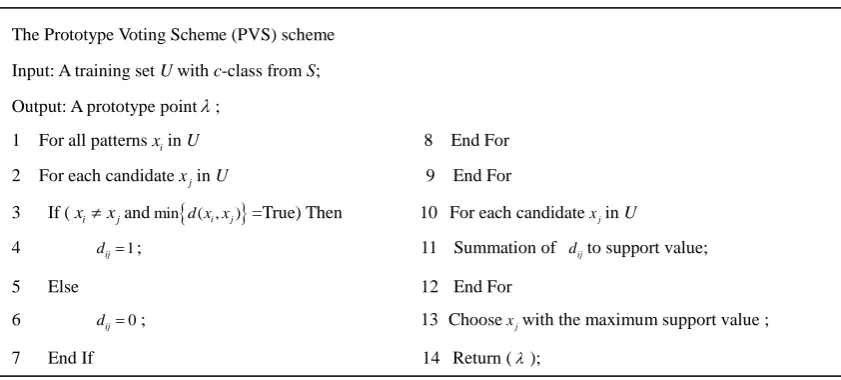
The candidate point with the highest total support is then chosen as the prototype. The pseudo code of the proposed
Prototype Voting Scheme (PVS) algorithm is shown in Fig. 2. The CNN rule is randomly to select candidate point for the
prototype construction process. The PVS algorithm differs from CNN, is order-independent and always returns the same
consistent prototype subset from the original sample set.
Fig. 2 Pseudo code of the PVS scheme
The Prototype Voting Scheme (PVS) scheme
Input: A training set U with c-class from S;
Output: A prototype point;
1 For all patternsxiin U 8 End For
2 For each candidatexjin U 9 End For
3 If (xixjandmin
d x x( ,i j)
=True) Then 10 For each candidatexjin U4 dij1; 11 Summation of dijto support value;
5 Else 12 End For
6 dij0; 13 Choosexjwith the maximum support value ;
3.2. The Dynamic Condensed Nearest Neighbor (DCNN) rule
As the CNN rule randomly chooses samples as prototypes and checks whether all samples have been fully merged into
prototype subset, the PVS algorithm is used to improve the randomly select process in Prototype Construction stage and the
adaptively merged rate coefficient
m for dynamically tuning the flexible criterion in Merge Detection process. Hence, it is called the Dynamic CNN (DCNN) algorithm.The DCNN rule has the following advantages. First, it incorporates simply voting scheme in prototype construction
process to always return the same consistent training subset independent of the order in which the data is processed and can
thus outperform the CNN rule. Second, the employment of the adaptively merged rate coefficient in the Merge Detection
process is flexible to edit out noisy instances, to reduce the superfluous instances and makes the machine less sensitive to
noises and outliners. The adaptively merged rate coefficient, denoted as [0,1]
m
, is defined as the ratio of the number of
instances merged into prototypes to the number of overall dataset and evaluated by Eq. (13). The number of instances
merged into prototypes and the number of overall dataset are indicated by
merge
N and Ntotal, respectively.
merge 100% m
total
N N
(13)
The proposed DCNN algorithm is described as follows.
Step 1: Prototype Initiation: For each class c, adopts the PVS algorithm to select a c-sample as a new c-prototype.
Step 2: Merge Detection: Detect whether all samples have been achieved the user defined merged rate threshold
m. If so,terminate the process; otherwise, proceed to the Step 3.
Step 3: Prototype Augmentation: For each c, if there are any un-merged c-samples, applies the PVS algorithm to construct a
new c-prototype; otherwise, no new prototype is added to class c. Proceed to Step 2.
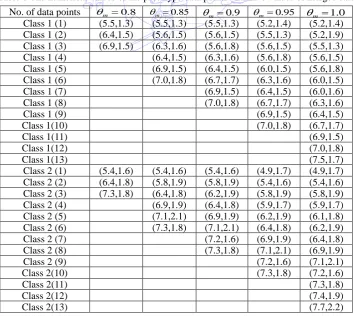
Table 1 The numerical values of the prototype data points with five values of merged rate
No. of data points m 0.8 m0.85 m0.9 m0.95 m 1.0
Class 1 (1) (5.5,1.3) (5.5,1.3) (5.5,1.3) (5.2,1.4) (5.2,1.4) Class 1 (2) (6.4,1.5) (5.6,1.5) (5.6,1.5) (5.5,1.3) (5.2,1.9) Class 1 (3) (6.9,1.5) (6.3,1.6) (5.6,1.8) (5.6,1.5) (5.5,1.3) Class 1 (4) (6.4,1.5) (6.3,1.6) (5.6,1.8) (5.6,1.5) Class 1 (5) (6.9,1.5) (6.4,1.5) (6.0,1.5) (5.6,1.8) Class 1 (6) (7.0,1.8) (6.7,1.7) (6.3,1.6) (6.0,1.5)
Class 1 (7) (6.9,1.5) (6.4,1.5) (6.0,1.6)
Class 1 (8) (7.0,1.8) (6.7,1.7) (6.3,1.6)
Class 1 (9) (6.9,1.5) (6.4,1.5)
Class 1(10) (7.0,1.8) (6.7,1.7)
Class 1(11) (6.9,1.5)
Class 1(12) (7.0,1.8)
Class 1(13) (7.5,1.7)
Class 2 (1) (5.4,1.6) (5.4,1.6) (5.4,1.6) (4.9,1.7) (4.9,1.7) Class 2 (2) (6.4,1.8) (5.8,1.9) (5.8,1.9) (5.4,1.6) (5.4,1.6) Class 2 (3) (7.3,1.8) (6.4,1.8) (6.2,1.9) (5.8,1.9) (5.8,1.9) Class 2 (4) (6.9,1.9) (6.4,1.8) (5.9,1.7) (5.9,1.7) Class 2 (5) (7.1,2.1) (6.9,1.9) (6.2,1.9) (6.1,1.8) Class 2 (6) (7.3,1.8) (7.1,2.1) (6.4,1.8) (6.2,1.9)
Class 2 (7) (7.2,1.6) (6.9,1.9) (6.4,1.8)
Class 2 (8) (7.3,1.8) (7.1,2.1) (6.9,1.9)
Class 2 (9) (7.2,1.6) (7.1,2.1)
Class 2(10) (7.3,1.8) (7.2,1.6)
Class 2(11) (7.3,1.8)
Class 2(12) (7.4,1.9)
Copyright © TAETI
In order to illustrate the behavior of the proposed DCNN algorithm, a set of data points in 2
R space is considered. The numerical values of the prototype data points with five merged rate value of
m(
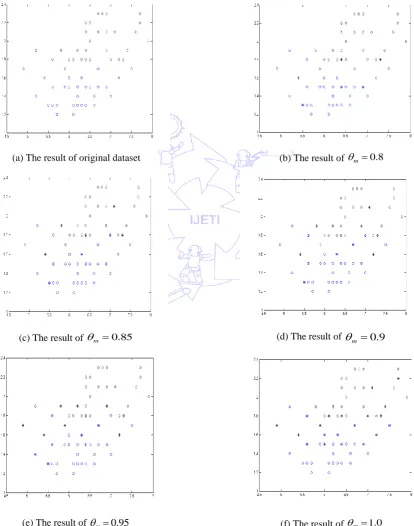
m=0.8, 0.85, 0.9, 0.95 and 1.0) usingthe proposed algorithm are listed in Table 1. The simulation results are shown in Fig. 3, where“◇” and“” denote the
positive class and negative class respectively, the data points with“+” inner symbols are prototypes. The results show that
the higher the value of
m, the larger the number of prototypes, and vice versa. This property makes the DCNN algorithmflexible to tackle those training samples misclassified in the overlapped region or outliers on the different distributions of
dataset. Thus, we can apply SVM to post-process the set of prototypes from DCNN, to improve the outlier sensitivity
problem of the standard SVM and yield an effectively hybrid classifier.
(a) The result of original dataset (b) The result of
m0.8(c) The result ofm 0.85 (d) The result of
m 0.9(e) The result of
m0.95 (f) The result ofm 1.03.3. The GA-DCNN-SVM hybrid model
This section detailed the proposed novel hybrid framework, which integrates the prototype construction, feature
selection and parameter optimization for the SVM. The chromosome representation, fitness definition and system procedure
for the proposed hybrid model are described as follows.
3.3.1. Chromosome Representation
This research used the RBF kernel function (defined by Eq. (7)) for the SVM classifier to implement our proposed
method. The RBF kernel function requires that only two parameters, Cand
should be set. Using the adaptively mergedrate for DCNN and the RBF kernel for SVM, the parametersm, C,
and features used as input attributes must be optimized simultaneously for our proposed GA-DCNN-SVM hybrid system. The chromosome therefore, is comprised offour parts,m, C,
and the features mask. Fig. 5 shows the chromosome representation of our design.1 2
...
0,
1 2...
0,
1 2...
0,
1 2...
0m m m
c c r r f f
m m
c c c r r r f f f
n n n n n n n n
b
b
b
b
b
b b
b
b b
b
b
Fig. 4 Chromosome representation in
m
,C, and features mask
In Fig. 4, 1 ~ 0
m m m n b b
indicates the parameter value m and the bit string’s length is nm, c 1~ 0
c c
n
b b represents the parameter value C and the bit string’s length is nc, bn 1~b0
denotes the parameter value
and the bit string’s lengthis n,
1~ 0 f
f f
n
b b stands for the features mask and nf is the number of features that varies from different datasets.
Furthermore, we can choose different length for each m
n
,n
c andn
parameter according to the calculation precisionrequired.
The bit string b bl1 l2...b0, where bi
0,1 ,i0,1,...,l1, representing the genotype format of the parameters m ,Cand , should be transformed into phenotype z by Eq. (14). Note that the precision of representing parameter depends on the length of the bit string l (such as
m
n , ncand n), and the minimum and maximum value [zmin,zmax]
of the parameter is determined by the user. The features mask is Boolean that ‘1’ represents the feature is selected, and ‘0’
indicates the feature is not selected.
1 max min min 0
(
)
2
2
1
l i i l iz
z
z
z
b
(14)3.3.2. Fitness Definition
Fitness function is the guide of GA’s operation to search for optimal solutions. For maximizing the classification
accuracy and minimizing the number of selected features, the fitness function F is a weighted sum with
w
A for theclassification accuracy weight and
w
F for the selected features as defined by Eq. (15).A
ccis the SVM classificationaccuracy, fiis the value of feature mask-‘1’ represents the feature i is selected and ‘0’ indicates that feature i is not selected, and
n
f is the total number of features. Thus, for the chromosome with high classification accuracy and a smallnumber of features produce a high fitness value.
1
1
f n
A F i
i
F w Acc w f
(15)Considering the tradeoff between the classification accuracy and selected feature number, the two weights
w
A andF
w
can be adjusted according to the preference of classifier designers. The weight accuracy can be tuned to a high valueCopyright © TAETI
3.3.3. The proposed hybrid GA-DCNN-SVM algorithm
Feature Selection Yes
Prototype Construction (DCNN rule)
SVM Parameter Optimization
GA Operation
Dataset
Testing set Training set
Selected feature subset F GA parameter : feature mask
Testing set with F Training set with F
Training SVM classifier GA parameters : C and r
Learned SVM classifier
Fitness calculation
Optimized Ɵm,C,r and feature subset
Termination check ? GA operation No
Yes Data Preprocessing
Scaling Prototype construction
by PVS algorithm
Merged rate coefficient GA parameter : Ɵm
Merge detection check ? Prototype
Augmentation No
Yes
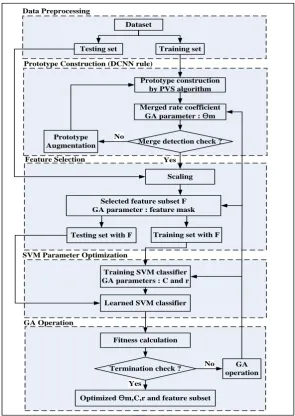
Fig. 5 The flowchart of the proposed hybrid GA-DCNN-SVM algorithm
Fig. 5 shows the system architecture of our proposed hybrid model. Based on the chromosome representation and
fitness definition mentioned above, detailed descriptions of the novel GA-DCNN-SVM procedure are illustrated as follows.
Procedure GA-DCNN-SVM hybrid model
Step 1: Data preparation
Given a dataset S is considered using the 10-fold cross-validation process to split the data into ten groups. Each
group contains training and testing sets. The training and testing sets are represented as
S
TRandS
TE, respectively.Step 2: GA initialization and parameters setting
Set the GA parameters including the number of iterations, population sizes, crossover rate, mutation rate, and weight for
fitness calculation. Generate initial chromosomes comprised of the parameters includingm,C, , and feature mask.
Step 3: Converting genotype to phenotype
Step 4: Prototype construction by using the DCNN algorithm
The DCNN algorithm computes a prototypes subset, denoted by P, from the training set STR according to the merged
rate parameter m which is represented in the chromosome and calculated from Step 3. Once the prototypes subset P is
computed, the new training set STR' is set to
P
.Step 5: Scaling
The purpose of feature scaling is to properly describe the interactions between feature attributes and to avoid attributes
in greater numeric ranges dominating those in smaller numeric ranges [3, 14]. Attributewise normalization by Eq. (16) can
be linearly scaled to the range [-1, +1] or [0, 1], where aj( )xi is the original attribute value of feature
x
i, a'j(xi) isscaled value, maxj and minj correspond to the maximum and minimum values for attribute aj over all samples.
' ( ) min
( ) ,
max min
j i j
j i
j j
a x
a x i
(16)
Step 6: Selected features subset
Select input features for training set STR' and testing set STE according to the feature mask which is represented in
the chromosome from Step 2, then the features subset can be determined. We denote the STR' and STE datasets with
selected features as FSTR' and FSTE, respectively.
Step 7: SVM model training and testing
Based on the parameters C and
which are represented in the chromosome and calculated from Step 3, to train theSVM classifier on the training dataset FSTR' , then the classification accuracy Acc on the testing dataset FSTE can be
evaluated.
Step 8: Fitness evaluation
For each chromosome, evaluate its fitness value by Eq. (15) when the classification accuracy Acc is obtained from previous step. The optimal fitness value will be stored to provide feedback on the evolution process of GA to find the
increasing fitness of chromosome in the next generation.
Step 9: Termination check
When the maximal evolutionary epoch is reached, the process ends; otherwise, go to the next step.
Step 10: GA operation
In the evolution process, standard GA operators such as selection, crossover and mutation based on elitist strategy may
be applied to search for better solutions.
4. Experimental Results
4.1. System Implementation Descriptions
To verify the effectiveness of the proposed hybrid system, we tried several real benchmark data sets which are cited
Copyright © TAETI
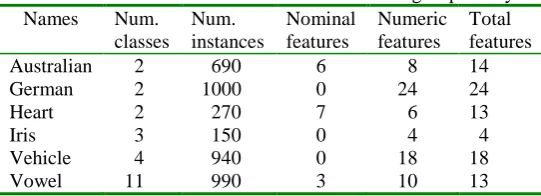
Six real data sets are considered, namely, the Australian data set, the German data set, the Heart disease data set, the Iris
data set, the Vehicle data set, and the Vowel data set. In the above datasets, Table 2 summarizes the number of numeric
attributes, number of nominal attributes, number of classes, and number of instances.
Table 2 Datasets from the UCI Machine Learning Repository Names Num.
classes
Num. instances
Nominal features
Numeric features
Total features
Australian 2 690 6 8 14
German 2 1000 0 24 24
Heart 2 270 7 6 13
Iris 3 150 0 4 4
Vehicle 4 940 0 18 18
Vowel 11 990 3 10 13
The datasets considered are partitioned using the 10-fold cross validation. Each initial data set S, is randomly divided
into ten disjoint sets of equal size T1, …, T10. We maintain the original class distribution (before partitioning) within each set
when carrying out the partition process, and then conduct ten pairs of training and testing sets, ( i TR
S , i
TE
S ), i=1, …, 10. Ten
trials were run for each data set, and the advantage of cross validation is that all of the testing sets were independent and the
reliability of the results could be improved.
Our implementation platform was carried out on Matlab 2013, a mathematical development environment by extending
the LIBSVM which is originally designed by Chang and Lin [16]. The GA-based previously published method by Huang [3],
namely GA-SVM with non-DCNN version, for searching the best C, , and features subset. The existing GA-SVM with
non-DCNN version method deals solely with feature selection and parameters optimization by means of genetic algorithm,
and the treatment of these redundant or noisy instances in a classification process did not taken into account. Our proposed
GA-DCNN-SVM hybrid model has been tested fairly extensively and compared with the non-DCNN version approach using
three criteria, namely, the classification accuracy rate, the number of selected feature, and the non-parametric Wilcoxon
signed rank test. In all of the experiments, 10-fold cross validation was used to estimate the classification accuracy of each
learning algorithm. We report the empirical results in the following section.
4.2. Results and Comparisons
In computation works, we set GA parameters to the same values to compare the performance using the two different
algorithms. The detail parameter setting for GA is as the following: population size 200, generation number 300, crossover
rate 0.7, mutation rate 0.05, two point crossover, roulette wheel selection and the elitism replacement. The bit string’s length
for each parameter nm , nc, n is configured as 20, and the value of nf varies from different datasets described in Table 2. According to the fitness function defined by Eq. (15), set the accuracy’s weight wA0.8 and the feature’s weight
0.2
F
w for all experiments. The termination criterion is that the generation number achieves generation 300, and the
best chromosome is obtained when the termination criterion satisfies.
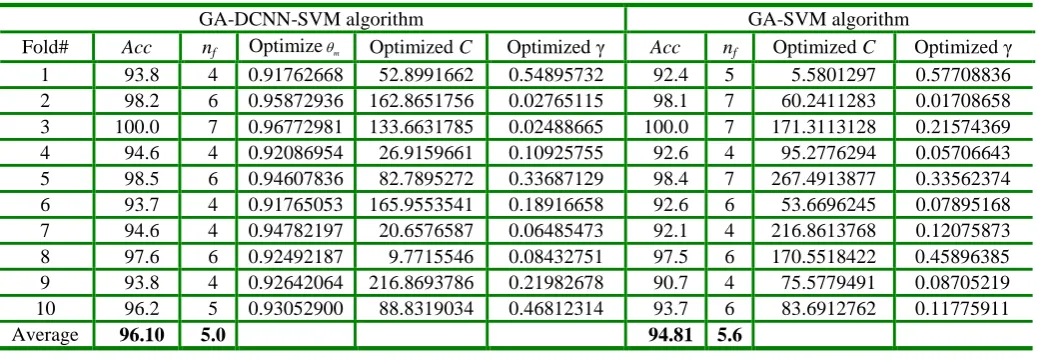
Taking the Heart disease dataset, for example, the classification accuracy Acc, number of selected features nf , and the
best parameters m, C,
for each fold using GA-DCNN-SVM algorithm and GA-SVM with non-DCNN approach are shown in Table 3. For the GA-DCNN-SVM method, average classification accuracy rate is 96.10%, and average number offeatures is 5.0. For the GA-SVM with non-DCNN approach, its average classification accuracy rate is 94.81%, and average
number of features is 5.6. Table 4 shows the summary results for the average classification accuracy rate Avg_Accand the
average number of selected features Avg_nf for the six UCI datasets using the two different approaches. In Table 4, the
be mentioned that in the case of six UCI datasets, the Avg_Acc always increased when the DCNN philosophy was
employed.
Table 3 Experimental results for Heart disease dataset comparison from GA-DCNN-SVM and GA-SVM algorithms
GA-DCNN-SVM algorithm GA-SVM algorithm
Fold# Acc nf Optimizem Optimized C Optimized γ Acc nf Optimized C Optimized γ 1 93.8 4 0.91762668 52.8991662 0.54895732 92.4 5 5.5801297 0.57708836 2 98.2 6 0.95872936 162.8651756 0.02765115 98.1 7 60.2411283 0.01708658 3 100.0 7 0.96772981 133.6631785 0.02488665 100.0 7 171.3113128 0.21574369 4 94.6 4 0.92086954 26.9159661 0.10925755 92.6 4 95.2776294 0.05706643 5 98.5 6 0.94607836 82.7895272 0.33687129 98.4 7 267.4913877 0.33562374 6 93.7 4 0.91765053 165.9553541 0.18916658 92.6 6 53.6696245 0.07895168 7 94.6 4 0.94782197 20.6576587 0.06485473 92.1 4 216.8613768 0.12075873 8 97.6 6 0.92492187 9.7715546 0.08432751 97.5 6 170.5518422 0.45896385 9 93.8 4 0.92642064 216.8693786 0.21982678 90.7 4 75.5779491 0.08705219 10 96.2 5 0.93052900 88.8319034 0.46812314 93.7 6 83.6912762 0.11775911
Average 96.10 5.0 94.81 5.6
To highlight the advantage, the non-parametric Wilcoxon signed rank test is used for all of the datasets. As shown in
Table 4, the p-value for Iris is equal to 1.0, but other p-values are smaller than the statistical significance level of 0.05. Due
to time considerations, the average execution time for GA-DCNN-SVM approach requires more computing time than the
non-DCNN version. It is reasonable that the DCNN rule can achieve optimization merged rate for training data to improve
SVM performance. Generally, compared with the GA-based with non-DCNN version algorithm, the proposed
GA-DCNN-SVM hybrid approach has good classification accuracy performance with fewer features and it effectively
improves the classification accuracy and has fewer input features for support vector machine.
Table 4 Experimental results of GA-DCNN-SVM algorithm and GA-SVM method on six UCI datasets
Name GA-DCNN-SVM GA-SVM p-value for
Wilcoxon testing
_ cc
Avg A Avg_nf Avg_Acc Avg_nf
Australian 90.3±1.42 4.3±0.82 88.2±1.81 4.5±1.08 0.028* German 87.4±0.97 12.6±0.84 85.6±1.80 13.1±1.59 0.022* Heart 96.1±2.32 5.0±1.15 94.8±3.32 5.6±1.26 0.008*
Iris 100±0 1±0 100±0 1±0 1.0
Vehicle 85.9±1.85 8.6±0.97 84.0±2.40 9.7±1.70 0.007* Vowel 99.2±0.75 7.1±0.74 98.5±0.89 7.9±0.88 0.011*
*Statistical significance level is 0.05.
5. Conclusions
In this work, an order-independent algorithm for data reduction, called the Dynamic Condensed Nearest Neighbor
(DCNN) rule, is proposed to adaptively construct prototypes in the training dataset and to reduce the redundant or noisy
instances in a classification process for the SVM. Furthermore, a hybrid model based on the genetic algorithm is proposed to
simultaneously optimize the prototype construction, the feature selection, and the SVM kernel parameters setting for solving
the classification problems. The experimental results illustrate that the proposed method is capable of producing good
classification accuracy with a small number of features on several UCI repository of machine learning datasets. Generally,
the proposed GA-DCNN-SVM hybrid approach outperforms the existing GA-based method without the DCNN scheme and
Copyright © TAETI
learning tasks, such as SVM ensemble strategy constitutes a feasible approach and useful modification of the regular SVM,
is other possible directions to pursue.
Acknowledgment
The authors are thankful to the reviewers for their valuable comments and suggestions.
References
[1] V. N. Vapnik, Statistical learning theory, 1st ed. New York: Wiley, 1998.
[2] D. Anguita, A. Ghio, L. Oneto and S. Ridella, "In-Sample and out-of-sample model selection and error estimation for
support vector machines," IEEE Transactions on Neural Networks and Learning Systems, vol. 23, pp.1390-1406, 2012.
[3] C. L. Huang and C. J. Wang, "A GA-based feature selection and parameters optimization for support vector machines,"
Expert systems with applications, vol. 31, pp. 231-240, 2006.
[4] P. E. Hart, "The condensed nearest neighbor rule," IEEE Transactions on Information Theory, vol. 14, pp. 515-516,
1968.
[5] F. Angiulli and A. Astorino, "Scaling up support vector machines using nearest neighbor condensation," IEEE
Transactions on Neural Networks, vol. 21, pp. 351-357, 2010.
[6] F. Angiulli, "Fast nearest neighbor condensation for Large data sets classification," IEEE Trans. Knowledge and data
engineering, vol. 19, pp. 1450-1464, 2007.
[7] A. Abroudi and F. Farokhi, "Prototype selection for training artificial neural networks based on Fast Condensed Nearest
Neighbor rule," IEEE Conference on Open Systems (ICOS), pp. 1-4, 2012.
[8] X. Zhao, D. Li, Bo Yang, H. Chen, X. Yang, C. L. Yu and S. Y. Liu, "A two-stage feature selection method with its
application," Computers & Electrical Engineering, vol. 47, pp. 114-125, Oct. 2015.
[9] W. Shu and H. Shen, "Incremental feature selection based on rough set in dynamic incomplete data," Pattern
Recognition, vol. 47, pp. 3890-3906, Dec. 2014.
[10] J. R. Rico-Juan and J. M. Iñesta, "Adaptive training set reduction for nearest neighbor classification," Neurocomputing,
vol. 138, pp. 316-324, Aug. 2014.
[11] J. L. Chen and C. S. Yang, "Optimizing the proportion of prototypes generation in nearest neighbor classification,"
International Conference on Machine Learning and Cybernetics (ICMLC), vol. 4, pp. 1695-1699, 2013.
[12] Y. Miao, X. Tao, Y. Sun, Y. Li and J. Lu, "Risk-based adaptive metric learning for nearest neighbor classification,"
Neurocomputing, vol. 156, pp. 33-41, May 2015.
[13] J. H. Holland, Adaption in natural and artificial systems, Cambridge, MIT Press Cambridge, MA, USA, 1992.
[14] X. Sun, J. Wang, F.H. Mary and L. Kong, "Scale invariant texture classification via sparse representation,"
Neurocomputing, vol. 122, pp. 338-348, Dec. 2013.
[15] S. Cateni, V. Colla and M. Vannucci, "A hybrid feature selection method for classification purposes," European
Modelling Symposium (EMS), pp. 39-44, 2014.
[16] C. C. Chang and C. J. Lin, "Training nu-support vector regression: theory and algorithms," Neural Computation, vol. 14,