Development of a multi-gene expression system
in
Xanthophyllomyces dendrorhous
Hara
et al.
T E C H N I C A L N O T E S
Open Access
Development of a multi-gene expression system
in
Xanthophyllomyces dendrorhous
Kiyotaka Y Hara
1†, Toshihiko Morita
2†, Masao Mochizuki
1, Keisuke Yamamoto
2, Chiaki Ogino
2, Michihiro Araki
1and Akihiko Kondo
2*Abstract
Background:Red yeast,Xanthophyllomyces dendrorhous(Phaffia rhodozyma) is the only yeast known to produce astaxanthin, an anti-oxidant isoprenoid (carotenoid) that is widely used in the aquaculture, food, pharmaceutical and cosmetic industries. Recently, the potential of this microorganism as a platform cell factory for isoprenoid production has been recognized because of high flux through its native terpene pathway. Addition of mevalonate, the common precursor for isoprenoid biosynthesis, has been shown to be critical to enhance the astaxanthin content inX. dendrorhous. However, addition of mevalonate is unrealistic during industrial isoprenoid production because it is an unstable and costly chemical. Therefore, up-regulating the intracellular mevalonate supply by enhancing the mevalonate synthetic pathway though genetic engineering is a promising strategy to improve isoprenoid production inX. dendrorhous. However, a system to strongly express multiple genes has been poorly developed forX. dendrorhous.
Results:Here, we developed a multiple gene expression system using plasmids containing three strong promoters inX. dendrorhous(actin, alcohol dehydrogenase and triose-phosphate isomerase) and their terminators. Using this system, three mevalonate synthetic pathway genes encoding acetoacetyl-CoA thiolase, HMG-CoA synthase and HMG-CoA reductase were overexpressed at the same time. This triple overexpressing strain showed an increase in astaxanthin production compared with each single overexpressing strain. Additionally, this triple overexpression of mevalonate synthetic pathway genes together with genes involved inβ-carotene and astaxanthin synthesis showed a synergetic effect on increasing astaxanthin production. Finally, astaxanthin production was enhanced by 2.1-fold compared with the parental strain without a reduction of cell growth.
Conclusions:We developed a system to strongly overexpress multiple genes inX. dendrorhous. Using this system, the synthetic pathway of mevalonate, a common substrate for isoprenoid biosynthesis, was enhanced, causing an increase in astaxanthin production. Combining this multiple gene overexpression system with a platform strain that overproduces mevalonate has the potential to improve industrial production of various isoprenoids inX.
dendrorhous.
Keywords:Isoprenoid, Carotenoid, Astaxanthin, Mevalonate,Xanthophyllomyces dendrorhous,Phaffia rhodozyma, Metabolic engineering, Cell factory
* Correspondence:[email protected]
†Equal contributors
2Department of Chemical Science and Engineering, Graduate School of
Engineering, Kobe University, 1-1 Rokkodaicho Nada-ku, Kobe 657-8501, Japan
Full list of author information is available at the end of the article
Background
Carotenoids are widely distributed in nature, and are ex-clusively synthesized by plants and microorganisms [1]. Carotenoids belong to the natural compounds class of ter-penes (isoprenoids) [2]. Bioproduction of pharmaceutically important carotenoids such as artemisinin and Taxol have been accomplished through genetic engineering of
well-characterized microorganisms such asSaccharomyces
cer-evisiaeandEscherichia coli[3,4]. However, Melillo, et al.,
showed the potential of the red yeast,Phaffia rhodozyma
(sexual form,Xanthophyllomyces dendrorhous), as a
plat-form microorganism for isoprenoids production because of the higher flux through its native terpene pathway
com-pared withS. cerevisiaeandE. coli[5].
X. dendrorhoushas been studied as a promising candidate microorganism for maximizing production of a carotenoid,
astaxanthin (3, 3′-dihydroxy-β, β-carotene-4, 4′-dione;
C40H52O4) for use for fine chemicals such as food,
pharma-ceuticals and cosmetics because of its antioxidant property
[6,7]. In fungi, includingX. dendrorhous, all isoprenoids are
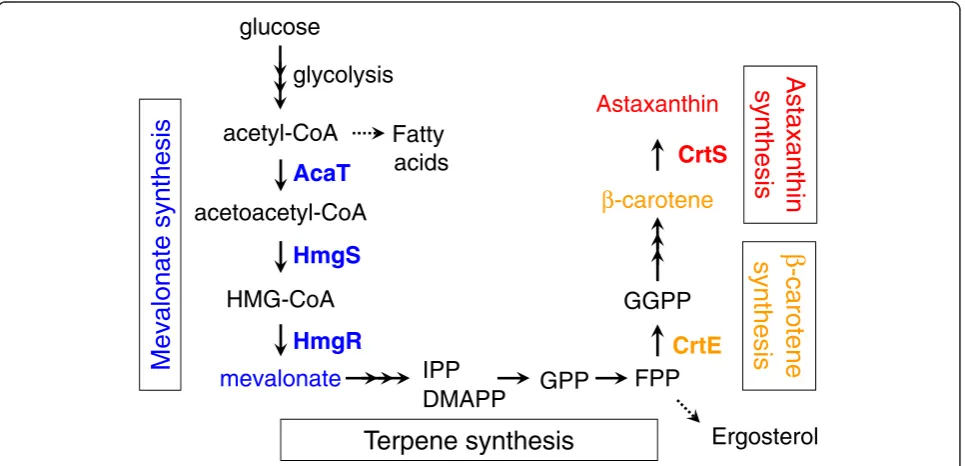
biosynthesized from a common precursor, mevalonate, via the terpene pathway (Figure 1). It has been shown that sup-plementation of mevalonate was critical to increase the
astaxanthin content inX. dendrorhous [8]. However,
meva-lonate addition is not economically feasible for industrial production because it is an unstable and expensive chemical. Thus, increasing the supply of intracellular mevalonate by metabolic engineering would be a valuable way to increase
isoprenoid production because it negates the need and the cost of externally added mevalonate. It has already been re-ported that reducing the carbon flow to the fatty acid and ergosterol biosynthesis pathways (Figure 1) enhances astax-anthin production due to the increase in carbon flow to mevalonate biosynthesis pathway [9]. However, this made cell growth slower because fatty acids and ergosterol are im-portant structural components of the cell membrane. This suggests that strengthening the mevalonate synthetic path-way by overexpressing genes encoding enzymes involved in the mevalonate synthetic pathway is a promising approach to enhance biosynthesis of astaxanthin or any other isopre-noids without additional compounds and effects on cell
growth in X. dendrorhous. Indeed, it has already been
re-ported that overexpressinghmgR, which is one of genes
in-volved in the mevalonate synthetic pathway, under its original promoter was critical to enhance the astaxanthin
content inX. dendrorhous[10].
We previously identified several strong promoters ofX.
dendrorhous using GFP as a protein expression level indicator [7]. In this study, we developed a system to
over-express multiple genes under these strong promoters inX.
dendrorhous. Overexpression of three genes involved in the mevalonate synthetic pathway using this system improved
astaxanthin production in X. dendrorhous. Furthermore,
simultaneous overexpression of these mevalonate synthetic
pathway genes with genes involved in the β-carotene and
astaxanthin synthetic pathways synergistically enhanced the
FPP
CrtE
GGPP
β
-carotene
CrtS
Astaxanthin
Astaxanthin
synthesis
β
-carotene
synthesis
Ergosterol
Terpene synthesis
acetyl-CoA
AcaT
HmgR
HMG-CoA
mevalonate
acetoacetyl-CoA
HmgS
Mevalonate synthesis
Fatty
acids
glucose
glycolysis
IPP
DMAPP
GPP
Figure 1Metabolic pathway from glucose to astaxanthin inX. dendrorhous.The pathway consists of the glycolytic pathway and mevalonate, terpene,β-carotene and astaxanthin synthetic pathways. IPP, isopentenyl-pyrophosphate; DMAPP, dimethylallyl diphosphate; GPP, geranyl diphosphate; FPP, farnesyl-diphosphate; GGPP, geranylgeranyl-diphosphate; AcaT, acetoacetyl-CoA thiolase; HmgS, HMG-CoA synthase; HmgR, HMG-CoA reductase; CrtE, geranylgeranyl-diphosphate synthase; CrtS, astaxanthin synthase. IPP and DMAPP are the isoprenoid building blocks and prenyltransferases generate GPP, FPP and GGPP, the common precursors of monoterpenoids (C10), sesquiterpenoids (C15) and diterpenoids (C20), respectively. Carotenoids (C40) such as astaxanthin are constructed by condensation of two molecules of GGPP.
Haraet al. Microbial Cell Factories2014,13:175 Page 2 of 7
biosynthesis of astaxanthin; this production of astaxanthin indicates the ability of this strain to produce high quantities of isoprenoids. Combining the mevalonate producing strain and the multiple gene overexpression system developed in this study gives us powerful tools to improve production of
various isoprenoids inX. dendrorhous.
Results and discussion
Single gene overexpression of mevalonate synthetic pathway genes
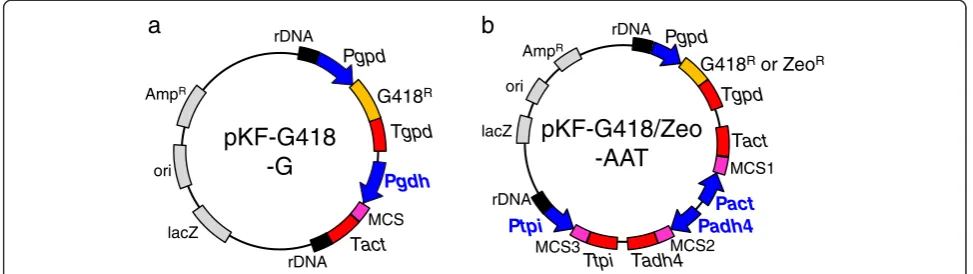
We constructed single gene overexpression vectors to enhance the mevalonate synthetic pathway (Figure 2a). As shown in Figure 1, mevalonate biosynthesis from acetyl-CoA is carried out by three consecutive reactions catalyzed by acetoacetyl-coenzyme A (acetoacetyl-CoA) thiolase (AcaT, EC 2.3.1.194), 3-hydroxy-3-methylgluta-ryl-CoA (HMG-CoA) synthase (HmgS, EC 2.3.3.10), and HMG-CoA reductase (HmgR, EC 1.1.1.34). AcaT catalyzes the acetoacetyl-CoA biosynthetic reaction from acetyl-CoA, HmgS catalyzes the HMG-CoA bio-synthetic reaction from acetoacetyl-CoA and HmgR catalyzes the mevalonate biosynthetic reaction from HMG-CoA. It has already been reported that
overex-pressing hmgR increased a carotenoid, lycopene, in a
yeastCandida utilismutant with an endogenous
carot-enoid synthetic pathway [11]. It was recently reported
that overexpressing hmgR in X. dendrorhous increased
astaxanthin production [10]. However, the effect of the other two genes involved in the mevalonate synthetic
pathway,acaTandhmgS, on isoprenoid production was
not evaluated.
In this study, we cloned and overexpressed acaTand
hmgSto evaluate their effect on astaxanthin biosynthesis
in X. dendrorhous. Previously, we showed the gdh pro-moter was an efficient propro-moter that showed higher ex-pression level of target genes using GFP as a protein
expression level indicator [7]. Therefore, we selected the
gdh promoter to overexpress the acaT, hmgS and hmgR
genes (Figure 2a). To compare the influence of single
overexpression ofacaT, hmgS and hmgRon astaxanthin
production, three plasmids encoding each gene under
the gdh promoter were constructed. X. dendrorhous
mutant strains overexpressingacaT,hmgSorhmgRwere
obtained by transformation using these plasmids. We
compared cell concentration, cellular astaxanthin
content and volumetric astaxanthin concentration of these three mutant strains and the vector control strain (Figure 3). As shown in Figure 3a, the strains
overex-pressinghmgSandhmgRshowed statistically higher final
cell growth compared with the vector control strain.
However, theacaT overexpressing strain showed almost
equal cell growth to the control strain. The intracellular
astaxanthin content of the strains overexpressing acaT
(0.32 mg/g-cell) andhmgS (0.33 mg/g-cell) was 1.3-fold
higher than that of the control strain (0.26 mg/g-cell) after 72 h of culture (Figure 3b). These values were
equal to that of the strain overexpressing hmgR (0.31
mg/g-cell), which was previously shown to be critical to enhance the astaxanthin content [10,11]. With the in-creased intracellular astaxanthin content and normal
cell growth in the strains overexpressingacaT, hmgS or
hmgR, the volumetric astaxanthin concentrations
(2.1-2.2 mg/L) after 72 h were equally increased compared with that of the control strain (1.6 mg/L) by about 1.3-fold (Figure 3c). This new insight proposes that the bottle-neck for intracellular mevalonate supply is not solely the reaction catalyzed by HmgR, but all three re-actions involved in mevalonate biosynthesis rere-actions catalyzed by AcaT, HmgS and HmgR. This result is con-sistent with the previous result that indicated the pres-ence of other rate-limiting enzymes from HmgR for isoprenoids biosynthesis in plant [12].
b
a
pKF-G418
-G
rDNA
rDNA Pgpd
G418R
Tgpd
lacZ ori AmpR
MCS Tact
Pgdh
pKF-G418/Zeo
-AAT
rDNA
rDNA
Pgpd
Tact G418Ror ZeoR
Tgpd
Pact lacZ
ori AmpR
MCS1
Padh4
Tadh4
Ptpi
MCS3 MCS2
Ttpi
Figure 2Vectors for overexpression of single or multiple target genes. avector for overexpression of a single gene.bvector for overexpression of multiple genes. rDNA, ribosomal DNA sequence; MCS, multi-cloning site; G418R, G418 resistance gene; ZeoR, Zeocin resistance
Overexpression of multiple mevalonate synthetic pathway genes
Equal enhancement of astaxanthin production by each of the genes involved in the mevalonate synthetic pathway in-dicates the equal contribution of each reaction in this
path-way to astaxanthin production inX. dendrorhous. Thus, to
enhance astaxanthin production by improving mevalonate production, overexpression of multiple mevalonate syn-thetic pathway genes would be critical. To achieve this, plasmids including either G418 or Zeocin resistant genes and three cloning sites for target genes under strong moters were constructed (Figure 2b). The strong
pro-moters, Pact, Padh4 and Ptpi were identified by our
previous study [7]. Using this multiple gene expression sys-tem, construction of a strain overexpressing three
mevalo-nate synthetic pathway genes (acaT,hmgSandhmgR) and a
strain overexpressing onlyhmgRwas carried out. Cell
con-centration, intracellular astaxanthin content and volumetric astaxanthin concentration were compared with the vector control strain after 72 h of culture (Table 1). All strains showed almost the same cell growth. The triple
overex-pressing strain, which overexpresses acaT/hmgS/hmgR,
showed 1.4-fold higher volumetric astaxanthin production (2.5 mg/L) compared with that of the control strain (1.6
mg/l), although thehmgR single overexpressing strain still
showed slightly higher astaxanthin production than the control strain (2.2 mg/L). As the result, triple
overexpres-sion ofacaT,hmgS andhmgRusing the multiple gene
ex-pression system developed in this study synergistically improved astaxanthin production without reducing cell growth.
Combinatorial overexpression of genes involved in mevalonate,β-carotene and astaxanthin synthetic pathways
CrtE catalyzes biosynthesis of geranylgeranyl-pyrophosphate
(GGPP) from farnesyl-pyrophosphate (FPP) in the β
-carotene synthetic pathway in X. dendrorhous (Figure 1).
Breitenbach, et al., reported that self-cloning and
overex-pression of thecrtEgene increased astaxanthin production
[13]. To test the synergetic effect on astaxanthin production
of enhancing synthetic pathways of mevalonate, β-carotene
and astaxanthin, the crtEgene was overexpressed in either
the parental strain or theacaT/hmgS/hmgRoverexpressing
strain using the multiple gene overexpression system. Com-paring the volumetric concentration of astaxanthin
pro-duced by these strains, crtE overexpression increased the
astaxanthin production in both the strains by about 1.3-fold
(Figure 4). Additionally, combined overexpression of crtE
andcrtS, a gene in the astaxanthin synthetic pathway,
syner-gistically increased astaxanthin production in both the
par-ental strain and theacaT/hmgS/hmgRoverexpressing strain
by about 1.6-fold. The astaxanthin production of theacaT/
hmgS/hmgR/crtE/crtS overexpressing strain after 72 h
reached 3.0 mg/L, which was 2.1-fold higher compared with the control strain (1.4 mg/L). This result indicates that the increased mevalonate production platform strain
overex-pressing acaT/hmgS/hmgR has potential to enhance
isoprenoids production when combined with additional overexpression of appropriate genes, depending on the 0
0.5 1 1.5 2 2.5
0 20 40 60 80
0 0.1 0.2 0.3 0.4
0 20 40 60 80
0 5 10 15 20
0 20 40 60 80
Cell concentration
[OD
600
]
Astaxanthin content [mg/g-cell]
Astaxanthin concentration [mg/L]
a
b
c
Time [h]
*
**
**
Figure 3Astaxanthin production by engineered strains
overexpressing single mevalonate synthetic pathway genes. acell
concentration (OD600);bintracellular astaxanthin content (mg/g-cell); cvolumetric astaxanthin concentration (mg/L).Diamond(black),Circle
(blue),Square(red) andTriangle(yellow) symbols represent values of the vector control strain,acaToverexpressing strain,hmgS
overexpressing strain andhmgRoverexpressing strain, respectively. The values are means and the error bars show the SD (n = 3). Student's
t-test; asterisks indicate significant differences compared to the vector control strain (*P < 0.05, **P < 0.01).
Haraet al. Microbial Cell Factories2014,13:175 Page 4 of 7
target isoprenoid, using the multiple gene overexpression system developed in this study.
Conclusion
In this study, we focused on developing a system to
strongly express multiple genes in X. dendrorhous to
im-prove isoprenoid production. We constructed two types of multiple gene expression vectors including either a G418 resistance gene or Zeocin resistance gene (Figure 2b). These vectors include three cloning sites under different strong
promoters, Padh4, Pactand Ptpi, which were evaluated in
our previous study [7]. Using this multiple gene overexpres-sion system, we succeeded in synergistically improving
astaxanthin production in X. dendrorhous through
meta-bolic engineering to overexpress the three mevalonate
syn-thetic pathway genesacaT, hmgSand hmgR, along with a
β-carotene synthetic pathway gene (crtE) and an
astax-anthin synthetic pathway gene (crtS). Astaxanthin is an end
product of the isoprenoid synthetic pathway and its synthe-sis in this engineered strain indicates its ability to produce isoprenoids. Therefore, genetic engineering using the devel-oped system to strongly express multiple target genes in a platform strain overproducing mevalonate has the potential to improve production of various value-added isoprenoids inX. dendrorhous.
Methods
Strains and media
NovaBlue (Novagen, Madison, WI, USA) was used as the
Escherichia colihost strain for recombinant DNA
manipu-lation.Xanthophyllomyces dendrorhous(NBRC 10129) was
used as the parental host strain for gene expression.E. coli
transformants were grown in LB medium (10 g/L tryptone, 5 g/L yeast extract, and 5 g/L sodium chloride)
supple-mented with 100 μg/mL ampicillin. Transformants of X.
dendrorhouswere cultured in YM medium (5 g/L tryptone, 3 g/L yeast extract, 3 g/L malt extract and 10 g/L glucose). Yeast extract and malt extract were purchased from Becton Dickinson (Sparks, MD, USA). Other chemicals were obtained from Nacalai Tesque (Kyoto, Japan) or Wako Chemicals (Osaka, Japan).
Plasmid construction
Target genes were cloned by PCR using KOD-Plus-Neo DNA polymerase (Toyobo, Osaka, Japan). Nucleotide se-quences of cloning primers for target genes are shown in Additional file 1. Construction of single or multiple gene ex-pression vectors is shown in Figure 2. Nucleotide sequences
ofacaTandhmgSwere detected by comparison to known
sequences of Cryptococcus neoformans, whose amino acid
sequence ofhmgRhas high homology with that ofX.
den-drorhous[5], using the BLASTX program through the Gen-ome Net web site (http://www.genGen-ome.jp/tools/blast/). The
Table 1 Astaxanthin production by combined overexpression of mevalonate synthetic pathway genes inX. dendrorhous
Overexpressing Gene(s) Cell concentration [OD600] Astaxanthin content [mg/g-cell] Astaxanthin concentration [mg/L] vector control 16.2 ± 0.34 (1.0) 0.26 ± 0.009 (1.0) 1.6 ± 0.09 (1.0)
hmgR 16.5 ± 0.04 (1.0) 0.36 ± 0.005 (1.4) 2.2 ± 0.03 (1.4)
acaT/hmgS/hmgR 17.0 ± 0.16 (1.0) 0.39 ± 0.006 (1.5) 2.5 ± 0.06 (1.6)
Samples were taken after culture for 72 h. The culture conditions are described in“Methods”. Parentheses represent the relative values. The values are represented as mean ± SD (n≥3).
Astaxanthin concentration [mg/L]
P<0.0001 P=0.013
P=0.0029 P=0.078
Figure 4Astaxanthin production by mutant strains
overexpressingcrtEandcrtE/crtS.Volumetric astaxanthin
concentration (mg/L) of culture fermented for 72 h by the engineered strains overexpressingcrtEgene or bothcrtEandcrtS
sequences of acaTand hmgS have been registered in the GenBank with the accession numbers AB919149 and
AB919150, respectively. Both these genes and the hmgR
gene [10] were amplified by PCR fromX. dendrorhous
gen-omic DNA. The forward primer and reverse primer sets
used for these amplifications wereacaT-fw/acaT-rv,hmgS
-fw/hmgS-rv and hmgR-fw/hmgR-rv, respectively. SpeI sites
were introduced into the forward primers and StuI sites
were introduced into the reverse primers. The amplified
fragments from acaT, hmgS andhmgR were digested with
SpeI/StuI and inserted into theSpeI/StuI site of
pKF-G418-G (Figure 2a) to construct pKF-pKF-G418-G418-pKF-G418-G-acaT,
pKF-G418-G-hmgSand pKF-G418-G-hmgR, respectively.
The G-418 resistant multiple gene expression vector, pKF-G418-AAT (Figure 2b), was constructed by cloning
theactpromoter and terminator (Pact/Tact), Padh4/Tadh4
and Ptpi/TtpifromX. dendrorhousgenomic DNA by PCR
using the In-Fusion® HD Cloning Kit (Takara, Shiga, Japan).
The acaT, hmgS and hmgR genes were also amplified by
PCR from X. dendrorhous genomic DNA using forward
primer and reverse primer sets acaT-MCS3-fw/acaT
-MCS3-rv, hmgS-MCS2-fw/hmgS-MCS2-rv and hmgR
-MCS1-fw/hmgR-MCS1-rv, respectively. The AscII/SpeI,
SacII/PacI andMfeI/MfeI restriction sites were introduced
into these forward/reverse primer sets. The amplified
frag-ments from hmgR were digested with MfeI and inserted
into theMfeI site in MCS1 of pKF-G418-AAT to construct
pKF-G418-AAT-hmgR. The amplified fragment fromhmgS
was digested with SacII/PacI and inserted into the SacII/
PacI site in MCS2 of pKF-G418-AAT-hmgR to construct
pKF-G418-AAT-hmgR/hmgS. The amplified fragment from
acaT was digested with AscII/SpeI and inserted into the
AscII/SpeI site in MCS3 of pKF-G418-AAT-hmgR/hmgSto
construct pKF-G418-AAT-hmgR/hmgS/acaT.
To construct the Zeocin resistant multiple gene ex-pression vector pKF-Zeo-AAT, the Zeocin resistance gene was amplified by PCR from pREMI-z (Novagen) using the Zeo-BsiWI-fw/Zeo-BsiWI-rv forward and re-verse primer set. The resulting Zeocin resistant gene fragment was cloned into the pKF-G418-AAT vector lacking the G418 resistance gene using the In-Fusion®
HD Cloning Kit. A β-carotene synthetic pathway gene,
crtE, and an astaxanthin synthetic pathway gene crtS
were amplified by PCR from X. dendrorhous genomic
DNA using forward primer and reverse primer setscrtE
-MCS1-fw/crtE-MCS1-rv and crtS-MCS2-fw/crtS
-MCS2-rv, respectively.MfeI/MfeI andSacII/PacI were introduced
into these forward/reverse primer sets. The amplified
frag-ments fromcrtEwere digested withMfeI and inserted into
theMfeI site in MCS1 of Zeo-AAT to construct
pKF-Zeo-AAT-crtE. The amplified fragment from crtS was
digested with SacII/PacI and inserted into theSacII/PacI
site in MCS2 of pKF-Zeo-AAT-crtE to construct
pKF-Zeo-AAT-crtE/crtS.
Yeast transformation
All constructed plasmids were digested withNdeI at both
the ends of rDNA regions (Figure 2) and transformed into the X. dendrorhous host strains to construct the target gene overexpressing strains. Transformation was carried out based on the method described in previous reports [14,15] with some modifications for construction of
com-petent cells: X. dendrorhousparental strain was grown in
5 mL liquid YM medium at 22°C with agitation at 250 rpm for 24 h. An adequate volume of each culture was in-oculated into 150 mL liquid YM medium to achieve an
initial OD600 value of 0.03. Cultures were then grown at
22°C with agitation at 120 rpm for 16.5 h.
The NdeI digested plasmids, G418-AAT,
pKF-G418-AAT-acaT, pKF-G418-AAT-hmgR and
pKF-G418-AAT-hmgS were transformed into the parental X.
dendrorhous host strain to construct the vector control
strain, acaT overexpressing strain, hmgS overexpressing
strain and hmgR overexpressing strain, respectively, and
compare their cell growth and astaxanthin production
(Figure 3). TheNdeI digested plasmids, pKF-G418-AAT,
pKF-G418-AAT-hmgR and pKF-G418-AAT-acaT/hmgR/
hmgSwere transformed into the parentalX. dendrorhous
host strain to construct the vector control strain, hmgR
single overexpressing strain and acaT/hmgR/hmgS
mul-tiple overexpressing strain, respectively, and compare their cell growth and astaxanthin production (Table 1). The
NdeI digested plasmids, pKF-Zeo-AAT,
pKF-Zeo-AAT-crtE and pKF-Zeo-AAT-crtE/crtS were transformed into
the pKF-G418-AAT vector control strain or the acaT/
hmgR/hmgS multiple overexpressing strain to construct
the vector control strain,crtEoverexpressing strain,crtE/
crtSoverexpressing strain,acaT/hmgR/hmgS
overexpress-ing strain, acaT/hmgR/hmgS/crtE overexpressing strain
andacaT/hmgR/hmgS/crtE/crtSoverexpressing strain and
compare their cell growth and astaxanthin production (Figure 4).
Cultivation ofX. dendrorhousstrains
X. dendrorhous strains overexpressing target genes were
grown in 5 mL liquid YM medium containing 40μg/mL
G418 and 200 μg/mL Zeocin if needed in test tubes at
22°C with agitation at 250 rpm for 72 h. An adequate volume of each culture was inoculated into 80 mL liquid YM medium in a Sakaguchi Flask to achieve an initial
OD600value of 0.15. Cells were then grown at 22°C with
agitation at 120 rpm for less than 72 h.
Analytical methods
Cell concentration was measured as the optical density at 600 nm after culture for the appropriate time. To measure
the intracellular astaxanthin content ofX. dendrorhous
mu-tants, harvested cells were suspended into 1 mL acetone. The cells were broken using a bead shocker (Shake Master
Haraet al. Microbial Cell Factories2014,13:175 Page 6 of 7
NEO, bms, Tokyo, Japan) with zirconia beads. The cell
ex-tract was centrifuged at 15,000 ×gat 4°C for 10 min, and
then the supernatant was diluted into an appropriate volume of acetone. Astaxanthin concentration was deter-mined using a high performance liquid chromatography (Shimadzu, Kyoto, Japan) equipped with a Develosil ODS-HG-5 column (Nomura Chemical, Aichi, Japan). The op-erating conditions were 25°C, with acetonitrile/methanol/ 2-propanol (85/10/5 (v/v)) as the mobile phase at a flow rate of 0.8 mL/min, and the detection was performed at 471 nm with a UV detector SPD-20A (Shimadzu).
Additional file
Additional file 1:Nucleotide sequence of cloning primers in this study.
Competing interests
The authors declare that they have no competing interests.
Authors’contributions
KYH designed the study and wrote the manuscript. TM and KY performed the experiments. MM analyzed DNA information. MA supervised the research. CO and AK coordinated the project. All the authors read and approved the manuscript.
Acknowledgments
This study was supported by the Special Coordination Funds for Promoting Science and Technology, Creation of Innovation Centers for Advanced Interdisciplinary Research Areas (Innovative Bioproduction Kobe, iBioK), MEXT, Japan.
Author details
1Organization of Advanced Science and Technology, Kobe University, 1-1
Rokkodaicho Nada-ku, Kobe 657-8501, Japan.2Department of Chemical Science and Engineering, Graduate School of Engineering, Kobe University, 1-1 Rokkodaicho Nada-ku, Kobe 657-8501, Japan.
Received: 13 September 2014 Accepted: 25 November 2014
References
1. Vachali P, Bhosale P, Bernstein PS:Microbial carotenoids.Methods Mol Biol
2012,898:41–59.
2. Muntendam R, Melillo E, Ryden A, Kayser O:Perspectives and limits of engineering the isoprenoid metabolism in heterologous hosts. Appl Microbiol Biotechnol2009,84:1003–1019.
3. Westfall PJ, Pitera DJ, Lenihan JR, Eng D, Woolard FX, Regentin R, Horning T, Tsuruta H, Melis DJ, Owens A, Fickes S, Diola D, Benjamin KR, Keasling JD, Leavell MD, McPhee DJ, Renninger NS, Newman JD, Paddon CJ:Production of amorphadiene in yeast, and its conversion to dihydroartemisinic acid, precursor to the antimalarial agent artemisinin.Proc Natl Acad Sci USA
2012,109:E111–E118.
4. Ajikumar PK, Xiao WH, Tyo KE, Wang Y, Simeon F, Leonard E, Mucha O, Phon TH, Pfeifer B, Stephanopoulos G:Isoprenoid pathway optimization for Taxol precursor overproduction inEscherichia coli.Science2010,
330:70–74.
5. Melillo E, Setroikromo R, Quax WJ, Kayser O:Production ofα-cuprenene in
Xanthophyllomyces dendrorhous: a step closer to a potent terpene biofactory.Microb Cell Fact2013,12:13.
6. Rodríguez-Sáiz M, Godio RP, Alvarez V, de la Fuente JL, Martín JF, Barredo JL:The NADP-dependent glutamate dehydrogenase gene from the astaxanthin producerXanthophyllomyces dendrorhous: use of its promoter for controlled gene expression.Mol Biotechnol2009,
41:165–172.
7. Hara KY, Morita T, Endo Y, Mochizuki M, Araki M, Kondo A:Evaluation and screening of efficient promoters to improve astaxanthin production in
Xanthophyllomyces dendrorhous.Appl Microbiol Biotechnol2014,98:6787–6793. 8. Calo P, De Miguel T, Jorge B, Velázquez JB, Villa TG:Mevalonic acid
increases trans-astaxanthin and carotenoid biosynthesis inPhaffia rhodozyma.Biotechnol Lett1995,17:575–578.
9. Miao L, Chi S, Tang Y, Su Z, Yin T, Guan G, Li Y:Astaxanthin biosynthesis is enhanced by high carotenogenic gene expression and decrease of fatty acids and ergosterol in aPhaffia rhodozymamutant strain.FEMS Yeast Res2011,11:192–201.
10. Gassel S, Breitenbach J, Sandmann G:Genetic engineering of the complete carotenoid pathway towards enhanced astaxanthin formation inXanthophyllomyces dendrorhousstarting from a high-yield mutant. Appl Microbiol Biotechnol2014,98:345–350.
11. Shimada H, Kondo K, Fraser PD, Miura Y, Saito T, Misawa N:Increased carotenoid production by the food yeastCandida utilisthrough metabolic engineering of the isoprenoid pathway.Appl Environ Microbiol
1998,64:2676–2680.
12. Chappell J, Wolf F, Proulx J, Cuellar R, Saunders C:Is the Reaction Catalyzedby 3-Hydroxy-3-Methylglutaryl Coenzyme A Reductase a Rate-Limiting Step for Isoprenoid Biosynthesis in Plants?Plant Physiol1995,
109:1337–1343.
13. Breitenbach J, Visser H, Verdoes JC, van Ooyen AJ, Sandmann G:Engineering of geranylgeranyl pyrophosphate synthase levels and physiological conditions for enhanced carotenoid and astaxanthin synthesis in
Xanthophyllomyces dendrorhous.Biotechnol Lett2011,33:755–761. 14. Wery J, Gutker D, Renniers AC, Verdoes JC, van Ooyen AJ:High copy
number integration into the ribosomal DNA of the yeastPhaffia rhodozyma.Gene1997,184:89–97.
15. Niklitschek M, Alcaíno J, Barahona S, Sepúlveda D, Lozano C, Carmona M, Marcoleta A, Martínez C, Lodato P, Baeza M, Cifuentes V:Genomic organization of the structural genes controlling the astaxanthin biosynthesis pathway ofXanthophyllomyces dendrorhous.Biol Res2008,
41:93–108.
doi:10.1186/s12934-014-0175-3
Cite this article as:Haraet al.:Development of a multi-gene expression
system inXanthophyllomyces dendrorhous.Microbial Cell Factories
201413:175.
Submit your next manuscript to BioMed Central and take full advantage of:
• Convenient online submission
• Thorough peer review
• No space constraints or color figure charges
• Immediate publication on acceptance
• Inclusion in PubMed, CAS, Scopus and Google Scholar
• Research which is freely available for redistribution