SHIV SHAKTI
International Journal of in Multidisciplinary and
Academic Research (SSIJMAR)
Vol. 3, No. 4, August-September (ISSN 2278 – 5973)
Geographical Indications as Intellectual Property: Case Study of Beverages across
Continents
Mayuree Sengupta
IP Practitioner, Alumnus – IIT Kharagpur
Impact Factor = 3.133 (Scientific Journal Impact Factor Value for 2012 by Inno Space Scientific Journal Impact Factor)
Indexing:
Abstract
Geographical indications (GI) are becoming a useful intellectual property right for developing countries because of their potential to add value and promote rural socio-economic development. These are intended to designate product quality, highlight brand identity, and preserve cultural traditions. The use of geographical indications allows producers to obtain market recognition and often a premium price. It is difficult to measure the global turnover of GIs in the world, because of a very large number of different food and non-food products, a lack of inventory of potential GI products in many countries, a high diversity in size, a variety of legal definitions, and a lack of data in both developed & developing countries on volumes and prices at different levels of the supply chains. The present article attempts at taking a closer look at beverages Café de Columbia (Columbia, South America) and Rooibos Tea (South Africa, Africa), against Champagne (France, Europe). A case study of these GIs across continents is likely to portray a clear picture of GI regime & its impact on various nations as well as a roadmap to a better regime of geographical indication.
Keywords: Geographical Indications (GI), intellectual property rights (IPR), beverage, case
studies.
Introduction
What constitutes an Intellectual Property Right (IPR)? IPR, defined loosely, would encompass products of the intellect. A geographical indication (GI) is any noun or adjective, even a sign used on goods that have a specific geographical origin and possess qualities, a reputation or characteristics that are essentially attributable to that place of origin.1Geographical indications are becoming a useful intellectual property right for developing countries because of their potential to add value and promote rural socio-economic development.2 Therefore the protection of geographical indications matters economically and culturally.
Geographical indications are intended to designate product quality, highlight brand identity, and preserve cultural traditions. The use of geographical indications allows producers to obtain
1
Geographical Indications, available at http://www.wipo.int/geo_indications/en/ as viewed on 13 August 2014.
2
market recognition and often a premium price. Diffused concerns about authenticity, heritageand locality in a rapidly globalizing world are also raised more often than not, as GIs have gained greater political salience and economic valuedue to major changes in the global economy.
Many countries across the continents with rich agrarian heritage rely heavily on environmental, traditional and cultural aspects of origin while cultivation. In agriculture, a cash crop is a crop which is grown for profit; in contrast to food crops which are primarily grown for subsistence. Today, especially in the developed countries, almost all crops are mainly grown for cash. In non-developed nations, cash crops are usually crops which attract demand in more non-developed nations, and hence have some export value. The non alcoholic beverage market primarily consists of cash crops coffee & tea. Prices for major cash crops are set in commodity markets with global scope. Certain regional coffee & tea produce, which is eligible for geographical indication protection, can, with proper IP implementation regime benefit their respective countries‟ economy greatly.
However, it is more often than not observed that the revenue earning aspect of GI crops are often relegated to the background in the midst of brouhaha over trivial issues.
In the midst of all this hullabaloo, what engages attention is the speculation rift how can GI regime aid to gain revenue in an intensively knowledge based economy of today. This will be duly supplemented with relevant case studies in beverages (coffee, tea); one from across each continent.
Geographical Indications & Economy
Do GIs represent a form of culture or do they represent a commodity? The formulation of this question in this alternative implies that a choice should be made between seeing GIs as a product of social interaction or, alternatively, as a product of economic rationality. Rather it is more accurate to see GIs as economic rationality being embedded in social relationships.3
Like other intellectual property rights, GIs are sought to be protected by producers so that they can make the most of the associated qualities, characteristics or reputation in a bid to maximize profits. Through the protection of a specific GI, producers from the locality in question are able
3
to create a barrier to entry into the market for that product and exploit monopoly rents by charging consumers higher prices.4
It is difficult to measure the global turnover of GIs in the world, because of a very large number of different food and non-food products, a lack of inventory of potential GI products in many countries, a high diversity in size, a variety of legal definitions, and a lack of data in both developed & developing countries on volumes and prices at different levels of the supply chains.5
This article is an academic study and mostly secondary sources have been used. The observations are intrinsically based on the following premises:
[a] There is fairly little empirical data on the effect of GI-based marketing or GI labeling (separate from the question of legal protection);6
[b] there is even less empirical data on the economic impact of GI legal protection;
[c] there is even less (probably none) empirical data on the economic impact of different forms of legal protection of GIs;7
“The final price of the product that incorporates an intellectual property component is a poor indicator of the value of the intellectual property itself” and “seeking to quantify the current and,
particularly, the potential, value generated by the use of a geographical indication is an extremely difficult task”. Evidence on costs and benefits with respect to labeling as well as GI protection is
still scarce.8
4
Botha, Multilateral Issues relating to Geographical Indications,2004, available at www.tralac.org as viewed on 13 August 2014.
5
Reviron, Geographical Indications: creation and distribution of economic value in developing countries, Working Paper No 2009/14, available at www.nccr-trade.org as viewed on 13 August 2014.
6
Bramley, Bienabe, and Kirsten, The Economics of Geographical Indications: Toward a Conceptual Framework for Geographical Indication Research in Developing Countries, Contributed Paper for the International Roundtable on the Economics of Intellectual Property Rights, WIPO, Geneva, November 26-27, 2007 at 127 ("Despite arguments supporting the rural development potential of geographical indications, few empirical studies measure whether they actually contribute to endogenous development processes.")
7
Bramley., Bienabe, and Kirsten, The Economics of Geographical Indications: Toward a Conceptual Framework for Geographical Indication Research in Developing Countries, Contributed Paper for the International Roundtable on the Economics of Intellectual Property Rights, WIPO, Geneva, November 26-27, 2007.
8
The present article attempts at taking a closer look at beverages Café de Columbia (Columbia, South America) and Rooibos Tea (South Africa, Africa), against Champagne (France, Europe). A case study of these GIs across continents is likely to portray a clear picture of GI regime & its impact on various nations.
Amongst an array of food products with geographical attributes in the offing, the choice of selection of beverages tea & coffee as case studies can be attributed to the fact that, preceded by water and followed by coffee, tea is the second-most drunk beverage in the world.9
The revenue market of such beverages is significant to the contribution of economic growth of respective countries. The World Bank estimates that out of the total 141 developing countries, 95 depend on exports of commodities for at least 50 percent of their total export earnings.10
Tea & coffee are a very good example of such “commodity-dependency” representing; such that
whence chosen as GIs for case study are suitable as revenue generating cash crops with IP protection.
Case- studies
Café de Colombia
Columbia, officially the Republic of Colombia is a constitutional republic in northwestern South America. Colombia is a standing middle power with the fourth largest economy in South America in spite of growing poverty.
Café de Colombia is Arabica coffee produced out of maximal 6 different varieties with different characteristics and origin (Tipica, Caturra, Colombia, Borbon, Maragogype and Tabi) produced in an altitude of 400 to 2500 meters above sea level in a limited production area. Out of the total coffee production area of 7.300.000 hectares (presenting 6.4% of the total area of Colombia) 12% (869.158 hectares) are defined as GI “Café de Colombia” area. The GI area includes 590
districts in the regions.11
9
Dufrene, ITC Bulletin: Tea Brands, Quality Growing Worldwide, October 13, 2009.
10
Riley, Market for Coffee, Eton College, 2006.
11
The strategy: The development of Colombia‟s coffee brand began as early as 1932, when the
Colombian president decreed that all coffee being exported should be labeled “Café de Colombia.12 The active marketing of the Columbian coffee as a brand began when the Colombian government registered a JUAN VALDEZ COFFEE OF COLOMBIA trademark in 1963 featuring the fictional character “Juan Valdez,” personifying the individual Colombian
coffee farmer.13 This registration expired in favor of newer JUAN VALDEZ trademarks filed in 2005. In 1979, the Colombian government applied for registration of the certification mark COLOMBIAN with simple certification standards that the coffee was grown in Colombia.14
Café de Colombia is the first product to be registered as a GI (as PGI) in the European Union. In the “Council Regulation (EC) No 510/2006 on the protection of geographical indications and designations of origin for agricultural products and foodstuff” the description of “Café de Colombia” as PGI is given as follows:
“Café de Colombia” is that coffee grown in the Columbian Coffee Growing Area defined in the
specifications which satisfies the export standards laid down by the National Committee of Coffee Growers and which, when processed, has the following characteristics: mild, clean up, of medium/high acidity and body and a full and pronounced aroma. The methods of production are described, including the different processing stages production, harvesting, and hulling. Roasting must not necessarily be carried out in the geographical area but the process must bring out the intrinsic organoleptic qualities of the green “Café de Colombia”.15
The brand building: Nacional de Cafeteros de Colombia is probably the most ambitious example of organized producers moving into a direct, retail relationship with consumers in developed countries.
12
Ukers, All About Coffee, The Tea and Coffee Trade Journal Company New York, 1935.
13
USPTO Registration 0752589, July 9, 1963.
14
USPTO Registration number 1160492, July 7, 1981 (The Mark Certifies That The Coffee Was Grown In The Republic Of Columbia And That Such Coffee Has Been Subjected To Standard Inspection Authorized By Applicant And Such Coffee Has Been Approved For Export To The United States As Passing Recognized Current Minimum Quality Standards Required For Such Export As Set And Enforced By Said Federation As Agent For And Subject To The Ultimate Control Of The Applicant.)
15
The Federación Nacional de Cafeteros of Columbia sought to brand Colombian coffee. It created awareness and emphasized the idea to “Buy Colombian when buying coffee” through the use of a character named Juan Valdez and his mule. The Valdez character explained the unique properties of Colombia‟s location that enabled it to grow the best coffee in the world. Borrowing
from branding strategies for manufactured products, the Federación sought to create a premium image. Consequently, it employed advertising that emphasized that its coffee is the “Richest coffee in the world.” The Federación also associated images of high income and high society
with Colombian coffee by using statements such as “50 percent Tax Bracket, 100 percent Colombian coffee” and by suggesting “No Colombian, no thank you” in its consumer
advertising.16 Figure 2 points towards the direct effect of advertising in increasing awareness while Figure 3 tend to suggest that the same has a positive influence on export rates.
16
Figure 2: Awareness of Columbia as a coffee growing country. (The information is compiled by the author from the following Sources: Compiled from FNC, www.cafedecolombia.com,2007; Samper, 2007; Gomez , Proceso de
Calificacion y Sello de Salidad en Relacion con el Origen-Caso: Café de Colombia, FAO and IICA
publication;2007.)
Underlying basic idea of IPR branding is its use as a tool of successful marketing. Branding is thus one element of differentiation that is devised to limit competition by minimization of similarity between objects.17
In all this, it is evident that Colombian coffee is almost certainly the single best example of sustained, GI-based coffee or cocoa promotion by the producing country itself. At the same time, the story of the marketing of Colombian coffee is a cautionary tale. The strength of the overall
17
Prakash (Ed), WTO, IPR & Branding, HarAnand Publications, New Delhi, 2007.
India
22%
South Africa 55%
Japan 68%
Australia 69%
China 72%
Italy 76%
UK 85%
Germany 89%
COLOMBIAN brand may now limit the ability of Colombia or others to develop more specific, more high-end, niche geographical brands for Colombian coffees.
Figure 3: Café de Columbia Potpourri (The information is compiled by the author from the following Sources: Robusta,USFDA, 2008; Gomez , Proceso de Calificacion y Sello de Salidad en Relacion con el Origen-Caso: Café de Colombia, FAO and IICA publication;2007 Giovannucci, Colombia- Coffee Sector Study, World Bank, 2002.)
Rooibos Tea
Rooibos tea (Aspalathus linearis) grows in only one place in the world – in the world‟s richest floristic kingdom on the southern tip of the African continent.18 The Republic of South Africa is a country located at the southern tip of Africa. By UN classification South Africa is a middle-income country with an abundant supply of resources; ranked 33rd in the world in terms of GDP (PPP) as of 2013.19
18
Rooibos Fact Sheet, available at http://biodiversityadvisor.sanbi.org/wp-content/uploads/2012/11/Rooibos-Fact-Sheet.pdf as viewed on 4 August , 2014.
19
Fact available at http://databank.worldbank.org/data/download/GDP.pdf as viewed on 4 August , 2014.
Main Export Markets: 73% US (35%)
Japan (14%) Germany (13%)
Belgium (6%) Canada (5%)
World Production of Arabica
Coffee
14%
Profitability directly proportional
to physical & organoleptic coffee
quality.
Total World Coffee Exports
12%
Rooibos grows exclusively in the Northern and Western Cape province of South Africa, specifically in a small area 200 km north of Cape Town, the Cedarberg Mountain region and around Clanwilliam and Citrusdal. The uniqueness of the production area of Rooibos is defined by its rainy winters (while the rest of South Africa generally has rain in summer) and dry summers, the altitude, the acidic and the coarse sandy soil.20
In 1904, Benjamin Ginsberg, a Russian/Jewish settler to the Cape, discovered this wild tea. In the 1930s, Ginsberg persuaded a local doctor and Rhodes scholar, Dr. le Fras Nortier, to experiment with cultivation of the plant. Since then, Rooibos has grown in popularity in South Africa, and has gained considerable momentum in the worldwide market too. A growing number of brand-name tea companies sell this tea, either by itself or as a component in an ever-growing variety of blends.21
The production of Rooibos involves about 400-450 farmers. Small-scale farmers and underprivileged communities produce around 2% of the total output and still produce wild Rooibos. The majority are large-scale farmers producing 98% of the whole output18. Rooibos cultivation practices have evolved considerably, processing still relies on traditional methods, which trace back to the Khoisan people, except that methods nowadays are more mechanized and refined. Rooibos second stage processing (namely sterilisation) is highly concentrated and dominated by eight large companies.22
The controversies: The name Rooibos is long disputed. In 1994, Forever Young Limited, registered the name “Rooibos” in the USA and numerous other countries, in an attempt to restrict
the use of “Rooibos” to those willing to do business with Forever Young. In 2001 it assigned the registration of “Rooibos” to Virginia Burke-Watkins of Dallas, Texas. By restricting the use of the name “Rooibos” to only those companies prepared to enter into a business relationship with
Burke-Watkins, great hardship was caused not only to many independent US tea manufacturers and US retailers but also to the Rooibos Limited. Many companies, that used Rooibos individually or in blends, had to create alternative names such as Red Tea and Red Bush, leading to great confusion in the minds of tea drinkers. After ten years and nearly 1 million USD in legal
20
Gerz, “Rooibos tea, South Africa: The challenge of an export boom”,2006.
21
Available at http://www.dragonfly-teas.com/More-About-Tea/History-of-Rooibos.html as viewed on 13 August 2014.
22
fees, Rooibos Limited. reached a settlement agreement with Burke-Watkins and Forever Young Limited over the rights to the use of the generic term “Rooibos”. Under the terms of the settlement agreement, the latter two parties have voluntarily and unconditionally agreed to cancellation of their registration of the word “Rooibos” in the USA and various other
countries.23,24
Nowadays, the term “Rooibos” alone cannot be protected as trademark but in combination with other words the trademark registration is still possible. This is partly due to Rooibos South Africa's decision to contest the Burke trademark on the grounds that "Rooibos" is a generic term, rather than claiming it as a geographic indication.
As an attempt to protect economic interests, the Rooibos Council was established in April 2005 as a non-profit company to promote the interests of the South African Rooibos industry locally and internationally.
In 2013, French company Compagnie De Trucy tried to register the word „Rooibos‟ as a trademark for beverages, which was strongly opposed by South Africa‟s Department of Trade
and Industry (DTI)alongside the South African Rooibos Council (SARC). In February 2014 the DTI declared Rooibos a prohibited mark under the country‟s Merchandise Marks Act, making
unauthorised use of the mark a criminal offence. The registration of such a trademark in France was thought to have a significant negative impact on South Africa‟s exports of Rooibos products to France.
However, unless the same is registered as a GI under national laws like wines, usurpation of trademark name will continue and the economic benefits accruing out of regional quality aspects & an effective means to promote rural development opportunity will be lost forever. In 2004 the turnover in the rooibos industry was estimated at 22.5 million Euro25; so it is an revenue generating source South Africa can ill afford to lose.
23
Rooibos Ltd. wins battle "Rooibos" name., Lockwood Tea & Coffee Trade Journal, 2005; ibid 5
24
Available at http://www.rooibosdirect.com/press0605.pdf as viewed on 4 November 9, 2009.
25
Figure 4 : Rooibos Potpourri (The information is compiled by the author from the following Sources: Inputs from Butler, 2005; Bramley, Bienabe, and Kirsten, The Economics of Geographical Indications: Toward a Conceptual Framework for Geographical Indication Research in Developing Countries, Contributed Paper for the International Roundtable on the Economics of IPR,WIPO2007,Case study report : Rooibos; Grant, GI & Agricultural Products : Investigating Relevance in SA Market, University of Pretoria, 2006.)
The strategy: As the sole producer of Rooibos worldwide, South Africa has a natural competitive advantage. With the right regulatory, logistical and marketing support, Rooibos could become one of the leading foreign-exchange earners through exports of processed and value-added products.26 Following the dispute in the US and in relation to a research program on GI potential for adding value to local production and improving rural communities‟ access to markets and livelihoods - the IPR DURAS project coordinated by the University of Pretoria - the
Rooibos industry started investigating the possibility of reserving the name “Rooibos” and
protecting its collective reputation and intellectual property through GI labeling with a particular view to obtaining recognition from the EU. The main stakes and incentives for developing an appropriate GI strategy, according to the industry, are (1) to reserve the name “Rooibos”; (2) to
26
Ibid 19
Main Importers:
Germany (42%) Netherlands (18%)
UK (14%) USA (6%) Japan (6%)
Concerns :
Product uniqueness comes from a very specific ecosystem limiting geographical area of production.
Supply chain has a low negotiation power. Trademark name controversy.
Majority of product exported in bulk & down stream value adding not done.
Marketing based on private firms' branding.
Freshpack Rooibus ( 26.3%) Joko (23.3%)
Eleven o' clock (18.7%) Others (14.1%)
Attributes :
Well established reputation. Caffeine free & antioxidant.
SA to retain exclusivity of production by registering GI.
prevent potential production de-localization outside South Africa; (3) to ensure better control over quality and (4) combine the geographical indication and the biodiversity strategy.27
The brand building: South Africa has never had specific legislation relating to geographic indications. Though Rooibos is declared a prohibited mark under section 15 of the Merchandise Marks Act (MMA) in South Africa; unless it is fully registered as a GI, other countries are not going to give it protection either. Rooibos tea, one of South Africa‟s most famous non wine exports, has been granted geographical indication (GI) status in the EU in July, 2014. With Europe being the major importer, the economic viability of the product will now be enhanced further.
Champagne
Champagne is a historic province in the northeast of France, now best known for the sparkling white wine that bears its name. One of the best known GIs across the world, the name is protected such that any other similar wine produced from any other place other than that province can be termed only as sparkling wine or white wine with designated brands & not champagne. Emboldened by Art 23 of TRIPS that allows higher or enhanced level of protection for geographical indications for wines and spirits;28 „champagne‟ aims at upholding its rights by wiping out all likes, viz. traditionally made still wine labeled as "champagne", the earliest records of whose viticulture dates back to 1657 in the village of Champagne, Switzerland.
The Champagne winemaking community, under the auspices of the Comité Inter professionel du Vin de Champagne, has developed a comprehensive set of rules and regulations for all wine produced in the region to protect its economic interests. The government organization that controls wine appellations in France, the Institut National des Appellations d'Origine, is preparing the largest revision of the region's legal boundaries since 1927, in response to economic pressures.
27
Biénabe, Bramley, Kirsten, An Economic Analysis Of The Evolution In Intellectual Property Strategies In The South African
Agricultural Sector: The Rooibos Industry, available at
http://www.wipo.int/export/sites/www/ipdevelopment/en/economics/pdf/wo_1013_e_ch_3.pdf as viewed on 13 August 2014.
28
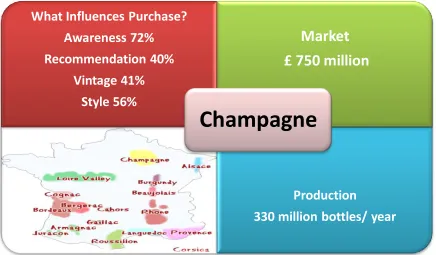
Figure 6 : Champagne Potpourri (Source: Inputs from www.wineintelligence.com)
The strategy: The EU wine market, developed during the medieval period, placed strong emphasis on the origin of the product, illustrating its historical origins, location and pedigree.29 In Europe, the lineage and history of a product such as champagne has a resonance with consumers that goes beyond a brand name and confers the concept of quality, taste, smell and the sensual experience of the product.
The brand building: Champagne, throughout its history, has been marketed as a prestige product to well-heeled and discerning customers. The marketing of champagne to the general public involves a degree of snobbery and brand distinction. Since it is considered a luxury than deemed a necessity, therefore the premium pricing of the brand does not act as a deterrent to potential customers and cheap imitations do not pose as much threat, compared to other GIs.
Discussion & Conclusion
Case studies of the abovementioned three products yield certain quaint observations. Champagne, being the classic example of geographical indication & a model implementation of
29
Jay and Taylor. (2013) "A case of champagne: a study of geographical indications", available at http://epublications.bond.edu.au/cgej/29 as viewed on 13 August 2014.
What Influences Purchase?
Awareness 72%
Recommendation 40%
Vintage 41%
Style 56%
Market
£ 750 million
Production
330 million bottles/ year
legal protection can be cited as exemplary in all aspects; hence its inclusion. What the following market share statistics portrays is the fact that more stringent is the IP protection regime, greater are the economic benefits accruing out of it. Sparkling wine champagne, albeit being an extremely niche product with select clientele is doing wonders for the economy of France compared to what non alcoholic beverages tea & coffee are able to do for boosting their respective countries economy (Figure 7).
Figure 7: Market share of beverages
Café de Columbia, the first example is a thriving GI. Under both trademark certification & geographical protection regime, the market share the product enjoys is not insignificant. However, as the EC has always demanded under WTO rounds, an additional protection (similar to Art 23 for wines & spirits) if extended to agricultural products (i.e. cash crops producing beverages) can lead to further increase in revenue. What ails Columbian coffee is its neighbor & competitor Brazilian coffee whose unquestionable market supremacy can be a hindrance to its active promotion. Also, an attempt to nationalize the coffee, promoting the country, rather than going for further sub branding, region wise, as is the case of wines ( Bordeaux, district specific) may be undoing of it.
Wine Market
$ 7 Billion
Sparkling Wine,Bottled Wine,Bulk Wine,Other Grape Must.
EU 60% of world's
producer, France
predominant
Coffee Market
$ 70 Billion
Arabica & Robusta. Producing Countries : $ 5 Billion.
Columbia accounts for 12% of the market by value.
Tea Market
$ 5.5 Billion Rooibos 22.5
million Euro Darjeeling Tea Rs
Rooibos case is entirely different. What is immediately required is its recognition & protection under an effective GI system which South Africa lacks. Also, in the line of Columbia, the exclusivity of South Africa being the sole producer of the wild herbal tea which also has medicinal benefits needs to be highlighted. Australia, having similar climatic conditions may turn out to be the next producer of Rooibos, thereby the product losing its regional identity.
The lacunae in abovementioned GI based beverages when compared to model champagne are many & varied. Firstly, champagne has effectively dealt with genericide issue either by stringent implementation of TRIPS based IP regime or by entering into bilateral treaties that facilitated gradual phasing out of homonymous wine from different national markets. The revenue garnered that way, though precise data is unavailable, still goes into billions.
Another problem that arises out of improper protection of GI is dilution of the “brand” accruing
out of it; leading to loss of goodwill associated with the product & gradual lessening of revenue.
The one important aspect that helps further strengthening of GI is an integrated & effective supply chain management. While each of the beverages taken as case studies have their own supply chain system, right from picking of tea leaves/ roasting of coffee beans to the point of labeled product reaching the market, it is of paramount importance that the supply chain remain uniform, localized & effective. Any lackadaisical attempt in this regard may sufficiently lower the value of those budding GIs which are still in their brand promotion days; unlike the already well established champagne.
To infer, it will be prudent to opine that in a line similar to model system of champagne, the above discussed beverage products should:
▓ demand additional protection for beverages similar to wines & spirits.
▓ implement IP protection stringently.
▓ limit the area of geographical indication product to retain exclusivity.
▓ maintain supply chain integrity to preserve goodwill associated with the quality of the