in the population sciences published by the Max Planck Institute for Demographic Research Konrad-Zuse Str. 1, D-18057 Rostock · GERMANY www.demographic-research.org
DEMOGRAPHIC RESEARCH
VOLUME 19, ARTICLE 57, PAGES 1913-1934
PUBLISHED 25 NOVEMBER 2008
http://www.demographic-research.org/Volumes/Vol19/57/ DOI: 10.4054/DemRes.2008.19.57
Research Article
Repartnering after marital dissolution:
Does context play a role?
Silvia Meggiolaro
Fausta Ongaro
© 2008 Meggiolaro & Ongaro.
This open-access work is published under the terms of the Creative Commons Attribution NonCommercial License 2.0 Germany, which permits use, reproduction & distribution in any medium for non-commercial purposes, provided the original author(s) and source are given credit.
1 Introduction 1914
2 Background and hypotheses 1915
3 Data and methods 1918
3.1 The sample 1918
3.2 Measures 1919
3.3 Methods 1922
4 Results 1923
4.1 Italy 1923
4.2 North and South 1924
5 Discussion and conclusions 1926
Repartnering after marital dissolution:
Does context play a role?
Silvia Meggiolaro1
Fausta Ongaro2
Abstract
This paper examines in depth the determinants of repartnering in Italy. With data from a national survey conducted in 2003, the effects of socio-economic, demographic and contextual characteristics on second-union formation among separated women are examined. The analysis is of particular interest in a country such as Italy, which is undergoing a transition from traditional to modern family behaviours. In addition, it allows us to verify the hypothesis that the importance of demographic factors in the repartnering process decreases as marital instability becomes more common. Results of event history analysis models confirm the basic hypothesis and show some unexpected effects.
1 Department of Statistics, University of Padova, Via C. Battisti 241, 35121 Padova, Italy.
E-mail:[email protected].
2
1. Introduction
In Italy, the phenomenon of marital disruption is relatively recent and still not very common (ISTAT 2007). This is probably due to cultural and normative factors, which make separation costly, from both emotional and economic viewpoints. In Italy, indeed, the “sacredness” of the first marriage is still important (Rosina and Fraboni 2004). In addition, divorce was introduced by law only in 1970, and only since 1987 has the time required to request a divorce after legal separation been reduced from 5 to 3 years. Not surprisingly, therefore, in Italy unions after the first marriage are not very common, even when the end of the first union is a choice and is undergone by relatively young individuals: in 2003, couples at their second union, including those after widowhood, represented only 5% of all couples (ISTAT 2006). However, marital dissolution is rapidly increasing (ISTAT 2007), indicating that new unions formed after the first marriage may also be more common.
In this paper, we examine the factors influencing repartnering (cohabitation or remarriage) among Italian women who dissolved their first marriage. The international literature is rich in studies on this topic (e.g., Hunt 1966; Thornton 1977; Wu and Schimmele 2005). It has been shown that repartnering may be influenced both by demographic factors (i.e., age of the woman at separation, children born during the first marriage) and by socio-economic characteristics (woman’s education and her employment status). To date, however, the literature cannot always explain why some factors (e.g., children, woman’s human capital) show mixed effects, and which mechanisms actually explain these results. Our aim is to analyse in depth the determinants of repartnering in order to shed light on the mechanisms underlying this phenomenon among separated women living in a country like Italy, which is undergoing a transition from traditional to modern family behaviours. The few studies about repartnering in Italy are based on data from the second half of the 1990s (Rettaroli 2002; Angeli and De Rose 2003); as the phenomenon was then still recent, these pioneering studies faced limitations in both sample size and variables. The availability of data from the survey “Family and Social Subjects”, conducted in Italy in 2003, overcame most of these problems and, as a result, the effects of some key factors (i.e., woman’s employment status and the characteristics of first-marriage children) may be better analysed.
importance of some women’s demographic characteristics, which influence these costs, also decrease. Differences between the North and South of Italy, according to the diffusion of behaviours typical of the Second Demographic Transition (Gesano et al. 2007; De Rose 1992; Rettaroli 1997), are used to test this hypothesis.
The following part of the paper is organised as follows: section 2 discusses factors influencing the formation of new unions among separated women, in the light of explanations, hypotheses and empirical results in the literature; section 3 describes data, methods and variables used; section 4 provides the results of multivariate regression models, applied first to Italy as a whole, and then separately to the North and the Centre-South. In the last section (5) we comment on our results.
2. Background and hypotheses
The most frequently quoted theory of union formation is that of Becker (1991). This economic theory rests on the centrality of a strong division of labour between men and women. An efficient marriage is one in which each partner “specialises”: the woman in home production and the man in non-home matters. Thus, women who invest in human capital are more economically independent, and their reduced dependence on men’s earning capabilities gives them the option to abstain from or delay union formation3 (or even to leave an unsatisfactory relationship).
However, the economic theory has been questioned. Some authors maintain that women with greater personal resources are becoming more desirable in the partner market (Oppenheimer 1988) and that marriages characterised by high “specialisation” of partners are apt to face risks4 and so these marriages are less desirable (Oppenheimer 1994). According to these authors, Becker’s theory is effective in a traditional union market, in which the interests of a female caregiver and a male breadwinner converge (Oppenheimer 1997a). On the opposite side, in modern Western societies, where traditional gender roles are outdated or weakened, strategies of evaluation of union opportunities have changed. Women who have invested less in human capital may be induced to anticipate entry into a union, but it is not so certain that they are the most “attractive” for possible male partners.
The validity of Becker’s theory is generally supported in regression analyses of marriage formation with a macro-approach (Lesthaeghe and Surkin 1988; Pinnelli 1999). However, when attention concentrates on individual behaviour, mixed results are found. There are indeed some studies at a micro-level which - consistently with
3
The “independence hypothesis” of Becker (1991).
Becker’s approach - find an association between a high female educational level5 and delayed first marriage (Blossfeld and De Rose 1992); other studies do not provide any support for the independence hypothesis (Blossfeld and Huinink 1991; Hoem and Rennermalm 1986; Goldscheider et al. 2001).
Mixed results have also been found with regard to second unions. Some authors show that a second union may be used as a strategy to overcome some of the negative consequences of separation for women with fewer economic resources (Duncan and Hoffman 1985; De Graaf and Kalmijn 2003). Others suggest that women with cultural and economic resources, who are more independent and have more opportunities and freedom of choice, may be less motivated to enter into a new union (Chiswick and Lehrer 1990). Yet others suggest that this greater capability to determine their own future may allow women to overcome the fears and doubts associated with previous negative experiences more easily, and freely choose a new union (Oppenheimer 1997b; Bernhardt 2000).
In fact, the conditions that characterise second-union formation are not completely comparable with those associated with entering into a first marriage (De Graaf and Kalmijn 2003; De Jong Gierveld 2004).
First of all, separated women are selected in comparison with women who have never married, because they chose to marry. From this point of view, they show that they have (or had) some propensity to invest in a stable couple relationship, and this may make the independence hypothesis less discriminatory for them than among never married women.
Second, separated women have undergone the dissolution of their first marriage. It is difficult to say how this stressful experience (Jarvis and Jenkins 1999; Smock et al. 1999) affects women’s attitudes towards a new union. On one hand, women with greater personal resources may be more able to sustain and react, so – in contrast with the independence hypothesis – they may be also more prone to reconstruct a new life with a new partner. On the other hand, greater cultural and/or economic resources may make women freer to choose their living arrangements after separation. As a consequence, more autonomous women may have a higher propensity to postpone or not to choose a new union, so repartnering mainly remains a solution for women strongly involved in traditional gender roles and/or with fewer economic resources.
Third, many separated women have already had some children during the previous marriage. It is generally argued that the presence of dependent children born during a previous marriage is a barrier to repartnering, especially if there are several children. Separated women with children may be less interested in a second union, because their
5 In fact, the effect of education needs more attention; researches on the impact of education on various
need for motherhood has already been satisfied in the first marriage. In addition, potential partners may be less prone to enter into a union with a woman with dependent children, because of the possibility of handling complex relationships; similar reflections may be expressed by separated mothers themselves, as they fear conflicts with their children in the case of repartnering. However, the international literature does not always support these explanations: some studies on the determinants of second unions show the negative impact of children born during the previous union on a woman’s repartnering (Bumpass et al. 1990; Lampard and Peggs 1999; Bernhardt 2000); others note that the number of children from the first marriage has little or no effect (see, for example, studies cited by Schmiege et al. 2001). In some cases, a positive effect has been observed (see Glick and Lin 1986), but this may be spurious, due to the fact that the woman’s economic status was not controlled for.
Lastly, the process of repartnering may also be influenced by the cultural and normative context. Our hypothesis is that the level of social acceptance of separations influences the entry into second unions by changing the (individual) social costs of repartnering, in particular those borne by potential male partners. In a more traditional context, male partners of separated women (mainly men who never married) are presumed to experience specific social and psychological costs connected with the choice of non-conventional, still socially unacceptable, unions. In a similar setting, men’s unions with separated women may indeed involve potential conflicts with their family of origin – parents tend to discourage their offspring from adopting new family behaviours (Schröder 2008) - and reconsiderations of their male identity. One way for men to reduce such costs is to prefer separated women who are more similar to women who had never married previously (i.e., relatively young and with few ties with their previous marriage). As a consequence, demographic factors (e.g., age at separation, children of previous marriage) should play an important role in a traditional context (and in the early stages of diffusion of marital instability): as the context becomes more modern (and marital instability becomes more common) and social costs fall, demographic determinants should be less influential on the repartnering of separated women.
more widespread and socially acceptable than in the South (De Rose 1992; Rettaroli 1997). According to our hypothesis, in the South, men entering into a union with separated women undergo higher psychological and social costs than those living in the North; they are therefore presumed to prefer separated women with characteristics similar to those who never married more than those living in the North.
3. Data and methods
3.1 The sample
Our data source is the survey “Family and Social Subjects” conducted in Italy by the Italian Statistical Institute (ISTAT) in November 2003. The survey is based on a representative sample at national level of about 20,000 households. It collected much detailed social and demographic information about each household member.
For women over the age of 15, retrospective data on couple and reproductive biography were available. As the year of all marriages is known, and the years of the beginning of all consensual unions are also reported, all unions of interviewed women can be reconstructed.
For each marital dissolution, the reason for dissolution (widowhood or separation) is known. In the case of separation, up to three dates at most are recorded(the years of
de facto separation, legal separation, and divorce). The date of de facto separation was chosen among the available dates as marking the end of the first marriage. There were several reasons for this choice: a) de facto separation is indeed usually the first event that marks the end of the first marriage; b) since it means the end of cohabitation of partners, it may be considered the onset of the period at risk of experiencing a new (at least consensual) union; c) any other following date would have reduced the sample to be analysed (e.g., if the date of legal separation had been used, women who, at the time of the interview, had not undergone other phases apart from de facto separation would not have been included in the sample). In this way, altogether, women whose marriages had broken up at the moment of the interview totalled 1150: 173 of them were only de
facto separated, 419 legally separated, and 558 divorced. Women over 70 at the interview were not considered6, reducing the sample to 1086, of whom 155 were only
de facto separated, 408 legally separated, and 523 divorced.
One problem was that, in some cases, the date of legal separation and/or of divorce was available, but not the year of de facto separation. Where calculable, the time
6 This choice is justified by two reasons: first, to avoid considering not very reliable retrospective data of
between de facto and legal separation was quite short (on average 1.78 years) and not very variable (the two events happened in the same year for 45%, and at a distance of one year for 23%); consequently, in the 253 cases when the year of de facto separation was not known but the year of legal separation was known, the former was estimated with a probabilistic imputation method7 (Rubin 1987). Due to the great variability of time between de facto separation and divorce, the (217) women who provided only their date of divorce were not considered. Discarding this group of women may have had some bias consequences on the descriptive analyses (which do not take into account the composition of the sample according to divorce or not) but not on the results of the regression models, where this aspect is controlled for8.
The final number of separated women considered for our analyses was thus 869. Of these, 209 (almost 24%) had entered into a second union (marriage or cohabitation) by the time of the interview (independently of the fact that second union had been dissolved or was still proceeding at the time of interview): 61% (128 women) had entered a state of cohabitation, 30% (62 women) had entered a state of cohabitation followed by marriage, and 9% (19 women) had remarried directly.
3.2 Measures
Our dependent variable is the time (measured in years) from the de facto separation9 to the new union (cohabitation or marriage). Women who had not experienced repartnering were censored at the time of interview.
Several independent variables were used to assess the factors influencing the risk of a second union for separated women. Table 1 lists the covariates and proportions of each variable for the national sample. Covariates were grouped into four categories: woman’s personal resources; her preferences and values; ties with her first marriage; historical and geographical context.
7 The imputation takes into account some demographic and social characteristics of the woman (birth cohort,
education, geographical area of residence) and some features connected with reproductive and couple history (year of first marriage, having undergone or not a divorce, children at time of interview, year of legal separation).
8 In any case, some analyses (not reported here for reasons of space) do not contradict the hypothesis that
there is a random selection of the sample of divorced women for whom the date of de facto separation is not known.
9
From now on, we refer to de facto separation simply as separation and women who underwent (at least) a de
Table 1: Characteristics of separated women (percentages) according to explanatory variables
Characteristics % Characteristics %
Age at separation Employment status (at separation)
< 25 10.8 Employed 65.9
25-29 21.8 Region of residence
30-34 22.8 North 54.0
35-39 19.2 Centre 19.9
40-44 13.6 South 26.1
45 or over (but under 70) 11.8 Education
Birth Cohort High (university) 11.0
Until 1950 20.8 Middle (high school) 32.5
1950-1959 35.4 Low (junior school or less) 56.5
1960-1969 32.6 Divorced (at time of interview)
1970 or after 11.2 Yes 35.4
Number and age of children at separation No 64.6
No children 25.6 Ceremony of first marriage
1 child under 6 19.1 Religious 79.9
1 child 6 or over 18.1 Civil 20.1
2 or more, at least one under 6 13.7
2 or more children, all 6 or over 23.5
N° of cases (Total = 100) 869
independence. Education was measured by educational level at time of interview10 (in this case: university [high], high school [middle] and junior school [low]). However, our final models distinguish only two categories of education (middle-high, low), as the medium and high levels showed similar effects on the dependent variable in preliminary analyses. Employment status was expressed as a dichotomous measure (employed/not employed). Unlike previous Italian studies on the determinants of repartnering, it is used here as a time-varying covariate, so that women’s occupational status before entry into a new union was more precisely observed.
b) As seen in first unions, the decision to enter into a second union may be connected with personal values and preferences (Oppenheimer 1988; Lestaeghe and Moors 1996). Some studies suggest that religion influences individual behaviour in terms of second-union formation, with a restraint effect on the formation of new unions, although its cultural importance changes according to country (Angeli and De Rose 2003). In the present study, the first marriage ceremony (civil or religious) was used in place of the attendance to religious functions at the time of interview (the other available information on the woman’s religiosity) as the latter may even be a result of the individual’s life-course rather than a determinant of it. Women who had a civil marriage were expected to be more prone to form a new union compared with those who had a religious marriage.
c) Women’s ties with their previous marriage were measured by two demographic covariates: children born during the first marriage and whether the women got divorced or not. Using the date of birth of children and the date of their mother’s separation, a new covariate was built that jointly describes number (0, 1, 2 or more) and age (up to 5; 6 or more) of children at the time of the mother’s separation. The variable used to measure the presence of legal ties with the previous marriage was a time-varying covariate, and records whether divorce took place or not. According to the hypotheses (see section 2), both covariates were expected to have a decreasing influence on repartnering as the context becomes progressively less traditional.
d) Historical background was measured by the woman’s birth cohort. Most of the respondents (almost 70%) were born in the 1950s and 1960s. In the multivariate analyses, we grouped the birth cohorts into two categories (before or after 1960) which were presumed to satisfy two aims: discriminating between women living in more or less traditional historical periods, and avoiding empty cells when the birth cohort was crossed with respondents’ age at separation. More recent cohorts were expected to be more prone to form second unions. As regards the effect of geographic context, first,
10
North, Centre and South were distinguished11; then, as a similar propensity for second unions was observed in the Centre and South, these two areas were grouped and contextual analyses were carried out distinguishing only between North and Centre-South. As noted in section 2, geographic context was presumed to influence the risk of repartnering, reducing the importance of woman’s demographic characteristics passing from South to North.
3.3 Methods
We used continuous time event history analysis techniques. Piecewise constant exponential models (Blossfeld and Rohwer 2002) were used to estimate the effects of the explanatory variables on second union formation. The models are described as:
( )
{
( )jk ( ) ( )jk jk}
ljkt = α +β X
r exp ,
where rjk(t) is the hazard of the transition rate from origin state j to destination state k at
time t (in this case, the entry into a second union for separated women); X( )jk
is a (row) vector of covariates and β( )jk
is an associated vector of coefficients. ( )jk l
α is a constant coefficient associated with the lth time period (l = 1, .. ,L), where periods are based on (L-1) split points on the time axis. Thus, the model assumes that the hazard is constant not over the whole range of time, but within certain specified intervals of time. Conversely, the covariates are assumed to have the same effects in each period, so that the model is of proportional hazard type.
In our analyses, there were four time periods (up to two years; 3-5; 6-10; 11 and more) and the covariates are those listed in table 1.
First, we model the entry into a second union for Italy as a country. Then we run the same model separately for North and Centre-South. We decided on two models stratified by regions of residence, instead of a single model with all interactions between region of residence and women’s demographic characteristics, in order to have more readable results. Moreover, a single model would not have allowed us to test potential interactions between areas of residence and other covariates.
11 Conforming to the standard classification, the North includes the regions of Piemonte, Valle d’Aosta,
4. Results
4.1 Italy
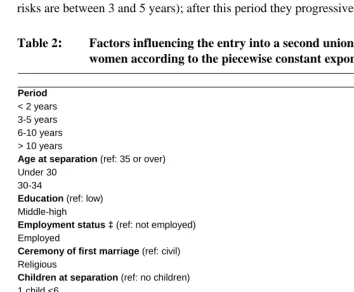
Table 2 lists the parameter estimates of the regression model, describing the risk of entry into a second union for the whole sample of separated Italian women.
Results show that the chances of forming a second union change with the time elapsing from separation. The non-monotonic effects shown by time suggest that the risks of repartnering are higher in the first five years after the separation (the highest risks are between 3 and 5 years); after this period they progressively fall.
Table 2: Factors influencing the entry into a second union for separated
women according to the piecewise constant exponential model: Italy
Coefficients
Period
< 2 years -4.23***
3-5 years -4.09***
6-10 years -4.47***
> 10 years -5.03***
Age at separation (ref: 35 or over)
Under 30 1.29***
30-34 0.63***
Education (ref: low)
Middle-high 0.07
Employment status ‡ (ref: not employed)
Employed -0.25
Ceremony of first marriage (ref: civil)
Religious 0.01
Children at separation (ref: no children)
1 child <6 -0.29
1 child 6+ 0.01
2 or more children, with at least one < 6 -0.87***
2 or more children, all 6+ -0.17
Divorce ‡ (ref: no)
Yes 0.54***
Birth cohort (ref: after 1960)
Until 1960 -0.49***
Region of residence (ref: South)
North 0.64***
Centre 0.23
‡ Time-varying variable
Women’s personal resources have a weak effect on the propensity to enter into a second union. Only age at marriage disruption shows a significant and negative association with repartnering: women under 30 at separation are more than three and a half times (exp(1.29) = 3.6) as likely to begin a new union than those in the reference group (35 or over), and women aged 30-34 almost double. The other variables connected with personal resources do not seem to have a significant influence on the propensity to form a new couple: education has no effect; employment status shows a negative but not significant effect. So the independence hypothesis does not find empirical confirmation at a national level. Similar results were also found in previous Italian studies (Rettaroli 2002; Angeli and De Rose 2003), although their samples and covariates were not completely comparable (e.g., employment status was not considered as a time-varying variable).
A woman’s ties with her previous marriage influence her propensity for repartnering. Children reduce the risk of entering a second union only if there are more than one of them and of pre-school age: women in this condition are less than half as likely to repartner than women in any other condition. These results only partly confirm those in the previous Italian literature: Angeli and De Rose (2003) found a negative effect of children under 13; Rettaroli (2002) showed a negative association between the risk of repartnering and the number of children (but she did not consider the age of children). As expected, undergoing divorce is closely connected with entry into a second union: divorced women present a risk of entering a second union that is more than one and a half times that of de facto or legally separated women.
As presumed, there is a contextual effect, both historical and geographic. The propensity to form second unions is increasing: with respect to women born in the 1960s or after, those born before are almost half as likely to cohabit or remarry. Women living in the North are also more prone to repartner: they are almost twice as likely to begin a new union than those from the South. Women from the Centre do not show significant differences with respect to women living in the South.
The ceremony of the first marriage (as a values and preferences indicator) has no effect on second-union formation.
4.2 North and South
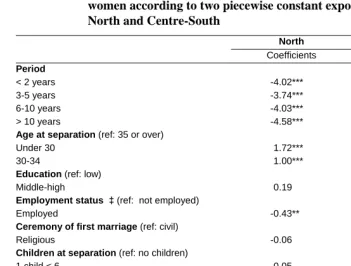
Table 3: Factors influencing the entry into a second union for separated women according to two piecewise constant exponential models: North and Centre-South
North Centre-South
Coefficients Coefficients
Period
< 2 years -4.02*** -3.29***
3-5 years -3.74*** -3.41***
6-10 years -4.03*** -3.99***
> 10 years -4.58*** -4.53***
Age at separation (ref: 35 or over)
Under 30 1.72*** 0.68*
30-34 1.00*** -0.05
Education (ref: low)
Middle-high 0.19 -0.17
Employment status ‡ (ref: not employed)
Employed -0.43** 0.09
Ceremony of first marriage (ref: civil)
Religious -0.06 0.08
Children at separation (ref: no children)
1 child < 6 -0.05 -0.83**
1 child 6+ 0.22 -0.42
2 or more children, at least one < 6 -0.50 -1.69***
2 or more children, all 6+ -0.24 -1.02**
Divorce ‡ (ref: no)
Yes 0.35 0.94***
Birth cohort (ref: after 1960)
Until 1960 -0.52*** -0.52*
‡ Time-varying variable
* = p < .10, ** = p < .05, *** =p < .01
Results show that the area of residence influences the repartnering process.
The effects of time elapsing from separation are different in the two geographical areas. In the North, the highest risks are observed in the period between 3 and 5 years after separation, in line with results for the whole country. In the Centre-South, the risks of repartnering monotonically decrease as the time from separation increases.
is more than five times that for those of the reference group, and the risk for women of 30-34 is almost three times higher.
As regards woman’s employment status, a different effect is noted between North and Centre-South. In the North, employed women are less likely to enter into a second union than those who are not working; in the Centre-South, employment status does not influence the propensity of separated women for forming a new union. As in the whole country, education is not significant, in either North or Centre-South. Thus, the independence hypothesis is partially confirmed only for the North.
As expected, a woman’s ties with her previous marriage show different effects in the two geographical areas. In the North, these variables have no effects on repartnering, but they do have a highly significant impact on the propensity to form a second union in the South. Here, the propension to enter into a second union is limited by the presence of children, particularly if there are more than one, or if they are of pre-school age. The risk of entering into a new partnership for women with two or more children, one of them aged less than six, is only one-fifth that for women without children or with only one child aged six or more. Divorced women also have greater probabilities of repartnering, with a risk which is about two and a half times that of the reference group.
In both geographical areas, the birth cohort is positively associated with the risk of repartnering. Surprisingly, the figures for this parameter are the same, although the value is less significant in the Centre-South. Slower changes in behaviour in the Central-Southern cohorts are therefore not empirically evident.
As in the whole country, the ceremony of the first marriage has no significant effect on second-union formation, in either North or Centre-South. It may be that this is not a very sensitive measure of the woman’s religiosity. There may be some kind of selection among women whose first marriage was religious: separated women probably have less intense religious feelings than those who do not undergo the dissolution of their first marriage, and their religiosity may be similar to that of separated women whose marriage was civil. As a consequence, this covariate cannot discern differentiated behaviours.
5. Discussion and conclusions
in a Mediterranean European country which is undergoing considerable changes in family behaviours. But these transformations are not homogeneous throughout Italy: compared with the North, as a precursor of behaviours typical of the Second Demographic Transition (cohabitations, separations, non-marital births), there is the South, characterised by more traditional family models and behaviours. As a consequence, a study of the determinants of repartnering in Italy also offers the opportunity to verify whether the cultural context plays a role in the process of formations of unions after the first marriage, and to what extent.
What kinds of women have a higher propensity for forming new unions after separation? What is the role of some predictors which are considered traditionally important in the international literature as women’s demographic and socio-economic characteristics? Are their impacts differentiated according to the level of modernisation of the geographical context?
Our primary finding is that the probability of repartnering is increasing over birth cohorts in the whole country. This trend may be due to the fact that women “learn” to experience new family forms in the course of time; otherwise, the greater social acceptance of repartnering over time may support the formation of new couples after first marital dissolution. In any case, this result suggests important changes in family behaviours in the future, the possible social and economic consequences of which should be taken into account by policy-makers in good time.
Our investigation also shows that the determinants of repartnering differ according to the area of residence: women’s personal resources have more importance in the North than in the South, but demographic covariates are more influential in the South than in the North.
As expected, in a traditional context, ties with the previous marriage decrease the chances of repartnering for separated women, whereas these factors become less relevant in a more modern and secularised context. These results support our hypothesis that the repartnering process is also influenced by the level of social acceptance of marital instability and of family forms deriving from it. In a traditional context, a union with a separated woman does entail social and psychological costs for potential male partners, costs which may be reduced by preferring separated women with characteristics similar to those of women who had never married. In a more modern context – where separations and second unions are socially more acceptable – costs fall and, with them, also the importance of the demographic characteristics of separated women. As a consequence, the importance of demographic factors is assumed to decrease with the spread of marital instability.
independence hypothesis should work better in a traditional context than in a modern one. In the former, the usefulness of less independent women converges with that of the breadwinner men. However, our results show that, in the more secularised North, working separated women are less prone to form second unions than non-employed ones. Instead, in the more traditional South, women’s participation in the labour market does not influence the risk of repartnering. The low importance of employment status in the South may be explained by differences in the female labour market between the two geographical areas which available data do not completely control. For example, women’s work in the South may, on average, be more temporary and less well paid than in the North, so that having a job or not has a low discriminant power on the propensity to form a new union. Conversely, in the North, where a job also usually means economic independence, employment status is more influential on women’s family decisions. Another potential explanation for our results regards socio-cultural differences in the two areas. Unlike the South, in the North the state of a “single” woman may be perceived by separated women not as a temporary condition or as one to be “suffered”, but rather as a new living arrangement which is alternative and perhaps preferable to that of a cohabiting couple. Women less influenced by economic restrictions may therefore delay or avoid entering into a second union, remaining single without a stable sexual partner or experiencing other forms of couple relationships, e.g., LAT (Living Apart Together). As a consequence, in the North repartnering is more common among women with fewer economic resources (and, probably, with a greater propensity to invest in a union).
In conclusion, our results support the hypothesis that the decision processes of individuals involved in repartnering also depend on the level of tradition or modernisation of the territorial context. The same results also allow us to put forward hypotheses on the mechanisms of repartnering, although the lack of more detailed data only allows a few suggestions. The lack of information on separated women’s norms and values does not indicate, for example, if the (presumed) preferences of men in the South for separated women with few ties with their first marriage are also shared by the separated women themselves: that is, we do not know whether separated women feel some reserve about placing themselves on the second-union market if they have children or if they are not divorced. In addition, the lack of information on the attitudes of separated women regarding various forms of living arrangements after separation does not allow us to directly verify the existence of different attitudes between Italy’s North and South.
References
Angeli, A. and De Rose, A. (2003). Donne e uomini dopo lo scioglimento della prima unione. In: Pinnelli, A., Racioppi, F. and Rettaroli, R. (eds.). Genere e
Demografia. Bologna: Il Mulino: 367-392.
Becker, G.S. (1991). A treatise on the family. Enl. ed. Cambridge: Harvard University Press.
Bernhardt, E. (2000). Repartnering among Swedish men and women: A case study of
emerging patterns in the second demographic transition. Paper presented at the FFS Flagship Conference, Brussels, Belgium, May 29-31 2000.
Blossfeld, H.P. and De Rose, A. (1992). Educational expansion and changes in entry into marriage and motherhood: The experience of Italian women. Genus 48(3-4): 73-89.
Blossfeld, H.P. and Huinink J. (1991). Human capital investments or norms of role transition? How women’s schooling and career affect the process of family formation. American Journal of Sociology 97(1): 143-168.
Blossfeld, H.P. and Rohwer, G. (2002). Techniques of event history modeling: New
approaches to causal analysis. 2nd ed. Mahwah: Lawrence Erlbaum Associates. Bumpass, L.L., Sweet, T.J. and Martin, T.C. (1990). Changing patterns of remarriage.
Journal of Marriage and the Family 52(3): 747-756.
Chiswick, C.U. and Lehrer, E.L. (1990). On marriage-specific capital: Its role as a determinant of remarriage. Journal of Population Economics 3(3): 193-213. De Graaf, P.M. and Kalmijn, M. (2003). Alternative routes in the remarriage market:
Competing-risk analyses of union formation after divorce. Social Forces 81(4): 1459-1498.
De Jong Gierveld, J. (2004). Remarriage, unmarried cohabitation, living apart together: Partner relationships following bereavement or divorce Journal of Marriage and
the Family 66(1): 236-243.
De Rose, A. (1992). Socio-economic factors and family size as determinants of marital dissolution in Italy. European Sociological Review 8(1): 71-91.
Gesano, G., Ongaro, F. and Rosina, A. (eds.) (2007). Rapporto sulla popolazione:
L’Italia all’inizio del XXI secolo. Bologna: Il Mulino.
Glick, P.C. and Lin, S.-L. (1986). Recent changes in divorce and remarriage. Journal of
Marriage and the Family 48(4): 737-747.
Goldscheider, F., Turcotte, P. and Kopp, A. (2001). The changing determinants of women’s first union formation in industrialized countries: The United States, Canada, Italy and Sweden. Genus 57(3-4): 107-134.
Hoem, J., Neyer, G. and Andersson, G. (2006). Education and childlessness: The relationship between educational field, educational level, and childlessness among Swedish women born in 1955-59. Demographic Research 14(15): 331-380.
Hoem, J. and Rennermalm, B. (1986). Modern family initiation in Sweden: Experience of women born between 1936 and 1960. European Journal of Population 1(1): 81-112.
Hunt, M.M. (1966). The world of the formerly married. New York: McGraw-Hill. ISTAT (2007). Separazioni e divorzi in Italia: Anno 2005. Roma: ISTAT (Statistiche in
breve).
ISTAT (2006). Strutture familiari e opinioni su famiglia e figli: I multiscopo sulle
famiglie "Familia e soggetti sociali"; Anno 2003. Roma: ISTAT (Informazioni. Famiglia e società / ISTAT; 2006.18).
Jarvis, S. and Jenkins, S.P. (1999). Marital splits and income changes: Evidence from the British Household Panel Survey. Population Studies 53(2): 237-254.
Lampard, R. and Peggs, K. (1999). Repartnering: The relevance of parenthood and gender to cohabitation and remarriage among formerly married. British Journal
of Sociology 50(3): 443-465.
Lesthaeghe, R. and Moors, G. (1996). Living arrangements, socio-economic position, and values among young adults: A pattern description for France, West Germany, Belgium and the Netherlands, 1990. In: Coleman, D. (ed.). Europe’s
population in the 1990s. Oxford: Oxford University Press: 163-221.
Lesthaeghe, R. and Surkyn, J. (1988). Cultural dynamics and economic theories of fertility change. Population and Development Review 14(1): 1-45.
Oppenheimer, V.K. (1997b). Comment on “The rise of divorce and separation in the United States, 1880-1990”. Demography 34(4): 467-472.
Oppenheimer, V.K. (1994).Women’s rising employment and the future of the family in industrial societies. Population and Development Review 20(2): 293-342.
Oppenheimer, V.K. (1988). A theory of marriage timing. American Journal of
Sociology 94(3): 563-591.
Pinnelli, A. (1999). Gender and the family in developed countries. Liège: IUSSP (Gender in population studies).
Pinnelli, A. and Fiori, F. (2007). Sistema di genere, comportamenti familiari e sopravvivenza nelle regioni italiane. In: Pinnelli, A., Racioppi, F. and Terzera, L. (eds.). Genere, famiglia e salute. Milano: Franco Angeli: 26-68 (Collana di sociologia; 574).
Rettaroli, R. (2002). Il processo di formazione delle seconde unioni per le donne. In:
Famiglie: Mutamenti e politiche sociali. Vol. II: Osservatorio nazionale sulle
famiglie e le politiche locali di sostegno alle responsabilità familiari. Bologna: Il Mulino: 153-170.
Rettaroli, R. (1997). Le seconde nozze. In: Barbagli, M. and Saraceno, C. (eds.). Lo
stato delle famiglie in Italia. Bologna: Il Mulino: 257-271.
Rosina, A. and Fraboni, R. (2004). Is marriage losing its centrality in Italy?
Demographic Research 11(6): 149-172.
Rubin, D.B. (1987). Multiple imputation for nonresponse in surveys. New York: Wiley (Wiley series in probability and mathematical statistics: Applied probability and statistics).
Schmiege, C.J., Richards, L.N. and Zvonkovic, A.M. (2001). Remarriage: For love or money? Journal of Divorce & Remarriage 36(1/2): 123-140.
Schröder, C. (2008). The influence of parents on cohabitation in Italy. Insights from two regional contexts. Demographic Research 19(48): 1693-1726.
Smock, P.J., Manning, W.D. and Gupta, S. (1999). The effect of marriage and divorce on women's economic well-being. American Sociological Review 64(6): 794-812.
Wu, Z. and Schimmele, C.M. (2005). Repartnering after first union disruption. Journal