DEMOGRAPHIC RESEARCH
VOLUME 34, ARTICLE 40, PAGES 1129
−
1160
PUBLISHED 24 JUNE 2016
http://www.demographic-research.org/Volumes/Vol34/40/ DOI: 10.4054/DemRes.2016.34.40
Research Article
Understanding patterns of contraceptive use
among never married Mexican American women
Kate H. Choi
Erin R. Hamilton
© 2016 Kate H. Choi & Erin R. Hamilton.
This open-access work is published under the terms of the Creative Commons Attribution NonCommercial License 2.0 Germany, which permits use, reproduction & distribution in any medium for non-commercial purposes, provided the original author(s) and source are given credit.
1 Introduction 1130
2 Background 1131
2.1 Race/ethnic differences in contraceptive behavior 1131
2.2 Explanations for differences in contraceptive practices 1132
3 Data and methods 1135
3.1 Data 1135
3.2 Sample 1135
3.3 Measures 1136
3.3.1 Dependent variables 1136
3.3.2 Independent variables 1137
3.4 Analytical plan 1138
4 Results 1139
4.1 Racial, ethnic, and nativity differences in sexual activity and
contraceptive practices 1139
4.2 Differences in socioeconomic circumstances, access to
contraception, and attitudes towards family life 1141 4.3 Multivariate analysis: Contraceptive practice by race, ethnicity, and
nativity status 1146
5 Supplementary analyses 1150
6 Discussion 1150
References 1154
Research Article
Understanding patterns of contraceptive use among never married
Mexican American women
Kate H. Choi1
Erin R. Hamilton2
Abstract
BACKGROUND
Non-marital fertility differs considerably by race, ethnicity, and nativity. These differences arise largely from racial and ethnic disparities in contraceptive practices. Empirical work has not assessed the relative importance of the various mechanisms proposed to account for racial, ethnic, and nativity differences in contraceptive behavior among never married women.
OBJECTIVE
Our objective is to describe racial, ethnic, and nativity disparities in contraceptive practices and determine the relative importance of the various mechanisms proposed to explain those disparities among never married, non-cohabiting women.
METHODS
Pooling data from the 2006‒2010 and 2011‒2013 National Survey of Family Growth (NSFG), we compare the age- and parity-standardized patterns of contraceptive use among never married, non-cohabiting Mexican immigrants, US-born Mexican Americans, Blacks, and Whites. We also examine the extent to which socioeconomic characteristics, access to family planning, and attitudes towards family life give rise to group differences in patterns of contraceptive use.
RESULTS
Never married, non-cohabiting Whites are more likely than their minority counterparts to use very effective methods of contraception. Socioeconomic disparities explain some of the group differences in contraceptive practice. Differing levels of access to family planning also explain a significant portion of the difference in contraceptive practice between Whites and Mexican immigrants.
CONCLUSION
Policies aimed at alleviating socioeconomic inequality and differential access to family planning services may be effective at reducing disparities in contraceptive use between White and non-White never married, non-cohabiting women, especially White/Mexican-immigrant differences.
1. Introduction
Hispanic women in the United States have considerably higher non-marital fertility than women in other ethno-racial groups. In 2010, fertility among unmarried Hispanic women of reproductive ages was 80.6 per 1,000 women, as compared to 32.9 per 1,000 unmarried White women and 65.3 per 1,000 unmarried Black women (Martin et al. 2013). Understanding the sources of this racial and ethnic variation in non-marital fertility is essential because children of unmarried parents experience substantial disadvantages relative to children of married parents (McLanahan 2004). Because Black and Hispanic children are more likely to be born to unmarried parents than children in other groups, family structure is a key mechanism through which racial and ethnic disadvantage is perpetuated across generations (McLanahan and Percheski 2008). In the past, racial and ethnic variation in non-marital fertility emerged due to differences in sexual activity and post-conception marriage (Kim and Raley 2015). In recent decades, however, this difference arises primarily because unmarried Hispanic women are less likely than their non-Hispanic counterparts to use contraception, and when they do they are less likely than non-Hispanic women to use very effective methods of contraception (Kim and Raley 2015; Sweeney and Raley 2014).
Numerous studies have tried to identify the mechanisms giving rise to racial and ethnic differences in contraceptive practice (e.g., Deardroff et al. 2010; Jacob and Stanfors 2013; Minnis 2010; Sangi-Haypeykar et al. 2006; Wilson 2009). These studies commonly attribute these differences in contraceptive practice to family size preferences, fertility timing, socioeconomic inequality shaping opportunity costs of childbearing and affordability of contraception, and differential access to contraception (see Sweeney and Raley 2014 for review).
the pattern of racial and ethnic variation in contraceptive practices differs appreciably according to women’s marital status, as do the mechanisms giving rise to these differences (Sweeney 2010). Third, prior work usually compares the contraceptive practices of pan-ethnic Hispanics with those of Whites, although it is well established that socioeconomic circumstances, access to family planning services, and attitudes towards nonmarital fertility differ markedly across Hispanic national origin groups (Landale and Oropesa 2007; White and Potter 2013; Wildsmith, Welti, and Manlove 2012). Finally, past work on this topic typically relies on convenience samples (Afable-Munsuz and Brindis 2006; Deodroff et al. 2010; Sangi-Haypeykar et al. 2006; Unger and Molina 2000). The external validity of these results should be confirmed with population-based samples.
To address these gaps in the literature, we pooled data from the 2006‒2010 and 2011‒2013 National Survey of Family Growth (NSFG) to compare the contraceptive practices of never married, non-cohabiting Mexican immigrant, US-born Mexican American, Black, and White women. Disaggregating Mexican-origin women by nativity status is essential because one-third of the Mexican-origin population in the United States is foreign-born (Gonzalez-Barrera and Lopez 2013) and the patterns of Hispanic women’s fertility and contraceptive use vary by nativity status (Choi 2014; Frank and Heuveline 2005; White and Potter 2013). Examining nativity differences in contraceptive use among Mexican-origin women in comparison to native-born White and Black women will give some indication of how contraceptive behavior changes with prolonged exposure to the US context. Having established these patterns, we adjudicate between competing explanations of racial, ethnic, and nativity disparities in contraceptive behavior. Specifically, we examine the extent to which socioeconomic circumstances, unmet access to family planning, and attitudes towards family life account for group differences in contraceptive use among never married women.
2. Background
2.1 Race/ethnic differences in contraceptive behavior
women than among non-Hispanic women (Daniels, Daugherty, and Jones 2014; Sangi-Haghpeyker et al. 2006; Unger and Molina 2000; White and Potter 2013). These differences appear to be most pronounced among younger women, who are largely unmarried (Mestad et al. 2011; Secura et al. 2010; Sweeney and Raley 2014).
Acknowledging the heterogeneity in contraceptive practices in the Hispanic population, recent studies have begun to disaggregate Hispanic women according to their national origin and to examine the contraceptive behavior of Mexican Americans (Minnis 2010; White and Potter 2013; Wilson 2009). These studies consistently show that Mexican immigrants are less likely than non-migrant women in Mexico to use contraception and to rely on very effective methods of contraception (Minnis 2010; White and Potter 2013). Evidence, however, is mixed with respect to how the contraceptive practices of Mexican Americans change across generations, with Minnis (2010) finding that contraceptive non-use increases across immigrant generations and White and Potter (2013) finding the opposite. These discrepant accounts may emerge because White and Potter (2013) focus on the contraceptive practices of currently married and cohabiting women, whereas Minnis (2010) examines the contraceptive practices of women of varying marital statuses. That the results are contrasting suggests the importance of examining the contraceptive practices of women separately according to their marital status.
2.2 Explanations for differences in contraceptive practices
Three explanations are frequently invoked to account for the ethno-racial disparities in contraceptive use and efficacy. The explanations center on group differences in socioeconomic circumstances, access to family planning services, and attitudes towards family life, which simultaneously influence women’s desires to use contraception and their access to different types of contraception.
The cost and access barriers to using very effective methods of contraception may also contribute to racial, ethnic, and nativity differences in contraceptive practice (Potter Moore, and Byrd 2003; Secura et al. 2010). Very effective methods of contraception are costly and require a prescription from a medical professional; as a result, women with limited access to family planning services may be less likely to use very effective methods of contraception than those with regular access to these services (Potter, Moore, and Byrd 2003). Although family planning services are available to low-income and uninsured women, access to these services has declined in recent years and there is wide variation in the availability of these services by geographic region and immigrant legal status (James et al. 2009; White and Potter 2013). Mexican immigrants in the United States have fewer resources and are less likely to have health insurance than the US-born, which lead to lower rates of health care utilization (Wallace and Gutierrez 2005). Most states bar immigrants from receiving public health benefits for 5 years following receipt of a visa for permanent residency and permanently if immigrants are undocumented (Telles and Ortiz 2008; Wallace and Gutierrez 2005). Given their limited access to family planning services, we expect that women of Mexican origin, especially the foreign-born, will be less likely than women in other groups to use very effective methods of contraception.
Yet a third explanation attributes Mexican American women’s low rates of contraceptive use and reliance on less effective methods to the cultural norms that have traditionally promoted pronatalist attitudes among the married while discouraging sexual activity outside of marriage-like unions (Bean and Tienda 1987; East 1998; Landale and Oropesa 2007; Lopez-Gonzales 2001; Oropesa 1996; Wildsmith and Raley 2006). Among unmarried women of Mexican origin, adherence to this cultural orientation implies higher rates of abstinence (Upchurch et al. 1998) and may have the unintended effect of creating barriers to contraceptive knowledge and use (Deardorff et al. 2010; Sangi-Haghpeyker et al. 2006). For example, Hispanics are more likely than non-Hispanics to understate their chances of becoming pregnant after sex as well as the effectiveness of birth control pills (Kaye, Suellentrop, and Sloup 2009; Sweeney and Raley 2014). Limited knowledge about contraceptive efficacy may result in low rates of contraception use, especially of very effective methods, among never married women of Mexican origin.
differences, as affiliations capture substantial heterogeneity in adherence and commitment to the faith. Religiosity, or the degree of adherence and commitment to the faith, may better capture the extent to which religious doctrines affect contraceptive use (Studer and Thornton 1987; Lefkowitz et al. 2004).
There is varied empirical support for the three explanations. Prior work testing the role of norms and attitudes offers limited support, at least insofar as norms and attitudes are captured by desire for large family size (Hayford and Guzzo 2013; Rocca and Harper 2012). In equal measure, researchers have called into question the view that the lower rates of contraceptive use among Mexican American women is attributable to their Catholic faith, citing the fact that contraceptive use is high in Mexico despite the fact that over 80% of Mexican adults identify as Catholics (Cooperman et al. 2014; Hirsch 2008). Past studies also offer mixed support for the explanation that group differences in contraceptive practice emerge largely due to socioeconomic inequality, with studies finding that socioeconomic differentials account for Hispanic-White differences but not Black-White differences (Dehlendorf et al. 2011; Jacobs and Stanfors 2013; Sweeney and Raley 2014; Shih et al. 2011). Furthermore, the extent to which socioeconomic differences explain group differences in the contraceptive practices of never married women is largely unknown, as existing work combines women of all marital statuses. Empirical support for the explanation focusing on access to family planning services and unmet contraceptive need is available in studies testing the role of insurance coverage (White and Potter 2013), access to Title X programs for planning services (DesrosiersArden, and Fisher 2013), and location of pharmaceutical purchases (Potter, Moore, and Byrd 2003, Potter, White, and Amaste 2010).
3. Data and methods
3.1 Data
We pool data from the 2006‒2010 and 2011‒2013 continuous cycles of the National Survey of Family Growth (NSFG). This nationally representative, cross-sectional survey gathered data related to contraceptive practice, family life, and fertility behavior from 17,880 non-institutionalized, civilian women between the ages of 15 to 44 in the United States (Lepkowski et al. 2013).
This dataset is well suited for an analysis of the contraceptive practices of never married women, for several reasons. First, the NSFG collects detailed information about sexual activity and contraceptive use, which provides the information necessary to ascertain whether the respondent is sexually active, whether they use contraception, and the type of contraception used. Second, respondents report their race, ethnicity, and nativity status, which we can then use to identify foreign-born Mexican immigrants, US-born Mexican Americans, non-Hispanic (NH) Blacks, and NH Whites. Third, it collects detailed information about access to medical care, including the type of insurance coverage that respondents have and whether insurance coverage has been interrupted in the past 12 months. Finally, it gathers detailed information about family background, socioeconomic circumstances, attitudes to premarital sex and nonmarital cohabitation, fertility intentions, and religious intentions.
3.2 Sample
We limit our analysis to never married, non-cohabiting women who answered questions about sexual activity and contraceptive practices, with full information about access to medical facilities and insurance coverage.3 Although currently cohabiting and
previously married women also contribute to nonmarital fertility, we exclude them because we do not have sufficiently large numbers of cohabiting or previously married Mexican immigrants who are sexually active to conduct a separate analysis for them, and the contraceptive practices of cohabiting and previously married women differ appreciably from those of never married women in several ways: (1) contraceptive use and reliance on very effective methods of contraception are considerably lower among never married women than among cohabiting women, and (2) never married women are more likely to rely on the pill but less likely to rely on sterilization than previously
3 Relative to their White and US-born Mexican American peers, higher shares of never married,
married women (Jones, Mosher, and Daniels 2012; Sweeney 2010). Heterogeneity in contraceptive practices prevents us from treating never married/non-cohabiting, cohabiting, and previously married women as a single group.
We rely on two analytical samples to describe racial, ethnic, and nativity status differences in never married women’s contraceptive behavior. Our analysis of sexual activity uses a sample of never married, non-cohabiting women at risk of pregnancy. Women are said to be at risk of pregnancyif they are not pregnant and are not sterile because of reasons unrelated to contraception. These sampling restrictions yield an analytical sample of 6,468 never married women, comprised of 3,357 Whites, 2,122 Blacks, 760 US-born Mexican Americans, and 229 Mexican immigrants. Throughout the text, we refer to women in this subsample as ‘never married’ women.
For our analysis of type of contraceptive method, we further restrict the sample to never married women who had sex in recent months (i.e., they have engaged in sexual activity in the past 12 months).4 This restriction yields a sample of 3,702 women,
comprised of 1,775 Whites, 1,456 Blacks, 387 US-born Mexican Americans, and 84 Mexican immigrants. Women in this subsample will be referred to as ‘never married women who had sex in the last 12 months’.
3.3 Measures
3.3.1 Dependent variables
‘Sexual activity’distinguishes never married women who are sexually active (i.e., ever had vaginal intercourse) from their peers who are sexually inactive (i.e., never had intercourse).
Using information available in the contraceptive method calendar, we ascertain the century month when the respondent last had sex and the contraceptive method used during that month. Once this information is obtained, we classify respondents into three categories of type of contraceptive method, ordered successively by efficacy of contraceptive method used in the month when respondent last had sex: (1) no method;
4 We also examined results for the sample of never married, non-cohabiting women who had sex in the three
(2) effective or less effective method5 (e.g., periodic abstinence, withdrawal, condom,
diaphragm, female condom, and male condom); and (3) very effective methods of contraception (e.g., pill, IUD, other hormonal methods, female sterilization,6
vasectomy). This definition uses the classification system developed by Trussell (2011) based on contraceptive failure rates.
3.3.2 Independent variables
Racial, ethnic, and nativity status is a categorical variable classifying women into four groups: (1) Mexican immigrants, (2) US-born Mexican Americans, (3) Blacks, and (4) Whites. ‘Mexican immigrants’refers to women born outside the United States who self-identify as Mexican or Mexican American. ‘US-born Mexican Americans’refers to women born in the United States who self-identify as Mexican or Mexican American. ‘Blacks’refers to women born in the United States who self-identify as non-Hispanic and as Black. ‘Whites’ refers to women born in the United States who self-identify as non-Hispanic and as White.
We capturerespondent’s socioeconomic circumstances and family background usingyears of schooling (≤ 9; 10 to 11; 12; ≥13); full-time employment (full-time; not full-time); school enrollment (enrolled; not enrolled); income relative to poverty line (below, 100%‒199%, 200%‒299%, 300%+ of poverty line); mother’s education (less than high school, high school degree, some college, college or more, missing); and family background at age 14 (two biological parents, step parent, single parent, and other).
Access to family planning is captured with measures of health insurance status (private, public, none) and whether coverage was interrupted in the 12 months preceding the interview (yes, no).
Attitudes towards family life, fertility intentions, and religious affiliation are also considered in our models. Attitudes towards family life are captured with measures ofwhether respondents approve of sex between unmarried adults if they share strong affection (yes, no)7 and whether respondents are okay with unmarried adults
living together(yes, no). Fertility intentions are captured using measures of whether
5 Low shares of women report using less effective methods of contraception. We therefore collapsed effective
and less effective methods of contraception into one category. We also examined results collapsing less effective methods of contraception with no method used, which were similar to those presented below.
6 Only 6% of our sample of never married, non-cohabiting women rely on contraceptive sterilization. 7 NSFG also asked respondents whether or not it is okay for unmarried 16-year-olds to have sex. This variable
the respondent wants a child in the future (yes, no) and whether the respondent would be upset if she became pregnant now (yes, no). Religious affiliation is captured by measuring religion in which they were raised(Catholic, Fundamentalist Protestant, and Other); importance of religion (no religion, matters little, matters somewhat, and very important); and religiosity (attended religious service more than once a week, once a week; one a month, and less than once a month).
Finally, all our models control for age(15‒19; 20‒24; 25‒29; 30‒44) and parity (0, 1, 2 or more) because it is well established that contraceptive practices, access to partners, and fertility intentions differ by age and parity (White and Potter 2003).
3.4 Analytical plan
We begin by comparing the share of women in each racial, ethnic, and nativity group who have ever had sex. Having established this pattern, we compare the contraceptive practices of never married, non-cohabiting women who had sex in the 12 months preceding the interview according to their race, ethnicity, and nativity status.
contraceptive use by adding attitudes towards family life, fertility intentions, and religion into Model 1. Model 5 is our full model, which includes all covariates. Subsequently, we use the coefficients obtained from these models to compute the predicted probability of using very effective methods of contraception for women in each racial, ethnic, and nativity group and compare the predicted probabilities across these models to determine the extent to which socioeconomic circumstances, access to family planning services, and attitudes towards family life explain racial, ethnic, and nativity differences in contraceptive practices.
Two analytical steps are noteworthy. All analyses are weighted to ensure that our estimates are representative of the sexual activity and contraceptive use among never married Mexican immigrant, US-born Mexican American, Black, and White women who are not cohabiting at the date of interview. Furthermore, descriptive tabulations on fertility intentions are adjusted for age and parity (standardized to the distribution for Whites) to account for the fact that fertility intentions differ by age and parity and groups have unique age and parity distributions.
4. Results
4.1 Racial, ethnic, and nativity differences in sexual activity and contraceptive practices
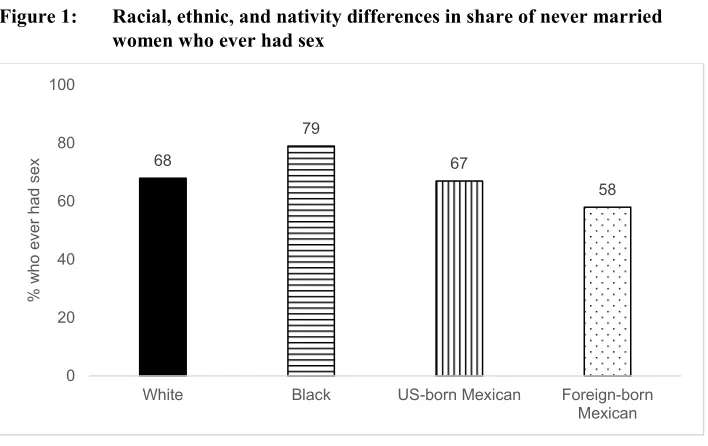
We begin by comparing the share of sexually active women in each group.8 Figure 1
shows that never married, non-cohabiting Blacks are most likely and Mexican immigrants are least likely to have ever had sex. Seventy-nine percent of Blacks have ever had sex, as compared to 58% of Mexican immigrants and 68% of Whites. Supplementary analyses reveal that lower shares of never married Mexican immigrants would be sexually active if it weren’t for the fact that they are older.
Figure 1: Racial, ethnic, and nativity differences in share of never married women who ever had sex
Sources: 2006-2010 and 2011-2013 National Survey of Family Growth
Sample: Never married, non-cohabiting women
Notes: All analyses are weighted and standardized to the age and parity distribution of Whites. Differences between Blacks and non-Blacks are statistically significant at the 5% level.
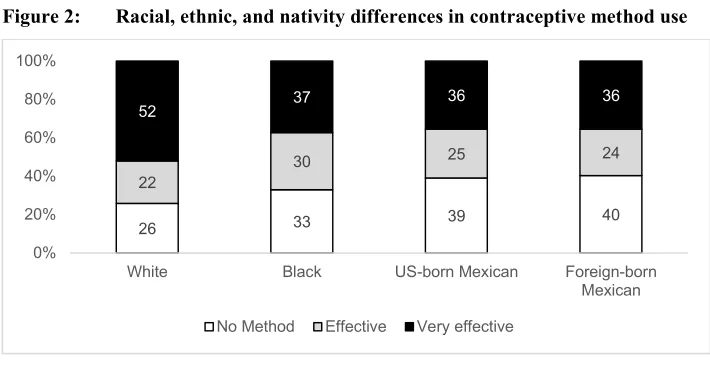
Figure 2 describes racial, ethnic, and nativity differences in contraceptive practices among never married, non-cohabiting women who had sex in the 12 months before interview date. Contraceptive non-use is least common among Whites and most common among women of Mexican origin. Approximately 26% of Whites did not use contraception, as compared to 33% of Blacks and 40% of Mexican-origin women. When they use a method of contraception, Whites are more likely than non-Whites to use very effective methods of contraception: 52% of Whites versus approximately 35% of non-Whites. Supplementary analyses reveal that the rates of contraceptive use and use of very effective methods of contraception among Mexican immigrant women would have been even lower had it not been for their higher parity relative to US-born women and the fact that women with higher fertility are more likely to actively engage in family planning relative to women with fewer children.
68
79
67
58
0 20 40 60 80 100
White Black US-born Mexican Foreign-born
Mexican
%
w
ho
ev
er
had s
Figure 2: Racial, ethnic, and nativity differences in contraceptive method use
Sources: 2006-2010 and 2011-2013 National Survey of Family Growth
Sample: Never married, non-cohabiting women who have had sex in the last 12 months
Notes: All analyses are weighted and standardized to the age and parity distribution of Whites. Differences between Whites and non-Whites are statistically significant at the 5% level.
Overall, tabular results show that the reproductive behavior of US-born Mexican Americans fall somewhere in between those of Whites and Mexican immigrants, with their sexual activity mirroring those of Whites and their contraceptive behavior mirroring that of Mexican immigrants. Two-thirds of US-born Mexican Americans and Whites are sexually active, as compared to 58% of Mexican immigrants. Thirty-six percent of US-born Mexican Americans and foreign-born Mexicans use very effective methods of contraception, as compared to 52% of Whites.
4.2 Differences in socioeconomic circumstances, access to contraception, and attitudes towards family life
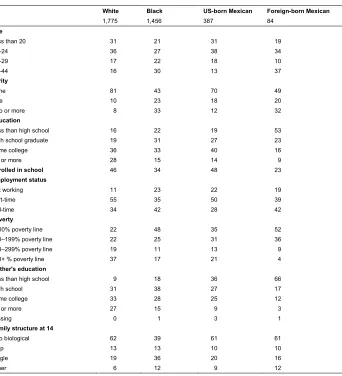
Table 1 presents the demographic profiles, socioeconomic circumstances, and family background of never married, non-cohabiting White, Black, US-born Mexican American, and foreign-born Mexican women who had sex in the 12 months preceding the interview. We begin by comparing the age and parity distribution across racial, ethnic, and nativity groups.9 On balance, never married, non-cohabiting Mexican
immigrants are older than their US-born counterparts. For example, 37% of
9 These distributions are weighted, but not standardized by age or parity.
26 33 39 40
22 30
25 24
52 37 36 36
0% 20% 40% 60% 80% 100%
White Black US-born Mexican Foreign-born
Mexican
born Mexicans are in their thirties, as compared with 16% of Whites and 13% of US-born Mexican Americans. This pattern likely emerges because earlier marriages are more common among Mexican immigrants than among US-born women (Choi and Seltzer 2009; Raley, Durden, and Wildsmith 2004). Therefore, higher shares of younger Mexican immigrants select out of the never married status, which results in relatively lower shares of never married Mexican immigrants in their teens and early twenties. Black women are older than other US-born women. For example, 30% of Blacks are in their thirties, as compared to less than 13% of US-born Mexican Americans. This finding is attributable to the fact that Black women transition into first marriages at lower rates than non-Black women, and, as such, relatively higher shares of older Black women have never married (Raley 1996). Tabular results also reveal that never married, non-cohabiting Mexican immigrant and Black women have higher fertility than their White and US-born Mexican American peers. For example, approximately 43% of Black and 49% of Mexican immigrant women are childless, as compared to 81% of Whites and 70% of US-born Mexican Americans. This is not surprising given the strong links between age and parity and the fact that Mexican immigrants and Blacks are older than women in other groups.
Table 1: Racial, ethnic, and nativity differences in socioeconomic circumstances and family background (column %)
White Black US-born Mexican Foreign-born Mexican
1,775 1,456 387 84
Age
Less than 20 31 21 31 19
20‒24 36 27 38 34
25‒29 17 22 18 10
30‒44 16 30 13 37
Parity
None 81 43 70 49
One 10 23 18 20
Two or more 8 33 12 32
Education
Less than high school 16 22 19 53
High school graduate 19 31 27 23
Some college 36 33 40 16
BA or more 28 15 14 9
Enrolled in school 46 34 48 23
Employment status
Not working 11 23 22 19
Part-time 55 35 50 39
Full-time 34 42 28 42
Poverty
<100% poverty line 22 48 35 52
100‒199% poverty line 22 25 31 36
200‒299% poverty line 19 11 13 9
300+ % poverty line 37 17 21 4
Mother's education
Less than high school 9 18 36 66
High school 31 38 27 17
Some college 33 28 25 12
BA or more 27 15 9 3
Missing 0 1 3 1
Family structure at 14
Two biological 62 39 61 61
Step 13 13 10 10
Single 19 36 20 16
Other 6 12 9 12
Sources: 2006-2010 and 2011-2013 National Survey of Family Growth
Sample: Never married, non-cohabiting women who have had sex in last 12 months
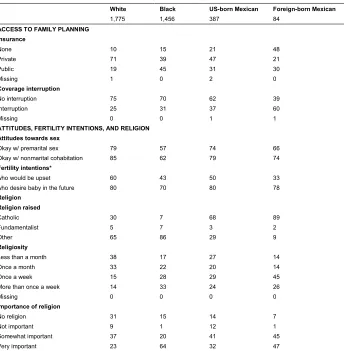
Table 2 compares access to family planning services, attitudes towards family life, fertility intentions, and religious affiliation for women in the four groups. Mexican immigrants are least likely and Whites are most likely to have insurance at the date of interview or to have experienced an interruption in insurance coverage in the 12 months preceding the interview. For example, 60% of Mexican immigrants experienced an interruption in their insurance coverage, as compared to 25% of Whites and 37% of US-born Mexican Americans. When they do have insurance, Mexican immigrants are least likely and Whites are most likely to rely on private insurance. For example, 71% of Whites reported having private insurance, as compared to 47% of US-born Mexican Americans and 21% of Mexican immigrants. Among the US-born, Blacks are most likely to rely on public health insurance: 45% of Blacks versus 19% of Whites. Supplementary analyses reveal that the pattern of variation in the place of usual care and the likelihood of receiving specific family planning services mirror very closely the pattern of variation in type of insurance coverage. Together, these results suggest that Mexican immigrants are far less likely than the US-born to have access to health care, including family planning services. By contrast, Whites are more likely than non-Whites to have access to family planning services.
Table 2: Racial, ethnic, and nativity differences in access to family planning services, religious affiliation, fertility intentions, and attitude towards sexual activity (column %)
White Black US-born Mexican Foreign-born Mexican
1,775 1,456 387 84
ACCESS TO FAMILY PLANNING
Insurance
None 10 15 21 48
Private 71 39 47 21
Public 19 45 31 30
Missing 1 0 2 0
Coverage interruption
No interruption 75 70 62 39
Interruption 25 31 37 60
Missing 0 0 1 1
ATTITUDES, FERTILITY INTENTIONS, AND RELIGION
Attitudes towards sex
Okay w/ premarital sex 79 57 74 66
Okay w/ nonmarital cohabitation 85 62 79 74
Fertility intentions*
who would be upset 60 43 50 33
who desire baby in the future 80 70 80 78
Religion
Religion raised
Catholic 30 7 68 89
Fundamentalist 5 7 3 2
Other 65 86 29 9
Religiosity
Less than a month 38 17 27 14
Once a month 33 22 20 14
Once a week 15 28 29 45
More than once a week 14 33 24 26
Missing 0 0 0 0
Importance of religion
No religion 31 15 14 7
Not important 9 1 12 1
Somewhat important 37 20 41 45
Very important 23 64 32 47
Sources: 2006‒2010 and 2011‒2013 National Survey of Family Growth
Sample: Never married, non-cohabiting women who have had sex in last 12 months
Notes: Percentages are weighted. Sample sizes are not weighted. * Standardized to the age and parity distribution of Whites.
have been raised Catholic. Close to 90% of foreign-born Mexicans report being raised in a Catholic household, as compared to 30% of Whites and 7% of Blacks. Women of Mexican origin are less likely than women in other groups to have been raised in a Fundamentalist Protestant household. About 3% of women of Mexican origin grew up in a Fundamentalist Protestant household, as compared to 7% of Blacks and 5% of Whites. Blacks are more likely than non-Blacks to attend religious services regularly. A third of Blacks report attending religious services more than once a week, as compared to 14% of Whites, 24% of US-born Mexican Americans, and 26% of Mexican immigrants. Blacks are also more likely than non-Blacks to report that religion is very important. Sixty-four percent of Blacks report that religion is very important in their lives, whereas only 47% of Mexican immigrants, 32% of US-born Mexican Americans, and 22% of Whites do so.
4.3 Multivariate analysis: Contraceptive practice by race, ethnicity, and nativity status
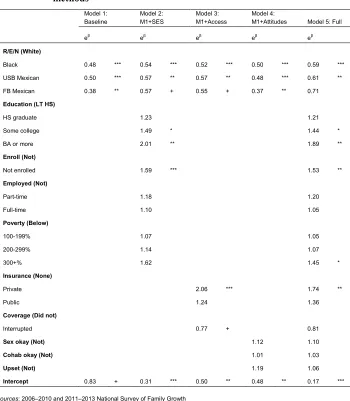
Table 3 presents the results from our logistic regression models predicting the odds of using very effective methods of contraception. Model 1 compares the odds of using very effective methods of contraception for women according to their race, ethnicity, and nativity status, net of age and parity. The demarcating difference in contraceptive use is observed between Whites and non-Whites, with non-Whites being significantly less likely than Whites to use very effective methods of contraception. Net of age and parity, little difference exists in the odds of using very effective methods among minority groups.
Table 3: Logistic regression models estimating odds of using very effective methods
Model 1:
Baseline Model 2: M1+SES Model 3: M1+Access Model 4: M1+Attitudes Model 5: Full
eβ eβ eβ eβ eβ
R/E/N (White)
Black 0.48 *** 0.54 *** 0.52 *** 0.50 *** 0.59 ***
USB Mexican 0.50 *** 0.57 ** 0.57 ** 0.48 *** 0.61 **
FB Mexican 0.38 ** 0.57 + 0.55 + 0.37 ** 0.71
Education (LT HS)
HS graduate 1.23 1.21
Some college 1.49 * 1.44 *
BA or more 2.01 ** 1.89 **
Enroll (Not)
Not enrolled 1.59 *** 1.53 **
Employed (Not)
Part-time 1.18 1.20
Full-time 1.10 1.05
Poverty (Below)
100-199% 1.07 1.05
200-299% 1.14 1.07
300+% 1.62 1.45 *
Insurance (None)
Private 2.06 *** 1.74 **
Public 1.24 1.36
Coverage (Did not)
Interrupted 0.77 + 0.81
Sex okay (Not) 1.12 1.10
Cohab okay (Not) 1.01 1.03
Upset (Not) 1.19 1.06
Intercept 0.83 + 0.31 *** 0.50 ** 0.48 ** 0.17 ***
Sources: 2006‒2010 and 2011‒2013 National Survey of Family Growth
Sample: Never married, non-cohabiting women who have had sex in last 12 months
Notes: All analyses are weighted. All models also control for age and parity. Model 2 also includes family structure at age 14 and mother’s degree. Model 4 also includes want children in the future, religion raised, religiosity, and importance of religion. Model 5 is our full model with all covariates.
Model 3 adds controls for access to family planning services to Model 1. Women with private insurance are considerably more likely than other women to use very effective methods of contraception, net of all other controls in the model. Their odds of using very effective methods of contraception are twice the corresponding odds of women without insurance coverage. That controlling for differential access to family planning services reduces differences in contraceptive practices between Whites and racial minorities offers empirical support for the explanation that barriers to contraceptive access is a key reason behind minority women’s lower contraceptive use. Limited access to family planning services has an especially pronounced effect on White/Mexican-immigrant differences in contraception. As with socioeconomic controls, White/Mexican-immigrant differences in the odds of using very effective methods are only marginally significant once we control for group differences in access to planning services. In fact, the impact of access to family planning services on group differences in contraceptive use is similar in magnitude to the impact of socioeconomic circumstances and family background on group differences in contraceptive use.
Model 4 adds attitudes towards family life, fertility intentions, and religious affiliation and attendance to Model 1. Net of age and parity, the association between all attitudinal measures and contraceptive practices are not statistically significant. It is, therefore, unsurprising that attitudes to family life, fertility intentions, and religious affiliation explain little of the group differences in the odds of using very effective methods of contraception.
Model 5 shows that differences in contraceptive practices between Whites and US-born minorities are partly attributable to family background, socioeconomic circumstances, and access to family planning. Not surprisingly, they have a particularly pronounced impact on White/Mexican-immigrant differences in contraceptive use. In fact, the coefficient capturing differences in contraceptive practices between Whites and Mexican immigrants is not statistically significant net of these controls.
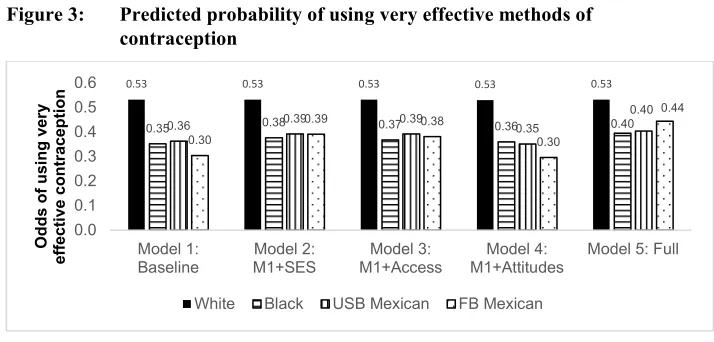
Predicted probabilities offer a useful way to compare the relative impact of socioeconomic status, access to family planning services, and attitudes towards family life in giving rise to group differences in the likelihood of using very effective methods of contraceptive practice.10 Figure 3 presents the probabilities of using very effective
method of contraception derived from the coefficients reported in Table 3. These comparisons are standardized to the characteristics of never married White women who have had sex in the 12 months preceding the interview, to facilitate comparisons across racial, ethnic, and nativity status groups. In the absence of controls, US-born minority
10 Allison (1999) argued that coefficients should not be compared across logistic regression models because
women are 33% less likely than White women to use very effective methods of contraception: [100*(53‒35)/53≈33] and Mexican immigrants are 43% less likely than White women to use very effective methods of contraception: [100*(53‒30)/53≈43].
Figure 3: Predicted probability of using very effective methods of contraception
Source: 2006-2010 and 2011-2013 National Survey of Family Growth
Sample: Never married, non-cohabiting women who have had sex in the last 12 months
Notes: All analyses are weighted. Predicted probability of using very effective methods of contraception are computed with the coefficients presented in Table 3 and characteristics are standardized to the population mean.
Socioeconomic controls reduce differences between Whites and non-Whites in contraceptive practices and have the most pronounced impact on differences between Whites and Mexican immigrants. For example, controlling for socioeconomic differences reduces White/Mexican-immigrant differences in contraceptive practices by 40% [100*(1‒(53‒39)/(53‒30))≈40]. The influence that barriers to accessing family planning services have on group differences is similar in magnitude to that of socioeconomic circumstances and family background. Attitudinal controls have limited impact on group differences in contraceptive practice. Net of controls for socioeconomic status, family background, and access to family planning services, White/Mexican-immigrant differences in contraceptive practice diminish by 60% [1‒ (0.53‒0.44)/(0.53‒0.30)≈ 0.6], whereas differences in contraceptive practice between Whites and US-born minorities diminish by about 30% [1‒(0.53‒0.40)/(0.53‒ 0.35)=0.3].
On balance, these findings suggest that the demarcating differences in contraceptive practice are between Whites and non-Whites. Socioeconomic disparities and differential access to family planning services each account for approximately 40 percent of differences in the likelihood of using very effective methods of contraception
0.53 0.53 0.53 0.53 0.53
0.35 0.36 0.38 0.39 0.37 0.39 0.36 0.35 0.40
0.40
0.30
0.39 0.38
0.30 0.44 0.0 0.1 0.2 0.3 0.4 0.5 0.6 Model 1:
Baseline M1+SESModel 2: M1+AccessModel 3: M1+AttitudesModel 4: Model 5: Full
O dds of us ing v er y ef fect ive co nt racep tio n
between Whites and Mexican immigrants as well as just under 20 percent of the corresponding difference between Whites and minorities. Together, they account for about 60% of differences in contraceptive practices between Whites and Mexican immigrants as well as 30 percent of the corresponding difference between Whites and native minorities. Attitudinal differences explain little of the variation in contraceptive practice between Whites and US-born minorities and they mask White/Mexican-immigrant differences in contraceptive practice.
5. Supplementary analyses
The NSFG asks respondents to answer several questions about whether or not they have received different types of family planning services in medical facilities, such as whether they have been prescribed a birth control, received check-ups for birth controls, or have received emergency contraception in the 12 months preceding the interview date. These variables are not included as covariates in our multivariate analysis because they jointly measure access to family planning, intentions to use, and knowledge about contraception, and obfuscate the various mechanisms giving rise to group differences in contraceptive use. Descriptive tabulations, presented in Appendix Table 1, suggest that Whites are most likely and Mexican immigrants are least likely to receive contraceptive advice from a medical professional. The only exception to this pattern relates to emergency contraception, for which the opposite obtains. It is possible that the need for emergency contraception implies limited access to non-emergency contraception.
Never married women may abstain to avoid pregnancy, because they have not had the opportunity to have sex in recent months, or because cultural and religious norms deter pre-marital sex (Santinelli et al. 2006). Because we cannot ascertain if women are using abstinence as a contraceptive strategy, our main analysis excludes women who have never had sex. In supplementary analyses, we conducted several multinomial logistic regression models that also considered ‘not having sex’ as a contraceptive strategy. These analyses do not alter our overall conclusions about the relative importance of the various mechanisms in giving rise to group differences in contraceptive practice.
6. Discussion
Although the pattern of race/ethnic variation in contraceptive practice has been widely documented, our understanding about what causes these differences remains somewhat limited because existing work does not assess the relative importance of mechanisms giving rise to group disparities in contraceptive use. Pooling data from the 2006‒2010 and 2011‒2013 NSFG, we fill this gap in the literature by focusing on the largest Hispanic national origin group, Mexican Americans, and assessing the extent to which socioeconomic inequality, access to family planning services, and differences in attitudes towards family life and fertility intentions contribute to racial, ethnic, and nativity status disparities in contraceptive use. Our study yields several noteworthy findings.
First, never married, non-cohabiting Blacks are most likely and never married, non-cohabiting Mexican immigrant are least likely to have ever had sex. This pattern is consistent with prior work that shows that Blacks initiate sex at earlier ages than non-Blacks (Hofferth 1987) and that Mexican immigrant women may limit their sexual activity outside of the context of marriage-like unions (East 1998; Raley et al. 2004; Landale and Oropesa 2007; Oropesa 1996). Family norms that discourage sexual activity outside of marriage (or marriage-like cohabitation) may simultaneously deter sexual activity and limit knowledge about contraception among never married, non-cohabiting Mexican immigrant women.
Second, when they have sex, Whites are more likely than non-Whites to use very effective methods of contraception, but there are few differences among minority groups once age and parity are accounted for. Racial, ethnic, and nativity differences in socioeconomic circumstances explain a significant portion of the differences in contraceptive practice between Whites and all non-Whites, with socioeconomic disparities having a particularly large impact on differences in contraceptive use between Whites and women of Mexican origin. This is consistent with claims that racial and ethnic variation in fertility reflects the relative opportunity costs of childbearing, as determined by individual socioeconomic status (McDaniels 1996). However, some of the socioeconomic difference is accounted for by the limited access to family planning services among women of lower socioeconomic status, particularly Mexican immigrant women. Policies aimed at improving contraceptive use and family planning should make efforts to reduce socioeconomic inequality and disadvantage.
racial minorities, especially Mexican immigrants, may be a way to reduce racial, ethnic, and nativity differences in contraceptive use as well as the occurrence of unplanned pregnancies.
Fourth, attitudinal differences – attitudes towards premarital sex and cohabitation, religious affiliations, and fertility intentions ‒ explain little of the racial, ethnic, and nativity differences in contraceptive use among never married, sexually active women. Although a common narrative attributes high Hispanic fertility and lower rates of contraceptive use to their pronatalist orientation, and indeed we find that sexually active, never married Mexican immigrant women are the least likely to be upset if they become pregnant, we find limited support for this narrative in the regression analysis. However, it is possible that our results, though largely consistent with past studies (Hayford and Guzzo 2013; Rocca and Harper 2012), may emerge because we are limited in our ability to accurately capture the motivations guiding women’s contraception use.
Our results suggest that the sexual behavior of never married, non-cohabiting US-born Mexican women are similar to that of their White counterparts, but the contraceptive behavior of US-born Mexican American women differs little from that of their foreign-born counterparts. Due to data limitations, we cannot ascertain whether this difference emerges because the contraceptive practices of women of Mexican origin do not converge with those of White and Black women across immigrant generations or because we cannot disaggregate US-born Mexican Americans according to their generational status (i.e., second vs. third generation). This empirical question warrants further examination with access to data on the reproductive behavior and contraceptive use patterns of second, third, and higher immigrant generation Mexican Americans.
Previous studies using the same data (i.e., NSFG) but distinct samples obtain different results regarding how contraceptive use among women of Mexican origin changes across immigrant generations. Specifically, White and Potter (2013) find that contraceptive non-use is lower among US-born Mexican women compared to Mexican immigrant women in the United States, whereas the opposite is true for Minnis (2010). In our study, nativity differences in contraceptive non-use are not significant. A key difference across the three studies is the marital composition of the sampled women: Minnis (2010) includes all women of reproductive age; White and Potter (2013) limit their sample to currently married or cohabiting women; and our study focuses on never married, non-cohabiting women. Relative to Mexican immigrant women, higher shares of US-born Mexican American women are never married11 and never married women
have higher rates of contraceptive non-use than cohabiting or married women (Jones,
11 19% of US-born Mexican Americans and 51% of foreign-born Mexicans are never married, non-cohabiting
Mosher, and Daniels 2012). Thus, combining women of various marital statuses will result in a higher rate of contraceptive non-use among US-born Mexican American women relative to Mexican immigrant women, even when never married and cohabiting/married Mexican immigrant women have higher rates of contraceptive non-use than their US-born Mexican American counterparts. Future studies of contraceptive behavior should be attuned to marital status when examining group differences in contraceptive use.
Like all studies, our empirical work has some limitations. First, sexual inactivity, or abstinence, could be a strategy employed by some never married women to avoid pregnancy (Santinelli et al. 2006). Our analysis of contraceptive practice excludes women who are sexually inactive because we cannot ascertain why never married women are abstaining. Second, our attitudinal measures are somewhat limited. Attitudinal differences may have limited effects on racial, ethnic, and nativity differences in contraceptive efficacy in our study because we need more nuanced variables capturing the desirability of distinct types of contraception or women’s ability to negotiate contraceptive use with their partner. Third, despite the fact that we pool eight years of NSFG data, we do not have sufficiently large numbers of never married Mexican immigrants who are currently cohabiting women to analyze their contractive behavior. Finally, we have limited information about racial, ethnic, and nativity status differences in contraceptive knowledge, which may independently account for racial and ethnic differences in use.
References
Afable-Munsuz, A. and Brindis, C.D. (2006). Acculturation and the sexual and reproductive health of Latino youth in the United States: A literature review.
Perspectives on Sexual and Reproductive Health 38(4): 208‒219.
doi:10.1363/psrh.38.208.06.
Allison, P. (1999). Comparing logit and probit models across groups. Sociological Methods and Research 28(2): 186‒208.
Bean, F. and Tienda, M. (1987). The Hispanic population of the United States. New York: Russell Sage Foundation.
Choi, K. (2014). Fertility in the context of Mexican migration to the United States.
Demographic Research 30(24): 703‒738. doi:10.4054/DemRes.2014.30.24. Choi, K. and Seltzer, J. (2009). Race, ethnic, and nativity differences in the
demographic significance of cohabitation in women’s lives. Los Angeles: California Center for Population Research (CCPR working paper series 2009-004).
Cooperman, A., Bell, J., Sahgal, N., and Ritchey, K. (2014). Religion in Latin America: Widespread change in a historically Catholic religion. Washington: Pew Research Center. www.pewforum.org/files/2014/11/Religion-in-Latin-America-11-12-PM-full-PDF.pdf.
Daniels, K., Daugherty, J., and Jones, J. (2014). Current contraceptive status among women aged 15–44: United States, 2011–2013Hyattsville: National Center for Health Statistics.
Deardorff, J., Tschann, J., Flores, E., and Ozer, E. (2010). Sexual values and risky sexual behaviors among Latino youths. Perspectives on Sexual and Reproductive Health 42(1): 23–32. doi:10.1363/4202310.
Dehlendorf, C., Foster, D., de Bocanegra, H., Brindis, C., Bradsberry, M., and Darney, P. (2011). Race, ethnicity and differences in contraception among low-income women: methods received by Family PACT clients, California, 2001–2007.
Perspectives on Sexual and Reproductive Health 43(3): 181–187.
doi:10.1363/4318111.
Donoso, J. (2014). On religion, Mexicans are more Catholic and often more traditional than Mexican Americans. Washington: Pew Research Center.
www.pewresearch.org/fact-tank/2014/12/08/on-religion-mexicans-are-more-catholic-and-often-more-traditional-than-mexican-americans/.
East, P.L. (1998). Racial and ethnic differences in girls’ sexual, marital, and birth expectations. Journal of Marriage and Family 60(1): 150–162.
Frank, R. and Heuveline, P. (2005). A crossover in Mexican and Mexican-American fertility rates: Evidence of explanations for an emerging paradox. Demographic Research 12(4): 77‒104. doi:10.4054/DemRes.2005.12.4.
Gonzales-Barrera, A. and Lopez, M.H. (2013). A demographic portrait of Mexican-origin Hispanics in the United States. Washington: PEW Hispanic Center. Hayford, S. and Guzzo, K. (2013). Racial and ethnic variation in unmarried young
adults’ motivation to avoid pregnancy. Perspectives on Sexual and Reproductive Health 45(1): 41–51. doi:10.1363/4504113.
Hirsch, J. (2008). Catholics using contraception: Religion, family planning, and interpretative agency in rural Mexico. Studies in Family Planning 39(2): 93‒ 104. doi:10.1111/j.1728-4465.2008.00156.x.
Jacobs, J. and Stanfors, M. (2013). Racial and ethnic differences in U.S. women’s choice of reversible contraceptives, 1995–2010. Perspectives on Sexual and Reproductive Health 45: 139–147.
James, C., Salganicoff, A., Thomas, M., Ranji, U., Lillie-Blanton, M., and Wyn, R. (2009). Putting women’s health disparities on the map: Examining racial and ethnic disparities at the state level. Los Angeles: Henry Kaiser Family Foundation.
Jones, J., Mosher, W., and Daniels, K. (2012). Current contraceptive use in the United States, 2006–2010, and changes in patterns of use since 1995. Hyattsville: National Center for Health Statistics. www.cdc.gov/nchs/data/nhsr/nhsr060.pdf. Kaye, K., Suellentrop, K., and Sloup, C. (2009). The fog zone: How misperceptions,
magical thinking, and ambivalence put young adults at risk for unplanned pregnancy. Washington: National Campaign to Prevent Teen and Unplanned Pregnancy.
Kim, Y. and Raley, R.K. (2015). Race/ethnic differences in non-marital fertility.
Landale, N. and Oropesa, R.S. (2007). Hispanic families: Stability and change. Annual Review of Sociology 33: 381‒405. doi:10.1146/annurev.soc.33.040406.131655. Lefkowitz, E.S., Gillen, M.M., Shearer, C.L., and Boone, T.L. (2004). Religiosity,
sexual behaviors, and sexual attitudes during emerging adulthood. Journal of Sex Research 41(2): 150‒159. doi:10.1080/00224490409552223.
Lepkowski, J.M., Mosher, W.D., Groves, R.M., West, B.D., Wagner, J., and Gu, H. (2013). Responsive design, weighting, and variance estimation in the 2006–2010 National Survey of Family Growth: Data evaluation and methods research. Hyattsville: National Center for Health Statistics (Series 2, number 158).
Lichter, D., Johnson, K., Turner, R., and Churilla, A. (2012). Hispanic assimilation and fertility in new destinations. International Migration Review 46(4): 767‒791.
doi:10.1111/imre.12000.
Lopez, M.H., Gonzalez-Barrera, A., and Cuddington, D. (2013). Diverse origins: The nation’s 14 largest Hispanic-origin groups. Washington: PEW Research Center.
www.pewhispanic.org/files/2013/06/summary_report_final.pdf.
Lopez-Gonzales, G. (2001). Fathering Latina sexualities: Mexican men and the virginity of their daughters. Journal of Marriage and Family 66: 1118–1130. Mare, R.D. and Maralani, V. (2006). The intergenerational effects of changes in
women’s educational attainments. American Sociological Review 71(4): 542‒ 564. doi:10.1177/000312240607100402.
Martin, J., Hamilton, B., Osterman, M., Curtin, S., and Mathews, T. (2013). Births: Final data for 2012. Hyattsville: Centers for Disease Control and Prevention (National vital statistics reports vol. 62, no. 9). www.cdc.gov/nchs/ data/nvsr/nvsr62/nvsr62_09.pdf.
McDaniels, A. (1996). Fertility and racial stratification. Population and Development Review 22: 134‒150. doi:10.2307/2808009.
McLanahan, S. (2004). Diverging destinies: How children are faring under the second demographic transition. Demography 41(4): 607‒627. doi:10.1353/dem.2004. 0033.
McLanahan, S. and Percheski, C. (2008). Family structure and the reproduction of inequalities. Annual Review of Sociology 34: 257‒276. doi:10.1146/annurev. soc.34.040507.134549.
adolescent participants in the Contraceptive CHOICE Project. Contraception 84: 493–498. doi:10.1016/j.contraception.2011.03.001.
Minnis, A. (2010). U.S. migration and reproductive health among Mexican women: Assessing the evidence for health selectivity. Field Action Science Reports
Special Issue 2: 1‒7.
Oropesa, R. (1996). Normative beliefs about marriage and cohabitation: A comparison of non-Latino Whites, Mexican Americans, and Puerto Ricans. Journal of Marriage and the Family 58: 49‒62. doi:10.2307/353376.
Passel, J., Cohn, D., and Lopez, M. (2011). Hispanics account for more than half of nation’s growth in past decade. Washington: Pew Research Center.
www.pewhispanic.org/files/reports/140.pdf.
Portes, A. and Zhou, M. (1993). The new second generation: Segmented assimilation and its variants. The Annals of the American Academy of Political and Social Science 530(1): 74‒96. doi:10.1177/0002716293530001006.
Potter, J., Moore, A., and Byrd, T. (2003). Cross-border procurement of contraception: Estimates from a postpartum survey in El Paso, Texas. Contraception 68(4): 281–287. doi:10.1016/S0010-7824(03)00177-X.
Potter, J.E., White, K., Amastae, J., Hopkins, K., and Grossman, D. (2010). Clinic versus over-the-counter access to oral contraception: Choices women make along the US–Mexico border. American Journal of Public Health 100(6): 1130‒ 1136. doi:10.2105/AJPH.2009.179887.
Raley, R.K. (1996). A shortage of marriageable men? A note on the role of cohabitation in black-white differences in marriage rates. American Sociological Review
61(6): 973‒983. doi:10.2307/2096303.
Raley, R. K., Durden, E., and Wildsmith, E. (2004). Understanding Mexican-American marriage patterns using a life-course approach. Social Science Quarterly 85(4):
872‒890. doi:10.1111/j.0038-4941.2004.00249.x.
Rocca, C. and Harper, C. (2012). Do racial and ethnic differences in contraceptive attitudes and knowledge explain disparities in method use? Perspectives on Sexual and Reproduction Health 44(3): 150–158. doi:10.1363/4415012.
Santinelli, J.M., Ott, M.A., Lyon, M., Rogers, J., Summers, D., and Schleifer, R. (2006). Abstinence and abstinence-only education: A review of U.S. policies and programs. Journal of Adolescent Health 38(1): 72‒81. doi:10.1016/j.jadohealth. 2005.10.006.
Secura, G.M., Allsworth, J.E., Madden, T., Mullersman, J.L., and Peipert, J.E. (2010). The Contraceptive CHOICE Project: Reducing barriers to long-acting reversible contraception. American Journal Obstetric Gynecology 203(115): e1‒7.
doi:10.1016/j.ajog.2010.04.017.
Shih, G., Vittinghoff, E., Steinauer., J., and Dehlendorf, C. (2011). Racial and ethnic disparities in contraceptive method choice in California. Perspectives on Sexual and Reproductive Health 43(3): 173–180. doi:10.1363/4317311.
Studer, M. and Thornton, A. (1987). Adolescent religiosity and contraceptive usage.
Journal of Marriage and the Family 49(1): 117‒128. doi:10.2307/352676. Sweeney, M. (2010). The reproductive context of cohabitation in the United States:
Recent change and variation in contraceptive use. Journal of Marriage and Family 72(5): 1155‒1170. doi:10.1111/j.1741-3737.2010.00756.x.
Sweeney, M. and Raley, R.K. (2014). Race, ethnicity, and the changing context of childbearing in the United States. Annual Review of Sociology 40: 539‒558.
doi:10.1146/annurev-soc-071913-043342.
Telles, E. and Ortiz, V. (2008). Generations of exclusion: Mexican Americans, assimilation, and race. New York: Russell Sage Foundation.
Trussell, J. (2011). Contraceptive failure in the United States. Contraception 83(5): 397–404. doi:10.1016/j.contraception.2011.01.021.
Unger, J.B. and Molina, G.B. (2000). Acculturation and attitudes about contraceptive use among Latina women. Health Care for Women International 21: 235‒249. Upchurch, D., Levy-Storms, L., Sucoff, C., and Aneshensel, C. (1998). Gender and
ethnic differences in the timing of first sexual intercourse. Family Planning Perspectives 30(3): 121‒127. doi:10.1363/3012198.
Wallace, S. and Gutierrez, V. (2005). Equity of access to health care for older adults in four major Latin American cities. Revista Panamericana de Salud Pública
17(5/6): 394–409.
Wildsmith, E. and Raley, R.K. (2006). Race-ethnic differences in nonmarital fertility: A focus on Mexican American women. Journal of Marriage and Family 68(2):
491‒508. doi:10.1111/j.1741-3737.2006.00267.x.
Wildsmith, E., Welti, K., and Manlove, J. (2012). Contraceptive service use among hispanics in the U.S. Paper presented at the annual meeting of the Population Association of America, San Francisco.
Appendix
Table A-1:
Racial, ethnic, and nativity differences in access to family planning services for never married women who are sexually activeAccess to family planning White Black US-born Mexican Foreign-born Mexican
% who received birth control prescription 60 40 45 37
% who received check-up for birth control 43 28 29 31
% who received pelvic exam 59 59 37 39
Source: 2006-2010 and 2011-2013 National Survey of Family Growth