International Journal of Applied Exercise Physiology
2322-3537 www.ijaep.comVol.7 No.1
Received: September 2017 , Accepted: December 2017 , Available online: March 2018
The performance analysis of Islamic republic of Iran broadcasting (IRIB) in
comparison with foreign selected channels in the field of sports
Moghaddas M
1, Farzan F
*2, Ghasemi H
31PhD student of sport management at University of Mazandaran, 2Associate professor of sport management at University of
Mazandaran, 3Associate professor of sport management at University of Payamenoor
DOI 10.22631/ijaep.v7i1.241
ABSTRACT: The purpose of this study was to analyze the performance of Islamic republic of Iran broadcasting (IRIB) in comparison with foreign
selected channels in the field of sports. The methodology of the present study is descriptive in terms of strategy and content analysis in terms of
method. The statistical population of the study includes all channels that are involved in production of sport programs inside and outside of the
country. Two non-sport channels and two sport channels that covered night and day sport events were selected as the samples of the study. The
Tv3 channel and Sport Channel from Iran and ZDF and Ray Sport 1 channel from Germany have been selected as the samples for the test. The
instrument used for data collection in this study was coded sheet used for analyzing the content of the programs broadcasting by these channels.
Face and content validity of coded sheet confirmed by three experts and its reliability confirmed by agreement coefficient of Scott π (0/86). The
results of the study showed that different TV channels in terms of content, function and coverage of sport programs are different based on functional
roles. Therefore, broadcasting organization must develop comprehensive and codified programming for broadcasting sport programs and its
coverage.
22
INTRODUCTIONToday, sport is an inseparable part of culture, education and science all
around the world. Physical education and sport exist in the various
structures of human societies as a social fact and grows and develops
increasingly [1]. Sport can be considered as one of the most important
social institutes and its effect of different aspects of life is visible throughout the world. In the today’s world, there are few people who are
not directly or indirectly involved in sport. Some of them are as
sportsmen and some of them are interested in sports which follow sport
events directly or through media [2]. Media play an important role in
sport development. People can be inclined to sport or become the fan of
the sport teams through media [3]. TV plays the greatest role compared
to other mass media due to the wide coverage of audiences. In recent
years, TV sport shows have undergone extensive changes in activities,
technologies, public utilization, income and development as a global
phenomenon [4]. In Iran, broadcasting organization is an available, free,
diverse, attractive and full-audience media thus it outran other media so
that different form of transmitting entertainment program and
information done through this media and affect all perceptual potential
(wisdom, imagination and so on) of human. TV is increasing its influence
on how people and society spend their leisure time, their knowledge of
political and social realities and shaping personal values in the realm of
culture and ethics. Therefore, media audiences by learning to understand
and evaluate media in daily life and content producers by propagating
effective information and eliminating the distances of news, educational
and propagation programs face with social realities [5]. Many people
watch sport events on TV so the orientation and the quality of contents
can contribute to the development of sport components [6]. Watching
sport events on TV is a complex process. It attracts those viewers who
are eager to get rid of the boredom of exhausting and tedious works
therefore watching TV sport programs may provide opportunities for
relaxing and escaping from some problems [7]. Arabnarmi et al. (2015)
described the current conditions as influential and underlying conditions,
action-reaction strategy and outcomes in a study that sought a model for
the role of TV in the development of sport championship and the most
important categories were: focusing on status and achieving the medal,
focusing on limited sport fields and limited age range, weakness of
policies and criterions for broadcasting priority, the coercion of adapting
to unexpected events, taking into account the national pride and the
limited number and capacity of channels which involve the consequences
of unfair coverage of tournaments and the limitation of opportunity for
introducing general prosperity to other fields[6]. Beigdelu and Baqeri
(2013) in a study claimed that information and awareness are the most
important activities of national media (TV) in creating national solidarity
[8]. Sami’nia et al. (1392) suggested that cooperation with mass media is
one of the developmental strategies to promote social awareness of
public sports in Iran [9]. The results of Mozaffari et al. (2012) showed
that the expansion of public relations and media of successful sports to
develop their public popularity, increasing the broadcasting of sport
subjects except football are effective in developing Iranian sport
championships [10]. Findings of Paknejad and Dorani (2009) showed
that conclusions and biases of sport media have a positive significant
correlation with offensive behaviors. In other words, sport media should be managed in the right way in order to control and direct the audience’s
behaviors [11]. The results of Hwang and Lim (2015) suggested that
stimulus motivation and social TV information positively related to
social presence while informational facilities and motivations were
positively considered in sport channel commitment [12]. Asayesh et al.
(2013) highlighted the main challenges of sport championships as
follow: the lack of funding and financial support, inadequate attention of
media to talent detection in championship sports, the lack of appropriate
support, the lack of high quality and specialist coaches, low level
championships and leagues and lack of strategy in championship sports
[13]. Hassan and Daniel (2013) concluded in an investigation that the
production of educational and informational TV programs could be
effective in increasing awareness for adolescences. The production of TV
programs in the field of sport exercises and physical activities in a
systematic way can affect the tendency of adolescences to exercise in
their leisure times. Also, different productions in TV programs can be
effective in their behavior, attitude and life style [14]. Sinq (2014) stated
that broadcasting horror programs on TV has a negative impact on children’s mind, behavior and attitude [15].
The importance of TV and its power of influence are so high, so that
some scholars in Iran consider this media as the fourth power and aligned
with other powers (legislature, executive and judiciary) [16]. Since 1998,
TV began operating in Iran and initially began to produce and play a
series of entertaining programs. In 1350, with combining TV and radio as two national media in Iran, a new organization named “national radio
and television organization of Iran” has been established and renamed to
“broadcasting organization” after glorious Islamic Revolution [17]. After
a few time and development of new technologies, sport programs became
a TV program since 1973 and took a better form and shape along with
Asian games. After Islamic Revolution, sport took a distinct structure in
broadcasting organization and in 1991 the Sport Policy Council was
established and followed by the establishment of specialized sport radio
network in 1999 as well as specialized TV sport channel in 2011they
But these days with the development of technologies in the media
especially on TV, there is no limit among countries in covering sport
events and many people are interested in seeing sport events in other
countries. Competition in sport is also drawn to the media thus TV
channels are seeking to attract more audiences, try to improve the quality
of programs and update their technologies. In the present study, the
researcher is looking to investigate the performance of broadcasting
organization in Iran and compare it with selected TV channels in the field
of sports to see the differences among them. They try to see if there are
any differences among TV channels in terms of media functions? And
what kinds of sports are more focused in TVs?
To answer these questions, one should find an appropriate way to
compare the TV channels. The most important way is content analysis of
programs being broadcast. Content analysis is an organizing and
integrating process of well-known qualitative information regarding the
topics and concepts. Content analysis is a method for analyzing written
or verbal communications in a systematic and objective way. The main
advantage of content analysis is its ability to combine a qualitative
method with a quantitative methodology [19]. To understand network
performance overnight, you can refer to the network conductor.
Conductor is the face and appearance of a network that indicate which
programs on what times have the most audiences. Constructor is an
engineering package that consists of three basic elements of the form
structure, content structure and media structure [20]. There are many
networks and channels in the world that discuss sports in a specialized or
non-specialized way, but many of them are private and structurally
different from Iranian broadcasting organization. There were also
networks that were somewhat similar to the structure of the Iranian
broadcasting organization, which provided some brief information about
it. But the process of selecting the elected networks was that they had,
firstly, a more structural and content similarity to the Iranian
broadcasting organization and, secondly, their information was more
accessible in a more convenient way. The TV3 channel in Iran is one of
the networks that has covered sports activities since its establishment,
which is a source of sports events in Iran. The ZDF network of Germany
was selected the same as TV3 channel in terms of structure, field of
activity and content.
Since 2011, with the establishment of the Sports TV Network in Iran, a
special approach has been taken to cover the sporting events in Iran's TV.
In order to compare the performance of this network with specialized
sport networks outside of Iran, the Ray Sport Channel 1 has been selected
as a network that has somewhat similar structure and ownership, such as
the sport network in Iran.
METHODS
The methodology of the present study is descriptive in terms of
strategy and content analysis in terms of implementation. The instrument
used for data collection was a researcher-made coding sheet which it validity confirmed by three experts in the field of media and sport and its reliability was obtained through coders agreement coefficient (Scott π
0.86). The statistical population of this study included various TV
networks in Iran and abroad. The third network and the Sport Network of Islamic Republic of Iran have been selected as two specialized and
non-specialized sport networks to cover sporting events. In contrast, ZDF
network of Germany as a non-specialized sports network and the Ray Sport 1 Network as a foreign specialized network in the field of sport
were selected as sample. The study was conducted over a two-week
period from late October to early November 2016.
STATISTICAL RESULTS
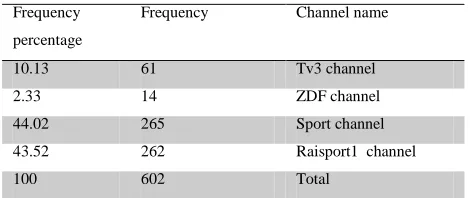
Table 1 shows the number of under study programs in selected
networks in the study period.
Table 1. Frequency of sports programs in under-study networks
Channel name Frequency
Frequency percentage
Tv3 channel 61
10.13
ZDF channel 14
2.33
Sport channel 265
44.02
Raisport1 channel 262
43.52
Total 602
100
According to the programs observed on various TV channels, the
highest number of programs and the lowest number of programs were
in Raisport1 and ZDF channel, respectively.
Table 2 shows the frequency of routine or weekly programs that are
broadcast on a fixed or weekly basis through these channels.
Table 2. Frequency of sports programs on a weekly basis (routine)
Channel name Frequency
Frequency
percentage
TV3 channel 7
26.92
ZDF channel 5
19.23
Sport channel 8
30.77
Raisport1 channel 6
23.08
Total 26
24
The highest number of routine programs and the lowest number of
programs were related to sport channel and ZDF channel, respectively.
Figure 1 illustrates the state of broadcasting sport programs from
various networks throughout the day.
Figure 1 - Broadcasting programs in 24 hours a day in under-studied
networks
As shown in Figure 1, the broadcasting of sports programs from
under-studied networks are different, which from the total number of
broadcasting programs, ZDF channel had the largest and lowest amount
of programs in the evening and morning, respectively.
Figure 2 refers to the broadcasting of sports programs from channels.
Figure 2. Type of broadcasting programs
As shown in Figure 2, the largest number of the programs are related to
live programs played by non-specialized sports channels, and the lowest
number of the programs are related to the supplemental and repetitive
programs, which were not in the list of German network programs.
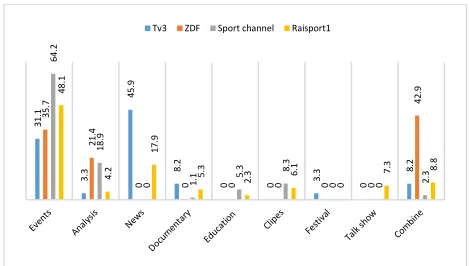
Figure 3 shows the type of content that programs are playing from
different channels or networks.
Figure 3. Content of playing programs
As shown in Fig. 3, the highest number of programs with a huge
difference is related to sport competitions and the lowest is related to 6
parts that are different in different networks.
Figure 4 shows the dispersion of sports programs based on different
sport fields.
Figure 4. Frequency of programs based on the sports variable
According to figure 4, the greatest attention is given to TV programs in
the field of soccer sports, and with regard to having different sections of
news or combined programs, it can be seen that a combination of several
programs also has a high percentage.
Figure 5 shows the frequency of sports programs based on gender.
13.1 23 23 32.8 8.2 7.1 0 21.4 42.9 28.6 28.7 24.2 22.3 14.3 10.6 20.6 24 27.1 15.6 12.6
D A W N M O R N I N G N O O N E V E N I N G N I G H T
Tv3 ZDF Sport channel Raisport1
77 16.4 3.3 3.3 71.4 28.4 0 0 19.6 16.6 51.3 12.5 22.1 50 19.8 9.3
L I V E R E C O R D I N G P R O V I D E R E P E A T
Tv3 ZDF Sport channel Raisport1
3 1 .1 3 .3 4 5 .9 8 .2
0 0 3
.3 0 8 .2 3 5 .7 2 1 .4
0 0 0 0 0 0
4 2 .9 6 4 .2 1 8 .9
0 1.1 5 .3 8.3
0 0 2.3
4 8 .1 4 .2 1 7 .9 5 .3 2
.3 6.1
0
7
.3 8.8 Tv3 ZDF Sport channel Raisport1
23
0 0 1
.6 6 .6 0 0 3 .3 0 5 4 .1 1 1 .4 4 2 .9 0 1 4 .3
0 0 0 0 0 0
4 2 .9 0 2 3 .4 2 .6 1
.5 2.3 1.9
0 4 .9 4 .5 4 .2 1 8 .5 3 6 .2 1 7 .6 9 .2 4 .2 0 1 .5 3 .8 1 .5 0 5 .3 4 1 .6 1 5 .3
Football Volleyball Esky Wrestling Tennis Skate Cycling Ping pong Car Racing Combining of many
Figure 5. Frequency of sports programs based on gender
As shown in Figure 5, the highest number of sport events was devoted
to men, and the lowest was for women, which is almost the same in
almost all types of channels.
Figure 6 shows the broadcasting of different sports programs based on
different audience groups.
Figure 6. Broadcasting programs based on the diversity of the audience
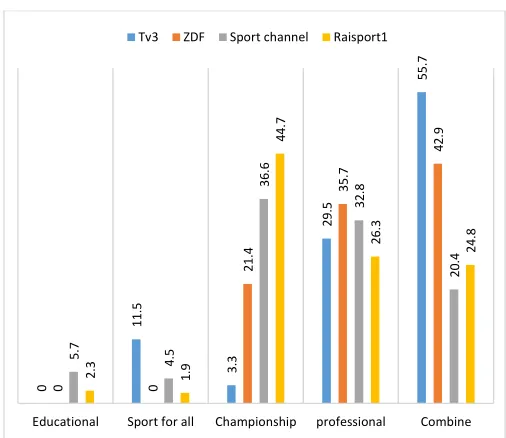
Figure 7 shows the division of sports schedules based on the four sports
components.
As shown in Fig. 7, the most program activities are in the field of
professional sports and a combination of programs, and the least is for
educational sports. The same approach is observed among the different
under-studied networks.
Figure 8 shows the division of sports programs based on media
functions.
Figure8. Division of sports programs based on media functions
Figure 8 shows that the highest number of sports programs has
entertainment function and the least amount is related to educational and
promotional activities which varies from one channel to another.
In channel 3, the main focus is on news functionality and in ZDF, Sport
and Raisport1 channels the main focus is on entertainment.
42.6
0
57.4
35.7
4.1
57.1
88.3
0
11.7
52.7
4.2
43.1
M A L E F E M A L E C O M B I N E
Tv3 ZDF Sport channel Raisport1
8.2
0 0
44.3 47.5
0 0 0
78.6
21.4
0 0 0
90.9
9.1
0 1.1 2.7
74.4
21.8
Tv3 ZDF Sport channel Raisport1
0
1
1
.5
3
.3
2
9
.5
5
5
.7
0 0
2
1
.4
3
5
.7
4
2
.9
5
.7
4
.5
3
6
.6
3
2
.8
2
0
.4
2
.3
1
.9
4
4
.7
2
6
.3
2
4
.8
Educational Sport for all Championship professional Combine Tv3 ZDF Sport channel Raisport1
45.9 42.6
0 0
11.5
21.4 28.6
0 0
50
0
60.4
6 6.8
26.8
17.6
56.5
9.5
4.2
12.2
26
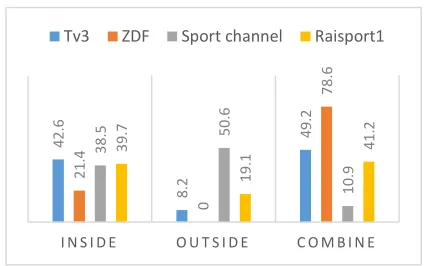
Figure 9 refers to the coverage range of different programs which are
internal, external, or a combination of the two.
Figure 9 - Coverage of internal and external programs
As shown in Fig. 9, the coverage of sporting events varies in different
networks, and with the exception of the sports network, the rest of the
networks devote their most time of coverage to sports programs outside
the source country which have a representative on that competitions.
Inferential Findings
Table 3 shows the difference between the content of programs being
played by different television networks.
Table 3. Compare the content of programs being played among
networks
Under-studied variable
Chi-square
statistic Degrees
of
freedom Sig
The content of the programs
being broadcast (non-specialized networks) 47.800
5 0.0001
The content of the programs
being broadcast (specialized
networks) 943.679
7 0.0001
The results presented in Table 3, which compare the content of the
programs being broadcast from different networks, the chi-square
statistic and the significance of comparing the specialized and
non-specialized networks in the field of sport indicate that there is a
significant difference among the content of broadcasting programs from
these channels.
Table 4 shows the differences between the contents of the tables of
under-studied TV channels based on the four components of the sport
(championship, general, educational, and professional).
Table 4 - Comparison of the contents of the structure of TV network
sport programs based on the four sport components
Under-studied variable
Chi-square
statistic Degrees
of
freedom Sig
Network coverage based on
the classification of sports (non-specialized networks) 42.493
3 0.0001
Network coverage based on
the classification of sports
(specialized networks) 279.670
4 0.0001
The results presented in Table 4, which compare the coverage of
networks according to the classification of sports that are broadcast
from different networks, the level of chi-square and a significant
amount compared to the specialized and non-specialized networks in
the field of sport showed that there was a significant difference in
network coverage based on the classification of sports among these
networks.
Table 5 shows the difference among the contents of the program tables
broadcasting in under-studied networks based on media functions.
Table 5 - Comparison of the content structure of the broadcast tables of
selected networks based on functional roles
Under-studied variable
Chi-square statistic Degrees
of freedom Sig
Functional roles of programs (non-specialized networks) 7.280
2 0.26
Functional roles of programs
(specialized networks) 517.696
4 0.0001
The results presented in Table 5, which compare the content of the
networks based on the functional roles of the programs being broadcast
from different networks, the level of chi-square statistic and the
significant difference in the comparison of specialized and
non-42.6
8.2
49.2
21.4
0
78.6
38.5
50.6
10.9
39.7
19.1
41.2
I N S I D E O U T S I D E C O M B I N E
specialized networks in the field of sport indicated that there was a
significant difference in focusing of networks to different functional
roles among the programs being broadcast.
Table 6 shows the difference between the content of the program tables
of the broadcasting in under-studied networks according to the
broadcast method.
Table 6 - Comparison of the structural contents of the broadcast tables
of selected networks according to the program distribution method
Under-studied variable
Chi-square
statistic Degrees
of
freedom Sig
Coverage of programs based
on the way programs are
played (non-specialized networks)
109.160 3
0.0001
Coverage of programs based
on the way programs are
played (specialized networks) 87.678
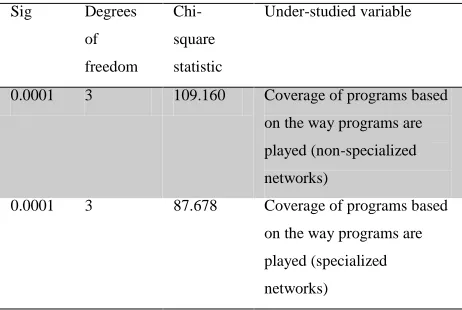
3 0.0001
The results presented in Table 6, which compare the content of the
networks based on the coverage of programs being broadcast from
different networks based on the program broadcasting method, the level
of chi-square statistic and the significant difference in the comparison
of specialized and non-specialized networks in the field of sport
indicated that there was a significant difference in the coverage of
sports programs of networks based on the program broadcasting
method.
DISCUSSION
The purpose of this research was to analyze the performance of Islamic
republic of Iran broadcasting (IRIB) in comparison with foreign selected
channels in the field of sports
In the statistical comparison between the selected networks, it has been
shown that both the TV3 channel in Iran and the ZDF channel in
Germany as more non-specialized networks turned to live programs
which regarding to the general nature of these networks, most of these programs have been important in broadcasting live national and
international events. In the specialized sports networks, according to the
specialized approach to sport, they have a lot of time to cover a variety of topics in the field of sports, and what emerges from the findings of this
research is that the recorded and supplied programs allocated the largest
amount in the program broadcasting tables. It seems that the results of
the present study obtained based on the type of programs and the time of
investigation and if this research was conducted at a time when major sporting events were held in the world, the contribution of these networks
increased more and more. It may seem logical that, in normal times,
networks will reciprocate the broadcasting program to fill the program
table.
The coverage of sporting events is one of the most important categories
for selected networks that focused on them either specialized or
non-specialized and among many different sport subjects, soccer is the most commonly used sport that is covered by networks and channels.
One of the points that has been studied in this study was the
contribution of various people to sports programs, in which the
performance of the networks was very different. TV3 channel in Iran had a special interest in the sports of the people with disabilities at the time
of study, but none of the networks had a specialized program in this area.
It seems that due to the presence of veterans of the imposed war among disabled athletes as well as the successful results of this group in the
international and universal competitions, a special TV program has been
allocated to them. But the point that matters here is whether having a specialized sports network and a relatively longer time than the third
channel in Iran, is it essential that this sport program broadcasting from
a social network approach or gain more and more independent
contributions in the sports network. Academic sports and sports of basic age category are the only points that have been considered by Raisport1
channel but had not any contribution to sport channel in Iran during the
study period. Due to the presence of a young and interested sports community and the presence of academics in the sports sector, it is
possible to provide a better contribution to the program broadcasting
table. Because supporting media such as television can be effective in increasing the incentive of this stratum.
The network approach to sports coverage varies according to the
classification of sports, and among non-specialized networks, TV3
channel in Iran there are programs in all cases, except for academic sports which in contrast to ZDF channel in Germany, it only works in the
championship and professional sports. The results of this section indicate
that TV3 channel proceeded one of the main tasks recommended to it but in spite of looking into the field of sports, it seems that a small share of
the broadcast schedule is dedicated to this, and planners should have
more effort in this section.
Since the function of the media is different, and each one should be
based on the audience's conditions, the results of this study showed that
the most function that is emphasized by the networks is the entertainment
function. The educational function has been somewhat discussed in the specialized sports network, which seems to be somewhat diminished
according to the mission of broadcasting organization in Iran. One of the
28
channel of Sima, foreign events are covered. Foreign events that do not
include participants from Iran and are intended only for the entertainment of the audiences. In contrast, ZDF channel in Germany emphasizes more
on domestic events or foreign events with at least a participant. It seems
that the approach of a specialized network based on the general interest
of the community should be similar in the same way as ZDF network in Germany. The Iranian sports network also emphasizes the coverage of
foreign events in which there is no participant in Iran, which is a
weakness against its Italian counterpart.
According to the statistical findings of this study, the results show that
the TV3 channel in comparison with ZDF channel in Germany has a
broader coverage and examines the various dimensions of the sport. It
seems that the performance of the German network is acceptable somehow, since there is no need for non-specialized networks to expand
their coverage where the specialized sport networks are present.
But the performance of the Iranian sports network in contrast to Raisport1 Italian sport channel is somewhat controversial. Due to the
geographical extent of Iran, as well as having provincial networks and
sports enthusiasts, more sporting events should be covered in Iran until most of the programs were provided from other countries, or covered
those field of sports which have no enthusiasts in Iran. The contribution
of the ancient and original sports of Iran was only 4.53%, which seems to be very low for a country like Iran.
In summary, the result of this study is that in general the performance
of broadcasting organization in Iran in comparison to its equal networks
in foreign countries, despite some deficiencies, was acceptable and with regard to young life of specialized sport channel, it can be better. Iranian
broadcasting organization is perhaps one of the few broadcasting and
radio networks in the world that is wide spread and all major sports events throughout the country are broadcast to the audience for free, but
what we see here is that there is not any compiled program in this
organization to cover sport events and most sports programs broadcast
from Iranian networks are of an external nature and this seems somewhat unreasonable, especially on the TV3 network. To this end, efforts should
be made to compose a strategic program in order to identify the coverage
of sport programs. It is also suggested that the research units in broadcasting organization carry out extensive research on the needs of
the target audience in order to identify the needs of the audience and to
cover the sporting events.