Contextual Tree Adjoining Grammars
Martin
Kappes
Fachbereich Informatik, Johann Wolfgang Goethe-Universität, D -60054 Frankfurt am Main, Germany, E-Mail: [email protected]
Abstract
n rhi.\' pape1; 1i:e introduce a formalism called contextual tree adjoining grammar (CTAG). (::TAG.~ are a generalization of multi bracketed contextual reivriting gramnwrs (MBICR) which combine tree adjoini11g grammars (TAGs) and co11textual grammars. The generalization is to add a mechanism similar to obligatory adjoi11i11g in TAGs. Here, we present the definition o.f the model and some results co11cerni11g the ge11eratil'e capaciry and closure properries of rhe classes <!f la11g11ages generared by CTAGs.
Introduction
Contextual grammars are a formalization of the linguistic idea that more complex, weil tormea strings are obtained by inserting contexts into already we11 forlned strings. They were first introduced by Marcus in 1969; all models presented here are based on so-called internal con-textual grammars which were introduced by Pllun and Nguyen. References and further details about contextual grammars can be found in the monograph (Pi\un, 1997); a survey is given in (Ehrenfeucht et a{., J 997).
Tree adjoining grammars (TAGs) and contextual grammars are linguistically we11111v,;, "~~~ ""'1 have been considered as a good model for the description of natural languages (c.f. (Marcus, 1997)). Although contextual grammars and tree adjoining grammars seem very different at first sight, a closer look reveals many similarities between both formalisms. Therefore, it seems natural to combine those formalisms in order to obtain a generalized class of grammars for the description of natural languages, which combines tbe mechanisms of various classes. A first step were so-called multi-bracketed contextual grammars (MBIC) and multi-bracketed contex-tual rewriting grammars (MBICR), c.f. (Kappes, l 999). These grammars operate on a tree structure induced by the grammar (the first approach aiming in this direction was introduced in (Martin-Vide & Päun, l 998)).
However, the families oflanguages generated by MBIC and MBICR-grammars are cither strictly included in or incomparable to the family of languages generated by TAGs. This is the case since, in MBIC and MBICR-grammars, each yield of a de1ived tree is immediately a word in the language generated by the grammar. In other words, there.is no mechanism to distinguish between "finished" and "unfinished" trees like obligatory adjoining allows in TAGs. Here, by adding obligatory adjoining to MBICR-grammars, we obtain a generalized class whicli is also a proper extension of TAGs.
Definition and Example
Let I;• denote the set of all words over the finiLe alpbabet B and I;+ = i:• - { .A}, where ,\ denotes the empty word. We denote the Jength of a string :r: by
!
xi.
In this paper, we use the term derived tree for a tree where the internal nodes are labelled by symbols from a nonter~136
Martin Kappes
.-\ A B
/~
ffi
/l~
B B a B A A B
c
J.
/1
,
~
!
t
!
J,
t~
II
"
/; ( ' A"
(/,,
A H!
J,
1
~
,.
[image:2.596.140.448.145.271.2]"
"
Figure 1: Derived trees corresponding to the Dyck-covered words (from left to right)
[..\ [n11
]
u [11/Jlw] n]..1.
l.-1
11
[
B
[
.
. 1
cJ.--1] B [.--1li]
A).4
and [n[.40 J.
4
[B/J)B[c
[.
4
o].4
[ut]nk]u.
a linenr representation of derived trees called Dyck-covered words. A Dyck-co\'ered ward is
a string consisting of terminal symbols and opening and closing brad:ets indexed with non-terminal symbols. Formally. for the nonterminal alphabet ..::, \\'e define the brncket alpbabet B.:.
=
{]..i-) .. 11
.-!
E ..::,}. Throughout the paper we always assume I:n
B.:.=
(~. The set of all Dyck-covered words DC.:. (I:) over I: \vith respect to the index alphabet ..::, is inductivelydefined by
• For all 11· EI:"'" and .4 E ..::,, [..1
ul1
is in DC.:.(2::).• Let 11 2_ 1 b.: ;,
l"v
„
;,;·
;.:
:··~e~„,· lf .--1 E..::, ;md o1 • n~ ... n11 are in DC.:,.(I:) U I:. then [.1n 111:! . . ·.n„]..\
is in DC..,;(2::).lt is not difAcult to see that each n E DC.:.(2::) can be interpreted as unique encoding for a derived tree. where ..::, is the labe! alphabet for the internal nodes and I: is the labe] alphabet for the leafnodes in the following way: Astring [.
4nJ.4
E DC.:. (I:) is identified with a tree where the root is labelled by .-!. and the subtrees of the root are determined by the unique decompositionofn
=
n111:.>.„n11 suchthato; E DC.:.(I:)UI:, lSi
S
11. ForexamplesseeFigure J. By DC~ (I:} we denote the set of all elements in DC.:. (I:) v.·here the root node is labelled by A.A comextual tree adjoining grammar (CTAG) is a tuple G """ (.S, ~. "[.
n.
I'). where ~ is a finite set of terminals, !l is a finite set of indices, T ~ ..::, is a set of permitted indices,n
~ DC_; (I:)u {
>.} is a finite ser of axioms and p is a finite Set of productions. fatch production is of the form (5, C, !\, H), where 5 ~ I;+ is the selector language. ]\', H ~ ..::, are sets of nonterminals and Cis a finite subset of contexts where each context is of the form (/L, 11) such that 1111 E DC.:.(~).The derivation process in a CTAG is illustrated in Figure 2: A context (11., 11) may be adjoined to an et
=
n-1 [no·2]8rra yielding a tree O-!f1foo:2]E110:3 if and only if there is an {5, C. f\-, H) E Psuch that the yield of n2 is in 5, (JL, 11) E C, [nn2]B E DC~(:S), ß E /\' and E E H. The
string [..
1
n~J.
.
1 is called selector. In the above figure, we have <t E DC~(E), 1111 E DCf(B) andthe yield of n·1• n:!. n·3• 11., 11 is w1. w2, w3 , ·u„ v respectively. The set of all sentential forms of
G, S ( G'), consists of all trees which can be derived in the above way starting from an ax.iom in
n.
The set of all trees derived by a CTAG G, T(G), consists of all trees in S(G) where the internal nodes are only labelled by nonterminals in T. The weak generative caparity L(G} isA
A
~
u·„·'
[)
6
tl 1"Figure 2: The derivation process in a CTAG
H'„
L'p 10 some technical modificalions necessary to keep our formalism consislent 10 the usual
model of contexrual grammars, we only added selector Janguages eo ehe productions of a TAG.
These selector languages are used to control the derivation process as they do in contexrual
grnrnmars. the adjunction of an auxilliary tree is only possible if ehe yield of the node where ehe
adjunc1ion rnkes place is in the selector language.
We can classify CTAGs by their selector languages: A CTAG G
=
(:=. ~. Y. ~l. !') is called\\'ith F-choice for a family of languages F. if
5'
E F for all (5. C. J{. H} E !'.Consider for example the CTAG with ~+ -selec1ion
G
1. ! 7i'°:.!
::::
=
({o. b. r" t!. <-'}. {...I. B}. {...I}, {[..1
a
[
Bbcfod
}A
}·
{1.1. ;;:1}) where(~+. {([Au[JJb. f"]udj..i)}. {B}. {A}) and
(
::+.
{
([ ..
1 e.1']..
1)}. { B}. { A}).It is not difficult to see that using ..-1 i 1imes yields a derivation
In order 10 ol:itain a s1ring in T(G) we have to use production ;;2 exac1ly once 10 remove the pair
of brackets indexed by B from the sentential form. After applying ;;'.! once. no J'u1 th,::· deriv'ltion steps are possible, hence L(G)
=
{011d1"<"1 r·d11
l11 ~ 1}.
GeneratiYe Capacity
CTAOs are a generalization of MBlCR-grammars. For ~
=
Y these models are equivalent(CTAOs could thus also be called multi-bracketed contextual grammars wich obligatory re
writ-ing (MBICRO)). The obligatory adjoining feature increases ehe generative capacity. For
in-stance. the language in the above example cannot be generated by any MBJCR-grammar. This
is due to the fact that each Janguage L generated by an MBICR-grammar fulfills the so-called
internal bounded step property (c.f. (Paun, 1997)): There is a constant 71 such that for each
string .r E L,
i
:rJ
>
7i there is a y E L such that :1:=
:c
1 '(L1:21i:1::i, y=
:1: 1:r'l:i::1 and 0<
1
11.v\
S
11.CTAGs using only the selector language E+, i.e., in effect ignoring the selector languag~·mech
anism. and TAGs are, up to some details. descriptions of the same model. lt is possible to
construct a TAG equivalent to a given CTAG with E+ -choice and vice versa. The technical detail is that all elementary trees of a TAG must be elements of DC6 (:S) if the foot nodes of the
auxilliary trees are not taken inio account. Formally, the equivalence holds ifthe initial trees in a
TAG are elements of DCc. (E) and each auxilliary tree i of Gis of the form CT;
=
11;[.-1JA„11; suchthat11;11; E DC1'(~). Noticethatthepair(A„]A„ representsthefootnodeofO'.;. Theconstruction
138 Martin Kappes
n similar construction for MBICR-grammars which can be found in (Kappes, 1999).
For the other direction. consider a TAG Gof the above form. Let.\ denote the selective (or .Y
in case of an obligatory) adjoining constraint of an internal node in an elementary tree.
X
(or_\) thus dereferences the subset of auxilliary trees which may be adjoined at this node. We can construct an equivalent CTAG G'
=
(~. S.Y'.
rl'. P') with ~+-choice as follows: The set ofindices S and the set of permitted indices Y' of G' is given by
S
=
{
(.-! .. \·)!
A E ~ and .\-is a (selective or obligatory) adjoining constraint} J'=
{(.-! . .\) 1 A E ~ and .\" is n selective adjoiningconsrraint}.For each initial tree n of G we insert a tree n' into 0'. where each node labelled by A E ~
\\·ith (selective or obligatory) adjoining constraint .\-is replaced by the index (.-L .\· ). We thus
consider the adjoining consrraint of a node as part of its index. For each auxilliary tree i : n;
=
11;[..1
,J.
1y, we insert a production 7i;=
(:~::::+. { (11;. 11;J}. { (.-!; .. Y) 1 i E .\:t · {
(.-1;. Z)}) into P' where 11'.1;j is obtained from 11;11; by the same procedure as above and Z is the (selective or obligmoryJ adjoining constnint of the foot node of n;. lt is possible to prove rhat both grammars are equiYalent.lt cnn be shown that ench CTAG with finite selection generates a concext-free Janguage. This
is the cnse since the Jength of ench string which may be used as selector in a derivation step can be bounded by some constant. Due to the bracket structure it is impossible to shift
infor-mation through the semential form of a CTAG if the length of the selectors is finite. Therefore
it is possible to conscruct a context-free grammar generating the s:ime Jangu:-we A lsn. for each context-free Janguage there is a CTAG \\'ith finite selection generating thnt language. So.
CTAGs \\'ich finite selectors generate exactly the context-free Janguages.
CTAGs with regul<ir selectors can generate langunges which cannot be generated by TAGs even ir \\'e do not take advamage of the oblig::uory adjoining feacure. The language L( G)
=
{ o" /111
r.111 d'' r" 1
111
?'.
/1 ?'. 1} can be generated by an MBICR-grammar and hence by a CTAG with regular selector languages (c.f. (Kappes, 1999)) but not by any TAG because of thepumping-lemma for TAGs (cf. (Vijay-Shnnker. 1988)).
\Vith context-sensitve selector Janguages. CTAGs generate exactly the contexHensitive la n-gunges: Let L ~ ~+ be n context-sensitive language. We consiruct lhe CTAG
G = (~.{A..B},{.-1},0.{r.}U{n,,.laE~}). where
rl {[A;rJ..,
1
.1:
E L.j:ri=
1} u {[Ba]11ll7
E ~}r.
=
(~+,{([ßa.]a)!aE ~}.{B},{.-1})and1T11
=
({.1:EI:+la:r EL},{([..ia.]..i)},{B}.{A}).Since the family of context-sensitive language is closed under quotient with singleton sets. all
selector languages are context-sensitive, and it is not difficult to prove L( G)
=
L.Tbis result shows that the combined use of selector Janguages and obligatory adjoining Jeads to a very powerful formalism. Whereas there are context-sensitive lm1guages (such as L
=
{ a"d111l'"<·rl11l11.
?'.
1}) which cannot be generated by any MBICR-grammar regardlessly ofthe used selector languages, the above construction shows that for each fomily of languages F closed under quotient with singleton sets and containing all finite Janguages each L E F cnn also be generated by a CTAG with F-choice.
Closure Properties
The class of languages generated by CTAGs with F-choice is closed und er union. concatenation
and (;"
=
(:~:::1. ~2. 12 . 0:1. P,) be two CTAGs with F-choice for a family of languages F\\'ith ~- E F. Without Joss of generality we may assume that ~ 1
n
~:!=
Vl.
Therefore it iseasv 10 see that for (; = ("S::1 u ~2· ~1 U ~'.!· Yi U 12. 01 U
n'.!.
Pi U P1) we have L(G) =L(
C;
1)...,; L(G1 ). For concatenntion we take a new index S t/:. ~1 U ~2 and construct G' =( ~
1
·~ ~::· ~ 1 !..J ~2 U { 5}. 1 1 U 12 U {5}. {[..,-n d]s i o E r11 - {>.}. J En1 -
{
,\
}}
U { n E!?1
f,\
"'= !l::} :.J {o E n~ j,\ E Oi}. P1 U P2). Clearly L(G') = L(Gi) · L(G2). For Kleene-star\\'e construct (;"
=
(~1• ~1 U{.5'}.11 U {S}. {[sci]s 1 n E 111 -P.}}
U {>.}.PU {;;} ). where;-:
=
1~-.{(~,,.11].-·)Jrt Eni
-P}}.{5}.{S'})Itis atechnicale>.:erciseto proveL(G"}=
L1(,'1J'.
For cach CTAG (,' and regular language R we can construct a CTAG G' such that L( G'}
=
L((,') ;-;n.
Furchermore. (,'' uses the same selector languages as (;. Hence. 1his constructiondirectly proves that the class of langunges genernted by CTAGs with F-choice is closed under
intersection wich regulnr Jnnguages for any family of Janguages F. For the rele\':lllce of closure
under intersection with regular sets we refer the reader to (Lang. l 994 ).
In the following. we will present n sketch ofthe proof. Let G
=
(~. ~-Y. 0. P) be an arbitrnryCTAG and R a regular language. Without loss of generalicy we assume thnt c; is in anormal
form such that each internal nocte either has exnctly one leaf or only internal nodes as immediate
~uccessors: formnlly for each n 1(1111:1 E T( (,') such that (11 E DC.J. (:::) we eithcr lrnve n.2
=
[ .. 1
r1]..
1 ror some" E ::: and .-l E ~ or 11:!=
[..
1.11 .••.1„].
.
1 for an...! E ~ and ./i E DC~(~).l S i
.:s;
11. Since R is regular. there exists a determiniscic finite automaton JJ=
(C}. :::. c5. <Jo. F)with L( Jl)
=
R (c.f. (Hopcroft & Ullnrnn. 1979) for notntional details). We conscruct agrammar G' where the labe! of each internal node additionnlly carries two pnirs of states of .'1.
formnlly lhe set of indices of G' is given by <I) = { (.-!. [11.
g
)
.
[
r .
.
-
J
l
...1 E ~. 11, <J. r. s E Q}. Tntuiti\'ely. in the tree interpretation. if an internal node is labelled by (.-!. [11. <J].[r
.
.
~JJ then[11. 11] is a \'alue propagated from the immediate predecessor of the node stating thnt this node is
supposed to generate a yield rr such that ci(11. w) = q. The pair
[r.
s) denotes that the immediatesuccessors of the node are supposect to generate Cl yield 11: such that 15{r. II')
=
s.(;' generates ns scntential forms exactly the sentential forms of G where a lnbel of an internnl
node A in S'(G} is replnced by all labels (.-!.
[J1.1JL
[r
.
s]
J.
JI· •;. r s E (2, in 8(G') such chat forthe resulting strings n E S(G'') the follov.·ing properties hold:
( l) For each partition 11
=
11 1 n ~n:i such that n, E DC.J. CS) and rr2=
h·
-,-
1 ••. -. 11]s
we havc.\"
=
(.-!, [71. <J). [z10. J111Jl· -fiE
DC.::, (~) and 1·1=
[i;
1:Ji·
„
1i
=
(ß;, [11,_,. 11;],[r;.s;]).
1 S i S n. In other words. for each internal node with ocher internal nodes as immediate successors, the second pair of states of the node is consistent with the first pairs of states of ils immediate descendants (in tbe sense of the usual triple costruction). See Figure 3
for an illustration.
(2) For each partition o
=
n 1 n20·~ such that ri:2 E DC~ (~) and n:i =h
rr]s where _\=
(A. [l', q]. [r, s]} and rr E 2::: we have o(r, a) = .~. In other words, for all internal nodes having a leaf labelled by u as immediate successor we have J(r, rr)
= ,.,.
for the 'secondpair of states [r,
s]
.
(3) For each rt
=
[xn'
]
x
we have X=
(A, [q0 ,.f
],
[r, s]) where q0 is the initial state of Mand
f
is a final state of M, .f E F. In other words, the first pair of staces of the root nodeof each tree consists of
M's
initial slate and a final state ofM.
Thc dctails of convercing the axioms and contexts of G into axioms and contcxts of G' are
140
Martin Kappes
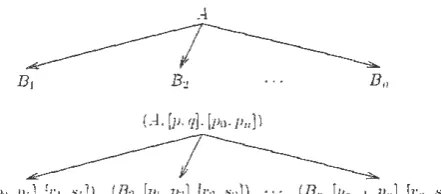
[image:6.595.189.410.156.253.2](.-!. [Ji. q]. [pn. p„])
Figure 3: Example for apart of a tree in S(G'') corresponding to apart of a tree in S(G). The
abO\·e pnrt of a tree with root labelled by .-land immediate nontenninal successors ß1, •••• B„
is converted i nto all parts of the abo\'e form for arbitrary p, q. p,. r;. s; E Q, 0 ::; i ::; n (not considering further restrictions due to the immediate predecessor or the immediate descendants
of this part of the tree).
(;' uses rhe snme selector !anguages as
G'.
lf we define the set of permitted indices of G' by<I>'
= { (
.-l.[11. q]. [p.
q]) j .-l E Y. p, q E Q} we obtain l ( G')=
L ( G) n R.The same construction can also he used to shmv the closure of TAL under intersection with
regular sets without involving a corresponding automata mouci lik: EPDAs.
Conclusion and Further 'York
In this paper. \\'e introduced CTAGs and discussed their generative capncity and some closure propenies. CTAGs seern a significam progress compared to MBJCR-grammars. As a!lowing both obligntory adjoining and selector !anguages Jeads to a very powerful model. our future work \\'ill focus on CTAGs with "weak'' selector languages. Open problems which we would
like to tackle in the future are whether rhe classes of languages generated by such grammars are
closed under homomorphism and inverse homomorphism or not and the relationship to other
formalisms such as range concatenation gram:1rnrs and recursi\'e matrix systems.
References
EHRE!\:FEUCHT A., PÄUN G. & ROZE!\BERG G. (1997). Contextual grnmmars and formal languages ..
In G. ROZENBERG & A. SALOMAA, Eds„ H1111dbnok <f Formal Languagcs \lo/.2: Li11t'ar Modeli11g, p.
237-294. Berlin: Springer.
HOPCROFT J. E. & LlLLMAN J. 0. ( 1979). lntroduC1io11 to Alllomma Thern-_1~ language.1· and Compu·
t<11io11. Reading. MA, USA: Addison-Wesley.
KAPPES M. (1999). Combining contextual grammars and tree adjoining grammars. In Proceedings of
the 6. Met•ti11g on Marlu.>matics of Language, p. 337-345, Orlando.
LANG B. ( 1994). Recognition can be harder than parsing. Comp111<1tic111al lml'lligmce.
MARC't:S S. ( 1997). Contextual grammars and natural languages. ln G. R07.!:NRFRG & A. SAJ~OMAA,
Eds .• Harulbook <~(Format Languages \lol.2: Linear Modelint:. p. 215-235. Berlin: Spdnger.
MARTJN-YJDE C. & PÄUN G. (1998). Structured contextual grammars. Grammars, 1 (1p.),33-55.
PÄUN G. (1997). Marcus Contextual Granmwrs. Dordrecht, Boston, London: Kluwer Academic
lishern.
VIJAY-SHANKER K. (1988). A Study of Tr-ee Adjoining Grammars. PhD thesis, Depanment of
![Figure 1: [..\ Derived trees corresponding to the Dyck-covered words (from left to right) [n11] u [11/Jlw] n ]..1](https://thumb-us.123doks.com/thumbv2/123dok_us/755935.1087241/2.596.140.448.145.271/figure-derived-trees-corresponding-dyck-covered-words-right.webp)