Scholarship@Western
Scholarship@Western
Electronic Thesis and Dissertation Repository
1-24-2014 12:00 AM
Executive Dysfunction: A Contributor to Subtypes of Violence or
Executive Dysfunction: A Contributor to Subtypes of Violence or
General Criminality?
General Criminality?
Megan B. Hancock
The University of Western Ontario Supervisor
Dr. Peter N.S. Hoaken
The University of Western Ontario
Graduate Program in Psychology
A thesis submitted in partial fulfillment of the requirements for the degree in Doctor of Philosophy
© Megan B. Hancock 2014
Follow this and additional works at: https://ir.lib.uwo.ca/etd
Part of the Clinical Psychology Commons
Recommended Citation Recommended Citation
Hancock, Megan B., "Executive Dysfunction: A Contributor to Subtypes of Violence or General Criminality?" (2014). Electronic Thesis and Dissertation Repository. 1906.
https://ir.lib.uwo.ca/etd/1906
This Dissertation/Thesis is brought to you for free and open access by Scholarship@Western. It has been accepted for inclusion in Electronic Thesis and Dissertation Repository by an authorized administrator of
OR GENERAL CRIMINALITY?
(Thesis format: Monograph)
by
Megan B. Hancock
Graduate Program in Psychology
A thesis submitted in partial fulfillment of the requirements for the degree of
Doctor of Philosophy
The School of Graduate and Postdoctoral Studies The University of Western Ontario
London, Ontario, Canada
ii
Abstract
Purpose: The adverse consequences of violence on society are tremendous. Several
factors have been identified as potential contributors to violent crime, including deficits
in executive functioning. Executive functioning is a term used to a describe number of
higher-order cognitive abilities (e.g., working memory, inhibition) that are thought to be
essential for appropriate, socially desirable behavior. The extent to which executive
functions influence the occurrence of general criminality versus specific subtypes of
crime is largely unknown. Of particular interest is the ability of executive functioning to
distinguish between reactive and instrumental subtypes of violence. Whereas reactive
violence is committed with the intention of harming the victim after perceived
provocation, instrumental violence is committed with the intention of obtaining some
kind of goal other than inflicting injury. Hence, the purpose of this study was clarify the
relationship between executive functioning and subtypes of criminal offending, as well as
to clarify the convergent and divergent validity of different indicators of executive
functioning within the context of understanding crime. Method: One hundred and
fifty-one adult male inmates from a federal correctional facility participated in this study.
Participants completed both performance-based and self-report measures of executive
functioning and their complete criminal histories were reviewed. Results: Consistent
with hypotheses, executive functions were differentially related to subtypes of offending.
Moreover, findings suggested that (a) performance-based tasks and self-report measures
of executive functioning are unrelated to one another and are differentially related to
subtypes of crime, (b) it is important to examine separate components of executive
iii
functions and crime are not accounted for by general intelligence. Conclusion: Taken
together, this dissertation demonstrated that executive functioning is most useful when
using a crime-specific approach to understanding criminality. Future research should
examine this relationship longitudinally to better understand whether this is a causal link
or whether there are other pathways through which executive functioning influences the
likelihood of an individual engaging in specific subtypes of violence. An understanding
of the variables underlying different types of violence is a necessary precursor for risk
assessment and offender rehabilitation.
Keywords: Executive Functioning, Intelligence, General Theory of Crime,
iv
Acknowledgements
I am truly grateful for the challenges I have faced and the growth I have
undergone over the past six and a half years. This project would not have been possible
without the help and support of many people. First and foremost, I would like to express
my appreciation to my supervisor Peter Hoaken. Thank you for your constant support and
encouragement during the writing of my dissertation and throughout the course of my
graduate training. I have learned so much during our work together and I truly appreciate
the invaluable learning experiences you provided. Thank you for believing in me.
I would also like to acknowledge my advisory and examination committee
members, Dr. Nick Kuiper, Dr. Bruce Morton, Dr. Paul Pare, Dr. Alan Leschied, Dr.
Leslie Janes, Dr. Dorothy Cotton, and Dr. Don Saklofske. I am grateful for your time,
helpful suggestions, and feedback. I would also like to express my gratitude to the Social
Sciences and Humanities Research Council of Canada, The University of Western
Ontario, and the Ontario Graduate Scholarship Program for funding my doctoral research
over the past four years.
My deepest thanks go out to the men who participated in this study, as well to the
staff from Fenbrook Institution for their invaluable assistance during my time at
Fenbrook. I would also like to express my gratitude to Joel Ginsburg and Chris Rowntree
of the Correctional Service of Canada for coordinating this prison based research and for
their endless support during the data collection.
I would like to thank my lab mates Vanessa Pedden and Erin Ross for their
incredible moral support and encouragement, and for paving the way for Jen and myself.
I would especially like to thank Jennifer Tapscott, my office-mate and partner in crime.
v
because they were spent with Jen. I laughed more over the past six and a half years than I
even thought possible. Developing this project, investigating different analytic
approaches, recruiting participants, and living in a fairly run-down apartment for three
months were all made easier with your presence and support. I am truly thankful that you
were able to capture the spiders and crickets in my bedroom and in our office, and that
you were present to provide emotional support during the rat invasion and toxic mold.
Finally, I am thankful for the time you spent editing my dissertation, for our lengthy
discussions about research findings, and for your pep talks before my oral defenses. This
process would not have been as enjoyable or successful without your support, guidance,
and friendship.
I would like to thank my Mom, Dayna, and Carl for their endless love and
understanding. Thank you for having confidence in my abilities and for supporting my
decision to remain in school for a very long time. My dream would not have become a
reality without the three of you standing behind me throughout this project. I would like
to thank my Nanny for her constant love and support and for the prayers when I faced a
multitude of challenges. I also would like to acknowledge the friends, both in and out of
the program, who have been an incredible source of support and stress-relief.
An extra special thank you goes to my husband-to-be, Adam Cullen. You have
stood beside me every step of this crazy adventure and have never stopped believing in
me, even when I did not believe in myself. You have been an outstanding support
throughout this project and your patience is unparalleled. I could not have done this
vi
Table of Contents
ABSTRACT... ii
ACKNOWLEDGEMENTS ... iv
TABLE OF CONTENTS ...vi
LIST OF TABLES ...ix
LIST OF APPENDICES ...xi
INTRODUCTION ...1
Important Definitions………...4
Generalist Approach to Understanding Aggression and Violence …...8
Executive Functioning as a Predictor of Criminality and Deviance more Generally………...10
Criticisms of Generalist Approaches to Understanding Violence...12
Crime Specific Approaches to Understanding Aggression and Violence...13
Differences between Violent vs. Nonviolent Behaviour…...13
Differences between Reactive vs. Instrumental Violent Behaviour…...16
Theoretical Distinction...16
Operational Distinction………...18
Unique Psychosocial Correlates………...20
Executive Functioning and Reactive vs. Instrumental Violence...22
Theoretical Link between Executive Functioning and Violence…...26
Overview of the Concept of Executive Functioning…...30
Measurement of Executive Functioning…...33
Executive Functioning and Intelligence...………36
Objectives for the Current Study... 37
Goal 1 – Clarifying the Relationship between Executive Functioning and Criminal Offending...40
Goal 2 – Clarifying the Convergent and Divergent Validity of Different Indicators of Executive Functioning within the Context of Crime...43
METHOD ...45
Participants ...45
vii
Table of Contents Continued
Executive Functioning……...47
D-KEFS Subtests...47
Psychometrics of the D-KEFS...51
BRIEF Scales...51
Psychometrics of the BRIEF...52
Intelligence...53
Psychometrics of the KBIT-2...53
File Review………...54
Coding Violent and Nonviolent Offences………...54
Coding Type of Violence...56
Coding Severity of Violence...58
Coding Intoxication during Violent Offences...58
Procedure………...58
Analytic Rationale………...60
Poisson-class Regression………...60
Hierarchical Linear Modelling…...62
RESULTS………... 63
Preliminary Analyses…...63
Missing Data………...63
Outliers………...63
Invalid Responders……...63
Descriptive Statistics...64
Construction of D-KEFS Component Scores...65
Confirmation of the BRIEF-A Factor Structure…………...68
Correlations…………...69
Poisson-Class Regressions…………...73
Hierarchical Linear Modelling (HLM)...76
DISCUSSION………... 80
viii
Table of Contents Continued
Clarifying the Convergent and Divergent Validity of Different Indicators of
Executive Functioning within the Context of Crime...………...82
Divergence between Methods of Assessment of Executive Functioning..82
Methods of Assessing Executive Functioning and Relationships with Criminal Offending……...86
Utility of Examining Separate Components of Executive Functioning….90 Executive Functioning, Criminality, and Intellectual Functioning………93
Strengths and Limitations…...96
Future Directions………...99
Implications of the Current Research...104
Violence Risk Assessment...104
Potential for Rehabilitation...105
Conclusion...107
REFERENCES...109
APPENDICES...134
ix
List of Tables
Table Description Page
1 Measures of Executive Functioning 7
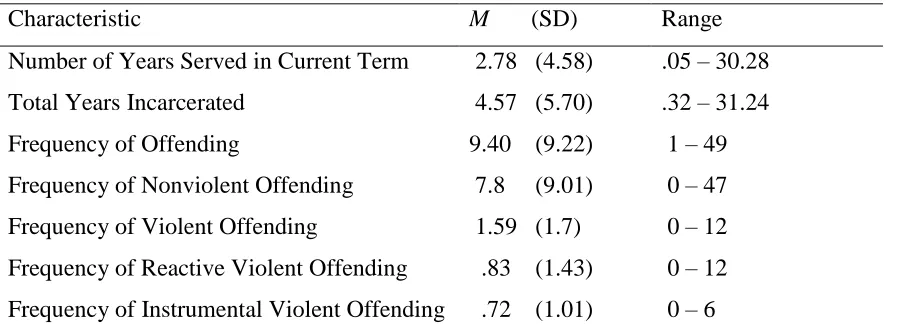
2 Offending Characteristics of the Current Sample 46
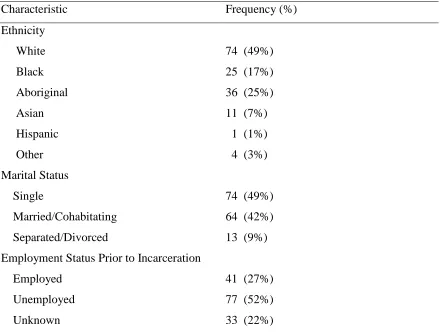
3 Ethnicity, Marital, and Employment Status of the Inmates 47
4 Descriptive Statistics for the Behavior Rating Inventory of Executive
Function – Adult Version
53
5 List of Abbreviations 55
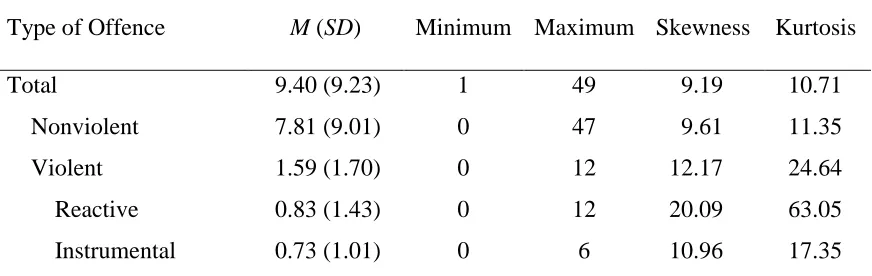
6 Means, Standard Deviations, and Ranges of Outcome Variable 64
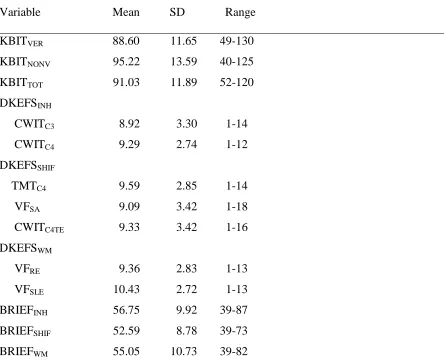
7 Means, Standard Deviations, and Ranges of the Predictor Variables 66
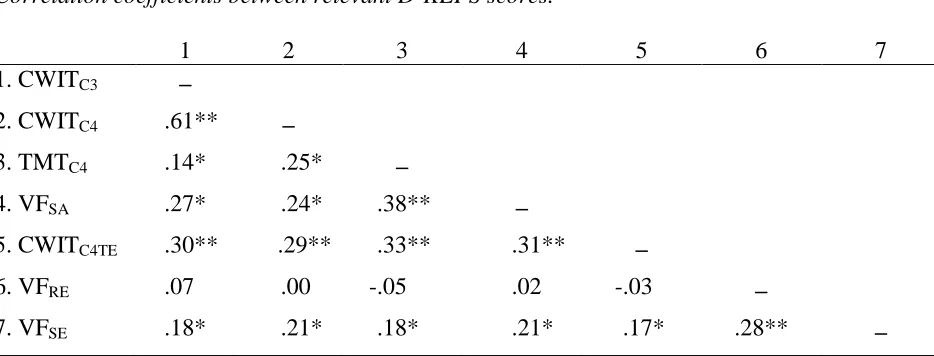
8 Correlation coefficients between relevant D-KEFS scores 67
9 Summary of Principal Component Analyses Results for D-KEFS Scores 68
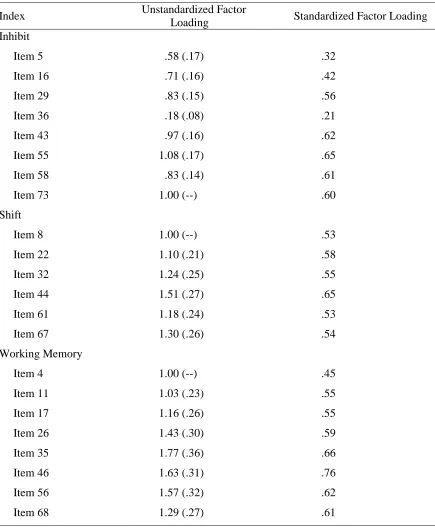
10 Unstandardized Loadings (Standard Errors) and Standardized Loadings
for 3-Factor Confirmatory Model of the Behavior Rating Inventory of Executive Function – Adult Version (BRIEF-A) Indices
70
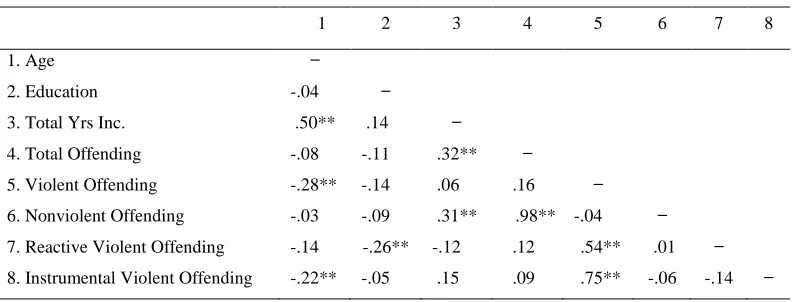
11 Correlations among Age, Education, Total Years Incarcerated, and Rates
of Offending
71
12 Correlations among Age, Education, Total Years Incarcerated, and
Predictor Variables
72
13 Negative Binomial Models for the Prediction of Rates of Offending from
Intelligence and EF Measures without Covariates
75
14 Hierarchical Linear Models for the Prediction of the Odds of Committing
Violent versus Nonviolent and Reactive violent versus Instrumental violent offences from Intelligence and EF Measures without Covariates
79
E1 Correlation coefficients between relevant D-KEFS scores from the
second data set
x
List of Tables continued
Table Description Page
E2 Summary of Principal Component Analyses Results for D-KEFS Scores
from the second data set.
140
E3 Means, Standard Deviations, and Ranges of the KBIT-2, D-KEFS, and
BRIEF-A scores from the second data set
141
E4 Correlations among Age and Predictor Variables from the second data set 142
E5 Unstandardized Loadings (Standard Errors) and Standardized Loadings
for 3-Factor Confirmatory Model of the Behavior Rating Inventory of Executive Function – Adult Version (BRIEF-A) Indices from the second data set
143
F1 Negative Binomial Models for the Prediction of Rates of Offending from
Intelligence and EF Measures with Covariates
146
F2 Individual Hierarchical Linear Models (HLM) with Level 1 Predictors for
Reactive versus Instrumental violence
147
F3 Hierarchical Linear Models for the Prediction of the Odds of Committing
Violent versus Nonviolent and Reactive violent versus Instrumental violent offences from Intelligence and EF Measures with Covariates.
xi
List of Appendices
Appendix Description Page
A Letter of Information Provided to the Inmates 134
B Consent Form 136
C Ethics Approval from the Research Ethics Board at the University of
Western Ontario
137
D Ethics Approval from the Research Board at the Correctional Service
of Canada
138
E Corroborating Data from an Additional Sample 139
F Negative Binomial Regressions and Hierarchical Linear Models with
Covariates
Introduction
Aggression and violence have profound social, legal, and political consequences.
The victims of violent crime can lose valuable possessions, their health, their ability to
work, and sometimes their lives (World Health Organization, 2002). In Canada in 2008,
441,782 individuals were charged with violent offences (e.g., homicides, attempted
murders, abductions, and robbery offences causing bodily harm; Statistics Canada, 2009).
Although crime rates, in general, have been declining over the years, violent crime rates
have been more variable and continue to account for one-fifth of offences reported by
police (Statistics Canada, 2012). In 2011, relative to 2010, some types of violent crime
had decreased, some had remained stable, and homicide rates had increased by 7%
(Statistics Canada, 2012). In addition to the surprisingly frequent occurrence of violent
offending, the annual cost of keeping an offender in a penitentiary is estimated at $87,919
per year (Public Safety and Emergency Preparedness Canada, 2005). Despite the cost,
incarceration has been central to correctional systems in Canada and throughout the
world. Many political leaders have suggested that incarcerating violent offenders deters
them from committing additional violent acts (Clair, Faille, & Penn, 2010); however,
there is considerable evidence pointing to the inability of punishment-based deterrence
approaches to reduce offenders’ risk of violence (Pratt & Cullen, 2005; Pratt, Cullen,
Blevins, Daigle, & Madensen, 2006).
As a result of the ineffectiveness of punishment-based models, researchers are
currently working to identify targets for rehabilitation that can reduce violent recidivism.
Specialized programs for violent offenders may be warranted given that there is an
conviction for violence (Serin & Preston, 2001) and given that violent offenders can be
differentiated from nonviolent offenders based on their psychosocial profiles (Lynam,
Piquero, & Moffitt, 2004). However, providing a single treatment to all violent offenders
may still be insufficient given the multiple etiologies of violent offending.
Violent offender heterogeneity is an issue that has received increasing
consideration in recent forensic research. More specifically, it has been acknowledged
that although violent offenders may present with the same general index offence (e.g.,
homicide), these offenders may differ in their motivations for using violence and
therefore benefit from alternative courses of treatment (Robinson, 1995). One common
method of discriminating between violent offenders is on the basis of whether the violent
offence committed was reactive or instrumental (Cornell et al., 1996). Whereas reactive
violence is committed with the intention of harming the victim after perceived
provocation, instrumental violence is committed with the intention of obtaining some
kind of goal other than inflicting injury (e.g., money, power, drugs, etc.). Further,
whereas reactive violence occurs in the heat of the moment, instrumental violence often
involves some degree of planning. Currently, researchers are investigating variables
that are differentially related to reactive and instrumental forms of violence, variables that
may subsequently be targets in offender rehabilitation.
Historical attempts to understand increased likelihood for later violence have
focused on psychosocial risk factors in childhood, such as poor peer relationships and
being low in socioeconomic status (for a review see Kashani, Jones, Bumby, & Thomas,
1999). However, rather than focusing on environmental variables, the role of individual
aggressive or violent tendencies are characterized by a certain pattern of functioning. To
date, research in this area has established that incarcerated offenders and those who
engage in deviant behaviour tend to be characterized by cognitive deficits, specifically in
the area of executive functioning (Giancola, 2004; Herrero, Escorial, & Colom, 2010;
Hoaken, Shaughnessy, & Pihl, 2003; Marsh & Martinovich, 2006; Raaijmakers et al.,
2008; Séguin, Nagin, Assaad, & Tremblay, 2004; Séguin, Pihl, Harden Tremblay &
Boulerice, 1995; Villemarette-Pittman, Stanford, & Greve, 2002; Yuedall, Fromm-Auch,
& Davies, 1982). Executive functioning (EF) is an umbrella term used to describe a
compilation of higher order cognitive abilities and will be discussed in greater detail
below. A handful of studies have further examined whether executive abilities are
differentially associated with violent versus nonviolent antisocial behaviours. Several
studies have concluded that individuals who engage in violent behaviours are more
impaired in EF than individuals who engage exclusively in nonviolent antisocial
behaviour (Baker & Ireland, 2007; Barker et al, 2007; Miura, 2009).
Given that EF has been associated with violent behaviour in general, it is of
interest whether there are differences in this relationship for specific subtypes of violent
behaviour. Much less research has been conducted in this area, and the research that has
been done has been characterized by significant variability in the measurement of EF.
Researchers have used a variety of methods to assess EF, including both
performance-based tasks and behaviour rating scales, despite research suggesting that these methods
are weakly related to one another (for example, Rabin et al., 2006). Moreover, there have
been a vast number of different performance-based measures used and there is a great
being made up of several related but separate abilities (Godefroy, Cabaret, Petit-Chenal,
Pruvo, & Rousseaux, 1999), researchers infrequently discuss the specific components of
EF that are associated with aggression and violence. Instead, they refer to EF as though it
were a unitary construct, ignoring the fact that different measures assess different
components.
Research has inconsistently suggested that reactive aggression may be
differentiated from instrumental aggression on the basis of executive abilities. However,
in addition to the variability in EF measurement, the majority of studies have explored
the aggression of children and adolescents or of adults in the community who commit
relatively less severe acts of aggression. There is a necessity for research to examine the
unique EF profiles of reactive and instrumental violence in offender populations.
Therefore, the current research was undertaken to clarify the relationship between EF and
subtypes of violence in adult inmates, as well as to elucidate the convergent and
divergent validity of different indicators of EF within the context of crime.
Important Definitions
Before reviewing the relevant literature and addressing the major goals of this
dissertation, several definitions need to be provided. Baron and Richardson (1994)
defined aggression as “any form of behaviour directed toward the goal of harming or
injuring another being who is motivated to avoid such treatment” (p. 7). Violence, on the
other hand, will be defined as behaviour involving an intentional act of physical
aggression against another individual that is likely to cause physical injury (Meloy, 2006)
Aggression and violence are terms often used interchangeably; however, though similar,
opposite is not true. Aggression can result in both psychological and physical harm,
while violence, as defined here, results exclusively in physical harm. In the literature,
aggression is mainly an empirical term used by researchers who are investigating the
harmful behaviour of individuals in the community (including children). Violence is
mainly a forensic term used by researchers investigating the behaviour of incarcerated
offenders. The focus of this dissertation is largely on the behaviour of incarcerated
offenders, and therefore, I will primarily refer to violence herein. However, when
reviewing the existing literature, I will retain the original terminology (i.e., aggression or
violence) in order to express the nature of the behaviour referred to in the original
publications.
An important distinction for the current dissertation is that between violent
criminal behaviour and nonviolent criminal behaviour. Violent crime involves
intentional harm-doing using physical means that is against the law (e.g., assault and
homicide; Felson, 2009). Nonviolent crime involves various forms of oppositional rule
violations that do not result in the victim being physically harmed (e.g., theft, drug
offences, and fraud; Felson, 2009). Behaviours that violate societal laws are referred to
as antisocial, deviant, and delinquent interchangeably throughout this dissertation.
Another important construct that requires defining is EF. Executive functioning
will be defined as “… a multifaceted neuropsychological construct consisting of a set of
higher-order neurocognitive processes that allow higher organisms to make choices and
engage in purposeful, goal-directed, and future oriented behavior” (Suchy, 2009, p.106).
Suchy (2009) also suggests that “executive functioning confers an evolutionary
from over-practiced, over-learned, and prepotent responses” (p.106). There is
disagreement about the specific abilities that are subsumed under the definition of EF
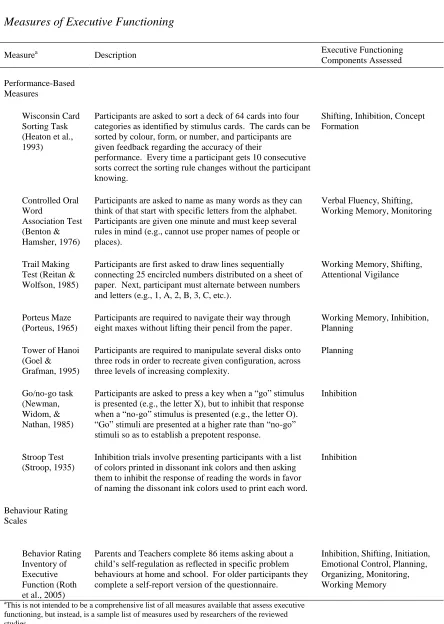
(see Table 1 for descriptions of several of the most commonly used indicators of EF and
the components that they purportedly assess). However, three abilities that are frequently
mentioned include working memory, inhibition, and shifting (or cognitive flexibility;
Pennington, 1997; Miyake et al., 2000).
Shifting involves cognitively shifting back and forth between multiple tasks,
operations, or mental sets (Miyake et al., 2000). The shifting process requires an
individual to disengage from a task set that has become irrelevant and then to engage
with a newly relevant task set (Miyake et al., 2000). Working memory allows an
individual to monitor and code incoming information for relevance to the task at hand,
and then to revise the information held in working memory by replacing old, no longer
relevant information with newer, more relevant information (Morris & Jones, 1990).
Finally, inhibition reflects an individual’s ability to deliberately inhibit dominant,
automatic, or prepotent responses when necessary (Miyake et al. 2000). It should be
noted that in the literature review that follows, specific components of EF will not be
identified as they are not frequently discussed in forensic research. As mentioned
previously, many researchers fail to distinguish between separate components of EF, and
instead, refer to it as though it were a unitary construct.
Now that the variables of interest have been defined, I turn to an overview of
theory that is relevant to the present study. I will begin by discussing a generalist
approach to understanding crime and aggression. Next, I will review crime-specific
Table 1
Measures of Executive Functioning
Measurea Description Executive Functioning
Components Assessed
Performance-Based Measures
Wisconsin Card Sorting Task (Heaton et al., 1993)
Participants are asked to sort a deck of 64 cards into four categories as identified by stimulus cards. The cards can be sorted by colour, form, or number, and participants are given feedback regarding the accuracy of their
performance. Every time a participant gets 10 consecutive sorts correct the sorting rule changes without the participant knowing.
Shifting, Inhibition, Concept Formation Controlled Oral Word Association Test (Benton & Hamsher, 1976)
Participants are asked to name as many words as they can think of that start with specific letters from the alphabet. Participants are given one minute and must keep several rules in mind (e.g., cannot use proper names of people or places).
Verbal Fluency, Shifting, Working Memory, Monitoring
Trail Making Test (Reitan & Wolfson, 1985)
Participants are first asked to draw lines sequentially connecting 25 encircled numbers distributed on a sheet of paper. Next, participant must alternate between numbers and letters (e.g., 1, A, 2, B, 3, C, etc.).
Working Memory, Shifting, Attentional Vigilance
Porteus Maze (Porteus, 1965)
Participants are required to navigate their way through eight maxes without lifting their pencil from the paper.
Working Memory, Inhibition, Planning
Tower of Hanoi (Goel & Grafman, 1995)
Participants are required to manipulate several disks onto three rods in order to recreate given configuration, across three levels of increasing complexity.
Planning
Go/no-go task (Newman, Widom, & Nathan, 1985)
Participants are asked to press a key when a “go” stimulus is presented (e.g., the letter X), but to inhibit that response when a “no-go” stimulus is presented (e.g., the letter O). “Go” stimuli are presented at a higher rate than “no-go” stimuli so as to establish a prepotent response.
Inhibition
Stroop Test (Stroop, 1935)
Inhibition trials involve presenting participants with a list of colors printed in dissonant ink colors and then asking them to inhibit the response of reading the words in favor of naming the dissonant ink colors used to print each word.
Inhibition Behaviour Rating Scales Behavior Rating Inventory of Executive Function (Roth et al., 2005)
Parents and Teachers complete 86 items asking about a child’s self-regulation as reflected in specific problem behaviours at home and school. For older participants they complete a self-report version of the questionnaire.
Inhibition, Shifting, Initiation, Emotional Control, Planning, Organizing, Monitoring, Working Memory
specifically. I will also discuss EF and how it relates to crime theories as well as the
empirical support for it being related to criminality, violence, and subtypes of violence.
Generalist Approach to Understanding Aggression and Violence
Although there is a substantial body of literature that suggests there are a number
of unique predictors of different types of offending (these will be reviewed shortly), a
more parsimonious explanation would be that there is a root cause of criminality, or of a
propensity for deviance more generally. Armstrong (2005) purports that the widespread
generality in offending, found in studies examining offence patterns, provides evidence
that a general causal process is sufficient to explain a great deal of variation in offence
type patterns. Evidence for a general causal process of crime and deviance also comes
from the results of factor analytic approaches to crime data, which illustrate that much of
the variation in diverse criminal and delinquent behaviours can be attributed to a single
underlying factor (Donovan & Jessor, 1985; Donovan, Jessor, & Costa, 1988; Rowe and
Flannery, 1994).
One example of a generalist theory of crime that has been the focus of
considerable attention and debate is Gottfredson and Hirschi’s (1990) general theory of
crime. According to this theory, individual differences in a single latent trait,
self-control, can explain individual differences in propensity for all types of crime (e.g., both
violent and nonviolent). Self-control is conceptualized as “the tendency to avoid acts
whose long-term costs exceed their momentary advantages” (Hirschi & Gottfredson,
1994, p. 3). It follows from this theory that individuals low in self-control are more
criminal and other equivalent acts that have immediate benefits but long term costs (e.g.,
smoking, gambling, cheating on tests, or other risk-taking behaviour). According to
Gottfredson and Hirschi, differences in type of offending that cannot be explained by
individuals differences in self-control are simply an artifact of different environmental
opportunities (e.g., living close to a bank and therefore being at an increased risk of
robbing a bank). It follows from the general theory of crime, and from generalist
approaches more broadly, that violent offenders are no different from nonviolent
offenders; rather, these individuals have simply been faced with different criminal
opportunities throughout their lives. The definition of individual criminal propensity as a
general tendency towards a variety of criminal and delinquent acts calls into question the
utility of crime-specific explanations of aggression.
An implication of the general theory of crime is that the risk factors for violence
should be no different than the risk factors for other types of crime. A frequently cited
and well-designed study by Farrington (1991) provides some support for this position.
Farrington followed 411 males from the age of 8 until they were 32 years of age. After
looking at the relationship between offending patterns and a variety of social, biological,
psychological, and family variables, Farrington concluded that violent offenders were
virtually identical to nonviolent offenders throughout their lives. Farrington argued that
“violent offenders are essentially the most extreme offenders in frequency and
seriousness” (p. 25) and that “the causes of aggression and violence must be essentially
the same as the causes of persistent and extreme antisocial delinquent, and criminal
Using a variety of methods, a number of researchers have similarly concluded that
violent and nonviolent offenders do not differ in their background characteristics. They
argue that offence frequency is the only area in which ‘violent’ and ‘nonviolent’
offenders differ, meaning that offenders who commit more crimes increase the variety of
offence types that they commit which is more likely to include a violent offence (Capaldi
& Pattterson, 1996; Lattimore, Visher, & Linster, 1994; Osgood, Johnston, O’Malley, &
Bachman, 1988; Piquero, 2000). Taken together, studies in support of a generalist
approach to understanding crime and deviance challenge the utility of alternative theories
of crime that are specific to particular types of offending, such as violence. Advocates of
a generalist approach to understanding criminality would hypothesize that any predictor
of crime, including executive functioning, would be equally related to all types of crime
and not specifically to violence.
Executive functioning as a predictor of criminality and deviance more
generally. Ogilvie, Stewart, Chan, and Shun (2011) proposed that “neuropsychological
impairments may be a key mechanism mediating the effects of genetic and psychosocial
influences on antisocial behaviour” (p. 1064). Impairments in the neuropsychological
processes of EF have been the focus of a great deal of research examining contributors to
antisocial behaviour. Impairments in EF are thought to increase the risk of an individual
engaging in antisocial behaviour through decreasing inhibitions, impairing an
individual’s ability to anticipate consequences and evaluate punishments and rewards,
and by reducing an individual’s capacity to generate socially appropriate behaviour in
challenging or unfamiliar situations. (Giancola, 1995; Seguin, 2008). Moreover,
patients to features of antisocial behaviour suggests that EF processes are important in
understanding the etiology of antisocial behaviour (Ogilvie et al., 2011)
A large number of studies have examined the relationship between EF and
antisocial behaviour. In 2000, Morgan and Lilienfeld reviewed the literature to clarify
the relationship between executive abilities and antisocial behaviours because, until then,
the many extant studies had produced inconsistent conclusions. In their meta-analysis of
39 studies, they found that individuals who took part in antisocial behaviours (including
violent and nonviolent acts) performed .62 standard deviations worse on measures of
executive abilities than individuals who did not. This was the case despite controlling for
age, sex, ethnicity, and intelligence. Since then, researchers have found that EF can
distinguish between adult and adolescent offender and non-offender groups (Bergeron &
Vallient, 2001; Hoaken, Allaby, & Early, 2007), and that it is also associated with
delinquency in college students and individuals in the community (Villemarette-Pittman
et al., 2002; Giancola, 2004; Séguin et al., 2004). A more recent meta-analysis
examining the findings from 126 studies similarly found that antisocial groups performed
significantly worse on measures of EF when compared to controls (Ogilvie, Stewart,
Chan, & Shum, 2011).
What can be taken from the above literature is that individuals who engage in
deviant behaviour and those who are incarcerated display deficits on measures of EF.
What is less clear is whether EF best predicts criminality and deviance in general, or
whether it is more appropriately considered in a violence-specific approach to
Criticisms of generalist approaches to understanding violence. Contrary to
Gottfredson and Hirschi’s (1990) assertion that variability in offending occurs solely
because of opportunity, a large number of studies have found evidence for offence
specialization, in that some individuals are more likely to commit a certain type or
category of offence (e.g., assault or violent offences more generally; Brennan, Mednick,
& John, 1989; Deane, Armstrong, & Felson, 2005; Holland, Levi, & Beckett, 1982; Lo,
Kim, & Cheng, 2008; Lynam et al., 2004; Peterson, Pittman, & O’Neal, 1962; Schwaner,
1998; Stander, Farrington, Hill, & Altham, 1989). The evidence in support of
specialization is of relevance in light of arguments that “specialization implies
heterogeneity among offenders on more than one underlying theoretical construct”
(Farrington, Snyder, & Finnegan, 1988, p. 462). Accordingly, and as will be reviewed
next, experts in the field have been interested in identifying individual differences in
psychological, biological, or social variables that can account for differences in offending
patterns, and they have indeed identified variables that predict whether an individual will
commit a violent versus a nonviolent criminal act (e.g., Arseneault, Tremblay, Boulerice,
Seguin, & Saucier, 2000; Kennedy, 2006; Lynam et al., 2004; Parker, Morton, Lingelfelt,
& Johnson, 2005; Unterstein, 2007). Collectively, results from these studies suggest that
some predictors of violent behaviour can be quite different than those that predict
nonviolent criminal behaviour, and in fact, that there may be unique predictors of
subtypes of violence.
So while there is some support for a generalist approach to understanding crime
and deviance, in light of a growing body of research supporting violence-specificity, the
forms of crime should continue to be considered. One individual variable that comes up
repeatedly is EF. The next section will review crime specific approaches to
understanding aggression and violence as well as the importance of EF in these models.
Crime Specific Approaches to Understanding Aggression and Violence
Given the wide range of behaviours that are subsumed under the antisocial
umbrella, it is not surprising that there is a great deal of variation across individuals who
engage in deviant and criminal behaviour. When trying to understand crime and
deviance, several researchers have developed explanations that focus explicitly on
aggression and violence, assuming that the causal processes explaining individual
variation in aggression and violence are different in some way from those explaining
other forms of deviant behaviour.
Differences between violent versus nonviolent behaviour. Reiss and Roth
(1993) posed the important question “what differences are there between people who
commit violent acts and those who commit more general delinquent criminal or antisocial
acts?” (p. 391). If individuals who commit violent acts comprise a criminal subgroup
with shared characteristics, then researchers may be able to study these variables for
purposes of understanding, predicting, and preventing violent offending.
In a comprehensive review of the distinctions between physically aggressive and
non-aggressive delinquent behaviour, Burt (2012) demonstrates that these two
dimensions of behaviour are associated with distinct patterns of development, etiological
influences, and psychosocial correlates. For example, Burt highlights that relative to
non-aggressive delinquent behaviour, physically aggressive behaviour is more stable over
less influenced by the environment. Moreover, non-aggressive delinquent behaviour has
been shown to be more related to low constraint or self-reported trait-impulsivity while
aggressive behaviour has also been associated with higher self-esteem, lower education,
poorer employment history, greater substance use problems, and hostile schemas of the
world (see Burt, 2012 for relevant citations).
In addition to the above mentioned variables, general cognitive functioning has
been linked to violence. For example, performance on the Wechsler Intelligence Scale
for Children (WISC) has been shown to discriminate between children who would later
become frequent offenders, violent offenders, and frequent nonviolent offenders
(Piquero, 2000). Poorer verbal abilities and difficulty reading in childhood have also
been shown to be predictive of violent, but not nonviolent, criminal acts in adulthood
(Kennedy, 2006). One specific cognitive variable that has been of growing interest in
violence research, and that is the focus of the current dissertation, is EF. A handful of
studies have examined whether EF can distinguish between violent and nonviolent
behaviours. Although the findings are mixed (Greenfield & Valliant, 2007; Robertson et
al., 1987), the authors of three methodologically sound studies have concluded that
individuals who engage in violent behaviours are more impaired in EF than individuals
who engage exclusively in nonviolent antisocial behaviour (Baker & Ireland, 2007;
Barker et al, 2007; Miura, 2009). Furthermore, in a sample of federal inmates, Hancock,
Tapscott, & Hoaken (2010) found that deficits in EF related to the frequency of violent
offending, but not the frequency of nonviolent offending. Therefore, although definitive
conclusions cannot yet be drawn, there is growing evidence that violent individuals are
A number of theories of aggressive behaviour have been put forth in attempts to
explain the heterogeneity within antisocial behaviour. One theory that implicates EF was
presented by Moffitt (1993), who discussed two different antisocial trajectories:
life-course persistent and adolescence-limited. Moffit theorizes that neuropsychological
problems, including deficits in EF, are predictive of life-course persistent offenders, or
individuals who begin offending early, offend for a large duration of their lives, and who
engage in more serious and violent forms of offending. Moffit contrasted this with
adolescence- limited offenders who do not tend to evidence deficits in
neuropsychological functioning, and who limit their offending activity predominantly to
the adolescent time period. The delinquent behaviour during this time is a consequence
of developmental immaturity and peer influences. Because adolescent-limited
delinquency is both normative and typically social in nature, this sort of offending is
usually relatively minor and does not include violent acts. Several studies have
confirmed that life-course persistent offenders have more neurocognitive impairments
when compared to adolescence-limited offenders (Moffitt & Caspi, 2001; Raine et al.,
2005).
Taken together, there appears to be compelling evidence supporting that the
distinction between physically aggressive/violent behaviour and non-violent criminal
behaviour is meaningful, and that they should be examined separately when studying
deviant behaviour. This distinction is supported by research examining developmental,
environmental, genetic, and individual difference variables. There are also theoretical
explanations for why some individuals are more prone to engaging in violent behaviour.
homogeneous construct, it may be similarly problematic to conceptualize violence as a
homogeneous construct. The review that follows will explore an approach to
understanding criminality that considers the heterogeneity of violence.
Differences between reactive versus instrumental violent behaviour. Over the
years there have been numerous attempts in the literature to distinguish between different
subtypes of aggression and violence (for example, Hartup, 1974; Moyer 1976). Some
researchers have suggested that different subtypes of aggressive behaviours should be
defined on the basis of their form, for example, whether the aggression is physical or
nonphysical (Tremblay, 2000) or direct or indirect (Bjorkqvist, Lagerspetz, &
Kaukianinen, 1992). Still others have argued that subtypes should distinguish between
the underlying motivation of the aggressive or violent act. For example, a great deal of
research has distinguished between reactive and proactive aggression in children (Dodge,
1991; Dodge & Coie, 1987) or between reactive and instrumental violence in adults
(Cornell et al., 1996; Miethe & Drass, 1999). As mentioned earlier, reactive violence is
committed with the intention of harming the victim after perceived provocation, whereas
instrumental violence (or proactive aggression in the child literature) is committed with
the intention of obtaining some sort of goal other than inflicting injury, and often
involves some degree of planning. Frequently used synonyms for reactive aggression
include “defensive,” “impulsive,” “hot-blooded,” and “retaliatory” aggression, while
synonyms for instrumental aggression include “predatory,” “proactive,” and “offensive”
aggression (Vitaro & Brendgen, 2005).
Theoretical distinction. Dodge (1991) brought together two dominant theories of
differences between reactive and instrumental forms of aggression. He argued in favour
of both theories and provided unique etiological explanations for reactive and
instrumental aggression, emphasizing that these different behavioural phenomenon are
unique in their structure, topography, function, processes, and mechanisms.
The frustration-aggression model, proposed by Dollard, Doob, Miller, Mowrer,
and Sears (1939) and refined by Berkowitz (1962; 1978), provides a framework for
understanding reactive forms of aggressive behaviour. According to this model,
aggression is an angry or hostile reaction to frustration. This frustration may result from
a goal being thwarted, from a threat being made, or from anything else that the individual
finds aversive, and it is often accompanied by the expression of anger. In an attempt to
defend oneself or to harm the cause of frustration, an individual will use aggression.
Dodge (1991) proposed that this reactive aggressive response is more likely in
individuals who had early exposure to threatening stimuli that generated strong feelings
of anger and fear. For example, experiences of growing up in a dangerous environment,
losing a loved one, or being the object of violence might lead to hypervigilance,
disruptions in one’s sense of security, and fear or rage reactions. These kinds of
experiences and reactions increase a child’s likelihood of engaging in reactive forms of
aggression later on (Dodge 1991). Alternatively, close interpersonal relationships are
theoretically protective against reactive aggression, as such experiences can result in
feelings of security, the potential for empathy, and an accurate understanding of others
(Dodge 1991).
Alternatively, social learning theory, which was originally proposed by Bandura
instrumental forms of aggression. According to this theory, individuals learn to use
aggression as a way of gaining external rewards. Taking from social learning theory,
Dodge (1991) proposed that instrumental aggression develops when a child’s repertoire
of aggressive tactics is reinforced and enhanced. For example, if a child is exposed to
violence that is positively rewarded, be it on television, in their neighbourhood, or in their
home, then the child is more likely to evaluate the outcomes of aggression positively and
to act aggressively themselves when trying to obtain something. The child’s repertoire of
aggressive tactics will grow, and the child will not develop competence in nonaggressive
ways of obtaining desired goals. Alternatively, competent role models are protective
against instrumental aggression as they can broaden the child’s repertoire of
nonaggressive, prosocial responses. It should be noted that although the present study is
interested in violent behaviour in adulthood, it is important to understand less serious
forms of aggression in childhood and adolescence because they tend to be developmental
precursors to violence in adulthood (Loeber & Pardini, 2008).
Operational distinction. Many studies examining the two subtypes of aggression
suggest that they tend to co-occur, with most aggressive children engaging in both
reactive and instrumental acts of aggression (Hubbard, McAuliffe, Morrow, & Romano,
2010). Continuous instrumental and reactive aggression scores correlate on average at r
= .70 (Berkowitz, 1993; Dodge, 1991), leading some to question the value of
differentiating between reactive and instrumental aggression (Bushman & Anderson,
2001).
Although reactive and instrumental forms of aggression appear to be closely
due to measurement difficulties. For example, teachers and other informants are not
always in a position to accurately identify the intentions of the aggressor, which would be
necessary to differentiate the two types of aggression. In fact, Polman, Orobio de Castro,
Koops, van Boxtel, and Merk (2007) suggested that the picture can be quite different
depending on how aggression is measured. In their meta-analysis of 51 studies, the
method of assessing aggression (e.g., direct observation or questionnaire) was the
strongest moderator of the correlation between instrumental and reactive aggression.
Specifically, when aggression was measured through direct observation, assessment with
laboratory tasks, or questionnaires that clearly distinguished between forms and functions
of aggression, the correlation between reactive and instrumental aggression was
significantly smaller than when subtypes of aggression were measured with
non-disentangling questionnaires. Polman et al. concluded that reactive and instrumental
aggression can be distinguished from each other if measured accurately. Research
examining subtypes of violence in adult populations have found similarly high
correlations between reactive and instrumental violence when using questionnaires to
assess violence (Kockler, Stanford, Nelson, Meloy & Stanford, 2006). However, when
examining the official crime data of adult offenders, Cornell (1996; Cornell et al. 1996)
found that coders could reliably dichotomize violent offences as instrumental or reactive.
Moreover, Walters, Frederick, and Schlauch (2007) found no correlations between the
frequency of reactive and instrumental violence, and Tapscott, Hancock, and Hoaken
(2012) found an inverse relationship between rates of instrumental and reactive violence.
Exploratory and confirmatory factor analyses consistently yield two distinct
Henrich, & Hawley, 2003; Poulin & Boivin, 2000; Salmivalli & Nieminen, 2002). In
addition to having been established as two separate constructs, a growing body of
literature also suggests that instrumental and reactive forms of aggression are associated
with unique psychosocial correlates and differential behavioural outcomes (e.g., Dodge,
1991; Stanford, Houston, Villemarette-Pittman et al., 2003; Vitaro et al., 2002).
Unique psychosocial correlates. Given that reactive aggression is viewed as an
angry response to real or perceived provocation, whereas instrumental aggression is
considered an intentional means of obtaining an anticipated reward, the social-cognitive
processes underlying these two types of aggression are likely quite unique. Consistent
with this hypothesis, research has found that when encoding situational cues, reactive
aggressive children tend to focus more on aggression-relevant stimuli (Gouze, 1987),
they recall more of the aggression-relevant details of a situation (e.g., Dodge & Frame,
1982), and they perceive aggression in their partners even when aggression is absent
(e.g., Lochman & Dodge, 1998). Further, reactively aggressive children are less able to
recognize specific intentions and motivations of others (e.g., Dodge, Price, Bachorowski,
& Newman, 1990), they show a tendency to attribute hostile intentions to others in
ambiguous situations (e.g., Coie, Dodge, Terry, & Wright, 1991; Dodge et al., 1990;
Orobio de Castro, Merk, Koops, Veerman, & Bosch, 2005), and they have been shown to
generate fewer alternative response options when faced with challenging social cues
(Dodge, Lochman, Harnish, Bates, & Petit, 1997; Keltikangas-Jarvinen, 2001).
Compared to reactive aggression, research has shown that instrumental aggression is
positively related to self-reported levels of self-efficacy in enacting aggressive behaviours
will result in positive outcomes (Arsenio, Gold, & Adams, 2004; Crick & Dodge, 1996;
Dodge et al., 1997; Smithmyer, Hubbard, & Simons, 2000), and to prioritizing
instrumental goals over social goals in interactions with peers (Crick & Dodge, 1996).
Taken together, the above findings suggest that reactive and instrumental aggressors are
characterized by unique patterns when processing social information.
There is also a growing body of literature that suggests there are unique personal
(Raine et al., 2006; Vitaro, Brendgen, & Tremblay, 2002), social-environmental
(Brendgen, Vitaro, Boivain, Dionne, & Purusse, 2006; Dodge et al., 1997), behavioural
(Day, Bream, & Paul, 1992; Little, Jones, Henrich, & Hawley, 2003; Vitaro et al., 2002),
and physiological correlates (Hubbard et al., 2002) of reactive and instrumental forms of
aggression and violence. For example, instrumental violence has been associated with
the callous and unemotional personality traits of psychopathy (Harpur, Hare, & Hakstian,
1989) and with lower scores on personality scales of neuroticism including subscales of
anxiety, depression, self-consciousness, and vulnerability (Miller & Pynam, 2006).
Moreover, individuals who engage in instrumental violence are more hostile, antisocial,
and aggressive than those who engage in reactive violence (Stanford, Houston,
Villemarette-Pittman et al., 2003). In contrast, reactive violence has been correlated with
hyperactivity and poor social skills (McAuliffe, Hubbard, Rubin, Morrow, & Dearing,
2006) as well as higher scores on personality scales of irritability, suspiciousness, and
anger control problems (Stanford, Houston, Matthias et al., 2003). Individuals who
engage in reactive violence tend to be more irritable and emotionally labile (Stanford,
In addition to having unique correlates, instrumental and reactive forms of
aggression also appear to have different developmental trajectories. Fite, Raine,
Stouthamer-Loeber, Loeber, and Pardini (2010) examined the associations between
aggression in adolescence and psychosocial adjustment in adulthood. These researchers
found that reactive aggression in adolescence was uniquely associated with negative
emotionality (e.g., anxiety) during adulthood, while instrumental aggression in
adolescence was associated with psychopathic features and antisocial behaviour in
adulthood. Heilbrun, Heilbrun, & Heilbrun (1978) found that murderers whose violence
was classified as reactive were more likely to fail on parole than those whose murders
were instrumental in nature. Researchers have also established that instrumental
aggression in childhood predicts delinquency in adolescence (Vitaro et al., 2002; Vitaro,
Gendreasu, Tremblay, & Oligny, 1998; Brendgen, Vitaro, Tremblay, & Lavoie, 2001),
whereas reactive aggression predicts later dating violence (Brendgen et al., 2001).
Interestingly, when examining moderators, Brendgen and colleagues found that parental
supervision at age 15 moderated the relationship between instrumental aggression and
delinquency, and that maternal caregiving at age 15 moderated the relationship between
reactive aggression and dating violence.
Executive Functioning and Reactive versus Instrumental Violence. There is
additional support from the psychophysiology, cognitive neuroscience, and neurobiology
literature for the distinction between reactive and instrumental forms of violent
behaviour. Researchers have implicated distinct neurological anomalies, areas of the
prefrontal cortex, and neural circuitries in human reactive aggression as compared to
Mitchell, & Blair, 2005; Blair, Morris, Frith, Perrett & Dolan, 1999; Grafman, Schwab,
Warden, Pridgen, & Brown 1996; Raine, Ohil, Stoddard, Bihrle, & Burchsbaum, 1998).
Giancola (2000) purported that the relationships between neurological
abnormalities and aggression are mediated by the failure to adaptively use executive
functions, an argument that if correct, raises the question of whether EF is differentially
related to subtypes of violent behaviour. Much less research has been conducted in this
area, with the majority of studies having focused on the aggression of children and
adolescents. As will next be established, there has also been a great deal of variability in
the methodology used in this small literature base, including considerable variability in
how EF and aggression have been operationalized.
Research in the child and adolescent literature has been somewhat consistent in
suggesting that impairments in EF are more characteristic of reactive aggression than
instrumental aggression. Giancola and colleagues (1996) found that relative to
non-aggressive children, deficits in EF characterized children who engaged in reactive
aggression. However, these authors did not examine the relationship with instrumental
aggression. Jones (2007) examined the relationship between EF and reactive and
instrumental aggression in a community sample of school-age boys. His results
suggested that impaired inhibition was associated with reactive aggression but not
instrumental aggression. Similarly, Ellis and colleagues (2009) used performance-based
measures of EF and found that children who engage in reactive aggression were lagging
in EF, whereas instrumental aggression was not associated with deficits. Using a
parent-report measure of EF (Behavior Rating Inventory of Executive Function; BRIEF), White,
instrumental aggression. Furthermore, these relations were above and beyond those
accounted for by gender, age, ADHD diagnosis, IQ, or psychotropic medication status.
However, not all research has consistently found support for a unique
relationship between EF and reactive aggression. For example, unlike other researchers,
Broder (2004) found that both instrumental and reactive aggression in school-age boys
were negatively related to teacher-reported EF on the BRIEF, specifically on the Inhibit,
Shift, and Working Memory scales. A possible explanation for this discrepancy comes
from the fact that, in this study, aggressive subtypes were determined by teacher ratings
on a questionnaire. As mentioned previously, correlations are usually quite high between
reactive and instrumental aggression obtained from questionnaire-based studies because
respondents are unaware of the reactive-instrumental distinction and, as a result,
unknowingly attend to only the form of aggression assessed in the items (verbal vs.
physical aggression; Poleman et al., 2007). Consistent with this hypothesis, the
correlation between instrumental and reactive aggression in Broder’s study was quite
high (r = .68). Consequently, the teachers in Broder’s study may have rated children high
on both reactive and instrumental items, not because children used aggression to serve
both functions, but simply because children used physical aggression. The results may be
better interpreted then as EF being associated with general aggression, but not with
specific subtypes.
Few researchers have examined the relationships between reactive and
instrumental aggression and EF in adults, and even fewer have examined more severe
forms of violent behaviour. In one study, Stanford, Greve, and Gerstle (1997) found that
deficits in EF compared to those who denied engaging in reactive aggression. In one of
the only studies comparing instrumentally aggressive adults to non-aggressive controls,
Stanford, Houston, Villemarette-Pittman et al. (2003) found no differences between the
groups on several performance-based measures of EF; however, there was one exception
with a single subscale of the Wisconsin Card Sorting Task, where the instrumentally
aggressive group exhibited greater failure to maintain set than controls. Haberle (2011)
examined how EF was differentially related to self-reported reactive and instrumental
aggression in university students. Results demonstrated that reactively aggressive
individuals performed more poorly than both instrumentally aggressive individuals and
controls on measures of EF including the Trail Making Test, the Tower of Hanoi, the
Verbal Fluency Test, and the Stroop Task. Consistent with previous work, instrumental
aggressors did not differ significantly from normal controls on these measures.
Using a small sample of adult inmates, Broomhall (2005) compared the executive
abilities of instrumental (n=13) and reactive (n=12) violent offenders (categorized based
on their index offence) and found that reactive violent offenders displayed impairments
on scores from subtests of the D-KEFS including the Verbal Fluency Test and the Colour
Word Interference Test, but not on the Design Fluency Test. The instrumental group
demonstrated functioning that was largely intact. Finally, examining similar aggressive
subtypes (predatory versus irritable) Levi, Nussbaum, and Rich (2010) found that
irritable offenders (analogous to reactive) were impaired on two tasks of inhibitory
control whereas predatory (similar to instrumental) were impaired on one measure of
Although much of the executive functioning-violence literature comes from
studies that used a global index of violence (Scarpa & Raine, 2000), there is nonetheless
preliminary evidence suggesting unique relationships between EF and reactive violence.
However, in the few studies that have examined EF and subtypes of violence or
aggression, researchers have not always compared subtypes but instead have examined
only reactive or only instrumental acts. Alternatively, many researchers have
categorized individuals as “reactive” or “instrumental” based on a variety of criteria, and
they have measured EF inconsistently, meaning that they have used different methods of
assessment and a variety of different tasks. Much of the evidence base on EF and
subtypes of violence comes from unpublished doctoral dissertations (e.g., Broder, 2004;
Haberle, 2011; Jones, 2007). With the exception of Broomhall (2005) and Levi et al.’s
(2010) small samples of inmates, most researchers have examined these relationships in
community participants. Given the importance of identifying variables that distinguish
between reactive and instrumental violence in offender samples, there is a need for
research to further examine the unique contribution of executive functions to these
subtypes of violence.
Theoretical link between executive functioning and violence. Despite the
preliminary research evidence linking EF to subtypes of violence, there is a paucity of
theory explaining why deficits in EF might predispose an individual to criminal
behaviour, violence, or reactive violent behaviour more specifically. For example,
Séguin and Zelazo (2005) highlighted that in cases where the development of EF is
do not provide an explanation of why this is the case. Although a theoretical link has not
yet been proposed, I will review one possibility below.
Several researchers have highlighted the importance of executive functioning in
models of social problems solving (e.g., Zelazo, Carter, Reznick, & Frye, 1997). Social
problem solving refers to “the process of problem solving as it occurs in the natural
environment or real world” (p. 11, D’Zurilla, Nezu, & Maydeu-Olivares, 2004).
Researchers have emphasized how executive functioning directly influences an
individual’s ability to solve social problems, which subsequently impacts
social/interpersonal outcomes (Eslinger, Grattan, & Geder, 1995). While they have not
directly implicated criminal or violent behaviour specifically, it is easy to imagine how
executive abilities such as inhibitory control, working memory, and shifting would be
necessary to navigate through a social encounter, as well as how deficits in these abilities
could lead to violence, particularly reactive violence.
A social problem solving model that has received a great deal of attention, and
may be useful in helping researchers understand the link between EF and violence, is one
that was created by Dodge (1986) and reformulated by Crick and Dodge (1994).
According to this model, when an individual is presented with a social stimulus, several
mental processes are activated (or fail to be activated) that contribute to how the
individual responds. In the first step of this model, the individual attends to and
organizes relevant information about the social stimulus (encoding of cues). Second, the
individual makes attributions of causation, affect, and intent to the stimulus and evaluates
the relevance of the stimulus in order to make personal meaning of it (interpretation of
Fourth, the individual either constructs one or more new responses or accesses previously
constructed responses from memory (response access or construction). Finally, the
individual assesses the response options in order to select a response for behavioral
enactment (response decision) and then actually enacts the response (response
enactment). Perhaps deficits in EF influences the different steps involved in social
problem solving which subsequently put an individual at risk of responding to situations
violently.
For example, when faced with a new or ambiguous social situation, such as being
pushed in a crowded noisy nightclub, an individual needs to interpret the social cues and
try to determine the motives of the individual responsible for the push before generating
potential responses. An individual impaired in inhibition may be unable to inhibit an
automatic or prepotent response such as pushing the other person back, and rather than
generating several possible interpretations of the push, react immediately with violence
before assessing other response options. Moreover, an individual must also hold the
social cues in their working memory while determining how they should respond, which
simultaneously requires shifting (or cognitive flexibility) to generate a variety of response
options. For an individual with deficits in shifting, they may be unable to generate
alternative attributions or more prosocial response options when in the response
construction and response enactment stages of processing social information.
Impairments in working memory may prevent them from updating their working memory
with more recent social cues (e.g., the individual turning apologetically to grab some
napkins) and may instead generate a response based on the first social cues they
than the situation called for, the individual with EF deficits may provoke the victim to
also respond more aggressively, thereby escalating what was originally an innocuous and
non-threatening social situation to one that involves violence.
As mentioned previously, research has in fact demonstrated that aggressive
children process information in social situations differently than nonaggressive children
(Crick & Dodge, 1996; Orobio de Castro, Veerman, Koops, Bosch, & Monshouwer,
2002) and it seems that different aspects of social-information processing play unique
roles in reactive and instrumental aggression. In fact, research has demonstrated that
individuals who engage in reactive violence actually generate fewer response options
when faced with challenging social situations (Dodge et al., 1997; Keltikangas-Järvinen,
2001). Furthermore, there is some preliminary evidence to suggest that executive abilities
may influence an individual’s propensity for using different subtypes of violence through
their influence on how they process social information and solve problems. For example,
Tate, Fenelon, Manning, and Hunter (1991) suggested that deficits in shifting may lead to
problems in social communication and social interactions. Similarly, McGann, Werven,
and Douglas (1997) proposed that deficits in EF could impair an individual’s ability to
solve problems in social contexts, particularly in novel and unpredictable social
situations. Insufficient social problem solving capacities resulting from impairments in
inhibition, shifting, and working memory may predispose individuals to engage in violent
behaviour, specifically reactive violence.
Research has found that EF has been associated with delinquency and criminality,
with violent behaviour in general, and preliminary research findings suggest that it may