ISSN:2574 -1241
Bio-Functionality of Super-Hard Rice with Long-Chain
Amylopectin-Multiple Prevention Against Diabetes
and Dementia
Ken’ichi Ohtsubo* and Sumiko Nakamura
Faculty of Applied Life Sciences, Niigata University of Pharmacy and Applied Life Sciences, Japan
*Corresponding author: Ken’ichi Ohtsubo Faculty of Applied Life Sciences, Niigata University of Pharmacy and Applied Life Sciences, Niigata, Japan
DOI:10.26717/BJSTR.2019.19.003316
Received: July 01, 2019
Published: July 10, 2019
Citation: Ken’ichi Ohtsubo, Sumiko Nakamura. Bio-Functionality of Su-per-Hard Rice with Long-Chain Amylo-pectin-Multiple Prevention Against Dia-betes and Dementia. Biomed J Sci & Tech Res 19(3)-2019. BJSTR. MS.ID.003316.
ARTICLE INFO Abstract
Diabetes and dementia are life-style related diseases, and patients have been increased all over the world. We tried to prevent diabetes using the high-amylose rice cultivars. It was shown that the postprandial BGL of high-amylose rice was lower than that of low-amylose rice. “Super hard rice”, of which starch contains long-chain amylopectin, was developed in
Kyushu University, Japan, and we clarified its characteristics by the cooperative research.
It was very hard after cooking, and rich in resistant starch. “Super hard rice” lowered postprandial BGL not only as cooked rice grains but also as rice noodle and rice bread. We prepared super-hard rice bread blended with 5% of black rice bran (SRBBB), which
contained much amylose and showed inhibitory activity against β-secretase after heating. Aged mice, which were fed SRBBB diet for 4 weeks, showed lower amyloid β40 in the
blood than the control. We investigated the effects of the blend of ordinary brown rice and black rice cooked after a high-pressure treatment (HPTKO). A randomized, single-blind, crossover-designed study was conducted using 15 subjects, and BGLs at 90 and 120 min
after ingesting the cooked HPTKO were significantly lower than that for cooked ordinary polished rice. Furthermore, postprandial blood amyloid β40 did not increased markedly
compared with the control.
Introduction
According to WHO report, globally, an estimated 422 million adults were living with diabetes in 2014, and diabetes of all types can lead to complications in many parts of the body and increase the overall risk of dying prematurely [1]. Therefore, there is an urgent need to implement population-based interventions that prevent diabetes, enhance its early detection, and use lifestyle and pharmacological interventions to prevent or delay its progression to complications [2]. The WHO and Food and Agriculture Organi-zation of the United Nations recommend foods with low glycemic index (GI) to prevent diabetes [3]. The concept of GI was introduced by Jenkins et al. [4]. as a ranking system for carbohydrates based on their immediate impact on blood glucose levels, and low GI and glycemic load diets have more recently been widely recommended for the prevention of chronic diseases including diabetes, obesity, cancer and heart disease, [5] because the resulting glycemic index
classification of foods provided a numeric physiologic classification
of relevant carbohydrate foods in the prevention and treatment of diseases such as diabetes [6].
Alzheimer’s disease affects more than 25 million people worldwide and is the most common form of dementia [7].
β-amyloid precursor protein (APP) is processed to generate β-amyloid (Aβ) by β- and γ-secretase, in a highly regulated process.
Many drugs have been approved for the treatment of Alzheimer’s disease, at different stages of the disease, although they all have
limited efficacy. Recent epidemiological studies have suggested
a link between Alzheimer’s disease and type 2 diabetes mellitus associated with insulin resistance [8-10]. Diabetes is a lifestyle disease, and its prevention and treatment are extremely important. Low glycemic index (GI) foods inhibit rapid increases in blood
glucose and insulin secretion after meals. The β-amyloid precursor protein (APP) generates the amyloid β peptide (Aβ) via β- and γ-
secretase in a highly regulated process. Because working memory is impaired by AD, the disease has spawned dynamic research
investigating the influence of gamma-aminobutyric acid (GABA) on
in diabetic patients than in non-diabetic subjects [12], and Tokutake et al. [13]. Showed that there is a molecular link between AD and insulin signaling. Cereal grains are indispensable for the people all over the world. Intake of calories, 1st functions, satisfaction of sensory preference, 2nd functions, and the maintenance and promotion of health, 3rd functions, could be possible by the intake of various grains. For example, brown rice contains vitamin Bs,
vitamin E, dietary fibers, gamma-oryzanol, ferulic acid, phytic acid,
and gamma-Aminobutyric acid (GABA), various minerals, and polyphenols. Colored grains, such as red rice, purple wheat, purple barley, and purple corn, contain much amount of antioxidative polyphenolic substances. Several studies have reported the development of highly resistant starch rice [14,15] as well as
high-amylose and high-dietary fiber rice [16] via physical or chemical
mutation. The hydrolysis of starch is a key factor in controlling the
GI of foods. Functional foods that have α-glucosidase inhibitory
activities have proven effective in controlling blood sugar levels in people at risk of developing diabetes [17].
Furthermore, epidemiological studies suggest that the low incidences of certain chronic diseases in rice-consuming regions of the world may be attributable to the antioxidant compounds found in rice. The molecules with antioxidant activity contained in rice
include phenolic acids, flavonoids, anthocyanins, proanthocyanidins, tocopherols, tocotrienols, γ-oryzanol, and phytic acid. Rice bran also contains various functional substances, such as γ-oryzanol, ferulic
acid, sterol, wax, ceramide, phytin, inositol, and protein [18]. Rice bran oil, the only domestic edible vegetable oil made from the rice bran produced in Japan, is known to have high oxidative stability and serum cholesterol-lowering activity [19,20]. You et al. showed that in mice fed a ferulic acid-enriched diet, exercise endurance capacity was enhanced, and fatigue was reduced by elevating antioxidative potentials [21]. Matsuzaki et al. showed that bran
rice and γ-oryzanol reduced hypothalamic endoplasmic reticulum
stress and attenuated the preference for dietary fat in mice [22]. Matsuoka et al. showed that plant sterols/stanols decreased blood cholesterol levels through the inhibition of cholesterol absorption in the intestines [23].
Intake of fermented brown rice could minimize insulin secretion, thus attenuating any subsequent rise in the levels of blood sugar [24]. Abe et al. showed that rice components including
in neuroblastoma cells without causing cytotoxicity, suggesting such foods may prevent Alzheimer’s disease [25]. Pigmented rice contains naturally occurring colored substances that belong to the
flavonoid group called anthocyanins. Positive health effects of these
pigments present in the bran layer of rice have been reported [26] Ling et al. showed that red and black rice decreases atherosclerotic plaque formation and increase antioxidant status in rabbits due to their enhanced serum high-density lipoprotein (HDL) cholesterol and apolipoprotein A1 concentrations [27]. Recently, food technology to prevent the decrease of those bio-functional components during the cooking and increase their functions by the germination, high-pressure treatment, or the co-extrusion cooking have been reported.
High-pressure treatment (HPT), a technological process that limits the negative effects of food preparation on hydro-soluble vitamins, is recognized as being very useful in preserving nutritional quality in foods [28,29] Yamakura et al. [30] showed that subjecting rice to HPT before cooking results in more free amino acids and stickier cooked rice. The consumption of a western diet, which is characterized by a high intake of red meats and high-fat dairy products, may contribute to obesity and metabolic syndrome, as well as increase the risk of developing type 2 diabetes and cardiovascular disease. In contrast, the traditional Asian diet, which
is rich in soy and fish but low in animal protein and fat, may help
reduce the frequency of severe chronic diseases [31]. There is also
a significant association between a Mediterranean diet and reduced
risk of major chronic degenerative diseases, including Alzheimer’s disease. The optimal diet for the prevention of cardiovascular and other major chronic diseases has rapidly evolved [32].
Development of Specialty Rice Cultivars (High-Amylose
Rice, Black Rice)
Super rice research project of Japan started in 1989. It was supported by Ministry of Agriculture, Forestry and Fisheries, Japan, to enhance rice consumption. Low-amylose, high-amylose, giant embryo, aromatic, pigmented and high-prolamin rice cultivars were bred and utilized (Figure 1). We prepared wheat/rice bread blending three kinds of specialty rice, high-amylose, sugary, and purple rice cultivars. The bread showed good taste and maintained softness even after 4 days [33].
Utilization of High-Amylose Rice (Prevention of Diabetes)
Diabetes patients are more than 8.2 million and 18.7 million including those to be diabetes in near future in Japan. It is indispensable to prevent diabetes for the reduction of the increase of the medical costs. It has been reported by the large-scale medical tests that the inhibition of drastic increase of the blood glucose after meals reduced the rate of diabetes initiation [3-6,15]. We aimed to evaluate the palatability of the high-amylose rice of which eating qualities are inferior to ordinary Japonica rice. Another objective of this research was to clarify the mechanism to prevent diabetes initiation by the high-amylose rice by the feeding test of rats and diet test by the human beings. Proximate components and
gelatinization properties of the high-amylose rice were clarified and
texture and eating qualities of the cooked rice from high-amylose rice were reported [34]. In the case of high-amylose rice, drastic increase of blood glucose and insulin after meals were inhibited
[34]. By serving the retrograded rice samples (2hrs after cooking), increase of blood insulin was more inhibited for high-amylose rice than for low-amylose one in animal feeding test (Figure 2) [34].
Figure 2: Change in blood insulin after meal.
Super-Hard Rice, Amylopectin Long Chain Rice
(Prevention of Diabetes)
Super-hard rice (ae mutant rice) was developed through chemical mutation method (MNU method) by H. Sato et al. of Kyushu University Japan (Figure 3) [35] Its starch is characteristic because its apparent amylose content is markedly high because its amylopectin has much amount of middle and long glucan chains
[35]. Although its cooked rice is unpalatable due to hard texture, it contains high amount of resistant starch [36,37]. Therefore, super-hard rice is promising as a material to prevent obesity and diabetes. We tried to improve the texture of cooked rice from super-hard rice (CRSH), high-pressure treatment [38,39] was proved to improve the texture of CRSH and maintained the effect to inhibit abrupt increase of postprandial blood glucose level.
Figure 3: Super-hard rice and its molecular structure of starch amylopectin. Various mutant riceMolecular structure of starch
(Less short chains in amylopectin) (Hikaru Satoh)
Diabetes/Dementia Multi-Prevention Rice Product by
The Combination of Specialty Rice and High-Pressure
Treatment
Bio-Chemical Test for Prevention of Life-Style Diseases:
Type-2 diabetes and Alzheimer’s disease are very serious diseases and the former has been suggested to be one of the causes of the latter [8-10]. Low glycemic index foods inhibit rapid increases in blood glucose and insulin secretion after meals [15,16].
Anti-oxidative capacity of brown rice and rice oil may be useful for the prevention of dementia [18,20,25]. In this study, we investigated the palatability of boiled rice and inhibition of an abrupt increase in
blood glucose level (BGL) and amyloid β peptide production after
eating blend of ordinary brown rice, “Koshihikari” and anthocyanin-rich black-rice, “Okunomurasaki” unpolished rice cooked after a high-pressure treatment (HPT KO). “Okunomurasaki” showed a high antioxidant capacity (Figure 4) and high inhibitory activity
Figure 4: Effects of high pressure on ORAC of various brown rice samples. Note: Same letter means not significantly different (p<0.5)
A: Koshihikari Brown Rice, B: Koshihikari Brown Rice (200mpa Hpt), C: Koshihikari Brown Rice (400mpa Hpt), D: Black Brown Rice, E: Black Brown Rice (200mpa Hpt), F: Black Brown Rice (400mpa Hpt).
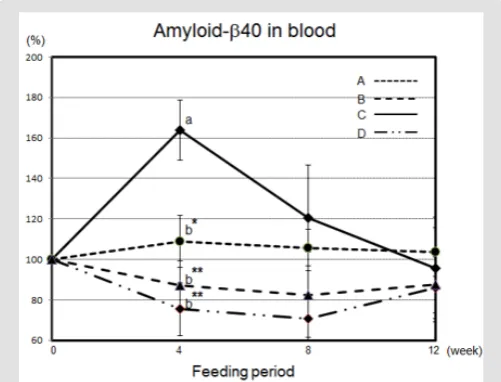
Figure 5: Change in blood amyloid β40 in mice. A: Super-hard rice, B: SRBBB,
C: Control, D: Control + Ferulic acid
Animal Feeding Test: Multiple prevention of type-2 diabetes and Alzheimer’s disease by the rice products would be very important objective for us [8,10,15,16]. Therefore, we prepared super-hard rice bread blended with black rice bran (SRBBB),
which showed strong inhibitory activities against β-secretase
and acetylcholinesterase and contained high amount of resistant starch even after heating [41]. Black rice bran showed greater
β-secretase inhibitory activity (3.6-fold) than Koshihikari rice [41].
The bran contained more oleic acid and anthocyanin, meaning that it is potentially a bio-functional food with a high antioxidant capacity. Furthermore, aged mice, which were fed a SRBBB diet
for 4 weeks, showed lower amyloid β 40 peptide in the blood than
mice fed a commercial diet (p < 0.01) [41] (Figure 5). Additionally, their initial blood glucose levels after 12 weeks of being fed SRBBB
were significantly lower than those in the control group. Taken
together, our results indicate that SRBBB seems to be promising for
inhibiting not only amyloid β production but also abrupt increases
in post prandial BGL.
Human Intervention Test (Single-Dose Test): It seemed to be necessary to conduct a human intervention test of the promising rice product in terms of inhibitory activity against the increase of
BGL and amyloid β peptide production[42] to prove the probability
to prevent type-2 diabetes and Alzheimer’s disease. Therefore, we prepared heat moisture treatment cooked brown rice (HMT), and high-pressure treatment cooked brown rice (HPT), which contained higher amounts of resistant starch, antioxidant capacity,
and β-secretase inhibitory activity than cooked ordinary white
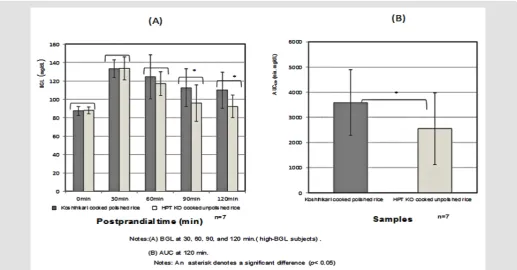
rice (Table 1). A randomized, single-blind, crossover-designed study was conducted using 15 subjects with a normal BGL. It was reported that GI varies depending on the subjects (e.g., young men and women [43]), so we divided the 15 subjects into two groups; a high BGL subclass (seven subjects) and a low BGL subclass (eight subjects). BGL at 90, and 120 min after eating cooked HPT KO
unpolished rice for 15 subjects showed a significantly lower BGL
compared with that after eating cooked Koshihikari polished rice (p < 0.05). As shown in Figure 6(A), BGL at 90 min and 120 min after eating cooked HPT KO unpolished rice for high BGL subjects
(n=7) showed a significantly lower BGL compared with that after
eating cooked Koshihikari polished rice (p < 0.05) [44]. Figure
6(B) also shows that AUC was significantly lower compared with
cooked Koshihikari white rice 120 min after eating (p < 0.05) [40]
(Figure 6). Furthermore, the increase in the amyloid β40 peptide
Figure 6: Change in BGL and IAUC120 in subjects with a high initial BGL after eating cooked unpolished rice HPT KO. Note: (A) BGL at 30,60,90 and 120 min.(high-BGL subjects). (B) AUC at 120 min.
Note: An asterisk denotes a significant difference (p< 0.05)
Table 1: Bio-functional properties of raw rice and cooked samples. Glucose
content
(g/100g) SD
Resistant starch
(%) SD Polyphenol content(GAEmg/100gFW) SD
KO Steilked Cooked
pol-ished rice 0.004 a 0.001 0.67 a 0.05 4.83 a 0.00
HPT KO cooked unpolished
rice 0.080 b 0 1.19 b 0.06 11.58 b 0.03
Koshilicari polished rice 0.184 a 0.01 0.52 a 0.01 8.04 a 0.1
Koshnkan unpolished rice 0.160 b 0.01 0.65 b 0.01 10.61 b 0.21
Okunomurasaki
unpol-ished rice 0.160 b 0.010 0.89 c 0.01 17.12 c 0.47
L- ORAC μmol
TE/100gFW SD μmol TE/100gFWH-ORAC SD
β- Secretase inhibition rate
(0.27 μg-eq/μL) SD Kos/tinker’ cooked
pol-ished rice 0.37 a 0.00 6.30 a 0.85 - a 0.00
HPT KO cooked unpolished
rice 4.60 b 0.01 75.50 b 1.16 12.0 b 3.4
Koshilikan polished nee 2.90 a 0.1 31.50 a 1.20 - a 0.0
Koshtiran unpolished rice 4.40 b 0.2 41.60 b 3.10 14.0 b 0.0
Okunorrorasab unpolished
rice 5.30 c 0.1 285. 80 c 7.80 29.0 c 0.0
Note: HPT, high-pressure treatment; KO unpolished rice, blend Koshihikari and Okunomurasaki (6:4) unpolished rice. Significant difference (p<0.05) among the two cooked rice and the three raw rice is shown by a, b, and c.
Summary
Diabetes and dementia are life-style related diseases, and patients have been increased all over the world. Rice is a staple food for Japanese and they eat rice at least once or twice every
developed in Japan. We tried to prevent diabetes using the high-amylose rice cultivars. It was shown that the postprandial BGL of high-amylose rice was lower than that of ordinary rice. It was shown that not only high-amylose rice but also pre-germinated giant-embryo rice have the effects to lower the postprandial BGL and to lower the blood pressure compared with the ordinary rice “Super hard rice”, of which starch contains long-chain amylopectin, was developed in Kyushu University and we showed its characteristics by the cooperative research. It was very hard after cooking, and rich in resistant starch. “Super hard rice” lowered postprandial BGL not only as cooked rice grains but also as rice noodle and rice bread.
High pressure treatment was introduced to food processing by Hayashi in 1980’s. We showed that the super rice becomes softer and sticker by the high-pressure treatment preserving high amount of resistant starch. We prepared super-hard rice bread blended with 5% of black rice bran (SRBBB), which contained a high amount of resistant starch that showed strong inhibitory activities
against β-secretase after heating. Aged mice, which were fed SRBBB diet for 4 weeks, showed lower amyloid β 40 in the blood than the
control. We investigated the effects of the blend of ordinary brown rice, super-hard rice, and black rice (2:4:4, w/w) cooked after a high-pressure treatment (HPT KO). A randomized, single-blind, crossover-designed study was conducted using 15 subjects with a normal BGL, and BGLs at 90 and 120 min after ingesting the cooked
HPT KO were significantly lower than that for cooked ordinary
polished rice (p < 0.05). Furthermore, postprandial blood amyloid
β40 did not increased markedly compared with the control.
References
1. (2016) World Health Organization. Executive summary. Global report on diabetes p. 6-9.
2. (2016) NCD Risk Factor Collaboration (NCD-RisC), Worldwide trends in diabetes since 1980: a pooled analysis of 751 population-based studies with 4.4 million participants. Lancet 387: 1513-1530.
3. Nantel G (2003) Glycemic carbohydrate, an international perspective. Nutr. Rev 61: S34-S39.
4. Jenkins DJ, Wolever TM, Taylor RH, Barker H, Fielden H, et al. (1981) Glycemic index of foods: a physiological basis for carbohydrate exchange. Am J Clin Nutr 34(3): 362-366.
5. Venn BJ, Green TJ (2007) Glycemic index and glycemic load: measurement issues and their effect on diet-disease relationship. Eur J Clin Nutr 61(1): S122-S131.
6. Jenkins DJ, Kendall CW, Augustin LS, Franceschi S, Hamidi M, et al. (2002) Glycemic index: overview of implications in health and disease. Am J Clin Nutr 76(1): 266-273.
7. Rissman RA, Trojanowski JQ, Shaw LM (2012) Longitudinal plasma amyloid beta as a biomarker of Alzheimer’s disease. J Neural Transm 119(7): 843-850.
8. Ohara T, Doi Y, Ninomiya T, Hirakawa Y, Hata J, et al. (2011) Glucose tolerance status and risk of dementia in the community: the Hisayama Study. Neurology 77(12): 1126-1134.
9. Biessels GJ, Staekenborg S, Brunner E, Brayne C, Scheltens P, et al. (2006) Risk of dementia in diabetes mellitus: a systematic review. Brain Stimulation 5(1): 64-74.
10. Kasuga K, Kaneko H, Nishizawa M, Onodera O, Ikeuchi T, et al. (2007)
Generation of intracellular domain of insulin receptor tyrosine kinase by gammasecretase. Biochem Biophys Res Commun 360(1): 90-96. 11. Mandal PK, Kansara K, Dabas A (2017) The GABA-working memory
relationship in Alzheimer’s disease. J. Alzheimers Dis. Rep 1(1): 43-45. 12. Kawamura K, Umemura T, Hotta N (2012) Cognitive impairment in
diabetic patients: Can diabetic control prevent cognitive decline? J Diabetes Investig 18: 413-423.
13. Tokutake T, Kasuga K, Yajima R, Sekine Y, Tezuka T, et al. (2012) Hyperphosphorylation of tau induced by naturally secreted amyloid-β
at nanomolar concentrations is modulated by insulin-dependent Akt-GSK3β signaling pathway. J Biol Chem 287: 35222-35233.
14. Yang CZ, Shu XL, Zhang LL, Wang XY, Zhao HJ, et al. (2006) Starch properties of mutant rice high in resistant starch. J Agric Food Chem 54(2): 523-528.
15. Goddard M, Yong G, Marcus R (1984) The effect of amylose content on insulin and glucose responses to ingested rice. Am J Clin Nutr 39(3): 388-392.
16. Kang HJ, Wang IKH, Kim KS (2003) Comparative structure and physicochemical properties of Ilpumbyeo, a high-quality Japonica rice, and its mutant, Suwon 464. J Agric Food Chem 51: 6598-6603.
17. Kimura T (2010) Development of mulberry leaf product with α- glucosidase Inhibitor for the Prevention of Type 2 Diabetes Mellitus. Nippon Shokuhin Kagaku Kogaku Kaishi 57(2): 57-62.
18. Taniguchi H, Hashimoto H, Hosoda A (2012) Functionality of compounds contained in rice bran and their improvement. Nippon Shokuhin Kagaku Kogaku Kaishi 59(7): 301-318.
19. Plat J, Mensink RP (2005) Plant stanol and sterol esters in the control of blood cholesterol levels: mechanism and safety aspects. Am J Cardiol 96(1): 15-22.
20. Ha TY, Han S, Kim SR, In Hwan Kim, Hyun Yu Lee, et al. (2005) Bioactive components in rice bran oil improve lipid profiles in rats fed a high-cholesterol diet. Nutr Res 25(6): 597-606.
21. You Y, Park J, Yoon HG, Lee YH, Hwang K, et al. (2009) Stimulatory effects of ferulic acid on endurance exercise capacity in mice. Biosci Biotechnol Biochem 73(6): 1392-1397.
22. Kozuka C, Yabiku K, Sunagawa S, Ueda R, Taira S, et al. (2012) Brown rice and its component, γ Oryzanol, attenuate the preference for high-fat diet by decreasing hypothalamic endoplasmic reticulum stress in mice. Diabetes 61(12): 3084-3093.
23. Matsuoka K (2011) Study on mechanism of inhibitive cholesterol absorption by plant sterol/stanols. Jpn Oil Chem Soc 11(4): 119-125. 24. Yamauchi A (2012) Dietary fermented brown rice attenuates the level of
blood sugar and minimizes insulin secretion in rats. J Jpn Soc Nutr Food Sci 65(6): 271-276.
25. Abe T, Taniguchi M (2014) Identification of myo-inositol hexakisphosphate(IP6) as a β-secretase 1(BACE1) inhibitory molecule in rice grain extract and digest. FEBS Open Bio 4: 162-167.
26. Sutharut J, Sudarat J (2012) Total anthocyanin content and antioxidant activity of germinated colored rice. Int Food Res J 19: 215-221.
27. Ling WH, Cheng QX, Ma J (2001) Red and black rice decrease atherosclerotic plaque formation and increase antioxidant status in rabbits. J Nutr 131(5): 1421-1426.
28. Hayashi R, Hayashida A (1989) Increased amylase digestibility of pressure-treated starch. Agric. Biol. Chem 53(9): 2543-2544.
29. Hayashi R (1989) Application of high pressure to food processing and preservation: philosophy and development. Eng Food 2(1): 815-826. 30. Yamakura M, Haraguchi K, Okadome H, Suzuki K, Thi Tran U, et al. (2005)
31. Iso H (2010) Lifestyle and cardiovascular disease in Japan. J Atheroscler Thromb 18(2): 83-88.
32. Sofi F, Macchi C, Abbate R, Gensini GF, Casini A, et al. (2010) Effectiveness of the Mediterranean diet: can it help delay or prevent Alzheimer’s disease? J Alzheimers Dis 20(3): 795-801.
33. Nakamura S, Suzuki K, Ohtsubo K (2009) Characteristics of bread prepared from wheat flour blended with various kinds of newly developed rice flours. J Food Sci 74(3): 121-130.
34. Ohtsubo K, Nakamura S, Utsunomiya K, Masuda Y, Tsuji K, et al. (2010) Prevention of diabetes by hard rice. -Trial for commercialization- Shokuhinkogyo 53(14): 46-51.
35. Nishi A, Nakamura Y, Tanaka N (2001) Biochemical and genetic analysis of the effects of amylase-extender mutation in rice endosperm. Plant Physiol 127(2): 459-472.
36. Ohtsubo K, Nakamura S, Maeda S (2016) Possibility of diabetes prevention by high-amylose rice and super-hard rice. J Diabetes Obesity 3: 1-8.
37. Nakamura S, Satoh H, Ohtsubo K (2011) Characteristics of pregelatinized ae mutant rice flours prepared by boiling after preroasting. J Agric Food Chem 59(19): 10665-10676.
38. Nakamura S, Satoh H, Ohtsubo K (2010) Palatable and bio-functional wheat/rice products developed from pre-germinated brown rice of super-hard rice, EM10. Biosci Biotechnol Biochem 74(6): 1164-1172.
39. Nakamura S, Ohtsubo K (2015) Improvement of palatability and inhibition of abrupt increase in postprandial blood glucose level by the boiled rice after soaking with functional food ingredients. J Appl Glycosci 62(2): 53-63.
40. Maeda S, Kazama Y, Kobayashi A, Akira Yamazaki, Sumiko Nakamura, et al. (2015) Improvement of palatability and prevention of abrupt increases in postprandial blood glucose level by Hokurikukona243 after high pressure treatment. J Appl Glycosci 62:127-134.
41. Nakamura S, Hara T, Yamazaki A, Atsushi Kobayashi, Satoshi Maeda, et al. (2018) Trial for the development of biofunctional foods to prevent diabetes and dementia using a high-pressure treatment. J Diabetes Obesity 5:22-30.
42. Nakamura S, Hara T, Joh T, Kobayashi A, Yamazaki A, et al. (2017) Effects of super-hard rice blended with black rice bran on amyloid β peptide production and abrupt increase in postprandial blood glucose levels in mice. Biosci Biotechnol Biochem 81(2): 323-334.
43. Nakamura A, Kaneko N, Villemagne VL, Kato T, Doecke J, et al. (2018) High-performance plasma amyloid-β biomarkers for Alzheimer’s disease. Nature 554(7691): 249-254.
44. Ishii Y, Shimizu F, Ogawa M, Takao M, A Takada A, et al. (2016) Gender differences in foods uptakes, glycemic index, BMI, and various plasma parameters between young men and women in Japan. Integr Food Nutr Metab 3: 427-430.
Submission Link: https://biomedres.us/submit-manuscript.php
Assets of Publishing with us
• Global archiving of articles
• Immediate, unrestricted online access • Rigorous Peer Review Process • Authors Retain Copyrights • Unique DOI for all articles
https://biomedres.us/
This work is licensed under Creative Commons Attribution 4.0 License ISSN: 2574-1241