The Pavagarh rhyolite
P. O. ALEXANDER
Department of AQQlied Geology, University of Saugar, Sagar 470003, M.P. Abstract
Initial strontium isotopic ratio for the Pavagarh rhyolite is reported. The ratio, 0.7111 is of the same order of magnitude as generally met for rhyolites of continental region. Compared to rhyolites that can truly be called derivates of magmatic differ-entiation of tholeiitic magma only, this ratio is considerably higher. IncompatibH: elements like Ba, Sr, Zr, Rb, Pb. Nb and Yare similarly enriched in the Pavagarl1 rhyo-lite. The data jndicate that rhyolite of Pavagarh could not have originated as a result of closed-system magmatic differentiation of basaltic magma alone and significant incorpo-ration of sialic material into the magma is suggested for its derivation.
'Introduction
Throughout the monotonous tholeiitic Deccan terrain, Pavagarh hill situated on 1he western margin of the Deccan province is one notable exception where magmatic -differentiation can be said to have been well demonstrated. Here, one fiods diverse basalt types in close association with intermediate and even acidic rocks. Diversity -of rock types and geologically conspicuous nature of the area has led to a very detailed geological, petrological, petrochemical and geochemical work on the Pavagarh suite--of rocks (Fermor, 1906; Chatterjee, 1961,1964; Sharma, 1963; Subba Rao, 1971; Sinha and Tiwari, 1964). Magmatic differentiation is supposed to be the main cause for the diversity of volcanic assemblages, particularly in the development of fairly -e~tem.lve rhyolitic fractions. the ptesent tese:aycn note specifically deah on\'j with rhyolite. In the light of some important incompatible trace element and initial strontium isotopic ratio of the Pavagarh rhyolite, it can be said that in the derivation. -of acidic fractions, magmatic differentiation could not have been the only process.
Analytical data
In Table I, major element, CIPW norms and trace element data for the lower Pavagarh rhyolite is reported. The rock is dark purplish-pink with prominent flow banding. Thin section reveals it to be very fine grained, porphyritic, with phenocrysts -of feldspars (sanidine) and quartz. In the cryptocrystalline ground mass, iron -oxide and some secondary minerals are abundant. For comparison, geochemical data for the associated olivine basalt and oceanite flow is also reported. All the major oxides (except ferrous iron) and trace elements were determined by X.R.F., using Philips Automatic Spectrometer 1212. Initial strontium isotopic data for the rhyolite is given in Table II. Strontium isotopic analysis was carried out on a modified AEI MS5 mass spectrometer with 30° sector analyser tube and Faraday collector. The rock sample was brought into solution by the usual HF-HCI04 fusion, followed by
T ABLE I. Major element, CIPW norms and Trace element data for Lower Pavagarh
Rhyolite and Basalts
Si02 Ti02
AI20j
Fe203 FeO MnO MgO CaO Na20 K20 P20S H20
+
Lower Rhyolite 72.29 0.30 12.49 0.73 2.49 0.07 0.14 0.72 3.93 4.83 0.06 1.51 Trace elements (ppm) Ba
eu
Cr Co Nb Ni Pb Rb Sr y Zn Zr 1123 n.d. 4 3 83 1 30 187 112 92 67 660 c.I.P.W. NormsQz 27.96
Or Ab An Di Hy 01 Mt II Ap 28.49 33.35 2.21 0.86 3.52 1.06 0.57 0.14 Olivine Basalt 47.51 1. 76 9.65 3.89 7.85 0.19 13.85 11.02 1.59 0.75 0.22 1.85 260 85 1150 35 30 450 4 22 250 25 72 120 4.49 13.20 17.58 29.71 12.99 10.98 5.48 3.25 0.50 Oceanite 44.61 1.68 10.43 0.73 8.45 0.17 18.54 8.80 1.77 0.50 0.30 1.25 215 95 1750 40 27 460 3 21 280 24 85 113 2.06 14.08 18.50 18.41 3.13 30.95 5.73 3.23 0.71 Discussion
It is certain that some degree of magmatic differentiation of the parent basaltic magma at Pavagarh must have significantly contributed towards the development of diverse volcanic assem-blages, particularly the acidic fractions. Detailed petrological and geochemical work have successfully tried to establish this fact (Sharma, 1963; Tiwari, 197 I). However, for the development of con-siderable rhyolitic fractions, amounting to a total thickness of about 35 metres, it is doubtful if the process took place in a closed system. Even the limited trace element data of Table I points out that there is significant enrichment of incompatible elements in rhyolite rela-tive to olivine basalt and oceanite. For example, Ba, Rb and Zr are enriched by a factor of 5, 6 and 9 respectively in comparison to olivine basalt. Such an enrichment of incompatible elements is expected as a result of magmatic differ-entiation. However, the same result can also be achieved by the incorpora-tion of concerned elements into the basaltic magma through sialic crustal material. Alternatively, both these pro-cesses can be responsible for the observ-ed acid derivates in close association with the basic ones.
Strontium isotopic evidence, how-ever, has an edge over the conventional petrological and geochemical evidences for petrogenetic problems of volcanic assemblages. The higher RbjSr ratio of the crust (about 0.25) relative to that of the mantle (about 0.07) has eventu-ally enriched the former in 87Sr. The continental crust therefore has an esti-mated 87Sr/86S r ratio of 0.720 (Faure and Hurley, 1963). Whereas the rocks derived directly from the mantle, with-out the incorporation of crustal material, have an initial 87Srj86Sr ratio of about
corres-455
pondinglyhigher 87Sr/86Sr ratios. This basic principle has successfully been applied to many petrogenetic problems (Faure and Powell, 1972; Moorbath and Bell, 1965; Moorbath and Walker, 1965; Alexander and Paul, 1977).
Sample
OA/P-4
TABLE II. Rb, Sr and 87Srj86Sr ratio of Pavagarh Rhyolite Rock-type
Rhyolite
Rb ppm 187
Sr ppm 112
RbjSr
1.669
87Sr/86Sr
(Measured) 0.7150
87Sr/86Sr (Initial) 0.7111
- -- - ---~
Assumed age 61 m.y. for Rhyolite (Wellman and McElhinny, 1970)
The reported strontium isotopic ratio for the Pa vagarh rhyolite, 0.7111, is of tbe same order of magnitude as that generally met with among rhyolites from the conti-nental regions. For example, 87Sr/86Sr ratio of rhyolites from Tucson, Arizona and Tascotal Meas, Texas range from 0.7091 to 0.7170 (Hedge, 1966). Higher initial strontium isotopi.c ratios for these rhyolites in contrast to associated basalts (0.7022 to 0.7048) has been attributed to the contamination of the basaltic magma with sialic material. It can be said that the reported 87Sr/86Sr of 0.7111 for the Pavagarh rhyo-lite is considerably higher than those Deccan basalts which can be said to be free from sialic contamination on the basis of strontium isotopic studies. This ratio varies from 0.7039 to 0.7068 for basalts of Sagar, Girnar and Dhandhuka (Alexander and Paul, 1977; Murali, 1974; Alexander, 1977). Murali (1974) has also reported the initial strontium isotopic ratio for basalts and acid variants of Pavagarh. This varies from 0.7044 (basalts) to 0.7155 for acid variants. Thus, it can be said that Sr isotopic ratio for the primary uncontaminated mantle source which gave rise to the Pavagarh basalts and the Deccan basalts was of the order of 0.704.
If magmatic differentiation of basaltic magma was the only cause for the deri-vation of chemically diverse rock-types at Pavagarh, their strontium isotopic ratios should have also remained more or less similar to basalts, regardless of their petro-logical and chemical composition. This, however, is not the case and the rhyolite with a ratio of 0.7111 is considerably higher than the associated basalts. This beyond doubt proves that radiogenic strontium was introduced into the basaltic magma due to interaction with sialic crust, perhaps towards the end stages of volcanic activity. Such a proposition is considered likely for a magma rising through a thick sialic crust, a situation very likely to have occurred at Pavagarh. To test the validity of such a statement, if one examines the strontium isotopic composition of associated basic and acid rocks over an oceanic environment lacking a sialic layer, one should expect that Sr isotopic ratios for basalts and rhyolites should not differ significantly. If this be the case, such a diversity of volcanic rocks can truly be ascribed solely to magmatic differentiation. One finds such an example for the volcanic rocks of Iceland. The majority of these basalts are silica oversaturated types with considerable quantities of rhyolites and other acid derivates at local eruptive centres (Carmichael et al., 1974). In spite of pronounced chemical variation, Moorbath and Walker (1965) did not find significant variations in initial strontium isotopic ratios between basic and acid rocks. In their study, basaltic rocks have a mean 87Sr/ 865r ratio of 0.7024 in comparison to 0.7016 for rhyolites and other acid derivates. This has led them to believe that rhyo-lites and basalts have ultimately been derived from the same source region, and also proving absence of sialic crust beneath Iceland.· Even in active volcanic arcs and continental margins, initial strontium isotopic ratios for cogenetic series, not
RESEARCH NOTES
ving.crustal contamination, do not show significant variation. For example average 878r/868r ratio for basalts, andesites and rhyolites from active arcs and continental margins have the following values-0.7040 (basalts), 0.7040 (andesites) and 0.7038 (rhyolites) respectively, (Carmichael et al., 1974). Thus for derivation of rhyolites and other acid derivatives at Pavagrh there is clear contribution from sialic crustal material.
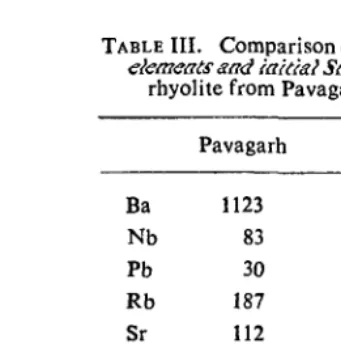
TABLE III. Comparison of incompatible trace
demeats "ad iaid"l Se isoto(l(C d"t" foe
rhyolite from Pavagarh and Iceland Pavagarh Iceland
*
Ba 1123 1000 (ppm)
Nb 83 25
Pb 30 8.6
Rb 187 130
Sr 112 90
Y 92 70
Zr 660 385
87Sr/86Sr 0.7111 0.7016
*
Trace element data from Carmichael et al.,1974; Strontium isotopic ratio data from Moorbath and Walker, 1965
Table III compares the incompatible trace element geochemistry and strontium isotopic ratios fOt rhyolites of Pavagarh and Iceland. If significant enrichment in 878r/868r ratio of the former is due to the contamination from sialic material, it is expected that oth~r incompatible elem~nts should also be considerably enriched in the Pavagarh rhyolite. The data proves that Pavagarh rhyolite in comparison to Iceland rhyolite is indeed enriched in Ba, Nb, Pb, Rb, 8r, Y and Zr. These elements like radiogenic strontium must have been introduced into the basaltic magma due to inter-action with sialic material. To conclude, it can be said that derivation of Pavagarh rhyolite and other acid derivates was not only due to magmatic differentiation but .rigl.'fi\w<Mt CL~~wt&~ contamination also was aa important factor. Paucity of geo-chemical and strOntium isotopic data for the Deccan basalts, associated acid derivates and the basement sialic rocks forbids to make suggestion as to the degree and mecha-nism of crustal CCllltamination.
Acknowledgements:
The author is grateful to' Prof. W. D. West for kindly providing the PaYagarh samples. The work was carried out at the Department of Earth Sciences, the University of Leeds while on a Commonwealth Academic Staff Scholarship for which the author is thankful. For strontium isotopic work the author is grateful to Dr. E. Oegazi.References
ALEXANDER, P.O., (1977) 'Geochemistry and geochronology of the Deccan trap lava flows around Sagar, M.P., India' unpublished Ph.D. thesis, University of Saugar.
ALEXANDER, P. O. and PAUL, D. K., (1977) Geochemistry and strontium isotopic composition of basalts from the eastern Deccan volcanic province, India. Mineral. Mag., v. 41, pp. 165·172.
CARMICHAEL, I. E. S., TURNER, F.l. and VERHOOGEN, J. W., (1974) Igneous Petrology, McGraw Hill, New York.
CHATTERJEE, S. C .. (1961) Petrology of the lavas of Pavagarh Hill, Gujerat. Jour. Geol. Soc. India, v. 2, pp. 61-77.
- - (1964) Petrochemistry of the lavas of Pavagarh Hill, Gujerat. Advancing Frontiers in Geology and Geophysics, pp. 3%5-397.
FAURE, G. and HURLEY, P. M., (1963) The isotopic composition of strontium in oceanic and contmental basalts: application to the origin of igneous rocks. Jour. Petrol., v. 4, pp. 31·50. FAURE, G. and POWELL, J. L., (1972) Strontium Isotope Geology, Springer-Verlag, Berlin. FERMOR, L. L., (1906) On the lavas of Pavagadh Hill. Rec. Geol. SlIfV. India, v. 34, pp. 148-166. HEDGE, C. E., (1966) Variations in radiogenic strontium found in volcanic rocks. JOllr. Geophys.
Res .. v. 71, pp. 6119-6126.
MOOR BATH, S. and BELL, J. D., (1965) Strontium isotope abundance studies and rubidium-strontium age determinations of Tertiary Igneous rocks from the Isle of Skye, North west Scotland. JOllr. Petrol., v. 6, pp. 37-66.
MOORBATH, S. and WALKER, G. P. L., (1965) Strontium isotopic investigation of the igneous rocks from Iceland. Nature, v. 207, pp. 837-840.
MURALI, A. V., (1974) , Some aspects of the geochemistry of the Girnar igneous complex, Deccan volcanic province, India', Unpublished Ph.D. thesis, University 0/ Saugar.
SHARMA, C. V., (1963) 'The petrology and structure of the Deccan trap flows of Pavagarh Hill, Gujerat (India) '. Unpublished Ph. D. thesis, University 0/ Saugar.
SINHA, R. C. and TIWARI, B. D., (1964) Geochemistry of the volcanic rocks ofPavagarh. Proc. Int. Geol. Cong.,
Pt.
VII, pp. 104-125.SUBBA RAO, S., (1971) Petrogenesis of Acid rocks of the Deccan traps. Bull. Volcanology, v. 35, pp. 983-997.
TIWARI, B. D., (1970 Magmatic differentiation of the volcanics at Pavagarh, Gujerat, India. Bull. Volcartology, v. 35, pp. 1130-1177.
WELLMAN, P. and McELHINNY, M. W., (1970) K-Ar age of the Deccan traps, India. Nature,
v. 227, pp. 595-596.
( Received: May II, 1979: Revised/ orm accepted: Aug, 21, 1979)