DOI: http://dx.doi.org/10.26483/ijarcs.v9i2.5658
Volume 9, No. 2, March-April 2018
International Journal of Advanced Research in Computer Science RESEARCH PAPER
Available Online at www.ijarcs.info
ISSN No. 0976-5697
CONTRIBUTION OF GREEN COMPUTING TOWARDS IT FOR PROVIDING
SUSTAINABLE ENVIRONMENT
Aabidah Nazir
Department of Computer ScienceSEST, Jamia Hamdard New Delhi, India
Insha Majeed
Department of Computer ScienceSEST, Jamia Hamdard New Delhi, India
Roshan Birjais
Department of Computer Science SEST, Jamia Hamdard
New Delhi, India
Abstract: Information technology has tremendously influenced the world in almost every field be it business, education, defence,
medical science and many more. In the last two decades researchers and business people are more focused on how we can use Information Technology for creating various advantages for a firm. It has been seen that cost of power utilized by the Information Technology departments is approximately 50% of the overall organizations’ cost but with Green Information Technology it is expected that it should decrease the cost and its effect on the environment. The idea of Green Computing is the contemporary style that is increasing high regard. The primary theme of concern in green computing is to decrease the ecological effect of industrial processes along with the development in population bringing about imaginative advancements. Green Computing is an applicable approach that an IT department can use to add to the key and strategic corporate objectives. In this paper we have considered the impact of Information Technology on environment affecting the humans directly or indirectly. This paper also gives the background work on Green Computing and contribution of Green Information Technology to make environment more sustainable and free from hazardous materials.
Keywords: Green Computing, Green IT, Virtualization, IT.
I. INTRODUCTION
In today’s era, the use of computing (computer technology) is increasing and thus gaining popularity day by day. Each and every individual is directly or indirectly dependent on computing, which involves computer hardware and software. The use of computer technology has helped in various sectors like education, healthcare, business, defense, etc. but its excessive use affects the environment.
From manufacturing to widespread use of technology, the computers badly affect the environment in the following ways:
• It consumes large amount of energy like electricity that is used for running computers.
• By producing and using technology, various types of pollution like Air, Water, Heat and Noise can all be caused.
• It can cause various health hazards by using toxic materials for manufacturing the computers. These materials can harm our health by causing various diseases like cancer, tumor, etc.
• Computers emit carbon dioxide and carbon
monoxide which are greenhouse gases. These gases are trapped in the atmosphere which in turn reflects heat and radiation leading to global warming.
In-order to overcome problems being faced by the increase in technology to our environment, the concept of Green
Technology or Green Computing or Green IT emerged.
Green Technology involves implementation of energy-efficient computers, CPU, servers and other peripherals so that the consumption of resources can be reduced.
It concentrates on reducing the environmental influence of industrial processes and new technologies caused by growing population. In Green Technology, there is a need of providing such goals that do not damage natural resources, i.e., creating fully recyclable products, proposing in various fields-the alternative
technologies, minimizing pollution and generating economic activity around technologies that benefits the environment.
II. LITERATURESURVEY
infrastructure do not have any significant effect on competitive advantage but IT business expertise and relationship infrastructure do have. Thus we can say business can survive even if big infrastructure is not available. In fact, in order to decrease the effect of the surplus machines minimum infrastructure should be used. Showing the motivations that an organization should have towards the adoption of Green Informational Technology is well explained in [2]. Motivational theory is applied on the data collected from a survey of 176 organizations and the results shows that the eco-efficiency and eco-effectiveness motives impact the adoption of:
i. Technologies that reduce IT emission and enhances the energy efficiency of IT infrastructure.
ii. Such systems that reduce travel and travel related emissions.
iii. Such rules and practices that give rise to the product supervising with focus on IT lifecycle from beginning to the end.
This paper also shows that the sense of responsibility for environment predicts Green Information Technologies rules and Information Technology for Green technology, reduced cost, and conservation of energy are main reasons for Green Information Technology. The pressure of market forces will result in the main reason for the outcome of the green practices to rise. When we talk of green computing we think of just the IT vendors and businesses but Green Information Technology also includes the behavior and responsibilities of the Information Technology users.[3]explains the belief and behavior of Information Technology users in the Green Information Technology. Based on the theory of Reasoned Action and Theory of Planned Behavior, the paper firstly explains that it’s the attitude towards Green Information Technology which is considered as the main reason behind the intentions of the Information Technology users to practice Green Information Technology and secondly, the understood behavior control towards the Green Information Technology has most impact on the Information Technology users. Business sustainability , firm innovations and of course Informational Technology has valuable relationship between them and worth to research on but very least research has been done so far on this. The paper on Information Technology-Enabled Innovativeness and Green Capabilities[4] has analyzed the relationship between two types of Information Technology resources, companies Green management capabilities and innovations. The two types of Information Technology resources as mentioned by the authors are technological Information Technology and human Information Technology resources. The data is obtained from various Spanish firms and the study of this data resulted in the following outcomes:
i. The core capability is the innovativeness that helps the firm to develop green management capabilities. ii. The development of innovative environment is
directly influenced by the deployment of technological Information Technology and human Information Technology.
iii. Information Technology impacts on green
managing capabilities via the innovative capabilities.
Prior we have seen in the papers that Informational Technology can play important role towards greener growth and sustainable business but very less research shows the adoption and efficiency of Green Information Technology in the business at firm level. The study made by [5] investigates the factors that influence the implementation in actual and consequences of implemented Green Information Technology in terms of energy conservation and profit. This study is based on the survey done in India of 293 firms and it is found that the top management commitment has great impact on the importance of Green Information Technology. The implication of Green Information Technology is highly associated with reductions in IT equipment energy consumption and higher profit impact. Another paper by [6] investigates the various components that has impacted the business companies in assessing the value of Green Information Technology. The authors have also proposed a model to show the relationship among various components and their impacts over Green Information Technology. This model can be used by the Information Technology companies to attain the goal of environmental sustainability. Environmental issues need should be priority not only at the end of the product lifecycle but throughout the Information Technology system lifecycle as very well addressed by [7] in his paper. The author has also mentioned that only by recycling the printing supplies and outdated hardware items is not enough for the increasing environmental impact of Information Technology. Environmental issues should be taken care throughout the lifecycle of information system which includes the practices regarding the hardware, software and users. The authors of this paper has come up with the revised system development lifecycle that considers environmental issues at every stage of the lifecycle and also proposes additional disposal stage as a formal, final stage in the life cycle. Increasing environmental issues and potential actions are also discussed. In [8] the idea of small cells during the operation of cellular network which in 20th century can be viewed as macro or micro cells but are now Pico cells for coverage and local capacity extension can highly increase the capacity of cellular networks. These small cell networks have potential to realize energy savings. Also the dense deployment of these cells can be more energy efficient than the traditional architecture. It has been seen that cost of power utilized by the Information Technology departments is approximately 50% of the overall organizations’ cost but with Green Information Technology it is expected that it should decrease the cost and its effect on the environment and [9] focus on sustainable Information Technology is important issues and identifies the set of principles to guide sustainable design.
III. METHODOLOGY
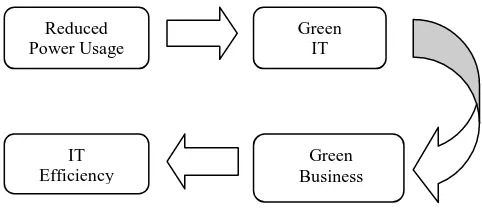
Figure 1: Green IT model to attain better IT efficiency.
Starting from the base level, green IT can be applied to the machines used by the employees in any firm and ensuring that all the machines around him goes power done when he is not using them. It’s important to not leave even one machine power on because it has been estimated that even a single desktop uses about 600kWh when used for eight hour continuously and discharges about 175 kg of CO2 per year. Virtualization also plays an important role to attain Green It motives. Using new technology which use the least power usage and has the feature of instant sleep mode can also be used to reduce the hazards of IT. With all these changes we can move a step ahead from IT to green IT. Business nowadays is completely dependent on IT and taking the above mentioned measures into implementation can help us to make businesses more sustainable and greener.
A. Green Computing
Green Computing is the tagline of current era. It is the emerging practice of how to use the computing and information technology resources in a more efficient manner while improving the overall performance. It aims to attain economic feasibility and eco-friendly use of computers and their resources.
In other terms, Green Computing is also defined as the study of designing, manufacturing, engineering using and fixing of computing devices in a way that reduces their environmental impact [10]
The objective of green computing is to minimize the use of hazardous material, maximize the energy efficiency, use of efficient cooling system, virtualization and recyclability of obsolete products and factory waste.
Green computing not only mitigate problems like pollution, producing e-wastes, maximizing greenhouse gases, but also employs additional benefits such as :
• Reduces energy consumption and thereby saving energy.
• Environmentally responsible and eco-friendly. • Reduces the harmful effects of computing and its
resources.
• Facilitates energy-efficient computing and
increases productivity.
• Enforce the concepts of Recycle and thus reducing the e-wastes.
Green computing has drawn its attention in business and industries too for the reason that the ideas of green computing can reduce the cost of computing and can also extend the lifespan of IT products because green computing is about using the computer and its related resources in an environmentally responsible way [11].
B. Green IT
Green IT (green information technology) is a trademark in the IT market. Green IT practices include the development of environmentally sustainable production practices, energy-efficient computers and improved disposal and recycling procedures [10].Its initiatives strive to encourage telecommuting, promote teleconferencing tools, use Software-as-a-Service, etc. The main idea of Green It is to ensure the minimum human impact on environment. Green IT is a collection of strategic and tactical initiatives that directly reduces the carbon footprint of an organization’s computing operation… However, Green IT is not just focused on reducing the impact of the ICT industry. It is also focused on using the services of ICT to help reduce the organization’s overall carbon footprint.[12]The goals of Green IT is the same as Green Computing, as they both belong to the same family of Green Technology. It helps to reduce energy consumption, cost of computing and augments the performance [11].
The components of Green IT include the redesign of data centers, green networking, increasing popularity of virtualization, and cloud computing.
1) Data Centers :
Data center is a warehouse for the storage, management and circulation of data where electrical and computer systems are designed for more energy efficiency and less environmental impact. Its design and operation are environmentally friendly. The facilities of data center are heavy consumers of energy, accounting between 1.1% and 1.5% of the world’s total energy use in 2010 [13].The data center designs which are energy efficient should address all of the energy use aspects included in a data center: from the IT equipment to the HVAC (Heating, ventilation and air conditioning) equipment to the actual location, configuration and construction of the building. [14]
2) Green Networking :
Green Networking refers to selecting of energy-efficient networking technologies and optimizes resource usage. It reduces energy, conserves bandwidth and indirectly reduces
cost. Its practices include- server consolidation,
virtualization, up gradation of older equipment’s and employing system management to maximize efficiency.
3) Virtualization:
Nowadays, the major trend in green computing is Virtualization. It’s the most powerful priority of Green IT. Virtualization is defined as hardware reducing, energy and cost saving technology that rapidly transforms the IT landscape. It allows multiple operating systems and multiple applications to execute/ run on a single computer. The software that makes this possible is called hypervisor, which lies on the computer hardware. To practice green computing, virtualization is the best technique used, especially for data centers. Virtualization can be applied to computing devices like Processor, Storage, Networking (Connection) and Memory (RAM).
Reduced Power Usage
Green IT
Green Business IT
The commonly used types of virtualization are:
a) Server Virtualization: - It is the partitioning of single physical server into small virtual servers so as to increase the utilization of servers. The resources of the server itself are masked from users and software like VMWare is used to divide the physical server into multiple, virtual environments. Server Virtualization saves around 60%-90% of energy, despite the fact that 90% virtualization is possible in theory; in practice only 60% is feasible [11]. The industries give priority to the server virtualization in order to reduce the hardware cost and for load balancing.
b) Desktop Virtualization: - It is used to separate
computer desktop environment from the physical computer. It virtualizes desktop computers and these virtual desktop environments are served to users on network. Its main advantage is that it lets us remotely login to access our desktop from any location. It also faces some disadvantages like High upfront cost and server sprawl.
c) Storage Virtualization: - It is the combination of multiple storage devices into one large storage device. It helps the administrator to perform the tasks of backup, archiving and recovery more easily, and in less time. The growth of the storage can be closely monitored and managed, thus making the upgrade planning easier.
4) Cloud Computing :
Cloud Computing refers to delivery of hosted services over internet. The hosted services may be SaaS (Software-as-a-Service), PaaS (Platform-as-a-(Software-as-a-Service), and IaaS (Infrastructure-as-a-service). Cloud computing when included in Green Computing addresses two major challenges – energy usage and resource consumption.
The large amount of carbon dioxide dispersion in atmosphere has created the necessity of Green Computing. Large number of computers generate large amount of heat which in turn requires more cooling and that cooling again generates heat. In order to decrease the energy consumption by these large number of computers, there is a need of getting the same computing speed that we can achieve with the help of Green Cloud Computing.
The techniques which are proposed to minimize the power consumption of cloud are [15]:
• By reducing CPU power dissipation. • By using advance clock gating. • By using split plane power.
• By using energy efficient processors. • By using renewable energy sources. • By using energy efficient storage. • By reducing cooling requirements.
IV. HISTORYOFGREENCOMPUTING
The vast deployment of IT has had unintentional side effects, such as carbon emissions, pollution, and increased
energy consumption in monitors, climate control equipment and other technologies. In 90’s, Environmental Protection Agency (EPA) brought a practice of awaring these effects and called it as “the greening of IT”. Thus, the concept of Green Computing started in 1992 when EPA launched its Energy Start Program. This program labeled electric products like air conditioners, monitors, television sets, refrigerators and other household appliances that decreased energy consumption while increasing efficiency. The first result of Green Computing was the adoption of “sleep mode” among consumer electronics. In 1997, the reduction of carbon emissions were mandated by United Nations’ Kyoto Protocol and manufactures were required to calculate the electricity used by computers [16]. In 2003, the use of specific toxic materials was restricted by the European Unions’ RoHS (Restriction of Hazardous Substances) in the manufacturing of electronic equipment’s [16]. Next, in October 2006, United States revised efficient-energy consumption for green computing by introducing the “Energy Star Program requirements for computers” and by passing it as a public law 109-431, they promote the use of energy-efficient computer servers [16]. Next, in 2007, a set of standards intended at maximizing the efficiency and life span of electronic products, while purchasing computer systems was issued by President George W. Bush in an executive order 13423[16].The program was later extended to include the criteria on energy consumption and use of hazardous material in construction.
V. EFFORTSFORGREENIT
The Widespread use of computers and related IT products has a very bad effect on the environment because they are not biodegradable and the parts are rarely recyclable [17].The use of IT is gaining a high level of popularity as it is the basic need in today’s era, but at the same time it is affecting the environment badly, so in order to balance between the two and making the healthy environment, the people and also the government are taking the following efforts:
1. An initiative for green computing was taken by a Taiwanese company known as VIA Technologies in 2001. This company manufactures CPU’S, motherboard chipsets, and other computer hardware. The solar cells fit VIA's power- efficient silicon, platform, and system technologies. The company developed fully solar-powered devices that are nonpolluting, silent, and highly reliable. The company established the first ever solar powered cyber community center in south pacific powered by solar technology [18].
2. The recycling service or recycling facilities was taken into consideration by HP’s Planet partners in order to recycle discarded computers. This minimizes the number of discarded computers on earth. Thus, reducing the hazardous materials and harmful emissions which are released in the environment [18].
4. The aim of reducing the large amount of toxic e-waste was initiated by WEEE (Waste Electrical and Electronic Equipment Directive), which sets the collection, recycling, and recovery targets for electrical goods [18].
5. The non-profit Green Electronics Council
promoted a tool known as Electronic Product Environmental Assessment Tool, which helps institutional purchasers to evaluate, compare and
[image:5.595.111.549.185.791.2]select monitors, desktop computers and notebooks based on environmental attributes by providing a clear and consistent set of performance criteria for designing and manufacturing the products. So, as to reduce the environmental impact of products, the manufactures take an effort by eliminating environmentally sensitive materials used for designing durability of products and also reduce packaging materials[18].
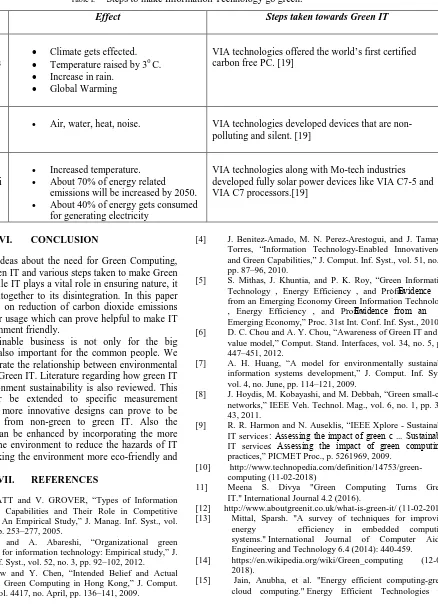
Table I. Steps to make Information Technology go green.
Sr. No.
Subject Effect Steps taken towards Green IT
1 Carbon
emissions
• Climate gets effected. • Temperature raised by 30 C. • Increase in rain.
• Global Warming
VIA technologies offered the world’s first certified carbon free PC. [19]
2 Pollution • Air, water, heat, noise. VIA technologies developed devices that are
non-polluting and silent. [19]
3 Energy
consumpti on
• Increased temperature. • About 70% of energy related
emissions will be increased by 2050. • About 40% of energy gets consumed
for generating electricity
VIA technologies along with Mo-tech industries developed fully solar power devices like VIA C7-5 and VIA C7 processors.[19]
VI. CONCLUSION
This paper gives ideas about the need for Green Computing, ways towards Green IT and various steps taken to make Green IT successful. While IT plays a vital role in ensuring nature, it also contributes altogether to its disintegration. In this paper main focus is laid on reduction of carbon dioxide emissions and reduced power usage which can prove helpful to make IT industry go environment friendly.
To have a sustainable business is not only for the big businesses but is also important for the common people. We have tried to illustrate the relationship between environmental sustainability and Green IT. Literature regarding how green IT can help in environment sustainability is also reviewed. This work can further be extended to specific measurement identification and more innovative designs can prove to be helpful in going from non-green to green IT. Also the proposed model can be enhanced by incorporating the more factors affecting the environment to reduce the hazards of IT industries and making the environment more eco-friendly and supportable.
VII. REFERENCES
[1] G. D. BHATT and V. GROVER, “Types of Information Technology Capabilities and Their Role in Competitive Advantage: An Empirical Study,” J. Manag. Inf. Syst., vol. 22, no. 2, pp. 253–277, 2005.
[2] A. Molla and A. Abareshi, “Organizational green motivations for information technology: Empirical study,” J. Comput. Inf. Syst., vol. 52, no. 3, pp. 92–102, 2012.
[3] W. S. Chow and Y. Chen, “Intended Belief and Actual Behavior in Green Computing in Hong Kong,” J. Comput. Inf. Syst., vol. 4417, no. April, pp. 136–141, 2009.
[4] J. Benitez-Amado, M. N. Perez-Arestogui, and J. Tamayo-Torres, “Information Technology-Enabled Innovativeness and Green Capabilities,” J. Comput. Inf. Syst., vol. 51, no. 2, pp. 87–96, 2010.
[5] S. Mithas, J. Khuntia, and P. K. Roy, “Green Information Technology , Energy Efficiency , and Profits : Evidence from an Emerging Economy Green Information Technology , Energy Efficiency , and Profits : Evidence from an Emerging Economy,” Proc. 31st Int. Conf. Inf. Syst., 2010. [6] D. C. Chou and A. Y. Chou, “Awareness of Green IT and its
value model,” Comput. Stand. Interfaces, vol. 34, no. 5, pp. 447–451, 2012.
[7] A. H. Huang, “A model for environmentally sustainable information systems development,” J. Comput. Inf. Syst., vol. 4, no. June, pp. 114–121, 2009.
[8] J. Hoydis, M. Kobayashi, and M. Debbah, “Green small-cell networks,” IEEE Veh. Technol. Mag., vol. 6, no. 1, pp. 37– 43, 2011.
[9] R. R. Harmon and N. Auseklis, “IEEE Xplore - Sustainable IT services : Assessing the impact of green c ... Sustainable IT services : Assessing the impact of green computing practices,” PICMET Proc., p. 5261969, 2009.
[10] http://www.technopedia.com/definition/14753/green-computing (11-02-2018)
11] Meena S. Divya "Green Computing Turns Green IT." International Journal 4.2 (2016).
[12] [13] Mittal, Sparsh. "A survey of techniques for improving
energy efficiency in embedded computing systems." International Journal of Computer Aided Engineering and Technology 6.4 (2014): 440-459.
[14]
(12-02-2018).
Sustainability (ICEETS), 2013 International Conference on. IEEE, 2013.
[16] Epler, Paige Laura. "Green Computing–History, Methodologies, Benefits and Barriers." (2010).
[17] Singh, Mavinder, and Anup Singh Sidhu. "Green Computing." International Journal of Advanced Research in Computer Science 7.6 (2016).
[18] Saxena, Swasti. "Green computing: Need of the hour." Small8.2.5 (2015): 20W international journal