ABSTRACT
PAUL, SHREYA. Surface Modification of Polypropylene Nonwovens to Improve Adhesion to Elastomers. (Under the direction of Dr. Behnam Pourdeyhimi.)
This study addresses how one can use blending, grafting and UV radiation techniques to make polar or hydrophilic polypropylene (PP) to overcome the shortcomings of the inert (hydrophobic) nature of the PP surface. For this purpose a functional monomer, glycidyl methacrylate (GMA), was chosen as the modifier. Moreover, the similarity and differences in results between the different techniques are reported.
For both blending and grafting techniques a range of weight percentage of GMA was added to the base polymer PP and it was observed that even low amounts of GMA (0.5 wt %) was sufficient to modify the surface property of the PP and produce enhanced adhesion to elastomeric polymers such as thermoplastic polyurethane (TPU) and Pebax. Increased adhesion up to 300% has been reported in this work. The physical modification of PP using UV irradiation also proved effective and has improved the hydrophilicity of PP.
Surface Modification of Polypropylene Nonwovens to Improve Adhesion to Elastomers
by Shreya Paul
A dissertation submitted to the Graduate Faculty of North Carolina State University
in partial fulfillment of the requirements for the Degree of
Doctor of Philosophy
Fiber and Polymer Science
Raleigh, North Carolina 2009
APPROVED BY:
________________________ ______________________ Dr. Jan Genzer Dr. Saad Khan
DEDICATION
This is dedicated to my parents,
BIOGRAPHY
ACKNOWLEDGEMENTS
I am eternally grateful to my advisor, Professor Behnam Pourdeyhimi and two of my Principal Investigators-Svetlana Verenich and Eunkyoung Shim who have guided me throughout in this research work. I have learned tremendously from them during these three years at NC State, which helped me to improve my writing, presentation, and technical skills as well as methodologies for solving problems. Additionally, the other members of my committee, Dr. Genzer, Dr. Samuel Hudson and Dr. Saad Khan were also influential for the success of this work.
Also, it was a great pleasure working with a diverse group of people at NCRC including Dr. Hooman Tafreshi, Dr. Nagendra Anantharamaiah, Dr. Benoît Mazé, Dr. Bong Yeom, Karthik Arumugam, Dr. Qiqi Wang, Dr. Burçak Karaguzel, Sabrina Zobel, Katharina Römpert, Dr. Nataliya Fedorova, Dr. Sudhakar Jaganathan, Sara Honarbaksh, Mehmet Dasdemir, Lalith Suragani Venu, Olga Evtushenko, Logunathan Rangaswamy, Vamsi Krishna Jasti and Arash Sahbaee. Also, I would like to thank the entire NCRC, NCSU staff for their support.
My hear felt appreciation to the lab members of the Rheology Group and Dr. Genzer’s Group who taught me the techniques needed to analyze my data. Additionally, I would also like to thank ‘NCRC’ for funding this research project.
TABLE OF CONTENTS
LIST OF TABLES……….x
LIST OF FIGURES………..…xi
1 Introduction... 1
1.1 References... 4
2 Literature Review ... 7
2.1 Introduction... 7
2.2 Types of Breathable Fabrics ... 10
2.2.1 Densely woven fabrics... 10
2.2.2 Membranes and Coatings... 11
2.2.3 Combination of micro-porous and hydrophilic membranes and coatings... 14
2.2.4 Retroreflective Fabrics... 14
2.2.5 Smart Breathable Fabrics... 15
2.2.6 Fabrics based on Biomimetics... 16
2.3 Thermoplastic Polyurethanes (TPU’s)... 17
2.3.1 TPE Structure-Property Relationships... 18
2.3.2 The Challenge... 18
2.4 Adhesion and Adhesion Mechanisms... 19
2.4.1 Mechanisms of adhesion... 22
2.5 Polypropylene (PP) ... 26
2.5.1 PP Structure... 26
2.5.2 Need for Surface Modification... 28
2.5.3 Structure of Polymer Surfaces... 30
2.6 Polymer Surface Modifications ... 31
2.6.1 Physical Surface Modifications... 31
2.6.1.2 Corona Discharge Treatment... 35
2.6.1.3 Irradiation... 38
2.6.1.4 Plasma Treatment... 39
2.6.1.5 Plasma sources... 41
2.6.1.6 Kinds of Plasma... 42
2.6.1.7 Plasma-surface modification techniques... 42
2.6.2 Chemical Surface Modifications... 47
2.6.2.1 Chemical Etching... 48
2.7 Bulk Modification of Polymers with additives... 50
2.7.1 Addition of stabilizers58... 51
2.7.2 Addition of plasticizers... 52
2.7.3 Addition of fillers and reinforcing materials... 53
2.8 Compatibilization... 53
2.8.1 Polymer Blends... 54
2.8.1.1 Strategies for blending... 56
2.8.1.2 Advantages and disadvantages of blending... 57
2.8.1.3 Examples of blended PP... 57
2.8.2 Grafting... 59
2.8.2.1 Techniques of grafting... 59
2.8.2.2 Controlling factors in a grafting reaction... 60
2.8.2.3 Routes for grafting... 61
2.8.2.4 Advantages and disadvantages of grafting... 62
2.8.2.5 Examples of grafted PP... 63
2.9 Interpenetrating Networks ... 65
2.10 References... 67
3 Surface and Bulk Properties of Glycidyl Methacrylate Modified Polypropylene: Experimental and Molecular Modeling Studies ... 75
3.3 Experimental... 77
3.3.1 Materials... 77
3.3.2 Sample preparation... 77
3.3.3 Characterization... 78
3.3.4 Computational details... 79
3.4 Results and discussion ... 82
3.4.1 Experimental results... 82
3.4.2 Atomistic simulation... 85
3.5 Conclusions... 88
3.6 Acknowledgment ... 89
3.7 References... 89
4 Blending polypropylene with glycidyl methacrylate containing polymer to improve adhesion to elastomers ... 93
4.1 Abstract ... 93
4.2 Introduction... 94
4.3 Experimental approach ... 95
4.3.1 Materials... 95
4.3.2 Experimental Procedure... 96
4.3.3 Analytical Methods... 97
4.3.4 Computational Details... 98
4.4 Results and discussion ... 100
4.4.1 Effect of Addition of PE-b-GMA on Properties of PP... 100
4.4.2 Phase Separation... 101
4.5 Molecular Dynamics (MD) Simulation ... 105
4.5.1 Results from Adhesion tests... 109
4.6 Conclusions... 110
4.7 Acknowledgements... 111
5 Polypropylene surface modification to improve its adhesion to polyether-block-amide
and thermoplastic polyurethane: Theoretical investigations ... 115
5.1 Abstract ... 115
5.2 Introduction... 116
5.3 Experimental Approach ... 118
5.3.1 Materials... 118
5.3.2 Grafting procedure... 118
5.3.3 Analytical methods... 119
5.3.4 Computational Details... 119
5.3.4.1 Construction of PP polymer molecules... 120
5.3.4.2 Construction of TPU and Pebax polymer molecules... 124
5.3.4.3 Construction of polymer layer... 124
5.3.4.4 Calculation of surface energy (γ), work of adhesion (WA) and solubility parameter (δ)... 125
5.4 Results and Discussion ... 126
5.4.1 Bulk properties of amorphous cells... 126
5.4.2 Adhesion to polypropylene... 126
5.4.3 Adhesion to polypropylene modified with PAAc and PAAm... 130
5.5 Conclusions... 132
5.6 References... 133
6 Fiber and Fabric Properties of Modified Spunbond Polypropylene Nonwovens... 137
6.1 Spunbonding Process ... 137
6.1.1 History of the Spunbond Process... 138
6.1.2 Market for Spunbond Nonwovens... 139
6.1.3 The Spunbonding Process... 140
6.1.4 Process variables... 143
6.1.5 Fabric characteristics... 145
6.2 Experimental... 148
6.2.1 Material... 148
6.2.2 Nonwoven Production... 148
6.2.3 Lamination... 149
6.2.4 Analytical techniques... 149
6.3 Results and Discussion ... 151
6.3.1 XPS Analysis... 151
6.3.2 Fiber Tensile Strength... 152
6.3.3 Fabric Peel Strength... 153
6.3.4 Barrier and MVTR Properties... 154
6.4 Conclusions... 157
6.5 References... 157
7 Modifying Polypropylene using UV Grafting Method... 159
7.1 Introduction... 159
7.1.1 Grafting methods... 161
7.1.2 Photoinitiators for UV grafting... 162
7.2 Experimental... 163
7.2.1 Materials... 163
7.2.2 Sample preparation... 163
7.2.3 Analytical techniques used... 165
7.3 Results and Discussion ... 165
7.4 Conclusions... 167
7.5 References... 168
8 Future Work... 171
8.1 Introduction... 171
LIST OF TABLES
Table 3.1: Properties of the cells studied ... 80 Table 3.2: Grafting efficiency and surface energies of GMA modified polypropylene... 82 Table 3.3: Melting (Tm), crystallization (Tc) temperatures and crystallinity (Xc) of GMA grafted polypropylene ... 83 Table 4.1: Values of surface energy obtained experimentally... 101 Table 4.2: Melting (Tm) and crystallization (Tc) temperatures, the degree of crystallinity (Xc) for pure and blended samples ... 104 Table 5.1: Solubility parameter (δ) and difference in solubility parameters (∆δ) between POE
LIST OF FIGURES
Figure 2.1: Barrier and breathable properties in a nonwoven composite3... 8
Figure 2.2: Mechanism of breathability in monolithic film... 9
Figure 2.3: Densely woven fabrics (dry and when wetted with water) 2... 11
Figure 2.4: Example of micro-porous membrane1... 12
Figure 2.5: Example of a micro-porous coating1... 13
Figure 2.6: Examples of retroreflective fabrics6... 15
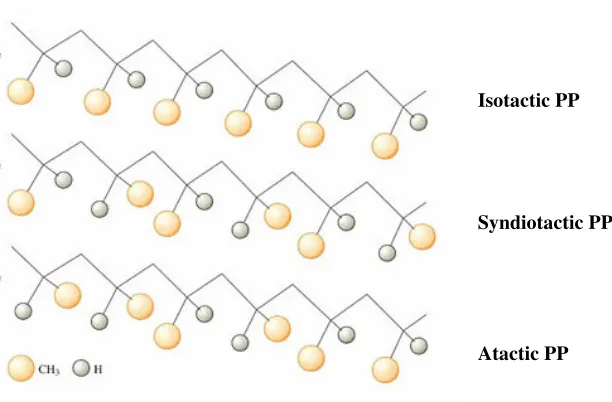
Figure 2.7: Different tacticities of PP21... 27
Figure 2.8: Definition of a surface... 30
Figure 2.9: Schematic of flame treatment36... 33
Figure 2.10: Schematic of the corona discharge treatment41... 35
Figure 2.11: Change of surface from hydrophobic to hydrophilic using plasma47... 40
Figure 2.12: Schematic representation of different plasma methods... 46
Figure 2.13: SEM image of ‘grass-like’ surface formed due to etching53... 48
Figure 2.14: Grafting schematic on spherical and plane surfaces64... 62
Figure 2.15: Schematic of Interpenetrating Networks (IPN) 71... 66
Figure 3.1: Structure of GMA-grafted-polypropylene... 80
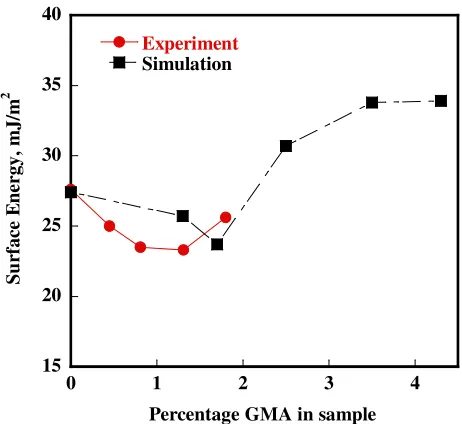
Figure 3.2: The values of surface energy of modified polypropylene and comparison of the data obtained from the experiments and molecular dynamics simulations ... 86
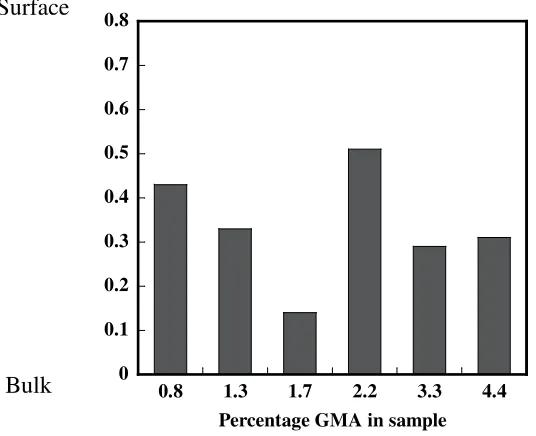
Figure 3.3: Location of the functional group (epoxy) from the center of mass (c.m.): effect of the GMA concentration... 88
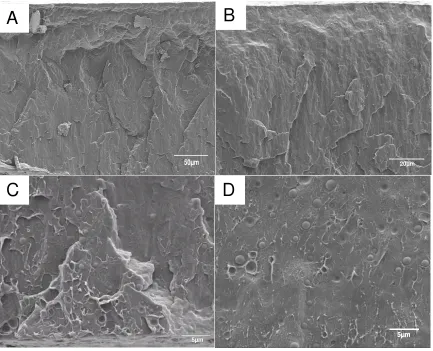
Figure 4.1: SEM images of the cross-sections of the films of modified PP A) 1.0 wt % B) 1.5 wt % C) 2.0 wt % and D) 4.0 wt % of GMA added ... 103
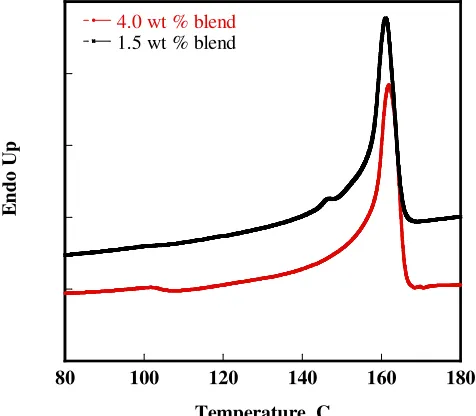
Figure 4.2: DSC heating curve for 1.5 wt % and 4.0 wt % blended samples... 104
Figure 4.3: Plot of experimental and simulation values of surface energy versus Percentage GMA in sample... 106
Figure 4.5: Plot showing Flory Huggin’s interaction parameter versus % GMA in sample 108
Figure 4.6: O/C ratio versus Percentage of GMA in sample obtained from XPS ... 109
Figure 4.7: Plot showing % increase in adhesion of films of modified PP with TPU or Pebax ... 110
Figure 5.1: Structures of a) GMA-g- PP; b) thermoplastic polyurethane (TPU); c) polyether-block-amide (Pebax) ... 120
Figure 5.2: (a) Mechanism of attachment of PAAc and PAAm to PP-g-GMA (b) Structure of PP-g-GMA ... 123
Figure 5.3: Density profile along z-direction for TPU/PP interface... 127
Figure 5.4: Density profile along z-direction for Pebax/PP interface... 128
Figure 5.5: Work of adhesion calculated from MD simulation for polyolefin/elastomers system before and after PP modification with glycidyl methacrylate (GMA) ... 129
Figure 5.6: Peel strength measured for the following laminates: TPU/PP, TPU/PP-g-GMA, Pebax/PP, and Pebax/PP-g-GMA ... 130
Figure 5.7: Work of adhesion calculated from MD simulation for polyolefin/elastomers system after GMA-g-PP modification with PAAc and PAAm ... 132
Figure 6.1: Polymer melt spinning out of a spinneret... 141
Figure 6.2: Schematic of the spunbonding machine... 143
Figure 6.3: Hydrostatic head tester ... 150
Figure 6.4: Mocon testing equipment ... 151
Figure 6.5: XPS data showing increase in Oxygen % after modification ... 152
Figure 6.6: Plots of peel strength of blended PP with Pebax fabric ... 154
Figure 6.7: Barrier property of blended PP with Pebax fabric ... 155
CHAPTER 1
1 Introduction
Polymers are reckoned as those important commercial materials without which surviving would be deemed impossible. These materials constitute one of the fast moving frontiers of everyday life. They are ubiquitous in applications including packaging, microelectronic devices, adhesion, high performance membranes, friction and wear, protective coatings, biomaterials and many more. Polyolefins, such as Polypropylene (PP) and Polyethylene (PE), exhibit the twin benefit of ease of processing and also possess excellent physical/chemical properties1. However, they have inert surfaces and so surface modification becomes a handy tool to combine the effects of both-the original bulk property with the newly designed surface property2, 3. The overall goal of modifying polymer surfaces is to bring about one of the two objectives: to increase the potential for surface interactions which may include adhesion promotion or to decrease the degree to which a surface reacts with a given material e.g. release or antifouling applications4. Although the methods of polymer surface modification are extensive and may be quite complicated, in general all surface modification techniques basically share the common goal of controlling the nature
and number of chemical functional groups at the polymer surface.
the second by depositing an extraneous layer on top of the existing layer, thereby generating a sharp interface. Thus physical modification techniques use the principles of surface segregation, radiation with electromagnetic waves, oxidation with gases and many more. In wet chemical surface modification, a material is treated with liquid reagents to generate reactive functional groups on the surface. The research described here deals with the surface modification of PP polymer to enhance its adhesive properties, especially to elastomers. Amongst the chemical modifications, PP surface has been modified by different methods such as plasma treatment 9, 10, ion treatment 11, use of compatibilizers or blending 12, flame treatment 13, grafting 14, 15. PP has been grafted with acrylic acid16, 17, maleic anhydride18,19,
20, glycidyl methacrylate (GMA) 21 and oxazoline22. However, there has not been a lot of
study using GMA and so this research work focuses on PP modification using GMA as the functional monomer. The end application of this work is to be able to make a barrier and breathable fabric using a composite structure involving elastomers and the modified PP.
The dissertation is presented here as a collection of papers and review articles. Chapters 3, 4 and 5 are articles that have been published or being prepared to be submitted to peer-reviewed journals. As a result the reader may notice some redundancy of introductory information because the papers are intended to be sufficiently independent. A short description of each is provided below to help readers navigate through this dissertation.
Chapter 2. Includes review of pertinent literature. It gives detailed account of the PP structure, the need for surface modification and the different physical and chemical methods of modification. It briefly touches on these methods before focusing in detail on the two main methods of chemical modification, grafting and blending, that have been researched in this work.
Chapter 3. This chapter talks about melt–grafting of PP. PP is frequently grafted with such monomers as maleic anhydrate or carboxylic acid. But not a lot of work has been done using glycidyl methacrylate (GMA), where epoxy groups of GMA are able to react with -OH, COOH, and NH2. This chapter focuses on the experimental methods and results obtained
therein. This work has been published in Journal of Applied Polymer Science.
Chapter 4. This chapter includes the work done in modifying PP through blending as blending is a technique that can be used to incorporate functional groups without additional post-processing steps. PP was blended using a functional monomer containing GMA. Some experimental and simulation work have been reported as well as the improvement in adhesion to elastomers demonstrated. This work has been published in Polymer
International.
simulations and experiments to investigate the effect of the structure of both the elastomers and PP that decides the adhesion between the two polymers. This work has been prepared and is slated to be submitted to Applied Surface Science.
Chapter 6. The results from the grafting and blending reactions on PP polymeric film were leveraged to manufacture the appropriate spunbond nonwoven fabric. This chapter includes details on the specifications used to manufacture the nonwoven, the fiber properties and the fabric barrier and breathable properties. It also gives the results of adhesion of modified PP to elastomeric nonwoven fabric layer.
Chapter 7. In addition to the chemical methods of modification, one physical method viz. grafting by UV radiation was also studied. The experimental details and the results on PP film samples are presented in this chapter. It also has details of surface properties of these UV treated silicon samples.
Chapter 8. Includes summary of the present study and recommendations for future work.
1.1 References
(1) Maier, C.; Calafut, T. In Polypropylene: The Definitive User's Guide and Databook;
(2) Garbassi, F.; Morra, M.; Occhiello, E. In Polymer Surfaces : From Physics to Technology; Chichester [England] ; New York John Wiley & Sons, Ltd. (UK),: 1998; ,
pp 486.
(3) Chan, C. M. In Polymer surface modification and characterization; Hanser Gardner
Publications: 1994; pp 295.
(4) Koberstein, J. T. Journal of Polymer Science Part B: Polymer Physics 2004, 42,
2942-2956.
(5) Briggs, D.; Brewis, D. M.; Konieczko, M. B. J. Mater. Sci. 1979, 14, 1344-1348.
(6) Momose, Y.; Ikawa, K.; Sato, T.; Okazaki, S. J Appl Polym Sci 1987, 33, 2715-2729.
(7) Rye, R. R.; Martinez, R. J. J Appl Polym Sci 1989, 37, 2529-2536.
(8) Zeronian, S. H.; Wang, H.; Alger, K. W. J Appl Polym Sci 1990, 41, 527-534.
(9) Shanmugharaj, A. M.; Kim, J. K.; Ryu, S. H. Polymer Testing 2005, 24, 739-745.
(10) Harth, K.; Hibst, H. Surface and Coatings Technology 1993, 59, 350-355.
(11) Scaronvorč ík, V.; Rybka, V.; EndrScaront, R.; Hnatowicz, V.; Kvítek, J.; Seidl,
P. J Appl Polym Sci 1993, 49, 1939-1942.
(13) Sutherland, I.; Brewis, D. M.; Health, R. J.; Sheng, E. Surf Interface Anal 1991, 17,
507-510.
(14) Rao, M. H.; Rao, K. N.; Teli, M. D.; Jog, A. G.; Lokhande, H. T. J Appl Polym Sci
1987, 33, 2743-2751.
(15) Xiao, H.; Yu, F.; Yu, Y.; Huang, S. J Appl Polym Sci 2007, 104, 2515-2521.
(16) Oromehie, A. R.; Hashemi, S. A.; Meldrum, I. G.; Waters, D. N. Polym. Int. 1997, 42,
117-120.
(17) Liu, N. C.; Xie, H. Q.; Baker, W. E. Polymer 1993, 34, 4680-4687.
(18) Roover, B. D.; Devaux, J.; Legras, R. Journal of Polymer Science Part A: Polymer
Chemistry 1996, 34, 1195-1202.
(19) Ide, F.; Hasegawa, A. J Appl Polym Sci 1974, 18, 963-974.
(20) Hosoda, S.; Kojima, K.; Kanda, Y.; Aoyagi, M. Polymer Network and Blends 1991, 1,
51.
(21) Sun, Y.; Hu, G.; Lambla, M. J Appl Polym Sci 1995, 57, 1043-1054.
CHAPTER 2
2 Literature Review
2.1 Introduction
Protection and comfort are two of the most sought after attributes in a textile garment. Comfort is the ability of a body to maintain a constant core temperature and moisture level irrespective of different environmental conditions and different rates at which the body works1. Even small deviations from normal skin and core temperatures or moisture levels can cause huge discomfort. One of the critical parameters that are considered in the manufacturing of a waterproof breathable fabric is the transmission of water vapor. It is very essential to maintain an optimum transport of water vapor, too little will cause a sense of discomfort and too much might cause dehydration.
Figure 2.1: Barrier and breathable properties in a nonwoven composite3
hence provides breathability. The basis of water vapor transmission in these systems is the adsorption of water vapor through the ‘soft’ segments (i.e. polyether chains) of the polymer while water droplets are repelled by ‘hard’ segments (i.e. urethane chains). The amorphous regions in those soft segments act like intermolecular pores thus allowing the water vapor molecules to pass through but preventing the bigger liquid droplets to penetrate due to the solid membrane. Figure 2.2 depicts the monolithic principle.
H2O
(TPU)
Hard Segments
Soft Segments
H2O
H2O H2O H2O
H2O H2O
H2O
H2O H2O H2O H2O H2O H2O H2O H2O
H2O H2O H2O H2O
H2O H2O H2O
H2O H2O H2O H2O H2O
Film
Thickness
H2O
(TPU)
Hard Segments
Soft Segments
H2O
H2O H2O H2O
H2O H2O
H2O
H2O H2O H2O H2O H2O H2O H2O H2O
H2O H2O H2O H2O
H2O H2O H2O
H2O H2O H2O H2O H2O
Film
Thickness
Figure 2.2: Mechanism of breathability in monolithic film
The water repellent mechanism of microporous membrane is based on the size exclusion mechanism as the average size of a water droplet is around 100 µm and that of a water vapor molecule is about 0.4 nm4. Although the micro-porous membrane would have an
polymers (thermoplastic polyurethane) and PP are provided. To produce a robust polymeric system, an overview is provided on key techniques of polymer surface alterations and bulk polymer modification. The purpose of this study is not to provide a comprehensive review on polymer bulk or surface modification routes. The focus is primarily on PP system, therefore examples provided in this study are concentrated on PP based systems.
2.2 Types of Breathable Fabrics
Breathable fabrics can be broadly classified into the following groups: • Densely woven fabrics
• Membranes and Coatings
• Combination of microporous and hydrophilic membranes and coatings • Use of retroreflective microbeads
• Smart breathable fabrics • Fabrics based on Biomimetics
2.2.1 Densely woven fabrics
fabric and it requires a very high pressure to cause penetration (Figure 2.3). The fabric thus automatically becomes waterproof without the need for any external coating. Densely woven fabrics can also be made from synthetic microfilament yarns where the individual filaments are less than 10 µm in diameter. The use of very fine fibers and filaments in addition to dense construction results in fabrics with very small pore size compared with conventional fabrics. Whereas conventional fabrics have ~ 60 µm pore size, the one for the waterproof breathable one is ~ 10 µm.
Dry Wet
Figure 2.3: Densely woven fabrics (dry and when wetted with water) 2
2.2.2 Membranes and Coatings
they allow the water vapor molecule to diffuse through. Coatings consist of a layer of polymeric material applied to one surface of the fabric. These coatings are much thicker than membranes which are typically 10 µm thick and similar to membranes, coatings are also classified as microporous and monolithic. The microporous coatings and membranes have hundreds of open micro pores and in hydrophilic monolithic (Figure 2.4) membranes, water vapor diffuse through the hydrophilic groups on the polymer chain. Gore-tex, introduced by W Gore, is probably the first and the best known membrane developed using expanded polytetrafluoroethylene (e-PTFE) 2.
Figure 2.4: Example of micro-porous membrane1
into a membrane and then laminated to a fabric. There are increasing numbers of techniques and machinery available that can be used for the lamination process. Although it is relatively simple to produce a strong bond, however the challenge is to retain the original properties of the fabric and also produce a flexible laminate.
Figure 2.5: Example of a micro-porous coating1
There are numerous ways to create interconnecting pore structures in solid polymer films and coatings:
• Mechanical fibrillation (for membranes only) • Wet coagulation process
• Solvent extraction
• Solubilizing one component in the mixture (for coatings only) • Radio frequency (RF)/ion/UV beam radiation
• Meltblown technology • Point bonding technology
2.2.3 Combination of micro-porous and hydrophilic membranes and coatings
For combination of microporous and hydrophilic membranes and coatings, the fabrics are coated with copolymers having both hydrophilic and hydrophobic segments. The hydrophobic parts provide the resistance to liquid water droplets while the hydrophilic part allows for water vapor permeability. Few advantages of bicomponent microporous films are that it provides added strength and toughness to films, it reduces the stretch which may be caused by opening of the pores and also the moisture vapor transfer is more by mechanical means than by chemical adsorption means. The films do suffer from some drawbacks including increased cost and stiffness and reduction of breathability of the fabric.
2.2.4 Retroreflective Fabrics
A retroreflective fabric (Figure 2.6) possesses a print or coating having retroreflective pattern areas of aligned, hemispherically coated retroreflective microbeads. One patent5
had coated retroreflective microbeads, in such a way that the fabric breathes from the interstices between the dots.
Figure 2.6: Examples of retroreflective fabrics6
2.2.5 Smart Breathable Fabrics
vapor while at high temperatures it transfers more heat and water vapor thus ensuring comfort and breathability. Shape memory polyurethane is a common shape memory polymer that is used. The mechanism is such that at lower temperatures, the coatings absorb moisture from the surrounding atmosphere and exist in a swollen state which results in the closure of microcracks. At temperatures higher than transition temperatures, the coatings exist in a collapsed state due to large number of hydrophobic interactions taking place, which result in the opening of the microcracks. Phase change materials are also an important category of polymers which are used to make smart breathable textiles. The incorporation of these phase change materials leads to improvements in thermal and moisture management.
2.2.6 Fabrics based on Biomimetics
Biomimetics is where biological mechanisms are mimicked to get desired functions. For a breathable fabric the analog of leaf stomata, which opens when the plant needs to increase water vapor intake and closes when its needs to reduce, can be used.
2.3 Thermoplastic Polyurethanes (TPU’s)
TPU’s are available in varying Shore hardness values ranging from 75A and 70 D without any softening agents. The typical ones used for film applications are hardness 80 A and 50 D.
2.3.1 TPE Structure-Property Relationships
There is a very strong relationship between the structure of TPE’s and their corresponding mechanical and permeability properties. Those TPE’s which are intended for use as breathable membranes usually have polyethylene oxide (PEO) based soft segments. There is a very interesting relationship between structure and permeability, which is a function of both sorption and diffusion. The total moisture absorption is a function of PEO content and its molecular weight. Moisture permeability, which is reflected by what is called ‘water vapor transmission’, increases with PEO content and is also a strong function of the membrane thickness. TPE films for clothing should also provide a barrier for penetration of wind and water to enhance comfortability of the wearer.
2.3.2 The Challenge
polypropylene (PP) can be a good candidate.
Since adhesion between the elastomer and the polyolefin is now the issue, we focus here some basic definitions and concepts related to adhesion.
2.4 Adhesion and Adhesion Mechanisms
Adhesion is the force of attraction between two materials in contact with each other. It refers to the state in which two dissimilar bodies are so held together by intimate interfacial contact that mechanical force or work can be transferred through the interface9. Forces that contribute to this interfacial force include van der Waals forces, covalent bonding or electrostatic attraction. Thermodynamic adhesion10 refers to interfacial forces that are in
equilibrium, associated with reversible processes such as work of adhesion, heat of wetting, etc. Chemical adhesion refers to adhesion at the interface due to chemical bonding.
Mechanical adhesion is developed because of microscopic mechanical interlocking all over
the interface.
not a sufficient condition. The polymer must be above a ‘critical molecular weight of entanglement’ as a polymer derives its mechanical strength from its molecular weight. Thus, in the interface region, segments of polymers interpenetrate and that leads to a strengthening of the interface. In short, there are two major notions that are believed to impact adhesive strength: one is that of a ‘connector molecule’ where chemical bonds or physisorption bind a polymer chain to an interface and which interacts with the bulk polymer surface so as to transfer the stress across the interface. The second notion, which is also strongly believed, is that it is because of the concentration of stress in the interface that the energy dissipation actually occurs.
The stress transfer by one connector polymer molecule at solid-elastomer interface is also important11. Consider a smooth solid surface on which have been grafted long polymer chains in a manner that the grafting efficiency is low and also that they do not overlap. For such systems, it is well accepted now that the adhesion can be promoted and stress can be efficiently transferred across the interface by these surface anchored polymer chains. When the two partners of the assembly are tried to be separated, the van der Waals interactions between monomers are sufficient enough to maintain the connector chains in the stretched position. Stretching and progressive extraction from the bulk material are the two mechanisms by which the connector chains promote adhesion.
the average distance over which free chains can interpenetrate. For two mutually immiscible polymers, the interfacial width is controlled by Flory Huggin’s interaction parameter χ
between the two polymers. To measure the adhesive strength of the interface between these materials empirically is difficult because the materials are soft and highly viscoelastic. For such scenario, the peel test can give an idea about the work of fracture of interfaces and if the test is properly executed, the practical work of adhesion can be measured. In the simplest case of a smooth and flat interface, the work of adhesion is defined as the reversible work required to separate the interface between two bulk phases 1 and 2 from their equilibrium separation to infinity. It is given by the following equation12,13:
12 2 1
γ
γ
γ
+
−
=
a
W
Eqn. (2.1)where
γ
1 andγ
2 are the surface tension of phases 1 and 2 respectively andγ
12 is the interfacial tension between component 1 and 2.d p
γ
γ
γ
=
−
Eqn. (2.2)where d
γ
is the dispersion or the non-polar part of surface energy and pγ
is the polar part of it.2.4.1 Mechanisms of adhesion
The first step in the formation of an adhesive bond is establishing interfacial molecular contact and this happens through wetting. Wetting can be defined as the displacement of a fluid from a solid surface by a second immiscible fluid15. The first fluid is usually air and the second fluid is a liquid. The wetting phenomenon involves various interactions such as liquid-substrate, liquid-liquid and liquid-air and these are represented by appropriate interfacial tensions. When a liquid is in contact with a substrate, two possibilities can arise: the liquid may spread over the solid, displacing the original fluid air and finally come to a halt when the angle between the liquid-air and solid-liquid interfaces reach a certain value, called contact angle θ. When there is no relative movement of the contact line
L SL S
γ
γ
γ
θ
=
−
cos
Eqn. (2.3)where θ is the equilibrium contact angle,
γ
S is the interfacial tension between solid andvapor,
γ
SL is the interfacial tension between solid and liquid andγ
L is the interfacial tension between liquid and vapor.Thus the value of contact angle can characterize wetting phenomenon. A low contact angle means high wettability and high contact angle means poor wettability17. When the contact angle between a liquid and a solid surface is zero, the liquid will spread spontaneously without limit. However, static contact angle is an incomplete measure of wettability as it does not involve the time needed for the liquid to spread over the surface of a solid.
theory and adsorption theory18.
The mechanical interlocking theory basically claims that the surface irregularities on the substrate are the prime source for mechanical keying or interlocking of the adhesive on the substrate. Mechanical interlocking can be improved when surfaces can be made abrasive. Techniques generating abrasive surfaces include metal plating of plastics (specific), mechanically roughened substrates and chemically roughened surfaces. The metal plating involves a chemical pretreatment followed by etching. Any form of mechanical abrasion increases adhesive strength but micro and macro level optical and electron micrographs have confirmed that it is not because of enhanced interlocking but rather due to mechanical abrading. It removes substances such as release agents, machine oil, grease, scale, etc and thus enhances wetting. Also due to smoothening of the top surface, small cracks and flaws are prevented from propagating along the interface. Chemical abrasion on the other hand can lead to formation of roughened surfaces at the interface which might be the cause for enhancement of adhesion. However, critical parameters such as time and temperature of treatment have to be very precisely controlled to not end up with a weak or friable surface.
polymer chains have the mobility to penetrate deeper by diffusion and if sufficient time is given, adhesion improves as well19. Therefore, time and temperature are the two important parameters which can be manipulated to obtain maximum adhesion.
To have solubility the two polymers should possess equal or very similar solubility parameter (δs) which is given by:
2 / 1
∆
−
=
V
RT
H
v sδ
Eqn. (2.4)where
∆
H
v is the molar heat of vaporization, R is the gas constant, T is the absolute temperature and V is the molar volume. So the solubility parameter is the indicator of the compatibility between the two polymers.The electronic theory proposes that when the adhesive and the adherend have electronic band structures which are different from each other, then it is possible to have some electron transfer during contact. This would result in the forming of a double layer of electric charge as the Fermi levels would be balanced. Deryaguin et. al20 haveformulated that these contacts and junction potentials will give rise to electrostatic forces which would contribute significantly to improve intrinsic adhesion. One criticism of this theory is that the electrical phenomenon observed may actually be due to the failure event and not the cause the adhesion improvement.
theory. It claims that, given that there is enough intermolecular contact at the interface, the interatomic and intermolecular forces established between the atoms and molecules of the adhesive and the substrate will result in a strong adhesion. The most common of all types of forces are van der Waals and hydrogen bonds and they are called secondary bonds. In addition, covalent bonds can also be formed at the interface. This is called as chemisorption and includes ionic, covalent and metallic interfacial bonds which are referred to as primary bonds.
There are four basis types of stresses in adhesive bonded joints. These include normal or direct stresses, shear stresses, cleavage stresses and peel stresses. Normal stresses, as the name suggests, act normal to the plane in which they act and can be further divided as tensile or compressive stress. Shear stresses, on the other hand, act parallel to the plane on which they act. Cleavage stresses arise due to offset tensile force or bending moment and the fourth type arise when either one or both the substrates involved are flexible. This research work will focus primarily on the last kind of stress along interfaces in breathable composite applications.
2.5 Polypropylene (PP)
2.5.1 PP Structure
homopolymer is semi crystalline in nature and the morphology exhibits a hierarchy of characteristic scales, ranging from gross reactor particle shape22, 23 to skin core structures24,
25. One of the governing factors for the resultant morphology is the crystallizability of the
chains. The degree of crystallinity is, in turn, dependent on the tacticity of the chain. PP has 3 tactic forms-isotactic (i-PP), syndiotactic (s-PP) and atactic (shown in Figure 2.7). Isotactic chains, where the methyl groups have the same configuration with respect to the polymer backbone, results from head-to-tail addition of PP monomer units and by using Ziegler-Natta catalysts. Syndiotactic, on the other hand, have an alternating configuration of the methyl groups whereas, the atactic chains do not show any consistent placement of the methyl groups.
Figure 2.7: Different tacticities of PP21
On the crystallographic scale, PP is present in different forms viz. α-form i-PP; the
Isotactic PP
Syndiotactic PP
polymorphic forms of i-PP: β, γ and mesomorphic; and s-PP. PP is prepared industrially by
the polymerization of propylene (C3H6) in a low pressure process using a mixture of
aluminum triethyl and titanium tetrachloride as catalysts. The reaction mechanism induces a chain having a helical structure that exhibits the same asymmetrical stereochemical configuration of carbon atoms. This leads to a macromolecule having a high degree of crystallinity. Hence, PP has considerably improved mechanical properties compared to polyethylene (PE); it has a lower density than PE, it is stiffer, harder and has a high strength than many PE grades. Also, due to its higher melting point (160 °C), it can be used for processes which involve high temperatures and it is only attacked by strong oxidizing agents. PP has high modulus and a lower coefficient of thermal expansion than PE. It can be compounded with a very broad range and amount of fillers, reinforcing agents and other polymeric materials26. However, it has a hydrophobic, chemically inert surface and this restricts its applications in many operations like coating, adhesion, painting, coloring, packaging, laminating etc. The poor adhesion of PP to the surface of other materials, especially TPUs is the primary concern.
2.5.2 Need for Surface Modification
potential for surface interactions e.g. adhesion promotion or to decrease the degree to which a surface reacts with a given material e.g. release or antifouling applications27. Although the methods of polymer surface modification are extensive and may be quite complicated, in general all surface modification techniques basically share the common goal of controlling
the nature and number of chemical functional groups at the polymer surface. Hence the term
2.5.3 Structure of Polymer Surfaces
One very important concern encountered during surface functionalization is that what exactly constitutes a ‘surface’. A schematic of this problem is been demonstrated in Figure 2.8. Non-swollen surface Swollen surface Bulk polymer > 1000 nm 1-100 nm 1 nm Non-swollen surface Swollen surface Bulk polymer > 1000 nm 1-100 nm 1 nm
Figure 2.8: Definition of a surface
polymer would not react with the solvent or soluble reagents. Importantly, functional groups in the polymers bulk will not affect the polymer’s surface properties. However, there are several ways by which polymer bulk can be modified and which would have pronounced effect on polymer characteristics. In the subsequent sections descriptions of polymer surfaces and bulk modification is discussed.
2.6 Polymer Surface Modifications
These have been studied in various fields of industrial applications using different innovative techniques which include various physical and chemical methods.
2.6.1 Physical Surface Modifications
are radicals, ions and molecules in excited state. In Corona treatments, the corona effect is used, which is the formation of high energy electromagnetic fields close to charged thin wires or points, with consequent ionization in their proximity31. In the ionized region, excited species such as ions, radicals, electrons and molecules are present, and these are the active oxygen-containing functionality. With cold-plasma treatments, low temperature plasmas require low pressures but functional group contains high energy photons, electrons, ions, radicals. Using plasma chemistry has its own advantages and disadvantages: the former includes the formation of chemical bonds at the interface but there can also be the possibility of high degree of cross-linking on the plasma polymerized layer. With hot plasma treatments32 plasmas generated at atmospheric pressures, reach very high temperatures and these can then be used for metallurgical operations for depositing coatings.In UV treatments, photons with low wavelength are energetic species are used to activate many chemical reactions. Most commodity polymers, especially PP33, 34 have been extensively studied. Irradiation in the presence of oxygen or ozone is progressively used for improving wettability. Laser sources can be used to promote cross-linking or opposite scission effects. Lasers can have high enough intensities that can modify polymers even with high MW. They are energy and space coherent.
2.6.1.1 Flame Treatment on PP
employed to improve ink permeability on polymeric surfaces. Now it is an industrial process commonly used to improve the adhesion properties of polymeric substances. It can be used to oxidize the polymer surface in a controlled way to a thin layer of ~5-10nm35. A very simple set-up (Figure 2.9), consisting of a burner and a fuel tank, is required for the process but simultaneously a very high degree of craftsmanship is also required to produce consistent results. The flame treatment brings about the oxidation of the polymer surface and this can be attributed to the high flame temperature range (1000-1500 °C) and its interactions with other excited species in the flame. The defining characteristic of the mechanism includes the formation of polymer radicals due to hydrogen abstraction.
Figure 2.9: Schematic of flame treatment36
object to be treated, the treatment time, nature of the gas and so forth, have to be carefully monitored. Sutherland, et al. 37 conducted the studies of these parameters on the surface property of PP and analyzed their results using X-ray Photoelectron Spectroscopy (XPS) and contact angle measurements. They noticed that for mild flame treatments, the surface energy of PP increases with the oxygen content of the surface. The optimum air-to-gas ratio was observed to be 11:1 while the optimum flow rate was decided at 24 l min-1. Also, measured bond strengths were found to be well in excess of those obtained by other methods of modification. Stroud et al. 38 performed detailed numerical modeling of the surface oxidation of the PP films and found that calculated values correlated very well with experimental data. O2 and OH play major roles in the modification of the surface and the rate determining step
2.6.1.2 Corona Discharge Treatment
Corona discharge is a well accepted, relatively simple and one of the most widely used continuous processes for the surface treatment of polyolefin films39,40. This technique is especially used for improving the printability and adhesion of polyolefin films. The corona treatment setup is a very simple and a cost effective one. It consists of a high voltage-high frequency generator, an electrode and a grounded metal roll covered with an insulating material as shown in the Figure 2.10.
Figure 2.10: Schematic of the corona discharge treatment41
when a high voltage is applied across the electrodes, it ionizes the air producing plasma (often identified by the formation of a blue glow in the air gap). This atmospheric pressure plasma also known as corona discharge brings about the physical and chemical changes on the polymer surface for improved adhesion and dyeability. As a result of the corona discharge, a number of chemical reactions happen at the polymer surface.
2.6.1.3 Irradiation
Radiations can be used in two ways: they can be directly used to alter the surface or they can also be used to sputter off target species form another substrate which can then deposit on the desired sample surface and cause the modification. These can be basically differentiated into three basic categories on the basis of their energy. High-energy radiation, mainly delivered by X-rays, γ-rays, electron beams from cobalt (60Co) and magnesium
(58Mg) sources, are often known as ionizing radiation. Medium-energy radiation, usually obtained from UV rays, pulsed/excimer laser and plasma sources and low-energy radiation yielded by infrared, ultrasonic, microwave and visible sources can bring about desired changes in the polymer backbone depending on the irradiation time and energy of radiation. The primary role of any of these radiations is to activate the molecules on the polymer backbone, which in turn reacts with functional species present in its vicinity to render a functional surface.
Mirabedini et al. 45 studied the effect of microwave irradiation on the surface
characteristics of PP and noticed a relative increase in surface energy and also a pitted structure as revealed by SEM with only 120s of the microwave treatment. The adhesion measurements revealed a change in the locus of failure from adhesive to cohesive failure within the bond line indicating that the interface was strengthened due to the irradiation treatment. Lee and coworkers46 used low-energy hydrogen ions having light weights and
PP and Polyacrylonitrile and said the main contribution was the increase in surface energy resulting from the presence of non-washable groups such as C-O, C=O and (C=O)-O. They confirmed that the improvement in surface roughness was not as important a contributing factor as the increase in the surface energy.
2.6.1.4 Plasma Treatment
Figure 2.11: Change of surface from hydrophobic to hydrophilic using plasma47
Techniques based on plasma, that combine the advantages of conventional plasma and ion beam technologies are effective methods for modifying surface energetics of a wide variety of materials. In particular, modifying the surface energetics of materials can improve the adhesion strength, surface and coating properties as well as biocompatibility, naming a few. Briefly, plasma technique offers the following advantages for polymeric materials48:
1. A good understanding of the physics and the chemistry behind plasma reap huge benefits in fields of microelectronics
3. Plasma treatment brings about an array of changes in surface characteristics ranging from chemical, tribological, electrical, optical, biological and mechanical. Judicious applications can yield dense and pinhole free coatings with excellent interfacial bonds due to the rough nature of the interface.
4. Plasma techniques can be combined with masking techniques to allow surface patterning
2.6.1.5 Plasma sources
There are several kinds of plasma sources, the most common ones being gaseous, metallic and laser based sources. Each one of these is characterized by their electron temperature, ion temperature, uniformity, electron density and such other factors. A gaseous
plasma is obtained by applying a potential through a gas and the breakdown potential
depends on the pressure and discharge gap width. Depending on the applied pressure, these are broadly divided into low-pressure plasma sources which include direct current, rf glow discharge (rfGD) and electron cyclotron resonance (ECR) and high or atmospheric pressure plasma sources such as corona discharge and arc plasma. A vacuum arc plasma consists of a
plasma production unit and a macro-particle filter but the plasma flux is ununiform in both axial and radial directions. In a laser plasma source the plasma is generated by the
2.6.1.6 Kinds of Plasma
There are two kinds of plasma: cold and hot. The difference is the temperature of the heavy species: it is similar to the electrons in hot plasma, while it is lower than 773K in cold plasma. Moreover, the working pressure of cold plasma is generally lower than the one of a hot plasma or atmospheric pressure: this allows the production of chemical reactive species at low temperatures.
2.6.1.7 Plasma-surface modification techniques
In this section the main principles and applications of plasma sputtering, etching, cleaning, implantation and deposition are mentioned.
time. This process is generally used for pretreatments for subsequent implantation and deposition.
The interaction between a plasma and polymer leads to two main reactions: modification and degradation, which compete which each other49. For the properties of the polymer to change due to ion beam interaction, plasma-graft co-polymerization and plasma polymerization, the modification effect has to dominate. Etching takes place when the degradation mode dominates. The rate of weight loss is a strong function of the nature of the polymer as well as the energy of the plasma. Polymers containing polar functionalities such as ether, carboxylic acid and ester groups show high plasma susceptibility whereas polyolefins, which do not have any substituents, exhibit low plasma susceptibility. The weight loss takes place only from the topmost layers of the polymer hence the polymers subjected to the etching process show similar physical and chemical properties as the original polymer. The weight loss is essentially because of bond breaking of polymers. Every time when there is a chemical etching taking place, a certain amount of physical sputtering also takes place.
the instrumental parameters without breaking vacuum. Also, these implantations are usually conducted in low-temperature and the target can be cooled, thus keeping thermal deformation of specimens to minimal. In plasma implantation of polymers, a polymer is exposed to plasma with proper plasma density and treatment time and thus much functionality can be created. In a typical process, the first step is abstraction of a hydrogen from the polymer chains to create a radical at the midpoint of a chain followed by recombination of the radicals with simple radicals created by the plasma gas to form oxygen or nitrogen functionalities. Generally since polymers are hydrophobic, their conversion from hydrophobic to hydrophilic by plasma implantation leads to improved surface characteristics for adhesion strength and other pertinent properties.
material surfaces:
Figure 2.12: Schematic representation of different plasma methods
There have been several studies in the literature of modifying polyolefins, especially PP, by using plasma techniques. Some of them are discussed below.
Cho50 studied the adhesion of paint to PP bumper surface by treating it with oxygen, water and acetylene plasmas. He tried to investigate the two reasons for failure of adhesion: ageing and wet environment. He concluded that adhesion can be improved by treating the PP bumper surface with plasma rather than use a primer. He also noticed that the adhesion
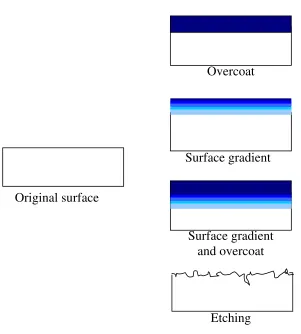
Original surface
Etching
Surface gradient
and overcoat
Surface gradient
strength decreases significantly in wet environments if the PP is treated with O2 or H2O
plasma, but does not vary much if treated with an acetylene plasma, which was attributed to the existence of reactive unsaturated hydrocarbons as well as oxidized hydrocarbons in the film deposited in acetylene plasma. Carrino et al. 51 worked with cold plasma on PP and studied wettability and adhesion. Now, the interaction between a polymeric surface and a cold plasma flow can be either an ablation, a cross-linking or a surface activation, depending on the gas and the material tested. Ablation consists of the removal from a surface both molecular layers and organic residues. This effect is part due to the continuous bombardment of a surface by plasma particles and by electromagnetic radiation and part due to fluid dynamic interactions between the gas flow and the surface. It also produces an increase in surface roughness. Crosslinked polymer is formed by the bombardment and radiation given out by plasma particles which causes the breakage of polymer macro-molecules and the simultaneous creation of free radicals. Activating a surface by means of cold plasma increases the layer energy and that leads to the capture of polar groups by the surface.
2.6.2 Chemical Surface Modifications
modification techniques, this makes easy penetration of the wet chemical through porous three-dimensional substratesas well as in-situ surface functionalization. On the other hand, these techniques are not very reproducible and produce hazardous chemical wastes and irregular surface etching.
2.6.2.1 Chemical Etching
Chemical etching is a type of a wet surface modification technique. This method involves the use of chemical etchants to convert smooth hydrophobic polymer surfaces to rough hydrophilic surfaces by dissolving the amorphous regions and/or oxidizing the surface as shown in Figure 2.13. It shows ‘grass-like’ residue due to polymer etching.
hazardous chemicals and many of these techniques require extended treatment in concentrated corrosive solutions, these techniques may not be very suitable for larger scale, industrial applications.
2.7 Bulk Modification of Polymers with additives
Most of the macromolecular substances, especially solid polymers, that are received from manufacturing processes cannot be used as received. Almost every time, small amounts of additives have to be mixed as processing aids or to improve the properties of the polymer before molding or granulating these compounds29. The following list of additives is the most
commonly used ones and are the most beneficial to processing:
• Lubricants are used to enhance the rheological properties during manufacture and ease processing
• Stabilizers are added in melt to prevent thermooxidative degradation • Plasticizers increase processability, flexibility and impact strength
• Antioxidants and light stabilizers are used as anti ageing additives to protect against oxygen and light during usage
• Fillers and reinforcing materials for selectively modifying certain predominant mechanical properties
– Antistatic agents for protection against electrostatic charging
– Conducting additives eg. Carbon black, graphite, to decrease electrical resistance – Flame proofing agents to decrease inflammability and combustibility
– Dyes and organic/inorganic pigments for coloring – Blowing agents for manufacture of foams
2.7.1 Addition of stabilizers58
are that they must be effective over long periods of time, they should not volatilize, leach out or otherwise removed from plastic material. They also need to be dispensed homogenously in the polymer matrix.
2.7.2 Addition of plasticizers
2.7.3 Addition of fillers and reinforcing materials
Fillers are solid materials that are dispersed in plastics and elastomers. There are two kinds of fillers-inactive and active. The inactive ones are used simply to make the plastic inexpensive; the active ones are more specific and try to improve mechanical properties thus reinforcing the polymer. What constitutes as fillers are small irregularly formed pieces of organic (cellulose, wood flour, carbon black) or inorganic (silica, powdered stone, chalk, talcum powder, glass beads) substances. It is very well known that the thermal and mechanical behavior of polymer is strongly influenced by factors such as type, size, content and shape of the filler. Besides, these properties have a very complex dependence on the chemical structure and the crosslink density when thermostat resins and metallic fillers are combined.
2.8 Compatibilization
appears to be completely heterogeneous and even structurally delaminated. When a compatibilizer is indeed used, one expects a synergistic combination of the favorable properties of the parent polymers in the blend. In short, the ultimate goal in making a compatible blend is to stabilize an appropriate morphology of the dispersed phase polymer in the matrix polymer. There are several methods of compatibilization of immiscible polymer blends but these can be broadly classified into two main strategies60: physical compatibilization and reactive compatibilization. The first one (also called as blending) consists of adding a pre-formed suitable substance such as a copolymer or a coupling agent to the immiscible blend, whereas, the second strategy (called grafting) involves the generation of the compatibilizer in-situ during the melt processing of the blend. These two processes will be explained in detail in the following section.
2.8.1 Polymer Blends
depend whether the free energy of the system (∆G) increases or decreases during the mixing
process. The Gibbs free energy equation is given as:
∆G mix = ∆H mix – T∆S mix Eqn. (2.5)
For complete miscibility or to obtain a homogeneous system, the free energy value has to be negative and incompatibility or a two phase system results when the free energy value is positive. When mixing two polymers, either in solution or melt, the condition of ∆G < 0 is
less frequently encountered compared to when mixing two low molecular liquids. This is due to the very low value of the entropy of mixing ∆S for high molecular weight substances.
Although the entropy of mixing is positive as there is an increase in disorder due to mixing, the absolute values are still substantially lower for polymers than for low molecular weight liquids. Therefore, it is only possible to obtain a homogeneous single phase mixture when the enthalpy of mixing ∆H is sufficiently small or its magnitude is smaller than T∆S. However,
this is only expected in the case of mixing very similar macromolecules. So most of the time one ends up getting a phase separated system in which the molecules of polymer A are only slightly or not at all miscible in the other polymer B. In other words, the polymer A is incompatible or partially compatible with polymer B.
complete incompatibility. However, this theory fails for those polymer mixtures where crystallization and strong intermolecular actions occur.
2.8.1.1 Strategies for blending
The strategies to induce compatibilization include61: addition of a small quantity of co-solvent as the third component which would be miscible with both the phases, adding a copolymer such that, the block or graft polymer, used as a compatibilizing agent contains a minimum of two different segments such that each segment is either miscible or has significant interactions with one blend component. A sufficient amount of the added copolymer is expected to locate at the interface between the two blend components and reduce the interfacial tension, hence stabilizing the dispersion. Fayt and coworkers62 concluded that a block copolymer is more efficient than a graft copolymer and that a diblock copolymer is a more effective than a triblock copolymer. The third strategy is to add a large amount of a core shell polymer which, in addition to acting as a compatibilizer would act as an impact modifier. The fourth strategy includes adding a reactive compatibilizer which would modify one macromolecular species such that it would develop local miscibility regions and last but not the least strategy is to involve mechano-chemical blending.
Thus, one can classify the morphology to be dispersed at both ends of the concentration scale-low and high, and continuous at intermediate concentrations. The maximum co-continuity occurs at the phase inversion concentration, ΦI, where there ceases to be any
distinction between the matrix and the dispersed phase. Microrheology can be used as a suitable guide to understand the morphology of blends. The quality of compounded blend affects the processing and performance of the final blend. Layering, poor weld lines in injection molded parts, skin-core extrudate structure with low notched Izod impact strength, all indicate poor blend quality-either not adequate dispersion or poor stabilized morphology.
2.8.1.2 Advantages and disadvantages of blending
Blending of polymers is a powerful way to obtain improved property/cost performances. This strategy is usually cheaper and less-timing consuming than the development of new monomers/polymers and/or new polymerization routes. It provides materials with full set of desired properties at lowest prices and also extends the resins performance. An additional advantage is improved processability, product uniformity and scrap reduction. One drawback is that the blend or alloy cannot be recycled into its constituents.
2.8.1.3 Examples of blended PP
dispersed PA to increase rigidity of the resulting blend. PP/PC blends are immiscible thus only very small amounts of one into the other concentrations have been experimented with. Examples are where 5 wt% PP was added to PC to improve processability or where 10 wt % of PC was added to PP to enhance processability and crystallinity, appearance, modulus and impact strength, etc. PP has also been blended with specialty polymers to give it the edge in performance. PP blends with small amounts of Liquid Crystalline Polymers (LCP) are added for improved processability, mechanical performance which depends on the blends morphology.
2.8.2 Grafting
2.8.2.1 Techniques of grafting
graft-copolymer. One big advantage of ionic grafting is the high reaction rate. In photochemical grafting, the grafting process is initiated when a chromophore on a macromolecule absorbs light and it becomes excited and dissociate into reactive free-radicals. Plasma induced grafting is already discussed previously. Enzymatic grafting technique is very new and the principle involves enzymes which initiate chemical/electrochemical grafting reaction.
2.8.2.2 Controlling factors in a grafting reaction