Copyright1998 by the Genetics Society of America
A Large Pheromone and Receptor Gene Complex Determines
Multiple B Mating Type Specificities in Coprinus cinereus
Suzanne F. O’Shea,*
,1Pushpalata T. Chaure,*
,1John R. Halsall,* Natalie S. Olesnicky,*
Andreas Leibbrandt,* Ian F. Connerton
†and Lorna A. Casselton*
* Department of Plant Sciences, University of Oxford, Oxford, OX1 3RB, United Kingdom and†Institute of Food Research Reading Laboratory, Reading RG6 6BZ, United Kingdom
Manuscript received August 28, 1997 Accepted for publication December 1, 1997
ABSTRACT
Pheromone signaling plays an essential role in the mating and sexual development of mushroom fungi. Multiallelic genes encoding the peptide pheromones and their cognate 7-transmembrane helix (7-TM) receptors are sequestered in the B mating type locus. Here we describe the isolation of the B6 mating type locus of Coprinus cinereus. DNA sequencing and transformation analysis identified nine genes encoding three 7-TM receptors and six peptide pheromone precursors embedded within 17 kb of mating type-specific sequence. The arrangement of the nine genes suggests that there may be three functionally independent subfamilies of genes each comprising two pheromone genes and one receptor gene. None of the nine B6 genes showed detectable homology to corresponding B gene sequences in the genomic DNA from a B3 strain, and each of the B6 genes independently alter B mating specificity when introduced into a B3 host strain. However, only genes in two of the B6 groups were able to activate B-regulated development in a B42 host. Southern blot analysis showed that these genes failed to cross-hybridize to corresponding genes in the B42 host, whereas the three genes of the third subfamily, which could not activate development in the B42 host, did cross-hybridize. We conclude that cross-hybridization identifies the same alleles of a particular subfamily of genes in different B loci and that B6 and B42 share alleles of one subfamily. There are an estimated 79 B mating specificities: we suggest that it is the different allele combinations of gene subfamilies that generate these large numbers.
M
ATING is an essential step in the life cycle of migration of donor nuclei is triggered when mates pos-sess different B genes (Figure 1B). Different A genes the mushroom Coprinus cinereus and converts anpromote the formation of a clamp cell and synchronized asexual monokaryotic mycelium with uninucleate cells
division of the two tip cell nuclei (Figure 1C), which into a fertile binucleate-celled dikaryotic mycelium on
results in the formation of a binucleate tip cell and which the characteristic mushroom fruit bodies develop
uninucleate clamp and subterminal cells. B gene com-(Figure 1). Somatic cell fusion is sufficient for mating.
patibility is again required for fusion of the clamp cell Fusion is followed by an exchange of nuclei between
to the subterminal cell to complete the clamp connec-mates and rapid migration of donor nuclei through
tion and permit the clamp cell nucleus to pass into this the established cells of each recipient, a process that
cell. Remarkably, the mating type genes of both A and necessitates the disruption of the complex septa that
B are multiallelic. For C. cinereus there are an estimated
normally separate cells (Giesy and Day1965). When
160 versions of the A locus and 79 of the B locus (Raper
a migrating nucleus reaches a tip cell, growth of the
1966) giving a total of more than 12,000 mating specific-dikaryon is initiated and all subsequent cell divisions
ities. Of particular interest at the molecular level is how result in the formation of a structure known as the
such large numbers of A and B mating specificities are clamp connection. The clamp connection ensures that
generated and how so many different versions of the each cell of the vegetative dikaryon contains one nucleus
mating type gene products can be distinguished yet from each mate until nuclear fusion occurs at a late
promote the identical pathway of sexual development. stage in fruit body differentiation (Casselton1978).
By cloning five A loci of C. cinereus, we have shown Two sets of mating type genes, A and B, control mating
that multiple A specificities are derived from different and do so by regulating the formation and maintenance
combinations of three pairs of multiallelic and function-of the dikaryon (SwiezynskiandDay1960). The initial
ally redundant genes (Pardo et al. 1996; Ku¨ es et al.
1994). Like the a1 anda2 mating type proteins of the budding yeast Saccharomyces cerevisiae (Herskowitz
Corresponding author: L.A. Casselton, Department of Plant Sciences,
1988;Dolan andFields1991), these encode two
ho-University of Oxford, Oxford, OX1 3RB, UK.
meodomain-containing subunits of a heterodimeric
reg-E-mail: [email protected]
1These authors contributed equally to this work. ulatory protein.
BM5 ade-5, H5 wild type, FA2222 trp-1.1,1.6; A6B3: PR94226
ade-5 cho-1; A2B3: LCO12 trp-3; A6B42: PG78 pab-1 trp-1.1,1.6; A42B42: LN118 trp-1.1,1.6 ade-2. Media and methods for
cul-turing C. cinereus were described byLewis(1961), with modi-fications summarized byMutasaet al. (1990). Hosts for trans-formation were LCO12 and LN118. B6 genes were introduced by cotransformation with plasmids pCc1001 or pDB1 con-taining the C. cinereus trp-1 (Binningeret al. 1987) or
trp-3 gene (Burrows 1991), respectively. Transformation was performed as described by Casseltonand De La Fuente Herce (1989). Routinely, 50 transformants were tested for the expression of an introduced B gene. Frequency of cotrans-formation was variable, but a positive mating reaction was always detected in 12–50% of transformants.
Genomic subtraction: This was based on the method of Kunkelet al. (1985) as modified byMooreandEdman(1993). 100mg high molecular weight DNA from strain 94226 (A6B3) Figure1.—A and B mating type gene regulation of sexual
was sonicated in an MSE Soniprep 150 (Sanyo Gallencamp, development. (a) Monokaryons with uninucleate cells mate
Leicester, UK) to give fragments of 1.0 kb in size. DNA (5 by hyphal fusion. (b) Different B genes promote nuclear
mi-mg) from strain H9 (A6B6) was digested to completion with gration and septal breakdown. (c) Different A genes promote
MboI and Sau3AI. EDTA (6ml, 0.5 M) and 3 ml 10 mg/ml synchronized nuclear division and clamp cell development.
proteinase K (Sigma, St. Louis) were added to 60ml digestion (d) Different A and B genes act to maintain binucleate cells
mix followed by incubation at 658for 30 min. DNA was precipi-in the dikaryon by formation of clamp connections; different
tated and resuspended in 15ml water to final concentration
B genes promote fusion of the clamp cells induced by different
of 50 ng/ml. Sonicated DNA (25mg) was mixed with 0.12mg
A genes.
digested DNA, heated to 1008for 5 min, cooled on ice and added to a final reaction containing 7% phenol equilibrated to pH 7.7 with 0.1 M Tris/HCl, 1.25 M sodium perchlorate The B mating type genes of the mushroom fungi, as
and 120 mM sodium phosphate, pH 6.8 made up to 250ml first shown for Schizophyllum commune, encode phero- with water. The reassociation mixture was vortexed using an mone precursors and 7-transmembrane helix (7-TM) IKA VXR (Camlab, Cambridge, UK) set at 1800 oscillations per min for 36 hr. The mixture was extracted twice with chloro-receptors (Wendlandet al. 1995; Vaillancourtet al.
form, dialyzed for 6 hr against TE (10 mM Tris/HCl pH 7.5, 1997). Signaling by means of peptide pheromones also
1 mM EDTA), precipitated and resuspended in 10 ml TE. plays an essential role in mating of the ascomycetous
Reassociated DNA [250 ng (2ml)] was mixed with 25 ng BamHI yeasts (Kurjan1993) and hemibasidiomycetes such as
cut and dephosphorylated pUC18 (Pharmacia, Piscataway, NJ) the plant pathogenic Ustilago spp. (Bo¨ lker et al. 1992; and 2 units of T4 DNA ligase (Gibco/BRL, Life Technologies,
Paisley, Scotland) and incubated at room temperature for
BakkerenandKronstad1994;Bo¨ lkerandKahmann
30 min followed by 2 days at 158. Ligation mix (2 ml) was 1993). These fungi have just two versions of the
phero-electroporated into 20ml high efficiency electroporation com-mones and receptors produced by cells of different petent Escherichia coli DH5acells.
mating types, and the pheromones are secreted to act DNA procedures:High molecular weight C. cinereus DNA as chemoattractants. Pheromone binds to receptors was isolated as described byMellonet al. (1987). For Southern analysis the small scale method ofZolanandPukkila(1986)
on cells of the opposite mating type and activates a
was used. Southern blot analysis was carried out according to signal transduction cascade that induces several cellular
the method ofMellonet al. (1987). For DNA sequencing large
changes that bring about mating competence including overlapping fragments covering the entire unique sequence the formation of mating projections, which are essential together with 7 kb of flanking sequence to the left and 3 kb for cell fusion (Kurjan1993). The mushroom fungi are to the right were used. To generate clones for sequencing,
3mg DNA was digested with DNAse I (BRL, Life Technologies) remarkable in that the pheromone response is initiated
diluted to 0.1 units/ml for 90 to 105 sec. The entire digestion only after mating cells have fused and also in having
was electrophoresed on a 0.8% gel at 45 V/hr. Fragments several functionally redundant and multiallelic genes
(0.5–1.0 kb) were band eluted and ligated into SmaI cut and encoding the pheromone and receptor molecules. dephosphorylated pUC18 (Pharmacia). DNA sequence was In this report, we describe for the first time the organi- obtained using the PRISMTMReady Reaction DyeDeoxyTM
Figure2.—Change in mating specificity in hosts transformed with B mating type genes. (a) Incompatible cross between an untransformed A2B3 host and A6B3 tester strain (at right) and an A6B3 tester strain (at left) in which both strains remain monokaryotic. (b) Compatible cross between an A2B3 strain transformed with either a B6 receptor gene or a B6 pheromone gene, showing dikaryotization (arrowed at right) and an A6B3 tester strain, remaining monokaryotic (at left). (c) Fused clamp connection present on the dikaryon. Scale bar represents 5mm.
for analysis on an ABI 373 (Perkins Elmer, Norwalk, CT) containing the B genes isolated from a B42 strain (J. R. Hal-sallandL. A. Casselton,unpublished data). The strain was automated sequencer. Sequence analysis was performed using
the Gene Jockey II Sequence Processor, (P. L. Taylor, 1996) grown in rotary shake culture in liquid medium for 36 hr, harvested by filtering and frozen in liquid nitrogen. Total RNA Biosoft, Cambridge, UK. Prediction of the positions of the
transmembrane helices in the receptors was based on homol- was isolated using the hot-phenol procedure and precipitated with lithium chloride (Schurenet al. 1993). PCR was used to ogy to the two pheromone receptors from U. maydis (Bo¨ lker
et al. 1992) and based on predictions from the three pro- mutate pheromone genes. The cysteine to arginine change in the CaaX sequence was affected by a T to C substitution grams: Secondary structure prediction of membrane proteins
(http://www.tuat.ac.jp/zmitaku/sosui/); TMpred (http:// in both phb2.1 and phb2.2. These changes were affected by inverse PCR using the primers 59-GGGGGCTTCCGCGTTA ulrec3.unil.ch/software/TMPRED_form.html); DAS -
Trans-membrane Prediction server (http://www.biokemi.su.se/ TCG-39 and 59-AGGAGTGTCCCCAGGTCC-39 (phb2.1), and 59-TACGCCTGGCGCGTTATCT-39and 59-AGCTTTGTTCGC zserver/DAS/).
Plasmids and PCR strategies: The genomic library from ATTGTAGCG-39(phb2.2). which B6 was recovered was constructed in the C. cinereus
cosmid vector pLLC5200 (PukkilaandCasselton1991) us-ing DNA from strain BM5 (Pardoet al. 1996). Routine cloning
RESULTS was in pBluescript (Stratagene, La Jolla, CA) or pUC18
(Pro-mega, Madison, WI) and plasmid amplification was in E. coli Isolation of the B6 locus:The B6 locus of C. cinereus strain XL-1 Blue or DH5a. Plasmids containing B6 genes used was isolated by the genomic subtraction technique de-for transde-formation are detailed in Table 2. Five of the genes,
scribed by Moore and Edman (1993). Based on our
those for the three receptors and phb1.2 and phb2.1, were
previous analysis of the multiallelic A genes, which differ amplified by the polymerase chain reaction (PCR). All three
B6 receptor genes were amplified from genomic DNAs of wild- significantly in DNA sequence (Pardoet al. 1996), we
type B6 strains and either used directly for transformation or predicted that different B alleles would fail to hybridize subcloned into pGEM-T (Promega). Primer 1 to receptor rcb2 to one another. Our strategy, therefore, was designed had a HindIII site and primer 1 to rcb3 had a BamHI site
to isolate small clonable sequences unique to a B6 strain, introduced at the 59end for subcloning purposes.
H9 (A6B6), using reassociation with excess sheared Primers were as follows: rcb1, primer 1: 59-CCCCGACGGCC
TTGTACTGTAGC-39, primer 2: 59-CTCGCTCTGCTCCCGG DNA from a B3 strain PR94226 (A6B3) to subtract se-ACC-39; rcb2, primer 1: 59-AAGCTTGGGGCGGACGATGCG- quences common to both genomes. Following the sub-39, primer 2: 59-AAGCTTAGTAAGAGGACATGAGTCCC-39;
traction and cloning of residual fragments, 23 plasmids rcb3, primer 1: 59
-GGATCCTTGGACGGGGAAGAGGACGG-were recovered in E. coli that contained 200–500-bp 39, primer 2: 59-CCCGCGTTTCTTGGAGCCG-39; phb2.1,
inserts of genomic DNA derived from the B6 strain. primer 1: 59-GGCCAAGGAGAATCAGCGACG-39primer 2: 59
-GGCCAAGGAGAATCAGCGACG-39; phb1.2, primer 1: 59-CGT Southern hybridization analyses showed that only two TCTGCCCATGGTGCAG-39, primer 2: 59-CGGCGATGGCGC of these sequences were unique to the B6 genome. ACAGCG-39. cDNAs for the receptor genes were obtained
One of the fragments was chosen to probe a cosmid by RT-PCR using the Access RT-PCR Kit (Promega) and the
genomic library constructed with DNA from a B6 strain. following primers designed to the 59and 39ends of the genes:
rcb3, primer 1: 59-AAGCTCAGTTTCGACGACCCTTC-39, pri- Five overlapping clones were isolated initially and each mer 2: 59-GCTGGGATTGCGTGTGAGTTTTCAG-39; rcb2, tested for B gene activity by transformation into an A2B3 primer 1: 59-GCTCCCTCTCACGAGCCAACG-39, primer 2: 59- host strain (LCO12). Transforming DNA predomi-GGGAAAGCGTTCGGTCGCTGTTGA-39; rcb1, primer 1: 59
-nantly integrates ectopically in C. cinereus (Binninger
AAGTACCCAGCTCTCCCGGTGTTTG-39, primer 2: 59-GACA
et al. 1987) so introduction of a second compatible B
GCTACTTAACGGAAGCTGAGT-39. RNA for RT-PCR was
Cross: A6B3ade-5 cho-1 (PR94226)3A5B6ade-51cho-11(H5). The 47 sexual spore progeny were scored for genotype and for the presence of a 2.8-kb EcoRI fragment present in PR94226 but not H5 genomic DNA. 1 5ade-51/cho-11/presence of 2.8-kb fragment.2 5ade-5/cho-1/absence of 2.8-kb fragment.
endogenous mating specificity of the transformed strain. Heterozygosity for the B locus does not confer a morphologically recognizable phenotype in C. cinereus, so to test for B gene activity it was necessary to demon-strate a change in mating behavior in a mating test assay.
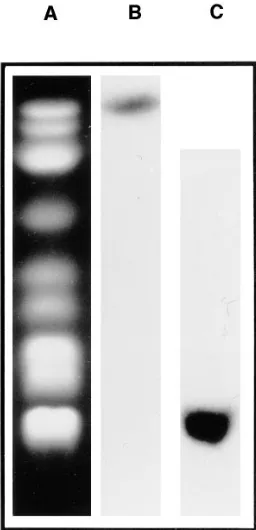
Figure3.—Assignment of A and B genes to pulse-field gel
Transformants were crossed to a tester strain having separated chromosomes of C. cinereus. Gel shows chromosome different A genes but the same B3 specificity (PR94226, separation of C. cinereus strain FA2222 (A). The A5 genes were shown to hybridize to the largest 5.1-Mb chromosome (B),
A6B3). The common B3 genes would normally not
per-and the B6-linked sequence to one of the two smallest chromo-mit dikaryon formation, but introduction of a B6 gene
somes of approximately 2.2 Mb (C). should provide the necessary compatible B gene
interac-tion to permit dikaryosis. Four of the five clones tested caused a change in B mating specificity in the B3 host
a B6 (H5) strain. The B locus is known to map to linkage (Figure 2). Matings were initiated by placing inocula of
group II and is 15.75 and 28.0 map units, respectively, each strain side by side on an agar plate. The
untrans-from the metabolic markers ade-5 and cho-1 (Dayand
formed host was unable to form a dikaryon with the
Anderson 1961). A 2.8-kb EcoRI fragment from cSO2
A6B3 tester strain and the two monokaryons grew
along-that did not hybridize to genomic DNA of the B3 parent side each other but remained discrete (Figure 2A). In
strain was shown to cosegregate with B6 and to have transformants containing B6 sequences, nuclei from the
the predicted linkage to ade-5 and cho-1 (Table 1). tester strain migrated through the cells of the
trans-The Southern blots were used to check the other formant strain to convert it to a fluffy dikaryotic
myce-unique sequence recovered from the genomic subtrac-lium (Figure 2B, arrowed). Thus, B-regulated nuclear
tion. This did not segregate with mating type and was migration occurred, albeit in one direction only
(unilat-not studied further. erally). Microscopic observation of the dikaryon
con-C. cinereus has 13 chromosomes that can be separated
firmed that the second B-regulated function, clamp cell
by pulse field gel electrophoresis (Zolan et al. 1992),
fusion, had also occurred (Figure 2C).
although the size of the chromosomes differs slightly The five clones initially isolated covered a 17-kb
between strains. Figure 3 (lane A) permits us to distin-unique sequence present in the B6 genomic DNA
to-guish most of the chromosomes of strain FA2222. The gether with some 30 kb of homologous flanking
se-A mating type genes map to genetic linkage group I,
quence at one border and 2 kb of homologous sequence
and this has previously been shown by hybridization to at the other border. A sixth clone was isolated which
be present on a large 5.1-Mb chromosome (May et al.
provided a further 20 kb of homologous flanking
se-1991). This is illustrated in lane B which shows the result quence at the other border. The overlapping regions
of probing the filter with a gene from the A5 complex. of three clones, cSO1, cSO2 and cSO3, used for
subse-The B locus maps to genetic linkage group II. subse-The quent analysis are shown above the physical map
pre-unique sequence containing B6 gene activity identified sented in Figure 4.
this as being present on one of the two smallest chromo-Additional evidence that the unique sequence
iso-somes of z2.2 Mb (lane C). Interestingly, the A and B lated was from the B locus was obtained from progeny
Figure4.—Restriction map of the B6 locus. Homologous sequences flanking the B locus are represented by black boxes. The grey box indicates sequences that are found in B42 but not B3, and the white box, sequences that are not found in B3 or B42. Positions of nine genes identified by DNA sequence analysis are illustrated as boxes below the map with horizontal arrows indicating the direction of transcription. Different shading in the boxes identifies three groups of genes, each group encoding two pheromones and a 7-TM receptor. The vertical arrow marks the position of the 200-bp sequence recovered by genomic subtraction. Restriction sites are represented by B, BamHI; E, EcoRI; H, HindIII; and P, PstI.
smallest chromosomes, respectively (A´ sgeirsdo´ ttir et ing in that it suggests that there may be three groups
of genes, each group encoding a receptor and two
pher-al. 1994).
DNA sequence analysis identifies nine genes encoding omone precursors. We have called the receptor genes
rcb (receptor at the B locus) and the pheromone genes
pheromone precursors and 7-TM receptors: Figure 4
shows a physical map of the B6 locus derived from the phb (pheromone at the B locus). Genes in group 1 (at
right end of the locus) are designated rcb1, phb1.1 and three overlapping cosmid clones, cSO1, cSO2 and cSO3.
By systematically testing subcloned fragments for cross- phb1.2; genes in group 2 (in middle of the locus) are
designated rcb2, phb2.1 and phb2.2; and genes in group hybridization to genomic DNA from the B3 strain, we
were able to define the 17-kb region that was present 3 (at left end of the locus) are designated rcb3, phb3.1 and phb3.2. Although numbering is based primarily on in the B6 genome but not in the B3 genome. It is
interest-ing to note that the 200-bp probe recovered from the the physical grouping of the genes, it is intended to imply that the genes within a group may constitute a genomic subtraction is derived from sequence very close
to one of the homology borders (see Figure 4, vertical functionally related subfamily. DNA sequences of all nine genes are available in the GenBank database (ac-arrow).
All three cosmid clones spanning the unique region cession numbers for pheromones, Y11074-Y11079; ac-cession numbers for receptors, Y11080-Y11082). contained genes that changed the mating specificity of
the B3 host strain. The entire 17-kb region was se- In S. commune, mating type is determined by two sub-families of genes that are separated into two separate quenced and six genes encoding pheromone precursors
and three encoding their cognate receptors were iden- loci termed Baand Bb(Raper1966;Koltinet al. 1967).
We cannot rule out the possibility that there may be a tified. Fungal pheromone genes are small and
gen-erally the precursor protein has a C-terminal CaaX second locus in C. cinereus. There is no evidence for a second locus from classical recombination studies (
Hay-signal for posttranslational isoprenylation (where C is
cysteine, a is an aliphatic amino acid and X is alanine, locket al. 1980) and the large numbers of genes present
in the locus we have defined would suggest that it is serine, methionine, glutamine, or cysteine) (Caldwell
et al. 1995). The pheromone receptors belong to the unlikely. We sequenced 7 kb of the homologous flank-ing sequence to the left and 3 kb to the right of the seven transmembrane domain rhodopsin-like
superfam-ily that are linked to an intracellular heterotrimeric unique B6 region but no further receptor or phero-mone encoding genes were identified. These flanking G-protein (Dohlmanet al. 1991). The organization of
these genes, shown below the restriction map, is interest- regions were, moreover, shown by Southern blot
six proteins other than the CaaX box, five residues 14–20 amino acids from the C terminus and a further five at the N terminus. Maturation of a fungal phero-mone involves the addition of a farnesyl group to the cysteine residue of the CaaX box, cleavage of the termi-nal three amino acids and truncation of the N-termitermi-nal sequences to generate a short active peptide of 9–15 residues (Caldwellet al. 1995). In the C. cinereus
pro-teins, there are two highly conserved amino acids 14–16 residues from the C terminus (ER/DR indicated by ↑ in Figure 5). If this represents a proteolytic cleavage site in pheromone maturation, peptides of 11–13 amino acids would be generated, a size in accordance with those from other fungal species (Bo¨ lkerandKahmann
1993;Caldwellet al. 1995).
We identified the three genes encoding 7-TM recep-tors using a BLAST search. The N-terminal sequence of the proteins in each case showed significant homol-ogy to the Ste3p a-pheromone receptor of S. cerevisiae (Nakayama et al. 1985; Hagen et al. 1986), receptors
encoded by the pra1 and pra2 mating type genes of U.
maydis (Bo¨ lkeret al. 1992), and the receptors encoded
by the bar1 and bbr1 genes of S. commune (Wendland
et al. 1995; Vaillancourt et al. 1997), all of which
recognize CaaX-modified pheromones. The three C.
cinereus genes contain either four or five introns and
the coding regions were derived by comparing genomic with cDNA sequences. An alignment of the three recep-tor sequences with putative positions of the seven trans-membrane domains is presented in Figure 6. The three proteins vary in length; rcb1 is 558, rcb2 is 518 and rcb3 is 423 amino acids. The major conservation in sequence
Figure6.—Alignment of the three B6 receptor sequences.
occurs throughout the 300 amino acids of the
trans-Wild-type amino acid sequences of receptor proteins. The membrane domains. The C-terminal domains are highly predicted seven transmembrane domains (labeled I–VII) are variable in length and sequence, retaining only 16 con- shown by lines under the sequence. * indicates identical amino acids, c indicates conserved amino acid substitutions. The served residues between all three proteins.
percent similarity/identity in sequence for rcb1 and rcb2 is Transformation studies demonstrate that all nine B6
53/32, for rcb1 and rcb3 is 59/35 and for rcb2 and rcb3 is genes can activate B-regulated development: All nine
65/47. genes identified by sequence analysis were tested for B6
function in the B3 host strain (Table 2). When no
suit-able restriction sites were availsuit-able, we used PCR to and were thus active in conferring mating functions. Thus a single pheromone or receptor gene was suffi-amplify just a single gene including 59and 39flanking
sequences sufficient for ectopic expression. We intro- cient to trigger the change in mating response in a compatible host.
duced each gene individually into a B3 host and
deter-mined its ability to change the mating specificity of the In a second series of transformation experiments we introduced all nine B6 genes into a B42 host (LN118). host, using the test illustrated in Figure 2. All nine genes
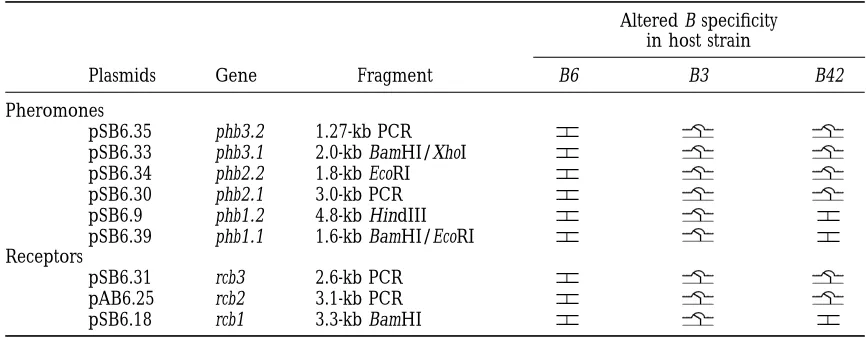
TABLE 2
Functional analysis of B6 mating type genes by transformation and mating tests
Altered B specificity in host strain
Plasmids Gene Fragment B6 B3 B42
Pheromones
pSB6.35 phb3.2 1.27-kb PCR
pSB6.33 phb3.1 2.0-kb BamHI/XhoI
pSB6.34 phb2.2 1.8-kb EcoRI
pSB6.30 phb2.1 3.0-kb PCR
pSB6.9 phb1.2 4.8-kb HindIII
pSB6.39 phb1.1 1.6-kb BamHI/EcoRI
Receptors
pSB6.31 rcb3 2.6-kb PCR
pAB6.25 rcb2 3.1-kb PCR
pSB6.18 rcb1 3.3-kb BamHI
Genes were introduced into three host strains: LT2, A6B6 trp-1 LCO12, A2B3 trp-3 and LN118, A42B42 trp-1 by cotransformation. Transformants were mated to tester strains with the same B mating type specificity as the host. indicates that a proportion of transformants (generally 12–50%) had been cotransformed with a gene that changed B mating specificity and permitted dikaryon formation with the tester strain. indicates that none of the transformants had a changed B mating specificity. Restriction fragments were cloned into either pBluescript (Stratagene) KS1or KS2; PCR products were cloned into pGEM-T (Promega).
3, were able to alter the mating specificity of the host (3 days compared with 1–2 days) and only very few dikaryotic hyphae were detected in the overall monokar-but the two pheromone genes and receptor gene
com-prising group 1 had no effect. Significantly, when we yotic growth of the mating partners. Dikaryotic growth was maintained on subculture but growth was far less tested for DNA sequence homology, we found that the
region containing the three group 1 genes hybridized vigorous than when the wild type pheromone gene was expressed. We conclude that, as in yeast and U. maydis, to B42 genomic DNA. The region of DNA homology is
indicated by the gray box in Figure 4. A correlation the unmodified pheromone has some activity but iso-prenylation leads to much greater efficiency. In a similar between DNA sequence homology and ability to activate
B-regulated development leads us to suggest that B6 and type of experiment,Vaillancourt et al. (1997) made
C-terminal truncations of two pheromone precursor
B3 contain different alleles of all nine genes, whereas B6
and B42 share alleles of the three genes which constitute genes of S. commune by replacing the cysteine codon of the CaaX motif with a stop codon. Their results indicate group 1.
The CaaX sequence is essential for efficient phero- that a truncated pheromone is inactive.
mone gene function:The CaaX sequence is a signal for isoprenylation of pheromones and the fact that X is
DISCUSSION alanine or serine in the C. cinereus proteins indicates that
the isoprene will be a farnesyl group, a characteristic of We have described the organization of a mating type locus of the mushroom Coprinus cinereus, a gene com-all fungal lipopeptide pheromones characterized to
date (Caldwell et al. 1995). Prenylation facilitates plex that determines compatibility in mating by
regulat-ing part of a developmental sequence that permits cells membrane localization and increases hydrophobicity
and may also play a role in interaction with other pro- to proceed to sexual reproduction. We identified nine genes in the B6 complex, which encode six pheromone teins (Glomsetet al. 1990;Marshall1993). It has been
shown for both S. cerevisiae a-pheromone (Marcuset al. precursors and three 7-TM receptors (Figures 4, 5, and
6). The genes lie within 17 kb of DNA sequence, which 1991) and U. maydis mfa1 pheromone (Spellig et al.
1994) that absence of the CaaX modification results is unique to B6 when compared with genomic DNA of a strain containing a B3 mating specificity. Any one of in a thousandfold or more loss in normal activity. To
determine whether C-terminal modification was essen- the nine genes is sufficient to change B mating specific-ity when introduced by transformation into a B3 host. tial for efficient function of the C. cinereus peptides we
replaced the cysteine of the CaaX box of both phb2.1 In the basidiomycete fungi, unlike the ascomycetous yeasts, the genes encoding the mating pheromones and and phb2.2 with an arginine residue.
Both of the modified pheromones were still active in receptors are sequestered into a dedicated mating type locus. At the simplest level, in the yeast-like Ustilago changing the mating specificity of the transformed host
indeed, we exploited this nonhomology to isolate a B6- B6 genes have only a moderate level of sequence identity
(32–35%). In S. commune, different alleles of the Ba specific sequence by genomic subtraction.
Origin of multiple B mating specificities:The mush- bar gene encode proteins that have as much as 90%
sequence identity, but these proteins show only 15% room species such as S. commune and C. cinereus are
unique amongst the fungi in having several functionally sequence identity with the functionally redundant Bb
Bbr1 protein (Wendlandet al. 1995; Vaillancourtet
redundant and multiallelic genes encoding signaling
elements. In S. commune the functionally redundant al. 1997). The low level of sequence identity between
the C. cinereus B6 receptor proteins would be consistent genes map to two discrete loci termed Baand Bb. Each
locus has 9 different “alleles,” which in different combi- with them being members of different subfamilies. A remarkable degree of specificity is demanded of nations could generate a predicted 81 unique B mating
specificities. Sequencing of anaand ablocus has identi- the different pheromones and receptors encoded by the B genes. A single receptor can be triggered by several fied a single receptor gene and three pheromone
pre-cursor genes in each. Southern blot analyses have estab- different pheromones but not those encoded within the same B locus or from different subfamilies. Similarly a lished that the genes within each locus are embedded
in up to 8.5 kb of locus-specific DNA sequence, which single pheromone can trigger several different recep-tors but not those encoded within the same locus or would act to keep each set of genes together as a
func-tional unit, as it does in the U. maydis loci (Wendland different subfamilies. In both S. commune and C. cinereus
it is surprising to find so many pheromone genes. The
et al. 1995;Vaillancourtet al. 1997). The classic alleles
of Ba and Bb thus derive their different specificities level of functional redundancy in both species is in-creased by having so many pheromone genes. At pres-from three genes. In C. cinereus, genetic evidence
sug-gests that there is only a single B locus (Haylocket al. ent, we have no knowledge as to how the specificity in
receptor-ligand recognition is achieved. In both species, 1980). The locus we have described contains many more
genes than either the Baor Bbloci of S. commune and the sequences of the pheromone precursors are surpris-ingly different even where two or more are known to we suggest that multiple B mating specificities in C.
cinereus can be generated by functionally redundant activate the same receptor.
Mating behavior of transformants:In a wild-type mat-genes at this single locus.
We have previously shown that the large numbers of ing between compatible monokaryons, there is gener-ally a reciprocal exchange of nuclei that leads to the
A mating specificities in C. cinereus are generated by
three sets of multiallelic and functionally redundant dikaryotization of both mating partners. In our experi-ments, the transformed hosts nearly always behaved as genes at the single A locus. Different alleles of the three
sets of genes can be combined in all possible combina- unilateral nuclear acceptors in crosses to tester strains (Figure 2B) but on occasion, failed to accept nuclei, tions and just a few alleles of each set is sufficient to
generate the predicted 160 different A mating specifici- and dikaryon only appeared at the junction of the mated strains. In S. commune, the mating behavior of strains ties. The 79 predicted B mating specificities could also
be generated by three groups of multiallelic genes. In transformed with receptor or pheromone genes is dif-ferent. Strains transformed with a pheromone gene are this instance each group is composed of two pheromone
genes and one receptor gene, each equivalent to the characteristically unilateral donors of nuclei to the un-transformed mating partner, whereas strains trans-three genes that make up the separate Baand Bballeles
in S. commune and similarly kept together as a single formed with a receptor gene can neither donate nor receive nuclei (Wendlandet al. 1995; Vaillancourt
functional unit by DNA nonhomology. Our hypothesis
predicts that B loci will share one or more groups of et al. 1997). This has led to a plausible model that may
explain how pheromones and pheromone receptors genes and need to differ in the alleles of only a single
group to acquire a unique B mating specificity. Introduc- regulate the normal bilateral migration of nuclei during mating (Vaillancourtet al. 1997). It is suggested that
tion of a gene into a host strain that already has the
same allele of a gene subfamily will not activate the the pheromones can diffuse and thus activate the
B-regulated response in the mating partner whereas the
pheromone response and Southern blot analysis should
Dulac, C.,andR. Axel,1995 A novel family of genes encoding within cells of the transformant. The mating behavior
putative pheromone receptors in mammals. Cell 83: 195–206.
of the C. cinereus transformants appears to be at variance Giesy, R. M., andP. R. Day, 1965 The septal pores of Coprinus with this model, but it should be remembered that there lagopus (Fr.) sensu Buller in relation to nuclear migration. Am.
J. Bot. 52: 287–294.
are many subtle differences in the biology of these two
Glomset, J. A., M. H. GelbandC. C. Farnsworth,1990 Prenyl species, in particular in the expression of the B genes proteins in eukaryotic cells—a new type of membrane anchor. (Haylocket al. 1980). Unlike S. commune, heterozygos- Trends Biochem. Sci. 15: 139–142.
Hagen, D. C., G. McCaffreyandG. F. Sprague,1986 Evidence the ity for B genes does not lead to continuous nuclear
yeast STE3 gene encodes a receptor for the peptide pheromone
migration or abnormal cell and colony morphology or, a-factor—gene sequence and implications for the structure of as shown in this study, to the inability to accept nuclei the presumed receptor. Proc. Natl. Acad. Sci. USA 83: 1418–1422.
Haylock, R., A. EconomouandL. A. Casselton,1980 Dikaryon in mating.
formation in Coprinus cinereus: selection and identification of B
In animals, rhodopsin-like receptors constitute large factor mutants. Journal of General Microbiology 121: 17–26. families that have evolved different specificities to re- Herskowitz, I.,1988 Life cycle of the budding yeast Saccharomyces
cerevisiae. Microbiol. Rev. 52: 536–553. spond to a variety of ligands (Troemelet al. 1995;Dulac
Koltin, Y., J. R. RaperandG. Simchen,1967 The genetic structure and Axel 1995). In fungi such as C. cinereus and S.
of the incompatibility factors of Schizophyllum commune: the B
commune, we see a similar evolutionary process that has factor. Proc. Natl. Acad. Sci. USA 57: 55–62.
Ku¨ es, U., R. N. Asante-Owusu, E. S. Mutasa, A. M. Tymon, E. H. created a family of functionally redundant receptors
Pardoet al., 1994 Two classes of homeodomain proteins specify and corresponding ligands. The large family of genes the multiple A mating types of the mushroom Coprinus cinereus. we now describe will afford us a unique opportunity to The Plant Cell 6: 1467–1475.
Kunkel, L. M., A. P. Monaco, W. Middlesworth, H. D. Ochsand answer questions of universal biological interest.
S. A. Latt, 1985 Specific cloning of DNA fragments absent
We thank Dr.Miriam Zolanfor the CHEF gel separation of chro- from the DNA of a male patient with an X chromosome deletion.
mosomes and Southern blot used to identify the B linkage group. We Proc. Natl. Acad. Sci. USA 82: 4778–4782.
Kurjan, J.,1993 The pheromone response pathway in Saccharomyces
also thankJohn Bakerfor the photography andMary Whitefor
cerevisiae. Annu. Rev. Genet. 27: 147–179.
valuable technical help. This study was supported by Biotechnology
Lewis, D.,1961 Genetical analysis of methionine suppressors in
and Biological Sciences Research Council (BBSRC) grants awarded
Coprinus. Genet. Res. 2: 141–155.
to L.A.C. We thank The Gatsby Charitable Foundation and the
Univer-Marcus, S., G. A. Caldwell, D. Miller, C. B. Xue, F. Naideret al.,
sity of Oxford for additional funding. J.R.H. was supported by a BBSRC
1991 Significance of C-terminal cysteine modifications to the D.Phil. studentship and N.S.O. by a Rhodes Scholarship. L.A.C. is biological activity of the Saccharomyces cerevisiae a-factor mating
a BBSRC Senior Research Fellow. pheromone. Mol. Cell. Biol. 11: 3603–3612.
Marshall, C. J.,1993 Protein prenylation: a mediator of
protein-protein interactions. Science 259: 1865–1866.
May, G., L. Le ChevantonandP. J. Pukkila,1991 Molecular
analy-sis of the Coprinus cinereus mating type A factor demonstrates an
LITERATURE CITED
unexpectedly complex structure. Genetics 128: 529–538.
Mellon, F. M., P. R. F. LittleandL. A. Casselton,1987 Gene A´ sgeirsdo´ ttir, S. A., F. H. J. SchurenandJ. G. H. Wessels,1994
cloning and transformation in the basidiomycete fungus Coprinus Assignment of genes to pulse-field separated chromosomes of
cinereus: isolation and expression of the isocitrate lyase gene (acu-Schizophyllum commune. Mycol. Res. 98: 689–693.
7 ). Mol. Gen. Genet. 201: 352–357. Bakkeren, G.,andJ. W. Kronstad,1994 Linkage of mating-type loci
Moore, T. D. E.,andJ. C. Edman,1993 Theamating type locus
distinguishes bipolar from tetrapolar mating in basidiomycetous
of Cryptococcus neoformans contains a peptide pheromone gene. fungi. Proc. Natl. Acad. Sci. USA 91: 7085–7089.
Mol. Cell Biol. 13: 1962–1970.
Binninger, D. M., C. Skrzynia, P. J. PukkilaandL. A. Casselton,
Mutasa, E. S., A. M. Tymon, B. Go¨ ttgens, F. M. Mellon, P. F. R.
1987 DNA-mediated transformation of the basidiomycete
Copri-Littleet al., 1990 Molecular organization of an A mating type nus cinereus. EMBO J. 6: 835–840.
factor of the basidiomycete fungus Coprinus cinereus. Curr. Genet.
Bo¨ lker, M.,andR. Kahmann,1993 Sexual pheromones and mating
18:223–229. responses in fungi. The Plant Cell 5: 1461–1469.
Nakayama, N., A. MiyajimaandK. Arai,1985 Nucleotide sequenc-Bo¨ lker, M., M. UrbanandR. Kahmann,1992 The a mating-type
ing of STE2 and STE3 cell type-specific genes from Saccharomyces locus of U. maydis specifies cell signaling components. Cell 8:
cerevisiae. EMBO J. 4: 2643–2648.
441–450.
Pardo, E. H., S.F. O’shea andL. A. Casselton, 1996 Multiple Burrows, D. M.,1991 Transformation studies in the basidiomycete
versions of the A mating type locus of Coprinus cinereus are gener-fungi Coprinus cinereus and Coprinus bilanatus. Ph.D. Thesis,
Uni-ated by three paralogous pairs of multiallelic homeobox genes. versity of London.
Genetics 44: 87–94.
Caldwell, G. A., F. NaiderandJ. F. Becker,1995 Fungal
lipopep-Pukkila, P. J.,andL. A. Casselton,1991 Molecular genetics of the
tide mating pheromones: a model system for the study of protein
agaric Coprinus cinereus, pp. 127–150 in More Gene Manipulations in prenylation. Microbiol. Rev. 59: 406–422.
Fungi, edited byJ. W. BennettandL. L. Lasure.Academic Press, Casselton, L. A.,1978 Dikaryon formation in higher
basidiomy-San Diego, California. cetes, pp. 275–297 in The Filamentous Fungi, Vol. 3. Fungal
Develop-Raper, J. R., 1966 Genetics of sexuality in higher fungi. Ronald ment, edited byJ. E. SmithandD. R. Berry.Edward Arnold,
Press, New York. London.
Schuren, F. H. J., T. R. Van Der Lende and J. G. H.Wessels, Casselton, L. A.,andA. De La Fuente Herce,1989 Heterologous
1993 Fruiting genes of Schizophyllum commune are transcription-gene expression in the basidiomycete fungus Coprinus cinereus.
ally regulated. Myc. Res. 97: 538–542. Curr. Genet. 16: 35–40.
Spellig, T., M. Bo¨ lker, F. Lottspeich, R. W. FrankandR. Kahmann, Day, P. R.,andG. E. Anderson,1961 Two linkage groups in Coprinus
1994 Pheromones trigger filamentous growth in Ustilago maydis.
lagopus. Genet Res. 2: 414–423.
EMBO J. 13: 1620–1627.
Dolan, J. W.,andS. Fields,1991 Cell-type specific transcription in
Swiezynski, K. M.,andP. R. Day,1960 Heterokaryon formation
yeast. Biochim. Biophys. Acta 1088: 155–169.
in Coprinus lagopus. Genet. Res. 1: 114–128.
Dohlman, H. G., J. Thorner, M. G. Caron andR. J. Lefkowitz,
Troemel, E. R., J. H. Chou, N. D. Dwyer, H. A. ColbertandC. I.
1991 Model systems for the study of 7-transmembrane-segment