
JOURNK OF
IMNGE MbNEEMENr
Published bimonthly-January, March, May,July, September, November-by the Society for Range Management 2120 South Birch Street Denver, Colorado 80222 Copyright @ 1973 by the Society for Range Management Managing Editor
FRANCIS T. COLBERT 2120 South Birch Street Denver, Colo. 80222 Editor
ELBERT H. REID
624 South Shields Street Fort Collins, Colo. 80521 Book Review Editor DONALD N. HYDER
Agricultural Research Service Colorado State University Fort Collins, Colo. 80521 Copy Editor
PATRICIA G. SMITH 2120 South Birch Street Denver, Colo. 80222 Editorial Board 1971-73
C. KENNETH PEARSE, Laguna Hills, Calif. SYLVESTER SMOLIAK, Lethbridge, Albta. ELVIS R. BEATY, Athens, Ga.
DON DWY ER , Logan, Utah 197 2-74
LOWELL K. HALLS, Nacogdoches, Tex. ROBERT L. ROSS, Bozeman, Mont. G. W. TOMANEK, Hays, Kan. HENRY A. WRIGHT, Lubbock, Tex. 1973-75
DWIGHT R. CABLE, Tucson, Ariz. JOHN P. WORKMAN, Logan, Utah RUSSELL J. LORENZ, Mandan, N.D. LEWIS L. YARLETT, Portland, Ore.
INDIVIDUAL SUBSCRIPTION is by membership in the Society for Range Management.
LIBRARY or other INSTITUTIONAL SUBSCRIP- TIONS, on a calendar year basis, are $15.00 postpaid to all countries. Payments from outside the United States should be remitted in US dollars by international money order or draft on a New York bank.
CHANGE OF ADDRESS notices should be sent to the Managing Editor, 2120 S. Birch St., Denver, CO 80222, no later than the first day of the month of issue. Copies lost due to a change of address cannot be replaced unless adequate notice is given. To assure uninterrupted ser- vice, provide your local postmaster with a Change of Address Order (POD Form 3575). indicating thereon to guarantee forwarding postage for second-class mail. BUSINESS CORRESPONDENCE, concerning subscrip- tions, advertising, reprints, back issues, and related matters, should be addressed to the Managing Editor, 2120 S. Birch St., Denver, CO 80222.
EDITORIAL CORRESPONDENCE, concerning manu- scripts or other editorial matters, should be addressed to the Editor, 624 S. Shields St., Fort Collins, CO 80521. INSTRUCTIONS FOR AUTHORS appear each year in the March issue; copies of these instructions are available from the editor.
SECOND CLASS POSTAGE paid at Denver, Colorado.
_ _- --. - -__ _____ _ _- _
TABLE OF CONTENTS: Vol. 26. No. 6. November 1973
ARTICLES 393
396
399
404
407
410
416
419
423 426
431
434
436
440
444
448 452
454
Deferred-rotation Grazing with Steers in the Kansas Flint Hills by Clenton E. Owensby, Ed. F. Smith, and Kling L. Anderson
Wax-treated Soils for Harvesting Water by D. H. Fink, K. R. Cooley, and G. W. Frasier
Water Harvesting Efficiencies of Four Soil Surface Treatments by Frank Rauzi, Merle L. Fairbourn, and Leland Landers
Floating Sheets of Foam Rubber for Reducing Stock Tank Evaporation
by A. R. Dedrick, T. D. Hansen, and W. R. Williamson
Vegetation Changes between 1943 and 1965 on the Shortgrass Plains of
Wyoming by Robert Lang
Downy Brome-Intruder in the Plant Succession of Big Sagebrush Communities
in the Great Basin by James A. Young and Raymond A. Evans
Effects of Climate on Forage Yields and Tree-ring Widths in British Columbia by A. McLean and J. H. G. Smith
Seasonal Change in Nutritive Value of Bluestem Pastures by Rama Rao, Leniel H. Harbers, and Ed. F. Smith
Southern Pine Overstories Influence Herbage Quality by Gale L. Wolters Soil Physical and Physico-chemical Variability Induced by A triplex nummularia by Munna L. Sharma
Mortality in Crested Wheatgrass and Russian Wildrye by Alastair McLean and A. L. van Ryswyk
Differential Tolerance of Some Arid-range Wheatgrasses to Snow Mold
by Alvin T. Bleak and Wesley Keller
Soil Moisture Patterns on Two Chained Pinyon-Juniper Sites in Utah by Gerald F. Gifford and Connor B. Shaw
Runoff and Sediment Yields from Runoff Plots on Chained Pinyon-Juniper Sites
in Utah by Gerald F. Gifford
Soil Moisture Response to Spraying Big Sagebrush the Year of Treatment by David L. Sturges
14 Years of Rabbitbrush Control in Central Oregon by Joseph M. Mohan Effect of Clipping on Survival of Crested Wheatgrass Seedlings
by William J. McGinnies
Model Development for a Deferred-grazing System by Richard C. G. Smith and
William A. Williams TECHNICAL NOTES
460 How to Prepare a Range Soil Monolith by Norman C. Donaldson and
Dewayne J. Beck
462 Satellite Imagery for Assessing Range Fire Damage in the Nebraska Sandhills by Paul M. Seevers, Peter N. Jensen, and James V. Drew
BOOK REVIEWS
464 Ecology of Populations (Boughey); The Lasater Philosophy of Cattle Raising (Lasater); Mode of Action of Herbicides (Ashton and Crofts).
INDEX
465 Volume 26,1973
Deferredlrotation
Grazing
with Steers in the Kansas Flint Hills
CLENTON E. OWENSBY, ED F. SMITH, AND KLING L.
ANDERSON
Highlight: Deferred-rotation grazing of Kansas Flint Hills’ range grazed by steers May 1 to October 1 was compared to season-long stocking from 1950 through 1966. Deferred- rotation pastures had higher forage production and range con- dition than season-long stocked pastures. Steer gains were higher on season-long than deferred-rotation pastures. In- creased stocking rates were more feasible on deferred-rotation pastures than on season-long pastures.
Grazing systems have long been sought as a way to increase efficiency of range utilization. From Hickey’s (undated) extensive report concerning grazing management systems, one can conclude that deferred-rotation grazing can improve many depleted range types and that cow-calf operations are more adapted than are steer operations to such grazing. Any grazing system should have as its goal range improvement, increased stocking-rate, and/or improved animal performance.
This study compared a three-pasture, deferred-rotation system grazed by steers during the summer growing-season with season-long, continuous stocking by steers.
Materials and Methods
The study area was in the Flint Hills region of the True Prairie, 5 miles northwest of Manhattan, Kans. (described by Herbel and Anderson [ 19591). Vegetation was largely warm- season grasses; big bluestem (Andropogon gerardi Vitman) and little bluestem (A. scoparius Michx.) were the major domi- nants. Indiangrass (Sorghastrum nutans (L.) Nash) and sideoats grama (Bouteloua curtipendula (Michx.) Torr.) were secon- dary. Numerous forbs, woody plants, and other grasses constituted the remainder. Common species, grouped by behavior under grazing pressure, have been reported by
The authors are research range scientist, Department of Agronomy; research animal scientist, Department of Animal Science and industry; research range scientist emeritus, Department of Agronomy, Kansas State University, Manhattan. (Contribution No. 1328, Department of Agronomy, No. 441, Department of Animal Science and Industry, KAES, Kansas State University, Manhattan, 66506.)
Manuscript received March 12, 197 3.
Anderson et al. (1970), and range sites described by Anderson and Fly (195 5). Loamy upland (ordinary upland of Anderson and Fly [ 1955]), clay upland, and limestone breaks were the primary range sites within each experimental pasture. The study involved 17 years, 1950 through 1966.
Three 60-acre pastures with similar amounts of the three principal range sites were used in the deferred-rotation plan. A single, similar 60-acre pasture, stocked season-long, served as a control. Stocking rate for all pastures was 3.3 acres per steer. During May and June, all animals in the deferred-rotation system grazed in two pastures, half in each of the two; the third pasture remained ungrazed (deferred). On July 1 all animals from the two pastures were moved to the previously ungrazed pasture and remained there until October 1. If grass in the deferred pasture was cropped too closely before October 1, the cattle were given access to all three pastures late in the season. This system was rotated annually so as to defer each pasture once each 3 years.
Each year from 1963 through 1966, the deferred pasture was burned to improve forage quality and to bolster late- season animal performance.
Forage production was estimated by the cage method (Klingman et al., 1943) at the close of each growing season, with contents from each cage separated into forage and weeds. Forbs utilized by livestock were included in the forage category. Ten cages were clipped each year in each pasture from loamy upland, breaks, and clay upland range sites. Yields are reported as pounds of air-dry herbage per acre.
To estimate botanical composition for each pasture, basal intercept was measured for each plant occurring along 20 to 30 randomly placed 5-meter line transects in each of the principal range sites. Species composition was calculated as percentage of total plant basal cover.
Hereford steers (average U.S. Dep. Agr. feeder grade of low choice) were used. Steers about 14 months old and initial average weight of 5 10 lb were used in 10 of the years, 26-month old steers averaging 733 lb (initial weight) were used in the other years. Steers were identified and weighed individually the first day of each month. Before being weighed, they were held, without feed or water, in pens- beginning in the afternoon of the day prior to day of weighing.
Table 1. Forage and weed yields (lb/acre, air-dry) for season-long and deferred-rotation pastures stocked from May 1 to October 1 (g-year average, 195866).
LOAMY UPLAND
LIMESTONE BREAKS
Deferred Rotation - ---
10
0
I
CLAY UPLAND
0 I”’ ” 11 11 1 ’ 11 11 11
50 52 54 56 58 60 62 64 66
Year
Fig. 1. Basal cover (cml5m line transect) of decreaser species (primarily big and little bluestem, and Indlizngrass) on three different Kansas Flint Hills range sites under season-long and deferred-rotation stock- ing (1950-1966).
For the starting and final weights each season all steers were mixed and weighed at random.
Results and Discussion Herbage Yields
Forage yields were higher on the deferred-rotation pastures than on the season-long pasture (Table 1). Under both stocking systems, loamy upland consistently produced more forage than did breaks or clay upland. Since both systems were stocked at the same rate, failure to take advantage of the increased forage production under the deferred-rotation sys-
Item and
stocking system Loamy upland Breaks Clay upland
Forage
Season-long 3918 a1 2561 a 3165 a
Deferred-rotation 4251 b 3400 b 3968 b
Weeds
Season-long 300 a 337 a 492 a
Deferred-rotation 270 a 164 b 343 b
‘Yields followed by a common letter within a range site do not differ statistically (P<O.OS).
tern by increasing stocking rate was a fault in experimental procedure.
Weed yields were higher on breaks and clay upland range under season-long stocking than under deferred-rotation (Table 1). On loamy upland range, weed yields for the two stocking systems did not differ. Concentrated use of forage probably forced use of some weeds, and increased vigor of the warm-season perennial grasses contributed to lower weed yields -on the deferred-rotation than on the season-long pastures.
Botanical Census Decreasers
Deferred-rotation stocking benefited basal cover of de- creaser species (primarily big bluestem, little bluestem, and Indiangrass), which initially were higher on the season-long pasture (Fig. 1). After 6 years on loamy and clay upland range-and before that on breaks range-basal cover of decreasers was higher (and remained higher until the end of the study) on the deferred-rotation than on the season-long pastures.
The primary increase in decreaser basal cover on the deferred-rotation pastures came from little bluestem, though Indiangrass also was noticeably higher; big bluestem was similar for both systems.
Increasers
As a group, increasers (primarily sideoats grama and Kentucky bluegrass [ha pratensis L.] ) did not differ between season-long and deferred-rotation grazing. Sideoats grama,
20 c
I
LIMESTONE BREAKSSeason-long - Deferred-rotation ---
I 11 ” 1 ” ” ’ 1 ’ “1’ I-
O
50 52 54 56 58 60 62 64 66
Fig. 2. Basal cover (cm/5m line transect) of sideoats gramu on Kansas Flint Hills breaks range under season-long and deferred-rotation stocking (1950-1966).
CLAY UPLAND
- 250 u
cu al c
z 200
56 58 60 62 64 66
Year
Fig. 3. Basal cover (cm/5m line transect) of Kentucky bluegrass on Kansas Flint Hills clay upland range under season-long and deferred- rotation stocking (I 950-l 966).
however, was higher in the season-long pasture, apparently being replaced in the deferred-rotation unit, particularly in the breaks range site, by the increase in little bluestem (Fig. 2). Kentucky bluegrass, which fluctuated widely in response to rainfall on the clay-upland range site, was nearly eliminated regardless of treatment during the severe drouth of the mid-1950’s (Fig. 3). There was significantly more Kentucky bluegrass on the clay-upland site in the season-long stocked unit than in the deferred-rotation units.
Other Species
No differences in sedges, forbs, or annual-grass basal cover were detected between season-long and deferred-rotation systems. Shrubs, though low in basal cover, were higher on the season-long pasture than on the deferred-rotation pastures.
Livestock Gains
Steers on the season-long pasture gained more than did animals on the deferred-rotation pastures. During May and
$ 0.5
t
Season-long
z Deferred Rotation -w-N-
0.0
I
I I I I IMaY June July Aug. Sept.
Fig. 4. Average per head daily gain (lb/head/day) of steers on Kansas Flint Hills range under season-long and deferred-rotation stocking (I 7 year average). Asterisk above a given date indicates a significant difference (RO.05).
g 100 m -
Z 3 “, 50 a
_
Deferred Rotation ----
.
0 I I I I
my 1 June 1 July 1 Aug. 1 Sept. 1 act. 1
Fig. 5. Total steer gain (lb/steer) per growing season on Kansas Flint Hills range under season-long and deferred-rotation stocking (I 7 year average).
June gains did not differ under the two systems; during July, August, and September steers gained less on deferred-rotation than on season-long pastures (Fig. 4). At the end of the growing season, steers on season-long pastures weighed 23 lb more than did those on deferred-rotation pastures (Fig. 5). Apparently, moving the steers to a new environment and to mature forage reduced their performance. Whereas in the deferred pasture animals had to eat older, maturer forage, in the season-long pasture they could graze on higher quality regrowth from previously grazed plants.
Conclusions
1) Deferred-rotation stocked pastures had higher forage production than did season-long stocked pastures.
2) Desirable warm-season, perennial grass basal cover was greater on deferred-rotation than on season-long pastures.
3) Steer gains were higher on season-long than on deferred-rotation pastures.
4) Increased stocking of the deferred-rotation pastures was feasible.
5) Poor-condition range probably would benefit more from deferred-rotation stocking than would good-to-excellent range.
Literature Cited
Anderson, Kling L., and C. L. Fly. 1955. Vegetation-soil relationships in Flint Hills bluestem pastures. J. Range Manage. 8: 163-169. Anderson, Kling L., Ed F. Smith, and Clenton E. Owensby. 1970.
Burning bluestem range. J. Range Manage. 23:81-92.
Herbel, C. H., and Kling L. Anderson. 1959. Response of True Prairie vegetation on major Flint Hills range sites to grazing treatment. Ecol. Monogr. 29:171-186.
Hickey, Wayne C. Undated. A discussion of grazing management systems and some pertinent literature (abstracts and excerpts) 1895-1966. U.S. Forest Service. Denver, Colorado.
Klingman, D. L., S. R. Miles, and G. 0. Mott. 1943. The cage method for determining consumption and yield of pasture herbage. Agron. J. 35:739-746.
-- 1
Wax-treated
Soils
for Harvesting
Water
D. H. FINK, K. R. COOLEY, AND G. W. FRASIER
Highlight: Shortage of water for livestock often limits the carrying capacity of rangeland. Water harvesting can provide extra water. Paraffin wax was applied as granules or flakes on the surface of two experimental watershed plots and allowed to melt and spread in the hot desert sun to form a hydrophobic soil surface, which then readily shed water. The wax-treated plots yielded an average of 90% precipitation run- off, compared to only 30% runoff from two untreated plots and to 100% runoff from a butyl-covered plot.
The livestock-carrying capacity of many range areas is not limited so much by a shortage of grass as it is by a lack of drinking water. Reliable water sources often are too far apart, and available sources may be only seasonal. This is particularly true in areas where wells are infeasible because of unfavorable geology or excessive drilling costs.
Small earthen tanks are used in such areas to collect runoff from small local watersheds, but these offer only a partial solution. Many of these tanks routinely go dry for several months of the year- not because of lack of rain during these periods, but rather because of the low runoff characteristics of the contributing watershed. Water sometimes can be hauled into these areas, but considering the time, cost, and general nuisance involved, this can be regarded only as an emergency measure.
smoothing as practiced several centuries ago by certain agrarian people in Israel’s Negev Desert (Evenari et al., 1961), or by dispersing clay with sodium salts to reduce infiltration rates (Cluff et al., 1971); (c) covering the soil with imper- meable barriers such as galvanized steel sheeting (Kenyon, 1929), plastic films (Lauritzen, 1960), and asphalt-fiberglass (Frasier et al., 1970); and (d) making the soil water repellent by spraying it with certain organic chemicals (Hillel et al., 1966; Myers and Frasier, 1969). Certain of these water harvesting techniques are being used occasionally to supply water to livestock in remote areas. Universal acceptance, however, appears to depend on the development of a lower cost, easier, and more efficient method of water harvesting. The use of paraffin wax may be that method.
The wax was the common paraffin type used commercially for making candles and for coating wax paper and milk cartons. The wax came as 1 l-lb slabs which had to be ground before spreading on the soil. Several methods were tried: grinding in a hand-cranked meat grinder, grinding in a large commercial electric meat grinder, and powdering by passing frozen slabs over a high-speed wood planer. All these methods reduced the wax to a usable form, but the hand crank is hard work and slow, the electric grinder is expensive, and the planer is a safety hazard. We are now testing a Sears Roebuck 6 h.p. Shredder-Bagger’ for chipping the wax. This inexpensive machine normally is used for shredding lawn and garden trash but shows promise in its new role.
The ground wax was hand spread on the two plots (Fig. 1). The lo-m2 plot was treated on June 29, 1972, at a rate of 1.35 lb/yd2 and the 200-m2 plot was treated on September 29, 1972, at a rate of 1.25 lb/yd2. Preliminary laboratory studies had indicated that a rate of 1.0 to
1.5 lb/yd2 of wax was necessary to insure complete surface coverage and to obtain a wax penetration of at least 2 to 3 mm into the soil.
A cheaper water source is needed, and water harvesting offers promise of being that source. Water harvesting is the pro- cess of collecting water from areas that have been treated to increase runoff from rainfall or snowmelt. A number of tech- niques for treating watersheds have been tried, including: (a) altering the vegeta- tion by clearing (Tadmor and Shanan,
1969) or replacing brush and trees with grass (Hibbert, 197 1); (b) modifying the soil properties, such as by simple land
Research at this laboratory (Cooley and Myers, 1973) showed that paraffin wax can efficiently reduce evaporation from steel water storage tanks. The wax was simply floated onto the tanks as small chunks. Under the sun’s heat, the wax slowly melted and spread until it formed a completely solid, floating cover. Evaporation from these wax-covered tanks was reduced to almost zero.
Authors are soil scientist, research hydrolo- gist, and research hydraulic engineer, U.S. Water Conservation Laboratory, Phoenix, Arizona. (Contribution from the Agricultural Research Service, U.S. Department of Agriculture.)
Manuscript received February 1, 1973.
It was postulated that solid paraffin wax, similarly, might be spread on soil for water harvesting purposes. Energy from the sun should melt the wax, resulting in a water-repellent soil which should increase precipitation runoff. The objec- tive of this study was to test the feasi- bility and practicality of using paraffin wax for water harvesting.
Paraffin waxes with different melting- point temperatures are available, allowing selection for the prevailing soil temper- atures. The lo-m2 plot was treated with a 143- 1505F melting-point wax and the 200-m2 plot was treated with a 128- 130” melting-point wax. The wax on the first site melted within 2 days in the hot June sun; the wax on the 200-m2 plot com- pletely melted into the soil on the south- and west-facing slopes, but on the cooler north- and east-facing slopes, small iso- lated patches of fused wax remained atop the soil throughout the fall and winter
1 Trade names and company names, when in- cluded, are for the convenience of the reader and do not imply preferential endorsement by the U.S. Department of Agriculture of a partic- ular product or company over others.
396 JOURNAL OF RANGE MANAGEMENT 26(6), November 1973
Materials and Methods
The experiment was conducted at the Laboratory’s Granite Reef water harvest- ing test facility 15 miles northeast of Mesa, Arizona. The climate is hot desert with characteristic low humidity, low annual precipitation of about 7 inches per year, and average daily high temperatures greater than 100°F from early June to mid-September. The soil is decomposed granite and has a sandy loam texture.
following treatment. These patches of wax, however, were impermeable to water and did not seem to reduce rainfall runoff.
The runoff was collected in tanks and measured at the end of each storm. Runoff data from the wax plots were compared with those from adjacent un- treated plots and from a butyl-sheet- covered 10-m’ plot.
Results
Total precipitation at the Granite Reef test facility for the initial 6.month test period was about 50% above normal. July, August, and September were very dry; each month had only one storm with measurable runoff (Table 1). October
1972, however, was the wettest October on record, producing 4.57 inches of rain from seven storms. Total precipitation on the IO-m2 plots for the 6.month test period was 8.48 inches from IS storms; total precipitaton on the 200-m’ plot for October through December was 7.73 inches from 12 storms.
Runoff from the wax plots averaged about 90% of the total precipitation (Table 1). Runoff variation from these two plots ranged from a low of 54% on the 200-m’ plot for a 0.14.inch rain upwards to values approaching 100% for several of the larger storms. One wax plot was not consistently better than the other in producing runoff, and the overall runoff averages were nearly identical (92 YS 90%)).
Runoff averaged only 28% from the 10-m* and 31% from the 200-m’ un- treated plots. The highest runoff per
storm, 41%, was recorded four times and was associated with large, high-intensity rains, 01 rains falling on soils still wet from a previous storm. Four rains ranging from 0.08 to 0.21 inch and totaling0.53 inch produced no runoff at all from the untreated 10.m2 plot, yet produced 0.44 inch or 82% runoff from the wax-treated
10-m’ plot.
As expected, the butyl-covered plot yielded very high runoff; however, the 100% average runoff figure (based on total precipitation) is a bit fortuitous.
Variation ranged from 80% to 104% runoff. The low figure suggests that it takes a little rain to even wet the surface of a smooth cover, while the figures greater than 100% are probably associ- ated with slight errors in reading the raingage or else variation in rainfall between the measuring station and the plot. Overall, Table 1 shows that the wax yielded 92% as well as the butyl.
Water penetration into the soil of the wax plots was minimal; the plots usually were dry shortly after a rain. The soil on the untreated plots, however, dried slowly after a rain and retained consider- able soil moisture throughout the fall and winter commencing with the rains in early October. A considerable cover of grass and weeds developed on the un- treated plots during this prolouged rainy spell, whereas the wax plots remained completely barren. Even a few plants which had established themselves on the wax plots prior to treatment eventually died.
Quality of the runoff water from the wax plots was very good. Salt content based on conductivity measurements (U. S. Salinity Laboratory, 1954) was less than 50 ppm. Percent light transmission of the runoff water averaged better than 90%, indicating a minimal sediment con- tent. The wax thus served both to stab- ilize the soil as well as to make it water repellent. The organic matter content m the water, as measured with a Beckman Model 915 carbon analyzer’ was below
Table 1. Precipitation
runoff
yields (%) of wax-treated, untreated, and butylcovered soil. Runoff (%IDate Precip. IO sq. mete* plots 200 sq. meter plots
(1972) (inch) Wax Untreated Butyl Wax/Butyl Wax’ Untreated’
,“I 17
Aug 12
Sep 2 Ott 4 act 5 Ott 5 Ott 6 Ott 18 Ott 19 Ott 25 Nov 11 No” 17 Dee 8 Dee 28 DW 28
0.44 0.21
Gi
90 69 94 92 82 95 8520 0 0 31 33 0 41
:: II 31 32 8 21 32
28 100
2.63 8.48
94 100 80 101 89 86 104 98 98 89
104 99 99 100 100
95
88 84 32
111 78 41
82 54 0
93 93 41
;“z
89 35
91 22
78 0
91 :: 41
93 33
82 ;: 20
95 96 21
85 80 19
92 90 31
detectable limits. Since paraffin waxes
already are approved for human con-
sumption (candy bars, milk cartons, etc),
one need not be concerned with danger-
ous contamination from micro-quantities of wax present in the water. With slight
additional purification, the water from
these paraffin plots will be completely safe for human consumption.
No discussion on water harvesting is
complete without sane cost analysis. The
paraffin waxes may be purchased in
quantity fro& the manufacturer for
about IOo/lb. For a wax apphcation late
of 1 Ib/yd’, and a total rainfall of 20
inches, and assuming 100% runoff, the
cost of water harvested am”unts to
90~/1,000 gal. If the wax must be pur-
chased in smaller quantities at l&/lb, and is applied at 1.25 Ib/yd’, and the water
yield is only 90%, then the cost of
harvesting that 20 inches of precipitation doubles to $1.80/l ,000 gal. These initial
material costs (10a to 150 per yd*)
compare to asphalt-fiberglass c”sts of
$1.00 to $2.00 per yd’, and to butyl
rubber cats of $2.00.$3.00 per yd*. Of
course, as Co&y et al. (1972) have
shown, actual costs per gallon of water harvested depend on a number of things: initial material costs, cost of application, durability and repair costs, rainfall and
percent runoff, storage c”sts, and even
land values.
The plots will continue to undergo
testing to evaluate long-term durability.
Also, additional plots are planned t”
check on minimal effective application
rates of wax. A machine is being devel-
oped to spread the chipped wax. The
technique seems especially well adapted
for the rancher who needs additional water
supplies in remote areas, and who does
not wish to invest a large amount of
money in supplies “I equipment. Literature Cited
Ciuff, C. B., G. R. Dutt, P. R. Ogden, and J. L. Stroehlein, 1971. Developn~ent ofecono~nlc water harvest systems for increasing water supply. Univ. Of *nzuna OWRR Proj. No. B-OOS~Anr., Proj. Completion Rep. 53 p, Cooley, K. R., and L. E. Myers. 1973. Evapora-
tlon reduction With reflective cc’wrs. .I. Irng. Diamagc Div., AXE 99 (In Press). Cooley, K. R., L. E. Myers, and G. W. Frasier.
1972. Lower cost water harvesting methods. Proc., Syln. on lnterdisc,plinary aspects of
watershed manage. (Montana State Univ., Bozeman, 1970).~p. 2741.
Evenari, M., I.. Sixman, N. Tadmor, and Y. Aharoni. 1961. Ancient agriculture in the Negcv. Science 1X3:979-966.
Prasier, G. W., L. E. Myers, and J. R. Griggs. 1970. Installation of asphalt-fiberglass linings for reservoirs and catchments. U. S. Water Conserv. Lab., Phoenix, Arizona. Rep. 8.9 p.
Hibbert, A. R. 1971. Increases in strean,“ow after converting chaparral to grass. water Resources Res. 7:71-80.
Hillel, D., E. Raw&, and R. Steinhardt. 1966. Runaff inducement in arid lands. Res. Rep., Proi. AlO-SWC-36. submitted t” “. S. rep. A&, Volcani Inst. Agr. Res., Rehovat, Israel. 139 p.
Kenyon, A. S. 1929. The “ironclad” “I art,- kial catchment. 1. Dep. Agr. of Victoria 27:86-91.
Laurifzen, C. W. 1960. Ground c”vers for collecting precipitation. Farm and Home sci. 21:66-67.
Myers, L. E., and G. W. Frasier, 1969. Creating hydrophobic soil for water harvesting. J. Irng. Dram Div., ASCE 9_5:43-54.
Tadmor, N. H., and L. Shanan. ,969. Runoff inducement in an and region by removal of vegetation. Soil sci. SOC. Amer. PI”“. 33:790-794.
U. S. Salinity Laboratory. L. A. Richards, ed. 1954. Saline and alkali soils. U. S. Dep. Agr. Handbk 60. 159 p.
SRM
27thAnnual Meeting
Braniff Place Tucson, Arizona
February 3-8, 1974
Plenary Sessions :
Rangelands and Red Meat
Range Resources and Social Values Concurrent Sessions:
Rangeland Manipulation Grazing Systems Improved Range Plants
Rangelands and the Energy Crisis Public involvement in Resource Planning International Biological Program
and many volunteer papers
Water
Harvesting
Efficiencies
of Four Soil
Surface Treatments
FRANK RAUZI, MERLE L. FAIRBOURN, AND LELAND LANDERS
Highlight: Water harvesting efficiency of four soil surface treatments was studied
for 5 years at Gillette, Wyoming, and the Central Plains Experimental Range near Nunn, Colorado. The surface treatments consisted of rangeland, salt (NaCl), plastic covered with pea gravel, and asphalt roll roofing. Average water harvesting efficiencies ranged from 5% on rangeland at Gillette to 105% from the asphalt roll roofing treat- ment at the Central Plains Experimental Range. Spring and fall snowstorms resulted in water harvesting efficiencies of over 100% at the Central Plains Experimental Range. Precipitation was highest in April, May, and June and lowest in August.
Inadequate stock water distribution can result in poor use of herbage by overgrazing in the vicinity of existing water supplies. Some water sources may be unsuitable for livestock consumption because of high salt content, turbidity, or other impurities. Thus, water quality may become as important as water supply.
In some areas rangelands in good or excellent condition produce little or no runoff to fill stockwater ponds. A water harvesting system may be the only solu- tion for a water supply. Water harvesting has been defined as the collecting and storing of precipitation from land that has been treated to increase runoff of rain and snowmelt (Myers, 1964). The initial investment for havesting precipitation may be costly because a catchment sur- face and storage facility are required. However, annual costs for good quality water are usually quite economical (Fair- bourn et al., 1972).
Various methods for harvesting water from natural precipitation have been
Authors are soil scientists, U.S. Department of Agriculture, Agricultural Research Service, Laramie, Wyoming, and Fort Collins, Colorado; and superintendent of the Gillette Substation, Gillette, Wyoming.
The study is a contribution from the Agri- cultural Research Service, U.S. Dep. Agr. and the Wyoming Agricultural Experiment Station. (Journal Article No. JA-5 67 .)
Manuscript received February 10, 1973.
‘Trade name use in this publication is solely for the purpose of providing specific information. Mention of trade name does not constitute a guarantee or warranty of the product by the U.S. Department of Agriculture or an endorse- ment by the department over other products not mentioned.
investigated. According to Hillel (1967), runoff farming was practiced over 4,000 years ago in the near East with a collec- tion efficiency of no more than 10%. Collection efficiency is the ratio of volume of runoff to the total volume of precipitation. Paved drainage basins for harvesting of precipitation for livestock use in New Mexico were described by Humphrey and Shaw (1957). Myers et al. (1967) tested several asphaltic formula- tions, which were sprayed on the soil surface to harvest precipitation. Rauzi et al. (1970) concluded that asphaltic seal- ants were satisfactory on dune sand, but not on soils with shrinking and swelling properties. Lauritzen and Thayer (1966) developed a rain trap consisting of a butyl rubber sheet and a collecting bag. Sheet metal catchments and storage structures were investigated by Lauritzen (1967). Matlock and Shaw (1966) used an 8 mil black polyvinyl plastic sheet to harvest
water for domestic use in Arizona. Saul- mon (1969) used a butyl rubber catch-
Table 1. Description of experimental sites.
ment in Montana to harvest precipitation for domestic use.
Tables and equations for determining storage capacities, catchment size in rela- tion to stocking rates, and length of grazing periods have been developed for harvesting the potential precipitation (Fairbourn et al., 1972; Pearson et al., 1969; Ree et al., 1971; and Humphrey and Shaw, 1957). Butyl rubber, sheet metal, and plastic sheeting efficiencies have generally been assumed to be nearly 100%. Long-term efficiencies are not available for other types of catchment surfaces.
The study reported here was con- ducted to determine the water harvest efficiency and durability of four soil surface treatments at the Central Plains Experimental Range near Nunn, Colo- rado, and the Gillette Substation, Wyoming, during 1967 through 197 1.
Experimental Sites and Procedure The experimental sites in northeastern Colorado and northeastern Wyoming are described in Table 1. The experimental site at the Central Plains Experimental Range was fenced from livestock in 1965 and at the Gillette Substation in the fall of 1966. The experimental site at the Central Plains Experimental Range was railed and raked to remove the abundance of plains pricklypear cactus (Opuntia polyacantha Haw.). Silver sagebrush
(Artemisia cana Pursh.) and plains prickly pear cactus plants at the Gillette substa- tion site were removed from all plots except the check. Standing vegetation and organic matter on all the plot sur- faces except the check were burned with a propane weed burner. The burned plots were sprayed with a soil sterilant (Hyvar- X)l at the rate of 25 lb/acre. The lo-x20-ft plots were separated by a sheet metal border placed about 2 inches in the soil, and 4 inches above the soil surface. The treatments consisted of a check (rangeland), salt (NaCl), plastic sheet covered with pea gravel, and asphalt roll roofing. The treatments were replicated
Elevation Slope-
Location (ft) Exposure (%) Soil type Dominant vegetation
Central Plains 5400 North 5.5 Terry fine sandy Blue grama (Bouteloua
Central Plains loam, Bucknum gracilis)
Experimental fine sandy loam,
Range, Nunn, Colo. Fort Collins fine
sandy loam
Gillette Substation 4500 West 5.5 Rhoades loam Needleandthread (Stipa
Gillette, Wyoming comata)
Western wheatgrass
(Agropyron smithii)
Sandberg bluegrass (Pea
secunda)
three times in a random layout. Salt was applied on the soil surface at the rate of 1,000 lb/acre (500 lb in the late summer
of 1966 and 500 lb in the spring of
1967). A 6 mil, black polyethylene sheet was laid on the undisturbed soil surface and covered with pea-size gravel approxi-
mately l-inch deep. The depth of the
gravel varied with the microrelief of the
soil surface. Dark-green, 80-lb asphalt
roofing in rolls 3 it wide and 33 l/3 ft
long was laid on the soil surface and
tacked to strips of l-x4-inch boards
placed under the roofing at roll width intervals. The boards were held in place by 7-inch spikes pushed into the soil.
The plots were located on the slope, so runoff was directed to the lower left-hand
corner of each plot. The water was
conducted through sheet metal down-
spouts to storage tanks below the plots (Fig. 1).
The storage tanks had a capacity of
240 gal, except those for the check plots,
which had a 190~gal capacity. Volume of
collected runoff water was measured in
inches and converted to gallons. The site at the Gillette Substation was checked 1 or 2 days after a rain and the site at the
Central Plains Experimental Range was
checked weekly. Tanks were drained after
each measurement. Precipitation amount
at each site was obtained from standard U.S. Weather Bureau rain gauges.
The overwinter accumulation of water
from snowmelt in the storage tanks was
drained, and sediment in the tanks was
removed before April 1 each year. In late October or early November, the sediment
was collected and ovendried, and the
amount present was converted to pounds/ acre removed from the plot. A negligible
amount of sediment was lost when the
tanks were drained following the mea-
surement of water in the tanks.
Data were analyzed by analyses of
variance procedures and Duncan’s Mul-
tiple range test, and significant differ-
ences among treatments determined at
the 5% level. Simple correlations between
seasonal water harvest efficiency and
April, May, and June total precipitation for the four surfaces were determined.
Results and Discussion
Variations in monthly, seasonal, and
annual precipitation are common for the
Great Plains. For the two locations, May
and June were consistently the wettest
and August and October the driest of the 7 months used in this study (Table 2). As expected, the amount of water harvested
differed significantly between years and
among months because of the variation in
precipitation amounts. Precipitation
amounts for the two locations were
similar for April through October.
For convenience of discussion, the
results obtained for each catchment sur-
face will be discussed separately. The site of the Central Plains Experimental Range hereafter will be referred to as CPER and the Gillette Substation site as Gillette.
Check
Water-harvesting efficiency was highest the first year of the study (1967) at both locations because of above-average precip- itation, (Table 2). Also, the protection from grazing did not increase infiltration rates the first year. Vigor of the non- grazed vegetation increased with time and more plant material was produced, there- by protecting, the soil surface from the beating action of raindrops. Thus, infiltra- tion increased and runoff decreased.
Average water harvesting efficiency by years is shown in Figure 2. The efficiency of the check is low at both sites when compared to the other treatments. The water harvesting efficiency fell sharply after the first year. Storms at the CPER site during June and July may have been more intense than at the Gillette site. Correlation coefficients of 0.92 and 0.91 were obtained between seasonal water harvesting efficiency and the April-May- June precipitation for the Gillette and CPER locations, respectively. The correla- tions were significant at the 1% level and show that 85% and 83% of the variation in water harvesting efficiency at the Gillette and CPER location was accounted for by the April-May-June precipitation. Correlation coefficients obtained using the 7.month total precipi- tation were low and meaningless because
Table 2. Precipitation (inches) for April through October at the water harvesting sites located at the Gillette Substation and the Central Plains Experimental Range,(1967-71).
Month April May June July August September October Total
Gillette Substation Central Plains Experimental Range
1967 1968 1969 1970 1971 Avg 1967 1968 1969 1970 1971 Avg
1.50 1.01 2.03 .98 2.34 1.57 2.00 .75 1.58 .29 2.61 1.45
2.80 3.33 .56 3.18 2.40 2.45 3.44 2.43 2.22 1.00 1.71 2.16
6.98 3.08 2.93 2.02 2.40 3.48 6.22 2.13 3.75 .80 .30 2.64
.58 1.49 2.70 .85 .52 1.23 4.01 1.53 1.22 1.41 .31 1.72
.06 3.34 .03 .I7 .36 .79 1.24 1.12 .35 .04 .I2 .57
2.13 1.82 .2O 1.49 1.25 1.38 .92 40 2.14 1.36 2.00 1.36
.86 .54 x2 .49 2.03 .95 .32 .62 1.64 .4x .16 .64
most of the precipitation occurred during April, May, and June. Thus the charac- teristics of the precipitation (intensity, duration, storm total, and frequency), surface soil, and vegetal cover influenced the water harvesting efficiency of
rangeland. GILLETTE
During the 5-year period, more than twice as much water was harvested from the check at the CPER site as at the Gillette location (Table 3). Apparently this difference was due in part to soils, vegetation, and storm characteristics. The vegetation on the check plots at the CPER location was predominantly blue grama (Bouteloua gracilis) with a few annual and perennial forbs, whereas at the Gillette location, the dominant vege- tation was needleandthread (Stipa comata), western wheatgrass (Agropyron smithii), Sandberg bluegrass (Poa secun- da), and blue grama. With continued protection the check plots should stab- ilize, and runoff should not exceed 2% to 3% at either location. Ballance and Basler (1969) found that the collection effici- ency from an untreated watershed near Las Cruces, New Mexico, was less than 3%. This agrees with 3 of the 5 years at the Gillette location, but only with the last year at the CPER site.
100 -
80 -
60 -
40 -
Check
Plastic Asphalt
Salt and Roofing
Gravel
Fig. 2. Water harvesting efficiency of four surface treatments at the Gillette Substation and Central Plains Experimental Range (I 967-l 971).
Sediment collected in the storage tanks during the 7-month period is shown in Table 4. The high sediment yield at the Gillette site in 1967 may have resulted from 2.96 inches of precipitation between June 2 and 4. Apparently the bulk of the sediment was obtained from the June storms, which produced the most runoff. Overall sediment yields from both locations were relatively low.
Salt
ciencies were considerably higher, but had a pattern similar to the check (Fig. 2). Water harvesting efficiencies were highest during June and July. The correla- tion coefficients derived from seasonal water harvesting efficiency and total April-May-June precipitation for the Gillette and CPER locations were 0.92 and 0.69, respectively. The correlations were significant at the 1% level and showed that 85% and 48% of the varia- tion in water harvesting efficiency at the Gillette and CPER locations was account- ed for by the total precipitation during April, May, and June.
Water harvesting efficiency of the salt Storm characteristics and surface con- plots declined with time at both locations ditions of the salt plots influenced the because of decreased April-May-June pre- water harvest efficiency. Total water har- cipitation. Average water harvesting effi- vested during the 5-year period did not
Plastic Asphalt
Check Salt and Roofing
Gravel
differ significantly between the salt and check treatments at either location (Table 3).
Precipitation was measured daily at the CPER headquarters, whereas weekly measurements were obtained at the study area. The CPER headquarters are about 2 miles north of the study area. Thus amounts of precipitation obtained from a storm would not necessarily be identical for the two locations, but may be indica- tive of the size of the storm event at the study area. During May and June, 1968, storm events of 1.40 and 1.15 inches were measured at the CPER headquarters. In June, 1969, a storm event of 1.35 inches was recorded at the CPER head- quarters. This storm was preceded and followed by two storm events totaling 0.92 and 1.07 inches, respectively. Thus
Table 3. Mean volume of water in gallons harvested (April through October) from four surface treatments over a S-year period at the Gillette Sub- station, Wyoming, and the Central Plains Experimental Range, Nunn, Colorado.
Gillette Substation Central Plains Experimental Range
Range- Potential Potential
land Plastic Asphalt gallons of land Plastic Asphalt gallons of
Month check Salt & gravel roofing water/plot check Salt & gravel roofing water/plot
April 5.2 5.3 64.0 198.2 196.0 3.5 28.7 120.5 186.9 180.2
May 9.1 36.1 75.6 216.9 305.8 17.0 104.3 184.7 256.2 269.4
June 54.7 205.4 221.6 405.5 434.2 71.5 149.1 203.0 267.5 329.2
July 3.5 43.0 40.8 90.1 153.2 56.0 123.8 130.7 194.5 214.4
August 1.7 25.5 32.6 79.9 98.6 4.9 20.5 31.9 63.1 71.6
September 2.5 27.8 42.1 123.9 171.8 12.1 38.0 82.4 190.9 170.0
October 1.7 28.1 40.5 137.5 118.0 1.9 17.3 68.6 155.6 80.2
Total 78.4c1 371.2bC 517.2b 1252.0a 1477.6 166.9’ 481 .7c 821.8b 1314.7a 1315.0
’ Means among treatments with the same letter are not significantly different at the 5% level.
the high soil losses during 1968 and 1969 may have resulted from the documented May and June storms. Sediment yields at the CPER site were second highest in 1967 because of the above-average precip- itation.
Soil erosion was greatest in the central part of these plots, where 2 to 3 inches of soil was lost. This was more evident at the Gillette site because of pedestalling of the dead blue grama crowns (Fig. 3). The plots at the CPER site were oriented nearly parallel to the prevailing winds, and fine sand was eroded and deposited along the sheet metal borders. It is assumed that most of the salt was re- moved from the surface soil during the first year (1967) because of the high soil loss. By 197 1 soil erosion was minimal, indicating that, perhaps, the more easily erodible surface soil had been removed and a more resistant soil horizon exposed.
Sediment yields were high all years at the Gillette site, but were highest in 1970. During a 24-hour period in May and June, storm events of 1.62 and 2.34 inches, respectively, were measured. It is assumed that the high soil loss during
1970 resulted from these two storms. Soil losses at the Gillette site were high the first year, 1967, but over 3% times more sediment was collected in 1968 than in 1967. It is believed that most or all of the applied salt was lost by the end of the second year. The large amount of sedi- ment collected at the Gillette site indi- cates that surface soil in the salt plots remained highly erodible throughout the study period. Water from the salt plots was turbid because of suspended soil particles.
Plastic and Gravel
Water harvesting efficiency of the plas- tic and gravel surface was variable be- tween locations except for the last year, 197 1, when they were identical (Fig. 2). Microrelief of the soil surface may have been one possible reason for the differ- ence in water harvesting efficiency be- tween the two locations. Since the plastic sheet was laid on the undisturbed soil surface, the microrelief may have been more pronounced at the Gillette site than at the CPER site because of vegetation differences. The plastic sheet at both sites was pulled back after 6 years, and it was noted that the microrelief had smoothed out. The average water harvesting effici- ency was 57.6% at CPER, but only 33.4% at Gillette. If surface microrelief caused the difference, then the soil surface
Table 4. Sediment yield (lb/acre) April through October from four surface treatments at the Central Plains Experimental Range (CPER), Nunn, Colorado and Gillette Substation, Wyoming, (1967-71).
Year
Rangeland check
CPER Gillette
Salt
CPER Gillette
Plastic 8c gravel Asphalt roofing
CPER Gillette CPER Gillette
1967 94 466 5,482 1,585 59 162 773 479
1968 41 12 4,356 5,827 87 28 218 323
1969 102 6 6,447 4,852 80 18 340 293
1970 37 31 1,184 10,828 28 18 146 22
1971 15 46 605 6,426 15 34 61 236
Total 289 561 18,074 29,518 269 260 1,538 1,353
should be smoothed before the plastic and gravel are applied.
Another possible cause of the differ- ence in water harvesting efficiency could be the size of the individual precipitation events at the two locations. Numerous small showers might account for the lower water harvesting efficiency at the Gillette site. Cluff (1967) found that l-inch layer of dry gravel retains about .06 inch of water.
Soil particles moved by wind and splash erosion from outside the plot area were deposited within the plots. The soil particles held water and decreased the efficiency of the gravel-covered plastic treatments.
Water harvesting efficiencies at the Gillette site after the first year declined rapidly for 3 years and then increased. At the CPER site, efficiencies remained high for the first 3 years, then declined. Correlation coefficients of 0.55 and 0.60 were obtained between seasonal water harvesting efficiency and total precipita- tion during April, May, and June for Gillette and CPER locations, respectively. The correlation coefficients were signifi- cant at the 5% level and show that 30% and 36% of the variation in the water harvesting efficiency was accounted for by the April-May-June total precipitation. It appears that the soil surface microrelief and trapped sediment may have account- ed for most of the variation in water harvesting efficiency.
The total amount of water harvested during the 5-year period from the plastic and gravel surface was significantly greater (D.05) than for either the check or salt plots at the CPER site. At the Gillette site a significant difference did not occur between the salt and plastic and gravel treatments, but there was a significant difference between the check and the plastic and gravel.
Total sediment yields were nearly the same at both locations. Sediment yields declined steadily at the CPER site, where- as they were more variable at the Gillette
JOURNAL 01
site. The sediment collected in the catch-
Dogs and antelope walking over the ment tanks was mainly silt.
plots did not puncture the plastic sheet, but exposed it where the layer of gravel was thin on the higher portion of the soil surface microrelief.
A few plants of western wheatgrass that the soil sterilant did not kill were able to penetrate the plastic sheet. A severe hail storm in 1969 did not damage these plots but did expose the plastic where the gravel layer was thin. The gravel holds the plastic sheet in contact with the soil surface and prevents mechanical damage such as tearing. Over- all, the plastic sheet is in good condition after 5 years of use, and should be capable of many more years of service provided that it remains protected from deterioration by sunlight.
Asphalt Roofing
The highest water harvesting effici- encies were obtained with the 80-pound asphalt roofing treatment (Fig. 2). The 7-month water harvesting efficiencies at the Gillette location were consistent each year except for the first year. The water harvesting efficiencies at the CPER site increased for 4 years and then decreased the last year. Trapping snow in the spring (April and May) and fall (September and October) increased the efficiency of this treatment to 130% during 1970. Snow catch was not important at the Gillette site, possibly because of plot orientation. The average water harvesting efficiency for asphalt roofing was 21% greater at the CPER site than that at the Gillette site.
The average volume of water harvested from the CPER site was only 63 gal more than for Gillette. This is surprising with respect to the harvest efficiency previ- ously discussed. An average of over l-inch more precipitation was obtained at Gil- lette during the 7-month collection per- iod. This is probably the reason for the small difference in volume of water col- lected between the two sites.
The amount of harvested water from the asphalt roll roofing treatment was significantly greater (D.05) than for any ofthe other treatments for both locations. Inspection of Table 3 shows that this is true for any month or year. Water har- vested during the 3 months following July at the CPER and Gillette sites was 31% and 27%, respectively, of the 7. month total. Precipitation events after July were predominantly small rain showers 01 snow, which significantly con- tributed to the total water harvested from this treatment.
Soil was blown or splashed onto the asphalt surface and washed into the catchment tanks. Sand grains cemented on the asphalt roofing became detached by weathering and were washed into the storage tanks. The amount of sediment from the asphalt roofing plots decreased annually at both locations, except in 1971 when the plots at the Gillette site produced more sediment than in 1970. Precipitation during the 7.month period of 1971 was over 2 inches more than 1970 and may have resulted in more splash erosion.
Severe hail storms occurred in 1969 on May 7 at the CPER and July 27 at the Gillette site. The asphalt roofing WBE severely damaged and had to be replaced. Damage was most severe along both sides of the l-x 4.inch boards to which the roofing was nailed.
Conclusions and Recommendations The efficiency of harvesting water from rangelands is low and will vary with
range site and conditions. Storm charac. teristics (intensity duration, storm total and frequency), soils, and vegetal cow affect water harvesting efficiencies of the rangeland.
Water harvested from the salt treat. ment was of good quality except for turbidity. However, this surface cannot be recommended for harvesting water because erosion quickly destroys the con- tributing area, and the efficiency of har- vest is relatively low.
Gravel-cover, 6 mil, black polyethyl ene sheet yielded water of excellent quality. Harvesting efficiency depended on the soil surface microrelief of the catchment area and characteristics of the precipitation events. A reduction in water harvest efficiency may have resulted from water retention by soil particles trapped by the gravel. This cover was in good condition 6 years after installation and appears capable of many more years of service. Regular maintenance was re- quired and consisted mainly in keeping the plastic sheet covered with gravel. This treatment appears to have good potential for water harvesting because catchments can be constructed easily at relatively low cost compared to steel or butyl rubber. Construction should include careful smoothing of the soil surface and elimina- tion of all vegetation under the catch- ment. Gravel should be 1 to 2 inches in diameter or larger to reduce movement from the plastic sheet.
The asphalt roofing harvested high quality water with an efficiency ranging
upward from 80% of potential runoff. The high rate of water harvest occurred with small as well as large precipitation events. This treatment has good potential for use since it costs less than materials such as steel 01 butyl rubber, has high harvest efficiency, and can be moved easily into remote areas. Asphalt roofing appears to be durable unless damaged by large hailstones. Such damage can be minimized or overcome if care is used during installation of the catchment. Rec- ommended procedure includes careful smoothing of the soil. The l-x 4.inch lumber strips to which roofing is nailed should be placed into the soil so the top is flush with the soil surface. This pro- vides a solid contact under the surface for the entire area of the roofing catchment.
Literature Cited
Fairbourn, Merle I,., Frank Rauzi, and H. R. Gardner. 1972. Harvesting pIccipitation for a dcpendablc, economica, water supply. .I. Soil and Water Conserv. 27:x-26.
Hillel, Daniel. 1967. Runoff inducement in arid lands. Final Tech. Report submitted to “. s. Dep. A@ The Hebrew Univ. of Jerusalem. The Volcani Institute
of
Agr. Res. p. 142. Humphrey, R. R., and R. .I. Shaw. ,957.Paveddrainage basins as a source of water fc’r livestock or game. J. Range Manage. 10:59-62.
Lauritzen, C. W. 1967. Raintraps of ateel. Utah SC,. X:79-81.
Lauritzen, C. W., and Arnold Thayer. 1966. Raintraps for intercepting and smring water for livestock. u. s. Dep. Agr. Agr. Inform. Bull. 307. 10 p.
Matlock, W. G., and R. 1. Shaw. 1966. Rainfall collecrioll for domestic water supplies. Pr0g. *gr. in Arir. 17:10-11.
Myers, Lloyd E. 1964. “Harvesting precipita- tion” land erosion, precipitation, hydrom- etry, soil nlolsturc. Pub. No. 65. IASH, p. 343-351. Berkeley, Calif.
Myers, Lloyd E., G. w. Grazier, and John Griggs. ,967. Sprayed asphalt pawnent for water havesting. 1. 1rrig. and Drain. Div., Am. Sot. Civil Eng. Prac. 93 IR3:79-97. Pearson, H. A., D. C. Morrison, and W. K.
Walke. 1969. Trick talks: water develop- nlent for range IweFtock. J. Range Manage. 22:359-360.
Rauzi, Frank, M. L. Fairbourn, H. Haas, and R. H. Miekelso”. 1970. Durability evaluation of asphaltic soil sralant~ in northeastern Colo- rado and South Central North Dakota. “. s. Dep. Agr., A@. Res. Sew. 41.169. Washing- ton, D. c.
Ree, W. O., F. I.. Winberley, W. R. Gwinn, and C. W. Lauritzen. 1971. Rainfall harvesting system design. “. S. De,, Agr., Agr. Res. Serv. 41.184. Washington, D. C.
Saulmon, R. W. 1969. Raintrap provides drink- ing water. Mont. Farmer-Stockma” 59:53.
Floating
Sheets of Foam Rubber
for Reducing
Stock Tank
Evaporation
A. R. DEDRICK, T. D. HANSEN, AND W. R. WILLIAMSON
Highlight: Foam rubber sheet stock, 48 inches wide and 3116 inch thick, was lap
jointed, using a contact cement, to fabricate three floating covers. Their performance was evaluated on 24-and 30-foot diameter water-storage tanks. Generally, field per- formance was satisfactory. Minor problems observed included: pecking by birds, temporary clogging of bailing holes, and separation of the cover from an ice surface. None of these problems are expected to cause cover failure. The estimated cost of saving potentially evaporated water in a 4-foot per year evaporation zone ranges from $1.80 to $2.00 per 1,000 gallons. Such a cost may be justifiable when compared to costs of alternate means of producing or saving an equal amount of water.
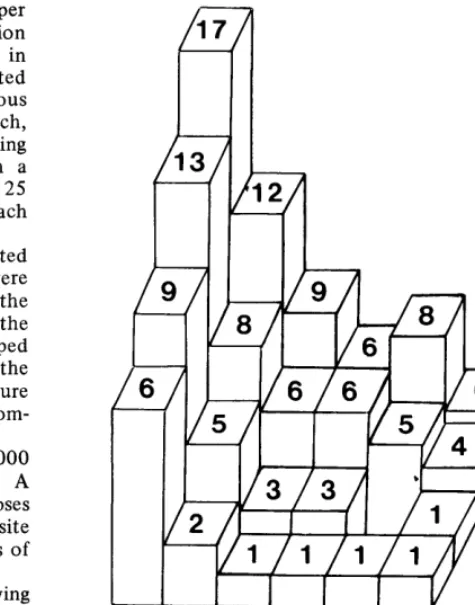
The average annual evaporation in the 17 western states (Fig. 1) ranges from 24 to 84 inches (The Water Encyclopedia,
1970) and is several times greater than the annual precipitation in many areas. Livestock water for the drier parts of this area is collected by small water-harvesting systems (Cluff, 1967; Lauritzen and Thayer, 1966; Lauritzen, 1967; Myers, Frasier, and Griggs, 1967) or from seep areas and must be stored for use at a later date. In open storage, much of this water evaporates.
Much investigation has been conducted on controlling evaporation from open water surfaces. Studies have included evaluations of monomolecular layers (Reidhead, 1960; Magin and Randall, 1960), water dyed different colors or water in different colored evaporation pans (Young, 1947; Bloch and Weiss, 1959; Keyes and Gunaji, 1967; Yu and Brutsaert, 1967), various shading materials, and various types of barriers between the water surface and the atmosphere (Genet and Rohmer, 1961; Crow and Manges, 1965; Rojitsky and Kraus, 1966; Cluff, 1967; Myers and Frasier, 1970). All systems have reduced
Authors were agricultural engineer and hy- drologic technicians, Agricultural Research Serv- ice, U.S. Department of Agriculture, Logan, Utah. Present address of A. R. Dedrick and W. R. Williamson is U.S. Water Conservation Lab- oratory, 4331 East Broadway, Phoenix, Arizona 85040.
The report is a contribution of the Western Region, Agr. Res. Serv., U.S. Dep. Agr., in co- operation with the Utah Agricultural Experi- ment Station, Utah State University.
Manuscript received January 10, 1973.
404
evaporation somewhat, but advantages have been marginal.
Floating foam rubber sheets offer a means of suppressing evaporation. Low-density synthetic sheeting materials have recently been evaluated as floating evaporation barriers between the water surface and the atmosphere. Evaporation reduction on insulated evaporation tanks in Arizona (Cooley, 1970) was essentially equal to the percent of water surface area covered by light-colored floating sheets. Studies in Utah showed that sheets of
Fig. 1. Mean annual lake evaporation (inches) in the 17 western states (The Water Encyclopedia,
1970). Values for period 1946-I 955.







![(E) 2 [(2 Hydroxy 5 nitrophenyl)iminiomethyl]phenolate](data:image/gif;base64,R0lGODlhAQABAIAAAP///wAAACH5BAEAAAAALAAAAAABAAEAAAICRAEAOw==)