University of Windsor University of Windsor
Scholarship at UWindsor
Scholarship at UWindsor
Electronic Theses and Dissertations Theses, Dissertations, and Major Papers
2014
genomic and behavioural evolution in the artificial ecosystem
genomic and behavioural evolution in the artificial ecosystem
simulation EcoSim
simulation EcoSim
Marwa Fouad Khater University of Windsor
Follow this and additional works at: https://scholar.uwindsor.ca/etd
Recommended Citation Recommended Citation
Khater, Marwa Fouad, "genomic and behavioural evolution in the artificial ecosystem simulation EcoSim" (2014). Electronic Theses and Dissertations. 5204.
https://scholar.uwindsor.ca/etd/5204
This online database contains the full-text of PhD dissertations and Masters’ theses of University of Windsor students from 1954 forward. These documents are made available for personal study and research purposes only, in accordance with the Canadian Copyright Act and the Creative Commons license—CC BY-NC-ND (Attribution, Non-Commercial, No Derivative Works). Under this license, works must always be attributed to the copyright holder (original author), cannot be used for any commercial purposes, and may not be altered. Any other use would require the permission of the copyright holder. Students may inquire about withdrawing their dissertation and/or thesis from this database. For additional inquiries, please contact the repository administrator via email
Genomic and behavioural evolution in the
artificial ecosystem simulation EcoSim
by
Marwa Fouad Khater
A Dissertation
Submitted to the Faculty of Graduate Studies
through School of Computer Science
in Partial Fulfillment of the Requirements for
the Degree of Doctor of Philosophy at the
University of Windsor
Windsor, Ontario, Canada,
2014
Genomic and behavioural evolution in the artificial ecosystem simulation EcoSim
by
Marwa Khater
APPROVED BY
———————————–
Dr. G. Arhonditsis ,External Examiner
University of Toronto Scarborough
————————————
Dr. J. Ciborowski, External Reader
Department of Biological Sciences
————————————
Dr. Z. Kobti, Internal Reader
School of Computer Science
————————————
Dr. A. Ngom, Internal Reader
School of Computer Science
————————————
Dr. R. Gras, Advisor
School of Computer Science
————————————
Declaration of Co-Authorship
I hereby declare that this dissertation incorporates material that is result of
joint research, as follows:
This dissertation also incorporates the outcome of a joint research undertaken
in collaboration with Marwa Khater and Dorian Murariu under the supervision of
professor Robin Gras. The collaboration is covered in Chapter 7 of the dissertation
whenever a biological discussion is required. In all cases, the key ideas, primary
contributions, experimental designs, data analysis and interpretation, were
per-formed by the author, and the contribution of co-authors was primarily through
the provision of required background biological information.
I am aware of the University of Windsor Senate Policy on Authorship and I
certify that I have properly acknowledged the contribution of other researchers
to my dissertation, and have obtained written permission from the co-author to
include the above materials in my dissertation. I certify that, with the above
qualification, this dissertation, and the research to which it refers, is the product
of my own work.
Declaration of Previous Publication This dissertation includes five original
pa-pers that have been published/submitted for publication in peer reviewed
Thesis Chapter Publication title/ full citation Publication status
Chapter 5 M. Khater, E. Salehi, and R. Gras, Published
”The emergence of new genes in EcoSim
and its effect on fitness,”
in Simulated Evolution and
Learning. Springer, 2012, pp. 52-61.
Chapter 5 M. Khater and R. Gras, Published
Chapter 6 ”Adaptation and genomic
evolution in EcoSim,”
From Animals to Animats
12, pp. 219-229, 2012.
Chapter 6 M. Khater, E. Salehi, and R. Gras, Published
”Correlation between genetic diversity
and fitness in a predator-prey
ecosystem simulation,”
in AI 2011: Advances in
Artificial Intelligence. Springer,
2011, pp. 422-431.
Chapter 7 M. Khater, D. Murariu, and R. Gras. Published
”Contemporary evolution and
genetic change of prey as
a response to predator removal.”
Ecological Informatics,
22:13-22, 2014.
Chapter 7 M. Khater, D. Murariu, and R. Gras. Submitted
”Predation risk tradeoffs in prey:
effects on energy
Abstract
Artificial life evolutionary systems facilitate addressing lots of fundamental
questions in evolutionary genetics. Behavioral adaptation requires long term
evo-lution with continuous emergence of new traits, governed by natural selection.
We model organism’s genomes coding for their behavioral model and represented
by fuzzy cognitive maps (FCM), in an individual-based evolutionary ecosystem
simulation (EcoSim). The emergent of new traits (genes) in EcoSim is examined
by studying their effect on individual’s fitness and well being. We examine how
the new traits are used to predict the value of fitness using machine learning
tech-niques. A comparison between the genomic evolution of EcoSim and a neutral
model (a randomized version of EcoSim) is examined focusing on their respective
genomic diversity. In order to further emphasize the importance of genetic
diver-sity to adaptation and thus the well being of individuals, we were encouraged to
study the effect that genetic diversity has on fitness. EcoSim gives us the chance
to study the relation between species genetic diversity and average species fitness
without the limits in environmental conditions and time scales found in biological
studies, but in highly variable environments and across evolutionary time.
The ecological effects of predator removal and its consequence on prey
behav-ior have been investigated widely. We investigated the effects of predation risk
on prey energy allocation and fitness. Here the role of predator removal on the
contemporary evolution of prey traits such as movement, reproduction and
for-aging was evaluated. Our study clearly shows that predation risk alone induces
behavioural changes in prey which drastically affect population and community
dynamics, A classification algorithm was used to demonstrate the difference
be-tween genomes belonging to prey co-evolving with predators and prey evolving
in the absence of predation pressure. We argue that predator introductions to
naive prey might be destabilizing if prey have evolved and adapted to the absence
of predators. Our results suggest that both predator introduction and predator
removal from an ecosystem have widespread effects on the survival and evolution
of prey by altering their genomes and behaviour, even after relatively short time
Acknowledgments
Foremost, I would like to express my sincere gratitude to my supervisor Dr. Robin
Gras for the continuous support of my PhD study and research, for his patience,
motivation, enthusiasm, and immense knowledge. His guidance helped me in all
the time of research and writing of this thesis. He has always allocated time for me
and was constantly giving me advice. I could not have imagined having a better
supervisor and mentor for my PhD study. I would like to thank my committee
members Dr. George Arhonditsis, Dr. Jan Ciborowski, Dr. Ziad Kobti and Dr.
Alioune Ngom for accepting to allocate part of their valuable time to evaluate my
research.
I would like to extend my gratitude towards Dorian Murariu, my research
part-ner and biology cohort, who meticulously helped me in collecting all the required
biological information needed for this research. His valuable insight and comments
added depth to this thesis. I also like to thank all my team mates and other lab
members specially Abbas Golestani, Morteza Mashayekhi and Yasaman Farahani
who throughout this journey became dear friends. They gave me their comments
and technical help when needed.
Special thanks must go to my husband and life-partner Rami Salem. He
pro-vided unconditional love, support and encouragement through both the highs and
lows of my time in graduate school.
Finally, I like to thank and dedicate this thesis to my mother Dr. Sanaa Alassar
who has always believed in me and constantly pushed me forward. I derive my
strength through her.
This work was made possible by the facilities of Shared Hierarchical
Aca-demic Research Computing Network (SHARCNET: www.sharcnet.ca) and
Contents
Declaration of Co-Authorship iii
Abstract v
Acknowledgments vi
List of Tables xi
List of Figures xiii
1 Introduction 1
1.1 Motivation . . . 1
1.2 Objective . . . 3
1.3 Contributions of the thesis . . . 4
1.4 Outline of thesis . . . 6
2 Background and Literature Review 8 2.1 Artificial life . . . 8
2.2 IBM . . . 11
2.2.1 Tierra . . . 12
2.2.2 Avida . . . 13
2.2.3 Echo . . . 15
2.2.5 Framsticks . . . 16
2.3 Other predator-prey simulations . . . 17
3 Individual based ecosystem simulation EcoSim 19 3.1 Purpose . . . 19
3.2 Entities, state variables, and scales . . . 20
3.3 Process overview and scheduling . . . 21
3.4 Design concepts . . . 22
3.4.1 Basic principles . . . 22
3.4.2 Emergence . . . 24
3.4.3 Adaptation . . . 26
3.4.4 Fitness . . . 29
3.4.5 Prediction . . . 29
3.4.6 Sensing . . . 30
3.4.7 Interaction . . . 30
3.4.8 Stochasticity . . . 31
3.4.9 Collectives . . . 32
3.4.10 Observation . . . 32
3.5 Initialization and input data . . . 33
3.6 Submodels . . . 33
3.7 The Neutral Model . . . 37
4 Data Analysis 40 4.1 Introduction . . . 40
4.2 Entropy as a Measure of Genetic Diversity . . . 40
4.3 Fitness calculation . . . 42
4.4.1 C4.5 . . . 43
4.4.2 Random Forest . . . 44
4.4.3 JRip Rule Learner . . . 45
4.5 Feature Selection . . . 46
5 The genomic evolution in EcoSim and its effect on fitness 48 5.1 Introduction . . . 48
5.2 Evolution in EcoSim versus Neutral Model . . . 49
5.3 Emergence of New Genes . . . 50
5.4 Building a Random Forest Classifier for Inference . . . 51
5.5 Rule Learning Using JRip . . . 54
5.6 Conclusion . . . 57
6 Correlation between genetic diversity and fitness in EcoSim 59 6.1 Introduction . . . 59
6.2 Measuring Correlation between Entropy and Fitness . . . 60
6.3 Building Classifier for Inference . . . 64
6.3.1 Feature Selection . . . 64
6.4 Classification . . . 66
6.4.1 Decision trees classification results . . . 66
6.4.2 Random Forest Classifier for Inference . . . 67
6.4.3 JRip Rule Learner . . . 68
6.5 Conclusion . . . 70
7 Behavioural and Genetic Change of Prey as a Response to Preda-tor Removal 72 7.1 Introduction . . . 72
7.3 Predation effect on prey’s behaviour . . . 78
7.3.1 Population dynamics . . . 78
7.3.2 Predation risk-foraging trade off . . . 82
7.3.3 Adjustment of reproduction strategies in response to preda-tion risk . . . 86
7.3.4 Prey movement . . . 88
7.4 Predator consequences on prey genomic evolution . . . 92
7.5 Genomic classification and statistical analysis . . . 95
7.5.1 Classifying instances belonging to case A and C . . . 97
7.5.2 Classifying instances belonging to case B and C . . . 97
7.5.3 Classifying instances belonging to case A and B . . . 98
7.5.4 Extracted semantics from rules . . . 99
7.5.5 Predator introduction . . . 100
7.6 Conclusion . . . 103
8 Summary, Conclusions and Future work 108 8.1 Summary . . . 108
8.2 Conclusions . . . 109
8.3 Future direction . . . 111
References 113
List of Tables
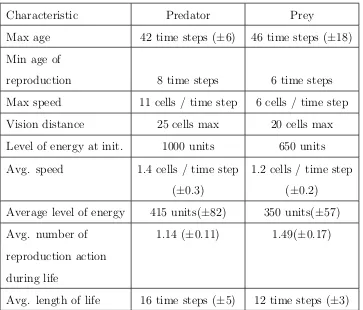
3.1 Several physical and life history characteristics of individuals from
10 independent runs. . . 20
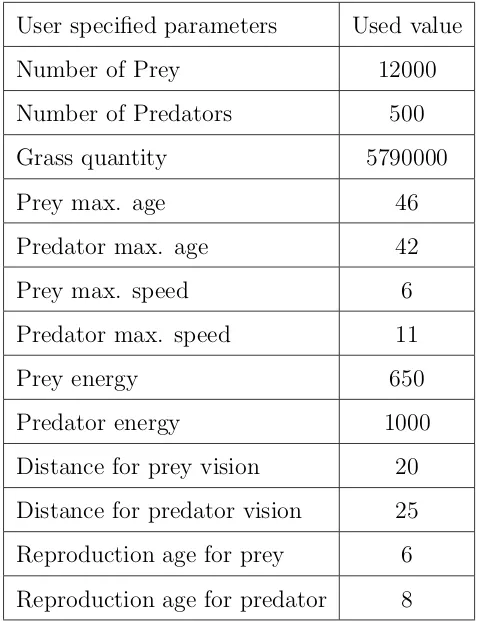
3.2 Values for user specified parameters. . . 34
5.1 Percentage of low fitness (LOW), high fitness (HIGH), and very
high fitness (VHIGH) prey instances for 4 different runs. . . 52
5.2 Accuracy for training and validating with the Random Forest
clas-sifier on four runs of the simulation. . . 53
5.3 Accuracy percentages for training and validating with JRip after
CMSS-EDA and CfsSubsetEval feature selection, for four runs of
the simulation. . . 54
6.1 Percentage of high positive (HIGHP), high negative (HIGHN), weak
correlation (WEAK CORR) between fitness and genetic diversity
for window of 400 and shift of±25 for five different runs. . . 66
6.2 Accuracy percentages for training and validating with the C4.5
clas-sifier for 5 runs of the simulation. . . 67
6.3 Accuracy percentages for training and validating with the RF
clas-sifier for 5 runs of the simulation. . . 68
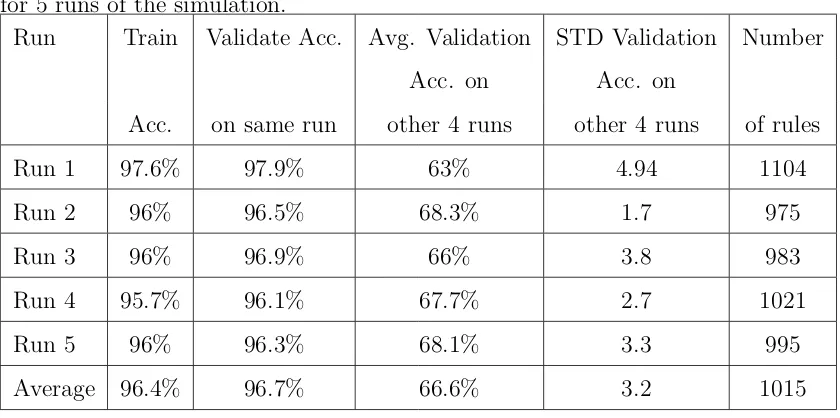
6.4 JRip rule learner accuracies and number of produced rules for five
7.1 Average energies (with std between brackets) consumed by prey
while engaging in each type of action, expressed as a percent of
their average energy budgets. (Note: since these are average values
over the entire duration of the runs they do not add up to 1). Eating
represents net energy gained from eating, including the energy spent
on the eating action itself. Due to computational limitations we
present here the average energy consumed for each action for four
runs of case A and B prey only. *Includes all successful and failed
actions. . . 85
7.2 Demographic characteristics as a percent (%) of population for case
A and B runs. Standard deviations in brackets. *Includes successful
and failed actions. **Death rate includes all causes of death (being
eaten by predators (for case A prey only), energy depletion, and
old age). . . 87
7.3 Average frequency of movement actions of all prey as a percent (%)
of the total population of prey, for case A and B prey except for
Speed which is expressed as number of cells. Standard deviations in
brackets (std).*Includes all successful and failed attempts for each
action. . . 90
7.4 Accuracy for training the classifier using 10 fold cross validation,
accuracy of validating the classifier using the validation set, and the
number of rules produced from the model . . . 95
List of Figures
3.1 The overview and scheduling of every time step. . . 23
3.2 Initial FCM prey map including concepts and edges. The width of
each edge represents the influence value of a concept on another.
Color of an edge shows inhibitory (red) or excitatory (blue) effects. 25
3.3 An FCM for detection of foe (predator) and decision to evade with
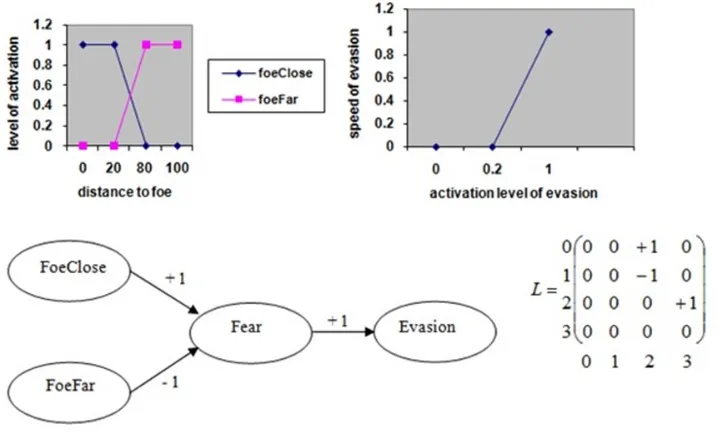
its corresponding matrix (0 for ’Foe close’, 1 for ’Foe far’, 2 for
’Fear’ and 3 for ’Evasion’) and the fuzzification and defuzzification
functions. . . 25
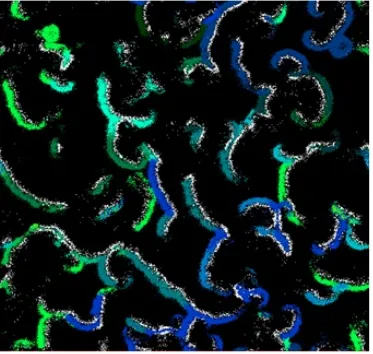
3.4 The snapshot of the virtual world in one specific time step, white
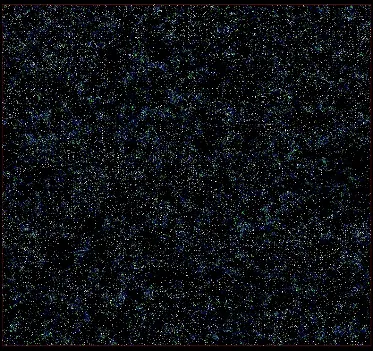
color represents predator species and the other colors show different
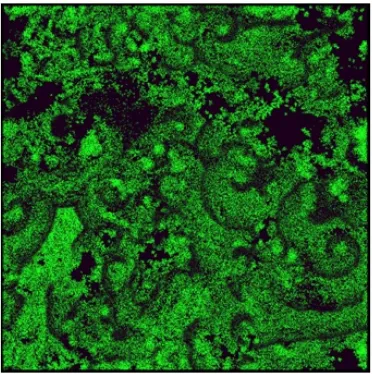
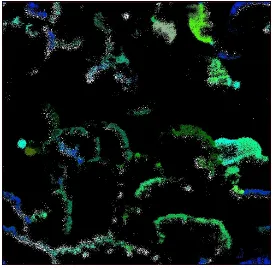
prey species. . . 27
3.5 The snapshot of the virtual world for a specific time step of the
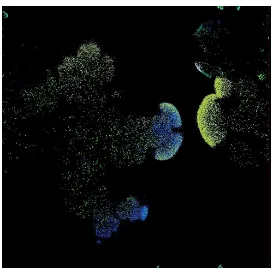
simulation which demonstrates the pattern of grass in the world. . . 28
3.6 FCM for detection of foe (predator) - difference between perception
and sensation. . . 31
3.7 Breeding algorithm. . . 36
3.8 Snap shot of the Neutral shadow world with predator and prey
spatial distribution . . . 38
5.1 Global Entropy for 10 different runs of the simulation. Top 5 curves
6.1 Different prey species correlation values between entropy and
fit-ness. x-axis represents the different time shifts. Y-axis represents
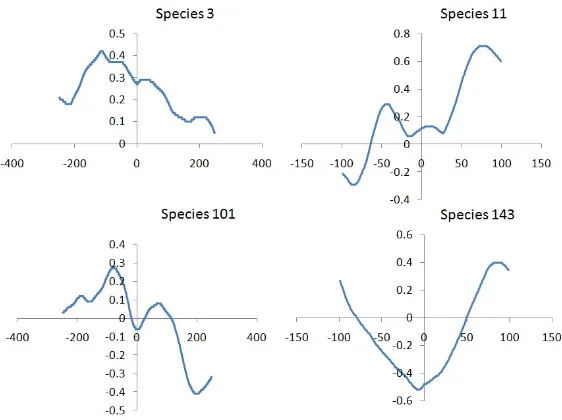
the correlation values. . . 61
7.1 Snapshot of the world in one of the case A runs at time step 5000.
The numbers of prey and predator individuals are 198554 and 27903
respectively. The colored spirals show different prey species and the
white represents predators. . . 76
7.2 Snapshot of the world in one of the case B runs at time step 5000
showing 34254 prey individuals. . . 77
7.3 Snapshot of the world in one of case C runs. Figure on right
rep-resents the world at time step 15000 showing 233784 prey and the
figure on left at time step 15060 where prey increased to 1040856. . 77
7.4 Total prey population. Blue line represents case A (high-risk prey),
red line represents case B (low-risk prey), and green line represents
case C where predators and prey co-evolve till 15,000 time steps,
and then prey evolve alone. . . 79
7.5 The average amount of grass in the world. Blue line represents case
A (high-risk prey), red line represents case B (low-risk prey), and
green line represents case C where predators and prey co-evolve till
15,000 time steps, and then prey evolve alone. . . 79
7.6 The average prey fitness. Blue line represents case A (high-risk
prey), red line represents case B (low-risk prey), and green line
represents case C where predators and prey co-evolve till 15,000
time steps, and then prey evolve alone. . . 80
7.7 The average prey populations choosing reproduction action,
includ-ing all successful and failed attempts. Blue line represents case A
(high-risk prey), red line represents case B (low-risk prey), and
green line represents case C where predators and prey co-evolve till
7.8 The average prey birth ratio to population. Blue line represents
case A (high-risk prey), red line represents case B (low-risk prey),
and green line represents case C where predators and prey co-evolve
till 15,000 time steps, and then prey evolve alone. . . 81
7.9 Grass density is the total units of grass divided by the number of
prey population in the world. Blue line represents case A
(high-risk prey), red line represents case B (low-(high-risk prey), and green line
represents case C where predators and prey co-evolve till 15,000
time steps, and then prey evolve alone . . . 83
7.10 The average prey foraging ratio to population. Blue line represents
case A (high-risk prey), red line represents case B (low-risk prey),
and green line represents case C where predators and prey co-evolve
till 15,000 time steps, and then prey evolve alone. . . 84
7.11 Percentage of maximum allowed transmitted energy to offspring at
birth. Blue line represents case A (high-risk prey), red line
repre-sents case B (low-risk prey), and green line reprerepre-sents case C where
predators and prey co-evolve till 15,000 time steps, and then prey
evolve alone. . . 87
7.12 The proportion of the total prey population runs that chose a
move-ment action (escape, foraging, socialize or explore) at each time
step. Blue line represents case A (high-risk prey), red line
repre-sents case B (low-risk prey), and green line reprerepre-sents case C where
predators and prey co-evolve till 15,000 time steps, and then prey
evolve alone. Total movement is the sum of all four of these actions,
and includes all successful and failed foraging and socialization
ac-tions. . . 89
7.13 The proportion of all movement actions that high (case A) and
low(case B) risk prey runs spent. The bars show a behavioural
tradeoff between time spent foraging and time spent responding to
7.14 The average prey speed. Blue line represents case A (high-risk
prey), red line represents case B (low-risk prey), and green line
represents case C where predators and prey co-evolve till 15,000
time steps, and then prey evolve alone. . . 91
7.15 The average prey genetic distance from initial FCM map. Blue line
represents case A (high-risk prey), red line represents case B
(low-risk prey), and green line represents case C where predators and
prey co-evolve till 15,000 time steps, and then prey evolve alone. . 92
7.16 The average prey genetic diversity (measured by entropy). Blue
line represents case A (high-risk prey), red line represents case B
(low-risk prey), and green line represents case C where predators
and prey co-evolve till 15,000 time steps, and then prey evolve alone. 93
7.17 The average number of prey species. Blue line represents case A
(high-risk prey), red line represents case B (low-risk prey), and
green line represents case C where predators and prey co-evolve till
15,000 time steps, and then prey evolve alone. . . 93
7.18 Distribution of genes appearing in the JRip classifier. . . 100
7.19 Snapshot of the world in one of the case D runs (predators are
in-troduced to naive prey) at time step 5000. Preys show more spatial
dispersal and white patches represent predators. In the first figure
the numbers of prey and predator individuals are 31502 and 1008
respectively. In the second figure at time step 5030 prey decreased
to 9301 and predators were 1502. At time step 5112 prey decreased
Chapter 1
Introduction
1.1
Motivation
Darwin (1859) conceived the mechanism that could account for the adaptation
and the diversity observed in nature. Darwin’s principle of natural selection rests
on a number of propositions [1]:
• The individuals of a population are not identical but vary in certain traits.
• This variation, at least partly, is heritable. Therefore, an individual shares some of these traits with its ancestors.
• Every population could potentially populate the whole world if each indi-vidual of that population realized its full reproductive potential. In reality,
few (if any) individuals do, and many individuals die without reproducing
at all.
• Individuals vary in their number of descendants (not only the number of children they produce, but the number of children that survive, and the
offspring they leave and so forth).
• The number of an individual’s descendants depends critically (but not
Populations with these characteristics, over generations, become more adapted
to their environment. With time and changing circumstances, different
adapta-tions may become advantageous. Gradually, this mechanism gives rise to different
life forms. Artificial Life (Alife) is concerned with the study of the processes and
mechanisms underlying life by recreating life-like phenomena in software,
hard-ware, and biochemicals [2]. The term ’artificial life’ was coined by Langton who
described Alife as ”a field of study devoted to understanding life by attempting to
abstract the fundamental dynamical principles underlying biological phenomena,
and recreating these dynamics in other physical media-such as computers-making
them accessible to new kinds of experimental manipulation and testing” [3].
An ecosystem is the complex system described by the organisms, the
environ-ment, and their physical, chemical and biological interrelationships in a given area.
Ecosystem health is determined through measurable characteristics. Ecosystem
health is determined through measurable characteristics. A healthy ecosystem is
defined as being ‘stable and sustainable’; maintaining its organization and
auton-omy over time and its resilience to stress [4]. So a healthy ecosystem is sustainable;
that is, it has the ability to maintain its structure (organization) and function
(vigor) over time in the face of external stress (resilience). A method to quantify
these attributes (vigor, organization, and resilience) should be taken into
consid-eration when modeling an ecosystem. Stability, population density, biodiversity
and how energy flows through trophic levels are some measurable characteristics
in evolutionary ecological models.
The metaphor of an evolving ecosystem was chosen for this study of
artifi-cial agent evolution because the evolutionary dynamics result from the modeling
of individual agents and their relations to the conditions and resources, in
com-bination with their diverse interactions with other agents in their environment.
Together, these factors make up the artificial ecosystem. This view of an evolving
system, where natural selection is an emergent system property, stands in contrast
to traditional evolutionary algorithms where evolution is the direct result of an
1.2
Objective
Like in many disciplines; simulation modeling played a great role in studying
evo-lutionary processes. Many ecological studies that require data of hundreds of years
can be obtained by simulation modeling that produces results in a matter of a few
hours or days depending on the computational cost of each system. Darwinian
evolution governed by natural selection is modeled in EcoSim (an individual based
ecosystem simulation). Our main challenge concerns the ability to understand the
evolutionary machinery and evolved behaviour in the system. This problem is
of particular importance in systems based on natural selection. The lack of an
explicit objective (predefined fitness) function makes spotting and understanding
the evolved behaviour of individuals a challenging task. Therefore, there must be
some other way to identify and understand qualitatively novel behaviour when
it emerges. The objective of the work was to capture the correlation between
different emerging behaviours arising in EcoSim in order to gain deeper
under-standing of the model and thus natural ecosystems. Here came the integration of
machine learning techniques as an analytical step for analyzing the vast amount
of information produced by the simulation. The main aim of this work is to study
the genomic evolution and emerging behaviours arising in EcoSim. Validating the
evolutionary machinery in EcoSim by studying the evolution of possible new genes
and behaviours was the first main focus. The validation step was achieved through
examining how the new possible genes are capable of predicting the fitness of prey
individuals and through a comparison between the genomic evolution of EcoSim
and its neutral model. EcoSim is a platform that allowed the study of different
ecological theories such as the relationship between species genetic diversity and
fitness. The success to map this study in EcoSim acted as a validation step of the
model and also a contribution to gain more insight about the correlation between
genetic diversity and fitness.
The complexity of behavioural interactions in predator-prey systems has
re-cently begun to capture trait-effects, or non-lethal effects, of predators on prey
via induced behavioural changes. Non-lethal predation effects play crucial roles in
foraging, movement, and reproductive behaviours of prey. Prey exhibit tradeoffs
in behaviours while minimizing predation risk (see Chapter 7 for details). EcoSim
allows complex intra- and inter-specific interactions between individual evolving
behavioural models called prey, as well as complex predator-prey dynamics and
coevolution in a tri-trophic and spatially heterogeneous world. Another part of
the study involved investigating the effects of predation risk on prey energy
allo-cation and fitness. The semantics of the system allows comprehensive analysis of
new genes and behaviours as they arise through a Darwinian evolutionary process.
We asked the following questions about prey in EcoSim: are there trait-mediated
effects on prey in the form of predation risk-foraging tradeoffs? How does the
tradeoff affect the energy of prey and allocation of energy to reproduction? How
do their reproductive strategies change in response to predation? What are the
effects of predation risk on the prey population? Does the predation pressure
af-fect prey’s genomic evolution? How does prey evolve in the absence of predation
pressure? What is the effect of introducing predators to nave prey?
1.3
Contributions of the thesis
• First, the evolutionary machinery in EcoSim was studied by examining the emergence of new genes and their effect on fitness. Random Forest was used
to build a classifier that was able to predict the values of fitness based on
the values of new developed genes. This is considered to be a validation
step to ensure the validity of the behavior model and its ability to cope with
changes in the environment. A feature selection step is then presented along
with rule learning. These rules allow us to discover the most important
features that increase fitness, and help us to understand the semantics of
the behavior model.
• It has been shown how genetic evolution and diversity governs the
adapta-tion process. We study how EcoSim’s individuals adapt to their changing
environment by comparing their behavior with a neutral model - a partially
• Shannon entropy, which is a measure of unpredictability and disorder com-ing from Information theory, is used as a measure of genetic diversity. We
present the difference in entropy between EcoSim and the neutral model
to emphasize the adaptive characteristics of EcoSim. Furthermore, we
in-vestigate the relationship between genetic diversity and species fitness and
present the correlations found between these two measures in EcoSim. Very
high correlation both negative and positive between entropy and fitness was
detected. In order to validate the correlation results and further
under-stand the reasons behind these results machine learning classifiers were used
to predict the correlation class variable based on training and testing sets.
High accuracy for classification was seen which proves the interest of the
used genetic diversity measure and its correlation with fitness. In addition,
feature selection step was used to find the best features affecting the
corre-lation values. These extracted features such as popucorre-lation size and spatial
dispersal are similar to the factors affecting the relation between genetic
di-versity and fitness in community ecology. Rules were extracted and further
investigated which adds more semantics to the reasons behind correlation
between genetic diversity and fitness.
• EcoSim models predators and prey with a great deal of detail to their char-acteristics and interactions. In this study the effect of predator removal
on prey’s behaviour (foraging, movement and reproduction), genetic change
and their capability to coevolve when predators are reintroduced in EcoSim
is investigated. In addition, prey are allowed to evolve along two distinct
evolutionary paths in the simulation, by either coevolving with predators
or evolving in their absence. Results revealed that prey energy budgets,
life history traits, allocation of energy to movements and fitness-related
ac-tions differed greatly between prey subjected to low-predation risk versus
high-predation risk. High-predation risk suppressed prey foraging activity,
increased movement, and decreased reproduction relative to low-risk. We
used a classification algorithm to show that distinct genomes, corresponding
to distinct behavioural adaptations in these prey populations, had evolved
that prey alter their behaviour according to the level of predation risk. In
particular, prey reduce their foraging effort when predation risk is high and
instead invest more resources in antipredator behaviours. In addition, these
risk-aversive behaviours negatively influence prey fitness as they reduce
en-ergy that can be allocated to reproduction. The introduction of predators to
naive prey was also studied and monitored predator-prey dynamics, along
with the stability of the system after this change. We show that the prey
that are left to evolve for a long time without predators developed survival
strategies and adaptive behaviors that were coded in their genomes, and this
caused instability in the system when predators were later introduced.
1.4
Outline of thesis
• Chapter 2 reviews existing literature on evolutionary systems and the use of
IBM in ecology, with a particular focus on ALife evolutionary simulations.
• Chapter 3 gives an overview of, the model used in this study, EcoSim which is
a predator-prey ecosystem simulation that is capable of exhibiting long-term
adaptive evolution of agent behaviour.
• Chapter 4 presents the background of the data analysis approaches used in the rest of the thesis including machine learning techniques, the deployment
of entropy as a measure of genetic diversity and fitness calculation.
• Chapter 5 presents the details of studying the emergent of new genes in EcoSim and its effect on average species fitness. The comparison between
genetic diversity in EcoSim and its neutral model, which is affected by
con-tinuous adaptation of the individuals to their dynamic environment, is also
reviewed.
• The study of genetic diversity and its correlation with fitness is presented in Chapter 6 along with the classification and rule extraction step used to add
Chapter 2
Background and Literature
Review
2.1
Artificial life
Artificial Life, or ALife, is the research field that tries to describe and study
nat-ural life by creating artificial systems that possess some of the properties of life.
The notion Artificial Life was first presented by Langton who described it by
”understanding life by attempting to abstract the fundamental dynamical
prin-ciples underlying biological phenomena, and recreating these dynamics in other
physical media, such as computers, making them accessible to new kinds of
ex-perimental manipulation and testing.” [3]. Latter on Bedaue noted Artificial Life
is concerned with the study of the processes and mechanisms underlying life by
recreating life-like phenomena in software, hardware, and biochemicals [2]. There
are three methods to model ALife; ’soft’ that uses software simulations, ’hard’
which involves hardware implementation mainly in robotics and ’wet’ which
in-volves biochemistry. The first known formal model was designed by John von
Neumann creating a self-reproducing, computational universal cellular automata
[5]. He formalized the idea of cellular automata in order to create a theoretical
model for a self-reproducing machine. He was mainly concerned with studying
the evolution of complex adaptive structures motivated by the understanding of
informa-tion theory aiming to understand living systems was done by Wiener [6]. Due to
the increase use of computer simulations, Alife has overlapped and associated with
other areas in artificial intelligence such as computational intelligence, which is a
nature-inspired computational methodology that addresses real world
optimiza-tion problems. Although computaoptimiza-tional intelligence and Alife overlap in many
aspects and share similar methodology, there is a difference in their modeling
strategies. Alife is mainly concerned with gaining knowledge about living systems
using computational bottom-up complex systems. On the other hand,
computa-tional intelligence is motivated by the inverse, mainly using the knowledge about
living system to construct a top down centralized complex system. Whereas,
computational intelligence research is essentially analytic, breaking down complex
systems into basic components, ALife synthetic approach attempts to construct
complex systems from elemental units. The synthetic approach is based on two
concepts, emergence and adaptation.
Complex adaptive systems exhibit emergence where the behavior of the whole
is more complex than the behavior of the parts [7]. Emergence is one of the
char-acteristics of a complex system where new and coherent structures, patterns in a
complex system are derived due to interactions between the elements of the system
over time [8]. The characteristics of emergence were provided by Holland[7]. (a)
Emergence happens in systems which compose of different interactive units that
follow simple rules. (b) The interactions between the parts are nonlinear so the
overall behavior cannot be predicted by summing the behaviors of the isolated
parts. (c) The system functions change with the change of context which makes it
difficult to predict emergent behavior. (d)The general trend of system complexity
increases with increasing number of interactions. [9] defines emergence as ”the
origin of qualitatively new structures and functions which were not reducible to
those already in exist”. He classified the emergent phenomena into three different
classes; computational emergence which is derived from the cellular automaton
example and the mathematical theory of chaos, thermodynamic emergence which
is the physicists way to emergent phenomena, and emergence relative to a model
which deals with situations where observers need to change their model in order
emer-gence relative to a model category. Evolutionary emeremer-gence is an essential feature
in Alife as [10] noted ”The essential features of computer-based Artificial Life
models are: . . . There are no rules in the system that dictates global behavior.
Any behavior at levels higher than the individual programs is therefore emergent.
There are two types of selection that might bring such emergence. [11] referred
to these as ”extrinsic adaptation where evolution is governed by a specified
fit-ness function, and intrinsic adaptation, where evolution occurs automatically as a
result of dynamics of a system cause by the evolution of many interacting
subsys-tems”. When aiming to model a more open-ended evolution Alife system, intrinsic
adaptation should be diploid.
Artificial evolving systems with pre-defined fitness functions, or fitness
land-scapes, have been well studied. GAs are biologically inspired search procedures
initially developed by Holland [12] [13] [14] in the early 1960s. GAs evolve an
initial random population of genomes (codings for solutions to the problem in
hand) by selecting which individuals reproduced and which will be replaced. This
is done by evaluating each solution’s fitness function relevant to the problem and
favouring the fitter solutions. A basic shortcoming of genetic algorithms and
evo-lutionary algorithms in general is their tendency to converge. They treat evolution
as an optimizer, as they reach local or global optima and eventually converge
to-wards them. When the goal becomes building a system where autonomous agents
are able to evolve and adapt in a more open-ended evolutionary dynamics,
spec-ifying in advance all the possible behaviours by optimizing an objective function
is not desirable. When targeting unbounded evolution and emergence of new
adaptive behavior, evolutionary algorithms (using extrinsic adaptation) should be
rejected and rather a model based on natural selection (intrinsic adaptation) is
more suitable. Furthermore, most existing theoretical modeling approaches rely
on the genetic algorithms (GAs) model concept. These systems are
optimiza-tion processes, meaning that the fate of the system is directly determined by its
2.2
IBM
Soft Alife uses individual-based modeling (IBM) which is a bottom-up approach
to simulating the interactions among individuals or groups of individuals in an
attempt to create complex phenomena. IBM differs from classical equation based
models (EBMs) which are typically built up from set of interrelated differential
equations. Unlike EBMs, IBM consists of interacting adaptive entities which are
able to capture emergent behavior and provide a greater level of useful details.
The ease of modeling renders IBM as being more flexible than EBM. IBM has
been used on non-computing related scientific domains such as ecological sciences
(surveyed by [15]) and social sciences (surveyed by [16]).
The benefits of IBM over other modeling techniques can be captured in several
points [8]: (i) agent-based models are a natural way to describe systems comprised
of interacting entities; (ii) agent-based models are flexible; (iii) agent-based
mod-els capture emergent phenomena; and (iv) agent-based modmod-els provide access to a
greater level of useful detail. In particular, modeling interactions between entities
can be much easier in agent-based systems than in EBMs, even when one is
com-fortable with the concepts of partial differential equations. It is usually easy to
increase the size of a simulation, adding new agents to see if interesting effects are
swamped by agent numbers, or taking agents away if interesting detail is obscured.
It is also possible to look at the results of simulations at different levels of detail
at the level of a single agent, at the level of some specific group of agents, or at
the level of all agents together. All these things are harder to manage in EBMs.
In addition to their inherent naturalness and flexibility, agent-based simulations
allow one to identify emergent phenomena. Emergent phenomena result from the
actions and interactions of individual agents, but are not directly controlled by
the individuals.
For the past decade there has been an enormous growth of use of IBM
ad-dressing different questions in ecology and evolutionary biology. Whereas classical
approaches to modeling ecology often ignore individual behaviour and instead uses
state- variable model that controls birth and death rates, IBM aim to ”treat
more realistic simulation. The use of IBM in ecology and evolution has been
re-viewed by Grimm in 1999 and Lomnicki 1999 [18]. DeAngelis and Mooij presented
another review study which focused on how the IBM field developed [15].
DeAn-gelis categorized the different directions along which to study individual variation
in IBM into five different directions ”(a) spatial variability, local interactions and
movement; (b) life cycle and ontogenetic development; (c) phenotypic variability,
plasticity and behavior; (d) differences in experience and learning; and (e) genetic
variability and evolution.” He also grouped the IBM systems into seven major
study groups; movement through space, formation of patterns among
individu-als, foraging and population dynamics, species interactions, local competition and
community dynamics, evolutionary processes, management related processes. A
book by Grimm and Railsback (2005) [19] provides a set of guidelines for building,
testing, and analyzing individual-based models, updated in [20]. IBM has been
used in many areas in ecology including forest ecology (e.g. [21]), fisheries and
marine life (e.g. [22]), conservation biology and spatial heterogeneity (e.g. [23]).
Many ecological IBM systems were not designed to be general platforms that could
capture different aspects in ecology and evolution but rather these models answer
specific question in their narrow domain. More group of evolutionary IBMs that
were designed as platforms studying evolutionary behavior, emergence, adaptation
and complexity are mention below.
2.2.1
Tierra
While evolutionary computation has been studied since the 1960’s, the subfield of
digital evolution is much younger. The first experiments with populations of self
replicating computer programs were performed in 1990 in a system called
Core-world [24], and later improved upon in Tierra [25]. Tom Ray’s Tierra model is
the first widely known digital evolutionary ecosystem consisting of self-replicating
computer programs based on natural selection. Competition in Tierra results from
finite CPU-time and memory space. Tierra is based on a virtual operating
sys-tem, complete with its own, relatively robust and simple (but universal) machine
empty memory space with a hand-written self-replicator program. This replicator
then produces a copy of itself which is instantiated as an independent process. A
small amount of stochastic behaviour is implemented for program execution, the
copy process, and programs are also subject to point mutations. These
mecha-nisms are responsible for introducing variety into the populations. If the modified
programs retain their ability to replicate, and the modifications alter their
prob-ability of reproduction, Darwinian evolution can occur. A number of interesting
results have been obtained from such evolutionary runs. For example, ’parasites’
have appeared-short pieces of code which run another program’s copying
proce-dure in order to copy themselves. Hyper-parasites (parasites of parasites) have
also been observed, along with a number of other interesting ecological
phenom-ena. Ray demonstrated that it is possible to build an operating system in which
self-replicating computer code can evolve. On the other hand, after a certain
amount of time, Tierra fails to produce any new programs but only change in the
number of existing ones.
Rey sparked a number of follow-up systems based on Tierra. Cosmos a
Tierra-like system configured in a 2 dimensional toroidal Tierra-like grid environment was used
to study the role of contingency in evolution [26]. Furthermore, in Amoeba [27]
the language of the digital organism along with its self replicating code is also
subject to evolution. The Amoeba system, developed by Pargellis, showed the
possibility of spontaneous emergence of a self-replicating program.
2.2.2
Avida
Development of AVIDA (a Tierra like system) [28] [29], in which self-replicating
digital organisms consists of a circular list of instructions (its genome) and a
vir-tual CPU evolve. In Avida, each organism lives in its own address space, unlike
Tierra’s shared address space. This enhancement increased the power of digital
evolution as an experimental tool. AVIDA environment comprises a number of
cells, each cell can contain at most one organism, and the size of an AVIDA
pop-ulation is bounded by the number of cells in the environment. Organisms are
an offspring. When an organism replicates, a cell to contain the offspring is
se-lected from the environment and its inhabitant organism is replaced (killed and
overwritten). Since digital organisms are self-replicating and compete for space, a
higher merit (all else being equal) results in an organism that replicates more
fre-quently, spreading throughout and eventually dominating the population. Hence,
AVIDA satisfies the three conditions necessary for evolution to occur: replication,
variation (mutation), and differential fitness (competition). Individuals in Avida
do not move and in order to measure the complexity they use a fixed environment
which is rarely seen in nature. This means that the system is only adapting to
a preexisting environmental complexity. The processes derived from Avida and
Tierra are optimization processes, similar to evolutionary algorithms, for which
it has been proved that it converge toward a maximum, either local or global.
Finally, as with Tierra, the complexity growth in Avida always reaches an upper
bound and stops. These results with Avida do not capture the kind of continual
growth in qualitative complexity or long term incremental evolution that we can
observe in the biosphere. Hence, Avida and Tierra do not represent an open-ended
evolution which has been defined in various ways. Nehaniv, for example, defines
open-ended evolution as an unbounded increase in complexity [30]. In [31] Taylor
noted about Tierra and Tierra like systems ”most of these systems are only capable
of producing innovations of the ’more-of-the-same’ variety (e.g. more optimized
code), rather than anything fundamentally new.”
Avida was used to study numerous aspects of evolution [32]; issues of
complex-ity in evolution [33] [34]. Furthermore, they investigated the emergence of complex
behavior [35]. They showed that complex features do not appear suddenly but
only evolve when simpler traits exist which served as a foundation upon which
these complex features were built. In a recent study they showed how runaway
sexual selection leads to good genes and how they should be viewed as interacting
mechanisms that reinforce one another [36]. Evolving digital ecological networks
2.2.3
Echo
A significant advance in evolutionary IBM was presented by J. Holland in Echo
[37], a generic ecosystem in which agents evolve in a resource limited environment.
The world is made up of a square toroid lattice of sites which has different kinds
of evolving resources encoded by a letter. Agents interact with their environment
and are able to move from one site to another. They gain energy by eating and
spend it on their actions such as fighting, trading and mating. Reproduction
in Echo happens when an agent has replicated itself with a possible mutation
when it has gained enough resources to copy its genome asexually or by sexual
mating. Selection is based on the interacting agents rather than by a predefined
fitness function. Emerging phenomena arise such as formation of communities and
trading networks. Echo was used to study the modeling of food web complexity
[38]. Echo was intended to be a general model of intrinsic adaptive system rather
than modeling and answering specific questions in evolutionary biology. Due to
the high abstraction level of the Echo model, the degree of fidelity to real systems
is uncertain.
2.2.4
Polyworld
In PolyWorld [39], more advanced haploid agents, each controlled by an artificial
neural network, with a set of primitive behaviors and learning strategies,
popu-late a continuous environment containing number of energy sources (’food’) upon
which they rely on for survivor. Possible actions for agents include eat, mate, fight,
move, focus and light (for vision). Agents evolve under the influence of natural
selection and die when their energy is fully depleted or loose fight with another
agent. An agent’s genome specifies characteristics of its physiology and neural
ar-chitecture which is adapted during its life through Hebbian learning. Yaeger was
able to report the emergence of new population behavior such as fleeing, grazing,
following and flocking. Polyworld was used to study how evolution guides
com-plexity [40] and the passive and driven trends in the evolution of comcom-plexity [41].
Genetic clustering for the identification of species was presented was also presented
Polyworld, makes it difficult to reason and link together different aspects of the
model. Another criticism of PolyWorld, in the context of perpetual evolutionary
emergence, is that learning appears to be overwhelmingly responsible for the
re-sults. This integrated learning process adds to the computational complexity of
the model. Furthermore, the high complexity of the neural networks agents limits
their number making it difficult to study large ecosystem phenomena’s. Geb [43]
[44] is another similar artificial neural network system considered to be simpler
than Polyworld as it is not trying to mimic the real world as Polyworld do. Agents
which are controlled by a neural network each populate a gridded arena and
com-pete for space with no notion of energy. There is no learning process as agents do
not change during their lifetime and thus results prove it to be suited to long-term
incremental artificial evolution. Geb was proven to be the first autonomous
arti-ficial system to pass the Bedau and Packard’s evolutionary test [45]. According
to Bedau statistics, evolutionary dynamics in Gep was proven to be unbounded
[46] and thus based on intrinsic evlution. Bedau et al [45] developed a statistical
measure for testing unbounded evolution.
2.2.5
Framsticks
Framsticks presented by Komosinski et al in 1999 [47] is a 3D life simulation
plat-form addressing both research and education. The platplat-form consists of modules
that facilitates the design of various experiments in optimization, coevolution,
open-ended evolution and ecosystem modeling. Agents have both mechanical
structure (bodies) consisting of connected sticks and control system (brain)
us-ing artificial neural network. The neural network brain collects data from sensors
and sends signals to the joints which control motion activities. The world is
en-riched with complex topology and a water level along with energy balls consumed
by agents. Although some locomotion behaviours have evolved, the high
com-plexity of the model did not present any different results than those obtained
from much simpler evolutionary systems. This model is more concerned with the
study of emerging motor behavior rather than modeling a multiple level interacting
2.3
Other predator-prey simulations
Some of the above mentioned systems like Polyworld and Echo model predator
individuals. Other predator-prey models have also been presented focusing more
on the ecological predator prey dynamics and interactions. Smith (1991) [48] uses
Volterra [49]model which exhibits constant population dynamics, both in terms
of oscillations in global populations as well as dynamic patchiness. The model
integrated 2D spatial representation to study migration under different predation
strategies. He showed that detailed movement patters in predator and prey can
affect their interaction. Smith only models simple predator prey behaviour with
simple genomic representation as only migration parameters are able to mutate.
In [50] digital predator-prey organisms were used to study the evolution of trophic
structure represented by the food web. Bell showed how different energy flow
levels among organisms affect species richness and diversity. In another study [51]
Lotka-Volterra equations were integrated in an IBM to examine how evolution of
prey use by predators affects community stability and whether complexity of food
web increases stability of the predator prey system. The results demonstrated
that number of existing species decreases with the increasing complexity.
A predator-prey simulation based in a spatial collection of individual finite
state machine animat agents was first presented in [52]. This model can locate
hundreds of thousands of individuals evolving in a two-dimensional featureless
spatial plain. Every animat carries a small set of rules that direct its microscopic
behaviour and at each time-step of the simulation, each animat executes one of
these rules, causing it to: move; eat; or breed. In one study the effect of introducing
camouflage behaviour as an available option for predators was investigated([53]).
It was shown that individuals who adopt this behaviour are relatively successful
in obtaining prey and thus prolonging their lives against threat of dying of hunger.
This in turn led to higher numbers of successful older predators which caused a
crash in the population of prey.
In another study a time-delayed gestation period was introduced into the
predator-prey selection and adaptation mechanisms ([54]). The temporal
Chapter 3
Individual based ecosystem
simulation EcoSim
3.1
Purpose
EcoSim is an individual-based ecosystem simulation, designed by [55] to simulate
agents’ behavior in a dynamic, evolving ecosystem. The following description of
EcoSim was previously published as a supplementary material in [56]. The agents
(or individuals) of EcoSim are prey and predators acting in a simulated
envi-ronment. The main purpose of EcoSim is to study ecological and evolutionary
theories by constructing a complex, adaptive, and generic virtual ecosystem with
behaviours and processes resembling real ecosystems. Due to the complexity of
natural ecosystems and the time and funding resources required to study such
the-ories, modeling has become crucial to the study of ecology and evolution. EcoSim
is the first ecological model to use a fuzzy cognitive map (FCM) [57] to model each
agent’s behavior. The FCM of each agent, being coded in its genome, allows the
evolution of the agent behavior through the epochs of the simulation. EcoSim as a
virtual ecosystem has shown coherent behaviors of the whole simulation with the
emergence of patterns observed in real ecosystems providing a general framework
Characteristic Predator Prey
Max age 42 time steps (±6) 46 time steps (±18)
Min age of
reproduction 8 time steps 6 time steps
Max speed 11 cells / time step 6 cells / time step
Vision distance 25 cells max 20 cells max
Level of energy at init. 1000 units 650 units
Avg. speed 1.4 cells / time step 1.2 cells / time step
(±0.3) (±0.2)
Average level of energy 415 units(±82) 350 units(±57)
Avg. number of 1.14 (±0.11) 1.49(±0.17)
reproduction action
during life
Avg. length of life 16 time steps (±5) 12 time steps (±3)
Table 3.1: Several physical and life history characteristics of individuals from 10
independent runs.
3.2
Entities, state variables, and scales
Individuals: EcoSim has two types of individuals: predator and prey. Each
in-dividual possesses several characteristics (Table 3.1) such as: age, minimum age
for breeding, speed, vision distance, level of energy, and amount of energy
trans-mitted to the offspring. Energy is provided to the individuals by the resources
(food) they find in their environment. Prey consumes grass, which is dynamic in
quantity and location, whereas predator hunts for prey individuals. Each
indi-vidual performs one unique action during a time step, based on its perception of
the environment. Each agent possesses its own FCM that represents its genome
and also its behaviors are determined by the interaction between the FCM and
the environment. Thus, the FCM allows flexibility in behavioural responses to the
changing environment, but since the FCM has fixed values at birth it does not
model plasticity in the conventional sense (the FCM is discussed in detail below).
environment. For example, prey individuals gain 250 units of energy by eating
one unit of grass and predators gain 500 units of energy by eating one prey. At
each time step, each agent spends energy depending on its action (e.g. breeding,
eating, running) and on the complexity of its behavioral model (number of existing
edges in its FCM). On average, a movement action such as escape and exploration
requires 50 units of energy, a reproduction action uses 110 units of energy and the
choice of no action results in a small expenditure of 18 units of energy.
Cells and virtual world: The virtual world is discrete and consists of a matrix
of 1000*1000 space units called cells. Each cell represents a large space which
may contain an unlimited number of individuals and/or some amount of food.
The world is large enough in order to observe migration patterns, an individual
moving in the same direction during its whole life cannot even cross half of the
world, making large-scale migrations possible. The virtual world wraps around to
remove any spatial bias. In addition, the dimensions of the world are adjustable
but increasing the dimensions can increase the computation complexity of the
simulation by allowing more individuals to co-exist.
Time step: Each time step involves the time needed for each agent to perceive
its environment, make a decision, perform its action, as well as the time required
to update the species membership, including speciation events and record relevant
parameters (e.g. the quantity of available food). In terms of computational time,
the speed of simulation per generation is related to the number of individuals.
Recent executions of the simulation produced approximately 15 000 time steps in
35 days.
Population and Species: In average in every time step of the simulation, there
are 250,000 individuals which consisting of one or more species. A species is a set
of individuals with similar genome.
3.3
Process overview and scheduling
The possible actions for the prey agents are: perceive the environment to obtain
information of the vicinity in terms of grass, predators, and sexual partner, evasion
the its habitat cell, prey can move to another cell to find grass), socialization
(moving to the closest prey in the vicinity), exploration, resting (to save energy),
eating and breeding. Predator also perceive the environment to gather information
used to choose an action among: hunting (to catch a prey), search for food,
socialization, exploration, resting, eating and breeding. For every individual the
energy is adjusted after an action is performed at each time step. The age of every
individual is also updated at each time step (age is simply the number of time steps
until an individual dies). There are also two environmental processes that depend
on the actions of prey and predators, the amount of grass which is consumed by
prey and meat which is consumed by predators, which are also adjusted at each
time step. At each time step, the value of the state variables of individuals and
cells are updated. The overview and scheduling of every time step is shown in
Fig.3.1.
The complexity of the simulation algorithm is mostly linear in the number of
individuals. If we consider that there are N1 preys and N2 predators then the
complexity of part 1 and part 2of the above algorithm, including the clustering
algorithm used for speciation, will be O(N1) and O(N2) respectively ([58]). This
virtual world of the simulation has 1000*1000 cells, therefore the complexity of
part 3 will be O(k = 1000*1000). The complexity of part 4 will be O(N1+N2).
As a result the overall complexity of the algorithm will be calculated as O(2N1+
2N2+ k), which is O(N = 2N1 +2N2).
3.4
Design concepts
3.4.1
Basic principles
In EcoSim, a FCM is the base for describing and computing the agent behaviors.
Each agent possesses a unique FCM to compute its next action. Their FCM is
represented in their genome which is assigned to each individual at birth. A FCM
is a directed graph containing nodes representing concepts and edges representing
the influence of concepts on each other (Fig.3.2). When a new offspring is created,
possible mutations. Formally, an FCM is a graph which contains a set of nodes C,
each node Ci being a concept, and a set of edges I, each edge Iij representing the
influence of the concept Ci on the concept Cj. A positive weight associated with
the edge Iij corresponds to an excitation of the concept Cj from the concept Ci,
whereas a negative weight is related to an inhibition (a zero value indicates that
there is no influence of Ci on Cj). The influence of the concepts in the FCM can
be represented in an nn matrix, L, in which Lij is the influence of the concept Ci
on the concept Cj. If Lij = 0, there is no edge between Ci and Cj.
3.4.2
Emergence
In each FCM, three kinds of concepts are defined: sensitive (such as distance to foe
or food, amount of energy, etc.), internal (fear, hunger, curiosity, satisfaction, etc.),
and motor (evasion, socialization, exploration, breeding, etc.). The activation level
of a sensitive concept is computed by performing a fuzzification of the information
the individual perceives in the environment. For an internal or motor concept C,
the activation level is computed by applying the defuzzification function on the
weighted sum of the current activation level of all the concepts having an edge
directed toward C.
Finally, the action of an individual is selected based on the maximum value
of motor concepts’ activation level. Activation levels of the motor concepts are
used to determine the next action of the individual. For example in Fig.3.3.
there are two sensitive concepts (foeClose (predator close) and foeFar (predator
far)), one internal (fear), and one motor (evasion). There are also three influence
edges: closeness to a foe excites fear, distance to a foe inhibits fear, and fear
causes evasion. Activations of the concepts foeClose and foeFar are computed by
fuzzification of the real value of the distance to the foe, and the defuzzification
of the activation of evasion tells us about the speed of the evasion. The values
of edges for each individual are fixed throughout his life, and are combined with
another individual with possible mutation when forming a new offspring.
At the initiation of the simulation prey and predators scattered randomly all
Figure 3.2: Initial FCM prey map including concepts and edges. The width of
each edge represents the influence value of a concept on another. Color of an edge
shows inhibitory (red) or excitatory (blue) effects.
Figure 3.3: An FCM for detection of foe (predator) and decision to evade with
its corresponding matrix (0 for ’Foe close’, 1 for ’Foe far’, 2 for ’Fear’ and 3 for
the individuals in the world is changed drastically based on many different factors:
prey escapes from predators, individuals socialize and form groups, individuals
migrate gradually to find sources of food, species emerge, etc. Fig.3.4 and Fig.3.5
show an example of a snapshot of the virtual world after thousands of time steps
with emerging grouping patterns of species and grass distribution respectively.
It has been shown that the data generated by EcoSim present the same kind of
multifractal properties as the ones observed in real ecosystems [59]. Individuals’
distribution forming spiral waves is one property of prey-predator models. The
prey near the wave break has the capacity to escape from the predators sideways.
A subpopulation of prey then finds itself in a region relatively free from predators.
In this predator-free zone, prey starts expanding intensively and form a circular
expanding region. The whole pressure process and spiral formation will be applied
to this subpopulation of prey and predators again leading to the formation of the
second level of spiral [60]. Because there are consecutive interactions between
prey and predators during time, the same pattern repeats over and over and then
self-similarity emerges in spatial distribution of individuals which is a common
property of self-similar processes [61]. As can be seen in the figure individuals
grouped together, and different species emerged. In addition migration phenomena
can be observed, as relocation of the individuals leads to the redistribution in the
population.
3.4.3
Adaptation
The genome maximal length is fixed (390 sites), where each site corresponds to an
edge between two concepts of the FCM. But, as many edges have an initial value
of zero, only 114 edges for prey and 107 edges for predators exist at initialization.
One more gene is used to code for the amount of energy which is transmitted
for the parent to their child at birth. The value of a site (gene), which is a real
number, corresponds to the intensity of the influence between the two concepts.
The genome of an individual is transmitted to its offspring after being combined
with the one of the other parent and after the possible addition of some mutations.
Figure 3.4: The snapshot of the virtual world in one specific time step, white color
Figure 3.5: The snapshot of the virtual world for a specific time step of the