University of Windsor University of Windsor
Scholarship at UWindsor
Scholarship at UWindsor
Electronic Theses and Dissertations Theses, Dissertations, and Major Papers
6-2016
Identifying Student Approaches to Learning: Undergraduate
Identifying Student Approaches to Learning: Undergraduate
Student Perceptions of Teaching and Learning at the University of
Student Perceptions of Teaching and Learning at the University of
Windsor
Windsor
Brandon Sabourin University of Windsor
Follow this and additional works at: https://scholar.uwindsor.ca/etd
Recommended Citation Recommended Citation
Sabourin, Brandon, "Identifying Student Approaches to Learning: Undergraduate Student Perceptions of Teaching and Learning at the University of Windsor" (2016). Electronic Theses and Dissertations. 5783. https://scholar.uwindsor.ca/etd/5783
Identifying Student Approaches to Learning:
Undergraduate Student Perceptions of Teaching and Learning at the University of Windsor
By
Brandon Sabourin
A Thesis
Submitted to the Faculty of Graduate Studies through the Faculty of Education in Partial Fulfillment of the Requirements for
the Degree of Master of Education at the University of Windsor
Windsor, Ontario, Canada
2016
Identifying Student Approaches to Learning:
Undergraduate Student Perceptions of Teaching and Learning at the University of Windsor
By
Brandon Sabourin
APPROVED BY:
___________________________________________ P. Graniero
Department of Earth and Environmental Sciences
___________________________________________ W. A. Wright
Faculty of Education
___________________________________________ C. Cobb, Advisor
Faculty of Education
DECLARATION OF ORIGINALITY
I hereby certify that I am the sole author of this thesis and that no part of this thesis
has been published or submitted for publication.
I certify that, to the best of my knowledge, my thesis does not infringe upon
anyone’s copyright nor violate any proprietary rights and that any ideas, techniques,
quotations, or any other material from the work of other people included in my thesis,
published or otherwise, are fully acknowledged in accordance with the standard
referencing practices. Furthermore, to the extent that I have included copyrighted material
that surpasses the bounds of fair dealing within the meaning of the Canada Copyright Act,
I certify that I have obtained a written permission from the copyright owner(s) to include
such material(s) in my thesis and have included copies of such copyright clearances to my
appendix.
I declare that this is a true copy of my thesis, including any final revisions, as
approved by my thesis committee and the Graduate Studies office, and that this thesis has
ABSTRACT
This research study investigated the approaches to learning of undergraduate students to
better understand their perceptions of their learning environment. Participants were sixty
(N=60) undergraduate science students at the University of Windsor. Using an online survey comprised of the R-SPQ-2F (Biggs, Kember, & Leung, 2001), open-answer
questions, and demographics, quantitative and qualitative data were collected and
analysed. It was found that deep approach scores were higher and surface approach scores
lower among fourth-year students compared to first-year students. Participants identified
time, course design, study habits, personal interest, and effort as factors that influenced
their learning. Student recommendations for teaching and learning improvement included
renewed commitment to faculty development and reflective teaching practices.
Participants’ responses illustrate the importance of student feedback in understanding the
relationship between teaching and learning. The results of this research have implications
on teaching and learning at the University of Windsor, and prompt further research
DEDICATION
This thesis is dedicated to my parents Maria and Roger Sabourin for always
believing in me and encouraging me to pursue every opportunity available. Thank you
both for all you have done for me throughout the years. This thesis is also dedicated to
my brother Mike Sabourin, who has supported me and been the best friend I could have
asked for.
I also dedicate this to my wife, Lauren Sabourin, who has been my main source of
support throughout my B.Ed., M.Ed., and soon-to-be Ph.D. studies. She earned this
thesis almost as much as I have by keeping me on task and motivated to see this project
ACKNOWLEDGEMENTS
The pursuit of the Masters of Education at the University of Windsor has been
such a rich and rewarding experience. It has been one of the best decisions I have ever
made. My success and commitment to deep learning throughout the program is largely
due to the continued support of many people to whom I owe a great debt of gratitude.
Firstly, I would like to thank my thesis committee: Dr. Cam Cobb, Dr. Alan
Wright, and Dr. Phil Graniero. I am extremely appreciative of the support of my thesis
advisor, Dr. Cam Cobb, not only because of his poignant and thoughtful feedback, but
also because of his seemingly superhuman ability to manage teaching, research, and
mentorship while making me feel as if my thesis was the most important of his current
projects. I look forward to continuing in the Joint Ph.D. program with his guidance and
mentorship.
A sincere thanks to my internal department reader Dr. Alan Wright for believing
in me from the earliest conceptions of this thesis through to fruition. His leadership and
practical advice is something I will not soon forget. I also thank Dr. Phil Graniero, my
external reader for his unique and fresh perspective when reviewing this research. He
truly is a gentleman and a SoTL scholar.
In addition to the committee, I would like to thank those who have had a lasting
impact on my M.Ed. experience. I am very appreciative of Dr. Glenn Rideout who has
provided strong support to me since my first day in the program, and is a great advocate
for graduate studies in education. A special thanks to Dr. Zuochen Zhang, whose early
mentorship and practical advice equipped me with a strong foundation on which to
my M.Ed. journey: Dr. Susan Holloway, Dr. Erika Kustra, Michael Potter, Jessica
Raffoul, Dr. Allyson Skene, Dr. Elizabeth Starr, Mandy Turkalj, and Dr. Shijing Xu.
As I reflect on the past two years, it is evident that my experience was enriched
greatly by the support of my peers. Most notably, the collaboration with fellow Ph.D.
colleague John Freer stands out as a high point in my M.Ed. experience. From our
research and teaching collaborations, to sharing a pint after class (a tradition I hope can
continue), my success is partly due to the insight I gleaned from his unique perspectives
on education. I look forward to teaching and research collaborations with John in the
future. Brock 2016!
Last but certainly not least, I want to thank my loving wife Lauren Sabourin.
Lauren has been a constant example of hard work, an educator who really puts her
students first. Her example and “gentle reminders” motivated me to continue this
research even through some difficult times. She really is my better half. Without her, I
TABLE OF CONTENTS
DECLARATION OF ORIGINALITY ... iii
ABSTRACT ... iv
DEDICATION ... v
ACKNOWLEDGEMENTS ... vi
LIST OF ABBREVIATIONS ... x
LIST OF TABLES ... xi
LIST OF FIGURES ... xii
LIST OF APPENDICES ... xiii
CHAPTER 1: INTRODUCTION ... 1
Student Learning and Higher Education ... 1
Student Approaches to Learning (SAL) ... 2
The Current Study ... 4
Research Questions ... 4
Hypothesis... 5
Theoretical Framework ... 6
Constructivist Theory... 6
Biggs’ 3P Model of Teaching and Learning ... 8
Significance of the Study ... 11
CHAPTER 2: LITERATURE REVIEW ... 14
What is Learning? ... 15
Constructivism. ... 22
Student Learning Research ... 26
Student Approaches to Learning ... 29
The Study Process Questionnaire (SPQ) and the Revised Two-Factor Study Process Questionnaire (R-SPQ-2F)... 32
Undergraduate Teaching and Learning ... 38
CHAPTER 3: RESEARCH METHODS ... 42
Research Design... 42
The Convergent Parallel Design ... 43
Participants ... 44
Data Collection ... 45
Recruitment ... 46
Instrumentation ... 47
Quantitative Data ... 48
Qualitative Data ... 49
The Implications of Online Research ... 50
Data Analysis ... 51
Quantitative Data Analysis ... 52
Qualitative Data Analysis ... 54
Ethical Considerations ... 55
Risk, Anonymity and Confidentiality ... 57
Benefits of My Research ... 58
CHAPTER 4: RESULTS ... 60
Quantitative Data Analysis ... 60
Descriptive Statistics and Demographics... 61
Demographics. ... 62
Learning Approach Scores ... 65
Instrument Validity and Reliability ... 70
One-way ANOVAs ... 73
Gender and Student Approaches to Learning ... 73
Age of Student and Student Approaches to Learning ... 74
Year of Study and Student Approaches to Learning ... 76
Program and Approaches to Learning ... 77
Graduate Study Aspirations and Approaches to Learning ... 77
Two-way ANOVAs ... 79
Qualitative Data Analysis ... 79
Factors Influencing Approach Scores ... 80
Definitions of Learning ... 84
Suggests to Improve Teaching and Learning at the University of Windsor ... 87
CHAPTER 5: DISCUSSION ... 92
Theme 1: Deep Learning is Happening ... 93
Theme 2: The (Seemingly) Perpetual Factors Affecting Learning ... 97
Theme 3: Students Want and Need a Voice ... 100
Implications... 103
For Research ... 103
For Practice ... 105
For Administration and Policy ... 107
Limitations of the Study... 108
CHAPTER 6: CONCLUSION... 112
APPENDIX A: Online Survey... 116
APPENDIX B: Letter of Information for Consent to Participate in Research ... 122
APPENDIX C: Initial Recruitment Email ... 124
APPENDIX D: Reminder Email ... 125
APPENDIX E: Permissions to Include Copyrighted Material ... 126
APPENDIX F: Demographic Breakdown of R-SPQ-2F Deep Approach Scores ... 129
APPENDIX G: Demographic Breakdown of R-SPQ-2F Surface Approach Scores ... 131
APPENDIX H: Demographic Breakdown of Students’ Self-Reported Prior Knowledge of the Student Approaches to Learning Concept ... 133
REFERENCES ... 134
LIST OF ABBREVIATIONS
DA Deep approach
DM Deep motive
DS Deep strategy
OBE Outcomes Based Education
R-SPQ-2F The Revised Two-Factor Study Process Questionnaire
REB Research ethics board
SA Surface approach
SAL Student approach to learning
SM Surface motive
SoTL Scholarship of teaching and learning
SS Surface strategy
LIST OF TABLES
Table 1: List of Conceptions of Learning ... 21
Table 2: Conceptions of Learning within the Constructivist Framework... 23
Table 3: Conceptions of Learning Grouped by SAL Influence. ... 32
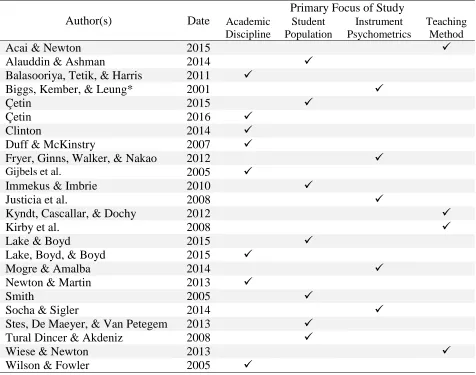
Table 4: Research Studies Using the R-SPQ-2F... 35
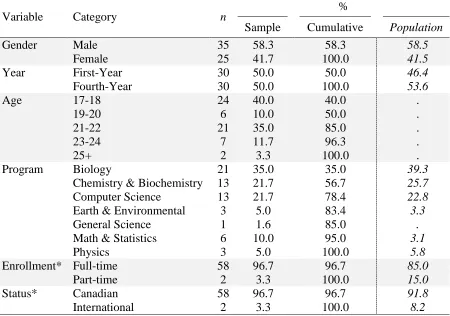
Table 5: Participant Demographic Overview ... 62
Table 6: Participants’ Aspirations of Graduate Study ... 64
Table 7: Overview of Deep and Surface Approach Scores ... 66
Table 8: Overview of Dominant Learning Approach Scores ... 68
Table 9: Factor Loadings and Communalities Based on a Principal Factor Analysis with Varimax Rotation for the R-SPQ-2F ... 72
Table 10: Participants’ Self-Identified Factors Affecting Learning ... 82
Table 11: Categorized Tally of Participants’ Conceptions of Learning ... 85
Table 12: Participants’ Learning Conceptions Aligned with Approach ... 85
LIST OF FIGURES
Figure 1: Biggs’ 3P Model of Teaching and Learning ... 9
Figure 2: Academic Susan and Non-academic Robert ... 24
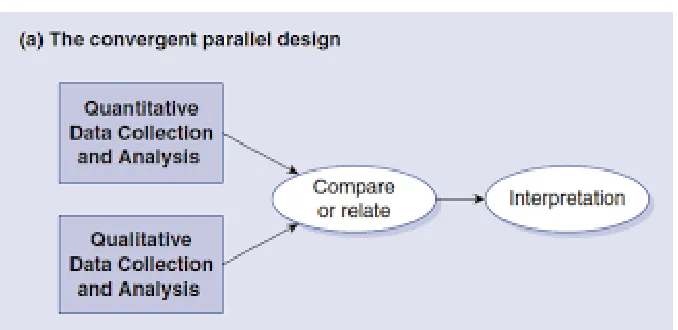
Figure 3: Convergent Parallel Research Design ... 43
Figure 4: Individual Student Approach Scores ... 70
Figure 5: Mean Approach Scores in Relation to Student Age ... 75
Figure 6: Mean Approach Scores in Relation to Year of Study ... 76
Figure 7: Mean Approach Scores in Relation to Graduate Study Aspirations ... 78
Figure 8: Average First-Year Approach Scores by Department ... 94
LIST OF APPENDICES
APPENDIX A: Online Survey... 116
APPENDIX B: Letter of Information for Consent to Participate in Research ... 122
APPENDIX C: Initial Recruitment Email ... 124
APPENDIX D: Reminder Email ... 125
APPENDIX E: Permissions to Include Copyrighted Materials ... 126
APPENDIX F: Demographic Breakdown of R-SPQ-2F Deep Approach Scores ... 129
APPENDIX G: Demographic Breakdown of R-SPQ-2F Surface Approach Scores ... 131
CHAPTER 1: INTRODUCTION
Student Learning and Higher Education
The undergraduate learning experience has changed significantly since the
beginning of the 21st century (Altbach, Reisberg, & Rumbley, 2009; Thomson, 2015).
There has been a shift at many postsecondary institutions to move away from traditional
modes of teaching and assessment, such as lecture-laden presentations and
multiple-choice testing, to strive for teaching methods that encourage the student to take an active
role in their learning.
It is also an emerging reality that universities in Ontario are facing budget
cutbacks while still needing to be fiscally responsible and procedurally accountable to
multiple stakeholders such as funding agencies and Ontario taxpayers (Lodge &
Bonsanquet, 2014). A report by the Higher Education Quality Council of Ontario
(HECQO) (2012) on the productivity of the Ontario postsecondary system describes that
“the key to future success is to increase productivity in ways that do not compromise
quality,” however, their solution is to measure productivity by enrollment and graduation
rates, as well as research output compared to research funding (p. 9). An evaluation
system of postsecondary education which relies solely on economic markers exclusively
is problematic if higher education is to be seen for what it is – a transformational
experience – rather than just a transactional experience between students and institutions.
Enrollment and retention rates are effective measurements, however, if paired with data
Students are the direct recipients of the teaching efforts of postsecondary
institutions. As such, it is important that undergraduate students receive what they are
paying for: an opportunity to learn. It is clear that universities and colleges are in a
position to effectively teach students, but is education actually about teaching? Are students attending postsecondary institutions to be taught, or to learn? The two are often set in binary opposition to one another, but they can actually work in tandem. Much the
same as St. James suggests that “faith, if it has no works, is dead” (James 2:17, NASB),
teaching is the set of collective efforts that promote learning. Barr and Tagg (1995)
suggest that learning is what universities should be striving for. While there is no
obvious answer to address this critical differentiation, it is a situation that is playing out
in Canadian institutions, especially in Ontario. My research acknowledges Tagg’s (2003)
suggestion: to ask “students what they think has been important in their own education, [to examine] options that we were unaware even existed” and reinforce learning (p. 33).
Using students’ ideas to inform learning experiences is student-centred teaching, and
promotes deep learning (Biggs & Tang, 2007; Tagg 2003).
Student Approaches to Learning
The quest to explore how students learn is not a new one. Researchers and
teachers alike have been investigating student learning through formal research,
anecdotal classroom trials, and communities of practice. Each undergraduate student
(and indeed every student) engages in actions and makes decisions that influence their
learning; not all students are aware of the effects their actions have on their learning.
dispositions which students take towards learning in a particular experience, and which
are a result of their perceptions of their learning environment, as they understand it
through actively engaging in it.
A substantial group of educational psychologists and educators have devoted
research careers to understanding how students learn (e.g., Biggs & Tang, 2011;
Entwistle, 1984; Entwistle & Tait, 1990; Marton & Säljö, 1976a, 1976b; Trigwell, 1995).
Research into student learning began as much psychological research begins: in
controlled experimental scenarios designed to create an atmosphere that can be
replicated, in order to predict an outcome. Beginning with aptitude tests, this original
approach to student learning research is still being practiced. It became clear to some,
however, that teaching and learning did not occur in a vacuum. Rather, the context of the
learning environment, and all the variability within it, directly affected student learning.
Instead of trying to find the “one grand theory of learning,” educational psychologists
flipped their approach to student learning research by observing students in their natural
learning environment, and exploring the qualitative aspects of their experiences (Biggs,
1999, p. 59).
Marton and Säljö’s (1976a) study was the first to take this approach and provide a
potential way of classifying student learning. Their work describes students who used
either surface-level or deep-level processing during a reading comprehension exercise.
These two categories, deep and surface, have since become the basis of classifying
student approaches to learning. Educational psychologist John Biggs has been
investigating student approaches to learning in Australia, Canada, and Hong Kong since
development has spread throughout the world, and forms some of the foundations for
student learning research: the 3P Model of Teaching and Learning, intended learning
outcomes, constructive alignment, the SOLO taxonomy, and student approaches to
learning (Biggs 1979, 1987a, 1996a, 1996b; Biggs & Collins, 1989; Biggs, Kember, &
Leung, 2001). These concepts have been incorporated in various forms throughout all
levels of education, and are especially present in postsecondary education.
The Current Study
In this study, I examine undergraduate student approaches to learning at the
University of Windsor, a medium-sized urban university in Ontario, Canada. My
research study examined the approaches students from the Faculty of Science are taking
to their undergraduate learning as a way to understand their learning experiences. I
identify the dominant approaches to learning of undergraduate students as self-identified
through a well-tested instrument, the Revised Two-Factor Study Process Questionnaire (R-SPQ-2F) created by Biggs, Kember, and Leung (2001). I also illustrate contextual
factors and highlight students’ conceptions of learning in order to more fully understand
their experiences.
Research Questions
The purpose of this study is to identify the approaches to learning of
undergraduate students studying in the Faculty of Science at the University of Windsor.
More specifically, my research provided a measure of students’ perceptions of their
learning environment. My research was guided by a fundamental research question:
which student approaches to learning are undergraduate science students at the
the approaches to learning of undergraduate students, I addressed four additional
questions about postsecondary teaching and learning: (a) how do students define learning?; (b) do participants’ dominant approaches to learning align with their definitions of learning?; (c) what factors are contributing to the dominant approaches identified?; (d) from the student perspective, how might the identification of student approaches to learning be useful to inform university teaching, learning, and educational development?
Through the collection of quantitative and qualitative data from an online survey
administered to a cross-section of undergraduate science students at the University of
Windsor, these questions were addressed to better understand these students’
postsecondary learning experiences.
Hypothesis
I anticipated finding that the dominant approach to learning in the Faculty of
Science is a surface approach, held predominantly by those in fourth-year. In keeping
with trends found in the literature (Biggs, 1987; Gow, Kember & Cooper, 1994; Watkins
& Hattie, 1981), deep scores would be lower and surface scores would be higher for
fourth-year students compared to first-year students. As for students’ conceptions of
learning, I suspected the responses would be wide and varied, but that most would
describe learning as a passive transmission of knowledge. In this respect, I foresaw
alignment between dominant approach scores and conceptions of learning only in those
cases where the surface approach score was dominant. The factors influencing student
learning are unknown, and I believed would be unique, highlighting the collective
would have many ideas for the use of this research, most likely to justify their opinions
that the university could do a better job providing their undergraduate education
experience.
Theoretical Framework
In order to ground my research, I will focus on two interconnected theoretical
frameworks to provide a rich foundation of reason and help guide the investigation and
analysis of the project. The first framework is constructivist theory which will define the
parameters of student learning as they relate to my study. The second framework is
Biggs’ 3P Model of Teaching and Learning, which reconciles the various aspects of the
educational experience: educational development and design, intended outcomes of
learning, teaching approaches, and student approaches to learning.
Constructivist theory. My research draws heavily from constructivist ideas, and
therefore it is critical that I provide an overview of the main components of the
framework used. Thayer-Bacon (2005) described philosophical constructivism simply
yet eloquently as “the idea that knowledge is something human beings create in
dialogical relationship with others … and can be traced back to Socrates in ancient
Greece” (p. 48). Constructivist thinkers have built on this basic premise in relation to
education, the most notable being Jean Piaget (1977), who outlined that learning happens
through active engagement where learners construct meaning from their experiences,
rather than a passive reception of knowledge. Learners must make meaning from what
they experience, either assimilating the experience into pre-constructed schemas, or
accommodating for the experience by constructing new schemas and engaging in higher
constructivism has implications on the design of educational experiences, what students
will be expected to do and know, how they will be assessed, and their personal beliefs
about education.
There are those, however, who are critical of constructivism being adopted as the
dominant paradigm in education. Mayer (2004) cautioned against what he called the
“constructivist teaching fallacy … [of equating] active learning with active teaching” (p.
15). Matthews (2003) claimed that constructivism promotes an unattainable relationship
between teaching style and student ability, and “is not an empirically defensible practice”
(p. 58). In fact, a study by Baetens, Dochy, and Struyven (2008) concluded that
constructivist teaching methods did not result in a deeper approach to learning in the 138
undergraduate office management students who participated. The preceding claims
against constructivism are legitimate, depending on the scope of research conducted. It is
important to understand that for each researcher who makes claims against
constructivism's governance (Baetens et al., 2008; Matthews, 2003; Mayer, 2004), there
are others who champion the very opposite in defense of constructivism (Biggs & Tang,
2011; Potter, 2013; Wiese & Newton, 2015). As seen in the numerous research studies I
present in the next chapter, context is critical when understanding the implications of a
constructivist approach to teaching.
If the approaches and strategies students take to their undergraduate education
truly do affect learning, it seems most logical that constructivism be used as the lens for
understanding student approaches to learning. If constructivism is to be adopted, it is
important for the voice of the meaning-makers – the students – to be audible to those who
occur, insofar as to understand not only the experiences of students themselves, but also
the larger context of their learning environment.
The constructivist notion of students as active participants in their postsecondary
education affects the teaching culture of Canadian post-secondary institutions. In a large
multi-institutional study, Kustra et al. (2014) found that undergraduate and graduate
student responses to a developed teaching cultures indicator questionnaire identified that
students “valued a quality teaching culture more highly than they perceived their
institution did” (p. 66). Regardless of how accurate the students’ perceptions, the
perceptions were themselves a by-product constructed by active engagement as a student
of the institution. The voice of the students may be correct, or misaligned, but without
investigating them, an institution defines priorities by omitting the influence of a valuable
source of feedback.
Biggs’ 3P Model of Teaching and Learning. Biggs’ work throughout the past
half-century has been a detailed exploration of a model of teaching and learning which
incorporates a constructivist approach to teaching and learning. The 3P Model of
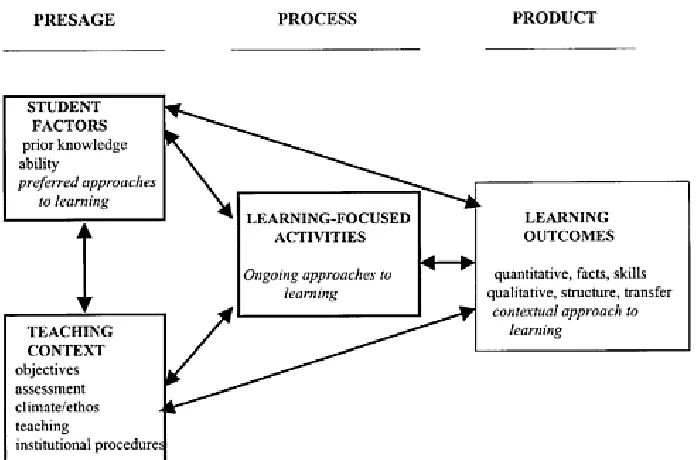
Teaching and Learning accounts for three distinct phases of learning: presage, process,
Figure 1. Biggs’ 3P Model of Teaching and Learning. Reprinted from “The revised two-factor Study Process Questionnaire,” by J. B. Biggs, D. Kember, and D. Y. Leung, 2001,
British Journal of Educational Psychology, 71, p. 136. Copyright 2001 by the British Psychological Society. Reprinted with permission.
Biggs’ illustration (see Figure 1) depicts a model of teaching and learning where the
specific components are not independent of each other. In the 3P Model of Teaching and
Learning, the learning environment is constructed in such a way that promotes clear
learning outcomes, alignment of assessments, and considers the student as an active
learner, one who influences and is influenced by the process of teaching and learning
(Hattie, Biggs, & Purdie, 1996).
A critical task that needs to be addressed before learning takes place in Biggs’ 3P
model is to identify intended learning outcomes, which provide the student with
expectations as well as inform the method of instruction. Outcomes-based education
(OBE) is not new to higher education (Biggs, 1999; Tam, 2014). Tam (2014) called
attention to the student-centred aspect of OBE, which “is the idea that teachers are
experience based on a wide range of best practices in teaching and learning” (p. 161).
The idea of using intended learning outcomes to guide the development of teaching
strategies and assessment “is old – it is criterion-referenced assessment”, which creates
an environment where students are set up for success, instead of subjective evaluation
(Biggs & Tang, 2011, p. 98).
One criticism of relying on learning outcomes is the perception that they are being
thrust upon education as a quality assurance measure (Spady & Marshall, 1991). This
may be true of OBE depending on whether outcomes are based primarily on an
administrative view of education, or whether they have been drafted in relation to
learning outcomes at other levels (e.g., institutional, program, course, and lesson). For
intended learning outcomes to be successful, they must address “an educational need …
something individuals should learn for their own good, for the good of their organization
or profession, or for the good of society” (Knowles, 1970). They also must be
observable, measurable, and within the capabilities of the student’s potential (Biggs,
1999).
A second criticism of OBE is that it erodes the professional responsibility of
educators by placing disproportionate weight on what the student does (Donnelly, 2007).
As I suggested earlier, this depends entirely on if students are engaging in postsecondary
studies to be taught or to learn (Barr & Tagg, 1995). My research, aligning with Biggs’ (1999) view that learning is dependent on the actions of the student to inform teaching,
means that intended learning outcomes are a critical component to the learning process as
Significance of the Study
The question so what? is being asked increasingly when it comes to research about teaching and learning in higher education (Shank, Brown, & Pringle, 2016). In
other words, the so what is a direct way of asking for the practical rationale of a research study. I believe this question is important for me as a beginning researcher and as
someone who subscribes to a constructivist approach to education, because it forces me
to think critically about the potential ramifications of my research.
Boyer (1990) described scholarly teaching as a “dynamic endeavor involving all
the analogies, metaphors, and images that build bridges between the teacher’s
understanding and the student’s learning” (p. 23). One of the qualities of the scholarship
of teaching and learning (SoTL) is a need to better understand the processes of teaching,
so as to be a reflective practitioner and provide teaching experiences that lead to learning.
On the other hand, Boshier (2009) suggested that SoTL is marred by a series of factors
which inhibit its widespread acceptance, notably due to the perception of a hierarchical
set of influences on university education. Neoliberalism has influenced scholarship, as
“leisurely approaches to intellectual work have been replaced by just-in-time scholarship”
and “articles in reputable journals are the coin of the academic realm” (Boshier, 2009, p.
8-9). If high quality teaching positively influences student perceptions of learning—as
Trigwell, Prosser, and Waterhouse (1991) argue—then it is important for my research to
be clear; the results add to a discussion of teaching and learning as it relates to an
authentic student experience. In other words, this study highlights the symbiotic
relationship between teaching and learning in a way that puts student learning above
Currently, there are 20 universities in Ontario that have active centres of teaching
and learning, all of which conduct some sort of research, institutional or otherwise. The
specific focus of my research on student approaches to learning aligns itself with the
current research trends designed to understand the student experience as it exists in the
learning paradigm, where students are actively involved in their education. Despite this,
there have been few documented studies investigating student approaches to learning in
Ontario. In a search of multiple online databases (i.e., ERIC, ProQuest, Web of Science,
and APA PsycNET) using combinations of the words “student,” “approach,” “learning,”
“Canada,” “Ontario,” “Study Process Questionnaire,” and “R-SPQ-2F,” only a handful of
studies were found which roughly align with my study in purpose, scope, and method
(Acai & Newton, 2015; Evans, Kirby, & Fabrigar, 2003; Kirby, Silverstri, Allingham,
Parrila, & La Fave, 2008; Wiese & Newton, 2013). It cannot be assumed that the lack of
published research studies investigating student approaches to learning equates to the
absence of research in practice. Perhaps instead, individual educators are investigating
student approaches to learning as a means of “[monitoring] their teaching from class to
class, or [following] some innovation in teaching or assessment in an action research
design” (Biggs et al., 2001, p. 7). A valid reason to investigate student approaches to
learning is to collect student feedback on individual teaching, but it is not the only one.
My study provides evidence of student approaches to learning and conceptions of
learning from a wider student population than the individual classroom. The analysis of
student approaches to learning can be useful to instructors to assess their teaching, and to
administration to help understand and quantify academic aspects of the student
benefits educational developers, tasked with faculty development, course design, and
CHAPTER 2: LITERATURE REVIEW
Before researching how students are approaching learning within the context of
their university experience, I will investigate and clarify some fundamental topics. The
first concept that needs to be analyzed is learning itself. The present literature review provides insight into the following topics: student learning research, constructivism,
student approaches to learning (SALs), and undergraduate teaching and learning. These
topics are discussed in order to provide clarity and context for my research study.
I begin my literature review by briefly exploring a fundamental question: what is learning? Taking into account foundational texts from educational psychologists, empirical research studies, and constructivist frameworks, learning will be broadly
defined for the purposes of my research project. After suggesting a working conception
of learning, an introduction to student learning research will be provided. Next, I will
identify seminal research studies which have shaped student learning research into the
burgeoning field it has become. A brief history and critique of the basic ideas of student
learning research will round out the discussion, leading to the emergent measurement unit
of learning: the student approach to learning. Student approaches to learning will be
explored in depth, both in theory and practice, with connections to current literature using
learning approaches as a means of observation to understand teaching and learning. An
overview of survey instruments designed to investigate student approaches to learning is
included. Special attention will be drawn to the Revised Two-Factor Study Process
Questionnaire (R-SPQ-2F) (Biggs et al., 2001), which is one of the most commonly-used
survey instruments, and the one used in my study. Finally, learning, student learning
undergraduate education. Two of the dominant educational paradigms (i.e., instruction
paradigm, learning paradigm) will be compared and contrasted, with a justification of the
learning paradigm presented in order to promote the constructivist notion of teaching and
learning. Though few exist, connections to Canadian examples will be highlighted where
possible throughout the literature review, as my study will hopefully be counted among
them.
What is Learning?
So, what, exactly, is learning? This is a question to which everyone could
provide some sort of answer, as everyone has learned something in their life, academic or otherwise. If my research is to investigate learning in-depth, there must be some working
conception of what learning is, or ought to be, in order to measure it in some capacity.
There are major differences between the cognitive levels of adults and children,
resulting in significantly different learning experiences and educational needs. By the
time learners enter university, many are at the concrete operational or formal operation
stages of Piagetian cognitive development (Woolfork, Winne, & Perry, 2015). They also,
however, bring with them a wider set of experiences, usually resulting in a mature
individual (Delahaye, Limerick, & Hem, 1994). Knowles (1973) explains that:
As an individual matures, his need and capacity to be self-directing, to utilize his
experience in learning, to identify his own readiness to learn, and to organize his
learning around life problems, increases steadily from infancy to pre-adolescence,
and then increasingly rapidly during adolescence. (p. 43)
Because of the variety of backgrounds adult learners bring to the learning experience,
Since the beginning of serious research into adult learning almost 100 years ago,
still “we have no single answer, no one theory or model of adult learning that explains all
that we know about adult learners” (Merriam, 2001, p. 3). In an attempt to differentiate
adult learners from child learners, Knowles (1968) devised a “new label and a new
technology” for adult learning: andragogy (p. 351). Fundamentally different than young
students, Merriam (2001) posits that the adult learner:
1) has an independent self-concept and who can direct his or her own learning;
2) has accumulated a reservoir of life experiences that is a rich resource for
learning;
3) has learning needs closely related to changing social roles;
4) is problem-centered and interested in immediate application of knowledge; and
5) is motivated to learn by internal rather than external factors. (p. 5).
Merriam’s (2001) assumptions about the adult learner are important to consider, as
university students should be seen as adult learners who are engaged in self-directed
learning in their undergraduate studies. Brookfield (1984) cautions, however, that adult
learning research needs to be more diverse by recruiting participants from a broader
demographic, accepting qualitative research methods, considering the social context of
learning, and accounting for the social and political implications of adult learning.
The question what is learning? becomes a loaded question when one’s belief of the purpose of education is factored into the answer. One longstanding yet highly
scrutinized purpose of education focuses on the dissemination of knowledge to teach
content (King, 1993). Teachers are seen as content experts who pass on information to
called “a finished product, with little regard either to the ways in which it was originally
built up or to changes that will surely occur in the future” (p. 5). For others, such as
Tyler (1933), the purpose of education is to allow students to satisfy a specific set of
career-based objectives. Freire (2005) envisioned education as liberating, allowing the
marginalized to overcome the logic of the current system in which they find themselves.
Furthermore, the Indigenous peoples of Canada see education as a process which
facilitates an understanding of the world through “a clear connection to Indigenous
Knowledges shared inter-generationally by knowledge holders and Elders through
storytelling and place-based poetic writing” (Kulnieks, Young, & Longboat, 2013, p. 70).
There are numerous other views on the purpose of education (e.g., to perpetuate
neoliberalism, to create good citizens, etc.), and it follows then that a learner’s view of
the purpose of education will undoubtedly affect how they define learning.
The purpose of education also influences a teacher’s teaching perspective.
Consider the Teaching Perspectives Inventory (TPI), an instrument designed by Pratt and Collins (2000) designed to identify the dominant teaching perspective of an educator.
Five teaching perspective categories have been identified as a result of much research
completed by Pratt (1992, 1998) as well as Kember (1997): transmission, apprenticeship,
developmental, nurturing, and social reform (Pratt & Collins, 2000). Educators respond
to questions probing their beliefs, intentions, and actions, and their responses are assessed
to provide a dominant teaching perspective.
These perspectives seem strikingly related to a number of the purposes of
education I just mentioned. This is because a teaching perspective and a teaching
developmental, nurturing, social reform) analogous to vacation destinations. Some
people like to travel to Mexico, others to Italy, others to India, Alaska, and Argentina.
But how is the traveller going to get there? The mode of transportation is representative
of an instructor’s approach to teaching. The traveller (student) could take an airplane and
quickly bypass the space between the two destinations. Or they could take a minivan or a
motorcycle, spending time going through every little town on the way. Those little pit
stops are important and memorable, just as the joys and trials of the learning process are.
The majority of early research on student learning was conducted by educational
psychologists from a few key areas on the world: Sweden, Australia, Hong Kong, and the
United Kingdom. While these studies have formed the foundation of student learning
research, little is known about the participants in the studies beyond their level of study
and educational program, and less frequently, their age. Even less is documented about
the communities where the research took place, other than the obvious cultural
associations of the geographic locations. The lack of diversity is important when
considering the cultural differences related to learning, specifically adult learning
(Brookfield, 1984). Lund (2004) identified that Confucian-influenced Asian societies
have two significant cultural norms that conflict with Western views of textual citation:
the reverence of a leader’s words, and the inability to question the authority of those
words. Consequently, some international students from these countries occasionally use
the text or spoken words of a cultural leader verbatim, in order to pay respect to the
leader (Lund, 2004). However, Kember (2000) suggests this stereotype is actually a trait
of Western students as there is also need for academic integrity training for Western
actually say and do, but only presumes that their learning fits the stereotypes (Grimshaw,
2007). Understanding students as learners is critical, but broadly painting cultural groups
with the same brush is not.
One of the first documented studies to investigate the definition of learning was
undertaken by Martin and Säljö (as cited in Säljö, 1979). In their study, participants
engaged in an initial interview, read a text, answered questions about the process they
used to learn the information in the text, and were involved in a short discussion. The 90
participants’ identities are vaguely described as being between the ages of 15 and 73,
with educational backgrounds of 6 to 16 years, all in social psychology (Säljö, 1979).
From the answers provided to the question “what is learning?” Säljö (1979) identified
five basic categories in which to sort conceptions of learning: (a) an increase in
knowledge (merely a synonym for the word learning), (b) memorizing, (c) an acquisition
of facts or principles which can be retained and used in practice, (d) an abstraction of
meaning, and (e) an interpretive process aimed at understanding reality. Säljö’s study
sparked a number of educational psychologists to research the context of learning. In
general, most found their results mapped on to Säljö’s (1979) original findings (Marton,
Dall’Alba, and Beaty, 1993; van Rossum and Schenk, 1984).
As research became more diverse in terms of the participants of these studies,
variations of Säljö’s original list of categorical conceptions of learning began to emerge.
Marton et al. (1993) found that in their study of the learning views of 29 British
university students, a sixth category of learning conception was prevalent: “changing as a
person” (p. 292). This sixth conception of learning “builds on an existential aspect to
person’s beliefs and actions. Validation for the sixth conception of learning emerged
finding is that another pair of researchers (van Rossum & Taylor, 1987).
These six categories of conceptions of learning stayed relatively constant for the
next decade or so, until a study conducted by Purdie, Hattie, and Douglas (1996)
investigated Australian and Japanese conceptions of learning in order to relate them to
participant-identified learning styles. While their findings included Säljö’s (1979) list of
five and the list of six from Marton et al. (1993), participants also conceptualized learning
as: “a duty; a process not bound by time or context; and developing social competence”
(Purdie et al., 1996, p. 95). These three distinct categories were acknowledged as
minority viewpoints by Purdie et al. (1996), with the exception of “a process not bound
by time or context” (p. 95). Context being disregarded as part of the learning process is
problematic from a constructivist perspective because when looking at student learning
through a constructivist framework, the context of learning is influential on the approach
students take to their learning. However, these conceptions are qualitative in nature, and
the views of the participants are entirely valid in qualitative research (van den Hoonaard,
2012).
After an investigation of some impactful studies on the conceptualization of
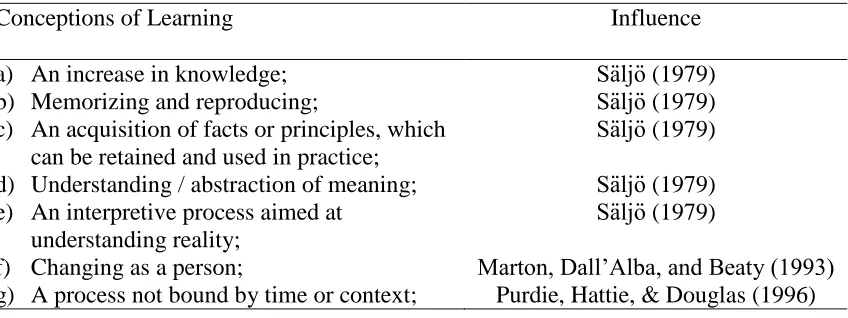
learning, a list of seven categories of conceptions has emerged. The studies I have
selected come from similar conceptions of student learning research and are by no means
exhaustive, but they do consider a number of diverse participants. These categories are
not exhaustive, but rather those which are supported by evidence from published research
positionality as a researcher. Therefore, this list of seven types of conceptions of learning
will form as the basis for the conceptualization of learning in the present study:
Table 1
List of Conceptions of Learning
Conceptions of Learning Influence
a) An increase in knowledge; b) Memorizing and reproducing;
c) An acquisition of facts or principles, which can be retained and used in practice; d) Understanding / abstraction of meaning; e) An interpretive process aimed at
understanding reality; f) Changing as a person;
g) A process not bound by time or context;
Säljö (1979) Säljö (1979) Säljö (1979)
Säljö (1979) Säljö (1979)
Marton, Dall’Alba, and Beaty (1993) Purdie, Hattie, & Douglas (1996)
Note: Adapted from “Student conceptions of learning and their use of self-regulated
learning strategies: A cross-cultural comparison” by N. Purdie, J. Hattie, and G. Douglas, 1996, Journal of Educational Psychology, 88, p. 95. Copyright © 1996 by the American Psychological Association. Adapted with permission.
The identification of thematic conceptions of learning provided Säljö clarity in
terms of how to conceptualize learning, but these findings do not fully satisfy the
question of the quality of learning. After his lengthy study, Säljö (1979) still found
himself pondering a deeper question:
If we claim that experience of learning may lead to a thematization of learning,
does this have anything to do with learning performance? Clearly, this is not
something which can be answered here. My guess, however, is that this is indeed
the case in the sense that when people become aware of their own learning in
different respects, they will be better equipped to deal with various sorts of
learning difficulties, such as those described by Marton and Säljö (1979). They
with its constrained meaning of the concept of learning, but I do think that they
will become better at handling learning and reading problems of the kinds
encountered in everyday life, or at least, in everyday studying. This is a question
we are currently examining in our research. (p. 451)
What is clear from Säljö’s preceding response is a need to understand not only a
learner’s conception of learning, but describe a learner’s learning process in some way.
Constructivism. Constructivism provides such a theoretical framework to
contextualize the learner’s learning experience, as well as an instructor’s actions and
reflection. Constructivism, as defined by Davis, Sumara, and Luce-Kapler (2000) is “the
premise that the learner’s basis of meaning is found in her or his direct experience with a
dynamic and responsive world” (p. 65). Potter (2013) made parallel connections, and
suggested that learning “is helped or hindered by context” and that “[ideas are] best
learned in an “authentic” context, that is, a situation in which all of the factors that would
affect its use beyond the classroom are present” (p. 3). When recalling the list of
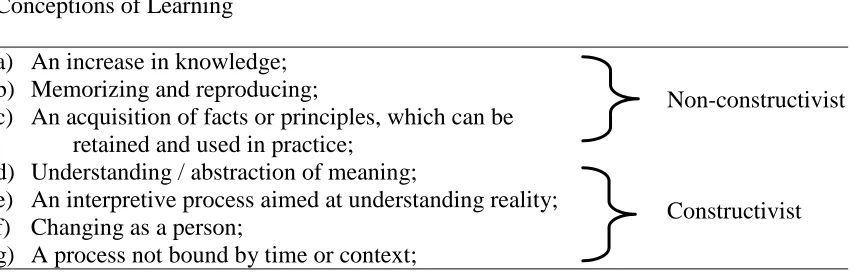
conceptions of learning guiding this research, there is a clear division between those
conceptions which uphold the constructivist notion of learning, and those which do not.
Table 2
Conceptions of Learning within the Constructivist Framework
Conceptions of Learning
a) An increase in knowledge; b) Memorizing and reproducing;
c) An acquisition of facts or principles, which can be retained and used in practice;
d) Understanding / abstraction of meaning;
e) An interpretive process aimed at understanding reality; f) Changing as a person;
g) A process not bound by time or context;
Note: Adapted from “Student conceptions of learning and their use of self-regulated
learning strategies: A cross-cultural comparison” by N. Purdie, J. Hattie, and G. Douglas, 1996, Journal of Educational Psychology, 88, p. 95. Copyright © 1996 by the American Psychological Association. Adapted with permission.
Potter (2013) championed the necessity for constructivism to be the “dominant
learning philosophy – in fact, even the dominant epistemology – in the Scholarship of
Teaching and Learning (SoTL) and Educational/Academic Development communities”
(p. 3). His notion of constructivism aligns with earlier thinking, whereby “a) knowledge
is actively constructed by each person through a complex interplay of experiences, and b)
because of that, education should focus on providing people with the means, conditions,
and facilitation necessary to help them actively construct their own knowledge, ideas,
beliefs, models, and meaning” (Potter, 2013, p. 3).
Non-constructivist
Biggs’ (1996b) 3P Model of Teaching and Learning addresses concerns of
constructivist thinking by suggesting that learning can be understood through a set of
educational development strategies which when implemented together allow for the best
opportunity for learning. The 3P Model of Teaching and Learning (recall Figure 1)
supposes learning to be the measureable, observable change in a student’s cognitive,
behavioural, or affective faculties, as related to learning outcomes in the given learning
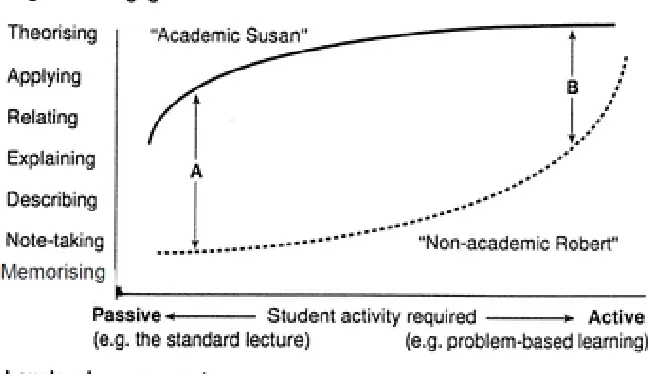
context. Biggs (1999) suggests there are two types of students: “Academic Susan”, and
“Non-academic Robert” (p. 59).
Figure 2. Academic Susan and Non-academic Robert. Reprinted from “What the student does: Teaching for enhanced learning” by J. B. Biggs, 1999, Higher Education Research & Development, 18, p.59. Reprinted with permission. Copyright 1999 by Routledge.
The two students depicted in Figure 2 can be seen as taking deep (Susan) and
surface (Robert) approaches to learning. Their learning is affected by both their level of
engagement, as well as the degree of student activity demanded by the teaching methods
professors, that there are more Roberts than Susans. Herein lies the heart of Biggs’ 3P
model – that learning experiences that are deep should be encouraged.
Biggs and colleagues have devised a number of theories to promote deep learning.
Constructive alignment is a systematic approach to designing learning experiences where
teaching methods, student activities, and assessments align (Biggs 1996a). It is a specific
approach to the backwards design method of course design, which begins by identifying
the end result of learning, the intended learning outcomes of the lesson, unit, or course.
The intended learning outcomes become the first priority, guiding the rest of the
development process. Ideally, the learning outcomes should consider the cognitive,
performative, and affective domains (i.e., knowledge skills, and attitudes), asking
students to engage in higher-order thinking and make connections to life beyond the
classroom (Bloom, Engelhart, Furst, Hill, & Krathwohl, 1956). Solidifying learning
outcomes at the outset of designing a course helps to then inform the teaching methods
used to help students achieve them. For instructors who strive for good teaching, it isn’t
enough to say “I taught the students, but they didn’t learn” (Biggs & Tang, 2011, p. 19).
Rather, effective teaching is predicated on adopting an integrated view of the
student and teacher. Unlike the deficit mentality of teaching noted above, a
learning-centred approach to teaching supposes that effective teaching takes into account what the studentdoes rather than what the teacher does, or solely the identity of the student. When learning outcomes are explicitly communicated to students, their perception of the
learning environment changes. Sadler (2005) believed that “at the point of beginning a
course of study, students deserve to know the criteria by which judgments will be made
and appropriately while it is being developed” (p. 178). For these reasons and others, the
3P Model of Teaching and Learning has become a revered model of learning in the eyes
of engaged educators, SoTL scholars, and educational developers.
Student Learning Research
In light of the preceding discussion about student learning, which is extensive, but
by no means exhaustive, this review will shift into a discussion of student learning
research. According to Entwistle (1984), “teachers look to psychologists for explanations
of fundamental principles of learning… but much of the early work in experimental
psychology involved attempts to uncover general principles of learning” (p. 5).
Student learning research was initially structured similarly to other psychological
research: planned experiments in controlled environments. While these methods might
be acceptable to answer many psychological questions, the concept of student learning
was a different one, because context is crucial to understanding how it is that a student
learns. Classrooms are not the same as they once were. Biggs (1999) reflects on the
recent past in the same way, accusing psychologists of being “more concerned with
developing ‘The One Grand Theory of Learning,’ than in studying the contexts in which
people learn, such as schools and universities” (p. 59). These sentiments were the driving
force behind the shift in student learning research from a paradigm which seeks to predict
student ability (e.g., student aptitude testing) to a more descriptive paradigm, seeking to
investigate the actual experience of students in classroom settings. When compared to
constructivist conceptions of learning (i.e., learners making meaning by engagement),
this paradigm provides alignment with the suggested theoretical framework and the
Research into student learning using a descriptive paradigm rose to the forefront
with a seminal study by Marton and Säljö (1976a), two Swedish educational
psychologists who were interested in understanding qualitative difference in learning.
Marton and Säljö’s (1976a) study was unique in its aims; the study sought to describe
students’ experiences through the collection of qualitative datasets, rather than
continually test students in an experimental setting as had been done for decades
(Entwistle, 1984). In the study, Swedish undergraduate students from educational
psychology were asked to read a newspaper article about curriculum reform in Swedish
universities. After reading, students were asked to summarize the article in two
sentences, with answers categorized into four levels. When students were re-tested five
weeks later, the level of student answers had declined in nearly every case (Marton &
Säljö, 1976a).
Along with each answer, students were asked to answer introspective questions
describing how they processed the article, to learn and remember its content. Marton and
Säljö (1976b) deliberately asked students to recount how they had handled the learning
task and how it appeared to them. From the student responses, it was found that most
students approached their task using “surface-level” or “deep-level” processing, though
some identified aspects of both processing levels (Marton & Säljö, 1976a, p. 9). Results
from that study also showed that there was relationship between how a student
approached the task and the quality of their summary report. The study included some of
the first results that expressly linked students’ learning habits with their level of
The identification of unique levels of processing by Marton and Säljö (1976a)
also identified a distinction between what students focused on while engaged in learning
activities. For those students who used surface-level processing, their focus was on the sign, the literal information of the text. Those students who were engaged in deep-level processing were found to be engaged with the signified¸ or more broadly speaking, the meaning and implications of the text. Deep-level processing aligns with learning through
a constructivist framework.
Those originally concerned with student learning (e.g., Marton, Säljö, Entwistle,
Biggs, etc.) agreed that it be imperative to understand how the student learns. However,
there became nuances in the thinking of different groups of educational psychologists.
Entwistle was working from the “psychology of individual differences” (i.e., differential
psychology) (Biggs & Tang, 2011, p. 22), Biggs from cognitive psychology, and Marton
and Säljö from what has eventually come to be known as phenomenography (Marton,
1981). While all were studying learning within an institutional context, it was Biggs
whose constructivist approach placed SALs into a larger model of learning, by
hypothesizing that constructivism “emphasizes what students have to do to construct
knowledge, which in turn suggests the sorts of learning activities that teachers need to
encourage” (Biggs & Tang, 2011, p. 22). Neither differential psychology (the study of
differences between individuals or groups) nor phenomenology can connect student
learning to teaching approach as concretely.
Marton (1981) approached student learning research from the “second-order
perspective” (p. 177). He called this perspective phenomenography, which was a term he
phenomenography was “research which aims at description, analysis, and understanding
of experiences; that is, research which is directed towards experiential description” (p.
180). Not to be confused with phenomenology, which is concerned principally with understanding an event or phenomenon, phenomenography is concerned with
understanding the perceptions people have of the situation or phenomenon, in order to
learn something about it. It is the second-order perspective Marton (1981) spoke of that
forms the basis for his student learning research. The implications of phenomenography,
according to Prosser and Trigwell (1999), however, are that outcomes-based learning is
only effective if the student’s perceptions are changed to align with that of the teacher.
Herein lies a fundamental distinction between phenomenography and constructivism,
which provides a stronger basis for outcomes-based learning, and is one reason why my
study is not taking a phenomenographic approach.
The qualifiers deep and surface quickly became the terms used to describe two
distinct methods of student processing. Many researchers began using the same
terminology, and investigating learning in this way (Biggs, 1979; Laurillard, 1978;
Ramsden, 1981; Ramsden & Entwistle, 1981). The next portion of this literature review
explores student approaches to learning (SALs).
Student Approaches to Learning
The concept of a student approach to learning resulted from years of research
investigating the quality and quantity of student learning. The previous section of this
review identified many of the key contributors to the ever-growing body of student
learning research. By building on this foundation, it was realized that “meaning is not
activities” (Biggs, 1999, p. 60). The next section identifies the positionality of some of
the key researchers, and will discuss in detail SALs from the constructivist perspective,
through an analysis of Biggs’ work (Biggs 1979, 1987a, 1987b, 1996b, 1999; Biggs et al.,
2001; Biggs & Tang, 2011).
Entwistle and Tait (1990) found themselves looking at the educational
environment in the United Kingdom and realizing that there were further categorizations
in the results of their experiments. Their research identified multiple subscales beyond
the deep and surface approaches (Entwistle & Tait, 1990). The subscales are reflected in
the Learning and Studying Questionnaire (LSQ) and the Experiences of Teaching and Learning Questionnaire (ELTQ) (Entwistle, McCune, & Hounsell, 2013), as well as the
Approaches and Study Skills Inventory for Students (ASSIST) instrument (Entwistle McCune, & Tait, 2013). For the purposes of my research, the 60-item ASSIST
instrument is not feasible to distribute, given the scope of the project. Their instruments
also have not been designed with constructivism as the main lens.
Biggs and others in Australia, however, became increasingly concerned with
studying approaches to learning as part of a larger contextual understanding of learning.
Biggs’ conception of SALs was influenced by the framework of constructivism, where
education is about conceptual change; when learning outcomes are clear, students
experience a felt need to achieve outcomes, can freely focus on tasks, and can collaborate
(Biggs & Tang, 2011). Biggs’ (1985) early conception of student approaches to learning
as “motive-strategy packages” (p. 128) was evident in the language used in the subscales
of the R-SPQ-2F. Thinking about motives and strategies is also reflected in the levels of
concerned with what the student does, the systemic view which takes into consideration the entire learning experience outlined in the 3P model (Biggs, 1996b).
A deep approach (DA) to learning is categorized as an “intention to understand, with use of evidence and relating of ideas as the predominant strategies, and interest in
ideas as the predominant motive” (Diseth, 2007, p. 187). Many students who take a deep
approach find what they are learning interesting, and often go beyond the minimum
requirements to pass a course, or achieve a high mark. These students incorporate
self-starting study habits. Contrastingly, the surface approach (SA) is defined as
reproduction. Students work to memorize and replicate information, as a means to the
end they desire (pass the course, achieve an “A” grade, etc.). They often do not engage
with material beyond the literal meaning. It is important to differentiate that a student’s
approach to learning is not permanent nor a part of a student’s identity, but a measure of a
student’s perception of their learning environment. Another look at the list of
conceptions of learning from earlier in this chapter suggests that they can be aligned with
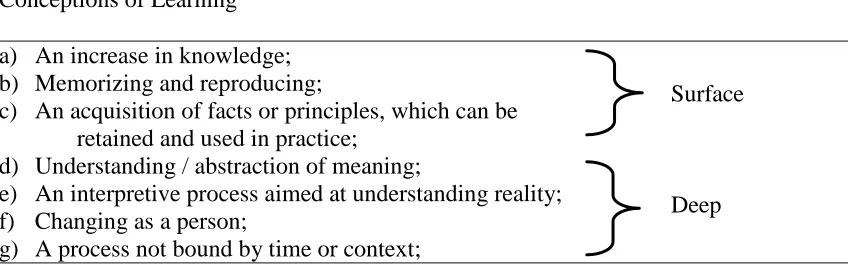
Table 3
Conceptions of Learning Grouped by SAL Influence.
Conceptions of Learning
a) An increase in knowledge; b) Memorizing and reproducing;
c) An acquisition of facts or principles, which can be retained and used in practice;
d) Understanding / abstraction of meaning;
e) An interpretive process aimed at understanding reality; f) Changing as a person;
g) A process not bound by time or context;
Note: Adapted from “Student conceptions of learning and their use of self-regulated
learning strategies: A cross-cultural comparison” by N. Purdie, J. Hattie, and G. Douglas, 1996, Journal of Educational Psychology, 88, p. 95. Copyright © 1996 by the American Psychological Association. Adapted with permission.
What can be gleaned from Table 3 is that conceptions of learning and student
approaches to learning relate to each other theoretically. My study investigated this
relationship through the second research sub-question of this study (Do participants’ dominant approaches to learning align with their definitions of learning?). While assumptions could be made, they would be premature to do in the environment being
researched because there is no evidence to make these assumptions. My study provides a
pool of rudimentary data to investigate that very connection.
The Study Process Questionnaire (SPQ) and the Revised Two Factor Study Process
Questionnaire (R-SPQ-2F)
One of Biggs’ (1979) contributions to the study of student approaches to learning
was the Study Process Questionnaire (SPQ). The SPQ instrument was designed to collect the self-identified approaches to studying of tertiary students, and using identified
factors (surface, deep, and strategic), produce average scores for the factors. The Surface
dominant factor identified the dominant learning approach, which could be used for any
of the purposes discussed earlier in this section of the literature review. The SPQ was
published with instructions for use (1987a), encouraging instructors to use it as a means
of understanding student perceptions of the learning environment through their
self-identified study habits.
In 2001, Biggs, Kember, and Leung revised the SPQ into the Revised Two-Factor Study Process Questionnaire, or R-SPQ-2F. They understood that university education had changed since the SPQ was created, and that there were questions which were no
longer as necessary as before. Instructors and researchers has begun using the SPQ as a
tool to label students, and it was thought by Biggs to be “quite inappropriate to categorise
students as surface or deep learners on the basis of SPQ responses, as if an approach
score measured a stable trait” (Biggs et al., 2001, p. 5). The R-SPQ-2F is significantly
shorter than the SPQ, and removed the contested “strategic” approach as a factor. The
R-SPQ-2F has been modified by Kember, Biggs, and Leung (2004) into the LPQ, a similar
instrument designed for secondary school implementation.
The SPQ and R-SPQ-2F have been used extensively in research since their
creations (see, for instance, Fox et al., 2001; Gow & Kember, 1990; Hall, Bolen, &
Gupton, 1995; Kember, Wong, & Leung, 1999; Zeegers, 2001). While the SPQ is still a
valid instrument, its usage has declined since the inception of the R-SPQ-2F. One
possible reason for the SPQ’s decline is the brevity of the R-SPQ-2F, with only 20
Likert-like questions, administration of the R-SPQ-2F takes less than half the time to