EFFECTIVENESS OF VIDEO ASSISTED TEACHING PROGRAME ON BREAST SELF EXAMINATION
Ms. Swapna M K, Assistant Professor
Amity College of Nursing,Gurgaon
Abstract
Breast Cancer is the most common cause of cancer death among women worldwide.. Breast Self Examination is one of the important steps for identifying breast tumors at an early stage. It is ideal, safe, effective and cost free method which can be done.This study aimed to assess the effectiveness of video assisted teaching programme on Breast Self examination among women.One group pretest and Posttest design was selected to determine the effectiveness of education. A Convenient Sampling technique was adopted to select 50 samples.The Knowledge Questionnaire was adopted for collecting the data. A Video Assisted teaching Programme regarding Breast Self Examination was developed and imparted knowledge to womens.The result shown for theKnowledge score regarding Breast Self Examinationwas improved after education.
Key Words: Breast Cancer, Breast Self examination, Effectiveness, Women, Video Assisted Teaching, knowledge.
I.Introduction
Breast Self Examination is a technique in which a women examines her own breasts by seeing and feeling with fingers to detect breast lumps. The purpose of Breast Self Examination is to increase familiarity with breasts to detect presence of lumps the breasts at an early stage and to look for any abnormal changes in the breast. Self examination of the breasts each month between the 7th and 10th day of the menstrual cycle is the simplest yet extremely important ways to detect breast cancer at the early stage of growth. Breast Technique involves palpation of the breasts for lumps with the tips of the fingers, rather than that of the hand. The women would be in the straight position either sitting or standing or while lying down. It has been observed that 65% women can detect early minimal breast cancers by BSE.
Breast abnormalities are most commonly seen in women’s, Presently millions of women’s do not perform BSE for a variety of reasons, including lack of confidence, not knowing what to look for, limited tactile sensitivity with a bare hand, fear of finding an abnormality and discomfort in touching their own breast. The researcher felt that a well planned video teaching programme of BSE provides adequate knowledge and develops skills needed for BSE which will make them capable of identifying the change at the earliest. so it is necessary to teach women’s about BSE.
THE FIVE STEPS OF A BREAST SELF-EXAMINATIONS ARE,
Step-1:
Begin by looking at your breasts in the mirror with your shoulders straight and your arms on your hips.
Here's what you should look for:
Breasts that are their usual size, shape, and color.
Breasts that are evenly shaped without visible distortion or swelling. If you see any of the following changes, bring them to your doctor's attention:
dimpling, puckering, or bulging of the skin.
Step-3:
While you're at the mirror, look for any signs of fluid coming out of one or both nipples (this could be a watery, milky, or yellow fluid or blood).
Step-4:
Feel your breasts while lying down, using your right hand to feel your left breast and then your left hand to feel your right breast. Use a firm, smooth touch with the first few fingers of your hand, keeping the fingers flat and together.Cover the entire breast from top to bottom, side to side—from your collarbone to the top of your abdomen, and from your armpit to your cleavage.
Follow a pattern to be sure that you cover the whole breast. You can begin at the nipple, moving in larger and larger circles until you reach the outer edge of the breast. You can also move your fingers up and down vertically, in rows, as if you were mowing a lawn. This up-and-down approach seems to work best for most women. Be sure to feel all the tissue from the front to the back of your breasts: for the skin and tissue just beneath, use light pressure; use medium pressure for tissue in the middle of your breastsuse firm pressure for the deep tissue in the back. When you've reached the deep tissue, you should be able to feel down to your ribcage
Step-5:
II.Objectives
1. To assess the level of knowledge regarding breast self examination among the womenbefore education.
2. To assess thelevel of knowledge regarding breast self examination among the women after education 3. To compare pre test and post test knowledge score of women regarding breast self examination. 4. To find the association between the pre educational knowledge regarding breast self Examination among the women with selected demographic variables.
III. Review of Literature
Dr. Anita Rajendrababu et,al., conducted a study on the effectiveness of video assisted teaching programme on knowledge regarding breast self examination among women using purposive sampling. The result shows that in pre test 76.67% of the adults having inadequate knowledge 23.3% of the adults having moderate knowledge and in post test 60% of the adults having adequate knowledge, 33.33% of them having moderate knowledge and 6.67% of the adults having inadequate knowledge.
Angel Rajakumari (2012) conducted a study to evaluate the effectiveness of structured education on knowledge regarding early detection of breast cancer. A preexperimental One group pretest and Post test design was adopted for this study. Data was collected regarding demographic variables, knowledge and attitude of students about Breast Self Examination. The analysis findings indicates clearly that 46% of participants had inadequate knowledge.
Shalini,Divya Varghese,et.al.2011conducted a study on effectiveness of planned teaching Programme among female students on Breast Self Examination pre experimental one group pretest post test design was carried out among 40 female students. The data was analysed the result showed that 52% of them was in the age group of 18-19 years and 72% of them were with average knowledge score on Breast Self Examination
Breast self examination is recommended to be performed routinely on a monthly basis in all the women aged above 20 years and the importance of raising awareness on breast cancer via breast self examination is noted. Breast self examination is easy to apply, economical, safe, non-invasive procedure with no special material or tool required and it is an effective diagnostic method for breast cancer which only takes five minutes to apply.
IV. Methodology
One group Pretest Post test design was adapted,50samples were selected through Convenient sampling technique. The data collection for the study was done by using demographic performa and structured knowledge questionnaire. Both descriptive and inferential statistics were used for the data analysis. It is a rural area, hence data collection was done through home visiting where as the video teaching was done in anAnganwadi, where all the participants were made to view and clear doubts. ThePilot study was conducted before the main study and it elicited the study was feasible. The tool was found to be highly reliable and valid. During the data collection, the researcher introduced herself to each subject and they were informed about the purpose of the study.
V.Results
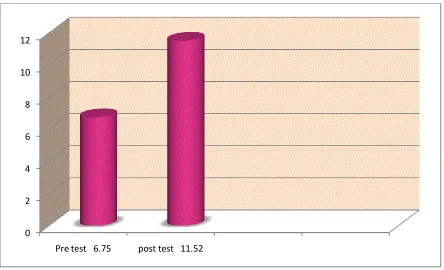
Table. 1. Comparison of pre test and post test knowledge of women regarding Breast Self Examination.
Mean MD SD ‘t’ value
Pretest 6.75
4.77
1.69
19.5
Figure .2. Comparison of Knowledge of adolescents regarding general aspects of Breast Self Examination Before and after Education
VI. Discussion
The present study revealed that the mean post test knowledge score was higher than the mean post test score. The mean pretest score of knowledge was 6.75 and mean post test score was increased to 11.52. The mean difference of pretest and post test is 4.77. The calculated ‘t’ value is 19.5 which is more than the table value (p<0.05). There is a significant difference between pretest and post test score. The data analysis revealed that there is a significant association between women’s knowledge of Breast Self Examination and demographic variables like age, duration of married life, educational status, Occupation, and income. A supportive study also shows that the same result by S.Kuriakose, conducted a study in Manglore in which post test score was increased from pretest score after administering video Assisted teaching programme.
VII Nursing Implications
Nursing Practice: Nurses can help the society by an active role in enhancing the public related to the awareness of Breast Self Examination.
0 2 4 6 8 10 12
Nursing Research: Continous Research and education will help the public to improve the health. The nurse researcher should conduct various researches in other settings also. This will help to generate more reliable data to give guidance to the public for health education related to Breast Self Examination in various settings.
VIII Conclusion
The findings of this study suggests the need for educating the women regarding Breast Self Examination, the most simple, effective and inexpensive method of preventing and detecting breast cancer. Breast cancer is the most common cancers found in women. Many times the signs and symptoms are neglected until the disease reaches advanced stage. Teaching women, the Breast Self Examination, through video/ demonstration is an effective measure to improve their knowledge and thus can effectively detect the disease at an early stage. The health care professionals have the responsibility of educating the women regarding Breast Self Examination. Clearly the task before us is enormous but with it could be simplified with the use of videos or self instructional modules.
IX. Recommendations
Similar kind of study can be performed in large scale and in different settings such as Schools, offices and colleges. Cancer educational programme can be introduced at early age. Cancer awareness should be enhanced by using all available means which include news, media, social networks, etc.
References
1. WHO (2008) the global burden diseases:2004 update
2. WHO (2007) Cancer control. Knowledge in to action, guide for effective programme and early detection.
3. EO, Ahn SH, You DS, Han W, Choe KJ, and NohDY: Determining the main risk factors and high-risk groups of breast cancer using a predictive model for breast cancer high-risk assessmentin South Korea, Cancer Nursing 2004.
4. Rising cases of Cancer in India by www. Maps of India.com/my India
5. Smith RA, Saslow D, Sawyer KA, Costanza ME, Evans WP, Foster RS, Hendrick E, Eyre HJ, SenerS: American cancer society guidelines for breast cancer screening update, Cancer J 2003
6. Sadler GR, Dhanjal SK, Shah RB, Ko C, Anghel M, Hanshburger : Asian India women: knowledge, attitude and behaviours towards breast cancer early detection,Public Health Nursing 2001 7. Tang TS, Solomon LJ, McCracken LM: cultural barriers to mammography, clinical breat exam and
breat self-examination among Chinese-American women 60 and older, Preventive Medicine 2000.
8. Rashidi Anahita, S. Rajaram. 1999. Middle eastern Asian Islamic women and BSE. University of Nebraska.
9. Neeraj Mohan, Hindustan Times, Rohtak updated November 16, 2015