University of South Carolina
Scholar Commons
Theses and Dissertations
2016
Mathematical Modeling Of Transport And
Corrosion Phenomenon Inside High Temperature
Molten Salt Systems
Bahareh Alsadat Tavakoli Mehrabadi University of South Carolina
Follow this and additional works at:https://scholarcommons.sc.edu/etd Part of theChemical Engineering Commons
This Open Access Dissertation is brought to you by Scholar Commons. It has been accepted for inclusion in Theses and Dissertations by an authorized administrator of Scholar Commons. For more information, please [email protected].
Recommended Citation
M
ATHEMATICAL MODELING OFT
RANSPORT ANDC
ORROSIONP
HENOMENON INSIDEH
IGHT
EMPERATUREM
OLTENS
ALTS
YSTEMSby
Bahareh Alsadat Tavakoli Mehrabadi
Bachelor of Engineering
Sharif University of Technology, 2007
Master of Engineering
Sharif University of Technology, 2010
Submitted in Partial Fulfillment of the Requirements
For the Degree of Doctor of Philosophy in
Chemical Engineering
College of Engineering and Computing
University of South Carolina
2016
Accepted by:
John W. Weidner, Major Professor
John Regalbuto, Committee Member
Sirivatch Shimpalee, Committee Member
John Monnier, Committee Member
Brenda Garcia-Diaz, Committee Member
Xinyu Huang, Committee Member
ii
iii
DEDICATION
iv
ACKNOWLEDGEMENTS
Firstly, I would like to express my sincere gratitude to my advisor Dr. John W.
Weidner for the continuous support of my Ph.D. study and related research, for his
patience, motivation, and immense knowledge. His guidance helped me in all the time of
research and writing of this dissertation. I cannot imagine having a better advisor and
mentor for my Ph.D. study. I especially enjoyed his style of mentoring students from which
I have benefited tremendously in my personal and professional growth. My sincere thanks
also goes to Dr. Sirivatch Shimpalee, who provided me an opportunity to learn simulation,
and modeling. Without his precious support it would not be possible to conduct this
research. I also want to thank the members of the Savannah River National Laboratory
(SRNL), Particularly Dr. Luke Olson, Dr. Michael Martinez-Rodriguez and Dr. Brenda
Garcia-Diaz, who is also a member of my dissertation committee, for their helpful advice
and for providing the experimental results for this work. I am very grateful to the other
members of my dissertation committee: Dr. John Monnier, Dr. John Regalbuto, and Dr.
Xinyu Huang, for their insightful comments and encouragement to widen my research from
various perspectives. I would also like to thank my friends and my colleagues, particularly,
Taylor Garrick and Cody Wilkins at the University of South Carolina for their help and
moral support that made my stay and studies at USC more enjoyable.
Finally, my deepest gratitude goes to my family: my parents, my sister and my brother
v
ABSTRACT
In today's world, alternative clean methods of energy are needed to meet growing energy
demands. Concentrating solar thermal power, more commonly referred to as CSP, is unique
among renewable energy generators because even though it is variable, like solar
photovoltaic and wind, it can easily be coupled with thermal energy storage as well as
conventional fuels, making it highly dispatchable. One challenge with concentrated solar
power (CSP) systems is the potential corrosion of the alloys in the receivers and heat
exchangers at high-temperature (700-1000 °C), which leads to a reduction of heat transfer
efficiency and influences the systems durability. The objective of this dissertation is to
create a comprehensive mathematical model including thermal gradients and fluid flow to
predict corrosion rates and mechanisms observed in state of the art molten salt heat transfer
systems.
The corrosion model was designed and benchmarked against a thermosiphon reactor.
This thermosiphon reactor exposed the alloy coupons to non-isothermal conditions
expected in CSP plants. Cathodic protection was also added to the model as a mitigation
strategy for corrosion of metal surfaces. The model compared the corrosion rates for the
cases with and without cathodic protection under different operational conditions for
different high-temperature alloys (e.g., Haynes 230, Haynes NS-163, and Incoloy 800H).
The model is capable of considering the effects of kinetic and mass transfer on the
vi
The results reveal that temperature has an important effect on the corrosion rate of
high-temperature alloys in molten salt systems. For the case with the higher high-temperature range
800-950 ℃, the corrosion rate is almost twice that of the case with the low temperature
range 650-800 ℃. Another important factor is dissolved metal ions (e.g., Cr3+) that diffuse
to the surface of the alloy as a result of disproportionation reaction at the more
electropositive metals and cause the oxidation\reduction reactions on the surface of the
vii
TABLE OF CONTENTS
DEDICATION ... iii
ACKNOWLEDGMENTS ... iv
ABSTRACT ...v
LIST OF TABLES ...x
LIST OF FIGURES ... xii
LIST OF SYMBOLS ... xvi
LIST OF ABBREVIATIONS ... xix
CHAPTER 1. INTRODUCTION ...1
1.1 CLEAN ENERGY TECHNOLOGIES ...1
1.2 CONCENTRATED SOLAR POWER (CSP) SYSTEMS ...2
1.3 POLYMER ELECTROLYTE MEMBRANE FUEL CELL (PEMFC) ...8
1.4 DISSERTATION OUTLINE ...10
CHAPTER 2. LITERATURE REVIEW ...12
2.1 CONCENTRATED SOLAR POWER PLANT (CSP) ...12
2.2 MOLTEN SALT APPLICATIONS IN CSP PLANT ...12
2.3 SUPER-ALLOYS FOR CSP PLANTS ...15
2.4 CORROSION OF SUPER-ALLOYS IN MOLTEN SALT ...20
2.5 CATHODIC PROTECTION ...26
viii
CHAPTER 3. MULTIDIMENSIONAL MODELING OF NICKLE ALLOY CORROSION
INSIDE HIGH TEMPERATURE MOLTEN SALT SYSTEMS ...30
3.1 INTRODUCTION ...31
3.2 EXPERIMENTAL PROCEDURES ...34
3.3 MODEL DEVELOPMENT ...35
3.4 RESULTS AND DISCUSSIONS ...46
3.5 SUMMARY ...57
CHAPTER 4. MODELING THE EFFECT OF CATHODIC PROTECTION ON HIGH TEMPERATURE ALLOYS INSIDE HIGH TEMPERATURE MOLTEN SALT SYSTEMS...58
4.1 INTRODUCTION ...59
4.2 MODEL DEVELOPMENT ...61
4.3 RESULTS AND DISCUSSIONS ...70
4.4 SUMMARY ...76
CHAPTER 5. EFFECT OF SYSTEM CONTAMINANTS ON THE PERFORMANCE OF A PROTON EXCHANGE MEMEBRANE FUEL CELL ...84
5.1 INTRODUCTION ...85
5.2 EXPERIMENTAL ...88
5.3 MODEL DESCRIPTION ...90
5.4 RESULTS AND DISCUSSIONS ...94
5.5 SUMMARY ...109
REFERENCES ...111
APPENDIX A– EXPERIMENTAL SETUP ...119
A.1 THERMOSIPHON EXPERIMENT ...119
ix
A.3 CORROSION REACTIONS ...126
APPENDIX B – MODEL PARAMETERS ...128
B.1 INTRODUCTION ...128
B.2 CALCULATION OF MODEL PARAMETERS ...130
B.3 CALCULATION OF PARAMETERS FOR THE MG REACTION ...133
APPENDIX C – NUMERICAL TECHNIQUES ...135
x
LIST OF TABLES
Table 1.1 Advantages and disadvantages of the different groups of HTFs for CSP
systems ...5
Table 2.1 Thermophysical properties of some molten salts compositions ...16
Table 2.2 Estimated raw material costs for various salt mixtures ...17
Table 2.3 Compositions of super-alloys ...19
Table 3.1 Equations for KCl-MgCl2 salt properties as inputs to the model ...38
Table 3.2 Standard potentials for main corrosion reactions of Haynes 230 in KCl-MgCl2 as inputs to the model ...41
Table 3.3 Kinetic parameters used for the prediction of Haynes 230 corrosion in KCl-MgCl2 salt as inputs to the model ...42
Table 3.4 Pre-exponential factor for the diffusion coefficients of various species as inputs to the model: T [=] K ...44
Table 3.5 Comparison of corrosion rates for Haynes 230 in KCl-MgCl2 at different operational conditions ...51
Table 3.6 Comparison of corrosion rates for Haynes 230 in KCl-MgCl2 with experimental data at 800-950 ℃ ...51
Table 3.7 Parameters used for the prediction of Haynes 230 corrosion in KCl-MgCl2 salt as inputs to the model for thermosiphon at 650-800 ℃ and 800-950 ℃. ...51
Table 4.1 Kinetic parameters used for the prediction of Haynes 230 corrosion in KCl-MgCl2 salt as inputs to the model ...65
Table 4.2 Equilibrium potentials for main corrosion reactions of Haynes 230 in KCl-MgCl2 as inputs to the model ...68
xi
Table A.1 The dimension and mass of the coupons for three different alloys (i.e., Haynes 230, Haynes NS-163 and Incoloy 800H) at high temperature thermosiphon for 100 hours
test ...122
Table A.2 EDS analysis of Haynes 230 before corrosion testing ...123
Table A.3 EDS analysis of Haynes 230 after 100 hours corrosion testing ...123
Table A.4 Different operational conditions for the experimental measurements ...126
Table B.1 Experimental conditions...132
Table B.2 Calculated exchange current densities ...132
xii
LIST OF FIGURES
Figure 1.1 Schematic of a CSP plant ...4
Figure 1.2 The breakdown of CSP systems cost...7
Figure 1.3 Schematic of a single PEM fuel cell...8
Figure 2.1 Schematic polarization curves for the metallic corrosion system. 𝑖𝑎 and 𝑖𝑐 indicate the partial anodic and cathodic currents respectively ...22
Figure 2.2 10,000 magnification SEM image of Incoloy 800H held at 850˚C for 500 hours, no salt exposure (a), 250 magnification of Incoloy 800H held at 850˚C for 500 hours, FLiNaK exposure (b) ...24
Figure 2.3 An example of intergranular corrosion of Ni-Cr-Fe alloy by molten chloride salt after 6 months at 870°C ...26
Figure 2.4 Electrochemical potential for alloy components and Mg corrosion inhibitor ..28
Figure 3.1 Thermosiphon reactor for non-isothermal corrosion experiments. Assembled reactor shown within well of furnace (left), reactor showing thermocouple locations for thermal profile experiments (center), and internal corrosion vessel shown with sample locations in upper cold zone and lower hot zone (right) ...36
Figure 3.2 The model geometry of the thermosiphon consists of a Ni crucible, a Ni crucible insert, coupons and the salt ...37
Figure 3.3 EDS X-ray mapping of Cr of Haynes 230 after 100 h exposure in KCl-MgCl2 at 850 °C ...39
Figure 3.4 The coupon cross section by considering the area of the sample surface that is covered by grain boundaries ...43
Figure 3.5 Distributions of velocity streamline of the thermosiphon and temperature distributions at the surface and around the coupons (a) at 650-800 °C and (b) at 800-950 °C ...49
xiii
Figure 3.7 Prediction of local and average corrosion rate (current density) for Haynes 230 coupons in KCl-MgCl2 with fluid flows (a) at 600-850 ℃, (b) at 800-950 ℃ for both cold zone and hot zone...52
Figure 3.8 The comparison of the corrosion rate distribution at cold zone (left side) and hot zone (right side) for three different porosities at 800-950 ℃ ...54
Figure 3.9 The comparison of the average corrosion rate at the coupon surfaces at both hot zone and cold zone for different porous layer thicknesses at 800-950℃ ...55
Figure 3.10 The comparison of the average corrosion rate at the coupon surfaces at both hot zone and cold zone for different Cr3+ mass fraction at 800-950°C ...56
Figure 3.11 The comparison of the average corrosion rate at the coupon surfaces at both hot zone and cold zone for different for different 𝜀
1.5 𝛿 (m
-1) at 800-950°C ...56
Figure 4.1 The model geometry of the thermosiphon consists of a Ni crucible, a Ni crucible insert (blue), coupons and the molten salt (a), The coupon cross section (b), and considering the area of the sample surface that is considered as porous layer(c) ...63
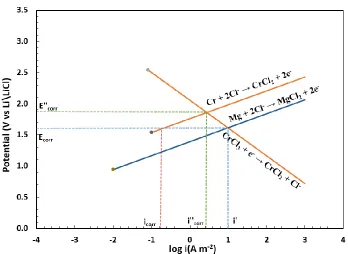
Figure 4.2 Evans diagram-principle of cathodic protection ...65
Figure 4.3 The comparison of corrosion rates at the surface of the alloy with varying Mg content in the salt for isothermal condition 850 °C (a) Haynes 230, (b)
Haynes NS-163, and (c) Incoloy 800H ...74
Figure 4.4 Prediction of average corrosion rate (current density) for Haynes 230 coupons for stagnant conditions at different temperature for the case with and without cathodic protection ...75
Figure 4.5 The effect of Cr3+ mol% at 850 °C on the average corrosion rate at the coupon surfaces with cathodic protection ...75
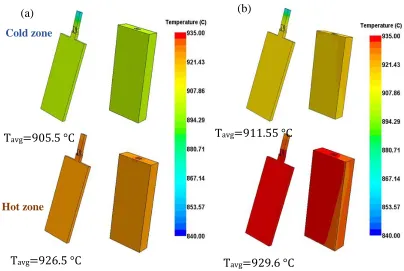
Figure 4.6 The model’s temperature distribution at the surface of the coupons and around the coupons for the case of without cathodic protection (a) and with cathodic protection (b) at non-isothermal condition of 800-950°C ...78
Figure 4.7 The corrosion current density distribution at the coupons without (a) and with Mg (b) introduced into the salt solution at the control temperature of 800-950°C and the amount of Mg of 1.15 mol% ...79
xiv
Figure 4.9 The effect of porous layer porosity on the corrosion rate distributions
at both cold and hot zones for the case with 1.15% Mg at non-isothermal condition (800-950 ℃). ...81
Figure 4.10 The effect of porous layer porosity on the corrosion rate at both cold zone and hot zone for the cases (a) without Mg and (b) with 1.15% Mg at non-isothermal case (800-950 °C) ...82
Figure 4.11 The effect of porous layer thickness on the corrosion rate at both cold zone and hot zone for the cases (a) without Mg and (b) with 1.15% Mg at non-isothermal case (800-950 °C) ...83
Figure 5.1 Example of IRm corrected cell voltage (Em) vs. time for a 50-hour infusion of 64 ppm 2,6-DAT at 0.2 A/cm2 into a 0.4 mg/cm2 Pt/C cathode catalyst loading...87
Figure 5.2 Example of IRm corrected cell voltage (Em) vs. time for a 50-hour infusion of 64 ppm 2,6-DAT at 0.2 A/cm2 into a 0.4 mg/cm2 Pt/C cathode catalyst loading...90
Figure 5.3 Corrected cell voltage, ΔEm, for different model compounds (64 ppm) for 0.4 mg/cm2 catalyst loading. The symbols are the experimental data and the lines are the model prediction ...97
Figure 5.4 Parameters obtained by fitting the model to the experimental data at 30-hour, 0.4 mg/cm2 cathode catalyst loading at 64 ppm for four organic compounds (a) the rate of catalyst poisoning and recovery during contamination (γcc) and recovery (γcr), (b) the fraction of sites poisoned during contamination (1) and recovery (2) ...98
Figure 5.5 a) ΔEm for different concentrations and infusion times of 2,6-DAT. The symbols are the experimental data and the lines are the model prediction. b) The contribution of kinetic and ohmic loss during the contamination and the recovery for the case of 256 ppm. The inset shows the contribution from each of the kinetic contamination (i.e., catalyst, and ionomer) to the voltage loss for the case of 256 ppm for 0.4 mg/cm2 catalyst loading ...100
Figure 5.6 ΔEm for different catalyst loadings at 30-hour infusion time and 64 ppm 2,6-DAT ...102
Figure 5.7 The fraction of sites poisoned during the contamination time (1) for 2,6-DAT. The symbols correspond to the experimental conditions, given in Table 7.1 and the dotted line is the empirical fit to these parameter values (Equation 7-12) ...104
xv
Figure 5.9 The rate of ionomer poisoning during contamination γ𝑖𝑐with 2,6-DAT. The symbols correspond to the experimental conditions, given in Table I and the dotted line is
the empirical fit to these parameter values (Equation 17-4) ...106
Figure 5.10 The fraction of sites poisoned during recovery (θ2) with 2,6-DAT. The symbols correspond to the experimental conditions, given in Table I and the dotted line is the empirical fit to these parameter values (Equation 7.15) ...107
Figure 5.11 The rate of catalyst recovery during the recovery with 2,6-DAT. The symbols correspond to the experimental conditions, given in Table 7.1 and the dotted line is the empirical fit to these parameter values (Equation 7-16) ...108
Figure 5.12 The rate of ionomer recovery during recovery (γ𝑖𝑟) with 2,6-DAT. The symbols correspond to the experimental conditions, given in Table 7.1 and the dotted line is the empirical fit to these parameter values (Equation 7-17) ...108
Figure 5.13 The fraction of contamination in the ionomer at steady state (𝑦2) for 2,6-DAT. The symbols correspond to the experimental conditions, given in Table I and the dotted line is the empirical fit to these parameter values (Equation 7-18) ...109
Figure A.1 Schematic of a thermosiphon equipped in a furnace ...119
Figure A.2 Major components of thermosiphon ...120
Figure A.3 SEM analysis of Haynes 230 before corrosion testing (a), and after 100 hours corrosion testing (b) ...124
Figure A.4 (a) SEM cross-section image of Haynes 230 after 100 hours in KCl-MgCl2 at 850°C (a), and results of EDS linescan (the last 2 - 4 EDS points of the linescans may be of the mounting material) (b) ...125
Figure B.1 Anodic exchange current density as a function of temperature ...132
Figure B.2 Cathodic exchange current density as a function of temperature ...133
Figure B.3 Mg exchange current density as a function of temperature ...134
Figure C.1 Overall STAR-CD system structure ...135
xvi
LIST OF SYMBOLS
𝑎 : Active surface area of catalyst per volume (cm-1)
𝑎0: Active surface area of catalyst per volume before contamination (cm-1)
𝐶𝑂2: Concentration of oxygenin the catalyst layer (mol cm-3)
C𝐻+: Concentration of proton in the catalyst layer (mol cm-3)
C𝐻+,0: Initial concentration of proton for baseline (mol cm-3)
𝐶𝑖 : Concentration of species i in the bulk, (mol m-3)
𝐶𝑖∗ : Concentration of species i at the surface, (mol m-3)
𝐶𝑖𝑟𝑒𝑓 : Reference concentration of species i, 1.0 mol m-3.
𝐷𝑒𝑓𝑓: Effective diffusion coefficients of reactant salts in grain boundary pores
(m2 s-1
𝐷𝑖 : Diffusion coefficients of reactant i, in the bulk salts (m2 s-1)
𝐸 : Temperature and concentration corrected standard potentials (V)
𝐸0 : Temperature corrected standard potential (V)
Eeq: Open circuit potential (V)
Em: IRm corrected voltage (V)
𝐹 : Faraday constant, (96,485 C mol-1)
𝑖 : Current density, (A m-2)
𝑖0 : Exchange current density, (A m-2)
xvii
iavg : Average corrosion current density at the surface of the coupon, (A m-2)
I : Current density (A cm-2)
Ni : Flux of a solute species i, (mol m-2 s-1)
n : Number of electrons transferred in electrode reaction
𝑅0: Ionomer resistance before contamination (ohm)
Ri : Ionomer specific resistance (ohm cm2)
Rm: Membrane specific resistance (ohm cm2)
R : Gas constant, (8.314 J mol-1 K-1)
t: Time (h)
T: Temperature, (K)
𝑥 : x-position, (m)
𝑌 : Mass fraction
Greek
α𝑎,𝑐= transfer coeffcients
1
β: Tafel slpoe
γcc: Rate of catalyst poisoning (h-1)
γcr: Rate of catalyst recovery (h-1)
γic: Rate of ionomer poisoning (h-1)
γir: Rate of ionomer recovery (h-1)
𝛿 : Porous layer thickness, (m)
𝜂 : Metal surface overpotential, (V)
ηa : Activation overpotentials of anode (V)
xviii 𝜅 : Thermal conductivity, (W K-1m-1)
𝜇 : Dynamic viscosity, (kg m-1s-1)
𝜌 : Density, (g m-3)
θ: Number of active platinum sites loss
θ1: Fractional loss of catalyst sites after steady state contamination (i. e. , t → ∞)
θ2: Fractional loss of catalyst sites after steady state recovery (i. e. , t → ∞)
σ: Effective inomer conductivity (ohm-1cm-1)
σ0: Inomer conductivity before contamination (ohm-1cm-1)
σ𝑚: Membrane conductivity (ohm-1cm-1),
φ : TOC per amount of Pt at the catalyst layer (ppm mgPt-1)
𝜏 : Porous layer tortuosity
xix
LIST OF ABBREVIATIONS
ANL ... Argonne National Laboratory
BOP ... Balance of Plant
BzOH ... Benzyl Alcohol
CAE... Computer-Aided Engineering
CP ... Cathodic Protection
Cr... Chromium
CSP ... Concentration Solar Power
DGMEA ... Diethylene Glycol Monoethyl Ether
DGMEE ... Diethylene Glycol Monoethyl Ether Acetate
DOE ... Department of Energy
2,6-DAT ... 2,6 Diaminotoluene
EDS ... Energy Dispersive Spectroscopy
FV ... Finite Volume
H2 ...Hydrogen
xx
Mg ... Magnesium
NASA ... National Aeronautic and Space Administration
Ni... Nickel
O2 ... Oxygen
PEMFC ... Polymer Electrolyte Membrane Fuel Cell
SRNL ... Savannah River National Laboratory
TES ... Thermal Energy Storage
1
CHAPTER 1. INTRODUCTION
1.1
Clean Energy Technologies
The increasing the demand for energy, energy security and the need to minimize the
impact on the environment related to energy production are all major incentives for the
research and development of alternative energy technologies. There are several clean
energy sources that can alleviate fossil fuel shortages and environmental pollutant.
Examples of clean energy technologies that, one can refer to are concentrating solar power
(CSP) plants, and polymer electrolyte membrane fuel cells (PEMFCs).
For electricity generation on a large commercial scale, CSP has the potential to be a
highly economical conversion process. The conversion of sunlight to electricity, is one of
the leading candidates among clean energy technologies. Solar energy has enormous
advantages over other sources of energy because it is free, abundant, inexhaustible and
clean. Another important alternative source of clean energy is the use of hydrogen in
PEMFC fuel cells for both transportation and stationary applications. The extraordinary
environmental quality and high efficiency of PEMFCs make them a potential alternative
energy source.
Despite fundamental innovations that have advanced commercialization of these two
technologies, , many technical hurdles still need to be overcome to lower cost and achieve
2
Many clean energy programs have integrated a strong focus on electrochemistry due to
the high efficiencies that can be achieved by electrochemical reactions. The high
efficiencies of electrochemical processes are due to the direct relationship between
electrochemical energy and Gibbs energy from fundamental thermodynamics. Mechanical
systems used in energy applications such as turbines are limited by Carnot efficiency,
where electrochemical systems are only limited by the kinetics of the electrochemical
reaction and ohmic losses in the electrolyte. Corrosion mechanisms are also an
electrochemical phenomena that are important to understand and mitigate to prolong the
lifetime for clean energy systems. All of these aspects make electrochemical engineering
vital to further development of clean energy technologies [1].
In this work electrochemistry is used to improve the lifetime of these two clean energy
technologies. In the first part of this dissertation the corrosion problem in the CSP plant
are discussed, followed by a mathematical model development that include thermal
gradients and fluid flow to predict corrosion rates and mechanisms observed in the state of
the art molten salt heat transfer systems of CSP plants. The second part of the study is
devoted to identify the performance loss and recovery of a PEM fuel cell due to Balance
of Plant (BOP) materials contaminations via a combination of experimental data and
mathematical models.
1.2
Concentrated Solar Power (CSP) Systems
Diminishing fossil fuel reserves and increasing effects of anthropogenic climate change
due to greenhouse gas emissions have led to an unprecedented global interest in renewable
3
system has become one of the emerging technologies in the world. The defining aspect of
CSP is that it captures and concentrates solar radiation to provide the heat required to
generate electricity, rather than using fossil fuels or nuclear reactions. Another attribute of
CSP plants is that they can be equipped with a thermal energy storage system in order to
generate electricity even when the sky is cloudy or after sunset.
In general, CSP systems convert solar radiation into thermal energy by focusing the
sun's rays onto a central area called a receiver. The heat transfer fluid (HTF) inside the
receiver is heated by absorption of the radiation and is pumped through the receiver pipes to
deliver the thermal energy to a heat exchanger integrated with a steam turbine to generate
power. The processes occurring in CSP systems is illustrated in Figure 1.1. CSP systems
are early in their adoption, but have already begun commercialization. Today, there are 80
operational CSP plants around the world, mainly in the United States and Spain, with 1.9
GW of total capacity. Another 23 are under construction in India, China, Australia, and
South Africa, among other places [3]. As experience is gained with CSP systems and as
R&D advances, plants will get bigger, mass production of components will occur and costs
will come down with increased competition between CSP integrators.[4]. The U.S.
Department of Energy (DOE) target is to make unsubsidized solar energy cost competitive
with other forms of energy on the grid by the end of the decade. Figure 1.2 shows the
breakdown of CSP systems cost. It is projected that CSP systems need to be able to produce
energy with a cost of $0.06/kWh when they are scaled up and implemented on a large scale.
To reach these targets, it is generally believed that temperatures of the HTFs will need to
be high enough to drive an advanced Brayton cycle or Rankine cycle with superheated
4
CSP plants, reduce the cost of the thermal storage system (as a smaller storage volume is
needed for a given amount of energy storage) and achieve higher thermal-to-electric
efficiencies.
It is projected that average operating temperatures near 750°C with local hot spots up
to 850 °C would be needed to make these systems viable and achieve energy price goals.
To make this system feasible, HTFs that can operate at these temperatures for long periods
of time without significant degradation reaction of either the HFT or the materials of
construction for the system are required.
Figure 1.1. Schematic of a CSP plant [5].
A variety of HTFs which may be used in CSP systems have been considered and
researched, including six groups: gases (air, helium and super critical CO2), water/steam,
thermal oils, organic fluids, molten salts and liquid metals. Table 1.1 summarizes the
respective advantages and drawbacks of the different groups of HTFs that can be employed
5
Table 1.1. Advantages and disadvantages of the different groups of HTFs for CSP systems [6].
Air, helium and super critical
Water/steam Thermal oils Organic fluids Molten salts Liquid metals
Thermophysical properties
Low dynamic viscosity and high efficiencies. High operating
temperatures (above 700 °C). Impossibility of thermal storage, high pumping power and low thermal
conductivity.
Low dynamic viscosity (similar to air), non-expensive Rankine direct cycle. Limited operating temperatures (600 °C), impossibility of thermal storage and high pressure required.
Constant thermal conductivity over a wide range of temperatures and high efficiencies at small scales. Thermal
stability only up to 400 °C, low heat capacity, high pumping power
Low viscosity and high heat capacity. Low thermal
conductivity and limited temperature range (up to 393 °C).
Good thermal stability up to 600 °C, low viscosity and vapour pressure. Possibility of direct thermal storage. With new mixtures
temperatures of 800 e900 °C could be achieved, but with the drawback of a too high melting point (400 °C).
Large temperature range (above 1000 °C for most of the candidates) and thermal stability at high temperatures, high thermal conductivities, heat fluxes and efficiencies.
Possibility of thermal storage with some candidates.
Corrosion rate High oxidation rates at high temperatures, better
compatibility with less noble metals.
Corrosion starts at 300 °C and increases at high
temperatures.
No information regarding compatibility with materials is available in the literature.
No information regarding compatibility with materials is available in the literature.
Big corrosion issues at temperatures higher than 600 °C. Better compatibility with LiNaK mixtures.
Big corrosion issues at high temperatures for the heavy metals and fusible metals group Cost and availability High availability and zero costs. Low
availability in regions
characterized by high solar radiation rates.
Relatively high costs (between 3 and 5 USD/Kg).
High costs (100 USD/Kg).
Low costs but problems for meeting the demand of nitrate/nitrite based salts
6
Air and water are no longer considered as viable options. Air increases in volume when
heated and requires larger heat exchanger sizes for efficient heat transfer, which also
greatly increases the capital cost of the heat exchanger [7]. Water also can prove unstable
and difficult to manage at high temperature/high pressure situations. Thermal oils have
been a preferred heat transfer fluid for CSP developers designing low to intermediate
temperature CSP systems to get around the high pressure issue. The problem with thermal
oils is that the hydrocarbons break down when heated to 400 °C. and limit the maximum
operating temperature for parabolic troughs [8]. Liquid metals have been used as heat
transfer fluids in nuclear reactors since the 1940s and are currently being studied for use in
solar thermal systems as HTFs and thermal energy storage media. Although liquid metals
have not been used in commercial CSP applications until now, they have several promising
properties including extensive operating temperature range, low viscosity and efficient heat
transfer characteristics. The issue with liquid metal is that the cost is higher than that of
molten-salt or water/steam HTFs. Also, heat capacities of liquid metals are low relative to
commercial nitrate/nitrite based salts and hence they are less favorable to be used as
thermal energy storage media [9].
Molten salts proposed for use with high temperature Brayton and superheated Rankine
cycles are usually molten halides due to their good heat transfer properties. They can make
excellent heat transfer fluids in high temperature applications (260°C - 1400°C) because
of their high melting points, stability at high temperatures, and low viscosities. The size of
pipes and other equipment used for molten salts together with the pumping power required
7
The wall thicknesses required in using molten salts are also much smaller than those
required in high-pressure steam systems operating near the same temperatures [10].
Figure 1.2. The breakdown of CSP systems cost [11].
Certain molten salts can serve as energy storage mediums. Their high melting
temperatures and high thermal capacitances make it so they retain heat for periods longer
than 24 hours. They also have high energy densities which reduces the amount of molten
salt needed in applications normally carried out by traditional working fluids. Their ability
to store this heat energy allows electric energy at any time of the day [12].
The main disadvantage to using molten salts is that they can be highly corrosive,
especially at high temperatures. Therefore, piping, heat exchangers, pump heads, and other
components in CSP systems that come in contact with the molten salt are expected to face
8
1.3
Polymer Electrolyte Membrane Fuel Cell (PEMFC)
Proton exchange membrane fuel cells (PEMFCs) are considered to be a promising
technology for clean and efficient power generation in the twenty-first century. Their high
efficiency and zero emission have made them a prime candidate for powering the next
generation of electric vehicles [14]. Typical fuel cells operate at a voltage ranging from 0.6
– 0.8 V, and produce a current per active area (current density) of 0.2 to 1.0 A/cm2. A
PEMFC consists of a negatively charged electrode (anode), a positively charged electrode
(cathode), and an electrolyte membrane. Hydrogen is oxidized on the anode and oxygen is
reduced on the cathode. Protons are transported from the anode to the cathode through the
electrolyte membrane, and the electrons are carried to the cathode over the external circuit.
The electrons are transported through conductive materials to travel to the load when
needed. On the cathode-side, oxygen reacts with protons and electrons forming water and
producing heat. Both, the anode and cathode, contain a catalyst to create electricity from
the electrochemical process as shown in Figure 1.3.
9
The conversion of the chemical energy of the reactants to electrical energy, heat and
liquid water occurs in the catalyst layers, which have a thickness in the range of 5 to 30
microns (μm). A typical PEM fuel cell has the following reactions:
Anode: H2 → 2H++ 2e−
Cathode : 12O2+ 2H++ 2e− → H2O
Overall: H2+ 1
2O2 → H2O
1-1
1-2
1-3
Within the fuel cell, in addition to this chemical reaction, several coupled processes take
place at the same time, including the diffusion of reactants across the electrodes, diffusion
of protons across the membrane, heat generation and removal, water production at the
cathode, and water transport through and out of the fuel cell. The rates of the reaction and
these transport processes determine the dynamics of the fuel cell. These processes are
dependent on the quality of the membrane-electrode assembly (MEA), flow field designs,
and operating conditions (reactant flow rates, temperature, pressure etc.), all of which
affect the overall performance of the fuel cell and thus are important aspects to consider in
fuel cell design and operation.
In order to make fuel cell systems as commercially competitive as possible, as much
cost as possible needs to be removed from system components without sacrificing
performance and durability. Fuel cell durability requirements limit the performance loss to
a few tens of mVs over required lifetimes (1000s of hours). As fuel cell systems suffer
from performance loss due to factors such as potential cycling, start/stop and idling
conditions, there is very little tolerance for additional losses such as those due to
10
systems requires a level of understanding of potential contaminants from system
components that does not currently exist.
1.4 Dissertation Outline
As mentioned earlier, this dissertation is focused on two projects. The first six chapters
are focused on the first project and the last chapter addresses the second project. The
objective of first project is to create a comprehensive mathematical model including
thermal gradients and fluid flow to predict corrosion rates and mechanisms observed in
state of the art molten salt heat transfer systems. Chapter 1 introduces the importance of
the dissertation. It is generally believed that temperatures of heat transfer fluids (HTFs)
will need to be higher than 750 °C to drive an advanced Bryton cycle or Rankine cycle
with superheated steam to reach this target. To make this system technically feasible, HTFs
need to be developed that can operate at these temperatures for long periods of time without
significant degradation of either the HTFs or materials of construction for the system.
Decreasing materials’ corrosion will lower system maintenance costs due to less frequent
component failure and replacement. Improvements in materials’ durability will be
achieved by creating a comprehensive model that will allow identification of critical
parameters of corrosion mechanisms. While material durability studies have been
conducted for lower temperature HTFs that are common in industry, detailed
characterizations of molten salt systems capable of high temperature operation at
temperatures routinely exceeding 750°C have either not been performed or not been
extensive. The corrosion management strategies employed with higher temperature salts is
often drastically different when compared to those for the lower temperature nitrate salts
11
higher temperatures, activity gradient driven mass transfer and thermal gradient driven
mass transfer are often dominant, especially in many chloride and fluoride salt systems that
are among the most promising HOT HTFs. This research will characterize corrosion and
material degradation at these conditions and compare corrosion rates and mechanisms with
state-of-the-art systems.
Chapter 2 presents a literature review of the corrosion, specifically current research in
corrosion at high temperature molten salt systems and cathodic protection. Chapter 3
develops a corrosion model that allows reliable simulation of the processes under realistic
conditions that can help to identify the critical parameters of corrosion and improve the
material durability. Finally in Chapter 4, the previously reported corrosion model is
developed under magnesium (Mg) cathodic protection.
For the second project of the dissertation, the purpose is to identify the performance loss
and recovery of a fuel cell due to contaminants arising from Balance of Plant (BOP)
components via a combination of experimental data and mathematical models. An analysis
procedure was developed to quantify the various potential losses caused by contaminants
during both fuel cell contamination and recovery operations. These important impacts of
contamination are considered, which are the adsorption onto the Pt surface (kinetic losses)
and ion exchange with the membrane and ionomer in the catalyst layer. Chapter 5 presents
a literature review in addition to the experimental procedure and model development for
12
CHAPTER 2. LITERATURE REVIEW
2.1
Concentrated Solar Power Plant (CSP)
The first CSP plant (1982-1988) in California, US used water/steam systems as a heat
transfer fluid. Its six-year test and power production program proved that the technology
operates reliably and has both very low environmental impact and high public acceptance.
There were, however, two key disadvantages to the water/steam system at this plant. First,
the receiver was directly coupled with the turbine, causing the turbine to drop offline each
time a cloud came by, and second, the oil/rock thermal storage system was not efficient
because of thermodynamic losses. In parallel with testing of this plant, a series of studies
funded by the U.S. Department of Energy and industry examined advanced power tower
concepts using single-phase receiver fluids [16]. Molten salts have been studied for their
possibility of high working temperatures, low melting points, moderate density, high heat
capacity, and high thermal conductivity, in addition to long term thermal stability (or
chemical stability with less corrosion to containers) and low cost [17].
2.2 Molten Salt Applications in CSP Plant
The primary molten salt candidate was a binary mixture of 60% sodium nitrate and 40%
potassium nitrate (Solar Salt). The primary advantages of molten nitrate salt as the heat
transfer fluid for a solar power tower plant include a lower operating pressure and better
13
This translates into a smaller, more efficient, and lower cost receiver and support tower
[16]. Solar Salt has a thermal stability (below 600 °C) and a relatively high melting point
(220 °C). A new heat transfer fluid called Hitec, which is a ternary salt mixture of 53%
KNO3, 7 % NaNO3 and 40% NaNO2, has been considered to replace the Solar Salt because
of its low freezing point of 142 °C [18]. Hitec is thermally stable at temperatures up to 454
°C, and may be used at temperature up to 538 °C for a short period [19]. A modified
version, Hitec XL, is a mixture of 48 % Ca (NO3)2, 7% NaNO3 and 45% KNO3 which
melts at about 133 °C and may be used at a temperature up to 500 °C [18]. Different
compositions of Ca(NO3)2/ NaNO3/ KNO3 have been identified in the open literature as
eutectic salts [18, 20]. The ternary eutectic salt with composition of 44% Ca(NO3)2/ 12%
NaNO3, 44% KNO3 melts at 127.6 °C and its thermal stability is good at up to 622 °C [20].
It is proposed to replace molten-nitrate-salt coolant systems with molten-fluoride-salt
coolant systems and thus make it possible to increase peak salt coolant temperatures from
565 °C to between 700 °C and 850 °C. Increasing the peak coolant temperatures and using
a higher temperature closed-Brayton-power cycle have the potential to increase
heat-to-electricity efficiency by 20–30% with an equivalent reduction in capital costs [21].
Molten fluoride salts have been used on a large industrial scale for a century. Since the
1890s, essentially all aluminum has been produced by the Hall process which used
sodium-aluminum-fluoride-salt at 1000°C in a graphite-lined bath. In the 1950s, the United States
launched a large program to develop a nuclear-powered aircraft by using molten salt
reactors (MSRs) were to provide the very high- temperature heat source, with the heat
transferred to a jet engine via an intermediate heat-transport loop. In the 1960s and 1970s,
14
for these applications because of their high-temperature heat transfer and nuclear
characteristics [21]. Several types of molten fluoride and chloride salts, including LiF-BeF2
(also known as FLiBe [67-33 mol%]), LiF-NaF-KF (also known as FLiNaK [46.5-11.5-42
mol%]), and KCl-MgCl2 (67-33 mol%), have been investigated recently by several
Japanese and U. S. groups (LiF-BeF2 and LiF-NaF-KF) and by the University of Wisconsin
(LiF-NaF-KF and KCl-MgCl2) in support of fusion reactor and VHTR reactor concepts,
respectively. At operating temperatures, these salts have heat transfer properties similar to
those of water. However, the boiling points are above 1000 °C, which allows low-pressure
operations [22]. Table 2.1 presents a summary of the properties of molten halide salts for
using in CSP plants. Certain factors in this table, such as melting point and vapor pressure,
can be viewed as stand-alone parameters for screening candidates [23]. In the area of
nuclear energy systems, molten choloride salts are also being considered as heat transport
fluids to transfer high temperature process that from nuclear reactors to power chemical
plants. Electrochemical reprocessing of used metallic fuel is performed routinely in molten
LiCl-KCl electrolyte. Molten NaCl-KCl-MgCl2 salt was used in reprocessing of the liquid
metal fuel at Brookhaven National Laboratory in the 1950s as part of the Liquid Metal
Reactor Experiment. Free energy of formation vs temperature diagrams constructed for
chlorides show that alkali chlorides and alkaline earth chlorides are more
thermodynamically favored than the transition metal chlorides [24]. Williams discussed
the influence of the price of the components with different salt mixtures [23]. His
conclusions determined that magnesium chlorides are the least expensive of all, while
fluorides, fluoroborates and Li-containing mixtures increase the price of the coolant. Table
15
standpoint of the CSP plant, it is important to select a salt that possesses good heat transfer
characteristics, is relatively easy to handle, and not prohibitively expensive. Based on the
above issues it was decided that most of the experiments be performed for this project using
68%KCl-32%MgCl2 (mol%), with a couple tests utilizing FLiNaK salt for comparison
purposes. KCl-MgCl2 has less heat transfer properties, in comparison to the FLiNaK
molten salt, but it is one of the most inexpensive molten halide salts.
2.3 Super-alloys for CSP Plants
The development of the CSP plant much depends on the progress in creating such
structural materials that should meet a number of special requirements:
- A high corrosion resistance of molten salt melts;
- Adequate high-temperature strength;
- Good manufacturability (ability to be deformed, machined, welded, etc.).
The corrosive impact on these factors is significant in most situations, and may be
critical in some. In general, for structural materials, corrosion resistance is not the primary
criterion for selection. In most cases, for the applications described above, the mechanical
properties are the major needs. Obviously, this usually means strength (rupture strength,
creep strength, toughness) at the required service temperature. Since in all cases the
systems have to be fabricated at ambient temperature, and in normal operation will need to
be cooled to ambient temperature several times during their service lives, there will also be
some mechanical property requirements for low temperatures: the usual minimum
16
Table 2.1 Thermophysical properties of some molten salts compositions [23]. Heat-transfer properties at 700 ºC
Salt Formul
a Weight (g/mol)
Melting point
(ºC)
900ºC vapor pressure (mm Hg)
ρ, density (g/cm3)
ρ Cp,
volumetric heat capacity
(cal/cm3 ºC)
μ, viscosity (cP)
k, thermal conductivity
(W/m K)
LiF-NaF-KF 41.3 454 ~ 0.7 2.02 0.91 2.9 0.92
NaF-ZrF4 92.7 500 5 3.14 0.88 5.1 0.49
KF-ZrF4 103.9 390 1.2 2.80 0.70 < 5.1 0.45
LiF-NaF-ZrF4 84.2 436 ~ 5 2.92 0.86 6.9 0.53
LiCl-KCl 55.5 355 5.8 1.52 0.435 1.15 0.42
LiCl-RbCl 75.4 313 -- 1.88 0.40 1.30 0.36
NaCl-MgCl2 73.7 445 < 2.5 1.68 0.44 1.36 0.50
KCl-MgCl2 81.4 426 < 2.0 1.66 0.46 1.4 0.4
NaF-NaBF4 104.4 385 9500 1.75 0.63 0.9 0.4
KF-KBF4 109.0 460 100 1.70 0.53 0.9 0.38
17
Table 2.2 Estimated raw material costs for various salt mixtures [23].
Salt Composition
(mol %)
Composition (wt %)
Raw material cost ($/kg–salt mixture)
Cost/volume ($/L at 700ºC)
KCl-MgCl2 68-32 62-38 0.21 0.35
NaCl-MgCl2 58-42 46-54 0.25 0.42
NaCl-KCl-MgCl2 20-20-60 14-18-68 0.28 0.50
LiCl-KCl-MgCl2 9-63-28 5-61-34 0.74 1.13
KF-KBF4 25-75 13-87 3.68 6.26
LiCl-KCl-MgCl2 55-40-5 40.5-51.5-8 4.52 7.01
LiCl-KCl 59.5-40.5 45.5-54.5 5.07 7.71
NaF-NaBF4 8-92 3-97 4.88 8.55
NaF-ZrF4 59.5-40.5 27-73 4.02 12.63
KF-ZrF4 58-42 32.5-67.5 4.85 13.58
18
The selected materials must be fabricable to the extent required to manufacture the
system; but there is often a further requirement in the fabricability of the materials since it
is likely that during service repairs and replacements may be necessary.
For higher temperature applications, it is necessary to produce alloys with higher
intrinsic oxidation resistance. Developments along these lines had begun for quite different
reasons in the late 1920s, when a series of alloys were developed, primarily for electric
resistance heater applications, which relied on the growth of a protective Cr2O3 ‘chromia’
scale. These alloys were nickel or cobalt based, and when the first gas turbines were
developed for aviation purposes these were selected for the hot components [25].
A National Aeronautic and Space Administration (NASA) study determined that the
tendency for common alloying constituents to corrode in molten fluoride salts increased in
the following order: Ni, Co, Fe, Cr, Al. This is supported by Gibb’s free energy of
formation of various fluorides [26].
The present-day corrosion-resistant nickel alloys, which can be well deformed and
welded, belong to three main alloying systems: Ni-Mo, Ni-Cr, Ni-Cr-Mo. Simultaneous
alloying of nickel with chromium and molybdenum makes it possible to create
ultrahigh-resistance alloys in a wide range of corrosive active media of oxidation/reduction character.
Along with a high corrosion resistance, the alloys show an exceptional resistance to local
types of corrosion. Besides, these alloys are heat-resistant at high temperatures. They
combine high strength and plasticity from temperatures below zero to 1200°C. The effect
of mutual effect of chromium and molybdenum on the corrosion resistance of the alloy is
19
Haynes Alloy N was developed in the 1950s for molten salt service in the Aircraft
Nuclear Propulsion program. Conventional high temperature alloys containing about 20%
chromium proved susceptible to corrosion by the proposed molten salt heat transfer
medium. It was successfully used in the ORNL Molten Salt Reactor Experiment in the
1960s. Some variations of Alloy N, for example, adding titanium, (McCoy, et al., 1970)
were developed for easier weldability and better performance in the high radiation
environments of reactors [28].
The primary materials used while investigating corrosion in high temperature CSP
applications are: Haynes-230, Incoloy 800H, and Haynes NS 163. These alloys were
chosen over continued testing of different alloys because their mechanical properties are
much more suitable to sustained high temperature operation. Table 2.3 shows the
compositions of these different alloys.
Table 2.3. Compositions of super-alloys.
Alloy (wt%) Cr Mo W Al Ti Fe C Co Ni Mn V Si
Incoloy 800H 20.82 - - 0.54 0.52 46.3 0.07 0.04 30.69 0.49 - 0.33
Haynes 230 22.08 1.23 14.17 0.37 0.01 1.02 0.10 0.21 59.98 0.52 - 0.31
Haynes NS 163 27.71 0.27 - 0.17 1.33 21.24 0.092 40.66 8.06 0.22 0.05 0.20
As it is shown in Table 2.3 these super-alloys have a large Al and Cr component to aid
in the prevention of high temperature oxidation. As discussed earlier both Al and Cr are
20
2.4
Corrosion of Super-alloys in Molten Salt
Compatibility of molten salts with structural alloys centers on the potential for oxidation
of the structural metal from the elemental state to the corresponding fluorides or chlorides
with corresponding reduction of the oxidizing agent. Electrochemically, the molten
salt/metal surface interface is very similar to the aqueous solution/metal surface interface.
Many of the principles that apply to aqueous corrosion also apply to molten salt corrosion
such as anodic reactions leading to metal dissolution and cathodic reduction of an oxidant
[22]. The laws of electrochemistry and mechanisms of corrosion are comparable for
aqueous solutions and molten salts. According to Joseph R. Davis [29] the most common
mechanism is the oxidation of the metal to ions, similar to aqueous corrosion. For this
reason, molten salt corrosion has been identified as an intermediate from of corrosion
between molten metals and aqueous corrosion.
The corrosion of metals in molten salt can be well explained by a combination of anodic
dissolution of metal (𝑖𝑎) and cathodic reduction of oxidants (𝑖𝑐) under a mixed potential as
well as in aqueous solution. The polarization curve is schematically illustrated in Figure
2.1. The partial anodic current 𝑖𝑎 and cathodic current 𝑖𝑐 correspond to the metal
dissolution and the reduction of oxidants respectively in corrosion processes. They are
represented by broken curves in Figure 2.1. The rates of anodic reaction and cathodic
reaction must become equal at a corrosion potential 𝐸𝑐𝑜𝑟𝑟. That is to say, the partial anodic
current and the partial cathodic current become equal in magnitude and opposite in
direction. And the value is designated the corrosion current, 𝑖𝑐𝑜𝑟𝑟:
21
Generally, the anodic reaction of corrosion in a molten salt corresponds to the
dissolution of metals followed by the formation of metal oxides or salt films in the same
way in aqueous solution. On the contrary, the cathodic reaction of corrosion differs with
each molten salt and is much more complicated than the aqueous solution system [30].
The oxidation-reduction (corrosion) can occur by several processes in molten salt,
including: Uniform surface corrosion, differential solubility due to thermal gradients, and
galvanic corrosion.
Intrinsic corrosion (uniform surface corrosion) with molten salt as the reactant; this
mechanism pertains primarily to nitrates and nitrites, not to fluorides or chlorides [29].
According Ozeryanaya [31] the oxidation of metals by molten chlorides is an
electrochemical process of ion exchange between the metal and the salt:
𝑀 → 𝑀𝑛++ 𝑛𝑒−
𝑜𝑥 + 𝑛𝑒− → 𝑟𝑒𝑑
2-2
2-3
These reactions take under conditions close to equilibrium with respect to the salt
adjacent to the electrode. Even in the absence of oxidizing contaminants (oxygen, water,
etc.) the salt cations which can be reduced to the elemental state, or to a lower state, can
act as metal-depolarizers.
Corrosion by oxidizing contaminants in the molten salts (such as HF, HCl, H2O),
residual oxides of metals, or easily reducible ions, especially some polyvalent metal ions.
Impurities in the melt or in the gas phase control the corrosion/oxidation potential of the
22
Figure 2.1 Schematic polarization curves for the metallic corrosion system. 𝑖𝑎 and 𝑖𝑐 indicate the partial anodic and cathodic currents respectively [30].
Differential solubility due to thermal gradients (between hot and cold zones) in the
molten salt system with formation of a metal ion concentration cell that drives corrosion.
Thermal gradient in the melt can cause dissolution of metal at hot spots and metal
deposition at cooler spots. The result is very similar to aqueous galvanic corrosion [29].
Galvanic corrosion, wherein alloys with differing electromotive potentials are
maintained in electrical contact by the molten salt, is driving the oxidation of the anodic
material. According to Ozeryanaya [31] at high temperatures, not only the salt components
but also the container material can act as metal oxidizers. He showed the formation of metal
alloys through molten salts goes in a strictly defined direction: the more chemically active
metal M1 (electronegative) corrodes in the molten bath:
M1 → M1m++ me 2-4
The low-oxidizing-level ions M1m+ of that metal transfer by convection towards the more
23
nM1m+↔ (n − m)M1+ m M1n+ at n > m 2-5
The atoms of the active metal M1 formed in this way produce an alloy M1-M2 while the
M1n+ ions, reaching the surface of M
1, accelerate its corrosion:
(n − m)M1+ m M1n+ ↔ n M1m+ 2-6
For instance, the corrosion rate of a Cr specimen in molten NaCl at 900°C increases 30
times if an alundum crucible (inert with respect to the salt) is replaced by an iron crucible.
In the latter case Cr corrodes as:
Cr → Cr2++ 2𝑒− 2-7
while on the crucible surface the following reaction takes place:
3Cr2+ ↔ 2 Cr3++ Cr
𝑎𝑙𝑙𝑜𝑦 2-8
High temperature corrosion in molten salts often exhibits selective attack and internal
oxidation. As an example chromium depletion in iron-chromium-nickel alloy systems can
occur by the formation of a chromium compound at the surface and by the subsequent
removal of chromium from the matrix, leaving a depleted zone. Thus, the selectivity
removed species moved out, while vacancies moved inward and eventually form voids.
The voids tend to form at grain boundaries in most chromium- containing metals [29].
Figure 2.2 compares alloys high in nickel and chromium with and without exposure to
FLiNaK salt, held at 850°C for 500 hours. The images demonstrate coupons exposed to
the salt have significant weight loss along grain boundaries.
Corrosion of metals in fluoride salts was investigated for MSRs development as early
as 1950. Various alloys were tested in mixtures of LiF, BeF2, NaF, ZrF4, ThF4, NaBF4, etc.,
up to about 1088 K using static experiments, convection loops and in-pile surveillance
24
Figure 2.2 a) 10,000 magnification SEM image of Incoloy 800H held at 850˚C for 500 hours, no salt exposure, b) 250 magnification of Incoloy 800H held at 850˚C for 500 hours, FLiNaK exposure.
In most high temperature environments corrosion can be controlled by one of the
following mechanisms, (i) by the formation of a protective film, or [33] by the
establishment of a thermodynamic equilibrium between the material and the environment
[4]. Elements such as Cr, Al, and Si are added to alloys to promote the formation of
self-healing protective oxide films that act as diffusion barriers and prevent further rapid
oxidation in oxidizing environments such as air. Prevention of hot corrosion (sulfidation
and oxidation from molten salt deposits left from fuel impurities) in fossil fueled boilers
and turbines also rely on passive films of Cr and Al oxides present at the alloy surface [32].
Additionally, chemical additions to the fuel aid in removal corrosive salt slags [32]. Gas
turbines and boilers that burn fossil fuels use these corrosion prevention methods
extensively. Molten fluoride salt corrosion of most high temperature alloys however, is
fundamentally different from air oxidation and hot corrosion [6]. Unlike conventional
air/aqueous oxidation, the protective oxide films are soluble in molten fluoride salts or
otherwise unprotective [15]. The corrosion rate therefore depends on the thermodynamic
driving force and the kinetics of the various corrosion reactions [15]. In general, there are
Surface Cross-section
Cr Carbides
Grain triple point Cross-section
25
three driving forces for corrosion in molten fluorides: impurities, temperature gradients,
and activity gradients [34].
Several high temperature Fe-Ni-Cr and Ni-Cr alloys: Hastelloy-N, Hastelloy-X,
Haynes-230, Inconel-617, and Incoloy 800H, and a C/SiSiC ceramic were exposed to
molten FLiNaK with the goal of understanding the corrosion mechanisms and ranking
these materials for their suitability for molten fluoride salt heat exchanger and thermal
storage applications. The tests were performed at 850°C for 500 h in sealed graphite
crucibles under an argon cover gas. Corrosion was noted to occur predominantly from
dealloying of Cr from the alloys, an effect that was particularly pronounced at the grain
boundaries [34].
Inconel alloy 600 and certain stainless steels become magnetic after exposure to molten
fluoride salt. This magnetism is caused by the selective removal of the chromium and the
formation of a magnetic iron-nickel alloy covering the surface.
Molten salts consisting of chlorides are important but they have been studied less than
fluoride system. In general chloride salts attack steels very rapidly, with preferential attack
of the carbides. In chloride salts no protective oxide scale is formed on the nickel base
alloys. The attack of metal surfaces in pure sodium chloride has been observed at
temperatures above 600 °C.
In most cases with iron-nickel-chromium alloys, the corrosion takes the form of
intergranular attack. An increase of chromium in the alloy from 10% to 30% increases the
corrosion rate by a factor of seven. Thus, the intergranular attack is probably selective with
26
with diffusion of chromium from within the grain to the boundary layer, gradually
enlarging the cavity in the metal. The gross corrosive attack is probably caused by the free
chlorine, which is highly oxidizing material, attacking the highly active structure-sensitive
sites, such as dislocations and grain boundaries. Figure 2.3 shows an example of
intergranular corrosion of Ni-Cr-Fe alloy by molten chloride salt after 6 months at 870°C
[29].
Figure 2.3 An example of intergranular corrosion of Ni-Cr-Fe alloy by molten chloride salt after 6 months at 870°C [29].
2.5
Cathodic Protection
It is well known that cathodic protection (CP) can inhibit metal corrosion [35, 36].
Among the various corrosion control methods available, cathodic protection is a widely
used technique adopted to control the corrosion of the alloy by effecting a change in
potential from the natural corrosion potential (𝐸𝑐𝑜𝑟𝑟) to a protective potential in the
27
exposed to any electrolyte. Corrosion can be reduced to virtually zero, and a properly
maintained system will provide protection indefinitely.The first application of CP can be
traced back to 1824, when Sir Humphrey Davy, in a project financed by the British Navy,
succeeded in protecting copper sheathing against corrosion from seawater by the use of
iron anodes [37]. CP reduces the corrosion rate by cathodic polarization of a corroding
metal surface. Cathodic polarization reduces the rate of the half-cell reaction with an excess
of electrons. Metal structure can be cathodically protected by connection to a second metal,
called a sacrificial anode, which has a more active corrosion potential. The noblest structure
in this galvanic couple is cathodically polarized, while the active metal is anodically
dissolved. Magnesium, zinc and aluminum sacrificial anodes, provide long-term cathodic
protection [38]. Matson et.al [39] developed the experiments to determine the feasibility of
using cathodic protection to reduce the attack in the fluoride volatility process for recovery
of nuclear fuel at 650 °C. Their results show that CP would reduce the corrosion of
submerged Inor-8 components in fused fluoride salt systems by factor of 10. For the
KCl-MgCl2 molten salt system, metallic Mg was identified as a potential corrosion inhibitor
[40]. As it is the most electrochemically active metal, which corrodes so readily in some
environments that Mg and Mg alloys are purposely utilized as sacrificial anodes in
engineering applications [41]. Figure 2.4 shows the electrochemical equilibrium potential
for Mg going to MgCl2 and compares that to the potentials for other alloy components
going to their molten chlorides. This shows that the equilibrium potential is well below the
28
Figure 2.4 Electrochemical potential for alloy components and Mg corrosion inhibitor [40].
2.6 Modeling of High Temperature Corrosion
Corrosion predictive models are a very useful tool that can be used to determine
corrosion allowances, make predictions of facilities remaining life, and provide guidance
in corrosion management. For high temperature molten salt systems, it has been found that
Cr will be dealloyed primarily in high temperature regions where selective attack results in
the formation of voids [42]. If the chromium content in the depleted-zone is lower than a
critical level, it is then vulnerable to environmental corrosion, leading to inter-granular
attack [43], or intergranular stress corrosion cracking (IGSCC) [44]. For these reasons,
many studies have been devoted to correlating IGSCC to grain boundary characteristics
and to a quantitative evaluation of the dechromised zones by experimental analysis and
empirical or analytical computer modelling [44-46]. Thrvaldsson et al. [45] used the error
function solution of Fick’s second law for Cr diffusion, for Cr depleted zones adjacent to
29
approximation of the depleted zone morphology in the early stages of aging. A three
dimensional (3-D) modeling technique has been also developed to predict the Cr depletion
from grain boundaries in a Ni-Cr-Fe alloy (Inconel 690) [44]. In Anderko et al. [46] a grain
boundary microchemistry model has been developed that calculate the chromium and
molybdenum depletion profiles in the vicinity of grain boundaries. Their model could relate
the repassivation potential to the microchemistry and environmental conditions. The
literature models have been successful in predicting the Cr depletion profiles. However,
the corrosion model developed for nickel-based alloys in molten salts that considers the
fluid flows in the non-isothermal condition of CSP plants has not been fully defined. A
corrosion model reliably simulating the corrosion processes under realistic CSP plant
conditions can help identify critical corrosion parameters that can lead to improved
material durability. Combined CFD and electrochemical analysis of CSP plant heat transfer
systems can lead to predictions and insights on the interplay of thermal and concentration
gradients under convection. The coupling of the corrosion model with CFD can allow
predictions of local corrosion rates as functions of heat and mass transport in the local
![Figure 1.1. Schematic of a CSP plant [5].](https://thumb-us.123doks.com/thumbv2/123dok_us/8420919.1387197/25.612.110.503.308.535/figure-schematic-csp-plant.webp)
![Table 1.1. Advantages and disadvantages of the different groups of HTFs for CSP systems [6]](https://thumb-us.123doks.com/thumbv2/123dok_us/8420919.1387197/26.792.86.712.116.492/table-advantages-disadvantages-different-groups-htfs-csp-systems.webp)
![Figure 2.3 An example of intergranular corrosion of Ni-Cr-Fe alloy by molten chloride salt after 6 months at 870°C [29]](https://thumb-us.123doks.com/thumbv2/123dok_us/8420919.1387197/47.612.241.401.260.436/figure-example-intergranular-corrosion-alloy-molten-chloride-months.webp)
![Figure 2.4 Electrochemical potential for alloy components and Mg corrosion inhibitor [40]](https://thumb-us.123doks.com/thumbv2/123dok_us/8420919.1387197/49.612.211.400.76.296/figure-electrochemical-potential-alloy-components-mg-corrosion-inhibitor.webp)

![Figure 3.2 The model geometry of the thermosiphon consists of a Ni crucible, a Ni crucible insert, coupons and the salt [57]](https://thumb-us.123doks.com/thumbv2/123dok_us/8420919.1387197/58.612.181.435.75.276/figure-geometry-thermosiphon-consists-crucible-crucible-insert-coupons.webp)