ABSTRACT
MORAN, CLARICE M. Changing Paradigms: A Mixed Methods Study of Flipping the English Language Arts Classroom. (Under the direction of Carl A. Young, committee chair).
self-paced nature of flipping to be frustrating. The results also indicated that the teacher participants fell “in the middle” in terms of their support of the flipped method, citing their enjoyment of working one-on-one with students but frustrations with large class sizes and assessment issues. The study results indicate that the flipped method may be one
Changing Paradigms: A Mixed Methods Study of Flipping the English Language Arts
Classroom
by
Clarice Makemson Moran
A dissertation submitted to the Graduate Faculty of North Carolina State University
in partial fulfillment of the requirements for the degree of
Doctor of Philosophy
Curriculum & Instruction
Raleigh, North Carolina 2014
APPROVED BY:
_______________________________ ______________________________
Carl A. Young Meghan McGlinn Manfra
Committee Chair
DEDICATION
BIOGRAPHY
This biography, like all good research, begins at the beginning – when I was born in Jacksonville, Florida, to a high school English teacher mother and civil engineer father. My parents divorced when I was 3, and I lived solely with my mother until the age of 18 – a childhood condition that meant I was often the subject of gossip and speculation by well-meaning family members, neighbors, and friends. Most felt that a single woman and a single female child could not – should not – live alone, and that I was definitely, surely, going to turn out “badly.”
Since my mother worked, I attended daycare, preschool, and kindergarten, and, finally, a public elementary school. I loved school, since it provided me with the opportunity to socialize with other children. I also loved Mrs. Scruggs, my first-grade teacher. I blushed with pride when Mrs. Scruggs asked me to read my very first short story, titled “The Snake Who Wore Glasses” to the school principal. I should be a writer, Mrs. Scruggs told me, and I never forgot her encouragement.
From there, I went on to attend high school, where I found a love of journalism, writing, reading, and a boyfriend. By the time I had graduated from the University of
Georgia, I felt like I was on my way to becoming the world’s greatest foreign correspondent and journalist.
My first job in Atlanta – the one that was supposed to transport me to fame -- was as the calendar editor for the Gwinnett Daily News newspaper in the suburbs of Atlanta. It was my job to keep up with events, such as the upcoming Peanut Festival or the week’s Gwinnett County Commissioners meeting. I threw myself into my work, and I was soon moved out of the calendar job and into a gig as a general news reporter. Soon, I had eight reporters and three copy editors who called me boss, plus a corner office and a sweet title. I was 25.
The fame, however, eluded me, and I began to wonder if I even wanted it at all. By the time I was 31, I had three children (Katie, Thomas, and Daniel), but very little
fulfillment. Journalism began to leave me cold. The old saying, “Today’s headlines are tomorrow’s fish wrapper” also began to worry me. The writing felt good, but I still was keenly aware of its short shelf life. I wanted to do something that mattered for more than a week. I applied and was accepted to North Carolina State University’s graduate creative writing program. I received a master’s degree in English with a creative writing
concentration, but it wasn’t until I was hired to teach writing at NCSU that I realized I had found my true calling. It was teaching. Since that “aha” moment (thanks, Oprah), I have taught elementary and middle school in England, as well as high school and college students in the United States. I have worried endlessly about the students I could not reach, the ones for whom reading or writing was a big turn-off. I have used technology and innovation to try to lasso them into the subject, and I saw varying degrees of success.
ACKNOWLEDGMENTS
I would like to thank first, and foremost, Dr. Carl A. Young, who gave me the idea to investigate the flipped classroom method and whose encouragement and support have had a lasting impact on my scholarship. I would like to thank my entire dissertation committee: Dr. Lance Fusarelli for his unfailing expertise in qualitative research and case study design, as well as his very sympathetic ear; Dr. Meghan Manfra for her encouragement to address issues of pedagogical processes, curricular fads, and social justice; and Dr. Carol Pope, for her expertise in English education and willingness to pinch hit at the last minute.
TABLE OF CONTENTS
LIST OF TABLES ... ix
LIST OF FIGURES ... x
CHAPTER I INTRODUCTION ... 1
Background on the Classroom Flip ... 1
The Flip Pilot Study ... 6
Methods ... 7
Results ... 8
Conclusions ... 9
The Purpose of the Middle Grades ELA Flip Study ... 12
Definition of Terms ... 12
The Significance of the Middle Grades ELA Flip Study ... 14
Problem Statement ... 15
Research Questions ... 16
Overview of Methodological Approach ... 16
Chapter Summary and Organization of the Study ... 21
CHAPTER II REVIEW OF RELATED LITERATURE ... 23
A Definition and History of Flipped Learning ... 23
Media Darling ... 27
Pressure to Flip ... 28
Another Reform ... 29
Empirical Data on the Flip ... 35
Secondary Schools Evidence ... 37
Student Interest and Engagement in the Flip ... 38
What is Engagement? ... 40
Engagement Through Technology and Innovation ... 42
The Flip in English Education ... 45
Technology in English Education ... 47
English Teachers, Technologies, and New Pedagogies ... 49
Chapter Summary ... 53
CHAPTER III METHODOLOGY ... 55
Research Design ... 55
Research Questions ... 58
Theoretical Framework ... 58
Overview of Methods ... 60
Site Selection and Sample ... 62
Data Collection ... 63
Data Analysis ... 68
Validity and Reliability ... 71
Ethical Issues and Limitations ... 71
CHAPTER IV ANALYSIS OF QUANTITATIVE DATA ... 75
Survey Design ... 75
Survey Use ... 76
Findings ... 77
Chapter Summary ... 89
CHAPTER V ANALYSIS OF QUALITATIVE DATA ... 91
A Surprise ... 91
Winnowing ... 92
Field Observations ... 93
Traditional Classes ... 96
The Flipped Lessons ... 98
Comparisons ... 105
General Themes from Students ... 108
The Student Cases ... 116
The Teachers ... 134
Planning and Pre-flip ... 134
During the Flip ... 136
General Themes from Teachers ... 139
The Flip and ELA ... 148
Chapter Summary ... 150
CHAPTER VI CONCLUSIONS, LIMITATIONS, AND IMPLICATIONS ... 152
The Flipped Study ... 152
Overall Findings ... 154
Conclusions ... 158
Conclusions and the Literature ... 158
Theoretical Conclusions ... 162
Limitations ... 164
Suggestions for Practice ... 166
Areas for Further Study ... 169
REFERENCES ... 172
APPENDIX ... 188
Appendix A. Informed Consent – Teacher ... 189
Appendix B. Informed Consent – Student ... 192
Appendix C. Interview Questions and Protocol ... 195
Appendix D. IRB Form ... 197
Appendix E. Motivated Strategies for Learning Questionnaire ... 208
LIST OF TABLES
Table 1 Table of Responses from Pilot Study ... 10
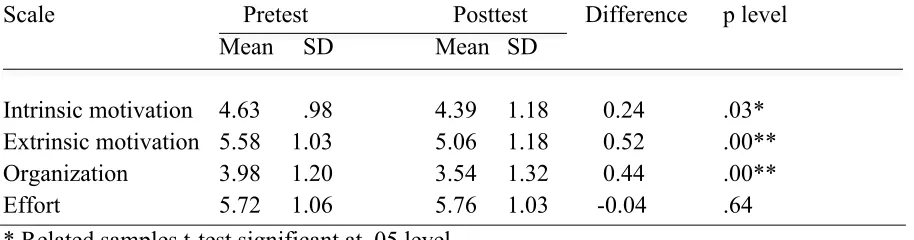
Table 2 Table of Means, Standard Deviations for Pretest and Posttest ... 79
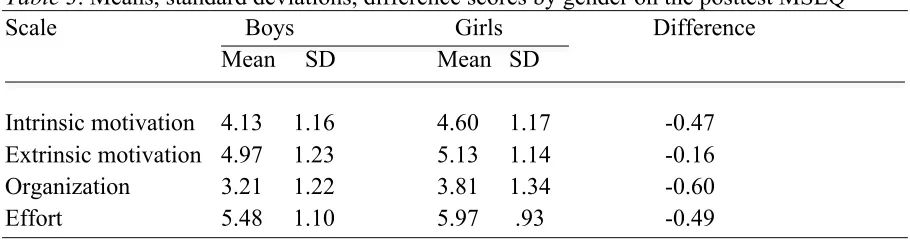
Table 3 Table of Means, Standard Deviations by Gender on the MSLQ ... 82
Table 4 Table of Means, Standard Deviations for Boys ... 83
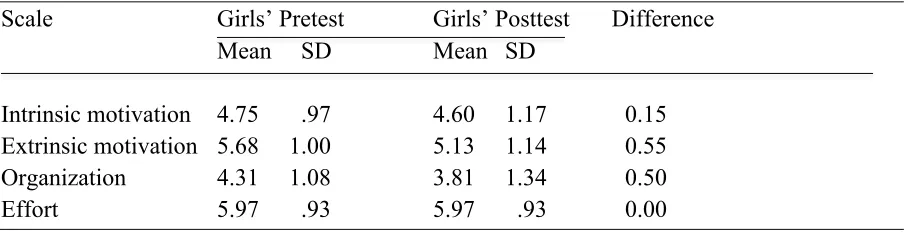
Table 5 Table of Means, Standard Deviations for Girls ... 83
Table 6 Table of Means, Standard Deviations for Ethnoracial Groups ... 87
Table 7 Mean Scores of Observed Engagement ... 106
LIST OF FIGURES
Figure 1.1 A figure on Baker’s (2000) Version of the Classroom Flip ... 2
Figure 1.2 A figure on Embedded Case Design ... 17
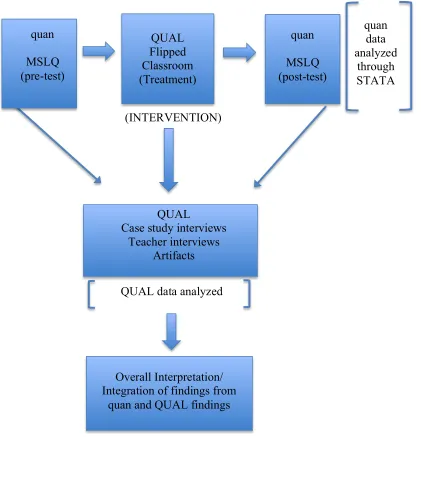
Figure 3.1 A figure on Embedded Mixed Methods Design ... 61
Figure 4.1 A figure of Means and Standard Deviations on the MSLQ ... 80
CHAPTER I INTRODUCTION Background on the Classroom Flip
Suddenly it seems to be everywhere. The flipped method. The flipped classroom. Or even just “flipping.” If one believes the hype, the flipped model of instruction may be the greatest educational reform of the 21st Century with the potential to overhaul completely the way students learn and teachers teach. Television shows, journals, newspapers, conferences, websites, podcasts, and blogs all tout the benefits of this new pedagogy as a paradigm shift that is dramatically altering our schools. Type “flipped classroom” into Google, and it will return 7.3 million hits. The flip has become the hot topic, garnering significant attention on television (Gupta, 2011), in newspapers (Barr, 2013), magazines (“Flipping the classroom,” 2011), and journals (Bergmann & Sams, 2012b; Berrett, 2012; Fulton, 2012; Tucker, 2012). In the flipped model, direct instruction and fact-based content is delivered via video lectures that students watch outside the classroom, while activities and active-learning strategies are conducted inside the classroom. In other words, students do homework and activities at school and hear traditional lectures at home via videos.
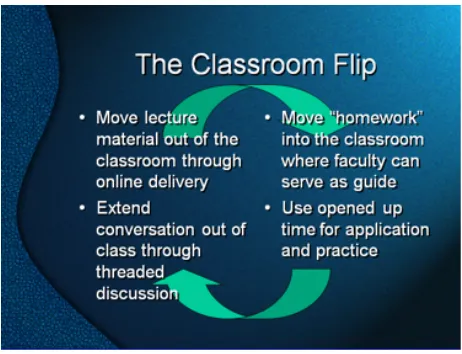
Baker (2000) generally is credited with conceptualizing the flipped classroom paradigm, although other teachers have used the inverted instructional method with success (Lage & Platt, 2012; Lage, Platt, & Treglia, 2012). In 1995, Baker, a professor at a small private university in Ohio with access to a school-wide Internet site, asked his
students’ in-class active learning. He “saw the ‘Flip’ as a way of addressing the ‘covering the content’ debate” (Baker, 2000, p. 3) and believed that it allowed him to quickly disseminate direct instruction while preserving class time for active learning. He presented the idea for the concept at various conferences until the moniker “the classroom flip” (Baker, 2000, p. 3) took hold.
Figure 1.1 Baker’s (2000) Version of the Classroom Flip (used with the author’s permission)
The key component of Baker’s (2000) idea was technology. Although the Internet was not in most American households in 1995, Baker’s (2000) students had the ability to view his PowerPoint slides on the unique, university-wide Internet site. Soon, other
& Sams, 2012b). Now, about 80 percent of Americans have a broadband connection or access to a smartphone, according to a national survey by the Pew Research Center’s Internet & American Life Project (2013). This widespread access has meant a greater increase in the number of teachers trying the flipped classroom model, according to a website created, in part, by Aaron Sams and Jon Bergmann, who have turned the promotion of the flipped method of instruction into a career. The site, called Flipped Learning Network, touts itself as a web-based resource center on the flipped classroom (www.flippedlearning.org). In
addition, Harvard Business School graduate Salman Kahn launched a non-profit website in 2006 that provided instant, free videos in a wide variety of content areas. Kahn Academy, as the site is called, offers more than 4,500 free videos to viewers on everything from
astronomy to algebra. The videos have become regular features in many science, technology, engineering and mathematics (STEM) classrooms, serving as an alternate, or supplemental, form of instruction and aiding in the flipped classroom model (Gupta, 2012) – as well as garnering Kahn a segment on the CBS television show “60 Minutes.” Yet, according to a survey conducted by the Speak Up National Research Project (2012), only 3% of teachers in the U.S. know about or ‘do’ flipped learning. So, while the idea may be the media’s darling, only an intrepid few are actually trying out the strategy.
homework in flipped positions (Hamdan, McKnight, McKnight, & Arfstrom, 2013; Jump, 2013) and might even create additional headaches for teachers who feel unprepared to wade into the digital muck of video creation (Herreid & Schiller, 2013).
Although there is scant research on the efficacy of the model, teachers who do flip, say they do so because they want to spend more individual time with students and more effectively address the curriculum (Fulton, 2012). They want a classroom centered on inquiry and problem-based learning (Bergmann & Sams, 2012), and they want to eliminate the constant homework struggle (Strayer, 2007). In addition, these teachers say the video instruction allows students who miss class for sports or extracurricular activities to keep up with their peers (Herreid & Schiller, 2013). In short, the teachers have attempted this paradigm shift in their own classrooms in an effort to “reach every student in every class every day” (Bergmann & Sams, 2012a, book title), but most are doing so without sound research to back up the strategy (Hamden, et al., 2013). Nearly all of the empirical research that does exist has been conducted in STEM classrooms – and most of these studies were conducted at higher education institutions. To complicate matters further, much of the data has been inconclusive, as students and teachers cannot quite decide if they like the new method or not, or decide if it is effective enough or not (Moran & Young, 2013).
understand the behavior and attitudes of middle school ELA students, as well as teacher pedagogical considerations, in a flipped classroom. I used a hybrid embedded design (QUAL (+quan)=enhance experiment) (Creswell & Clark, 2011) in that quantitative data were
collected as a pre-test, then qualitative data were collected during the treatment/intervention (the flipped classroom), then quantitative data were collected again as a post-test. This design was followed up with qualitative case study interviews that further explained the findings in the first set of data (Yin, 2009).
In addition, I attempted to “shed light” (Alasuutari, 1995, p. 11) on the pedagogical processes that teachers must use when flipping their ELA classrooms. My aim in this study was to provide some new insights into the effects of the flipped method in middle school ELA through “direct interpretation of the individual instance and through aggregation of instances” (Stake, 1995, p. 74). The study looked at student engagement and the teacher perspectives and pedagogical processes in a flipped ELA classroom, as compared to a traditional ELA classroom.
Using the embedded mixed methods design and the case studies allowed for a broader understanding of the flipped classroom, one which could not be achieved by one data source (Creswell & Clark, 2011). A strictly quantitative analysis of student achievement, test scores, or even attitudes would have limited the research to specific variables or questions on a survey and keep the inquiry from arising in a naturalistic and intuitive fashion (Stake, 1995). Analysis through the case study alone would have eliminated important statistical
study, as it allowed me to consider “multiple viewpoints, perspectives, positions, and standpoints” (Johnson, Onwuegbuzie, & Turner, 2007, p. 113) surrounding the flipped method -- a perspective that could not be reached through a simple quantitative analysis or single qualitative investigation.
The Flip Pilot Study
An initial investigation into student perceptions and engagement with the flipped classroom method was conducted through a mixed methods pilot study in a high school ELA classroom (Moran & Young, 2013). The students in the study were enrolled in two sections of an Advanced Placement English Language Arts and Composition (AP Lang) course and were in the 11th grade. Forty-nine participants answered questions on a validated survey, and 8 participants took part in two focus groups. In addition, I observed the flipped classroom and took field notes. Quantitative survey data were analyzed through STATA statistics software, and qualitative data were transcribed and coded. The results of the data analysis indicated that students had mixed opinions about the flipped method and its implementation in an ELA classroom. The results of the research indicated that the flipped method may be effective, in part, in an ELA classroom, but not as a sole means of instruction.
Methods
We measured behavioral and emotional engagement through field observations in the classroom. In addition, we used a survey based on a modified version of the Computer
1) Are high school ELA students engaged by the flipped classroom method? If so, what aspects of the strategy appeals to them as students? If not, why not?
2) Do high school ELA students prefer the flipped classroom paradigm over the traditional classroom paradigm? If so, what aspects of the strategy inform their preference? If not, why not?
A purposeful convenience sampling method was used in the study. The participants (n=49) were students in two class sections of an Advanced Placement English Language and Composition (AP Lang) course at Pinewood High School, a suburban high school in the Southeastern United States. In our pilot study, the teacher, Ms. Brown, was instructed on how to implement the flipped method, which we interpreted to mean inverting the classroom so that direct instruction and lectures took place outside the classroom and activities related to the instruction took place inside the classroom (Baker, 2000).
conversations with students as a means of triangulation. Creswell (2012) described this type of qualitative research as being naturalistic in that researchers gather multiple forms of data in the field, not in a lab setting.
Results
Our results were mixed. Survey data indicated that students were engaged with the flipped method and liked it as a form of instruction, but remained unsure about whether it was superior to a traditional lecture model. Field data and focus group data indicated that students were polarized in their support of the method, with some students strongly supporting it and others intensely disliking it.
Survey data indicated that students enjoyed the flipped method and found it engaging, although they were unsure about its effectiveness as an instructional method (see Appendix F).Two focus groups were held with a sample of students (n=8) from both classes. The researcher also interviewed Ms. Brown in a private conference room. The findings from the qualitative data supported those of the quantitative data. Students had mixed views about the flipped classroom method and were nearly polarized in their responses to it.
Five main themes emerged from the data analysis:
1) “I like the flipped method.” Some students reported that they felt class time was more productive, and they enjoyed the opportunity to pause and rewind the videos.
2) “I prefer traditional classes.” Some students also stated that they did not like the flipped method, and they preferred lecture-based, traditional, teacher-led instruction.
students said collaboration with other students was difficult. They also missed a perceived connection with the teacher when she delivered instruction at the front of the class. Their teacher was particularly animated, and they missed hearing her talk to the whole class.
4) “The flip is not good for English class.” In the focus groups, in particular, students were adamant that ELA classes benefitted most from whole-class, teacher-led discussions, as well other strategies (including literature circles).
5) “I don’t care.” Data analysis revealed that one of the most prevalent themes of the study was a general apathy about school in general. The students said they did not care which method their teacher used. School was still school.
Conclusions
Overall, the students seemed to have mixed views about the flipped method of instruction and did not embrace it whole-heartedly as a pedagogical strategy for the ELA curriculum. In regard to research question 1 -- “Are high school ELA students engaged by the flipped classroom method?” – the data indicated that many students were engaged by the method, while others found it disheartening and boring.
In regard to research question 2 – “Do high school ELA students prefer the flipped classroom paradigm over the traditional classroom paradigm?” – the data indicated that students were mixed in their preferences of classroom paradigms. Many students said they preferred the lecture/discussion model that is already employed in ELA classes and that they would learn more from a live lecture in class than from a video at home.
Table 1.
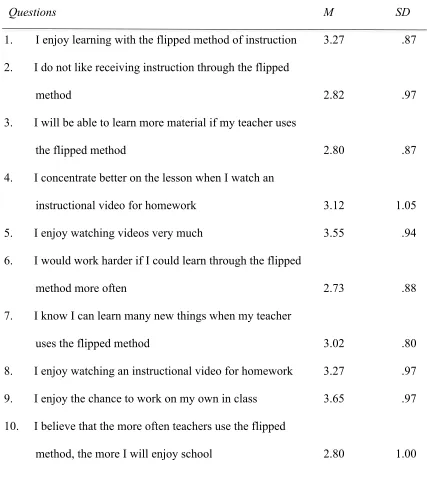
Questions from Pilot Study Student Survey on the Flipped Classroom with Means and Standard Deviations
Questions M SD
1. I enjoy learning with the flipped method of instruction 3.27 .87 2. I do not like receiving instruction through the flipped
method 2.82 .97
3. I will be able to learn more material if my teacher uses
the flipped method 2.80 .87
4. I concentrate better on the lesson when I watch an
instructional video for homework 3.12 1.05
5. I enjoy watching videos very much 3.55 .94 6. I would work harder if I could learn through the flipped
method more often 2.73 .88
7. I know I can learn many new things when my teacher
uses the flipped method 3.02 .80
8. I enjoy watching an instructional video for homework 3.27 .97 9. I enjoy the chance to work on my own in class 3.65 .97 10. I believe that the more often teachers use the flipped
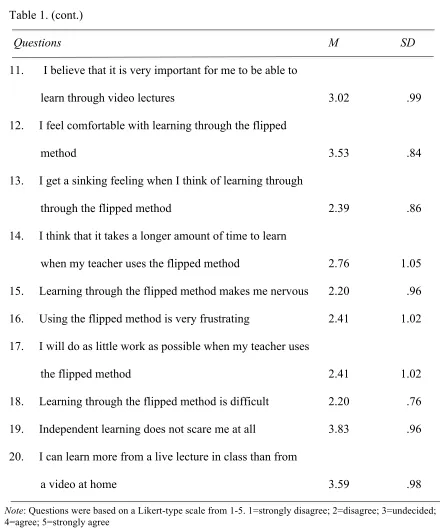
Table 1. (cont.)
Questions M SD
11. I believe that it is very important for me to be able to
learn through video lectures 3.02 .99
12. I feel comfortable with learning through the flipped
method 3.53 .84
13. I get a sinking feeling when I think of learning through
through the flipped method 2.39 .86
14. I think that it takes a longer amount of time to learn
when my teacher uses the flipped method 2.76 1.05 15. Learning through the flipped method makes me nervous 2.20 .96 16. Using the flipped method is very frustrating 2.41 1.02 17. I will do as little work as possible when my teacher uses
the flipped method 2.41 1.02
18. Learning through the flipped method is difficult 2.20 .76 19. Independent learning does not scare me at all 3.83 .96 20. I can learn more from a live lecture in class than from
a video at home 3.59 .98
The Purpose of the Middle Grades ELA Flip Study
The mixed results of the pilot study led to a desire to investigate further student engagement, as well as pedagogical practices in the flipped ELA classroom. The mixed results left many questions regarding the flipped method unanswered, particularly as it related to ELA. To date, there is scant research on the efficacy of the method, particularly in regard to student engagement. Although I had used the term “engagement” in the pilot study, I had not defined adequately what it meant. I wanted to explore more deeply the nuances of engagement in a flipped classroom, utilizing definitions proposed by Fredricks, Blumenfeld, and Paris (2004). In addition, the original pilot study did not look directly at the pedagogical processes that teachers must use when designing flipped instruction. In fact, most of the published research on the flip has focused on the efficacy of the method for learning outcomes, not on the pedagogical considerations inherent in designing a new educational process. I wanted to take a closer look at what it meant to be a teacher faced with the task of flipping an ELA classroom. And, since I employ a constructionist (Crotty, 1998) and critical theorist worldview, the qualitative data were more dominant in the research design (Johnson, Onwuegbuzie, & Turner, 2007).
Definition of Terms
ENGLISH LANGUAGE ARTS (ELA) – English language arts is an intentional term (NCTE, 1986; 1996; 2006) that refers to the content knowledge and pedagogical practices involved in the instruction of students as it pertains to language development, composing and analyzing language, reading and literature, media, evaluation, and research.
ENGAGEMENT – Student engagement as defined by Fredricks, Blumenfeld and Paris (2004) is a three-pronged concept: 1) behavioral engagement “draws on the idea of
participation” (Fredericks, et al, 2004, p. 60), as well as active involvement in the activities of the classroom; 2) emotional engagement includes the student’s “positive and negative reactions” (Fredericks, et al, 2004, p. 60) to the academic subject; and 3) cognitive
engagement reflects the student’s willingness to put forth effort and consider higher-level concepts. For this study, engagement is defined as encompassing all three components. FLIPPED CLASSROOM – This term refers to a model, method of instruction, and paradigm. The words “flip” or “flipped instruction” fall under the same definition. In this model, direct instruction and fact-based content is delivered via video lectures that students watch outside the classroom, while activities and active-learning strategies are conducted inside the
classroom. In other words, students do homework and activities at school and hear traditional lectures at home via videos.
INDIVIDUALIZED EDUCATION PROGRAM (IEP) – Students who have an IEP usually do so because their grades are below the majority of the class, their parents have requested specialized support, or their end-of-grade standardized test scores are low. All students who received special education services must have an IEP.
MIXED METHODS – Mixed methods research is an epistemological standpoint that
considers multiple viewpoints and perspectives (Johnson, Onwuegbuzie, & Turner, 2007). It utilizes both quantitative and qualitative data in order to provide a more comprehensive picture than with one type of data alone (Morse, 2003).
SCIENCE TECHNOLOGY ENGINEERING AND MATHEMATICS (STEM) – This term refers to classes that are taught with an epistemological orientation to the biological and physical sciences, computer information and technology, engineering, and/or mathematics. TRADITIONAL CLASSROOM – This term refers to an historically popular way of
delivering instruction to students. In this model, the teacher provides direct instruction to the whole class during class time, either via lecture or PowerPoint or other means. Activities related to the direct instruction typically are given to students to complete on their own time at home.
The Significance of the Middle Grades ELA Flip Study
This study was significant in that it addressed a gap in the research regarding student engagement and teacher pedagogical practices in a flipped classroom environment.
active learning “increases student engagement and critical thinking” (Hamdan, et al, 2013, p.6), according to the white paper’s authors. However, no published empirical evidence exists to support this claim. This study was significant because it provided validated, quantitative and qualitative evidence on whether a flipped classroom was more engaging to students than a traditional classroom. Engagement is particularly important to investigate, since research indicates that students who are engaged are more likely to succeed in school and less likely to drop out (Connell, Spencer, & Aber, 1994). In addition, this study is significant because it looked at the teacher’s perspective during the flipped model design – a perspective that has not been investigated in previous research on the method.
Problem Statement
To date, the bulk of the published research and empirical data on the flipped
The pressure is increasing on all teachers at all grade levels to try implementing the flipped paradigm. Yet, this pressure is at the expense of solid research in ELA and middle grades classrooms. The problem, then, is that ELA teachers are being encouraged to flip their classrooms, and many do not know how to do it. In addition, no evidence exists to support whether the flip is an appropriate form of instruction in ELA classrooms, or whether it is more engaging to middle school students than a traditional instructional paradigm. Research Questions
My research questions for this study have been created with a mixed methods design in mind. Onwuegbuzie and Leech (2006) suggest that research questions for mixed methods should have both a qualitative and quantitative component. In this study, the quantitative and qualitative data have been collected concurrently and analyzed iteratively with each adding meaning to the other (Clark & Badiee, 2010). My questions for this study were:
1) What is the difference in experiences between middle grades ELA students in a flipped classroom and those in a traditional classroom?
2) How do the follow-up case study interviews extend, refute, or illuminate the findings about students' experiences with the flipped method?
3) What are the perceptions of middle grade ELA teachers when implementing the flipped classroom? What factors play a role when teachers consider flipping their ELA instruction?
Overview of Methodological Approach
Research problems suited for mixed methods are those in which one data source may be insufficient, results need to be explained, exploratory findings need to be
generalized, a second method is needed to enhance a primary method, a theoretical stance needs to be employed, and an overall research objective can be best addressed with multiple phases or projects. (p. 8)
I combined both qualitative data and quantitative data collection and analysis to more effectively assess the “benefits and constraints” (Schutz, Chambliss, & DeCuir, 2011) of the data.
The qualitative data collection and analysis consisted of an embedded case study design (Yin, 2009) that takes into consideration the participants, as well as the environment in which they operate. The figure below illustrates this concept.
I analyzed six students and their opinions about the flip – these are the subunits – within the broader context of a whole classroom that experienced the flipped paradigm. I used Pintrich and DeGroot’s (1990) validated Motivated Strategies for Learning
Questionnaire (MSLQ) to determine which students in a single ELA classroom were engaged by the flipped method. The MSLQ has been used hundreds of time in a variety of school settings to measure the essential motivational components in self-regulated learning and engagement (Davis, et al, 2009). The results of the survey, as well as teacher input, allowed me to select six students for the embedded case study analysis. Two of the students chosen demonstrated high levels of engagement with the flipped method; two reported that they did not like or dislike the method, while the final two reported that they did not like the flipped method at all. I used interviews, as well as field observations, to try to understand the points of view of each of the students. I believe six is adequate to provide a sufficient degree of certainty about the results, as well as offer likelihood of theoretical replication (Yin, 2009). In addition, by selecting students with varying points of view, I was in a better position to “either clearly confirm or irrefutably falsify” (Flyvbjerg, 2006, p. 231) preconceived ideas about the flipped method.
sample of six students provided a measure of triangulation with the observational data, as well as a chain of evidence advocated by Yin (2009) and Miles, Huberman, and Saldana (2013). This purposeful sample was chosen through “intensity sampling,” which Patton (2002) describes as “information-rich cases that manifest the phenomenon intensely, but not extremely” (p. 243). The six students were chosen based on their expressed like or dislike of the flipped classroom method.
In addition to the interviews and survey, I observed in eight classrooms led by two middle-grades ELA teachers for two days as they implemented an instructional unit in a traditional classroom paradigm. I was able to gather data on the behavior of the students and teacher as they went about the business of learning and teaching “as usual.” I was able to compare these initial, “usual” classroom experiences with the flipped classroom experiences that followed. My role was strictly one of observer, and I did not participate in the instruction or activities. In this sense, the observations allowed me to employ the role of evaluator and interpreter (Stake, 1995), as I attempted to make sense of the classroom dynamics and offer a “new interpretation, new knowledge” (Stake, 1995, p. 99).
I then observed the same students and teachers for three weeks as the teachers
If a case study is about a new technology or a school curriculum, for instance, observations of the technology or curriculum at work are invaluable aids for understanding the actual uses of the technology or curriculum or any potential problem being encountered. (p. 110)
I also observed, interviewed and conducted ongoing conversations with both teachers – before, during, and after the flipped unit. This field work allowed me to come to a better understanding of the processes the teachers used when designing their version of the flip through a unit on poetry.
Analyzing the data sources required a systematic approach that I established prior to data collection (Yin, 2009). Yin (2009) advocates starting with theoretical propositions. I used a theoretical framework based upon Kearsley and Shneiderman’s (1998) Engagement Theory for technology and learning, along with the principles of TPACK (Koehler & Mishra, 2009). In addition, I view a flipped ELA classroom as being reflective of Dewey’s (1897) beliefs about the importance of creating new attitudes and new interests in students. In his seminal work My Pedagogic Creed, Dewey (1897) states, “The progress (of education) is not in the succession of studies, but in the development of new attitudes towards, and new
I analyzed all of the qualitative data with a systematic approach. Interview data were the most salient in this study, so I transcribed the interviews and then analyzed the
transcriptions for codes, using the pre-established codes (Stake, 1995) from my pilot study as a guide. Since I also spent a great deal of time in the field, I also used field notes as part of my qualitative analysis. I took extensive notes every day in every class, and I looked iteratively for patterns in the field observation data.
The quantitative data gathered from the MSLQ was analyzed through statistics software using a related samples t-test and a two-way ANOVA to measure the differences between the responses regarding the traditional classroom unit and the flipped classroom unit. In addition, the descriptive statistics for each question was calculated. In addition, I tabulated mean scores from students, dividing them into gender groups and ethnoracial (Frederickson, 2002) groups. Questions with significant p levels greater than .05 were
marked, as well as plotted on a histogram. Correlations also were investigated and those with significant p levels were indicated with asterisks.
Chapter Summary and Organization of the Study
higher education level or in STEM classrooms. To date, there has been virtually no published research on the method’s use in an ELA classroom or in a middle grades classroom. Yet, despite the lack of evidence, many teachers are trying the method anyway – either because of pressure from administrators, or through a desire to more effectively engage their students and address the curriculum.
I conducted a mixed methods study of two middle grades ELA teachers who implemented the flipped method of instruction with their students. I observed the students and assessed their engagement in a traditional classroom. Then, I observed and assessed their engagement in a flipped classroom. I used a mixed methods design to compare the students’ engagement in the two classrooms, as well as to better understand the pedagogical processes that the teachers used when designing flipped instruction.
CHAPTER II
REVIEW OF RELATED LITERATURE A Definition and History of Flipped Learning
The “flipped classroom” seems to have developed simultaneously in various parts of the country as technology access became more prevalent. J. Wesley Baker, a professor at Cedarville University in Ohio, decided to post his PowerPoint slides onto the school’s new computer network and have the students read the slides before coming to class. His idea, launched in 1995, was to use four key concepts to drive the model. The concepts were: “clarify, expand, apply, practice” (Baker, 2000, pp. 13-14) in order to shift his role from “sage on the stage to guide on the side” (Baker, 2000; King, 1993). Baker (2000) then clarified and explained the concepts at the start of class, expanding on the basic information in the slides. The students broke into small groups to apply and practice the concepts. Baker (2000) surveyed his students at the end of the term and discovered that they felt they had learned a great deal from their peers through the collaborative activities. He dubbed the new process the “Classroom Flip” around 1997 or 1998 (Baker, 2000, p. 3).
means that events that have traditionally taken place inside the classroom now take place outside the classroom and vice versa” (p. 32). A survey administered at the end of the course indicated that students enjoyed the collaborative nature of the class and learning economics in a new way. The researchers concluded that “students generally preferred the inverted classroom to a traditional lecture and would prefer to take future economics classes using the same format,” (Lage, Platt, & Treglia, 2000, p. 41).
A few years later, in 2007, two high school chemistry teachers in Colorado began a collaborative effort to teach their content with the aid of screen capture software that allowed them to record lectures and spend class time working one-on-one with students (Bergmann & Sams, 2012a). Their idea was born independently of Baker’s (2000), but seemingly created from the same ingredients of the 21st Century: technology access and frustration over students’ lack of engagement. Anecdotal evidence suggested that the Bergmann and Sams (2012a) method was successful, so the pair began touting its benefits through conferences, a website, and blogs. They have since moved the basic flip idea into a “Flipped Mastery” concept (Bergmann & Sams, 2012a, pp. 51-93) in which asynchronous learning takes place as students work simultaneously, but at different paces, on projects. Bergmann & Sams (2012a) believe the flipped classroom model has tremendous potential to reduce the frustrations of teaching, because (among other things) it personalizes education, increases student-teacher and student-student interaction, and makes the classroom content transparent to parents and others.
flip came from the work of King (1993), who pioneered the ideas behind “reciprocal peer questioning” (King, 1993, p. 3), as well as the phrase “from sage on the stage to guide on the side” (King, 1993, p. 1). King (1993) proposed that constructivist learning-based activities would help students “to think for themselves – to move away from the reproduction of knowledge toward the production of knowledge” (King, 1993, p. 9).
Much of the support for the flipped model comes from existing knowledge about the benefits of a collaborative learning environment – especially one in which technology is a component. A Technology Rich Environment, or TRE, is described by Lajoie and Azevedo (2006) as a “learning environment that is designed for an instructional purpose and uses technology to support the learner in achieving the goals of instruction” (p. 803, as quoted in Alexander & Winne, 2006). This environment is ideally suited to the flipped classroom model and its integration of technology into the curriculum. The possibilities for
collaboration and scaffolding that the TRE provides can help motivate students and lead students to achieve mastery goals (Turner & Patrick, 2004). In addition, self-efficacy beliefs and motivation that typically decline during adolescence (Wigfield, Byrnes, & Eccles, 2006) can be bolstered in a classroom environment that emphasizes choice and inherent enjoyment of learning (Turner, et al, 2002).
mediate some of the negative societal effects and lead to academic and social success (Okagaki, 2006). In the flipped model paradigm, advocates believe that teachers have more interaction and increased direct contact with students – a component that potentially could have far-reaching effects for students “at risk” of dropping out or on a downward slide toward behavioral issues, substance abuse, and delinquency (Li & Lerner, 2011).
Media Darling
The flip has made its way into current educational practices with a large push from media outlets. Social media and YouTube helped propel Kahn Academy’s 4,500 videos into the national conscience in 2006, as Google invested $2 million, and the Bill and Melinda Gates Foundation invested $1.5 million (Solomon, 2011). Kahn Academy videos on YouTube have received more than 100 million views, eclipsing founder Sal Kahn’s alma mater, the Massachusetts Institute for Technology (MIT), which claims 32 million views (Solomon, 2011). Kahn Academy’s videos, which offer tutorials on several math and science subjects, have been used in classrooms and helped supplement regular instructional materials as the flip evolved (Gupta, 2012). In the videos, Kahn’s voice is heard in the background while a black screen is used as a blackboard for writing. Viewers never see people, fancy graphics, or pictures other than the black screen and neon-colored writing. However, this low-tech approach has become wildly popular. The TV news show “60 Minutes” detailed Kahn’s success and predicted he may become “teacher to the world” (Gupta, 2012).
as another front in a false battle between teachers and technology” (Tucker, 2012, p. 83). As the media attention has grown exponentially, the Internet has kept pace. The website
Flippedlearning.org claimed 15,000 members at the end of 2013 – up from 2,500 in 2012, and Flippedlearningjournal.org launched in 2013 as an online consortium of teachers offering advice on the flip. In addition, hundreds of thousands of Google search engine hits in the past two years have reflected an interest in the “flipped classroom” or “flipped learning” – many of these postings from classroom teachers looking for directions on flipping or offering how-to advice. In short, news of the method has reached inhow-to virtually every media corner. Pressure to Flip
This influx of media attention may have created pressure on teachers to implement the method. According to the Speak Up National Research Project (2012), 27% of principals wanted their teachers to try implementing flipped instruction during the 2013-2014 school year. (Speak Up, an online research project facilitated by non-profit group Project
Tomorrow, is an annual survey of K-12 teachers, students, parents, and administrators in an “effort to gain insight into emerging technologies and innovations” (tomorrow.org)). A school district in North Carolina awarded a Teacher of the Year award in 2013 to a teacher who used the flip in his classroom. In addition, stakeholders in the same school district also trumpeted the benefits of the method through a widely circulated newsletter article
(“Teachers flip classrooms,” 2013). Yet, despite the accolades, only 3% of teachers actually “did” the flip in 2013, according to The Flipped Learning Network.
technology and other innovations into their teaching, but provided little support (Young & Bush, 2004). Spires, Hervey, and Watson (2013) wrote “the pressure on teachers to embrace new literacies and to integrate effectively technology in the classroom is steadily increasing” (p. 34). The flipped method possibly is no different. Some teachers view the method with skepticism and point to the labor-intensive effort of creating videos and online lessons (Berrett, 2012). In addition, some teachers fear embarrassment in acknowledging they know very little about technology (Fabry & Higgs, 1997), a fact they likely do not want to admit to eager administrators. Teachers may be resisting the pressure to implement the flip – or technology in general – because of the “disconnect” between the glamour of using the method and the realities of constructing it (Young & Bush, 2004). Yet, others have found the technology aspects part of the fun and readily accessible through free programs like Weebly, Edmodo, and Voicethread (Moore, et al, 2014).
Another Reform
on technology and videos that often are viewed at home, may be the type of new reform that disenfranchises students with technologically adverse parents or lack of Internet access.
Controversy, of course, is nothing new in the field of curriculum reform. Eisner and Vallance (1974) have pointed out that most controversies in educational discourse stem from a basic conflict in stakeholders’ worldviews, as well as the dogmatic positions of those without a clear understanding of “conceptual underpinnings” (p. 2). Many people have used the curriculum as a platform for their personal views and orientations to the world, as well as a way to advance specific ideologies (Eisner, 2001; Apple, 2004). Eisner and Vallance (1974) categorized five possible orientations to curriculum: 1) a concern with the
development of cognitive processes; 2) a focus on the curriculum as a technology, or process; 3) a view of the curriculum as a self-actualization or consummator experience; 4) a belief that the curriculum should have a role in social reconstruction or relevance; and 5) a sense that academic tradition and rationalism should take precedence. And all of these orientations have had their 15 minutes of fame in the history of curricular reforms, most without
from the bottom up. After a failed back-to-basics initiative in the late 1970s, Ravitch (1981) wrote
In retrospect, it was folly to have expected the schools to transform society or to mold a new kind of person. The schools are by nature limited institutions, not total
institutions. They do not have full power over their students’ lives…(p. 201)
Yet, this retrospective reflectivity has not kept educators and other stakeholders from continuing to try to influence society through the curriculum. The flipped classroom
paradigm could be the latest magic bullet within this historical struggle for the curriculum (Kliebard, 2004).
a formal lecture by an expert, skeptics point out that the flip continues the lecture model – only via a video, instead of in person. The teacher continues to be cast in the role of “expert,” and students perform tasks that are then evaluated by the teacher. In this light, the flipped classroom begins to look like another, more technology-advanced version of the jobs-ready, STEM-focused, scientific curriculum of the 19th Century.
The flip also is a child of 20th Century Progressive reformers, such as Dewey (1916; 2008), who supported a child-centered, active-learning based curriculum. Nagel (2013) outlined “four pillars” of the flipped classroom, and all these likely would have Dewey’s support. These include: 1) flexible environments; 2) student-centered activities; 3) a variety of strategies; and 4) implementation by professional educators. Proponents of the flipped classroom method advocate for a Progressive-type approach when implementing the strategy (Bergmann & Sams, 2013a; Bergmann & Sams, 2013b; Berrett, 2012; Hamden, et al, 2013).
Another reformer, Harold Rugg (1928), felt that textbooks could be the tools for reorganizing and improving the curriculum (Boyle-Baise & Goodman, 2008). Interestingly, advocates of the flip have positioned videos as the medium for implementing change in the classroom. Kahn Academy’s pre-made videos are reminiscent of textbooks and take the “guess work,” as well as teacher bias, out of instruction.
addition, feminist theory undergirds the flipped classroom notions of collaborative and project-based work that is the hallmark of the flipped classroom. However, issues of equal technological access and equality in home support are still a concern (Herreid & Schiller, 2013).
The latest reform movement, often dubbed 21st Century Learning, is being positioned as a response to the proliferation of technology and the increasing interconnectedness of the world. Production of most American goods has moved to China, and technology industries have found a willing home in countries like India. Americans cannot keep up with the
hundreds of thousands of engineering and technology graduates in India, the Philippines, and China (Pink, 2006). Reform advocates say that the school curriculum must be reshaped to reflect a different type of skill set and to prepare students for jobs we cannot yet anticipate. If we don’t reform the education system, they say, then American workers are doomed to fall further behind.
In their 2009 book, titled 21st Century Skills: Learning for Life in Our Times,
today’s students are not prepared to meet the challenges of the current job market (Trilling & Fadel, 2009).
The skills necessary for success in a flipped environment mirror those necessary for success in a technologically dependent workplace. Workers who can think for themselves, work well with their peers, collaborate on projects, do many things at the same time, and find the answers with minimal intervention from an expert are likely to succeed in today’s
economy. Likewise are students in a flipped classroom.
Looking at the flip within the context of reforms throughout the history of American schools, it is possible to see that the flipped method could be just another educational reform destined to fade away. Although it appears to be a new idea, it also bears the scars of many other past reforms. Little (2013) wrote that the 21st Century learning skills touted today are not much more than old ideas “dressed in a new suit” (p.86).
More than 100 years ago social meliorists demanded that students be groomed for jobs and the workforce. Advocates of the flipped classroom say the paradigm teaches students skills that are necessary to thrive in a future workplace (Barr, 2013; Berrett, 2012; Fulton, 2012). At the beginning of the 20th Century, Progressives called for the same child-centered curriculum that is the hallmark of the flipped classroom. In addition, the
individualized approach that makes the flip appealing to students (Bergmann & Sams, 2012a) is the same approach advocated by the Reconceptualists back in the 1960s and 1970s.
Empirical Data on the Flip
The vast majority of the published research to date on the flip has been conducted in Science, Technology, Engineering, and Math (STEM) classrooms – and most of these at higher education institutions. Much of the data has been inconclusive, as well, as students and teachers cannot quite decide if they like the new method or not (Demetry, 2010; Moran & Young, 2013).
In one mixed methods study, Strayer (2007) compared two introductory statistics classes that he taught. One class was taught using the traditional lecture format, while the other employed the flipped method. Strayer’s framework leaned on Activity Theory and active-learning theories posited by Vygotsky (1978) and Dewey (1990), which speculated that students learn best through activity and physical engagement with the content. Strayer (2007) used a video series to deliver the lecture content to his flipped class and followed up with activities and collaborative learning during class time. Both his quantitative and qualitative data found that students in the flipped classroom were less satisfied with the instruction they received. Although students in the flipped class were found to prefer collaboration and innovative teaching strategies, they said they felt less connected to the professor and that class time felt redundant after learning the content from a video. Strayer (2007) concluded that the students did not really know “how to do class” (p. 155) and that frequently the collaboration felt like “the blind leading the blind” (p. 135).
The study, conducted by Marcey and Brint (2012) in two introductory biology classes at a private university in California, compared the Cinematic Lectures and Inverted Classes (CLIC) model to the traditional lecture model. Students in the CLIC class outscored the traditional class on all quizzes and tests in the first half of the semester. By the second half of the semester, however, the achievement gap had closed between the groups. The researchers posited that this was because students in the traditional lecture class had begun watching the videos too – an interesting finding that led them to conclude that the videos, not the
collaborative activities, were the key to success in the class.
Other studies at higher education institutions have not shown such clear preferences for the flipped model. In a study conducted by Ferreri and O’Connor (2013) in university-level pharmacy classes, students demonstrated improved grades and learning outcomes in a class that emphasized collaborative learning over traditional lectures. However, the students in the non-traditional class turned in course evaluations that were more negative than those in the traditional class. In addition, a study in two university-level computer science classes found that students in a flipped class demonstrated high levels of engagement, compared to the traditional class (Gehringer & Peddycord, 2013). The students in the computer science flipped class watched videos for homework, then collaborated during class time while the instructor circulated among the groups and answered questions. The students reported
Secondary Schools Evidence
A study conducted in a high school also indicated mixed results from using the flipped method of instruction. Johnson and Renner (2012) used a mixed methods switching replications design to study two, 12-week high school computer classes. One class was flipped; the other was traditional. Students were randomly assigned to each class, then
switched half way. This way, students experienced both methods of instruction within the 12- week period. The researchers measured the success of the instruction through the cognitive levels of questions asked by students. They used Bloom’s Taxonomy to assess the cognitive level. The researchers concluded that there was no evidence to support higher satisfaction with the flipped method and no significant difference in academic achievement. In fact, they found that more higher-level questions were asked in the traditional class. However, Johnson and Renner (2012) remained cautiously optimistic about the flipped method at the end of their study, noting the following
Other data on the flipped method is anecdotal, but indicates promise for the strategy. In a high school calculus class, student proficiency with course material increased after teachers adopted a flipped method (Fulton, 2012). In a middle school in North Carolina, teachers reported that student engagement and test scores increased after implementation of the flipped classroom in math and social studies (Barr, 2013). And nearly 99% of 453 teachers surveyed who implemented a flipped classroom said they planned to repeat the approach during the next school year (Flipped Learning Network, 2012).
Student Interest and Engagement in the Flip
A handful of recent studies have looked at student interest in the flipped classroom method (Atkins, 2013; Jaster, 2013; Johnson, 2006). However, these same studies used different definitions for engagement – or did not define it all. Johnson (2006) used both qualitative and quantitative data to look at student perceptions of the flipped method in three high school math classes. Through Likert-type questions, as well as open-ended questions, on a survey, Johnson (2006) measured his attempt to “create an environment that involved mastery learning in a self-paced environment” (p. 6) with his students (n=63). Johnson’s (2006) data analysis revealed that his students generally enjoyed learning through the flipped method. However, no validated instrument was used to determine this finding, nor was engagement operationalized as a specific construct with a clear definition.
flipped method of instruction, although test scores in the flipped classes were not significantly different from those in a control group. Atkins’ (2013) determination of
“satisfaction” was not developed through a validated instrument, and her students’ responses to an open-ended survey were mixed. In addition, she did not clearly define the parameters of “satisfaction” and whether it was directly related to student engagement.
Lastly, Jaster (2013) looked at student perceptions and engagement in a flipped college algebra class. Multiple regression analysis of Jaster’s students (n=82) found mixed results on student engagement in a flipped math classroom. Jaster (2013) referred to
measuring “levels of engagement” (p. 71), including levels of engagement in “video viewing, note taking, and problem solving” (p. 71). Jaster’s (2013) survey was tested for internal reliability and validity, but he measured engagement through web page access counts and instructor assessment of note-taking skills. He determined engagement in problem-solving through field observation. Jaster (2013) did not operationalize the term “engagement” other than to claim that students were “engaged” by video viewing because they logged in. Jaster (2013) wrote
There was no other apparent reason for logging into the website other than to view videos, so it is assumed that webpage access is an external variable that provided an approximation of the actual level of engagement with video viewing. (p. 93)
note-taking engagement. Students who received higher score on their notes were declared “more engaged.” Students were observed to be more engaged in problem-solving when they were on-task and not texting on their mobile phones. Jaster ranked engagement in levels from 1 to 5, but did not provide a framework for this ranking or a definition of each level.
Although Jaster’s (2013) survey provided extensive data analysis on the flipped math classroom, the constructs of engagement were not clearly defined.
What Is Engagement?
Student engagement is a key issue to consider when thinking about the flipped classroom, since students who are engaged are more likely to succeed in school and less likely to drop out (Connell, Spencer, & Aber, 1994). In addition, students who are more engaged may be more likely to have positive academic outcomes, since there is a strong correlation between participation/behavioral engagement and academic achievement (Finn, 1989; Finn, 1993).
Engagement may be a crucial disposition for success in school. According to Davis, Chang, Andrzejewski, and Poirier (2010), relational engagement -- in which students feel a sense of belonging to the classroom, as well as teacher support – may be key to students’ motivation and willingness to commit energy to academic work. Davis, Summers, and Miller (2012) write that students “who have positive social relationship goals tend to care about others in ways that predict their ability to be successful in social situations, such as
Student engagement as defined by Fredricks, Blumenfeld and Paris (2004) is a three-pronged concept: 1) behavioral engagement “draws on the idea of participation” (Fredericks, et al, 2004, p. 60), as well as active involvement in the activities of the classroom; 2)
emotional engagement includes the student’s “positive and negative reactions” (Fredericks, et al, 2004, p. 60) to the academic subject; and 3) cognitive engagement reflects the student’s willingness to put forth effort and consider higher-level concepts. Davis, Summer, and Miller (2012) view engagement as being composed of behavioral, cognitive, and relational
constructs. This third component, relational engagement, or a sense of belonging, is tied most closely with a sense of caring about school, peers, and teachers (Davis, et al, 2009).
While there is some disagreement among researchers on which aspects of
engagement are most important in the classroom, I view cognitive, behavioral, and emotional engagement as equally important when examining the flipped classroom. Students who are cognitively engaged must use self-regulatory strategies, metacognitive strategies, and motivation in order to perform a task (Pintrich & DeGroot, 1990) – all of which are important skills in the flipped classroom. Without this cognitive engagement, students are more likely to be unwilling to take an academic risk (Davis, et al, 2009). In addition,
to want persist and find ways to learn through the new method. Finally, students who are emotionally engaged are more likely to value their relationships with their teachers, peers, and school (Greene, et al, 2004; Walker & Greene, 2009). These same students may also be relationally engaged and interested in maintaining positive relationships – a marker for school success (Davis, et al, 2012). Since collaboration is a major component of most flipped classrooms, emotional engagement is a key construct in understanding students’ overall willingness to work with others and maintain a positive and cordial working relationship with their peers.
Vygotsky (1978) posited that a learning environment in which individuals interact in both the social and material world, while being supported by others more knowledgeable than them, will result in increased motivation and engagement. Vygotsky’s (1978) sociocultural theories are applicable to a flipped classroom paradigm, since students generally collaborate on active learning projects with the support of a classroom teacher.
However, no single method or classroom feature can be responsible for motivating students to learn (Perry, Turner, & Meyer, 2009). Students are more likely to engage in tasks when they expect they will be successful, and when they value the outcome of the task when the activity has been moderately challenging (Perry, Turner, & Meyer, 2009). Variety, novelty, and diversity are among the characteristics of tasks that engage students (Malone & Lepper, 1987).
Engagement Through Technology and Innovation
(Bergmann & Sams, 2012b). Therefore, it is necessary to look at student engagement through technology and innovative pedagogies. Although technology should not be viewed as an add- on or an end unto itself (Koehler & Mishra, 2009), it can add interest to lessons and help facilitate engagement in the curriculum (Downes & Bishop, 2012; Fahnoe & Mishra, 2013; Hicks, Young, Kajder, & Hunt, 2012; Manfra & Lee, 2012). In addition, teachers who use technology are helping to prepare their students for the 21st Century workforce (Pope, 1999). Multiple studies have indicated that students are more interested and self-directed when they are given opportunities to use technology at school.
In one study, middle-school students who worked in a technology-rich classroom environment with access to digital tools had a higher degree of self-directedness than students doing the same work in a traditional classroom (Fahnoe & Mishra, 2013). The authors concluded that the students in the technology environment “were more likely to connect with their teachers online and after-school, share their work and ideas online,
conduct information searching to solve their own problems, and initiate skill development on topics of interests” (Mishra, Fahnoe, & Henricksen, 2013, p. 6). Although the authors
stopped short of declaring the students more engaged, self-regulation and self-directedness are considered by many researchers to be components of motivation and engagement (Fredricks, Blumenfeld, & Paris, 2004; Greene, et al, 2004; Pintrich & DeGroot, 1990).
make them more likely to view schoolwork as interesting (Downes & Bishop, 2012). Manfra and Lee (2012) found that high-school students were more engaged by culturally relevant instruction when they used an educational blog to help facilitate classroom discussions. The students in the Manfra and Lee (2012) study used Edublog to comment on varying prompts related to a social studies curriculum. The authors found that the students’ engagement with the curriculum, as well as their ability to engage in authentic intellectual work, was increased through the blog. The blog environment provided “opportunities for student interaction, new ways to interact with text by reading online, and the ability for students to direct their own learning” (Manfra & Lee, 2012, p. 127). Likewise, middle-grades students in Greece also were found to be more highly engaged in course content when they used educational blogs (Jimoyiannis & Angelaina, 2012). The likely common denominator between the Manfra and Lee (2012) and Jimoyiannis and Angelaina (2012) studies is the use of technology, which afforded the students more freedom to respond and interact. The blog acted much like Facebook or other social media platforms, and the young students likely found comfort and familiarity in the form.
Whether or not these in-class, related activities utilize technology is dependent on the school’s access and the teacher’s comfort-level with the digital world.
One framework for using technology-based teaching and learning is Engagement Theory (Kearsley & Shneiderman, 1999). This theory posits that students learn best in a technology environment when the tasks are collaborative, project-based, and have an authentic focus. The theory states that technology is a vehicle that helps drive the learning and heighten student engagement, while collaboration and project-based curricula allow students to reach higher levels of cognitive understanding. Kearsley and Shneiderman (1999) write
Engagement theory is presented as a model for learning in technology-based environments that synthesize many elements from past theories of learning. The major premise is that students must be engaged in their course work in order for effective learning to occur. (p. 23)
Although the authors do not indicate specific ways in which to measure engagement, the theory provides an overarching framework for designing curricula and thinking about ways to increase student interest and motivation in a flipped classroom environment. The Flip in English Education
English had three presenters speaking on aspects of blended learning or the flipped
classroom. This means English teachers are taking the plunge without empirical evidence of the method’s effectiveness. During a 2013 webinar sponsored by the Flipped Learning Network, Colorado high school English teacher April Gudenrath (2013) spoke on ways to meet Common Core State Standard guidelines while implementing a flipped classroom. Gudenrath (2013) talked about creating Advanced Placement English videos and PowerPoint presentations for homework, while implementing active learning strategies in the classroom. However, attendees at the webinar questioned the amount of work involved in the creation of the videos, and one attendee said using the flipped method was “almost like teaching twice as much.”
Although he did not measure the flip in an English class, Johnson’s (2006) survey found that students had reservations about using the flipped paradigm with social
studies and English. In summarizing his qualitative findings, Johnson (2006) wrote
One student expressed the belief that, ‘the Flipped Classroom is
Technology in English Education
English class historically has been the single content area in which the only
consistency has been change. As grammar drills and sentence diagrams have given way to blogs and digital video composing, the ELA classroom has seen it all. Since most students take English every year, English teachers uniquely have been faced with the task of keeping pace with the latest in educational, societal, and technological change. As Young and Kajder (2013) wrote in the introduction to their book on technology in ELA, “the work of the English teacher has grown to include leveraging the unique practices students bring to the classroom as readers, writers, and users of a variety of textual spaces (both digital and print)” (pp. vii-viii). This means that the English teacher must be able to negotiate many different modalities and that the English classroom has become the testing ground for nearly every pedagogical strategy and method.
Much of the current research in English education supports the use of technology in the ELA classroom. Specific tools may be harnessed to help improve students’ reading comprehension, writing fluency, and engagement. Pope and Golub (2000) advocate for seven principles of technology infusion that facilitate an engaging learning environment in an ELA classroom. These principles are: 1) introduce and infuse technology in context; 2) focus on the importance of technology as a literacy tool; 3) model ELA learning and teaching while infusing technology; 4) evaluate critically when and how to use technology in ELA