NMR: Nuclear magnetic resonance, TGA: Thermogravimetric analysis, FTIR: Fourier transform infrared, , LMCT: Ligand to metal charge transfer
Zn(II) complex for highly sensitive and selective detection of acetone at room temperature
Abdullah Alarifi1, Mohammad Usman2, Mohd. Muddassir1*
1Catalytic Chemistry Research Chair, Department of Chemistry, College of Science, KSU, Riyadh
11451, KSA.
2Department of Chemistry, IIT Kanpur
Corresponding author email: [email protected]
Abstract
A Zn(II) perchlorate complex has been prepared and characterized by single X-ray
crystallography, nuclear magnetic resonance spectroscopy, thermogravimetric analysis, infrared
spectroscopy, elemental analysis, and UV-vis spectroscopy. The complex crystallizes in the
monoclinic space group P21/c (Z = 4) with a pentacoordinated zinc center. Interestingly, the Zn
complex was found be to a potential fluorophore that could sense acetone and other ketones with
high selectivity and sensitivity.
1. Introduction
Acetone is a toxic reagents found extensively in nature and its poisoning can occur through various
external mode such as inhalation, ingestion or direct body contact to living creatures because of
its easy volatilization and toxicity. It is mostly harmful to the central nervous system’s overall
health. Similarly, the harmful chemical affects both cardiovascular and digestive health. Acetone
is also highly toxic to the respiratory tract and the urinary system1. Acetone is predicted to stay
mainly in the environmental compartment to which it is released. This is true when acetone is
released to water (greater than 99% is predicted to remain in water). Therefore it is of paramount
importance to design a novel sensor to detect acetone at a ppm level which is of extremely
beneficial not only for environment safety but also for the safety of human beings 2.
Supramolecular interactions play a crucial role in the structure and function of many molecules.
Owing to the important applications of coordination complexes, such molecules comprising
supramolecular interactions have become a broad area of study 3,4 as it is easy to synthesize, simple
process, low cast materials and easy availability and it can be used as sensors for practical
applications. The coordination behavior and chemical properties of bipyridyl ligands have been
widely studied owing to the electron donating capability of its N atoms, which makes it a versatile
ligand. Moreover, the electron donation and coordination through N atom simulate the
environment in biological systems 5–7. There are also several bipyridine compounds with
interesting photophysical properties and wide applications 8–10. Luminescent coordination
complexes display significant potential for fluorescence sensing because of their short response
time, high sensitivity, ease of detection, and cost-effectiveness. These compounds can be used to
detect small molecules, especially volatile organic solvent molecules and explosive materials such
on the nature and dynamics of this important class of bipyridyl ligands and its substituents. Late
transition metal ions (e.g., d10 systems) coordinated to entities capable of supramolecular
interactions, such as N- or O-based ligands, can fluoresce remarkably 16–20. Zn(II)-2,2'-bipyridyl
(bpy) has been studied for the last few decades and has been one of the complex and exciting
systems because of their crucial properties both in the solid state 21,22 and in solution 23,24.
Most importantly, it has a π conjugated system that can be utilized for photoluminescence. It is
well-known that Zn2+, Cd2+, and Ln3+ are usually adopted as luminescent cations, and we shall
exploit these in our future work. An additional advantage of using Zn(II) d10 system in fluorescence
sensing is their selectivity toward certain solvents such as acetone 17. The detection of different
solvents has received great attention because of the increasing solvent toxicity and wastewater,
which are relevant for environmental and industrial monitoring, human health, food safety, etc.
Sun et al. have elegantly described the selective behavior of d10 systems and π conjugated ligands
in their articles [14-16,19]. However, this also raises the question of whether such systems can
sense different solvents or environmentally harmful explosive materials in the presence of different
ligands/framework.
Considering these, we have synthesized [Zn(bipy)2(H2O)](ClO4)2 and characterized it by single
X-ray crystallography, NMR spectroscopy, TGA, IR spectroscopy, elemental analysis, UV-vis
spectroscopy, and fluorescence spectroscopy. The results predict that the synthesized complex can
be used as an acetone sensor without the requirement of any additional processes such as
preactivation, heating, or pH variation. The results could be relevant not only to the Zn(II) d10
system but also to related systems involving bpy-like ligands, e.g., pyridyl–imidazole derivatives,
2. Material and methods
2.1 Materials
All reagents were of the highest commercial grade and were used without further purification.
2.2 Methods and instrumentation
Microanalysis (CHN) was carried out with a Carlo Erba Analyzer Model 1108. Molar conductance
was measured at room temperature on a Digsun electronic conductivity bridge. FTIR spectrometer
(Interspec 2020) was used for recording the IR spectra of samples in KBr pellets in the range 4000–
400 cm-1. Electronic spectra were recorded on UV-1700 PharmaSpec UV-vis spectrophotometer
(Shimadzu). Emission spectra were recorded on a Shimadzu RF-6000 fluorescence
spectrophotometer. TGA/DSC was performed on Universal V3.8 B TA SDT Q600 Build 51
thermal analyzer under a nitrogen atmosphere using alumina powder as the reference material. 1H
and 13C NMR spectra were recorded at 25ºC on JEOL 400 NMR spectrometer.
2.3 Crystal structure determination
Detailed crystal structure measurement, has been given in full in Supplementary material.
2.4 Synthesis
The complex ([Zn(bipy)2(H2O)](ClO4)2) was obtained by dissolving 2 mmol 2,2'-bpy (0.312 g)
and 1 mmol ZnClO4·6H2O (0.372 g) in 30 mL ethanol. The solution was stirred at room
temperature. A colorless precipitate appeared after ca. 6 h, which was re-dissolved in
water/acetonitrile (20:80) mixture and kept for crystal growth. After seven days, colorless,
needle-shaped crystals were obtained, which were washed with hexane and stored for further analysis.
Yield, 60%; m.p., 265 °C. Anal. Calc. for C20H18Cl2N4O9Zn (%) C, 40.39; H, 3.05; N, 9.42, Found:
IR (KBr, cm-1): 3481 (OH, H
2O); 3101 (CH, aromatic); 1442 (CH, aromatic); 1601, 1576, 1493
(bipyridyl N); 1100 (ClO4); 413 (Zn-O); 415 (Zn-N). UV–vis (DMSO, nm): 209, 295.
3. Results and Discussion
3.1 Synthesis and characterization
The product ([Zn(bipy)2(H2O)](ClO4)2) was characterized using single X-ray crystallography,
NMR, TGA, IR, elemental analysis, and UV-vis spectroscopy. Elemental analyses were in good
agreement with the product composition (Scheme S1). Other data were also in good agreement
with the colorless product obtained. The complex is stable toward air and moisture.
3.2. X-ray structure of [Zn(bipy)2(H2O)](ClO4)2
The ORTEP structure of the Zn complex is shown in Supplementary material, Fig. S1. This
complex crystallizes in the monoclinic space group P21/n (Z = 4) with a pentacoordinated zinc
center. The crucial parameters of the Zn complex are listed in Supplementary material, Table S1.
The Zn complex adopts a square pyramidal geometry by coordinating through the N atoms of the
two bipyridyl molecules and O atom of one water molecule. Two uncoordinated perchlorate anions
present in the lattice complete the charge balance and are extensively involved in hydrogen
bonding. The unit cell of [Zn(bipy)2(H2O)](ClO4)2 (Fig. 1) shows the coordination of the four
Fig. 1. Unit cell of [Zn(bipy)2(H2O)](ClO4)2
Fig. 2 shows the space-fill model of [Zn(bipy)2(H2O)](ClO4)2. The Zn–N bond distances are in the
range 2.061 (3)–2.104 (3) Å, while the Zn–O bond distance is 2.028 Å (Supplementary material,
Table S2). All the bond angles are in the range 79.03 (13)–178.83(13) (°).
Fig. 2. Space-fill model of [Zn(bipy)2(H2O)](ClO4)2
All the bond lengths and bond angles of the synthesized complex are almost the same as that of
similar coordination complexes 25. The complex exhibits hydrogen bonding between the bonded
water molecule and non-bonded perchlorate anions. The oxygen atoms (O2, O3, O4) of one of the
perchlorate anions are involved in C–H······O intermolecular interactions with the H atoms of the
perchlorate anion are involved in C–H······O intermolecular interactions with the H atoms of the
coordinated bipyridyl molecule in the range 2.477(11)–3.004(28) Å.
3.3 NMR spectral studies
The chemical shifts were identified by their intensity and multiplicity patterns. The total number
of protons as calculated from the integration curves are in agreement with the expected molecular
composition of the compound. The complexation between the metal cation and the complex would
decrease the electron density at the N atoms, hence weakening the shielding effect on the
neighboring protons and causing a downfield shift of the signal. The 1H NMR spectrum of the Zn
complex displays several interesting features in comparison to the free bipyridyl ligand
(Supplementary material, Fig. S2). Signals in the 1H NMR spectrum due to aromatic protons
appeared in the range 7.8–8.7 ppm, while those due to coordinated water molecules appeared at
3.42 ppm. Signals at around 1.0 ppm were attributed to trace amount of ethanol. In the 13C NMR
spectrum, signals from aromatic carbon appeared at 123–149 ppm (Supplementary material, Fig.
S3).
3.4 Thermal studies
Thermogravimetric analysis of the Zn(II) complex was carried out from 25 to 800 °C to study its
pyrolysis pattern. The thermogram of the complex (Supplementary material, Fig. S4)suggests that
weight loss occurs in three steps over the temperature range 75–160, 210–350, 320-360, 365-600
and 610–800 °C. These were in close agreement with the proposed structure. The weight loss in
the temperature range 75–160 °C confirmed the removal of traces of ethanol while that in the range
210-350 °C corresponded to the removal of coordinated water molecules 26,27. This conclusion was
perchlorate anions, and hence, required more heat compared with the lattice water molecule. The
weight loss in the range 320–360 °C corresponded to the removal of both the perchlorate anion.
At 365–600 °C, the compound exhibited ~41% weight loss, corresponding to the decomposition
of the bipyridyl group. Finally, the plateau from 710 to 850 °C corresponded to the formation of
zinc oxide as the final product.
3.5 IR spectroscopy of [Zn(bipy)2(H2O)](ClO4)2
The infrared spectrum of [Zn(bipy)2(H2O)](ClO4)2 (Supplementary material, Fig. S5) shows a
band of the relatively weak peak at 3101 cm-1 owing to aromatic CH stretching and a sharp, intense
peak at 1442 cm-1 owing to aromatic CH bending. Absorption bands at 1601, 1576, and 1493 cm
-1 are consistent with the coordination of N atom to the metal 28. The corresponding peaks were
observed at slightly lower frequencies in the free bipyridyl ligand. Besides, a strong OH band at
3481 cm-1 was also observed for the Zn complex owing to the presence of coordinated water
molecules 29. The crystal structure of the complex suggests that there are no interactions between
the metal center and the anions, although there is a weak hydrogen bond between one of the
perchlorate oxygen atoms and the aqua-group of the cation. The T2 mode near 1100 cm-1 appears
as an intense band, characteristic of perchlorate anions. The several smaller bands observed
between 600 and 700 cm-1 are indicative of significant interactions between the perchlorate group
and the cation. The splitting observed in this region may arise because of various factors, and the
region is generally less informative than the lower energy region. This conclusion is borne out by
the results obtained for the coordinated perchlorates.
The medium intensity bands in the region 413–415 cm-1 corresponded to (Zn-O) and (Zn-N) 30,
3.6. Electronic spectraof [Zn(bipy)2(H2O)](ClO4)2
The UV spectrum of the complex exhibited bands at 209 nm, which corresponded to the π-π*
transitions due to the long-lived triplet excited state of the aromatic moiety. This band undergoes
hypsochromic shift concerning the free bipyridyl ligands. Also, LMCT transitions for the complex
was observed at around 295 nm (Supplementary material. Fig. S6). No d–d electronic transitions
were observed owing to the completely filled d-orbital 31.
3.7 Fluorescence Sensing Property
It is reported that the d10-based ions possessing a closed-shell electronic configuration with
π-conjugated skeleton ligands have a trivial effect on the luminescence intensity, while other metal
ions with different electronic configurations quench the luminescence, especially in solvents such
as acetone 16–20. To explore the potential applications of our synthesized Zn-based coordination
complex in probing small organic molecules, we examined the effect of organic solvents on the
fluorescence of the Zn complex.
The fluorescence of the Zn complex (1.0 × 10⁻⁵ M) was studied in DMSO at room temperature.
The complex exhibited remarkable fluorescence, and intense emission bands were observed at λem
= 330 nm (λex = 295 nm). It has been reported that the formation of certain architectures can
increase the rigidity of the aromatic backbone of the ligands and enhance the intra/intermolecular
interactions among them, thus favoring energy transfer 18,20. The formation of metal complexes
with π-conjugated organic ligands enhances the fluorescence intensity compared with the free
ligands, because the latter restricts the deformation of the ligand and induces nonradiative
relaxation 32. The fluorescence sensing experiment with the synthesized Zn complex was
isobutanol, chloroform, dichloromethane, carbon tetrachloride, benzene, toluene, ethylbenzene,
acetonitrile, and acetone.
300 400 500 600
0 1000 2000 3000 4000 5000 6000 In ten si ty (a. u .) Wavelenth (nm) Blank Cabontetrachloride Methanol Toluene Benzene EthylBenzene Ethanol i-Propanol Chloroform Acetonitile i-Butanol DCM Acetone
Fig. 3. Fluorescence spectra of [Zn(bipy)2(H2O)](ClO4)2 dissolved in DMSO (blank) and upon the
addition of different organic solvents.
Fig. 3 shows that only the addition of acetone quenched the fluorescence up to 98% (decrease in
emission intensity).The addition of other solvents did not exhibit any remarkable quenching.
These results indicate that the Zn complex can significantly and selectively sense acetone.
Furthermore, it was found that the quenching of the fluorescence of the Zn complex upon the
addition of acetone was not affected by the presence of other organic solvents (Fig. 4). It clearly
confirms that the Zn complex can effectively sense acetone even if the sample is contaminated
with other solvents. Besides, we did not preactivate our system by heating, pH maintenance, or
any other external factor, which is in contrast to lanthanides and few other coordination complexes
For a detailed examination of the sensitivity of the Zn complex for sensing acetone, the quenching
efficiencies of the Zn complex in DMSO with increasing amounts of acetone was investigated.
Supplementary material. Fig. S7 shows that the fluorescence quenching efficiency increased
sharply at low concentrations of
Fig. 4. Quenching efficiency of [Zn(bipy)2(H2O)](ClO4)2 upon the addition of different organic
solvents except for acetone (blue) and subsequent addition of acetone (orange).
acetone. The quenching was nearly proportional to the acetone concentration, and complete
quenching was observed upon the addition of 50 µL (1.7 vol%) of acetone. This demonstrates that
the Zn complex can selectively sense even minimal amounts of acetone. Thus,
[Zn(bipy)2(H2O)](ClO4)2 is a potential candidate for the selective sensing of acetone.
In order to explore whether the interaction between the C=O bond of acetone and the frameworks
of the Zn complex caused the fluorescence quenching of the complex, the fluorescence in various
ketones was examined. Fig. 5 shows that ketones such as cyclohexanone, 4-heptanone, and
5-0 20 40 60 80 100
Zn Complex+Organic Zn Complex+Organic+Acetone
nonanone exhibited the highest quenching. This suggests that the fluorescence quenching may be
caused by the interaction between the C=O bond of ketone and the frameworks of Zn complex.
Fig. 5. Fluorescence intensity of [Zn(bipy)2(H2O)](ClO4)2 in various ketones upon excitation at
295 nm.
The observed fluorescence quenching effect may be attributed to the interactions between the
Zn(II) ion framework and acetone since zinc(II) is oxophilic in nature and it might be possible
that acetone may bond with Zn(II) complex through supramolecular interaction.. Upon excitation,
an energy transfer from the ligands to the acetone molecules occurred and resulted in fluorescence
quenching. It would be very interesting to prove further regarding our theory if we get X-ray crystal
structure from acetone rich solution that would show whether the ketone coordinates to Zn(II) but
despite our several effort we could not get crystal of the same.
DFT Studies
0 200 400 600 800 1000 1200 1400 1600
In
ten
sity
(a
.u
To get deeper insight into the mechanism of the fluorescence-quenching behaviors of Zn(II)
complex with acetone, a series of DFT calculations were carried out. Firstly, we have screen the
energies of frontier molecular orbitals of all the solvents and Zn(II) complex (Fig 6).
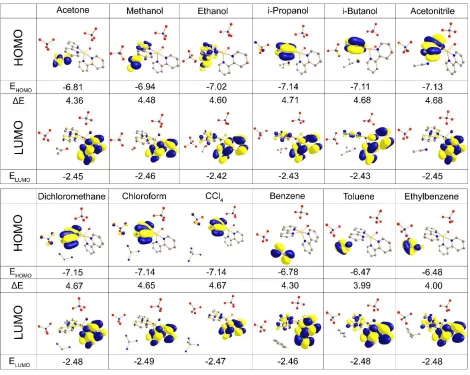
Fig. 6. Frontier molecular orbital of various molecules used in sensing studies.
From the analysis of the HOMO and LUMO energies of solvents, it is found that the HOMO
energy of acetone, benzene, toluene and ethyl benzene is greater than the HOMO energy of Zn(II)
complex alone. On addition of these solvents to the Zn(II) complex may restrict the π-π*
intramolecular charge transfer (responsible for the fluorescence), occurring from one bipyridyl
Zn(II) complex after the formation of either ground state or excited state CT-adduct. But our
observed experimental results suggested that only acetone molecule restricted intermolecular
charge transfer of Zn(II) complex because quenching is observed only in the case of acetone.
Surprisingly, HOMO energy of benzene, toluene and ethyl benzene is greater than acetone yet,
fluorescence quenching is observed only in the presence of acetone (if HOMO energy is the only
factor).
To find out the reason, we have optimized Zn(II) complex with each solvents used for sensing
and analyzes their geometric parameters and frontier molecular orbitals (FMO) distribution (Fig.
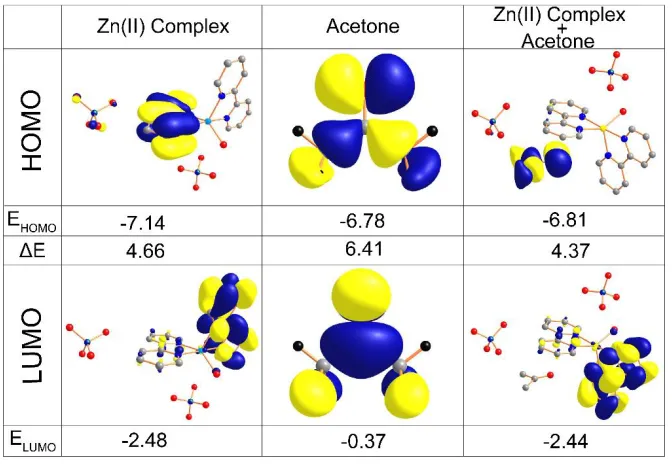
7). The FMO analysis of adducts of Zn(II) complex with solvents suggested that HOMO and
LUMO separately located on only acetone and one bipyridyl moiety of Zn(II) complex,
respectively, while in all other cases mix distribution of FMOs were observed (Fig. 7, 8). Hence,
in all other cases especially benzene, toluene and ethyl benzene which forms adducts of Zn(II)
complex, the intermolecular π-π* charge transfer is still not affected after adduct formation.
Fig. 8. Comparative Frontier molecular orbital diagram.
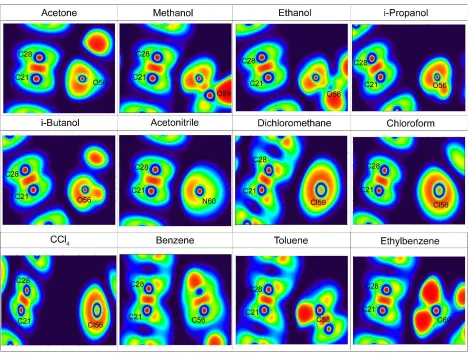
Furthermore, we have also carried out the electron localization function (ELF) analysis to explore
the nature of noncovalent forces which stabilizes the acetone-Zn(II) complex adduct. The ELF
analysis suggested that the acetone-Zn(II) complex stabilize through the lone-pair···π interaction
between the lone-pair of carbonyl group and π cloud of bipyridyl moiety of Zn(II) complex (Fig.
are not compatible to form any kind of non-covalent interactions (Supplementary material. Fig.
S8).
In short, observed selective fluorescence quenching effect in presence of acetone attributed to the
lone-pair···π interactions between the bipyridyl moiety of Zn(II) complex framework and carbonyl
Fig. 9. Electron localization function (ELF) map of the aggregate of Zn(II)-complex with different solvents.
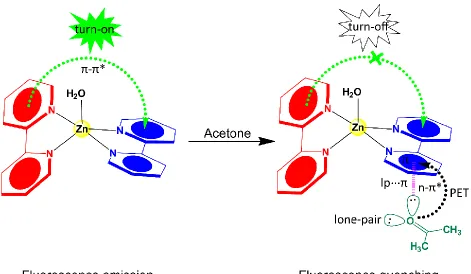
Upon excitation, electron transfer from the acetone molecule to the bipyridyl moiety of Zn (II)
complex occurred due to which intermolecular π-π* charge transfer between bipyridyl moieties
are broken and fluorescence quenching occurs (Fig. 10).
Fig. 10. Schematic representation of the mechanism of the fluorescence quenching.
In brief, acetone molecule distinctly reduce energy transfer to complex 1, to produce remarkably
luminescent quenching which is absent in rest of the molecules. In addition, the weak
intermolecular hydrogen-bonding interactions thanks to the presence of various hydrogen bonding
donors and acceptors also may exist between bipyridyl moieties which was broken resulting
4. Conclusions
A Zn perchlorate complex of 2,2'-bipyridyl, [Zn(bipy)2(H2O)](ClO4)2, has been prepared and
characterized by single X-ray crystallography, NMR, TGA, IR, elemental analysis, and UV-vis
spectroscopy. The complex crystallizes in the monoclinic space group P21/c (Z = 4) with a
pentacoordinated zinc center. Due to the presence of intermolecular interactions in the complex,
as observed in the packing diagrams, these complexes can participate in fluorescence sensing. The
high quenching efficiency and excellent selectivity of the complex for acetone and other ketones
make it a potential functional material for the detection of ketones, which was further proved by
DFT analysis. This study provides new physical insights into the rational designing of coordination
complexes-based functional materials. Future work in this direction will be crucial to elucidate the
detailed roles of d10-based complexes in sensing.
Acknowledgments
Funding: The authors would like to extend their sincere appreciation to the Deanship of Scientific
Research and RSSU at King Saud University for funding this work through the research group
project number RG-1440-076.
Conflicts of interest
References
(1) Han, D.; Zhao, M. Facile and Simple Synthesis of Novel Iron Oxide Foam and Used as Acetone Gas Sensor with Sub-Ppm Level. J. Alloys Compd.2020, 815, 152406.
https://doi.org/https://doi.org/10.1016/j.jallcom.2019.152406.
(2) Baharuddin, A. A.; Ang, B. C.; Haseeb, A. S. M. A.; Wong, Y. C.; Wong, Y. H. Advances in Chemiresistive Sensors for Acetone Gas Detection. Mater. Sci. Semicond. Process. 2019, 103, 104616. https://doi.org/https://doi.org/10.1016/j.mssp.2019.104616.
(3) Wu, G. Y.; Chen, L. J.; Xu, L.; Zhao, X. L.; Yang, H. B. Construction of Supramolecular Hexagonal Metallacycles via Coordination-Driven Self-Assembly: Structure, Properties and Application. Coordination Chemistry Reviews. 2018.
https://doi.org/10.1016/j.ccr.2018.05.009.
(4) Wei, P.; Yan, X.; Huang, F. Supramolecular Polymers Constructed by Orthogonal Self-Assembly Based on Host-Guest and Metal-Ligand Interactions. Chem. Soc. Rev.2015, 44
(3), 815–832. https://doi.org/10.1039/c4cs00327f.
(5) Hosseini, M. W.; Kaes, C.; Katz, A. Bipyridine: The Most Widely Used Ligand. A Review of Molecules Comprising at Least Two 2,2’-Bipyridine Units. Chem. Rev.2000,
100 (10), 3553–3590. https://doi.org/10.1021/cr990376z.
(6) Monro, S.; Colón, K. L.; Yin, H.; Roque, J.; Konda, P.; Gujar, S.; Thummel, R. P.; Lilge, L.; Cameron, C. G.; McFarland, S. A. Transition Metal Complexes and Photodynamic Therapy from a Tumor-Centered Approach: Challenges, Opportunities, and Highlights from the Development of TLD1433. Chem. Rev.2019, 119 (2), 797–828.
https://doi.org/10.1021/acs.chemrev.8b00211.
(7) Qin, Q.-P.; Wang, Z.-F.; Tan, M.-X.; Huang, X.-L.; Zou, H.-H.; Zou, B.-Q.; Shi, B.-B.; Zhang, S.-H. Complexes of Lanthanides( <scp>iii</Scp> ) with Mixed 2,2′-Bipyridyl and 5,7-Dibromo-8-Quinolinoline Chelating Ligands as a New Class of Promising Anti-Cancer Agents. Metallomics2019. https://doi.org/10.1039/C9MT00037B.
(8) Pohkrel, S.; Decato, D.; Rosenberg, E.; Ross, J. B. A.; Terwilliger, M. Synthesis,
Structure, Photophysical and Electrochemical Properties of Ru(TFA)(CO)(PPh 3 ) 2 (L) (L=2-Phenylpyridine, 2- p -Tolylpyridine) and Ru(CO)(PPhMe 2 ) 2 (L)(L′) (L= TFA, H) (L′= Bipyridine, L′= 4,4′-Dimethylbipyridine) Relationships between Ancill. J.
Organomet. Chem.2017, 849–850 (L), 306–314. https://doi.org/10.1016/j.jorganchem.2017.03.026.
(9) Solovyev, I. V.; Kondinski, A.; Monakhov, K. Y.; Koshevoy, I. O.; Grachova, E. V. Synthesis, Photophysical Properties and Cation-Binding Studies of Bipyridine-Functionalized Gold(i) Complexes. Inorg. Chem. Front.2018, 5 (1), 160–171. https://doi.org/10.1039/c7qi00514h.
https://doi.org/10.1039/c5cc00453e.
(11) Toal, S. J.; Trogler, W. C. Polymer Sensors for Nitroaromatic Explosives Detection. J. Mater. Chem.2006, 16 (28), 2871–2883. https://doi.org/10.1039/b517953j.
(12) Yu, X. F.; Lu, L.; Zhong, Y. R.; Luo A, W. G.; Wang, J. Syntheses and Luminescence of Three Lanthanide Complexes Constructed by Flexible Carboxylate Ligand. Russ. J. Coord. Chem.2017, 43 (4), 244–251. https://doi.org/10.1134/s1070328417040091.
(13) Xu, H.; Liu, F.; Cui, Y.; Chen, B.; Qian, G. A Luminescent Nanoscale Metal-Organic Framework for Sensing of Nitroaromatic Explosives. Chem. Commun.2011, 47 (11), 3153–3155. https://doi.org/10.1039/c0cc05166g.
(14) Ahmed, Z.; Iftikhar, K. Efficient Layers of Emitting Ternary Lanthanide Complexes for Fabricating Red, Green, and Yellow OLEDs. Inorg. Chem.2015, 54 (23), 11209–11225. https://doi.org/10.1021/acs.inorgchem.5b01630.
(15) Guo, Z.; Xu, H.; Su, S.; Cai, J.; Dang, S.; Xiang, S.; Qian, G.; Zhang, H.; O’Keeffe, M.; Chen, B. A Robust near Infrared Luminescent Ytterbium Metal-Organic Framework for Sensing of Small Molecules. Chem. Commun.2011, 47 (19), 5551–5553.
https://doi.org/10.1039/c1cc10897b.
(16) Yi, F. Y.; Yang, W.; Sun, Z. M. Highly Selective Acetone Fluorescent Sensors Based on Microporous Cd(Ii) Metal-Organic Frameworks. J. Mater. Chem.2012, 22 (43), 23201– 23209. https://doi.org/10.1039/c2jm35273g.
(17) Hua, J. A.; Zhao, Y.; Kang, Y. S.; Lu, Y.; Sun, W. Y. Solvent-Dependent Zinc(Ii) Coordination Polymers with Mixed Ligands: Selective Sorption and Fluorescence Sensing. Dalt. Trans.2015, 44 (25), 11524–11532. https://doi.org/10.1039/c5dt01386k.
(18) Li, Y. L.; Zhao, Y.; Wang, P.; Kang, Y. S.; Liu, Q.; Zhang, X. Du; Sun, W. Y. Multifunctional Metal-Organic Frameworks with Fluorescent Sensing and Selective Adsorption Properties. Inorg. Chem.2016, 55 (22), 11821–11830.
https://doi.org/10.1021/acs.inorgchem.6b01869.
(19) Qiu, S.; Zhu, G. Molecular Engineering for Synthesizing Novel Structures of Metal-Organic Frameworks with Multifunctional Properties. Coord. Chem. Rev.2009, 253 (23– 24), 2891–2911. https://doi.org/10.1016/j.ccr.2009.07.020.
(20) Zheng, X.; Zhou, L.; Huang, Y.; Wang, C.; Duan, J.; Wen, L.; Tian, Z.; Li, D. A Series of Metal-Organic Frameworks Based on 5-(4-Pyridyl)-Isophthalic Acid: Selective Sorption and Fluorescence Sensing. J. Mater. Chem. A2014, 2 (31), 12413–12422.
https://doi.org/10.1039/c4ta01900h.
(21) Harrison, B. W. D.; Kennedy, D. M.; Power, M.; Sheahan, R.; Hathaway, B. J. J.c.S. No. 1556.
(22) Foley, J.; Tyagi, S.; Hathaway, B. J. \ J. 1984, 2 (1).
Arzneimittelforschung.1954, 4 (9), 527–531.
(24) Martell, A. 3036 a. Martell,. 1957, No. 1, 3036–3041.
(25) Singh, G.; Kapoor, I. P. S.; Kumar, D.; Singh, U. P.; Goel, N. Preparation, X-Ray
Crystallography and Thermal Decomposition of Transition Metal Perchlorate Complexes with Perchlorate and 2,2′-Bipyridyl Ligands. Inorganica Chim. Acta2009, 362 (11), 4091–4098. https://doi.org/10.1016/j.ica.2009.06.003.
(26) Arjmand, F.; Muddassir, M. Design and Synthesis of Heterobimetallic Topoisomerase I and II Inhibitor Complexes: In Vitro DNA Binding, Interaction with 5′-GMP and 5′-TMP and Cleavage Studies. J. Photochem. Photobiol. B Biol.2010, 101 (1), 37–46.
https://doi.org/10.1016/j.jphotobiol.2010.06.009.
(27) Gurunatha, K. L.; Uemura, K.; Maji, T. K. Temperature- and Stoichiometry-Controlled Dimensionality in a Magnesium 4,5-Imidazoledicarboxylate System with Strong Hydrophilic Pore Surfaces. Inorg. Chem.2008, 47 (15), 6578–6580.
https://doi.org/10.1021/ic8007377.
(28) Morizzi, J.; Hobday, M.; Rix, C. Gallium ( III ) Organophosphonate Adducts with the Bidentate. 2001, 320, 67–74.
(29) Selvakumar, B.; Rajendiran, V.; Uma Maheswari, P.; Stoeckli-Evans, H.; Palaniandavar, M. Structures, Spectra, and DNA-Binding Properties of Mixed Ligand Copper(II)
Complexes of Iminodiacetic Acid: The Novel Role of Diimine Co-Ligands on DNA Conformation and Hydrolytic and Oxidative Double Strand DNA Cleavage. J. Inorg. Biochem.2006, 100 (3), 316–330. https://doi.org/10.1016/j.jinorgbio.2005.11.018.
(30) Belicchi-Ferrari, M.; Bisceglie, F.; Pelosi, G.; Tarasconi, P. Heterocyclic Substituted Thiosemicarbazones and Their Cu(II) Complexes: Synthesis, Characterization and Studies of Substituent Effects on Coordination and DNA Binding. Polyhedron2008, 27 (5), 1361–1367. https://doi.org/10.1016/j.poly.2007.12.034.
(31) Arjmand, F.; Muddassir, M.; Khan, R. H. Chiral Preference of L-Tryptophan Derived Metal-Based Antitumor Agent of Late 3d-Metal Ions (Co(II), Cu(II) and Zn(II)) in Comparison to d- and Dl-Tryptophan Analogues: Their in Vitro Reactivity towards CT DNA, 5′-GMP and 5′-TMP. Eur. J. Med. Chem.2010, 45 (9), 3549–3557.
https://doi.org/10.1016/j.ejmech.2010.04.031.
(32) Shustova, N. B.; Ong, T. C.; Cozzolino, A. F.; Michaelis, V. K.; Griffin, R. G.; Dincǎ, M. Phenyl Ring Dynamics in a Tetraphenylethylene-Bridged Metal-Organic Framework: Implications for the Mechanism of Aggregation-Induced Emission. J. Am. Chem. Soc. 2012, 134 (36), 15061–15070. https://doi.org/10.1021/ja306042w.
(33) Chen, B.; Yang, Y.; Zapata, F.; Lin, G.; Qian, G.; Lobkovsky, E. B. Luminescent Open Metal Sites within a Metal-Organic Framework for Sensing Small Molecules. Adv. Mater. 2007, 19 (13), 1693–1696. https://doi.org/10.1002/adma.200601838.
Coordination Polymers as Selective Luminescent Probes in Aqueous Solution. J. Mater. Chem.2012, 22 (14), 6819–6823. https://doi.org/10.1039/c2jm16344f.
(35) Li, Y.; Song, H.; Chen, Q.; Liu, K.; Zhao, F. Y.; Ruan, W. J.; Chang, Z. Two
2](https://thumb-us.123doks.com/thumbv2/123dok_us/7905131.1312464/7.612.183.432.71.260/fig-unit-cell-of-zn-bipy-h-clo.webp)
2 dissolved in DMSO (blank) and upon the](https://thumb-us.123doks.com/thumbv2/123dok_us/7905131.1312464/11.612.193.421.189.364/fig-fluorescence-spectra-bipy-clo-dissolved-dmso-blank.webp)
2 upon the addition of different organic solvents except for acetone (blue) and subsequent addition of acetone (orange)](https://thumb-us.123doks.com/thumbv2/123dok_us/7905131.1312464/12.612.85.455.201.434/quenching-efficiency-addition-different-solvents-acetone-subsequent-addition.webp)
2 in various ketones upon excitation at 295 nm](https://thumb-us.123doks.com/thumbv2/123dok_us/7905131.1312464/13.612.125.489.129.353/fig-fluorescence-intensity-bipy-clo-various-ketones-excitation.webp)