Western University
Western University
Scholarship@Western
Scholarship@Western
Electronic Thesis and Dissertation Repository
11-24-2017 10:00 AM
Characterizing Mekk1: Candidate Behavioural Isolation Gene
Characterizing Mekk1: Candidate Behavioural Isolation Gene
Caryn Dooner
The University of Western Ontario
Supervisor
Dr. Amanda Moehring
The University of Western Ontario Co-Supervisor
Dr. Susanne Kohalmi
The University of Western Ontario
Graduate Program in Biology
A thesis submitted in partial fulfillment of the requirements for the degree in Master of Science
© Caryn Dooner 2017
Follow this and additional works at: https://ir.lib.uwo.ca/etd
Part of the Animal Studies Commons, Behavioral Neurobiology Commons, Biodiversity Commons, Biology Commons, Entomology Commons, Genetics Commons, Other Genetics and Genomics Commons, and the Other Social and Behavioral Sciences Commons
Recommended Citation
Recommended Citation
Dooner, Caryn, "Characterizing Mekk1: Candidate Behavioural Isolation Gene" (2017). Electronic Thesis and Dissertation Repository. 5138.
https://ir.lib.uwo.ca/etd/5138
Abstract
Behavioural isolation can occur due to divergence in aspects of courtship and
mating, and can contribute to reproductive isolation. The purpose of this study is to
determine how a gene,
Mekk1
, contributes to female rejection behaviour between
D. melanogaster
and
D. simulans
. Unique variants were identified within
D. simulans
Mekk1
that could contribute to behaviour, most of which are non-coding. Both transcripts
of
Mekk1
appear to be expressed at similar levels in
D. simulans
and
D. melanogaster
.
These data also indicate that
Mekk1
may be expressed in a specific region of the brain
called the mushroom body, which has previously been linked to female rejection
behaviour in
D
.
simulans
. It is possible that
Mekk1
in
D. simulans
is acting through the
mushroom body to mediate female rejection behaviour. This study will aid in
understanding molecular contributions to behavioural isolation between species of
Drosophila
.
Keywords
Acknowledgements
There are many people I would like to acknowledge that have contributed
significantly to this thesis. Thank-you to my co-supervisor, Dr. Susanne Kohalmi, and to
my supervisor Dr. Amanda Moehring. Dr. Kohalmi you contributed in so many ways and
I can’t thank you enough. Thank-you to Dr. Moehring, I learned a lot from you.
I would like to thank my advisors, Dr. Graham Thompson and Dr. Anne Simon.
Thank-you for your valuable feedback on my work throughout my degree, and thank-you
to Dr. Thompson and for always being supportive. Thank-you to Dr. Anthony
Percival-Smith for being a reliable sounding board and for fielding so many of my silly questions.
I also want to thank the coolest fly lady I know, Dr. Tara Edwards. I would never have
learned how to read a genotype or dissect a brain without your help. Thank-you to
Dr. Brent Sinclair for letting me borrow some of your equipment and for always being
encouraging. Thank-you to Dr. Jamie Kramer for giving me copies of some fly stocks
and for giving me some great advice on how to improve my protocols. Thank-you to
Dr. Andre Lachance for helping me improve my grammar as well as my understanding of
evolution. Thank-you to Dr. Ben Rubin for all of your help with stats, especially R.
Thank-you to BioRad and BioRad representatives Michael Wakem and Claude
Lachance for all of your patience and assistance with anything from gel doc troubles to
ddPCR. Thank-you to Geneious and Geneious representative Daisy Wang. Thank-you to
Dr. Gurpreet Dhami for patiently showing me how to use so much of the equipment in
the MGU Core. Thank-you to the Biotron Experimental Climate Change Research Centre
(UWO) for allowing me to use both the Insect and Microscopy Modules. Thank-you to
Thank-you to Jess Pardy for showing me the molecular “ropes” and for always
being around for science rants. Thank-you to Jacqueline Lebenzon and Susan Anthony
for always being willing to share some take-out on weekends or late lab nights, grabbing
early morning coffees, and being my outreach buddies. Thanks to Jalina
Bielaska-Da Silva for answering all of my behaviour questions, Heather Ward for making copious
amounts of fly food on the regular, and Pria Mahabir for always chatting about fly brains.
Thank-you to Dova Brennman and Rachel Chambers for all of the constructive science
chats.
Thank-you to my Kohalmi labmates – Emily Clayton, Emily Cornelius, Sara Rad,
and Jessica Belcastro. I never felt like the odd one out.
Finally, thank-you to my family for supporting me through this process. It would
Table of Contents
Abstract ... i
Keywords ... i
Acknowledgements ... ii
List of Tables ... vii
List of Figures ... viii
List of Appendices ... x
Abbreviations ... xii
1: Introduction ... 1
1.1
Speciation ... 1
1.2
Sexual selection and behaviour ... 6
1.3
Drosophila
as a model organism for speciation ... 9
1.4
Drosophila
behaviour and species isolation... 13
1.5
Mekk1
: previous general characterization ... 18
1.6
Mekk1
: previous behavioural characterization ... 20
1.7
Hypotheses and Objectives ... 23
1.7.1 Overall Objective ... 23
1.7.2 Sequencing characterization ... 23
1.7.3. Characterizing Mekk1 transcript expression ... 24
1.7.4. Tissue-specific expression characterization ... 27
1.7.5. Determining tissue-specificity of Mekk1-associated behaviour ... 28
1.7.6. Determining if the known function of Mekk1 contributes to behaviour ... 28
2: Material and Methods ... 30
2.2
Drosophila
crosses ... 30
2.3
DNA isolation ... 36
2.4
Primer design and testing ... 36
2.5
DNA preparation for sequencing ... 42
2.6
Sequence analysis ... 42
2.7
Tissue preparation for RNA isolation ... 43
2.8
RNA isolation ... 44
2.9
RNA quantification ... 44
2.10
cDNA synthesis ... 44
2.11
RT-PCR ... 45
2.12
Mekk1
visualization ... 46
2.13
Generating the genotypes for the behavioural rescue experiment ... 46
2.14
Genotyping ... 47
2.15
Mating assays ... 48
3: Results ... 50
3.1
Comparative sequence analysis of
Mekk1
gene region ... 50
3.2
Coding region analysis of
Mekk1
... 58
3.3
Analysis of proximal regulatory regions of
Mekk1
... 59
3.4
Transcript confirmation ... 62
3.5
Expression analysis of
Mekk1
transcripts... 64
3.6
Behavioural assays: rescuing
Mekk1
in a tissue-specific manner ... 66
3.7
Behavioural assays: disrupting the coding region of
Mekk1
... 74
4: Discussion ... 81
4.1
Multiple unique variants may contribute to behaviour ... 81
4.2
Mekk1
expression is similar between
D. simulans
and
D. melanogaster
... 83
4.3
Evidence that
Mekk1
may be expressed in the mushroom body ... 85
4.4
Potential mechanisms of
Mekk1
as a behavioural isolation gene ... 86
4.5
Conclusions and future directions ... 88
References ... 92
List of Tables
Table 1.1. Summary of objectives and hypotheses. ... 25
Table 2.1 List of
Drosophila
strains with source and genotype. ... 31
Table 2.2
D
.
melanogaster
primers for sequencing
.
... 38
Table 2.3
D. simulans
primers for sequencing. ... 40
Table 2.4 Primers for semi-quantitative RT-PCR... 41
Table 3.1 Filter system showing how sequence differences were categorized... 52
Table 3.2 Percent similarity for each strain of
D. simulans
as compared
to
D. melanogaster
(BJS) within
Mekk1
region. ... 54
List of Figures
Figure 1.1. Behavioural phenotypes associated with hybrid females and
candidate behavioural isolation gene disruptions. ... 10
Figure 1.2. Schematic comparing genotypes tested during deficiency
mapping of chromosomes for candidate genes contributing to
behavioural isolation. ... 16
Figure 1.3. Principle of deficiency mapping. ... 17
Figure 1.4. Locations of
P-
element insertions in previously characterized
Mekk1
deficiency strains. ... 21
Figure 2.1. Crossing scheme (1) illustrating how a
P
-element disruption and a
UAS element linked to
Mekk1
were recombined onto a single
homologous chromosome. ... 32
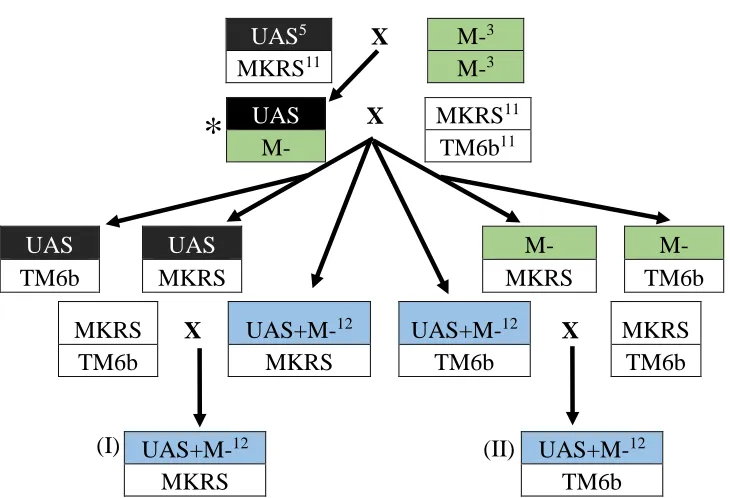
Figure 2.2. Crossing scheme (2) shows how stocks were generated for later use in
the behavioural rescue experiments. ... 33
Figure 2.3. Crossing scheme (3) showing inter- and intra-species crosses for
Mekk1
behavioural assay experiments. ... 34
Figure 2.4. Crossing scheme (4) showing how various genotypes were combined
and used to visualize tissue-specific expression of
Mekk1.
... 35
Figure 2.5. Relative position of
D. melanogaster
primers for sequencing. ... 37
Figure 2.6. Relative position of
D. simulans
primers for sequencing... 39
Figure 3.1.
Mekk1
gene region showing the relative positions of variants unique
to
D. simulans
(FC). ... 53
Figure 3.3. Diagram showing alternative start of putative transcripts in
D. melanogaster
and
D. simulans
... 63
Figure 3.4. RT-PCR shows presence of two transcripts in both
D. melanogaster
and
D. simulans
. ... 65
Figure 3.5. Comparison of relative
Mekk1
expression levels determined by
RT-PCR between species across lifecycle stages and tissue types. ... 68
Figure 3.6. Effect of tissue-specific
Mekk1
rescue on mating frequency in
various genotypes of
Drosophila
hybrid females. ... 71
Figure 3.7. Courtship latency of males from
D. melanogaster
(BJS)
and
D. melanogaster
(GFP) paired with females from both
D. melanogaster
(BJS) and
D. melanogaster
(GFP). ... 72
Figure 3.8. Courtship latency of males from
D. melanogaster
(BJS)
and
D. melanogaster
(GFP) paired with females from both
D. melanogaster
(BJS) and
D. melanogaster
(GFP). ... 73
Figure 3.9. Mating frequency for deletion mapping of functional kinase domain
of
Mekk1
. ... 76
Figure 3.10. Visualizing expression using GFP... 77
Figure 3.11. Images of
Mekk1
expression pattern using GFP in the female brain. ... 80
Figure 4.1. Schematic for a potential
Mekk1
-mediated pathway that influences
List of Appendices
Appendix A: Modifications to RNA isolation procedure. ... 101
Appendix B: Sequence comparison between
D. melanogaster
(BJS) and three strains
of
D. simulans
(FC, 199 and 216) for
Mekk1
gene region from upstream
gene to 3’ UTR. ... 103
Appendix C: Coverage map of the data used to generate the
Mekk1
consensus
sequence for each of the four strains, including electropherograms in areas
of uncertainty. ... 123
Appendix D: Thesis data compared to unedited independent re-analysis. ... 130
Appendix E: Sequence comparison for transcript RB of
Mekk1
between
D. melanogaster
(BJS) and three strains of
D. simulans
(FC, 199
and 216). ... 162
Appendix F: Sequence comparison for transcript RD/RC of
Mekk1
between
D. melanogaster
(BJS) and three strains of
D. simulans
(FC, 199
and 216). ... 170
Appendix G: Sequence comparison for primary structure of RB protein of
Mekk1
between
D. melanogaster
(BJS) and three strains of
D. simulans
(FC, 199 and 216). ... 177
Appendix H: Sequence comparison for primary structure of RD/RC protein of
Mekk1
between
D. melanogaster
(BJS) and three strains of
D. simulans
(FC, 199 and 216). ... 180
Appendix I: Gel images from RT-PCR comparing relative levels of
Mekk1
Appendix J: Genotypes of flies from behavioural assays examining
tissue-specific rescue of
Mekk1
and its effect on behaviour.
.
... 187
Appendix K: Fluorescent microscopy examining female adult ovaries of the strain
with an enhancer trap within
Mekk1
in
D. melanogaster
. ... 188
Appendix L: Fluorescent microscopy examining female adult brains of the strain
Abbreviations
SI Units not listed
ANOVA
Analysis of Variance
Bal
Balancer
BDSC
Berkeley Drosophila Stock Center
BJS
Dr. Brent J. Sinclair
BSC
Biological Species Concept
cDNA
Complimentary deoxyribonucleic acid
CO
2Carbon Dioxide
ddH
2O
Double Distilled Water (H
2O)
Def
Deficiency
Del
Deletion
Dis
Disruption
DNA
Deoxyribonucleic acid
DVM
Dominant Visible Marker
E.T.
Enhancer Trap
EDTA
Ethylenediaminetetraacetic acid
EMBL-EBI
European Molecular Biology Laboratory-European Bioinformatics Institute
EST
Expressed Sequence Tag
FC
Florida City
FRET
Fluorescence Resonance Energy Transfer
gDNA
Genomic deoxyribonucleic acid
GFP
Green Flourescent Protein
Indel
Insertion/deletion
M-
Mekk1
deficiency
MAPKKK
Mitogen Activated Protein Kinase Kinase Kinase
MEL
D. melanogaster
MMLV
Mouse Murine Lukemia Virus
M-X
Mekk1
deletion
N/A
Not applicable
NaCl
Sodium Chloride
PBS
Phosphate buffered saline
PCR
Polymerase chain reaction
ProK
Proteinase K
qPCR
Quantitative Polymerase Chain Reaction
RNA
Ribonucleic Acid
RT-PCR
Reverse Transcriptase-Polymerase Chain Reaction
SE
Standard error
SIM
D. simulans
SNV
Single Nucleotide Variant
TrisHCL
Hydroxymethylaminomethane hydrochloride
UAS
Upstream Activating Sequence
1: Introduction
1.1
Speciation
The range of biodiversity on our planet can be explained through the process of
speciation and evolution (Katzourakis et al. 2001; Noor & Feder 2006; Sobel et al. 2014).
Speciation is the process wherein new species are formed, and evolution is change at the
population level over time (Darwin 1859; Mayr 1942). Selection refers to the process of
certain individuals having the ability to out-reproduce one another, based on their ability
to survive or differential ability to secure mates.
The most broad example of selection is natural selection (Darwin 1859),
compared to other forms of selection such as sexual and artificial selection. If individuals
are able to survive, they will have the opportunity to reproduce (Darwin 1859). Natural
selection is the process through which individuals with traits not well-suited to their
environment will not live to reproduce. Within natural selection, a process termed sexual
selection specifically refers to an individual’s ability to out-reproduce other individuals of
the same species (Darwin 1859; Fisher 1930). In sexual selection, if a single individual
has reproductive characteristics that confer an advantage over other individuals of the
same species, it can increase the single individual’s reproductive success.
Individuals having traits not well-suited to the environment they live in are less
fit, and consequently have fewer offspring. Fewer offspring likely means fewer chances
for their traits and genes to be passed on to the third generation. Inversely, individuals
with characteristics or traits that are well-suited to the environment are likely more fit,
selection of unique traits that are well-suited to a specific environment but not well-suited
to other environments (specific traits; Sobel et al. 2014).
Individuals of the same species living in the same environment (a subpopulation
of a species) may have the same specific traits. If a subpopulation of a species is left in an
unique environment for several generations, this subpopulation may develop traits
specific enough that they can no longer interbreed with individuals from other
subpopulations that have been living in other environments that select for different
specific traits. Specific traits that are well-suited to a specific environment can contribute
to differences between populations and is one mechanism through which speciation can
occur. The Biological Species Concept (BSC) defines separate species as groups of
individuals that cannot breed with one another. The inability of individuals of distinct
populations (and species according to the BSC) to reproduce with one another is referred
to as reproductive isolation (Mayr 1942; Dobzhansky 1937).
Speciation, or the formation of reproductively isolated species, can include both
allopatric and sympatric speciation (reviewed by Coyne and Orr 2004). When speciation
occurs in allopatry (allopatric speciation), subpopulations of a given species are
geographically isolated and live separated from one another without any contact (Mayr
1942). As a result, the independent populations become well-suited to their respective
environments over time. When subpopulations lose contact with one another, there is a
physical barrier that contributes to their separation which also prevents gene flow
between the subpopulations. Lack of gene flow means that there is no exchange of
genetic material between subpopulations. While the populations are isolated from one
pressures from the distinct environments. These differences that accumulate over time
may result in physically separated populations being so genetically different that they are
now reproductively isolated from one another. Hence in allopatric speciation, geographic
isolation can lead to the formation of new species by creating physical separation and
preventing gene flow. Once populations are reproductively isolated from one another,
these populations are considered within the Biological Species Concept to be different
species that diverged in allopatry (Mayr 1942, Dobzhansky 1937).
In the example above, the differences between two species that diverged in
allopatry are mediated by different environments and by differential selection acting on
geographically isolated subpopulations, which can lead to ecological adaptation (Sobel et
al. 2014). In contrast to allopatric speciation, sympatric speciation explains how new
species arise in the same geographic location (Mayr 1942). In other words, in sympatric
subpopulations are not geographically separated and are exposed to the same
environment (reviewed by Coyne and Orr 2004). Not only are the subpopulations
exposed to the same environment, but the lack of a geographic barrier means that there is
continual exposure of the diverging subpopulations to one another as well as a continuous
opportunity for gene flow to occur.
There are a couple of examples that outline different means through which species
develop reproductive isolation in sympatry (Savolainen et al. 2006, Barluenga et al.
2006). Savolainen et al. (2006) found evidence in Australia that species of
Howea
, or
palm trees, diverged in sympatry (Savolainen et al. 2006). Evidence suggests that their
flowering times differ by a matter of weeks and that they vary in their ability to thrive in
differences contributed to a speciation event or if one of these differences arose after the
speciation event. There is also evidence of sympatric speciation between species of
Amphilophus
, cichlid fish, in Cameroon (Barluenga et al. 2006). The sympatric species of
cichlid are not only reproductively isolated but vary in coloration, with
A. citrinellus
being a much lighter beige compared to the darker brown
A. zaliosus
. Barluenga et al.
(2006) hypothesized that these differences arose due to stratification in the cichlids crater.
Two species of
Drosophila, Drosophila simulans
and
D. melanogaster
, exist in sympatry
and remain reproductively isolated (Carracedo et al. 2003) which will be discussed
further (section 1.2).
Aside from mechanisms leading to reproductive isolation and speciation events
(including allopatry and sympatry), types of reproductive isolation can be classified as
either post-zygotic or prezygotic (reviewed by Coyne and Orr 2004). Post-zygotic
isolation refers to mechanisms that occur after the formation of a zygote: including
maladapted hybrids,
hybrid sterility, and hybrid inviability. Hybrid offspring formed
from two diverging subpopulations having lower fitness is an example of post-zygotic
isolation (Mayr 1963; Orr 1996). In some instances, sympatric populations may exhibit
post-zygotic isolation: when one parent is from subpopulation A while the other parent is
from the subpopulation B, their union forms a hybrid (AB) with decreased fitness relative
to offspring purely from one subpopulation or the other (AA or BB). The previous
example of post-zygotic isolation means that some matings do not result in post-zygotic
issues, which indicates that the diverging subpopulations are not completely
reproductively isolated. The maladapted hybrid offspring will reinforce the species
subpopulation will have more fit offspring, and pass on more of their traits (Butlin 1989).
This is one manner of post-zygotic isolation and how it can contribute to reproductive
isolation.
Prezygotic refers to reproductive isolating mechanisms that occur prior to
fertilization and the formation of a zygote. Prezygotic isolation has a diverse array of
mechanisms and can be used to explain speciation in sympatry. Species that exist in
sympatry typically have stronger prezygotic isolating mechanisms compared to species
that exist in allopatry, as discussed by Coyne and Orr (2004). This is thought to be related
to the likelihood of exposure: populations in allopatry will rarely (if ever) be exposed to
their diverged counterparts in another geographical region, whereas populations in
sympatry will continually be exposed to one another. Prezygotic isolating mechanisms
prevent mating earlier in an interaction, which is advantageous if individuals are
continually exposed to potential mates that they are not reproductively compatible with.
If individuals who are not reproductively compatible do mate successfully, it may result
in maladapted hybrids which does not benefit either individual.
One mechanism of prezygotic isolation includes behavioural isolation
(Dobzhansky 1937; Mayr 1947; Coyne and Orr 2004). Behavioural isolation applies to
many species that have courtship and other mating rituals that are necessary to initiate
reproduction to occur (Dobzhansky 1937). When subpopulations diverge, and courtship
(or another behaviour) is altered slightly from one subpopulation to the next such that the
next subpopulation does not recognize the first subpopulations courtship, then mating
For example, male bowerbirds decorate their bower elaborately (Borgia 1995). If
a male is unable to make an elaborate nest or makes the ‘wrong type’ because his
behaviour has been altered, then the female bowerbird will not recognize that there is a
male ready to mate and subsequent mating will not occur (Uy and Borgia 2000). The
genetic basis of reproductive isolation may contribute to speciation, thus understanding
the roles and regulation of genes and proteins involved in this process will increase our
knowledge about speciation events.
1.2
Sexual selection and behaviour
Sexual selection is a form of natural selection (Darwin 1859), and can contribute
to the process of speciation. Sexual selection results from an individual’s differing ability
to secure a mate and in the propagation of traits that the opposite sex finds attractive
(Mayr 1949; Birkhead 2000). Sexual selection can act on secondary sexual
characteristics, which includes traits not directly involved in sexual reproduction (ex:
coloration or behaviour). For a trait to be selected, one sex must have a preference for
that trait. Females may be choosy for a variety of reasons, depending on the species. For
example, female
Gryllus bimaculatus
(crickets) may be more choosy than males due to
detriments incurred at mating (Green and Tregenza 2009). In species such as the cricket,
females may incur detriments such as a decrease in longevity from mating with a male. In
the case of the cricket, males may have secondary sexual characteristic that allow the
female to determine the negative impact she may experience by mating with him.
There are hypotheses addressing the reason(s) the attractiveness of secondary
sexual characteristics, that can be grouped into direct and indirect benefit hypotheses
elaborate traits, but must also be able to provide a female with a benefit such as
protection or availability of food or access to a larger territory. Indirect benefit
hypotheses can be broken down into the “sexy son’s” hypothesis and the “good genes”
hypothesis. “Sexy son’s” hypothesis refers to the fact that because this male has attractive
traits (remembering that females are generally the choosy ones), the male offspring of her
union will also have attractive traits and produce lots of their own offspring propagating
their mothers genes (Fisher 1930). The “good genes” hypothesis states that as this
individual has good (attractive) traits, their offspring will have high fitness from
inheriting their fathers’ good traits. Females typically have a preference for secondary
sexual characteristics that may correlate with male fitness, such as his ability to provide
direct benefits (such as food) for the female (Byrne and Rice 2005) or because the male
will be able to pass on his “good” genes to their offspring (Fisher 1930).
For example, the male peacock tail is quite elaborate being large in size with a
bright and diverse array of colors (Darwin 1871). Females find the elaborate male tail
attractive, so females that prefer an elaborate tail will mate with males that have a more
elaborate tail. As females that have a preference for the trait and males that have the trait
will increase in frequency in the population, it is possible for the preference and trait to
be inherited together and become linked (Kirkpatrick 1982). The term linkage
disequilibrium refers to traits that are not linked and therefore not inherited together.
Sexual selection in combination with linkage disequilibrium can result in multiple traits
being inherited in a non-random manner, eventually leading to significant divergence
between populations such that they are now reproductively isolated and considered
preferences for two opposing extremes, it can potentially lead to speciation even in
sympatry (Higashi et al. 1999). For example, speciation between
D. simulans
and
D. melanogaster
is believed to have occurred in sympatry due to female preference
mediating sexual selection on the subpopulations (Carracedo et al. 2003).
Within sexual selection, antagonistic co-evolution is a form of sexual conflict
between the sexes that can lead to evolution (Rice 1996). Sexual antagonism describes a
phenomenon where one sex will develop an adaptation that is detrimental to the opposite
sex, and this initial adaptation will select for a counter-adaptation in the opposite sex
(Rice 1996). The adaptation may contribute to increasing the control one sex has over
reproductive success (Arnqvist and Rowe 2002; Rice 1996). It is possible for female
choice, the focus of this thesis, to result from sexual antagonism. Sexual antagonism can
lead to females evolving an adaptation that increases their level of control over their
reproductive success, which may help to increase the female’s fitness. Sexual antagonism
may also influence a female’s preference for males of the same species
versus
males of
another species (Parker and Partridge 1998). Sexual conflict, such as sexual antagonism,
has been shown to contribute to speciation in insects (Arnqvist et al. 2000). Females
choosing conspecific males to avoid heterospecific males and their detriments would
facilitate the formation and maintenance of species barriers.
Hall (1994) examined
Drosophila
courtship, during which females are exposed to
a male’s courtship and must choose whether to accept or reject him. Females of certain
Drosophila
species have been shown to mate more quickly when exposed to a
species-specific song which indicates that song can play a role in reproductive isolation (Ritchie
diminished likelihood of mating with the female, resulting in the female and male being
behaviourally isolated from one another in a form of reproductive isolation. With respect
to reproductive isolation, the importance of early isolating mechanisms cannot be
overstated (Coyne and Orr 2004; Noor and Feder 2006). Simple things that appear small
yet compound or are precursor to larger isolating mechanisms are very important, even
though they may not seem obvious. Something as subtle as a change in the pulse rate of a
courtship song could be an initial behavioural divergence that contributed to reproductive
isolation and subsequent speciation (Ritchie et al. 1999).
1.3
Drosophila as a model organism for speciation
Drosophila
has a broad geographical range (Lachaise et al. 1986; Carracedo et al.
2003), and various species of
Drosophila
inhabit different ecological niches giving an
ideal opportunity to study multiple modes of speciation and divergence (Coyne and Orr
2004).
Drosophila simulans
and
D. melanogaster
are both species with a broad
geographical range that currently exist in sympatry (Lachaise et al. 1986; Carracedo et al.
2003). Interestingly, females of
D. simulans
reject
D. melanogaster
males, but females of
D. melanogaster
will mate with
D. simulans
males. This asymmetric heterospecific
mating tendency sets up an scenario to study the genetic basis for female rejection
behaviour (Laturney and Moehring 2012a; Fig. 1.1). In this case, the asymmetry is
indicative of one species having increased discrimination compared to the other species.
This thesis intends to capitalize on that unique discrimination and characterize it to
determine how
D. simulans
female choice is mediated against a heterospecific male.
Drosophila
are common model organisms for several reasons, including the ease
Figure 1.1. Behavioural phenotypes associated with hybrid females and candidate
behavioural isolation gene disruptions.
Species are identified as SIM (
D. simulans
) or
MEL (
D. melanogaster
), “X” indicates a gene disruption. Female individuals (left) are
paired with males (middle) and the behavioural phenotype that the females exhibit is
shown (MATING or REJECTION; on the right); phenotypes illustrated based on
+
=
MATING
SIM
SIM
+
=
MATING
MEL
MEL
+
=
REJECTION
SIM
MEL
+
=
MATING
HYBRID
MEL
+
=
REJECTION
HYBRID
MEL
X
+
=
Behavioural phenotype
Species
Species
possible to impose artificial selection on transgenic strains.
Drosophila
are ideal for
genetic studies because of the plethora of genetic tools that are available. For example,
Drosophila
can be used for deficiency mapping (Pasyukova et al. 2000) which will be
discussed in more detail in section 1.4. The
Drosophila
Gene Disruption project has
targeted 95% of
Drosophila
genes using site-specific transposons (Bellen et al. 2011),
which has contributed to the development of databases such as Flybase
(Gramates et al. 2017). Other databases that are commonly used for information on
Drosophila
are Flyatlas (Chintapalli et al. 2007) and Flymine (Lyne et al. 2007). There
are many tools that allow genetic alterations to be introduced into the genome (Spradling
et al. 1999; Bellen et al. 2004; Thibault et al. 2004; Metaxakis et al. 2005; Bellen et al.
2011; Bischof et al. 2013). For previous studies in
Drosophila
a construct was inserted
into the genome to disrupt the function of a specific gene, and to subsequently observe
the effect on phenotype. Two examples of transposons are called
P-
elements or
Minos
elements which can be used to cause gene disruptions (Metaxakis et al. 2005). The
phenotype that the fly has when a disruption, such as a transposon, is present helps
scientists infer the function of the disrupted genetic region.
For example, a modified
Minos
element has been used to analyze tissue-specific
gene expression (Venken et al., 2011). Expression patterns can be monitored because a
fluorescent marker, Green Fluorescent Protein (GFP), is part of this modified
Minos
element. The GFP expression pattern allows visualization of the expression of the
genomic region into which
Minos
integrates. Another way to examine tissue-specific
gene expression is using a combination of an Upstream Activating Sequence (UAS)-GFP
element with a reporter gene (in this case GAL4), and it allows one to visualize where a
regulatory element is being expressed by “hijacking” the genes enhancer (a regulatory
element; Bellen et al. 1989).
While
D. melanogaster
is well-characterized and has numerous genetic tools
available, other
Drosophila
species are lacking those advantages. While
D. simulans
is
less characterized compared to
D. melanogaster
, comparative analysis has been
performed between
D. simulans
and
D. melanogaster
at both the DNA and the transcript
expression levels (specifically by Begun et al. 2007). For example, there is an inversion
in the right arm of the third chromosome, which contains the gene of interest (
Mekk1
).
Drosophila simulans
and
D. melanogaster
shared a common ancestor roughly 4.3mya,
around the same time the two strains (subpopulations) of
D. simulans
are thought to have
differentiated (Cutter 2008). Hence, it is likely that the genomic sequences differ between
the two
Drosophila
species (González et al. 1982), as well as between strains of
D. simulans
(Choudhary and Singh 1987).
Many different modes of genetic regulation have been described for
Drosophila
genes including promoters, enhancers, and insulator sequences (Wittkopp et al. 2004;
Nègre et al. 2010; Arnold et al. 2014). As seen for other organisms, promoter sequences
located directly upstream of a gene regulate gene expression. It is possible that the
manner in which genes are regulated between species, including and outside of direct
promoter regulation, underlies the reproductive isolation exhibited between
Drosophila
species and is influenced by sequence divergence between species. As there are many
(or have shown to be conserved between species), the proximal promoter region will be
the regulatory focus in this thesis.
1.4
Drosophila behaviour and species isolation
The field of behavioural genetics focuses on understanding the heritable basis of
behaviours. Examples of genes that influence behaviour include
fruitless
(
fru
; Hall
1978)and
Viola
(Balakireva et al. 1998), which have both been shown to influence male
sexual orientation (Balakireva et al. 1998; Hall 1978). As reviewed by Coyne and Orr
(2004), males typically court females at a higher frequency than females will accept the
males offer. Therefore, many relevant male behaviours have been analyzed to identify
associated genes. For example, the
period
(
per
) gene contributes to the courtship song of
a
Drosophila
male (Wheeler et al. 1991), as does
fru
(Clyne and Miesenböck 2008).
Combined with the fact that Ritchie et al. (1999) found females to have a species-specific
preference for male song, it is possible that the period gene contributes to behavioural
isolation between
Drosophila
species.
A review by Bakker and Pomiankowski (1995) discusses female mate choice in
the context of male traits. An important but understudied area of behavioural genetics
includes genes that influence female receptivity (Laturney and Moehring 2012b), despite
evidence supporting female choice as the main isolating barrier between the two species
of interest in this thesis (Izquierdo et al. 1992). During courtship in
Drosophila
, the male
is typically the “sender” as he emits a behaviour or signal which is received by a female
who needs to interpret the behaviour before accepting or rejecting him as a mate (Ryan
1998). Genes that alter the rejection behaviour of a female will influence how the male’s
D. melanogaster
males by flying away, kicking him off during courtship, or extruding her
ovipositor to prevent mating (Hall 1994), the males are not usually as selective. As
mating involves two individuals, it is important to consider that the behaviour of interest
is not the only behaviour relevant in the courtship interaction.
Drosophila
courtship was described in detail by Hall (1994). First, the male
detects the female and subsequently taps the female’s abdomen. The male follows the
female, and then extends his wing and vibrates it in a “love song”. Components of the
sounds are among the more species-specific elements of
Drosophila
courtship. Females
of certain Drosophila species have been shown to mate more quickly when exposed to a
species-specific song which indicates that song can play a role in reproductive isolation
(Ritchie et al. 1999). A male that cannot produce a song typical of the female’s species
will have decreased likelihood of mating with the female. After the wing song, the male
will extend his proboscis and lick the female’s genitalia, followed immediately by the
first copulation attempt which involves abdominal bending by the male (Hall 1994).
Drosophila
female’s “choice” (ex: rejection by flying away) can occur at any point
throughout the courtship (Hall 1994).
To determine which genes are involved in female mating behaviour, female
hybrids (
D. melanogaster
x
D. simulans
) were examined with and without certain regions
disrupted (Laturney and Moehring 2012a). As a result, candidate regions for behavioural
isolation genes were identified in
D. simulans
females. The paper (Laturney and
Moehring 2012a) further outlines that the behavioural phenotype of the female depends
on the genetic background (pure species
vs
hybrid), and it was shown that the rejection
acceptance (as
D. simulans
will reject
D. melanogaster
males and hybrids will mate). If
loci responsible for
D. simulans
rejection are “unmasked”, then the behavioural
phenotype in the hybrid will change from acceptance to rejection. Rejection may be
unmasked by disrupting the dominant
D. melanogaster
locus that is a “factor”
contributing to acceptance of
D. melanogaster
males. The “factor” contributing to
acceptance could be anything present in DNA, coding or non-coding.
The principle of hybrid deficiency mapping is to compare the behavioural
phenotype of individuals with and without disruptions in the
D. melanogaster
half of
their genome, and observe whether or not they have the same behavioural phenotype
(Fig. 1.1; Laturney and Moehring 2012a). If individuals with or without a genomic
disruption have different phenotypes, such that the individuals with a disruption reject
and individuals without a disruption accept
D. melanogaster
males, then the genomic
region that is disrupted contains at least one or more candidate loci that contribute to
behavioural isolation (Fig. 1.1, Fig. 1.2). Deficiency mapping involves using multiple
different strains of transgenic flies that have certain genomic regions disrupted or
knocked out, regions that are characterized at the cytological level (Fig. 1.3; discussed in
Laturney and Moehring 2012a). Deficiency-mapping was used by Laturney and
Moehring (2012a) to identify five regions along the right arm of the third chromosome,
which was refined to three specific candidate genes (using fine-mapping), that contribute
to behavioural isolation between
D. simulans
and
D. melanogaster
:
Mekk1
,
fru
, and
kat60
(Moehring lab, unpublished). Consistent with the resuts of Merrill et al. (2011), who
Figure 1.2. Schematic comparing genotypes tested during deficiency mapping of
chromosomes for candidate genes contributing to behavioural isolation.
The
BAL
(balancer) and
DEF
(deficiency) are tested in both a HYBRID (female hybrid) and MEL
(
D. melanogaster
), with “X” indicating a gene disruption. For each individual, the two
lines represent the right arm of the third chromosome (two homologs per individual) with
either a wild-type
D. melanogaster
or
D. simulans
chromosome paired with either a
deficiency or a balancer chromosome. Blue=
D. melanogaster
, pink=
D. simulans
.
HYBRID
HYBRID
MEL
X
MEL
A
B
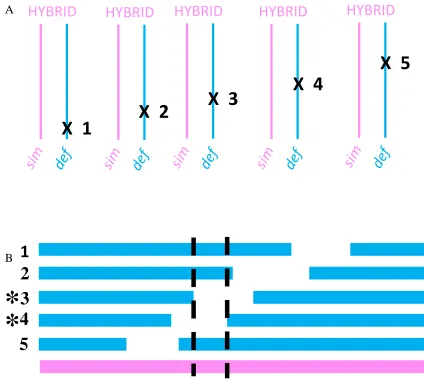
Figure 1.3. Principle of deficiency mapping.
(A) A population is generated where
individuals have a disruption or deletion, some of which will span overlapping regions of
the genome (disruptions one through five indicated by an “X” on the
D. melanogaster
homolog, indicated in blue). (B) The disruptions (numbers corresponding to (A)) are
lined up relative to the
D. simulans
homolog. Regions that overlap and show the
behaviour (indicated by the dotted black lines) contain candidate loci contributing to
behavioural isolation. (*) indicates disruption lines that show behaviour of interest.
HYBRID
X 1
HYBRID
X 2
HYBRID
X 3
HYBRID
X 4
HYBRID
X 5
1
2
3
4
5
behavioural isolation genes were within a chromosomal inversion and were not
sex-linked.
1.5
Mekk1: previous general characterization
This particular study will focus on
Mekk1
, a gene that contributes to
D. simulans
rejection of
D. melanogaster
males (Laturney and Moehring 2012b). However, previous
characterizations of
Mekk1
indicate pleiotropy, where
Mekk1
has functions outside of
behaviour (Inoue et al. 2001).
Mekk1
codes for a Mitogen-Activated Protein Kinase
Kinase Kinase (MAPKKK; MAP3K; MEKK1), and has been implicated in stress
response in
D. melanogaster
.
Mekk1
-deficient flies (having a deletion spanning the
kinase domain) cannot activate an effective stress response, specifically to chemical
stress or heat shock (Gramates et al. 2017; Inoue et al. 2001).
Mekk1
is one of four
homologous MAP3Ks in
Drosophila
that are involved in stress response (Zhuang et al.
2006).
Drosophila Mekk1
has homologs in other species. Interestingly,
Mekk1
is referred
to by a different name in other species such as mice and humans:
Mekk4
(Ryabinina et al
2006). To avoid confusion in this thesis,
Mekk1
will only refer to
Drosophila Mekk1
,
while
Mekk4
will be used in conjunction with a common species name for clarification.
The mammalian
Mekk4
is involved in mediateing stress response as it acts upstream of
the p38 and JNK pathway (Takekawa et al. 1997). The protein product of
Mekk1
also acts
upstream of the JNK pathway in
Drosophila
(Ryabinina et al. 2006). With respect to
courtship behaviour, it is possible that being exposed to a male of a different species
results in perceived stress by the female, and this leads to activation of the p38 and/or
to the previous proposition, the protein product of
Mekk4
in mice is necessary for normal
hearing development (Haque et al. 2016). The auditory system of
Drosophila
has been
shown to be similar to the auditory system of vertebrates (Albert and Göpfert 2015). It is
therefore possible that
Mekk1
also
impacts hearing development in
Drosophila
. For
example,
Mekk1
could be required for the female’s auditory perception of the male’s
species-specific wing-song. As a result, the altered perception of the wing-song may
influence whether the female will accept or reject the male.
Mekk1
is required for wild-type phosphorylation of p38 which regulates the
transcription of genes associated with stress response, and a deletion to the
Mekk1
kinase
domain impairs wild-type stress response (Inoue et al. 2001; Zhuang et al. 2006).
Although there is some redundancy in the MAP3K functionality, Zhuang et al. (2006)
showed that MEKK1 is necessary for wild-type stress response mediated by p38.
Mekk1
has also been shown to contribute to negative regulation of Hippo signaling, which
contributes to organ size throughout development via apoptosis (Huang et al. 2016).
Aside from Hippo signaling MEKK1 is also important in JNK-mediated apoptosis
(Zhang et al. 2016). Developmentally,
Mekk1
is also important (and affiliated with p38)
in determining apical-basal polarity as part of the junctional polarity complex regulating
cytoskeletal elements (Schimizzi et al. 2016).
According to the Flybase annotation (Gramates et al. 2017),
Mekk1
is transcribed
as two transcripts which are initiated at two different transcription start sites, with one
longer transcript (RB) and one shorter transcript (RD). Graze et al. (2009) generated
and data were presented under the gene name (rather than two separate transcripts). Aside
from this paper, no comprehensive expression data for
Mekk1
has been presented other
than Expressed Sequence Tag evidence (EST; Humbert et al. 1993). Both transcripts of
Mekk1
were supported by EST data in
D. melanogaster
. Interestingly, the longer
transcript was also identified in
D. simulans
but there was no evidence found for the
second shorter transcript. Two protein products have been identified in both species for
the
Mekk1
gene (Inoue et al. 2001), and the smaller protein has a size consistent with the
RD transcript.
1.6
Mekk1: previous behavioural characterization
Hybrid females with the
D. melanogaster
Mekk1
allele disrupted, and one intact
D. simulans
allele, did not mate with
D. melanogaster
males (Fig. 1.1; Laturney and
Moehring 2012b). Therefore, the
D. melanogaster
allele of
Mekk1
(acceptance) is
dominant to the
D. simulans
allele of
Mekk1
(rejection).
Mekk1
is a candidate gene that is
thought to contribute to behavioural isolation between
D. simulans
and
D. melanogaster
,
located within an inversion within the right arm of the third chromosome (Gramates et al.
2017). Two
Mekk1
disruptions were originally used to characterize
Mekk1
as a candidate
gene for behavioural isolation between
D. melanogaster
and
D. simulans
(Laturney and
Moehring 2012b). Both disruptions are
P-
element insertions 10,872 base pairs (bp) in
length, roughly the same length as
Mekk1
(Fig. 1.4; Bellen et al. 2004). One disruption
was in the 5’ untranslated region upstream of the first putative transcript, RB. The other
disruption was upstream of the 5’ UTR of the second putative transcript, RD, and in the
first intron of the first transcript (Gramates et al. 2017). Neither disruption was in the
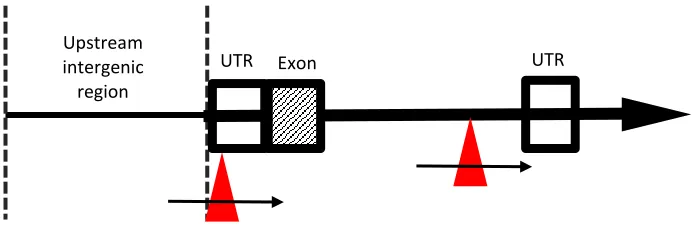
Figure 1.4. Locations of P-element insertions in previously characterized Mekk1
deficiency strains.
Open box: untranslated region (UTR); hashed box: exon (RB); thick
solid line: intronic region; thin solid line: intergenic region; red triangles: location of the
P-
element insertions; black arrows: orientation of the
P-
element. Schematic only shows
5’ end of
Mekk1
. Locations of insertions determined based on information from Gramates
et al. (2017).
UTR Exon UTR Upstream
The deficiency mapping was performed using three strains of
D. simulans
: FC,
199, and 216 (Moehring Lab, unpublished). Only one strain,
D. simulans
(FC), showed
the behaviour associated with
Mekk1
(Fig. 1.1), while the two strains 199 and 216 of
D. simulans
did not. When hybrid females with the
D. melanogaster
disrupted
Mekk1
copy were created with
D. simulans
(199 or 216), these females showed the same
behaviour as hybrids without the disruption, in other words they readily accepted
D. melanogaster
males. The phenotype changed if a disruption was present in
Mekk1
and
the parental male was
D. simulans
(FC). Therefore,
D. simulans
(199 and 216) can be
used to comparatively eliminate differences within
Mekk1
that may influence female
behaviour in
D. simulans
(FC). Although the location and dominance of the
species-specific alleles are known, further characterization of
Mekk1
is necessary to elucidate its
expression and how it contributes to the female’s behavioural phenotype.
It is evident that
Mekk1
is involved in stress response (Inoue et al. 2001), and is
also developmentally important (Huang et al. 2016). Although the physiological stresses
(including chemical and heat stress) are not the same as behavioural stress (being
exposed to an individual of another species), it is possible that
Mekk1
contributes to
female rejection behaviour in
D. simulans
through its characterized stress response
pathway (Inoue et al. 2001). As
Mekk1
is involved in regulating Hippo signaling during
development (Huang et al. 2016), it is also possible that
Mekk1
is differentially regulated
between species and contributes to differences in organ growth. If these differences in
organ growth influence adult behaviour in a way that affects mate discrimination, it is
possible that the role of
Mekk1
during development also influences adult female rejection
response (Inoue et al. 2001) may explain mechanisms of how
Mekk1
contributes to adult
behaviour, there is also high-throughput expression data indicating that
Mekk1
is highly
expressed in the adult female ovary (Gramates et al. 2017). In rats, physiological
feedback from organs other than the brain can influence behaviour (Levine and Mullins
1964). Expression of
Mekk1
at high levels in the ovary may contribute to female rejection
behaviour in
D. simulans
(FC).
1.7
Hypotheses and Objectives
1.7.1
Overall Objective
The objectives of this study can be broken down into characterization and
behavioural assays (Table 1.1). Both objectives contributed to the goal of understanding
how
Mekk1
influences female behaviour, and how
Mekk1
contributes to reproductive
isolation between two species of
Drosophila
. Objectives will be outlined, as well as
hypotheses for each specific goal (sections 1.7.2-1.7.7).
1.7.2
Sequencing characterization
Originally, the
Mekk1
hybrid behavioural assays were carried out with two
specific strains of
Drosophila
:
D. simulans
(FC) and
D. melanogaster
(BJS). These two
strains were sequenced for
Mekk1
, and
Mekk1
was also sequenced in
D. simulans
(199
and 216). The sequencing data may yield insight into whether certain regions of the gene
are diverged between
D. simulans
(FC) and the other three strains (
D. simulans
199 and
216, and
D. melanogaster
BJS).
The sequencing analyses encompassed the gene region as a whole, focusing on
specific regions from the 3’ end of the upstream gene (
CG7718
in
D. melanogaster
and
coding regions were analyzed and compared to determine if there may be coding
differences (which correspond to differences in amino acid sequence) that are responsible
for the behaviour. Non-coding regions, including the promoter, were analyzed to
determine if there is a regulatory element contributing to the behaviour.
1.7.3.
Characterizing
Mekk1
transcript expression
It is possible that
Mekk1
transcript expression is regulated by something other
than a cis-element characterized through sequencing (such as the promoter region). I used
RT-PCR to measure relative overall transcript levels of
Mekk1
. It is also possible that
even if there are large differences in a promoter region sequence that these differences do
not contribute to a difference in gene expression levels. In a previous study by Graze et
al. (2009) there were statistically insignificant differences between the pure species, and
hybrid
Mekk1
expression when assessed by qPCR. The first reason
Mekk1
expression
will be revisited is to examine if the trends of transcript regulation between species are
consistent with Graze et al. (2009), specifically looking at the two strains of interest for
this study. It is clear that the difference in
Mekk1
that contributes to female rejection
behaviour in
D. simulans
is strain-specific (Moehring Lab, unpublished), and the study
by Graze et al. (2009) did not use the same strains as those being characterized here.
A secondary issue is that Graze et al. (2009) did not examine each of the two
Mekk1
transcripts individually. The data were pooled and presented as one gene (
Mekk1
)
rather than each of the transcripts (RB and RD/RC; Gramates et al. 2017). Examining
each transcript individually may give a more informative idea of how
Mekk1
is regulated.
The difference in behaviour may be related to overall
Mekk1
expression, or related to just
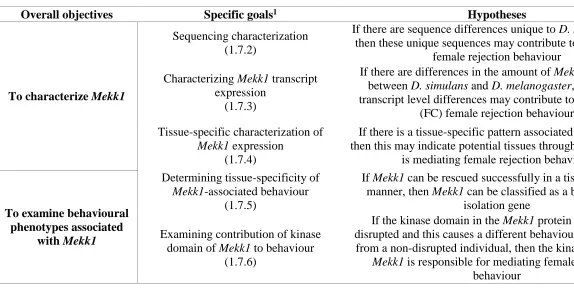
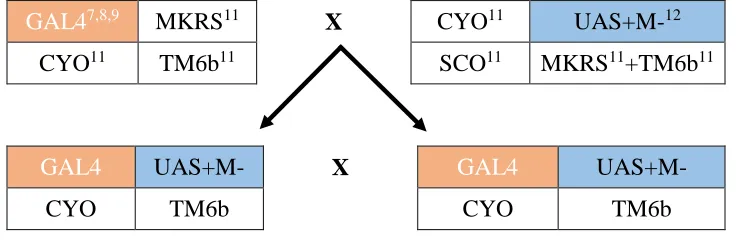
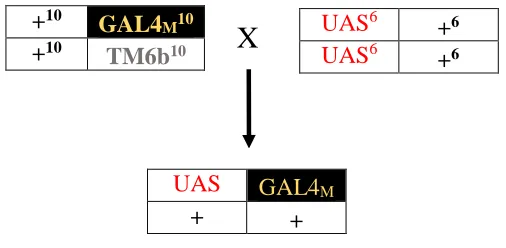
Table 1.1. Summary of objectives and hypotheses.
1