Redesign of the Pre-operative process
A quantitative modeling and optimization study
on process improvements in Isala klinieken, Zwolle
A study on possible process improvements in the
pre-operative process in Isala klinieken, Zwolle
Jeroen Schoenmakers December 2008
Master’s thesis
Industrial Engineering & Management Production & Logistics Management University of Twente, Enschede, The Netherlands
Department of Operational Methods for Production and Logistics Faculty of Management and Governance
University of Twente
Care Group Operating Room & Intensive Care Isala klinieken
Location Weezenlanden Groot Wezenland 20 8011 JW Zwolle
Supervisors: Dr. ir. E.W. Hans
University of Twente, School of Management and Governance Center for Healthcare Operations Improvement & Research (CHOIR) Dr. ir. M.R.K. Mes
University of Twente, School of Management and Governance B. van den Akker
- i -
Summary
Like many other hospitals, Isala klinieken organizes pre-operative screening for surgical patients in an outpatient clinic (PAC). Isala klinieken operates at three locations: two hospitals, “Sophia” and “Wee-zenlanden”, and one field facility in Kampen. At each location a preoperative screening clinic is present. The screening process involves a visit to the secretary, doctor’s assistant, anesthesiologist, and pre-anesthesia nurse. The pre-anesthesia evaluation clinic receives inflows from almost all specialty departments and is perceived as a potential bottleneck in the pre-operative process, influencing the overall hospital efficiency. Most patients get a screening appointment at the specialty department, and are screened on another day. Increasing waiting times, long access times, non-screened patients, and increasing workload, demands for an improvement in the design and control of the pre-operative process.
In the current design, patients are planned based on their specialty type. All patients are scheduled on 10-minute appointment slots. The appointment schedule slots are divided over more than 20 different slot types. This makes the appointment schedule inflexible to variations in screening demand. To get insight in the actual duration of the screening processes of the PAC we have performed a time registra-tion project. From the data, we show that there is no relaregistra-tion between specialty type and the duraregistra-tion of the anesthesiologist screening. Furthermore, the appointment slot length of 10 minutes is not long enough for a part of the patient mix. We propose to plan patients based on ASA classification [ASA, 2002] (See also Appendix C), since this parameter is correlated to the screening duration. We propose an appointment schedule consisting of 10 and 15-minute slots. The increased workload, long access time, and non-screened patients are also contributed to the shortage of capacity: the number of weekly available appointment slots is smaller than the average number of weekly performed surgeries. The hospital management sees an opportunity to screen patients on basis of walk-in at the PAC. We take this into account in our analysis.
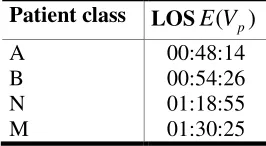
By using a multi class open queuing network model (OQN), we further determine the performance, considering length of stay (LOS), utilization rates, and workload, in the current pre-operative process. The model shows an average LOS of 45-90 minutes depending on the patient class. A large part of this LOS is waiting time. A more important result of this analysis is the robustness of the design. We show that the current design is very sensitive to increased demand and changes in anesthesiologist’s working speed. An increase in demand of 10 %, leads to an almost doubled average LOS. A decrease of 10 % in anesthesiologist’s working speed leads to an increase in average LOS of 35 minutes. This is unac-ceptable.
Through the analysis of the current design, we develop design and control interventions to improve the performance. Again, we use queuing models, but also event-based simulation models to analyze the performance in a dynamic setting, with varying patient demand. We develop three interventions:
1. Appointment screening based on ASA classification.
We divide the appointment schedule in 10 and 15-minute slots. ASA 1+2 patients are planned in 10-minute slots, ASA 3+4 patients are planned in 15-minute slots. This system requires six hours of extra capacity per week.
2. Screening based on patient walk-ins
- ii -
3. The use of a nurse practitioner (NP) in busy hours.
In the walk-in design screening demand fluctuates. In some periods the workload increases. A possibility to deal with this temporarily increased demand is the use of a nurse practitioner, who is allowed to screen ASA 1+2 patients.
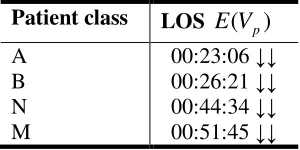
In the analysis of these interventions, we show that both an appointment system based on ASA classi-fication and a walk-in system perform better than the current design. Length of stay (LOS) decreases with about 40 % in both system designs. System robustness improves considerably in both systems. Especially an appointment system based on ASA classification shows robust results: an increase in demand of almost 20 % leads to an average increase in LOS of 20%. With a decreased anesthesiolo-gist’s speed of 25 %, the average LOS is 45 minutes, which is shorter than in the current design. The improved performance in both systems is partly due to the increase in capacity, but a comparison with the current design with increased capacity also gives better performance for both systems.
In a stakeholder analysis we show the impact of an appointment system and a walk-in system on all stakeholders. From this analysis fundamental questions arise, concerning the performance all stake-holders find acceptable and the costs they are willing to make for this performance. The answers to these questions influence the choice for one of both systems.
To implement one of the designed interventions some changes are necessary. An appointment system requires fewer changes, since the current system already works with appointments. The main change is to plan patients on ASA class instead of specialty type. This requires a new appointment schedule. For a walk-in system, we recommend changes based on the main changes described by Murray (2003). The most important issue is to predict the demand for PAC screening and adapt the capacity over time. This can be done by making service level agreements with the outpatient departments about the outpa-tient consultation hours and the expected number of screenings, six weeks in advance. By making agreements with all outpatient departments the demand can be predicted over time, and PAC capacity can be set accordingly.
- iii -
Samenvatting
Zoals veel andere ziekenhuizen, organiseert de Isala klinieken de preoperatieve screening voor chirur-gische patiënten in een polikliniek. Isala klinieken opereert op drie locaties: twee ziekenhuizen, “Sop-hia” en “Weezenlanden”, en een polikliniek in Kampen. Op iedere locatie bevindt zicht een preopera-tieve polikliniek. Het screeningsproces bestaat uit een bezoek aan een secretaresse, doktersassistent, anesthesioloog, en een preoperatief verpleegkundige. De polikliniek ontvangt patiënten van bijna alle specialismen en is een potentiële bottleneck in het preoperatieve proces, invloed hebbend op de alge-hele efficiency van het ziekenhuis. De meeste patiënten maken een afspraak voor screening op de po-likliniek van het specialisme, en worden gescreend op een andere dag. Toenemende wachttijd, lange toegangstijd, niet-gescreende patiënten, en toenemende werkdruk, vraagt om een verbetering van het ontwerp en de sturing van het preoperatieve proces.
In het huidige ontwerp worden patiënten gepland op basis van het behandelend specialisme. Alle pa-tiënten worden gepland op afspraak-slots van 10 minuten. De afspraak-slots zijn verdeeld over meer dan 20 verschillende slottypes. Dit maakt het schema inflexibel voor variatie in de vraag naar scree-nings. Om een goed inzicht te krijgen in de werkelijke duur van het screenings proces op de preopera-tieve polikliniek hebben we een tijdsregistratie project uitgevoerd. Vanuit deze data laten we zien dat er geen relatie is tussen het behandelend specialisme en de screeningsduur bij de anesthesioloog. Ver-der blijkt dat de geplande afspraaklengte van 10 minuten niet lang genoeg voor een deel van de patiën-ten. Wij stellen voor om patiënten op basis van ASA classificatie te plannen [ASA, 2002] (Zie ook Appendix C), omdat deze parameter wel gecorreleerd is met de screeningsduur. Hiervoor stellen wij een afspraakschema voor met 10 en 15-minuten afspraak-slots. De toegenomen werkdruk, lange toe-gangstijd, and niet-gescreende patiënten kan ook worden toegedeeld aan het tekort aan capaciteit: het aantal wekelijks beschikbare afspraak-slots is kleiner dan het wekelijks aantal uitgevoerde operaties. Het ziekenhuis management ziet in een inloopsysteem een oplossing voor de preoperatieve polikli-niek. Wij nemen dit mee in ons onderzoek.
Door het gebruik van een multi-klasse open wachtrij netwerk model (OQN) onderzoeken wij verder de prestaties van het huidige ontwerp, kijkend naar de totale doorlooptijd op de polikliniek (LOS), en bezettingsgraad en werkdruk van het personeel. Het model laat zien dat de gemiddelde doorlooptijd 45-90 minuten is, afhankelijk van de patiëntklasse. Een groot deel van deze doorlooptijd is wachttijd. Een nog belangrijkere uitkomst is de robuustheid van het ontwerp. We laten zien dat het huidige ont-werp erg gevoelig is voor toegenomen vraag en verandering in the werksnelheid van de anesthesio-loog. Een toename van 10 % in vraag, leidt tot een verdubbeling van de gemiddelde doorlooptijd. Een afname van 10 % in de werksnelheid van de anesthesioloog leidt tot een toename van de doorlooptijd van 35 minuten. Dit is onacceptabel.
Door de analyse van het huidige ontwerp, hebben we interventies ontwikkeld om de prestaties te ver-beteren. Om de interventies te analyseren gebruiken we wachtrij modellen, maar ook simulatiemodel-len om de prestaties in een dynamische omgeving met variërende vraag te meten. We ontwikkesimulatiemodel-len drie interventies:
1. Screening op basis van een afspraak gebaseerd op ASA classificatie.
- iv -
2. Screening op basis van inloop
ASA 1+2 patiënten worden gezien op basis van inloop. Door beperkte capaciteit, wordt 70 % van alle ASA 3+4 patiënten gezien op basis van een afspraak. De andere 30 % wordt gezien op basis van inloop. We nemen aan dat een extra consultatie dag wordt gehouden op locatie Weezenlanden op dinsdag, omdat dit een dag is met een hoge mate van inloop.
3. De inzet van een nurse practitioner (NP) in drukke uren
In een system ontwerp met inloop fluctueert de vraag. In sommige periodes neemt de werk-druk toe. En mogelijkheid om om te gaan met deze tijdelijk toegenomen vraag, is de inzet van een nurse practitioner die ASA 1+2 patiënten mag screenen.
In de analyse van deze interventies laten we zien dat zowel een afspraak system gebaseerd op ASA classificatie, als een inloop system beter presteert dan het huidige system ontwerp. De doorlooptijd neemt af met ongeveer 40 % in beide system ontwerpen. Systeem robuustheid neemt aanzienlijk toe in beide systemen. Vooral een afspraak systeem gebaseerd op ASA classificatie laat robuuste resultaten zien: een toename van de vraag van bijna 20 % leidt tot een gemiddelde toename van 20 % van de gemiddelde doorlooptijd. Een afname van de werksnelheid van de anesthesioloog van 25 % leidt tot een gemiddelde doorlooptijd van 45 minuten, die korter is dan in het huidige systeem ontwerp. De verbeterde prestaties in beide systemen kan gedeeltelijk worden toegewezen aan de extra capaciteit, maar een vergelijking met het huidige systeem inclusief extra capaciteit laat zien dat beide systemen nog steeds beter presteren.
In een stakeholders analyse laten we zien wat de invloed is van een afspraak system en een inloop systeem op alle stakeholders. Uit deze analyse komen fundamentele vragen naar voren, betreffende de prestaties acceptabel voor alle stakeholders en de kosten die zij er bereid zijn voor te maken, die de keuze voor een van de twee systemen beïnvloedt.
Om een van beide systemen te implementeren zijn veranderingen noodzakelijk. Een afspraaksysteem vergt minder veranderingen, omdat het huidige system ontwerp al werkt op basis van afspraken. The hoofdzakelijke verandering die moet plaatsvinden is het plannen van patiënten op basis van ASA klas-se in plaats van behandelend specialisme. Dit vereist een nieuw afspraakschema. Voor een inloop sys-teem, raden we een aantal veranderingen aan die gebaseerd zijn op de punten beschreven door Murray (2003). Het belangrijkste punt is om de vraag naar patiënten screenings te kunnen voorspellen om de capaciteit hierop af te kunnen stemmen. Dit kan gedaan worden door het maken van afspraken (service level agreements) met de specialismen voor de komende zes weken, betreffende de poli-uren van de specialismen and de verwachte patiëntenstroom van de polikliniek naar de preoperatieve kliniek. Door deze afspraken met de specialismen kan de vraag naar screenings over de tijd worden voorspeld, en kan de capaciteit in de preoperatieve kliniek daarop worden afgestemd.
- v -
Abbreviations and terminology
ASA Score A six category physical status classification system for assessing a patient before surgery, established in 1963 by the American Society of Anesthesiologists (ASA) [ASA, 2002]. See also Appendix C.
Eridanos Electronic patient record system developed in-house at Isala klinieken.
IVAS Electronic billing system, in which all consultations are registered to handle the financial side of a consultation. Used to find the number of screenings.
LOS The length of stay (LOS) is defined as the total duration a patient is present at the PAC for one screening.
MCC Electronic planning system of the operating theatre at Isala klinieken.
Nurse Practitioner A nurse practitioner is a registered nurse who has completed advanced nursing education and training in the diagnosis and management of common medical conditions [Nurse Practitioner, 2008].
OPD Outpatient department. Department where the specialist sees patients.
PAC Panesthesia evaluation clinic. The PACs of Isala klinieken are the central topic in this re-search.
- vii -
List of symbols
Symbol Definition
ci The number of available staff at station i
ei Effective capacity of station i
E(L) Total number of patients present in the system
E(Li) Mean number of patients at station i
E(LQ,i) Mean number of patients in the queue at station i
E(Si) Mean average consultation time at station i
E(Sp,i) Mean consultation time of patient class p at station i
E(Vp) Mean length of stay at the PAC for patients of patient class p
E(Wq,i) Mean waiting time at station i ηp Arrival rate of patient class p λi Aggregated arrival rate at station i
N Total number of patients
np Number of patients of patient class p
P3,4 Fraction of the patients at station 3 flowing to station 4
Qp,1 Portion of arrival flow into station 1 originating from arrival flow patient class p ρi The utilization rate of station i
ρi,r The utilization rate of station i for patient class p
SCVA,i Squared coefficient of variation of the arrival rate at station i
SCVA,p,1 Squared coefficient of variation of the arrival rate of patient class p at station 1
SCVD,I Squared coefficient of variation of the departure process at station i
SCVS,i Squared coefficient of variation of the consultation time at station i
SCVS,p,i SCV of the consultation time of patient class p at station i
- ix -
Preface
By finishing this thesis, I have completed a project and experience that I have enjoyed very much. Maybe even more important, I have completed my Master Industrial Engineering and Management at the University of Twente. After six years (and a few months) of studying in Enschede, I close another chapter in my life. A chapter full of experiences: both study and non-study related. I found my passion for sailing at D.Z. Euros (the main reason for some delay in my study progress), learned how to organ-ize in the board of Euros, learned a lot about baggage handling during my Bachelor Thesis at Amster-dam Airport Schiphol, and finally got to know why I chose for Industrial Engineering and Manage-ment in the first place, during the last two years of Master courses (with a big influence by Erwin Hans! Thanks for that!).
It were the Master courses of the department OMPL that made it clear for me I really wanted to do a graduation project involving logistical planning, modeling, simulation, and programming. With this in mind, I found a very interesting research project, through Erwin Hans, at the Isala klinieken. The con-tent of this research is described in this report. I am proud of the research and the results! I thank all the people without whom I could not have completed this research. The people below I thank in par-ticular.
First of all, I would like to express my gratitude to Erwin Hans and Martijn Mes, who were willing to become my supervisors. They helped me with working systematically, creating clarity in my mind when I needed it, and critically reviewing my work. I look back on a very enjoying collaboration, which has learnt me a lot for my future work.
I would not have been able to perform this research without the help of Bernd van den Akker. He made it possible for me to do my research at Isala klinieken and was willing to be my supervisor on behalf of the hospital. I thank him for giving direction to my research and introducing me to people in the organization. Dennis Buitelaar also played an important role in this. The daily lunches, coffee breaks and interesting discussions about hospital management in general were very amusing. Bernd and Dennis, thanks for that! I also thank my roommate Ingmar for the fun moments we had, in be-tween work, discussing the stock market, figuring out tactics during the virtual Volvo ocean race (in-siders know what I am talking about..), and listening to the daily radio shows.
A lot of people in the hospital have helped me in understanding the preoperative process and have helped me gather the necessary data for this research. Dr. Snel, Sjoerdtje Bergmans, and Simone Run-hart have helped me on behalf of the pre-anesthesia clinic, providing a lot of information, and helping setup a time registration project. Without their help, a lot of crucial information would have been a lot harder to gather. Niels van Dam has provided a lot of the data I have used. Thank you! I thank Maartje Zonderland from the Leiden University Medical Centre for her input on my queuing models.
I will always look back at my studying life with a smile. Thanks to all my friends at Euros, I have spent a lot of time on the water, competing in European and World championships, and crossing the English Channel several times by sail. This was fantastic and I will certainly stay involved with Euros. Thanks to all my friends from Hoogeveen, for the nights on the town in Enschede, and the unforgetta-ble skiing trips. Of course, this great time would not have been possiunforgetta-ble without the help of my par-ents, sister and brother. I thank my parents for giving me the possibility to study in my own way, al-ways helping me when necessary. Last but certainly not least, I thank my girlfriend Lisette for all her help!
- xi -
Contents
Chapter 1 Introduction ... 1
-1.1 Background ... 1
-1.2 Problem description ... 2
-1.3 Research objective and approach ... 3
-Chapter 2 Literature review ... 5
-2.1 Framework for hospital planning and control ... 5
-2.2 Hospital patient flow modeling ... 6
-2.3 Origin and organization of preanesthesia evaluation clinics ... 7
-2.4 Patient scheduling and the concept of open access ... 9
-2.5 Implications for this research ... 11
-Chapter 3 Current preoperative process ... 13
-3.1 Process description ... 13
-3.2 Process control ... 18
-3.3 Current performance ... 20
-3.4 Conclusions current performance, problem analysis ... 23
-Chapter 4 Solution approach ... 27
-4.1 PAC design interventions ... 27
-4.2 Introduction of a queuing model ... 28
-4.3 Introduction of an eventbased simulation model ... 33
-4.4 Configuring the models ... 35
-Chapter 5 Analysis of current design and interventions ... 41
-5.1 Results current design ... 41
-5.2 Intervention 1: planning with ASA classification ... 44
-5.3 Intervention 2: patient walkins ... 47
-5.4 Intervention 3: use of nurse practitioners ... 55
-5.5 Conclusions ... 57
-Chapter 6 Implementation ... 61
-6.1 Stakeholders analysis ... 61
-6.2 Walkin implementation ... 63
-6.3 Conclusions ... 65
-Chapter 7 Conclusions and recommendations ... 67
-- xii --
7.2 Recommendations ... 68
References ... 71
Appendices ... 75
-A. Determining lateness distribution ... 77
-B. Schedules ... 79
-C. ASA classification ... 81
-D. Adjustments for the queuing model ... 83
-E. Consultation time distribution ... 85
-F. Arrival pattern for walkin design ... 89
-G. Simulation model with dynamic arrival rates ... 91
-H. Proposed preoperative process ... 93
1
-Chapter 1
Introduction
Introduction
Like many other hospitals, Isala klinieken organizes pre-operative screening of patients scheduled for surgery in an outpatient clinic. This clinic receives patient inflows from almost all specialty depart-ments and is a potential bottleneck in the pre-operative process, influencing overall hospital efficien-cy. Increasing waiting times for patients and increasing workload for staff demands for an improve-ment in the design and control of the pre-operative process. Using operations research techniques, like queuing techniques and discrete-event simulation, we analyze the pre-operative process, leading to recommendations for the optimized control and design of this process.
Keywords: Operations research, multi class open queuing network, simulation, pre-operative anesthe-sia clinic, patient flow
This chapter describes the background of our research, followed by the context in which we perform our experiments. In Section 1.2 we elaborate on the problem, leading to the research objective and research questions.
1.1
Background
This research was initiated by the Operating Room & Intensive Care (OR&IC) department of Isala klinieken Zwolle. The management is confronted with inefficiency in the pre-operative process lead-ing to long access times and high workload for staff. In today’s settlead-ing of a new social healthcare sys-tem, ageing society, long waiting lists and increasing competition between healthcare institutions [Hans, Nieberg, van Oostrum, 2007], efficiency within the hospital becomes more and more impor-tant. Our research focuses on the design and control of the pre-operative process at Isala klinieken.
1.1.1
Isala klinieken
In 1998, Isala klinieken Zwolle was formed by the merger of two hospitals: the hospital “Sophia” and the hospital “Weezenlanden”. Isala klinieken is the largest non-academic hospital in The Netherlands with 5.900 employees (over 3900 FTE) and 1.000 beds. Each year, Isala klinieken attends to more than 475.000 outpatient visits and 40.000 admissions. The mission of the hospital is to “be an innova-tive top-class hospital offering high quality care for a favorable price”. Aside from primary care, Isala klinieken offers top clinical care and serves as an educational hospital [Isala, 2007a].
1.1.2
The pre-operative process
- 2 - Introduction
understanding of the physical condition of the patient. To decrease the risk of surgery for the patient as much as possible the anesthesiologist proposes additional measures to improve the physical condition of the patient and discusses the surgical procedure and the anesthesia. The nurse consult is intended to discuss postoperative matters with the patient, such as home care. In the literature, the pre-operative department is often referred to as the ‘pre-anesthesia evaluation clinic’ (PAC). This term does not entirely apply to our setting, since the pre-operative department also performs the nurse consult which is not part of the pre-anesthesia evaluation. Nevertheless, we use the term ‘pre-anesthesia evaluation clinic’ referring to the operative department. After the patient is approved for surgery by the pre-operative department the patient is put on a waiting list and scheduled for surgery. In some cases the patient is admitted on the ward before surgery. A pre-operative screening is valid for all surgeries per-formed on the patient within half a year.
General
Figure 1.1: Scope of the research within the clinical path
1.2
Problem description
In the past, several optimization efforts have been made in the hospitals of Isala klinieken, focusing on the processes within a certain department. Studies including more than one additional department ei-ther upstream or downstream have thus far not been performed in Isala klinieken. Although optimiza-tion studies may lead to performance improvements locally, it does not necessarily improve the per-formance of the clinical path as a whole. The problems in the pre-operative process are caused by the synchronization in the clinical path as a whole.
In February 2007, the Inspection of Healthcare (IGZ) published a report describing the flaws of the pre-operative processes in Dutch Hospitals [IGZ, 2007]. The main conclusions are:
• There is little or no standardization of the procedures involved in the provision of information.
• The transfer of information is inefficient and there is no full cooperation between all care pro-viders.
• Communication with the patient is too limited and is inadequately reported in the medical file.
• The manner in which medical files are completed and the related reporting procedures are ex-tremely varied and incomplete.
• Early planning of the date of surgery on the part of the treatment team reduces the complexity of the process and offers immediate clarity with regard to logistics.
Research objective and approach - 3 -
processes. As a consequence, the PAC is forced to screen more patients in a shorter time frame. The way the capacity of the pre-operative department in the current design is used is no longer sufficient. A redesign of the pre-operative process is deemed necessary. We formulate the main problem that is relevant for this research:
1.3
Research objective and approach
From the analysis the Isala project team performed in 2007, several recommendations have been made. We take these recommendations into accounts as a starting point for this research. The recom-mendations made by the project team are:
• To develop connections between information systems such that correct and automatic infor-mation transfer between disciplines in the pre-operative process is guaranteed.
• To facilitate the steering function of the main physician in the pre-operative process through agreements and aforementioned connections.
• To develop a clear admission and pre-operative policy towards inpatients and outpatients and define clear moments in the pre-operative process of informing the patient.
• To synchronize the planning and capacity of the PAC with the planning and capacity of the operating rooms.
• To redesign the pre-operative process and the control of this process in such a way that the fol-lowing steps are performed in one patient visit for at least 80% of all surgical patients:
- The OPD consult
- The pre-anesthesia evaluation consult - The nurse consult
- The date of the patients’ surgery
In practice this means the pre-anesthesia evaluation consult and the nurse consult should be based on open access schedules.
Our research takes a logistical perspective, hence we focus on the last two recommendations. As such, we have the following research objective:
To achieve performance improvements of the pre-operative process by effective and efficient capacity management
To reach this objective we pose the following research questions:
1. How is the pre-operative process organized, and what is the current performance?
We define and map the current pre-operative process, identify patient groups and analyze the duration of the process steps. In collaboration with stakeholders in the hospital we define performance meas-ures. By gathering and analyzing data, we can provide insight in the current performance of the pre-operative process. This is discussed in Chapter 3.
2. What suitable design and control interventions can be developed for the pre-operative process?
From the literature discussed in Chapter 2, input from the stakeholders in the hospital, and brainstorm-ing we develop interventions that might improve performance of the pre-operative process (Chapter 4). We first concentrate on analyzing and streamlining the capacity demand and planning. Second, we focus on the analysis of a possible open access scheduling setup (Chapter 5).
- 4 - Introduction
3. What quantitative modeling approaches are suitable for the analysis of proposed design and
control interventions?
To be able to analyze several design and control interventions we use mathematical modeling tech-niques. Based on the interventions developed, several modeling techniques may be necessary (Chapter 4).
4. What is the performance of the various developed interventions?
We evaluate the interventions developed through suitable modeling approaches. We describe the mod-el and the assumptions made while modmod-eling and the input in Paragraph 4.2 and Paragraph 4.3. Fur-thermore the output of the model is described and the model is validated (Chapter 5). From the compu-tational results we can evaluate the interventions, draw conclusions, and give recommendations.
5. How can we implement the developed interventions?
We advise the hospital how to implement the developed interventions and realize actual performance improvements (Chapter 6).
- 5 -
Chapter 2
Literature
review
Literature review
This chapter reviews the literature studied. Paragraph 2.1 introduces a framework in which we can position the capacity and planning issues. Paragraph 2.2 reviews articles in which healthcare models over several departments are developed. Furthermore, we take a closer look at the concept of pre-operative screening and applications described in the literature (§2.3), and scheduling concepts, such as open access (§2.4). The application of simulation techniques is discussed in several articles over all paragraphs. The mentioned literature and described concepts form a basis for our research.
2.1
Framework for hospital planning and control
Research in hospital environments is diverse and complex. To determine the position of this research we introduce the hospital planning and control framework (Figure 2.1) proposed by Hans, van Hou-denhoven, and Wullink (2006). Horizontally four categories of managerial areas are defined: medical planning, resource capacity planning, material coordination, and financial planning. Medical planning deals with the coordination and planning of medical activities and is done by healthcare professionals. Resource capacity planning focuses on the planning and control of resources such as staff, ward beds, etcetera. Material coordination is the coordination of hospital materials. Financial planning deals with the coordination of financial aspects of the hospital processes. This research focuses on resource ca-pacity planning. Decisions made in the medical planning area form restrictions for this research.
Figure 2.1: Framework for hospital planning and control [Hans, van Houdenhoven & Wullink, 2006]
de-- 6 de-- Literature review
cide how capacity is used and divided over different patient groups. These decisions can be evaluated on a shorter time frame (years or months) and are made by the care team managers and the medical professionals. Operational decisions are made for the short-term (days-weeks). The operational level distinguishes offline and online decisions. Offline decisions concern patient and staff scheduling. On-line decisions deals with the daily coordination of processes, in which unanticipated events, such as emergency surgeries occur. These decisions are made by the medical professionals. The articles dis-cussed in this chapter focus on resource capacity planning.
2.2
Hospital patient flow modeling
In 1999, Jun, Jacobsen, and Swisher completed a survey of discrete-event simulation models in health care citing over 100 articles and discussing the various applications in clinical settings. They focus on articles that analyze single of multi-facility healthcare clinics. In their survey, they conclude that there are a limited number of articles that report on using simulation to study complex integrated systems. They suggest this is due to the complexity and resulting data requirements of the simulation model, and the necessary resource requirements. Studies in multi-facility models they mention are [Rising et al., 1973; Aggarwal & Stafford, 1976; Hancock & Walters, 1984; Swisher et al., 1997].
Swisher et al. (1997) examine the construction and implementation of a simulation model that sup-ports the design and development of the Queston Physician network in the United States. This network consists of clinics located throughout the United States. The network manages all non-medical opera-tions for the clinics, such as patient scheduling and billing. The model consists of generic building blocks which represent the clinics. Accordingly, generic patient groups and flows are defined. The model aims to maximize the utilization of resources. Through the use of several scheduling rules, ex-periments have been performed. The model shows that the clinical environment is very sensitive to small changes in patient mix and scheduling rules. Our model evaluates scheduling rules and changes in patient mix.
In 2007, Fletcher and Worthington performed a survey under several authors and a literature review in which they try to define the characteristics of generic hospital models. Their literature review found many examples of models of individual departments, but a much smaller number of multi-departmental models. From the results of the survey and literature review they define four levels of modeling in descending order of abstraction and transportability: (1) a broad, generic model that is not setting specific and can be transferred across industries, (2) a generic framework that could be devel-oped into a toolkit, (3) a setting-specific generic model that can be used by any provider of the same service, and (4) a setting-specific model that is not transportable to another provider of the same ser-vice. We aim to develop a setting-specific generic model over multiple departments.
Origin and organization of pre-anesthesia evaluation clinics - 7 -
As becomes clear by the literature reviews of Jun, Jacobsen and Swisher (1999), and Fletcher and Worthington (2007), a lot of examples can be found of models of individual departments. The per-ceived importance and influence of these individual departments on the hospital as a whole are often discussed. Belien, Deulemeester and Cardoen (2006) state that the operating room can be seen as the engine that drives the hospital. Outpatient clinics can improve patient satisfaction when run efficiently [Huang, 1994]. Unlike most departments of a hospital, which are designed to treat patients with par-ticular disorders, diagnostic departments are utilized by almost all patient categories which enter the hospital. Hence, efficient utilization of these departments is a necessary condition for overall hospital efficiency. O’Kane (1981) emphasizes this for a radiology department. A PAC can be viewed in the same way.
We aim to include the relationships between the OPD, PAC and OR capacity planning and investigate the influence of these relationships on the performance of the pre-operative process as a whole.
2.3
Origin and organization of pre-anesthesia evaluation clinics
In this paragraph we discuss the concept of pre-anesthesia evaluation clinics and look at the literature discussing PAC design and control interventions. We take the ideas outlined in this literature into ac-count when developing interventions for the PAC at Isala klinieken.
The concept of pre-operative screening in an outpatient clinic was first described by Lee in 1949. The author states that the purpose of the clinic is “to examine and treat the patient, so that he/she arrives in the operating theatre as strong and healthy as possible”. The main advantage of opening a PAC is the improvement in the surgical preparation of the patient. The anesthesiologist evaluates the patient in an earlier stage and therefore can optimize the patient’s condition for surgery if necessary. He can also reassure patients about the surgery and discusses the anesthetic history. Lee also argues that the anes-thesiologists would have a further contribution to make to the recovery and rehabilitation of the patient after surgery if they make themselves competent to run such a department efficiently.
Frost (1975) describes the experiences and results of a PAC in the Bronx Municipal Hospital Center which started in 1972. The author states that the reasons for founding a PAC are reducing hospital length of stay for the patient, and reducing hospital costs. Experiences are positive, both pre-operative and total length of stay have been significantly reduced, patients feel better informed about their anes-thesia, bed utilization has improved, and less surgery cancellations occur.
It was not until the 1980s that there was a paradigm shift to an outpatient pre-anesthetic screening [Orkin, 1996]. This shift is attributed to changes in health costs reimbursement in the United States and the growing popularity of elective and same-day admission surgery.
The most important reasons to found a PAC, identified by Lew, Pavlin, and Amundsen (2004), are reducing the expectation of death during surgery, increasing the quality and decreasing costs of peri-operative care, and returning the patient to desirable functioning as quick as possible. Pollard (2002) argues that with the founding of a PAC cost decreases are achieved by less testing and consultation. Excessive testing and consultations lead to patient injuries and significant delays. However, the largest gains in cost savings are associated with shorter lengths of stay.
com-- 8 com-- Literature review
pared to elective patients who received their anesthesia evaluation within 24 hours before surgery. Both groups had similar OR cancellation rates.
At the annual meeting of the American Society of Anesthesiologists in 2005, Holt et al. (2007) held a survey to get an overview of the overall use and perceived effectiveness of PACs. The survey shows that PACs are common in healthcare institutions (69% of the respondents work at a healthcare institu-tion which has a PAC). They conclude that further research concerning PACs is needed, since the day-of-surgery delays remain relatively common due to patient information transfer failure and lack of consensus on criteria for surgical readiness.
Lew et al. (2004) argue that it would be cost effective to evaluate only patients who truly require it. The health screening questionnaire has been validated as a useful tool for determining the need and timing for PAC evaluation, the level of expertise required in the evaluation and the risks of anesthesia [Badner et al., 1998]. In this way patients can be classified into three categories: requiring no further review or review via telephone; requiring pre-anesthesia evaluation at the clinic; requiring review of questionnaire by an anesthesiologist, pending further action. In some settings, this has allowed up to 90% of the surgical patients to bypass the PAC.
Lew et al. see a trend towards anesthesiologist-directed, nurse-led pre-anesthesia evaluation. This trend is mainly driven by cost effectiveness. Studies by Fischer (1996) and Pollard, Zboray and Masse (1996) show that anesthesiologist-directed, but nurse-led PACs are feasible without compromising patient safety. In these clinics the health screening questionnaire plays a valuable role in enhancing patient safety by identifying patients who require further evaluation and optimization by an anesthesi-ologist or specialist [Koay & Marks, 1996].
With the growing use of PACs more literature about the implementation and experiences has been written. Fischer (1996) describes the development and implementation of a PAC at the Stanford Medi-cal Center in California, The United States. In this mediMedi-cal centre the surgeon refers the patient to the PAC if he has hesitations about the patient’s pre-operative status. Patients with ASA status 1 or 2 are evaluated by a registered nurse practitioner. The anesthesiologist evaluates patients of all ASA classi-fications. Results demonstrated a decrease in pre-operative consultations. Furthermore, the economic aspects of a PAC are discussed. Pollard, Zboray and Mazze (1996) extensively discuss the economic benefits of a PAC. Conway, Goldberg and Chung (1992) describe the results of the implementation of a PAC in the Toronto Hospital in Toronto, Canada. Again, the choice for referral to the PAC is made by the specialist and not seen as an obligatory examination before surgery. In other cases all patients are referred to the PAC [Klei et al., 2002; Rutten, Post & Smelt., 1995a; Frost, 1975]. Rutten, Post and Smelt (1995a) discuss the implementation of a PAC in hospital de Weezenlanden in Zwolle, The Netherlands. They especially study the effect of a PAC on the volume of laboratory and function tests, and on the pre-operative hospital days. The authors conclude pre-operative screening in a PAC leads to reduced volumes of laboratory test, ECGs and X-rays. Furthermore, it reduces the number of pre-operative hospital days and improves the anesthetic care. In a second article concerning the same hos-pital Rutten et al. (1995b) investigate patient satisfaction after the implementation of a PAC. Pre-operative screening in a PAC was preferred over the old situation by 56% of all patients who remem-bered the interview with the anesthesiologist. Klei et al. (2002) evaluate the possible effects of pre-anesthesia evaluation in a PAC at the University Medical Center Utrecht in Utrecht, The Netherlands. The main outcome measures were surgical cases cancelled for medical reasons, rate of same-day ad-mission, and length of hospital stay. They conclude that the introduction of a PAC lead to improve-ments on all three outcomes, although these improveimprove-ments were smaller than anticipated. Further ben-efits of a PAC are expected when the PAC is fully incorporated in existing practice patterns.
per-Patient scheduling and the concept of open access - 9 -
forms a first triage. The computer program scales patient from one to four (analogue to the ASA clas-sification) based on answers given by the patient. Patients with the lowest health risk undergo their pre-anesthetic evaluation on the day of surgery. All other patients are evaluated in the PAC. In the PAC only pre-operative evaluation is executed, optimization of patients for surgery is done elsewhere. The redesign resulted in a 34% increase in outpatient surgery, 49% decrease in pre-operative surgical delay resulting in shorter average length of stay, and a cost reduction. These results emphasize the benefits of a triage system.
With this research, we aim to contribute to the existing literature about PAC redesign, through the analyses of several design and control interventions. Most research uses one modeling technique to perform analyses. We use both queuing theory, and event-based simulation models to perform the analyses.
2.4
Patient scheduling and the concept of open access
Patient scheduling within the hospital has been subject of much research. The drive to reduce waiting time and access time for the patient and the efficient use of medical resources has lead to new patient scheduling techniques. Singh (2006) discusses the use of queuing theory in healthcare organizations. “Queuing theory application is an attempt to minimize the costs through minimization of inefficiencies and delays in the system”. These costs include tangible and intangible costs such as capacity costs and waiting costs. A trade-off between capacity and service delays will always be necessary.
Not much research has been performed concerning patient scheduling and appointment issues in PACs. Dexter (1999) and Edward et al. (2007) are two examples of research about patient scheduling in a PAC. Several articles are available that cover these issues in an outpatient context. Since the PAC has similarities with outpatient clinics these articles can be relevant.
In The Netherlands, several projects concerning patient scheduling have been set up by CBO, the Dutch quality institute for healthcare. They investigate possibilities to reduce access times and im-prove care for outpatient clinics [CBO, 2005]. In 2008 a similar project for diagnostic clinics started, such as radiology, the laboratory and the PAC [CBO, 2008]. Basic principles used in these projects are: (1) demand and supply synchronization taking seasonal influences into account, (2) delegation of tasks by the use of e.g. nurse practitioners, (3) minimizing the amount of consult types, and (4) stan-dardization of care [van der Voort, 2004]. An example of a successful implementation within this project is the general surgery outpatient clinic at Bernhoven hospital in Oss, The Netherlands. Access time reduced from 2 - 8 weeks to one week for new patients. Besides reduced access times, consulta-tion hours offer enough time to deal with emergency patients and prolonged consults without causing full waiting rooms and overtime [Bodegom et al, 2004].
Cayirli and Veral (2003) propose a framework for designing appointment systems. Designing an ap-pointment system can be broken down into a series of decisions regarding: (1) the apap-pointment rule, (2) the use of patient classification, and (3) the adjustments made to reduce disruptive effects of walk-ins, no shows and emergency patients. Choosing an appointment rule implies decisions about the block size (number of patients scheduled per appointment slot), the initial block (number of patients scheduled in the first appointment slot,) and the appointment interval. The PACs at Isala klinieken currently schedules with a (initial) block size of generally one (sometimes two) and an appointment interval of ten minutes. Patient classification can be used to sequence patients at the time of booking and/or to adjust appointment intervals bases on the characteristics of the patient. In practice, patient classification is often used to assign patients to pre-marked slots when they call for an appointment. This is the case at the PACs at Isala klinieken.
- 10 - Literature review
deal with these disruptive effects by adapting the appointment schedule for expected walk-ins. By analyzing the daily arrival patterns appointments were scheduled in periods of low walk-in rates. With this appointment schedule they vary the physician capacity over the hours of the day to determine the best physician schedule. Implementing this new appointment schedule leads to efficiency improve-ments: patients seen increased by 13.4 % with 5.1% fewer physician hours scheduled.
Several studies investigate appointment systems using queuing theory and simulation. These studies often focus on reducing idle time of healthcare professionals at the expense of increasing patient wait-ing time [Bailey, 1952; Fetter and Thompson, 1966; Visser & Wijngaard, 1979; Brahimi & Worthwait-ing- Worthing-ton, 1991]. Bailey and Welch (1952) propose to use an initial block of two, such that there are two patients present at the beginning of the session, and an appointment interval equal to the average con-sultation time to balance the professionals’ and patients’ waiting time.
The concept of ‘open access’ was first discussed by Murray and Tantau (2000). Open access, also referred to as ‘advanced access’ or ‘same-day scheduling’, has one very simple but challenging rule: do today’s work today. When all patients can be offered an appointment on the same day as their re-quest, backlog appointments can be reduced and waiting times can be minimized. The implementation of this concept in a primary care department for Kaiser Permanente in northern California, the United States, has revealed a reduction of the access time for patients from 55 days to one day. It also dramat-ically increased the odds of patients seeing their personal physician. To successfully implement an open access schedule, Murray and Berwick (2003) identify six specific changes medical practices must make: (1) balance demand and supply, (2) work down the backlog, (3) reduce the number of appointments, (4) develop contingency plans, (5) reduce and shape the demand for visits, and (6) in-crease the effective supply, especially of bottleneck resources.
Mallard et al. (2004) describe a pilot study implementing open access scheduling in one of the clinics of the Jefferson County Department of Health in Alabama in the United States. Problems identified were: high no-show percentage, long access times (1-3 months), and overbooking of physician’s sche-dules. In the pilot study 70 % or more of daily appointments were kept open for same-day scheduling. As a result of the changes waiting time decreased to 15 days, no-show percentages significantly de-creased, the number of new patients increased significantly, and the average provider productivity rate increased. According to the authors, the primary challenge for implementing open access scheduling relates to the radical nature of its requirements. Managers and physicians have always been accus-tomed to a system built around appointments and overbooking, where an indication of the sophistica-tion of the medical practice was reflected by the complexity of the appointment system [Pinto, Parente & Barber, 2002].
Giachetti et al. (2005) presents the preliminary results of an ongoing research project investigating the patient appointment scheduling for a dermatology outpatient clinic in Miami, Florida, the United States. They develop simulation models to assess an open access scheduling approach. The prelimi-nary results show a 50% reduction in throughput time. Ongoing work is performed to determine the best configuration of an open access scheduling policy.
Implications for this research - 11 -
2.5
Implications for this research
- 13 -
Chapter 3
Current pre-operative process
Current pre-operative process
This chapter describes the current pre-operative process. As we defined earlier the pre-operative process is the process of patients seeing a specialist in an outpatient clinic, visiting the PAC, and being planned for surgery.
In Paragraph 3.1 we give an extensive description of the process design, we give the patient mix, routing, and consultation duration. Paragraph 3.2 discusses the control of the process using the frame-work for hospital planning and control [Hans, van Houdenhoven & Wullink, 2006] discussed in Chap-ter 2. At a strategic level we discuss the available staff at the PAC. We discuss the tactical decisions about how the capacity of the PAC is used and divided over different patient groups. At an operational level we discuss how the patient is scheduled and how the PAC deals with unexpected events such as emergency patients. Paragraph 3.3 gives an overview of the performance of the current process.
3.1
Process description
Isala klinieken consists of three locations, Sophia hospital (SZ), hospital “de Weezenlanden” (WL) and field facility Kampen (KP). At all three locations a PAC is situated. All three PAC locations are equipped to see every kind of patient and act accordingly. The outpatient clinics are divided over loca-tions SZ and WL and for some specialties at the field facility Kampen. Table 3.1 gives an overview of all relevant outpatient departments and the corresponding production in 2007.
Location Outpatient Department Production / # of patients (in 2007)
SZ General surgery
Table 3.1: Overview of the relevant outpatient departments (IVAS, 2008).
loca-- 14 loca-- Current pre-operative process
tion of the patient’s surgery (SZ or WL) depends on the specialty performing the surgery. Since the resources of the PAC are divided over three locations flexibility in usage of these resources is limited.
3.1.1
Patient mix
The majority of patients at the PAC are seen on basis of an appointment. Only a small part is seen on basis of walk-in. These walk-in patients are mainly children from ENT who need outpatient surgery. Inpatients and outpatients from the different specialty departments undergo the same pre-operative screening and in the planning are assigned with the same appointment slot length. A distinction made between patients influencing patient routing is if they are consulted by a nurse of the PAC or not (type 1, 2, and 3 in Figure 3.4).
The PAC screens patients of diverse OPDs. Table 3.2 shows the planned patient case mix divided by the specialties we take into account. Specialties, such as thoracic surgery, pediatrics, neurology, and anesthesiology that request few screenings are grouped as one specialty (other). Thoracic surgery does perform a lot of surgeries (almost 1500 in 2007) but almost all their patients are pre-operatively screened by the specialty itself. The percentages are based on the number of pre-operative screenings performed in 2007. These numbers are not necessarily equal to the annual surgeries performed per specialty since a pre-operative screening is valid for half a year in which multiple surgeries may be performed on a patient. On the other hand, sometimes patients undergo multiple screenings for one surgery. All planned patients are seen based on an appointment.
Specialties # Pre-operative screenings Part of total screenings # Surgeries
1. Orthopedics
Table 3.2: Number of pre-operative screenings in 2007 (MCC, 2008)
* Many ophthalmologic surgery patients undergo two surgeries (one on each eye) within a short time period. They are only pre-operatively screened once since a PAC screening is valid for six months. This explains the difference between the number of screenings and surgeries.
Besides planned patients, the PAC locations of SZ and WL also see a part of all emergency patients that need surgery. A total of approximately 4000 emergency surgeries were performed in 2007 at both locations. Only a small part of these patients have the possibility to visit the PAC. Most emergency patients are screened by an anesthesiologist at the OR or ward. The PAC uses a different definition of emergency. We define emergencies patients as patients who need surgery within three days after the PAC screening is requested. From the data over 2007 the emergency registrations in March and April were excluded since the number of registrations in these months was extremely high. It is very likely that imprecise registration has occurred in this time period.
Process description - 15 -
Figure 3.1 gives an overview of the average number of emergency screenings at each day of the week for all locations. The 95% confidence interval is also included.
Figure 3.1: Average number of emergencies (MCC 2008, n= 753).
The patient mix can further be characterized by the disturbances caused by these patients. As dis-cussed by Cayirli and Veral (2003), disturbances have a big effect on the performance of an appoint-ment schedule and thus the process. They are caused by emergency patients, patients not showing up for an appointment, patient lateness, emergency patients, walk-in patients, and second consultations. The IVAS data from 2007 show no show rates of 2.6 % for PAC location WL, 5.2 % for location SZ, and 8.9 % for location Kampen. We assume the number of no shows is evenly divided over all patient types.
From a time registration project, what we set up for this research in July and August 2008, we gather data to get insight in consultation times. From this data, we determine patient lateness: 10.2 % of all patients arrive too late. There is no relation between the patient type and lateness. Figure 3.2 gives an overview of the lateness of patients.
- 16 - Current pre-operative process
Walk-in patients are currently not registered as such and thus it is difficult to determine an exact walk-in rate. As previously mentioned, only children from ENT are screened on basis of walk-walk-in. We esti-mate that the walk-in rate is less than 5 %.
From PAC and OR data retrieved from MCC and IVAS the second consultation rate is determined. The second consultation rate is defined as the percentage of patients needing a second consultation for one surgery. Overall 2 % off all surgical patients needed a second consultation at the PAC.
3.1.2
Patient routing
When a patient at the outpatient department is diagnosed to undergo surgery, the secretary of the out-patient department has the task to immediately plan an appointment at the PAC. This appointment is made in the appointment system Ultragenda (UG). Children from ENT and the emergency patients that can be seen at the PAC are seen as walk-in patients and therefore do not need an appointment. The secretary indicates if the patient has to undergo a long or short surgery. On basis of this information all available appointment slots at all locations for this patient are given by UG. The patient is planned on the first appointment slot that is suitable for him/her. Finally, the patient takes home a form on which they have to answer questions concerning their medical history and medication usage. This question form is intended to facilitate the PAC screening.
OPD
PAC
General Planning OR Waiting
list
OR Ward
General Practitioner
Release
Detailed Planning OR Patient flow
Information flow
On appointment
Emergency
Intake
Figure 3.3: Patient routing through the pre-operative process
At the day of the PAC appointment, patients report at the PAC secretary desk and handover the filled-in question form (see Figure 3.4). The secretary enters the filled-information of the question form filled-into the IZIS information system and puts the form together with the patient’s file on a pile. The pile represents the patients waiting for screening. The patient is sent to the waiting room to wait for the examination of the doctor’s assistant. When the examination of the doctor’s assistant is finished, the patient waits in the examination room for the anesthesiologist. Based on the patient file and the anesthetic screening, the anesthesiologist determines if the patient is fit for surgery or if additional examinations are neces-sary before surgery approval. After anesthetic screening, most patients are seen by a PAC nurse (type 1). Patients referred to the PAC by some specialties are not seen by the nurse since these specialties prefer to do this nurse consult themselves or a nurse consult is not necessary (type 2). Most walk-in patients are not seen by the PAC nurse (type 3).
Process description - 17 -
Figure 3.4: Patient routing through the PAC
3.1.3
Process durations
From the previously mentioned time registration project it was possible to get insight in the duration of the PAC processes. Since the process steps within the PAC are the same for all patients (except the nurse consult), process durations are based on all patient types. During the time registration project it was not possible to measure the exact duration of the registration at the secretary desk. By observa-tions it is estimated that the average registration time is equal to 2.5 minutes. Table 3.3 gives an over-view of the average durations and the standard deviation in minutes.
Process step Mean µ Standard deviation σ
Registration by secretary Doctor’s assistant examination Anesthesiologist screening Nurse consult
2:30 4:48 7:21 13:30
- 2:46 3:55 7:43
Table 3.3: Process duration parameters (Time registration project, n=203)
The bottleneck in the process is the anesthesiologist, as all patients need to be seen by him/her. Figure 3.5 gives an overview of the anesthesiologist screening duration distribution. This distribution ac-counts for anesthesiologist’s with “average” working speed. In practice, we see considerable differ-ences (up to an estimated 50%) between anesthesiologist’s working speed, and thus in consultation times. We assume that all anesthesiologist have the same distribution shape.
Figure 3.5: Screening duration (Time registration project, n=177):
- 18 - Current pre-operative process
3.2
Process control
In the previous paragraph the current design of the pre-operative process has been discussed. Besides the design we also focus on the control options of the process. We discuss the tasks of the medical staff and the way patients are scheduled in the pre-operative process.
3.2.1
Staff
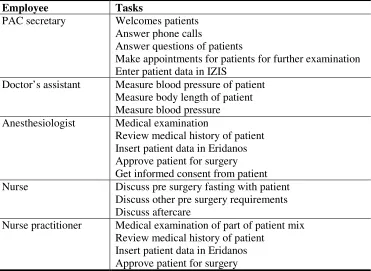
For this research the employees of the PAC are of particular interest. We do not analyze the occupa-tion of staff at the OPDs. There are four types of employees that work at the PAC. At the moment each location is staffed by one desk secretary, one or two doctor’s assistants (depending on the day of the week), one anesthesiologist and one nurse each day. The tasks performed by each employee type are given in Table 3.4. The nurse practitioner is also included. Currently nurse practitioners are not used in the pre-operative process, but it is a possibility for the future.
Employee Tasks
PAC secretary Welcomes patients Answer phone calls
Answer questions of patients
Make appointments for patients for further examination Enter patient data in IZIS
Doctor’s assistant Measure blood pressure of patient Measure body length of patient Measure blood pressure Anesthesiologist Medical examination
Review medical history of patient Insert patient data in Eridanos Approve patient for surgery Get informed consent from patient Nurse Discuss pre surgery fasting with patient
Discuss other pre surgery requirements Discuss aftercare
Nurse practitioner Medical examination of part of patient mix Review medical history of patient
Insert patient data in Eridanos Approve patient for surgery
Table 3.4: Tasks per employee at the PAC
Secretary/doctor’s assistant
There are eight assistants available for all three PAC locations. At each location, two or three tants are available during consultation hours. These assistants function as a secretary or doctor’s assis-tant. One of the assistants is always assigned as the desk secretary, while the other one or two perform the tasks of doctor’s assistant. The secretary receives patients at the desk of the PAC. She also per-forms several back office tasks such as the typing of letters but these tasks are less relevant for this research. The doctor’s assistant examines the patient on blood pressure, body length and body weight in one of the available examination rooms.
Anesthesiologist
Process control - 19 -
Nurse
At each location one nurse is present during consultation hours to discuss pre and post surgical matters with patients. In total six PAC nurses are available. The nurse discusses practical information with the patient concerning the surgery, e.g. removal of hair, pre-surgery fasting, and aftercare. Not all patients visit this nurse, some specialty departments prefer to perform this consult at the department.
Specialty PAC nurse visit?
(Figure 3.4)
Table 3.5: Patient flows through PAC nurse
Nurse practitioner
The nurse practitioner (NP) can be used to perform tasks the anesthesiologist performs currently. The NP could perform the screening of lower risk patients. She/he is trained specifically for pre-operative training. By law it is stated that the anesthesiologist always has the formal responsibility for the sur-gery approval and should get an informed consent from the patient. How this could be implemented in practice is not completely clear yet, but it is possible. In several hospitals in The Netherlands, such as the “Maasland” hospital in Sittard and the Eye clinic in Rotterdam, nurse practitioners perform pre-operative screening
3.2.2
Appointment scheduling
The PAC locations SZ and WL are opened on all working days, except WL on Tuesday. Location Kampen is only opened on Friday. The opening hours of SZ and WL are 8:00 - 12:00 and 13:00 - 16:20. In Kampen, opening hours are 8:30 - 12:00 and 13:00 - 15:40. During the lunch break patients that arrive can take place in the waiting room.
Figure 3.6: PAC schedule at location WL
- 20 - Current pre-operative process
The ‘normal’ slots assigned to specialties that require a PAC nurse consult are further divided into slots for “long” and “short” surgeries. A long and complicated surgery implies a more thorough nurse consult. The OPD determines if a surgery is “long” or “short”. By spreading the “long” specialty slots over the schedule, workload for the nurse and waiting time for the patient are controlled. Walk-in pa-tients are screened in between planned papa-tients and can be seen as overbooking.
By using a lot (>10) of different slot types, the PAC wants to make sure there is enough capacity available for all specialties. However, due to the large number of slot types, the schedule has become very inflexible and unable to adequately deal with changes in demand. From a queuing perspective, introducing different slot types means introducing different queues for a single server decreasing flex-ibility. In theory, the number of appointment slots per week assigned to a specialty equals the average demand for pre-anesthesia screening by this specialty. In practice, this is no longer true: the number of surgeries and thus the demand for pre-operative screenings has increased. By overbooking the ap-pointment schedule at certain days, when “faster” anesthesiologists are on duty, the demand is fulfilled and access time is kept constant.
As previously mentioned, the secretary of the specialists plans patients in the schedule of the PAC. She can only see all the available slots at all PAC locations suitable for the specific patient type. There is no formal planning rule for the secretary. She discusses the options with the patient and eventually plans the patient on a slot.
Since the approval by the anesthesiologist is crucial for the continuation of a surgery, the patient should be planned for surgery after the PAC screening is successfully completed. However, this is often not the case. Surgery dates are sometimes planned by the specialty before the patient is seen by an anesthesiologist at the PAC. The reason that is given to plan before the PAC screenings are: (1) the scheduling problems of the PAC, and (2) the short length of the waiting list for surgery for most spe-cialties.
3.3
Current performance
In collaboration with the stakeholders involved in the pre-operative process, several performance measures have been identified. The performance measures can be divided in measures that quantify the performance of the PAC as a separate department and measures that quantify the performance of the pre-operative process as a whole. Performance measures of the PAC are for example utilization rate, waiting time in the waiting room, and overtime. A performance measure for the pre-operative process as a whole is the access time of the PAC.
3.3.1
Access time PAC
Current performance - 21 -
Specialty Inpatient
avg. access time (in days)
Outpatient
avg. access time (in days)
Orthopedics
Table 3.6: Average access time for each appointment slot type (Ultragenda, April 2007 – May 2008, n=13)
The percentage patients seen on the same day (walk-in patients) at the OPD and PAC cannot be re-trieved from this data. However, from practice it is known that this percentage will be low since a large majority of the patients is seen on basis of an appointment that is scheduled on another day. Only children from ENT may be seen on basis of walk-in. We estimate that this group of patients constitutes less than 5 % of the total PAC patient case mix.
3.3.2
Access time surgery
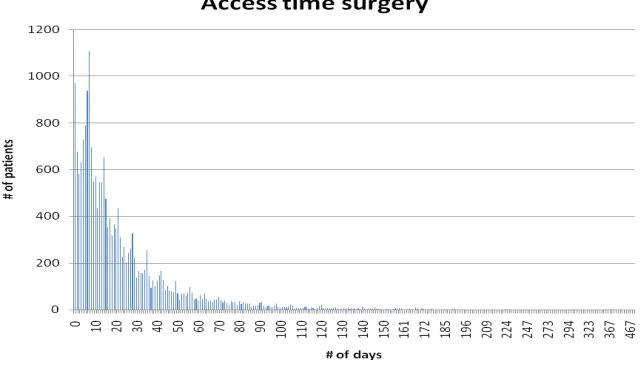
Almost 50 % of all appointment patients are seen within two weeks before surgery. Patients are seen 26 days before surgery on average. Since almost no extra consultations are necessary after pre-operative screening it should be possible to screen appointment patients closer before surgery such that capacity in the short term remains free and can be used flexibly.
Figure 3.7: Access time surgery (MCC 2007, n=19681)
3.3.3
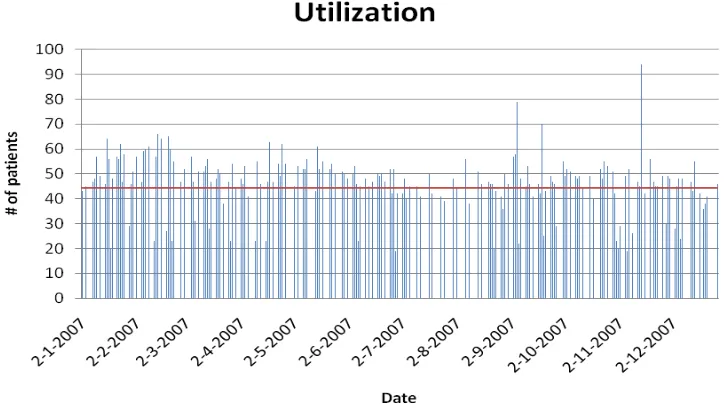
Utilization
- 22 - Current pre-operative process
It is difficult to determine the exact utilization of the PAS since no extensive data is available concern-ing process durations. As a measure for utilization w