Scholarship@Western
Scholarship@Western
Electronic Thesis and Dissertation Repository
8-12-2011 12:00 AM
An Investigation of Masked Priming Mechanisms in Binary
An Investigation of Masked Priming Mechanisms in Binary
Classification Tasks
Classification Tasks
Jason Perry
The University of Western Ontario
Supervisor
Dr. Stephen Lupker
The University of Western Ontario
Graduate Program in Psychology
A thesis submitted in partial fulfillment of the requirements for the degree in Doctor of Philosophy
© Jason Perry 2011
Follow this and additional works at: https://ir.lib.uwo.ca/etd
Part of the Cognition and Perception Commons, and the Cognitive Psychology Commons
Recommended Citation Recommended Citation
Perry, Jason, "An Investigation of Masked Priming Mechanisms in Binary Classification Tasks" (2011). Electronic Thesis and Dissertation Repository. 233.
https://ir.lib.uwo.ca/etd/233
This Dissertation/Thesis is brought to you for free and open access by Scholarship@Western. It has been accepted for inclusion in Electronic Thesis and Dissertation Repository by an authorized administrator of
AN INVESTIGATION OF MASKED PRIMING MECHANISMS IN BINARY CLASSIFICATION TASKS
(Spine title: Masked Priming Mechanisms)
(Thesis format: Integrated-Article)
by
Jason R. Perry
Graduate Program in Psychology
A thesis submitted in partial fulfillment of the requirements for the degree of
Doctor of Philosophy
The School of Graduate and Postdoctoral Studies The University of Western Ontario
London, Ontario, Canada
THE UNIVERSITY OF WESTERN ONTARIO
SCHOOL OF GRADUATE AND POSTDOCTORAL STUDIES
CERTIFICATE OF EXAMINATION
Supervisor
______________________________ Dr. Stephen Lupker
Supervisory Committee
______________________________ Dr. Daniel Ansari
______________________________ Dr. Paul Minda
Examiners
______________________________ Dr. Paul Minda
______________________________ Dr. Debra Jared
______________________________ Dr. Eric Buckolz
______________________________ Dr. Steve Joordens
The thesis by
Jason Russell Perry
entitled:
An Investigation of Masked Priming in Binary Classification Tasks
is accepted in partial fulfilment of the requirements for the degree of
Doctor of Philosophy
Abstract
The goal of the present research was to examine the nature of masked priming with an
emphasis on the influence of stimulus-response (S-R) associations. In Chapter 2, both
the magnitude of the category congruence (priming) effect and the nature of the priming
distance effect were assessed in two number classification tasks. Participants made either
magnitude (i.e., is the target larger or smaller than ‘5’?) or identification judgments (i.e.,
press one button if the target is a ‘1’, ‘2’, ‘3’ or ‘4’ or the other button if the target is a
‘6’, ‘7’, ‘8’ or ‘9’). Priming distance effects in both tasks indicated that, regardless of
task instructions, semantic activation played a key role in producing masked priming
even when the identification task showed evidence of priming from S-R associations. In
Chapter 3,category learning tasks were used involving stimuli having neither the ability
to activate semantic information nor any a priori response associations. Participants
learned, through feedback, artificially-defined category sets. Each category contained a
prototype item that served as a masked prime. In the single-session tasks, responses were
faster when a stimulus was primed by its own prototype versus the prototype of the other
category, however, this (priming) effect only increased in size when participants
performed the task over multiple sessions, indicating that it takes considerable time for
the S-R associations to develop and impact priming. The research in Chapters 2 and 3
was based on a prospective view of masked priming. There is, however, an alternative
retrospective view supported by numerous demonstrations of prime validity effects (i.e.,
larger priming effects when the proportion of congruent trials is high). In Chapter 4, an
arrow classification task with free choice stimuli was used to examine this debate. The
incongruent, or c) unpredictive. Prime validity effects for the free choice trials (i.e., trials
involving “either way” stimuli, e.g., < >, for which either response was acceptable)
occurred using both 77 ms and 165 ms prime-target intervals. The results in the
unpredictive conditions support a prospective view of masked priming since they indicate
that it was response bias suppression when the proportion of incongruent trials was high
that produced the prime validity effects.
Keywords: masked priming, S-R associations, semantic activation, depth of processing,
number classification, category learning, arrow classification, task strategies, response
biases, prospective view of masked priming, retrospective view of masked priming,
Co-Authorship Statement
The contents of Chapter 4 were recently published in Attention Perception and
Psychophysics. The contents of Chapters 2 have been submitted to the Canadian Journal
of Experimental Psychology. The contents of Chapter 3 have been submitted to Memory
& Cognition.
Each of these manuscripts are by Jason R. Perry and Dr. Stephen J. Lupker. They
were all primarily written by Jason R. Perry.
Citations:
Perry, J.R. & Lupker, S.J. (2010). A prospective view of the impact of prime validity on
response speed and selection in the arrow classification task with free choice
trials. Attention, Perception, & Psychophysics, 72, 528-537.
Perry, J.R. & Lupker, S.J. (submitted). An investigation of the time course of category
congruence and semantic distance effects in number classification tasks.
Canadian Journal of Experimental Psychology. 44 pp.
Perry, J.R. & Lupker, S.J. (submitted). An investigation of the effects of masked primes
Acknowledgments
I am extremely grateful and wonderfully blessed to have had Dr. Stephen Lupker
as my supervisor. He has been a source of incredible support and encouragement
throughout my graduate career.
I wish to extend my love and gratitude to my girlfriend, Hilary Oatman, for
believing in me. Her love, support, and encouragement mean more than words can
express.
I also wish to thank my family who cheered me on as I wrote this thesis. I love
you all!!
I want to thank Tamsen Taylor, Matt Waxer, Tatjana Ilic-Balas, Eric
Stinchcombe, and James Boylan who have been some of my closest friends and fellow
graduate students over the course of my graduate career. Their support and friendship
has been a wonderful gift from God. And I also want to thank Jason Tucker who, though
not a graduate student, nevertheless had nothing but encouragement for my research.
Finally, I wish to acknowledge the helpful comments from my examiners. Their
input has improved the quality of this research.
For the Glory of God who strengthens and helps us and upholds us with His righteous
Table of Contents
CERTIFICATE OF EXAMINATION.………...ii
Abstract………...iii
Co-Authorship Statement……….v
Acknowledgments………..………vi
Table of Contents………...vii
List of Tables………viii
List of Appendices………..…ix
Chapter 1: General Introduction………..1
Chapter 2: Number Classifications………...24
Addendum to Chapter 2……….61
Chapter 3: Category Learning Tasks with Masked Primes ………..65
Addendum to Chapter 3……….98
Chapter 4: Target Arrow Classifications with Free Choice Trials……….……….102
Chapter 5: Conclusions……..……….….137
Appendices………...160
List of Tables
Chapter 2
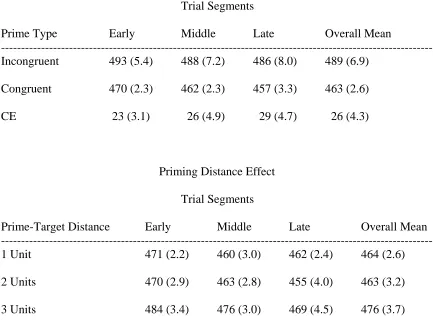
Table 1. Category Congruence Effects and the Priming Distance Effect for the
Magnitude Judgment Task – Experiment 1………...……37
Table 2. Category Congruence Effects and the Priming Distance Effect for the Target
Identification Task – Experiment 2………....40
Chapter 3
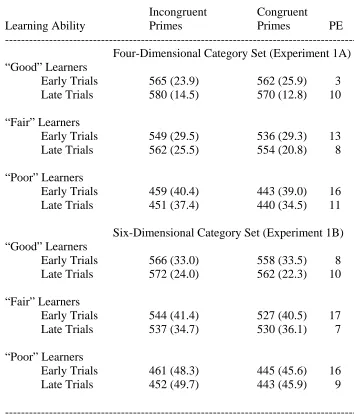
Table 1. Results for Category Learning - Experiment 1 ………..………76
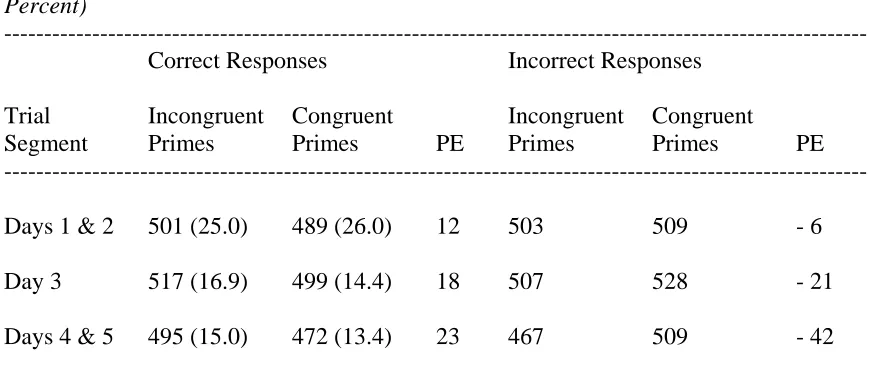
Table 2. Results for Category Learning - Experiment 2 ………..……81
Chapter 4
Table 1. Results for Either-Way Responses...116
Appendix D
List of Appendices
Appendix A: Stimuli lists...160
Appendix B: Prime discrimination data for number classifications ...161
Appendix C: Double-digit magnitude judgment task ...162
Appendix D: Post-hoc analysis for category learning experiments……….165
Appendix E: Prime discrimination data for arrow classifications………...170
Appendix F: Consent form………...…172
Chapter 1 – General Introduction
There is a pervasive belief that the presentation of stimuli outside of one’s
awareness affects behaviour. Advertisers, for instance, have for many years embedded
images within their advertisements in order to affect one’s desire for the advertised
product. Electronic gaming machines have also been programmed to flash winning
jackpot symbols in order to influence gamblers’ behaviour. Although there is
surprisingly little evidence about whether these techniques actually work, there is, as will
be discussed, good scientific evidence that the presentation of stimuli outside of one’s
awareness can affect behavior. The questions addressed in this dissertation concern the
nature of the processes by which that happens.
It has been known for some time that information which is not directly attended
can influence behaviour. For instance, in the Stroop (1935) task subjects respond to the
ink color of a color word (see MacLeod, 1991, for a review). The key finding is that
responses are faster when the identity of the ink color and the word are congruent (e.g.,
the word BLUE written in blue ink) versus when they are incongruent (e.g., the word
BLUE written in red ink). The standard explanation for Stroop effects is that the
presentation of a stimulus automatically activates the response associated with the
irrelevant dimension (i.e., the word’s name) even though people are purposely not
attending to the word and that processing is slowed down when that response conflicts
with the appropriate response.
The notion that non-attended stimuli can impact processing due to the fact that
they activate stimulus-response (S-R) associations also plays a crucial role in Klapp and
Osman’s (1990) dimensional overlap model. It is also an important assumption in
research investigating visual selective attention (see Fox, 1995, for a review) and
cognitive control (e.g., Bugg, Jacoby, & Chanani, 2010; Jacoby, Lindsay, & Hessels,
2003). In the Stroop task, however, the words are not actually presented outside of one’s
awareness and are, instead, clearly visible. To investigate the impact of stimuli that are
presented outside of awareness, a more recently developed experimental technique of
masked priming has typically been employed (e.g., Forster & Davis, 1984; Marcel,
1983).
In a masked priming paradigm, a forward mask precedes a briefly presented
prime (typically 60 ms or less) which is then followed by a target stimulus that requires a
response. In this situation, participants are typically unaware not only of the prime’s
identity but also of its existence. According to an S-R association account of masked
priming, when the prime stimuli have an associated response (e.g., press the left response
key when an arrow points to the left) that response is activated by the prime causing
responses to be faster when the target is preceded by a prime which requires the same
response as the target (i.e., a congruent trial) as opposed to a prime which requires a
different response (i.e., an incongruent trial).
According to this view, subliminal stimuli are processed to only a fairly low level
and, therefore, will not likely affect higher-level cognitive processing (e.g., gambling
behaviour). Note, however, that there is an alternative view which is that subliminally
presented stimuli are processed to the point that semantic information is activated with
S-R associations and semantic activation interact in order to produce subliminal priming
effects is a vital area of cognitive research.
An S-R Association Account of Masked Priming
According to an S-R association account of masked priming, lower-level
(non-semantic) associations are formed between target stimuli and their responses due to their
repeated presentations and classifications (see, e.g., Abrams, 2005; Abrams &
Greenwald, 2000; Damian, 2001; Neumann & Klotz, 1994; Klotz & Neumann, 1999).
Once formed, presentation of these stimuli as masked primes produces a bias to respond
with their associated response. This response bias aids target responding on congruent
trials and interferes with target responding on incongruent trials.
One source of support for an S-R association account comes from Eimer and
Schlaghecken’s (1998) task in which participants responded to arrow targets that required
a directional (i.e., left (<<) or right (>>)) response. These targets were preceded by
masked prime arrows. When the interval between the prime and target was brief,
responding was faster when the prime and target arrows pointed in the same direction
(e.g., Eimer, 1999; Eimer & Schlaghecken, 2002; Schlaghecken & Eimer, 2000, 2002).
Interestingly, Eimer and Schlaghecken’s (1998; 2002) results with a longer
prime-target interval show exactly the reverse pattern, that is, participants responded
significantly faster when the prime and target arrows pointed in opposite directions as
opposed to the same direction (a “negative priming effect”). Measurements of
event-related potentials (ERPs) helped explain this negative priming effect by demonstrating
direction of that prime. However, as time passes this response activation diminishes and
the opposite motor response becomes activated.
Further research has shown that, in addition to response latencies, masked arrow
primes also affect response selection probabilities in tasks where arrow target trials are
interspersed with trials involving either-way targets (< >), targets for which either
response is legitimate (see Bodner & Mulji, 2010; Klapp & Haas, 2005; Klapp &
Hinkley, 2002; Perry & Lupker, 2010; Schlaghecken & Eimer, 2004; Schlaghecken,
Klapp, & Maylor, 2009). Specifically, responses in these “free choice” trials are more
frequent and faster when they match the direction of the masked prime at short
prime-target intervals, but at longer prime-prime-target intervals the pattern reverses (see especially
Schlaghecken & Eimer, 2004). According to an S-R association account these effects
occur because the masked prime activates its associated response making that response
both more likely and more rapidly executed initially with the opposite response gaining
strength as time passes.
Old Versus New Set Priming
A crucial prediction of any type of S-R association account of masked priming is
that priming should only occur for primes that have been previously presented and
responded to as target stimuli (i.e., “old set primes”), whereas primes which have not
been previously responded to as targets (i.e., “new set primes”) should not produce
priming since response biases have not been formed for these primes. Support for this
prediction comes from Damian’s (2001) physical size (large or small) judgment task in
which Dutch concrete nouns were presented as targets and preceded by masked primes.
the prime and target corresponded to either large or small items (i.e., a congruent trial)
than when the prime and target corresponded to items of opposite sizes (i.e., an
incongruent trial) when old set primes were used (Experiment 1), but not when new set
primes were used (Experiment 2).
An additional prediction of any type of S-R association account, which will be
examined frequently in this dissertation , is that priming driven by response biases should
increase in size over trials since response biases are formed and strengthened as a
function of exposure to the target stimuli. Damian’s (2001, Experiment 1) results using
old set primes provide support for this prediction as there was, in fact, an increase in the
size of the priming effect over trial blocks.
Evidence for Semantic Activation: Priming from New Set Primes
If all masked priming effects were due to the impact of S-R associations then it is
likely that the processing of stimuli appearing outside of awareness only reaches a fairly
low level and, therefore, such processing will not likely affect higher-level cognitive
processing (e.g., gambling behavior). However, in contrast to Damian’s (2001) results,
another line of masked priming research has produced numerous demonstrations of
priming from new set primes (e.g., Dell’Acqua & Grainger, 1999; Klauer, Eder,
Greenwald & Abrams, 2007; Kinoshita & Hunt, 2008; Kunde, Kiesel, & Hoffmann,
2003, 2005; Naccache & Dehaene, 2001; Reynvoet, Caessens & Brysbaert, 2002;
Reynvoet, Gevers & Caessens, 2005; Quinn & Kinoshita, 2008; Van den Bussche,
Notebaert & Reynvoet, 2009; Van den Bussche & Reynvoet, 2007), results that
challenge the notion that masked priming is due solely to S-R associations. That is, if
should never occur for new set primes because there has been no opportunity to form S-R
associations for those primes. The fact that priming from new set primes is a common
finding indicates that masked primes are often processed in a way that involves the
activation of semantic information and that it is semantic information, as opposed to
learned S-R associations, that is responsible for producing priming. The fact that masked
primes can activate semantic information supports the possibility that stimuli presented
outside of awareness can have a noticeable effect on higher-level cognitive processing.
For the purposes of this dissertation, what needs to be kept in mind is that S-R
association and semantic activation accounts are not mutually exclusive. That is,
demonstrations of semantically-based priming (i.e., priming from new set primes) does
not rule out the possibility that, in some situations (e.g., Abrams & Greenwald, 2000;
Damian, 2001), S-R associations may play an important role in producing masked
priming effects. That is, even if masked primes inevitably activate semantic information,
the possibility that S-R associations are also activated by masked primes and influence
subsequent behavior is certainly not excluded. In fact, Kinoshita and Hunt (2008)
recently provided data that suggest a role for S-R associations in masked priming even
when new set primes are effective primes (i.e., when semantically-based priming arises).
Kinoshita and Hunt (2008): A Two-Component Account of Masked Priming
Kinoshita and Hunt (2008) demonstrated priming in a magnitude judgment task
using both old and new set masked primes (replicating Naccache & Dehaene, 2001).
However, in contrast to the previous research, Kinoshita and Hunt provided an analysis
based on the full latency distributions for each condition. Their analysis demonstrated
in the old set prime condition showed a noticeable slowdown (relative to incongruent trial
conditions as well as the congruent prime condition for the new set primes). As a result,
old set primes did not produce a masked priming effect in these longer latency bins even
though new set primes did.
Kinoshita and Hunt (2008) concluded that their results indicate that masked
priming involves two different automatic components. One component reflects the
congruence between the prime and target in terms of task-defined features (e.g., size in a
size judgment task) and relies upon semantic information activated by the masked prime.
The other component is assumed to be transitory and relies upon activation of S-R
associations by the masked primes. It is the disappearance of this second component
when latencies get to be long which accounts for the lack of priming from old set primes
in the longer latency bins.
Kinoshita and Hunt’s (2008) results are, therefore, consistent with the notion that
masked primes are processed in a way that causes both semantics and S-R associations to
be activated and, further, that both play some role in the priming process. Specifically,
their results suggest that priming for their new set primes was semantically-based,
whereas priming for their old set primes was based mainly on S-R associations. These
results, therefore, suggest that there may be a rather complex interaction between the
types of information activated by masked primes and the processes that produce masked
priming effects.
The Role of Task-Defined Strategies
Recent research has also demonstrated that another factor that influences the
example, Kunde et al. (2003) demonstrated that priming extended to new set primes
when participants were required to make magnitude judgments, but not when participants
were required to identify the target with a button press response. Further, the size of the
target set (e.g., Kiesel, Kunde, Pohl, & Hoffmann, 2006; Pohl, Kiesel, Kunde, &
Hoffmann, 2010) and the category (e.g., Abrams, 2008) also appear to affect whether
new set primes produce priming.
Additional support for this idea comes from studies that have demonstrated that
when primes and targets vary along two dimensions (e.g., parity and magnitude) masked
priming is based solely upon prime-target congruency according to the specific judgment
task (e.g., parity or magnitude) that the participant was engaged in (e.g., Bodner &
Dypvik, 2005; Eckstein & Perrig, 2007; Klinger, Burton & Pitts, 2000). Studies have
also shown that factors such as the targets’ features (e.g., Pohl et al., 2010) and
orientation (e.g., Elsner, Kunde & Kiesel, 2008), whether participants perform lexical
decisions or same-different classifications (e.g., Norris & Kinoshita, 2008), and whether
double-digit magnitude judgments (i.e., is the two-digit target greater than or less than
‘55’?) are made based only upon the identity of the first digit or the identity of the second
digit (e.g., Greenwald, Abrams, Naccache & Dehaene, 2003) also affect the nature of any
masked priming effects. Taken together, these results suggest that the source of any
observed priming effects (i.e., S-R associations or semantic activation) is very much
dependent on both task instructions and participants’ processing strategies which also
implies a fairly complex interaction between the types of information activated by
Masked Prime Processing Mechanisms: Prime Validity Effects
The generally accepted “prospective” view of how the mechanisms of masked
priming function, regardless of whether masked priming effects are assumed to be due to
semantic activation or S-R associations (or both), is based on two key assumptions. The
first assumption is that the presentation of a masked prime induces a temporary state of
activation in the cognitive system which, in turn, affects the speed with which a
subsequently presented target is processed. The second assumption is that, since
participants do not report any awareness of these masked primes, any episodic trace left
by these primes should be so weak that any effect of the prime must have been due solely
to automatic, rather than strategic, activation processes (see Forster & Davis, 1984;
Masson & Bodner, 2003). If this second assumption is correct then it suggests that the
ability of stimuli presented outside awareness to influence subsequent behavior is
somewhat limited.
There is, however, increasing evidence for an alternative “retrospective” view of
masked priming which denies both of the assumptions of the prospective view and
instead, adopts two markedly different assumptions. The first assumption is that the
primes (even when they are presented briefly and masked) form reasonably strong
episodic traces. The second assumption is that, in an effort to aid target processing, the
cognitive system strategically adjusts the extent to which it relies upon information from
these episodic traces (even though the viewer is typically unaware of both the presence of
the prime and its identity).
The strongest evidence for a retrospective view has come from Bodner and
are larger when the percentage of trials in which the target is related to the prime is high
(typically 80%) compared to when it is low (typically 20%) (e.g., Bodner & Dypvik,
2005; Bodner & Masson, 2001, 2003, 2004; Bodner, Masson & Richard, 2006; Bodner &
Mulji, 2010; Jaskowski, Skalska & Verleger, 2003; Klapp, 2007). To account for the
pervasiveness of these “prime validity” effects, Bodner and Masson (2001; Masson &
Bodner, 2003) proposed a “memory recruitment account” which is based on a
retrospective view of masked priming. Specifically, when the information that can be
derived from a masked prime is often beneficial for target processing (e.g., a prime arrow
which often points in the same direction as the target arrow), then the cognitive system
adopts a target processing strategy which involves placing some reliance upon
information derived from the prime’s episodic trace. Because this information (which
could be based on either semantics or S-R associations) benefits target processing on
congruent trials, a greater reliance on prime information produces a larger priming effect.
If this type of view is correct then it implies that people have considerable cognitive
control not only over the information that is activated by stimuli presented outside of
awareness but also over how that information can affect subsequent behavior.
Dissertation Goals
The masked priming paradigm does appear to provide a means for scientifically
investigating how people process stimuli that are presented outside of awareness.
Further, as this review of the masked priming literature suggests, the origins of any
masked priming effects (i.e., S-R associations or the activation of semantics) are due to a
rather complex interaction between task instructions and participants’ target processing
interaction with a frequent emphasis on the question of what role S-R associations do
play in the process.
A secondary goal is to provide an additional examination of the prospective
versus retrospective views of masked priming. Prime validity effects, effects which
challenge the more generally accepted prospective view, have now been found in a
multitude of cognitive paradigms (see Masson & Bodner, 2003, for a review). The
question, therefore, is whether one can provide an account for these effects within the
framework of a prospective view of masked priming or, alternatively, whether the
retrospective view, with its assumption that people can actually make controlled use of
information from stimuli presented outside of awareness, might be the more accurate
view.
Chapter 2: Number Classification
In Chapter 2 the role of task-defined strategies in producing masked priming in
number classification tasks was investigated to determine how S-R associations and
semantics interact to produce priming in that task. Doing so involved evaluating the time
course (over 1008 trials) of two different data patterns which would serve as markers
indicating the source of the priming (i.e., S-R associations versus semantic activation).
The first marker was the magnitude of the masked priming effect itself. A priming effect
driven by activated semantic information should emerge in the very first trials and
maintain itself over the course of the experiment. In contrast, priming due to S-R
associations must increase as participants become more familiar with those associations.
The second marker was the nature of the priming distance effect. That is, responses in
and target decreases (e.g., Koechlin, Naccache, Block, & Dehaene, 1999; Naccache &
Dehaene, 2001; Reynvoet & Brysbaert, 1999, 2004; Reynvoet et al., 2002). For example,
if the target is the digit ‘4’ in a task in which the digit must be classified as greater or less
than ‘5’ then responses will typically be faster if it is primed by the digit ‘3’ compared to
the digit ‘1’. These effects must clearly be due to the activation of semantic information.
In Experiment 1 participants made magnitude judgments (i.e., indicated whether
the target is less than or greater than ‘5’) to single-digit targets preceded by masked
single-digit primes. The results indicated that there were clear masked priming and
priming distance effects, both of which remained relatively stable over trials. In
Experiment 2, in order to make the use of S-R associations more viable, participants
made target identifications (i.e., press one button if the target is a ‘1’, ‘2’, ‘3’ or ‘4’ and a
different button if it is a ‘6’, ‘7’, ‘8’ or ‘9’) to the same single-digit prime-target pairs as
in Experiment 1. In this situation, there was an increase in the size of the masked
priming effect over trials indicating that processing had changed in a way that caused S-R
associations to have a greater impact in the priming process. However, as in Experiment
1, there was a clear priming distance effect which did not vary over trials. The presence
of a priming distance effect in both experiments indicates that semantic activation
continued to play a major role in producing masked priming effects regardless of task
instructions. At the same time, the increase in the size of the priming effect in
Experiment 2 does demonstrate that task instructions can create a situation in which there
is an impact of S-R associations on the priming process.
Chapter 3: Category Learning Tasks with Masked Primes
In Chapter 3 the development of S-R associations was traced using a masked
priming version of a category learning task. In a typical category learning task (e.g.,
Lamberts, 1995; Nosofsky & Zaki, 2002; Smith & Minda, 1998) participants are
repeatedly presented with the same set of artificial stimuli (nonword letter strings in these
experiments) and are required to learn, based upon feedback, which target stimuli belong
to one category and which target stimuli belong to the other category.
Previous investigations of masked priming used tasks with clearly defined
semantic categories (e.g., pleasant/unpleasant, less/greater than 5) which allow for the
possibility that either semantics or S-R associations (or both) could generate masked
priming effects, complicating the theoretical analysis. In contrast, the items in a category
learning task are novel and, thus, have no ability to activate semantic information.
Further, as is often the case, at the beginning of the learning process, the stimuli are not
associated with either possible response (explicitly or implicitly), unlike, for example,
arrow stimuli. Thus, the category learning task is an ideal, but unexplored, task for
investigating the development of S-R associations and their ability to produce masked
priming.
In Experiment 1 masked priming effects were obtained for both four- and
six-letter category sets such that responses were faster when targets were preceded by a
masked prime which was the prototype of its category versus the opposite category’s
prototype. However, there was little evidence that these effects were due to S-R
associations as the effects occurred early and did not increase in size over trial segments.
participants practiced learning the four-letter category sets over multiple sessions/days.
This result provides support for the claim that at least part of the observed priming was
due to the development of S-R associations. Taken together, the present results suggest
that although some priming occurs early (Experiment 1) it takes considerable practice in
order to learn and strengthen the appropriate S-R associations in order for those
associations to produce the predicted increase in the size of the masked priming effect
(Experiment 2), raising the possibility that the impact of stimuli presented outside of
awareness is almost always due to the activation of semantic information.
Chapter 4: Target Arrow Classification with Free Choice Trials
In Chapter 4, in an effort to evaluate the debate over the prospective versus
retrospective views of masked priming,the mechanisms that are responsible for
producing prime validity effects in an arrow classification task with free choice trials
(i.e., stimuli that allowed a response in either direction, < > or > <) were evaluated. In
this experiment, arrow targets were preceded by masked primes which either a) always
pointed in the same direction of the target arrow (100% congruent condition), b) always
pointed in the opposite direction (100% incongruent condition), or c) pointed equally
often in the same and different directions (unpredictive condition) using prime-target
intervals of either 77 ms or 165 ms (a between-subjects manipulation). If the priming
pattern for the response biases on the free choice trials in the unpredictive condition
mimics the 100% congruent condition then that result would challenge the retrospective
view (but could be easily accounted for in the prospective view). However, if the
priming pattern in the unpredictive condition mimics the 100% incongruent condition
When the prime-target interval was 77 ms, a prime validity effect occurred for the
free choice trials such that there was a bias to respond in the direction of the masked
prime in the 100% congruent condition whereas in the 100% incongruent condition
response selection was at chance. When the prime-target interval was 165 ms, a prime
validity effect occurred such that there was a bias to respond in the direction opposite of
the masked prime in the 100% incongruent condition whereas in the 100% congruent
condition response selection was at chance. Crucially, the results in the unpredictive
condition mimicked those in the 100% congruent condition at both prime-target intervals.
The results suggest that these prime validity effects occur as a result of how masked
primes in the 100% incongruent condition are processed. These results provide a
challenge for a retrospective view of masked priming, but can easily be explained within
a framework of a prospective view of masked priming (such as a response bias
suppression account).
Chapter 5: Conclusions
This research makes two important contributions to the masked priming literature.
First, the results from Chapters 2 and 3 suggest that previous research that has been taken
as evidence for S-R associations (e.g., Damian, 2001) may have an alternative (possibly,
semantically-based) explanation. Second, the results from Chapter 4 pose a formidable
challenge to anyone attempting to explain them within a retrospective view of masked
priming. In Chapter 5 the implications of these results for notions of how stimuli
presented outside of awareness are processed and for various theories of masked priming
References
Abrams, R. L. (2005). Unconscious processing of multiple nonadjacent letters in visually
masked words. Consciousness and Cognition, 14, 585-601.
Abrams, R. L. (2008). Influence of category size and target set size on unconscious
priming by novel words. Experimental Psychology, 55, 189-194.
Abrams, R. L., & Greenwald, A. G. (2000). Parts outweigh the whole (word) in
unconscious analysis of meaning. Psychological Science, 11, 118-124.
Bodner, G. E., & Dypvik, A. T. (2005). Masked priming of number judgments depends
on prime validity and task. Memory & Cognition, 44, 29-47.
Bodner, G. E. & Masson, M. E. J. (2001). Prime validity affects masked repetition
priming: Evidence for an episodic resource account of priming. Journal of
Memory and Language, 45, 616-647.
Bodner, G. E. & Masson, M. E. J. (2003). Beyond spreading activation: An influence of
relatedness proportion on masked semantic priming. Psychonomic Bulletin &
Review, 10, 645-652.
Bodner, G. E. & Masson, M. E. J. (2004). Beyond binary judgments: Prime validity
modulates masked repetition priming in the naming task. Memory & Cognition,
32, 1-11.
Bodner, G. E., Masson, M. E. J., & Richard, N. T. (2006). Repetition proportion biases
masked priming of lexical decisions. Memory & Cognition, 34, 1298-1311.
Bodner, G. E., & Mulji, R. (2010). Prime proportion affects masked priming of fixed
and free-choice responses. Experimental Psychology, 57, 360-366.
accounts of item-specific proportion congruency effects. Journal of Experimental
Psychology: Human Perception and Performance, 2010, 37, 844-859.
Damian, M. F. (2001). Congruity effects evoked by subliminally presented primes:
Automaticity rather than semantic processing. Journal of Experimental
Psychology: Human Perception & Performance, 27, 154-165.
Dell’Acqua, R., & Grainger, J. (1999). Unconscious semantic priming from pictures.
Cognition, 73, 1-15.
Eckstein, D., & Perrig, W.J. (2007). The influence of intention on masked priming: A
study with semantic classification of words. Cognition, 104, 345-376.
Eimer, M. (1999). Facilitatory and inhibitory effects of masked prime stimuli on motor
activation and behavioural performance. Acta Psychologica, 101, 293-313.
Eimer, M. & Schlaghecken, F. (1998). Effects of masked stimuli on motor activation:
Behavioral and electrophysiological evidence. Journal of Experimental
Psychology: Human Perception and Performance, 24, 1737-1747.
Eimer, M. & Schlaghecken, F. (2002). Links between conscious awareness and response
inhibition: Evidence from masked priming. Psychonomic Bulletin & Review, 9,
514-520.
Elsner, K., Kunde, W., & Kiesel, A. (2008). Limited transfer of subliminal response
priming to novel stimulus orientations and identities. Consciousness and
Cognition, 17, 657-671.
Finkbeiner, M., & Forster, K. I. (2008). Attention, intention and domain-specific
processing. Trends in Cognitive Sciences, 12, 59-64.
lexical access. Journal of Experimental Psychology: Learning, Memory, and
Cognition, 10, 680-698.
Greenwald, A. G., Abrams, R. L., Naccache, L., & Dehaene, S. (2003). Long-term
semantic memory versus contextual memory in unconscious number processing.
Journal of Experimental Psychology: Learning, Memory, and Cognition, 29,
235-247.
Jacoby, L. L., Lindsay, S. D., & Hessels, S. (2003). Item-specific control of automatic
processes: Stroop process dissociations. Psychonomic Bulletin & Review, 10,
638-644.
Jaskowski, P., Skalska, B., & Verleger, R. (2003). How the self controls its “automatic
pilot” when processing subliminal information. Journal of Cognitive
Neuroscience, 15, 911-920.
Klapp, S. T. (2007). Nonconscious control mimics a purposeful strategy: Strength of
Stroop-like interference is automatically modulated by proportion of compatible
trials. Journal of Experimental Psychology: Human Perception and
Performance, 33, 1366-1376.
Klauer, K. C., Eder, A. B., Greenwald, A. G., & Abrams, R. L. (2007). Priming of
semantic classifications by novel subliminal prime words. Consciousness and
Cognition, 16, 63-83.
Kiesel, A., Kunde, W., & Hoffmann, J. (2007). Mechanisms of subliminal response
priming. Advances in Cognitive Psychology, 3, 307-315.
Kiesel, A., Kunde, W., Pohl, C., & Hoffmann, J. (2006). Priming from novel masked
Kinoshita, S., & Hunt, L. (2008). RT distribution analysis of category congruence effects
with masked primes. Memory & Cognition, 36, 1324-1334.
Klapp, S. T., & Greenberg, L. A. (2009). Temporary activation of perceptual-motor
associations: A stimulus-response interpretation of automaticity. Journal of
Experimental Psychology: Learning, Memory, and Cognition.
Klapp, S. T. & Haas, B. W. (2005). Nonconscious influence of masked stimuli on
response selection is limited to concrete stimulus-response associations. Journal
of Experimental Psychology: Human Perception and Performance, 31, 193-209.
Klapp, S. T. & Hinkley, L. B. (2002). The negative compatibility effect: Unconscious
inhibition influences reaction time and response selection. Journal of
Experimental Psychology: General, 131, 255-269.
Klinger, M. R., Burton, P. C., & Pitts, G. S. (2000). Mechanisms of unconscious
priming: I. Response competition, not spreading activation. Journal of
Experimental Psychology: Learning, Memory, and Cognition.
Klotz, W. & Neumann, O. (1999). Motor activation without conscious discrimination in
metacontrast masking. Journal of Experimental Psychology: Human Perception
and Performance, 25, 976-992.
Koechlin, E., Naccache, L., Block, E., & Dehaene, S. (1999). Primed numbers:
Exploring the modularity of numerical representations with masked and
unmasked semantic priming. Journal of Experimental Psychology: Human
Perception and Performance, 25, 1882-1905.
basis for stimulus-response compatibility – A model and taxonomy.
Psychological Review, 97, 253-270.
Kouider, S., & Dehaene, S. (2007). Levels of processing during non-conscious
perception: A critical review of visual masking. Philosophical Transactions of
the Royal Society B, 362, 857-775.
Kunde, W., Kiesel, A., & Hoffman, J. (2003). Conscious control over the content of
unconscious cognition. Cognition, 88, 223-242.
Kunde, W., Kiesel, A., & Hoffman, J. (2005). On the masking and disclosing of
unconscious elaborate processing: A reply to Van Opstal, Reynvoet, and Verguts.
Cognition, 97, 99-105.
Lamberts, K. (1995). Categorization under time pressure. Journal of Experimental
Psychology: General, 124, 161-180.
MacLeod, C. M. (1991). Half a century of research on the stroop effect: An integrative
review. Psychological Bulletin, 109, 163-203.
Marcel, A. J. (1983). Conscious and unconscious perception: Experiments on visual
masking and word recognition. Cognitive Psychology, 15, 238-300.
Masson, M. E. J. & Bodner, G. E. (2003). A retrospective view of masked priming:
Toward a unified account of masked and long-term repetition priming. In S.
Kinoshita and S. J. Lupker (Eds.), Masked Priming: The State of the Art (pp. 57 –
94).
Naccache, L., & Dehaene, S. (2001). Unconscious semantic priming extends to novel
unseen stimuli. Cognition, 80, 215-229.
Where is the limit of direct parameter specification? In C. Umilta & M.
Moscovitch (Eds.), Attention and Performance XV, Conscious and Nonconscious
Information Processing (pp. 123-150).
Norris, D., & Kinoshita, S. (2008). Perception as evidence accumulation and bayesian
inference: Insights from masked priming. Journal of Experimental Psychology:
General, 137, 434-455.
Nosofsky, R.M. & Zaki, S.R. (2002). Exemplar and prototype models revisited:
Response strategies, selective attention, and stimulus generalization. Journal of
Experimental Psychology: Learning, Memory, and Cognition, 28, 924-940.
Perry, J.R. & Lupker, S.J. (2010). A prospective view of the impact of prime validity on
response speed and selection in the arrow classification task with free choice
trials. Attention, Perception, & Psychophysics, 72, 528-537.
Pohl, C., Kiesel, A., Kunde, W., & Hoffmann, J. (2010). Early and late selection in
unconscious information processing. Journal of Experimental Psychology:
Human Perception and Performance, 36, 268-285.
Quinn, W. M. & Kinoshita, S. (2008). Congruence effect in semantic categorization
with masked primes with narrow and broad categories. Journal of Memory and
Language, 58, 286-306.
Reynvoet, B., & Brysbaert, M. (1999). Single-digit and two-digit Arabic numerals
address the same semantic number line. Cognition, 72, 191-201.
Reynvoet, B., & Brysbaert, M. (2004). Cross-notation number priming investigated at
different stimulus onset asynchronies in parity and naming tasks. Experimental
Reynvoet, B., Caessens, B., & Brysbaert, M. (2002). Automatic stimulus-response
associations may be semantically mediated. Psychonomic Bulletin and Review, 9,
107-112.
Reynvoet, B., Gevers, W., & Caessens, B. (2005). Unconscious primes activate motor
codes through semantics. Journal of Experimental Psychology: Learning,
Memory, and Cognition, 31, 991-1000.
Schlaghecken, F. & Eimer, M. (2000). A central-peripheral asymmetry in masked
priming. Perception & Psychophysics, 62, 1367-1382.
Schlaghecken, F. & Eimer, M. (2002). Motor activation with and without inhibition:
Evidence for a threshold mechanism in motor control. Perception &
Psychophysics, 64, 148-162.
Schlaghecken, F. & Eimer, M. (2004). Masked prime stimuli can bias “free” choices
between response alternatives. Psychonomic Bulletin & Review, 11, 463-468.
Schlaghecken, F., Klapp, S. T., & Maylor, E. A. (2009). Either or neither, but not both:
Locating the effects of masked primes. Proceedings of the Royal Society B, 276,
515-521.
Smith, J. D., & Minda, J. P. (1998). Prototypes in the mist: The early epochs of category
learning. Journal of Experimental Psychology: Learning, Memory, and
Cognition, 24, 1411-1436.
Stroop, J. R. (1935). Studies of interference in serial verbal reactions. Journal of
Experimental Psychology, 18, 643-662.
with masked primes with narrow and broad categories. Journal of Memory and
Language, 58, 286-306.
Van den Bussche, E., Notebaert, K., & Reynvoet, B. (2009). Masked primes can be
genuinely semantically processed: A picture prime study. Experimental
Psychology, 56, 295-300.
Van den Bussche, E., & Reynvoet, B. (2007). Masked priming effects in semantic
categorization are independent of category size. Experimental Psychology, 54,
225-235.
Van den Bussche, E., Van den Noortgate, W., & Reynvoet, B. (2009). Mechanisms of
masked priming: A meta-analysis. Psychological Bulletin, 135, 452-477.
Chapter 2 – Number Classification
In a masked priming paradigm, stimuli that are briefly presented and masked
(forward and/or backward) to further decrease their visibility, nonetheless, tend to
influence responses to subsequently presented targets. That is, masked prime stimuli tend
to influence behavior even when people report no awareness of those stimuli and/or
perform poorly on any task requiring a response to those stimuli. A key question that
drives much of this research, therefore, concerns the source of these masked priming
effects (see Finkbeiner & Forster, 2008; Kiesel, Kunde, & Hoffmann, 2007; Kouider &
Dehaene, 2007; Van den Bussche, Van den Noortgate, & Reynvoet, 2009, for recent
reviews).
According to one line of research, masked priming is due to stimulus-response
(S-R) associations which have developed as a result of continual responding to particular
stimuli. That is, when a stimulus (or part of a stimulus) is repeatedly presented as a
target, a response bias (i.e., a tendency to respond with the appropriate response)
develops. Whenever a stimulus of this sort is then presented as a prime, it creates a bias
which aids target responding on prime congruent trials (i.e., when the prime and target
require the same response) and interferes with target responding on prime incongruent
trials (a position which Kunde, Kiesel, & Hoffmann, 2003, called the “evolving
automaticity hypothesis”).
A crucial prediction of the evolving automaticity hypothesis is that priming
should only occur for primes that have been previously presented and responded to as
target stimuli (i.e., “old set primes”), whereas primes which have not been previously
response biases have not been formed for these primes. Damian’s (2001) physical size
(small or large) judgment task provides support for this prediction. Specifically, a
category congruence effect, that is, faster responses when both the masked prime and the
target corresponded to either large or small objects (i.e., congruent trials) than when the
masked prime and the target corresponded to items of opposite size (i.e., incongruent
trials), was found when old set masked primes were used (Experiment 1), but there was
no category congruence effect when new set masked primes were used (Experiment 2).
Further support for the evolving automaticity hypothesis comes from Abrams and
Greenwald’s (2000) two-phase pleasantness classification task. In the first phase of their
experiment, participants classified word targets as either pleasant or unpleasant in
meaning. In the second phase, these same word targets were preceded by briefly
presented masked primes. The primes were recombined pairs of practiced word targets
that were either hybrid nonwords (Experiment 1) (e.g., HUMOR + TULIP = hulip) or
were hybrid words with a valence opposite to that of both members of the pair from
which they were constructed (Experiment 2) (e.g., SMUT + BILE = smile). The results
were that nonword primes (e.g., hulip) composed of letters from previously-practiced
targets of the same category (e.g., HUMOR and TULIP) (Experiment 1) facilitated
responses to targets which have the same valence as the practiced targets. More
surprisingly, masked word primes having a valence opposite to that of the two words
used to construct them (e.g., smile from SMUT and BILE) facilitated responses to the
category of the two partial words rather than the category of the whole word. Further,
new set masked primes (i.e., positively and negatively valenced words which were not
In contrast to Abrams and Greenwald’s (2000) and Damian’s (2001) results (and
challenging the evolving automaticity hypothesis) there are now numerous
demonstrations of priming from new set primes. An early demonstration of such an
effect was reported by Naccache and Dehaene (2001) who had participants perform
magnitude judgments in which target numbers were classified as either less than or
greater than 5. In their task, the targets 1, 4, 6, and 9 were preceded by both old set
primes (i.e., 1, 4, 6 and 9) and new set primes (i.e., 2, 3, 7 and 8) in addition to a neutral,
nonnumeric, stimulus. Their key result was that priming occurred for both types of
masked primes (see Kunde et al., 2003; 2005; and Kinoshita & Hunt, 2008, for
replications of this result).
Subsequently, a variety of other tasks have also produced category congruence
effects using new set primes. For instance, these effects have been reported in both a
parity judgment task (i.e., is the target an odd or even number? - Reynvoet, Caessens &
Brysbaert, 2002) and in a single-letter judgment task (i.e., is the letter before or after the
letter ‘O’ in the alphabet? - Reynvoet, Gevers & Caessens, 2005). Further, priming from
new set primes has also been found for target word stimuli in a valence classification task
(i.e., is the target word pleasant or unpleasant in meaning?) using both word primes (e.g.,
Klauer, Eder, Greenwald & Abrams, 2007) and picture primes (e.g., Dell’Acqua &
Grainger, 1999) as well as in an animal classification task (i.e., does the target word
correspond to an animal or not?) using both word primes (e.g., Quinn & Kinoshita, 2008;
Van den Bussche & Reynvoet, 2007, Experiment 3) and picture primes (e.g., Van den
As this brief summary of the literature indicates, priming from new set masked
primes is a very common finding which suggests that activated semantic information is
often responsible for producing priming effects (a position which Kunde et al., 2003,
called the “elaborate processing hypothesis”). What needs to be kept in mind, however,
is that a demonstration that a particular priming effect has a semantic basis does not rule
out the possibility that S-R associations may have also played some role in producing that
effect. Nor does it rule out the possibility that, in other situations, S-R associations may
be the sole source of the priming effect, a notion that is certainly consistent with
experiments in which new set masked primes do not produce priming (e.g., Abrams &
Greenwald, 2000; Damian, 2001). In fact, support for a role for S-R associations in
masked priming even when new set primes are effective primes (i.e., when
semantically-based priming arises) comes from a recent paper by Kinoshita and Hunt (2008).
Kinoshita and Hunt (2008): A Two-Component Account of Masked Priming
Kinoshita and Hunt (2008) recently replicated Naccache and Dehaene’s (2001)
results in a magnitude judgment task using both old and new set masked primes.
However, in contrast to the previous research, they provided an analysis based on the full
latency distributions for each prime condition. What their analysis demonstrated was
that, in the longer latency bins, the congruent trials in the old set prime condition showed
a noticeable slowdown (relative to both of the incongruent prime conditions as well as the
congruent prime condition involving new set primes). As a result, old set primes did not
produce a category congruence effect in these longer latency bins even though new set
Kinoshita and Hunt (2008) concluded that their results demonstrate that masked
priming involves at least two different automatic components, one based upon semantic
information and the other based upon S-R associations. One component reflects the
congruence between the prime and target in terms of task-defined features (e.g., size in a
size judgment task) and relies upon semantic information activated by the masked prime.
The other component is assumed to be transitory and relies upon activation of S-R
associations by the masked primes. It is the disappearance of this second component
when latencies get to be long which accounts for the diminution of priming from old set
primes in the longer latency bins.
Kinoshita and Hunt’s (2008) results are, therefore, quite consistent with the notion
that masked primes are processed to a depth at which both semantics and S-R
associations are activated and, further, that both play some role in the priming process.
Specifically, their results suggest that priming for their new set primes was
semantically-based, whereas priming for their old set primes was based mainly on S-R associations.
Note further that priming for their old set primes disappeared entirely when responding
was delayed (i.e., in the longer latency bins) even though there was a semantic
relationship between the prime and target. Thus, Kinoshita and Hunt’s data suggests that
there appears to be a rather complex interaction between the types of processes that
produce priming effects. The purpose of the present experiments is to gain additional
knowledge about the nature of these types of interactions by investigating the role of
The Role of Task-Defined Strategies
Recent research has provided substantial support for the idea that task
instructions play an important role in determining the nature of any observed priming
effects. For example, Kunde et al. (2003) demonstrated that priming extended to new set
primes when participants were required to make magnitude judgments, but not when
participants were required to identify the target with a button press response. Further, the
size of the target set (e.g., Kiesel, Kunde, Pohl, & Hoffmann, 2006; Pohl, Kiesel, Kunde,
& Hoffmann, 2010) and the category set (e.g., Abrams, 2008) also appear to affect
whether new set primes produce priming.
Additional support for this idea comes from studies that have demonstrated that
when primes and targets vary along two dimensions (e.g., parity and magnitude) masked
priming is based solely upon prime-target congruency according to the specific judgment
task (e.g., parity or magnitude) that the participant was engaged in (e.g., Bodner &
Dypvik, 2005; Eckstein & Perrig, 2007; Klinger, Burton, & Pitts, 2000). Studies have
also shown that factors such as the targets’ features (e.g., Pohl et al., 2010) and
orientation (e.g., Elsner, Kunde, & Hoffmann, 2008), whether participants perform
lexical decisions or same-different classifications (e.g., Norris & Kinoshita, 2008), and
whether double-digit magnitude judgments (i.e., is the two-digit target greater than or less
than ‘55’?) are made based upon the identity of the first or second digit (e.g., Greenwald,
Abrams, Naccache, & Dehaene, 2003) also affect the nature of any masked priming
effects. Taken together, these results clearly demonstrate that the source of any observed
priming effects (e.g., semantics or S-R associations) is very much dependent on both task
The results cited above could be taken as support for the claim that the type of
information that is actually activated by the masked primes (i.e., semantics or S-R
associations) varies as a function of the target task. Alternatively, it would also support
the hypothesis that masked primes automatically activate S-R associations and semantics
with the crucial issue being the extent to which either of these factors is relevant to the
processing required by the target. That is,what varies between tasks is not whether
semantics or S-R associations are activated by the masked primes, but rather how the
activated information interacts with task demands to produce priming in a given situation.
The Time Course of the Priming Effects as a Function of Task-Defined Strategies
The goal of the present research was to provide an examination of how S-R
associations and semantics interact to produce priming in number classification tasks.
Doing so involved evaluating the time course of two different data patterns which would
serve as markers indicating the source of the priming (i.e., S-R associations versus
semantic activation). The first marker is the size of the category congruence effect itself.
Damian (2001) argued that “if the congruity effect depended on automatized mappings
between stimuli and their corresponding responses, it should clearly build up across the
experiment” (p. 158) and demonstrated that the magnitude of his category congruence
effect for old set primes did, in fact, increase across trial blocks. In contrast, if priming is
due to semantic activation, then the category congruence effect should appear early in the
experiment and vary little in magnitude over trials as demonstrated by Naccache and
Dehaene (2001).
The second marker is whether the category congruence effect shows any semantic
instance, in both the magnitude judgment task (e.g., Koechlin, Naccache, Block, &
Dehaene, 1999; Naccache & Dehaene, 2001; Notebaert, Pesenti, & Reynvoet, 2010; Van
Opstal, Gevers, Moor, & Verguts, 2008) and the parity judgment task (e.g., Reynvoet &
Brysbaert, 1999, 2004; Reynvoet et al., 2002), tasks in which priming is presumed to be
predominantly due to semantic activation, a priming distance effect has typically been
observed. That is, responses are systematically faster as the numerical distance between
the prime and target decreases. For example, if the target is the digit ‘4’ in a task in
which the digit must be classified as greater or less than ‘5’ then responses will typically
be faster if it is primed by the digit ‘3’ compared to the digit ‘1’. Whenever priming is at
least partly due to semantic activation then a priming distance effect should also be
present. However, if priming is ever due solely to S-R associations, then any priming
effects that have a semantic basis should not be present. For example, in the present
situation there may be a change in the priming distance effect over trial blocks as the
strength of the S-R associations increases indicating a diminishing influence of semantics
on the nature of target processing.
Based on this discussion there are, essentially, four possible outcomes in a
number classification task of the sort used here and previously (e.g., Kinoshita & Hunt,
2008; Naccache & Dehaene, 2001). Crucially, each would produce a different time
course for both the category congruence effect and the priming distance effect. One is
that priming will be due solely to semantic activation. In that case, both the category
congruence effect and the priming distance effect should be present early and remain
The second possible outcome would occur if priming is due solely to the
activation of S-R associations as they strengthen over trials. In that case, the category
congruence effect should be small or non-existent early in the experiment, but should
increase in size over trials. Further, there should be no evidence of any priming distance
effect.
The third possible outcome would occur if both semantic activation and S-R
associations contribute to the priming effect. In that case, both a category congruence
effect and a priming distance effect should be present early due to the activation of
semantic information. However, the category congruence effect should increase in size
over trials as S-R associations strengthen (i.e., the priming due to S-R associations will
enhance the priming due to semantics). In addition, the priming distance effect should
remain relatively stable over trials (i.e., this effect will be unaltered by the emerging
effect of S-R associations).
The fourth possible outcome would occur as a result of a more complicated
interaction among the potential sources of priming. One could propose that participants
can strategically alter the basis of their priming effects from semantic activation to S-R
associations whenever S-R associations may provide a stronger basis for supporting
priming (such as may have been the case both in Kunde et al., 2003, and, for old set
primes, in Kinoshita and Hunt, 2008). In this type of situation, there may be a small
increase in the size of the category congruence effect across trials (due to reliance being
shifted to the more useful S-R associations), but more importantly, there should also be a
decrease in the magnitude of the priming distance effect (due to the diminishing role of
The Present Research
These potential outcomes were examined using single-digit stimuli as masked
primes and targets in two number classification tasks. Experiment 1 employed a
magnitude judgment task in which all single-digits except ‘0’ and ‘5’ were used as targets
so that priming distance effects could be analyzed. Based on Naccache and Dehaene’s
(2001) results, the expectation was that both the category congruence effect and the
priming distance effect should be present initially and should remain stable over trial
blocks. The question of interest was whether S-R associations would also start to play a
role, leading to an increase in the size of the category congruence effect over trials.
Experiment 2 involved a change in the task instructions in order to create a
situation in which there would be a strong bias to shift toward the strategic use of S-R
information/associations. The stimuli were the same as in Experiment 1 but the task was
target identification, that is, participants were told to press one button if the target was
either a ‘1’, ‘2’, ‘3’ or ‘4’ and to press a different button if the target was either a ‘6’, ‘7’,
‘8’ or ‘9’. Recall that Kunde et al.’s (2003) results suggest that when task instructions
require participants to make an identification response to the target then the semantic
information activated by the masked primes appeared not to play a role in producing
priming (as indicated by the lack of priming from the new set masked primes).
If the task instruction manipulation in Experiment 2 is successful in that it does
bias responding in a way that causes S-R information/associations to play more of a role
in the process then there should be evidence that the magnitude of the category
congruence effect increases over trials. The question of how this process unfolds can
above, if priming is exclusively due to S-R associations in this type of task, there should
be no priming early in the experiment as well as no trace of a priming distance effect at
any point. Alternatively, the development of S-R associations may merely serve to
enhance semantically-based priming. In that case, the priming distance effect should
arise early and remain constant throughout the experiment. Finally, if priming in the
early trials is due to semantic activation, but at a later point, there is a strategic shift such
that S-R associations assume a dominant role, then the priming distance effect should
diminish/disappear as the size of the priming effect grows over the course of the
experiment.
Method
Participants
Sixty University of Western Ontario undergraduate students received either $10
or course credit for their participation, 27 in Experiment 1 and 33 in Experiment 2. All
had either normal or corrected-to-normal vision.
Materials
Stimuli. The primes and targets were single-digit numbers from ‘1’ through ‘9’
(excluding ‘5’).
In both experiments, participants completed 1008 trials. These trials were divided
into 21 blocks of 48 trials each. Within each block, each target was presented six times,
each time paired with a different prime. On half of the trials, the target was preceded by
a congruent prime (i.e., both the prime and target were either less than or greater than ‘5’)
and on the other half of the trials the target was preceded by an incongruent prime (i.e.,