IMPACT OF HOME-GROWN SCHOOL MEALS PROGRAMME ON
ACCESS, RETENTION AND PERFORMANCE IN PRIMARY SCHOOLS: A
CASE KITUI COUNTY-KENYA
MULONZYA PAUL MBUNGE
E55/CE/24021/2013
A RESEARCH PROJECT SUBMITTED TO THE DEPARTMENT OF EDUCATIONAL MANAGEMENT, POLICY AND CURRICULUM STUDIES IN
THE SCHOOL OF EDUCATION IN PARTIAL FULFILMENT OF THE REQUIREMENTS FOR THE DEGREE OF MASTER OF EDUCATION
(EDUCATION ADMINISTRATION) OF KENYATTA UNIVERSITY
ii
DECLARATION
This Research Project is my original work and has not been presented in any other
university/institution for consideration of any certification. This research project has been
complemented by referenced sources duly acknowledged. Where text, data graphics, pictures
or tables have been borrowed from other sources including the internet, these are specifically
accredited and references cited in accordance with anti-plagiarism regulations.
MULONZYA PAUL MBUNGE DATE
E55/CE/24021/2013
This project has been submitted with our approval as University Supervisors.
DR. GEORGE A. ONYANGO DATE
Lecturer,
Department of Educational Management,
Policy and Curriculum Studies,
Kenyatta University
DR. CHARITY LIMBORO DATE
Lecturer,
Department of Educational Management,
Policy and Curriculum Studies,
iii
DEDICATION
To my beloved spouse Jennifer K. Paul for her material and moral support that she offered
me during the trying periods of this write up. She really encouraged me to press on and
withstand all the challenges that I faced. To my four children; Kennedy, Emily, Irene and
Erick for their patience and peaceful moment they offered me. The family co-operation
created a humble and conducive atmosphere for me during the period I spent writing this
iv
ACKNOWLEDGEMENTS
To carry out this research, I am greatly indebted to several people without whom this work
would not have been a success. First, I wish to register my sincere gratitude to Dr. Murage
C.N. for having guided me in terms of technical input concerning writing a research project.
Second, special thanks go to my supervisors Dr. George A. Onyango and Dr. Charity
Limboro who consistently guided me through the whole study. In addition, I wish to express
my heartfelt thanks to my beloved wife Jennifer for her motivation, moral and financial
support. I am very grateful to my children Ken, Emily, Irene and Erick for their undying love
and patience throughout the period of my study. I must thank God who enabled me to go
through this study. Mr. Antony Bojana also deserves the gratitude for editing the lexical
v
TABLE OF CONTENTS
DECLARATION... ii
DEDICATION... iii
ACKNOWLEDGEMENTS ... iv
TABLE OF CONTENTS ...v
LIST OF TABLES ... viii
LIST OF FIGURES ... ix
ABBREVIATIONS AND ACRONYMS ...x
ABSTRACT ... xii
CHAPTER ONE:INTRODUCTION ...1
1.1 Background to the Study ...1
1.1.1 Access ...6
1.1.2 Retention ...7
1.1.3 Performance ...7
1.1.4 Attaining Access, Retention and Performance in Schools ...7
1.2 Statement of the Problem ...11
1.3 Purpose of the Study ...12
1.4 Objectives of the Study ...12
1.5 Research Questions ...12
1.6 Significance of the Study ...12
1.7 Limitations and Delimitations of the Study ...14
1.7.1 Limitations ...14
1.7.2 Delimitations ...15
1.8 Assumptions ...15
1.9 Theoretical Framework ...15
1.10 Conceptual Framework ...17
1.11 Definition of Central or Significant Terms ...19
CHAPTER TWO:REVIEW OF RELATED LITERATURE ...20
2.1 Introduction ...20
2.2 Definition of School Meals Programme (SMP) ...20
vi
2.4 Objectives of Home Grown School Meals Programme ...23
2.5 Beneficiaries of the Home Grown School Meals Programme ...23
2.6 Why food is Important for School Children ...24
2.7 Impact of HGSMP on Education Access, Retention and Performance ...24
2.8 Importance of School Meals Programmes ...26
2.9 Education and Learning Depend on Food, Nutrition and Health ...27
2.10 School Health and Nutrition ...28
2.11 Nutritional Needs of School Children (3 – 12 years) ...29
2.12 Effects of Home Grown School Meals Programme ...30
2.13 Challenges facing Home Grown School Meals Programme ...31
2.14 School Feeding Programmes and Educational Achievements ...32
2.15 Community Involvement in Management of Home Grown Schools Meals Programmes ...33
2.16 Accountability and Monitoring of Procurement Procedures ...33
2.17 Summary ...34
CHAPTER THREE:RESEARCH DESIGN AND METHODOLOGY ...36
3.1 Introduction ...36
3.2 Research Design...36
3.3 Location of the Study ...37
3.4 Target Population ...38
3.5 Sample Size and Sampling Design ...40
3.5.1 Sample Size ...40
3.5.2 Sampling Technique ...41
3.6 Research Instruments ...42
3.6.1 Questionnaires...43
3.6.2 Interview Schedules ...43
3.6.3 Observation Schedule ...44
3.7 Validity ...44
3.8 Reliability ...45
3.9 Piloting Study...46
3.10 Data Collection Procedure ...46
3.11 Data Analysis ...47
vii
CHAPTER FOUR:FINDINGS AND DISCUSSION ...48
4.1 Introduction ...48
4.2 General and Demographic Information ...48
4.2.1 General information ...48
4.2.2 Demographic Information ...49
4.3 The impact of Home Grown Schools Meals Programme on Education Access in Public Primary Schools in Waita Zone ...55
4.4 The Effect of Home Grown School Meals Programme on Enrolment Increase and Retention in Public Primary Schools in Waita Zone ...60
4.5 The Impact of Home Grown School Meals Programme on Academic Performance of Pupils in Public Primary Schools in Waita Zone ...66
4.6 Challenges Related to Management and Sustainability of HGSMP ...70
4.7 Strategies that Should be Put in Place in Order to Enhance Effectiveness in the Management of the Programme in Waita Zone ...76
4.8 Observation Schedule ...79
CHAPTER FIVE:SUMMARY, CONCLUSION AND RECOMMENDATIONS ...81
5.1 Introduction ...81
5.2 Summary of the Study Findings ...81
5.3 Conclusion ...84
5.4 Recommendations ...86
5.5 Areas for Further Study ...87
REFERENCES ...88
APPENDICES ...91
Appendix I: Questionnaires...91
Appendix II: Interview Schedules ...97
Appendix III: Observation Schedule ...99
Appendix IV: A Map of Waita Zone ...100
Appendix V: Research Authorization from Kenyatta University ...101
Appendix VI: Research Authorization Letter from NACOSTI ...102
Appendix VII: Research Permit ...103
viii
LIST OF TABLES
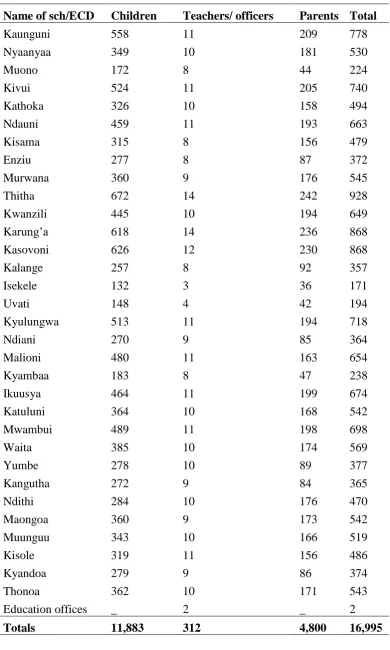
Table 3.1: Target population summary in the Zone as at November, 2014 ...39
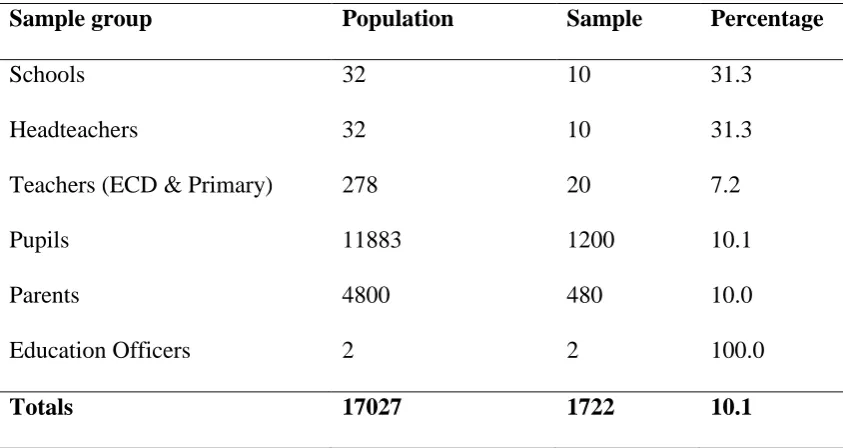
Table 3.2: Sample population ...40
Table 4.1: Age of teachers ...50
Table 4.2: Gender of the Respondents ...51
Table 4.3: Enrolment rates 6 years before Home Grown School Meals Programme was introduced ...56
Table 4.4: Enrolment rates 6 years after Home Grown School Meals Programme was introduced in 2009 as at February of each year ...57
Table 4.5: Factors that impact on education access and retention of pupils as reported by parents ...59
Table 4.6: Effect of Home Grown School Meals Programme on retention as reported by the sampled group of parents, Headteachers and Other Teachers in the Selected Schools ...61
Table 4.7: Number of pupils who dropped out of school 6 years before HGSMP was introduced as was reported by the headteachers ...64
Table 4.8: Number of pupils who dropped out of school 6 years after the introduction of HGSMP as the heads of schools reported ...65
Table 4.9: Reasons for pupils dropping out of schools as was viewed by the headteachers ...66
Table 4.10: Impact of Home Grown School Meals Programme on Performance of Schools in KCPE 6 years Before the Programme was Introduced ...67
Table 4.11: Impact of Home Grown School Meals Programme on performance of the schools in K.C.P.E six years after the programme was put in place...68
Table 4.12: Challenges Related to Management and Sustainability of HGSMP as Reported by Headteachers and Education Officers ...71
Table 4.13: Challenges faced in the management of Home Grown School Meals Programme that bars its effectiveness as reported by parents of the sampled schools...74
Table 4.14: Strategies for enhancing effective management of HGSMP as reported by BOM/HGSMP committee members ...76
ix
LIST OF FIGURES
Figure 1.1: Maslow‟s Hierarchy of Needs Theory ...16
Figure 1.2: Conceptual framework illustrating impact of HGSMP on access, retention and performance ...18
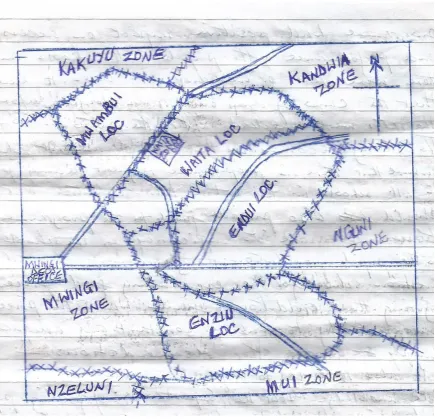
Figure 3.1: Waita Education Zone Map ...37
Figure 4.1: Experience in manning the programme ...52
Figure 4.2: Levels of Education for teachers...53
Figure 4.3: Parents Educational Levels ...54
Figure 4.4: Enrolment rates before and after HGSMP was introduced in the Zone. ...58
Figure 4.5: Effect of Home Grown School Meals Programme on retention ...62
Figure 4.6: Effect of Home Grown School Meals Programme on retention ...62
Figure 4.7: Performance of schools in KCPE before and after HGSMP ...69
Figure 4.8: Challenges faced in the implementation of HGSMP ...72
Figure 4.9: Level of community members‟ participation in HGSMP implementation ...73
x
ABBREVIATIONS AND ACRONYMS
AIDS Acquired Immune Deficiency Syndrome
ASAL Arid and Semi-Arid Lands
AU African Union
CADP Comprehensive Africa Development Programme
CBO Community Based organization
DFID Department for International Development
DSFPO District School Feeding Programme Officer
ECD Early Childhood Development
EFA Education For All
FGD Focused Group Discussion
FPE Free Primary Education
GoK Government of Kenya
HGSFHP Home Grown School Feeding and Health Programme
HGSMP Home Grown School Meals Programme
HIV Human Immune Virus
ICT Information and Communication Technology
KNEC Kenya National Examination Council
MDG Millennium Development Goal
MHTF Millennium Hunger Task Force
MoE Ministry of Education
MoEST Ministry of Education Science and Technology
NEPAD New Partnership for Africa Development
NGO Non Governmental Organization
xi SCEO Sub-County Education Officer
SFP School Feeding Programme
SMP School Meals Programme
SSF Small Scale Farmers
SUCEB Sub-county Education Board
UK United Kingdom
UN United Nations
UNESCO United Nations Educational, Scientific and Cultural
UPE Universal Primary Education
US United States
USAID United States Agency for International Development
xii
ABSTRACT
1
CHAPTER ONE
INTRODUCTION
1.1 Background to the Study
One of the most effective investments in improving economies and creating literate
self-reliant and healthy societies is Basic Education. Access to primary education has
significantly improved in many parts of the world in the past decade (World Bank
2006). UNESCO (2006) disclosed that over 77 million primary school children are
49% in the Sub-Saharan Africa who are not in school, and 57% of these children are
girls. Governments aiming at achieving Sustainable Development Goals (SDGs) for
education are faced with the need to identify and prioritize different educational
policies within different national contexts – upon this backdrop, the issue of school
meals programme is central to the education policy decision-making process (Gelli,
Al-Shaiba & Espejo, 2009).
School feeding programme (SFP) has its origin in the 1930‟s when the programmes
were introduced in the United Kingdom (UK) and United States (US) with the explicit
aim of improving the growth of children (Richer Griesel & Rose, 2000). Since then,
the SFP have broadened and attracted other countries across the world. According to
Engelbrecht (2005), about 300 million children are continually hungry and 100
million of them do not attend school. Poor nutrition has caused attention deficits,
sensory impairments and poor school attendance according to World Bank (2010).
Many countries including Kenya have introduced School Meals Programme (SMP) as
food intervention programme to reduce malnutrition and temporary hunger and
improve school attendance. The World Bank, the United Nations World Food
2
country is seeking to provide food in some way and at the same scale to its school
children (Bundy, Grosh, Gelli, Jukes, Drake & Burbano, 2009).
At the global level, India has a long tradition of school feeding programme dating
back to the 1920s; largely funded by the state governments with some external
assistance (Akanbi & Alayande, 2011). India Supreme Court directed the state
governments to introduce school feeding programme in all government and
government assisted primary schools. This was the result of a petition from the
People‟s Union for Liberties, a large coalition of organizations and individuals that
led to the Right to Food Campaign (Akanbi & Alayande, 2011). In Brazil, the school
feeding programme is in the country‟s national constitution, and is part of the
government‟s Zero Hunger Programme. Covering nearly 37 million children each
year, the programme is among the largest in the world. Its implementations are
managed by an independent institution, the National Fund for Development of
Education (FNDE), created in 1997, to be responsible for the disbursement of the
financial resources for school meals in each municipality (Akanbi & Alayande, 2011).
In Malaysia, the School Supplementary Feeding Programme (SSFP) is an integrated
effort carried out in conjunction with the nutrition and health programmes in primary
schools. The SSFP was initially carried out by the British Military Army (BMA) after
World War II as an emergency relief fund (Ministry of Education, 1986). In 1976, the
Malaysian Government formally initiated the SSFP in conjunction with a pilot project
of the National AFNP under the Prime Minister‟s Department covering 12 districts in
six states. By 1979, the programme was extended to all districts in every state in
3
Most countries in Sub-Saharan Africa tend to rely on external funding and
implementation (Gelli, 2009). Low income countries are transitioning towards
sustainable, government-funded school feeding programmes. This opens for a perfect
opportunity to strengthen links between school feeding, agricultural and community
development. Countries which have made an attempt in this transition have become
less dependent on external sources of food by linking the programmes with local
agricultural production, this being the main drive behind HGSMP.
In east and southern Africa, school feeding has been a major strategy to combat food
shortages during crises such as drought or war. In the acute stages of a crisis, for
example where schools are not even running, SFPs are not a priority and are rather a
supplement to the food aid that is provided at household level (Bennett, 2003). In a
crisis situation, children are often withdrawn from school in order to assist with
income generation, and in this context, an SFP can be useful as an incentive to
encourage the re-enrolment of children. In addition, where schools are operational, an
SFP can operate both as an indirect transfer (a school meal) and a direct transfer (a
take-home ration). In the realization of the central role of nutrition to education, the
Federal Government of Nigeria in collaboration with New Partnership for African
Development (NEPAD), World Food Programme (WFP), United Nations
International Children‟s Fund (UNICEF), and other International Development
Partners (IDPs), developed the Home Grown School Feeding and Health Programme
(HGSFHP). The programme was launched on Monday 26 September, 2005 (Akanbi
& Alayande, 2011).
On the other hand, Ghana was among the first 10 countries in Sub-Saharan Africa that
4
of the New Partnership for African Development (NEPAD). Its stated long- term goal
is to contribute to poverty reduction and enhancing food security in Ghana.
Specifically, the programme strives to achieve its objectives of boosting domestic
food production; increasing school enrolment, attendance and retention among
kindergarten and primary school children (Yendar & Dayour, 2015). The Ghana
School Feeding Programme-GSFP is one of the social intervention programmes
introduced to improve the educational standards of rural communities in Ghana. The
main objective of the programme is to motivate parents to enroll their wards in basic
schools, improve attendance, make pupils stay in schools and to improve the
nutritional intake of children in rural areas.
In Kenya, the joint WFP/MoEST School Meals Programme has been assisting school
children in food insecure regions of Kenya since 1980. This was after the Kenya
government requested WFP to support primary school children in drought affected
districts. This followed the 1979 drought that had seriously affected school
enrolment, attendance and performance and food was to be used as an incentive and
to encourage children to attend school and learn. The programme started with an
initial phase from 1980 to 1985 and it benefited close to 240,000 school children. By
2007, the beneficiary levels had increased to over 1.2 million children in 3,847
primary schools. This increase was greatly influenced by the introduction of Free
Primary Education (FPE) in January 2003 and food availability in targeted schools. In
2008, Kenya greatly faced high food and fuel prices which in turn affected the
beneficiary levels supported by WFP through School Meals Programme. This forced
the WFP to consequently reduce its support towards HGSMP by 38 %( from 1.2
million to 720,500 school children in 1973 schools in the arid districts and the
5
decision was made to hand over the “better-off” districts to the government and WFP
to continue to feed the “worse-off” districts. It was believed that during the previous
Kenya‟s programme (2009, 2013), WFP would hand over a total of 740,000 children
to the HGSMP and remain with about 570,500 under the Regular School Meals
Programme. As part of the hand over strategy stipulated in the current Kenya country
programme (2009-2013), WFP agreed with the Government to hand over 50,000
school children each year to the government-led HGSMP.
In January 2009, WFP handed over 540,000 school children in 1700 primary schools
that had been receiving school meals from WFP to the government for support
through the HGSMP. Initially, the programme covered 28 semi-arid districts though
the number of districts increased over time through the sub- division of administrative
boundaries. In July 2009, the government of Kenya allocated Kshs. 400 million to
support the HGSMP in the 1700 primary schools. Japanese government donated Ksh.
150 million in addition to support the programme. By the time of its inception in
2009, the government estimated Ksh.7 per child per day to cover the cost of providing
mid-day meal. Currently, the schools are receiving Ksh.10 per child per day
regardless of the prevailing market prices of the recommended school feeding food
basket. The targeted primary schools are allocated funds by the government of Kenya
to cover the cost of food for a specified period (mostly per term) based on the
enrolment in these schools. HGSMP goes in line with the NEPAD of the African
Union (AU) and it responds to the two NEPAD priorities that is education and ICT as
well as agricultural productivity.
Home Grown School Meals Programme is a government initiative school feeding
6
kids. WFP as of 2009 has been operating with the nation (MOE) to change the
normal school food programme into an additional sustainable HGSMP which works
as a creative security web intentioned towards food insecurity as well. Both WFP and
MoE see the steady growth and accomplishment of HGSMP as the main issue to
maintenance and chief constituent of WFP‟s outlet approach for HGSMP. School
Meals Programmes (SMPs) have for long been demonstrated as efficient in
progressing school entrance, attendance and performance as well as escalating
progression and completion levels in primary schools which operate as significant
security webs for persistent food insecurity (UN 2005 World Summit). SMPs have
also begun to reduce malnutrition diseases and hunger in general in hunger prone
Zones or districts and cater for both primary schools and Early Childhood Centres
(ECC). So far Kenya is among the nations which are implementing a nationwide
HGSMP targeting close to 0.6 million children in almost 2000 schools in 34 semi-arid
districts.
Waita Zone, in Mwingi sub-county is one of the benefiting Zones from the
NEPAD/WFP Home Grown School Meals and Health Programmes. Mwingi Central
District is classified as a Semi-arid area which requires interventions such as HGSMP
to enable children to benefit further from FPE and eventually improve learning
outcomes. Alongside this, the programme boosts food security in the area and
empowers the local small-scale farmers economically.
1.1.1 Access
Access can be said to be the opportunity for a child to gain entry into an education
system. It is to obtain, to approach or enter into something you demand. Universally,
7
regardless of their social class, gender, ethnic background or physical and mental
disabilities. To facilitate access of education to all, some countries are putting in
place some programmes e.g. school meals programme, free and compulsory basic
education and revised constitution that advocates for the right of education for all.
1.1.2 Retention
Retention is the flow of pupils from one grade to another without any incidences of
dropping out. It is further taken to mean the systematic effort by schools to encourage
pupils to remain in their schools without dropping before completing the course.
Retention in regard to school is repeating an academic year in schools: being held
back in a class or in a school, willing to continue with school regardless of the
academic performance. Provision of food in schools is used to help in retaining
pupils in school.
1.1.3 Performance
This regards the academic achievement through all dimensions of learning.
Performance in education is the academic achievement or the outcome of education. It
is the extent to which students or institutions achieve their educational goals.
Enhancers of education performance are things such as presence of physical activities,
parent‟s academic socialization and good health.
1.1.4 Attaining Access, Retention and Performance in Schools
UNESCO, (2002) found that in Africa more than 46m children were out of school
and many of them suffered from malnutrition and stunted growth or experienced
short-term hunger which seriously affected their ability to learn. Another report by
8
factors had continued to permeate the education system resulting to inequitable access
to quality education.
United Nations member states met in Dakar Senegal in 2000 and committed
themselves to the eradication of hunger and the attainment of Universal Primary
Education. Members chose School Feeding Programmes (SFPs) as one of the main
interventions to address these challenges. School feeding was entirely within the
ambit of the UN declaration and more specifically as three Millennium Development
Goals (MDGs). Greater focus on education objectives arising from the UN
commitments has seen the number of SFPs funded by donors mainly from Africa
increase greatly in the last 5 -10 years (Tomlinson, 2007). Providing food through
schools in different socio-economic dimensions such as education, health and
nutrition, social equity and agricultural development has made SFP an appealing
option within EFA strategies. Recent evaluations of the studies on the impact of SFP
on education outcomes which is perhaps the most studied field have shown that
school feeding can lead to increased access, reduced drop-out rates particularly in the
lower primary school grades and improved students learning (Ahmed, 2004; Taras,
2005; Vermeersch & Kremer, 2004).
The Sustainable Development Goals (SDGs), otherwise known a s the Global
Goals, are a universal call to action to end poverty, protect the planet and
ensure that all people enjoy peace and prosperity. These 17 Goals build on the
successes of the Millennium Development Goals, while including new areas
such as climate change, economic inequality, innovation, sustainable
consumption, peace and justice, among other priorities. Goal 1 calls for an end to
9
the poor and vulnerable, increase access to basic services and support people harmed
by climate-related extreme events and other economic, social and environmental
shocks and disasters. Goal 2 aims to end hunger and all forms of malnutrition by
2030. It also commits to universal access to safe, nutritious and sufficient food at all
times of the year. This will require sustainable food production systems and resilient
agricultural practices, equal access to land, technology and markets and international
co-operation on investments in infrastructure and technology to boost agricultural
productivity (UN, 2014).
In Kenya, Abagi, (2000) asserted that by the late 1990s between 11 and 20 per cent of
school going age population was out of school. The Education Report (1998) also
disclosed that in some regions, close to 80% of eligible children were out of school.
The government has put priority measures to improve access, retention and
performance of pupils as proved by recent policy initiatives which have focused on
the attainment of Education for All and Universal Primary Education (Sessional paper
no. 1. 2005).
Government‟s key concerns are access, retention, equity, quality and relevance all of
which sum up to holistic individual development and performance. In addition, the
achievement of these concerns improves both internal and external efficiencies of the
education system. Some efforts have been made to achieve this for example: The
introduction of the 8-4–4 structure and system of education which has fallen under
increased scrutiny as a result of reduced enrolment, retention and performance
particularly in the primary and secondary school levels.
The government of Kenya has also registered a very high concern on her commitment
10
introduction of free primary education in 2003 and free secondary education in 2008.
(Elimu News Magazine, May 2010). These were introduced to address access,
retention and performance problems that were negatively affecting provision of
education in Kenya. Following the introduction of FPE in Kenya, estimated 1.3m
children who were not in school enrolled for primary education (Gatimu, 2005). The
government has availed physical infrastructure such as classrooms, desks, toilets and
playgrounds in many schools because they have a major role to play in determining
access to education. Scarcity of such facilities was leading to some children staying
out of school like is the case of North Eastern Province of Kenya.
To curb walking long distances to the existing few schools in some regions which is
tiresome and make some children to drop out of school, more schools have been
established. Issues that deny children good performance in physical activities such as
games and sports, absence of playgrounds and play equipment and some
social-cultural factors have also been addressed but yet their impact in determining access,
retention and performance is dismal. Though primary and secondary school education
has been made compulsory to all children of school going age in Kenya and any
parents who fail to respond can be subjected to civil jail, people living in areas prone
to cattle rustling and inter-county or tribal conflicts have a tendency of withholding
their children in homes to avoid attacks by marauding gangs, rapes and possible
killings. Some cultures that do not advocate for girl child education and to them
education is a preserve for boys have been drained. Making repetition of grades a
norm has been forcing some pupils to run away from school but it has been forbidden.
Besides all these efforts, the goals of education are not being fully achieved and the
government has to keep on establishing policies and programmes that may play
11
has been introduced as an incentive to minimize the effects of all these hardships and
its impact need to be assessed from time to time.
1.2 Statement of the Problem
There are quite a number of initiatives that address the issues of access, retention and
performance as discussed in the background to the study. Good examples of
government‟s initiatives in place include provision of most vulnerable child support
grants, enactment policy on special education, provision of infrastructural funds to
schools, funding mobile schools in arid and semi-arid regions, establishment of low
cost boarding primary schools in ASAL regions and the introduction of FPE.
Lack of food as a result of prolonged drought is another factor that also affects the
provision of FPE. It is for this reason that the government in partnership with donors
such as WFP, NEPAD and USAID introduced SFPs in schools facing hunger risk.
School feeding programmes have the potential to increase access to primary
education, reduce drop-out rates and improve academic achievements of the learners.
However, the programmes definitely need to be effectively managed so that they lead
to desired benefits. Most studies on effects of SFPs on access, retention and
performance have been conducted in various parts of the world but in Kenya, it is not
clear how the management of HGSMP impacts on access, retention and performance
in primary schools. It is basically fundamental to assess the implementation of
HGSMP and its impact on access, retention and performance in public primary
12 1.3 Purpose of the Study
The purpose of this study was to determine the impact of Home Grown School Meals
Programme on access, retention and performance of pupils in public primary schools
in Waita Zone of Mwingi Central Sub-County.
1.4 Objectives of the Study
The specific objectives of the study were to:
i. Assess the effectiveness of Home Grown School Meals Programme in enhancing
the access, retention and performance of pupils in primary schools in Waita Zone.
ii. Assess issues and challenges experienced in the management of Home Grown
School Meals Programme in the Zone.
iii. Identify strategies that can be employed to make the programme more effective
and efficient to the schools.
1.5 Research Questions
The study aimed at answering the following broad questions.
i. How effective is the Home Grown Schools Meals Programme in enhancing
access, retention and performance of pupils in primary schools in Waita Zone?
ii. What challenges are being experienced in the management of Home Grown
School Meals Programme in Waita Zone?
iii. What strategies can be employed to make the Home Grown School Meals
Programme more effective and efficient to the schools?
1.6 Significance of the Study
Education, health and nutrition cannot be considered in isolation. Hunger is a barrier
to learning and school feeding programmes throughout the world have successfully
13
school feeding programmes constitute critical interventions that have been introduced
in many developed and developing countries of the world to address the issue of
poverty, stimulate school enrolment and enhance pupils‟ performance. In developing
countries, almost 60 million children go to school hungry every day and about 40 per
cent of them are from Africa.
The study is key to addressing policy issues regarding Home Grown School Meals
Programme in schools. This study may add important value towards policy
formulation on the role of Home Grown School Meals Programme on access,
retention and performance of pupils in public primary schools in Waita Zone of
Mwingi Central Sub-County.
In addition, the study may be useful to the Kenya Government in implementing
effective and prevention-focused response to challenges being experienced in the
management of Home Grown School Meals Programme. Moreover, policymakers and
school heads may use the findings to revise the strategies being employed in the
country to make the Home Grown School Meals Programme more effective and
efficient to the schools. The study will assist stakeholders in the education sector in
carrying out better contextual analysis of all variables and parameters affecting the
make the Home Grown School Meals Programme more effective and efficient to the
schools. If all these cadres use this research project work effectively, there may be no
doubt of benefiting a lot. For instance, parents would be ready to participate willingly
and knowingly in the support of the programme in their schools. Teachers would be
guided on proper management of HGSMP and undertake all procedures especially
procurement with a lot of transparency and accountability. Education officers on their
14
to address and approaches to use. The findings may give clear picture on feeding
modalities and sustainability of the programme. Impacts on education access,
performance, enrolment and retention may as well be highlighted. If the findings are
properly interpreted and used, there may be very little or no dependence on donors or
grants to run the programme. The findings may be useful and applicable in other
regions benefiting from the programme in one way or the other.
1.7 Limitations and Delimitations of the Study 1.7.1 Limitations
Since the study focused on the impact of Home Grown School Meals Programme on
access, retention and performance of pupils in public primary schools in Waita Zone
of Mwingi Central Sub-County, the findings may not be generalized to make
conclusion on other sectors and countries due to difference in economic, political and
organization structures. Further, the study only intended to describe the effects and
characteristics of Home Grown School Meals Programme on access, retention and
performance of pupils in public primary schools but did not carry out causal
relationship and therefore, the efficiency of correlations and other statistical measures
of variability of the dependent variables and independent variables were not
generated. The findings could be used to compare the impact of Home Grown Schools
Meals Programme on Education access in both public and private primary schools;
and could be tested with other similar public primary schools in other counties in
Kenya. Given the intrusive nature of the study, there were some reluctance of
respondent‟s openness to give specific information. However, the researcher assured
15 1.7.2 Delimitations
Although there exist a number of aspects in education promotion, this study focused
on access, retention and performance only. In addition, the study was carried out in
public primary schools in Waita Zone of Mwingi Central Sub-County in Kitui
County. The study also covered only four areas including the effectiveness of Home
Grown Schools Meals Programme in enhancing education access, retention and
performance; challenges experienced in the management of Home Grown School
Meals Programme and strategies that can be employed to make the Home Grown
School Meals Programme more effective and efficient to the schools.
1.8 Assumptions
The study assumes that Home Grown Schools Meals Programmes have an effect on
education access to public primary schools in Waita Ward. In addition, strategies
employed to counter existing challenges in the management of Home Grown School
Meals Programme have not been overly successful.
1.9 Theoretical Framework
The study was based on the Maslow‟s (1970) hierarchy of needs theory. According to
Abraham Maslow, there are general types of needs that must be satisfied before a
person can act optimally. As long as people are motivated to satisfy these needs, they
move towards self-actualization stage. People progress upon this hierarchy of needs
as Maslow suggested. According to Maslow, needs are arranged in terms of priority
and range from the most basic to the most complex needs. The theory is based on the
assumption that:
As a person‟s needs are addressed at one level, the person advances to the next
16
If satisfaction is not maintained for a once satisfied need, it will become a
priority need again.
The needs are interdependent and overlapping. A person moves up and down
the hierarchy.
Figure 1.1: Maslow’s Hierarchy of Needs Theory
Source: Maslow (1970). Motivation and personality (2nd Ed.) New York. Herper and Row
According to Maslow, the physiological needs include food, shelter, clothing, heat, air
and light. They must be satisfied for survival. The safety needs are based on the
premise that after physiological needs are satisfied, an individual seeks for security
and protection against the chaotic world‟s incidences that reduce the living standards.
On the other hand, social needs entail people desire affection, they want to belong to
group and feel wanted hence social groups, religions, cultural, sporting and
recreational organizations are formed. In a school setting, children need activity
groups, clubs and societies and participation in sports to satisfy this level of needs. Self
Actualization
Esteem Needs
Safety Needs
17
Esteem needs include recognition, authority and influence over others; desire to
acquire possessions and internal demands for self-respect. Such needs could be
satisfied through promotions to high ranked jobs, provision of status symbols, driving
large expensive company cars, living in a burglow among others. On the other hand,
self-actualization is the highest level of need that concerns creative activity and search
for personal fulfillment. It is the drive to become what one is capable of becoming by
fulfilling one‟s individual nature in all aspects. HGSMPs, which are the main concern
of this study, are aimed at satisfying the basic needs which Maslow refers to as
physiological needs. Maslow argues that physiological needs are the very basic needs
such as food, water, air and sleep all of which, if not satisfied, people may feel
sickness, irritation, pain and discomfort. In schools, children may fail to perform
optimally in academic activities if this basic need (food) is not met.
1.10 Conceptual Framework
HGSMP was an attempt to address Maslow‟s hierarchy of needs theory 1st level of
meals. The aim of the study was to assess the impact of HGSMP on access, retention
and performance of pupils in primary schools in Waita Zone. Figure 1.2 shows the
18 variables
Independent variable
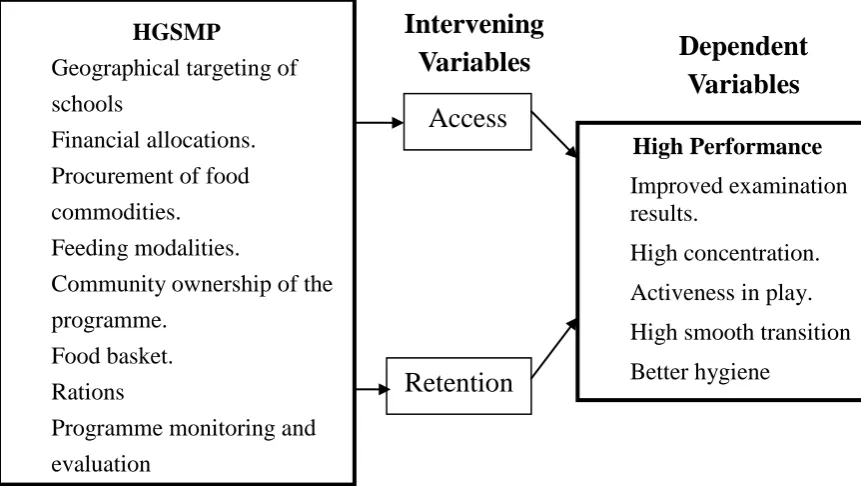
Figure 1.2: Conceptual framework illustrating impact of HGSMP on access, retention and performance
Source: Author
Independent variable here is the Home Grown School Meals Programme and the
dependent variables are many ranging from increased enrolment, access performance,
retention among others. These variables may all not be significant in all schools in
the Zone but the major ones will universally be found cutting across the Zone. The
study argues that there are issues facing HGSMP which relate to geographical
targeting of the benefiting schools, inadequate finances, school feeding modalities,
programme monitoring and evaluation, community ownerships and procurement
procedures of food commodities. These issues are determinants of the effectiveness
of the HGSMPs. Effective management of the programmes leads to educational
outcomes related to access, retention, and performance of pupils in the schools,
economic growth, food security, food market in the community and achievement of
EFA goals and UPE as international expectations. Finally, interpersonal benefits such
as literacy and self-reliance improve. HGSMP
- Geographical targeting of schools
- Financial allocations.
- Procurement of food commodities.
- Feeding modalities.
- Community ownership of the programme.
- Food basket.
- Rations
- Programme monitoring and evaluation
High Performance
- Improved examination results.
- High concentration.
- Activeness in play.
- High smooth transition
- Better hygiene
19
1.11 Definition of Central or Significant Terms
Access To obtain, to approach, or to enter into: an opportunity of a child.
Analysis Separation into parts possibly with comment and judgment. Challenge Undertaking, that is difficult but interesting.
Community All people living in a particular area, doing the same things and experiencing a sense of connection to the environment.
Enrolment A total number of people registered, a record of an entry.
Feeding modalities in-school feeding or food to take home, or a combination of the two
Foodstuff A substance that can be used or prepared for use as food.
Geographical Refers to use of physical mapping to determine the schools and/or group of people to benefit from a programme.
Health The condition of a person‟s body or mind.
Procurement A process of acquiring goods and services with an intention of promoting fair and open competition for the business while
minimizing exposure to fraud and collusion.
Retention Ability to keep learners in an institutions throughout study cycle.
Sample One of a number, part of a whole used to show what the rest is like.
School Institution of learning new skills
20
CHAPTER TWO
REVIEW OF RELATED LITERATURE
2.1 Introduction
This chapter reviews related literature to the study according to research objectives.
2.2 Definition of School Meals Programme (SMP)
This is an organized plan of feeding or sharing food in an institution of learning. The
initiative can either be parents (community), Government, Non-Governmental
Organization (NGO), Community Based Organization (CBO) or Private Oriented.
For example, school meals programme in most schools in Arid and Semi-Arid Lands
(ASAL), and slum areas is sponsored by the World Food Programme (WFP) through
the GoK/Ministry of Education (MoE) According to World Bank, School Feeding
Programmes are defined as; targeted social safety nets that provide both educational
and health benefits to the most vulnerable children thereby increasing enrolment rates,
reducing absenteeism and improving food security at the household level.
2.3 Meaning of Home Grown School Meals Programme (HGSMP)
Home Grown School Meals Programme is a programme that offers food produced
and purchased in the country or within the surroundings of a consumer. Government
spends money directly to the targeted schools to purchase food. According to World
Food Programme (WFP), Home Grown School Meals Programme aims at increasing
children‟s wellbeing and promoting local agricultural production and development by
providing an ongoing market for small-scale farmers. The value of HGSMP has been
recognized by many governments and organizations. Africa governments, in their
aim to restore agricultural growth, food security, adequate nutritional levels and rural
21
Development Programme (CADP) in 2003. The same year, NEPAD identified the
programme as having an immediate impact on food security in Africa with the
potential to contribute to long-term development goals.
The United Nations, 2005 World Summit recommended the expansion of local school
meals programmes, using home grown food where possible as one of the quick impact
initiatives to achieve the MDGs especially for rural areas facing the dual challenge of
high chronic malnutrition and low agricultural productivity (World Summit
Outcome, 2005), (United Nations Millennium Project, 2005). Finally, the African
Union Special Food Summit in December 2006 reaffirmed the HGSMP initiative and
concluded that the implementation must be expanded to reach at least 20% of member
states by 2008. A report on Investing in Development which was published in 2005
by the Millennium Project as a practical plan to achieve the MDGs produced the
following ambitious quick win recommendation; Expansion of the school meals
programmes to cover all children in hunger stricken areas using locally produced food
by 2006 (UN Millennium Project, 2006). This recommendation motivated NEPAD,
the UN, WFP and the Millennium Hunger Task Force (MHTF) to an extent of
launching a pilot Home Grown School Feeding and Health programme(HGSFHP),
that was designed to link school feeding to agricultural development through the
purchase and use of locally and domestically produced food.
NEPAD and WFP signed a memorandum of understanding to enhance co-operation
on Home Grown School Feeding among other issues. Twelve African countries
identified to pilot the programme included Angola, Democratic Republic of Congo,
Ethiopia, Ghana, Kenya, Malawi, Mali, Nigeria, Mozambique, Uganda, Senegal and
22
Kenya has already started implementing nation-wide HGSMP targeting schools in the
semi-arid districts. In Kenya, the Ministry of Education (MoE) disburses funds to the
schools for the implementation of HGSMP. The funds are credited directly to the
schools accounts and the school feeding programme committees are expected to
procure food commodities from the competitive local suppliers. The food ratio per
child per day is usually, 150gm cereals, 40gm pulses, 5gm vegetable oil and 3gm salt.
The food is consumed in the school compound during lunchtime. Parents or rather
the communities are expected to provide water, firewood, kitchen, utensils, storage
facility and employ a cook.
According to WFP, regular SFP is strictly limited to arid areas of Kenya for example
Northern Kenya, North Eastern and some parts of Eastern and Coast provinces. In the
past, the food used to be imported from outside the country and delivered to the
schools by WFP and MoE an idea that the new HGSMP opposed. Waita Zone since
2009 and now the entire Mwingi Central Sub-County is one of the Zones benefiting
from NEPAD/WFP Home Grown School Meals programme, Mwingi Central is one
of the Kenyan sub counties classified as semi-arid areas which require interventions
like HGSMP to enable children to benefit from Free Primary Education (FPE) and
also boost the local small scale farmers.
School feeding programmes are associated with increased enrolment (Gelli et al.,
2007). Access and retention are major challenges facing education provision in
Kenya. Since the initiation of the FPE in 2003, the Government has not ensured total
enrolment for all ECD and primary school-going age children. Achoka (2007) asserts
that in hardship areas, only one out of three children attends primary school. Among
23
management of HGSMP and its impact on pupils‟ access, retention and performance
in Waita Zone of Mwingi Central Sub-County in Kitui County.
2.4 Objectives of Home Grown School Meals Programme
According to the GoK/MoEST HGSMP Implementation Guidelines (2014), the
programme aims at:-
a. Providing equal opportunities of access to free education to Kenyan school going
children from poverty stricken backgrounds.
b. Reducing short-term hunger.
c. Improving the children‟s health and nutritional status.
d. Improving the children‟s attention span and cognitive ability.
e. Improving academic performance.
f. Minimizing the drop-outs.
Other objectives include:
Linking school feeding to local agricultural production.
Increasing small-scale farmers (SSF) access to the school feeding market.
Encouraging improved production practices among small – scale farmers.
Increasing direct purchases from small-scale farmers.
2.5 Beneficiaries of the Home Grown School Meals Programme
The programme targets socio-economically disadvantaged and nutritionally
vulnerable children in pre-primary and primary public schools. The current HGSMP
covers schools in the semi-arid districts which were handed over to the government
by WFP from the regular school meals programme in order to increase access,
24
2.6 Why food is Important for School Children
i) Many children from poverty stricken backgrounds do not get enough food at
home.
ii) With empty stomachs, children easily become distracted and have problems
staying alert and concentrating on their lessons.
iii) Short-term hunger creates a barrier to learning, impeding child‟s ability to
achieve.
iv) In most cases, severe malnutrition results in mental and physical stunt which in
turn places an added burden on poor societies.
NOTE: food supplied to schools through SMPs offers a workable solution of hunger
to school children and families from where they come.
2.7 Impact of HGSMP on Education Access, Retention and Performance The decision to enroll a child in school and for the child to maintain regular school
attendance is influenced by many factors that may include the perceived value of
education, direct or indirect costs of schooling, availability of employment
opportunities and the availability of quality school facilities. Parents and guardians are
compensated for direct educational costs and opportunity costs accrued from the child
labour when children go to school through food incentives offered to pupils or to
families as school meals and take home rations especially to girls, orphans and
vulnerable children. An evaluation of India‟s Mid-Day Meals (MDM) Programme
which is the largest School Feeding Programme in the World found that female
school attendance increased by 15 per cent in schools that provide Mid-Day Meal
Programme than in the schools that did not provide as Dreze and Kingdom, 2001
25
detectable effect on the enrolment of boys. Schools with in-school feeding experience
increase in attendance and enrolment plus a reduction in drop-out rates as evidence
from randomized controlled trials try to illustrate.
Powell, (1998) carried out a study in Jamaica that gave breakfast to children for a year
and found that the attendance rose to 2.3 per cent points more than it rose for the
control group from a very high baseline, relative to other low income countries of
around 80 per cent. Jacoby (1996) also carried similar randomized controlled trials of
a school breakfast programme in Peru and found higher attendance rates in the
treatment versus control schools. Combining an in-school snack with micronutrients
fortification (iron, iodine and vitamin A precursor) in primary schools in South Africa
resulted to a fall in diarrhea related absenteeism from 79 days to 52 days, an increase
of approximately 15 per cent in attendance (Van Stuijvenberg, 1999).
In Bangladesh, a fortified biscuit programme appeared to have increased net
enrolment rates by 10%, increased attendance by 1.3 days per month and reduced the
chances of dropping out by 7.5 per cent (Ahmed, 2004). Other school feeding studies
in low income countries found greater attendance for pupils receiving in-school meals
compared to pupils in control groups (Kristjanson, 2007). In addition, most
systematic reviews of SFPs assert that on average, the per child increase in school
attendance was four to six days per year. Evaluation of take-home rations programme
carried out in Pakistan further shows impact on enrolment (WFP, 2005). Overall
enrolment of girls in food aided schools grew by 135% between 1988/1999 and
2003/2004 compared to 29% in control schools during the same period and was
mainly strong in the first grade of primary school. The programme appeared to boost
26
48% of the households did not send any of their daughters to school. Later on, all
households educated at least one daughter.
Take-home rations in Bangladesh similarly increased girls enrolment in schools with
the programme by 44 per cent and boys enrolment by 28 per cent, while in the
non-programme schools, enrolment increased by 2.5 per cent during the same period
(Ahmed & Del Ninno, 2002). A study carried out in areas with high HIV and AIDs
prevalence emerged with evidence showing that school feeding has the potential of
enhancing enrolment attendance and progression of orphans and other vulnerable
children (Edstrom, 2008).
Similar results were seen in a study of Kenyan pre-school children receiving breakfast
where school participation of pupils in the treatment group was 8.5 per cent higher
than the control group (Vermersch & Kremer, 2004). Schools are viewed by
UNESCO and UNICEF as centres for care and support for vulnerable children hence
the enhanced enrolment of orphans and vulnerable children would be seen as a
positive impact of school feeding programmes.
2.8 Importance of School Meals Programmes
External evaluation of the SMPs has revealed that the benefits for this programme are
many as a safety net was also demonstrated by the fact that more than a half of the
school children, the mid-day meal provided was the only meal they had. According to
Greenheigh (2007), School meals programmes are put in place in order to:
Alleviate short-term hunger in malnourished school children.
Motivate parents to enroll their children in schools and have them attend
regularly. This reduces absenteeism and increases the duration of schooling
27
Address specific micronutrients deficiencies in school age children.
Increase community involvement; schools with their communities behind
them are more effective than schools with less or without community
involvement.
Make children feel valued and looked after.
Meals at schools serve as a social event that engages, motivates and stimulates
children.
Stimulate farm productivity. If school meals programmes are community-
owned, they create local food demand hence stimulating crop production.
All these benefits sum into improving enrolment, access of quality education,
retention of pupils in school, smooth transition, efficient curriculum delivery services
among others.
2.9 Education and Learning Depend on Food, Nutrition and Health
According to Rosso (1999), nutrition and health status is powerful influence on a
child‟s learning and on how well children perform in school. Children who lack
certain nutrients in their diet or who suffer from protein-energy, malnutrition hunger,
parasitic infections or other diseases do not have the same potential for learning as
healthy and well-nourished children. Weak health and poor nutrition among ECD
centres and primary school children diminish their cognitive development either
through psychological changes or by reducing their ability to participate in learning
experiences.
Poor nutrition and health among school children contribute to the inefficiency of the
educational system, children with diminished cognitive abilities and sensory
28
drop out of school than children who are not impaired. They also enroll in school at a
later age if at all and take fewer years of schooling. Irregular school attendance by
malnourished and unhealthy children is one of the key factors for poor performance.
Temporary hunger for children who are not fed before leaving for school can have
adverse effects on learning. Hungry children have more difficulties in concentrating
and performing complex tasks. Improving nutrition and health can lead to better
performance, fewer repeated grades and reduced drop-out cases (Del Rosso, 1999).
2.10 School Health and Nutrition
According to Rosso and Marek (1996), many school meals programmes have
significant health intervention components and are often an important platform from
which to deliver health interventions. Rosso also said that poor health significantly
contributes to poor educational outcomes. Traditionally, health and education have
been seen as separate domains with consequent separation of responsibilities between
government departments. However, the inextricable link between health and
education is being acknowledged and there is compelling evidence that shows how
child education can benefit from broad health and nutrition interventions.
The two major goals of school meals programmes are education and food security
(Bennet, 2003). Educational goal includes increased enrolment and attendance and
improved concentration during teaching aided by food provided. The goal of food
security includes the reduction of short-term hunger and improvement of nutritional
status of school children thereby reducing levels of malnutrition (Dr. Mark
29
2.11 Nutritional Needs of School Children (3 – 12 years)
Pamela Minett; Child Care and Development (2002: 225) says that immediately
breast feeding and weaning cease, children depend on other foods for their nutritional
requirement. At this age, growth is rapid. During this period, parents should ensure
that their children eat balanced diet to support their high activity level, growth and
development. Balanced diet should contain enough of all the necessary food
substances. It does not mean every meal has to be balanced or that the right amounts
of each food substances have to be eaten daily. It means that over the course of
several days, the body needs to take enough of the right kinds of food substances to
grow and stay healthy. According to Teachers and Caregivers Training Module on
food and nutrition (1995:30), children normally eat adult food which should be
adapted to suit them. This can be done by making the food a bit softer and with little
or no spices. Eating intervals for children should be shortened. Whether at home or
in school, children should be provided with mid-day meal packed by parents from
home or arrangements to cook the meal in school is made.
Oniang‟o (1998), in his book „Feeding the Child‟, has commented on the nutritional
needs of the children and said that if children are fed with balanced diet which is well
administered, they grow healthy and active. They become more playful and
30
2.12 Effects of Home Grown School Meals Programme (a)To the school children
i) Large enrolments: Home Grown School Meals Programme, as short- term hunger solution attracts and motivates parents to take their children to school in
large numbers.
ii) Regular school attendance: As children go to feed in school, absenteeism is reduced. Availability of food in schools makes children think of going to school
all the time.
iii) Increased duration of schooling: HGSMPs retain children in school and alleviates dropping out. Children remain in school learning as long as SMP is in
place (Rosso, 1999) and (Tomlinson, 2007).
iv) Increased concentration and performance: Benett, (2003) argues that food containing micro-nutrients like iodine and iron served in schools results to
improved cognitive functions and learning. This makes children develop high
concentration span and finally this translates to better school performance.
v) Full growth in height and weight in relation to age: Children develop strong and well-formed bodies because of the balanced diet comprised in the School
Meals Programme Foods.
vi) Activeness in Children: Protein and energy included in the SMP make children have energy and keeps them warm and active in play (Minett, 2002).
(b) To the farmers/community
Food availability. Food access.
Improved food utilization.
31
2.13 Challenges facing Home Grown School Meals Programme
Home Grown School Meals Programme, which has been recommended to be very
essential by researchers and of a fundamental benefit on children in primary school
(ECD Centres inclusive) are faced by a number of challenges. One of the major
challenges is lack of active community involvement. In many schools, SMPs are not
well-supported by parents. They are forcefully made to avail firewood, water, other
necessary facilities and employing a cook which are their responsibilities arguing that
the government and donor should make arrangement for all these. Implementation of
SMPs income areas faces resistance from the communities who do not see the benefit
but see the extra burden involved in the running of this programme as Levinger,
(1994) reiterates is a common challenge in schools, Zones, districts, counties or
country.
It has also been found that over dependence on food aid from WFP, USAID, NEPAD
or any other food aiding agencies has made many countries unable to manage their
HGSMPs or sustain the already initiated programmes. Political differences and
instability pose a challenge to HGSMP in that prominent leaders in the country may
not freely come together to plan for effective school meals programmes in our
schools. Food prices and financing options are related challenges facing HGSMPs.
Food prices are never constant. They fluctuate more often. SMPs by virtue of the fact
that they involve food are very expensive and problematic. Countries that offer SMPs
allocate quite huge amounts of money in their budgets to run them. Costs associated
with food management, logistics and control represent a significant financial burden
32
Changes in traditional ways of living as for almost two decades become a challenge to
SMPs in the sense that people have left rural areas where locally grown foods are
found and eaten and moved to town where most of the food bought is under
nutritional status. This habitual belief has hit back in the rural areas and use of locally
produced food is under rated by children in schools (Wood, Granville & Vaughan
1997: 318-320). Harsh climatic conditions leading to frequent droughts and famine
are part of the challenges facing HGSMPs. Sometimes rain fail and food commodities
are imported, a process which becomes very expensive to the donor.
High poverty levels and limited resources combine to become a challenge to SMPs.
Poor commodities are uncooperative and hostile. Even with limited resources, they
give birth to unmanageable number of children. The government is only able to reach
these high numbers of children in need of food in primary schools through school
feeding programmes. The process of tendering, procurement, delivery and high
logistical costs are cumbersome and time consuming hence a challenge to regular
school meals programmes.
2.14 School Feeding Programmes and Educational Achievements
Poor health and nutrition among school age children diminish their cognitive
performance either through physiological changes or by reducing the ability to
participate in learning experiences or both. Short-term hunger common in children
who do not eat before going to school results to difficulty in concentrating and
performing complex tasks even if the child is well nourished. Children under SFPs
have the potential for improved educational attainment as evidenced by results of
several randomized and controlled trials. Various studies worldwide have found that