The FOXY study: A randomized trial comparing the efficacy and safety of fesoterodine and oxybutynin XL in children with overactive bladder – Preliminary results
*Sophie Ramsay (fellow), Geneviève Nadeau (urologue), Katherine Moore (urologue), Stéphane Bolduc (urologue)
Division of Urology, CHU de Québec, Université Laval, Québec, QC, Canada
Introduction et objectifs : Antimuscarinics are the mainstay of treatment for overactive bladder (OAB), but oxybutynin is currently the only agent approved by Health Canada for the pediatric population. Considering that some children have a suboptimal response to oxybutynin or suffer from intractable side effects, there is a necessity for more efficient or better-tolerated medications to gain approbation. Our objectives were to assess and compare the efficacy and safety of fesoterodine and oxybutynin XL in the treatment of children with OAB.
Matériels et méthodes : We conducted a randomized, double-blind trial with a crossover design to compare the use of fesoterodine and oxybutynin XL in children with OAB aged 5‒14 years. Every child meeting the inclu-sion criteria received a daily dose of one of the two medications studied (fesoterodine 4 mg or oxybutynin XL 10 mg) for an eight-week period (phase 1). The medication was then stopped for three days before starting a second eight-week period with the other agent (phase 2). The dose could be doubled during each period. Four followup visits were scheduled (at Weeks -2, 0, 8, and 17). A three-day voiding diary had to be filled out prior to each visit. The efficacy and safety of the anticholinergics were assessed through changes on the voiding diaries, the Patient Perception of Bladder Condition (PPBC) score, the occurring of side effects and adverse events on history, physical exam findings, vital signs, electrocardiogram, post-void residual, urinalysis, and blood tests. The medication adherence was also noted. Résultats : As of now, 25 patients (nine girls, 16 boys) have completed the study. Patients were either in Group 1 (feso in phase 1, oxy in phase 2) or 2 (oxy in phase 1, feso in phase 2). Both groups had improvement of their daily urinary frequency throughout the course of the study, from seven episodes of micturition to five and from 5.4 to four for Groups 1 and 2, respectively. Likewise, both groups decreased their number of daily urinary incontinence episodes, from 0.5 to 0 and from 1.3 to 0.5 in Groups 1 and 2, respectively. Those results were not statistically significant. Interestingly, both groups noted an increased in bladder capacity at the end of phase 1 (from 93 to 128 and from 114 to 169 mL in Groups 1 and 2, respectively), but a decrease at the end of phase 2 (from 128 to 105 and from 169 to 128 mL in Groups 1 and 2, respectively). The average medication adherence for both phases was 92%. All side effects noted were mild or moderate and there were no major adverse events identified.
Conclusions : Fesoterodine or oxybutynin XL appear effective and safe treatment options for OAB in children. According to our current data, the efficacy of both molecules seems similar. Our final results will be presented once 50 patients will have completed the study.
Outcome comparison of different approaches to self-intermittent catheterization in neurogenic patients: A systematic review *Samer Shamout (fellow), Xavier Biardeau (fellow), Jacques Corcos (urologue), Lysanne Campeau (urologue)
Jewish General Hospital, Division of Urology, Department of Surgery, McGill University, Montreal, QC, Canada
Introduction et objectifs : Different types of catheters and techniques have been described in the past three decades to identify the best self-intermittent catheterization method. Our goal is to systematically review the literature on the most appropriate material and technique to perform self-intermittent catheterization in the adult neurogenic population.
Matériels et méthodes : A systematic review search was performed through PubMed/Medline and Embase databases to study all types of self-intermit-tent catheters, and analyzing their impact on urinary tract infections (UTI), urethral trauma, cost-effectiveness, quality of life, and patient satisfaction. We used the following keywords “intermittent catheterization/catheterisa-tion,” “neurogenic,” “urinary catheters for intermittent use,” and “urethral catheterization/catheterization” published by November 2015.
Résultats : After screening 3367 articles, 33 were included in the final syn-thesis (level of evidence 1b to 2b). The 2515 trial participants were mainly spinal cord injury adults and women with multiple sclerosis. Hydrophilic-coated catheters tended to decrease the incidence of UTI and urethral trauma, as well as improve patient satisfaction when compared to non-hydrophilic-coated catheters. Similarly prelubricated catheters were asso-ciated with better results in terms of patient satisfaction. Sterile technique seemed to decrease the incidence of recurrent UTI; however, these results are counterbalanced by significantly increasing cost compared to clean catheterization.
Conclusions : The present review demonstrated advantages of hydrophilic-coated catheters in decreasing risk of UTI and urethral trauma, as well as improving patient satisfaction. Prelubricated catheters have been shown to be superior to conventional polyvinyl chloride catheters. Randomized, controlled trials comparing hydrophilic and prelubricated catheters must be conducted to assess possible superiority and cost-effectiveness.
Validation de biomarqueur par immunofluorescence : Une approche pour suivre la progression du cancer de la prostate *Clairefond S (autre), Ouellet V (autre), Péant B (autre), Barrès V (autre), Fragoso G (autre), Mes-Masson AM (autre), Saad F (urologue)
Centre de Recherche du Centre Hospitalier de l’Université de Montréal, Institut du Cancer de Montréal, Montréal, QC, Canada
Introduction et objectifs : Le cancer de la prostate (CP) est le cancer le plus fréquemment diagnostiqué et il s’agit de la troisième cause de mortalité liée au cancer chez les hommes au Canada. La gestion du choix des traitements se fait en fonction du pronostic de chaque patient, il est donc nécessaire de trouver des biomarqueurs afin d’identifier au plus tôt ceux avec un mauvais pronostic. Notre objectif est de mettre au point une méthodologie efficace et reproductible permettant l’évaluation et la validation de biomarqueurs. Matériels et méthodes : La spécificité des anticorps pour chaque biomar-queur a été vérifiée par la technique de Western Blot et par immunofluor-escence (IF) sur des micro-étalages tissulaires (TMA) d’optimisation formés de culots cellulaires et de xénogreffes crées à partir des lignées cellulaires du CP injectées dans des souris. La quantification de l’expression des bio-marqueurs a été réalisée sur des échantillons de prostatectomies radicales (286 patients), disposés en duplicata sur un TMA. L’analyse de l’expression des biomarqueurs a été faite de façon semi-automatique via le logiciel
ABSTRAITS AUQ 2016
Programme Scientifique - Session 1
S206 CUAJ • September-October 2016 • Volume 10(9-10Suppl5) © 2016 Canadian Urological Association
VisiomorphDP. La corrélation avec les données cliniques des patients a été établie avec le logiciel SPSS-Statistics.
Résultats : Dans l’optique de notre analyse semi-automatique, nous avons mis au point différents masques pour distinguer les différents comparti-ments cellulaires par IF. Chaque lame est conjointement marquée pour l’épithélium (CK8 et CK18) et le noyau (DAPI). La différenciation entre les glandes cancéreuses et non cancéreuses est réalisée à l’aide d’un marqueur de la membrane basale (p63). Avec cette méthodologie, nous avons pu identifier une augmentation de l’expression du biomarqueur ErbB3 dans les glandes tumorales (p<0.0001). L’analyse statistique n’a pas montré d’association entre le niveau d’expression de ErbB3, localisé dans le noyau épithélial, et le risque de rechute biochimique des patients (log rank, p=0.124, médiane à 1160.37 unité de fluorescence). Cependant, une association significative entre la faible expression de ErbB3, local-isée dans le noyau stromal, et une augmentation du risque de rechute biochimique des patients (log rank, p=0.003, médiane inférieur à 950.93 unité de fluorescence) a été mise en évidence.
Conclusions : Notre approche de marquage permet de quantifier l’expression de biomarqueurs dans un microenvironnement tumoral, afin de fournir suffisamment de données pour la sélection et la validation de biomarqueurs. Au regard de cette méthodologie, nous avons identifié une surexpression du biomarqueur ErbB3 en présence de glandes tumorales du cancer de la prostate.
Altis® adjustable single-incision sling for female stress urinary incontinence: Mid-term efficacy and satisfaction
*Suzie Adam (autre), Mélanie Aubé (résident), Richard Sioufi (urologue), Le-Mai Tu (urologue), CHUS Fleurimont, Sherbrooke, QC; Hôpital Anna-Laberge, Châteauguay, QC, Canada
Introduction et objectifs : The third-generation slings are available on the market since 2006. Controversies were reported about their short-term efficacy results. Altis has been proven safe and effective with a median followup of 12 months. We sought to evaluate mid-term safety and effi-cacy of the Altis® single-incision sling system for the treatment of female
stress urinary incontinence (SUI). Altis has been proven safe and effective with a median followup of 12 months.
Matériels et méthodes : A prospective trial was performed in two Quebec centres (one academic and one community hospital). Female patients with SUI, who had failed conservative therapy and were aged 18 years or older, were included. Exclusion criteria were urogenital infection, pelvic organ prolapse ≥stage 2 by Baden Walker classification, requirement of a con-comitant pelvic floor procedure, past surgical SUI treatment, pregnancy, or planning on being pregnant. Patients were evaluated preoperatively and postoperatively at three and six months, then yearly for a total of five years. Questionnaires and gynecological exams, as well as objective and subjective measures were used as a followup. Objective evaluations consisted of 24-hour pad weight test, daily pad use, and cough stress test. Subjective measures consisted of the Urogenital Distress Inventory-Short Form (UDI-6), Incontinence Impact Questionnaire-Short Form (IIQ-7), and Patient Global Impression of Improvement (PGI-I) questionnaires. Résultats : Between 2009 and 2013, 94 patients were implanted with the Altis sling. Mean patient age was 60.3 ± 11.6 years. Sixty-four patients (68.1%) had mixed urinary incontinence, while 30 (31.9%) presented with SUI alone. Interim analysis of data was done in August 2015. By this time, 18 patients were lost to followup, leaving 76 patients for assess-ment. Median followup duration for these 76 patients was 44 months. Median 24-hour pad weight test decreased from 20.4g (13.5, 74.6 IQR) at baseline to 0.0 g (0.0, 5.0 IQR) at three years (p<0.0001). Median daily pad use decreased from 2.5 (1.5, 3.5 IQR) to 0.0 (0.0, 1.0 IQR) (p<0.0001). Positive cough stress test was present in 100% of patients preoperatively and was reduced to 17% (13 patients) at three years. Of 76 subjects, 51 (67.1%) were completely dry (so were cured) at 36 months. Subjectively, median reduction in UDI-6 and IIQ-7 scores were 5.0 (2.5, 9.0 IQR) (p<0.0001) and 12.0 (6.0, 16.0 IQR) (p<0.0001), respectively. Ninety-two percent (70 patients) indicated that their SUI was very much better or much better based on the PGI-I. No patient had a worse
condi-patients (3.9%) experienced self-limited transient urinary retention shortly after the procedure.
Conclusions : The Altis single-incision sling system appears to be safe and effective for treatment of SUI, with high patient-subjective satisfaction.
Assessment of the rate of adherence to international guidelines for androgen-deprivation therapy with external beam radiation therapy: A population-based study
*Hiba Abou-Haidar (résident), Paolo Dell’Oglio (fellow), Sami-Ramzi Leyh-Bannurah (fellow), Zhe Tian (autre), Alessandro Larcher (autre), Giorgio Gandaglia (urologue), Nicola Fossati (autre), Shahrokh F. Shariat (urologue), Umberto Capitanio (urologue), Alberto Briganti (urologue), Francesco Montorsi (urologue), Markus Graefen (urologue), Fred Saad (urologue), Pierre I. Karakiewicz (urologue)
CHUM, Hôpital Saint Luc, Montréal, QC, Canada
Introduction et objectifs : The National Comprehensive Cancer Network and the European Association of Urology guidelines recommend using radiation therapy (RT) with androgen-deprivation therapy (ADT) to treat high-risk and locally advanced prostate cancer patients. The objective of this study was to evaluate the degree of adherence to these guidelines. Matériels et méthodes : Between 2003 and 2009, in the Surveillance Epidemiology and End Results (SEER)-Medicare database, 14 180 patients were diagnosed with high-risk (T1–T2 with World Health Organization histologic grade 3) or locally advanced (T3–T4 with any histologic grade) prostatic adenocarcinoma. We assessed the rate of adherence to guide-lines with respect to use of RT-ADT in the overall population and after stratification according to stage–grade groupings (T1–T2 G3 vs. T3–T4 any grade), age (66–69, 70–74, 75–79, ≥80 years), Charlson comorbidity index (CCI) (0, 1, ≥2), and pre-existing baseline cardiovascular (CV) dis-ease. We depicted the rate of RT-ADT administration graphically over the study period. Multivariable logistic regression analyses were performed to assess the predictors of RT-ADT use.
Résultats : RT-ADT rates and guideline adherence were 58–75%, with the highest rate (75%) in 2003 and the lowest (58%) in 2009. When stratified according to stage–grade groupings, age, CCI, and pre-existing base-line CV disease, similar results were obtained. In multivariable analyses, year of diagnosis (p<0.001), patient age (p<0.001), stage–grade groupings (p<0.001), CCI (p=0.036), race (p<0.001), marital status (p<0.001), popu-lation density (p<0.001), and U.S. regions (p<0.001) were independent predictors of RT-ADT use. The limitations of our study include age >65 years and exclusive Medicare coverage.
Conclusions : The rate of guideline adherence regarding the use of RT-ADT is suboptimal and decreases with time instead of increasing.
Effects of chronic lung disease and smoking on prostate cancer mortality after radical prostatectomy
*Tal Ben-Zvi (urologue), Moliere Nguile-Makao (fellow), Marc-André Allard (résident), Louis Lacombe (urologue), Yves Fradet (urologue), Vincent Fradet (urologue)
Centre de recherche du CHU de Québec, Université Laval, L’Hôtel-Dieu de Québec, Québec, QC, Canada
Introduction et objectifs : Faced with an aging population and associated patient comorbidities, urologists are confronted with the dilemma of risk stratification in identifying higher-risk patients being followed for pros-tate cancer (PC) post-radical prospros-tatectomy (RP). Our objectives were to examine the associations between chronic obstructive pulmonary disease (COPD), smoking, and cause of death.
CUAJ • September-October 2016 • Volume 10(9-10Suppl5)
S208
Session scientifique 1
COPD. COPD significantly increased PCSM risk (HR 2.83, 95% confi-dence interval [CI] 1.3‒6.4), but smoking in itself did not. Both types of COPD affected PCSM: COPD in men who never smoked (HR 6.7, 95% CI 1.4‒32.2) and in current smokers (HR 5.1, 95% CI 1.3‒19.6). However, PCSM was not affected in past smokers with COPD. Risk of OCM was increased by both COPD (HR 1.6, 95% CI 1.5‒1.8), and smoking (HR 4.3, 95% CI 3.7‒4.9).
Conclusions : Both smoking- and non-smoking (ever)-associated forms of COPD were significantly and independently associated with OCM as expected, but also with PCSM in this cohort. Moreover, smoking ces-sation appears to reverse the risks of smoking-related COPD effects on PCSM. If validated, our findings would support a specific PCSM effect of smoking and smoking cessation post-RP. More research is required at this time to identify the underlying mechanisms linking COPD and smoking to PCSM.
Dynamic metabolic imaging of prostate cancer metastasis reveals intra-patient heterogeneous response to systemic therapy *Fannie Morin (résident), Jean-Mathieu Beauregard (autre), Michelle Bergeron (résident), Molière Nguile Makao (autre), Louis Lacombe (urologue), Vincent Fradet (urologue), Yves Fradet (urologue), Frédéric Pouliot (urologue)
CHU de Québec, Université Laval, Hôtel-Dieu de Québec, Québec, Canada
Introduction et objectifs : Intra-patient prostate cancer (PCa) heterogen-eity has been recently characterized by genomic and transcriptomic stud-ies, but systemic treatment response heterogeneity has not been reported, nor imaged. Our objective is to evaluate the intra-patient inter-metasta-sis response to systemic treatment in patients with metastatic PCa. We hypothesized to find systemic treatment inter-metastasis heterogeneous metabolic responses between the two FDG-positron emission tomog-raphy/computed tomograph (PET/CT), pre- and post-treatment.
Matériels et méthodes : In this case series, we have imaged metastatic PCa patients with FDG-PET/CT at start and during systemic therapy, from 2010‒2015. We measured 165 single metastasis metabolic activity change between PET/CT. We defined inter-metastasis heterogeneity by opposite metabolic responses of at least two metastases within at least one compartment (bone or soft tissues) between the two imagings. Fifteen patients with metastatic PCa underwent FDG-PET/CT prior to, and at least three months after initiation of a systemic therapy without change in therapy. Single metastasis metabolic response (change in SUVmax, complete response or new lesions) was analyzed. Change in total lesion glycolysis (TLG) was assessed for each patient. Biochemical progression was also recorded.
Résultats : Intra-patient, inter-metastasis heterogeneity was found in 40% of cases and was associated with a decrease in progression free survival (log rank, p=0.001). Moreover, we found that whole body TLG response correlated with PSA response, a surrogate for overall systemic response (r2=0.67).
Conclusions : Our results suggest that systemic therapies can induce imageable heterogeneous responses between single metastases in PCa patients and that the overall metabolic response correlates with biochem-ical response. Therefore, FDG-PET/CT imaging of metastasis response heterogeneity may be exploited to identify clinical resistance earlier after treatment start and also may enable resistant clone biopsy for molecular analysis.
How to balance the risk of cancer-specific mortality and other-cause mortality in the decision between surgery or observation for patients with T1 kidney cancer
*Vincent Trudeau (résident), Alessandro Larcher (fellow), Paolo Dell’Oglio (fellow), Zhe Tian (autre), Pierre Karakiewicz (urologue)
Cancer Prognostics and Health Outcomes Unit, University of Montreal Health Centre, Montreal, QC, Canada
Introduction et objectifs : Without precise risk assessment of cancer-specific mortality (CSM) and other-cause mortality (OCM) after surgery (SUR) or observation (OBS) for patient with T1 kidney cancer, treatment selection remains an empirical process. The aim of the study was to iden-tify specific patients that would benefit from SUR over OBS.
Matériels et méthodes : A population-based assessment of 11 192 patients with T1 kidney cancer treated with SUR or OBS in the Surveillance Epidemiology and End Results (SEER)-Medicare database was performed. SUR was defined as radical or partial nephrectomy. A multivariable com-peting risk regression model was fitted to predict CSM and OCM after SUR or OBS. Covariates consisted of age, gender, race, Charlson comorbidity index (CCI), history of acute kidney injury (AKI) or chronic kidney disease (CKD), tumour size, and year of diagnosis. Heagerty’s method was used to compute the area under the curve (AUC).
Résultats : At a median followup of 64 months, the five-year risk of CSM and OCM was 6.7 and 24%, respectively. All the predictors evaluated were associated with the outcomes of interest (p<0.05). According to the proposed model, the benefit of the choice for SUR over OBS with respect to CSM and OCM was importantly influenced by host and cancer characteristics. The five-year CSM risk of a 70-year-old African-American woman with CCI=0, without AKI or CKD diagnosed with a 65 mm tumour was 14% in case of OBS and 6% in case of SUR. The five-years risk of OCM for the same patient was 12% in case of OBS and 8% in case of SUR. These figures provide strong arguments for selecting SUR over OBS. Conversely, the five-year risk of CSM of an 85-year-old Caucasian man with CCI=8, with AKI or CKD diagnosed with a 15 mm tumour was 8% in case of OBS and 4% in case of SUR. The five-year risk of OCM for the same patient was 74% in case of observation and 58% in case of surgery. These figures provide weaker arguments for selecting SUR over OBS. AUC of the model was 74% for CSM and 73% for OCM.
Conclusions : The benefit of SUR over OBS was maximal in younger, healthier patients with larger tumours and marginal in older and sicker patients with smaller tumours. The proposed model can optimize clinical decision-making, providing crucial and objective information with respect to long-term CSM and OCM risk, which can be used to elect elderly patients with T1 kidney cancer for SUR or OBS.
The use of urodynamics in followup of neurogenic bladders treated with onabotulinum toxin A
*Michelle Bergeron (résident), Katherine Moore (urologue), Geneviève Nadeau (urologue)
CHU de Québec, Institut de réadaptation en déficience physique de Québec, Québec, QC, Canada
Introduction et objectifs : Patients with neurologic disorders may suf-fer from detrusor overactivity (NDO) or low bladder compliance, which can damage the upper urinary tract. Intradetrusor injections of onabotulinum toxin A (BoNTA) have recently emerged as a treatment for NDO. Urodynamics (UDS) are currently used at initial diagnosis and at regular intervals during followup to ascertain that the intravesical pres-sure remains within safe limits. However, with regards to the discomfort and risks associated with UDS, our objective was to assess if UDS done at regular intervals in the followup of neurogenic bladders treated with BoNTA had an impact on management.
Matériels et méthodes : We retrospectively analyzed the medical records of adult patients with neurologic disorders treated with intradetrusor injec-tions of BoNTA for either detrusor overactivity or low bladder compliance at the Institut de réadaptation en déficience physique du Québec (IRDPQ). In our centre, UDS were routinely done at baseline and then after every fifth set of injections.
number of 5.61 injections, and 1‒6 followup UDS representing a mean number of 2.09 UDS. Of the 119 followup UDS reviewed in our centre, urologists decided to interrupt treatment in five cases (4.2%), all of which were eventually resumed. Three patients (2.5%) had their management changed to bladder augmentation due to persistence of symptoms or high intravesical pressure. Two regimens were suspended and one was ended due to patient’s preference.
Conclusions : Our study showed that UDS at pre-set intervals for follo-wup of patients receiving BoNTA injections were rarely associated with modifications in the treatment course. Therefore, UDS should only be performed in cases where there is a change in the patient’s symptoms or if the urologist suspects that the treatment response is suboptimal.
Effects of dietary omega-3 fatty acids on tumour growth and immune response in the tramp-C2 prostate tumour model in castrated mice
*Nikunj Gevariya (autre), Alain Bergeron(autre), Marjorie Besançon (autre), Valérie Picard (autre), Karine Robitaille (autre), Yves Fradet (urologue), Vincent Fradet (urologue)
Centre de recherche sur le cancer, Université Laval, Québec, QC, Canada et Laboratoire d’uro-oncologie, Centre de recherche du CHU de Québec, Québec, QC, Canada
Introduction et objectifs : Inflammation is a contributing factor to prostate cancer (PCa) development. Dietary omega (Ω)3 fatty acids (FA) reduce tumour growth likely by affecting the immune response in an immune-competent TRAMP-C2 PCa mice model. However, it remains unclear if that effect remains in the context of androgen deprivation. Our object-ives were to measure the effects on tumour growth an intra-tumoural immune response of dietary Ω3 FAs using the TRAMP-C2 PCa model in castrated mice.
Matériels et méthodes : Groups of 15 C57BL/6 mice were fed with Ω3- or Ω6-enriched diets until sacrifice. After two weeks of diet, all mice were surgically castrated and two weeks after castration, 2 x 10⁶ TRAMP-C2 cells were implanted subcutaneously on each flank. Mice were sacrificed when the tumour volume reached 2 cm3. Plasma, red blood cells, and
tumours were collected at sacrifice. The FA profiles were determined by capillary gas-liquid chromatography and cytokine profiles by Luminex assays. Finally, immune cell infiltration was analyzed in dissociated tumours using multicolour flow cytometry. Survival analysis was used to estimate time to sacrifice. Intra-tumoural levels of cytokines and immune cells were compared using the Mann-Whitney test with p-values Résultats : Tumours of the Ω3-treated mice had a slower growth than Ω6-treated mice tumours and survival time of mice was improved (log rank p=0.0004). FA profile showed substantial incorporation of Ω3 FAs in the tumours of Ω3- vs. Ω6-treated mice. GM-CSF was detected in 1/3 of Ω3-treated mice tumours and none of in the Ω6-treated mice. IL4, IL5, IL10, IL12(p70), MCP-1, MIP-1b, and TNF-α were expressed at signifi-cantly higher level in the Ω3 group. CD4+ IL-10+ and CD4+ IL4+ cells were significantly more abundant in Ω3 mice tumours compared with tumours in Ω6 mice.
Conclusions : Dietary Ω3 FAs reduce prostate tumour growth in this castrated immune-competent mice model. This could be achieved by favouring a more effective immune response.
Épidémiologie, diagnostic, pronostic et prise en charge des tumeurs de vessie chez les patients ayant une vessie neurologique : Revue systématique de la littérature
*Salima Ismail (fellow), Gilles Karsenty (autre), Emmanuel Chartier-Kastler (urologue), Eva Compérat (autre), Morgan Rouprêt (autre), Véronique Phé (autre)
Service d’Urologie, Hôpital Pitié-Salpêtrière, Assistance Publique-Hôpitaux de Paris, Faculté de Médecine Pierre et Marie Curie, Université Paris 6, Paris, France
Introduction et objectifs : Les patients ayant une vessie neurologique sont à risque de développer des tumeurs de vessie (TV). En l’absence de recom-mandations, la prise en charge des TV dans cette population spécifique est fondée sur des opinions d’experts qui sont souvent contradictoires. Élaborer une revue systématique de la littérature et une méta-analyse traitant de l’épidémiologie, du diagnostic, du pronostic et de la prise en charge des TV chez les patients neurologiques.
Matériels et méthodes : Une revue systématique de la littérature utilisant Pubmed et Scopus a été réalisée selon la méthode PRISMA (Preferred Reporting Items for Synthesis Reviews and Meta-Analyses Statement) pour identifier des articles publiés jusqu’en février 2016. Les mots clés suivants ont été utilisés : « neurogenic bladder », « neurogenic detrusor overactivity », « spina bifida », « multiple sclerosis » et « spinal cord injury ». Chacun des ces mots clés a été croisé avec « bladder can-cer ». Les listes de référence des articles inclus ainsi que celles d’articles de revue pertinents ont été recherchées. Les articles publiés en anglais ou en français ont été retenus. Les études traitant des entérocystoplasties d’agrandissement, les études de cas, les commentaires, les revues non-systématiques de la littérature, les études non publiées de façon intégrale et les articles ne discriminant pas entre les patients neurologiques et non neurologiques ont été exclus. Les informations suivantes ont été recueil-lies: prévalence, type de maladie neurologique, facteurs de risque, présen-tation clinique, mode mictionnel, histologie du cancer, prise en charge et pronostic, durées de suivi et de survie moyennes/médianes, survie sans-cancer, survie globale, mortalité spécifique et mortalité globale. Une liste de quatre facteurs confondants potentiels a été définie: type de maladie neurologique, sexe, stade tumoral et type de traitement.
Résultats : Après avoir identifié 242 articles, 23 études (19 rétrospectives et 4 prospectives) incluant 547 patients étaient retenues. Les patients souffraient de blessures médullaires (n=525/544; 96,5%), spina bifida (n=9/544; 1,7%), sclérose en plaque (n=9/544; 1,7%) et paraplégie fam-iliale (n=1/544; 0.2%). Une TV était diagnostiquée chez 2,2% des patients avec une vessie neurologique. L’âge moyen des patients au diagnostic était de 54,8 ans (min 46,5, max 60,3). Les TV étaient diagnostiquées après une évolution moyenne de la maladie neurologique de 25,7 ans (min 17,6, max 41,0). Une hématurie macroscopique était présente dans 61,6% des cas. Une sonde urétrale ou un cathéter sus-pubien était présent chez 67,3% des patients. Le sous-type histologique le plus fréquent était le carcinome à cellules transitionnelles (44,5%), suivi du carcinome épi-dermoïde (41,2%). Les TV infiltraient le muscle vésical chez 73,9% des patients. La majorité des patients était traitée après résection endoscop-ique par une cystectomie (63,7%). Le durée moyenne de suivi était de 35,6 mois (min 3,0, max 98,4) alors que la durée de survie globale moyenne était de 30,0 mois (min 20,0, max 40,0). Les taux moyens de survie sans-cancer, de mortalité spécifique et de mortalité globale étaient de 13.1%, 49.6% et 69.1% respectivement. Seulement deux études ont considéré les facteurs confondants potentiels.
CUAJ • September-October 2016 • Volume 10(9-10Suppl5)
S210
Session scientifique 1
La surexpression de IκB-kinase-epsilon (IKKε) favorise la croissance du cancer de la prostate via la phosphorylation de C/EBP-β et l’expression du gene de l’IL-6
*Sophie Gilbert (autre), Benjamin Péant (autre), Marc Nicolas Bienz (autre), Cécile LePage (autre), Alexis Poisson (autre), Emilie L’Ecuyer (autre), Nathalie Delvoye (autre), Anne-Marie Mes-Masson (autre), Fred Saad (urologue)
CRCHUM, Institut du cancer de Montréal, Laboratoire du Dr Fred Saad, Montréal, QC, Canada
Introduction et objectifs : Le cancer de la prostate est fréquemment diagnostiqué et est, malgré les avancées de la recherche, une des prin-cipales causes de décès lié au cancer au Canada principalement, en raison d’une progression de la tumeur du stade hormono-sensible vers un stade résistant à la castration durant les traitements. Précédemment, il a été montré que cette progression est corrélée avec une haute expres-sion cytoplasmique de IKKε et avec la sécrétion de l’interleukine-6. Un niveau élevé sérologique de IL-6 chez les patients atteints de cancer de la prostate a été associé à une augmentation de la morbidité liée aux métastases. Notre objectif est de mieux comprendre le lien entre IKKε, l’évolution du cancer de la prostate et la sécrétion de IL-6.
Matériels et méthodes : Nous étudions deux types de lignées cellulaires de cancers de la prostate : les PC3, résistantes à la castration et les 22Rv1, sensibles à l’androgène. Des clones de cellules tumorales PC3-6TR-shIKKε et 22Rv1-6TR-pTrexIKKε ont été développés dans lesquelles, respective-ment la déplétion et la surexpression de IKKε est induite par l’utilisation de la doxycycline. A partir de ces différents clones, un modèle de xénogreffes a été mis en place. Les cellules ont été injectées par voie sous-cutanée dans des souris SCID et l’expression de IKKε est contrôlée par la prise de doxycycline via l’alimentation. Nous avons également réalisée une étude de cohorte de patients afin d’évaluer le lien entre l’importance de l’expression de IKKε et l’agressivité de la tumeur. Pour cela un marquage par immunofluorescence a été réalisé sur des tissus issus de la pros-tate des patients (TMA). L’expression de IKKε a été visualisée au moyen d’anticorps puis les lames ont été scannées et les images analysées par le logiciel Visiomorph. La quantification de l’expression épithéliale de IKKε a été rapportée en Unité Arbitraire (AU).
Résultats : Après la déplétion de IKKε de la lignée PC3, nous avons observé in vitro une diminution significative de la prolifération des cel-lules (p<0.05) et également une diminution significative de la sécrétion de l’IL-6 (p<0.05). Ces résultats ont été confirmés par nos modèles de xénogreffes. Ainsi, le volume tumoral est significativement diminué dans nos xénogreffes déplétées en IKKε (p<0.05) et la sécrétion de l’IL-6 est également significativement diminuée (p<0.05). Afin d’évaluer le rôle de IKKε dans l’agressivité de la tumeur, le temps de survie des patients sans récidive de la maladie a été suivie en fonction du niveau d’expression de IKKε. Ce temps de survie du groupe de patients ayant une expres-sion de IKKε ≥ 6500 AU/pixels est diminuée (p=0.007) par rapport au groupe de patients où IKKε< 6500 AU/pixels. Afin de mieux comprendre la mécanistique mettant en corrélation le haut niveau d’expression de IKKε et la sécrétion de IL-6, nous avons étudié l’effet de la variation de l’expression de IKKε sur la transciption du gène de l’IL-6. Ainsi, nous avons pu mettre en évidence que l’augmentation de la sécrétion de IL-6 est liée à l’activation, via phosphorylation, du facteur de transcription C/ EBP-β, un régulateur clé du gène IL-6.
Conclusions : La transition du stade hormono-sensible à résistant à la cas-tration dans le cancer de la prostate semble se traduire par une surexpres-sion de IKKε puis par une activation du facteur de transcription C/EBP-β. Ce dernier va alors activer le gène de l’IL-6 entrainant une augmentation de la sécrétion de IL-6, cytokine pro-inflammatoire et pro-tumorale. Une meilleure connaissance dans le rôle de IKKε via l’activation de C/EBP-β lors de la transition hormono-sensible à résistant à la castration pour-rait nous permettre de mieux comprendre les événements moléculaires impliqués dans cet événement clé de la maladie afin de mettre en place de nouvelles approches thérapeutiques.
Assessment of training on a virtual reality simulator and transfer of skills to the operating theatre: A pilot study
*Mehdi Aloosh (fellow), Yasser A. Noureldin (autre), Sero Andonian (urologue)
McGill University Health Centre, Montreal, QC, Canada
Introduction et objectifs : Ureteroscopic lithotripsy is the gold standard for management of ureteral and some renal stones. Adequate training is essential for this minimally invasive procedure to decrease radiation exposure and surgical time in order to increase patient safety and decrease costs. Training on simulators could help to achieve competency in a radiation-free, stress-free environment. However, recent critical appraisal of literature assessing training on simulators revealed that there are no published data on the learning curve of flexible ureteroscopy and transfer of the skills from simulator to the operating theatre. Therefore, the aim of the present study was to assess the learning curve of flexible ureteroscopy using the Uro MentorTM simulator and to assess transfer of this skill to
the operating theatre.
Matériels et méthodes : After obtaining ethics approval from McGill University, PGY1-4 urology residents were recruited for the study. The Uro MentorTM simulator (Simbionix, Cleveland, OH, U.S.) is a high-fidelity
virtual reality simulator that incorporates a computer interface with a physical model for training flexible ureteroscopy skills. Participants per-formed task 10 for three consecutive weekly sessions, one hour each. The task requires the use of a flexible ureteroscope to basket and extract two stones from right proximal ureter and renal pelvis. The validated Ureteroscopy-Global Rating Scale (URS-GRS) tool was used to assess competency of participants in performing flexible ureteroscopy both in the operating room and on the simulator.
Résultats : Eight urology residents (one PGY-1, three PGY-2, three PGY-3, one PGY-4) with mean age of 27.8 ± 2 years participated in the study. All residents were right-handed. Overall, participants performed the flexible
-5
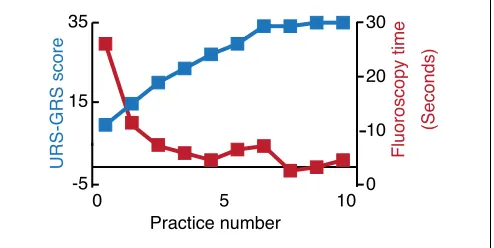
Fig. 1A. URS-GRS scores trend vs. fluoroscopy time on the simulator.
35
ureteroscopy task 52 times on the simulator, with an average task time of 14.6 ± 4.3 minutes and an average fluoroscopy time of 10.4 ± 12 seconds. Residents achieved competency on the Uro MentorTM simulator
after performing the task seven times (Fig. 1A). Moreover, five residents were assessed performing 55 flexible ureteroscopies in operating the-atre with an average operative time of 51.4 ± 15.2 minutes and average fluoroscopy time of 29 ± 6 seconds. There was a strong correlation of URS-GRS scores obtained on the simulator and in the operating theatre (r=0.9, p=0.03) (Fig. 1B).
Conclusions : Urology residents achieved competency in performing flex-ible ureteroscopy on the Uro MentorTM simulator after seven trials. Since
there was a strong positive correlation between URS-GRS scores in the operating room and on the simulator, training on the simulator could be transferred to the operating room. However, more participants are needed to confirm these results.
Associations entre oméga-3 et qualité de vie chez des patients atteints du cancer de la prostate
*Moussa Hanane (autre), Nguile-Makao Molière (autre), Allaire Janie (autre), Robitaille Karine (autre), Fradet Vincent (urologue)
CRCHU de Québec, Université Laval, HDQ, Québec, QC, Canada Introduction et objectifs : Les oméga-3 (Ω3) ont possiblement un effet bénéfique sur le cancer de la prostate (CaP). L’objectif de cette étude est d’identifier, pour la première fois à notre connaissance, la relation entre la consommation en Ω3 et les indicateurs de Qualité de Vie (QdV) en utilisant un devis d’étude transversal.
Matériels et méthodes : Nous avons recruté 189 hommes atteints d’un CaP de bas grade ayant choisi la surveillance active, dans un essai clinique randomisé visant à déterminer les effets d’une intervention diététique
riche en Ω3 sur le tissu prostatique et sur la QdV. La QdV a été mesurée par 1-QdV spécifique à la prostate EPIC-26, 2-Inventaire de la santé sexuelle pour les hommes SHIM et 3-International prostate symptom score IPSS. Nous avons mesuré l’apport diététique par un questionnaire de fréquence alimentaire informatique et validé spécifiquement dans cette population. La régression logistique et les corrélations de Spearman ont été utilisées pour évaluer l’association entre la consommation en Ω3 et la QdV.
Résultats : L’âge médian est 63 ans (ÉIQ 11). La médiane d’IMC est 27,09 kg/m2 (ÉIQ 5,20), de consommation en Ω3 est 2,08 g/j (ÉIQ 1,20), du PSA
est 4,60 ng/ml (ÉIQ 2,95) et du rapport Ω6/ Ω3 est 6,50 (ÉIQ 2,89). Les modèles de régression logistique multivariée ont montré que les hommes ayant un plus haut ratio Ω6/ Ω3 avaient une moins bonne QdV dans les domaines urinaires irritatif et incontinence (OR 0.26 IC 95% 0.09-0.75 p=0,01; OR 0.28 IC 95% 0.12-0.65 p=0.003, respectivement). De plus, les hommes ayant une plus grande consommation en Ω3, particulière-ment en ALA, avaient une meilleure QdV dans le domaine urinaire irri-tatif (OR 2.67 IC 95% 1.10-6.45 p= 0.02; OR 2.72 IC 95% 1.12-6.60 p=0.02, respectivement). Les corrélations de Spearman ont montré qu’un ratio Ω6/ Ω3 élevé et un apport diététique élevé en α6 étaient associées positivement à une mauvaise QdV dans le domaine urinaire en général (rs=0.24, p=0.007; rs=0.25, p=0.005, respectivement).
CUAJ • September-October 2016 • Volume 10(9-10Suppl5) © 2016 Canadian Urological Association
ABSTRAITS AUQ 2016
S212
The risk of urinary retention following robot-assisted radical prostatectomy and its impact on continence outcomes
*Mansour Alnazari (fellow), Marc Zanaty (fellow), Assaad El-Hakim (urologue), Kevin C. Zorn (urologue)
Hôpital Saint-Luc, Hôpital Sacré Coeur de Montréal, Montréal, QC, Canada Introduction et objectifs : To evaluate the risk factors of acute urinary reten-tion (AUR) following robot-assisted radical prostatectomy (RARP), including the timing of catheter removal, and to study the effect of urinary retention on the continence outcomes.
Matériels et méthodes : Seven hundred forty patients who underwent RARP by two surgeons were reviewed retrospectively. Multiple factors, including age, body mass index (BMI), international prostatic symptom score (IPSS), prostate volume, presence of median lobe, nerve preservation, anastomosis time, and catheter removal time (4 vs. 7 days) were evaluated as a risk factors for AUR occurrence after RARP using univariate and multivariate analysis. The relation between urinary retention and early return of contin-ence (one and three months) after surgery was also evaluated in the sub-group of patients in whom catheter was removed four days postoperatively. Résultats : The incidence of AUR was 2.2% (17/740) of the entire cohort. In patients with vs. without AUR, there was no statistically significant def-erence in regard to age, BMI, IPSS, prostatic volume, median lobe, nerve preservation, or anastomosis time. AUR rate was significantly higher in patients with catheter removal at Day 4 (4.5% [16/351]) vs. Day 7 (0.2% [1/289]) (p=0.004). Of patients with early catheter removal at Day 4, those who developed AUR had earlier return of continence (0 pads) 87.5% (14/16) compared to patients without AUR 45.6% (153/335) one month postoperatively (p=0.014); however, there was no significant deference at three months (p=0.201).
Conclusions : AUR is an uncommon complication of RARP. Early catheter removal four days post-RARP is associated with higher incidence of AUR. Although urinary retention appears to be associated with earlier return of urinary continence, further studies are required to investigate its impact on long-term outcome of continence.
Value of voiding cysto-urethrogram in assessment of high-grade post-natal hydronephrosis
*Amr Hodhod (fellow), J.P. Capolicchio (urologue), Roman Jednak (urologue), Mohamed El-Sherbiny (urologue)
Department of Pediatric Surgery, Urology, Montreal Children’s Hospital, McGill University, Montreal, QC, Canada
Introduction et objectifs : Despite vesicoureteral reflux (VUR) being gen-erally more prevalent than ureteropelvic junction bbstruction (UPJO), UPJO is the most common cause of moderate and severe hydronephro-sis. Concomitant UPJO and VUR are uncommon and represents about 8‒11% of patients diagnosed initially as UPJO that is usually of low-grade VUR.1 Kim et al stated that low-grade VUR coexisting with UPJO
usu-ally disappears after pyeloplasty.2 Our hypothesis was that the absence
of hydroureter in association with high-grade hydronephrosis is highly suggestive of primary UPJO, and associated VUR would mostly be non-complicated. Hence, voiding cysto-urethrogram(VCUG) is not needed for primary assessment for these patients.
Matériels et méthodes : We retrospectively reviewed the charts of patients who presented with antenatal hydronephrosis from 2008‒2014. We excluded patients who presented with urinary tract infection (UTI), neuro-genic bladder, posterior urethral valve, ureterocele, multicystic dysplastic
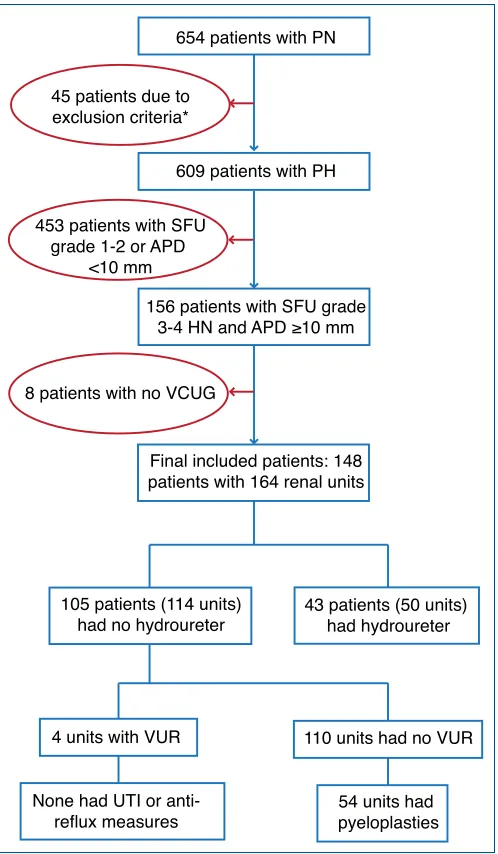
kidney, and patients with associated non-urological malformations. We reviewed ultrasound images and patients with SFU grades 3 and 4 hydro-nephrosis with antero-posterior diameter (APD) ≥10 mm were included. The ureter was assessed and considered dilated if ureteral diameter was ≥4 mm. Moreover, VCUG studies, UTI incidence, and surgical reports were reviewed.
ABSTRAITS AUQ 2016
Programme Scientifique - Session 5
654 patients with PN
609 patients with PH
156 patients with SFU grade 3-4 HN and APD ≥10 mm
Final included patients: 148 patients with 164 renal units
105 patients (114 units) had no hydroureter
4 units with VUR
None had UTI or anti-reflux measures
43 patients (50 units) had hydroureter
110 units had no VUR
54 units had pyeloplasties 45 patients due to
exclusion criteria*
453 patients with SFU grade 1-2 or APD
<10 mm
8 patients with no VCUG
Résultats : A total of 148 patients (164 units) were included; 49% of units had grade 3 hydronephrosis, while 51% had grade 4. Hydroureter was reported in 50/164 units, but not detected in the remaining 114 units. VUR was diagnosed in 3.5% of units without hydroureter, while it was detected in 38% of units with hydroureter (p<0.001). VUR was diagnosed on the contralateral side in 4/105 patients with PH without hydroureter, while diagnosed in 10/43 patients with PH units with hydroureter (p<0.001). During median followup of 25.9 months, no units had VUR without hydroureter, developed UTI, or had surgical intervention.
Conclusions : Our results showed that VCUG should be limited for patients with high-grade PH if associated with hydroureter.
1. Passerotti CC, Kalish LA, Chow J, et al. The predictive value of the first postnatal ultrasound in children with antenatal hydronephro-sis. J Pediatr Urol 2011;7:128-36. http://dx.doi.org/10.1016/j.jpu-rol.2010.09.007
2. Kim YS, Do SH, Hong CH, et al. Does every patient with uretero-pelvic junction obstruction need voiding cystourethrography?
J Urol 2001;165:2305-7. http://dx.doi.org/10.1016/S0022-5347(05)66190-3
Cytokine/FER-activated androgen receptor (PY223AR): A predictive biomarker of prostate cancer progression
*Turki Altaylouni1 (autre), Fatima Zahra Zouanat1 (autre), Eleonora
Scarlata1 (autre), Lucie Hamel1 (autre), Fadi Brimo1 (autre), Louis Bégin2
(autre), Armen Aprikian1 (urologue), Simone Chevalier1 (autre)
1Urologic-Oncology Research Team, Research Institute of McGill
University Health Centre, Montreal, QC, Canada; 2Sacré Coeur Hospital,
Montreal, QC, Canada
Introduction et objectifs : Prostate cancer (PCa) figures among leading causes of cancer deaths in North America. To date, androgen-deprivation therapy (ADT) is the gold standard treatment for patients experiencing a recurrence after radical prostatectomy or radiation therapy, but ADT invariably fails and is followed by castration resistance (CRPC) and further progression of the disease. The host lab reported that the androgen recep-tor (AR) and the signal transducer and activarecep-tor of transcription (STAT)3 are substrates of the Fer tyrosine kinase, become its partners once acti-vated (AR/Y223; STAT3/Y705), and accumulate into the PCa cell nucleus (Zoubeidi et al 2009; Rocha et al 2013). Pathological findings revealed that Fer, AR, and pSTAT3 (Y705) are at highest levels in the tumour cell nucleus when patients received ADT or progress beyond CRPC (unpub-lished). Our aim was to assess the fate of activated pY223AR in PCa tissues using specific homemade polyclonal rabbit antibodies.
Matériels et méthodes : Immunohistochemistry (IHC) was performed on sections from human prostates and metastases covering the whole spec-trum of prostatic proliferative diseases. Our cohort includes 32 healthy men (donors <40 years old), five benign prostatic hyperplasia (BPH), 326 radical prostatectomies, 12 neo-adjuvant hormone therapy (NHT) cases, 29 advanced cases on ADT, and 46 cases with lymph node or bone metastasis or seminal vesicles extension. Levels and intracellular distribution of pY223AR were quantified and expressed in percentages and by H scores. The presence of inflammatory cells nearby tumour foci was analyzed in parallel.
Résultats : Prostate epithelial cells of both healthy and benign (BPH) cases expressing AR but not Fer were negative for pY223AR. Two main observa-tions were made in tumours: 1) the number of negative cells increased with progression, up to 16% in ADT/CRPC; and 2) the nuclear intensity of positive cells and H score increased with Gleason score of primary tumours (p<0.01), being most elevated in ADT/CRPC patients and those with extension to seminal vesicles or metastatic, both in lymph nodes and bones. Kaplan-Meier analysis showed that nuclear pY223AR levels correlate with biochemical recurrence (BCR) (log rank, p<0.0001 at H score ≥160) and lower survival even more if combined to inflammation (log rank, p<0.0001). Importantly, in multivariate analysis, pY223AR H scores significantly predict BCR (p<0.0001), PCa-specific death (p=0.002), and overall survival (p=0.0002) independent of Gleason score, tumour stage, and preoperative prostate-specific antigen (PSA). Moreover, analysis
Conclusions : Fer-activated AR (pY223AR) represents a novel PCa bio-marker that has prognostic value, as it predicts survival probability. The fact that its expression pattern follows that of Fer and that inflamma-tion adds to its prognostic value support that an active inflammatory loop between cytokines, Fer, and AR further contribute to aberrant AR activation on Y223 and perturb its transcriptional genomic program, as evidenced in advanced disease.
Effect of diabetes and metformin on recurrence and progression in patients with non-muscle-invasive bladder cancer
*Samer Traboulsi (urologue), Bassel Bachir (urologue), Faysal Yafi (urologue), Franck Bladou (urologue), Simon Tanguay (urologue), Armen Aprikian (urologue), Wassim Kassouf (urologue)
McGill University Health Centre, Montreal, QC, Canada
Introduction et objectifs : Non-muscle invasive bladder cancers (NMIBC) are characterized by a high recurrence rate and a significant progression rate. A large proportion of diabetic patients are treated with metformin, an effective antidiabetic with a good safety profile. Metformin is postulated to have antineoplastic activity due to its inhibitory activity on mammal-ian target of rapamycin (mTOR). We assessed the effects of metformin and diabetes on bladder cancer recurrence and progression in patients with NMIBC.
Matériels et méthodes : The medical records of patients with NMIBC at two McGill hospitals between 1994 and 2014 were reviewed. A retro-spective analysis was performed. All benign histology or non-urothelial tumours were excluded from the analysis. Our groups of interest consisted of diabetic patients on metformin, diabetic patient on no metformin, and non-diabetic patients. Standard methodology using univariate and multi-variate analysis was conducted on various clinicopathologic variables, including diabetes and the use of metformin.
Résultats : Overall, 1450 patients with median age of 68.8 years were included. The use of metformin was significantly associated with lower disease progression compared to diabetic patients on no metformin (haz-ard ratio [HR] 0.54, 95% confidence interval [CI] 0.35‒0.83; p=0.006). Non-diabetic patients were at a significantly lower risk of stage progres-sion compared to diabetic patients on no metformin (HR 0.36, 95% CI 0.21‒0.54; p≤0.001). Metformin and diabetes did not significantly affect disease recurrence on multivariate analysis.
Conclusions : Diabetes was an independent risk factor for disease pro-gression. Metformin appears to mitigate the deleterious effects of diabetes mellitus on stage and grade progression. Further investigations in clinical trials are warranted to validate these findings and to evaluate the impact of metformin on oncological outcomes.
Cytotoxic T lymphocyte CD8+, CD3+, and immunoscore as prognostic markers in patients after radical cystectomy *Alice Yu (résident), Jose Joao Mansure (autre), Shraddha Solanki (autre), Fadi Brimo (autre), Wassim Kassouf (urologue)
Division of Urology, Department of Surgery, McGill University, Montreal, QC, Canada
Introduction et objectifs : It is known that patients with the same TNM stage can have different clinical outcomes. There is increasing evidence that cytotoxic T lymphocyte distribution between the tumour core (CT) and invasive margin (IM) correlates with disease-free survival (DFS) and overall survival (OS) in other malignancies. The effect of a particular immune response is determined by the balance between the various T-cell subtypes involved, mainly the cytotoxic lymphocytes CD8+ and CD3+.
In this sense, the immunoscore, a new approach to the classification of cancer using the number, type, and distribution of immune cells has been developed. Our objective was to evaluate the prognostic impact of lymphocyte distribution in bladder cancer.
Matériels et méthodes : Hematoxylin and eosin (H&E) stained slides of cystectomy permanent sections with tumour involvement and identifi-able invasive margin were selected and stained for CD8+ lymphocytes.
CUAJ • September-October 2016 • Volume 10(9-10Suppl5)
S214
Session scientifique 5
expression among patient groups. Kaplan-Meier curves were used to visualize differences between DFS and OS.
Résultats : 67 patients who had cystectomy for T1-T4 bladder cancer were included in the study. High concentration of CD8+ lymphocytes in the
tumour margin is associated with better DFS (p=0.005) and OS (p=0.03). Similar results were found for CD3+ lymphocytes with regards to DFS
(p=0.05), but results did not meet statistical significance for OS (p=0.07). A higher Immunoscore is also associated with better DFS (p=0.04). After controlling for T stage, lymphovascular invasion, and periopera-tive chemotherapy, higher levels of CD8+ in the invasive margin was
independently associated with better outcomes (DFS: hazard ratio [HR] 0.26, 95% confidence interval [CI] 0.10α0.68; p=0.006; OS: HR 0.031, 95% CI 0.10α0.97; p=0.04).
Conclusions : The host’s own immune system plays a valuable role in can-cer progression. Our data suggests that a strong immune response against the tumour, as demonstrated by high concentration of CD8+ lymphocytes
in the tumour margin, is independently associated with better prognosis. In the future, we plan on evaluating markers other than CD3+ that can
be used with CD8+ for more accurate Immunoscore determination for
bladder cancer.
Factors associated with the management of metastatic castration-resistant prostate cancer in a real-life setting in Quebec *Halima Lahcene (résident), Armen Aprikian (urologue), Marie Vanhuyse (autre), Franck Bladou (urologue), Noémie Prévost (autre), Jason Hu (autre), Fabio Cury (autre), Wassim Kassouf (urologue), Sylvie Perreault (autre), Alice Dragomir (autre)
Hôpital Général de Montréal (HGM), Hôpital Général Juif (HGJ), Montréal, QC, Canada
Introduction et objectifs : Until 2012, docetaxel (doce) was the standard of care for patients with metastatic castration-resistant prostate cancer (mCRPC). Since then, several new molecules became available as excep-tion drugs in Quebec, such as abiraterone (abi). Nevertheless, there is no established optimal sequencing pattern. Thus, the contemporary manage-ment of mCRPC is becoming more and more complex. This study aims to identify factors that are associated with mCRPC management in a real-life setting in two of McGill University’s affiliated hospitals and to describe practice pattern changes with the introduction of abi in Quebec in 2012. Matériels et méthodes : The study cohort consists of patients treated for mCRPC at the Jewish General Hospital (JGH) and the Montreal General Hospital (MGH) from 2010‒2014. Individual information on medications, imaging, laboratory tests, medical visits, interventions, emergency visits, and hospitalizations were collected retrospectively. Then, the cohort was divided into two groups regarding their mCRPC diagnosis year (pre/post-2012). Kaplan-Meier method was used to estimate time to receive either doce or abi and Cox regression was used to identify predictive factors of receiving these treatments.
Résultats : Preliminary analysis of 320 patients indicated that patient characteristics were comparable between both sites, except for initial prostate cancer parameters, where the JGH’s patients seemed to have a more aggressive disease. The median age at CRPC is 74.0 years old (mean: 73.7; 95% confidence interval [CI] 72.7–74.7). The most common first-line treatments for mCRPC in the pre-2012 group were doce (51%) and anti-androgens (22%) vs. doce (30%), abi (26%), and anti-androgens (24%) in the post-2012 group. Regarding overall doce use, 84% of patients received it in the pre-2012 group vs. 55% in the post-2012 group, but 18% of chemo-naïve patients are still followed and could have it in the future. In terms of overall abi use, 48% of patients in the pre-2012 group received it vs. 77% in the post-2012 group and 9% of patients are yet
followed and might have abi in the future. Concerning time to receive doce, patients diagnosed with mCRPC pre-2012 were more likely to receive doce faster than those diagnosed post-2012 (median [IQR]: 5 [1‒18] vs. 14 [3‒44] months, respectively). Concerning time to receive abi, patients who had mCRPC pre-2012 were less likely to receive it faster than those who had mCRPC post-2012 (median [IQR]: 30 [14‒49] vs. 9 [4‒16] months, respectively). Predictors of receiving doce were metas-tases level at CRPC diagnosis: only bone (hazard ratio [HR]: 1.7; 95% CI 1.1–2.8), bone and lymph nodes (HR: 2.4; 95% CI 1.4–4.1), visceral (HR: 3.3; 95% CI 1.8–6.2) besides of being younger than 80 years old at CRPC diagnosis (HR: 1.9; 95% CI 1.3–2.8) and being diagnosed with mCRPC pre-2012 (HR: 1.7; 95% CI 1.3–2.3). Predictors of receiving abi were metastases level at CRPC diagnosis: only bone (HR: 2.2; 95% CI 1.4–3.6), bone and lymph nodes (HR: 1.9; 95% CI 1.1–3.2), visceral (HR: 2.4; 95% CI 1.3–4.7) besides being diagnosed with mCRPC post-2012 (HR: 5.0; 95% CI 3.3–10.0).
Conclusions : The current study shows that metastases extent and moment of diagnosis with mCRPC are predictive factors for receiving either docetaxel or abiraterone. In addition, younger patients were more likely to receive docetaxel. Our analyses also show that the introduction of abiraterone in 2012 led to a decline in the use of docetaxel.
Assessment of battery life of the second-generation implantable pulse generator in a practice of high-volume implanters *Daniel Liberman (urologue), Marta Johnson-Mitchell (autre), Steven W. Siegel (autre)
Metro Urology, Woodbury, MN, United States
Introduction et objectifs : Sacral neuromodulation (SNM) is now an accepted treatment of medically refractory bladder symptoms in the U.S. Our objective was to assess the battery life of the Interstim™ II in a practice of high-volume SNM implanters. We hypothesize that battery life would be longer than the manufacturer’s estimate as a result of achieving lower sensory and motor stimulation thresholds during lead placement. Matériels et méthodes : We identified 35 patients who had their Interstim II replaced due to battery exhaustion from July 2006 to September 2015 by five high-volume implanters from Metro Urology. In general, as a practice pattern, providers try to achieve motor and sensory responses below 1 volt for all electrodes during lead placement. Demographic information, including age, gender, indication for SNM, date of initial IPG placement, as well as date and reason for IPG revision were included in this analysis. Chi squared analysis and Spearman’s rank correlation was used to determine differences in battery life to the above-mentioned demographic information.
Résultats : Median age at revision was 59.1 years old (standard devia-tion [SD] 17.8). The median battery life for this entire cohort was 60 months (SD 21.1). There were no statistically significant differences in battery life when compared to age at revision, bladder symptom type (overactive bladder vs. idiopathic non-obstructive urinary retention) or surgeon (all p>0.05). Longer battery life was demonstrated when the amplitude of stimulation was less than 2 volts compared to more than 2 volts (64 vs. 38 months; p=0.03).
Prognostic factors of chronic kidney disease in patients with posterior urethral valves
*Monica Salgado (autre), Yann Chaussy (urologue), Anne-Marie Houle (urologue), Pierre-Alain Hueber (résident), Diego Barrieras (urologue), Julie Franc-Guimond (urologue)
CHU Sainte-Justine, Montreal, QC, Canada
Introduction et objectifs : Posterior urethral valves (PUV) is the most com-mon cause of congenital bladder outlet obstruction and chronic kidney disease (CKD) in the male pediatric population. The aim of this study is to determine the prognostic value of nadir creatinine during the first year of life and all other potential factors that might increase the likelihood of developing CKD in patients with this condition.
Matériels et méthodes : Hospital records of all patients with PUV were reviewed from 1980α2010. Abnormal kidney function was defined as CKD stage 2 or higher (National Kidney Foundation). Patients were divided in two groups based on glomerular filtration rate (GFR) at latest followup. Receiver operating characteristic (ROC) curve, univariate and multivari-ate analysis were conducted in order to identify independent prognostic factors for CKD. Statistical significance was defined as a p<0.05.
Résultats : A total of 114 PUV patients satisfied our inclusion criteria. At diagnosis, the mean age was three years. Among them, 32.5% were diagnosed antenatally, 23.7% before one year of life and 43.9% after. The mean followup period was eight years (standard deviation [SD] ± 4.6). An abnormal kidney function was found in 18.4% patients, among them 4.38% reached end-stage renal disease (ESRD). Mean of nadir creatinine at first year of life in patients who developed CKD was 54.75 µmol/l vs. 27.95 µmol/l for patients with normal renal function. Levels of nadir cre-atinine during the first year of life <30 µmol/L were found to be a cutoff point for determine future prognosis (ROC curve, area under the curve [AUC]=0.94; p<0.001) with a sensibility of 95% and specificity of 32%. Diagnosis before one year of age, elevated nadir creatinine at first year of life, bilateral hydronephrosis, recurrent urinary tract infections (UTIs), and loss of corticomedullary differentiation were significant predictors of renal outcome on univariate analysis.
CUAJ • September-October 2016 • Volume 10(9-10Suppl5) © 2016 Canadian Urological Association
ABSTRAITS AUQ 2016
S216
Prognostic factors in radical prostatectomy and permanent seed brachytherapy for low- and intermediate-risk prostate cancer: A comparative study
*Guila Delouya (autre), Daniel Taussky (autre), Véronique Ouellet (autre), Fred Saad (urologue)
Centre hospitalier et Centre de Recherche de l’Université de Montréal (CHUM-CRCHUM), Montréal, QC, Canada
Introduction et objectifs : We aimed to compare the outcomes between radical prostatectomy (RP) and permanent seed prostate brachytherapy (PB) in patients with low- and low-intermediate-risk prostate cancer from a single tertiary care centre.
Matériels et méthodes : Patients were selected from our institute’s internal database, based on preoperative selection criteria from the NCCN guide-lines (2015) for low- and intermediate-risk patients. No patient had received any neoadjuvant androgen-deprivation therapy. The endpoint was bioche-mical recurrence (BCR) or any salvage treatment for both RP and PB at 48 ± 4 months after treatment. The biochemical relapse threshold was set at prostate-specific antigen (PSA) ≥0.5 ng/mL for PB, and two PSA values of ≥0.2ng/mL for RP. Patients from both treatment groups were compared using non-parametric tests. A binary logistic regression analysis was performed to determine an association of treatment and pre-treatment factors with a BCR at 48 months.
Résultats : Five hundred seventy-five patients were included in this study; 254 were treated with RP and 321 with PB. Patients treated with RP were younger (mean 61 years vs. 64 years) and more likely to have cT1-stage cancers (83% vs. 73% for PB), but had a higher mean percentage of positive biopsies (44% vs. 34% for PB) and were more likely to be diagnosed with a Gleason 7 score (30%) than patients treated with PB (20%). BCR occurred in 54 patients (21.2%) in the RP group and in 66 patients (20.6%) in the PB group (p=0.24, Chi-square test). Based on univariate and multivariate logistic regression analyses, younger age, higher percentage of positive biopsies, and initial PSA were predictive of BCR. Treatment modality was not predictive in either univariate (p=0.56) or multivariate (p=0.42) analyses. Conclusions : Using closely related cut-off values for BCR, both RP and PB appear to result in equal outcomes at 4 years post-treatment.Clinical T-stage, age, percentage of positive biopsies and Gleason score were pre-dictive of BCR.
Urothelial cells express a functional succinate receptor GPR91 Monica Velasquez (autre), Philippe Cammisotto (autre), *Lysanne Campeau (urologue)
Lady Davis Institute for Medical Research, Division of Urology, Department of Surgery, McGill University, Montreal, QC, Canada
Introduction et objectifs : Lower urinary tract symptoms are associated with the metabolic syndrome. Increased succinate production is detected in the presence of hyperglycemia and hypoxemia, as with diabetes mellitus and metabolic syndrome, which is strongly associated with overactive bladder syndrome. Succinate was recently identified as a major metabolic switch controlling metabolic functions in the body through its receptor GPR91 (SUCNR1). The aim of our study is to determine how succinate modulated bladder contractility.
Matériels et méthodes : Urothelial cells were isolated from Sprague-Dawley rat bladder using a collagenase IV method and grown in collagen IV-coated petri dishes. After confluency, cells were exposed to succinate then assessed by microscopy and immunoblotting analysis. Cyclic AMP was measured using an Elisa kit from Cayman Chemical Company.
Résultats : Immunohistochemistry revealed that cells express cytokeratin 17, cytokeratins recognized by the AE1/AE3 antibody and the receptor of succinate SUCNR1 (GPR91). Immunoblotting and RT-PCR on urothelial cell extracts confirmed expression of GPR91. Incubation of cells with succinate (10 mM) results in phosphorylation of Erk and c-Jun amino-terminal kinases (JNKs) JNK, with no effect on the levels of Akt-308P, Akt-473P, iNOS, enos-1177P or enos-405P. Erk and JNK phosphorylation was not observed after exposure to alpha-keto glutarate or citrate (10 mM), two other intermediates of the citric acid cycle with no affinity for GPR91 receptor, while maleic acid, another GPR91 ligand, did. On the other hand, inhibition of phos-pholipase C by U73122 (5 microM), of the MAPK pathway by PD98059 (10 microM) or of protein Gq/11 by UBO (100 nM), all completely inhi-bited increases of Erk-P elicited by succinic acid. Finally, pre-incubation of cells with succinate dose-dependently decreased the concentrations of intracellular cyclic AMP stimulated by forskolin.
Conclusions : GPR91 is expressed in urothelial cells. Binding of succinate or maleic acid triggers phosphorylation of Erk and JNK, a process that requires Protein Gq/11, Phospholipase C, and the MAPK pathway. Inhibition of cyclic AMP production suggests the receptor is bound to protein Gi. As succinic acid is linked to hypoxia and metabolic disease, understanding its effect on urothelial cells may clarify an underlying pathophysiology of overactive bladder.
Safety and durability of sacral neuromodulation in the geriatric population: A sub-analysis from the INSITE trial
*Daniel Liberman1 (urologue), Tomas L. Griebling2 (autre), Steven W. Siegel1
(autre)
1Metro Urology, Woodbury, MN, United States; 2University of Kansas School
of Medicine, Kansas City, KS, United States
Introduction et objectifs : Overactive bladder (OAB) symptoms are extre-mely prevalent in the geriatric population. Sacral neuromodulation (SNM) has been shown to be effective for the management of OAB symptoms, but there are very few reports of outcomes in the geriatric population. Therefore, the objective of the current analysis is to report therapeutic success rates, changes in quality of life (QoL), and safety in elderly patients with OAB receiving SNM.
Matériels et méthodes : Data from subjects enrolled in the InSite trial who had successful test stimulation and received an InterStim implant were used in this retrospective analysis. Responder rates (defined as >50% improve-ment in average leaks/day or voids/day or a return to normal voiding fre-quency [<8 voids/day]), health-related quality of life (HR-QoL), and adverse events through 36 months were compared for geriatric subjects (age >65 years) and their younger counterparts (age <65 years).
Résultats : Of 272 subjects who had an SNM implant for OAB, 80 were aged 65 or older (29.4%). Compared to younger OAB subjects, the geriatric subjects had a higher proportion of males (16% vs. 6%; p<0.01) and urinary urge incontinence (73% vs. 52%; p<0.01). There was no statistically signi-ficant difference in the 36-month OAB responder rate (see above) (81% vs. 84%; p=0.67) or the urinary frequency responder rate (74% vs. 69%; p=0.66) between older subjects and their younger counterparts. However, geriatric patients had a lower urinary incontinence responder rate (68% vs. 88%; p<0.01) and change from baseline HR-QoL at 36 months (median 30.3 vs. 38.8; p=0.04) than younger patients. Device-related adverse events, including loss of efficacy, undesirable change in stimulation, and infection were not different between both age groups (all p>0.05). Moreover, geriatric subjects reported less implant site pain than younger subjects (5% vs. 16%; p=0.015).